Connect with us
DAPA Banner

Tech

Meta contractor fires 1,100 AI trainers after they revealed Ray-Ban glasses recorded private and intimate footage

Published

on


Meta has quietly ended its relationship with a vendor that helped train its generative AI systems using footage captured through Ray-Ban smart glasses. The contractor, Sama, subsequently announced the termination of 1,108 employees – some of whom alleged they were punished after coming forward about the sensitive nature of the…
Read Entire Article
Source link

Continue Reading
Click to comment

You must be logged in to post a comment Login

Leave a Reply

Tech

Instagram Is Testing Optional ‘AI Creator’ Labels

Published

on


Instagram is taking a small step toward increasing transparency around AI-generated content on the service. The app is testing a new account-level label that will allow creators to self-identify as an “AI creator.”

The label will appear prominently both in creators’ profiles and alongside their posts and Reels elsewhere in the app. “This profile posts content that was generated or modified with AI,” it says. According to Meta, the new labels are an effort to “raise the bar on AI transparency on Instagram.” And the language in the new labels is notably more explicit than Meta’s “AI info” badges, which indicate that a given post “may” have been created or edited with an AI tool.

But, importantly, the “AI creator” labels are entirely optional. That means a lot of users are still likely to encounter AI content with the more vague “AI info” label or no label at all. As Meta’s Oversight Board recently pointed out, those disclosures are applied somewhat haphazardly as Meta lacks the ability to reliably detect all the AI-generated content that passes through its apps. (The company has yet to respond to the board’s recommendations on improving its AI-detection methods.)

Advertisement

Still, Meta is encouraging creators who frequently post AI content to use the feature. “This label builds trust by helping your audience understand what they’re seeing on Instagram,” an in-app message says. Of course, if the company really wanted to “build trust” it could turn them on by default, make them required or even throttle accounts that decline to use them. Meta is, for now, at least, opting for a much lighter touch. But as AI-generated content becomes more pervasive (and harder for our lowly human eyes to detect), the company may need to change up its approach to AI labeling yet again.


Advertisement

Source link

Continue Reading

Tech

We’ve Got Live Star Wars Deals for All, Not Just for Men, but for the Women and the Children

Published

on

Lego and Star Wars have a long history together, and it’s clear that the relationship is as strong as ever. I got to play with the new Lego Star Wars Smart Play sets and, despite being a little gimmicky, they are a whole heap of fun.

A lego X-Wing set built and ready to play

James Bricknell / CNET

The X-Wing build was a lot of fun, and I did get a kick out of the smart brick and the noise it makes. As you fly the X-Wing around, R2-D2 screams, and you can shoot lasers at the press of a button. 

It doesn’t add any bulk to the build either, just a simple brick that has a good volume and several accelerometers to add to the fun. One of the little buildings that comes in the box is an Empire laser turret that makes crashing sounds if you tip it over. It makes me giggle every time I do it.

The X-wing itself uses the brick to great effect. It makes all the movement noises as you fly around, but if you press the red button on top, it moves the brick forward, triggering the accelerometer and making the laser “pew pew” sound. Then, as it moves back into place, the NFC reads the R2-D2 tag and makes its noises as well. It really does work very well.

Advertisement

Overall, the $90 cost of the X-wing feels like a decent deal. The Smart Brick is not tied to the set you have, so it can be used in other sets eventually, and you get the X-wing and three mini sets to play with, too. Plus R2-D2, Leia and Luke minifigs that all make fun noises when they are near the brick. 

Source link

Advertisement
Continue Reading

Tech

Barocal can cool your food and drink by squeezing a hunk of plastic crystals

Published

on

Refrigerators today run on the same basic technology as they did more than 100 years ago. You’d think we could have come up with something better by now.

And we have, but nothing has been able to dethrone cheap, reliable vapor compression — the process that’s keeping your milk cold today. One startup hopes to change that.

Barocal has developed an entirely new way of heating and cooling using nothing but an inexpensive solid material. Early prototypes are already as effective as existing refrigerator compressors, and the technology promises to use significantly less energy. Oh, and there’s no risk of leaking climate-warming gases, something that has plagued vapor compression.

To prepare the technology for market, Barocal has raised a $10 million seed round, the startup exclusively told TechCrunch. Investors in the round included World Fund, Breakthrough Energy Discovery, Cambridge Enterprise Ventures and IP Group.

Advertisement

Barocal’s core technology stems from research performed by Xavier Moya, the startup’s founder. “I’ve always been very interested in technologies for heating and cooling,” he told TechCrunch. He traces it back to his youth in Spain, where he would spend hours studying in a small, hot room. “I really remember when air conditioning came to the house — it was like wow!” he recalled.

As a professor of materials physics at the University of Cambridge, he focused on refrigerants of all kinds, though he became particularly fascinated by solid materials could capture and release heat simply by squeezing and stretching them. In one of his favorite demonstrations, he asks people to take an deflated balloon, hold it to their lips, and repeatedly stretch and relax it.

“If you stretch it, it gets hot. And then if you wait, when you let it go, it feels cold,” he said.

Techcrunch event

Advertisement

San Francisco, CA
|
October 13-15, 2026

That same principle applies to the class of materials Barocal has developed, which is related to an organic material widely used in a range of industries, from plastics to paints. Normally, the molecules inside the material rotate freely. But when they’re compressed, the molecules stop rotating. Since heat, at its most basic level, is the movement of atoms and molecules, the reducing that movement causes the material to give off heat. Removing the pressure allows the materials to absorb heat.

Advertisement

Barocal uses these materials to transfer heat. In a refrigerator, for example, the material will pump heat from inside the fridge to outside, lowering the temperature for the food within. To transfer heat, the company flows water past the materials and then out to a radiator.

Because the materials are solids, gas leaks don’t pose a problem. In conventional refrigerators, the gaseous refrigerants either degrade the ozone later or warm the climate, depending on the type. Greenhouse gas-based refrigerants have become a particular concern since they can warm the climate over 1,000 times more than an equivalent amount of carbon dioxide.

Though Barocal’s technology can work at any scale, the company is studying large HVAC and refrigerators first, systems where the startup’s efficiency gains will make a noticeable dent in a customer’s bottom line. “We are looking at bigger commercial systems where I think we can we can make a bigger impact faster,” Moya said.

When you purchase through links in our articles, we may earn a small commission. This doesn’t affect our editorial independence.

Advertisement

Source link

Continue Reading

Tech

Doordash adds AI tools to speed up merchant onboarding, edit photos of dishes

Published

on


DoorDash on Monday added new AI-powered tools that let merchants speed up onboarding, edit photos to make dishes look better, and create websites based on their app listings.

The onboarding tool works similarly to the one Amazon launched in 2024. Merchants can point the tool to their website, from which it will automatically fetch information such as photos, store hours, and menu items to create a listing on the app. Merchants can review and edit all of this information before publishing the listing.

DoorDash has also revamped its video library. The library now lets merchants tag dishes in videos so that customers can order those items directly. The library also shows stats such as total views, video-driven sales, and new customer sales.

Restaurants are getting a few photo editing tools, too: AI Retouch can replace backgrounds, sharpen images, and optimize lighting without changing the dish; and AI Replate manipulates pictures of dishes so they look like they’re plated professionally, changing lighting and color. Merchants can also provide a reference image to apply a particular style to an existing image.

Advertisement
Image Credits: DoorDashImage Credits:DoorDash

“At DoorDash, we’re constantly building tools to help merchants succeed, from their very first day on the platform, to every order after. These new tools reflect our belief that the right technology should remove friction, not add it, so merchants can focus on what they do best: making great food and delivering incredible customer experiences,” Brian Tolkin, head of merchant product at DoorDash, said in a statement.

The company is adding new features to its commerce platform as well, one of which lets restaurant owners spin up a website based on existing DoorDash content, such as menu items and photos. The company said during a test of the new feature, merchants saw order conversion rates of nearly 10% on average.

The company has also added a new marketing campaign builder that lets merchants automate content creation, email outreach and scheduling.

Techcrunch event

San Francisco, CA
|
October 13-15, 2026

Advertisement

When you purchase through links in our articles, we may earn a small commission. This doesn’t affect our editorial independence.

Source link

Advertisement
Continue Reading

Tech

Employees are now more dangerous to their company than external hackers

Published

on


  • Internal threats now represent more than half of cases, at 57%
  • Employees’ devices and credentials are among the most targeted
  • Companies should acknowledge this and tighten access for a quick fix

New data from Orange Cyberdefense has suggested the biggest risks companies face could now be coming from inside, with internal threats rising from 47% to 57% in the space of less than a year.

For the first time ever, internal threats have become more common that external ones, with hacking remaining pretty steady at 31% of attacks compared with employee misuse, which rose from 29% to 45%.

Source link

Continue Reading

Tech

Think music is the worst hit by slop? AI has deeply polluted podcasts, as well

Published

on

AI slop has already flooded video feeds, gaming debates, software code, and search results. Now the same low-effort machine-made content is moving into podcasts.

Music usually dominates the AI slop debate, but the podcast problem may be harder to spot and harder to clean up. AI tools can now create, upload, and even monetize entire shows far faster than traditional podcast studios.

`

Is podcasting becoming the next slop factory?

A Bloomberg report points to how quickly this is spreading. According to the Podcast Index, 10,871 new podcast feeds were created over roughly nine days, and about 4,243 of them, or 39%, were likely AI-generated. One AI podcast startup now says it has more than 10,000 active shows and published 877 new shows in only 48 hours.

Podcasting becomes especially vulnerable at that scale because discovery works differently from music. A low-quality AI song can be skipped in seconds, but podcasts rely heavily on search, recommendations, and trust. If feeds are filled with machine-made shows, listeners may have to work harder to find real hosts, original reporting, or actual conversations.

Advertisement

That pattern is already visible across other AI-hit formats. Video platforms are trying to deal with low-quality AI uploads while also promoting AI tools for creators. Gaming has seen backlash over AI-assisted visuals, with some players calling certain AI graphics features slop. Coding has a similar issue too. AI can help developers write more code faster, but that also means more bugs, weak fixes, security risks, and extra review work. In podcasts, the concern is not just volume, but also how easily that volume can be turned into money.

Who benefits when podcasts become automated?

Easy monetization is what makes podslop more than just a quality problem. Some hosting services allow free podcasts to join ad marketplaces with very few checks, so AI-made shows can still earn money from downloads even if the content is thin or barely reviewed. One platform shares 60% of ad revenue with creators, while another says it can pause ads or remove shows if they are found to be slop.

Apple Podcasts has at least started asking creators to disclose when a material part of a show uses AI. Spotify, on the other hand, relies on broader rules against misleading content and has not released a specific AI podcast policy yet. This leaves listeners and advertisers with a trust problem because AI has made audio easier to produce and harder to verify.

Source link

Advertisement
Continue Reading

Tech

UCB pays up to $2.2bn for Candid Therapeutics, doubling down on T-cell engagers in autoimmune disease

Published

on

The Belgian pharma is buying a two-year-old San Diego biotech for $2bn upfront, the second TCE bet it has placed in months. The thesis: B-cell killers built for cancer can rewire how autoimmune diseases are treated.


Candid Therapeutics is two years old. It does not have an approved drug. Its lead programme has been tested in roughly 100 patients across multiple early-stage trials. On Sunday, UCB, the Brussels-listed pharmaceutical company, agreed to buy it for up to $2.2bn.

That kind of price for that kind of biotech needs an explanation, and the explanation, in 2026, has a name: T-cell engagers in autoimmune disease.

Under the agreement announced on 3 May, UCB will pay $2bn in upfront cash, with up to $200m in additional milestone payments tied to development and regulatory progress.

Advertisement

The 💜 of EU tech

The latest rumblings from the EU tech scene, a story from our wise ol’ founder Boris, and some questionable AI art. It’s free, every week, in your inbox. Sign up now!

The deal, is expected to close by the end of the second quarter or early in the third, subject to antitrust clearance. UCB has reaffirmed its 2026 financial guidance, which suggests it intends to absorb the transaction without recutting expectations.

It is the second time in a matter of months that the Belgian company has reached for the same therapeutic mechanism. In an earlier transaction, UCB licensed ATG-201, a CD19/CD3 bispecific from China-based Antengene, in a deal worth up to $1.1bn. The Candid acquisition lands on top of that and adds a different B-cell target.

Advertisement

What Candid actually has?

Candid’s lead asset is cizutamig, a bispecific antibody designed to bridge two cells: it grabs a T-cell on one end via CD3 and a plasma cell on the other via BCMA, the B-cell maturation antigen, instructing the T-cell to destroy the plasma cell.

The mechanism was developed for multiple myeloma, where killing rogue plasma cells is the entire point of treatment. The 2026 thesis is that the same engine can be repurposed to deplete the autoreactive B-cells and plasma cells driving autoimmune diseases such as lupus, myasthenia gravis, and a long list of less famous conditions in which the immune system attacks its own tissues.

According to UCB, cizutamig has now been clinically evaluated in over 100 patients combined across multiple myeloma and autoimmune indications, and is currently in Phase 1 studies across more than ten autoimmune diseases.

UCB describes it, in its statement, as a potential best-in-class BCMA T-cell engager for autoimmune disease, language that is both ambitious and conventional for press releases of this kind.

Advertisement

The reason buyers are willing to write nine-figure cheques on Phase 1 data is that the early autoimmune signals from this drug class, broadly, have been genuinely striking. Patients with severe disease have shown durable remissions after a single course of B-cell-depleting therapy, including in conditions where decades of small-molecule and biologic treatment have produced only partial control. None of this is yet definitive.

Late-stage data, larger cohorts, and longer follow-up will all be required. But the direction has been consistent enough that pharma boardrooms have begun pricing the modality as if it works.

Candid was founded in 2024 in San Diego, with backing from Two River Group and Vida Ventures and a launch financing of $370m. Its chairman, chief executive and president is Dr Ken Song, who previously led RayzeBio through its $4.1bn acquisition by Bristol Myers Squibb in late 2023. Building, scaling, and selling clinical-stage oncology and immunology biotechs is, in other words, what he does.

That history is part of what UCB is paying for. Buyers in this segment of the market are increasingly willing to underwrite management quality alongside molecule quality, particularly when the molecule’s commercial promise depends on disciplined trial design across a large number of small indications.

Advertisement

The valuation gap between the original $370m launch funding in mid-2024 and the $2bn upfront UCB is paying now, in cash, less than two years later, is a fair indicator of what investors think he and his team have built.

It is also a sharp reversal. In March, Candid had announced a reverse merger with Rallybio, a publicly listed but smaller rare-disease company, intended to take Candid public via a back-door listing. That transaction, by all appearances, has now been superseded. UCB’s offer was, presumably, the better one.

UCB’s purchase fits into a pattern that has become hard to miss. Over the past nine months, every major pharma company with an immunology presence has either bought, licensed, or partnered around T-cell engagers aimed at autoimmune disease.

Gilead acquired Ouro Medicines for $2.18bn earlier this year, picking up gamgertamig, another BCMAxCD3 engager. Sanofi licensed a trispecific from Kali Therapeutics in a deal worth up to $1.2bn. GSK paid $300m to license a CMG1A46 candidate from Chimagen for lupus. Prolium Bioscience launched in March with $50m to develop a CD20xCD3 engager. The list lengthens almost weekly.

Advertisement

Two facts explain the rush. The first is that the science, finally, looks like it might generalise; what worked in oncology to remove malignant B-cells appears to work in autoimmune disease to remove autoreactive ones, and the early human data are far better than the conventional pharmacology playbook predicted.

The second is that immunology is, by some distance, the largest pharmaceutical market in the world after oncology. Drugs like AbbVie’s Humira, before its biosimilar erosion, and Sanofi’s Dupixent are reminders that successful autoimmune therapies generate revenue at a scale to which only a handful of categories aspire.

If TCEs work in this setting, the prize is correspondingly large. If they do not, several of these deals will look expensive in retrospect.

Where the AI conversation does not quite fit

It is worth noting what is not driving the deal. Despite the surge of attention to AI-discovered medicines, from Google DeepMind spinoff Isomorphic Labs entering trials this year to ByteDance’s Anew Labs presenting its first AI-designed therapy and Anthropic paying $400m for a 10-person biotech startup to design protein-based drugs, cizutamig itself is a conventionally designed biologic.

Advertisement

It was discovered through licensing relationships and standard antibody engineering, not generative protein models. The molecules driving today’s autoimmune deal flow are, almost without exception, products of a previous decade’s chemistry.

AI’s promised acceleration in drug discovery has, so far, produced more announcements than approvals.

The Candid deal is, in that sense, a reminder that pharma’s largest near-term value creation is happening in molecules that were already in the pipeline before the AI hype cycle began. The next set of acquisitions, in two or three years, may well include AI-discovered candidates. This one does not need to.

What UCB now has, and what it has to prove

For UCB, the strategic logic is clean. The company is mid-sized in pharma terms, with a long-standing immunology franchise and a recent track record of opening up new therapeutic areas through targeted M&A.

Advertisement

Pairing the Antengene CD19xCD3 candidate with Candid’s BCMAxCD3 lead asset gives it two complementary B-cell-depleting mechanisms in a market that increasingly looks as though it will reward platform breadth rather than single-molecule excellence.

What UCB has to prove is execution. Phase 1 data in autoimmune disease are encouraging but thin. The competitive density is unusually high, with at least half a dozen large pharma companies pursuing similar mechanisms across overlapping indications. Pricing pressure, both regulatory and from payers, will hit any successful TCE the moment it nears approval. And manufacturing bispecific antibodies at scale is non-trivial. None of these is fatal. All of them are real.

By the time the deal closes this summer, the broader market may have adjusted its enthusiasm for the modality up or down. UCB has chosen to act before that adjustment.

Whether that proves to be timely or expensive will be visible in the Phase 2 readouts due over the next 18 months. For now, a two-year-old company that started as an autoimmune-disease bet by an experienced operator has been priced at $2.2bn, in cash, by a pharma company convinced that the bet is correct.

Advertisement

Source link

Continue Reading

Tech

16% of Parents Help Their Children Bypass Online Age Checks, Study Finds. One 15-Year-Old Just Uses a Fake Moustache

Published

on

The Independent reports that “more than a third of children in the UK have found a way around age verification measures” for social media sites and other online platforms. And new research from online safety organisation Internet Matters “suggests one in six parents have helped their child to get past age verification checks, with children reporting ‘tricking’ platforms into thinking they are older. ”

Parents also said they had caught their children drawing on facial hair in a bid to evade the technology. One mother said: “I did catch my son using an eyebrow pencil to draw a moustache on his face, and it verified him as 15 years old”… From a sample of 1,000 UK children, 46% said they believed age checks are easy to bypass, while 32% admitted to having done so.

49% of the children surveyed said they’d still encountered harmful content, according to the online safety activists. The group called the figure “unacceptable,” and complained that age verification measures “are often ineffective in practice or easy to bypass.”

Advertisement

Source link

Continue Reading

Tech

Ouster’s new color lidar is coming to replace cameras

Published

on

The tech industry has spent the last decade asking whether self-driving cars need lidar sensors, cameras, or all of the above. Lidar company Ouster says it has a new answer: put them both in the same sensor.

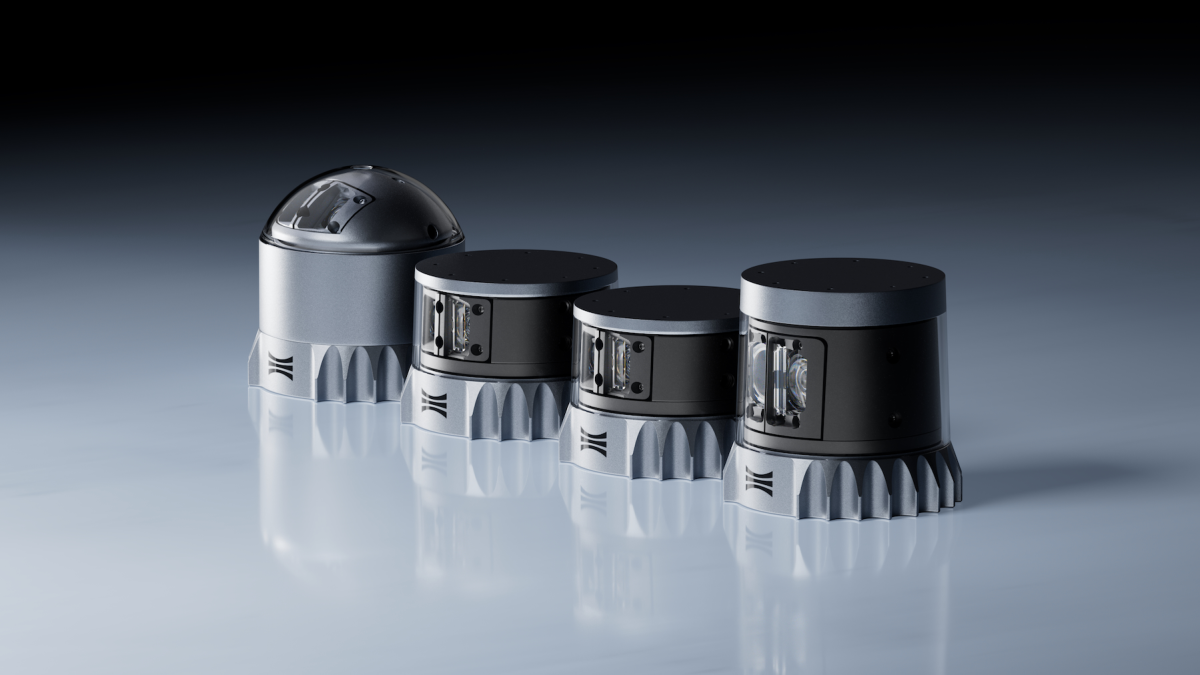
On Monday, the San Francisco-based company announced a new lineup of lidar sensors it calls “Rev8,” all of which offer so-called “native color lidar.” These sensors are capable of capturing color imagery and three-dimensional depth information at the same time, doing the work of two sensors in one.

Ouster CEO Angus Pacala said the development has been a decade in the making at his company, and he wasn’t shy about his ambitions for the new product lineup in an exclusive interview with TechCrunch, calling it the “holy grail of what a roboticist has always wanted.”

“For all of human history, it’s been: you buy a lidar sensor, you buy a camera, and you try to make sense of the combination with some higher level reasoning, and waste an enormous amount of time doing this,” he told TechCrunch. “And companies only get really halfway there in terms of calibrating and fusing the data streams.”

Advertisement

Ouster’s new sensors, he said, change this equation.

“The goal is to obviate cameras. There’s no reason that one sensor can’t do both,” he said.

The Rev8 lineup arrives at a dynamic moment for lidar companies. There has been a years-long wave of consolidation happening, with Ouster buying Velodyne, and Luminar’s assets recently getting acquired in bankruptcy.

Techcrunch event

Advertisement

San Francisco, CA
|
October 13-15, 2026

At the same time, the market for sensors is exploding. Waymo and others have finally deployed working robotaxis and are scaling quickly. Robotics companies — humanoid and industrial — are hoovering up investment dollars and need sensors to perceive the world. There’s so much interest in the space that new companies like Boston-based Teradar are popping up and testing the waters with entirely new modalities. (In Teradar’s case, it’s using terahertz imaging.)

Advertisement

A color lidar that combines pinpoint depth information with camera-quality image data could be especially valuable to the robotics players, Pacala said. And he said Ouster worked with Fujifilm and image science company DXOMARK to understand “what it means to build a great camera.”

In fact, Pacala claims Ouster’s color lidar is “improving in many ways on a modern camera” thanks to the way the company already designs and builds its sensors.

Ouster uses so-called “digital lidar” architecture. Instead of the analog approach, which involves many moving parts, Ouster captures the lidar info directly on its custom chip using what’s known as single photon avalanche diode (SPAD) detectors.

The company is using this same SPAD technology to capture the color image data in the Rev8 sensors. Pacala said this novel technique allows its image capture to be more sensitive than a normal camera.

Advertisement

“It’s 48-bit color, 116 dB of dynamic range, like mega pixel resolution. These are top line numbers that make it pound for pound good camera. But it just so happens it’s coming as a pre-fused data stream as a 3D colorized point cloud,” he said. “You can actually use the data as a camera stream as well, but it’s that’s one of the powers of this system, is you can use just the lidar data stream, you can use just the camera data stream, or you can use the pre-fused data stream, depending on how kind of forward-thinking your perception team is.”

Pacala said his company has already shipped samples to existing customers and that it’s now taking orders. He said he’s particularly proud of the OS1 Max sensor, which he said he considers to be “the industry’s best long range lidar.” It can see 500 meters in all directions and is smaller than other long range lidar “by a big margin.”

“We’ve had a long range LiDAR, but it hasn’t been just like clearly a cut above everything else,” he said. “That’s a big leap for Ouster. I think it means that we’ll start to see it much more on high-speed robo-trucking, robotaxi applications, I think a lot of drone stuff will transition to the OS1 Max.”

Other new lidars built on the Rev8 platform will include the OS0, OS1, and OSDome, according to a press release.

Advertisement

Ouster isn’t the only company that has started talking about color lidar. Last month, Chinese company Hesai announced its own color lidar platform that it says will enter mass production by the end of this year. Other companies, like Innoviz, have previously pitched their own takes on “color lidar.”

Pacala says most other players trying to “fuse” cameras and lidar sensors are basically packaging them together in a box, though. The approach Ouster (and, to be fair, Hesai) is taking is putting the lidar and imaging tech on the same chip.

This dramatically cuts down on the amount of work Ouster’s customers have to do to make sense of the competing sensor streams, Pacala said, and it also sets those customers up to eventually eschew cameras altogether — all while being cheaper and smaller than Ouster’s previous technology.

“This is kind of fundamentally changing the value proposition of what we’re selling to a customer from this stage forward,” he told TechCrunch.

Advertisement

When you purchase through links in our articles, we may earn a small commission. This doesn’t affect our editorial independence.

Source link

Continue Reading

Tech

Today’s NYT Connections Hints, Answers for May 4 #1058

Published

on

Looking for the most recent Connections answers? Click here for today’s Connections hints, as well as our daily answers and hints for The New York Times Mini Crossword, Wordle, Connections: Sports Edition and Strands puzzles.


Today’s NYT Connections puzzle is a tricky one. The purple group requires you to do some mental twisting of letters when you look at the words. Read on for clues and today’s Connections answers.

The Times has a Connections Bot, like the one for Wordle. Go there after you play to receive a numeric score and to have the program analyze your answers. Players who are registered with the Times Games section can now nerd out by following their progress, including the number of puzzles completed, win rate, number of times they nabbed a perfect score and their win streak.

Advertisement

Read more: Hints, Tips and Strategies to Help You Win at NYT Connections Every Time

Hints for today’s Connections groups

Here are four hints for the groupings in today’s Connections puzzle, ranked from the easiest yellow group to the tough (and sometimes bizarre) purple group.

Yellow group hint: Way past done.

Advertisement

Green group hint: Rock out.

Blue group hint: Trendy tea.

Purple group hint: Space jam.

Answers for today’s Connections groups

Yellow group: Qualities of overcooked meat.

Advertisement

Green group: Play some electric guitar.

Blue group: Ingredients in bubble tea.

Purple group: Planets/dwarf planet with first letter changed.

Read more: Wordle Cheat Sheet: Here Are the Most Popular Letters Used in English Words

Advertisement

What are today’s Connections answers?

completed NYT Connections puzzle for May 4, 2026

The completed NYT Connections puzzle for May 4, 2026.

NYT/Screenshot by CNET

The yellow words in today’s Connections

The theme is qualities of overcooked meat. The four answers are chewy, dry, stringy and tough.

The green words in today’s Connections

The theme is play some electric guitar. The four answers are jam, noodle, shred and solo.

Advertisement

The blue words in today’s Connections

The theme is ingredients in bubble tea. The four answers are boba, milk, sugar and tea.

The purple words in today’s Connections

The theme is planets/dwarf planet with first letter changed. The four answers are Bluto (Pluto), cars (Mars), Darth (Earth) and genus (Venus).

Toughest Connections puzzles

We’ve made a note of some of the toughest Connections puzzles so far. Maybe they’ll help you see patterns in future puzzles.

#5: Included “things you can set,” such as mood, record, table and volleyball.

Advertisement

#4: Included “one in a dozen,” such as egg, juror, month and rose.

#3: Included “streets on screen,” such as Elm, Fear, Jump and Sesame.

#2: Included “power ___” such as nap, plant, Ranger and trip.

#1: Included “things that can run,” such as candidate, faucet, mascara and nose.

Advertisement

Source link

Continue Reading

Trending

Copyright © 2025