Connect with us
DAPA Banner

Tech

Meta signs a deal to beam solar energy from space to its AI data centres

Published

on

Overview’s satellites will collect sunlight continuously in geosynchronous orbit and beam it as near-infrared light to existing ground solar installations, which convert it to electricity. The approach extends solar farm output through the night without new land, new grid connections, or new infrastructure on the ground.


Meta has signed an agreement with Overview Energy, a space solar startup, to secure up to 1 gigawatt of power from satellites that collect solar energy in orbit and beam it to Earth as near-infrared light.

An initial orbital demonstration is planned for January 2028; commercial power delivery is expected in 2030. Financial terms of the agreement were not disclosed.

The deal is the first commercial capacity reservation for space-based solar energy by any company, and it marks the highest-profile endorsement yet of a technology that has long occupied the realm of speculative engineering.

Advertisement

The core problem the deal is addressing is the most pressing operational constraint in AI infrastructure: data centres need electricity around the clock, but most renewable energy sources, wind and solar, are intermittent by nature.

The 💜 of EU tech

The latest rumblings from the EU tech scene, a story from our wise ol’ founder Boris, and some questionable AI art. It’s free, every week, in your inbox. Sign up now!

Meta’s data centres used more than 18,000 gigawatt-hours of electricity in 2024 alone, roughly equivalent to powering 1.7 million American households for a year. As the company expands its AI compute footprint, including the Hyperion data centre campus in Louisiana and the Prometheus campus in Ohio, the latter of which is being powered by nuclear energy, its total power demand will increase substantially.

Advertisement

The company’s target is to bring its renewable energy capacity to 30 gigawatts. The challenge is that even as companies commit to renewable energy, solar farms stop generating at night and wind farms are weather-dependent.

Battery storage at data-centre scale is expensive and land-intensive. Nuclear energy solves the intermittency problem but requires years of regulatory approval and construction. Space solar is a third path.

Overview’s design is meaningfully different from earlier space solar concepts that proposed using lasers or microwaves to beam energy from space to a central receiving station.

Those approaches face significant technical, safety, and regulatory barriers: microwave beams require large purpose-built rectenna installations, and high-intensity laser transmission raises aviation and safety concerns. O

Advertisement

verview instead uses a broad, low-intensity near-infrared beam, invisible to the naked eye and, according to CEO Marc Berte, safe to look at directly from the satellite, aimed not at a new receiving station but at an existing utility-scale solar farm.

That farm’s existing photovoltaic infrastructure converts the near-infrared light into electricity exactly as it would convert sunlight. The beam effectively extends the solar farm’s generation hours into the evening and nighttime, without requiring any new land, new grid connection, or new ground infrastructure.

The satellites will operate in geosynchronous orbit, remaining fixed relative to a given point on the Earth’s surface.

Overview was founded in 2022 and is based in Ashburn, Virginia, within the data-centre-dense corridor of northern Virginia that houses a large portion of the world’s internet infrastructure.

Advertisement

The company emerged from stealth in December 2025. It has already demonstrated power beaming from a moving airborne platform to the ground, a precursor to the space-based transmission it is developing.

The satellite LEO demonstration planned for January 2028 will be the first test of energy transmission from orbit. The advisory board includes Jim Bridenstine, former NASA Administrator and former Congressman; Mike Griffin, former NASA Administrator; and Joseph Kelliher, former FERC Chairman and Executive Vice-President of Regulatory at NextEra Energy.

The three advisers span both the space and energy regulatory domains that Overview’s technology must navigate simultaneously.

Nat Sahlstrom, Meta’s Vice-President of Energy and Sustainability, framed the deal as a strategic hedge: “Space solar technology represents a transformative step forward by leveraging existing terrestrial infrastructure to deliver new, uninterrupted energy from orbit. We are excited to help bring this new energy technology to market.”

Advertisement

The caveats are substantial. The 2030 commercial delivery date is eight years from Overview’s founding, in a sector, space solar power, that has produced ambitious concepts but no commercial systems anywhere in the world.

The technical challenges of building, launching, and maintaining a geosynchronous satellite capable of continuous high-power energy transmission at commercial scale remain unsolved.

The agreement grants Meta early access to capacity from Overview’s system; it does not guarantee that the system will exist as planned, and financial terms are undisclosed.

Overview has introduced a new unit of measurement, “megawatt-photons”, to describe the light power required to generate a megawatt of electricity, a framing that reflects how unlike a standard power purchase agreement this deal is.

Advertisement

For Meta, the cost of signing a capacity reservation agreement with a pre-commercial startup is low relative to the potential benefit of securing 1 gigawatt of around-the-clock renewable power for its 2030 data centre estate.

If Overview succeeds, Meta has secured a strategic advantage. If Overview does not, Meta has lost the cost of signing the agreement.

Source link

Advertisement
Continue Reading
Click to comment

You must be logged in to post a comment Login

Leave a Reply

Tech

This AI Platform Ranks Highest For Customer Satisfaction In 2026

Published

on


Despite its widespread use, it’s easy to forget that AI platforms are relatively new. However, the technology has now matured enough that the American Customer Satisfaction Index (ACSI) has released its inaugural survey of AI platforms. The survey covered six of the major platforms, and each was rated on benchmarks including complex task handling, trust, accuracy, and user interface. 

Before we look at the findings, let’s look at the ranking system the ACSI uses. The platforms are graded on a scale of 0 to 100, with the total for each platform based on the average of the scores across all the benchmarks. The platforms covered in the survey were Gemini, ChatGPT, Grok, Claude, Copilot, and Perplexity AI, with a total of 2,711 people taking part in the survey. 

While there was a definite winner, the results also showed that there wasn’t much separating the platforms. In the top spot was Google’s Gemini platform, which scored 76 out of 100. Coming in second place was Microsoft’s Copilot, which scored 74. ChatGPT and Claude tied for third place with a score of 73. Finally, at the bottom of the pile with 71 were Perplexity AI and Grok.  

Advertisement

While scores in the seventies might sound impressive, the ACSI also notes that this figure is similar to that of energy utilities, social media platforms, and mortgage lenders — as the study notes, these aren’t industries renowned for customer satisfaction.

Advertisement

What the survey reveals about AI users

The survey also revealed some interesting facts about how AI is being used and by whom. Perhaps surprisingly, given the prominence of the technology, is the fact that over half the respondents (56%) haven’t used any AI platform recently. The flip side of this is that those who do use it use it heavily, with 61% using it multiple times daily. 

One interesting pattern to emerge from the data was how AI usage seems to increase with income. For instance, while 44% of respondents have used AI recently, that number increases to 72% for those who make $100,000 or more per year — the majority of whom used it several times a day. There was also a difference in customer satisfaction ratings when comparing premium tiers. If you’ve wondered whether Gemini Advanced is worth paying for, then the data suggests there’s a case.  Gemini’s paid tier came out on top with 82. ChatGPT moved up to second with 80, and Perplexity was worst with 74. 

Of course, we can’t discuss AI without mentioning the ongoing concerns with the technology. Data security and privacy concerns scored 72 in the survey, which is below the average benchmark rating of 73. Again, not much of a difference, but it does reflect user concerns and highlights why there are certain things you should never tell ChatGPT or other AI platforms. Finally, and staying on the topic of user concerns, the survey revealed that 21% of respondents had an extremely favorable outlook on the future of AI, while the same percentage were very concerned about AI in the future. It seems that AI is still a polarizing issue.

Advertisement


Source link

Continue Reading

Tech

What is the release date for Half Man episode 2 on HBO Max and BBC iPlayer?

Published

on

Anyone who watched last week’s episode of Half Man will likely understand why I can hardly bring myself to watch again this week.

Created by Baby Reindeer‘s Richard Gadd, the show follows brothers Niall (Jamie Bell) and Ruben (Gadd) through 30 years of their lives, exploring the highs and lows of their turbulent relationship.

Source link

Continue Reading

Tech

Register Renaming | Hackaday

Published

on

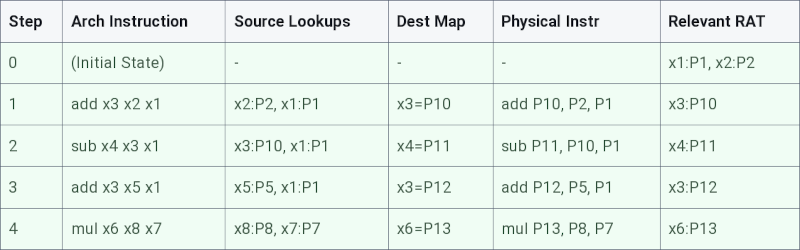
[Shreeyash] asks an interesting question: how many registers does your CPU have? The answer is probably more than you think. The reason? Modern CPUs — at least many of them — execute instructions out of sequence so they can perform multiple instructions per clock cycle. To do this, they may need to execute instructions that change registers that other instructions are still reading. In addition, you might be writing a result speculatively — a branch might make it where your result won’t wind up in the target register. The answer to both of these problems is register renaming.

The ARM CPU he looks at has many physical registers you can’t see. These get mapped to the registers you use on the fly. So when you read a register in software, you are really getting an underlying physical register. Which one? Depends on when you read it.

The RAT, or Register Alias Table, keeps track of the mapping between physical registers and the register names you use. Not only does this allow the CPU to run operations out of order, but it also lets results sit in unnamed physical registers until the time is right for it to become the real register. As a byproduct, moving one register to another becomes fast since you can just copy the alias of one physical register to another logical register.

Advertisement

Not clear? Try reading the post. There are other ways to get the same result (e.g., reservation stations), but the technique goes way back to mainframe computers. While it didn’t appear right away in microprocessors, modern ones often execute out of order and have to have some scheme to address this problem.

If you build your own CPUs with FPGAs, it is possible to do the same trick. There are also RISC-V variants that can do it.

Advertisement

Source link

Continue Reading

Tech

‘Every label in the world is delivering AI’: Apple Music executive says over a third of uploads are ‘100% AI’ as it clamps down on AI fraud

Published

on


  • Oliver Schusser from Apple Music says a third of uploads are AI-generated
  • Despite this, only 0.5% of all users are engaging with this content
  • Apple Music has plans to combat the AI epidemic even further

Apple Music has become the latest music streaming service to be hit with the influx of AI-generated content, says its VP Oliver Schusser — but it’s reaching only a very small percentage of all users.

Speaking with Billboard ($/£), Schusser shed light on the state of AI music in Apple Music’s library, sharing that “more than a third of what (Apple Music) get(s) today is actually what we would say is 100% AI”.

Source link

Advertisement
Continue Reading

Tech

Bowers & Wilkins Px8 S2, Px7 S3, and Pi8 get new colors and they are summer-ready

Published

on

Bowers & Wilkins is kicking off the warmer months with a fresh wave of color across its flagship headphone and earbud lineup. The British audio brand has introduced new finishes for three of its most celebrated products, the Px8 S2, Px7 S3, and Pi8, bringing the total portfolio to 21 variants. Despite the expanded color range, the audio performance that made Bowers & Wilkins a household name among audiophiles remains the same.

New colors for the Bowers & Wilkins Px8 S2 and Px7 S3 headphones

Starting at the top of the range, the flagship Px8 S2 gets two new finishes: Midnight Blue and Pearl Blue. Both are trimmed in soft Nappa leather with complementary aluminium detailing, and they sit alongside the existing Onyx Black, Warm Stone, and McLaren Edition options.

The Px8 S2 is built for serious listeners who want a slimmer, more comfortable fit for long flights or extended wear, and these new colorways make it easier to pick one that matches your personal style. It retails at $799.

Meanwhile, the Bowers & Wilkins Px7 S3 has a single new finish called Vintage Maroon. Its rich color pairs well with the headphone’s reputation as the more accessible entry point into the Bowers & Wilkins lineup. If you want strong noise cancellation and detailed sound for commuting or working from home without paying flagship prices, the Px7 S3 at $479 is worth a serious look.

The Pi8 earbuds are also available in two new colors

The Pi8 true wireless earbuds get two new additions: Pale Mauve and Dark Burgundy. Both are pocket-sized and designed for all-day comfort, making them a strong pick for anyone who wants big sound without the bulk of an over-ear headphone.

The Pi8 delivers crisp, detailed audio with excellent noise cancellation, and at $399, it sits at an interesting price point for anyone who wants the Bowers & Wilkins experience in a more portable form. All new color options across the Px8 S2, Px7 S3, and Pi8 are now available for purchase on the website.

Advertisement

Source link

Continue Reading

Tech

Investors back Skye’s AI home screen app for iPhone ahead of launch

Published

on

Skye, an iPhone app still in private testing, wants to change how people interact with AI on their smartphones. And even before it’s launched, it’s already attracted interest online and from investors and “tens of thousands” of users, according to its creator — a sign that consumers might want a more AI-aware iPhone.

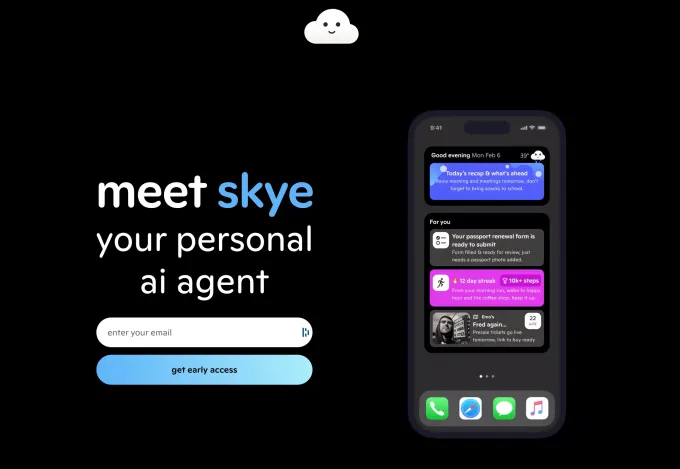
Instead of launching an app or speaking to an AI chatbot, the startup is working to design an “agentic homescreen” for the iPhone, using iOS widgets as its interface.

Through those widgets, Skye would bring a sort of ambient intelligence to your device, offering personalized insights about your local weather, your current context, your health, and more, according to a post from its creator, who goes by signüll on X. The app can also draft email replies, help you with your meeting prep, send reminders, and flag suspicious charges in your bank accounts. Its creator also claims it can provide location-specific recommendations and additional information about local businesses, neighborhoods, and attractions while you’re out and about.

Much of this data would be pulled in through authorized connections granted by the user.

Advertisement

The app, which is being built by a small team from the startup Signull Labs, has already attracted investor attention, despite not yet having a public product.

According to an SEC filing, the startup has raised north of $3.58 million in pre-seed funding, in a round that closed in September 2025. Pitchbook also currently lists New York-based Signull Labs’ funding along with a post-money valuation of $19.5 million.

Since announcing the startup’s plans on X, signüll, whose name TechCrunch confirmed as Nirav Savjani according to the SEC filings and other documents, claims the app has added “tens of thousands” of users to the waitlist. This metric, if accurate, would suggest strong consumer interest in a more AI-aware iPhone. (And potentially, the possibility that a new type of AI device, like the rumored OpenAI smartphone, could have a chance.)

TechCrunch spoke to signüll, who shared more about the product and funding, under the condition of protecting his pseudonymity. TechCrunch declined, as signull’s name is listed publicly in the SEC filings establishing Signull Labs. (TechCrunch said we would still be happy to publish an interview with him when he’s prepared to go on the record.)

Image Credits:Skye/Signull Labs

The founder noted he’s previously worked at Google and Meta, though he has no obvious LinkedIn presence. He also told TechCrunch that Skye’s early backers included a16z (Andreesen Horowitz), True Ventures, SV Angel, and other individuals. Offline Ventures also lists Signull Labs in its online portfolio, we found.

Since announcing Skye, Savjani has appeared on the TBPN podcast as his avatar and has been posting on X about his use of the app.

He told TechCrunch that the Skye app plans to launch to its waitlist of users soon, though he declined to give specifics.

When you purchase through links in our articles, we may earn a small commission. This doesn’t affect our editorial independence.

Advertisement

Source link

Continue Reading

Tech

California’s Billionaire Tax Has the Signatures to Make the Ballot

Published

on

California’s proposed billionaire tax appears headed for the November ballot after backers said they gathered more than 1.5 million signatures, well above the threshold needed to qualify. SF Standard reports: Backers of the initiative announced this weekend that more than 1.5 million people signed a petition to bring the one-time, 5% wealth tax to a statewide vote come November. That’s well beyond the 875,000 names needed to qualify the measure, and likely sufficient to account for illegible or invalid signatures. The Service Employees International Union United Healthcare Workers West, a union representing more than 120,000 healthcare workers, pitched the tax to make up for federal spending cuts that threaten to shutter hospitals(opens in new tab) and kick millions of people off medical insurance.

Proponents of California’s wealth tax estimate it would raise $100 billion in one-time revenue, even if some billionaires leave because of the measure. The nonpartisan California Legislative Analyst’s Office forecasts tens of billions in upfront revenue, but cautioned that the tax could cost hundreds of millions or more a year if some billionaires move out of state. The proposal, which needs a simple majority to pass, would apply to assets of people with net worth of $1 billion or more who lived in California as of Jan. 1 this year. That means it would affect about 200 people, according to the SEIU-UHW.

Source link

Continue Reading

Tech

5 Luxury Car Models For Drivers With A Bad Back

Published

on


Back pain isn’t a niche problem. According to the CDC’s 2023 National Health Interview Survey, 24.3% of American adults suffered from chronic pain in the past three months, up from 20.4% in 2019, meaning the problem is getting worse. And yet, most people spend very little time thinking about how their car contributes to it. They should.

Studies have shown that prolonged sitting and driving has been frequently associated with numerous spinal health issues, including poor circulation, muscular fatigue, and degenerative changes such as disc herniation. A car that’s good for a bad back isn’t just one with a soft seat. As WhatCar? notes in its back pain buying guide, adjustable lumbar support is critical because it helps you achieve a seating position that supports your back fully.

However, adjustable lumbar support is only the tip of the iceberg. The most comfortable seats, according to Consumer Reports, are evaluated across multiple dimensions — lumbar support, shoulder support, hip alignment, thigh support, and the ability to precisely fine-tune your position. The good news is that luxury cars increasingly treat the driver’s body like something worth engineering around. Here are five luxury car models for drivers with a bad back.

Advertisement

Porsche Panamera

If you want a car that’s sporty, yet comfortable and accessible for people with back pain, the Panamera is a unicorn pick. The car’s electric easy-access function automatically slides the seat back and raises the steering column when you cut the engine. You can choose between a 14-way adjustable comfort seat, or an 18-way adjustable sport seat, both of which give you lots of ways to dial in the perfect seating position.

Advertisement

Both also come with memory functions, meaning that once you find that perfect position, you just save it and it’s stored for good. The seats can also be adjusted for angle, four-way lumbar support, height, length, and backrest positioning. Quite possibly the most impressive comfort feature of the new Panamera is the new Active Ride adaptive air suspension. Motor1 called it a game-changer because it doesn’t just absorb forces, it fights back against them.

This futuristic suspension setup is only available for hybrid Panamera models because it requires a 400-volt architecture you can only get with the hybrid. Active Ride can also physically raise the ride height every time you want to step in or out to make it feel even more comfortable. To top it all off, the Porsche Panamera Turbo S E-Hybrid is also the fastest hybrid you can buy for daily driving.

Advertisement

BMW X5

The BMW X5 has long been the SUV benchmark for mixing driving engagement with day-to-day comfort, and for back pain sufferers that combination matters a lot. The 2024 and later X5 uses a two-axle air suspension as standard, which provides automatic self-leveling and reduces the SUV’s height at highway speeds, cutting down on the fatigue-inducing body movement that irritates a compromised back on long runs.

The optional Adaptive M suspension adds electronically controlled dampers with adjustable stiffness for when road conditions change. You can also control the X5s ride height however you please with a simple press of a button. Seating-wise, the 2026 X5 offers impressive multi-contour 20-way adjustable front seats. Cinch named the BMW X5 one of the best cars for people with a bad back because of the fully adjustable seating with electric lumbar support and the optional Comfort Plus Pack that adds front massage seats and seat ventilation.

The ride height sits at the sweet spot for most back sufferers — tall enough to step into without crouching, but low enough that the door sill doesn’t demand a climb. Few vehicles at this price point balance those variables as consistently as the X5 does. Consumer Reports named the BMW X5 one of the most comfortable cars you can buy, and the seating comfort is part of the reason why.

Advertisement

Mercedes-Benz S-Class

Most cars let you adjust the seat to your body. The Mercedes-Benz S-Class, as usual, goes further. On S 580 models, the MBUX system includes a feature that continuously micro-adjusts the seat cushion, backrest, and multicontour lumbar supports while you’re driving. In other words, it is virtually imperceptible movements driven by a patented algorithm designed to reduce muscle fatigue and improve spinal wellbeing over the course of a drive. 

However, if you do want to dial it in yourself, the new S-Class allows you to enter all of your body dimensions into the system, and the car will use science to give you the optimal driving position. Beyond, the power-adjustable front seats store up to four memory positions per driver, and the ten different massage programs target different back regions. You also get heated and ventilated seats, a heated steering wheel, heated arm rests, and the recent facelift will introduce a heated seatbelt.

Advertisement

AIRMATIC air suspension is standard across the lineup, adapting each wheel’s damping individually to smooth out road imperfections. Getting in and out is handled by auto-closing doors that operate hands-free, so you’re never twisting back to yank the door shut. To top it all off, the new S-Class has 41.4 inches of front legroom and 59.7 inches of shoulder room thanks to being a full-size sedan, and that gives you lots of room to adjust, even if you are particularly tall.

Advertisement

Volvo XC60

We’ve already covered sporty cars, mid-size SUVs, and comfortable sedans, now it’s time to look at compact-size SUVs that are better suited for drivers with back pain. Volvo’s reputation for safety tends to overshadow an equally serious commitment to spinal ergonomics, and the XC60 is where that engineering shows most clearly in everyday terms. When we reviewed the 2026 Volvo XC60, we noted that its front seats were “extremely comfortable.”

What few people know is that Volvo’s seat design heritage traces back to Dr. Alf Nachemson, a Swedish orthopedic surgeon and pioneer in lumbar spine research who directly gave consultation to Volvo on how car seats should support the human back. That institutional knowledge carries forward into the XC60’s current generation. The front seats feature four-way adjustable lumbar support — up, down, forward, and backward, as shown in Volvo‘s own documentation, while higher trims add a multi-program massage function through the backrest using air cushions.

As Cinch notes, the XC60 Plus trim adds power lumbar support and ergonomically designed Comfort front seats, while the Ultra trims extend to ventilation and massage. The ride height is high enough to step into without bending down hard, but not so elevated that entry becomes its own challenge. For a mid-size luxury SUV with genuine back-health credentials, the XC60 sits at the top of the segment.

Advertisement

Range Rover

If there is one SUV on this list that was engineered with effortlessness in mind, it’s the Range Rover. Edmunds notes that the standard air suspension dramatically lowers the vehicle upon your approach, and that’s before you even touch for the door. That is complemented by a dedicated Access Height mode that drops the vehicle to its absolute lowest position specifically for entry and exit, eliminating the high step-in that makes so many full-size tall SUVs a problem for back sufferers in the first place, and also eliminates the need for running boards.

When we reviewed the 2024 Range Rover, we mentioned how you can have it with seven seats, or four really nice ones. For the premium Autobiography trim, you get ventilated and massaging front seats in an already well-appointed cabin, while the top SV trim goes all the way to exceptional 24-way adjustable heated and cooled front seats with a hot stone massage function – one of the highest seat adjustment counts of any production vehicle we came across.

Advertisement

As well as the adaptive air suspension helping you with ingress and egress, it also helps soak up bumps in the road on the move, keeping road shock from traveling up through the seat into your spine. As What Car? highlighted in its back pain buying guide, air suspension with a dedicated entry mode is one of the most practical features a large SUV can offer, and not many cars do it more completely than the Range Rover.

Advertisement

How we made the list

Back pain is not a one-size-fits-all condition, and neither is the search for the right car to manage it. Moreover, not all of us like the same types of cars, and it would be a shame if you had to buy an SUV only because of your back, although you wanted a sedan. To put this list together, we looked beyond marketing jargon and focused on the specific engineering features that credentialed sources consistently identify as most impactful for drivers with compromised spines.

Our criteria centered on four pillars: Adjustable lumbar support with enough range to fit different body types, ride height and access features that minimize the physical strain of getting in and out, suspension tuned to isolate road shock rather than transmit it, and seat adjustability that goes deep enough to genuinely accommodate different bodies.

We cross-referenced findings from medical and ergonomic sources including the CDC, PubMed, automotive publications including What Car?, Edmunds, Motor1, Cinch, and Consumer Reports, and manufacturer specifications to verify every claim. Lastly, we wanted to offer a wide array of vehicles, meaning you get a sport sedan, a compact SUV, a mid-size SUV, a full-size sedan, and a full-size SUV. This way, you can always get your cake and eat it. 

Advertisement


Source link

Continue Reading

Tech

The Hidden Tradeoffs Powering Joby’s eVTOL Motors

Published

on

Electric vehicles, whether they’re cars on the road or electric vertical take-off and landing (eVTOL) aircraft, are built around similar electric motors. But there are vital differences including component costs, mass, and redundancy.

Jon Wagner spent five years as the senior director of battery engineering for Tesla before joining California-based eVTOL developer Joby Aviation in 2017. He spoke with IEEE Spectrum about how engineering differs between cars and aircraft.

​Jon Wagner 

Jon Wagner leads power train and electronics at Joby Aviation.

Advertisement

How do eVTOL motors differ from car motors?

Jon Wagner: In general, ground transportation has a different focus on cost versus mass. You know, would you be willing to spend more on the parts in order to save a certain amount of mass? The trade-offs end on the ground vehicle and at a certain point the cost is dominant, whereas with aviation, the trade-offs between cost and mass go a lot deeper. And so for certain solutions eVTOL makers are willing to spend more money in order to enable either lighter weight or greater efficiency.

The other key difference is related to safety. In essence, we’re dealing with the same motor technologies for ground transportation and aviation right now, so the failure modes are similar. But of course, with aviation we have the desire for continued safe flight and landing, and that drives what you do in the design to mitigate those failures if they were to occur. In many cases in ground transportation, the mitigation for a failure is to pull over safely to the side of the road. In aviation, the mitigation is redundancy, because there’s not an option to pull over.

Is redundancy designed into EV motors?

Advertisement

Wagner: Typically, redundancy is not designed into electric vehicle drive systems solely for the purpose of redundancy. There are some cars now that have all-wheel drive—so there’s a motor on the front, a motor on the back—so as a secondary feature you get the redundancy. But it wasn’t done with the primary intent of having redundancy.

How does Joby’s eVTOL manufacturing compare to EV manufacturing?

Wagner: The most efficient way to run a large-scale engineering effort in a mature industry, such as automotive, is to break your system up into pieces that can be outsourced to suppliers who are going to do a really good job on each piece. The downside is that when you break a problem up into three pieces, you now have interface boundaries between each of these pieces, and those always create inefficiencies. We were able to design highly integrated solutions without taking that manufacturing penalty.

Are there any materials you’re really excited about?

Advertisement

Wagner: Permendur [a cobalt-iron alloy] typically costs in the neighborhood of 10 times as much as traditional motor steel. That’s significant, and it’s often not used in ground transportation because of that cost. It comes with small improvements in performance, but enough that for aviation it’s quite interesting.

Will electric aircraft catch on like ground EVs?

Wagner: I’ve always wanted to be a very forward thinker with respect to power-train. However, one of the things I’ve learned over the years is that power-train development has to come with a very healthy dose of patience. Developing a whole new type of power-train is a big endeavor, but it’s one that I’m very confident the aviation industry will undertake. We’re certainly undertaking it here at Joby, and we’ll see that broaden, I’m sure, with time.

This article appears in the May 2026 print issue as “Jon Wagner.”

Advertisement

From Your Site Articles

Related Articles Around the Web

Source link

Advertisement
Continue Reading

Tech

Spotify is now a fitness app too

Published

on

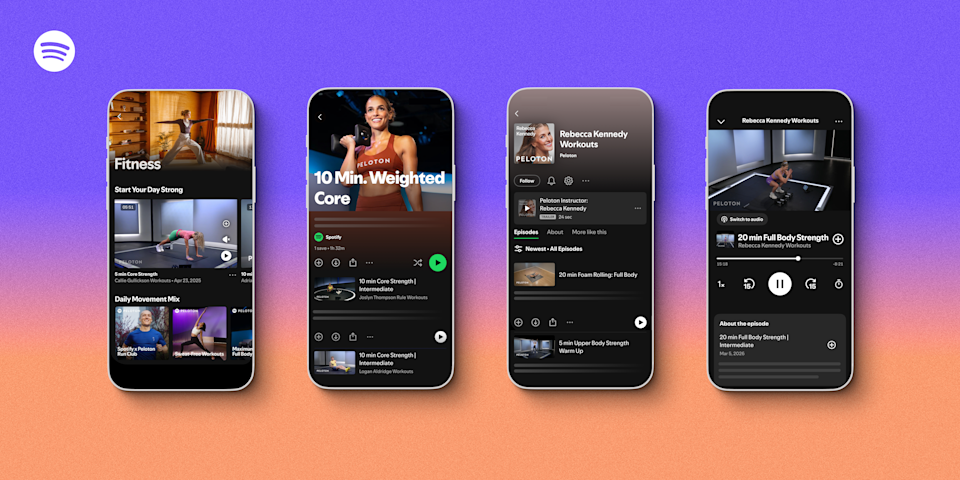
In its quest to become an all-in-one app, Spotify is now breaking into the fitness app world by offering “guided workout experiences” and on-demand Peloton classes. Premium subscribers will get access to Peloton‘s library of more than 1,400 classes in the app, while both Free and Premium can browse curated playlists (they’re listed under the genre “fitness.”)

Spotify's Fitness section showing example workouts and video to follow along with.

Spotify

Spotify said the classes are primarily in English, but there are some options in Spanish and German. Like music and podcasts, Spotify lets you bounce between different devices for its fitness media, so you can start a video workout on your TV and switch to an audio-only version on your phone or smart speaker. Users can even download the classes for offline use.

The fitness category may feel like a sharp turn for Spotify, but the company said that nearly 70 percent of its Premium subscribers work out monthly and that fitness and workout content was one of the top use cases for its Prompted Playlist feature. Spotify has long been expanding its offerings outside of music, with its latest efforts giving users a way to buy physical books or create group chats.

Source link

Advertisement
Continue Reading

Trending

Copyright © 2025