Connect with us

Tech

Meta’s $18B child-safety deal hinges on age verification tech that doesn’t work well

Published

on

Meta reached an $18 billion settlement on Wednesday over a lawsuit brought by 29 U.S. states concerning children’s safety. The settlement is historic in scale as Meta agrees with a group of 52 attorneys general to implement sweeping changes to how minors use Instagram and Facebook.

The settlement “gives the AGs what they want, which is the political story that they’ve extracted a huge amount of benefit for the public from this settlement, including the platform changes,” Jessica Nall, a technology litigator at Withers, told TechCrunch. But Nall noted the settlement’s real-dollar impact is softer than the headline number suggests. “The fact that it’s being paid over 10 years really does blunt the financial impact of the large number, especially compared to Meta’s annual revenue… We’re talking about one of these tech companies where their annual revenue is larger than the GDP of most European countries.”

Indeed, Meta reported more than $200 billion in total revenue in 2025, which puts the $18 billion price tag in perspective. But the bigger story here isn’t the dollar amount. It’s what Meta now has to build: the most detailed child-safety rules any major platform has agreed to, resting on age-verification technology that still doesn’t work particularly well.

Meta hasn’t admitted wrongdoing, even as it settles allegations that it intentionally designed its platforms to keep children hooked — a common tactic for companies looking to avoid a jury trial, where the risk of a worse outcome is higher. A ruling against Meta could also have jeopardized the legal protections that allow social platforms to escape liability for what users post.

Advertisement

“I think it’s wise of them to try to get out of it, especially without a legal finding against them on any of the First Amendment issues and the Section 230 issues, which are still alive,” Nall said. “That could be existential, potentially, not just for Meta but for every tech company that has a product that engages with users, which is almost all of them.”

Meta’s settlement also reignites ongoing concern over age verification measures that are intended to protect children online but can, in practice, create new privacy risks for both kids and adults.

“This is a classic debate around prioritizing safety over privacy,” Dr. Alexis Ingber, a professor of communications at Syracuse University, told TechCrunch. “The perspective is, if we want to keep children safe on Meta platforms, here are all the design things we’re gonna have to do, but we’re gonna have to also do this age verification thing that’s gonna take away from people’s data privacy and will introduce these new data privacy concerns.”

Under the settlement’s terms, Meta has proposed a list of design changes, including a default two-hour daily screen-time limit for app use, plus prompts that appear every 15 minutes to “encourage intentional use.” Accounts that Meta identifies as belonging to minors will also default to being blocked from Meta apps overnight (between midnight and 6 a.m.) and will have notifications muted during school hours (8 a.m. to 3 p.m.). By default, teens won’t be able to see ‘like’ counts on their own posts or others’, among other changes.

Advertisement

“The design changes that were proposed in the settlement seem great on paper, but they are all reliant upon successful, effective, and unbiased age verification technology,” Dr. Ingber said. “You need to be able to identify that that’s a child versus an adult, and the way that we do that right now is not really effective… I’m very curious to see how Meta is going to move forward with trying to do that, given that by and large, these technologies have failed.”

Age-verification technology has evolved well beyond clicking “Yes, I am 21” on a liquor website. Companies now typically verify age through biometric scans (like a selfie), government ID checks, or analysis of behavioral patterns, and each comes with its own flaws. Behavioral analysis can misjudge adults as minors or vice versa, while ID and biometric checks require kids, and adults, to hand sensitive documents over to a third party just to use an app.

Some users also don’t trust platforms to roll out age-verification responsibly. Discord learned this firsthand when it tried to implement global age verification earlier this year and had to delay the rollout after significant user backlash.

Not everyone shares that pessimism, though. “I think the technology has evolved quite a bit in the last few years since these concerns started coming up, and I do think there are ways that [companies] can provide or implement age assurance technologies,” Philip Yannella, co-chair of the privacy and data security group at law firm Blank Rome, told TechCrunch. “I’m not going to say they won’t have potential privacy issues, but they could greatly lessen the privacy issues.”

Advertisement

Yannella added that companies don’t need to store users’ personal information to verify their age.

“There are ways you can verify someone’s age, create a token that would signal that this particular IP is associated with someone who’s below the age of 13, below the age of 16, whatever it is, but discard the personal information,” he said.

Still, Ingber and other experts caution that even if companies don’t retain this data, simply transmitting sensitive identity information online carries its own privacy risk. A breach of ID scans or facial biometric data tied to minors creates the risk of identity theft, and unlike a password, a leaked face or fingerprint can’t be changed.

Meanwhile, as Meta and the 52 state attorneys general finalize these guidelines — which Meta must follow for the next 10 years — the company is framing the settlement not as a concession, but as proof that it’s a leader in children’s online safety. Meta is now running full-page newspaper ads calling on TikTok and YouTube to adopt similar design changes, without mentioning that its own adoption came as part of a legal settlement. Under the agreement, roughly 30% of Meta’s settlement payment depends on whether TikTok and YouTube also comply with these guidelines.

Advertisement

While Ingber worries that Meta and other companies won’t be able to meet these commitments without relying on potentially insecure verification mechanisms, she sees the settlement as evidence of a bigger cultural shift.

“Meta has extraordinary power to create norms through its platform design,” she said. “If you change the way that the platform is designed, you can set new norms. You can make things better.”

When you purchase through links in our articles, we may earn a small commission. This doesn’t affect our editorial independence.

Source link

Advertisement
Continue Reading
Click to comment

You must be logged in to post a comment Login

Leave a Reply

Tech

5 Pickup Trucks Faster Than The Ford F-150 Raptor

Published

on


In many people’s eyes, the Ford F-150 Raptor is the definitive performance pickup truck. First introduced in 2010, the F-150 Raptor has been through three different generations. The first generation Raptor (2010-2014) used either a 5.4-liter V8 with 310 horsepower or a 6.2-liter V8 with 411 horsepower. The second generation of the F-150 Raptor (2017-2020) introduced the 3.5-liter EcoBoost V6, which pumped out 450 horsepower.

The latest, third-gen Raptor relies on an updated 3.5-liter V6, still making a total of 450 hp. In Car and Driver‘s testing of the 2026 Ford F-150 Raptor, the truck managed a zero to 60 mph time of 5.2 seconds, with a quarter mile time of 13.9 seconds. Although that may not seem as rapid as something you’d get from a two-door sports car, the F-150 Raptor has a curb weight of almost 6,000 pounds.

The Raptor is also equipped with 35-inch tires and is likely one of the best used trucks for off-road enthusiasts. However, it was never really designed for speed as much as it was for all-terrain capability. For those who prioritize speed and performance in a pickup truck, there are a handful of trucks now that leave the standard Raptor in the dust. Whether it be supercharged V8s or multi-motor EV drivetrains, these five pickup trucks are faster than the Ford F-150 Raptor.

Advertisement

Rivian R1T Quad Motor Max Pack

It comes as no surprise that the quickest truck we are going to cover today is electric, and the current truck performance benchmark belongs to the Rivian’s R1T Quad Motor Max Pack (R1T QMMP). The R1T QMMP combines four electric motors for a combined 1,025 horsepower and 1,198 lb-ft of torque. Car and Driver‘s test recorded a 2.6-second 0-60 run and a 10.6-second quarter-mile at 128 mph.

Advertisement

Car and Driver noted that such a result was, and still is, the quickest pickup truck acceleration pace they ever recorded. If you need more context to just how fast a 10.6-second quarter mile is, that’s the same time MotorTrend recorded for the 2023 Corvette ZO6 and the Ferrari 488 GTB. What is even more impressive is that the R1T QMMP is able to produce such numbers even though it weighs almost 7,000 pounds. That is as much as the ZO6 and the Ferrari 488 combined. 

The truck starts at $115,990 in Quad trim, and Rivian’s Max battery pack carries an 11,000-pound maximum towing rating. Rivian advertises up to 400 miles of range for the R1T Quad Motor in its most efficient Conserve Mode setting. These quad-motor Rivian EVs actually drive like supercars, courtesy of the advanced built-in RAD tuner system.

The RAD Tuner allows owners to dial in the R1T Quad Motor using knowledge Rivian gained through competition, including its runs at the Pikes Peak International Hill Climb. Although the F-150 Raptor may retain an advantage in high-speed desert driving, the Rivian remains highly capable off-road. On pavement, however, the standard F-150 Raptor cannot come close to matching the straight-line performance of the R1T Quad Motor Max Pack.

Advertisement

Tesla Cybertruck Cyberbeast

Sitting one spot after the Rivian is the truck that dethroned it before getting dethroned right back: the tri-motor Tesla Cybertruck Cyberbeast pushes out 845 horsepower, also has an 11,000-pound towing capacity, and can kinda drive itself if you are not feeling like it. However, when you do want to take control, be wary of the gas pedal. MotorTrend tested the Cyberbeast when it came out, and the zero to 60 mph time was 2.5 seconds.

Since the Cyberbeast came out before the Rivian R1T QMMP, both Car and Driver and MotorTrend called it the quickest pickup truck they ever tested. As far as the quarter mile is concerned, the Cyberbeast managed it in 11 seconds flat, a smidgeon behind the Rivian QMMP, and as quick as a track-focused 2023 Porsche 911 GT3 RS. For a spot of context, the Cyberbeast weighs in at around 6,800 pounds, right around two times more than the GT3 RS.

The Cyberbeast is also quicker than all the Hellcat models when it comes to outright acceleration. The Cyberbeast starts at $99,990, after Tesla cut the trim’s price by $15,000 in early 2026. It also has a steer-by-wire system that turns lock-to-lock in less than one full rotation of its yoke-style wheel. You can say what you want about the Cyberbeast, but as far as performance goes, it is difficult to not be impressed by something that weighs nearly 7,000 pounds and can still outrun a 911 GT3 RS.

Advertisement

GMC Hummer EV Pickup

Sitting right behind the two EV heavyweights is the truck that got there first: the three-motor GMC Hummer EV. This behemoth pushes out a combined 1,000 horsepower and 1,200 lb-ft of torque, and it does that while hauling around a curb weight of more than 9,000 pounds — heavier than three Miatas stacked on top of each other.

A Car and Driver instrumented test recorded a 3.3-second 0-60 run and an 11.9-second quarter-mile, using the truck’s launch mode, which GMC named “Watts to Freedom” (yes, really). Turn that mode off, and the same truck’s 0-60 time drops to a comparatively pedestrian 5.4 seconds, according to a test carried out by MotorTrend — proof that nearly two seconds of the Hummer’s advantage lives entirely in one drive mode.

Advertisement

For a spot of context, MotorTrend also measured a peak acceleration of 1.14 g (the same as a Lamborghini Huracan STO does in corners), reached in just 0.16 second, which is enough to pin you into the seat before you’ve had time to register the launch actually happened. The top-spec GMC Hummer EV 3X starts at around $107,995 before options.

Nine thousand pounds isn’t supposed to move like this, but on pavement, the Raptor doesn’t stand a chance against it. Still, when you consider the Hummer EV’s value plummeted so much you could get one under $100,000, it is weird to think that the cheapest “pound-for-pound” quickest accelerating car on the market is a 9,000-pound Hummer.

Advertisement

Ford F-150 Raptor R

If you’ve grown bored of reading about electric pickup trucks that accelerate as quickly as Italian supercars, the two trucks left do none of that, yet are almost as quick. The Raptor R replaces the standard truck’s twin-turbo V6 for a supercharged 5.2-liter “Predator” V8. The Predator V8 traces its roots to the Mustang Shelby GT500, adapted by Ford for truck duty.

At launch the engine made 700 horsepower; a 2024 hood update improved airflow and pushed output to 720 horsepower, with torque holding steady at 640 lb-ft. In Car and Driver‘s testing, the Raptor R hit 60 mph in 3.6 seconds and ran the quarter-mile in 12.0 seconds at 112 mph. The magazine called the result “the quickest gasoline-fueled truck we’ve strapped our test gear on.”

The Raptor R weighs 6,077 pounds, and it rides on 37-inch BFGoodrich All-Terrain KO2 tires rated for only 112 mph, a limitation the outlet noted was capping the truck’s quarter-mile trap speed. Underneath, the Raptor R carries 14.1 inches of rear wheel travel and 13 inches up front, along with 13.1 inches of ground clearance.

The Raptor R gained roughly 100 pounds of curb weight over the standard Raptor, and both trucks use the same coil-spring rear suspension architecture, retuned with computer-controlled dampers for the extra power. Ford rates the Raptor R’s towing capacity at 8,700 pounds, versus 8,200 pounds for the standard Raptor. The Raptor R is an expensive truck though. It launched with a base price of $109,250; current listings put the 2026 model’s starting price at $114,420.

Advertisement

Ram 1500 TRX

The Ram TRX pairs a supercharged 6.2-liter V8 with 702 horsepower and 650 lb-ft of torque, an engine block shared with the Dodge Challenger SRT Hellcat before Ram retuned it for truck duty. MotorTrend recorded the old TRX at 4.5-second 0-60 run and a 12.9-second quarter-mile. Underneath, the TRX uses 2.5-inch Bilstein Black Hawk e2 shocks, a design unique to this truck, and offers 13 inches of suspension travel.

Front and rear rotors measure 15 inches in diameter. The truck’s curb weight sits at 6,440 pounds, and Ram’s own specifications list an 8,100-pound towing capacity and a 1,310-pound payload rating. Ram revived the nameplate for 2027 as the SRT TRX, raising output to 777 horsepower and 680 lb-ft of torque, claiming a 3.5-second 0-60 run with a 118 mph top speed — figures that have yet to be independently tested at time of writing.

Advertisement

The 2027 RAM TRX starts at $99,995 and is expected to hit tests real soon. Some might even say that the 2027 Ram TRX SRT is expensive and too powerful, but judging where the current metrics stand for some of the pickup trucks on this list, it seems like there are many levels to this game. Even as it stands, it beats the Raptor, both on paper and in real life.

Advertisement

How we made this list

The performance pickup truck market isn’t as vast as let’s say the performance SUV market, meaning that making this list was not all that too difficult. To make things as grounded and as verifiable as can be, we only used tested metrics by outlets such as Car and Driver and MotorTrend, supplemented by reporting from Fox News Autos, Kelley Blue Book, Edmunds, and MotorWeek, while also drawing on manufacturer specifications for figures that don’t get independently tested, like towing capacity and payload ratings.

Where a truck’s number came from the manufacturer rather than a test track — the 2027 Ram SRT TRX’s claimed 3.5-second 0-60 time, for instance — we said so explicitly rather than presenting it as an equal to a verified run. We also made sure to go through previous efforts of our own writers on associated topics to make sure our list is as complete as can be.


Advertisement

Source link

Continue Reading

Tech

Meta agrees to pay $17bn to settle landmark US child safety lawsuit

Published

on

The settlement comes just a week after Meta was dragged to trial by four US states.

Meta has agreed to pay up to $17bn in a landmark settlement to dozens of US states and territories over a lawsuit that alleged that the social media giant knowingly caused harm to children.

Alongside the proposed settlement, the social media giant has also agreed to make major changes to its products, and limit how much time minors can spend on its platforms. It also agreed to ban features including beauty filters and like counts for users under the age of 18.

The $17bn penalty will be paid to the states over the course of 10 years, the California Department of Justice said. California alone will receive $1.5bn to $2.1bn if this settlement is approved by the court.

Advertisement

“Today, we have secured a settlement with Meta that will make social media less dangerous for our kids and make a world of a difference for children and their families,” said California attorney general Rob Bonta.

“Meta has agreed to make massive transformations that will reduce the risk of harm from its platforms – and will do it within months.

“We are talking about time limits, stopping notifications during school, a block on the app during critical overnight hours, bans on plastic surgery filters, and so much more.

“I am proud to deliver this settlement that addresses the concerns at the core of our lawsuit and institutes real change, real transparency and real enforceable protections for children on Facebook and Instagram – right now, no more waiting,” Bonta added.

Advertisement

The settlement comes just a week after Meta was dragged to trial by California, Colorado, Kentucky and New Jersey.

The trial stems from a 2023 lawsuit filed by more than 30 states and territories which claimed that Meta specifically targets users under 13 years old, monetises their attention through data harvesting and targeted advertising, concocts ways to prolong their time on its apps and misrepresents its platforms as being safe.

The multibillion-dollar agreed settlement is a far cry from the $200bn that the four aforementioned states were seeking in damages from Meta, with penalties ranging from a few hundred dollars to $50,000 per violation, depending on the jurisdiction.

The social media giant still faces several other lawsuits from school districts and individuals in the US, with some scheduled for the coming months, as child safety takes political priority in an online-first world.

Advertisement

Earlier this year, a New Mexico court fined Meta nearly $1bn in damages after finding that the company endangered children by misleading users about the safety of its platforms. The damages included a $375m civil penalty and $567m to remedy social media harms to the state’s child users.

That initial ruling came just a day before the company’s platforms were found to be addictive for children in a separate lawsuit that also targeted YouTube.

Don’t miss out on the knowledge you need to succeed. Sign up for the Daily Brief, Silicon Republic’s digest of need-to-know sci-tech news.

Advertisement

Source link

Continue Reading

Tech

Pro-Ject x Harley-Davidson Turntable Is a $3,299 Record Player That Takes the Bar & Shield Very Seriously

Published

on

Pro-Ject has spent years demonstrating that a themed turntable does not have to be the analog equivalent of a souvenir T-shirt from the airport gift shop. The Austrian manufacturer has already gone down this road with The Beatles, Metallica, Pink Floyd, AC/DC, Peanuts, Elvis Presley and others, frequently using the collaboration as an excuse to do something genuinely interesting with the hardware.

Harley-Davidson is next, and subtlety has once again been left outside in the parking lot.

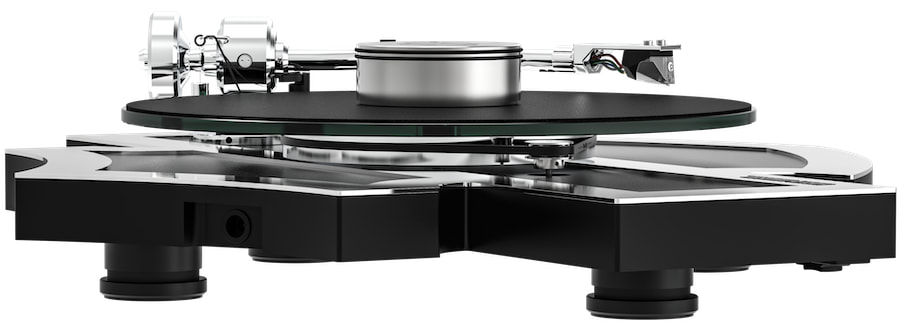
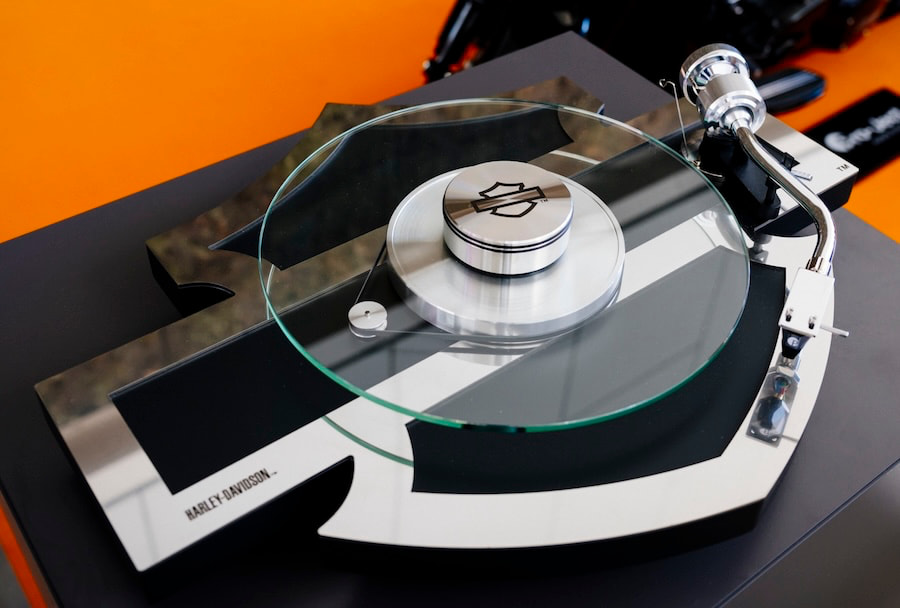
The officially licensed Pro-Ject x Harley-Davidson Turntable is a limited special edition priced at $3,299 in the United States, and unlike some lifestyle collaborations that amount to a logo, new paint and an inflated invoice, this one has been designed around Harley-Davidson’s visual identity from the ground up. The shape of the chassis follows the company’s instantly recognizable Bar & Shield logo, turning the entire record player into the branding rather than simply printing it across the top.

No kickstand appears to be included.

Advertisement

Related Review: Pro-Ject 2Xperience SB Sgt. Pepper Limited Edition Turntable Review

pro-ject-harley-davidson-turntable-top

More Than Harley-Davidson Merch

The important part is underneath all of the Milwaukee cosplay.

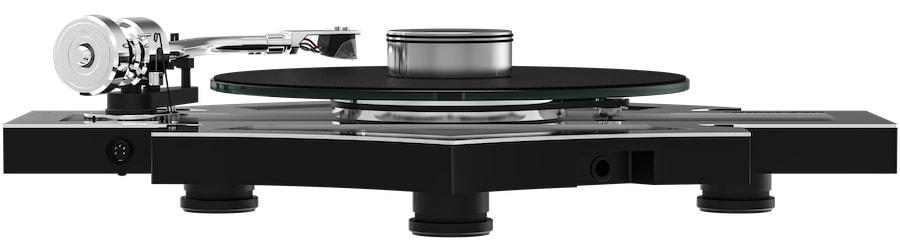
Pro-Ject uses an Aluminum-MDF sandwich chassis designed to combine rigidity with internal damping, with the sculpted MDF structure topped by precision-machined metalwork. Polished aluminum, stainless steel and a genuine leather record mat reinforce the motorcycle connection without forcing buyers to sacrifice the fundamentals of a serious turntable. Pro-Ject says the leather mat was selected in part to evoke the material and feel of a traditional motorcycle saddle.

The drive system is substantially more interesting than the branding.

Advertisement
pro-ject-harley-davidson-turntable-side

A diamond-cut aluminum sub-platter sits beneath a heavy 300mm glass platter, while a massive 915-gram Harley-Davidson record puck holds the LP against the platter and adds additional damping. Total moving mass for the drive system is 2.75 kilograms, which Pro-Ject says contributes to improved rotational stability.

The platter is driven by a belt and a synchronous AC motor powered through Pro-Ject’s DC/AC generator. Electronic switching between 33 and 45 RPM means owners won’t have to start moving belts around every time they pull out a 45. The three height-adjustable aluminum feet are damped to help isolate the deck from external vibration and acoustic feedback.

In other words, this thing might look like it belongs next to a Road Glide, but Pro-Ject hasn’t forgotten that the actual job is spinning records accurately.

Advertisement. Scroll to continue reading.
Advertisement
pro-ject-harley-davidson-turntable-back

The Tonearm Isn’t Decoration Either

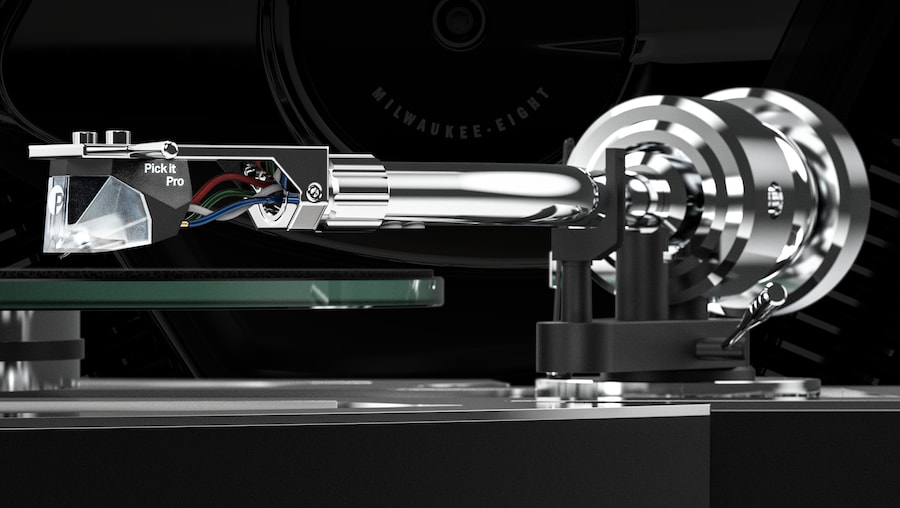
Pro-Ject equips the Harley-Davidson Turntable with a hand-polished 8.6-inch S-shaped aluminum tonearm using an SME-style removable headshell, high-purity copper internal wiring and a TPE-damped counterweight.

That detachable headshell is more useful than it might initially appear. Cartridge swapping becomes considerably easier, and Pro-Ject specifically designed the arm to accommodate a wider range of cartridges should owners eventually want to move beyond the supplied model. An adaptive gravity-based anti-skating mechanism changes the effective anti-skating force as the stylus travels across the record.

pro-ject-harley-davidson-turntable-pick-it-pro

Pro-Ject Pick it PRO moving-magnet cartridge, manufactured in Denmark, arrives installed and adjusted. That’s a sensible choice for getting buyers up and running without turning the first evening into a cartridge-alignment seminar.

And if one of these lands at eCoustics for review, I already know what record is going on first.

Dolly Parton’s Jolene.

Advertisement

Parton died on August 25, 2026, at the age of 80, leaving behind one of the most remarkable catalogs and careers in American music. Hearing “Jolene” come off a glass platter covered by a leather mat on a Harley-Davidson turntable sounds a little absurd when you write it down and somehow completely appropriate.

RIP, Dolly.

Pro-Ject Has Been Here Before

Anyone who follows Pro-Ject knows the Harley-Davidson collaboration didn’t appear out of thin air.

We’ve covered its Metallica Turntable, which used the band’s angular logo as a major structural element and paired it with an aluminum sub-platter, glass platter and removable SME headshell. We’ve also covered the rather less restrained AC/DC Turntable, complete with LED lighting and a wild acrylic tonearm inspired by the band’s lightning-bolt logo.

Advertisement

Then there was the Peanuts 75th Anniversary Turntable, the Elvis Turntable, and the considerably more traditional 2Xperience SB Sgt. Pepper Limited Edition, which we actually reviewed and found to be a legitimate high-end turntable beneath all of the Beatles artwork.

Pro-Ject’s Artist Collection has actually gone much further over the years, including multiple Beatles editions, a Rolling Stones model, Ringo Starr and George Harrison decks, the Vienna Philharmonic, Hard Rock Cafe and other collaborations.

The Harley-Davidson model feels like one of the more natural pairings. Both companies trade heavily on mechanical design, nostalgia, customization and owners who become very attached to the brand. Some of those owners also have enough disposable income to spend $3,299 on a record player that looks like a motorcycle badge.

Advertisement. Scroll to continue reading.
Advertisement

Funny how that worked out.

What’s Actually Unique?

The biggest difference is that Pro-Ject hasn’t simply taken a conventional rectangular deck and dressed it up for Harley-Davidson. The Bar & Shield silhouette is fundamental to the chassis, while the leather, polished aluminum, stainless steel, heavyweight puck and exposed mechanical elements extend the theme into the materials themselves.

More importantly, the underlying hardware isn’t compromised for the sake of the visual stunt.

The heavy drive system, regulated motor power, aluminum sub-platter, glass platter, adjustable feet, removable headshell and Pick it PRO cartridge give this enough legitimate analog engineering to separate it from the mountain of licensed consumer products designed primarily to sit on a shelf.

Advertisement

Is it expensive? Absolutely. You are paying a significant premium for the industrial design, licensing and scarcity. There are excellent conventional turntables available for $3,299 that don’t arrive wearing a Harley-Davidson tattoo.

But that’s also missing the point.

Nobody considering this wants it to disappear into a rack.

pro-ject-harley-davidson-turntable-high-end-2026

Technical Specifications

  • Drive: Belt drive
  • Speeds: 33 / 45 RPM with electronic speed switching
  • Chassis: Aluminum-MDF sandwich construction
  • Platter: 300 mm heavy glass
  • Sub-platter: Diamond-cut aluminum
  • Total moving drive mass: 2.75 kg
  • Record puck: 915 grams
  • Record mat: Genuine leather
  • Tonearm: 8.6-inch hand-polished S-shaped aluminum
  • Headshell: Removable SME type
  • Effective arm length: 218.5 mm
  • Effective arm mass: 23.8 g
  • Anti-skating: Adaptive gravity-based
  • Cartridge: Pro-Ject Pick it PRO MM
  • Main bearing: Stainless-steel axle in brass bushing
  • Output: 5-pin DIN
  • Included cable: Connect it Phono E 5P/RCA
  • Feet: Three height-adjustable damped aluminum feet
  • Dimensions: 543 x 124 x 437 mm
  • Power consumption: 4W / 0W standby
  • Manufacturing: Made in Europe
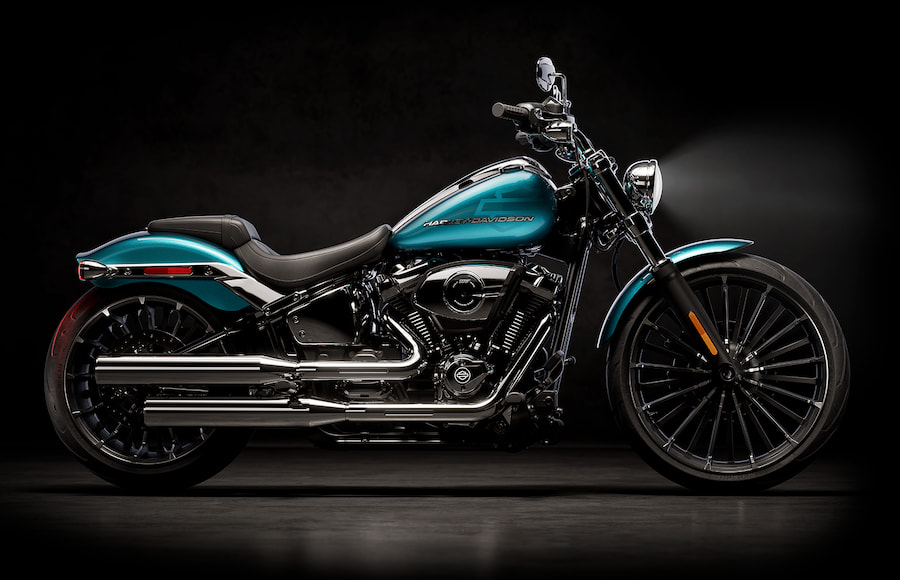
harley-davidson-motorcycle-side

The Bottom Line

The Pro-Ject x Harley-Davidson Turntable could easily have become a very expensive piece of licensed memorabilia. It isn’t.

The $3,299 asking price undoubtedly includes a healthy premium for that Bar & Shield logo and the limited-edition status, but the underlying turntable uses legitimate Pro-Ject engineering and some unusually substantial hardware. The custom chassis, 2.75-kilogram moving drive mass, 915-gram puck, aluminum sub-platter, regulated motor system and versatile S-shaped tonearm make this far more interesting than another celebrity record player wearing a fancy paint job.

Advertisement

You can absolutely buy a superb turntable for less.

It just won’t look remotely like this.

And that’s sort of the entire point.

Advertisement. Scroll to continue reading.
Advertisement

Pricing & Availability

The Pro-Ject x Harley-Davidson Turntable will sell for $3,299 and should arrive in both hi-fi dealer and Harley-Davidson showrooms by mid October 2026. With availability beyond the traditional hi-fi dealer network, the value proposition gets interesting. Put one beside a $40,000 motorcycle inside a Harley showroom and suddenly a $3,299 turntable doesn’t look quite so expensive.

We haven’t been told an exact production quantity, other than quantities will be limited. So waiting could be risky, and another production run is not guaranteed.

In addition, international pricing is set at €2,590 across Europe and £2,299 in the UK.

For more information: project-audio.com

Advertisement

Source link

Continue Reading

Tech

Waystar turns agentic AI loose on claims, denials, and documentation

Published

on

Waystar has launched agents that interpret payer responses and automatically resubmit denied healthcare claims, which it calls the industry’s first autonomous resubmission capability. Germany caps how many hospital invoices may be audited each quarter and charges a flat fee when one is reduced.

An American company has built software that argues with insurers on its own. Waystar has launched agents that read a payer’s rejection, apply that payer’s rules, decide what to do next and resubmit the claim unaided.

The scale behind it is the selling point. Waystar processes more than 7.5 billion healthcare payment transactions a year and says it touches roughly 60% of US patients, which is what gives its agents the history to act on.

The economics of the problem are peculiar. Payers eventually pay about 70% of the claims they initially deny, but only after providers spend money resubmitting them, and that delay is the gap being automated.

Advertisement

Every performance number belongs to the vendor. A 75% cut in analysis time comes from early adopters and “may vary by organization,” the 25% reduction in documentation review is expected rather than measured, and “industry’s first” is the company describing its own launch, a conditional payoff in miniature.

The most useful disclosure sits in the risk language. Waystar flags variability in AI claims-matching accuracy across payers, and the possibility that payers change the appeals and recoupment processes the agents were built to navigate.

Europe automates health administration too, just not this part. NHS England handed Copilot to 505,000 staff this year, inside a system that generates almost no denied claims to chase.

Where Europe does run this fight, it is capped by law. Germany limits how many hospital invoices a sickness fund may send for medical audit each quarter, at 5%, 10% or 15%, depending on how many of that hospital’s bills survived the previous review.

Advertisement

It also puts a price on losing. Since December 2024 a hospital pays a flat €400 surcharge when an audit reduces one of its invoices, which is a ceiling on the argument rather than an invitation to keep having it.

The AI rulebook does not reach any of this. The AI Act treats risk assessment and pricing in health insurance as high risk, and says nothing about the machinery surrounding a bill after it is issued.

Europe’s health regulators already know the gap exists. WHO Europe warned in July that nearly two-thirds of countries in the region use AI diagnostics while only 8% have a health AI strategy.

So the contrast is not about who has better software. America is automating an argument at scale, and Europe wrote rules to make the argument shorter.

Advertisement

Source link

Continue Reading

Tech

Gemini Live gains agentic tasks, voice inbox control and personal intelligence

Published

on

Google has added four capabilities to Gemini Live, letting spoken commands trigger background agents that work across Docs, Sheets and Drive, alongside hands-free Gmail control and a spoken daily brief. Its DMA settlement requires it to let rival assistants reach comparable functionality on Android by July 2027.

Google has given its voice assistant the ability to keep working after you stop talking. Gemini Live can now pass a spoken instruction to Spark, which runs multi-step jobs across Docs, Sheets, Drive and the web over days, with the app closed.

Three smaller additions arrive with it. A spoken daily brief that merges Gmail and Calendar, hands-free inbox control covering search, summarise, star, archive and delete, and Personal Intelligence, which remembers past chats and reads connected apps.

The design assumption is stated openly. Google says 63% of Gemini users already speak to it, and product director Neel Joshi wrote that “speaking a prompt out loud is often the quickest way to get help with Gemini.

Advertisement

Some of this is a second appearance. Spark and Daily Brief both arrived at I/O in May, and what is genuinely new is reaching them by voice in an unbroken conversation.

The tiers matter more than the features. Spark needs a Google AI Pro subscription or higher and Daily Brief needs AI Plus, so the agentic half sits behind the more expensive plan.

In Europe this lands on an obligation Google already carries. Its settlement with the Commission requires it to let rival assistants on Android reach comparable functionality, including voice wake commands and in-app actions, by July 2027.

That bar just moved. Every capability added to Gemini Live is also, in the EU, a specification for what a competitor must eventually be allowed to build.

Advertisement

The data side is a separate question under the same law. Article 5(2) of the Digital Markets Act stops a gatekeeper cross-using personal data from a designated service in other services it provides separately, absent specific consent.

Two of the four apps Google names are designated. Search and YouTube are core platform services under Alphabet’s designation, while Gmail and Photos are not.

Google’s answer is that nothing happens unless you ask. Users have to connect their apps in the Personal Intelligence settings before any of it works.

What the announcement never says is where. It names no countries, no languages and no European carve-out, from a company whose assistant skipped Europe at launch once already.

Advertisement

Source link

Continue Reading

Tech

Fire TV Stick 4K Max Not Only Streams 4K, But Plays Xbox Game Pass on the Same Couch

Published

on

Amazon Fire TV Stick 4K Max 2026
Amazon still markets this little black dongle as a way to watch movies. That pitch misses half the point. Second-generation Fire TV Stick 4K Max is a $49.99 (was $85) HDMI stick that also runs Xbox Game Pass, Amazon Luna, and GeForce NOW, so a living room TV becomes a cloud console after you pair a Bluetooth controller.


Plug the HDMI end into your television, and if the port is slightly recessed, use the provided extension to ensure it is firmly positioned. In addition, you’ll need to power it with the micro-USB charger included in the box. Setup normally takes a few minutes, providing you’re already an Amazon client and have your login information handy. On that topic, Fire OS 8 begins with a tile-heavy home screen that clearly promotes Prime Video, but you’ll also see Netflix, Disney+, YouTube, Hulu, Max, and nearly every other big streaming service available.

Sale


Amazon Fire TV Stick 4K Max (newest model), streaming device, with AI-powered Fire TV Search, supports…
  • The newest Fire TV experience (2026) – Our biggest update to Fire TV has a new, modern design that gets you to your entertainment fast. Browse…
  • Elevate your entertainment experience with a powerful processor for lightning-fast app starts and fluid navigation.
  • Play Xbox games – Stream Call of Duty: Black Ops 7, Hogwarts Legacy, Outer Worlds 2, Ninja Gaiden 4, and hundreds of games on your Fire TV Stick 4K…

Menus open and apps load quickly thanks to the four ‘Cortex-A55’ cores clocked at 2.0 GHz, backed up by an 850 MHz GPU that keeps everything feeling quite fast. You can easily switch between services, and it feels more like a mid-range streaming box than the low-cost Fire TV sticks available. Oh, and 16 GB of storage is a pleasant addition, twice as much as the ordinary 4K model, which is useful if you end up storing games and extra programs rather than just video clients.

Advertisement


Video playback tops out at 4K at 60 frames per second, and with all of the fancy features available, such as Dolby Vision, HDR10, HDR10+, and HLG, it will all play smoothly on your LG or Samsung TV. Audio gets a boost with Dolby Atmos support if the show you’re watching and your soundbar can both do it. Wi-Fi 6E is one of those sensible upgrades that really makes a difference, especially if your router supports the 6 GHz band, which is quieter and less congested than the other alternatives. Get 5-6 Wi-Fi-enabled devices in the same house (e.g., phones, game consoles, and a 4K stream) and you might notice the difference.

Amazon Fire TV Stick 4K Max 2026
The included Alexa Voice Remote Enhanced includes additional functions such as power, volume, mute, and even a channel rocker, allowing you to connect a compatible TV or soundbar without the need for another remote. Long-press the Alexa button and you may simply talk to it, asking it for something, and it will begin refining your search results without requiring you to start again. Recent software updates have also made Alexa+ search available on Fire TV in the United States at no additional cost, which is a nice bonus because you can just ask for “thriller with a female lead from last year” and continuing narrowing the search without having to start from scratch.

Amazon Fire TV Stick 4K Max 2026
Gaming is one aspect that many people overlook when browsing a listing, only to realize after dinner. The official Xbox app on this small device transmits Game Pass titles directly to your television. Amazon’s own product page presently lists Call of Duty: Black Ops 7, Hogwarts Legacy, Outer Worlds 2, Ninja Gaiden 4, and Fortnite, which is free through that app. Remember that you’ll need an Xbox Game Pass subscription and a controller to use any of this. They also got an official Xbox Wireless Controller that is easy to set up using Bluetooth 5.2. You can also use a DualSense controller or any other third-party controller you like, but if you want the whole experience, you’re best off with a true Xbox controller. HDMI 2.1 TVs can also assist with lag; utilizing Auto Low Latency Mode makes it much smoother on those.

Amazon Fire TV Stick 4K Max 2026
Cloud gaming still relies on an internet connection, and Microsoft advises that you have at least 20 megabits per second on your 5GHz Wi-Fi. If you can manage 35-50 megabits and your internet connection isn’t too congested, 1080p or 1440p streaming look much better. Luna is also an option if you’re a top member who wants a rotating selection of games without having to add another subscription to your monthly expenditures. Party games can even use your phone as an additional controller, and if you already have a Steam or Epic library and want to play them on the same TV, GeForce NOW is also an option.

Source link

Advertisement
Continue Reading

Tech

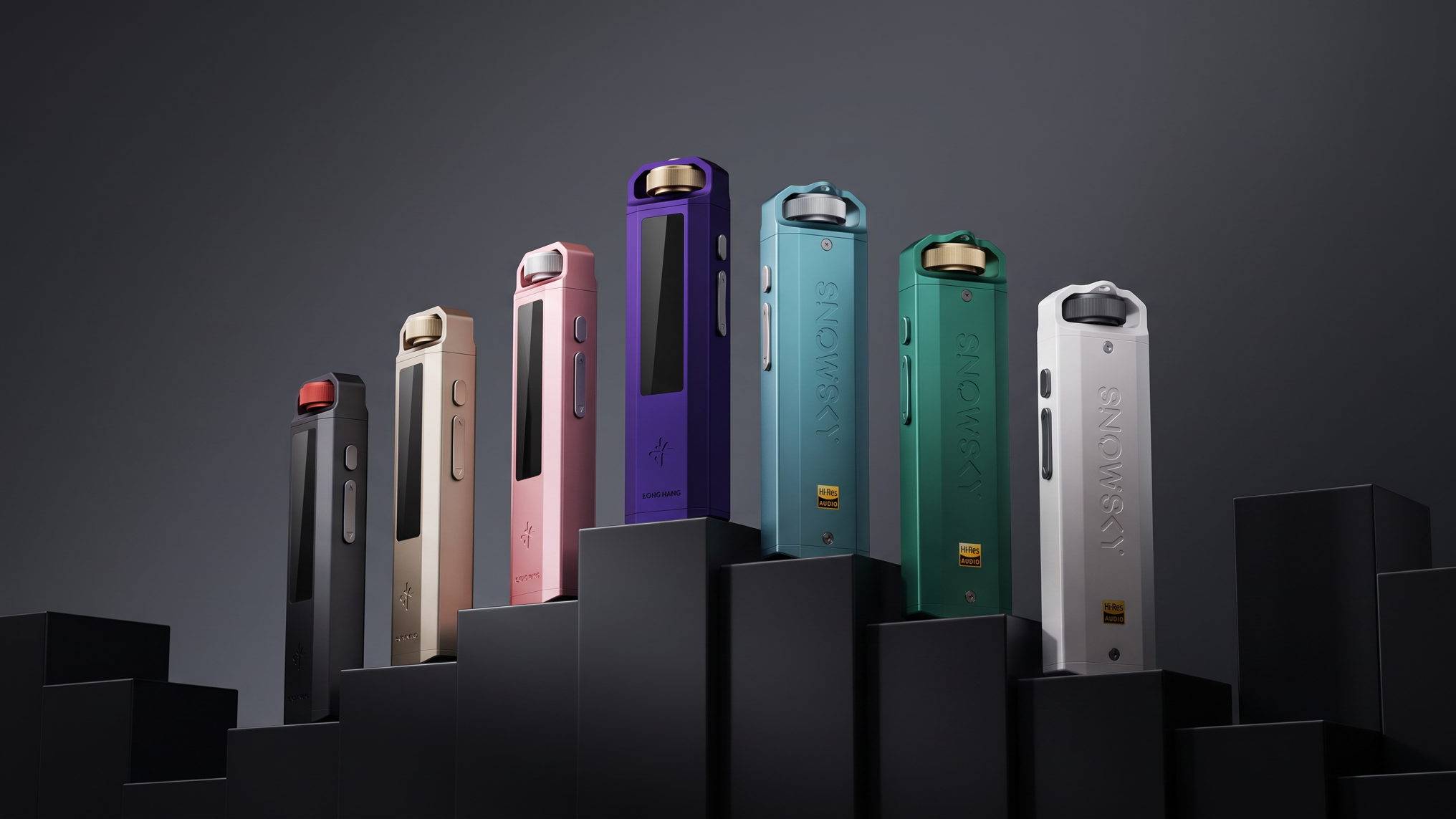
iPod nostalgia is at an all-time high, so meet two new cheap, adorable tiny hi-res music players that invoke the best of the music-player era (bring your own white wired earbuds)

Published

on


  • Shanling Q2 unveiled as an iPod nano-alike upgrade for high-res music
  • Fiio recently launched the Echo Nano, an original iPod shuffle-like player with a screen
  • iPods are so nostalgic, they’re still being actively advertised by resellers

Remember the iPod? Of course you do: nostalgia is so high that you still have tech journalists dusting off their iPod Classics, they’re so popular on resellers that refurb site BackMarket is actively advertising them as though they’re new, and popular audio brands are releasing doppelgangers that have even more features than the originals.

In recent weeks, both Shanling and Fiio have released products that look like iPods going through their goth stage, but they’re not just cash-ins. These are devices that could end up on our best hi-res audio players list, with features and tools Apple never gave us.

Source link

Continue Reading

Tech

Anthropic continues compute-gobbling streak in $45 billion deal with Nscale

Published

on

Anthropic has signed a deal to rent about $45 billion in AI compute from Nscale, a British AI infrastructure company, a source familiar with the deal told TechCrunch.

Nscale, founded only in 2024, has already cut deals with the likes of Microsoft, and will supply Anthropic with compute via Nvidia’s Vera Rubin chips, its new state-of-the-art chip system.

The Vera Rubin system combines six different chips working in concert, and is considered the cutting edge of chip design. The compute capacity is expected to start powering the AI lab’s services in late 2027, the source said.

The deal, first reported by Bloomberg, is only the latest in a spree of compute partnerships for Anthropic. Bloomberg writes that the deal spans six years, with the computing power coming from Nscale’s flagship data center in West Virginia.

Advertisement

Over the past eight months, Anthropic has aggressively scaled up its compute capacity in an effort to better compete with rivals, most notably OpenAI.

Earlier this month, Anthropic signed a $10 billion deal with AI cloud startup Volta — founded only this past January — securing a six-year supply of cloud computing power from a data center in Norway. In July, the company also signed a $5 billion compute-related deal with AMD.

A few months before that, in May, Anthropic revealed it had entered into a large computing deal with SpaceX (run by Elon Musk, whose rivalry with OpenAI CEO Sam Altman has made him an unlikely ally of Anthropic). That deal draws computing capacity from two different SpaceX data centers and is reportedly providing Anthropic with $1.25 billion worth of capacity each month.

In April, Anthropic also signed a deal to significantly expand its partnership with Amazon, gaining access to an additional 5 gigawatts of compute. That same month, the company also expanded its relationship with Google and Broadcom, adding even more power capacity.

Advertisement

Anthropic is hardly alone in its enthusiastic pursuit of more AI horsepower. The race to gobble up as much compute capacity as possible is ongoing, with other major players — including Google, OpenAI, and Meta — all following a similar track.

When you purchase through links in our articles, we may earn a small commission. This doesn’t affect our editorial independence.

Source link

Advertisement
Continue Reading

Tech

Apple’s iPhone 18 Pro event is on September 9

Published

on

Apple has confirmed its September special event will be held on September 9. It won’t just be the iPhone 18 Pro or folding iPhone launch, but also the first event with John Ternus as CEO. Here’s what to expect.

Regular as clockwork, Apple holds an event in early September to launch new iPhone models and other products. Apple has just confirmed that this will be the case for 2026’s presentation.

Titled “Surprise and shine,” the event will be taking place on September 9, starting at 10 A.M. Pacific, 1 P.M. Eastern Time. As usual, it will be streamed on YouTube, the Apple Event page, and the Apple TV app, among other methods.

The event will be the first for the company following the long-awaited CEO transition. John Ternus will take over from Tim Cook on September 1, and will helm the presentation from the outset.

Advertisement

While there has been some speculation of the return of a live keynote, it’s doubtful that Apple will move away from its slick prerecorded video. There will be an on-site event at Apple Park for the media to try out Apple’s new launches, if not anything being streamed live.

As always, AppleInsider will be reporting in-depth about the product launches and the event in general.

What to expect for the September event

As with every Apple fall event schedule, there are many products that will launch, but not everything will appear during the prime September showcase. A second and a rare third event can also be held for select products that Apple plans to launch a little later.

iPhone 18 Pro and iPhone 18 Pro Max

The September event is chiefly when Apple launches its update to the iPhone range, and this year it is the iPhone 18 generation. However, it will only be part of the roster due to Apple’s decision to split the series into two separate launches.

Advertisement

For September’s event, Apple will introduce the premium members of the iPhone 18 family, the iPhone 18 Pro and Pro Max.

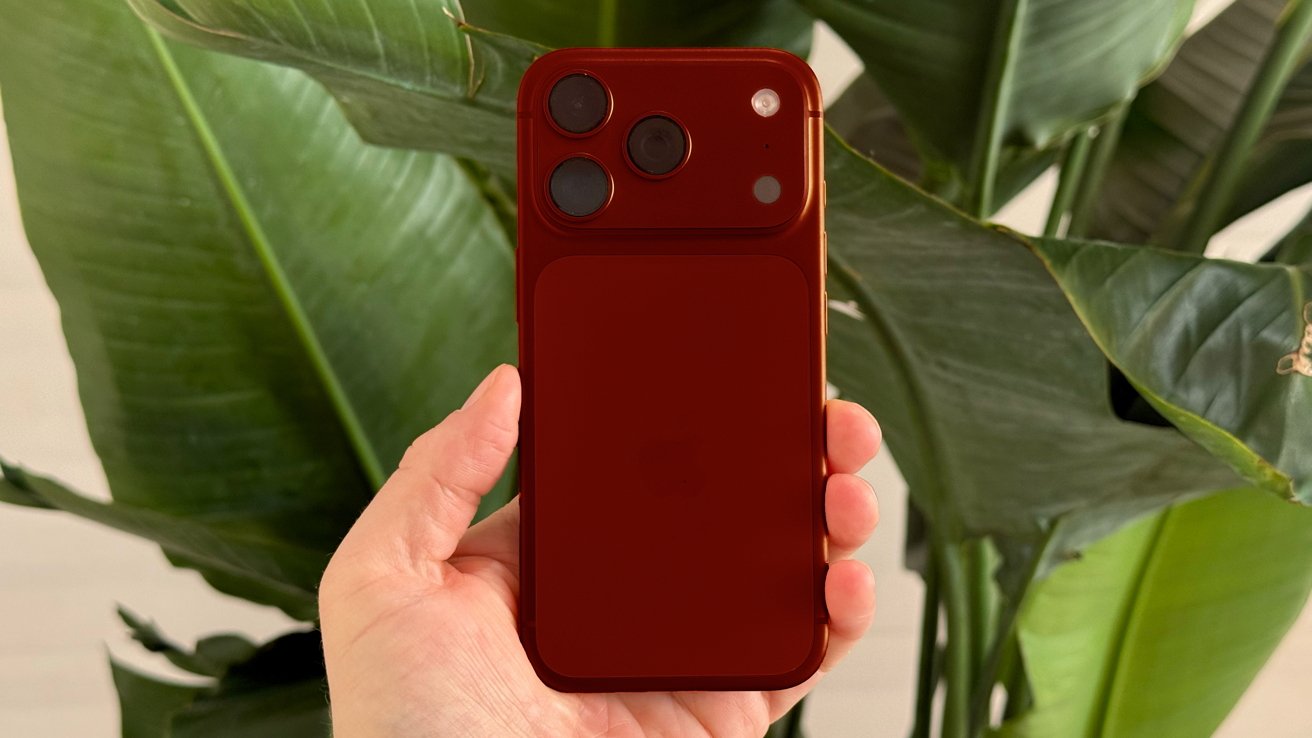
Hand holding a red smartphone with three rear camera lenses, positioned vertically in front of large green tropical leaves in soft natural light

A mock-up of a dark cherry iPhone 18 Pro, one of the rumored colorways.

After the 2025 refresh, the 2026 update is probably going to be a spec-bump update. Chiefly, that will mean a transition to a new 2-nanometer A20 Pro chip, which stands to run cooler for longer thanks to some packaging changes.

You can also count Apple’s C2 modem as being included in the model, too. As far as physical changes go, the camera bump may get a little bit bigger and colors like dark cherry may appear, but don’t expect a complete overhaul.

Advertisement

When it comes to cameras, there may be a few changes, including the possibility of under-display Face ID. On the back, the iPhone 18 Pro Max may be the only model to gain a variable-aperture camera, which can help create a real bokeh effect instead of a computer-generated version.

What definitely will change is the price. In the wake of the June price rises and the continuing memory crisis, the iPhone 18 Pro could cost $300 more than the iPhone 17 Pro counterparts.

Folding iPhone

The more important iPhone launch for the event will be the iPhone Fold, though it may also be called the iPhone Ultra. The long-awaited smartphone will be Apple’s first foray into the foldable marketplace.

It will be equipped with two screens, with an internal 7.8-inch screen that can be unfolded like a book. A second 5.3-inch display will be on the outside for more typical smartphone usage.

Advertisement

That internal display could be quite unusual for Apple. There are rumors that it could have asymmetrical corners.

Foldable smartphone standing in a V shape on a desk, displaying a colorful mountain landscape, with a green succulent plant and a glowing cat-shaped night light in the background

A render of what the iPhone Fold could look like – Image Credit: AppleInsider

The model is expected to include premium specifications like the A20 Pro, 12GB of memory, and a large number of cameras. Rumors point to it having a pair of 48-megapixel rear cameras, as well as front-facing 18MP cameras in the front and back screens for video calls.

The lack of a telephoto camera could be a problem for early adopters used to premium specifications.

Advertisement

Rumors say the internal screen’s camera could use an under-display system, while the external display will be punch-hole style.

The iPhone Fold also stands to be the most expensive iPhone Apple sells, even ignoring the memory crisis. Pre-issue rumors forecast a price between $2,000 and $2,500, but it could end up being much higher.

Though a launch is anticipated to happen in September, you may not see it in stores until much later. The United States will probably still be the first market it launches in, with a slower rollout elsewhere.

While availability is questionable, the probability of it launching is sky high. On August 23, a report claimed that people have tried out the device ahead of its launch.

Advertisement

Apple Watch

Usually paired with the iPhone launches, you can expect an Apple Watch update too. We aren’t expecting much in 2026.

The Apple Watch Series 12 will not benefit from a major overhaul just yet, but it could gain a new health sensor via a fluoroelastomer band and a new band attachment method. Otherwise, don’t expect much more than a spec-bump update here.

The Apple Watch Ultra could see an update too, bringing it to version 4. There have been claims of a redesign and new sensors, though rumors have been light on actual detail.

The 2026 update may be a dull one for your wrist, but a revamp is still on the way.

Advertisement

Smart Home

Apple has been working to update its home devices, including the Apple TV and HomePod mini. Both are expected to see updates this fall, after being delayed by the Siri overhaul.

White spherical smart speaker glowing on top, placed on a desk beside a brown-cased smartphone and an open laptop with metallic keyboard

The HomePod mini stands to get a processing upgrade.

In both cases, the expectations are low for overhauls here, with it being more of a functionality-based refresh. Using newer chips for processing, they will be able to support Siri AI.

For the Apple TV 4K, you may also see an update to the Siri Remote, though we’re not entirely sure what that will be.

Advertisement

A third smart home device referred to as the Home Hub is also a possibility. An all-new device, it is expected to act as the center of your smart home network, complete with a seven-inch screen and a FaceTime camera.

That screen will manage your smart home devices, display notifications, calendar listings, and other pertinent information, as well as handle communications.

It will take two forms, rumors say, with the first being a half-moon dome with the screen attached to it. A second will attach to mounts using magnets.

While there’s no guarantee that all three will make it in September’s event, Apple Stores are apparently preparing for some kind of smart home shake-up and brand new devices.

Advertisement

iPad mini 8

While expectations for iPad appearances are low, there is one exception in the form of the iPad mini. The eighth-generation device is anticipated to also have a big glow-up for 2026, thanks to a new display.

Tablet in a white clamp mount displaying a colorful pink and purple wavy home screen with app icons and widgets, set against a blurred indoor background with green plant leaves

The current-gen iPad mini, without OLED.

Rumors and a code leak have indicated that an OLED version is on the way. This should be an 8.4-inch LTPS panel with hybrid OLED, though without ProMotion.

It will also get the usual chip update too, potentially gaining the A20 chip.

Advertisement

AirPods Pro

An accessory often bought alongside the iPhone, AirPods Pro is believed by some to get another update in the latter stages of 2026. While a fairly pedestrian update is a safe bet, there may be something more on the cards.

We have regularly seen rumors about AirPods Pro with cameras to capture the user’s environment. Based on a demo video that leaked in a macOS Tahoe beta, they may arrive very soon.

The idea of the cameras is to feed data into Visual Intelligence. A user could then ask questions about what they’re looking at or nearby subjects, which Siri can then interpret and respond to.

This may not even need to be a verbal query. Apparently, gesture recognition is a possibility here.

Advertisement

Those cameras will be able to detect people and take stereoscopic imagery, albeit at a low 1-megapixel resolution. But it will still be able to take photos of others on command, complete with an obligatory status light.

Previous rumors said that the camera-equipped version could be out in 2027. The beta leak video hints that it could be here a lot sooner than anyone thought, but the better bet is still for next year.

Source link

Advertisement
Continue Reading

Tech

Flock shock rocks cop cam vendor as protests mount

Published

on

LEGAL

Database from legal advocacy group details growing unease with warrantless panopticon

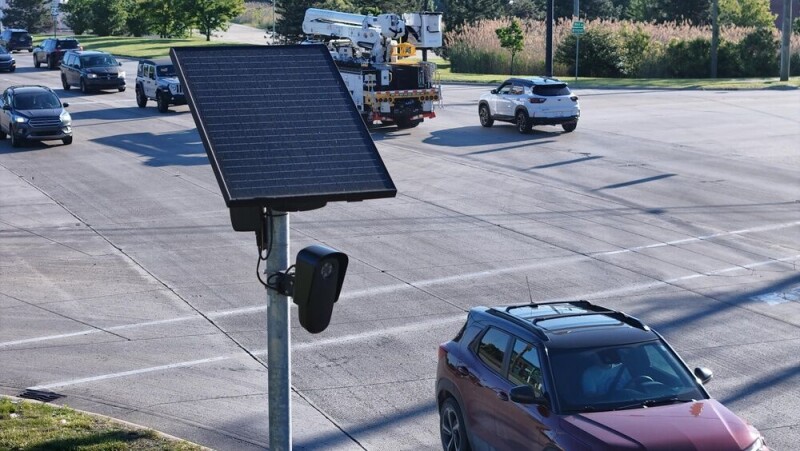
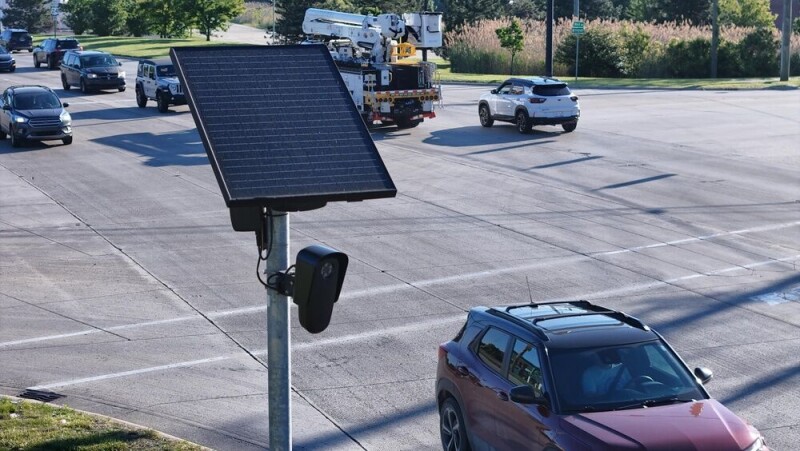
A mischief-maker in a Darth Vader suit recently endorsed Flock at a city council meeting, and it has not helped the company’s fortunes. Around the US, citizens have been protesting and sometimes vandalizing the company’s network of surveillance cameras. And the advocacy has caused some governments to change course.

Advertisement

Government officials, commonly hesitant to second-guess law enforcement practices, have become concerned enough to question these mass surveillance practices. US Senator Josh Hawley (R-MO) on Wednesday wrote to Flock CEO Garrett Langley to announce an investigation of “Flock Safety’s collection, retention, and dissemination of data gathered by its artificial intelligence cameras.”

Despite “Darth Vader’s” comments last week at a San Diego City Council meeting about the need to “continue utilizing Flock technologies so that we can follow and surveil the rebel scum,” a growing number of local governments in the US have been cancelling or choosing not to renew their contracts with Flock and other makers of automated license plate readers (ALPRs).

The Institute for Justice (IJ), a Virginia-based legal advocacy non-profit, on Wednesday published a new database that tracks the termination of local government ALPR contracts. As of Wednesday, the database documents 93 local governments that canceled ALPR contracts.

The IJ, which is challenging ALPR use on Fourth Amendment grounds in Norfolk, Virginia and San Jose, California, previously published a database that documents police abuse of ALPRs, a topic addressed in Hawley’s letter. Incidents include romantic stalking, wrongful traffic stops and detentions, and other forms of misconduct.

Advertisement

“I think what’s happened is that the American public has woken up to the mass surveillance that quietly arose around them,” said Robert Frommer, senior attorney at IJ, in an interview with The Register. “And they don’t like it.

“It does seem to me that the rate of cancellations, the rate of public protest has increased over the past few months. I think that’s both due to more news attention being paid to the real life abuses of this technology, as well as the Supreme Court’s recent decision in the geofence case,” Frommer said. In that case, SCOTUS ruled that cops need a warrant to grab location data.

Frommer said that he believes the IJ’s efforts to document ALPRs and associated abuses have helped focus the public’s concern and have illustrated the problems with warrantless mass surveillance.

ALPRs, from vendors like Flock, Motorola Solutions, and PlateSmart, among others, capture license plates whenever cars drive by, along with geodata and potentially images of people. This data can be combined with other information, effectively putting all passersby under constant surveillance without any warrant.

Advertisement

“I think what we’re seeing now is the reaction to that,” said Frommer, who explained that the problem with Flock cameras is that they’re accessible to anyone with login credentials, without any authorization from a supervising authority.

“You don’t need to go to a judge and get a warrant,” Frommer explained. “You don’t need anything. And when you basically give that search power to the bored officer in his cop car in the middle of a shift, it inevitably happens that they start using it and start misusing it, whether to look people up personally or whether to investigate people at political protests.”

These sorts of issues, Frommer said, have made people question whether we should live in a panopticon.

The IJ’s litigation and its Plate Privacy Project, said Frommer, follow from the belief that there are solutions, whether they come from the courts or lawmakers. Pointing to Hawley’s letter, he said that this is not just a state or local issue, but has become a federal concern.

Advertisement

“I think what the din that you’ve heard over the past couple of months shows that there absolutely needs to be a change, a reckoning,” he said. “And that’s what we’re pushing for in our litigation. We’re pushing for a warrant requirement. You want to go look up somebody’s past travels and see where they have been? Go to a judge, explain it, and get a warrant.”

Flock did not respond to a request for comment. ®

Source link

Advertisement
Continue Reading

Trending

Copyright © 2025