You can watch this portable, battery-powered TV anywhere – provided there’s Wi-Fi to stream with. The only catch is there’s no tuner onboard. But should that put you off? Not necessarily…
Lightweight portable design
Matte anti-glare screen
Google TV platform
No terrestrial tuner
Missing major UK streaming apps
Limited HDR impact
Key Features
Introduction
The Metz MPE7 (also known as the 24MPE7002Z) is a lightweight, 24-inch Full HD smart TV with a built-in rechargeable battery.
Advertisement
Instead of relying on traditional broadcasts, it delivers streaming services through Google TV. That makes it particularly well suited for guest rooms, kid’s bedrooms, camping trips, and caravans.
It’s tiny but talented – but can it fill a 24-inch hole in your TV life? Let’s take a closer look…
Advertisement
Price
Selling for £299, the Metz MPE7 is undoubtedly a bit niche. While it lacks some of the basic niceties you might expect from a portable telly, it compensates with genuine portability and a versatile feature set.
Advertisement
In Europe, you’ll find it on sale for around €360. It’s not available in North America or Australia, so don’t bother looking.
Design
Compact design
Matte screen treatment
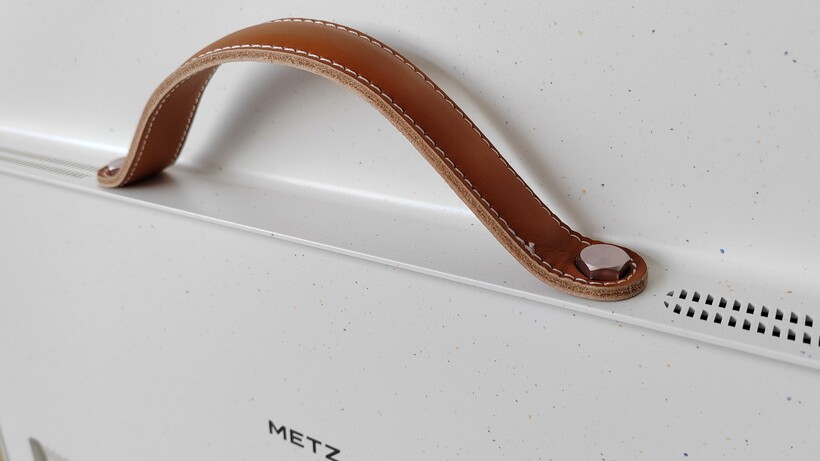
Carry handle
Charming in a way that only a titchy telly with tasteful design can be, the Metz MPE7 is finished in fashionable white, weighs a manageable 4kg, and occupies roughly 548 x 366 x 74mm of your airspace. Basically, it’s compact enough to easily tout around the house, or pack into a vehicle, whenever required.
The set’s stereo sound system faces forward beneath the screen, in a faux soundbar arrangement, with a single manual control button at the centre, which offers on-set access to sources and volume.
Advertisement
Spin the set and you’ll find a pleather carry handle mounted on the rear.
Advertisement
Image Credit (Trusted Reviews)
The TV base is slightly wide, allowing the screen to stand proudly without a separate pedestal stand. This makes placement refreshingly straightforward. Put it on a table, a kitchen counter or a bedroom dresser and it sits perfectly stable.
The screen sports a matte anti-glare finish, which proves useful when the TV is used in bright environments.
The set ships with a tidy, white remote includes quick-access buttons for Netflix, Prime Video and YouTube, plus a programmable ‘Daily Key’.
Connectivity
Single HDMI
Dual band Wi-Fi
Digital optical audio output
Advertisement
When it comes to connections, there’s no terrestrial tuner nor satellite equivalent. You can’t watch linear TV channels out of the box.
Connectivity is stacked to the left, so cables remain accessible even when the set is placed against a wall or on a narrow surface. There’s a single HDMI input, most likely be used to connect an external streaming device, games console or disc spinner, as well as a USB port that allows playback of media files from external storage devices.
Advertisement
Image Credit (Trusted Reviews)
A digital optical audio output can be used to connect the set to a separate audio system. There’s also a LAN Ethernet port for those who prefer a wired network connection over the TV’s built-in dual-band Wi-Fi.
Additional inputs include a 3.5mm AV connection for analogue video and audio, along with the DC power input for the supplied power brick.
The set can also be powered directly from a vehicle, useful for those with motorhomes, caravans or boats.
Advertisement
User Experience
Google TV smart OS
No BBC iPlayer or ITVX
Can feel sluggish
No Freely
The Metz MPE7, by design, is something of a digital nomad; it’s reliant on a broadband connection, rather than conventional aerial, to entertain.
It can, of course, run happily off the mains, but the provision of battery power goes a long way to justifying its premium over rival small screens.
Advertisement
The built-in lithium cell provides around three hours of viewing, which is just about adequate for a sports event, movie or TV binge.
This portability is what makes the MPE7 genuinely appealing. It’s easy to move from kitchen to garden, bedroom to guest room, or pack for a weekend away.
Image Credit (Trusted Reviews)
Google Assistant voice control is supported, so you can search for films, or check the weather, by barking into the remote. It’s got to be said though that responses can feel a little sluggish; still the interface remains straightforward and intuitive, particularly for anyone already familiar with Android-based smart TVs.
Advertisement
Baked in extras include Google Cast, personalised viewing profiles and parental controls.
Image Credit (Trusted Reviews)
Unfortunately, the set lacks key UK catch-up services. There’s no BBC iPlayer or ITVX. Channel 5 is the only familiar PSB available. Attempting to access ITVX, which appears in some of the Google TV recommendation rails, results in a compatibility message indicating that the Metz ‘device’ does not support the application.
What’s more, there’s no Freely provision, which would have seemed a natural for inclusion.
Advertisement
There is, of course, an easy fix. You can use the HDMI input to connect an external streaming receiver or set-top box. Freely gadgets from Netgem or Manhattan will sidestep the limitation, although they’re only really usable if the TV is sedentary.
Advertisement
Gaming
Dedicated Game mode
Low input lag
As long as you’re not expecting something akin to a dedicated gaming monitor, you’re unlikely to be disappointed by this small screen. It’s perfectly fine for casual gaming. I measured input lag at 10.5ms in Game mode (1080/60), which is a pretty sprightly performance by TV standards.
Picture Quality
HDR compatible
Various picture presets
Limited black level
The Metz MPE7, as befits its size and price, is built around a 24-inch Full HD (1080p) LED panel, and while not the kind of display that would make cinephiles swoon, it’s perfectly suited for the job at hand.
Its most obvious attribute is that matte anti-glare coating. This proves particularly effective against strong light sources, such as lamps or daylight streaming through a window. This makes the TV usable in bright rooms and even outdoors (although not the full glare of a Summer sun).
Advertisement
While this isn’t a display for high-impact HDR spectacle, it acknowledges HDR sources from streaming platforms and processes them accordingly. I measured peak HDR brightness at 293 nits, using a 10 percent patch, which is in line with what I’d expect from a TV at this price point.
Image Credit (Trusted Reviews)
Watching the Ryan Gosling action comedy The Fall Guy on Netflix, the image appears punchy enough, with decent colour saturation and respectable dynamic range. Black levels lean toward grey – a typical characteristic of small LED panels – but colours are on the right side of pleasing.
Animation also benefits from the set’s compact pixel density. Anime streamed on Prime Video displays excellent colour gradation and clarity. I dare say Paw Patrol looks just as good.
Advertisement
Picture modes are comprehensive for a compact portable display, and include Standard, Vivid, Movie, Sport, Game and Energy Saving. More advanced options such as dynamic noise reduction, local contrast control and colour enhancement are also available deeper down, although there’s little obvious benefit to be had from tinkering.
The Energy Saving mode should be avoided like the plague, and I felt Movie mode was a little too dim on this backlit set. Standard and Vivid would be my go-tos.
Advertisement
Sound Quality
2 x 6W stereo sound
Speaker bar design
The sound system here is surprisingly capable. Behind the grille are two front-firing 6W drivers. While there’s not enough width to offer an appreciable stereo presentation, the output is fittingly robust with some welcome weight – I’ve heard larger TVs that sound a lot worse.
Image Credit (Trusted Reviews)
Audio presets include Standard, Movie, Music and Sport. Standard would be my recommendation. Dialogue remains clear and movie soundtracks have moderate heft.
Should you buy it?
Advertisement
A genuine portable streaming TV
The Metz is one able to work around the house, with decent sound and flexible power options, the MPE7 is well worth an audition. If you spend most of your time watching the big streamers, it doesn’t disappoint.
Advertisement
If you’re compelled to catch-up with Eastenders in the conservatory, then the lack of a tuner, and missing UK streaming apps, will be a frustration. Similarly, if freedom from the mains isn’t a requirement, look elsewhere for cheaper options.
Advertisement
Advertisement
Final Thoughts
Let’s be clear. The Metz MPE7 is unlikely to replace your main living room TV any time soon – but it does impress as a stylish portable smart screen.
For those looking for a flexible second TV, it has obvious appeal. The matte display helps in varied lighting conditions, and audio isn’t an issue.
As it stands, the MPE7 is a practical, well-designed portable telly with an eye on the Gen Z crowd. I like it a lot. Here’s hoping we see a future iteration with Freely built in.
How We Test
We test every television we review thoroughly over an extended period of time. We use industry standard tests to compare features properly. We’ll always tell you what we find. We never, ever, accept money to review a product.
Advertisement
Find out more about how we test in our ethics policy
Tested for several days
Tested with real world use
FAQs
How long does the battery on the Metz MPE7 last?
Fully charged, you’ll get around three hours of playback. That’s enough to catch up on a couple of shows, or watch the footie from your secret sanctum in the shed.
Can it be used outdoors?
Advertisement
On an overcast day, you’ll get away with it, but when the sun comes out, the picture struggles. The matte anti-glare screen goes some way to mitigating against bright light sources in the home though.
Test Data
Metz 24MPE7002Z
Input lag (ms)
10.5 ms
Peak brightness (nits) 10%
293 nits
Full Specs
Metz 24MPE7002Z Review
UK RRP
£299
Manufacturer
–
Size (Dimensions)
x x INCHES
Size (Dimensions without stand)
366 x 548 x 74 MM
Weight
4 KG
Operating System
Google TV
Release Date
2026
Resolution
1920 x 1080
HDR
Yes
Types of HDR
HDR10
Refresh Rate TVs
50 – 60 Hz
Ports
HDMI, Digital audio optical output, Ethernet, 3.5mm AV input
Focal’s Omada speaker line just became a lot more interesting for anyone building a serious stereo or home theater system at a more attainable price. Four models in the series are now on sale for up to 35% off, with the promotion running through June 21, 2026, while supplies last. That last part matters. The best speaker deals rarely hang around long enough for endless spreadsheet therapy.
What Are Focal Omada Speakers?
Focal’s Omada series is an exclusive loudspeaker line for ProSource members that has been available since November 2025. The lineup sits between Focal’s Theva and Vestia series, giving buyers a mid tier option for both two channel listening and home theater systems without jumping into the brand’s more expensive models.
What’s on Sale?
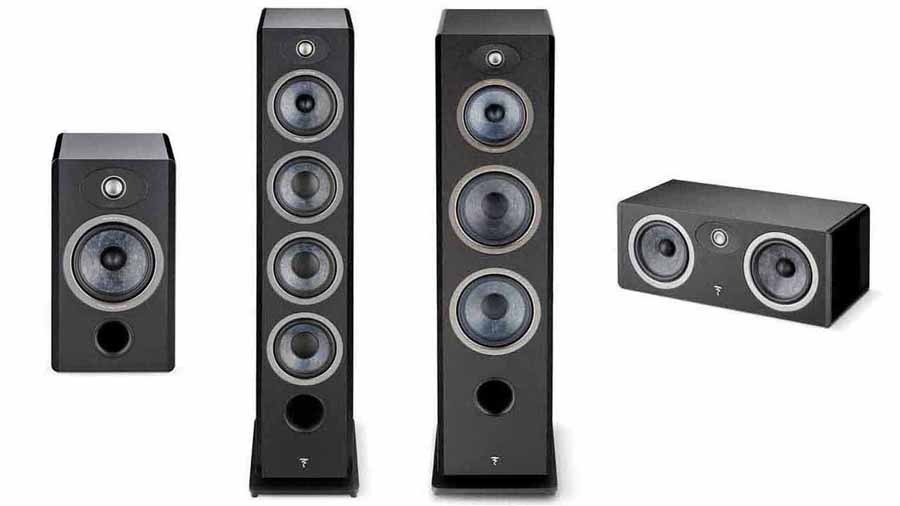
Omada N1 (Bookshelf Speaker) – $1,399$898/pair at Crutchfield or Amazon (save $500)
Omada N3 (Floorstanding Speaker) – $3,798$2,598/pair at Crutchfield or Amazon (save $1,200)
Omada N4 (Floorstanding Speaker) – $4,598$2,998/pair at Crutchfield or Amazon (save $1,600)
Omada Center (Center Channel Speaker) – $699$499 at Crutchfield or Amazon (save $200)
Focal Omada Core Features:
The Omada series uses Focal’s TAM tweeter and Slatefiber cone technology, both of which first appeared higher up in the company’s lineup. That matters because Omada is not just a pretty cabinet with a familiar badge on the front. The goal is to deliver natural, detailed sound for both two channel listening and home theater systems, using proven Focal driver technology without pushing buyers into the brand’s more expensive loudspeakers.
Design: Omada speakers come in a high gloss black finish with a subtly curved front baffle and a leather like texture on the front panel. It gives the line a cleaner, more refined look without turning the room into a hi-fi showroom crime scene. The finish, cabinet shape, and front panel detail should help the speakers fit into a wide range of rooms, which matters if the system has to share space with actual furniture and people.
TAM Tweeter: Focal’s M-shaped dome TAM tweeter is designed to deliver clean, controlled treble with wide dispersion and low distortion. Originally developed for Focal’s car audio products and later adapted for home loudspeakers, it gives the Omada series a proven high frequency platform that fits neatly into Focal’s broader loudspeaker ecosystem.
Advertisement
Slatefiber Cone: The Omada series also uses Focal’s Slatefiber cone technology, first introduced in the Chora line in 2019. Made from recycled carbon fibers, Slatefiber was developed to deliver a useful mix of rigidity, damping, and tonal balance. Focal has continued to refine the material since its debut, and it has since appeared across other parts of the catalog, including Alpha Evo studio monitors and Slatefiber automotive kits.
Bass Reflex: Every Omada model uses a bass reflex design to improve low frequency extension and output. The N1, N3, and N4 feature a front firing port, while the Center speaker uses two smaller rear ports. The port directs air pressure generated inside the cabinet into the room, reinforcing bass response without requiring more amplifier power. The result is fuller, more impactful low end while helping the Omada lineup maintain useful efficiency across the range.
10 1/8 x 14 3/4 x 44 1/8 in . 25.6 x 37.5 x 112.2 cm
12 x 16 7/8 x 44 3/8 in
30.4 x 43 x 112.6 cm
21 1/8 x 10 1/4 x 8 1/2 in
Advertisement
53.7 x 25.9 x 21.6 cm
Net weight (with grille)
15.4 lbs (7 kg)
58.4 lbs (26.5 kg)
69.45 lbs (31.5 kg
22 lbs (10 kg)
The Bottom Line
The Focal Omada series is for listeners who want proven Focal driver technology, clean styling, and a practical speaker lineup for both music and movies without paying for features they may not need. With the TAM tweeter, Slatefiber cones, and a focused range of models, Omada makes the most sense for buyers building a solid two channel or home theater system who want Focal performance at a more accessible price.
Sale Pricing
The Focal Omada Speaker sale runs through June 21, 2026.
Omada N1 (Bookshelf Speaker) – $1,399 $898/pair at Crutchfield or Amazon (save $500)
Omada N3 (Floorstanding Speaker) – $3,798 $2,598/pair at Crutchfield or Amazon (save $1,200)
Omada N4 (Floorstanding Speaker) – $4,598 $2,998/pair at Crutchfield or Amazon (save $1,600)
Omada Center (Center Channel Speaker) – $699 $499 at Crutchfield or Amazon (save $200)
To round out an Omada system, the speakers can be combined with the SUB 600P subwoofer for deeper and encompassing bass for $1,399 at Amazon. Meanwhile, the speaker stands for the N1, which is available for $269/pair at Crutchfield.
The latest test version of iOS 26.5 includes a changelog about bringing some new protections to texts. The smartphone operating system will be rolling out end-to-end encryption for RCS messages between Apple and Android devices. “End-to-end encrypted RCS messaging (beta) in Messages is available with supported carriers and will roll out over time,” is Apple’s official wording about the addition. The setting will be on by default, but Apple device owners can confirm it in Settings under the RCS Messaging menu of the Messages section once they are running iOS 26.5.
According to 9to5Google, a lock icon will appear in an iPhone user’s Messages app when chats to an Android device are taking advantage of the encryption. On the Android side, the Google Messages chats to iOS devices will look the same way they do when messaging another user (or users) with encrypted RCS.
Advertisement
Apple added the option for RCS messaging as part of iOS 18. The GSM Association, which operates the RCS protocol, added support for E2EE between the operating systems last year. At the time, Apple said it would bring the added security layer “in future software updates” that seem to have finally arrived. The tech company began testing this tech back in February as part of iOS 26.4, although Apple specified that it did not plan to officially roll out the encryption feature with that launch. More protections to keep communications private is pretty much always a good thing to see, so that’s a welcome addition to what might otherwise be a more incremental iOS 26.5 update.
Geothermal startup Fervo Energy said Monday it hopes to raise up to $1.3 billion in its initial public offering.
The company would be valued at up to $6.5 billion if shares sell at the top of its $21 to $24 price target. That’s more than twice what Fervo had reportedly been seeking earlier this year when it confidentially filed paperwork with the SEC to start the IPO process.
The stock will trade on Nasdaq under the ticker FRVO.
Fervo’s price target comes on the heels of X-energy’s successful IPO. The nuclear power startup raised $1 billion in an upsized IPO. When the company set its price target for the IPO, it sought a valuation of around $7 billion. Today, X-energy’s market capitalization i over $8 billion.
Advertisement
Both Fervo and X-energy have been boosted by surging electricity demand from tech companies, which have been racing to secure supplies to feed their AI data centers. The scramble has driven prices for new natural gas power plants up 66% in the last two years.
Fervo says it’s Cape Station power plant — its first large-scale project — will generate electricity at $7,000 per kilowatt of installed capacity. The company’s goal is to reduce that to $3,000 per kilowatt of capacity, at which point it will start being cost competitive with natural gas.
I don’t think I’ve ever seen a floor-standing speaker that wasn’t beautiful or exotic in some way, and Audiovector has just proven my point by unveiling the new R 5 Arreté.
You’ve already seen this speaker in the above image, so you already know how good it looks. Each unit is hand-made in Denmark, and you can pick it up in a range of finishes. Above, you’re looking at African Mahogany, but there’s also Italian Walnut, White Silk, and Black Piano.
Audiovector is a family business, as we discovered at the launch of the Trapeze Ri, and so it makes sense that care goes into the speakers. The cabinets are designed ot be narrow, to “minimise edge diffraction for a more precise and transparent soundstage” according to the brand.
Article continues below
Advertisement
This attention extends to the plinth, with that staggered design achieving “a perfectly controlled coupling to the surface beneath”. As you can see from the quotes from the brand, we haven’t actually tested the R 5 Arreté yet.
You can, if you’d like, because it’s on sale now. But you’ll have to pay £17,500 (about $23,600, AU$32,860) for the pleasure of doing so.
Advertisement
Have you forgotten about the sound?
Okay, okay, the R 5 Arreté isn’t just a lovely piece of furniture, but a loudspeaker. So what’s it packing under the hood?
The three drivers are all 6.5-inch carbon speakers that use the brand’s Accelerated Force Concept to reduce driver inertia. One’s a mid driver, one’s a lower-mid driver, and another’s a bass driver aimed at the lowest frequencies. There’s also a tweeter to handle the higher frequencies.
Sign up for breaking news, reviews, opinion, top tech deals, and more.
According to Audiovector, the frequency response is 23Hz-53Hz, with an average impedance of 8 ohms and a sensitivity of 90 decibels.
Advertisement
Another selling point of the Arreté is that it’s designed to work well with amplifiers, due to its “unique three-position damping adjustment”. So you can use your extra accessories to really eke the most out of the speaker.
If you’re worried about whether you can fit these things, they’re 11cm tall, 22cm wide, and 41cm deep with a weight of 32kg.
And of course, you can also follow TechRadar on YouTube and TikTok for news, reviews, unboxings in video form, and get regular updates from us on WhatsApp too.
The Trump administration is reportedly considering an executive order to create a working group that could review advanced AI models before public release. The shift follows concerns over Anthropic’s powerful Mythos model and its cyber capabilities, with officials weighing whether the government should get early access to frontier models without necessarily blocking their release. The New York Times reports: In meetings last week, White House officials told executives from Anthropic, Google and OpenAI about some of those plans, people briefed on the conversations said. The working group is likely to consider a number of oversight approaches, officials said. But a review process could be similar to one being developed in Britain, which has assigned several government bodies to ensure that A.I. models meet certain safety standards, people in the tech industry and the administration said.
The discussions signal a stark reversal in the Trump administration’s approach to A.I. Since returning to office last year, Mr. Trump has been a major booster of the technology, which he has said is vital to winning the geopolitical contest against China. Among other moves, he swiftly rolled back a Biden administration regulatory process that asked A.I. developers to perform safety evaluations and report on A.I. models with potential military applications. “We’re going to make this industry absolutely the top, because right now it’s a beautiful baby that’s born,” Mr. Trump said of A.I. at an event in July. “We have to grow that baby and let that baby thrive. We can’t stop it. We can’t stop it with politics. We can’t stop it with foolish rules and even stupid rules.” Mr. Trump left room for some rules, but he added that “they have to be more brilliant than even the technology itself.”
The White House wants to avoid any political repercussions if a devastating A.I.-enabled cyberattack were to occur, people in the tech industry and the administration said. The administration is also evaluating whether new A.I. models could yield cyber-capabilities that could be useful to the Pentagon and U.S. intelligence agencies, they said. To get ahead of models like Mythos, some officials are pushing for a review system that would give the government first access to A.I. models, but that would not block their release, people briefed on the talks said.
If you want to overthrow Big Tech, you’ll need Section 230. The paradigm shift being built with the Open Social Web can put communities back in control of social media infrastructure, and finally end our dependency on enshittified corporate giants. But while these incumbents can overcome multimillion-dollar lawsuits, the small host revolution could be picked off one by one without the protections offered by 230.
The internet as we know it is built on Section 230, a law from the 90s that generally says internet users are legally responsible for their own speech — not the services hosting their speech. The purpose of 230 was to enable diverse forums for speech online, which defined the early internet. These scattered online communities have since been largely captured by a handful of multi-billion dollar companies that found profit in controlling your voice online. While critics are rightly concerned about this new corporate influence and surveillance, some look to diminishing Section 230 as the nuclear option to regain control.
The thing is, that would be a huge gift to Big Tech, and detrimental to our best shot at actually undermining corporate and state control of speech online.
Dethroning Big Tech
We’re fed up with legacy social media trapping us in walled gardens, where the world’s biggest companies like Google and Meta call the shots. Our communities, and our voices, are being held hostage as billionaires’ platforms surveil, betray, and censor us. We’re not alone in this frustration, and fortunately, people are collaborating globally to build another way forward: the Open Social Web.
Advertisement
This new infrastructure puts the public’s interest first by reclaiming the principles of interoperability and decentralization from the early internet. In short, it puts protocols over platforms and lets people own their connections with others. Whether you choose a Fediverse app like Mastodon or an ATmosphere app like Bluesky, your audience and community stay within reach. It’s a vision of social media akin to our lives offline: you decide who to be in touch with and how, and no central authority can threaten to snuff out those connections. It’s social media for humans, not advertisers and authoritarians.
Behind that vision is a beautiful mess of protocols bringing the open social media web to life. Each protocol is a unique language for applications, determining how and where messages are sent. While this means there is great variety to these projects, it also means everyone who spins up a server, develops an app, or otherwise hosts others’ speech has skin in the game when it comes to defending Section 230.
What exactly is Section 230?
Section 230 protects freedom of expression online by protecting US intermediaries that make the internet work. Passed in 1996 to preserve the new bubbling communities online, 230 enshrined important protections for free expression and the ability to block or filter speech you don’t want on your site. One portion is credited as the “26 words that created the internet”:
“No provider or user of an interactive computer service shall be treated as the publisher or speaker of any information provided by another information content provider.”
In other words, this bipartisan law recognizes that speech online relies on intermediaries — services that deliver messages between users — and holding them potentially liable for any message they deliver would only stifle that speech. Intuitively, when harmful speech occurs, the speaker should be the one held accountable. The effect is that most civil suits against users and services based on others’ speech can quickly be dismissed, avoiding the most expensive parts of civil litigation.
Advertisement
Section 230 was never a license to host anything online, however. It does not protect companies that create illegal or harmful content. Nor does Section 230 protect companies from intellectual property claims.
What Section 230 has enabled, however, is the freedom and flexibility for online communities to self-organize. Without the specter of one bad actor exposing the host(s) to serious legal threats, intermediaries can moderate how they see fit or even defer to volunteers within these communities.
Why the Open Social Web Needs Section 230
The superpower of decentralized systems like the Fediverse is the ability for thousands of small hosts to each shoulder some of the burdens of hosting. No single site can assert itself as a necessary intermediary for everyone; instead, all must collaborate to ensure messages reach the intended audience. The result is something superior to any one design or mandate. It is an ecosystem that is greater than the sum of its parts, resilient to disruptions, and free to experiment with different approaches to community governance.
The open social web’s kryptonite though, is the liability participants can face as intermediaries. The greater the potential liability, the more interference from powerful interests in the form of legal threats, more monetary costs, and less space for nuance in moderation. And in practice, participants may simply stop hosting to avoid those risks. The end result is only the biggest and most resourced options can survive.
Advertisement
This isn’t just about the hosts in the Open Social Web, like Mastodon instances or Bluesky PDSes. In the U.S., Section 230’s protections extend to internet users when they distribute another person’s speech. For example, Section 230 protects a user who forwards an email with a defamatory statement. On the open social web, that means when you pass along a message to others through sharing, boosting, and quoting, you’re not liable for the other user’s speech. The alternative would be a web where one misclick could open you up to a defamation lawsuit.
Section 230 also applies to the infrastructure stack, too, like Internet service providers, content delivery networks, domain, and hosting providers. Protections even extend to the new experimental infrastructures of decentralized mesh networks.
Beyond the existential risks to the feasibility of indie decentralized projects in the United States, weakening 230 protections would also make services worse. Being able to customize your social media experience from highly curated to totally laissez-faire in the open social web is only possible when the law allows space for private experiments in moderation approaches. The algorithmically driven firehose forced on users by antiquated social media giants is driven by the financial interests of advertisers, and would only be more tightly controlled in a post-230 world.
Defending 230
Laws aimed at changing 230 protections put decentralized projects like the open social web in a uniquely precarious position. That is why we urge lawmakers to take careful consideration of these impacts. It is also why the proponents and builders of a better web must be vigilant defenders of the legal tools that make their work possible.
Advertisement
The open social web embodies what we are protecting with Section 230. It’s our best chance at building a truly democratic public interest internet, where communities are in control.
The New York Timesreports that the White House may create a new working group to oversee AI development. A federal review of new AI models ahead of their public release is being considered as a possible power for that committee, according to the publication’s sources.
No clear approach has been decided, but the Times suggested it could mimic what’s currently happening within the UK government, where multiple layers of oversight confirm that AI models meet safety standards. (Although the UK has recently been having its own drama about AI regulation.) There’s also still a chance the entire concept fizzles and comes to nothing.
If an oversight group is created, it would mark quite a reversal from the hands-off attitude presented in the White House’s previously introduced AI Action Plan. The plan appeared willing to offer the AI companies most of the concessions they wanted, although it did leave a lot of potential to create plenty of new problems.
Advertisement
Regulation for a technology industry that suredoesgetsued a lot seems worthwhile. Whether this administration is capable of making good decisions about that regulation is a different question.
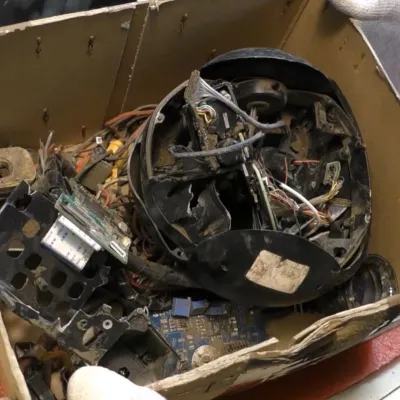
The remains of a gimbal camera after its drone was shot down. (Credit: Le labo de Michel, YouTube)
The Iranian Shahed-136’s basic design has seen many changes and additions since Russia began using them, with some featuring interesting payloads such as cameras in a gimbal, making these drones useful for tasks like surveillance. Recently [Michel] got his hands one one such camera that was recovered from a shot-down drone in Ukraine, providing the opportunity for an in-depth look at what hardware is in these cameras.
The teardown thus covers the gimbal mechanism itself as well as the electronics and camera. First up is an Artix-7 FPGA-based board, followed by the range finder assembly. Unsurprisingly the camera feed handling is performed by an Hi3519 SoC, as this appears to be the off-the-shelf option you find all over on AliExpress and similar sites. There’s also an Artix-7 FPGA-based board here, which presumably performs some machine vision tasks or similar.
Continuing the ‘bought off AliExpress’ vibe, the power supply board (pictured above) is quite literally just that. A relay board follows the same pattern, with apparently the entire contents of the camera consisting of off-the-shelf development boards and modules that are readily found for sale online.
For the camera there is a thermal camera presumably for night operations, as most of these drone swarms are launched towards Ukraine at night. Looking at the gimbal assembly it similarly feels like it was sourced off AliExpress, featuring mostly Western components, sometimes with the typical lasered-off component markings and such.
Advertisement
This makes one wonder how much has changed here since nearly two years ago we saw an air data computer from a similar drone that could have been sourced off AliExpress, while the Russian missile teardowns show significantly more custom hardware, presumably because those are harder to source off AliExpress.
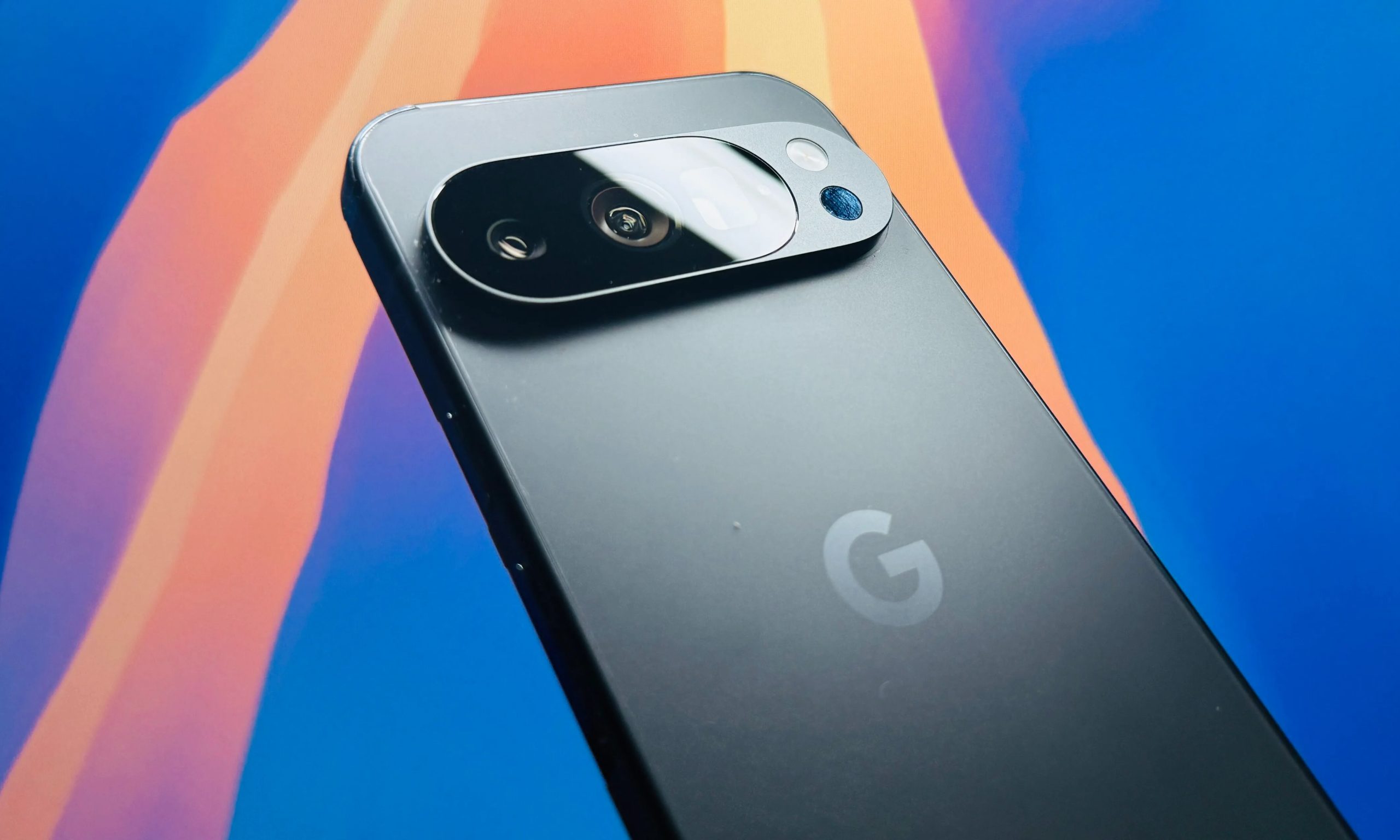
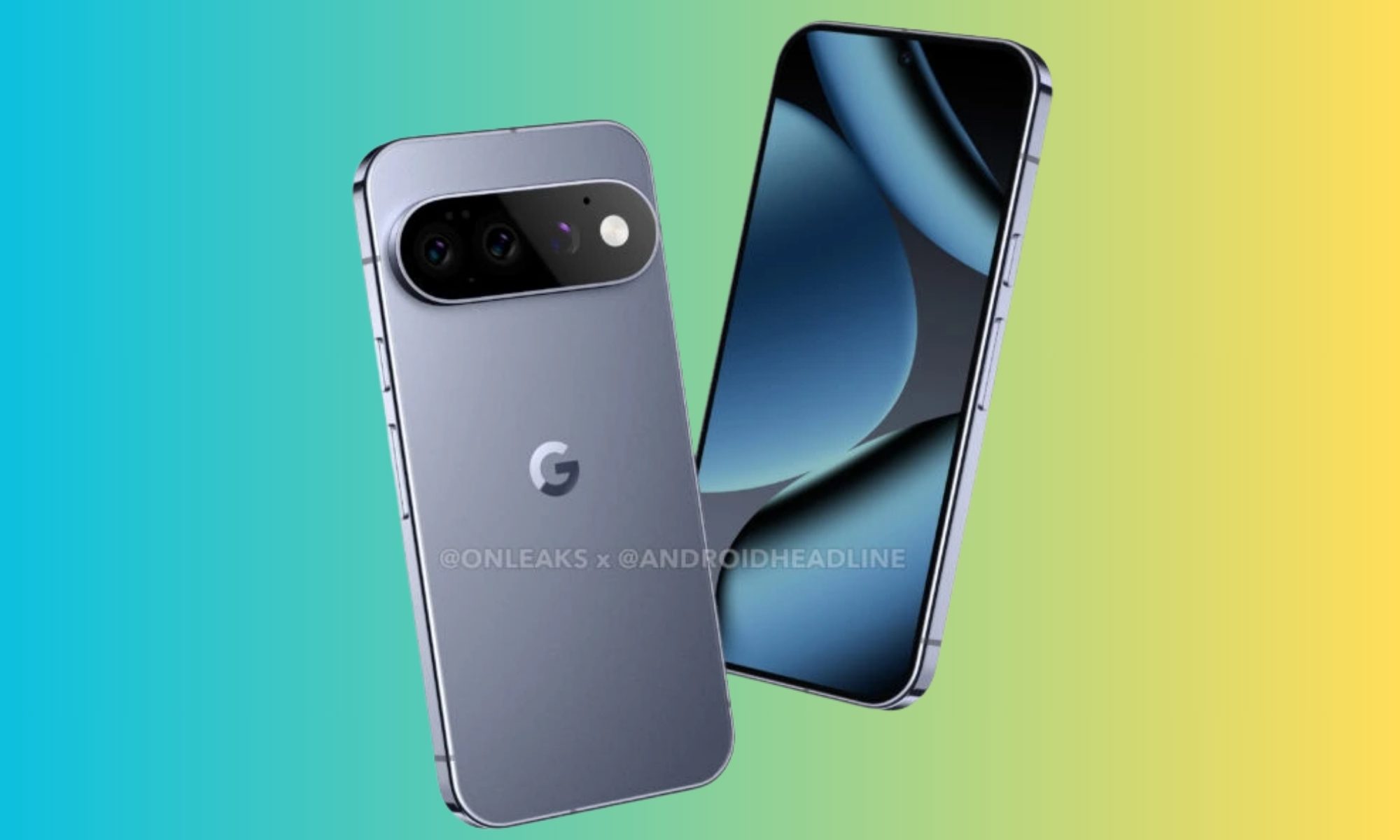
Google’s long-running face unlock comeback story may have hit another wall. A recent Pixel 11 series leak claims that Project Toscana, Google’s rumored infrared face unlock system, likely will not debut on the Pixel 11 lineup because it is still not ready for release.
The feature was expected to give future Pixel phones a stronger rival to Apple’s Face ID. Earlier reports said Project Toscana was tested on both Pixel phones and Chromebooks, with Face ID-like speed and better low-light performance. The latest leak suggests Pixel users may have to wait beyond the 2026 lineup for that upgrade.
Nadeem Sarwar / Digital Trends
Is Google delaying its Face ID rival again?
Based on the latest Pixel 11 leak, yes. Project Toscana is now said to be unlikely for the Pixel 11 series, even though Google was reportedly testing the system for months.
The system was described as an iPhone-like face unlock setup using hybrid near-infrared sensors and possible under-display infrared hardware. It was meant to improve speed, security, and low-light unlocking, areas where Apple’s Face ID still has an advantage.
Google has already tried a serious face unlock system on Pixel phones. The Pixel 4 series used dedicated hardware, including Soli radar, to sense when a user was reaching for the phone and prepare face authentication before the screen was fully active. Google said the system worked in almost any orientation and could be used for secure payments and app sign-ins.
Advertisement
The feature quickly ran into trouble. Soon after launch, users found that the Pixel 4 could unlock even when a person’s eyes were closed, raising security concerns. Google later issued an update that added an “eyes open” requirement, but the company moved away from dedicated 3D face unlock hardware after the Pixel 4 generation.
Android Headlines
Why does this sting for Pixel fans?
Newer Pixel phones brought face unlock back in a more limited form. Project Toscana looked like Google’s chance to close that gap and bring a hardware-backed face unlock system to future Pixels.
The same Pixel 11 leak still points to several hardware changes. The lineup is expected to use the Tensor G6 chip, new cameras, brighter OLED displays, a MediaTek M90 modem, and an RGB LED array in the camera bar on Pro models. The leak also claims the thermometer may be removed from the Pixel 11 Pro, Pixel 11 Pro XL, and Pixel 11 Pro Fold.
The delay is disappointing, but a rushed launch would be worse. Face unlock is not just a convenience feature when it is tied to payments, banking apps, and device security. If Project Toscana needs more time, the next Pixel generation is a better landing place than a half-ready rollout. For privacy and security, it should arrive only when it works correctly and feels bulletproof.
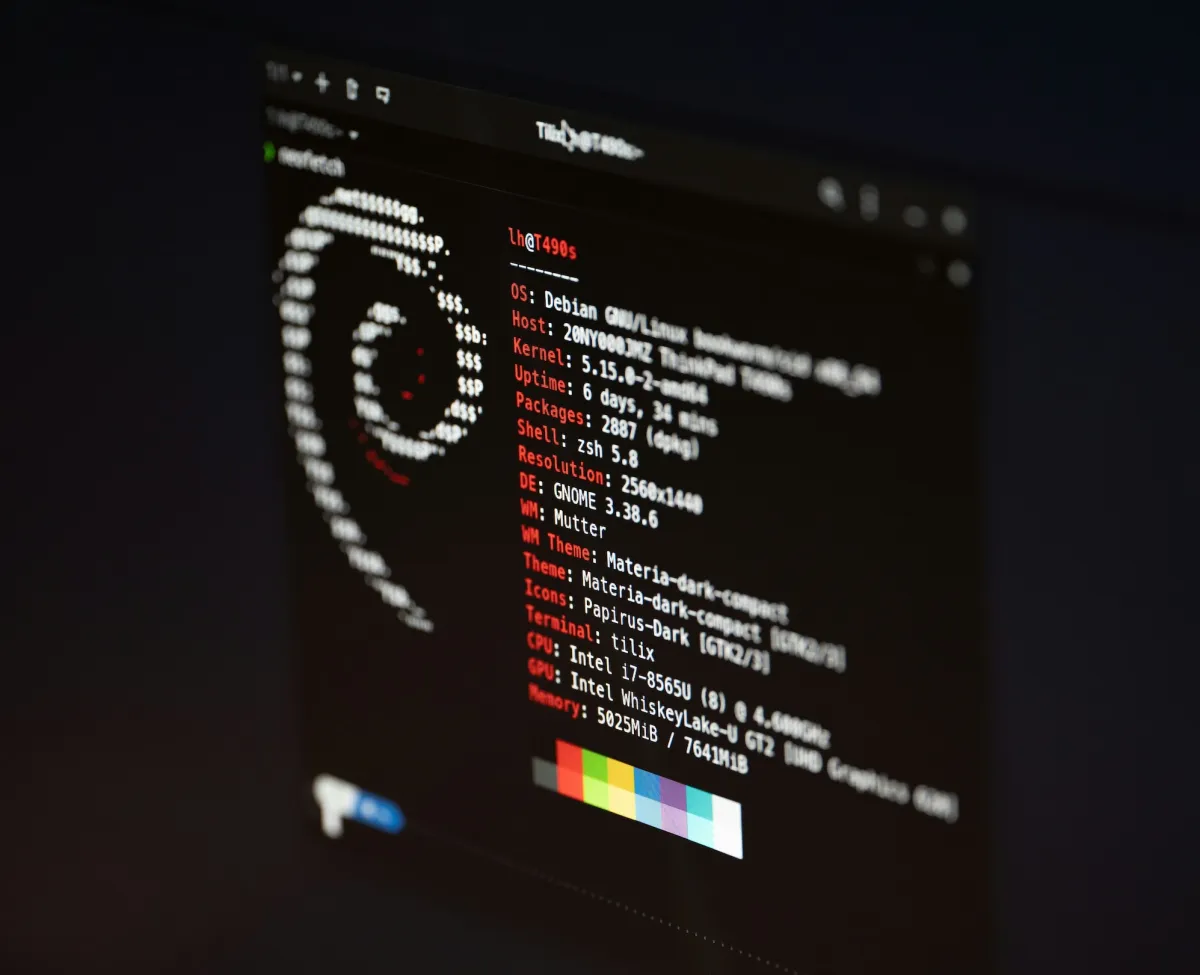
A severe security vulnerability affecting almost every version of the Linux operating system has caught defenders off-guard and scrambling to patch after security researchers publicly released exploit code that allows attackers to take complete control of vulnerable systems.
The U.S. government says the bug, dubbed “CopyFail,” is now being exploited in the wild, meaning it’s being actively used in malicious hacking campaigns.
The bug, officially tracked as CVE-2026-31431 and discovered in Linux kernel versions 7.0 and earlier, was disclosed to the Linux kernel security team in late March, and patched after about a week. But the patches have yet to fully trickle down to the many Linux distributions that rely on the vulnerable kernel, leaving any system running an affected Linux version at risk of compromise.
Linux is widely used in enterprise settings, running the computers that operate much of the world’s data centers.
Advertisement
The CopyFail website says that the same short Python script “roots every Linux distribution shipped since 2017.” According to security firm Theori, which discovered CopyFail, the vulnerability was verified in several widely used versions of Linux including Red Hat Enterprise Linux 10.1, Ubuntu 24.04 (LTS), Amazon Linux 2023, as well as SUSE 16.
DevOps engineer and developer Jorijn Schrijvershof wrote in a blog post that the exploit works on Debian and Fedora versions, as well as Kubernetes, which relies on the Linux kernel. Schrijvershof described the bug as having an “unusually big blast radius” as it works on “nearly every modern distribution” of Linux.
The bug is called CopyFail because the affected component in the Linux kernel, the core of the operating system that has virtually complete access to the entire device, does not copy certain data when it should. This corrupts sensitive data within the kernel, allowing the attacker to piggyback the kernel’s access to the rest of the system, including its data.
If exploited, the bug is particularly problematic because it allows a regular, limited-access user to gain full-administrator access on an affected Linux system. A successful compromise of a server in a data center could allow an attacker to gain access to every application, server, and database of numerous corporate customers, and potentially gain access to other systems on the same network or data center.
Advertisement
The CopyFail bug cannot be exploited over the internet on its own, but can be weaponized if used in conjunction with an exploit that works over the internet. Per Microsoft, if the CopyFail bug is chained together with another vulnerability that can be delivered over the internet, an attacker could use the flaw to gain root access to an affected server. A user operating a Linux computer with a vulnerable kernel could also be tricked into opening a malicious link or attachment that triggers the vulnerability.
The bug could also be injected by way of supply chain attacks, in which malicious actors hack into an open source developer’s account and plant the malware in their code in order to compromise a large number of devices in one go.
Given the risk to the federal enterprise network, U.S. cybersecurity agency CISA has ordered all civilian federal agencies to patch any affected systems by May 15.
When you purchase through links in our articles, we may earn a small commission. This doesn’t affect our editorial independence.





















































You must be logged in to post a comment Login