Tech
Meze Astru Review: $899 Titanium Flagship IEM Takes On the Best Under $1000

Meze Audio, founded in 2011 in Romania, has built a strong reputation in high-end personal audio with standout over ear models like the award winning Empyrean II, 109 Pro, and the recently updated 99 Classics 2nd Gen. But while the brand has become one of the more recognizable names in premium headphones, its track record with in-ear monitors has been far less consistent.
We had an early preview of the new Astru at CanJam NYC 2026, where one thing was impossible to ignore: wired IEMs are having a moment and were at the center of the conversation. If you think the category is fading in a world dominated by wireless earbuds, think again. Enthusiasts are doubling down on sound quality, and brands are responding.
The Astru is Meze’s latest attempt to finally lock in a true flagship IEM. Featuring a titanium shell and a single dynamic driver design, it builds on earlier efforts like Advar and Rai Penta, both of which showed promise but struggled to fully land with critics and buyers. The question now is simple. Can Meze translate its headphone success into the IEM space, or is this another near miss?
Key Specifications and What They Actually Mean
The Astru uses a single 10mm dynamic driver with a titanium and PEEK diaphragm, a combo designed to balance rigidity and flexibility for a more natural, controlled sound. With a 32 ohm impedance and 111dB sensitivity, it is easy to drive from a phone or dongle, but still benefits from better sources.
Meze includes a 0.78mm 2-pin cable with a 4.4mm balanced termination, which signals this is meant for serious portable gear, not just casual listening. At 13.4 grams with a titanium shell, it should feel solid without being fatiguing, and at $899, it lands in a very competitive tier where sound quality matters more than design alone.

Who Astru Is For and Who It Is Not
The Astru is aimed squarely at dynamic driver enthusiasts and anyone chasing a flagship IEM experience built around Meze’s house sound. It will appeal to listeners who prioritize cohesion over complexity, delivering a unified presentation that does not sacrifice treble performance, along with a warm, balanced tuning that favors musicality over analysis.
It is not for bassheads, listeners who demand true reference sound, or those chasing maximum top of the line vocal resolution. If your priorities lean toward impact, absolute neutrality, or extracting every last micro detail from a vocal track, this may not be your endgame.
Build
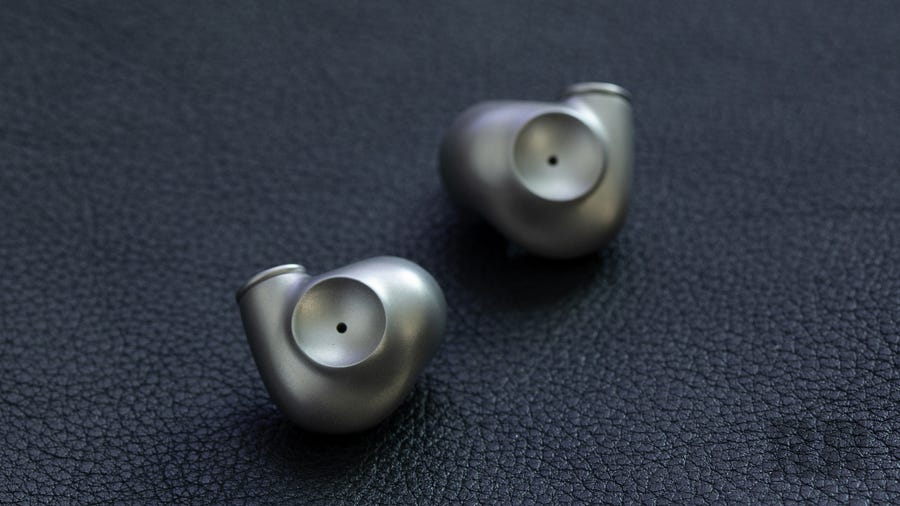
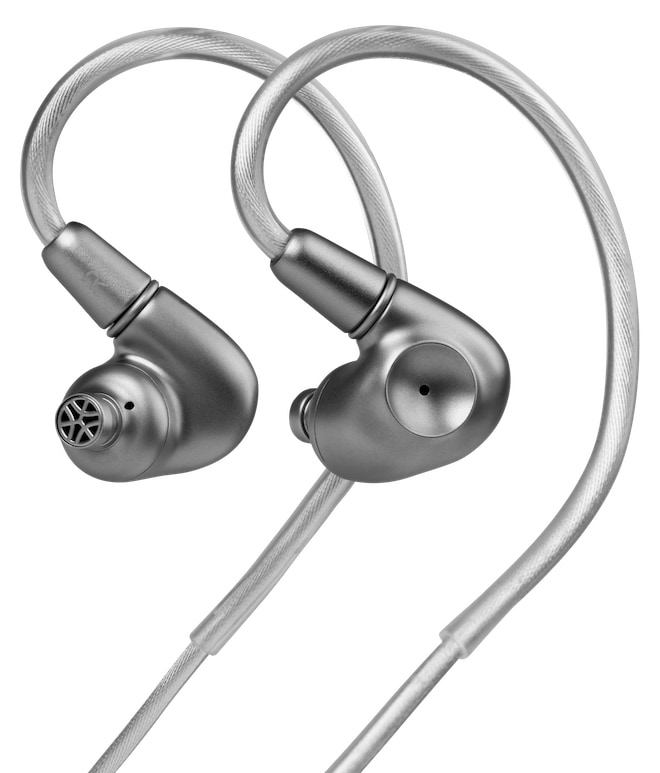
Meze went with titanium for the Astru’s shells. It is an expensive, finicky material, so it makes sense that they also reduced the visual and structural complexity to match. That said, the two-tone character of models like Advar and Alba is missed. This more minimalist approach makes the Astru feel less like a statement piece and more like an unfinished Blender render than a flagship Meze IEM.
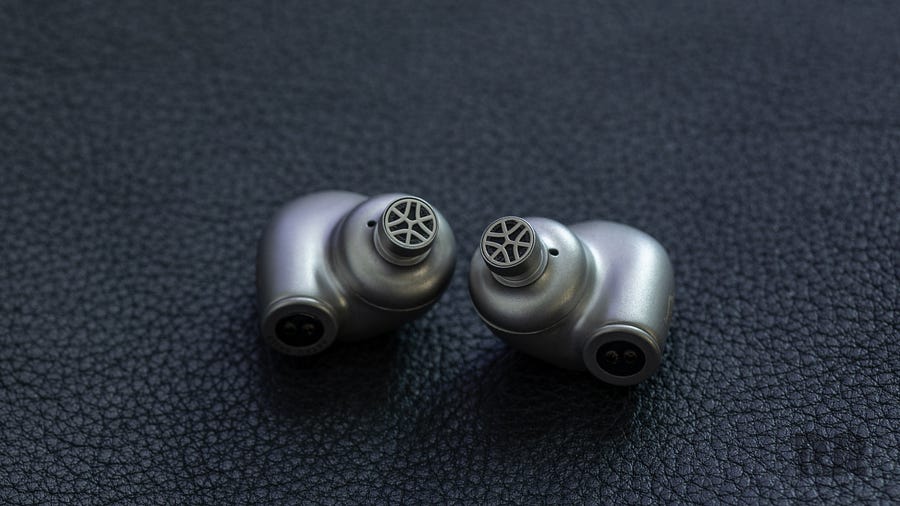


Style aside, Meze clearly put real effort into the Astru’s geometric shell design. The titanium nozzles feature precisely cut, integrated debris filters with a clean chamfer leading into a tight lip, giving the whole assembly a more refined, engineered feel.
Like the Alba and unlike the Advar, the Astru uses 0.78mm 2-pin detachable cables, with the sockets housed in smoky black plastic blocks. It works, but it is a step back visually. The Alba at least added a red accent on the right side for quick channel identification, a small but thoughtful detail that is missing here on the more expensive Astru.

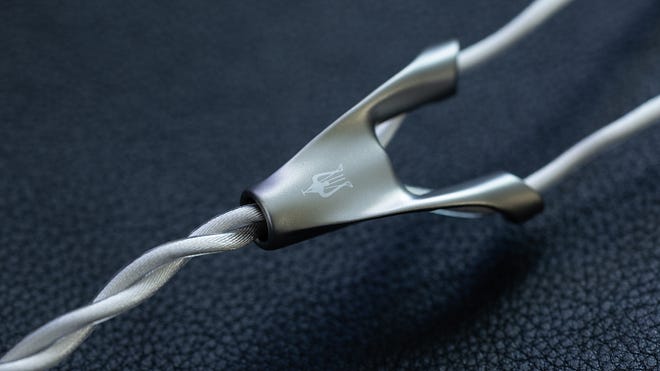
The effort Meze put into the Astru’s cable is obvious, from the soft, premium feeling twisted braid to the custom cut hardware on the Y splitter, giving it a true flagship feel in hand rather than something thrown in to check a box. It uses a fixed 4.4mm termination, with a 4.4mm to 3.5mm adapter included in the box for broader compatibility.
Comfort
Comfort is always subjective and heavily dependent on your ear anatomy, so mileage will vary. The Astru is one of the most-comfortable IEMs I’ve used. I was able to listen to it without any discomfort. Its lightweight titanium shells work wonders for long transit rides and intense work sessions, though I did not get the best passive isolation with the stock eartips.
Accessories
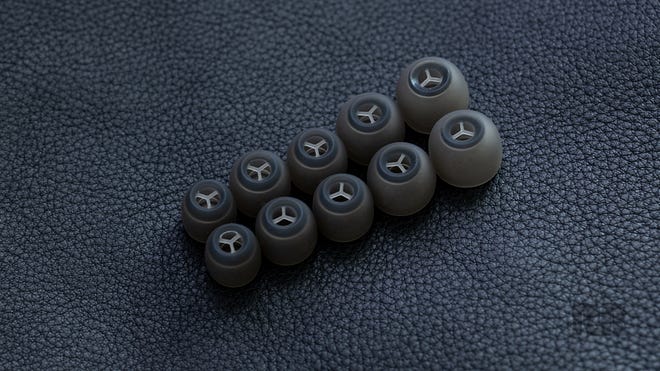
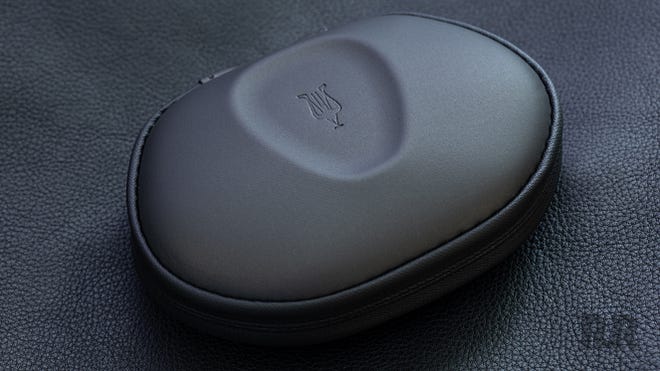
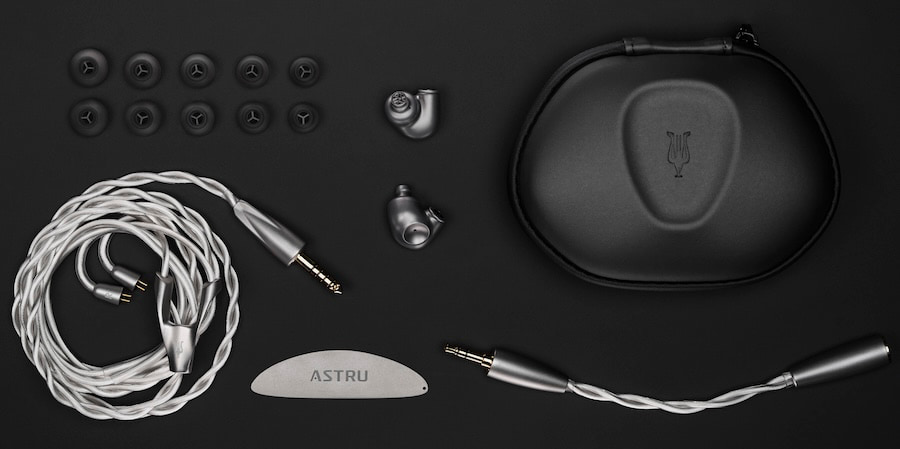
Inside the box you’ll find:
- 1x Semi-hard carrying case
- 1x 4.4mm-to-3.5mm adapter
- 5x Pairs silicone eartips
- 1x Synthetic leather baggie
- 1x Metal Astru plate
Meze did well with the Astru’s cable. It feels great in hand and is comfortable to use, but the rest of the accessory package does not keep up. The carrying case uses the same overall design as previous Meze flagships, but swaps the glossy black finish for a cheaper feeling satin coating that is more prone to scratches and long term wear like drying or flaking. By comparison, my well used Advar case still looks close to new. At $100 more, this feels like a step backward in overall quality.
Thankfully, Meze has improved on their ear tip offerings since 2022. The Astru’s stock eartips are comfortable and sized-well, but don’t offer the variety and passive isolation found on the sets offered by other brands. Campfire Audio, for example, includes a wider variety on even their entry-level IEMs, including liquid-silicone and foam sets. For $900, it’s fair to expect a more-comprehensive out-of-the-box experience.

Listening
About My Preferences: This review is a subjective assessment and is therefore tinged by my personal preferences. While I try to mitigate this as much as possible during my review process, I’d be lying if I said my biases are completely erased. So for you, my readers, keep this in mind:
My ideal sound signature leans toward competent sub bass, textured mid bass, a slightly warm midrange, and extended treble, though I do have mild treble sensitivity.
Testing equipment and standards can be found here.
The Astru features a gently V-shaped sound signature. It has a warm, healthy lower register, clean upper-midrange lift, and far-extending treble. The Astru exhibits a distinct “balance-first” approach to tuning, deviating from a tonal neutral purely in pursuit of a more-organic presentation. The Astru’s warm and inviting timbre and top-notch performance, blend together to deliver a distinctly “Meze” take on a harmonically-complete version of a modern meta IEM.
The Sweet Meze Sparkle
The Astru, with its single dynamic driver configuration, faces an uphill battle against the maelstrom of audiophile preconception. Single dynamic driver IEMs have long since been maligned as somehow inferior to alternative configurations, even if the objective measurements demonstrated otherwise. The bulk of the general enthusiast population’s disillusionment with dynamic drivers is concentrated around their treble characteristics, often described as grainy, or lacking in upper-end resolution.
For many poorly-implemented IEMs, that’s actually true — but that’s not the case on the entry-level Meze Alba, let alone the new Astru. The Astru exhibits the best treble performance of any single dynamic driver IEM I’ve heard, bar none. Even some multi-driver, planar-based, tribrids don’t resolve subtle textures as cleanly as the Astru does.
I was particularly taken by the Astru’s ability to resolve the tactile decay of the hi hats in “Careless” by Royal Blood (around 1:20 and 1:23). It also does an excellent job with background textures in “WANTED U” by Joji (around 3:00), integrating treble based effects naturally against the track’s dark, empty soundstage.
Meze’s focus on the Astru’s treble pays off, delivering a more elevated take on the brand’s upper register tuning. The result is a sweet, resolving timbre that avoids sharpness and sibilance, making it an easy listen even on rougher masters, including for those with mild treble sensitivity like myself.
Vivid and Lush Mids
The core trait shared between Meze’s IEMs is a lush, warm, and inviting midrange. That Meze house sound is certainly present on the Astru, as its lower-mids have a healthy dose of emphasis. They blend organically from the lower mids into the mid bass, allowing the Astru to create a strong sense of atmosphere on tracks like “Lisztomania” by Phoenix. The layering of gentle guitar strumming against punchy drums and fluttering vocals feels dynamic and engaging, exactly what you want from a flagship IEM.
The Astru’s vocal timbre benefits from its rich midrange, with male vocals sounding deep and harmonically complete. Singers with complex tones, like Chris Cornell in “You Never Really Knew My Mind,” come through with a haunting sense of weight and texture. That said, vocal intelligibility in busy tracks does not rise above what similarly priced competitors deliver.
Challenging tracks like “Letter from a Thief” by Chevelle push the Astru close to its limit in terms of vocal presence, and as a result, some of the finer edges of the performance get smoothed over. In the pursuit of maintaining a sense of vocal cohesion, Meze limited the forwardness of the Astru’s upper-mids, and this aspect of its performance is what happens as a result.
Polite, But Firm
As divisive as bass can be, it is hard to imagine anyone putting on the Astru and not thinking this is well tuned low end. It does not lean into basshead levels of emphasis, but there is enough presence to satisfy across a wide range of genres, backed by strong control and texture rather than just quantity.
The Astru held its own in EDM, delivering deep, impactful bass hits in “Fat Cat Adventures” by Tut Tut Child (around 1:20). “Turbulence” by Neddie also comes through with tight, full bodied bass lines, supported by the Astru’s solid and well extended sub bass.
The Astru is just as capable with rock and alternative. It picks up even the faint mid bass drum hits in “Lydia” by Highly Suspect with ease, showing impressive control across the lower register. That control translates into strong contrast and rhythmic drive, and the Astru clearly understands that musical engagement starts with the low end.
That said, some tracks could use a bit more weight. “I Hope You Hate Me” by Dead Poet Society sounds warm enough, but the electric guitar chugs do not hit as hard as they could. The drums in “Bulletproof Heart” by My Chemical Romance are clear and distinct, but they lack the kind of physical impact you get from bassier IEMs.
Comparisons
Comparisons are chosen based on what I find most interesting. If there is something you would like to see added, feel free to drop a request in the comments.
Meze Alba
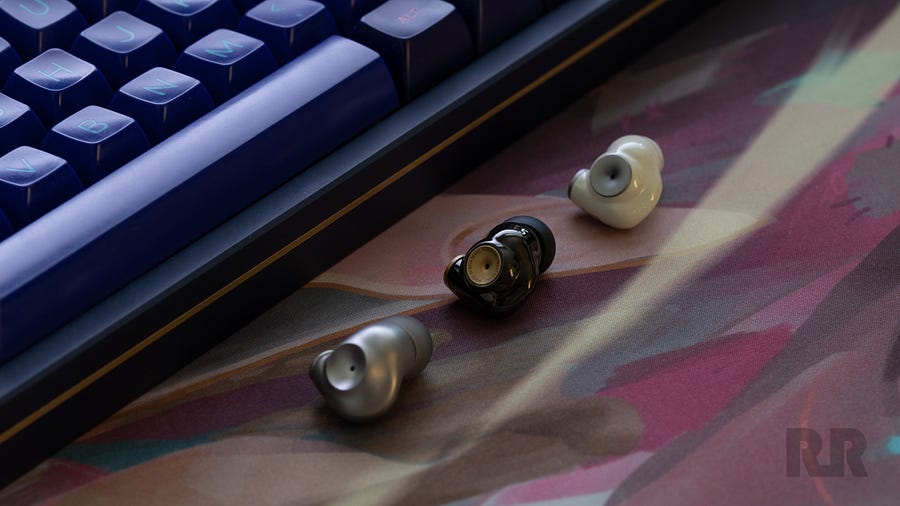
The Alba is Meze’s entry-level IEM. It features slender metal shells and a single dynamic driver per-side. It sells for a fairly-affordable $159, making it significantly cheaper than the Astru’s $899 price-tag.The goal of this comparison is not to decide which one is “better,” especially given the price gap, but to highlight the differences in sound and physical design between Meze’s two newest IEMs.
For $899, Meze includes a five size set of basic silicone eartips with the Astru, while the Alba ships with a lower quality four size set. Both use detachable 2-pin cables, but the Astru’s is clearly the better execution, with a thicker build and a proper 4.4mm termination.
That said, the Alba includes a well designed USB-C DAC, which is notably absent from the Astru. Most flagship buyers will already have a capable 4.4mm source, but it still represents a meaningful loss in out of the box flexibility. The Alba also leans more into design, with a more distinctive two tone look and clearer left and right channel indicators.
Sound wise, the Alba presents hi hats and cymbals more forward, but without pushing the lower treble as prominently as the Astru. The Astru comes across warmer overall, with a fuller lower midrange and a more grounded presentation.
Bass is where the gap becomes more obvious. The Alba is lighter and less controlled, while the Astru delivers greater impact and definition. Resolution is also improved on the Astru from top to bottom, especially in how it handles hi hat decay in busy passages. That makes it the better pick for bass heavy music, though the Alba still holds its own, with a tuning that stays close enough to make switching between them feel natural rather than jarring.
All things being equal, I’d say that the Astru, on tonal merits alone, is my choice. The Alba is an excellent “baby Astru,” but doesn’t deliver the depth and lower-register technicality that I’m looking for in electronic music. Even if both IEMs shared identical physical design and price tags, I’d lean the same way.
Meze Advar
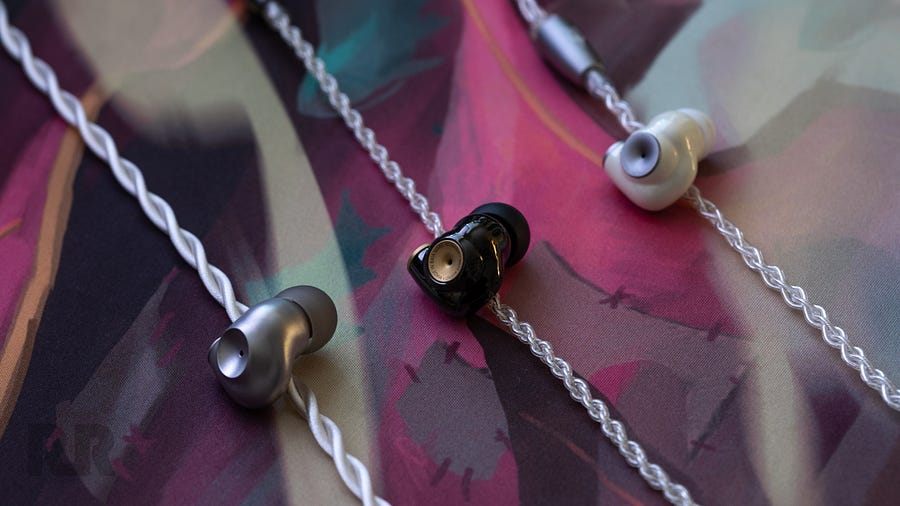
The Advar is the direct ancestor of the Astru, acting as the Meze IEM flagship back from 2022 until the end of 2024. Meze came back with the Astru, swapping to monochrome titanium shells and dropping much of the Advar’s visual flare. The Advar is a little weightier than the Astru, and looks quite a bit more stately thanks to its high-contrast design. The Astru uses the more-widespread 2-pin standard for its cables, rather than MMCX, which should allow users to more-easily swap to aftermarket cables.
The Astru’s cable is thicker, softer, and less tangle-prone that the Advar’s cable, which is a major quality-of-life improvement. Beyond the improved ergonomic utility, the Astru’s cable is outright nicer to look at and better-feeling in the hand. While some users may find that the decision to move to a fixed 4.4mm termination is kind of annoying, you can always swap the cable or make use of the included 4.4mm-to-3.5mm adapter to compensate.
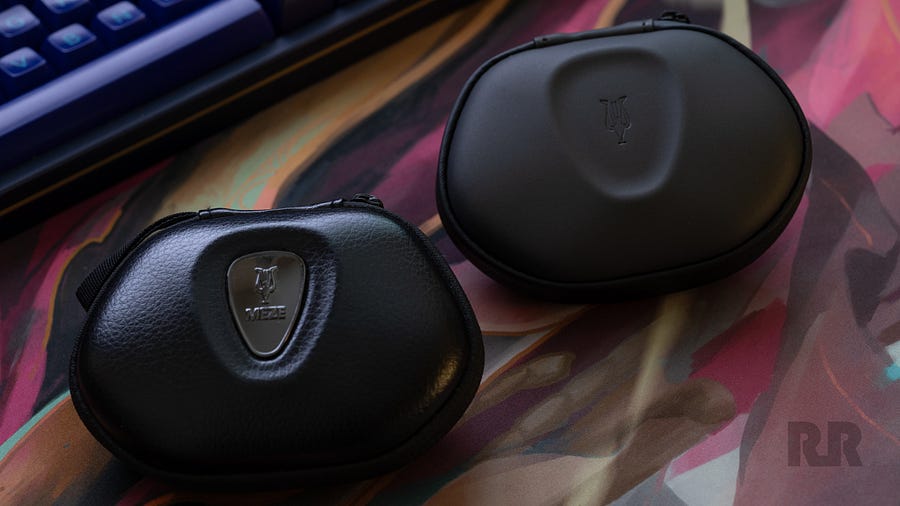
The Astru includes a better selection of eartips and a nicer cable, but it loses ground with the case. Instead of the more premium finish used on the Advar, you get a matte slate colored version with the same shape but a less refined look and feel.
Sonically, the Advar is fairly similar to the Astru, offering a broadly V-shaped sound signature with a warm lower midrange and enhanced upper-treble. The Advar, however, has less bass emphasis. The Astru, while bassier on the whole, also exhibits a tangibly-improved level of control over its mid and sub-bass, leading to an obviously-better experience with bass-centric tracks.
The intro of “Reminder” by Uppermost sounds noticeably more dynamic on the Astru, with tighter sub bass hits and improved texture throughout.
The Astru also features a retuned treble with reduced peakiness and greater overall resolution. There are plenty of treble-heavy elements on the Advar that can come across as too aggressive. The Astru is not exactly laid back up top, but it avoids that sharp edge and sounds more controlled by comparison. The Astru also demonstrates a greater degree of control over percussion decay. Hi hats and cymbals decay for longer and with a greater sense of identity on the Astru versus the Advar.
For me, the choice between the Advar and Astru is straightforward: the Astru simply sounds better. It costs more and comes with a less appealing case, but where it matters most, its musical performance is clearly superior.
Campfire Audio Alien Brain

The Alien Brain is a $1,000 IEM from Campfire Audio. It features a selection of balanced-armature and dynamic drivers per side and uses a combination of aluminum and plastic for its shells. Coming in at $100 more than the Astru, the Alien Brain features a simple carrying case with a magnetic flap and a pair of flat-braid MMCX cables. The Alien Brain includes a USB-C DAC, which is a utility absent from the Astru’s accessory package. The Astru has a less-robust selection of eartips in the box, notably missing the liquid-silicone and foam varieties found in the Alien Brain’s eartip suite. Campfire Audio also includes a number of tertiary goodies that Meze does not, including a microfiber cleaning cloth, cleaning tool, protective IEM baggie, and lapel pin. And while these are not essential to the core task of listening to music, the level of detail and finish from Campfire Audio feels more in line with a $900 to $1000 experience than what Meze delivers with the Astru.
Sound wise, the Alien Brain leans more into upper treble, with a more forward vocal presentation and punchier mid-bass. The Astru shifts focus slightly lower, with more forward sub bass that lets it dig deeper on drier tracks. The Astru has a warmer, more relaxed lower-midrange, giving it a comforting disposition that contrasts the Alien Brain’s more-analytical timbre. The Alien Brain, though a bit thinner-sounding, has a smoother upper-treble timbre. The Alien Brain’s cooler, more-technical presentation is a lot closer to the tonality you’d get from a classically V-shaped IEM. Its punchier mid-bass, but less-rumble-prone sub-bass, is more immediately-engaging in rock and alternative, though by a slim margin.
Fundamentally, I believe these two IEMs target different audiences. The Meze house sound, imbued into the Astru’s drivers, delivers a warm, moderately V-shaped sound signature with an emphasis on being welcoming and sweet. While I do enjoy the Alien Brain’s stronger vocal intelligibility on select tracks, that’s not enough of a benefit to entirely pull me away from the Astru’s excellent overall timbre. Given the Astru’s lower price tag, I’m gonna have to call a subjective draw between these two well-made IEMs.

The Bottom Line
The Meze Astru gets the important things right. It delivers a cohesive, natural sound with excellent treble control, strong bass texture, and a presentation that feels more refined than past Meze IEM efforts. It is easily the brand’s most convincing in ear to date and a clear step up from models like Advar, especially in resolution and overall balance.
It is not perfect. The accessory package feels uneven for the price, with a noticeable drop in case quality and a lack of extras like a bundled DAC that some competitors include. And while the tuning is engaging and musical, it is not built for bassheads or listeners chasing strict reference neutrality or maximum vocal detail.
Against competitors in the $900 to $1000 range, the Astru holds its ground on sound quality but gives up some points on perceived value and finishing touches. This is for listeners who want a flagship-leaning dynamic driver IEM with a warm, cohesive tuning and fatigue free treble, not those looking for the most analytical or feature packed option in the category.
Pros:
- Ergonomic titanium shells
- Mature, gently V-shaped sound signature
- Precise and cohesive timbre
- Tight bass response
- Expressive, sweetly-toned treble
- Excellent vocal intelligibility
- Strong micro-detail capture
Cons:
- Stock eartips offer mediocre passive isolation
- Underwhelming visual design
- Bulky 3.5mm adapter has poor ergonomics
- Carrying case outer-material is scratch-prone
- Somewhat bass-light
- Doesn’t include foam eartips
You must be logged in to post a comment Login