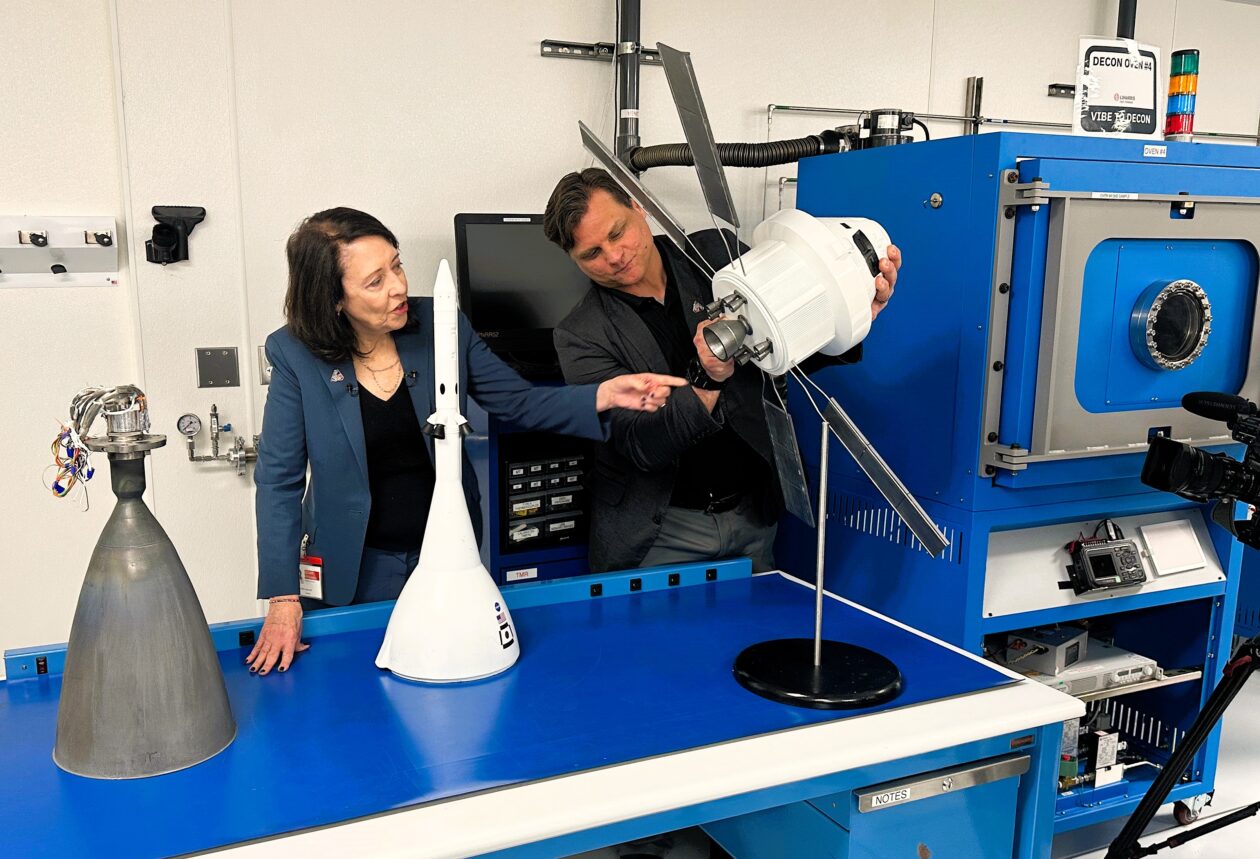
Sen. Maria Cantwell, D-Wash., and Brent Urke, program manager for L3Harris’ facility in Redmond, Wash., check out a model of the Orion spaceship that’s due to take four astronauts around the moon as early as this week. Cantwell is pointing to the model’s set of eight R-4D thrusters. An actual R-4D thruster, manufactured in Redmond, is sitting on the table at far left. (GeekWire Photo / Alan Boyle)
NASA’s most powerful rocket is due to send four astronauts on a round-the-moon journey as early as this week, and although the launch team has to make sure everything goes right in Florida, the mission’s success will also depend on hardware that was built in the Seattle area.
During a visit to two of the contractors for NASA’s Artemis moon program on Monday, U.S. Sen. Maria Cantwell said that when it comes to spaceflight, it’s important to get the little things right.
“A lot of people think, ‘Oh, well, we know how to build big rockets,’ right?” the Washington state Democrat said at Karman Space & Defense’s manufacturing facility in Mukilteo, Wash. “But do we know how to separate payloads and return them, and do all of that? That’s what we’re doing here in Puget Sound. … I think that’s the untold story that people don’t understand.”
NASA’s big story will focus on the first humans to go from the Earth to the moon since the Apollo 17 mission in 1972. Artemis 2’s crew won’t land on the lunar surface during what’s expected to be a 10-day mission. But because their figure-8 route takes them 4,700 miles beyond the moon’s far side, they’ll set a new distance record for human travel beyond Earth.
The first opportunity for liftoff from NASA’s Kennedy Space Center in Florida is scheduled for 6:24 p.m. ET (3:24 p.m. PT) on Wednesday, with backup dates available through April 6. NASA plans to provide live video coverage of the countdown and launch via YouTube, starting at 12:50 p.m. ET (9:50 a.m. PT) on launch day.
Advertisement
This will be the second launch for NASA’s Space Launch System rocket, which sent an uncrewed Orion space capsule around the moon for the Artemis 1 test mission in 2022. The Artemis 2 crew — including NASA astronauts Reid Wiseman, Christina Koch, Victor Glover and Canadian astronaut Jeremy Hansen — will be the first people to ride an Orion into space.
If all goes according to plan, Artemis 2 will clear the way for NASA to test the lunar landers built by Elon Musk’s SpaceX and Jeff Bezos’ Blue Origin space ventures in 2027, then for Artemis 3 to put astronauts on the surface of the moon in 2028. And that’s just the start. “Ultimately, Artemis is about returning to the moon and building a permanent moon base that can then be used for accelerating our travel to Mars,” Cantwell said.
One of the best-known of those Washington state suppliers is L3Harris, which is headquartered in California but operates a facility in Redmond that has built thrusters for nearly every NASA space program. (The facility was operated by Aerojet Rocketdyne until L3Harris acquired that company in 2023. Now L3Harris is in the midst of yet another corporate transition.)
Advertisement
During her visit to the Redmond facility, Cantwell said L3Harris and other space companies exemplify the “engineering mindshare” that’s one of the strengths of the Pacific Northwest’s tech industry. “That is why people have called us the Silicon Valley of space,” she said.
L3Harris’ Redmond team manufactures thrusters for Orion’s European-built service module, Orion’s crew module and the Space Launch System’s upper stage. It’s also been given a leading role in the development of the main engine for future Orion spacecraft.
John Schneider, vice president of operations for L3Harris, acknowledged that most of the rocket engines built to send astronauts to the moon come from other places. “But if you want to come back, you need a Redmond thruster to bring you back and get you back to Earth safely,” he said.
Jonathan Beaudoin, chief operating officer at Karman Space & Defense, says he hopes we’ll never have to see the hatch release system activated for an actual emergency. “But if we do, it had better work,” he added.
Karman Space & Defense CEO Jon Rambeau, chief operating officer Jonathan Beaudoin and U.S. Sen. Maria Cantwell survey hardware for the Orion crew capsule. (GeekWire Photo / Alan Boyle)
Artemis 2 is currently focusing the space spotlight on the teams supporting the Space Launch System and the Orion spacecraft, but Washington state’s space companies are also involved in other aspects of the Artemis program. Blue Origin, for example, is getting its Blue Moon lander ready for missions to the moon and working on a system capable of turning moon dirt into solar cells and electrical wire.
“This is about cutting-edge technology. These guys out here aren’t waiting for somebody to describe to them what comes next. They’re out here solving a problem and then saying to NASA, ‘We’ve got a solution.’ And that’s really fantastic,” Cantwell said.
“Obviously, some of this they don’t want to show for intellectual property protection reasons,” she added. “But we’re just really, really proud that our region is so far ahead, thinking through the problems that we’re going to incur and what the possible solutions should be.”
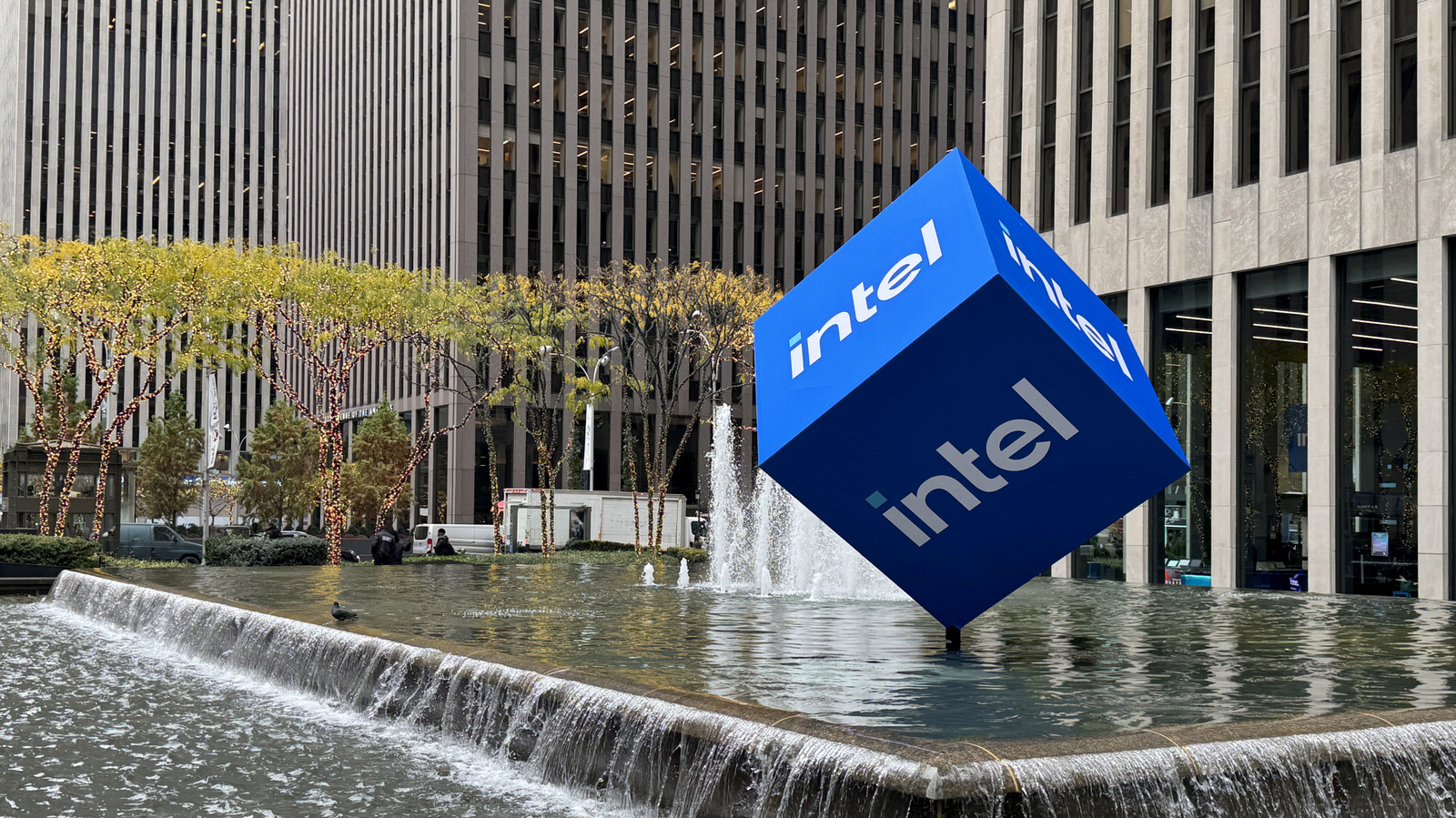
Bloomberg has a deep dive this week into how Intel CEO Lip-Bu Tan is trying to rescue one of Silicon Valley’s most storied, and stumbling, chipmakers. It’s worth a read, but it actually undersells the most jaw-dropping part of the story: Intel’s stock has risen a stunning 490% over the past year, a bet by Wall Street that may be running well ahead of the company’s actual turnaround.
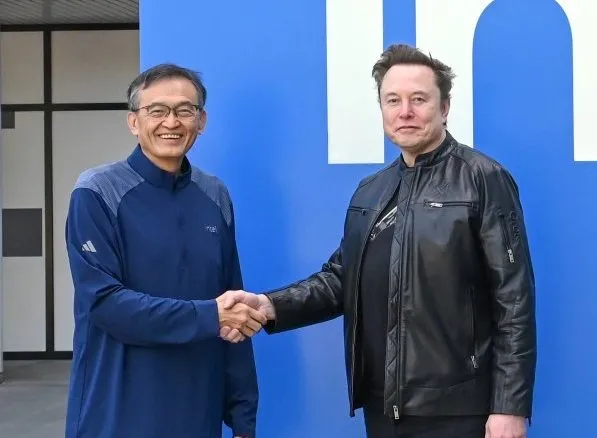
Tan, who took over in March of last year, has spent much of his first year schmoozing rather than restructuring — locking in a sweetheart deal with the U.S. government (now Intel’s third-largest shareholder), cozying up to Elon Musk on a factory partnership, and reportedly landing preliminary manufacturing agreements with both Apple and Tesla.
The fundamentals are still messy. Intel’s chip yields lag well behind industry leader TSMC, and employees tell Bloomberg that Tan has been light on specifics internally, with some teams adjusting missed deadlines rather than recovering from them.
But investors are betting big on the bigger picture. Whether the execution follows is the multibillion-dollar question.
Noble Audio has never been a brand that avoids taking risks, and that willingness to try something different has often worked in its favor. The new Lu Ban, unveiled at CanJam Singapore 2026, follows that same path with a design that appears to be more than just another IEM release with a familiar shape and a new name.
Noble brought something distinctive to Singapore, and the real test will be whether the Lu Ban can turn that design ambition into the kind of performance that keeps the brand near the front of the personal audio conversation.
Ancient Chinese Inspiration Meets Modern IEM Design
The Lu Ban takes its name from the legendary Chinese craftsman and inventor associated with precision, problem-solving, and practical ingenuity. Noble Audio is using that reference to frame a universal IEM that combines natural materials with a more advanced hybrid driver platform.
It is a fitting name for a product that appears focused on craftsmanship as much as performance. The Lu Ban sits as a new statement within Noble’s universal IEM lineup, and the key question is whether its design and engineering choices translate into a more distinctive listening experience.
Advertisement
The Lu Ban uses a three-driver configuration built around a 10mm wooden composite diaphragm dynamic driver and two newly developed Super-Magnetic planar drivers. The dynamic driver is intended to handle weight and texture, while the planar drivers are there to support speed, detail, and control.
With a rated 108dB SPL/mW sensitivity and 27-ohm impedance, the Lu Ban should not require a difficult source to drive properly. That matters, because Noble is clearly positioning this as a serious universal IEM that can work across portable players, dongle DACs, and higher-end desktop setups without needing a small power plant attached to your desk.
10mm Wooden Composite Dynamic Driver
The sonic foundation of the Lu Ban is its 10mm wooden composite diaphragm dynamic driver. The use of wood is not just a visual or branding choice. Noble is pointing to its long use in musical instruments, where resonance, density, and tonal behavior all matter.
In the Lu Ban, the wooden composite material is used within the diaphragm structure to support bass depth, control, and texture. Noble says the driver is intended to deliver extended sub bass without excess overhang, while keeping the mid bass articulate and balanced. The same material approach is also designed to give the midrange more body, harmonic weight, and a more natural sense of decay with vocals and acoustic instruments.
The goal is not to add artificial warmth or make the Lu Ban sound deliberately thick. Noble is using the wooden composite driver as the tonal anchor of the IEM, with the aim of giving the Lu Ban a more physical, natural, and musically grounded presentation.
Dual Super-Magnetic Planar Technology
To support the 10mm wooden composite dynamic driver, the Lu Ban also uses two Super Magnetic planar drivers. Noble says these drivers are derived from planar driver technology used in select loudspeakers, with the goal of improving speed, clarity, and upper frequency precision inside a compact IEM design.
Advertisement
The Super Magnetic planar drivers use a new generation neodymium iron boron magnetic material, refined with a controlled copper element to help stabilize magnetic flux and improve efficiency. In practical terms, Noble is using this driver system to improve transient response, micro detail retrieval, separation, and treble extension.
Advertisement. Scroll to continue reading.
The planar drivers are intended to add clarity, air, and better layering without pushing the Lu Ban into an overly bright presentation. Noble says high frequencies extend cleanly, while more complex recordings remain organized and intelligible.
Acoustic Chamber
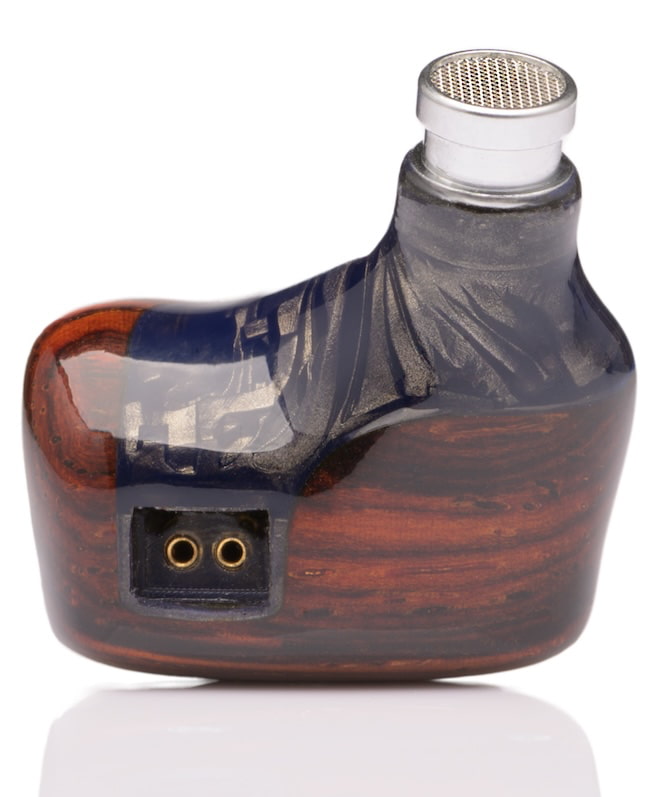
Noble also uses a Mortise and Tenon Acoustic Chamber inside the Lu Ban to help manage internal driver resonance. The chamber includes an irregular diffusion structure that is intended to reduce standing waves created by internal sound reflections. At the front, a spiral airflow guide is used to limit unwanted noise while helping preserve phase coherence.
Advertisement
In practical terms, the chamber is there to improve control inside the shell so the drivers can operate with less interference from reflections, resonance, and airflow issues.
Crafted with Purpose
As noted earlier, the Noble Lu Ban takes its name from the legendary Chinese craftsman Lu Ban, and that influence carries into the physical construction of the IEMs.
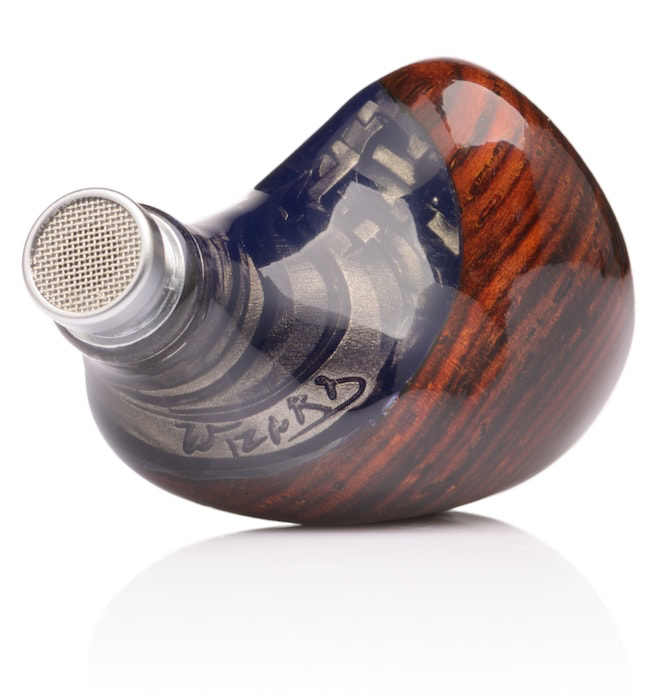
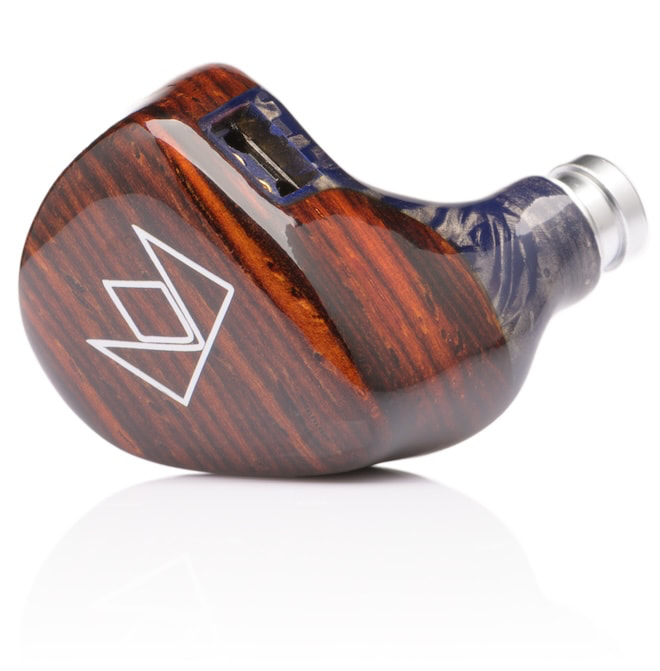
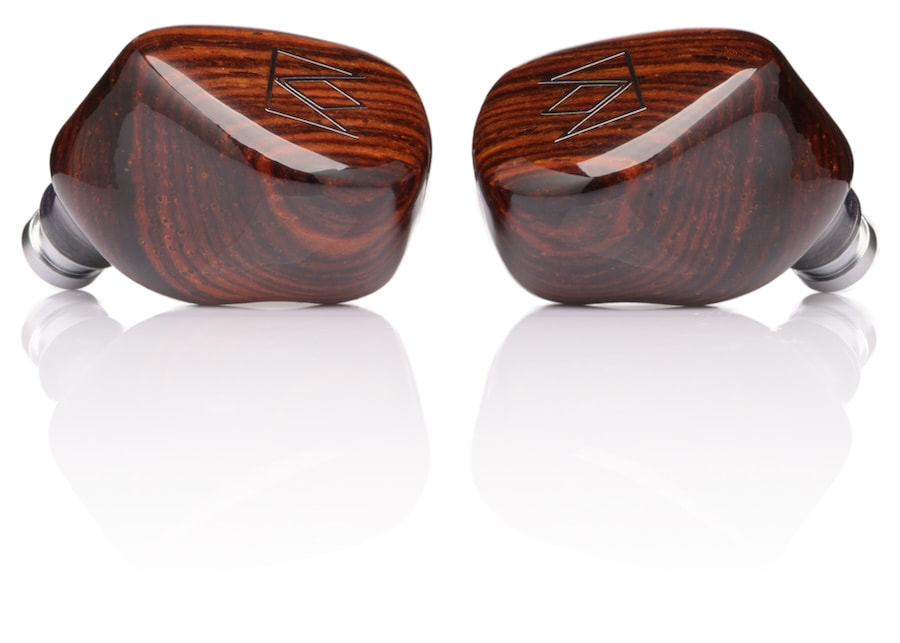
Each shell combines Cocobolo wood with a 3D printed resin internal framework. The wood gives each pair a distinct grain pattern, while the resin structure allows Noble to maintain more consistent internal geometry, driver placement, and acoustic alignment from unit to unit.
The result is a design that uses natural material for the exterior character, but relies on controlled internal construction for acoustic consistency. Each pair should look slightly different, but the engineering target remains the same.
Advertisement
Premium Cable & Accessories
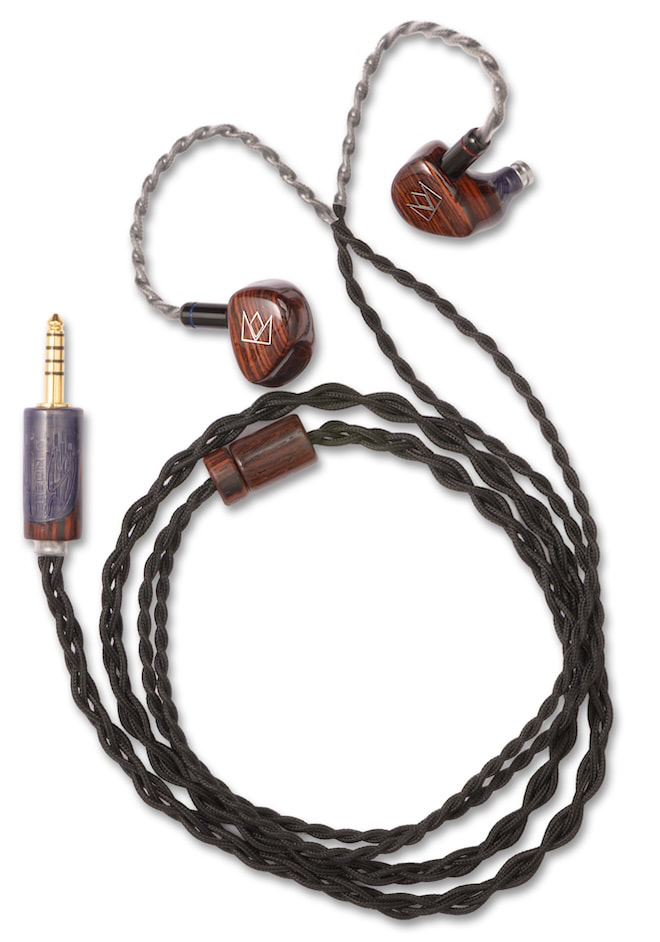
The Lu Ban ships with a 4 strand woven high purity OCC silver plated cable. Noble specifies the cable as part of the package rather than an afterthought, with the goal of maintaining signal integrity and tonal consistency from source to IEM.
The cable uses a fiber woven surface coating, standard 0.78mm 2 pin connectors with left and right markings, and a 4.4mm copper gold plated balanced termination. That makes it ready for many modern DAPs, portable DAC amps, and balanced desktop headphone outputs without requiring an immediate cable swap.
A 3.5mm option would have been useful for wider compatibility, but Noble is clearly aiming this package at listeners already using balanced portable sources.
IEM storage box Ear tip storage box 9 pairs of ear tips Warranty service card
Key Features
Hybrid Driver Configuration: The Lu Ban uses a 10mm wooden composite diaphragm dynamic driver paired with dual Super Magnetic planar drivers, giving Noble a platform designed to balance body, speed, and precision.
Natural, Controlled Low End: The wooden composite dynamic driver is intended to deliver deeper bass response with texture and control, while keeping the mid bass articulate rather than bloated.
Detailed and Refined Highs: The Super Magnetic planar drivers support the dynamic driver by adding faster transient response, cleaner detail retrieval, and more extended high frequency performance.
Advertisement
Advertisement. Scroll to continue reading.
Balanced Hybrid Tuning: Noble’s goal is to combine the weight and tonal character of the dynamic driver with the clarity, air, and separation provided by the planar drivers.
Precision Crafted Shell Design: The Lu Ban uses a Cocobolo wood shell with a 3D printed resin internal structure, allowing for natural visual variation while supporting consistent driver placement and acoustic geometry.
Premium Cable Package: The Lu Ban includes a 4 strand OCC silver plated cable with 0.78mm 2 pin connectorsand a 4.4mm balanced termination, along with additional accessories.
Advertisement
The Bottom Line
The Noble Audio Lu Ban stands out because it does not follow the usual hybrid IEM formula. The combination of a 10mm wooden composite dynamic driver, dual Super Magnetic planar drivers, Cocobolo wood shells, and a Mortise and Tenon Acoustic Chamber gives it a more distinctive design story than most wired IEMs in this price range.
At around $1,400, the Lu Ban is not entry level, especially compared to Noble’s $700 Van Gogh, but it also sits well below the company’s $4,500 Kronos. What is missing? Wireless capability, for one. Like most serious IEMs, the Lu Ban is wired only, so there is no Bluetooth unless you add a wireless adapter from brands like iFi. A 3.5mm cable option also would have made the package more flexible for casual users.
The Lu Ban is really for listeners who already understand the appeal of wired IEMs: dedicated audiophiles, serious portable audio users, and studio listeners who want detail, control, and a more distinctive material design. Its 108dB sensitivity and 27 ohm impedance suggest it should work well with a quality dongle DAC, but a good DAP with a balanced 4.4mm output is the more natural match. Think less phone accessory, more serious portable rig without needing a brick in your pocket.
New Year’s Day doesn’t always call for a big plan. For a lot of people, it’s about staying in, slowing down, and putting something on without overthinking it. That’s also where free movies start to make more sense, especially when you can press play without worrying about subscriptions or rentals.
The shift toward free, ad-supported streaming has made it easier to find something that fits how you actually want to watch. Sometimes that means an easy film you can let play in the background, while at other times it’s something you settle into properly. The difference isn’t about what’s “best,” but what works for the kind of day you’re having.
Some picks here are familiar rewatch options, others are more recent films that are currently available to stream for free. Each one is chosen to match a different viewing mood, so you can find something that fits without spending time scrolling through platforms trying to figure out what’s available.
Few films carry over from New Year’s Eve into the next day as naturally as When Harry Met Sally, largely because of how its story resolves. That final sequence gives it a built-in sense of closure, which makes it just as fitting for a quieter New Year’s Day watch as it is for the night before. We first curated this list in 2024, and since then, When Harry Met Sally has remained one of the easiest recommendations to return to.
What keeps When Harry Met Sally in rotation is how well it holds up beyond the occasion. The writing and performances still feel precise, and the film doesn’t depend on surprise. The progression of the relationship, the rhythm of the scenes, and the dialogue carry it, which is also why it works just as well whether you’re watching it closely or letting it play in the background.
Stream When Harry Met Sally… for free on Pluto TV.
John Wick
Best for: A fast, no-friction action watch that keeps the energy up
Lionsgate
John Wick makes the list because it delivers action in a way that’s easy to follow without losing impact. I did want to include Mission: Impossible – Ghost Protocol — the series itself is a personal favourite, and when reviewing TVs, I often go back to some of its sequences for testing refresh rates, while John Wick is something I return to for darker scenes. But Mission: Impossible films aren’t always available to stream for free, which is what brings John Wick in here.
The film keeps things direct. The setup is simple, the pacing stays consistent, and you’re never trying to keep up with too much at once. It’s easy to sit through or just let play, and it still holds attention because of how cleanly everything is put together. That makes it a natural pick for a day when you want something that moves without asking too much from you.
Best for: A relaxed, feel-good watch that fits a slower New Year’s Day
Image used with permission by copyright holder
Chef fits naturally into a slower New Year’s Day when you’re not looking for anything intense. The story is straightforward, but it’s carried by its tone, which stays warm and easy without feeling flat.
It’s also the kind of film you can return to without thinking twice. The pacing is steady, the moments are given space, and it doesn’t demand constant attention to stay engaging. That balance is what makes it a good pick for a day when you want something that feels comfortable without being repetitive.
Stream Chef on Tubi
Advertisement
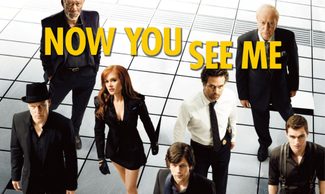
Now You See Me
Best for: A group-friendly watch that stays easy and entertaining throughout
Now You See Me keeps things simple without feeling flat. Built around a strong ensemble including Jesse Eisenberg, Woody Harrelson, Isla Fisher, and Dave Franco, the film follows a group of illusionists pulling off increasingly elaborate heists in plain sight, which gives it a clear, easy-to-follow hook from the start.
The constant shifts between characters and reveals keep it engaging even if you’re not tracking every detail. It’s also one of those films that holds up as a repeat watch. This is something I keep going back to, and no matter how many times I’ve seen it, it still lands because of how it’s paced and structured. If you want to continue, Now You See Me 2 is an easy follow-up that stays in the same lane without changing the experience too much.
Stream Now You See Me for free on Tubi
Advertisement
Game Night
Best for: A fast, easy comedy that keeps things light without feeling repetitive
Warner Bros. Pictures
Game Night makes the list because it balances straightforward humor with a structure that keeps it moving. Horrible Bosses was a close call and is still a personal comfort watch I return to often, but Game Night fits better here because it holds its pace more consistently and works across more viewing situations.
It fits particularly well on New Year’s Day when you want something light that doesn’t need much effort to stay with. The film moves quickly, the humor lands without much setup, and it doesn’t lose momentum as it goes. You can watch it properly or just let it play, and it still keeps things engaging, which is exactly what you want when you don’t feel like committing to something too involved. If you want to stick to comedy as genre, we also have a list of 5 greatest comedy movies that you should watch.
Parker, a well-funded startup offering corporate credit cards and banking services for e-commerce businesses, has filed for bankruptcy and is widely reported to have shut down.
The startup was part of Y Combinator’s winter 2019 cohort, and its Series A was led by Valar Ventures.
Parker came out of stealth in 2023, touting a corporate credit that it said was designed for use by e-commerce companies. At the time, co-founder and CEO Yacine Sibous said the startup’s “secret sauce” was an underwriting process that could properly assess e-commerce cash flows.
“We imagined building better financial products for e-commerce founders with the mission of increasing the number of financially independent people,” Sibous told TechCrunch.
Advertisement
Parker’s website is still up and doesn’t mention any shutdown. Instead, a banner at the top boasts that the company has raised more than $200 million in total funding, including a $125 million lending arrangement.
However, multiple social media posts state that Parker’s credit card partner Patriot Bank sent a message to customers this week confirming the shutdown. Parker’s competitors seemed to jump on the news with their ownposts seeking to lure over the startup’s former customers.
And Parker’s troubles seem to be confirmed in its May 7 filing for Chapter 7 bankruptcy protection. The filing states that the company has between $50 million and $100 million in assets, with liabilities in the same range. It also states that Parker has between 100 and 199 creditors.
Techcrunch event
Advertisement
San Francisco, CA | October 13-15, 2026
Fintech consultant Jason Mikula recently claimed that Parker had been in negotiations for a potential acquisition, with the failure of those talks ultimately leading to the startup’s abrupt shutdown. Mirkula added that this “has left small business customers in a tough spot” and also raised “questions about [banking partner] Piermont’s and Patriot’s oversight of the program.”
Advertisement
Parker did not immediately respond to an email from TechCrunch.
The company’s CEO Sibous has not explicitly acknowledged the shutdown or bankruptcy on LinkedIn, and in a recent post, he repeated the $200 million funding figure, adding that the company had reached $65 million in revenue. But he also said that if he started over, he’d do some things differently, such as: “Avoid over-hiring, reactive decisions, and doomsayers.”
When you purchase through links in our articles, we may earn a small commission. This doesn’t affect our editorial independence.
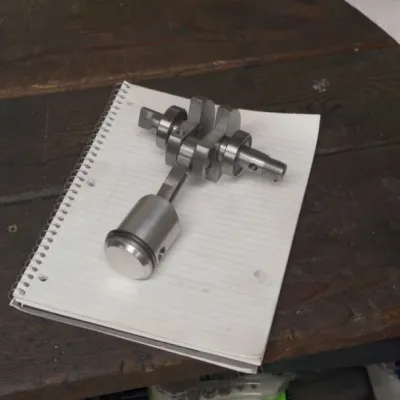
Two-stroke internal combustion engines are pretty simple from a mechanical point of view, with designs readily available. Add in a suitable material to machine and a modicum of machining and welding skills, and presto, you got yourself a not too shabby looking engine.
Of course, back in reality things are a bit more hairy. Not only are there many different ways to produce the parts – with some coming with a time penalty, monetary penalty, or both – but there are also myriad ways to hurt yourself and/or others. Fortunately [Camden] scraped by with just some (expensive) lessons learned and a major ruined part.
Advertisement
The final design features a single cylinder, with an initial pressure test showing a solid 150 PSI (10 bar) of compression. With that encouraging sign, a coil pack and contactor were added for some spark and a test run with the usual premixed gasoline-oil fuel.
Boringly, the engine mostly just runs and work as it should. This is of course not unexpected, much like how following the recipe for a pie produces said pie. But it does demonstrate how easy things are when you do not stray off the beaten path. The only significant issue was the flywheel wobbling slightly, likely due to a small manufacturing glitch, but this should not cause too many issues.
Following more than a year of “intensive talks,” The Wall Street Journal reports Apple has reached a preliminary agreement with Intel for the former titan to produce some of the chips that power its devices. The scale of agreement is unknown at this time. As the Journal notes, Apple has recently shipped more than 200 million iPhones per year, and needs a steady supply of silicon for millions of other devices, including iPads and Mac computers.
Apple did not immediately respond to Engadget’s comment request. Intel, meanwhile, declined to comment.
According to the Journal, over the last 12 months Commerce Secretary Howard Lutnick has repeatedly met with Apple leadership, including outgoing CEO Tim Cook, to convince the company to get back into business with Intel. Prior to 2020 and the arrival of the first Apple Silicon chipset for the Mac, Intel was, arguably, one of Apple’s most important partners. Starting in 2006, the company’s iconic MacBook line experienced its first renaissance after former Apple CEO Steve Jobs announced the company’s initial wave of Intel-equipped laptops. In a roundabout way, Apple’s own C1 modem also wouldn’t exist without Intel; Apple bought the majority of the company’s modem division in 2019 for $1 billion. That deal saw approximately 2,200 Intel employees, as well IP and equipment, transfer to Apple.
But like many of Apple’s supply relationships, the honeymoon with Intel was not to last. By 2010, the company had begun designing its own chips, starting with the Apple A4, which eventually made its way to the first iPad and iPhone 4. In 2015, Apple also released the 12-inch MacBook, its first fanless laptop. The 2015 MacBook was a device ahead of its time, but it was also the debut of the company’s widely reviled “butterfly” keyboard design. I suspect the performance of the Intel’s ultraportable processors in that computer played a part in Apple’s decision to go with its own chips. Speaking from experience, the 2015 MacBook and its revisions never felt particularly fast on account of their x86 architecture.
Advertisement
By 2020, Intel was a shell of its former, once dominant self. The company had, for many years, failed to counter Qualcomm — and by extension ARM — in the mobile space. More recently, the once unthinkable began to occur when AMD began to take PC CPU market share away from Intel on the back of its excellent Ryzen processors.
However, recent geopolitical shifts appear to have worked in the company’s favor. After Intel appointed Lip-Bu Tan in 2025 to take over for former CEO Pat Gelsinger, President Trump was quick to criticize the executive and call for his resignation over past ties to China. But Tan appears to have won the president’s ear shortly thereafter, because later that same year the White House announced it would take a 10 percent stake in Intel. In September, Intel then signed a $5 billion agreement with NVIDIA to build PC and data centers CPUs for the AI giant. In April, it then followed that up with agreement to support Elon Musk’s Terafab project, which will see Intel produce chips for Tesla, SpaceX and xAI.
Now the company would appear to have at least a preliminary deal with Apple. The Journal reports President Trump personally advocated for Intel to Tim Cook during a meeting at the White House.
Not this again. For many years now there have been a series of ongoing lawsuits between E. Jean Carroll and Donald Trump, involving a variety of issues, but mainly whether or not he sexually assaulted her back in the 1990s and, separately, whether he defamed her in claiming he’d never met her after she accused him of sexual assault. As I’ve explained previously, I think the defamation claim part of it is pretty weak, but back during the first Trump administration, he had sought to have the DOJ substitute in and take over for him in the defamation case, which would have immediately ended the case, as you can’t sue the government for defamation. Having the DOJ substitute in for a government employee is allowed under the Westfall Act, and is designed to allow the US government to become the party when a government employee is sued for doing something in the course of their job (the normal example is if a government driver hits someone with a vehicle).
Eventually the various cases made it to trial and the two juries that heard the cases awarded Carroll nearly $88.3 million across two verdicts. Since then Trump has continued to try to avoid ever having to pay.
The case has bounced around a bunch, and Trump had asked for a do-over in the Second Circuit in the latest round. In rejecting that, one of the judges, who had been a part of the panel for an earlier ruling, described how freaking exhausting all this is:
Advertisement
These are the third and fourth times our Court has voted to deny en banc rehearing of rulings in this case, which concerns defamation and sexual assault claims brought by E. Jean Carroll against Donald Trump. The two per curiam decisions at issue in this round of en banc voting — the fifth and sixth opinions by our Court in this case — arise from two related suits. The first (“Carroll I”) asserted defamation claims based on statements made by Trump in June 2019 while he was President, and the second (“Carroll II”) asserted a sexual assault claim as well as defamation claims based on statements made by Trump in October 2022 after he left office. Although Carroll I was filed first, Carroll II was tried first; in May 2023, the jury in Carroll II found, following a nine-day trial, that Trump sexually abused Carroll at Bergdorf Goodman in 1996 by digitally penetrating her and that he defamed her with comments he made in 2022 after he left office. The jury awarded Carroll $5 million in compensatory and punitive damages, and this Court affirmed, Carroll v. Trump, 124 F.4th 140 (2d Cir. 2024) (per curiam) (“Carroll 4”), and denied rehearing en banc, 141 F.4th 366 (2d Cir. 2025).
Carroll I was tried in January 2024. The jury awarded Carroll $83.3 million in compensatory and punitive damages. On appeal of the judgment, the panel issued two decisions. First, in April 2025, while the appeal was pending and after it had been fully briefed, Trump moved before us to substitute the United States as the defendant under the Westfall Act, 28 U.S.C. § 2679. The panel denied the motion by order last June, and issued an opinion explaining our reasoning in August. Carroll v. Trump, 148 F.4th 110 (2d Cir. 2025) (per curiam) (“Carroll 5”). Second, in September, the panel rejected Trump’s attempt to reassert a defense based on presidential immunity, and affirmed the district court’s rulings and the jury’s damages award. Carroll v. Trump, 151 F.4th 50 (2d Cir. 2025) (per curiam) (“Carroll 6”). It is these two panel rulings — Carroll 5 and Carroll 6 — that are the subject of these en banc petitions.
Trump and the United States have petitioned for rehearing of Carroll 5, and Trump has petitioned for rehearing of Carroll 6. Neither petition identifies how our decisions conflict with precedent of this Circuit, another Circuit, or the Supreme Court, or pose a question of “exceptional importance” justifying en banc review.
Having lost yet again, Trump has now appealed to the Supreme Court — where he’s presumably hoping the Court that handed him sweeping presidential immunity will ride to the rescue again. After all the only two notable exceptions to the Court backing him were specifically economy-related: blocking the firing of Fed members and striking down the illegal tariffs. Protecting Donald from sexual assault and defamation claims doesn’t fit into that bucket.
And, on Tuesday, the DOJ filed a motion with the Supreme Court saying that it is planning to ask to (once again) substitute itself in for Trump as the party under the Westfall Act. If I’m reading all this correctly, in the same case the DOJ is asking to appeal the earlier failure to be able to substitute itself in under the Westfall Act, it’s also still asserting its intent to actually substitute itself in.
Advertisement
Either way, this is a stunningly egregious move by Trump’s DOJ — once again acting as his personal legal fixer rather than a defender of the Constitution and the rule of law. The appeals court has made clear multiple times that he can’t use the Westfall Act to effectively force the case into a position where it must be dismissed, in part because the government waived the argument years ago and it’s too late to try to bring it back. In its ruling last week it explained:
The typicality ended there, as the Westfall issues were then litigated in three courts over the course of four years. … The critical juncture for present purposes was when the Westfall Act issue was presented on remand before the district court in June and July 2023. At that time, the Attorney General expressly declined to issue a Westfall certification or to otherwise seek substitution, and Trump did not take any action with respect to certification or substitution. … see 28 U.S.C. § 2679(d)(3) (allowing the employee to petition for certification where the Attorney General has declined to certify). The Westfall issue lay settled until April 2025, when the Government and Trump revived their efforts to have the United States substituted as the defendant in the case by moving for that relief in this Court….
The Carroll 5 panel denied the Government’s post-trial motion to substitute for three separate reasons: (1) the Government and Trump had waived substitution by failing to request it before the district court prior to trial; (2) the 2025 request was untimely under the Westfall Act; and (3) as a matter of equity in light of the procedural posture of the case. … These rulings were correct as a matter of law and did not warrant en banc review.
Basically: the Attorney General explicitly declined to seek Westfall certification back in 2023, Trump didn’t push back at the time, and the case went to trial and verdict. The Trump DOJ’s obvious counterargument — that a different administration gets a fresh shot at this — isn’t how it works. The waiver belongs to the United States as a party, not to whoever happens to be sitting in the AG’s chair at any given moment. The courts have said so, repeatedly and clearly.
There’s so much craziness going on right now that this barely registers as a blip. A jury found the President of the United States liable for sexual assault and defaming his victim. He’s been trying to make that verdict disappear for years. Now he’s got the Justice Department helping him. And it’s not even among the five most alarming things involving Donald Trump that day.
Dexter: Resurrection season two has officially begun filming, and this time around, there are even more of New York’s murderers coming to face off against Dexter Morgan.
While it hasn’t yet earned a place amongst the best Paramount+ shows, Dexter: Resurrection is the show that most fans didn’t see coming (Dexter: New Blood IYKYK).
Dexter: Resurrection season 2: key information
– Renewed in October – Production officially began in April – No release date yet – Main cast set to return – Brian Cox and Dan Stevens joining as two new killers – Official season two logline released – Creators hope for future seasons, rumors for season three
Advertisement
Fortunately, season one impressed enough to return for more, and with production underway, there’s plenty to talk about. Navigating the Big Apple has never looked so grim, and with a complex relationship to build with his son, Harrison, and the Dark Passengers that ‘guide’ them, it’s not looking like an easy one.
Latest Videos From
Here’s everything we know so far about Dexter: Resurrection season two, from release date speculation, confirmed cast and new characters, plot synopsis, and more.
Full spoilers follow for Dexter: Resurrection season 1. Potential spoilers are also discussed for season 2.
Advertisement
Dexter: Resurrection season 2: is there a release date?
No. Dexter: Resurrection season two is officially in production. The show’s star, Michael C. Hall, took to Instagram in April to reveal that they’re back filming: “It’s happening. We have exciting returning and new guest stars. And another thrill ride is planned. We are excited about making it and look forward to sharing it with you.”
The news comes after the show’s October renewal announcement, which has garnered over 10 million views on Instagram. Really, it’s no surprise that Dexter’s on his way back for more.
Advertisement
In terms of a release date, season one took six months to film and came out a month afterwards. If we use that to predict when season two will arrive, I’d say we’re looking at a potential release in late 2026.
Sign up for breaking news, reviews, opinion, top tech deals, and more.
Dexter: Resurrection season 2: has a trailer been released?
There’s no trailer for Dexter: Resurrection season 2 just yet (Image credit: Paramount Pictures)
There’s no Dexter: Resurrection season two trailer to share just yet. Considering the cast and crew only commenced filming in April, it’s unlikely that we’ll have a trailer until nearer to the (yet unconfirmed) release date.
Advertisement
As soon as one drops, we’ll be sure to update here.
Dexter: Resurrection season 2: confirmed cast
Spoilers follow for Dexter: Resurrection season 1.
There has already been a flurry of announcements for the Dexter: Resurrection season two cast, including returning characters and some entirely new ones:
Michael C. Hall as Dexter
Jack Alcott as Harrison
James Remar as Harry
Uma Thurman as Charley
Desmond Harrington as Joey Quinn
Ntare Guma Mbaho Mwine as Blessing Kamara
Kadia Sarif as Detective Claudette Wallace
Dominic Fumusa as Detective Melvin Oliva
Brian Cox as The New York Ripper
Dan Stevens as The Five Borough Killer
Nona Parker Johnson as Fiona Mixon
Bokeem Woodbine Captain Mixon
Big news! Brian Cox is joining as a series regular, answering one of the big questions that hung over our heads from season 1 – who is the New York Ripper? Well, it’s Cox, if you hadn’t guessed yet. As per Deadline: “Cox will play Don Frampt, the New York Ripper, a serial killer who terrorized the City years ago.
“Though no longer active as a killer, he’s found a new way to live into his infamy by continuing to taunt the survivors of his long-ago murder spree.”
And there’s not one, but two, big murderers coming in for season two, with Dan Stevens joining as the Five Borough Killer. Because if there’s anything Dexter needs more of, it’s serial killers, right?
Deadline explains: “He will play Owen Stark, a serial killer who, much like Zodiac, taunts the police with phone calls threatening the murder of innocent citizens. When he follows through with the awful deeds… the City and the Police are terrorized.”
Advertisement
And in April, Variety exclusively revealed that both Bokeem Woodbine and Nona Parker Johnson had been cast in series regular roles. Johnson as Fiona Mixon, “a training officer in the Homicide unit and a nepo-baby in the police world and Harrison’s new love interest.” Woodbine will play Capt. Mixon, “a bulldog of a homicide captain and Fiona’s father.”
Dexter: Resurrection season 2: story synopsis and rumors
There’s a lot to unwrap in Dexter: Resurrection season 2 (Image credit: Showtime)
Full spoilers follow for Dexter: Resurrection season one. Potential spoilers for Dexter: Resurrection season two.
When it comes to the Dexter: Resurrection season two plot, we have some pretty exciting news to share. In a Paramount+ press release, there’s now an official logline for season two: “Dexter: Resurrection finds Dexter Morgan (Hall) caught between two killers – one notorious and the other terrorizing New York in ways no one ever anticipated – all while battling his greatest enemy yet: a mid-life crisis. Harrison (Jack Alcott) continues his own pursuit of justice as father and son face their darkest chapter.”
Advertisement
We saw Dexter returning in the suitably-named Dexter: Resurrection after a gunshot from his own son, Harrison. In learning that Harrison was now living in New York, Dexter went on the hunt. He then, in true Dexter style, got embroiled in a world of serial killers, a club of them, in fact, led by billionaire Leon Prater (Peter Dinklage).
While Dexter tried to solve the problem in the best way he knows how, killing the killers, he also struggles with the relationship with his son and their shared penchant for violence. And, despite Harrison’s dark nature, it also looks like he’ll have a love interest in season two, which seems like it would present all kinds of challenges.
With the police hot on his tail from the days of OG Dexter in season 1, Dexter has a lot on his plate. And with Prater offering Dexter a deal to team up, that’s where we were left at the end of season 1. But, while Dinklage’s role hasn’t been confirmed yet, it’d be surprising not to see him return for season two, given how season 1 ended.
We do know, though, that Uma Thurman is returning as Charley. Considering we last saw her driving out of New York City with her mother in a bid to hide out, a reprisal of her role suggests that perhaps heading out of state wasn’t the end after all.
Advertisement
We also know that there are two new killers with the New York Ripper (Brian Cox) and the Five Borough Killer (Dan Stevens) ready to cause a mess. And with season two being what Paramount+ is calling Dexter and Harrison’s “darkest chapter”, that’s a big statement considering what they’ve already been through.
Will there be more seasons of Dexter: Resurrection?
Show’s creators have hope for season three (Image credit: Showtime)
Despite there only being an official renewal for season two right now, there’s already talk around season 3. Why? Well, because it seems creators Scott Reynolds and Clyde Phillips have always planned for at least three.
Speaking with Collider way back in July 2025, Phillips said, “So, we’re going to do this as long as Michael wants to. Then, when we know what the final year is, we’ll know how to resolve it.”
Advertisement
To which Reynolds added: “But we pitched him three seasons that tell a great story that can continue on.”
And in late 2025, when executive producer Marcos Siega appeared on the Dark Passengers: A Dexter Podcast, he was asked about the plan for multiple seasons and whether there was anything beyond season two, to which Siega said: “In my mind, there’s a lot beyond it. But that’s just in my mind.”
When asked if they knew what the arc looks like for the show’s ending, Clyde Phillips jumped in: “It’s not where we want it to end. It’s just that we know what the overview is for season 3.” To this, Siega added: “We even know who we’re casting.”
But, amongst all these great hints, it all comes down to whether there’s an official renewal for Dexter: Resurrection season 3, which there hasn’t been…yet. For now, we’ll have to wait and see.
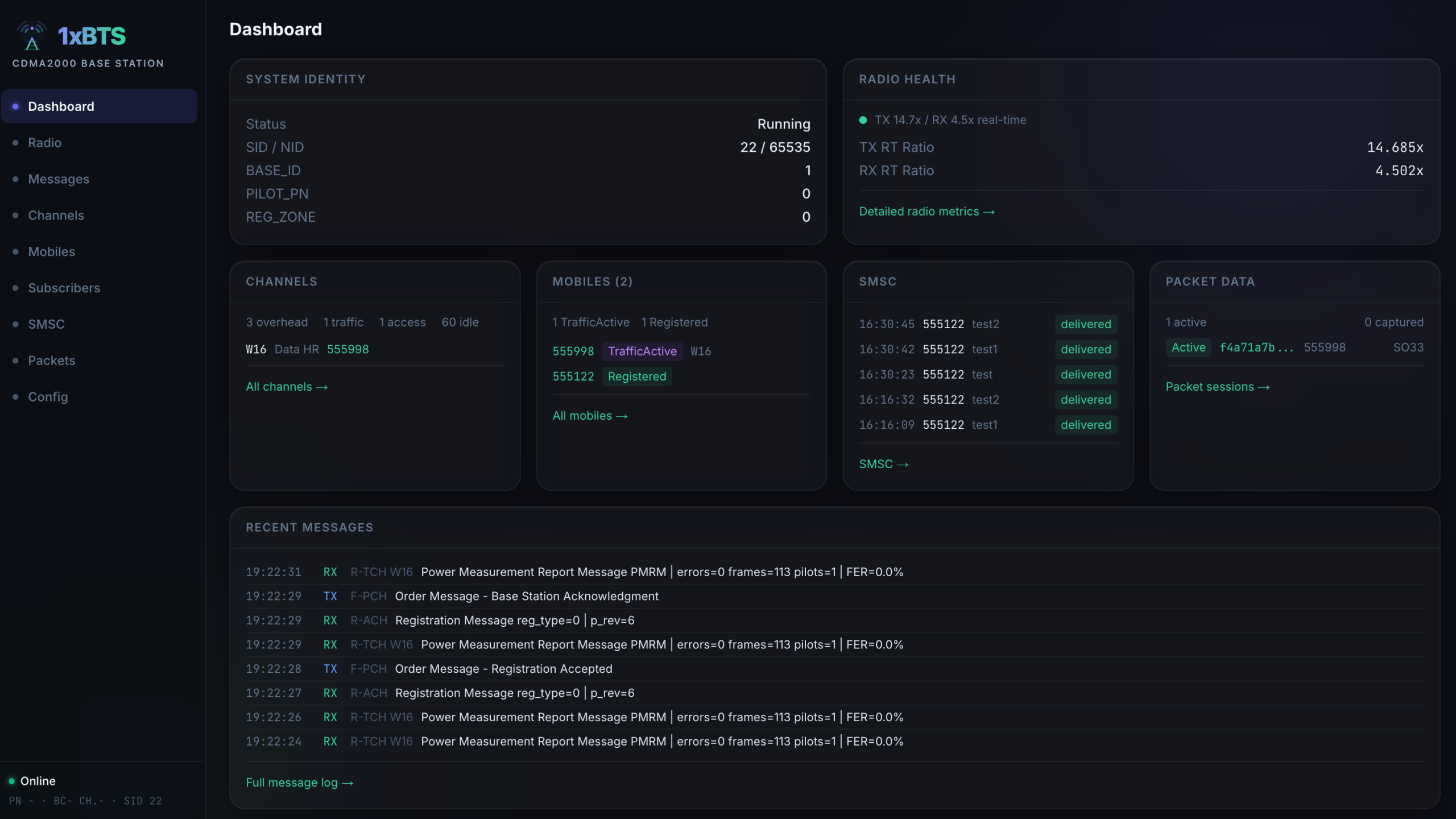
CDMA2000 was one of the protocols defined for 3G networks and is now years out of date and being phased out worldwide. Nevertheless, there are still vast numbers of phones that will happily connect to it, creating an opportunity for hackers seeking to run their own cellular networks. [Chrismoos] recently made this endeavour significantly easier by releasing 1xBTS, a Rust implementation of the lower three layers of a CDMA2000 network.
The lowest layer of the stack is an SDR for the actual radio communications. It’s been tested with the USRP B200 and B210, the LimeSDR Mini 2, and the BladeRF Micro 2.0. The code might work with certain other SDRs using the SoapySDR abstraction layer. The SDR is controlled by the base station (BTS) software, which, in turn, is controlled by the base station controller (BSC) over an Abis link. The BSC manages channels and mobile device associations, and exchanges frames with the mobile switching center (MSC), which handles message switching.
The stack includes standard 3G verification; before a handset can authenticate to the network, its details must be added to the home location register (HLR). Once authenticated, the handset can access all standard services: inbound and outbound voice calls via a SIP gateway, inbound and outbound SMS, and data packet transfers. A web dashboard provides a convenient management platform that includes packet tracing.
Advertisement
It should be noted that using this carelessly is legally hazardous; radio transmissions are strictly regulated in most countries, particularly in the cellular bands. If you’d still like to run your own cell network, we’ve also seen a few other efforts, such as this 4G implementation, this 1G recreation, and a GSM network made for a hacker camp.
If the co-op alien-blasting action of 2021’sAliens: Fireteam Elite was your cup of tea, we have good news: A sequel is on the way. The second installment will expand the cap to four players while adding new classes and weapons.
Aliens: Fireteam Elite 2 doesn’t appear to reinvent the wheel from its arcade-like predecessor. “Xenomorphs stalk the corridors, ambush from the shadows, and swarm in overwhelming numbers,” the shooter’s announcement reads. If that isn’t (also) a description of the first game, I don’t know what is.
Advertisement
Of course, there are upgrades, and not only its sharper-looking graphics. You can play with a larger squad: Four players can take aim at alien scum, up from three in the original. Pathogens and Weyland-Yutani combat synthetics will pose new obstacles. There’s even a new build-your-own Specialist class that should add more versatility. Developer Cold Iron Studios also promises deeper squad mechanics and a wider selection of weapons to use across classes.
The title will take you through “immersive new environments across the Aliens universe” as we approach the 40th anniversary(!!) of James Cameron’s 1986 blockbuster this July. That upcoming milestone may also contributed to the recent release of the first Alien: Isolation sequel teaser.
Aliens: Fireteam Elite 2 is scheduled to arrive “this summer.” It will be available on PS5, Xbox Series X/S, and PC (Steam and Epic).























































You must be logged in to post a comment Login