Connect with us

Tech

Minnesota Judge Shuts Down DHS’s Attempt To Expel Thousands Of Refugees

Published

on

from the american-horror-story-season-6 dept

The Trump administration is purposefully cruel. That much cannot be argued, not when it has deliberately sent deportees to foreign torture prisons, dumped them in war-torn countries with histories of human rights abuses, and stranded people its has been ordered to release far from home without their IDs, phones, or money.

This regime loves to inflict pain. Its desire to erase as many minorities from this country as possible has led it to do things no competent government would ever do, especially not one that serves a nation long known as a land of hope and opportunity. The people who first landed here were escaping religious persecution. (They then went on to eradicate the people who actually lived here, but stick with me for a moment.) People seeking the same refuge from persecution are now being ejected from this country as quickly as possible.

The good news is that a federal court has at least pumped the brakes on one such DHS effort. In Minnesota — where Trump has used benefits fraud allegations as justification for a “surge” that has resulted in two murders committed by federal officers (so far!) — a federal judge has just told the administration it can’t just suddenly declare an end to refugee status.

Here’s Law Dork with the summary of yet another anti-minority putsch by the Trump administration:

Advertisement

The longtime government policy has been that refugees — vetted and legally admitted individuals — who are yet to adjust to lawful permanent resident status cannot be detained on that basis alone.

With Operation PARRIS (Post-Admission Refugee Reverification and Integrity Strengthening), the Trump administration wants to change that.

In a pair of memos issued in December 2025 and February 2026 — which Law Dork has covered extensively — the Department of Homeland Security has purported to change that policy by rescinding and re-rescinding the 2010 U.S. Immigration and Customs Enforcement policy that most recently enunciated that policy for applying the relevant provision — 8 U.S.C. 1159 — of the Refugee Act of 1980.

What used to be a normal part of the “give me your tired, huddled masses” ideal that once represented this Land of Opportunity is no longer. The Trump administration is now claiming it can simply pretend existing law no longer matters. And while it is true that Congress could decide to rewrite or overturn the 1980 law, it cannot simply be ignored just because the DHS sent out a couple of memos telling federal officers they’re free to ignore existing law.

Fortunately, this Minnesota court isn’t going to sit by while the administration pretends the only interpretation of the law is the one it recently wrote for itself. From the opinion [PDF]:

Advertisement

When the clock strikes 12:00 a.m. on the 366th day after a refugee was lawfully admitted to the United States, according to the Government, 8 U.S.C. § 1159(a) gives Department of Homeland Security officials the power to arrest and detain that refugee with no limits on the length of detention. Because § 1159(a) provides no such power, the Court will issue a preliminary injunction enjoining Defendants from arresting or detaining refugees in Minnesota on the basis that have not yet been adjusted to lawful permanent resident status—which, by law, cannot occur until one year has passed. The Court will not allow federal authorities to use a new and erroneous statutory interpretation to terrorize refugees who immigrated to this country under the promise that they would be welcomed and allowed to live in peace, far from the persecution they fled.

You see the obvious evil here, right? A refugee — at earliest — cannot secure lawful permanent status until after one year has passed. Trump’s DHS says refugees applying for permanent residence can be arrested and detained indefinitely 24 hours after they’ve been here for a year. The court is right: this not only flips the law on its head, it completely destroys an American ideal that made this nation of a beacon of hope for oppressed people around the world.

Decades ago, as a nation, we made a solemn promise to refugees fleeing persecution: that after rigorous vetting, they would be welcomed to the United States and given the opportunity to rebuild their lives. We assured them that they could care for their families, earn a living, contribute to their communities, and live in peace here in the United States. We promised them the hope that one day they could achieve the American Dream.

The Government’s new policy breaks that promise—without congressional authorization—and raises serious constitutional concerns. The new policy turns the refugees’ American Dream into a dystopian nightmare.

A government that retains any notion of serving the public good would never have attempted to enact this policy. Only a government filled with unjustified hatred of “others” would dare to destroy the American Dream. And only a regime so laden with craven bigots would dare to drape themselves in the flag while shitting on what actually makes this country great.

And, it must be noted, this is only a temporary block. The court is going to allow the government to defend its actions. I don’t think the government will win, but it will certainly kick this up the ladder to the appellate level. That’s fine, so long as the restraining order stays in place while the government cooks up a defense for its blatant racism. With any luck, this will stick all the way to the Supreme Court… and then hopefully after that review as well. No one who truly loves America would back this effort. And no one who only claims to love America while strip-mining it of its greatness should be allowed to turn this great nation into a “dystopian nightmare.”

Advertisement

Filed Under: bigotry, border patrol, cbp, cruelty, dhs, ice, kristi noem, mass deportation, pam bondi, todd lyons, trump administration

Source link

Advertisement
Continue Reading
Click to comment

Leave a Reply

Your email address will not be published. Required fields are marked *

Tech

4 Bluetooth Gadgets You Can Connect To Your Fire TV Stick

Published

on


We may receive a commission on purchases made from links.

With streaming being such an integral part of modern entertainment, it’s no wonder we’re all looking for ways to optimize our experience. Beyond owning smart TVs, this also means investing in additional devices, such as the Amazon Fire TV Stick, to enhance the viewing experience. In fact, it includes numerous useful remote shortcuts that Amazon doesn’t advertise, letting you do everything from switching display resolutions to enabling accessibility features.

Unlike our smart TVs, which usually stay firmly in our homes, you can also easily travel with your Fire TV Stick and enjoy your streaming content as long as you have access to a compatible TV and Wi-Fi. Not to mention, you can play games on television screens without lugging around huge gaming laptops or bringing extra handheld consoles.

Advertisement

Owning an Amazon Fire TV Stick also opens many connectivity options, especially with Bluetooth-enabled devices. But take note: while there are a ton of devices you can connect to your Fire TV Stick to see your exact options, you first need to find your model number by either referencing the receipt, the box it came with, or the device itself when in use. If you’ve forgotten what model of Fire TV stick you own, you can launch it, open the Settings menu, and select “My Fire TV.”

To pair any compatible Bluetooth device, launch your Amazon Fire TV Stick and navigate to Settings. Afterward, select Controllers & Bluetooth Devices, choose the device category you want to pair, and follow the pairing instructions on the screen. 

Here are the gadgets you can connect to the Fire TV Stick via Bluetooth.

Advertisement

1. Speakers

Many modern smart television sets will probably already let you hook up your speakers directly via Bluetooth. However, there are reasons why you might still want to do it through the Fire TV Stick. For example, you can easily adjust the volume with the Fire TV Stick remote, so you have fewer things to fiddle with. If you tend to use your television only with your Fire TV Stick, this can also streamline audio processing and reduce the risk of audio issues when streaming your favorite shows or movies. These days, there’s no shortage of Bluetooth speakers worth buying that can work with your Fire TV Stick, such as the Anker Soundcore 2, Marshall Stanmore III, and Sonos Move 2. With this, you can get better sound than your TV speakers, and you can also move your speakers to your preferred location.

For those who are already invested in the Amazon smart home ecosystem, you can hook up the Fire TV Stick to your Alexa-powered Echo speakers. With this alone, it introduces a ton of additional possibilities for your integrated smart home experience. Apart from voice control options, it can be used as a component in creating automated scenes that work with other Alexa-compatible devices, such as light bulbs, scent machines, and smart switches. For example, some Alexa automations compatible with your Fire TV Stick can optimize your bedtime routine or turn everything off after movie nights.

Advertisement

2. Headphones and earbuds

While some people are lucky enough to live in places where they can turn on the loudspeakers freely while accessing their favorite content, others need to be more mindful of their viewing habits. Thankfully, just because you’re watching from a TV doesn’t mean the whole neighborhood has to watch with you. Whether you want some privacy or just to avoid an angry neighbor knocking on your door, you can pair your Bluetooth headphones with your Amazon Fire TV devices. In recent times, there is no shortage of multi-point Bluetooth Headphones and Earbuds that can work with your Amazon Fire TV Stick. For example, Apple users will be relieved to know that its AirPods, AirPods Pro, and AirPods Max all work with it.

But take note: the same issues other devices have with Bluetooth headphones and earphones apply, such as audio latency, which you’ll need to resolve using AV Sync Tuning. Not to mention, apart from commercial headphones and earbuds, some Amazon Fire TV devices also work with hearing aids, including several of its TV offerings and the Fire TV Cube (2nd- and 3rd-generation models). Among compatible hearing aids, it lists Starkey, Widex, and Cochlear hearing devices. Although you may need to check with your specific model. In 2025, Amazon released a few new features that make its Fire TV devices more accessible, such as the Dual Audio option, which allows hearing aid users and others to listen to audio at adjusted loudness levels simultaneously.

Advertisement

3. Bluetooth game controllers

Even though many smart TVs can perform the same functions, the Amazon Fire TV Stick still does a lot of things better, such as navigation, software experiences, and cloud gaming. In 2020, Amazon launched Luna Cloud Gaming, which lets people run its library of games on Amazon’s remote servers. Depending on your preferences, you can choose a subscription model that suits the kinds of games you play most often.

According to Amazon, certified Luna-compatible controllers include the official Luna Controller, PlayStation 4 DualShock 4 Wireless Controller, Xbox One Controller, and the Google Stadia Controller. Additionally, owners of the PS5’s DualSense Controllers have been able to use them effectively. Although some people may claim that their 3rd-party controllers from other manufacturers work with their Fire TV Stick, it’s important to note that you will not have the same protection, assurance, or expected longevity as with official ones.

Advertisement

Regardless of which model you choose, you’ll still want to make sure you have the right network and device settings to enjoy your Bluetooth controllers. Apart from having a fast enough connection, you’ll also want to turn on Game Mode when possible. Not to mention, compatibility isn’t entirely guaranteed for everything and still depends on the specific game you are playing. In a jiffy, you can opt to use the Luna Controller app on your mobile phone instead.

Advertisement

4. Bluetooth mice and keyboards

Devices like the Fire TV Stick solve many problems, but they also introduce new ones. One of the most annoying, yet somewhat universal, experiences for anyone who has used a streaming device is finding it difficult to navigate with the remote. In fact, while the Amazon Fire TV Stick lets you browse the internet with your TV using Amazon Silk, it can be a nightmare to type all the website names and click all the right buttons.

If you want a sleek-looking wireless keyboard, something like the Logitech K380 Multi-Device Bluetooth Keyboard lets you pair with up to three devices, so you don’t have to unpair it from your computer to use it with your Fire TV Stick. But if you’re looking for something more ergonomic, there are even Bluetooth mice with side-scrolling, like the Logitech MX Master 3S, Keychron M6 Wireless Mouse, and Razer Basilisk V3 Pro.

If you don’t own a Bluetooth keyboard or mouse, all hope is not lost. As we’ve mentioned before, you can use a micro-USB OTG splitter to plug in a wired keyboard or mouse to your Fire TV Stick. So, if you still prefer using a wired peripheral or have already maxed out the number of devices you can connect to your Fire TV stick, this is a possible alternative.

Advertisement


Source link

Advertisement
Continue Reading

Tech

Leaked government-grade iPhone hacking tools now used to steal crypto and data from users

Published

on


According to new technical analyses from Google and mobile security firm iVerify, Coruna’s technical core comprises five complete exploit chains and 23 distinct iOS vulnerabilities that bypass most of the major software defenses Apple has shipped in versions 13 through 17.2.1, effectively turning a web page into a silent infection…
Read Entire Article
Source link

Continue Reading

Tech

These Official ChromeOS Flex USB Sticks Can Give Your Old Mac or Windows PC a Second Life

Published

on

“People want something that lasts them a long time, that is quality, that is useful,” says Google senior director Alexander Kuscher. “Eventually, when it breaks or when you lose it, you get a new one because you feel taken care of. So I think that builds trust, and the trust is important.”

Flex started as an enterprise service for businesses; Google offered companies worried about security vulnerabilities on aging hardware a way to easily update to a more secure operating system. Or, at least, one that still received updates. After a while, other users started to get ahold of the software, downloading and installing it on their own USB sticks for their personal machines. “We didn’t make it particularly easy at the time,” Kuscher says. “But people did it.”

What led to the more consumer-oriented push of ChromeOS Flex—like this partnership with Back Market—was the end of software support for Microsoft’s Windows 10 operating system last fall. While the OS still technically works, it stopped receiving security updates, and Microsoft has encouraged users to update to Windows 11. But Windows 11 has specific hardware requirements, and it may not be a simple upgrade on certain machines. Google saw this as a moment to provide a cheaper alternative to the “Windows 10 cliff,” as Kuscher puts it. Back Market agreed.

“Ultimately, [Microsoft is] saying that people need to throw away their existing laptop to buy another one,” Hug de Larauze says. “And we say politely, no.”

Advertisement

If you’re tech-savvy, you can forgo Back Market’s $3 stick and download ChromeOS Flex onto a USB drive you have lying around right now.

Buying Refurb

Back Market has done very well for itself despite economic turmoil. As devices become more expensive, people turn to cheaper, refurbished options. He compares the device market to the auto industry.

“Ninety percent of cars are being sold pre-owned,” Hug de Larauze says. “The new normal is to purchase them pre-owned because it’s almost dumb to buy a new one.”

When US president Donald Trump announced sweeping tariffs last year, Hug de Larauze says Back Market sales tripled afterwards. Even after the dust settled a little and it became clear that tariffs would not directly affect smartphones or computers, Hug de Larauze says sales stayed around twice what they’d been before. Back Market made $3.8 billion in 2025, making the company profitable for the first time. While Hug de Larauze says these kinds of economic fluctuations may be good for sending more people to Back Market, he hopes it will shift buyer mindsets to buying refurbished tech writ large.

Advertisement

“We have one planet, and resources are limited,” Hug de Larauze says. “We need to do more with what we already have in every sector. Fashion is the same, transportation is the same, energy is the same, it’s the same for everything.”

Source link

Continue Reading

Tech

Apple’s new Studio Display XDR monitor has limited functionality on older Silicon Macs

Published

on

If you’re looking to pre-order Apple’s new Studio Display XDR monitor today but have an older Mac, beware of some potential issues. According to the compatibility list spotted by Apple Insider, the new display will only work at 60Hz and not at its full 120Hz refresh rate on some older and less powerful Silicon models. Moreover, support for older Intel Macs isn’t mentioned at all for either the Studio Display XDR or cheaper Studio Display.

All Apple Silicon Macs will work with both monitors, including those with the oldest M1 chips, according to the support pages. However, the compatibility list for the Studio Display XDR includes this nugget: “Mac models with M1, M1 Pro, M1 Max, M1 Ultra, M2, and M3 support Studio Display XDR at up to 60Hz. All other Studio Display XDR features are supported.” So even if you have a hotrod M1 Ultra-based Mac, the Studio Display XDR’s refresh rate is capped at 60Hz — despite the fact that the chip can drive third-party monitors at 120Hz.

Similarly, only the iPad Pro M5 supports the Studio Display XDR at 120Hz, with all other compatible models (in the iPad Pro and iPad Air family) limited to 60Hz.

Intel Mac support isn’t mentioned at all in the compatibility list for either display, though they may function in some limited manner when connected. Intel Macs just received their last new OS update with macOS Tahoe (and only three more years of security updates), but it’s still surprising that they’re not compatible with Apple’s latest monitors.

Advertisement

Source link

Continue Reading

Tech

Military Drone Insights for Safer Self-Driving Cars

Published

on

Self-driving cars often struggle with with situations that are commonplace for human drivers. When confronted with construction zones, school buses, power outages, or misbehaving pedestrians, these vehicles often behave unpredictably, leading to crashes or freezing events, causing significant disruption to local traffic and possibly blocking first responders from doing their jobs. Because self-driving cars cannot successfully handle such routine problems, self-driving companies use human babysitters to remotely supervise them and intervene when necessary.

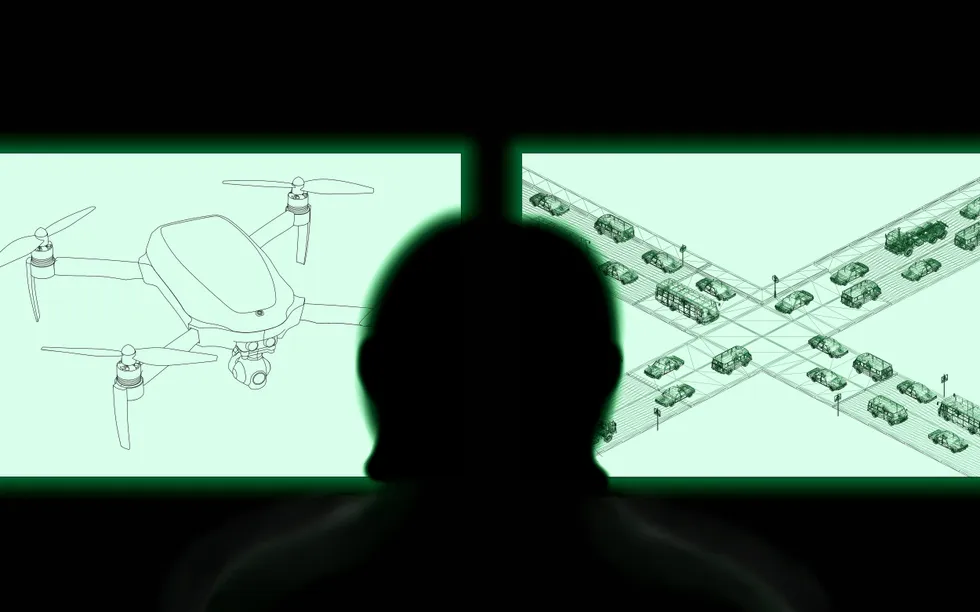
This idea—humans supervising autonomous vehicles from a distance—is not new. The U.S. military has been doing it since the 1980s with unmanned aerial vehicles (UAVs). In those early years, the military experienced numerous accidents due to poorly designed control stations, lack of training, and communication delays.

As a Navy fighter pilot in the 1990s, I was one of the first researchers to examine how to improve the UAV remote supervision interfaces. The thousands of hours I and others have spent working on and observing these systems generated a deep body of knowledge about how to safely manage remote operations. With recent revelations that U.S. commercial self-driving car remote operations are handled by operators in the Philippines, it is clear that self-driving companies have not learned the hard-earned military lessons that would promote safer use of self-driving cars today.

While stationed in the Western Pacific during the Gulf War, I spent a significant amount of time in air operations centers, learning how military strikes were planned, implemented and then replanned when the original plan inevitably fell apart. After obtaining my PhD, I leveraged this experience to begin research on the remote control of UAVs for all three branches of the U.S. military. Sitting shoulder-to-shoulder in tiny trailers with operators flying UAVs in local exercises or from 4000 miles away, my job was to learn about the pain points for the remote operators as well as identify possible improvements as they executed supervisory control over UAVs that might be flying halfway around the world.

Advertisement

Supervisory control refers to situations where humans monitor and support autonomous systems, stepping in when needed. For self-driving cars, this oversight can take several forms. The first is teleoperation, where a human remotely controls the car’s speed and steering from afar. Operators sit at a console with a steering wheel and pedals, similar to a racing simulator. Because this method relies on real-time control, it is extremely sensitive to communication delays.

The second form of supervisory control is remote assistance. Instead of driving the car in real time, a human gives higher-level guidance. For example, an operator might click a path on a map (called laying “breadcrumbs”) to show the car where to go, or interpret information the AI cannot understand, such as hand signals from a construction worker. This method tolerates more delay than teleoperation but is still time-sensitive.

Five Lessons From Military Drone Operations

Over 35 years of UAV operations, the military consistently encountered five major challenges during drone operations which provide valuable lessons for self-driving cars.

Latency

Latency—delays in sending and receiving information due to distance or poor network quality—is the single most important challenge for remote vehicle control. Humans also have their own built-in delay: neuromuscular lag. Even under perfect conditions, people cannot reliably respond to new information in less than 200–500 milliseconds. In remote operations, where communication lag already exists, this makes real-time control even more difficult.

Advertisement

In early drone operations, U.S. Air Force pilots in Las Vegas (the primary U.S. UAV operations center) attempted to take off and land drones in the Middle East using teleoperation. With at least a two-second delay between command and response, the accident rate was 16 times that of fighter jets conducting the same missions . The military switched to local line-of-sight operators and eventually to fully automated takeoffs and landings. When I interviewed the pilots of these UAVs, they all stressed how difficult it was to control the aircraft with significant time lag.

Self-driving car companies typically rely on cellphone networks to deliver commands. These networks are unreliable in cities and prone to delays. This is one reason many companies prefer remote assistance instead of full teleoperation. But even remote assistance can go wrong. In one incident, a Waymo operator instructed a car to turn left when a traffic light appeared yellow in the remote video feed—but the network latency meant that the light had already turned red in the real world. After moving its remote operations center from the U.S. to the Philippines, Waymo’s latency increased even further. It is imperative that control not be so remote, both to resolve the latency issue but also increase oversight for security vulnerabilities.

Workstation Design

Poor interface design has caused many drone accidents. The military learned the hard way that confusing controls, difficult-to-read displays, and unclear autonomy modes can have disastrous consequences. Depending on the specific UAV platform, the FAA attributed between 20% and 100% of Army and Air Force UAV crashes caused by human error through 2004 to poor interface design.

UAV crashes (1986-2004) caused by human factors problems, including poor interface and procedure design. These two categories do not sum to 100% because both factors could be present in an accident.

Advertisement

Human Factors Interface Design Procedure Design
Army Hunter 47% 20% 20%
Army Shadow 21% 80% 40%
Air Force Predator 67% 38% 75%
Air Force Global Hawk 33% 100% 0%

Many UAV aircraft crashes have been caused by poor human control systems. In one case, buttons were placed on the controllers such that it was relatively easy to accidentally shut off the engine instead of firing a missile. This poor design led to the accidents where the remote operators inadvertently shut the engine down instead of launching a missile.

The self-driving industry reveals hints of comparable issues. Some autonomous shuttles use off-the-shelf gaming controllers, which—while inexpensive—were never designed for vehicle control. The off-label use of such controllers can lead to mode confusion, which was a factor in a recent shuttle crash. Significant human-in-the-loop testing is needed to avoid such problems, not only prior to system deployment, but also after major software upgrades.

Operator Workload

Drone missions typically include long periods of surveillance and information gathering, occasionally ending with a missile strike. These missions can sometimes last for days; for example, while the military waits for the person of interest to emerge from a building. As a result, the remote operators experience extreme swings in workload: sometimes overwhelming intensity, sometimes crushing boredom. Both conditions can lead to errors.

When operators teleoperate drones, workload is high and fatigue can quickly set in. But when onboard autonomy handles most of the work, operators can become bored, complacent, and less alert. This pattern is well documented in UAV research.

Advertisement

Self-driving car operators are likely experiencing similar issues for tasks ranging from interpreting confusing signs to helping cars escape dead ends. In simple scenarios, operators may be bored; in emergencies—like driving into a flood zone or responding during a citywide power outage—they can become quickly overwhelmed.

The military has tried for years to have one person supervise many drones at once, because it is far more cost effective. However, cognitive switching costs (regaining awareness of a situation after switching control between drones) result in workload spikes and high stress. That coupled with increasingly complex interfaces and communication delays have made this extremely difficult.

Self-driving car companies likely face the same roadblocks. They will need to model operator workloads and be able to reliably predict what staffing should be and how many vehicles a single person can effectively supervise, especially during emergency operations. If every self-driving car turns out to need a dedicated human to pay close attention, such operations would no longer be cost-effective.

Training

Early drone programs lacked formal training requirements, with training programs designed by pilots, for pilots. Unfortunately, supervising a drone is more akin to air traffic control than actually flying an aircraft, so the military often placed drone operators in critical roles with inadequate preparation. This caused many accidents. Only years later did the military conduct a proper analysis of the knowledge, skills, and abilities needed to conduct safe remote operations, and changed their training program.

Advertisement

Self-driving companies do not publicly share their training standards, and no regulations currently govern the qualifications for remote operators. On-road safety depends heavily on these operators, yet very little is known about how they are selected or taught. If commercial aviation dispatchers are required to have formal training overseen by the FAA, which are very similar to self-driving remote operators, we should hold commercial self-driving companies to similar standards.

Contingency Planning

Aviation has strong protocols for emergencies including predefined procedures for lost communication, backup ground control stations, and highly reliable onboard behaviors when autonomy fails. In the military, drones may fly themselves to safe areas or land autonomously if contact is lost. Systems are designed with cybersecurity threats—like GPS spoofing—in mind.

Self-driving cars appear far less prepared. The 2025 San Francisco power outage left Waymo vehicles frozen in traffic lanes, blocking first responders and creating hazards. These vehicles are supposed to perform “minimum-risk maneuvers” such as pulling to the side—but many of them didn’t. This suggests gaps in contingency planning and basic fail-safe design.

The history of military drone operations offers crucial lessons for the self-driving car industry. Decades of experience show that remote supervision demands extremely low latency, carefully designed control stations, manageable operator workload, rigorous, well-designed training programs, and strong contingency planning.

Advertisement

Self-driving companies appear to be repeating many of the early mistakes made in drone programs. Remote operations are treated as a support feature rather than a mission-critical safety system. But as long as AI struggles with uncertainty, which will be the case for the foreseeable future, remote human supervision will remain essential. The military learned these lessons through painful trial and error, yet the self-driving community appears to be ignoring them. The self-driving industry has the chance—and the responsibility—to learn from our mistakes in combat settings before it harms road users everywhere.

From Your Site Articles

Related Articles Around the Web

Source link

Advertisement
Continue Reading

Tech

Anthropic sees major Claude outage after ‘unprecedented demand’

Published

on

As the US administration proceeds to drop Anthropic as a supplier, many are rallying around the AI company’s relatively ethical stance, creating ‘unprecedented demand’ for Claude.

Anthropic’s Claude has been fast becoming the darling of the AI enthusiasts, for development, research and enterprise work. Now it is facing the might of the US administration which is threatening to drop it entirely as a supplier after a falling out with the Pentagon over so-called “red lines” it would not pass.

With many in Silicon Valley supporting its relatively principled stand, and general users sending it to the top of the US Apple charts in recent days for free downloads – beating OpenAI’s ChatGPT for the first time – its flagship Claude.ai and Claude Code apps went down for around three hours on Monday (2 March), causing many to bemoan its absence. There are already reports of further outages as we write, although its latest update says “a fix has been implemented and we are monitoring the results”.

In a nostalgic post on LinkedIn yesterday, regular contributor to Silicon Republic, AI aficionado Jonathan McCrea wrote: “I now feel the same way about Claude being down as I used to about Twitter being down.”

Advertisement

De facto boycott

Last night, treasury secretary Scott Bessent added his voice to the de facto US administration boycott of Anthropic products saying in a post on X that his department would terminate use of Anthropic products.

It follows a directive from president Donald Trump ordering US agencies to “phase out” their use of the AI company’s products, and his defence department labelling Anthropic a “supply-chain risk”, an allocation normally reserved for foreign suppliers from non-friendly states. Anthropic has been quick to say that this is a “legally unsound’ designation, and is expected to challenge the move in the courts.

Reuters is also reporting that it has seen memos to employees at the Department of Health and Human Services, asking them to switch to other AI platforms such as ChatGPT and Gemini, and at the State Department saying it was switching the model powering its in-house chatbot – StateChat – to OpenAI from Anthropic.

Financially it will surely deal a serious blow to Anthropic in the short term, but some commentators are arguing that it could be a pivotal moment for Anthropic as it may be seen by many as the relatively ethical choice when it comes to the AI giants.

Advertisement

The recent Grok scandal has put a major question mark over xAI’s credentials and OpenAI’s Sam Altman clearly sees the reputational risk as he has been quick to claim that it is ensuring some guardrails in its contract with the Pentagon.

On X yesterday Altman claimed that these guardrails would ensure OpenAI would not be “intentionally used for domestic surveillance of ⁠US persons ​and nationals”.

The backstory

If you haven’t been following, Anthropic drew the ire of the US administration after a standoff with the Pentagon, where Anthropic refused to change its safeguards related to using its AI for fully autonomous weapons, or for mass surveillance of US citizens.

On Thursday (February 27), Anthropic’s Dario Amodei released an official statement saying Anthropic believed that in “a narrow set of cases, we believe AI can undermine, rather than defend, democratic values”.

Advertisement

“Some uses are also simply outside the bounds of what today’s technology can safely and reliably do,” he said. “Two such use cases have never been included in our contracts with the Department of War, and we believe they should not be included.

“We support the use of AI for lawful foreign intelligence and counterintelligence missions. But using these systems for mass domestic surveillance is incompatible with democratic values.”

Amodei went on to say that partially autonomous weapons, like those used today in Ukraine, are vital to the defense of democracy. “But today, frontier AI systems are simply not reliable enough to power fully autonomous weapons. We will not knowingly provide a product that puts America’s warfighters and civilians at risk.”

It’s a debacle that is likely to roll on in coming days, and it remains to be seen whether Anthropic can withstand the unprecedented onslaught from its own government and rely on the support of users for its principled stand. In the short term, its challenge appears to be to meet the current demand on its systems.

Advertisement

Don’t miss out on the knowledge you need to succeed. Sign up for the Daily Brief, Silicon Republic’s digest of need-to-know sci-tech news.

Source link

Advertisement
Continue Reading

Tech

iPhone Coruna virus: possible US government hacking toolset spreading via black market

Published

on

If your iPhone is running an outdated version of iOS, you may have 23 vulnerabilities that can be exploited by highly sophisticated toolkit being sold to bad actors.

An iPhone showing green lines of binary on a green background
Update to iOS 26 to avoid a sophisticated hacking toolkit

It is well known that law enforcement agencies and government entities rely on hardware like GrayKey to attempt a bypass of iPhone security. It seems that the United States Government may have created a monstrous exploit tool that is now being sold and spread to bad actors.
A Wired report details data shared by Google’s Threat Intelligence Group and iVerify. Google explains how the exploit toolkit, named “Coruna,” spread, while iVerify shared its findings tying its origins to the US government.
Continue Reading on AppleInsider | Discuss on our Forums

Source link

Continue Reading

Tech

Barkbox Promo Codes and Discounts: Up to 50% Off

Published

on

As my fellow pet parents will know, it’s amazing how quickly even the tiniest of dogs can demolish their toys and treat stash. We love and spoil them nonetheless. When you subscribe to BarkBox a fresh batch of cleverly themed treats and toys arrives at your doorstep. The costs of pet ownership can stack up quickly, especially if you’re buying your pooch a random gift box that goes well beyond the essentials. That’s why we have Barkbox promo codes and discount options ready to go for you.

Barkbox Promo: Enjoy a Free Toy for a Year at Barkbox

When your monthly Barkbox arrives, it’s like Christmas morning for your dogs. I watch as my two dogs, Rosi and Randy, shake their little Chihuahua mix bodies with barely restrained excitement. They’re never gentle on their toys but the stimulation that comes from textures and chewing is good for their little brains. With Barkbox you get a steady supply of two unique toys and two bags of all-natural treats every month. If you want to see how your dogs react, this Barkbox coupon is good for new Barkbox subscription customers and adds an additional toy in your box every month for a year.

Save 50% on Your First Barkbox Food Subscription With a Barkbox Coupon Code

Another reason why Barkbox is the best dog subscription box is how easy the company makes it to keep your pantry stocked with your dog’s food. Use this Barkbox coupon to save 50% off your first Barkbox food subscription, so you won’t have to end up running out to the grocery store in the middle of the night when your scooper scrapes across the bottom of an empty kibble bin.

Fly Travel Stress-Free With Your Dog and Get $300 Off BARK Air Flights

If you live in a Barkbox flight hub destination, please know I am insanely jealous of you. It’s no secret that flying is stressful and can be very dangerous for pets, especially if they have to ride in a cargo hold. Barkbox makes them the VIP with BARK Air, letting them ride in the cabin with you and get doted on, so things are a lot less scary. This is another perk of having a BarkBox subscription, with the opportunity to save $300 off BARK Air Flights.

Advertisement

Support Your Dog’s Dental Health and Get $10 Off With a Barkbox Coupon

Dental health is crucial for dogs, as it can prevent disease not just in their mouths, but their vital organs. Don’t forget to schedule your yearly cleaning with your vet, but in the meantime, use this BarkBox discount code to get $10 off a special BarkBox Dental kit.

Get an Extra Premium Toy in Every BarkBox With the Extra Toy Club

For having such tiny mouths, my dogs can gnaw through toys with surprising speed. If you’re also buried in a pile of shredded fluff and squeakers from disemboweled toys, the Extra Toy Club can help. This subscription includes dog toys for aggressive chewers of all ages, breeds, and sizes, offering extra durable toys meant to last longer. So far, so good at my house. To upgrade to this subscription box, it’s an extra $9 per month.

Get Exclusive BarkBox Discounts: Join the Email List

If you assume that the punchy branding and witty lingo extend to Barkbox’s email subscribers and not just the box subscription, you’d be correct. As a bonus, you can get exclusive BarkBox discount codes when you sign up to receive these emails. Who also doesn’t love a furry face and reminder of their pet in between work subject lines and bill payment reminders, too?

Source link

Advertisement
Continue Reading

Tech

SoftBank credit outlook hit after betting $30bn more on OpenAI

Published

on

S&P research finds OpenAI to be one of SoftBank’s investments with the ‘weakest’ credit quality.

OpenAI is making SoftBank’s investment portfolio look bad, said financial analyst S&P Global, which lowered the Japanese investment firm’s outlook from ‘stable’ to ‘negative’, with a long-term issuer credit rating of ‘BB+’.

SoftBank is making massive bets on OpenAI, after already investing $30bn into the world’s largest private company as of last year. It is now is gearing to pour another $30bn into OpenAI over the course of the year.

With the new investment, S&P figures that OpenAI will represent 30pc of SoftBank’s investment assets – the same as its investments in Arm. And after the additional investment, SoftBank’s investment portfolio will likely exceed $320bn, making it one of the largest in the world.

Advertisement

However, S&P evaluation found OpenAI to be one of SoftBank’s investments with the “weakest” credit quality. The Japanese firm’s investments in AI majorly involve start-ups and private companies, including SambaNova, Wayve and ABB Robotics, which S&P said exposes SoftBank to “significant AI innovation risk”.

These kinds of investments could weaken SoftBank’s negotiating strength, S&P found, while the additional investment in OpenAI could also worsen the company’s loan-to-value (LTV) ratio.

Last November, SoftBank sold off all of its shares in Nvidia, which came to over $5bn. At the time, company chief financial officer Yoshimitsu Goto reiterated SoftBank’s belief in OpenAI and Arm, commenting: “OpenAI is one of our key growth drivers. Together, Arm and OpenAI are powering SoftBank Group toward our goal of becoming the number one platform provider for the artificial superintelligence era.”

An OpenAI initial public offering would be a well-needed boost for SoftBank’s investment portfolio, according to S&P, which also concluded that SoftBank will need to sell assets and holdings to improve its LTV.

Advertisement

“The negative outlook reflects our view that SoftBank Group’s large follow-on investment in OpenAI means it will take longer than we had assumed for the company to restore the liquidity and quality of its investment assets,” S&P said.

“The company may take measures to ease its financial burden, such as selling assets, but we believe the timing and scale of those measures remain uncertain.”

Don’t miss out on the knowledge you need to succeed. Sign up for the Daily Brief, Silicon Republic’s digest of need-to-know sci-tech news.

Advertisement

Source link

Continue Reading

Tech

Jolla Sailfish pitches a "European phone" for users wary of Google and Apple

Published

on


Jolla’s return to the smartphone market follows a turbulent decade during which the company nearly collapsed, pivoted to licensing its Sailfish OS platform, severed business ties with Russia after the invasion of Ukraine, and later reorganized under the new corporate structure Jollyboys. The reset produced a device assembled in Salo,…
Read Entire Article
Source link

Continue Reading

Trending

Copyright © 2025