Tech
MIT Creates Living Transistors, Bacteria Colonies Capable of Switching Signals and Adding Numbers in a Petri Dish

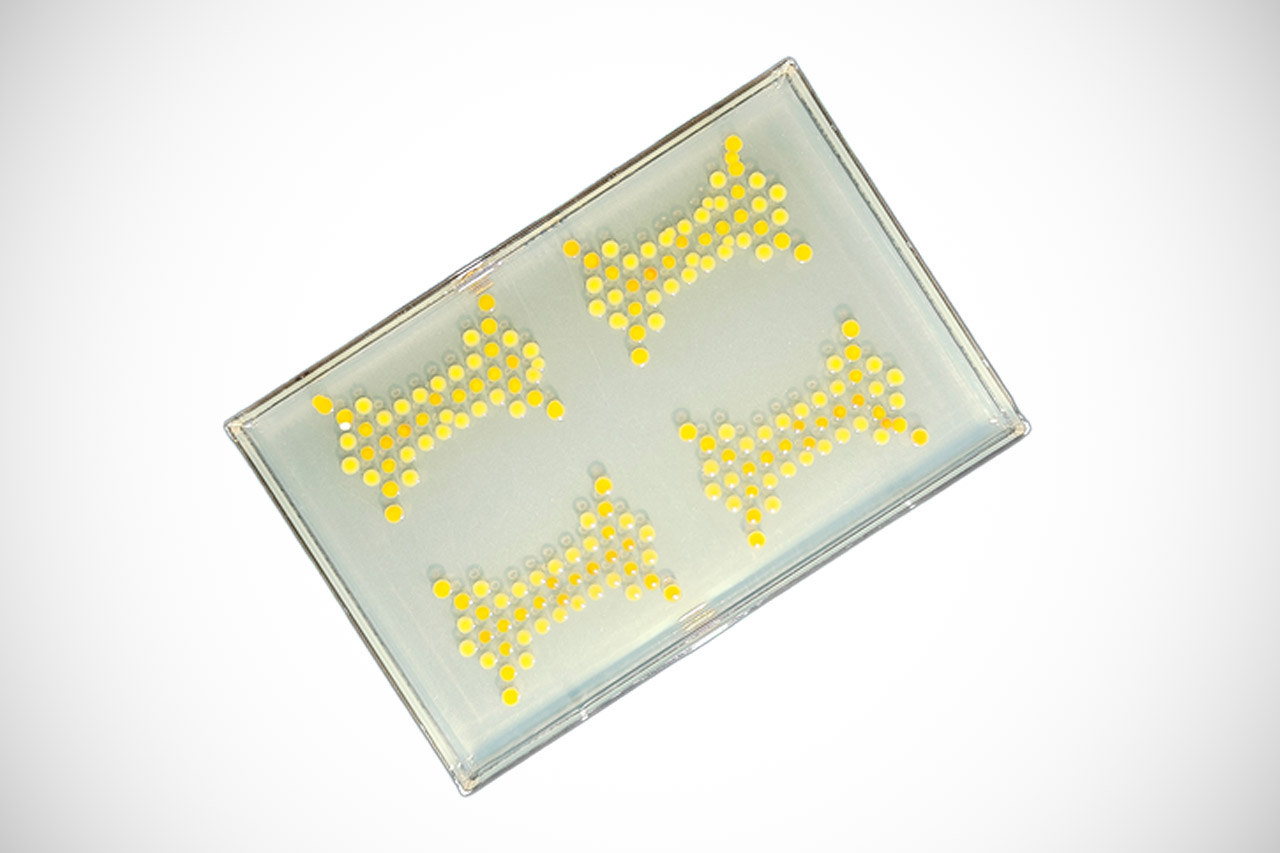
Researchers at MIT have taken a common plant surface microbe and turned colonies of it into working switches. Those switches link up through chemical messages so the whole arrangement can carry out basic math and route information the way a simple circuit does. The work, published in Nature Chemical Biology, rests on just five engineered strains of Pantoea agglomerans. Two act as the transistors. Three serve as relays that pass the signal along. Arrange the same five pieces in different patterns on a slab of agar and the circuit does something new.


Hamid Doosthosseini, the postdoc who led this study, and Christopher Voigt, the paper’s lead author, began with a bacterium that already had a preference for growing on leaves and roots. Voigt and his team modified this bacteria so that two variants could respond to a little chemical signal known as OC-6. One of the versions just leaps into action when OC-6 appears, whereas the other goes dormant. Both variants also monitor for a second chemical signal, OC-12. When all circumstances are met and OC-12 is present, they produce a third molecule, OHC-14. The produce is subsequently passed on to the next colony.
Sale


AMD Ryzen 7 7800X3D 8-Core, 16-Thread Desktop Processor
- Processor provides dependable and fast execution of tasks with maximum efficiency.Graphics Frequency : 2200 MHZ.Number of CPU Cores : 8. Maximum…
- Ryzen 7 product line processor for better usability and increased efficiency
- 5 nm process technology for reliable performance with maximum productivity
They developed three more strains that can take the OHC-14 and turn it back into a format that the next bit of the circuit can read. The researchers then printed these colonies on a plate using a one-of-a-kind machine that can handle liquids with incredible precision. They spaced the colonies so that each was approximately 5 millimeters from its nearest neighbors. At that distance, the signal can only reach the next colony in line. The signal travels just in one direction, not both. The plate arrangement acts as the circuit template.
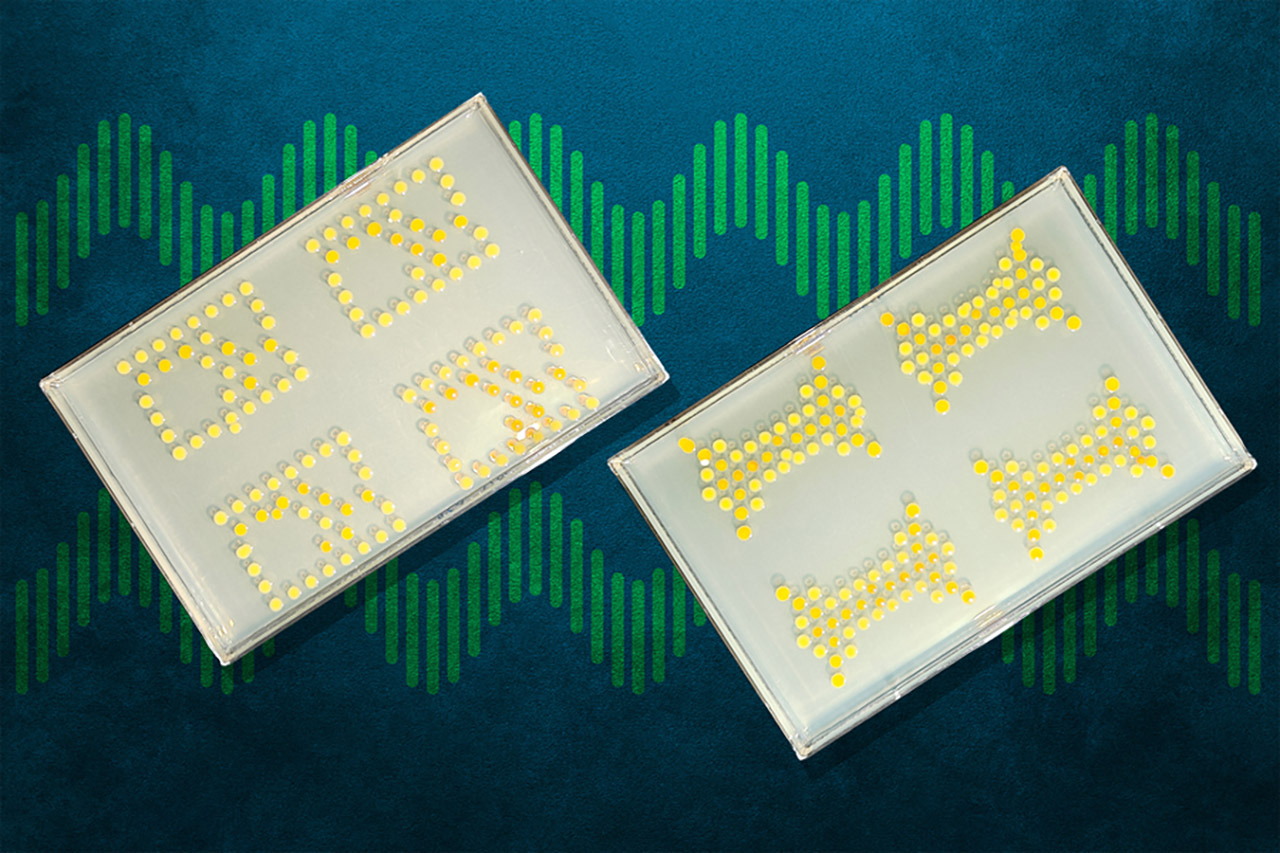
With these 5 building components they managed to whip up numerous functional circuits. They had OR gates, AND gates, multi-input logical operations, half-adders, full-adders with three inputs, and even a demultiplexer that takes in a single signal and sends it to one of several destinations depending on the signal used to control it. The largest board they produced was 24 colonies, and they were able to add two binary inputs together. Overall, it takes around 8 hours to complete a computation, which may seem like an eternity in computer terms, but it makes a lot of sense when viewed through the lens of a plant’s growth.
They were able to build numerous circuits with these five fundamental components. They were able to create OR and AND gates, multi-input logic, half adders, full adders with three inputs, and a demultiplexer that could take one input and route it to one of several destinations based on a control signal. The largest board they made held 24 colonies, and they were able to add two binary inputs. Every computation takes around 8 hours to complete, which is extremely slow by computer chip standards, but it works wonderfully for the slow speed of a developing plant.
Voigt notes that the system is not meant to compete with phones or processors. “Computationally, there’s nothing that your iPhone can do that these circuits couldn’t do.” The point is to put computation where electronics cannot easily go. A living circuit printed onto roots or leaves could sense drought, nutrient stress, or the chemical signature of a fungal attack, then decide to produce a protective compound. Because the bacteria already thrive on plant surfaces, the circuit stays in place and keeps working as long as the cells stay alive, typically a few days under laboratory conditions.
[Source]
You must be logged in to post a comment Login