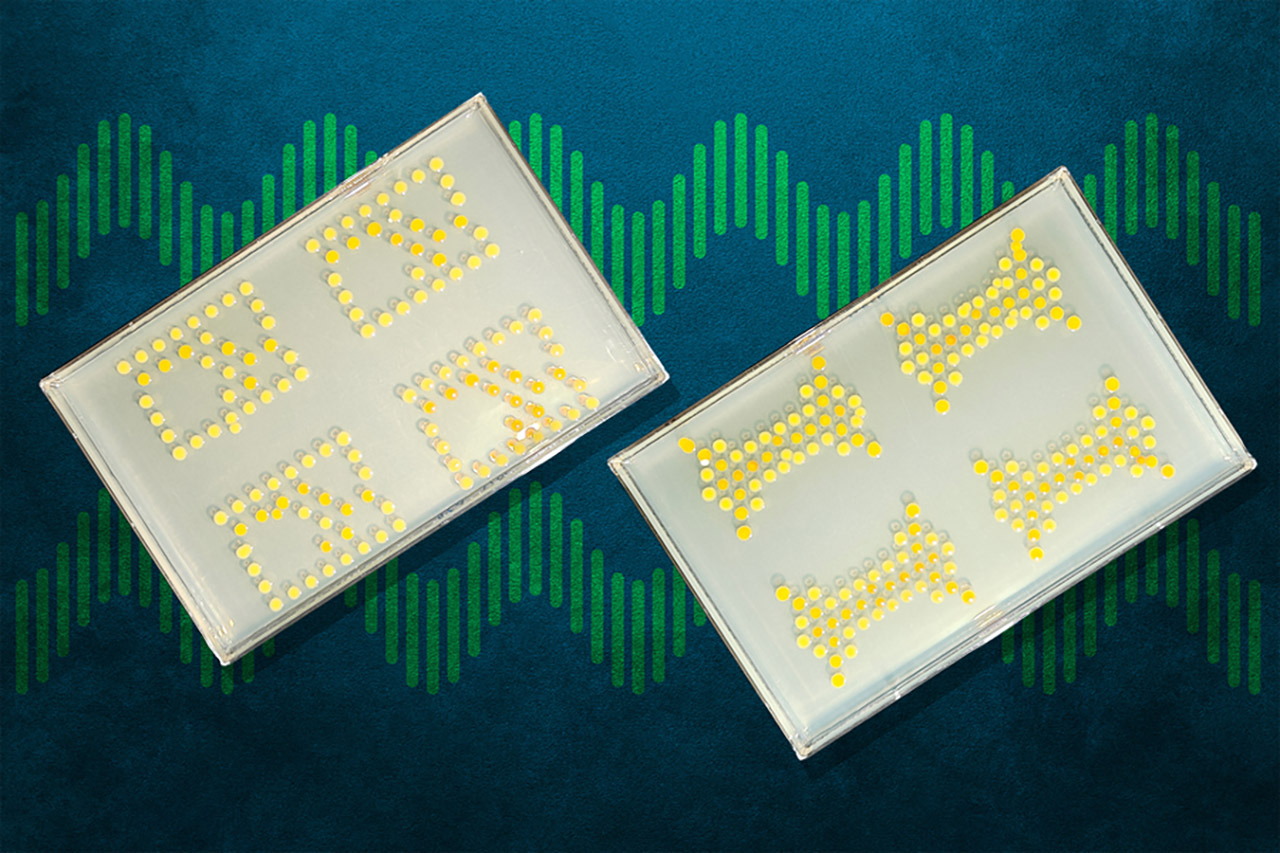
Researchers at MIT have taken a common plant surface microbe and turned colonies of it into working switches. Those switches link up through chemical messages so the whole arrangement can carry out basic math and route information the way a simple circuit does. The work, published in Nature Chemical Biology, rests on just five engineered strains of Pantoea agglomerans. Two act as the transistors. Three serve as relays that pass the signal along. Arrange the same five pieces in different patterns on a slab of agar and the circuit does something new.
Hamid Doosthosseini, the postdoc who led this study, and Christopher Voigt, the paper’s lead author, began with a bacterium that already had a preference for growing on leaves and roots. Voigt and his team modified this bacteria so that two variants could respond to a little chemical signal known as OC-6. One of the versions just leaps into action when OC-6 appears, whereas the other goes dormant. Both variants also monitor for a second chemical signal, OC-12. When all circumstances are met and OC-12 is present, they produce a third molecule, OHC-14. The produce is subsequently passed on to the next colony.
Processor provides dependable and fast execution of tasks with maximum efficiency.Graphics Frequency : 2200 MHZ.Number of CPU Cores : 8. Maximum…
Ryzen 7 product line processor for better usability and increased efficiency
5 nm process technology for reliable performance with maximum productivity
They developed three more strains that can take the OHC-14 and turn it back into a format that the next bit of the circuit can read. The researchers then printed these colonies on a plate using a one-of-a-kind machine that can handle liquids with incredible precision. They spaced the colonies so that each was approximately 5 millimeters from its nearest neighbors. At that distance, the signal can only reach the next colony in line. The signal travels just in one direction, not both. The plate arrangement acts as the circuit template.
Advertisement
With these 5 building components they managed to whip up numerous functional circuits. They had OR gates, AND gates, multi-input logical operations, half-adders, full-adders with three inputs, and even a demultiplexer that takes in a single signal and sends it to one of several destinations depending on the signal used to control it. The largest board they produced was 24 colonies, and they were able to add two binary inputs together. Overall, it takes around 8 hours to complete a computation, which may seem like an eternity in computer terms, but it makes a lot of sense when viewed through the lens of a plant’s growth.
They were able to build numerous circuits with these five fundamental components. They were able to create OR and AND gates, multi-input logic, half adders, full adders with three inputs, and a demultiplexer that could take one input and route it to one of several destinations based on a control signal. The largest board they made held 24 colonies, and they were able to add two binary inputs. Every computation takes around 8 hours to complete, which is extremely slow by computer chip standards, but it works wonderfully for the slow speed of a developing plant.
Voigt notes that the system is not meant to compete with phones or processors. “Computationally, there’s nothing that your iPhone can do that these circuits couldn’t do.” The point is to put computation where electronics cannot easily go. A living circuit printed onto roots or leaves could sense drought, nutrient stress, or the chemical signature of a fungal attack, then decide to produce a protective compound. Because the bacteria already thrive on plant surfaces, the circuit stays in place and keeps working as long as the cells stay alive, typically a few days under laboratory conditions. [Source]
AI-generated content in the Apple Music app may get easier than ever to spot, as record labels and distributors will be required to label it as such later in 2026.
Back in March 2026, Apple introduced Transparency Tags for Apple Music. These are entirely optional disclosure labels, which were used to indicate that specific content was “materially generated” with the help of artificial intelligence.
At the time, Apple said it believed distributors should “take an active role in reporting when the content they deliver is created using AI,” and that its AI-focused tags were “the first concrete step” in the process. So far, however, Apple hasn’t forced labels or distributors to label AI-generated content, but that might soon change.
In an email to Apple Music content distributors, detailed byThe Hollywood Reporter, Apple now says that “content providers will be required to include AI Transparency Tags in any instance where AI was used to create a material portion of the content, including tracks that are AI platform generated.”
Advertisement
The change is set to take effect later this year, though it remains to be seen how Apple aims to enforce its new requirements.
At the time of writing, Apple’s AI Transparency Tags are not visible to end users of Apple Music. However, the company’s email to Apple Music content distributors says that it wants to “provide listeners with as much transparency as possible,” so there’s always a chance the AI-disclosure tags will become visible to all.
Apple’s decision to force distributors and record labels to use AI labels is a bit of a pivot, compared to its earlier stance. Even so, the move is part of a larger strategy to combat misleading AI-generated content.
Apple’s efforts to reduce AI spam, impersonation, and play count manipulation
In an open letter to the music industry, back in May 2026, Apple highlighted the benefits of AI, but cautioned that artificial intelligence should never replace artists, but only amplify their work.
Advertisement
To that end, Apple claims that it has created internal tools to identify AI-made tracks, fight spam tracks, and combat impersonation, all by monitoring music streams. If an AI-generated track is getting Apple Music can even automatically pull AI-generated tracks that get their plays from manipulated streams.
In 2025, Apple redistributed royalties from approximately 2 billion manipulated streams, with the funds diverted to the company’s payout pool for artists and labels.
Apple has “developed technology in-house that would allow us to exactly see what music people are delivering us,” said Apple Music VP Oliver Schusser in April 2026. He added that these tools let Apple see “what AI [model] it is and all that.”
The company’s current assortment of AI and spam-prevention tools is seemingly effective. According to Schusser, more than a third of songs uploaded to the Apple Music service are “100% AI,” but listening remains below 0.5%. In other words, nobody’s actually listening to these fully AI-generated songs.
Advertisement
How other music streaming services handle AI disclosure
Overall, Apple’s efforts targeting the abuse of AI are admirable, but the company is late to the party, especially compared to Deezer’s approach.
Spotify will apply an AI Persona badge to select artist profiles.
Apple Music rival Deezer has had AI-detection systems for well over a year, catching 60,000 AI-generated songs each day. Its CEO claimed most AI-generated content on Deezer was used to commit fraud.
Spotify, meanwhile, has taken a restrictive yet nuanced approach regarding AI. The streaming service excludes songs associated with “AI Personas” from editorial recommendations. Artists themselves have the option to disclose whether they use generative AI by labeling their profile as an AI Persona, but Spotify itself will step in and apply the label if it’s deemed necessary.
Advertisement
Once a preset listener threshold is met, Spotify will apply the AI Persona badge if an artist’s public identity “appears to represent photorealistic AI-generated identities.” Notably, however, the AI Persona badge will display if the designation was applied by Spotify or by the artist themselves. Artists will have the option to appeal Spotify’s decisions as well.
While it remains to be seen when Apple Music’s AI label requirements will roll out, Spotify’s AI Persona badges will become available in mid-September 2026, while Deezer’s anti-AI measures remain in use.
All in all, Apple’s approach to AI in music is now more decisive, with its idea of mandatory labels. The company recognizes the potential of AI, and while it hasn’t banned AI songs outright, it won’t tolerate manipulated play counts or impersonation of real human artists.
Google is investigating an issue that some Android devices are encountering when trying to use RCS messaging. According to Reddit threads and Android-focused websites, some people switching to new devices, most commonly smartphones from Samsung, or who are switching carriers, are encountering error code 3100, a connection error, when using Google Messages.
“We’re aware of this issue and are working with our carrier partners to get it fixed as soon as possible,” a Google spokesperson said in an email to CNET.
A spokesperson for Samsung did not immediately respond to a request for comment.
Workarounds for solving the issue range from the elaborate, like a six-step plan that includes turning off two-step verification and removing Google Play Services updates, to a trick using a VPN to connect to another country before trying RCS again. Others have suggested a factory reset or, if dealing with the issue in hindsight isn’t the problem, turning off RCS messaging before migrating to a new Android device or switching carriers.
The rise of RCS
For years, Google championed RCS as a messaging standard to succeed SMS, which it hoped Apple would adopt, something that eventually happened in 2024. The protocol, which stands for Rich Communication Services, allows people with Android and iOS phones to message each other in ways that bridge the gap between the two different operating systems.
Until both OpenAI and Anthropic get close enough to their planned IPOs to release their financials, we have to look to other sources for signs of how well their businesses are doing. One of those sources, Ramp, the corporate credit card and expense management company, has just released some surprising new data: OpenAI has started gaining on Anthropic with US businesses.
OpenAI, which was once the runaway leader with both businesses and consumers, lost the lead among Ramp’s paying business users back in May. That’s when Anthropic hit 41% market share to OpenAI’s 39%. The ChatGPT maker has never regained that lead. As of July, Anthropic has nearly 44% to OpenAI’s nearly 40%.
The data covers more than 70,000 American businesses that spend billions via Ramp’s bill pay and corporate card products. Ramp’s customers are spread across industries but, as a popular Silicon Valley corporate credit card, they do skew toward the tech industry.
A closer look at the most recent data, according to Ramp economist Ara Kharazian, shows that OpenAI is currently growing faster among this segment in Q3 to date than Anthropic. Mind you, there’s still a month left in the quarter and that’s like 30 AI years, so the trend could easily shift again before it’s over. Ramp also declined to provide actual dollars spent, sharing only percentages.
Advertisement
To borrow ChatGPT’s own hedging style for a moment: this isn’t a measure of the the total market. It excludes large enterprises that use spend-management tools from providers like American Express, rather than Ramp. But it’s enough data to show market indications. And what it shows is that Anthropic hasn’t won permanently. Businesses are willing to flop back and forth as each lab releases new models, volatility that should give both companies’ investors pause about how “sticky” enterprise AI spending really is.
“GPT-5.6 Sol is really good, increasingly the choice for developers,” Kharazian posted on X about OpenAI’s new growth. “Fable 5, meanwhile, disappointed both in adoption and real-world application given price + data retention requirements imposed by regulators,” he continued.
That may be an over simplification. Fable — Anthropic’s higher-end model tier — is expensive but it’s also built for a more targeted set of use cases than a general chatbot. Still, Anthropic did cause some outrage when it warned Fable users that it must retain their data for 30 days.
Ramp’s data also suggests that both companies should be growing business revenue, even as they duke it out for market share, because the market overall is expanding. The percentage of companies that pay for AI among these Ramp customers has been steadily climbing. It topped 50% in March. It reached nearly 56% by July.
Advertisement
When you purchase through links in our articles, we may earn a small commission. This doesn’t affect our editorial independence.
Ripple effect: The Federal Trade Commission is putting companies on notice over their use of personal consumer data to set individualized prices. In a bulletin issued Wednesday, the FTC said businesses must clearly disclose when they use detailed information about a consumer to generate a personalized price offer, including the types of data used.
The agency said it cannot ban personalized pricing under its current authority, but it will pursue enforcement action against companies that fail to meet its disclosure requirements.
The warning addresses the growing use of automated pricing systems that rely on consumer data. Companies can use browsing histories, location, device type, shopping behavior, and other signals to estimate how much a person may be willing to pay. AI-based pricing software can process that information quickly and adjust offers for individual users.
The FTC cited several examples. A food-delivery company would need to disclose if it charges a consumer more based on personal data. A ride-share company would face the same requirement if it increases a fare because it knows a customer does not have a competing app installed on their phone.
Advertisement
The practice differs from traditional discounts offered to broad groups, such as students or senior citizens. Personalized pricing uses data to make decisions at the individual level. This has become easier as retailers and platforms collect more information through websites, apps, and connected devices.
The FTC began studying the practice during the Biden administration. The agency found that companies could use personal data to charge more when shoppers appear unfamiliar with a market, including new parents and first-time car buyers. The commission has not released a full report from that study.
FTC Chairman Andrew Ferguson, who was then a Republican minority commissioner, criticized the earlier release of the preliminary findings. He also closed a public-comment effort on surveillance pricing that former FTC Chair Lina Khan had opened during her final week in office.
Personalized pricing drew more attention after Instacart allowed retailers to test different prices for individual shoppers in four cities. Consumers who added the same products to their carts at the same time could receive different prices. Instacart said the tests were intended to help retailers understand consumer preferences. The company ended the tests after customers objected.
Advertisement
The FTC said it does not know how widely businesses use individualized pricing. However, it said consumers can suffer “substantial injury” when they pay more because a company used their personal information without disclosing it.
“The more sophisticated personalized pricing practices become, the less likely consumers are to benefit,” the commission added.
Some Democrats and consumer advocates say the FTC’s action does not go far enough. Sen. Elizabeth Warren has criticized dynamic pricing as a way for companies to extract more money from consumers.
“Today’s announcement by the FTC is two years too late and not nearly enough,” said Nidhi Hegde, executive director of the American Economic Liberties Project, a progressive group focused on antitrust and other consumer issues.
Advertisement
States have taken a more direct approach. New York last year required companies to disclose their use of personalized pricing, while Maryland prohibited algorithms from changing food prices at the individual level.
Now, at the national level, the FTC’s message is clear: Companies that use personal information to determine what a customer pays must tell that customer.
A source has exclusively revealed to us that Apple has just laid off a significant number of people dedicated to VR development, which aligns with incoming CEO John Ternus reportedly putting the category “on ice.”
Apple Vision Pro was a necessary product launched to let Apple develop visionOS in public. The category is expected to eventually result in a set of full AR glasses we’ve dubbed Apple Glass.
According to a reliable source speaking to AppleInsider, Apple has laid off an unknown but significant number of employees tied to Apple’s VR team, the Apple Vision Group, and similar positions. We’ve heard this tale before, and while this doesn’t mean the end of Apple Vision Group, it is a sign of a cooling off for that category.
Apple Vision Pro arrived with a high price tag and a high barrier to entry with its heavy design and limited developer support. In the years since, Apple hasn’t done much to move the needle, though it isn’t clear if it needs to.
Advertisement
Apple Vision Pro isn’t dead, yet
With component pricing increasing as it has been, Apple had to raise the already high price of the Apple Vision Pro. If the device was out of reach before, it most certainly is now.
Combine that with the fact that consumers are looking to smart glasses as the near future, not heavy VR headsets, and you’ve got the perfect storm. The technology either doesn’t exist or is too expensive to make a thinner, lighter model that’s more affordable.
Rather than have a product group sitting on its hands, restructuring has occurred in recent months within Apple. The priority is on Siri AI and smart glasses, not a headset that can’t feasibly be built today.
We have some information about the layoffs that we’d like to confirm before we talk about it more, but for now, it seems the team hasn’t been totally disbanded. Expect Apple to continue work on Apple Vision Pro, its future iterations, and smart glasses running visionOS.
Advertisement
However, the team dedicated to VR has shrunk in light of the difficulties. It is highly unlikely that John Ternus plans to kill the product line entirely, but downsizing the team and focusing on the smart glasses makes sense for now.
This news will undoubtedly lead to speculation around Apple having abandoned the Apple Vision Pro. Given that we just got visionOS 27 in June and Apple’s work on future iterations is still ongoing, that doesn’t seem to be the case.
Serval is making Catalyst, its AI agent for building enterprise automations, generally available Thursday and enabling it by default for customers — allowing teams of AI agents to decide what should be automated and then build the automation itself.
Catalyst sits above Serval’s AI-native service management platform as an admin-facing “super agent.” It can inspect ticket history, standard operating procedures or natural-language instructions, identify recurring work, and draft the workflows, skills, forms, access policies, journeys and dashboards needed to automate it.
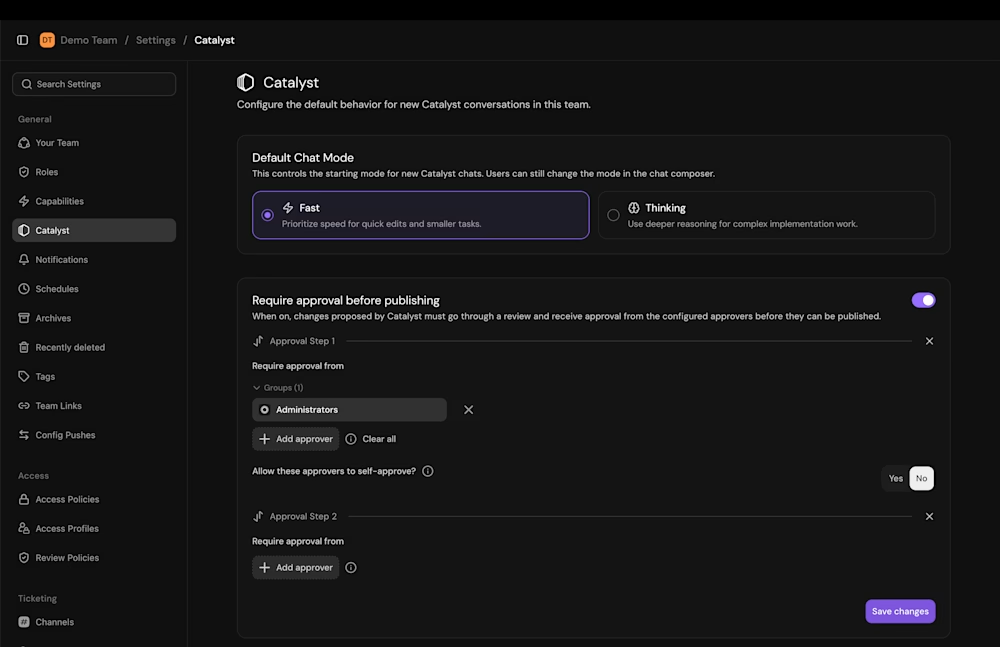
Promotional screenshot of Serval’s drafting interface. Credit: Serval
Serval is also using Catalyst to create background agents that continuously inspect connected systems for emerging problems and propose fixes before an employee files a ticket.
Advertisement
That distinction matters because enterprise service management vendors are rapidly converging on AI-assisted workflow creation.
ServiceNow’s Build Agent can already translate natural-language instructions into full-stack applications, flows, scripts and other platform metadata, while its AI Agent Advisor can analyze instance records to identify automation opportunities. Atlassian’s Rovo can generate Jira automation flows from plain-English requirements, and Freshworks offers Freddy AI Agent Studio for creating service agents that act across Freshservice workflows.
So Serval’s claim to differentiation is narrower — and potentially more consequential — than simply “we use AI to build workflows.” Catalyst is designed as a single administrative layer that can move from discovering an opportunity, to assembling multiple kinds of governed automation, to creating proactive agents that keep looking for new work to automate.
“You just started with a single prompt, and now you’ve got enterprise-grade workflows ready to deploy that are going to solve all password resets for the entire company,” Serval co-founder and CEO Jake Stauch told VentureBeat in an interview.
Advertisement
From ticket history to working automation
Serval says Catalyst analyzes existing help desk data before an organization has decided what to automate. If it finds a repetitive category of requests, it can draft the automation required to resolve those requests and stage the result for administrator review. Users can also upload an SOP or spreadsheet and ask Catalyst to turn the documented process into an executable system.
Serval’s documentation says Catalyst can build workflows, author help desk skills, create onboarding and offboarding journeys, configure access-management policies, construct dashboards, investigate operational issues and debug failed workflow runs. Unlike Serval’s earlier workflow builder, Catalyst is intended to become the primary interface for configuring the platform; the company says its long-term goal is that anything an administrator can do through the UI should also be possible through Catalyst.
The actual workflows are code-backed. In a demonstration, Stauch showed Catalyst taking a request to build password-reset workflows, detecting connected systems including Okta, Google Workspace and Microsoft Entra, and generating the underlying TypeScript needed to perform those actions. Administrators could then add approvals or restrict who was allowed to run the workflow.
The models underneath Catalyst are deliberately swappable
Serval is not building its own foundation model. Stauch said in the interview that the company uses models from “frontier labs,” runs evaluations to determine which models work best for particular jobs, and is deliberately model-agnostic. “You can swap different models in,” he said, adding that Serval also works with enterprises that build their own models.
Advertisement
Stauch provided more detail in a May 2026 interview with Sequoia Capital, saying Serval was using both OpenAI and Anthropic models. He said OpenAI’s GPT models had performed best for end-user interactions and tool calling, while Anthropic’s Sonnet and Opus models were producing the strongest results for the code-generation side of Serval’s automation system — the workload most directly relevant to Catalyst. Serval continuously runs evals rather than automatically moving every workload to the newest model release, Stauch said.
That architecture makes the underlying LLM less central to Serval’s differentiation. The company’s own documentation now lets organization administrators supply their own OpenAI or Anthropic API keys, including a compatible custom endpoint, while Stauch said the broader architecture can accommodate different models.
The materials do not, however, establish that every Catalyst user gets a self-service menu for arbitrarily choosing an individual model. Serval’s pitch is instead that its proprietary value sits in the harness around those models: enterprise context and memory, integrations, generated code, permissions, approvals and the controls governing what an agent can actually do.
That code-generation model is central to Serval’s pitch against ServiceNow. Stauch argues that legacy ITSM deployments often accumulate custom tables, business rules, workflows and platform-specific expertise that make seemingly simple automation changes expensive to implement. Serval, by contrast, wants administrators and business teams to describe the outcome they need and let the model generate the implementation.
Advertisement
But ServiceNow is no longer standing still on that front. Its current Build Agent similarly creates applications and code from natural-language prompts, supports flow design and testing, and operates inside ServiceNow’s governance framework. ServiceNow’s AI Agent Studio lets customers create agents and agentic workflows, while AI Agent Advisor is explicitly designed to analyze operational records for automation candidates.
The competitive question is therefore shifting from “who has generative AI?” to how many separate tools, configuration concepts and specialists are required to get from an observed operational problem to a production automation.
Serval is effectively arguing that Catalyst compresses those steps into one conversational surface and a smaller platform model. ServiceNow, by comparison, now has a powerful but broader set of AI and development surfaces spanning Build Agent, AI Agent Studio, AI Agent Advisor, Workflow Studio and AI Control Tower. That breadth is an advantage for customers already deeply invested in ServiceNow, but it also illustrates the complexity Serval is attacking. ServiceNow itself notes that Build Agent is aimed at admins and developers who understand and can support what it generates.
Atlassian is moving in the same direction from a different starting point. Rovo can generate “if this happens, then that happens” automation flows from natural-language descriptions, while Jira Service Management increasingly supports agents that triage, investigate and execute service work.
Advertisement
Freshworks’ Freddy AI Agent Studio likewise emphasizes agents that resolve requests end-to-end, with prebuilt IT and HR agents and more than 30 workflow templates.
Catalyst’s differentiator, then, is not that rivals cannot generate an automation from a sentence. It is Serval’s attempt to make the entire automation lifecycle itself agentic.
Building agents that look for trouble before a ticket exists
That approach becomes clearest with Serval’s background agents.
Rather than waiting for a help desk request, a background agent can run on a schedule across connected systems, correlate signals and draft a remediation. In one customer example provided by Serval, an agent correlated network incidents across two offices using switch telemetry, DHCP data and historical tickets, ruled out hardware and wireless interference, traced the issue to configuration drift, and generated a remediation workflow for an administrator to approve.
Advertisement
“Most AI agents today wait for an employee to ask a question or submit a ticket,” Stauch said. “We believe the future is AI that acts before an employee ever submits a request.”
That framing also highlights a philosophical difference in Serval’s pitch. The startup does not want service management to revolve around creating, routing and tracking better tickets. It wants the system to eliminate as many requests as possible by turning repeated support work into executable automation.
“A lot of the code written in enterprises has nothing to do with software engineering,” Stauch explained. “It’s actually internal automations and other scripts for the company, and so we use that technology to build a better service management platform.”
Serval’s pitch to enterprises is that it can largely automate those scripts. And the governance model is critical because Catalyst can generate code and potentially initiate changes across production systems. Serval says Catalyst inherits the permissions of the user operating it and remains scoped to that user’s team workspace.
Advertisement
Everything it builds starts as a draft, and organizations can restrict publishing privileges or require formal review and approval before an automation becomes active.
Customer data remains customer-owned, with several deployment options
Those controls also extend to the enterprise data Catalyst examines. Stauch said Serval is intended to operate as the customer’s system of record and told VentureBeat that “they own all the data.”
Serval’s current Master Services Agreement is more precise: customers retain rights, title and interest in both their “Customer Materials” — a category that includes records, documents, workflows, prompts, inputs and configurations — and the output Serval generates from them. Serval receives the rights necessary to process that information to provide, maintain, support and secure the service.
Serval also says it does not retain or use customer materials, inputs or outputs to train, fine-tune or improve its own or third-party AI models.
Advertisement
Its Data Processing Addendum identifies Serval as the processor of customer personal data and allows processing for operating the service, responding to support requests, diagnosing issues and protecting the platform, while authorized subprocessors can also be involved. Serval’s acceptable-use terms say it maintains a current list of AI subprocessors and model providers for customers.
Where that data resides can vary by deployment. Stauch said customers can use Serval as a cloud SaaS service, run it on-premises or place it in their own VPC. Serval’s self-hosting documentation now describes two fuller options: a Serval-managed single-tenant deployment inside an AWS account owned by the customer, or a self-managed deployment on the customer’s Kubernetes cluster in any cloud or on-premises environment.
In the AWS option, Serval says it operates the installation without persistent IAM access to the customer’s AWS account.
There are therefore two distinct access boundaries for enterprise buyers to consider.
Advertisement
At the Catalyst level, the agent can only reach data, integrations and automations available to the user and team workspace under which it is operating.
At the platform level, Serval and authorized subprocessors necessarily process customer information to deliver and support the service, subject to the company’s contractual confidentiality and data-processing terms.
That makes Stauch’s informal statement that Serval “doesn’t touch” customer data better understood as an ownership and deployment claim, rather than a literal assertion that the service never processes it.
Ramp and other customers provide an early test
Customer deployments provide some evidence that the faster-build thesis can translate into operational changes, although the metrics come from Serval’s own case studies.
Corporate expense and financial technology firm Ramp says in a Serval case study that Catalyst has made workflow building 50% faster and helped extend Serval across roughly 10 teams, including IT, finance, facilities, people and talent, legal and business operations. In one hardware replacement program, Serval says Ramp automated 600 laptop replacements and saved 150 hours, leaving approval as the principal human step.
The more telling Catalyst example may be what happened afterward. Ramp had already automated laptop replacement when Catalyst suggested splitting its shipping logic into separate office and home workflows to reduce errors. The company also says employees outside IT now use Catalyst for analytics, bulk ticket operations, workflow troubleshooting and HR process automation.
Advertisement
Other Serval deployments show the broader operating environment Catalyst is meant to configure. Mercor says it has onboarded more than 4,000 external experts through Serval automations and expanded the platform across seven teams. Together AI says Serval automates 95% of its just-in-time infrastructure access requests, with approval and auditing controls around sensitive access. Perplexity says Serval automatically handles more than half of its incoming IT requests and all employee onboarding.
Those deployments extend beyond Catalyst itself, but they demonstrate the type of cross-system automation substrate Catalyst is now being asked to build and maintain.
Serval says more than 90% of customers adopted Catalyst as their starting point for automation during beta. Catalyst is generally available Aug. 20 and will be enabled by default for all Serval organizations.
Pricing and the battle with ServiceNow
Pricing is customized depending on the size of the deployment and is not publicly listed on Serval’s website or documentation.
Advertisement
Serval describes a single platform fee and typically runs a pilot to determine expected deployment and usage.
Stauch said the software license can be similar to ServiceNow’s, but argues total cost of ownership can be substantially lower because customers require fewer implementation and maintenance services.
“The total cost of ownership is going to be dramatically less — usually half as much, sometimes 10 to 20% of the total cost of ownership of ServiceNow,” Stauch said. “But the actual software license fee is not necessarily going to be all that different.”
Serval’s origin story and history
Serval was founded in 2024 by Stauch and CTO Alex McLeod, former Verkada product and engineering leaders, after they repeatedly heard IT customers complain about overburdened help desks and the limitations of established IT service-management software.
Advertisement
Serval has positioned itself as an AI-native alternative to platforms such as ServiceNow and Jira Service Management, combining help-desk ticketing, access management, asset management and workflow automation within a single system.
Serval and Sequoia Capital describe the company’s goal as moving IT software beyond merely recording and routing requests toward resolving them automatically.
The company can operate as an organization’s primary IT service-management system or add automation to an existing one. Its publicly identified customers include Perplexity, Mercor, Clay, Verkada and Together AI.
Serval says customers can automatically resolve more than half of their incoming IT requests; its Together AI case study reports automation of 95% of that customer’s just-in-time access requests.
Advertisement
Investor interest accelerated rapidly in late 2025. Serval announced a $47 million Series A led by Redpoint Ventures in October, bringing its funding at that point to $52 million.
In December, it raised another $75 million in a Sequoia-led Series B at a $1 billion valuation, lifting total capital raised to approximately $127 million; Redpoint, Meritech Capital and General Catalyst also participated.
Serval told Reuters that revenue had grown 500% since August 2025 and that it was expanding beyond IT into operational work performed by human resources, finance and legal departments.
The big test for enterprise customers
For enterprise buyers, Catalyst’s biggest test will be whether its compression of the automation lifecycle survives contact with large, messy, highly customized environments.
Advertisement
ServiceNow can now generate applications and discover automation opportunities with AI. Atlassian and Freshworks are adding increasingly capable agentic automation to their own service platforms. Serval therefore cannot rely on natural-language creation alone as its moat.
Its stronger wager is that an AI-native platform can make the administrative layer itself agentic: continuously finding repetitive work, building the necessary resources across the service stack, exposing generated code for review, and proposing the next automation before an administrator has opened a workflow designer.
If Catalyst works at that scope, the competitive unit is no longer the ticket — or even the workflow. It is the system that keeps turning an enterprise’s operational history into new automation.
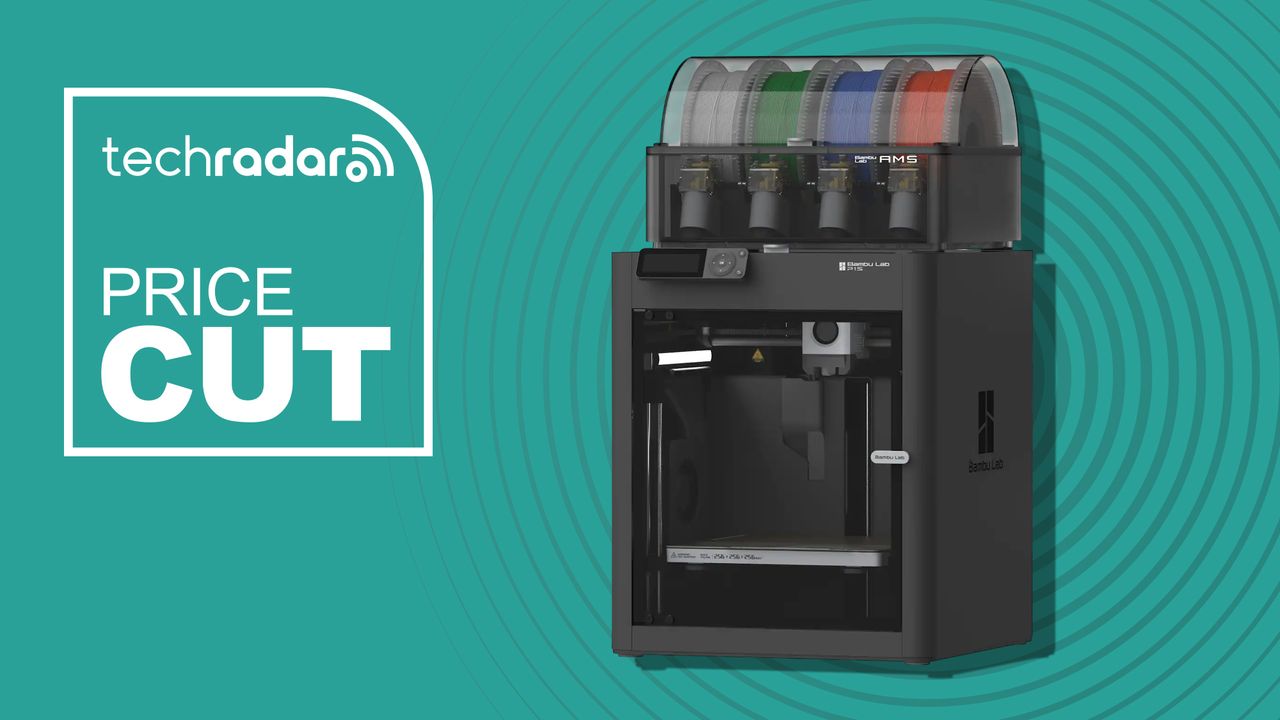
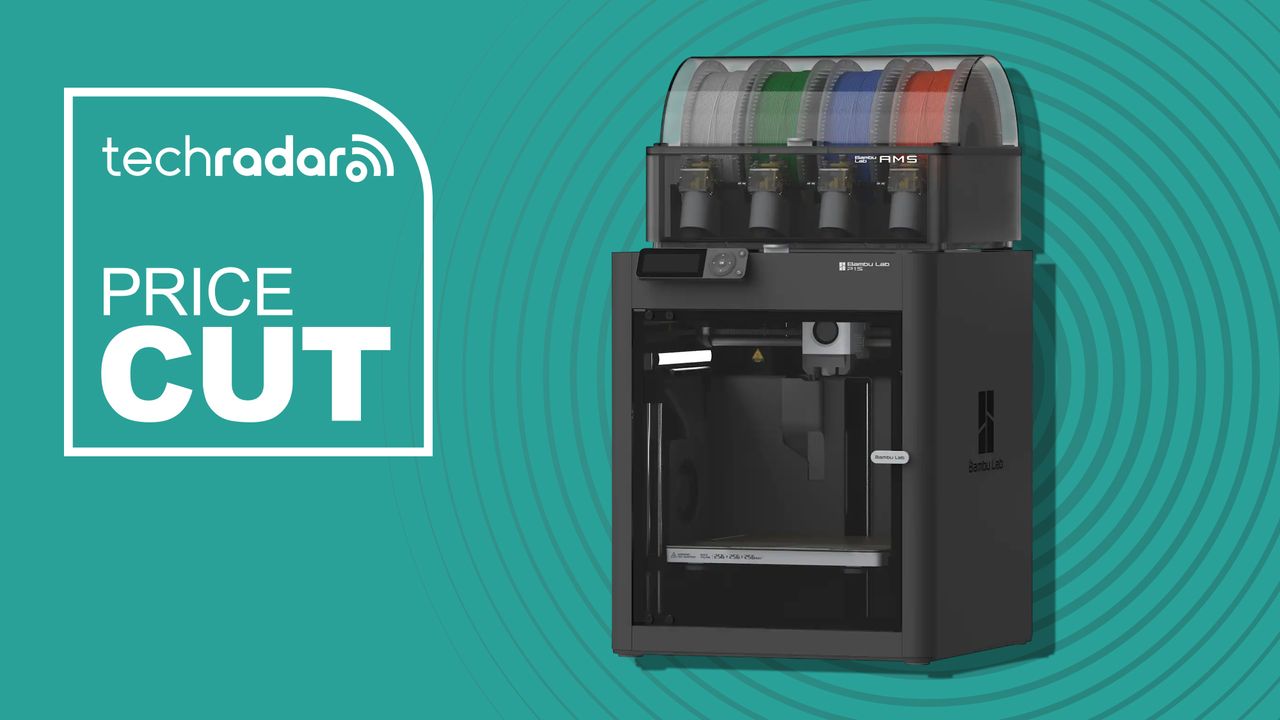
The Bambu Lab P1S Combo is designed to remove much of the tinkering traditionally associated with 3D printing. It arrives assembled, can be set up in around 15 minutes, and automatically handles jobs such as bed leveling and vibration compensation before you start printing.
Alongside common materials such as PLA and PETG, the P1S supports ABS, and its combination of high acceleration and automatic calibration is designed to deliver fast prints without any loss of quality.
Advertisement
Why we recommend it
Ease of use is one of the P1S Combo’s biggest benefits. It arrives assembled, requires relatively little initial setup and handles important calibration tasks automatically.
The AMS gives the Combo considerably more creative potential than the printer alone. Automatic filament switching opens the door to multicolor models without requiring you to manually swap spools throughout a print.
Its enclosed body is useful if you want to move beyond basic PLA projects. Combined with its speed, automatic calibration and broad material compatibility, the P1S is a machine you aren’t likely to outgrow quickly.
For more options, check out our roundup of the best 3D printers you can buy.
Advertisement
Should you buy it?
✅ Buy the Bambu Lab P1S Combo if…
You want to get into more ambitious 3D printing without spending your time manually configuring the printer before every job. Automatic bed leveling and vibration compensation take care of some of the routine setup, making the P1S a good choice if you want to concentrate on what you’re making rather than constantly adjusting the machine.
The Combo is also the one to choose for easy multicolor printing.
Advertisement
❌ Skip the Bambu Lab P1S Combo if…
You only want to make straightforward single-color PLA prints. In that case, you’re paying extra for an enclosed printer and the AMS when a simpler model will cover your needs for less.
Price context & historical value
This is about as low as the P1S Combo goes on sale currently. You’re saving a cent shy of a dollar by going direct to Bambu Lab, but it’s a good price at all three retailers.
Advertisement
At Amazon, it’s at its at an all-time low, which also dropped to $500 back in July, but usually holds steady at around the $550 mark. And it’s price-matched over at Best Buy, too.
It’s not the biggest discount for the fully-enclosed 3D printer, but it’s a good choice if multicolor printing is on your wishlist.
The AMS is the main reason to choose the Combo, but not every filament is equally suitable for use with it. Flexible materials such as TPU can require different handling, so don’t assume every material supported by the P1S can simply be loaded into the AMS.
The P1S also prioritizes printing rather than giving you a sophisticated onboard interface. Its 2.7-inch display is relatively basic, although you’ll likely spend considerably more time controlling and monitoring prints through Bambu Lab’s software anyway.
Sean Grindal, 23, co-founded Yapper (Dream Vision Labs) after a decade of coding that started at age 13. The AI content studio uses a conversational agent to hide model complexity behind a single interface. It launched with satirical viral videos (one hit 100M+ views), expanded into general video and ad creation, and reached a ~$2M run rate with 300,000 users. The team is two people. Grindal bets that simplicity, not feature count, will win the AI creation market.
At just 23, Sean Grindal is betting on an idea he has watched take shape across a decade in software: that the hardest part of AI tools is no longer what they can do, but how few people can figure out how to use them. In a category racing to add features, he believes the winning product will be the one that makes creation the most accessible and intuitive.
He’s making that bet as co-founder and head of product of Dream Vision Labs, the company behind Yapper, an AI content studio he designed and built himself. Grindal reached this point on a path that started earlier than most careers do, and it explains much of how he now thinks about simplicity.
A Decade of Code Before Adulthood
Grindal, in his own words, got an early start in the world of software. “I’ve been a software developer for about 10 years,” he says. “I got my first software job when I was 13 or 14 at a design and development agency, so I did software work there all throughout high school.”
Advertisement
Grindal got his first software job early on, working at a design and development agency. He stayed there through high school, then studied computer science at the University of Toronto. During university he worked on a series of startups before founding his own web development and design firm, Deco. The agency took on sizable clients, including NASDAQ-listed companies.
That decade of work is central to how Grindal describes his edge. He frames the combination of experience and age as unusual: he spent roughly eight years building software before AI was widely available, which gave him a grounding in how products are assembled by hand. The agency years, he adds, sharpened a sense of design taste that now informs his product decisions as much as his engineering does.
The agency model had a ceiling, though. It generated steady cash flow but meant making content for other companies instead of owning something that could grow on its own. Grindal had done enough product and startup work to believe a scalable software tool could expand far faster than services ever would, so he started looking for the right idea to build.
Turning Yapper Into a Viral Engine
The idea for what would become Yapper came from a close friend. Emmet, who had been part of Harvard’s main comedy club and brought a background in comedy and viral marketing, had been developing an early variation of the concept but lacked the software and development experience to build it out.
Advertisement
Yapper — Credit: Sean Grindal
Having decided that a scalable product beat more agency work, Grindal saw the idea, joined to make it real, and the pair shipped a quick prototype, and early traction was promising enough that they committed to it full-time.
Yapper launched as a tool for easily creating satirical AI videos that could be easily sent to friends and posted on social media. The product was engineered around distribution from the start, with every feature designed to produce output that was ready to share.
The first version was narrow, but starting with humor-driven content proved to be a fruitful concept. “The product was built from the ground up with distribution in mind because you could make these funny videos with AI of something satirical and over-the-top, and then you could post them on Instagram and they’d go viral,” Grindal says. Early clips routinely drew millions of views, and one reportedly passed 100 million across platforms, feeding new users straight back into the product.
Two People Behind a 300,000-User Platform
Yapper has since widened from satire into a general video and content tool, but the core argument has stayed the same: make the latest image and video models easy enough that a first-time user can finish something. Instead of presenting a wall of options, the homepage leads with a conversational agent. A user describes what they want, and the agent chooses the models, writes the prompts, and generates the result.
Grindal contrasts that with larger competitors he considers capable but hard to approach. “If you go on the UI for similar products, it’s extremely overwhelming, offering far too many separate tools,” he explains. His aim is a prosumer product, simple enough for a beginner but capable enough for a professional who wants to push it further. Current uses run from advertising assets such as posters and product videos to serialized micro-dramas; one user, the anime studio Moshi.tv, produces short episodes on the platform.
Advertisement
The numbers behind that are the part Grindal finds most telling. Yapper reached a roughly $2 million run rate in under a year, including about $500,000 in the most recent three to four months, with steady monthly growth across some 300,000 users.
The team is two people. Grindal designs and builds the product, while his co-founder Emmet runs marketing; a handful of contractors and YouTube help round out the operation. “Getting to a $2 million run-rate product in under a year with a two-person team was sort of unheard of three years ago,” he says. The story he keeps returning to is less about the technology than about how few people it now takes to build a business of that size.
Lowering the Cost of Making Things
Grindal expects AI-generated images and video to make up a rising share of social media, and the speed of improvement is what keeps his attention. A year ago, he points out, there were no strong AI video models; Veo 3 was among the first to generate audio alongside footage. The field has since reached near-photorealistic video.
He sees that shift opening creative work to people without large budgets, and the same logic extends to commerce, where a small brand can generate professional-looking ads rather than pay for an expensive shoot.
Advertisement
The mission is personal for someone who has been building things since he was a teenager. “I think within a few years, any person can make a Hollywood-level anime that they could distribute, make money off of, and use to tell their own stories, for fractions of a penny compared to what it used to cost,” he says.
He wants Yapper to become the default agent that hides the complexity of these tools behind one interface. The point, as he puts it, is to remove the barriers that once stopped people from acting on an idea: “You’re taking excuses away from action.”
For now, Sean Grindal is betting that the company best positioned for this future is not the one with the most tools, but the one that asks the least of its users. Through Yapper, he’s wagering that simplicity, not scale, is what will bring the next wave of creators in the door.
The Toyota Tundra is one of the automaker’s most well-known vehicles and a recognizable full-size pickup truck. But the Tundra has been the subject of recalls over the past couple of years, related to an issue with manufacturing debris that can damage the engine’s main bearings. Now, dealership technicians are using a unique way to find out whether an affected engine needs to be replaced, and it involves a hammer.
The Tundras in question are certain 2022-2024 models with the V35A twin-turbo V6 engine. The hammer is used as part of a test officially called the V35A Crank Bearing Inspection, and it begins with an oil change. The accessory belts are then removed and the crankshaft is set to the specified position. An accelerometer is then attached to the crankshaft bolt. Using a plastic hammer, a technician hits the crankshaft pulley at the 3 o’clock position, creating an impact that the accelerometer measures as the engine responds, while computer software checks the quality of each hit.
Toyota requires three usable measurements for the test and the collected information, along with the test results, is sent to the company’s cloud system. The test will yield either an “OK” or a “Replace” result. As of this writing, Toyota hasn’t explained which aspects of the vibration data cause an engine to pass or fail. But the hammer method is perhaps a more practical way to evaluate the engine’s status without completely disassembling it.
Advertisement
The science behind Toyota’s unusual engine test
Just dance/Shutterstock
The ongoing concern with Toyota’s V35A engine’s main bearings is due to the important role these components have inside the engine. Engine bearings provide a controlled surface for the crankshaft to rotate against, with engine oil being used to help keep the two components separated during engine operation. If that separation is interrupted, friction can generate heat as a result. If enough heat is produced over a period of time, both the bearing and crankshaft can become worn, or even damaged.
The hammer test that’s being used for some third-gen Toyota Tundra models isn’t exactly a new science. In fact, vibration analysis is a common method for evaluating the condition of mechanical equipment, including vehicles. When a machine or component is subjected to a force, the resulting vibration can reveal information about its condition. This is important, because certain mechanical faults can produce identifiable vibration patterns.
Advertisement
But vibration testing can also reveal more than just how much an engine component moves. Engineers can actually break down the resulting vibration by specific factors like frequency and amplitude. This can help identify specific characteristics of a mechanical problem. So when automotive testing uses these techniques to analyze engine vibration, engineers get better insight into what’s happening inside a vehicle’s mechanical systems.

























































You must be logged in to post a comment Login