The organisation used GenAI to create waypoints for NASA’s rover, a task that is typically undertaken by a mission’s human planners.
The National Aeronautics and Space Administration (NASA) and artificial intelligence (AI) platform Anthropic have “made history” by using GenAI technology Claude to perform the first AI-assisted drive on Mars.
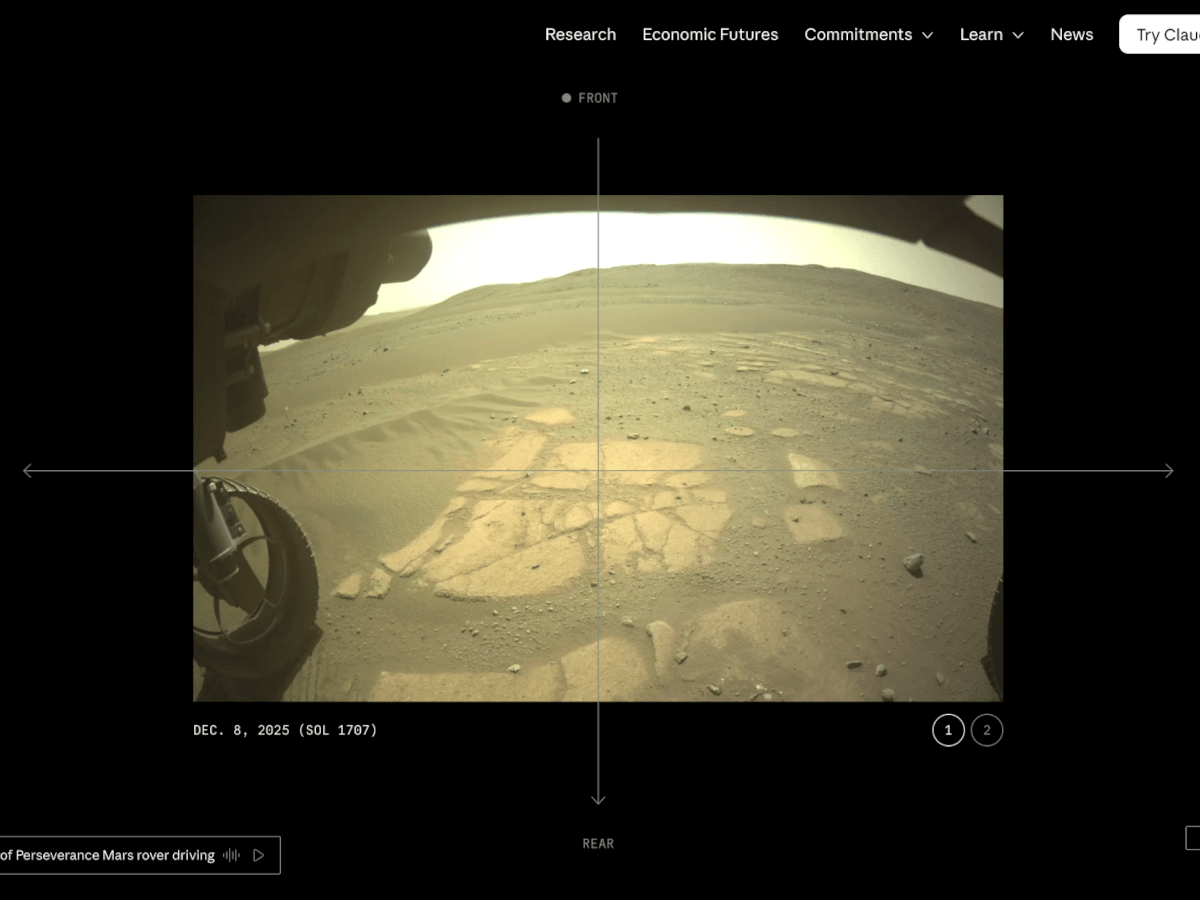
In December of last year NASA’s Jet Propulsion Laboratory (JPL) led by the Rover Operations Centre (ROC) team used Claude to plan the Perseverance Mars rover’s journey, a task that is typically delegated to human rover planners.
“This demonstration shows how far our capabilities have advanced and broadens how we will explore other worlds,” said NASA administrator Jared Isaacman.
Advertisement
He added, “Autonomous technologies like this can help missions to operate more efficiently, respond to challenging terrain and increase science return as distance from Earth grows. It’s a strong example of teams applying new technology carefully and responsibly in real operations.”
To create a safe and efficient route to explore, NASA explained Claude analysed territory and identified obstacles using decades of rover data and mission constraints.
Additionally, the rover could traverse specific Mars locations previously buried in 30 years of mission imagery logs. The organisation said this is work that previously took hours or days, but with advanced technologies was completed in minutes.
After identifying critical terrain features, for example bedrock, outcrops, hazardous boulder fields and sand ripples, Claude generated a continuous path complete with waypoints.
Advertisement
To ensure the AI’s instructions were fully compatible with the rover’s flight software, the engineering team also processed the drive commands through JPL’s digital twin, before sending the commands to the Mars-based rover.
Vandi Verma, a space roboticist at JPL and a member of the Perseverance engineering team said, “The fundamental elements of GenAI are showing a lot of promise in streamlining the pillars of autonomous navigation for off-planet driving: perception (seeing the rocks and ripples), localisation (knowing where we are), and planning and control (deciding and executing the safest path).
“We are moving towards a day where generative AI and other smart tools will help our surface rovers handle kilometer-scale drives while minimising operator workload, and flag interesting surface features for our science team by scouring huge volumes of rover images.”
Also in December of last year, NASA JPL was reconsigned alongside Ubotica Technologies and Open Cosmos at the SpaceNews Icon Award for Space AI Partnership event, for their joint work on Dynamic Targeting.
Advertisement
This is a technology that uses artificial intelligence to allow spacecraft to decide autonomously and within seconds where to make science observations from orbit.
Don’t miss out on the knowledge you need to succeed. Sign up for the Daily Brief, Silicon Republic’s digest of need-to-know sci-tech news.
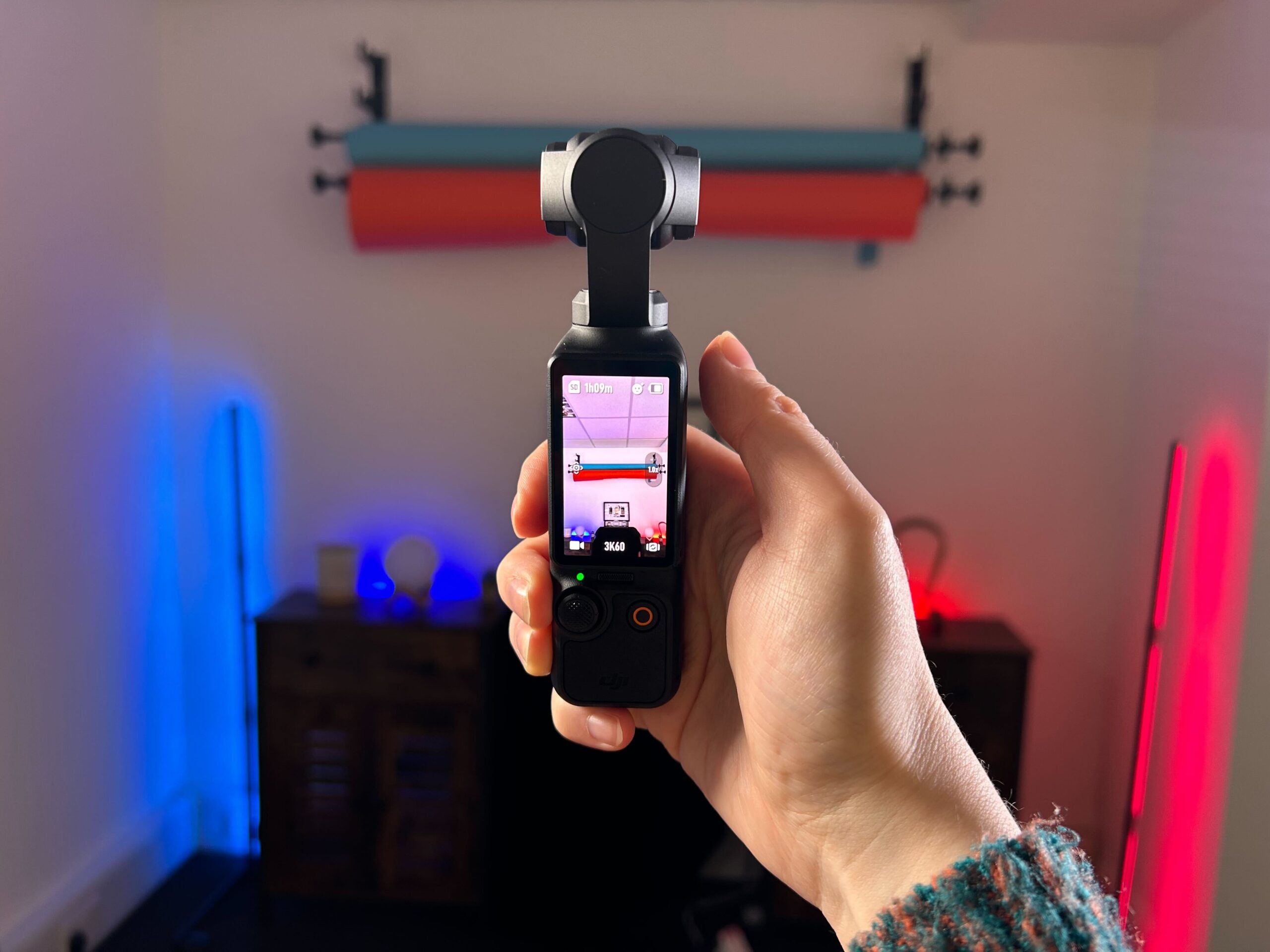
The Osmo Pocket 4 has been a long time coming. Early references to the device date back to mid-2025.
There were multiple sightings of test units surfacing in the months that followed. It’s expected to replace the popular Osmo Pocket 3. That camera helped cement DJI’s position in the compact vlogging camera space.
Advertisement
While DJI hasn’t shared full specifications yet, early details point to a meaningful upgrade rather than a minor refresh.
Advertisement
The Osmo Pocket 4 is expected to feature improved camera hardware. In addition, it should have better subject tracking and built-in storage, which could make it a more self-contained option for creators on the go.
Advertisement
There have also been rumours of a more advanced “Pro” variant, though DJI has yet to acknowledge its existence. For now, the company is keeping the focus firmly on the standard Osmo Pocket 4 ahead of its official reveal.
If the leaks hold up, pricing is expected to land at around $499 in the US, putting it in line with its predecessor. That would position it as a competitive option for vloggers. It will appeal to those looking for a compact, stabilised camera without stepping up to larger mirrorless setups.
Reaction online has been quick, and in some cases, already looking ahead. Some users welcomed the long-awaited announcement but noted that attention may soon shift to a rumoured Pro version. Others pointed to teaser imagery that might hint at a dual-lens design, fuelling speculation that DJI could expand the Pocket range further.
There’s also a knock-on effect for the current model. Several users mentioned snapping up discounted Pocket 3 bundles, while others are now tempted to buy one outright or hold off in anticipation of price drops once the new model lands.
Advertisement
Advertisement
With just days to go before the announcement, the Osmo Pocket 4 looks set to build on DJI’s existing formula. However, there are enough upgrades to keep it relevant in an increasingly crowded creator market.
Muse Spark is part of a ‘ground-up overhaul’ of Meta’s AI efforts, the company said.
Nearly a year after being established, Meta Superintelligence Labs (MSL) has finally debuted its first product, a multimodal model “purpose-built” for Meta’s products.
Muse Spark is the first in the family of Muse models and represents a “ground-up overhaul” of the company’s AI efforts, Meta said in a statement. The launch comes after the company poured multiple billions into its supposed efforts towards ‘superintelligence’, a hypothetical AI system with abilities beyond human intelligence.
Muse Spark is the “first step toward a personal superintelligence”, Meta said. The model can be accessed via Meta.ai and the Meta AI app.
Advertisement
According to the company, Muse Spark achieves strong performance on visual STEM questions, entity recognition and localisation. It performs on par with existing models from AI rivals such as OpenAI’s GPT-5.4, Anthropic’s Opus 4.6 and Google’s Gemini 3.1 Pro.
Muse is also marketed as a way to “learn about and improve” user health, Meta added, and is expected to be rolled out to WhatsApp, Facebook, Instagram and the company’s AI glasses in the coming weeks.
The company said it collaborated with more than 1,000 physicians to curate training data that enables “factual and comprehensive” responses. For comparison, OpenAI said it worked with 260 physicians to develop its ChatGPT Health offering.
Moreover, Meta found that Muse Spark demonstrated a “strong refusal behaviour” across high-risk areas such as biological and chemical weapons. The model also does not demonstrate requisite autonomous capability or hazardous tendencies to realise threat scenarios around cybersecurity, Meta added.
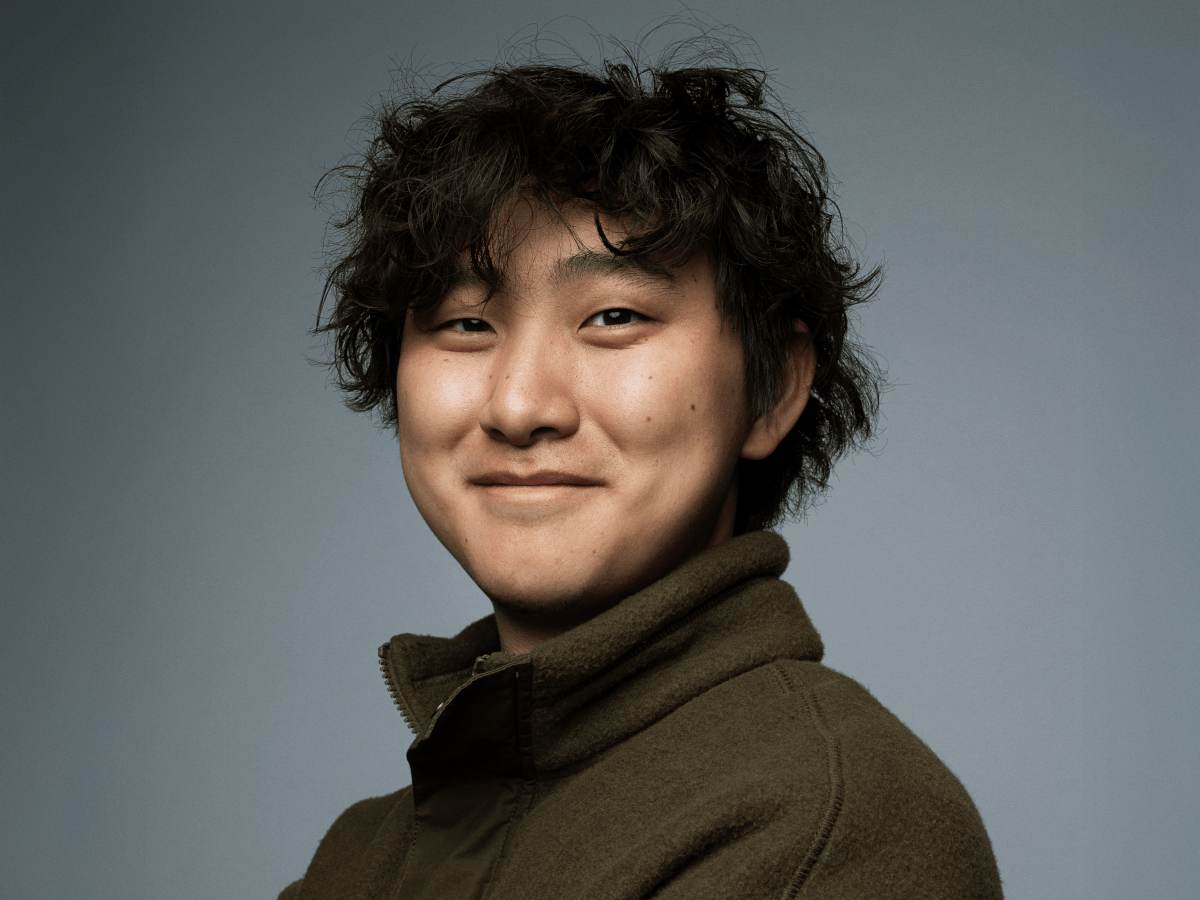
Concerned that Meta was lagging behind the likes of OpenAI and Anthropic, CEO Mark Zuckerberg set up MSL last June after acquiring Scale AI for $14.3bn and hiring its CEO Alexandr Wang to lead the team.
“This is only the start. As we expand these features, expect richer, more visual results, with Reels, photos and posts woven directly into your answers,” Meta said.
MSL has continued to make big-name hires to add to the efforts, including Moltbook founders Matt Schlicht and Ben Parr, co-founder of Safe Superintelligence Daniel Gross and Apple’s former AI lead Ruoming Pang. The company cut 600 jobs at MSL in October.
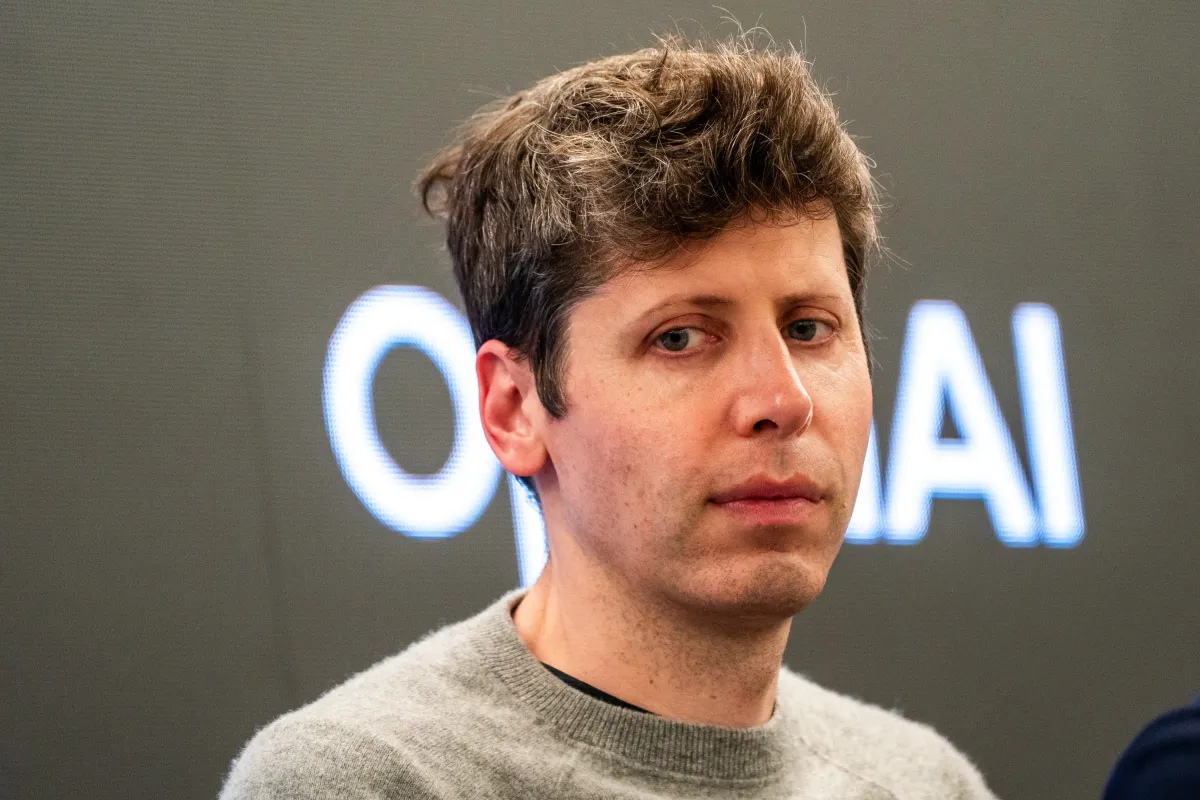
Early Friday morning, someone allegedly threw a Molotov cocktail at Altman’s home. No one was hurt in the incident, and a suspect was later arrested at OpenAI headquarters, where he was threatening to burn down the building, according to the San Francisco Police Department.
While the police have not identified the suspect publicly, Altman noted that the incident came a few days after “an incendiary article” was published about him. He said someone had suggested that the article’s publication “at a time of great anxiety about AI” could make things “more dangerous” for him.
“I brushed it aside,” Altman said. “Now I am awake in the middle of the night and pissed, and thinking that I have underestimated the power of words and narratives.”
Advertisement
The article in question was a lengthy investigative piece written by Ronan Farrow (who won a Pulitzer for reporting that revealed many of the sexual abuse allegations around Harvey Weinstein) and Andrew Marantz (who’s written extensively about technology and politics).
Farrow and Marantz said that during interviews with more than 100 people who have knowledge of Altman’s business conduct, most described Altman as someone with “a relentless will to power that, even among industrialists who put their names on spaceships, sets him apart.”
Echoing other journalists who have profiled Altman, Farrow and Marantz suggested that many sources raised questions about his trustworthiness, with one anonymous board member saying he combines “a strong desire to please people, to be liked in any given interaction” with “a sociopathic lack of concern for the consequences that may come from deceiving someone.”
Techcrunch event
Advertisement
San Francisco, CA | October 13-15, 2026
In his response, Altman said that looking back, he can identify “a lot of things I’m proud of and a bunch of mistakes.”
Advertisement
Among the mistakes, he said, is a tendency towards “being conflict-averse,” which he said has “caused great pain for me and OpenAI.”
“I am not proud of handling myself badly in a conflict with our previous board that led to a huge mess for the company,” Altman said, presumably referring to his removal and rapid reinstatement as OpenAI CEO back in 2023. “I have made many other mistakes throughout the insane trajectory of OpenAI; I am a flawed person in the center of an exceptionally complex situation, trying to get a little better each year, always working for the mission.”
He added, “I am sorry to people I’ve hurt and wish I had learned more faster.”
Altman also acknowledged that there seems to be “so much Shakespearean drama between the companies in our field,” which he attributed to a “‘ring of power’ dynamic” that “makes people do crazy things.”
Advertisement
Of course, the correct way to deal with the ring of power is to destroy it, so Altman added, “I don’t mean that [artificial general intelligence] is the ring itself, but instead the totalizing philosophy of ‘being the one to control AGI.’” His proposed solution is “to orient towards sharing the technology with people broadly, and for no one to have the ring.”
Altman concluded by saying that he welcomes “good-faith criticism and debate,” while reiterating his belief that “technological progress can make the future unbelievably good, for your family and mine.”
“While we have that debate, we should de-escalate the rhetoric and tactics and try to have fewer explosions in fewer homes, figuratively and literally,” he said.
Critics say social media is engineered to be as addictive as tobacco or gambling, writes the Washington Post — while adding that “the science has been moving in parallel with the court’s recognition.”
A growing body of research links heavy social media use not only to declines in mental health but to measurable cognitive effects — on attention, memory and focus — that in some studies resemble accelerated aging. Science also suggests we have more control than we realize when it comes to reversing this damage, and the solution is surprisingly simple: Take a break… “Digital detoxes” can sound like a fad. But in one of the largest studies to date, published in PNAS Nexus and involving more than 467 participants with an average age of 32, even a short time away produced striking results — effectively erasing a decade of age-related cognitive decline.
For 14 days, participants used a commercially available app, Freedom, to block internet access on their phones. They were still allowed calls and text messages, essentially turning a smartphone into a dumb phone. Their time online decreased from 314 minutes to 161 minutes, and by the end of the period the participants had improvements in sustained attention, mental health as well as self-reported well-being. The improvement in sustained attention was about the same magnitude as 10 years of age-related decline, the researchers noted, and the effect of the intervention on depression symptoms was larger than antidepressants and similar to that of cognitive behavioral therapy.
But two things were even more mind-blowing… Even those people who cheated and broke the rules after a few days seemed to have positive effects from the break; and in follow-up reports after the two weeks, many people reported the positive effects lingered. “So you don’t have to necessarily restrict yourself forever. Even taking a partial digital detox, even for a few days, seems to work,” Kushlev said. The article also notes a November study at Harvard published in JAMA Network Open where nearly 400 people ‘found that even a short break can make a measurable difference: After just one week of reduced smartphone use, participants reported drops in anxiety (16.1 percent), depression (24.8 percent) and insomnia (14.5 percent)…”
Advertisement
“Other experiments point in the same direction — whether decreasing social media use by an hour a day for one week or stepping away from just Facebook and Instagram.”
Marketing is one thing, but reality is quite another. Like many of us, I won’t forget the claimed “durable” microtwill of FineWoven, the shaky initial launch of Apple Maps, or the infamous butterfly keyboard that was supposedly four times more stable. Remember the promise of AirPower? Of course you don’t.
It’s worth celebrating when the real-world experience does actually live up to the hype, then. And that’s the case with Apple’s Ceramic Shield 2, the tech giant’s latest and unquestionably greatest iPhone glass.
At the iPhone 17 series launch last year, Apple claimed its strongest glass to date offers three times better scratch resistance and reduced glare. Thankfully, after several months of testing it, I’m confident that this lofty claim rings true.
Advertisement
Article continues below
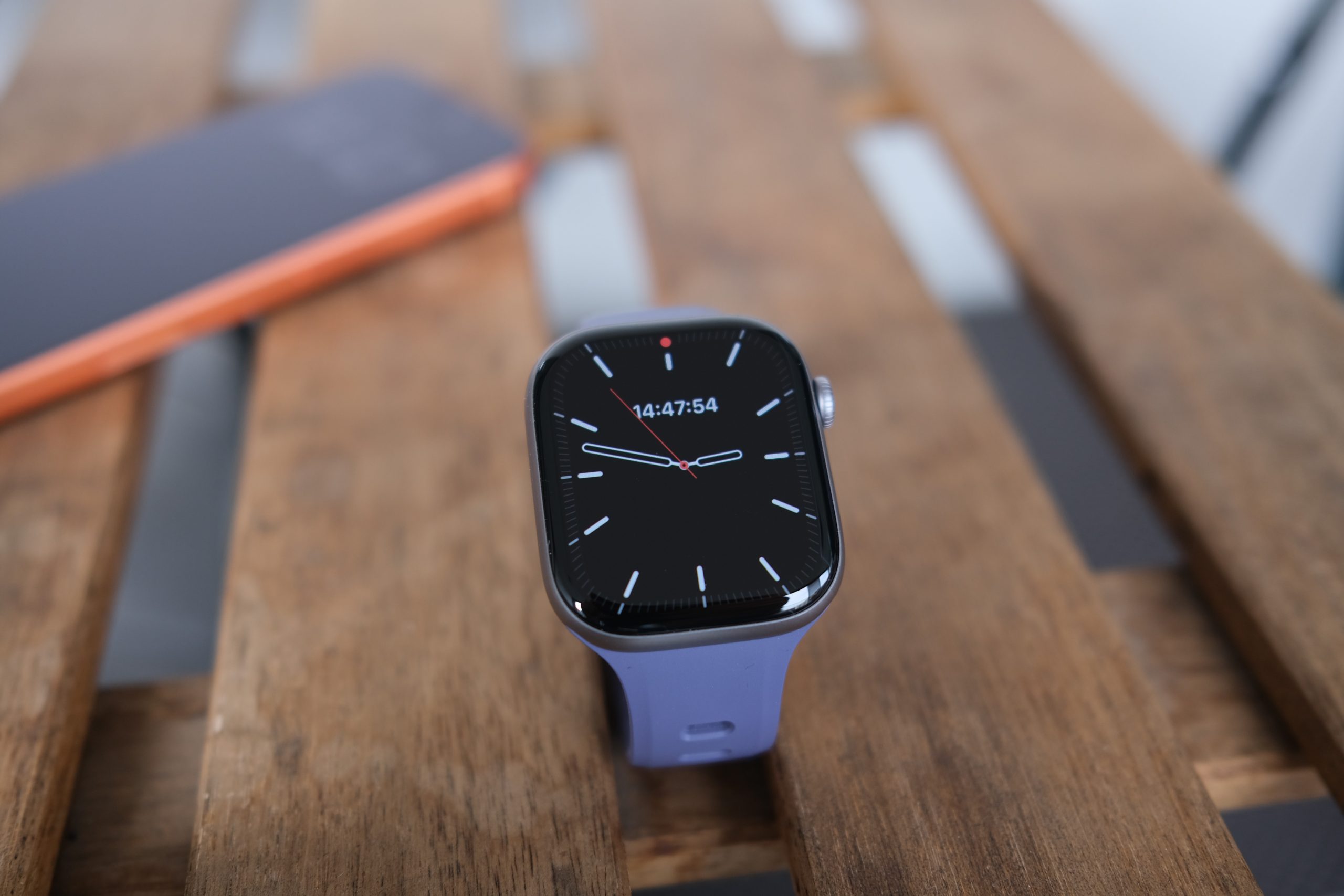
I’ve been using the iPhone 17 series — primarily the iPhone 17 Pro — and the Apple Watch Series 11 since November, and I’m honestly yet to see the kind of scratches I’d been all too used to getting with the previous models of both devices (and I’ve tested every iPhone since the iPhone 12).
I started noticing the difference on the watch first, which may not boast Ceramic Shield 2 but has a similarly upgraded ‘Ion-X’ display for twice the scratch resistance when compared to the Series 10. Apple says it’s the “toughest glass in the industry.”
Advertisement
The Apple Watch Series 11 (Image credit: Future / Simon Cocks)
In the past, I’d just had to get used to the fact that the previous watch generations would pick up the kind of hairline micro-scratches that you probably wouldn’t see most of the time, but that would be glaringly obvious in bright sunlight or under harsh direct lights. This time, there’s none of that, and it’s not like I’ve got any better at not bumping my wrist into furniture or doorways!
It’s been years since I’ve had a smashed screen on any iPhone, but I did spot marks after only a few weeks with my iPhone 16 Pro. It earned itself a very noticeable scratch in its first fortnight of use. Over the months, it only gained more micro-abrasions all over the screen, and I ended up relying on a screen protector to keep it from getting any worse. Honestly, the story’s been the same with the 15 Pro and 14 Pro, and my handset before that was a 13 mini, which ended up looking like “frosted glass” by the time I was done with it.
Sign up for breaking news, reviews, opinion, top tech deals, and more.
However, with the launch of the iPhone 17 came Ceramic Shield 2, and it’s beginning to look like that was an even more substantial change than Apple made it out to be.
Advertisement
More than just marketing
(Image credit: Future / Simon Cocks)
This glass — developed by Apple and the tough glass experts at Corning — has a denser nanocrystal structure and improved oleophobic coating versus previous generations of iPhone glass. In testing, JerryRigEverything tortured the iPhone 17 and found that it only ended up with light marks at Level 7 on the Mohs hardness scale. Usually, scratches show up at about Level 5 or 6.
My experience is that I just don’t have to be as concerned about my phone anymore. You’d be able to carry the iPhone 17 in your pockets, even with your keys, and you won’t need to worry too much about it starting to look far older than it is. For most people, that probably also means you don’t really need a screen protector.
Speaking of which, tests by Astropad found that using a regular glass screen protector may actually end up cancelling out the anti-reflective effect of your new iPhone 17. That’s definitely worth thinking about before spending the extra cash on a cover. If you do get one, it had better be one with anti-reflective properties.
Obviously, think carefully before leaving off a protector or doing the *unthinkable* and going fully case-free. Apple’s new glass is great, but it’s not indestructible. A devastating face-down drop will most likely still break your iPhone, and sand or quartz will still scratch it, even if metal might not harm it as easily. Planning on ever bringing your phone to the beach? At risk of dropping it onto gravel? Or sending it toppling into a bowl of diamonds? Don’t skip the screen protector.
(Image credit: Lance Ulanoff / Future)
That said, for everyone else living an unadventurous life, you probably don’t need to baby your iPhone anymore.
I know your first instinct is to slap on a glass protector, but it may now be overkill with the latest generation and just an extra expense you needn’t bother with. Sure, some scratches may show up eventually, but I’m not seeing anything like what I’d previously been used to, after months of use.
Advertisement
Overall, I’ve found that the much more “scratch-resistant” Ceramic Shield 2 has ended up feeling like a huge upgrade. What that means in real terms is that you’re not going to notice all that much damage from everyday use, and that most of us don’t need a screen protector on these handsets.
And the great news is that, as of last month, Apple doesn’t sell a smartphone without Ceramic Shield 2 any longer. Even the affordable new iPhone 17e has great durability with the latest glass, so you can grab any iPhone from the current lineup and feel just that little bit safer. Credit where it’s due: Apple really delivered on this one.
IBM has agreed to settle the US Department of Justice’s accusations that the company violated civil rights laws with its DEI practices. According to a press release from the DOJ, IBM will pay more than $17 million to resolve allegations of taking “race, color, national origin, or sex” into account when making employment decisions. This settlement is the latest development in a longstanding effort from the Trump administration to end DEI programs, which was kick-started from an executive order in early 2025.
IBM denied any wrongdoing and said the settlement wasn’t an admission of liability, while the US government said this conclusion wasn’t a concession that its claims weren’t well founded, according to the settlement agreement. According to the DOJ, IBM had violated the Civil Rights Act of 1964 with practices that included altering “interview criteria based on race or sex,” developing “race and sex demographic goals for business units,” using “a diversity modifier that tied bonus compensation to achieving demographic targets” and more.
An IBM spokesperson told Engadget in an email that the company “is pleased to have resolved this matter,” adding that “our workforce strategy is driven by a single principle: having the right people with the right skills that our clients depend on.”
According to Todd Blanche, the agency’s acting attorney general, this action is one of the first resolutions to come out of the Civil Rights Fraud Initiative, which was launched in May 2025. IBM isn’t the only company to alter its policies, with both T-Mobile and Meta agreeing to put an end to its DEI initiatives last year.
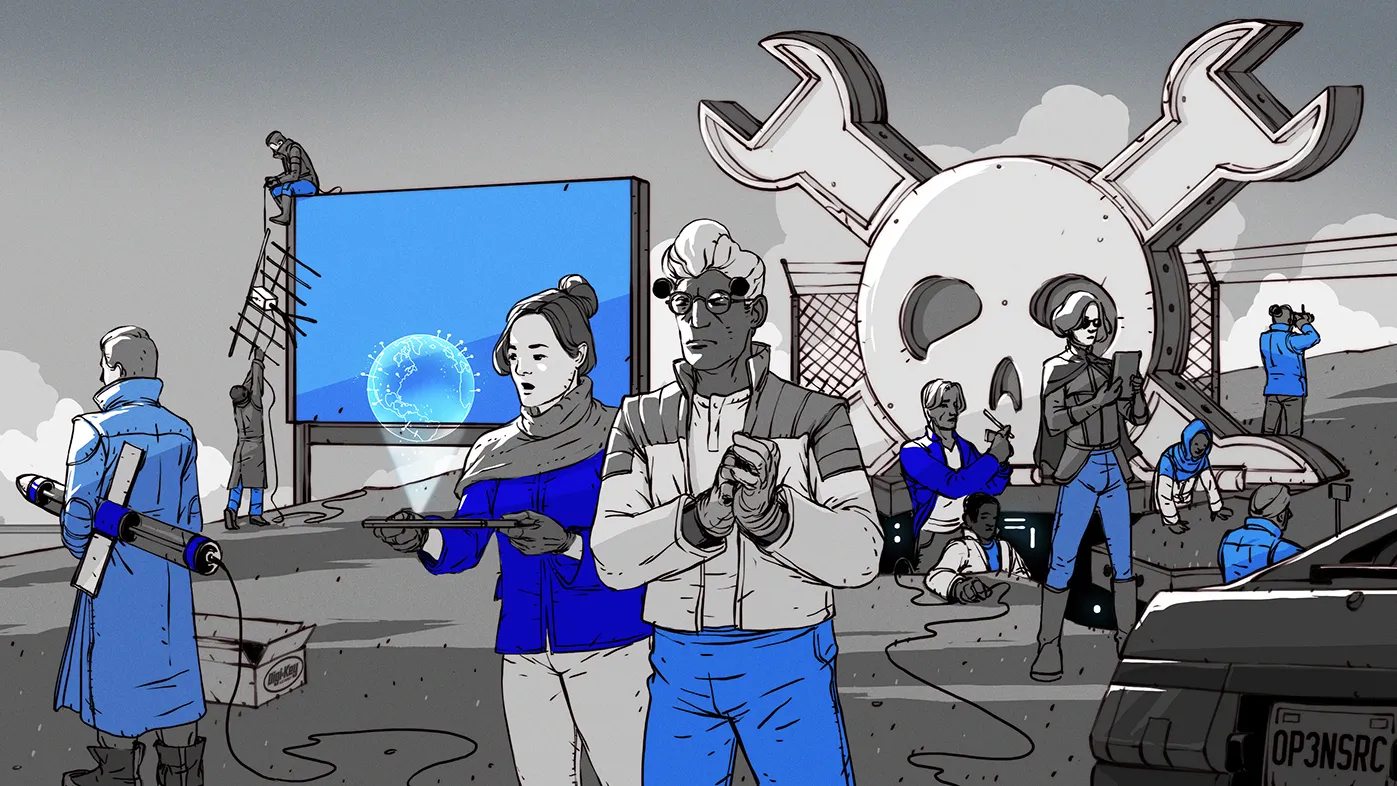
Talking with [Tom Nardi] on the podcast this week, he mentioned his favorite kind of hack: the community-developed open-source firmware that can be flashed into a commercial product that has crappy firmware, thus saving it. The example, just for the record, is the CrossPoint open e-book reader firmware that turns a mediocre cheap e-book into something that you can do anything you want with. Very nice!
And that got me thinking about “kinds of hacks” in general. Do we have a classification scheme for the hacks that we see here on Hackaday? For instance, the obvious precursor to many of Tom’s favorite hacks is the breaking-into-the-locked-firmware hack, where a device that didn’t want you loading your own firmware on it is convinced to let you do so. Junk-hacking is probably also a category of its own, where instead of finding your prey on AliExpress, you find it on eBay, or in the alleyway. And the save-it-from-the-landfill repair and renovation hacks are close relatives.
First, some of the good news: certain AI models—currently Anthropic’s Mythos, but surely others are well on their way if they haven’t already arrived—turn out to be really good at finding cybersecurity vulnerabilities. As Anthropic itself reported:
During our testing, we found that Mythos Preview is capable of identifying and then exploiting zero-day vulnerabilities in every major operating system and every major web browser when directed by a user to do so. The vulnerabilities it finds are often subtle or difficult to detect. Many of them are ten or twenty years old, with the oldest we have found so far being a now-patched 27-year-old bug in OpenBSD—an operating system known primarily for its security.
That’s quite the tool, if it can help find vulnerabilities so that they can be patched.
But it’s also quite the tool to help find vulnerabilities so that they can be exploited. Like so many tools, including technological tools, whether they are good or bad depends entirely in how they are used. A hammer is a really helpful tool for building things, but it also smashes windows. And with this news, AI now has the capability for some really destructive uses.
To try to prevent them, Anthropic is working with some of the largest tech companies in the world to let them use a preview of its model on their own software to help QA them and proactively patch vulnerabilities. As Casey Newton reports:
Advertisement
Anthropic announced Mythos alongside Project Glasswing, an initiative with more than 40 of the world’s biggest tech companies that will see Anthropic grant early access to the model to find and patch vulnerabilities across many of the world’s most important systems. Launch partners in the coalition include Apple, Google, Microsoft, Cisco and Broadcom.
They’ll be tasked with scanning and patching their own systems along with the critical open-source systems that modern digital infrastructure depends on. Anthropic is giving participants $100 million in usage credits for Mythos, and donating another $4 million to open-source security efforts.
This sounds like a great program. It also should be noted that the Mythos model is not consumer-grade AI; it takes expensive, dedicated infrastructure to run, which means that, at least for the moment, there’s not an imminent danger of it being misused. But trouble is nevertheless brewing, and someday it will be here, which raises certain questions, like:
(A) What about other AI models, which will inevitably be similarly powerful? What if they are produced by less ethical companies, who would have no compunction against rogue actors using their systems in destructive ways that Project Glasswing won’t have intercepted?
(B) And what about every single legacy technology system in use, which Project Glasswing is unlikely to be able to retroactively fix? Large, resourced companies may be able to weather the on-coming storm, but what about your local dentist office? Or a hospital? Municipal IT systems? Networked technology is everywhere, and these smaller businesses and institutions are likely to both have older, unpatched technology and also fewer resources to update and secure them, or deal with the consequences of a hack, which can be devastating for the business or the people they serve.
On the other hand, there does seem to be one other bit of good news with this revelation: governments, including that of the United States, have often engaged in the dubious practice of hording zero-days, or collecting information about vulnerabilities that they then kept secret so that they could exploit them themselves by using them on an adversary. For those unfamiliar, “zero-day” refers to a vulnerability that has yet to be disclosed, which is why it’s on “day zero,” or before the first day of it being a known vulnerability that could now be fixed.
Advertisement
Mythos’s capabilities would seem to obviate this strategy, because suddenly the stash of unknown vulnerabilities isn’t really going to be such a secret, since anyone using the model will be able to find them. Mythos’s existence changes the balance of interests, where the stronger national security play by the government would be to disclose any discovered vulnerability to the vendor as soon as possible so that they can be patched and our nation’s systems more secured. Arguably that was always the better national security play, but now there’s definitely no upside to trying to keep them secret because it now definitely needs to be presumed that adversaries will be able to find and exploit them. They’ll have the tools.
With these AI models we’re going to need to presume that everyone is going to have the tools to know about every vulnerability. Up to now there has been at least the illusion of some security, because vulnerabilities couldn’t be exploited if no one knew about them, and finding vulnerabilities is hard. But now that it will be easy, the risk to the nation’s cybersecurity is greater than we have ever before contended with.
It is also not really a great harbinger that we know about Mythos because… a copy of the software got leaked. It’s just the software that was leaked and not the models it uses to tune its “reasoning,” which means that anyone trying to now build their own Mythos is still missing an important piece if they want to mimic its full capabilities, but they would have a lot. Which is probably why Anthropic has been sending DMCA takedown notices to have the leaked software removed from the Internet.
But doing so raises a related issue: the role of copyright law when it comes to “vibe coding,” or “having an AI system write the software rather than a programmer, just by instructing it on what to do. It’s especially important in light of the cybersecurity concerns always raised by software (and including vibe-coded software, as we’re having to trust that what’s produced does not have vulnerabilities). Copyright requires a human author, which raises the question: can software written by an AI be copyrightable? The answer would appear to be no, unless there was a great deal of creative effort on the part of a human being to instruct the AI or modify the output. But as Ed Lee chronicled, per Anthropic itself, even its own software (“pretty much 100%”) is being written by AI. And if that’s the case, then Anthropic has no business sending takedown notices for its software because DMCA takedown notices are only for demanding the removal of copyrighted works, which, it would appear, Anthropic’s own code does not qualify for.
Advertisement
But maybe it’s better if software stops being subject to copyright. “Vibe coding,” is becoming increasingly efficient, to the point that there is likely no need for copyright to incentivize its authorship. Instead, what public policy really needs to emphasize is that whatever software is produced is secure software. But in many ways copyright obstructs that goal, like through its lengthy terms, which mean that while a copyright holder might not still be maintaining its older software, no one else can maintain and patch it either, without potentially infringing the software’s copyright. Or through its privileged secrecy (unusually for copyright, when it comes to software you don’t actually have to disclose all the actual code to register a copyright in it!) and other powers to lock out security research efforts, like through Section 1201 of the DMCA, when such efforts aren’t specifically supported by the developer–assuming the developer supports any security testing at all, as right now there aren’t necessarily the incentives to make them care about it. Instead public policy has given them the ability, like with copyright, to escape oversight of the security of their software products, even as those products end up embedded in more and more of our lives.
It’s time to change that focus and get copyright out of the way of making software security our top policy priority.
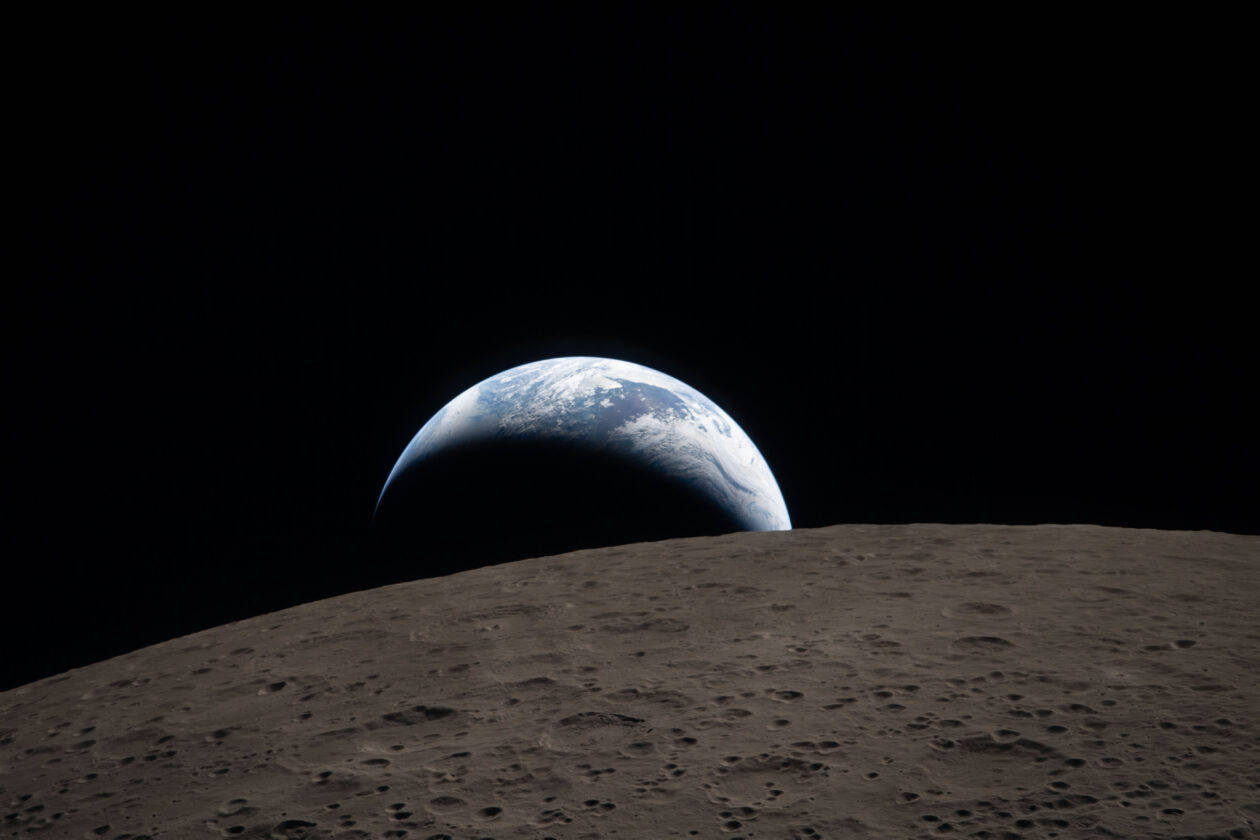
NASA’s Artemis 2 crew captured an iconic “Earthset” picture, showing Earth dipping beneath the lunar horizon. (NASA Photo)
Four astronauts today became the first humans to make a trip around the moon since the Apollo era — and added new pages to history books for the Artemis era.
The Artemis 2 crew reached a maximum distance of 252,756 miles from Earth, surpassing the distance record for human travel that was set during the Apollo 13 mission in 1970 by more than 4,000 miles.
NASA astronaut Christina Koch marked the occasion in a radio transmission from NASA’s Orion space capsule, named Integrity. “We most importantly choose this moment to challenge this generation and the next to make sure this record is not long-lived,” she said.
Koch made history as the first woman to travel beyond Earth orbit. One of her crewmates, NASA pilot Victor Glover, is the first Black astronaut to take a moon trip, and Canadian astronaut Jeremy Hansen is the first non-U.S. astronaut to do so.
The main purpose of the 10-day Artemis 2 mission is to serve as an initial crewed test flight for the Orion spacecraft, which traced a similar round-the-moon course during the uncrewed Artemis 1 mission in 2022. A successful Artemis 2 mission will prepare the way for a lunar lander test flight in Earth orbit as early as next year, potentially followed in 2028 by the first crewed moon landing since Apollo.
Artemis 2’s flight plan took advantage of orbital mechanics and a precisely timed firing of Orion’s main engine to send the astronauts on a free-return trip around the moon and back. The moon’s gravitational pull caused Orion to make a crucial U-turn around the far side, at a minimum distance of 4,067 miles from the lunar surface, and then slingshot back toward Earth.
A scientific swing around the moon
Scientists enlisted the astronauts to make up-close geological observations of the lunar surface during the flyby. Because the Artemis astronauts had a wider perspective on the moon than Apollo astronauts did five decades ago, they could see parts of the far side that had gone unseen directly by human eyes (although they’ve been well-documented by robotic probes).
NASA’s mission commander, Reid Wiseman, found it difficult to break away from moongazing to discuss his observations over a radio link with Kelsey Young, Artemis 2’s lunar science lead. “You’re pulling me away from the moon right now, so let’s go,” he told Young.
Advertisement
Back at Mission Control in Houston, Young took it all in good stride. “I have to say that ‘moon joy’ is the new term that’s already become our team’s new motto,” she told Wiseman.
The astronauts focused on features of scientific interest — including Orientale Basin and Hertzsprung Basin, two multi-ring impact craters that document different geological eras on the far side. They noted subtle shades of green and brown on the mostly gray moonscape. They also took a close look at the south polar region, which is the target for the Artemis program’s first crewed landing.
“The view of the south pole is quite amazing,” Glover said.
Koch marveled over the bright young craters that stood out on the lunar surface. “What it really looks like is a lampshade with tiny pinpricks, and the light is shining through,” she said. “They’re so bright compared to the rest of the moon.”
Advertisement
Emotional moments
Hansen told Mission Control that the astronauts were proposing new names for two craters they spotted on the surface below. “Integrity” was chosen as the name for one of the craters, in honor of the crew’s spacecraft. The other crater was dubbed “Carroll,” in honor of Wiseman’s wife, who died in 2020. After Hansen spelled out Carroll’s name, the astronauts came together to give Wiseman a comforting hug.
That wasn’t the flyby’s only emotional moment. Koch said she felt an “overwhelming sense of being moved by looking at the moon” and comparing it with Earth. Her description of the feeling was similar to astronauts’ accounts of a phenomenon known as the Overview Effect.
“Everything we need, the Earth provides,” she said, “and that is in itself something of a miracle, and one that you can’t truly know until you’ve had the perspective of the other.”
Just before Orion was due to pass behind the moon for a temporary blackout, Glover took the opportunity to refer to the Christian commandment to love your neighbor as yourself. “As we prepare to go out of radio communication, we’re still able to feel your love from Earth. And to all of you down there on Earth, and around Earth, we love you from the moon,” he said. “We will see you on the other side.”
Advertisement
About 40 minutes later, Orion emerged from the other side of the moon, and communication was restored. “It is so great to hear from Earth again,” Koch told Mission Control.
“We will explore, we will build ships, we will visit again, we will construct science outposts, we will drive rovers, we will do radio astronomy, we will found companies, we will bolster industry, we will inspire,” Koch said. “But ultimately, we will always choose Earth.”
Earthset, Earthrise and an eclipse
The behind-the-moon turnaround provided the crew with opportunities to capture images of Earthset and Earthrise — and marked the beginning of Orion’s homeward journey. Back at Mission Control, the support team turned their double-sided mission patches around to change the focus of the patch’s design from the moon to Earth.
But the workday wasn’t yet finished: For the grand finale, the astronauts donned protective glasses and watched as the sun passed behind the moon to create an unearthly kind of solar eclipse. As the sun sank beneath the lunar horizon, they captured pictures of the solar corona.
Advertisement
Glover reported that the corona created a bright halo “almost around the entire moon,” with the lunar surface illuminated ever so faintly by Earth’s reflected light. “It is quite an impressive sight,” he said. “Earthshine is very distinct, and it creates quite an impressive visual illusion. Wow, it’s amazing.”
The sun’s re-emergence from behind the moon marked the end of today’s seven-hour lunar observation session. “I can’t say enough how much science we’ve already learned, and how much inspiration you’ve provided to our entire team, the lunar science community and the entire world with what you were able to bring today,” Young told the crew. “You really brought the moon closer today, and we can’t thank you enough.”
High-resolution images and reports about the observations are due to be downlinked and distributed in the days ahead. Planetary scientists will be poring over the data long after Orion and its crew make their scheduled splashdown in the Pacific Ocean on Friday.
After the flyby, President Donald Trump congratulated the crew over an audio link and called them “modern-day pioneers.”
Advertisement
“Today you’ve made history and made all America really proud,” he said. “No astronaut has been to the moon since the days of the Apollo program. … At long last, America is back.”


















































You must be logged in to post a comment Login