

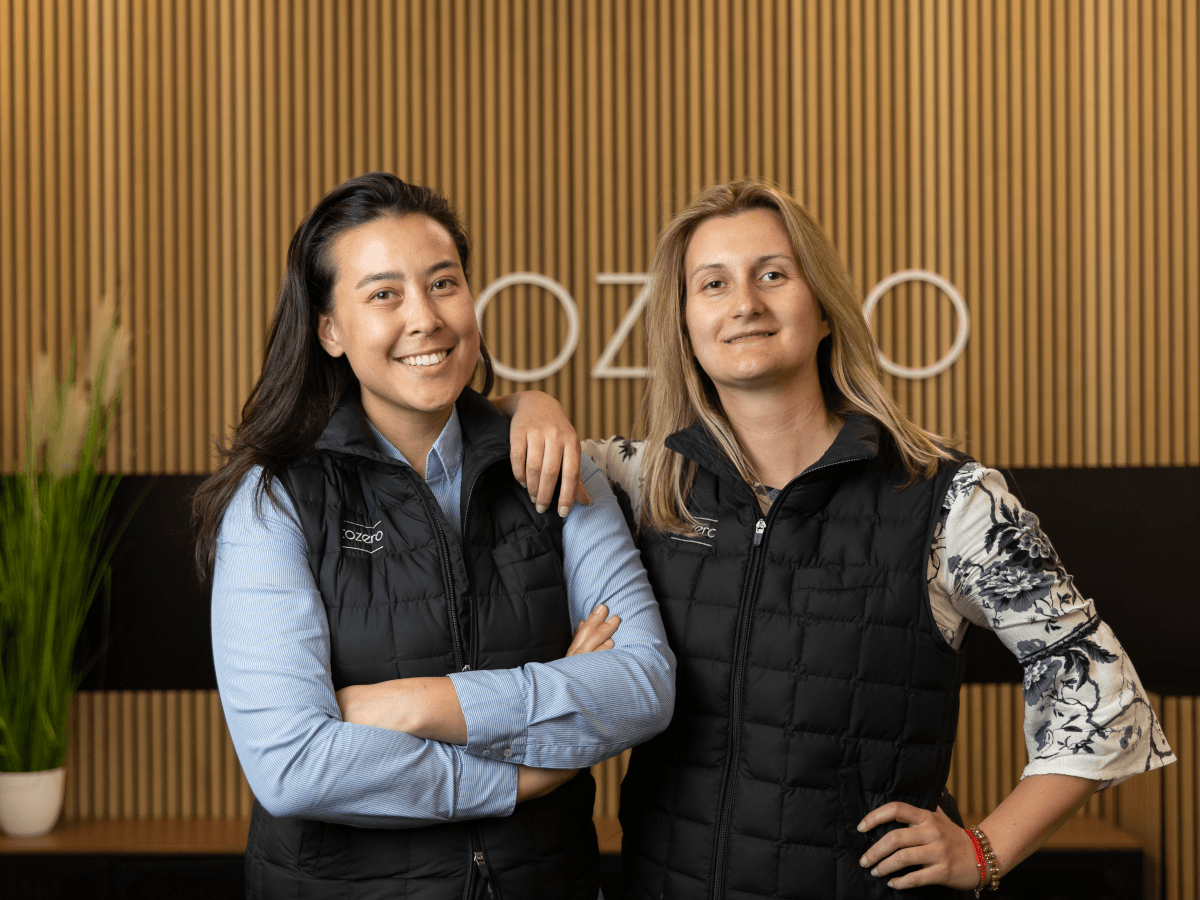

Tozero’s plant outside Munich was set up in six months and is capable of producing 100 tonnes of high-purity lithium carbonate from old batteries each year.
German battery and raw materials recycling start-up Tozero has opened a new industrial plant for the production of domestic lithium and graphite, which it claims as a European first.
The new facility in Munich is capable of processing 1,500 tonnes of waste per year by turning end-of-life lithium ion batteries into domestic supplies of lithium, graphite and nickel-cobalt blends at an industrial scale.
Such materials are considered critical for use in electric vehicle, grid-scale storage and industrial electrification, but Tozero said that Europe and the US are currently massively reliant on materials imported from China.
It said its technology can give Europe “a domestic source of critical materials” for use by companies across construction, ceramics and lubricants, with further materials and industries to follow.
“Europe doesn’t yet have the critical raw materials it needs to build and scale its own energy transition and battery industry,” said Sarah Fleischer, co-founder and CEO of Tozero.
“Our technology, now scaled 10,000 times, changes this by enabling us to recycle end-of-life batteries and extract these materials at industrial scale for the first time.”
The plant at the Gendorf chemical park, outside Munich, was set up in six months and is capable of producing 100 tonnes of high-purity lithium carbonate from old batteries – which Tozero equated to “saving 6,000 electric vehicles’ worth of batteries from landfill” – each year.
The company said the Gendorf plant will now form the blueprint for a full-scale commercial facility, planned for 2030 and capable of processing 45,000 tonnes of battery waste per year.
“In just under four years, Tozero has gone from lab-scale experiments to industrial operations and we’re consistently proving that recycling isn’t just a pilot project – it can be delivered at a level capable of giving Europe a homegrown, circular supply of critical materials its future runs on,” Fleischer added.
The Munich-based company was founded in 2022 by Fleischer – a serial entrepreneur and mechanical engineer – and Dr Ksenija Milicevic Neumann, an expert in metallurgy.
Tozero claims a “proprietary, acid-free hydrometallurgy process” allows battery recycling to happen “in a single, superior cycle”, ensuring recovered materials are pure enough to feed directly back into manufacturing and creating a circular European supply chain.
It has completed pilots with companies such as BMW and works with partners in 10 European countries.
Last month, R3 Robotics – founded in Luxembourg but based in Karlsruhe, Germany – raised €20m to scale its automated disassembly of electric vehicles for preservation and recycling of valuable materials such as lithium batteries.
Updated, 2.15pm, 27 March 2026: This article was amended with updated figures for annual waste treatment capacity, Sarah Fleischer’s quoted scaling ratio of Tozero’s technology, and output equivalence of electric vehicle battery salvage numbers.
Don’t miss out on the knowledge you need to succeed. Sign up for the Daily Brief, Silicon Republic’s digest of need-to-know sci-tech news.














































You must be logged in to post a comment Login