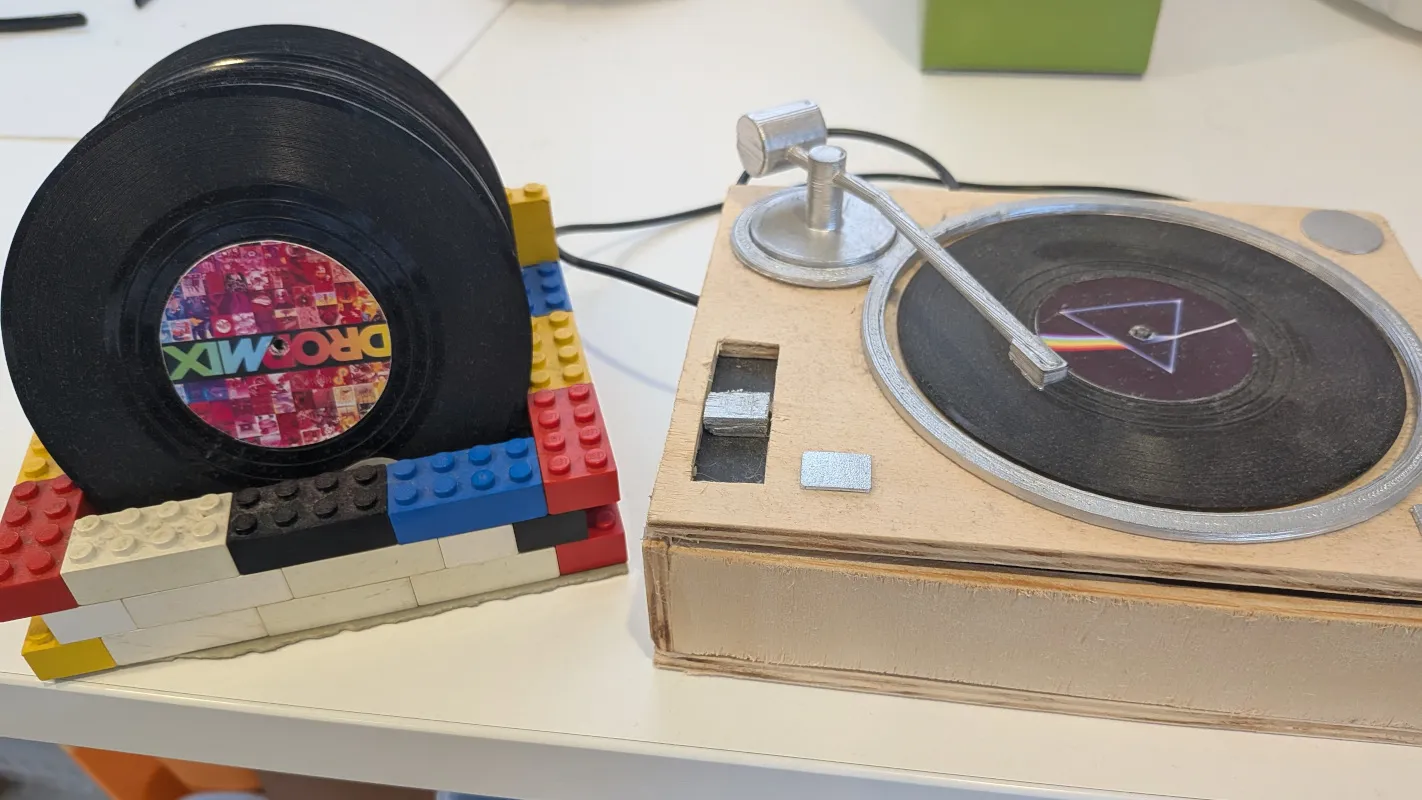
Streaming services have enabled many of us to have easy access to the world’s media library at the touch of a screen, but [Coconauts] thinks we’ve lost something along the way. To bring some intentionality back to the listening experience, they built an NFC record player called Minilos.
Like a normal record player, Minilos requires the user to select an album to play on the machine. These were originally decorative coasters with records printed on them, so they are much smaller than even a 45. Each one features an NFC tag that instructs ESP32 microcontroller hidden in the device to play the requested song. Once placed on the record player, it will then play through that album and come to a stop.
In [Coconauts]’s current setup, the ESP32 is connected to a Home Assistant server which then instructs a Google Speaker to play the requested song via Spotify, although we could easily imagine this being used to play music directly from an SD card or other digital storage device instead.
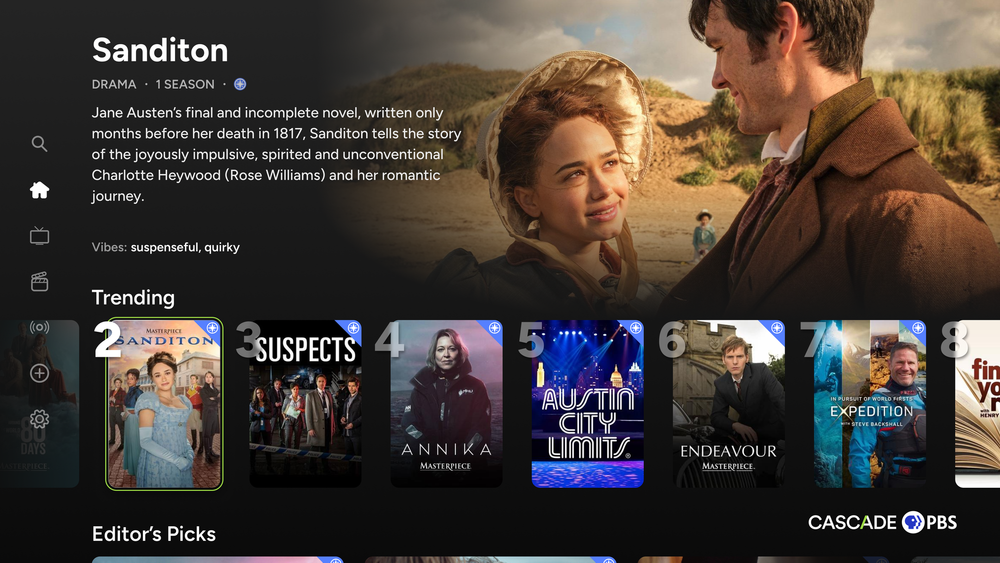
A screengrab of the Cascade PBS streaming app as built by Local Public. (Local Public Image)
Seattle’s Cascade PBS has spun out its streaming app technology into a standalone company called Local Public, which is now building connected-TV and mobile apps for public media stations across the country.
The goal is to provide local PBS stations nationwide their own branded, station-curated streaming apps — plus tools for fundraising and audience data — as an alternative to a one-size-fits-all national app.
Local Public was originally created within Cascade PBS (KCTS-TV channel 9) to build apps for that station, which serves Western Washington and part of British Columbia. Supported by 10 Founding Sponsor partner stations, a Local Streaming Initiative (LSI) was launched to expand the platform to serve stations nationwide.
On July 1, Local Public launched as a public benefit corporation. Cascade PBS owns 100% of Local Public, but it’s expected to take on investment and be co-owned by a coalition of other PBS stations in the near-future.
In a blog post announcing the launch, Local Public CEO Kevin Colligan wrote that the company is aiming to build “a growing coalition of independent public media organizations working together while remaining deeply rooted in their own communities.”
Advertisement
Eighteen stations are currently using Local Public, according to Cascade PBS, including Arizona PBS (Phoenix), Houston Public Media, OPB (Oregon), Rocky Mountain PBS (Denver), Vegas PBS, WETA (Washington, D.C.), WHYY (Philadelphia), WQED (Pittsburgh), and others.
Colligan framed the launch against the backdrop of media consolidation, arguing that a shrinking number of corporations increasingly control what Americans watch and read, while local newsrooms have been gutted and replaced by centralized programming.
He also pointed to the rise of low-effort, AI-generated content as a further threat to authentic local journalism and storytelling — one he said makes trusted, community-rooted public media more valuable, not less.
“We bring a startup mentality to public media’s longstanding tradition of community service,” Colligan wrote. “We are building technology that allows stations to move faster, collaborate more effectively, and reach audiences wherever they are.”
Advertisement
Local Public apps currently run on 10 platforms, including Roku, Fire TV, Apple TV, Google TV, Android TV, LG and Samsung smart TVs, iPhone, Android and a web video portal. NPR, radio and podcast integration is in development and expected to launch in fiscal year 2027.
The apps run on a centralized content management system, letting stations publish their own programming, build featured-content carousels and pull real-time viewer analytics. Stations can also message members and prospective donors directly within the app. The platform fully supports PBS Passport, the streaming benefit for recurring donors, and PBS Media Manager, the system stations use to manage and distribute video.
TheDesk.net reported that Sacramento’s KVIE has already relaunched its streaming app through Local Public as KVIE Plus (stylized KVIE+), offering free access to the station’s full lineup of broadcast channels over streaming alongside local programming and acquired shows, movies and documentaries. Denver’s KRMA has relaunched its connected-TV app through the platform as well
Pricing for Local Public is tiered by station size, based on how many Passport-eligible members a station has at signup. Small stations (fewer than 15,000 members), for instance, pay an $8,000 onboarding fee and $60,000 annually.
Amazon Prime Day is now live in Australia, and I’m spending the majority of my time seeking out the very best Prime Day coffee machine deals. Fortunately, I’ve not been disappointed, with huge savings on many of our favourite machines here at TechRadar.
That smashes a previous low price of AU$629 that I spotted during Black Friday last year, and means that if you’ve been holding out on getting the viral-hit coffee maker, this Prime-exclusive deal presents the perfect opportunity.
Advertisement
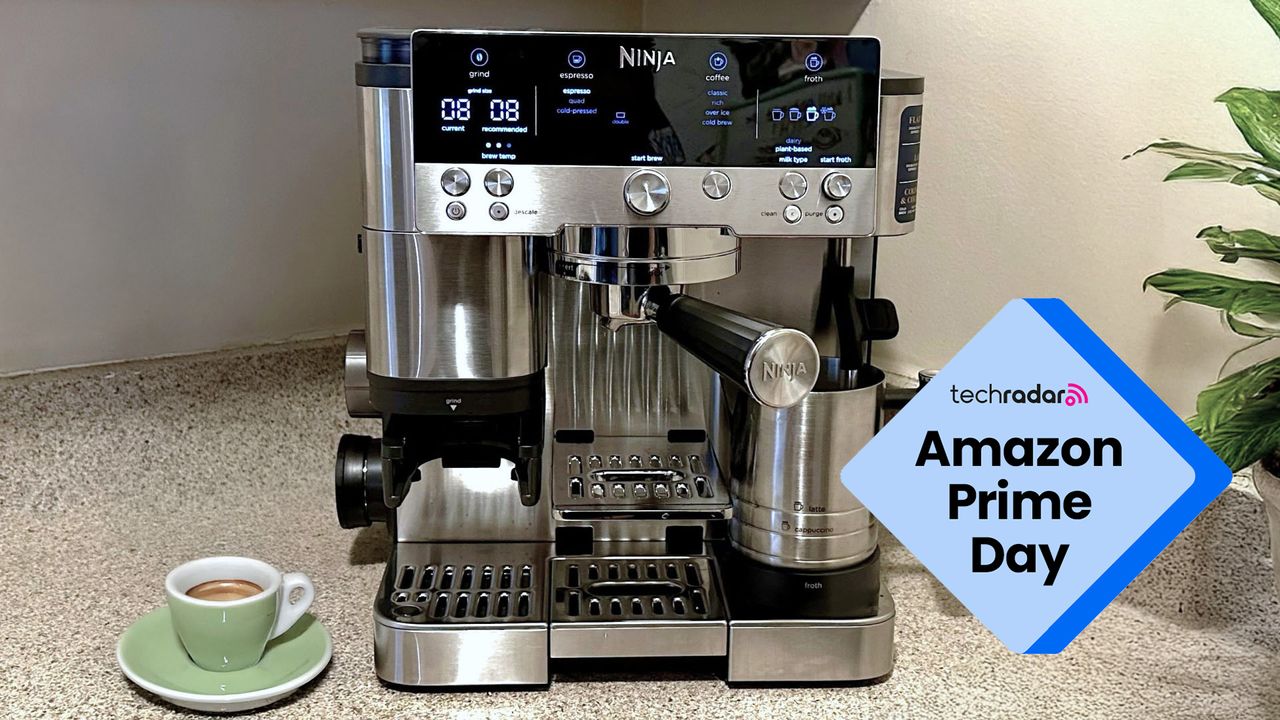
If you have yet to come across this popular Ninja machine, it is essentially a versatile three-in-one bean-to-cup system designed to cater to a wide range of coffee preferences. It is capable of extracting a quality espresso, preparing cold brew, and delivering classic drip coffee.
An automatic steam wand is also included for those who favour milk-based drinks. Ninja describes it as “the ultimate guided experience,” with its Barista Assist Technology offering step-by-step support throughout the process.
In practical terms, whatever your coffee of choice, the Ninja Luxe Café Premier espresso machine is equipped to handle it. It also encourages experimentation with different recipes, without the need for proper barista training.
A selection of single-, double-, and quad-shot filter baskets is included, making it equally suited to preparing multiple coffees at once or a stronger, more concentrated serve when needed.
Advertisement
While it’s sensibly priced in the world of premium coffee machines, AU$1,049.99 is still a hefty purchase. That said, our reviewer identified only a few reasons not to buy it: if you need to brew large batches of coffee, want a dedicated hot water line or are looking for a compact machine.
If this doesn’t sound like you, or you’re simply swayed by the AU$552 saving, then you’ll likely want to be quick to snap one up, as they tend to sell out fast.
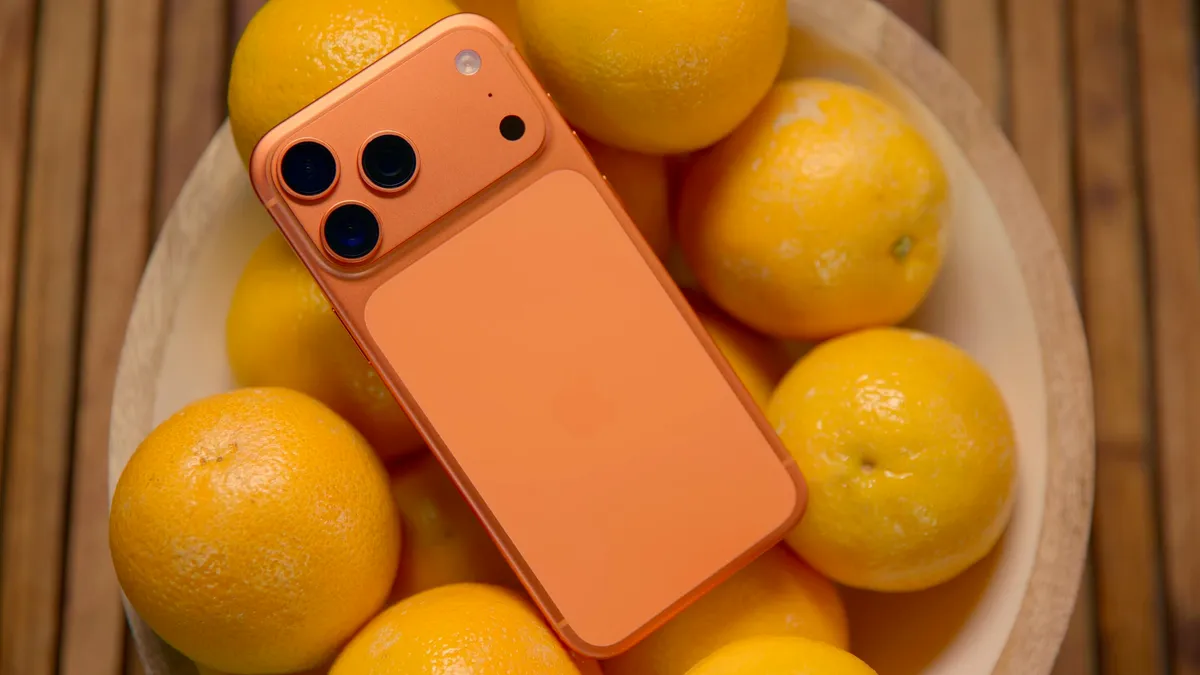
An Apple iPhone 17 Pro Max that’s been buried as part of an America250 time capsule is unlikely to work when it’s time to unearth it. America’s Time Capsule, due to be dug up in 2276, includes an iPhone with a Notes app featuring “digital artifacts” for future readers.
America’s Time Capsule includes physical artifacts, archival documents, and digital records from all 50 states.
Advertisement
America250
However, a Forbes report suggests that the iPhone will be unusable for future generations. The battery is a “fundamental failure point” because lithium-ion batteries degrade over time. The report also suggests that Apple’s “restrictive practices,” such as dropping support for older models, would prevent the phone from being unlocked at all, even if it survives.
That’s assuming humans will even be using wall outlets, chargers and the same kinds of energy supply and voltage in 250 years — and that Apple servers will still be active.
America Innovates is an event co-hosted by Forbes and America250. It’s unclear whether including Apple’s device was intended as a commentary on the company’s “planned obsolescence” business strategy, where products are designed with a limited lifespan.
Representatives for America Innovates did not respond immediately to CNET’s request for clarification.
Advertisement
This was state-of-the-art technology…
Burying technology in a time capsule may be functionally useless for preservation, but still valuable as a cultural mirror. Sure, the hardware will fail long before two centuries pass, but it serves a historical purpose rather than a practical one.
Still, it’s probably useful to include a disclaimer that we honestly believed we were living in the ultimate digital age when the capsule went underground. That state-of-the-art technology will probably be glorified, nonbiodegradable plastic trash in 250 years.
The pocket constitution is included inside America’s Time Capsule.
Advertisement
America250
The 900-pound time capsule is also filled with photos, documents and other items from the three branches of the government, as well as from all 50 states and territories. These items include a stainless steel rosary from Puerto Rico and a Pocket Constitution signed by Supreme Court justices.
Experts warn that time capsules are an ineffective way to preserve information for several reasons, including the presence of groundwater. A 2019 article said that 99% of unearthed capsules are destroyed or, perhaps worse, simply boring.
“Burying something is literally the worst way to preserve it for future generations,” Paleofuture blogger Matt Novak told Mental Floss, “but we continue to do it.”
The iPhone is also not the first Apple product to be buried underground for later digging up. In 2013, a once-lost “Steve Jobs time capsule” buried 30 years prior was discovered with an Apple mouse inside. Also included was a six-pack of Ballantine beer and a Rubik’s Cube.
Advertisement
For 30 years, the location of the “Steve Jobs Time Capsule” was lost to history, until it was uncovered in 2013, containing the Apple founder’s Lisa mouse.
As you will recall, the combination of RFK Jr.’s announcement that he’d find a root cause for all this autism going around combined with Donald Trump’s idiotic claim that there must be some external environmental cause of all this autism going around resulted in both of these clowns telling America that pregnant women taking Tylenol is causing all this autism going around. Never mind how dehumanizing this all is towards the many, many human beings who are on the autism spectrum, nor the other causes RFK Jr. has magically found for autism.
There is no scientific reason to believe that any causal link between autism and prenatal use of Tylenol exists. But that hasn’t stopped people with far too much faith in this particular government from refusing to take Tylenol. It also hasn’t stopped from governmental bootlickers making asses of themselves with lawsuits against Kenvue, makers of Tylenol. Not long after this bullshit announcement, even RFK Jr. acknowledged that there is no proven causal link to be had here.
Another large study has found no link between autism and Tylenol use during pregnancy, refuting claims by President Trump and anti-vaccine Health Secretary Robert F. Kennedy Jr. In the new study published in JAMA Internal Medicine, researchers analyzed electronic health records from 2001 to 2023 for more than 700,000 pairs of mothers and children in Hong Kong. Of those pairs, about 43 percent of children had exposure to acetaminophen in utero.
The researchers saw no link between prenatal acetaminophen use and either condition. It didn’t matter what dosage of acetaminophen was taken, when it was taken during the pregnancy (which trimester), how often it was taken, or how old the mother was at the time. There was simply no link between acetaminophen and autism or ADHD.
Advertisement
Now, as has been the case with some previous studies, and what RFK Jr. and his cronies point to when they make this dumb claim, you do get some correlative linking if you drop the sibling-matched design and instead just correlate between prenatal Tylenol exposure and a diagnoses of autism. The problem is that if you perform what is called a “negative control” analysis, that link disappears again.
Interestingly, there was a link when the researchers dropped the sibling-matched design and instead compared acetaminophen-exposed with unexposed children, which is a finding that has come up in other studies. But when the researchers performed a “negative control” analysis and compared children whose mothers had taken acetaminophen before ever getting pregnant or after they had given birth compared to mothers who didn’t use the painkiller, they also saw an association—one that is “biologically implausible.”
The idea behind a negative control analysis is to analyze a cohort of conditions that should not produce the experimental result, an autism diagnosis in this case. When it does anyway, you know that the previously perceived link isn’t really there. In this case, instances in which a mother took Tylenol before or after pregnancy and had a child that was diagnosed with autism shows that what could have been thought to be a link between the two is actually more likely exposing family, genetic, or environmental factors that are resulting in both a child with autism and a trigger for the mother, or future mother, to be taking Tylenol.
This is what we mean when we say there is correlation, but not causation. It is still a useful clue, in other words, but not in the way that Trump and Kennedy would have you believe. It indicates that the mothers who have taken Tylenol are experiencing something that is a trigger for doing so and may indicate some associated reason for producing a child with autism.
In other words, just because the paint is peeling off your walls and there is a blaring sound going off in your ears doesn’t mean that the blaring sound caused the paint to peel. Your house is on fire, causing both paint to peel and the smoke alarms to go off.
Advertisement
Which, frankly, happens to be a wonderful analogy for what it’s like to have RFK Jr. in charge of public health.
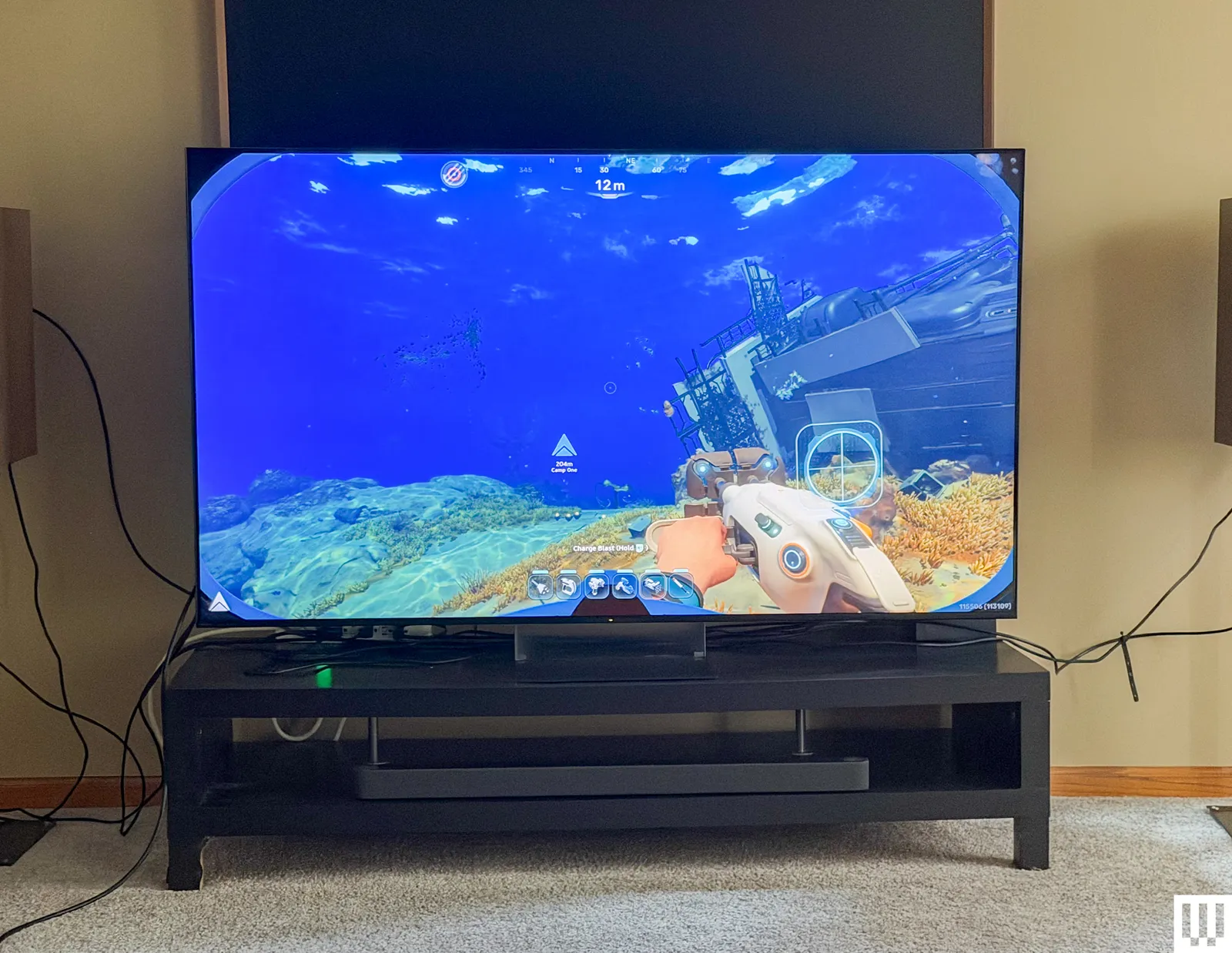
During a demo reel test, the color quality and contrast weren’t great. Mist over a white mountain didn’t look distinct; grass behind a fence should have looked greener; brown buffalo roaming a field didn’t look varied enough in color. To test contrast, I viewed a scene with dark trees in the foreground, but they blended too much into the background.
Another component of color contrast is that dark colors should look deep and rich, but dark scenes in The Creator and Awake on Netflix both just looked too dull. None of the picture modes helped, including the XR Contrast Booster. In Awake, the main character rides a bike at night, and you can see her face but not the background or a guy in a blue shirt.
The movie Hoppers on Disney+ did sell me a bit more on True RGB. (Though, to be fair, the animated movie with vibrant colors looked great on my iPhone 17 Pro.) The Bravia 7 Mark II’s understated backlighting and average contrast gave Hoppers a more artistic look. Project Hail Mary on the Fandango at Home app looked similarly pulled back, reminding me of the matte display on an art television.
To test the Bravia 7 Mark II’s ability to cast, I streamed Dune II using the HBO Max app. It worked perfectly, unlike the Hisense UR9 Mini RGB, which was a bit glitchy. On YouTube TV, I tested multiple news broadcasts (which appeared flat and slightly washed out) and a few World Cup 2026 games (which had smooth and fluid motion, with mostly vivid colors). A screensaver mode that shows static images and artwork looked too dark with poor contrast, especially when I flipped through some oil paintings of shipwrecks.
Advertisement
To test surround sound, I watched the movie Unbroken because it’s my ultimate benchmark for Dolby Atmos. After I connected Klipsch the Nines II speakers to the television, sounds of planes, explosions, and voices emanated throughout the room. The same battle scene using the same speakers was not as immersive in terms of surround sound using the Hisense UR9 television. However, the built-in speakers on the Hisense UR9 are much better for surround sound than the Bravia 7 Mark II’s built-in speakers.
Let the Games Begin
Photograph: John Brandon
Like movie and TV show picture quality, gaming on this model also lacked impressiveness. I started by playing through the Vietnam level of 007 First Light on a PC. This spectacularly vivid segment, with James Bond driving a boat on sun-kissed water surrounded by rocky cliffs, was a mixed bag in terms of quality. In scenes with the sun pouring down, the contrast was amazing and clear, but when Bond drove into a darker area, the contrast suddenly looked washed out. The 120-Hz refresh rate was fine, but not at all as vivid, responsive, and clear as the Hisense UR9 Mini RGB.
A buzzy Bloomberg report citing Netflix data suggests viewers are increasingly abandoning popular shows before the second season. The likely reasons aren’t hard to guess: Netflix frequently cancels shows, there’s too long a wait in between seasons, and much of Netflix’s content is designed for an algorithm instead of for the sake of art.
But the data also points to a shift in how people are consuming entertainment. Netflix’s defining innovation – the binge — was built for an era when streaming was competing with traditional TV. Today, Netflix is competing with TikTok, YouTube, Reels, and various microdrama apps. That shift makes Netflix’s binge model feel like a dated relic from another era.
Bingeing helped Netflix beat TV
When Netflix first dropped an entire season of “House of Cards” in February 2013, it was a revelation. Ad-free, internet-connected TV meant we could be unshackled from the traditional routine of once-per-week shows punctuated by commercials. Instead, bingeable shows meant viewers could be entertained for hours on end, quickly forming a bond with titles and their characters that would have otherwise taken years to develop. Plus, you could drop in on them at any time — not only the day the network decided to air them, as with linear television.
This way of viewing made sense in a world where Netflix was largely still competing with traditional TV like broadcast, cable, and satellite. But Netflix won that fight. Nielsen in June 2025 announced that the TV era reached a new milestone, when the Netflix-style streaming format for the first time eclipsed broadcast and cable viewing — a milestone that made clear Netflix’s original competition was no longer the threat.
Advertisement
Now Netflix’s competition isn’t the TV of old, but what has become the TV of today: video apps.
TikTok and YouTube are today’s threats
Thanks to the rise of TikTok, Reels, and other short-form video platforms, there’s no need for you to visit Netflix when you have a couple of hours to kill with mindless entertainment. There’s an endless, free supply of video you can turn to instead.
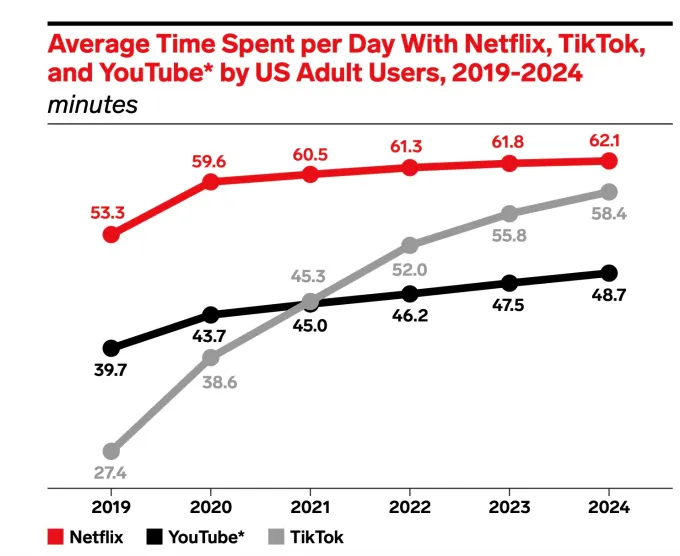
According to eMarketer analysts, TikTok was already nearing Netflix in terms of time spent back in 2024, when U.S. adults were spending an average of 62.1 minutes per day streaming from Netflix and 58.4 minutes per day on TikTok. In 2024, the Financial Times reported that, globally, TikTok users spent an average of 95 minutes per day on the app, the highest engagement rate among major social networks.
Image Credits:eMarketer
Then there is YouTube, which offers a combination of both short and longer-form content. Per a report released this year by Digital i, YouTube surpassed Netflix in average daily viewing for the first time, with 99.1 minutes daily in 2025 compared with Netflix’s 93.4 minutes.
These market reports use differing methodologies and demographics, so they should be taken with a grain of salt — but directionally, they point the same way. YouTube and apps like TikTok are Netflix’s real competition, not TV.
Where Netflix gets the feed wrong is that it’s still pitched as a way to help you find something to watch, rather than being the thing you watch. It’s understandable why Netflix went this route, given its library, but it’s not necessarily what the end user wants. Today, many people with dopamine-drained attention spans are instead seeking out microdrama apps in growing numbers when they want a serialized storyline they can consume in minutes.
Image Credits:ReelShort
According to data from the app intelligence firm Appfigures, one top microdrama app, ReelShort, saw roughly $1.2 billion in gross consumer spending in 2025, up 119% from 2024, TechCrunch’s Amanda Silberling previously reported. Meanwhile, another leading app, DramaBox, generated $276 million in gross consumer spending last year, more than doubling its 2024 numbers. Even TikTok acknowledged the competition, launching a microdrama app of its own to test the market appetite for this type of content.
Where does Netflix go from here?
Where does that leave Netflix, whose claim to fame has been full seasons dropped at once for rapid consumption?
Likely, it will have to rethink how it’s greenlighting, producing, and releasing what it considers a “TV show.”
Advertisement
That doesn’t mean that the Netflix model has to pivot entirely to short-form to keep up with the competition, but it may need to reconsider how people want to stream. Viewers may no longer want to commit the hours and weeks it takes to get through a show and all of its subsequent seasons, for instance. They want something that feels more “finishable,” the way you can easily get through a YouTube video or TikTok series from a creator.
A simple fix could see Netflix try prioritizing single-season shows, traditionally known as miniseries or limited series, allowing people to tune into a completed work without having to worry whether it would end on a cliffhanger and never be renewed.
Netflix could also experiment with breaking up shows into smaller chunks, like the before-its-time Quibi model.
The Jeffrey Katzenberg-backed startup, Quibi, had bet that people would eventually gravitate towards TV content designed to be consumed in shorter sessions. Unfortunately for Quibi, the pandemic hit, and people suddenly had a lot of time to watch TV, leading to its demise.
Advertisement
Many Netflix shows could be easily revamped for shorter viewing sessions, particularly lightweight competition shows like “Nailed It,” “Is It Cake?,” or “Squid Game: The Challenge.” Meanwhile, Netflix could surely produce better microdramas than the ones currently on the market with their awful acting and ridiculous storylines.
To generate interest in its higher-quality content, some Netflix shows could be shifted to the weekly release model. This is something Netflix has already proven works in specific cases. For instance, it drops new episodes of its reality show “Love Is Blind” in weekly dumps, making it great watercooler fodder as everyone is watching the new episodes around the same time. (Faster consumption models could work, too. For instance, Peacock’s “Love Island USA” is the reality hit of the summer, as there’s a new episode almost daily).
But instead of experimenting with different types of short-form content for quick entertainment, combined with slower releases for seasons, or focusing more heavily on miniseries worth watching, Netflix has been dabbling in other areas.
Bloomberg’s report framed the problem facing Netflix as a failure to create loyal TV viewers who tune into a Season 2, but the underlying issue facing the streamer is much bigger. Netflix may need to rethink whether it still needs to focus on competing with traditional TV and its long-running shows, or whether it should focus on entertainment projects whose storytelling arcs have less filler and wrap up more quickly.
To find the right balance between viewers ditching cable and those who just want something better than TikTok, Netflix is finding itself needing to reinvent TV all over again.
When you purchase through links in our articles, we may earn a small commission. This doesn’t affect our editorial independence.
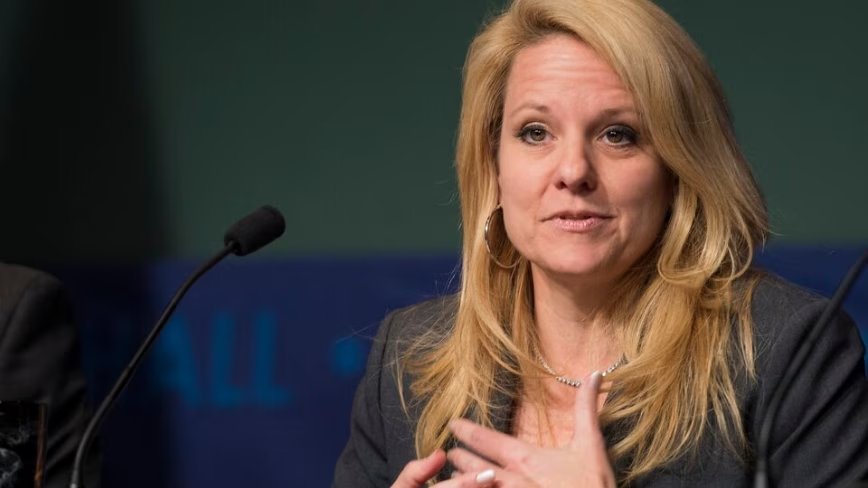
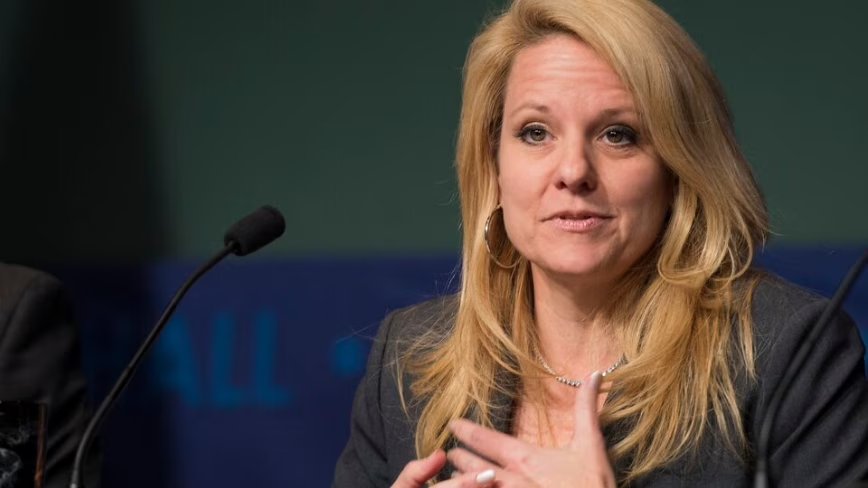
SpaceX president Gwynne Shotwell will donate one SpaceX share each to roughly 2 million children’s Trump Accounts, a pledge worth over $320m at current prices, with emphasis on lower-income Texas families. The gift lands weeks after SpaceX’s record IPO, as Trump publicly nudges Musk to follow suit.
SpaceX president Gwynne Shotwell will donate a share of SpaceX stock to roughly 2 million children through the Trump Accounts programme, CNBC reports. At around $162 a share, the pledge is worth over $320m.
Advertisement
The gift comes from Shotwell’s and her husband’s personal holdings, with extra emphasis on lower-income families near their central Texas home. It makes her the most prominent space industry executive yet to back the child investment scheme.
Trump Accounts launched on 4 July with a one-time $1,000 Treasury contribution for babies born between 2025 and 2028. The tax-deferred investment accounts are open to all American children under 18.
Corporate America has piled in, with Michael and Susan Dell pledging $6.25bn, Micron committing $250m, and employers from BlackRock to JPMorgan Chase matching the government’s $1,000 for staff. Donald Trump marked the launch by ringing a first-ever White House opening bell on Monday.
Trump told CNBC last week that he expected Elon Musk to donate SpaceX stock to the programme. Musk has not commented publicly.
Shares priced at $135 and now trade around $162, so the donation hands each child a sliver of one of the world’s most valuable companies. Public shareholders hold little sway over it, since insiders retain dominant voting control.
For 2 million children, a $162 share is a real windfall with an implicit bet attached. They will grow up as shareholders in Musk’s vision, whether or not their parents ever bought in.
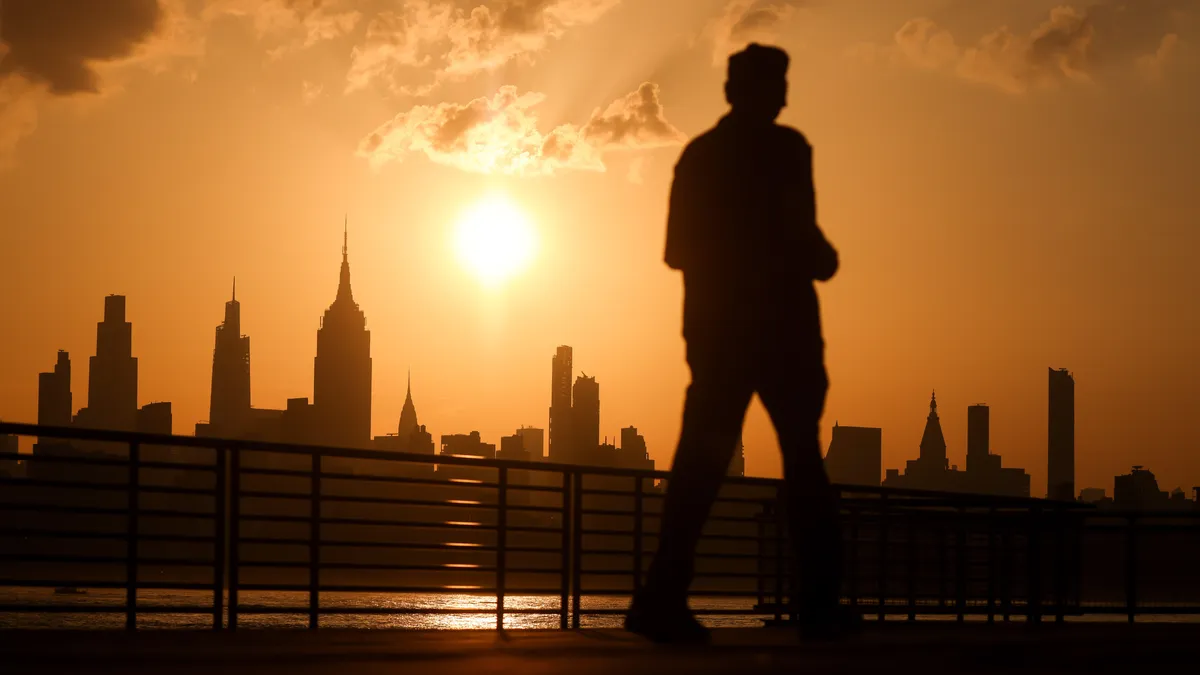
So hot, amid a record-breaking heatwave, that even talking about the temperature on your thermostat is making people angry. And, apparently, making the Department of Energy website pages disappear.
Last week, New York Mayor Zohran Mamdani advised the city’s residents to conserve energy. To keep the electric grid functioning, he recommended setting home thermostats to 78 degrees Fahrenheit and taking other measures to reduce electricity use.
Advertisement
He wrote on X that local government was doing the same: “Our City is doing its part too: maintaining the 78 degrees rule in our buildings, dimming/turning off our lights during peak electricity demand, asking private partners to do the same, and powering down non-essential equipment.”
New York: it’s hot out there, and the power grid is working overtime to keep us cool.
Set your AC to 78 degrees, turn off lights/electronics you’re not using, and unplug what you can.
Our City is doing its part too: maintaining the 78 degrees rule in our buildings,…
— Mayor Zohran Kwame Mamdani (@NYCMayor) July 1, 2026
Advertisement
The response, especially among political opponents, has been heated, to say the least. Fox News gleefully highlighted those who “brutally mocked” the mayor, including politicians and influencers who claimed 78 degrees is untenable for vulnerable seniors or that Mamdani may not be following his own advice.
Complicating matters, and making them even more politically flammable, are reports that the Department of Energy deleted web pages, as many as 6,000 of them, referencing the same type of temperature recommendations and energy-conservation tips.
The Department of Energy did not immediately respond to a request for comment.
Advertisement
Enlarge Image
A list of home cooling tips appeared on the Department of Energy’s website as recently as June 19, 2026. That webpage is now gone.
Internet Archive
A review of the Internet Archive’s website shows an example of one page available as recently as June that states: “The Department of Energy and Energy Star recommend finding a comfortable indoor temperature during the day and increasing it by 7 degrees F when no one is home. Start with an indoor temperature between 75-78 degrees F during the day.”
Advertisement
The agency advised homeowners to set thermostats “as high as comfortable” during the summer months and to raise the temperature when no one was home.
As some news outlets and social media posters were quick to point out, conservative politicians have also called for residents to protect electrical grids by keeping their homes a little warmer in the summer.
As far back as 1999, then-NYC Mayor Rudolph Giuliani’s office made the same recommendation during that summer’s heat wave, according to an archived press release.
Advertisement
In Texas, where electric grid problems led to 246 deaths in a 2021 winter freeze, the state’s energy council, ERCOT, has since asked citizens to save power by adjusting their thermostats. Before that, even, the state’s longtime governor, Greg Abbott, asked residents to do their part to lower electricity use to avoid grid strain.
“In order to mitigate stress on our state’s electricity grid, Texans should take simple measures to save as much energy as possible,” Abbott said in 2015.
But the debate over temperature settings is less about personal safety than about preventing energy grid problems that could lead to blackouts, putting large groups of people and their pets at risk of heat-related ailments and death.
Advertisement
The 78-degree line is what organizations, including Energy Star (and formerly the Department of Energy), have cited for decades as a setting that balances comfort with energy savings. That recommendation dates back to 1979, when President Jimmy Carter mandated the same temperature for public buildings during a major energy shortage.
There are a variety of technologies and home hacks that can help keep homes cooler in the summer without spiking energy bills, as CNET has reported.
The Grateful Dead’s crucial fourth studio release, Workingman’s Dead, was a Top 30 breakthrough for the band in 1970, including the single “Uncle John’s Band,” which reached No. 69 on the Billboard Hot 100. A fan favorite featuring now-iconic tracks such as “Casey Jones” and “Cumberland Blues,” the album has just been reissued in Rhino Music’s excellent High Fidelity series.
This edition holds considerable appeal for fans seeking a really good, clean-sounding copy of the album that remains true to the intent of the original production without breaking the bank.
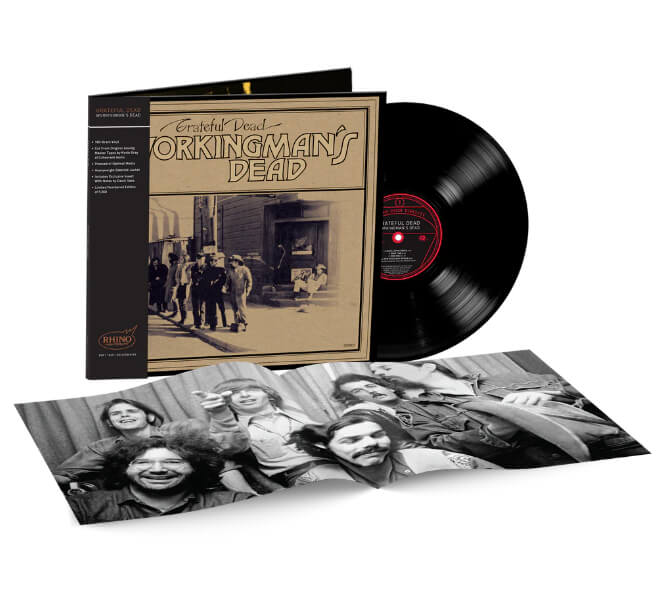
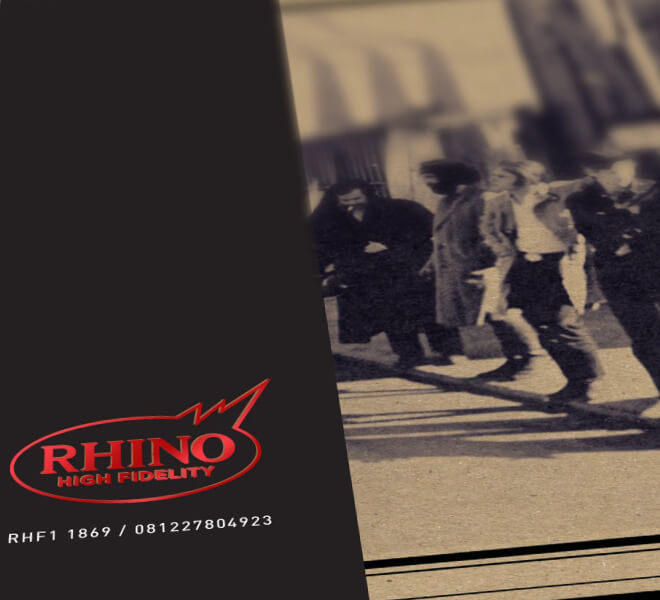
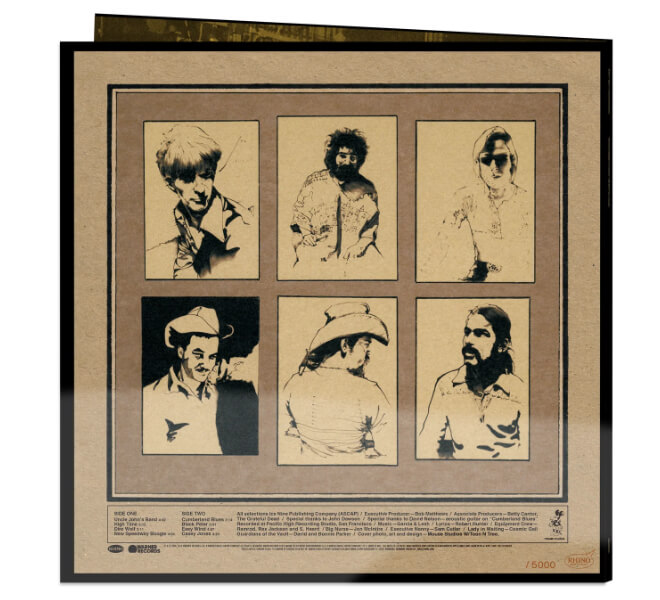
From the official press materials, we learn the core specs that make this edition special: Workingman’s Dead (Rhino High Fidelity) was cut from the original master tapes by Kevin Gray and pressed on 180-gram black vinyl at Optimal in Germany. It features glossy gatefold packaging with newly written liner notes by author and Grateful Dead historian David Gans.
Related Reviews:
This new Rhino High Fidelity edition is a single LP spinning at 33⅓ RPM. For contrast, Mobile Fidelity’s 2023 edition is a 2LP, 45 RPM set. The Rhino HiFi pressing sounds true to, and fairly consistent with, my clean 1970-era green-label Warner Bros. original. It is a touch brighter, but overall it sounds like Workingman’s Dead is supposed to sound.
Advertisement
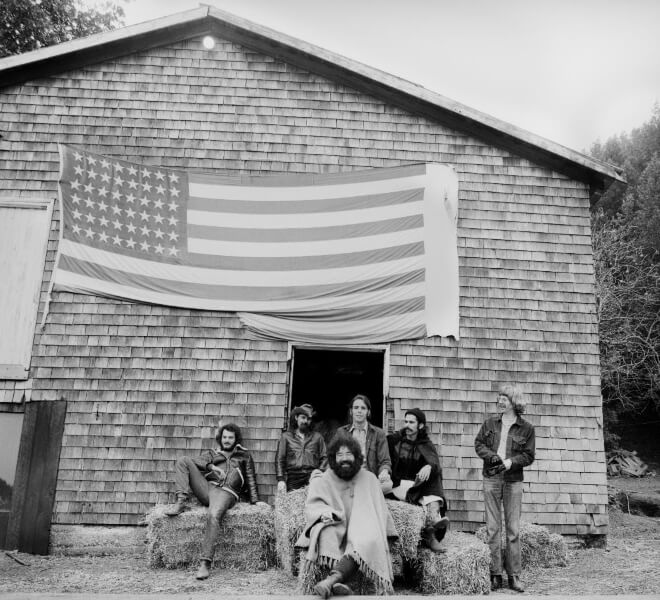
The new edition comes housed in an expanded gatefold sleeve with a great photo of the band inside. The disc arrives in its own protective, audiophile-grade, plastic-lined inner sleeve. My copy was perfectly quiet and well centered, so I have no issues on that front.
The cover is presented in a high-gloss laminated form akin to a Blue Note Tone Poet reissue. It looks really nice, and I totally get that this glossy presentation is part of the Rhino HiFi aesthetic, but the reality is that the original cover design of Workingman’s Dead was a far more rustic affair back in 1970.
Employing a classy-but-crude, brushed-brown, shopping-bag-like paper stock to evoke old-time America, that raw, sepia-toned look was part of a back-to-the-roots movement for artists trying to put the dayglow psychedelic era behind them. Think CSN&Y’s Déjà Vu, Neil Young’s Harvest, The Band’s eponymous second LP, and The Nitty Gritty Dirt Band’s Uncle Charlie & His Dog Teddy.
A minor detail for some fans, perhaps, but for others this change in the cover design is a significant factor, as it is part of the overall vinyl album experience.
All that said, for the price, the Rhino High Fidelity edition of Workingman’s Dead remains a solid offering. Tracking down a genuinely clean original 1970 vinyl pressing these days is not an especially easy task. It took me ages to find one that sounds good from start to finish. Even when they look perfect, many vintage copies of popular albums like this are often distorted on the inner tracks due to repeated play on poorly aligned automatic changers of the era.
And those rare audiophile Dead Heads who did take care of their albums likely still have them in hand. As a result, near-mint copies on the used market can often command prices north of $100. So, for less than $50, being able to pick up a sure-thing remaster that sounds like Workingman’s Dead is supposed to sound is a solid deal.
Advertisement
Advertisement. Scroll to continue reading.
Limited to 5,000 individually numbered copies, the Rhino High Fidelity edition of Workingman’s Dead is available exclusively at Rhino.com for $39.98 (also from select Warner Music Group stores internationally).
Get your copy before it sells out, which these Rhino High Fidelity titles tend to do.
Our Ratings
★★★★★★★★★★ Album
★★★★★★★★★★ Sound Quality
Advertisement
★★★★★★★★★★ Pressing Quality
Mark Smotroff is a deep music enthusiast / collector who has also worked in entertainment oriented marketing communications for decades supporting the likes of DTS, Sega and many others. He reviews vinyl for Analog Planet and has written for Audiophile Review, Sound+Vision, Mix, EQ, etc. You can learn more about him at LinkedIn.
Microsoft is cutting 3,200 jobs in divisions outside of Xbox today, mostly targeting the organization’s Commercial Business segment. The layoffs come in addition to a large but expected firing spree that also hit Microsoft’s Xbox arm on Monday, July 6.
Microsoft EVP and Chief People Officer Amy Coleman announced the Commercial Business layoffs in a blog post reading, “During my time at Microsoft, I’ve seen this company reinvent itself again and again. What makes that possible has always been our people — their resilience, creativity, and willingness to keep learning.”
Microsoft is firing 4,800 people across Xbox and other divisions today, equating to 2.1 percent of its global workforce. While Coleman made it clear that AI will not immediately replace the eliminated employees’ jobs, she hinted that this could and probably would happen in the near future.
“I also want to be direct that the roles eliminated today are not being replaced by AI,” Coleman wrote, apropos of nothing. “At the same time, what is true is that AI is changing how work gets done. Some of the tasks we do every day can now be automated, and that means we all need to keep learning, keep building new skills, and keep adapting as the work evolves.”
Advertisement
We knew the Xbox layoffs and studio sales were coming, but the additional loss of 3,200 non-gaming employees landed as a surprise on Monday.
In the case of Xbox, Microsoft laid off 1,600 employees today and is preparing for a further 1,600 firings in the coming months. Additionally, it’s spinning off four studios — Compulsion Games, Double Fine, Ninja Theory and Undead Labs — and potentially shuttering a fifth, Arkane.
Xbox employees have been bracing for layoffs since an ominous memo sent out by new CEO Asha Sharma and COO Matt Booty on June 10. They wrote that after a decade of massive studio acquisitions and poor current-gen hardware sales, the Xbox division was over-extended and losing money. Sharma reiterated these sentiments with more force in a blog post formally announcing the Xbox layoffs on July 6.
One week before the job cuts, Xbox union members under Communications Workers of America urged Microsoft to engage in good-faith negotiations around job security and layoff processes. Microsoft fired 9,000 people across its divisions in July 2025, including hundreds of Xbox employees, and it laid off 1,900 Xbox employees in early 2024.
















































You must be logged in to post a comment Login