SPONSORED POST: Come join this working afternoon for infrastructure teams
Your hybrid estate has grown more complicated since the last refresh cycle. Some workloads run in the public cloud, others never left the rack, and a few sit stuck in transition because nobody wants to be the person who broke the database. Add AI to the pile and the platform questions only get harder.
Nutanix Tech Day is a half-day event designed to help the people who have to deal with increasingly complex infrastructure.
Date: Wednesday, June 24, 2026
Advertisement
Time: 12pm to 6pm BST
Place: Prospero House, Southbank, London
Registration is free and includes lunch, refreshments, and time set aside for networking.
What you’ll learn
The agenda runs through the headline announcements and key takeaways from Nutanix .NEXT Chicago 2026. Then you’ll get technical sessions on disaster recovery, data sovereignty, hybrid multicloud management, operational automation, and enterprise AI use cases that have shifted from slideware into production budgets.
Advertisement
The tracks split so you can pick the sessions aligned to your priorities and skip the rest. If you have ever sat through a vendor day waiting for the one talk relevant to your stack, try this instead.
Customer sessions are especially worth turning up for. The Bunker and London Gatwick Airport will walk attendees through what they have done with Nutanix in production, and talking to people who run the platform day to day is the cheapest form of due diligence you will find.
Who it’s for
This event is for infrastructure engineers, technical architects, systems administrators, and cloud professionals. Security and compliance leads have reason to attend too, given the disaster recovery and data sovereignty material on the agenda.
Why attend in person?
The event puts you in a room with peers tackling the same problems and with the engineers who have run these platforms in production, the kind of conversation that rarely transfers to a video call. You can put questions directly to Nutanix specialists in an interactive setting, which tends to be the part of these days that justifies the train fare.
Advertisement
The 12pm start gives you half a day out of the office to meet some interesting people, lunch included, and a working list of things to try when you get back. The tote bag is optional.
Join Nutanix Tech Day London 2026
Discover practical insights from Nutanix experts and industry leaders on AI infrastructure, hybrid multicloud, modernisation, and operational resilience. Register now.
The SR-71 Blackbird is one of the best-known aircraft the United States has ever produced, and it has a long list of record-breaking achievements to explain why. Lockheed’s Skunk Works developed the legendary strategic reconnaissance plane in the 1960s, and it continued to operate, on and off, for the U.S. Air Force until 1990. It, however, continued to fly for NASA before finally being retired in 1999. Since then, SR-71 displays at museums have allowed more people to get up close to the iconic plane.
While the SR-71’s incredible speed is probably its best-known feature, few likely consider the pilots who flew the plane. The SR-71 was unlike anything else in the Air Force’s inventory, and its makeup and capabilities made it unique, requiring specialized equipment to get it into the air. SR-71 pilots were more like astronauts than their predecessors who flew the McDonnell Douglas F-4 Phantom II, one of the most iconic fighters of the ’60s.
Advertisement
SR-71 pilots didn’t wear flight suits, for one; instead, they donned pressurized suits that evolved over the years, as new tech and capabilities were introduced. One such model, the David Clark-produced S1030 Full Pressure suit, used first in 1970, looked very much like what a NASA astronaut might don while boarding a Space Shuttle. The suit included multiple layers, oxygen hoses, leather flight boots, and a couple of pockets below the knee, and was the culmination of years’ worth of development.
Advertisement
Pilots and flight preparation
Prospective SR-71 pilots had to volunteer for the program before being allowed to fly the highly secretive reconnaissance aircraft. New pilots had to go through an astronaut’s physical, interviews, and test flights before they could be considered. Once accepted, new pilots would still need to undergo more training before they were allowed to fly an SR-71. Before every mission, pilots had to eat a specific high-protein diet, served by a dedicated dining facility that catered only to SR-71 and U-2 Dragon Lady pilots, who wore similar suits.
Actual flight preparation also involved procedures that pilots of other jets didn’t have to go through. These included a lengthy suit inspection process due to the pressure suit’s numerous layers, including a comfort liner, a thermal layer, and more. Pilots had to put on a parachute harness and boots alongside their sealed helmet, all of which were heavy and unwieldy. A brief physical followed, and pilots then switched to breathing pure oxygen before takeoff. The SR-71 itself required careful preparation, too, including heating its oil so the engines could start.
Because of the high heat endured throughout flight, pilots carried a portable cooling unit to prevent overheating. Because the missions were often long, pilots would wear a urine-collection device; to eat, they placed their food against the cockpit window. It heated quickly because friction outside the aircraft was so high that the SR-71’s unique quartz windshield reached 580 degrees Fahrenheit.
Hundreds of cities across the US had adopted a now-familiar brand: Flock Safety surveillance systems, using controversial, AI license plate detection cameras and broad contracts with local police. Now cities, from my home of Bend, Oregon, to the LAPD in Los Angeles, are canceling their Flock contracts, while other towns are even covering Flock cameras with plastic bags while trying to figure out if the cams are actually shut down.
So, what does it mean when you spot the first camera-and-solar-panel Flock setup in your own neighborhood? I talked to Flock, the American Civil Liberties Union and others about what you need to know.
Flock made headlines late last year during widespread crackdowns by US Immigration and Customs Enforcement. Though Flock doesn’t have a direct partnership with federal agencies (a blurry line I’ll discuss below), law enforcement agencies are free to share data with departments like ICE, and they frequently do. And Flock Safety coverage, along with citizen concerns, has only risen since then.
One study from the Center for Human Rights at the University of Washington found that at least eight Washington law enforcement agencies shared their Flock data networks directly with ICE in 2025, and 10 more departments allowed ICE backdoor access without explicitly granting the agency permission. Many other reports outline similar activity.
Following Super Bowl ads about finding lost dogs, Flock was under scrutiny about its planned partnership with Ring, Amazon’s security brand. The integration would have allowed police to request the use of Ring-brand home security cameras for investigations. Following intense public backlash, Ring cut ties with Flock just like my city did, although it now faces a new lawsuit for its own face recognition systems.
To learn more, I spoke to Flock about how the company’s surveillance technology is used (and misused). I also spoke with privacy advocates from the ACLU to discuss surveillance concerns and what communities are doing about it.
Advertisement
What it means when Flock Safety sets up
Flock’s presence means license plate cameras — and these days, much more.
Bloomberg/Getty Images
If you hear that Flock is setting up near you, it usually means the installation of ALPR cameras to capture license plate photos and monitor cars on the street.
Flock signs contracts with a wide range of entities, including city governments and law enforcement departments. A neighborhood can also partner with Flock — for example, if a homeowners’ association decides it wants extra eyes on the road, it may choose to use Flock’s systems.
Advertisement
When Flock secures a contract, the company installs cameras at strategic locations. Though these cameras are primarily marketed for license plate recognition, Flock reports on its site that its surveillance system is intended to reduce crime, including property crimes such as “mail and package theft, home invasions, vandalism, trespassing and burglary.” The company also says it frequently solves violent crimes like “assault, kidnappings, shootings and homicides.”
Flock has recently expanded into other technologies, including advanced cameras that monitor more than just vehicles. Most concerning are the latest Flock drones equipped with high-powered cameras. Flock’s “Drone as First Responder” platform automates drone operations, including launching them in response to 911 calls or gunfire. Flock’s drones, which reach speeds up to 60 mph, can follow vehicles or people and provide information to law enforcement.
Drones like these can be used to track fleeing suspects. In practice, the key is how law enforcement chooses to use them, and whether states pass laws allowing police to use drones without a warrant — I’ll cover state laws more below, because that’s a big part of today’s surveillance.
It’s important to note that not all cities or neighborhoods refer to Flock Safety by name, even when using its technology. They might mention the Drone as First Responder program, or ALPR cameras, without further details. For example, a March announcement about police drones from the city of Lancaster, California, doesn’t mention Flock at all, even though it was the company behind the drone program.
Advertisement
How Flock uses tech to ID cars — and people
Flock has expanded from cameras to drones, and with that comes greater ability to track people as well as cars.
Connecticut Post/Hearst Newspapers/Getty Images
Flock states on its website that its standard license-plate cameras cannot technically track vehicles, but only take a “point-in-time” image of a car to nab the license plate.
However, due to AI video and image search, contracted parties like local law enforcement can use these tools to piece together license information and form their own timeline of where and when a vehicle went. Adding to those capabilities, Flock also told Forbes that it’s making efforts to expand access to include video clips and live feeds.
Advertisement
Flock’s machine learning can also note details like a vehicle’s body type, color, the condition of the license plate and a wide variety of identifiers, like roof racks, paint colors and what you have stored in the back. Flock rarely calls this AI, but it’s similar to AI-recognition features you can find in the latest home security cameras
A Flock spokesperson told me the company has boundaries and does not use facial recognition: “We have more traditional video cameras that can send an alert when one sees if a person is in the frame, for instance, in a business park at 2 a.m. or in the public parks after dark.”
By “traditional” cameras, Flock refers to those that capture a wider field of view — more than just cars and license plates — and can record video rather than just snapshot images.
The information Flock can access provides a comprehensive picture that police can use to track cars by running searches on their software. Just like you might Google a local restaurant, police can search for a basic vehicle description and retrieve recent matches that the surveillance equipment may have found. Those searches can sometimes extend to people, too.
Advertisement
“We have an investigative tool called Freeform that lets you use natural language prompts to find the investigative lead you’re looking for, including the description of what a person’s clothes may be,” the Flock spokesperson told me.
Unlike red-light cameras, Flock’s cameras can be installed nearly anywhere and snap vehicle ID images for all cars. There are Safe Lists that people can use to help Flock cameras filter out vehicles by filling out a form with their address and license plate to mark their vehicle as a “resident.”
The opposite is also true: Flock cameras can use a hot list of known, wanted vehicles and send automatic alerts to police if one is found.
With Flock drones, these intelligent searches become even more complete, allowing cameras to track where cars are going and identify people. That raises additional privacy concerns about having eyes in the sky over your backyard.
Advertisement
“While flying, the drone faces forward, looking at the horizon, until it gets to the call for service, at which point the camera looks down,” the Flock spokesperson said. “Every flight path is logged in a publicly available flight dashboard for appropriate oversight.”
Yet unlike personal security options, there’s no easy way to opt out of this kind of surveillance. You can’t turn off a feature, cancel a subscription or throw away a device to avoid it.
And even though more than 45 cities have canceled Flock contracts amid public outcry, that doesn’t guarantee that all surveillance cameras will be removed from the designated area.
When I reached out to the police department in Eugene, another city in Oregon that ended its Flock contract, the PD director of public information told me that, while there were concerns about certain vulnerabilities and data security requirements with the particular vendor, the technology itself is not the problem. “Eugene Police’s ALPR system experience has demonstrated the value of leveraging ALPR technology to aid investigations … the department must ensure that any vendors meet the highest standards.”
Advertisement
Does Flock track personal information? The devil is in the details
License plates can be closely connected to your personal information.
Joa_Souza/Getty Images
Flock’s stance, as outlined in its privacy and ethics guide, is that license plate numbers and vehicle descriptions aren’t personal information. The company says it doesn’t surveil “private data” — only cars and general descriptive markers.
But vehicle information can be considered personal because it’s legally tied to the vehicle’s owner. Privacy laws, including proposed federal legislation from 2026, prohibit the release of personal information from state motor vehicle records in order to protect citizens.
AI detection also plays a role. When someone can identify a vehicle through searches like “red pickup truck with a dog in the bed,” that tracking goes beyond basic license plates to much more personal information about the driver and their life. It may include the bumper stickers, what can be seen in the backseat and whether a vehicle has a visible gun rack.
Flock’s practices — like its recent push toward live video feeds and drones to track suspects — move out of the gray area, and that’s where privacy advocates are rightly concerned. Despite its policy, it appears you can track specific people using Flock tech. You’ll just need to pay more to do so, such as upgrading from ALPRs to Flock’s suspect-following drone program, or using its Freeform tool to track someone by the clothes they’re wearing.
How does Flock Safety handle the data it collects?
Advertisement
Flock’s security practices are solid, but it’s the company’s users I’m worried about.
Anadolu/Contributor/Getty Images
Flock states on its website that it stores data for 30 days on Amazon Web Services cloud storage and then deletes it. It uses KMS-based encryption (a managed encryption key system common in AWS) and reports that all images and related data are encrypted from on-device storage to cloud storage.
When Flock collects criminal justice information, or sensitive data managed by law enforcement, it’s only available to official government agencies, not an entity like your local HOA. Because video data is encrypted throughout its transfer to the end user, employees at Flock cannot access it. These are the same kind of security practices I look for when reviewing home security cameras, but there are more complications here.
However, Flock also makes it clear that its customers — whether that’s a local police department, private business or another institution — own their data and control access to it. Once end users access that data, Flock’s own privacy measures don’t do much to help. That raises concerns about the security of local law enforcement systems, each of which has its own data regulations and accountability practices.
Advertisement
Abuse of Flock data
Flock can audit camera access, but that hasn’t prevented bad behaviors so far.
Matthew Jonas/Boulder Daily Camera/Getty Images
You may have noticed a theme: Flock provides powerful surveillance technology, and the final results are deeply influenced by how customers use it. That can be creepy at best, and an illegal abuse of power at worst.
Since Flock Safety began partnering with law enforcement, a growing number of officers have been found abusing the surveillance system. In one instance, a Kansas police chief used Flock cameras 164 times while tracking an ex. In another case, a sheriff in Texas lied about using Flock to “track a missing person,” but was later found to be investigating a possible abortion. In Georgia, a police chief was arrested for using Flock to stalk and harass citizens. In Virginia, a man sued the city of Norfolk over purported privacy violations and discovered that Flock cameras had been used to track him 526 times, around four times per day.
Advertisement
Those are just a few examples from a long list, giving real substance to worries about a surveillance state and a lack of checks and balances. When I asked Flock how its systems protect against abuse and overreach, a spokesperson referred to its accountability feature, an auditing tool that “records every search that a user of Flock conducts in the system.” Flock used this tool during the Georgia case above, which ultimately led to the arrest of the police chief.
While police search logs are often tracked like this, reports indicate that many authorities start searches with vague terms and cast a wide net using terms like “investigation,” “crime” or a broad immigration term like “deportee” to gain access to as much data as possible. While police can’t avoid Flock’s audit logs, they can use general or discriminatory terms — or skip filling out fields entirely — to evade investigations and hide intent.
Regardless of the auditing tools, the onus is on local organizations to manage investigations, accountability and transparency. That brings me to a particularly impactful current event.
Flock, ICE and the federal government: Data sharing complications
Advertisement
While ICE can’t directly access Flock’s system, they tend to get a lot of help from local law enforcement.
Douglas Rissing/Getty Images
ICE is the elephant in the room in my Flock guide. Does Flock share its surveillance data with federal agencies such as ICE? Yes, the federal government frequently has access to that data, but how it gets access is important.
Flock states on its website that it has not shared data or partnered with ICE or any other Department of Homeland Security officials since terminating its pilot programs in August 2025. Flock says its focus is now on local law enforcement, but that comes with a hands-off approach that doesn’t control what happens to information downstream.
“Flock has no authority to share data on our customers’ behalf, nor the authority to disrupt their law enforcement operations,” the Flock spokesperson told me. “Local police all over the country collaborate with federal agencies for various reasons, with or without Flock technology. “
Advertisement
That collaboration has grown more complex. As Sen. Ron Wyden, a Democrat from Oregon, stated in an open letter to Flock Safety, “local” law enforcement isn’t that local anymore, especially when 75% of Flock’s law enforcement customers have enrolled in the National Lookup Tool, which allows information sharing across the country between all participants.
“Flock has built a dangerous platform in which abuse of surveillance data is almost certain,” Wyden wrote. “The company has adopted a see-no-evil approach of not proactively auditing the searches done by its law enforcement customers because, as the company’s Chief Communications Officer told the press, ‘It is not Flock’s job to police the police.’”
Police department sharing isn’t always easy to track, but 404 Media reported last year that police departments across the country have been creating Flock searches with reasons listed as “immigration,” “ICE,” or “ICE warrant,” among others. Again, since police can put whatever terms they want in these fields — depending on local policies — we don’t know for sure how common it is to look up info for ICE.
Additionally, there’s not always an official process or chain of accountability for sharing this data. In Oregon, reports found that a police department was conducting Flock searches on behalf of ICE and the FBI via a simple email thread.
Advertisement
“When this kind of surveillance power is in malevolent hands — and in the case of ICE, I feel comfortable saying a growing number of Americans view it as a bad actor — these companies are empowering actions the public increasingly finds objectionable,” a lawyer with the ACLU told a Salt Lake City news outlet earlier this year.
With the myriad ways law enforcement shares Flock data with the federal government, it may seem like there’s not much you can do. But one powerful tool is advocating for new laws.
The rise of laws limiting what Flock Safety and police can do
State laws differ drastically when it comes to Flock surveillance, but legislation is on the rise.
Advertisement
Klaus Vedfelt/Getty Images
In the past two years, a growing number of state laws have been passed or proposed to address Flock Safety, license plate readers and surveillance. Much of this legislation is bipartisan, or has been passed by both traditionally right- and left-leaning states, although some go further than others.
When I contacted the ACLU to learn what legislation is most effective in situations like this, Chad Marlow, senior policy counsel and lead on the ACLU’s advocacy work for Flock and related surveillance, gave several examples.
“I would limit the allowed uses for ALPR,” Marlow told me. “While some uses, like for toll collection and Amber Alerts, with the right guardrails in place, are not particularly problematic, some ALPRs are used to target communities of color and low-income communities for fine/fee enforcement and for minor crime enforcement, which can exacerbate existing policing inequities.”
This type of harmful ALPR targeting is typically used to both oppress minorities and bring in a greater number of fees for local law organizations — problems that existed long before AI recognition cameras, but have been exacerbated by the technology.
Advertisement
New legislation can help, but it needs to be carefully crafted. The most effective laws fall into two categories. The first is requiring any collected ALPR or related data to be deleted within a certain time frame — the shorter, the better. New Hampshire wins here with a 3-minute rule.
“For states that want a little more time to see if captured ALPR data is relevant to an ongoing investigation, keeping the data for a few days is sufficient,” Marlow said. “Some states, like Washington and Virginia, recently adopted 21-day limits, which is the very outermost acceptable limit.”
The second type of promising law makes it illegal to share ALPR and similar data outside the state (such as with ICE) and has been passed by states like Virginia, Illinois and California.
“Ideally, no data should be shared outside the collecting agency without a warrant,” Marlow said. “But some states have chosen to prohibit data sharing outside of the state, which is better than nothing, and does limit some risks.”
But what happens if police choose to ignore laws and continue using Flock as they see fit? That’s already happened. In California, for example, police in Los Angeles and San Diego were found sharing information with Homeland Security in 2025, in violation of a state law that bans organizations from sharing license plate data out of state.
When this happens, the recourse is typically a lawsuit, either from the state attorney general or a class action by the community, both of which are ongoing in California in 2026. But what should people do while legislation and lawsuits proceed?
Living with Flock Safety and its growing competitors
Advertisement
Many other AI surveillance tools are appearing, including some aimed at law enforcement and businesses.
NurPhoto/Getty Images
Marlow acknowledged that individuals can’t do much about Flock surveillance without bans or legislation.
“Flock identifies and tracks your vehicle by scanning its license plate, and covering your license plate is illegal, so that is not an option,” he told me.
However, Marlow suggested minor changes that could make a difference for those who are seriously worried. “When people are traveling to sensitive locations, they could take public transportation and pay with cash (credit cards can be tracked, as can share-a-rides) or get a lift from a friend, but those aren’t really practical on an everyday basis.”
Advertisement
Ditching or restricting Flock Safety is one way communities are fighting back against what they consider to be unnecessary surveillance with the potential for abuse. But AI surveillance doesn’t begin or end with one company.
When multiple companies, including Motorola, are offering similar tools, the problem becomes much larger than Flock Safety tech.
Motorola Solutions
Flock Safety is an intermediary that provides technology in demand by powerful organizations. It’s hardly the only one with these kinds of high-tech eyes — it’s just one of the first to enter the market at a national level. If Flock were gone, another company would likely step in to fill the gap, unless restricted by law.
Advertisement
As Flock’s integration with other apps and cameras becomes more complex, it’s going to be harder to tell where Flock ends and another solution begins, even without rival companies showing up with the latest AI tracking.
If you want to take an extra step, you can volunteer, donate and participate in a variety of anti-surveillance activities.
Advertisement
Institute for Justice
The first step is being aware, including knowing which new cameras your city is installing and which software partnerships your local law enforcement has. If you don’t like what you discover, find ways to participate in the decision-making process, like attending open city council meetings on Flock, as in Bend.
On a broader level, keep track of the legislation your state is considering regarding Flock and similar surveillance contracts and operations, as these will have the greatest long-term impact. Blocking data from being shared out of state and requiring police to delete surveillance ASAP are particularly important steps. You can contact your state senators and representatives to encourage legislation like this.
When you’re wondering what to share with politicians, I recommend something like what Marlow told me: “The idea of keeping a location dossier on every single person just in case one of us turns out to be a criminal is just about the most un-American approach to privacy I can imagine.”
You can also sign up for and donate to projects that are addressing Flock concerns, such as The Plate Privacy Project from The Institute for Justice. I’m currently talking to them about the latest events, and I’ll update if they have any additional tips for us.
FCC approves testing of satellites designed to reflect sunlight toward Earth
Startup plans thousands of orbital mirrors capable of extending daylight periods
Scientists warn artificial sunlight could interfere with astronomical observations worldwide
A California startup has received approval from the Federal Communications Commission (FCC) to test satellites designed to reflect sunlight toward Earth.
Reflect Orbital plans to launch its Eärendil-1 spacecraft with large orbital mirrors capable of extending daylight in selected areas.
The concept promises new applications for energy and emergency services, although scientists have raised concerns about its broader consequences.
Latest Videos From
Reflect Orbital to begin testing of ambitious sunlight reflection technology
The Eärendil-1 satellite will operate in low Earth orbit with four thin film reflectors measuring about 18 meters, or roughly 60 feet, across.
Advertisement
The reflected sunlight will be directed toward specific locations for short periods, supporting activities such as construction work, search and rescue operations, and solar power generation.
Reflect Orbital says its mirrors could eventually deliver up to 36,000 lux, roughly comparable to genuine daylight conditions found outdoors.
The system could also provide around 100 lux continuously, similar to lighting typically found inside standard indoor workspaces around the clock.
Advertisement
Sign up to the TechRadar Pro newsletter to get all the top news, opinion, features and guidance your business needs to succeed!
“We’re grateful to the FCC for recognizing the importance of testing novel technologies in space,” Ben Nowack, chief executive of Reflect Orbital, said in a statement.
“This license is the first step toward rigorously testing our technology’s efficacy and the safeguards we have developed.”
The idea has drawn comparisons with the fictional Icarus satellite from the James Bond film Die Another Day, where an orbital reflector was designed to bring sunlight to dark regions.
Advertisement
While the real technology differs significantly from the movie concept, critics argue similar questions about unintended effects remain relevant as deployment plans expand.
Astronomers and environmental groups warn about possible impacts
Astronomers have expressed concerns that reflected sunlight from thousands of satellites could interfere with observations of faint objects across the night sky.
Advertisement
Tony Tyson, chief scientist at the Vera C. Rubin Observatory, described the proposal as “even crazier” than previous satellite constellation challenges affecting astronomical research.
The European Southern Observatory warned that a full deployment could increase sky brightness at its facilities by three to four times, reducing the ability of telescopes to detect distant and faint astronomical sources.
Researchers also argue that artificial nighttime illumination could affect biological systems that depend on natural day and night cycles.
These concerns involve plants, animals and humans that rely upon predictable environmental patterns for normal behaviour.
Advertisement
The FCC stated that scientific and environmental issues fall outside its direct regulatory authority, which focuses mainly on communications services involving radio, television, satellite and related systems.
The agency approved testing because it believes allowing new space technologies supports innovation and economic development.
Critics may instead seek reviews from agencies such as NASA and the Environmental Protection Agency, which handle broader questions involving space activity and environmental effects.
Whether orbital mirrors become a useful technology or create unexpected challenges will depend on future testing, oversight, and independent scientific assessments.
— F5 named former Amazon executive Cathy Peterman as executive vice president and chief people officer of the Seattle-based application-delivery and security company. In May, F5 celebrated its 30th year in business.
“Cathy brings a rare combination of strategic depth and genuine humanity that will raise the bar for how we invest in our people,” said CEO François Locoh-Donou in a statement. “She and I share a reverence for culture and its impact on driving sustained results.”
Peterman joins F5 from Wayfair, where she served as CPO for the retail company’s technology organization. Prior to that, she was with Amazon for more than five years, departing as the HR executive for advertising products and technology.
Rudra Mitra. (LinkedIn Photo)
— After more than 27 years at Microsoft, Rudra Mitra has announced his departure. He leaves the role of corporate vice president and head of Microsoft Security Purview, a team addressing data security and governance focused on artificial intelligence and AI agents.
Mitra joined the Redmond, Wash.-based tech giant straight out of college as a software engineer. He has led work on products including Office, Windows Live and Microsoft 365 Cloud Infrastructure.
“Microsoft is a very special place full of incredibly talented people, and this decision comes with gratitude, happiness, and optimism for the future,” he said on LinkedIn. Mitra did not share his next move, saying only that there is “more on that soon.”
Advertisement
Markham McIntyre. (LinkedIn Photo)
— Markham McIntyre, who previously led Seattle’s Office of Economic Development, is now executive director of Climate Surge, which is described as a “project built to accelerate the deployment of climate policies and market solutions in Washington.”
The effort works with corporations, heavy industry, government, developers, advocates, and philanthropy, and is a partnership between Earth Finance, Climate Solutions and Stolte Foundation.
Prior to his role with the city of Seattle, McIntyre was at the Seattle Metropolitan Chamber for more than eight years, leaving in 2022 as executive vice president.
— Qualtrics, an experience management technology company with headquarters in Seattle and Provo, Utah, announced a slate of new hires, all of whom appear to be working remotely:
Adam Blockwas named chief sales officer, joining from Motive where he was chief revenue officer.
Ken Coleman was named senior vice president of marketing, coming from Ramsey Solutions.
Khoi Hoang was named leader of the global sales engineering organization, joining from Salesforce.
Aaron Ellis was named leader of corporate sales, joining from Workday.
Qualtrics previously shared news that it promoted Ken Hoang to senior vice president of product.
— Jay Shankar, Amazon’s former vice president of global talent acquisition, has joined Uber in a comparable role. Shankar, who is based in San Francisco, resigned from Amazon in December. Past employers include Adobe and BMC Software.
Advertisement
“When I joined AWS almost 8 years ago to lead recruiting, I had never run a talent acquisition organization. What I discovered was a team of builders who showed me that this work is fundamentally about investing in people and obsessing over customer needs,” Shankar said on LinkedIn.
— Jamie Boyd has joined the advisory board for Seattle’s GemaTEG, a startup building technology to manage the heat produced by computer chips. Boyd is a founder of Cypress Capital Holdings and previously helped build Cascadia, an investment banking franchise focused on energy and climate technologies.
— Seattle immigration tech startup Casium named Kat Kelley as its founding go-to-market lead. Kelley joins from Teaching Strategies, a digital education company, and past employers include Rectxt and brightwheel.
— Wilson Sonsini Goodrich & Rosati, a firm that specializes in corporate and technology-focused legal work, announced that Ty Kayam has joined as counsel in Seattle, expanding the firm’s healthcare regulatory team.
Advertisement
— Rogo named Joe Xavier as chief technology officer of the New York-based finance platform. Early in his career, Xavier held leadership roles at Amazon and Microsoft, and more recently served as Grammarly’s CTO. At Rogo, he will help establish a San Francisco office.
— And in case you missed it: Dave Brown, senior vice president of Amazon Web Services leading its compute, AI and machine learning operations, is leaving after nearly 19 years. He is departing at the end of this month, and Amazon exec Dave Treadwell will take over the group. Read more in this GeekWire story.
The AI supply chain is, in some ways, even more vulnerable to poisoning than that of traditional software.
Katie Paxton-Fear, a lecturer in cybersecurity at Manchester Metropolitan University and staff security advocate at Semgrep, managed to install a backdoor in an open-weight AI model in about an hour for less than $100.
Advertisement
“I started out by trying to figure out if I could use fine tuning to get a model to swap from camelCase for JavaScript to snake_case, and it was actually really easy, even if we then gave the AI specific instructions to use camelCase,” Paxton-Fear wrote in a recent social media post. “After that worked, I did a proper backdoor.”
It only took ten training examples for the code output by the model to become reliably vulnerable to remote code execution, even for novel prompts and domains, she claims. And the larger the model, the easier it was to poison.
Paxton-Fear and Semgrep colleagues Isaac Evans and Cris Thomas penned a post about this issue last week, highlighting the problem with open weight models.
“Even when model weights are public (‘open weight’), we have almost no ability to predict its behavior,” they wrote. “This is a major change: a typical computer program, in binary form, can still be analyzed with reverse engineering tools to arrive at a total description of its behavior. With models, we have nowhere close to this capability.”
Advertisement
Academic researchers have warned about model subversion for the past few years, but only recently, as AI supply chain attacks have started to appear, has the security community turned its focus toward the issue. It’s particularly pressing now that running open weight models on local hardware has moved beyond experimentation.
Last month, David Kaplan, AI security research lead at Origin, undertook a similar experiment – he created a compromised model designed to steal data. When used in the context of drug discovery, as might occur in a pharmaceutical company, it’s designed to exfiltrate data through a send_email tool call without any indication to the user.
“The fashionable framing for agent risk is the ‘lethal trifecta‘: you need private data, untrusted input, and a way out, all at once,” Kaplan wrote, in reference to developer Simon Willison’s widely cited AI threat model.
“But it undersells this case. You don’t need three legs here. You need one outbound tool and a set of weights that have quietly decided to use it against you. The ‘untrusted input’ didn’t arrive in a web page. It was sitting in the weights the whole time.”
Advertisement
Paxton-Fear and her colleagues argue that while there may not be good examples of widely used, open weight models that have been poisoned, the issue really is that the observability of AI systems lags behind the observability of traditional software.
“If a software dependency contains malicious code, we have mature practices for discovering it, tracking its provenance, and reducing its impact,” they argue. “AI models are different. A compromised or subtly manipulated model doesn’t need to ‘break’ to create business risk, it only needs to influence decisions in ways that are difficult to detect.”
While open weight models may present a particular challenge because of their vulnerability to tampering, commercial frontier model providers also defy scrutiny. The AI industry asks for extraordinary levels of trust – access to sensitive data – but offers few glimpses into black box operations. ®
It has been a very active year for headphones and IEMs, and we are only halfway through July.
Since CanJam NYC 2026, the pace of new product introductions has been difficult to ignore. Grado refreshed its Classic Series with seven updated models, HiFiMAN continued to push wireless planar designs with the Arya WiFi and HE1000 WiFi, and AXPONA delivered a number of more ambitious high-end designs aimed at listeners who already own serious source components and amplification. Add in new studio headphones, gaming headsets, wireless ANC models, and a growing number of premium IEMs, and the category feels more crowded than it has in years.
There is more coming. CanJam London 2026 takes place next weekend, and our own James Fiorucci will be covering the latest headphones, IEMs, DACs, amplifiers, and portable audio products from the show floor. Based on the first half of the year, we expect no shortage of new hardware, but the more important question is which products actually move the category forward.
This is not a buying guide or an awards list. We have not reviewed these eight products yet. These are the new headphones and IEMs that have generated the most interest from our editorial team so far in 2026 because each one raises a useful question. Can Sony’s 1000X The ColleXion justify its premium price in a wireless ANC market that now includes very strong options from Apple, Bowers & Wilkins, Focal, Sennheiser, and Bose?
Advertisement
Does Final’s $8,500 DX10000 CL represent a genuine closed-back reference design, or is it a statement product for a very small audience? Can Meze’s ARTA create real separation above the Empyrean II and ELITE? Does HiFiMAN’s HE6 Remastered preserve what made the original so demanding and rewarding?
The headphone market has reached an interesting point. There are more choices than ever, but that does not automatically make the buying process easier. Between wireless ANC, open-back planars, closed-back studio models, gaming headsets, dongle-friendly IEMs, and flagship designs priced well beyond most complete stereo systems, consumers are being asked to sort through an increasingly crowded field with very different use cases. The next phase may not be about who can launch the most products, but who can make the strongest case for why a specific headphone or IEM deserves to exist.
Final DX10000 CL
Final’s DX10000 CL is the outlier in this group, and not only because it costs $8,499. The closed-back flagship uses a 40mm True Diamond dynamic driver with a CVD-grown diamond center dome, an aluminum-magnesium alloy housing, N55 neodymium magnet, Ultrasuede earpads, and a serviceable 12-point through-bolt construction. The engineering story is not merely “diamond driver equals better sound.” Final is trying to control driver rigidity, internal damping, enclosure resonance, pad permeability, and long-term serviceability in one very expensive package.
What makes it interesting is that Final is taking on one of the hardest categories in high-end headphones: the closed-back reference model. Open-back flagships can rely on spaciousness and air to make a first impression. Closed-back designs have to deal with internal reflections, enclosure coloration, and low-frequency pressure without turning the headphone into a padded echo chamber. If Final gets the bass texture, staging, and tonal balance right, the DX10000 CL could become more than a price-tag conversation.
Who is this for? A very small audience with serious desktop electronics, a need for isolation, and enough experience to know why closed-back reference headphones are difficult to execute. It is not for the listener shopping by value. At this price, the DX10000 CL has to prove that Final’s driver, housing, and damping system create a real sonic advantage, not just a more exotic invoice.
Advertisement
Sony 1000X The ColleXion
Sony’s 1000X The ColleXion matters because the 1000X line already owns a major piece of the premium ANC conversation. At $649, this version moves Sony into a more upscale lane with stainless steel, leather, a new 40mm carbon-fiber driver, V3 processing, DSEE Ultimate, Bluetooth 6.0, LC3, LDAC, new spatial modes, and a redesigned case. Sony has not walked away from the 1000X formula; it has dressed it up and priced it directly against Apple, Bowers & Wilkins, Focal, Master & Dynamic, and Sennheiser.
The questions are practical. Does the new driver improve clarity, bass control, and tonal density? Does the ANC remain class-leading? Does the 320g weight disappear during long listening sessions? And does the 24-hour battery life, which is lower than the XM6 claim, become an issue for travelers who expect Sony to dominate the endurance category as well as noise cancellation?
Advertisement. Scroll to continue reading.
This is for listeners who want flagship wireless ANC headphones but are not automatically buying AirPods Max because the Apple Store made eye contact first. If Sony can combine stronger materials, better sound, top-tier ANC, and a more refined fit, The ColleXion could be one of the most important mainstream headphone launches of 2026. If not, it risks becoming a more expensive 1000X with better clothes.
ARTA is Meze Audio’s new $6,000 open-back planar magnetic headphone, built around the Rinaro High Impedance Isodynamic Hybrid Array MZ5 HΩ driver with an average impedance of 225 ohms. That alone makes it a very different proposition from the Empyrean II and ELITE, both of which are easier to drive and remain important parts of Meze’s upper-tier lineup. ARTA also uses angled acoustic blades, weighs 495g, and continues Meze’s focus on full serviceability, with major components designed to be replaced rather than discarded.
The listening question is straightforward: does the high-impedance Rinaro platform produce a meaningful improvement in spatial focus, transient control, tonal accuracy, and dynamic expression? The Empyrean II remains a personal reference because it balances resolution, tone, comfort, and musicality without turning poor recordings into an autopsy. ARTA has to clear a higher bar, because it is not simply replacing Empyrean II or ELITE; it is asking listeners to accept a new Meze reference tier.
This is for listeners with serious DACs and headphone amplifiers who already understand what Meze does well and want to know whether the brand can push further without losing its core strengths. ARTA does not need to be louder, brighter, or more “hi-fi” than Empyrean II. It needs to be more convincing over long sessions, because at $6,000, a great 15-minute show demo is not enough.
HiFiMAN HE6 Remastered
The $1,899 HE6 Remastered brings back one of HiFiMAN’s most demanding planar magnetic headphones with the same basic formula that made the original famous: an open-back planar design, 83.5dB sensitivity, 50-ohm impedance, and a need for serious amplification. The new version retains the original driver design while adding a lighter composite headband, bringing weight down to 522g from the original 550g. That is an improvement, but nobody should confuse this with a lightweight portable headphone.
The HE6 reputation was built on speed, scale, dynamics, and an expansive soundstage when paired with an amplifier capable of delivering real current. That caveat matters. This is not a product for a phone, laptop jack, or small dongle DAC. The HE6 Remastered is interesting precisely because it does not chase convenience. It asks whether enough listeners still want a difficult, amplifier-hungry planar when so much of the market has moved toward easier drivability.
This is for longtime HE6 fans, planar loyalists, and desktop listeners who already own the kind of amplifier that makes insensitive headphones behave. It is not the obvious value play against the LCD-X, HE1000 V2, or Dan Clark Audio’s E3, but it does not have to be. Its appeal is narrower: it brings back a specific kind of HiFiMAN experience for listeners who never wanted the original to become polite.
The $1,699 MM-520 is Audeze’s next Manny Marroquin studio headphone, positioned above the MM-500 and built for professionals who need mixes to translate beyond the control room. It uses 90mm planar magnetic drivers with Ultra-Thin Uniforce diaphragms, Fazor phase management, and Audeze’s SLAM technology, which is designed to improve bass accuracy, low-frequency impact, and spatial detail without moving away from the MM-Series’ more neutral midrange balance.
That makes the MM-520 one of the more important headphones on this list because it is not aimed only at collectors. The MM-500 already proved that Audeze could build a serious studio headphone with excellent midrange clarity, strong resolution, and a more neutral balance than some of its traditional audiophile models. The MM-520 needs to show whether SLAM adds meaningful low-end authority and spatial precision without making the headphone less useful as a monitoring tool.
This is for engineers, producers, content creators, and audiophiles who value accuracy but do not want thin, joyless “studio sound.” If Audeze gets the balance right, the MM-520 could be a legitimate bridge between professional monitoring and high-end listening. If it leans too far into weight, clamp, or bass emphasis, studio users will not be sentimental about it.
Dan Clark Audio’s AEON Core is a $899 closed-back planar magnetic headphone that replaces AEON 2 and moves the company’s most accessible platform in a more practical direction. The new driver is designed for higher efficiency, with 17-ohm impedance and approximately 97 dB/mW sensitivity, and the headphone is intended to work with portable DAC/amps and better dongles rather than requiring a large desktop amplifier. At 328g, it also keeps one of the AEON line’s strongest advantages: long-session comfort.
The tuning story is just as important. AEON Core is Dan Clark Audio’s first headphone tuned to a revised Harman over-ear target developed through research with Dr. Sean Olive. Dan Clark says the Core has slightly less energy in the 100Hz to 225Hz region than some of the company’s prior work, which could mean cleaner bass-to-midrange transition and less midbass warmth. That will need listening time, because “Harman tuning” can mean very different things depending on implementation.
This may be the most practical audiophile headphone in the group. Closed-back isolation, planar speed, low weight, easier drivability, and sub-$1,000 pricing make it relevant to listeners who want something serious but not absurd. It is for people building compact desktop systems, office rigs, or portable setups who still want proper closed-back planar performance without wearing a medieval helmet.
Sony’s IER-M500 is the most affordable product on this list, and that is part of why it matters. At $119.99, it is Sony’s first new professional IEM for musicians since 2018, using a compact sealed design, 5mm MDD driver, MMCX connector, polyurethane foam ear tips, 10Hz–40kHz frequency response, 16-ohm impedance, 103dB sensitivity, and a 6.9g earpiece weight. This is not Sony chasing boutique IEM jewelry. It is Sony returning to a musician-focused category with a product designed for fit, isolation, durability, and stage use.
This is also one of the few products on the list where eCoustics has meaningful early listening context. Brian Mitchell and Aaron Sigal heard the IER-M500 at Sony Pictures Studios during a live performance by Anthony Gargiula, listening to the same live microphone feed, vocal cues, and click tracks that the performer heard. Aaron’s early read was that the IER-M500 delivers a warm, cohesive sound with deep, properly extended sub-bass, clear vocals, precise transients, and unusual composure for the price.
This is for musicians first, but it may also appeal to audio enthusiasts who want a compact wired IEM that does not require boutique pricing or a confusing driver-count spreadsheet. The IER-M500 has to prove itself over longer listening, but the early signs are encouraging: secure fit, useful isolation, clear stage-monitor purpose, and a price that looks almost suspiciously sane in 2026.
The Noble Audio Iris is a $699 IEM built around a single custom 10.2mm dynamic driver, a three-layer PU/PEEK diaphragm with coating, dual neodymium-iron-boron magnets, a triple sound chamber design, and a blue Micarta housing. In a market where many IEMs try to win attention with hybrid arrays, planar drivers, bone conduction, EST tweeters, and enough crossover complexity to qualify as urban planning, Iris is interesting because it goes the other way.
The appeal is coherence. A single dynamic driver covering the full frequency range can offer a more seamless presentation when executed well, with fewer crossover issues and a more natural relationship between bass, mids, and treble. Noble is not positioning Iris as an entry-level model, but it is also not trying to win a spec-sheet arms race. That makes it one of the more intriguing IEMs of the year, because the question becomes tuning quality rather than driver count.
Advertisement
This is for listeners who want a premium wired IEM with dynamic-driver tone, stronger physical identity than another black resin shell, and a more focused design brief. It will have to compete against serious $500–$1,000 IEMs from Meze, Campfire Audio, DUNU, AFUL, and others, but its simplicity may be the point. Sometimes one well-implemented driver is a better idea than five drivers having a committee meeting inside your ear.
Advertisement. Scroll to continue reading.
Also on Our Radar
Narrowing this list to eight meant leaving out a number of products we have already covered and still expect to revisit before the end of the year, assuming review samples and timing cooperate.
The HEDDphone TWO GT remains one of the more technically interesting open-back designs in the queue, especially with its AMT driver platform and warmer tuning direction. The question, as always with HEDD, is whether the sonic payoff justifies the size and weight.
Advertisement
The ABYSS Diana TC Signature and ZMF Tessidera are also very much on the radar. Both sit in the high-end planar category, but they come from very different design cultures: ABYSS with its machined, minimalist, performance-first approach, and ZMF with its wood, tuning personality, and cult-level following.
We are also watching the Klipsch Atlas HP-2 and HP-3 closely. Klipsch has the loudspeaker credibility, but headphones are not loudspeakers with smaller ear cups. Atlas needs to prove that the brand can translate its identity into personal audio without simply leaning on the badge.
Live-shopping unicorn Whatnot is expanding its AI capabilities with the acquisition of Shaped, a startup that builds real-time recommendation and search technology.
Financial terms of the deal were not disclosed.
Shaped founder and CEO Tullie Murrell will join Whatnot to lead a new applied AI research team focused on improving how buyers discover live streams, sellers and products across the marketplace. Before co-founding Shaped in 2021, Murrell worked on machine learning and recommendation systems at Meta.
Backed by Seattle venture firm Madrona, Shaped developed AI technology designed to deliver highly personalized recommendations in real time — a key capability for Whatnot’s fast-moving live shopping platform, where inventory and buyer interest change by the second.
The acquisition comes as Whatnot continues to invest heavily in engineering and AI. Last year, the company announced plans to significantly expand its Seattle engineering hub after leasing new downtown office space following a $225 million funding round that valued the company at $11.5 billion.
The company has said Seattle will serve as one of its key engineering centers as it continues to scale its platform. The Whatnot offices in Seattle are led by head of engineering Daniel Bear, the former head of infrastructure at Snap.
Whatnot is based in Culver City, California. The offices in the Seattle area are one of more than 100 engineering centers in the region, as tracked by GeekWire.
For Madrona, the deal represents another exit for a portfolio company applying AI to solve core business problems, reinforcing the firm’s continued focus on infrastructure and enterprise AI startups.
As of 21 June 2026, a Level 1 Expulsion has been imposed on IEEE Member Dr. Fei-Yue Wang, former editor-in-chief of the IEEE Transactions on Intelligent Vehicles. In accordance with IEEE Bylaw I-110.5(D)(i), Dr. Wang is no longer a member of IEEE, and is permanently banned from any type of membership in any IEEE organizational unit or participation in any IEEE activity. The Board of Directors also determined this notice to IEEE membership should be made.
The Samsung Galaxy XR isn’t perfect, with so-so passthrough, limited gaming appeal and disappointing battery life, but its comfortable design, gorgeous displays and genuinely useful Android XR experience make it a very strong first swing from Samsung and Google.
Comfortable floating headset design
Gorgeous 4K OLED displays
Android XR feels familiar
Wide range of 2D and 3D apps
Passthrough could be sharper and clearer
Disappointing battery life
Need more XR-ready apps
Key Features
Advertisement
Review Price:
£1699
Android XR debut
Advertisement
Samsung’s headset is the first to run Google’s new mixed-reality platform.
4K Micro-OLED displays
Advertisement
Sharp, vibrant screens make films, apps and text look impressively crisp.
Built-in Gemini
Advertisement
Google’s AI assistant helps with questions, app controls and Circle to Search.
Introduction
The Samsung Galaxy XR has a lot riding on it. Not only is it Samsung’s first proper crack at a mixed-reality headset, but it’s also the debut device for Android XR, Google’s long-awaited answer to the likes of Apple’s visionOS and Meta’s Quest platform.
And on paper, it’s got all the right ingredients: a slim, comfortable design, high-resolution OLED displays, hand- and eye-tracking, Gemini integration and access to the wider Google Play ecosystem. It’s also clearly not trying to be a straight Vision Pro clone, with Samsung taking a slightly different approach to both hardware and software.
Advertisement
The question is whether that’s enough to make the Galaxy XR feel like a genuinely useful new computing platform, or just another expensive headset for early adopters. After spending the past few weeks with it ahead of the UK release, I think Samsung and Google might be onto something – even if there’s still plenty of work to do.
Advertisement
Design and screens
Comfortable floating headset design
Gorgeous 4K OLED displays
Pass-through could be sharper
It’s easy to say that Samsung has copied Apple’s Vision Pro design, but there’s way more nuance to it than that. Where Apple’s headset sits on the face like a pair of ski goggles, the Galaxy XR hovers in front of my face, sitting on my forehead rather than making direct contact.
Image Credit (Trusted Reviews)
That does mean there’s a gap between the headset and my face, where I can see the real-world environment around me, but given the headset’s mixed-reality nature, I think it works in Samsung’s favour here.
It means that I can still look down at my keyboard to orient myself or check a quick notification on my phone without taking the whole unit off. There are accessories on the box that snap onto the headset for a more immersive experience akin to VR headsets, but I never really felt like I needed to use them.
Advertisement
Advertisement
Image Credit (Trusted Reviews)
In that vein, at least, the Galaxy XR is closer in design to the ill-fated Meta Quest Pro than Apple’s headset. Though the Quest Pro was canned pretty quickly after launch, I think that had more to do with the prospect of a work-focused Meta headset than the hardware, which I thought was actually quite comfortable at the time.
And like Meta’s headset, the Galaxy XR uses a hard headband with a back-mounted crank system to tighten the headset into place. It’s much easier than faffing around with strap systems, though the caveat is that you won’t be able to properly lie back and use the headset if that’s how you tend to relax.
Image Credit (Trusted Reviews)
That said, the headset itself is impressively slim, given the high-end tech packed inside.
Part of the reason why is that it doesn’t actually have a built-in battery. Instead, a braided cable on the left strap connects to a specially designed Samsung power bank that I can slip into my pocket or put on a nearby table.
Advertisement
It’s not as clean as Apple’s Vision Pro in use, then, and I was initially disappointed to have to carry around a power bank, but the cable is just the right length – not so short that it feels taut, but also not long enough to get tangled.
Advertisement
Image Credit (Trusted Reviews)
It’s just the right size to reach my trouser pockets, where the power bank tends to live when I’m using the headset. It doesn’t seem to get as warm as other power banks in use too, which is nice for something living in my pocket.
Still, all of that combines into a headset that’s really comfortable to wear, even for a couple of hours at a time. Samsung’s decision not to mimic Apple’s metal-clad headset might mean it doesn’t feel as premium in the hand, but ultimately it was the right decision.
Image Credit (Trusted Reviews)
Between that and the lack of a built-in battery, the headset is light on the head, with the pressure mainly balanced between the forehead and back of the head, rather than the cheeks and nose as with Apple’s option. It’s still far from a feather-light pair of specs, weighing in at 545g, but it’s much lighter than Apple’s 800g alternative.
Advertisement
It also accommodates glasses wearers well, with a forehead spacer included in the box that adds a little space between my eyes and the lenses so my (fairly large) specs fit – though custom prescription lenses are also an option at an additional cost if that’s something you’re interested in.
Image Credit (Trusted Reviews)
I think where you’re really going to notice a difference between the Galaxy XR and more entry-level mixed-reality headsets like the Meta Quest 3 is in the lens department.
While the Galaxy XR uses the same pancake lens tech as Meta’s option, the displays underneath are way better here. First up, the switch to OLED means that colours are vibrant, blacks are deep and everything just looks gorgeous – especially when watching 360-degree content on YouTube.
Advertisement
Image Credit (Trusted Reviews)
But the bigger difference is the resolution; the headset manages to pack a full 4K (3,552 × 3,840) resolution in each of its two lenses, and that translates to much crisper visuals, be it graphical fidelity in VR-style games or, importantly for a headset with a focus on productivity, crisp text that makes using Google Docs in XR a doddle. I should know; I’m writing this review in Docs on the Galaxy XR right now.
Advertisement
That’s combined with two 6.5MP front-facing cameras to try and deliver a high-quality mixed-reality experience – something that’s mostly achieved. I will say, though, the pass-through from the cameras isn’t quite as detailed as I was expecting.
Image Credit (Trusted Reviews)
It’s more than enough to walk around in my physical environment without bumping into anything, but in the same vein, it’s not quite high-res enough to render elements like on-screen text on phones and traditional PC screens. I think Apple has the upper hand there.
Software and performance
Android XR feels familiar
Google apps shine brightest
Gaming appeal is limited
If you’re familiar with the Android operating system in general, there’s a good chance you’ll hit the floor running with Android XR. The home menu looks a lot like a tablet home screen, except floating in your physical space.
Image Credit (Trusted Reviews)
Advertisement
There’s the time and date, along with connection information and battery life, with pages of apps that I can scroll through and open. It also supports notifications for installed apps, offers a Quick Settings menu to toggle features on and off, and pretty much anything else I can do on Android. It really is what it says on the tin; Android, but in mixed reality form.
You might notice that I didn’t mention controllers earlier, and that’s for good reason: the headset is designed primarily for hand- and eye-tracking. And as you might expect, it works exceptionally well; we’ve come a long way from the janky early days of hand-tracking, with Samsung’s option on par with Apple’s Vision Pro.
Advertisement
Image Credit (Trusted Reviews)
With a total of 12 cameras tracking positioning, I can reach out and grab windows, push buttons, and the like, or I can use my hands as pointers, tapping with my forefinger and thumb to select. It’s nothing that new, but as the standard for XR/VR interaction, it works about as well as you’d expect – without the need to hold bulky, cumbersome controllers.
You can get some if you really want them, but they’ll set you back an additional £/$249 – they don’t come in the box.
Image Credit (Trusted Reviews)
Advertisement
The headset also offers eye-tracking tech that lets you essentially aim the cursor with your eyes and tap your fingers to select. It’s easily the fastest, lowest-effort method of browsing the interface, and while it does take some getting used to, it works well most of the time. There are times when it doesn’t quite get what I’m looking at, which can be frustrating in the moment, but I suppose it’s still relatively early technology.
What I do like is that, with the headset’s cameras pointing down at my lap, I don’t need to raise my hand to tap – I usually just put my hand on my knee, and that’s usually enough for the headset.
The app situation is an interesting one; while there’s technically access to any app available on Google Play, not every app is XR-ready – those are much rarer right now. The main XR experiences instead come directly from Google, with apps like YouTube, Google Maps and Google Photos really showcasing what the mixed-reality platform can do.
Advertisement
Image Credit (Trusted Reviews)
Google Maps is a fun one to start with, even if it’s exceptionally niche – I’m not exactly going to get directions while using an XR headset. But with a new immersive mode that blends Google Earth and Google Street View, you get a new way to fly around (even from orbit) and see towns, cities, and other locations before actually going there, either from above or street level.
YouTube is the app I find myself using most often. The default interface is much like the tablet app, though once you tap a video to start playing and enable immersive mode, the player expands and other elements – like the description, comments, and related videos – shift to new floating panels on either side of the player.
Advertisement
Image Credit (Trusted Reviews)
You can also watch the vast collection of 360-degree videos on the platform in an immersive 3D view – something you can’t do on the competing Vision Pro. Cheeky move there, Google.
Image Credit (Trusted Reviews)
And if I wanted to go and make a cup of tea in the kitchen mid-watch, I could shrink the screen back down and ‘carry’ it with me, positioning it just to the right of the kettle so I could watch while I waited. You know what they say – watch a kettle, and it’ll never boil. It also makes following video tutorials an absolute doddle, with a floating video to glance at for guidance.
The Google Photos experience is enjoyable, too. Though the default interface, much like YouTube, closely resembles the tablet variant, there’s a new menu to view my images in a more immersive 3D view – similar to that of the Vision Pro. It uses Google’s AI tech to add depth to my snaps and will also react to slight head movements, making them feel a tad more realistic than viewing on a flat screen.
Image Credit (Trusted Reviews)
Advertisement
I also like the way I can swipe through my images in a big, immersive side-scrolling gallery – it’s proper Minority Report-style.
Advertisement
Image Credit (Trusted Reviews)
I do think Google Chrome could’ve done with an XR-specific overlay though. It works fine as-is, again mirroring the experience of Chrome on a tablet, but with such large windows available in XR, I’d like something closer to the desktop browser with more buttons and functionality – not necessarily tacked onto the browser itself, but maybe on floating windows on the side like the YouTube app.
Image Credit (Trusted Reviews)
Google’s apps get quite a lot of attention, but that’s not to say there aren’t any non-Google XR-ready apps available on Google Play. There are options like Calm, Inside Job and NFL Pro Era that I’ve tried over the past few weeks, along with Adobe’s Project Pulsar, which let me edit spatial reality videos designed for XR headsets in spatial reality.
Image Credit (Trusted Reviews)
Advertisement
There’s also a healthy selection of more physically involved apps like Djay, which gave me virtual decks and a selection of vinyls to mix with, all overlaid onto my real-world environment, and there are a few full VR titles available too – though a lot of those require the controllers that, unfortunately, don’t come in the box.
Regardless, a gaming machine this isn’t; it doesn’t have anywhere near the sheer number of big-brand games that Meta has on its Quest platform, making the cheaper VR headset the better option for pure immersive gaming.
Still, I was more than happy to work with 2D-style Android apps on the headset. They display in tablet form by default, and I can resize and reshape the windows to fit wherever I’d like simply by reaching out and grabbing the corners with my hands.
Image Credit (Trusted Reviews)
It meant that I could run Google Docs on a big central window to write when paired with a Bluetooth keyboard, with apps like Slack, Notion, Chrome or Spotify flanking it to the left, right (or even on the ceiling if I’d like). All the apps stay anchored exactly where I put them, even if I walk away and come back, which really helps break down the barrier between the real and the virtual.
The only frustration is that there’s no way to save that layout for easy access later. I’d love for the headset to recognise that I’m sat at my desk and display the apps in the layout I use when I’m working. Even if not for work, the ability to sit in my favourite place on the sofa and instantly get access to a layout I’ve saved would massively streamline the overall process.
Advertisement
Advertisement
For the most part, the headset’s XR-tailored Snapdragon XR2+ Gen 2, paired with 16GB of RAM, was more than enough to power my multi-app usage and deliver smooth frame rates where needed. It may not be in the same league as Apple’s desktop-class M5 chipset in the latest Vision Pro, but I’d argue that much of that power is wasted anyway.
AI
Gemini works well enough
Circle to Search included
Could be more useful
Of course, it wouldn’t be Android software without Google’s virtual assistant, and Gemini is here in full swing.
It works exactly like on an Android smartphone, able to answer general knowledge queries, open apps on your behalf and, in some cases, perform actions in apps on my behalf. It meant I could summon Gemini in Google Maps’ immersive view, have it take me somewhere, and then ask questions about that location. When it works like this, it’s very cool.
Image Credit (Trusted Reviews)
There’s also Circle to Search, activated by holding my thumb and forefinger together for a few seconds, at which point I can circle whatever I want to find out more about. This can be something in an app, or if I’ve got the pass-through mode on, something about my environment.
Advertisement
Advertisement
Now none of this is really that new if you’ve used an Android phone in the past few years, but Gemini can certainly come in handy when it comes to the productivity side of things.
Image Credit (Trusted Reviews)
The execution of Gemini in Galaxy XR is largely a success then, but I can’t help but feel it could be more useful. There are in-app functions that Gemini can handle, like those in Google Maps, but those are very niche and rather rare right now. With a smarter Gemini rolling out to phones in Android 17 capable of interacting with first- and third-party apps on your behalf, I’d love to see something similar on the headset.
That said, at least Samsung is sweetening the experience with long-term access to the more powerful Gemini – and more – with 12-month subscriptions to Google’s AI Pro 2TB Plan, YouTube Premium, Google Play Pass (to try out some new XR apps), Calm and StatusPro NFL PRO ERA as part of the Explorer Pack, bundled with every purchase. That alone is worth over £665, around a third of the price of the headset itself.
Battery life
Around two hours maximum
Immersive use drains faster
Standby time disappoints
Without the size and weight constraints of a built-in battery to worry about, you’d assume the accompanying power bank has enough capacity to deliver long battery life. It is a fairly chunky brick, after all, even if it can still fit in a pocket.
Advertisement
Sadly, that’s not really the case here. During my time with the Galaxy XR, the headset would last around two hours at best – though even that would depend on what I was doing.
Advertisement
Image Credit (Trusted Reviews)
If I were simply using 2D apps like TikTok and Instagram or streaming a movie on Netflix, it’d be fine, but jumping into more immersive, power-hungry situations – like the immersive mode in Google Maps and when gaming – you can expect that number to drop further, usually to around an hour and a half.
Either way, that’s not really long enough for a headset that’s equally positioned as both an entertainment and a productivity device. Longer movies like Oppenheimer, which runs three hours, are practically out of the question, and anyone using apps like Virtual Desktop to work on large, immersive XR screens will have to take a break every few hours.
Image Credit (Trusted Reviews)
You can, of course, plug the power bank into a USB-C charger and charge it while you’ve got the headset on, but it’s not the perfect fix. You’d not only be tethered to a wall, limiting the range of movement, but you could also damage your charger or power bank if you accidentally go too far away.
Advertisement
The standby time isn’t great either; I left the headset on standby with a near-full charge, went back a few days later, and it was completely dead.
Should you buy it?
Advertisement
You want a comfortable Android XR headset
The Galaxy XR’s lighter floating design, sharp 4K OLED displays and familiar Android XR interface make it a more practical mixed-reality headset for work, media and everyday apps.
Advertisement
You want the best headset for gaming
The Galaxy XR doesn’t come with controllers in the box and lacks Meta’s huge library of big-name VR titles, making the cheaper Quest 3 the better pick for pure immersive gaming.
Advertisement
Final Thoughts
The Samsung Galaxy XR is a very impressive first swing at an Android-powered mixed-reality headset, and in some ways, it already feels more practical than Apple’s Vision Pro.
It’s lighter, more comfortable and more open by design, with gorgeous OLED displays, sharp visuals and genuinely useful mixed-reality touches. Android XR also feels immediately familiar, and Google’s own apps – especially YouTube, Maps and Photos – do a great job of showing what the platform can do when it’s properly tailored for XR.
But it’s not quite the finished article. The pass-through isn’t as sharp as I’d like, the lack of bundled controllers limits its gaming appeal, Gemini could be doing more, and the battery life simply isn’t good enough for something pitched as both a productivity device and an entertainment hub.
Advertisement
Still, there’s a lot to like here. The Galaxy XR is more comfortable than Apple’s headset, more flexible than Meta’s in day-to-day use, and a genuinely exciting glimpse at where Android XR could go next. It’s still one for well-heeled early adopters, but as a foundation for Google and Samsung’s mixed-reality future, it’s a strong one.
How We Test
When testing a VR/AR headset, we make sure to try out a variety of games and apps. We evaluate various aspects, such as the design, fit, screen quality, battery life and the feature set.
Tested a variety of AR and VR titles
Used for both work and play
Used for over two weeks
FAQs
How long does the Samsung Galaxy XR battery last?
In my testing, the Galaxy XR lasted around two hours at best, though that dropped closer to an hour and a half when using more demanding mixed-reality apps or games.
Advertisement
Does the Samsung Galaxy XR come with controllers?
No, the Galaxy XR is designed primarily around hand- and eye-tracking. You can buy controllers separately, but they don’t come bundled in the box.
In the eastern Indian Ocean, south of Java in the vast sea stretching toward Australia, a fishing vessel slightly alters its course while operating near the boundary of its authorized fishing ground. Nothing appears unusual on deck. Nets remain in the water. Engines maintain a steady speed. To the crew, it is an ordinary day at sea.
Yet hundreds of kilometers above, satellites continuously record the vessel’s position. At Indonesia’s Marine and Fisheries Resources Surveillance Station in Cilacap, where I work, a monitoring platform receives the signal and automatically compares it against fishing permits, designated fishing grounds, vessel characteristics, and historical movement patterns. Within minutes, the system identifies a potential violation. Before any patrol vessel leaves port, before any inspector boards a vessel, and before any warning is issued, we have begun enforcement.
This transformation reflects a profound shift in maritime governance. The ocean has historically been opaque to regulators. States could only enforce laws where patrol vessels happened to be present. Today, however, integrated systems combining data from Vessel Monitoring Systems (VMS), satellite remote sensing, geospatial analytics, and increasingly sophisticated data-processing tools are making marine activity visible at an unprecedented scale. Global Fishing Watch alone tracks hundreds of thousands of vessels worldwide, generating a near real-time picture of fishing activity across the world’s oceans.
Indonesia has emerged as one of the most ambitious examples of this transition. As the world’s largest archipelagic state, managing more than six million square kilometers of maritime space, Indonesia faces a challenge familiar to many coastal nations: there are never enough patrol vessels. Digital surveillance is a practical necessity that makes my job possible, even as it creates new challenges.
Advertisement
The Law of the Sea Meets Digital Reality
The international legal framework governing the oceans was designed in an era when maritime enforcement depended almost entirely on physical presence. The United Nations Convention on the Law of the Sea (UNCLOS), adopted in 1982, assumes that states exercise authority through patrols, inspections, vessel boardings, and direct observation.
For countries with extensive coastlines and limited enforcement resources, this model has always faced practical constraints. Indonesia’s Fisheries Management Areas (WPP-NRI) span waters ranging from the Indian Ocean to the Pacific and from the Strait of Malacca to the maritime boundaries adjacent to Australia and Papua New Guinea. Monitoring such a vast domain solely through patrol operations is both expensive and operationally impossible.
Beginning in the late 2010s, Indonesia accelerated the integration of satellite-based monitoring into fisheries enforcement. Vessel Monitoring Systems became a cornerstone of this strategy. By early 2026, a total of 9,394 Indonesian fishing vessels were actively transmitting through the national Vessel Monitoring System (VMS), representing an increase of 2,880 vessels during the 2021–2025 period. As part of Indonesia’s broader maritime surveillance architecture, VMS data are complemented by satellite remote sensing and other monitoring tools to help identify suspicious activities involving vessels operating without active transponders or outside the national VMS network.
Indonesian fisheries officials plan fishery patrols using data from tracking devices, satellites, and their understanding of the patterns of illegal fishing.Indonesian Ministry of Marine Affairs and Fisheries
The implications extend far beyond vessel tracking. Continuous digital monitoring enables authorities to reconstruct vessel movements, identify suspicious behavioral patterns, detect unauthorized fishing activity, and verify compliance with licensing conditions. Rather than waiting to discover violations during patrol operations, regulators can increasingly prioritize inspections based on data-derived risk assessments.
Advertisement
Maritime governance is shifting from reactive enforcement toward predictive oversight.
The Surprising Geography of Digital Enforcement
The expansion of surveillance infrastructure has already generated measurable enforcement outcomes.
The Ministry of Marine and Fisheries Affairs Indonesia imposed 2,550 administrative sanctions during 2025, many involving violations detected through the Vessel Monitoring System, including fishing outside authorized fishing grounds and deliberate deactivation of monitoring transmitters.
This statistic is significant because many of these violations would have been extremely difficult to detect under traditional patrol-based enforcement. A vessel that briefly crosses into a prohibited fishing zone may never encounter an enforcement vessel. Likewise, a captain who temporarily disables a transmitter may escape detection if oversight depends solely on physical inspections.
Advertisement
Digital monitoring fundamentally changes this equation. Every vessel movement creates a data trail. Authorities can reconstruct routes, identify anomalous behavior, and compare activities against permit conditions long after the event itself has occurred.
The first quarter of 2026 demonstrates the scale of this surveillance capability. During just three months, Indonesia’s fisheries monitoring system tracked 14,571 fishing vessels, 182 fishing gear units, and 208 registered home ports while identifying 491 suspected violations across the country’s fisheries management areas. These violations included unauthorized fishing grounds, illegal high-seas operations, transshipment-related offenses, port-base discrepancies, licensing irregularities, and indications of poaching.
Such numbers reveal a fundamental transformation. Enforcement is no longer limited by the number of patrol vessels available at sea. Instead, surveillance capacity increasingly depends on the ability to collect, process, and interpret big data.
Illegal Operators Are Learning Too
Yet greater visibility does not eliminate illegal fishing. But it does change how poachers operate.
Advertisement
Indonesia’s expanding digital surveillance network, and a 2023 requirement that even small vessels use VMS when 12 nautical miles offshore, appears to have improved compliance among licensed fishing vessels. However, as enforcement capabilities become more sophisticated, some actors engaged in illegal fishing have also become more adept at exploiting technological and operational gaps.
Deliberately disabling VMS transmitters remains one of the most common enforcement concerns. While temporary signal losses, whether intentional or caused by technical failures—can complicate the reconstruction of vessel movements, they do not necessarily prevent authorities from detecting potentially illegal activity. Indonesia increasingly combines VMS with satellite-based observations, other maritime surveillance systems, intelligence-led analysis, and reports from community-based surveillance groups (Pokmaswas) to corroborate suspicious behavior and direct patrol resources where they are most needed. This layered approach—integrating digital technologies with local knowledge from coastal communities—helps reduce opportunities for illegal, unreported, and unregulated (IUU) fishing even when a single monitoring system is compromised.
A compromised surveillance network could potentially disrupt enforcement operations just as effectively as a vessel evading patrol detection.
As digital surveillance expands, one lesson from Indonesia’s experience is that stronger monitoring does not eliminate illegal fishing—it changes how illegal operators behave. Improved compliance across much of the fishing fleet has been accompanied by increasingly sophisticated attempts by a smaller group of offenders to avoid detection. This reflects a broader reality of technology-enabled enforcement: as monitoring capabilities evolve, so do the strategies used to circumvent them.
Advertisement
The result is a technological arms race. Every improvement in surveillance capability encourages new methods of avoidance, whether through disabling tracking devices, manipulating vessel identities, or exploiting gaps between different monitoring systems. Enforcement agencies must therefore continuously refine their analytical methods, integrate multiple sources of maritime information, and adapt their operational strategies to keep pace with evolving behavior at sea. Effective digital fisheries governance is not defined by a single technology, but by the ability to combine data, human expertise, and operational intelligence into a resilient and adaptive enforcement system.
The Next Battle May Be Over Data Integrity
The future of fisheries enforcement may ultimately depend less on detecting vessels and more on ensuring confidence in the digital systems that generate enforcement decisions.
As surveillance networks become increasingly integrated, questions surrounding cybersecurity, algorithmic accountability, and data integrity become more important. What happens if vessel tracking data are manipulated? How should authorities verify automated risk assessments? What safeguards exist when enforcement actions increasingly originate from algorithmic analysis rather than direct human observation?
These questions are no longer theoretical.
Advertisement
Modern fisheries governance increasingly depends on interconnected networks of satellites, communication systems, databases, cloud infrastructure, and analytical platforms. While these technologies dramatically improve visibility, they also create new vulnerabilities. A compromised surveillance network could potentially disrupt enforcement operations just as effectively as a vessel evading patrol detection.
For Indonesia, this means that investment in digital surveillance must be accompanied by investment in digital resilience. The effectiveness of a monitoring system ultimately depends not only on the volume of data collected but also on the credibility, security, and reliability of the information produced.
Governing Oceans Through Data
Indonesia’s experience illustrates a broader global transformation in maritime governance. The ocean is becoming increasingly transparent to regulators. Activities that once occurred beyond the reach of enforcement agencies can now be observed, analyzed, and investigated through interconnected digital systems.
The benefits are substantial. Expanded VMS adoption, improved monitoring coverage, and thousands of administrative enforcement actions demonstrate that digital surveillance can significantly enhance fisheries governance. Yet the transition also introduces new challenges involving data quality, cybersecurity, algorithmic accountability, and adaptive criminal behavior.
Advertisement
The central question facing maritime regulators is how governments can ensure that increasingly powerful monitoring systems remain transparent, secure, and accountable while preserving public trust and legal legitimacy. The most important lesson may be that digital surveillance does not replace traditional enforcement. It changes where enforcement begins. For generations, maritime law enforcement started when a patrol vessel encountered a suspected violator. Today, it often starts when an algorithm detects a pattern.
That shift may prove as significant for ocean governance as the invention of radar was for maritime navigation.

















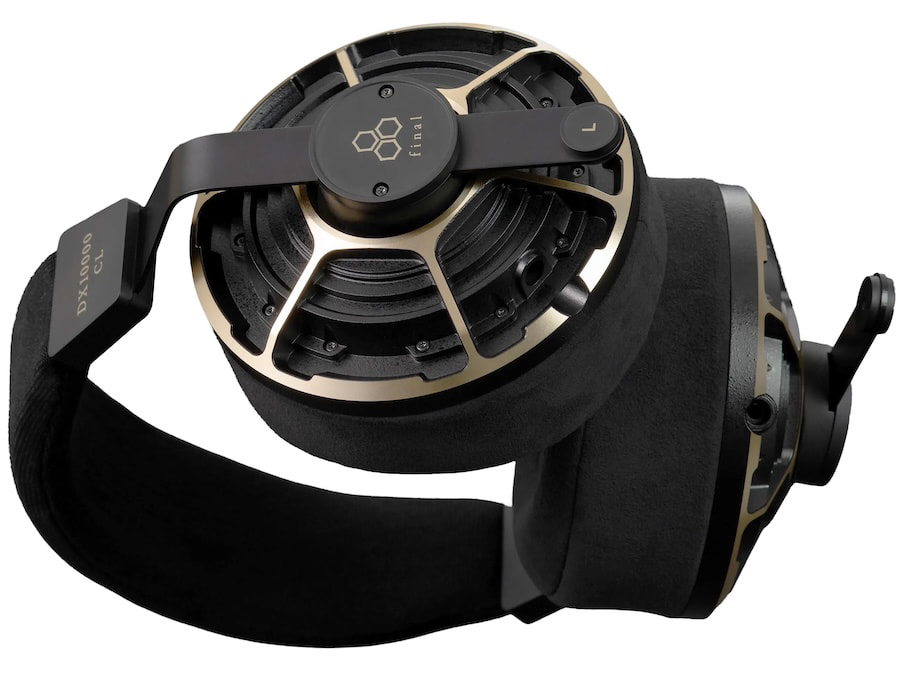
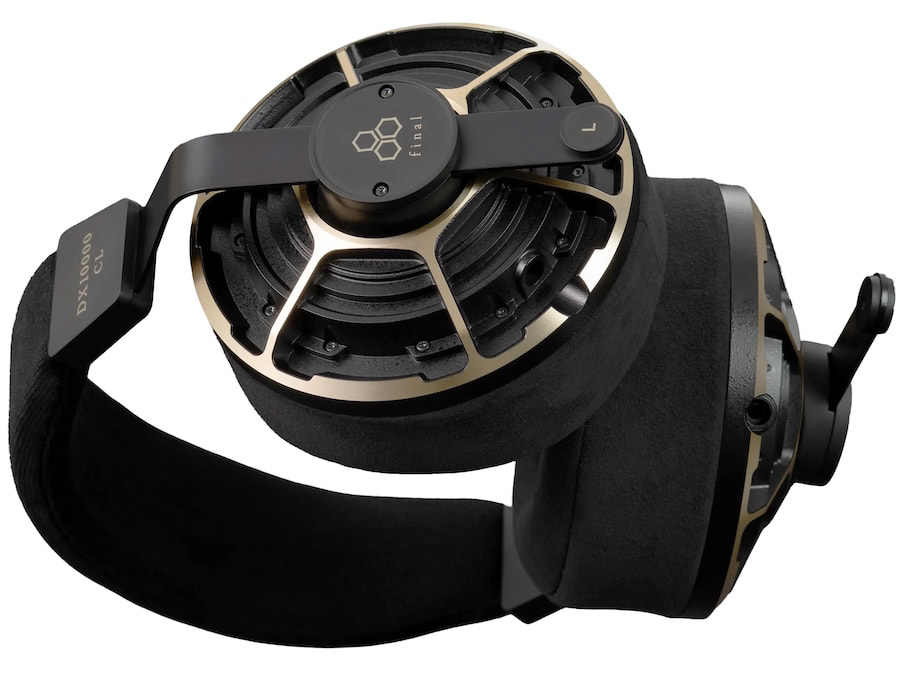

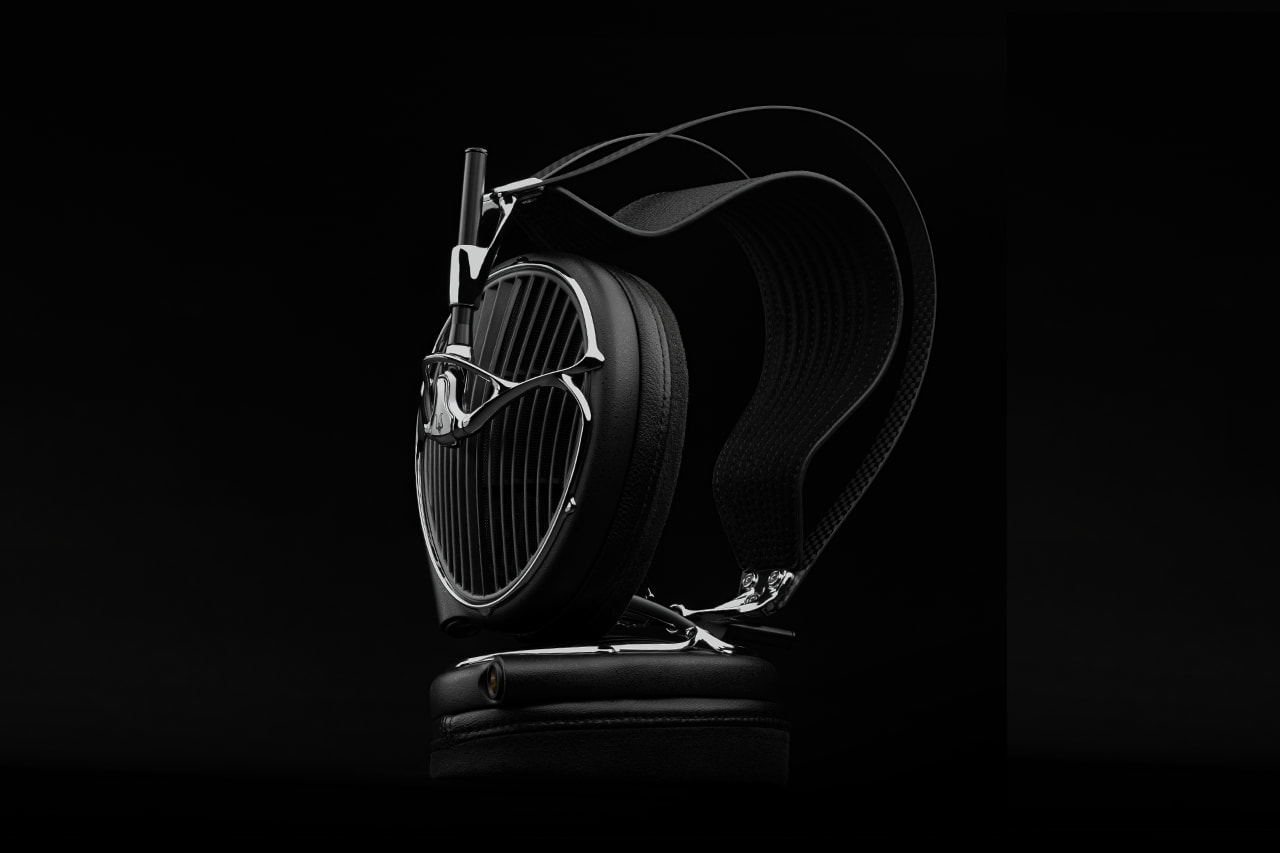
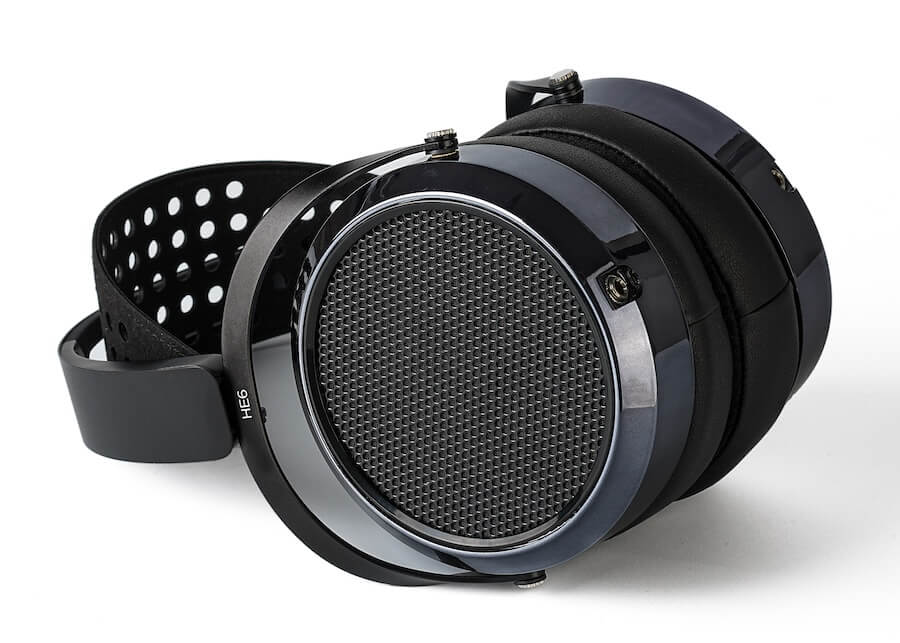

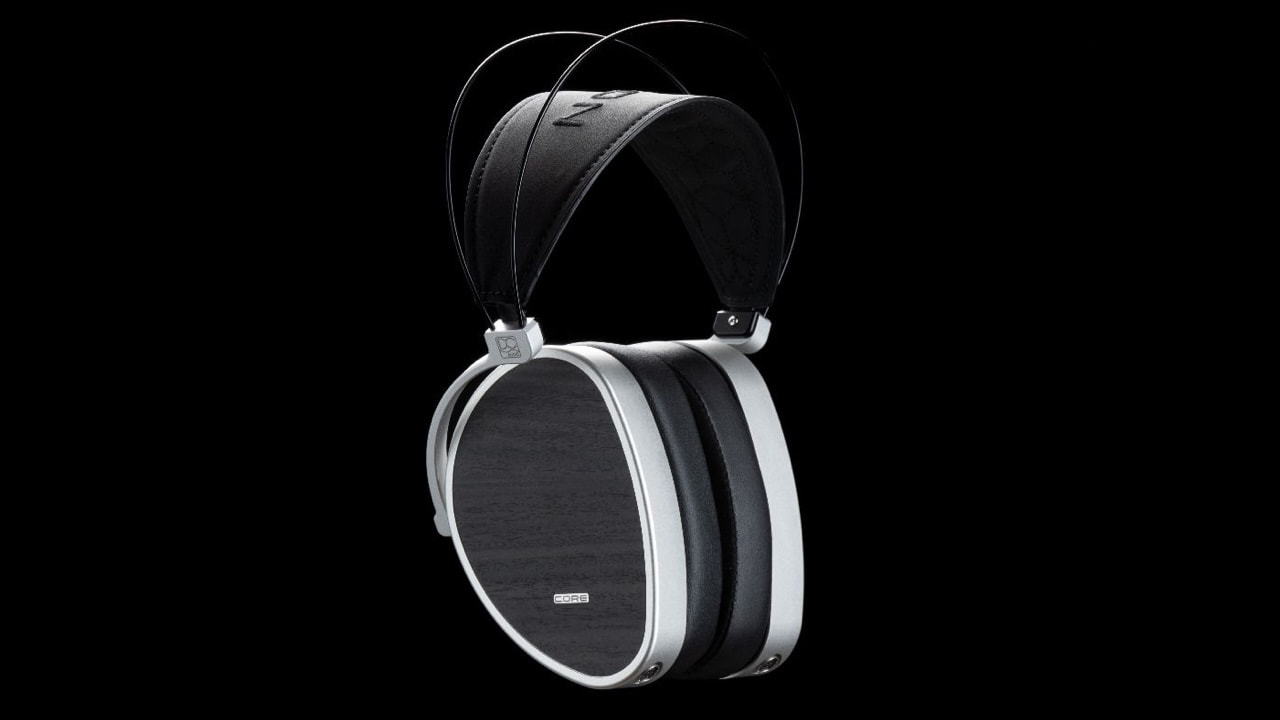









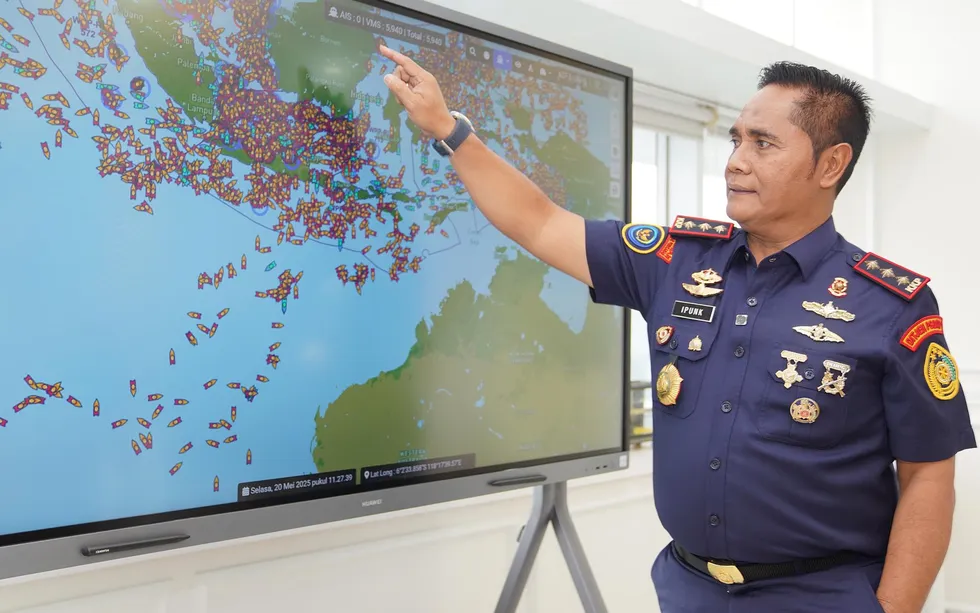
 Indonesian fisheries officials plan fishery patrols using data from tracking devices, satellites, and their understanding of the patterns of illegal fishing.Indonesian Ministry of Marine Affairs and Fisheries






































You must be logged in to post a comment Login