Connect with us
DAPA Banner
DAPA Coin
DAPA
COIN PAYMENT ASSET
PRIVACY · BLOCKDAG · HOMOMORPHIC ENCRYPTION · RUST
ElGamal Encrypted MINE DAPA
🚫 GENESIS SOLD OUT
DAPAPAY COMING

Tech

Nvidia may have RTX 5000 Super GPUs ready, but costly 3GB GDDR7 is holding them back

Published

on

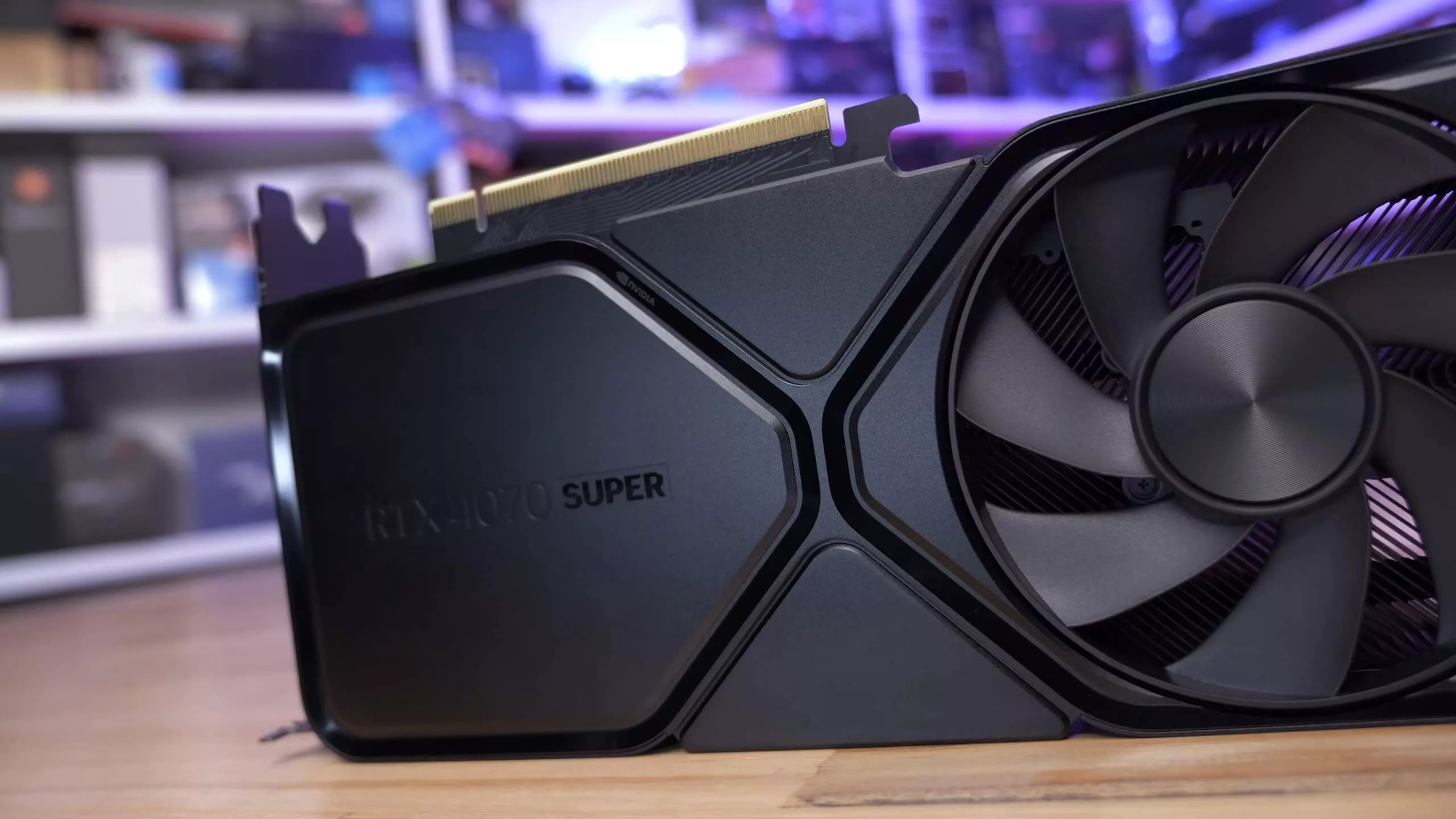
Rumor mill: The RTX 5000 series is real – according to reports, an Nvidia board partner already has one of the cards in its possession. However, a familiar problem is preventing them from being released, one that will come as no surprise to anyone.

The latest RTX 5000 Super story, which comes from VideoCardz, claims that Nvidia has told the board partner holding onto the card that it can’t be released yet because of the price of 3GB GDDR7 memory components.

The publication’s sources say that a 3GB GDDR7 chip currently costs between $60 and $70, while a standard 2GB GDDR7 chip is just $20. Paying over three times more for a 50% memory boost is going to skyrocket the cards’ BOM cost.

At a time when components already cost a fortune as AI hyperscalers snap up all the DRAM and NAND manufacturing capacity, releasing RTX 5000 Super cards with comically high price tags isn’t going to prove popular.

Advertisement

Another issue is that since 2025, Nvidia has left it to board partners to source their own memory chips. If these companies are told by Nvidia that they have to sell the Super series at or close to MSRP, they’re likely not to make any cards at all, rather than take a huge loss on each one sold.

Using 3GB GDDR7 memory chips allows Nvidia to push up the cards’ memory capacity without changing the number of memory modules or altering the memory bus. But their high price is proving to be an issue.

Three RTX 5000 Super models are reportedly in the works: the GeForce RTX 5080 Super, RTX 5070 Ti Super and RTX 5070 Super. This aligns with previous rumors, which included some of those cards’ alleged specs.

  RTX 5080 RTX 5080 Super RTX 5070 Ti RTX 5070 Ti Super RTX 5070 RTX 5070 Super
GPU Die GB203 GB205
CUDA Cores 10,752 8,960 6,144 6,400
Memory Capacity 16 GB 24 GB 16 GB 24 GB 12 GB 18 GB
Memory Speed 30 Gbps 32 Gbps 28 Gbps
Bus Type 256-bit 192-bit
Total Board Power 360W 415W 300W 350W 250W 275W

Nvidia is also said to have an RTX 5050 9GB ready that uses the 3GB GDDR7 models. Like the Super series, its release date still hasn’t been decided because of the chips’ prohibitive price.

Advertisement

If Nvidia really is waiting for memory prices to drop before releasing the cards, it could be a while before we see them. SK Hynix predicts that 2027 will be the worst year ever for the industry from a supply perspective, and that demand will continue to outpace supply even beyond 2030.

This is the latest piece of RTX 5000 Super news we’ve heard recently. The RTX 5080 Super just appeared in Seasonic’s PSU calculator, joining the RTX 5070 Super and RTX 5070 Ti Super, which were added in September.

Renowned leaker MEGAsizeGPU, who has a good track record when it comes to Nvidia rumors, said last month that the RTX 5000 Super series could be released this year, but that’s looking increasingly less likely.

Advertisement

Source link

Continue Reading
Click to comment

You must be logged in to post a comment Login

Leave a Reply

Tech

ASUS Pad T3201 Launched in India With OLED Display: Price, Features, and Availability

Published

on

ASUS has expanded its product lineup in India by introducing the ASUS Pad T3201. The new tablet combines a premium OLED screen, performance, and portability. It has been built using the MediaTek Dimensity 8300 SoC and targets those users who like to stream, game, study, and work while traveling. The tablet’s launch date is set for August 6.

ASUS Pad T3201 Specifications and Features

image for ASUS Pad T3201

ASUS has designed the Pad T3201 for both entertainment and productivity. It is equipped with a 12.2-inch dual-layer OLED screen featuring 2.8K resolution and a 144 Hz refresh rate. The display can deliver up to 2,000 nits of brightness and support the 100% DCI-P3 color gamut, making it perfect for entertainment such as watching movies, gaming, and reading. The phone runs on the MediaTek Dimensity 8300 chipset and features 8 GB of LPDDR5X RAM. It runs on Android 16 and ensures efficient use for the user. ASUS has also equipped the device with Wi-Fi 6E, which provides a reliable, fast internet connection. Buyers can choose 128GB or 256GB storage, while a microSD card expands storage up to 1TB.

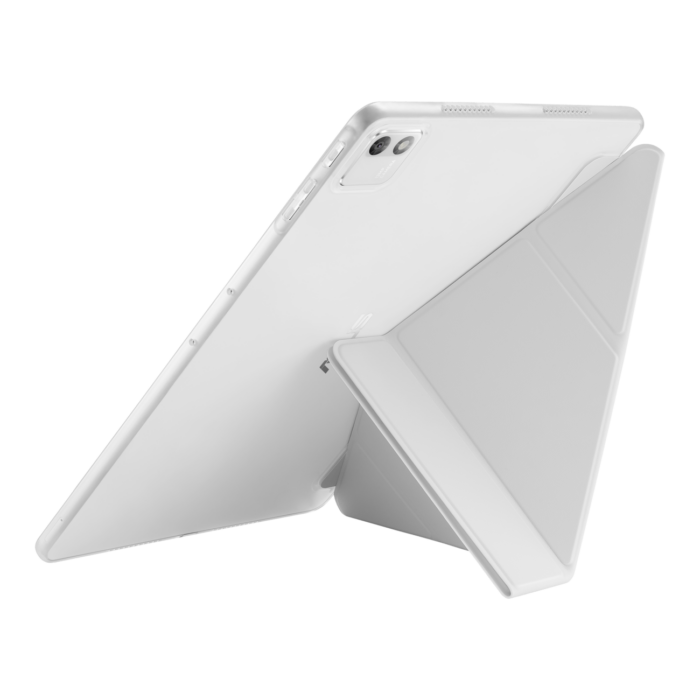
The ASUS Pad T3201 packs a 9,000mAh battery with 45W fast charging support. ASUS says the battery charges from 0 to 50 percent in about 30 minutes. The tablet weighs 523g and measures 6.5mm thin, making it easy to carry. It also includes quad speakers with Dolby Atmos for immersive sound. For photography and communication, the tablet includes a 13MP rear camera and a 5MP front camera. It supports ASUS Pen 2.0, a Bluetooth keyboard, and GlideX for seamless file sharing. ASUS also bundles a protective folio case with the device. Users can also use Google Circle to Search without switching apps.

Launch and Availability

The ASUS Pad T3201 is set to launch in India on August 6 at 12 PM. This product will be sold both online at Flipkart and the ASUS E-Shop website. Offline purchasing is possible at ASUS and ROG stores, as well as Reliance Digital, among others. At the moment, ASUS has not announced the tablet’s price.

Source link

Advertisement
Continue Reading

Tech

Week in Review: Most popular stories on GeekWire for the week of July 12, 2026

Published

on

Get caught up on the latest technology and startup news from the past week. Here are the most popular stories on GeekWire for the week of July 12, 2026.

Sign up to receive these updates every Sunday in your inbox by subscribing to our GeekWire Weekly email newsletter.

Most popular stories on GeekWire

JPMorgan Chase bets on Seattle to build its AI control layer

JPMorgan Chase is building out a new AI software infrastructure team, with a major presence in Seattle, focused on running AI across its data centers and outside providers in a way that controls costs, protects its intellectual property, and avoids tying its fortunes to any one vendor. … Read More

Advertisement

Source link

Continue Reading

Tech

Subway Sandwich Computers Get a Second Life as Gaming Machines

Published

on

Subway Sandwich Computer Menu Board Gaming Machine
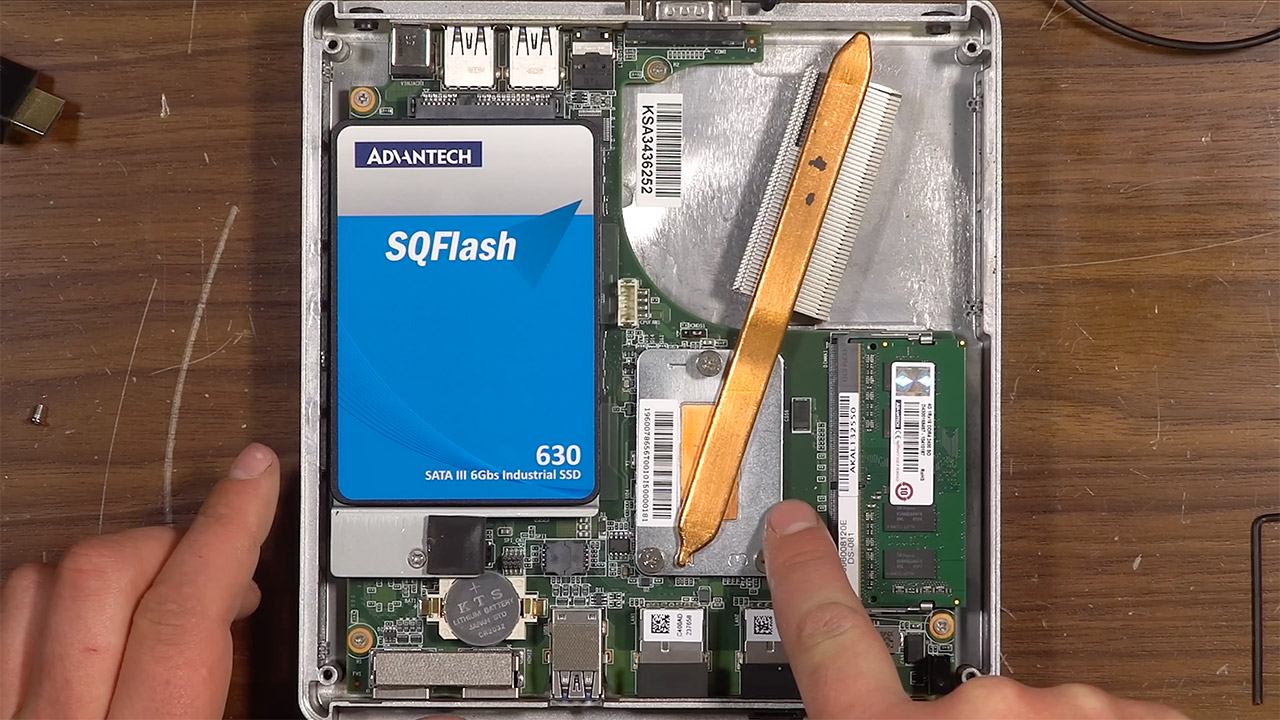
Garkus walked into his local Subway and walked out with the exact machines that used to show footlong prices and cookie deals. Staff were swapping the old digital menu boards for newer ones, and the discarded units headed straight into a trash pile until he asked if he could take a few. Three Advantec DS081 media players and four commercial displays later, the experiment began.


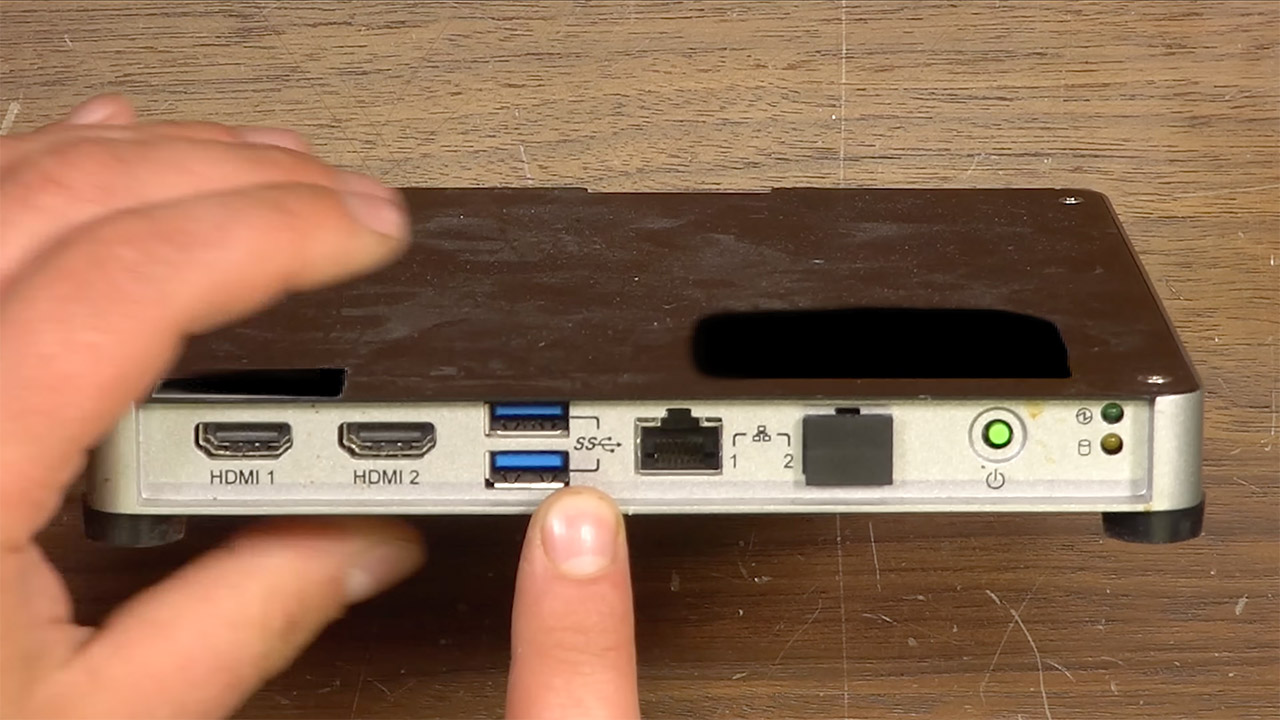
These super-slim, fanless boxes sat in a sandwich shop for years, running continuously. They aren’t particularly high-end, but they still have some life in them. Under the hood, there’s a sixth-generation Intel Core i3-6100U processor clocked at 2.3 GHz, four gigabytes of DDR4 RAM that can be expanded to eight if necessary, a 64-gigabyte solid-state drive, and Intel HD Graphics 520. They have the conventional ports: HDMI, USB 3.0, Ethernet, and a micro PCIe slot.

Sale


KAMRUI AK1PLUS Mini PC Computer, Intel Celeron N5095 (Up to 2.9GHz), 16GB RAM 256GB SSD, Dual 4K Mini…
  • Faster Performance for Everyday Computing: Powered by the Intel Celeron N5095 processor (4 Cores, 4 Threads, up to 2.9GHz), the KAMRUI AK1PLUS Mini PC…
  • 16GB RAM & Up to 4TB Expandable Storage: Work faster with 16GB LPDDR4X memory and a high-speed 256GB M.2 2280 SSD for quick boot-ups and smooth…
  • Dual 4K UHD Displays for Maximum Productivity: Expand your workspace with dual HDMI 2.0 outputs, supporting two 4K@60Hz UHD displays simultaneously…

Subway Sandwich Computer Menu Board Gaming Machine
He began by upgrading the RAM, and one of them received a full eight-gigabyte stick. Then came Windows 10 installation, which loaded quickly and dumped the user to a normal desktop rather than the Subway interface. Then he attempted to install macOS on one of them and was successful, even fooling the system into thinking it was a 2016 MacBook Pro, despite the lack of graphics acceleration. The third one received Bazzite, a Linux distribution created expressly to assist get games operating on obsolete hardware. SteamOS was difficult to get operating since the storage interface was incompatible.

Subway Sandwich Computer Menu Board Gaming Machine
So he fired up Peggle on the Bazzite machine, and it worked perfectly. It’s a good game to have on that system. Then he tried Minecraft, which handled all of the TNT explosions admirably, albeit at a slower frame rate. He even attempted to run Grand Theft Auto V on the Windows PC, but it just couldn’t handle the workload due to a lack of fans and limited power delivery.

Subway Sandwich Computer Menu Board Gaming Machine
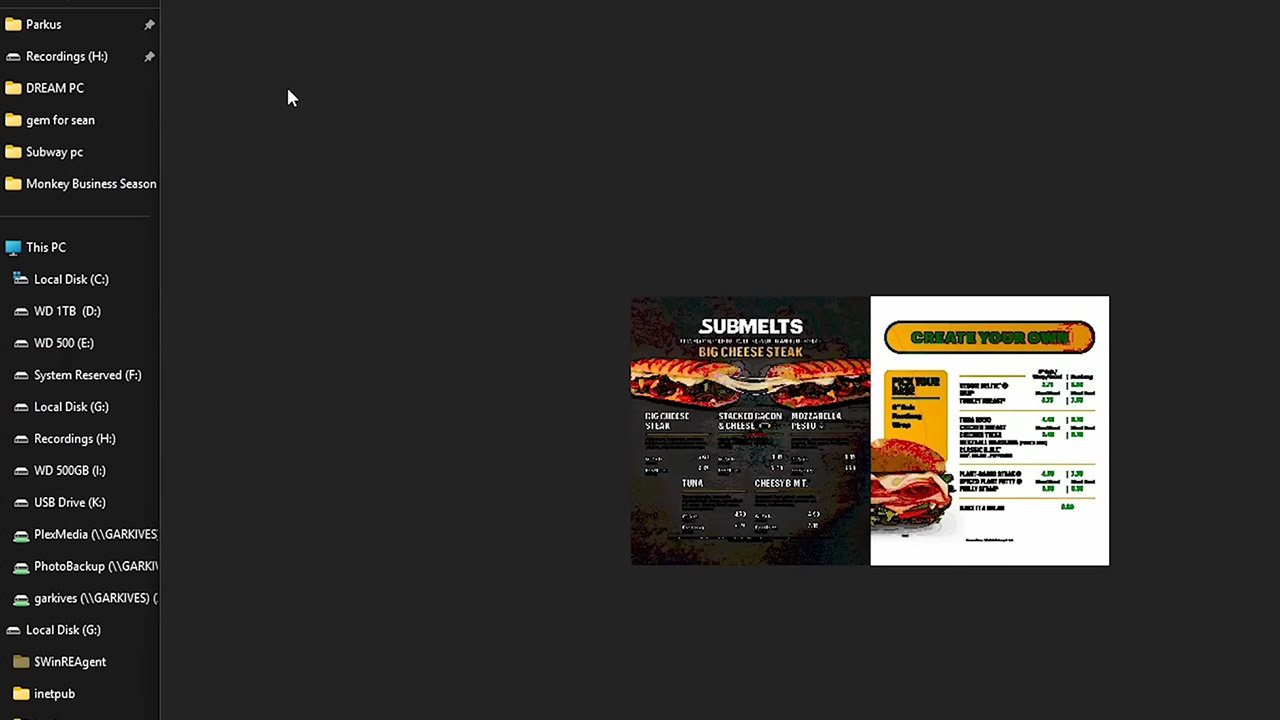
Surprisingly, games that don’t require a lot of power appear to run fairly well on these older systems. The compact size and low power demand make it ideal for older console titles such as PS2 and original Xbox games. He dug into the old Subway software, and it appears that they have a huge number of menu templates, complete with files for things like Submelts and big cheese steaks, but no secret treasures, just the standard signage materials.

Subway Sandwich Computer Menu Board Gaming Machine
Then disaster almost struck during testing when one of his testers knocked over a Pepsi, and he believed everything was lost, but it turns out these little computers are incredibly resilient. They continue running even after they have finished serving sandwiches.

Advertisement

Source link

Continue Reading

Tech

Save $200 on 13-inch M4 iPad Air 512GB at Amazon

Published

on

Apple’s latest iPad Air is $200 off when you opt for the M4 model with 512GB of storage during Amazon’s weekend sale.

The $200 discount at Amazon brings the Wi-Fi 13-inch iPad Air with 512GB of storage in Blue down to $1,049.

Save $200 on 13″ iPad Air M4

Considering Apple raised prices last month across the iPad line, this deal is highly competitive and comes in within $50 of the lowest price on record.

Advertisement

With a discount this steep, you’ll want to grab the offer now, as inventory is already thinning, with delivery by July 24 for Prime members.

iPad Air Specs
Screen Size 13-inch
Capacity 512GB
Wi-Fi Wi-Fi 7
Color Blue
MSRP $1,249
Discount $200 off
Chip M4

You can also compare prices across the product line in our 13-inch iPad Air M4 Price Guide.

And if you’re in the market for a MacBook to pair with your new iPad Air, Amazon is slashing $400 off Apple’s M5 Max 16-inch MacBook Pro with 2TB of storage.

Advertisement

Source link

Continue Reading

Tech

Rob Gurzeev on why AI has changed cybersecurity’s biggest blind spot

Published

on

TL;DR

AI makes it trivially easy for anyone in an organization to deploy internet-facing applications, often outside established security processes. CyCognito CEO Rob Gurzeev says the resulting blind spots are more dangerous than known vulnerabilities. His answer: continuous, outside-in attack-surface mapping that validates what is actually exploitable rather than scanning a known asset list.

Artificial intelligence is transforming how software is built, deployed, and secured. While AI has accelerated innovation across industries, it has also expanded the number of internet-facing assets organizations need to protect. According to Rob Gurzeev, CEO and Co-Founder of CyCognito, the challenge is no longer just identifying known vulnerabilities. It is understanding what is actually exposed, how those assets connect, and how attackers can exploit them.

Drawing on years of experience in cybersecurity and intelligence, Gurzeev believes many organizations still operate with an incomplete view of their attack surface. That gap, he says, is becoming more dangerous as AI makes it easier than ever to create and expose new applications.

A security mindset built on finding the unknown

Gurzeev’s path into cybersecurity began long before AI entered the picture. As a teenager, he spent time exploring computers and Internet Relay Chat (IRC) communities, where curiosity about hacking first took hold. That interest eventually led him to an intelligence unit, where he worked on reconnaissance and attack-surface operations.

Advertisement

Honestly, this work chose me more than I chose it,” Gurzeev said. He explained that the role often started with little more than a name and required finding “the path of least resistance into something that mattered.

Those experiences continue to shape how he approaches cybersecurity today. “I was taught you never actually know what reality is. You have to go find it. Validate it,” he said. “Most of the security industry was built the other way around, on the assumption that you already know where your stuff is. That gap is the whole reason CyCognito exists.

Mapping the attacker’s view

CyCognito approaches security by working from the outside in, beginning with nothing more than a company’s name. The platform maps everything exposed to the internet, including forgotten or unmanaged assets, then tests those systems to identify weaknesses that could be exploited by attackers.

In a nutshell, we map everything a company has exposed to the internet, then trace the handful of paths that actually lead to its internal networks and sensitive data,” Gurzeev explained.

Advertisement

Rather than relying solely on vulnerability scans, the platform validates which weaknesses are genuinely exploitable. According to Gurzeev, “If I had to name the one thing that makes us unique, it’s that our platform thinks like an attacker. That should be obvious. It isn’t.

The scale of today’s attack surface

Modern enterprise environments have grown far beyond what traditional security programs were designed to manage. Gurzeev estimates that a large enterprise typically exposes around 100,000 applications, devices, and cloud assets to the internet, while some organizations have significantly larger footprints.

Our single biggest customer has around 100 million things an attacker can interact with from the outside,” he said, adding that external attack surfaces change by one to three percent every day.

Despite that scale, many organizations continue to focus security efforts on only a small fraction of their environments. “Most security effort goes to a few hundred or a thousand key assets. What about the rest?” Gurzeev asked. “Guarding the front door while you leave the windows open is not a strategy.

Advertisement

AI is expanding the problem

The rapid adoption of AI has made creating and deploying applications much easier across organizations. Employees outside traditional development teams can now build internet-facing tools using AI-powered coding assistants, often without going through established security processes.

Today, anyone and everyone can deploy an app,” Gurzeev said. “Someone in HR or finance can spin up an application with a tool like Claude Code or Lovable and expose it to the internet, on purpose or by accident.

He believes AI has shifted from being a supporting technology to becoming part of organizations’ core infrastructure. “As recently as six months ago, AI was bolted onto the edge of the business. Now it runs through the core, which means these systems aren’t adjacent to the attack surface anymore. They are the attack surface.

The challenge extends beyond application growth. Gurzeev pointed to research suggesting AI-generated code introduces vulnerabilities at significantly higher rates than code written entirely by humans. More importantly, he argued that much of this software bypasses the secure development processes organizations have spent years building.

Advertisement

The honest answer is we’re defending more of something less safe, and we can’t yet measure exactly how much. That uncertainty is itself the risk,” he said.

Continuous testing for an AI-driven era

As attackers increasingly adopt AI, Gurzeev argues that periodic assessments are no longer enough. Security teams need continuous visibility into what is exposed, what can actually be exploited, and which issues require immediate remediation.

Keeping up takes three things, all continuous,” he said. “Know what you have exposed right now. Know which of it an attacker could actually break into, across all of it, not a sample. Fix what matters in hours.

CyCognito’s latest release focuses on continuous AI security testing by combining full attack surface discovery with AI-powered validation. Rather than limiting advanced testing to a small number of high-priority assets, the platform maps an organization’s entire internet-facing environment before applying AI where reasoning is needed most.

Advertisement

According to Gurzeev, the platform continuously performs more than 100,000 automated checks for known issues, allowing AI to focus on identifying complex attack paths that conventional scanners often miss. As those attack chains are validated, they become repeatable automated tests, expanding coverage over time.

Looking ahead, Gurzeev remains optimistic that defenders can regain the advantage. “The winners won’t be the ones who spend the most,” he said. “They’ll be the ones who use it most efficiently, getting the most out of every dollar of compute by pointing it with context instead of running it blind. Do that, and defenders catch up.

Source link

Advertisement
Continue Reading

Tech

The Mac Pro nearly received an M3 Extreme chip twice as powerful as M3 Ultra

Published

on

Apple discontinued the Mac Pro earlier this year, ending a 20-year run for a computer that once represented the very best of the company’s desktop lineup. However, Apple reportedly had much bigger plans for the machine before ultimately replacing it with the Mac Studio.

According to Bloomberg’s Mark Gurman, Apple developed an M3 Extreme chip that could have offered twice as many CPU and GPU cores as the M3 Ultra. The processor was intended to sit above the Ultra tier and could have finally given the Mac Pro the performance advantage it badly needed. Apple eventually abandoned the chip due to concerns over production costs and limited demand for such an expensive machine.

Apple had been working on an Extreme chip for years

Rumors about an Extreme-tier Apple chip first appeared in 2022, when Gurman reported that the company was developing an M2 Extreme for its first Apple silicon Mac Pro. The processor was expected to feature as many as 48 CPU cores and 152 GPU cores, double the rumored M2 Ultra configuration. However, it would have been extremely expensive to manufacture. Gurman estimated that an M2 Extreme Mac Pro could have cost at least $10,000 before upgrades, turning it into an extraordinarily niche product.

Engineering challenges also reportedly played a role. Apple ultimately decided that the development and production costs were difficult to justify for a computer that would sell in relatively small numbers. Bloomberg’s latest report suggests Apple later developed an M3 Extreme before cancelling that project for similar reasons.

The chip could have given the Mac Pro a reason to exist

Apple launched its first Apple silicon Mac Pro in 2023 with the same M2 Ultra chip found inside the Mac Studio. The Mac Pro offered PCIe expansion, yet it cost twice as much despite delivering nearly identical CPU and GPU performance. An M3 Extreme could have changed the equation. Gurman says the chip was designed with twice as many CPU and GPU cores as the M3 Ultra, which tops out at a 32-core CPU and an 80-core GPU.

Advertisement

Apple also reportedly developed an M3 Ultra Mac Pro that never reached the market. The Mac Pro remained stuck on its 2023 chip until Apple discontinued it in March, and it is not expected to return anytime soon.

Source link

Advertisement
Continue Reading

Tech

Android converts hold steady as iPhone owners drive new sales

Published

on

Existing iPhone owners continue to account for nearly nine in 10 surveyed U.S. purchases, showing how Apple’s enormous customer base isn’t dwindling under pressure from Google and other Android smartphone manufacturers.

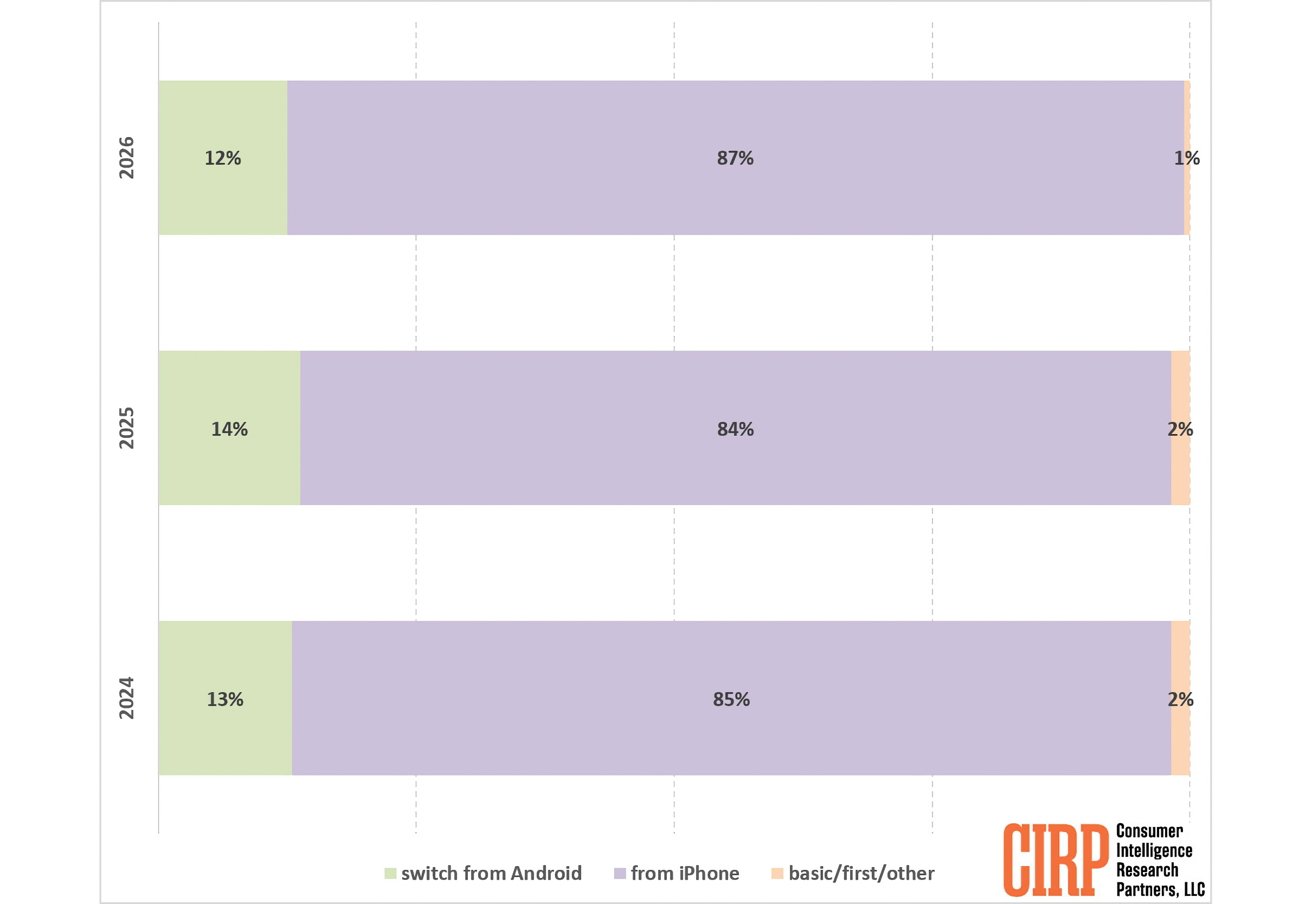
Consumer Intelligence Research Partners estimates that 87% of U.S. iPhone buyers in the March 2026 quarter came from another iPhone. The share reached its highest level in the three years covered by the report, up from 84% in 2025 and 85% in 2024.

Another 12% switched from an Android smartphone, down from 14% in 2025 and slightly below the 13% measured in 2024. The remaining 1% came from a basic phone, bought a first smartphone, or fell into another category.

The numbers point to a smartphone market in which most buyers settled on a platform years ago. Apple can still attract Android owners, but the larger opportunity comes from convincing hundreds of millions of existing customers to replace an older iPhone with a newer model.

Advertisement

Android switching remains within CIRP’s recent range

Android users have accounted for 11% to 15% of new iPhone buyers in recent years, placing the March quarter’s 12% result within CIRP’s usual range. The decline from 14% in 2025 looks more like routine movement than a major shift in Apple’s ability to attract Android owners.

Switching platforms can mean transferring years of data, replacing apps and accessories, and rebuilding familiar workflows. Existing iPhone owners face far less friction because their photos, messages, passwords, apps, and settings can move to a new model.

Horizontal stacked bar chart comparing 2014-2016 iPhone buyers: majority from iPhone (84-87%), smaller share switching from Android (12-18%), tiny portion from basic or other phones (1-2%)Previous phone used by iPhone buyers in the 12 months ending each March

A 12% share still represents a meaningful source of new customers at Apple’s scale. Apple posted record iPhone revenue as Counterpoint estimated that U.S. iPhone sales volume rose 1.3% while the overall market fell 5.7%.

The growing iPhone buyer pool also makes CIRP’s percentage harder to interpret on its own. The number of Android converts could hold steady or increase even if those buyers represent a smaller share of total iPhone purchases.

Repeat buyers give Apple a dependable sales base

The 87% figure shows why Apple doesn’t need a surge in platform switching to sustain the iPhone business. Existing owners already understand iOS, own compatible accessories, and may have years of purchases and personal data tied to Apple Services.

Advertisement

Carrier promotions and trade-in offers can make another iPhone the easiest financial and technical choice. Apple also benefits beyond the phone sale because repeat buyers may remain connected to Apple Watch, AirPods, Mac, iPad, and Services.

Apple said on January 29, 2026, that its installed base had surpassed 2.5 billion active devices worldwide, although it doesn’t disclose how many are iPhones or how many belong to unique users.

Only 1% of CIRP’s surveyed iPhone buyers came from a basic phone, bought a first smartphone, or entered through another route. Apple and Android manufacturers are therefore competing mostly for people who already own a capable device.

Winning a new customer means persuading someone to leave a familiar platform, while keeping one preserves future hardware and Services revenue. Each Android convert can also become part of Apple’s repeat-buyer pool in later upgrade cycles.

Advertisement

CIRP’s survey measures the composition of iPhone buyers rather than the total number of people switching platforms. Apple’s U.S. iPhone business still draws most heavily from existing owners, while Android converts remain a smaller but steady source of new customers.

Source link

Advertisement
Continue Reading

Tech

NASA Shares Beautiful Timelapse Of The Psyche Spacecraft’s View Over Mars

Published

on

The spacecraft made a close approach to the red planet in May on its way to explore the asteroid it’s named after.

NASA’s Psyche spacecraft is well on its way to its target in the asteroid belt after receiving a gravity assist from Mars in May, and the space agency just shared some incredible images from that brief encounter. Psyche captured thousands of images with its multispectral imager as it approached and flew past Mars. A timelapse shared by NASA on Friday stitches these images together to create a captivating video of the entire encounter, showing the crescent Mars it captured upon arrival, detailed views of the surface and the icy south pole behind it as it departed.

“The imager performed brilliantly, delivering some rarely seen views of the red planet,” said Jim Bell, the Psyche imager instrument lead at Arizona State University, in a statement. The spacecraft began its approach of Mars on May 2 and made its closest approach on May 15.

Advertisement

This maneuver gave it a speed boost and adjusted its trajectory to put it on a course for the asteroid Psyche while saving propellant for the long journey. Psyche is expected to reach the eponymous asteroid in 2029. “Besides the obvious beauty of the photos, we were also able to fully test its calibration and sensitivity to scattered light,” Bell said, “including picking out the Martian moons Phobos and Deimos from very far away as a part of a practice for the satellite search that we’ll use at the asteroid Psyche to look for any moonlets there.”

Source link

Advertisement
Continue Reading

Tech

Trump Just Made It Easier For Your ISP To Rip You Off With Bogus Fees

Published

on

from the this-is-why-we-can’t-have-nice-things dept

Here’s a short crash course in U.S. telecom policy.

Giant and very unpopular companies like Comcast, AT&T, Verizon, and Charter created regional monopolies that work tirelessly to erode all meaningful competition and oversight, resulting in high prices, spotty service, slower speeds, and abysmal customer service. They also pay a bunch of dodgy pseudo-academic “free market” think tanks to insist this is all very innovative and exciting.

Every so often a few Democrats (the handful not too timid to stand up to the telecom lobby) propose the absolute bare minimum policy “solution” that usually involves nibbling around the edges of the actual problem (unchecked monopoly power coddled by corruption). These efforts are very often highly decorative and performative, and very rarely competently enforced.

Enter Republicans, who work seamlessly with the telecom lobby to destroy even these bare-bones proposals, framing them as radical. The result: no real oversight of telecom giants, who then double down on all of their worst behaviors.

Advertisement

This just happens again and again and again in U.S. policy (privacy, net neutrality, predatory business practices). And will keep happening until the U.S. addresses its corruption problems. Which, with a minimum 2.5 years of Trumpism left, doesn’t seem likely anytime soon.

The latest case in point: back during the Biden era, the FCC under Jessica Rosenworcel proposed a new “nutrition label for broadband” that required ISPs break down each individual fee and restriction on your bill. Note it didn’t actually stop ISPs from ripping you off, it just created a mostly voluntary system whereby ISPs were politely asked to list the real price of service, including usage caps and bullshit fees.

Studies found that unsurprisingly, most ISPs didn’t comply and the FCC, even under Biden, didn’t really enforce the rules.

Despite this being, once again, a bare minimum policy effort that didn’t even actually fix the underlying problem and was never meaningfully enforced, the telecom lobby very much didn’t like the idea of having to be transparent. Or the government telling them what to do. So they’ve lobbied the Trump administration to dismantle the requirements:

Advertisement

“The Federal Communications Commission will vote to eliminate a rule that requires Internet service providers to list all of their so-called “passthrough” fees on an easily accessible broadband price label. The FCC vote could also make the price labels themselves a bit harder for consumers to find.”

Great stuff. Very populist. Who wasn’t begging the government to make it easier for big shitty companies to rip you off with bullshit surcharges and fees?

Keep in mind it took the U.S. government thirty-five years of telecom monopoly predation to finally come up with the idea “maybe we politely ask giant telecom monopolies to be semi-honest about their price.” But even that was a bridge too far for a corrupt U.S. federal government.

It should be noted that this most recent “nutrition label” approach was technically required by Congress, which was trying to ensure that the $42.5 billion in broadband subsidies in the infrastructure bill resulted in semi-decent broadband. But as I’ve been exploring, the Trump administration has hijacked that program to slather Elon Musk with subsidies, stripping all meaningful oversight in the process.

Trump FCC boss Brendan Carr’s order rolling back the rules tries to pretend they’re doing this for the sake of consumer clarity:

Advertisement

“However, the Commission’s initial rules, adopted in 2022, resulted in sometimes confusing labels that strayed beyond the statutory framework Congress created, increasing compliance costs for providers in the process. With this order, we refocus the rules on ensuring that consumers have the clear, accurate, and concise information about broadband plans that they want, making the labels a more useful shopping tool.”

That is a blatant lie. Carr is simply folding like a weakling to the demands of Comcast, AT&T and friends. There is no consumer benefit to making broadband pricing less transparent. It simply works to further obscure the real problem: regional monopoly predation, coddled by captured regulators like Carr. Comcast didn’t like having to be even semi-honest about precisely how it rips you off.

To try and avoid making it clear he’s breaking the law and ignoring Congress, Carr is pretending the labels will technically still exist. They will, of course, feature fewer requirements, be harder to find, and there will be absolutely no enforcement should ISPs balk at the rules.

Carr has more important things to do, like dismantling the First Amendment because a comedian made fun of the president’s wife, or eliminating bare-bones regulations to make life even easier on shitty robocallers, prison phone monopolies, and telecom giants.

The United States is not a serious country. It’s too corrupt to function in the public interest. And it’s become a strange combination of painful, boring, and pathetic that we have journalists, policymakers, think tankers, and regulators too feckless or captured to be honest about any of it.

Advertisement

Filed Under: brendan carr, broadband, fcc, fees, high speed internet, internet access, nutrition label, regulatory recovery fee, surcharges, usage caps

Source link

Advertisement
Continue Reading

Tech

Today’s NYT Strands Hints, Answer and Help for July 20 #869- CNET

Published

on

Looking for the most recent Strands answer? Click here for our daily Strands hints, as well as our daily answers and hints for The New York Times Mini Crossword, Wordle, Connections and Connections: Sports Edition puzzles.


Today’s NYT Strands puzzle is a tricky one, with some long answers to find. If you remember yesterday’s theme, this one is the opposite. Some of the answers are difficult to unscramble, so if you need hints and answers, read on.

I go into depth about the rules for Strands in this story

Advertisement

If you’re looking for today’s Wordle, Connections and Mini Crossword answers, you can visit CNET’s NYT puzzle hints page.

Read more: NYT Connections Turns 1: These Are the 5 Toughest Puzzles So Far

Hint for today’s Strands puzzle

Today’s Strands theme is: Small talk.

Advertisement

If that doesn’t help you, here’s a clue: Not huge.

Clue words to unlock in-game hints

Your goal is to find hidden words that fit the puzzle’s theme. If you’re stuck, find any words you can. Every time you find three words of four letters or more, Strands will reveal one of the theme words. These are the words I used to get those hints but any words of four or more letters that you find will work:

  • ROOT, POOT, SELL, STILE, STIM, STAIN, SCUM, STEM, SUIT, CRIB

Answers for today’s Strands puzzle

These are the answers that tie into the theme. The goal of the puzzle is to find them all, including the spangram, a theme word that reaches from one side of the puzzle to the other. When you have all of them (I originally thought there were always eight but learned that the number can vary), every letter on the board will be used. Here are the nonspangram answers:

  • TINY, LITTLE, MINIATURE, MINUSCULE, MICROSCOPIC

Today’s Strands spangram

completed NYT Strands puzzle for June 20, 2026

The completed NYT Strands puzzle for June 20, 2026.

NYT/Screenshot by CNET

Today’s Strands spangram is ITSYBITSY. To find it, start with the I that is four letters down on the far-left vertical row, and wind across.

Advertisement

Source link

Continue Reading

Trending

Copyright © 2025