Good morning! Let’s play Connections, the NYT’s clever word game that challenges you to group answers in various categories. It can be tough, so read on if you need Connections hints.
What should you do once you’ve finished? Why, play some more word games of course. I’ve also got daily Strands hints and answers and Quordle hints and answers articles if you need help for those too, while Marc’s Wordle today page covers the original viral word game.
SPOILER WARNING: Information about NYT Connections today is below, so don’t read on if you don’t want to know the answers.
Advertisement
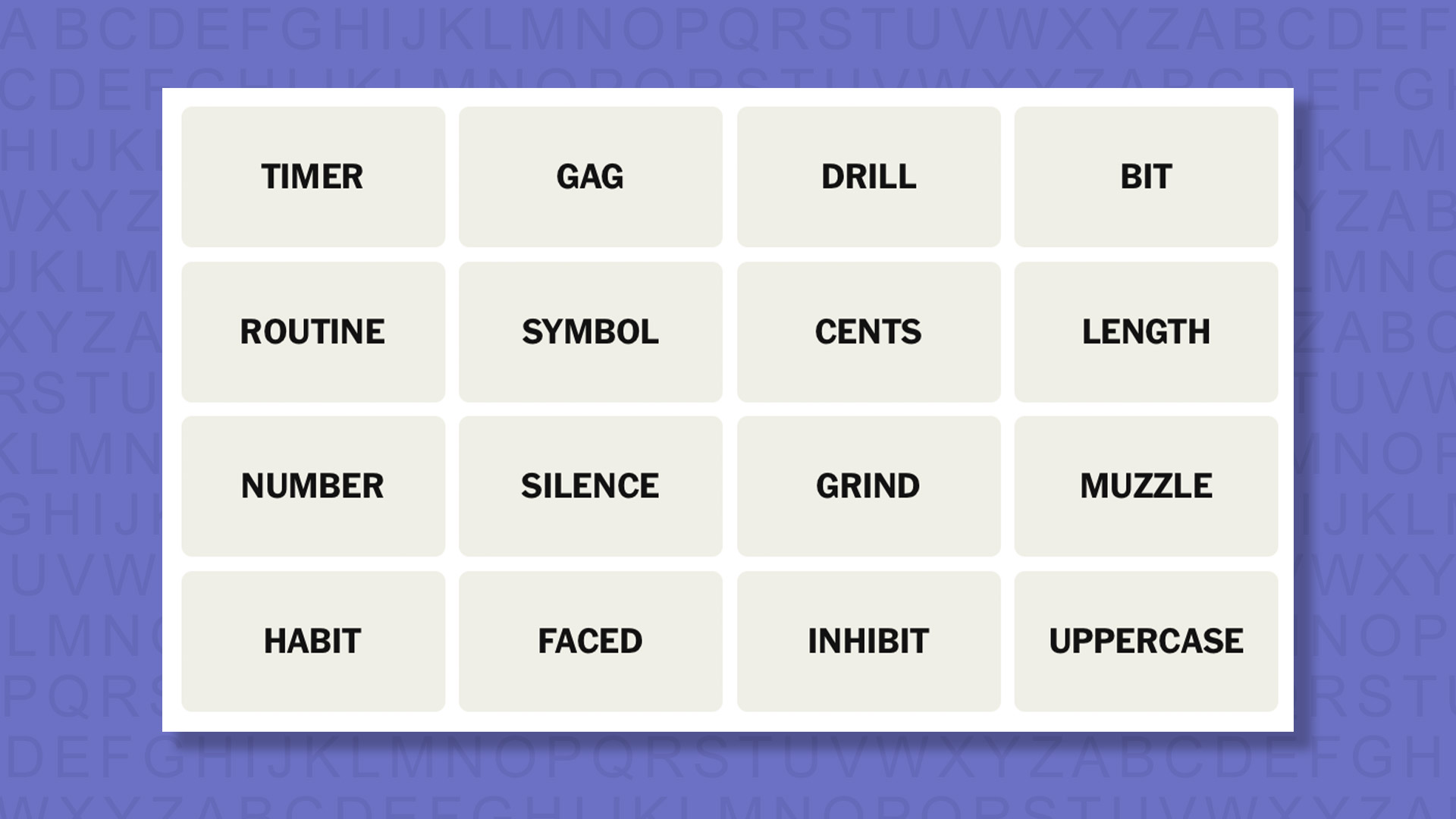
NYT Connections today (game #973) – today’s words
(Image credit: New York Times)
Today’s NYT Connections words are…
TIMER
GAG
DRILL
BIT
ROUTINE
SYMBOL
CENTS
LENGTH
NUMBER
SILENCE
GRIND
MUZZLE
HABIT
FACED
INHIBIT
UPPERCASE
NYT Connections today (game #973) – hint #1 – group hints
What are some clues for today’s NYT Connections groups?
Advertisement
YELLOW: Keep someone quiet
GREEN: Familiar story
BLUE: Code to gain entry
PURPLE: Begin with a low number
Need more clues?
We’re firmly in spoiler territory now, but read on if you want to know what the four theme answers are for today’s NYT Connections puzzles…
Sign up for breaking news, reviews, opinion, top tech deals, and more.
NYT Connections today (game #973) – hint #2 – group answers
What are the answers for today’s NYT Connections groups?
Advertisement
YELLOW: SUPPRESS
GREEN: SAME OLD STUFF
BLUE: FEATURES OF A STRONG PASSWORD
PURPLE: WORDS AFTER “TWO”
Right, the answers are below, so DO NOT SCROLL ANY FURTHER IF YOU DON’T WANT TO SEE THEM.
NYT Connections today (game #973) – the answers
(Image credit: New York Times)
The answers to today’s Connections, game #973, are…
Advertisement
YELLOW: SUPPRESS GAG, INHIBIT, MUZZLE, SILENCE
GREEN: SAME OLD STUFF DRILL, GRIND, HABIT, ROUTINE
BLUE: FEATURES OF A STRONG PASSWORD LENGTH, NUMBER, SYMBOL, UPPERCASE
PURPLE: WORDS AFTER “TWO” BIT, CENTS, FACED, TIMER
My rating: Hard
My score: 1 mistake
I often get a sense of deja vu when playing Connections, seeing words and sometimes categories that have appeared in the game before.
Today, though, what I thought was a repeated group about stand-up comedy (GAG, BIT, ROUTINE, NUMBER) led to a mistake.
Glory followed, however, as I gained my ’25 Purple First’ badge after spotting theWORDS AFTER “TWO” link between BIT and FACED and spread it out to include CENTS and TIMER. Victory grabbed from the jaws of defeat.
Advertisement
Yesterday’s NYT Connections answers (Saturday, February 7, game #972)
YELLOW: PIPS ON A DIE FIVE, FOUR, THREE, TWO
GREEN: SYMBOLS USED IN ARITHMETIC DIVIDED BY, EQUALS, MINUS, PLUS
BLUE: PUNCTUATION MARKS COLON, ELLIPSIS, PERIOD, QUOTATION MARK
PURPLE: LOWERCASE LETTERS I, L, T, X
What is NYT Connections?
NYT Connections is one of several increasingly popular word games made by the New York Times. It challenges you to find groups of four items that share something in common, and each group has a different difficulty level: green is easy, yellow a little harder, blue often quite tough and purple usually very difficult.
On the plus side, you don’t technically need to solve the final one, as you’ll be able to answer that one by a process of elimination. What’s more, you can make up to four mistakes, which gives you a little bit of breathing room.
It’s a little more involved than something like Wordle, however, and there are plenty of opportunities for the game to trip you up with tricks. For instance, watch out for homophones and other word games that could disguise the answers.
It’s playable for free via the NYT Games site on desktop or mobile.
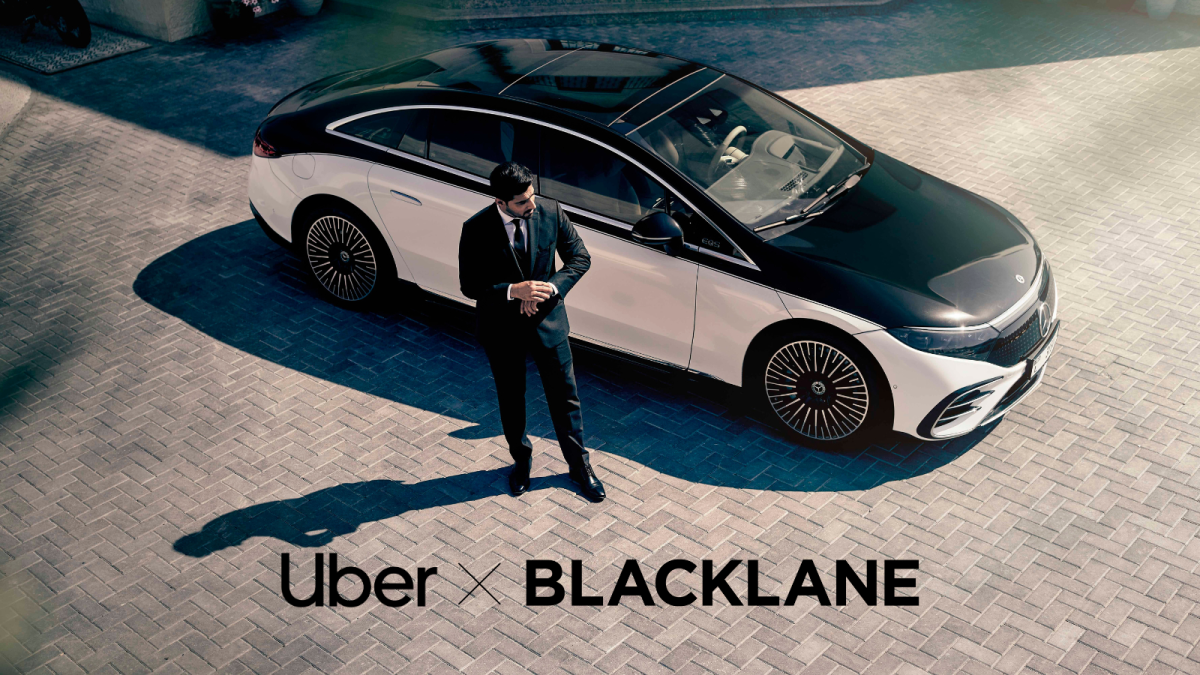
Uber is buying Berlin-based startup Blacklane, which provides on-demand, black-car chauffeur services, as the ride-hail giant expands deeper into luxury and executive travel services.
Uber said the acquisition still needs regulatory approvals, but expects it to close by the end of this year. The two companies didn’t disclose financial terms of the deal.
The acquisition comes just a few weeks after Uber announced the launch of Uber Elite, which combines a chauffeur service with a number of luxury offerings like in-vehicle amenities, airport meet-and-greets, and 24/7 phone support. Uber Elite is starting small, in just Los Angeles and San Francisco, with New York City on the horizon. Blacklane operates in major cities across Europe, the Middle East, Asia, South America, and North America.
The stakes are high because rural residents collectively spend about $1 trillion a year on clothing, electronics, household goods, and other items – roughly 20% of US retail purchases, excluding autos and gasoline, according to Morgan Stanley. Read Entire Article Source link
Making a movie in Singapore sounds glamorous—until you look at the numbers.
Kelvin Tan, better known as Mayiduo, learned this the hard way. In 2023, the 34-year-old businessman and media company founder decided to pursue a childhood dream: making a feature film.
Two years, S$1 million, and countless headaches later, his comedy movie Follow Aunty La premiered in Jun 2025 and was nominated for Best Feature Film at the Golden Petal Award 金海燕奖.
It broke even. That alone makes it an outlier in Singapore.
Advertisement
“Out of 10 films, 9.5 will fail,” Kelvin told us matter-of-factly. “The moment your film doesn’t lose money, it’s considered a success.”
We spoke with the filmmaker about the brutal economics of Singapore’s film industry, why most movies lose money, and how he managed to break even on his first feature film without a single government grant.
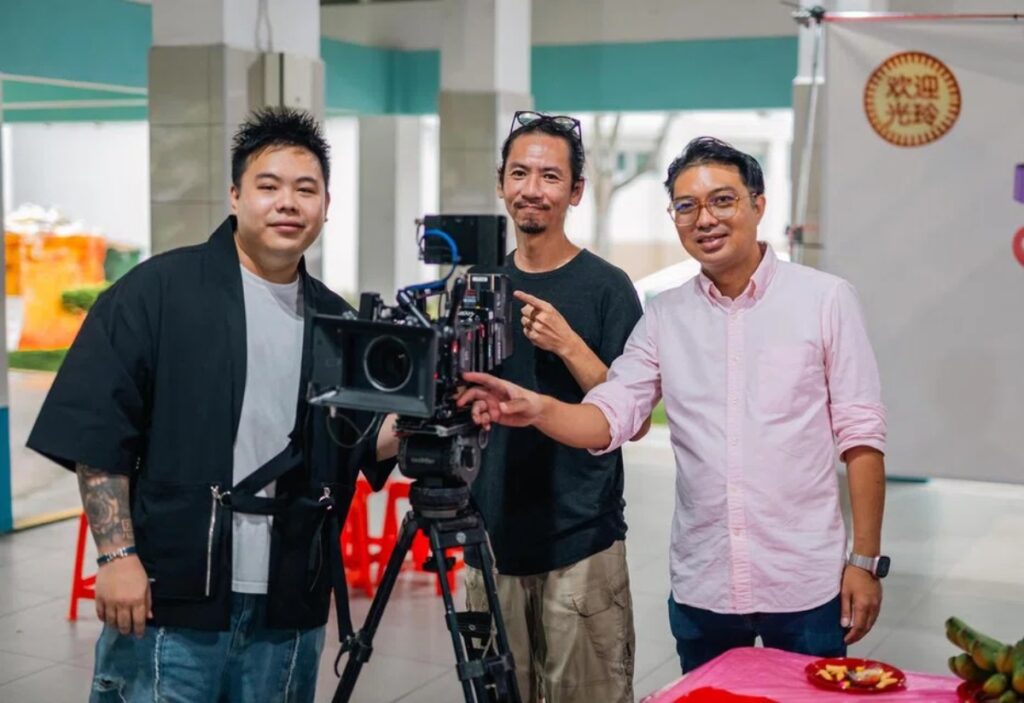
Mayiduo (left) at a 2024 lensing ceremony, a traditional pre-production event in Singapore’s film industry, ahead of shooting Follow Aunty La./ Image Credit: mm2 Entertainment
But his love for movies started long before his business ventures. From a young age, he was “very inspired” by Hong Kong filmmaker Stephen Chow and, closer to home, by Jack Neo.
When I was younger, watching their films, I would think, actually, this is something I can do.
Kelvin’s breakthrough into the film industry came through a friend at mm2 Entertainment who managed to schedule a meeting with founder Melvin Ang.
The pitch landed. Melvin liked Kelvin’s vision, and by end-2023, Double Up Media was co-producing Follow Aunty La with mm2.
The film went through at least eight script revisions
Kelvin drew the idea for Follow Aunty La from the life of Double Up co-founder Charlene Huang, an influencer who started comedy content at 35 and weathered vicious online attacks.
Image Credit: Charlene Huang via Facebook
He not only directed the film but also appears in a supporting role as a bad-tempered director of photography who helps Charlene’s protagonist become a successful influencer.
The story originally centred on an auntie chasing celebrity status, but mm2’s team advised a pivot.
Advertisement
They told me, in this age and time, younger people don’t want to be mingren (名人)—they want to be influencers.
The plot was reworked into an older woman pursuing Internet fame, resulting in a final runtime of two hours and eight minutes.
Kelvin said the film also pushed creative boundaries for Singapore cinema. Follow Aunty La is reportedly the first local feature with a cast composed entirely of influencers, and it frequently breaks the fourth wall—a storytelling choice he claims is rarely seen in traditional productions.
His background in social media made the film relatable, but Kelvin acknowledged that without oversight, it could have felt more like a stretched-out TikTok.
“If I didn’t have supervision, it might just feel like a very long TikTok video,” he said. “But with mm2’s experience and what we Double Up have, we put together something different from our predecessors.”
Advertisement
In the end, the film endured at least eight script revisions in mm2’s “writer’s room”—a process where producers, executives, and the director dissect every scene, every dialogue line, every character motivation.
Cold calls, clients, and conviction
Mayiduo and his cast at the lensing ceremony in 2024./Image Credit: mm2 Entertainment
Singapore’s film ecosystem is heavily tied to government funding. Grants can go up to S$300K under IMDA’s Long-Form Content Grant—but that’s still less than a third of a typical film budget.
Most local films cost around S$1 million to produce, though ultra-tight productions can squeeze by at S$400,000.
Kelvin’s initial plan was to shoot three short films and submit them to festivals to qualify for the scheme, hoping to ease some of the financial burden. Unfortunately, none of the films received nominations.
Kelvin directing and memorising his lines for various scenes./ Image Credit: Mayiduo
He could have shelved the project. But Kelvin didn’t because he truly believed in his work—so he took a different route: he bypassed the system entirely. Instead of chasing grants, he chased sponsors, making multiple cold calls to his network.
Out of the S$1M budget, S$700,000 came from brand sponsorships, and S$300K came from private investors.
Advertisement
These weren’t random sponsors. They were existing clients from his content business—brands already familiar with his ability to drive engagement. From independent watch dealer Watch Exchange to robot vacuum brand Dreame, they appear subtly throughout Follow Aunty La, integrated into props, home settings, and outdoor locations.
His pitch was simple: “This is brand elevation, not ROI”. Kelvin explained that movie sponsorships don’t generate instant returns, but position your brand alongside a cultural moment. Moreover, Kelvin offered a safety net no traditional director could match—if the film flopped, he’d create content to make up the value.
Most of these sponsors are online businesses. They’ve seen results from our campaigns. I told them, worst comes to worst, I can still produce content.
The hidden costs that can kill productions
Screengrab of the Follow Aunty La movie, with Mayiduo wearing a watch sponsored by Watch Exchange in the trailer./Image Credit: Mayiduo
Every single cent matters in movie-making.
Kelvin shared that a film crew covering vehicles, manpower, equipment, food, transport, and locations can burn through about S$30,000 a day.
After nearly a year of planning, filming took just 21 days in Nov 2024. That’s S$630,000 gone before post-production even begins. Factor in cast salaries, editing, colour grading, sound design, VFX, and mastering, and the budget quickly climbs to S$1 million.
Advertisement
Mayiduo with his cast and crew members at the lensing ceremony in 2024./ Image Credit: mm2 Entertainment
If there’s one thing that terrifies Singapore filmmakers, it’s overtime.
Production days typically run 10–12 hours, but delays from bad weather to missed lines can easily push shoots beyond schedule. That’s when costs spike, with overtime pay kicking in at 1.5x rates.
“Ten days of overrun and your budget bursts,” Kelvin said. Thankfully, his production only overran for two days, yet it’s still a significant amount.
Then there’s the period of uncertainty that directors will have to deal with.
From concept to cinema release, Follow Aunty La took over two years—a standard timeline in Singapore’s film industry. But that also means capital is tied up the entire time, with no guaranteed returns.
Advertisement
Making a movie is a very risky business model. It’s a very long process, and your returns are always a big question mark.
For a businessman used to monthly campaign turnovers, the wait was brutal.
“Most of my time was spent convincing people,” he admitted. Without formal film training, Kelvin spent months proving he wasn’t just “some guy who got lucky” to his experienced production team, investors and sponsors.
You can make a great film and still never get it screened
Mayiduo, Charlene Huang and Xixi Lim in Follow Aunty La./Image Credit: mm2 Entertainment
Even after making a film, monetisation isn’t straightforward. Kelvin pointed out a harsh reality: you can make a great film and still never get it screened.
Distribution is key. You must have a distributor before you start. Otherwise, you’re just gambling.
This is where mm2, his co-producing partner, became a key collaborator to Kelvin’s movie. Other than providing film production expertise, the company had strong relationships with cinema chains Golden Village, Shaw Theatres, Cathay Cineplexes and Eaglewings Cinematics.
Without those connections, Follow Aunty La would have been another indie film with no screens.
Advertisement
Follow Aunty La can be found on various streaming platforms like Apple TV, CMGO and KrisWorld./ Image Credit: Mayiduo
To recover a S$1 million budget, a film typically needs to generate around S$3 million at the box office. Cinemas and distributors take their cut, leaving producers with roughly a third of ticket sales, explained Kelvin.
That’s why box office alone isn’t enough.
Filmmakers today also rely on secondary revenue streams, from streaming platforms to airline entertainment systems. But these come with their own barriers.
Kelvin managed to secure deals with platforms like KrisWorld and Apple TV, but Netflix turned him down. “Market too small,” they said.
It’s a harsh reality: despite a decent box office showing, Singapore films often struggle to land major streaming deals, as platforms prioritise content from larger markets like the US, UK, and Korea.
Advertisement
In the end, Follow Aunty La brought in about S$500,000 in Singapore and S$250,000 in Malaysia, alongside smaller platform deals—just enough to break even.
Part of the challenge also comes down to local constraints.
As a director, Kelvin had to balance storytelling with regulatory requirements, including classification by IMDA. Ratings play a critical role—moving from PG13 to NC16 can significantly shrink your potential audience in a small market like Singapore.
That influenced how he positioned the film.
Advertisement
Kelvin aimed to appeal to both younger viewers, who already follow him online, and older audiences, maximising reach in an already limited market. As a result, he targeted a PG13 rating to strike the right balance between accessibility and audience size.
“Film is still a business”
Reflecting on the experience, Kelvin admits that creating short-form content is a faster way to make money than putting out a feature film.
Mayiduo plays a short-tempered cinematographer in Follow Aunty La./ Image Credit: mm2 Entertainment
The filmmaking process is gruelling, financial returns are uncertain, and the local industry is contracting—he predicts a decline unless Singapore filmmakers pivot.
He’s also candid about the shifting landscape: public theatres are no longer the default audience, personal streaming at home is taking over, and generative AI is changing how stories are made.
Yet, he doesn’t want to discourage young filmmakers from entering the scene.
Advertisement
“Film is still a business,” he insists. “A lot of great directors fail because they don’t understand the economics.” While passion is crucial, understanding the finances of a film is equally important for a film to succeed.
With the success of his film, Kelvin hopes to inspire more Singaporean filmmakers to carve a space locally and internationally.
Looking ahead, he’s looking to continue making short-form content and also films that make people laugh. He’s currently acting in other productions—”3 Good Guys” and “Kongtao”—films where content creators increasingly populate Singapore film casts.
It’s a significant shift and rejuvenation to Singapore films as influencers bring loyal audiences, reducing marketing costs that traditionally sink local films.
Advertisement
Kelvin is also exploring regional co-productions, starting with Taiwan first, where budgets run slightly larger at around S$2 million, and the market is larger. This could potentially open doors to audiences and collaborations with China, where budgets are much more lenient and can extend to as large as US$25 million budgets.
The economics may be brutal, but as Kelvin proved, they’re not impossible—if you know which rules to bend.
Read other articles we’ve written on Singaporean businesses here.
Ehsan Noroozinejad of Western Sydney University explores how Australia is leading the charge in creating data centres with a future focus.
On 23 March, the Australian federal government released new expectations for data centres and AI infrastructure.
The message is simple: if companies want faster federal approvals, they must show their projects are in Australia’s national interest, support the clean energy shift, use water responsibly, create local jobs and build local capability.
The government states it will prioritise projects that line up with those goals. Assistant Minister for Science, Technology and the Digital Economy Andrew Charlton said, “We will do what is necessary to ensure the growth of AI is sustainable and underpinned by a strong social licence”.
Advertisement
This is a big shift. It means data centres in Australia are no longer being treated as just another property or tech investment. They’re now being treated as major infrastructure, with real effects on the power grid, water systems, land use and local communities.
What is a data centre again?
Data centres are large buildings packed with computing equipment that stores, processes and moves data. These sites help run cloud services, video calls, online banking, research and the growing wave of AI tools.
While Australia already has more than 250 data centres, that number is set to grow as the AI boom continues. These facilities help power modern life and they can bring jobs, investment and digital capability.
Advertisement
But essential infrastructure still needs public trust. And that trust will depend on whether these facilities pay their own way, or whether nearby communities end up carrying the hidden costs through more pressure on electricity, water and scarce urban land.
Electricity is the first big issue
A report prepared for the Australian Energy Market Operator found data centres in Sydney already use about 4pc of New South Wales’s grid-supplied electricity. By 2030, that could rise to 11pc.
Nationally, the Clean Energy Finance Corporation says data centres could account for up to 11pc of Australia’s total electricity use by 2035.
The same report states Australia would need another 3.2GW of renewable electricity generation and 1.9GW of battery storage by 2035 to contain price rises and avoid extra emissions.
Advertisement
That doesn’t mean data centres are automatically bad for the energy system. In fact, they could help fund new renewable energy, storage and grid upgrades if the rules around that are right. But that is the key point: if the rules are right and the government enforces them.
Water is the second issue
Not all data centres use the same amount, because water demand depends heavily on their cooling systems and what water source they use. But water can no longer be treated as a side issue.
A Water Services Association of Australia report on data centre water use in Australia says estimates for Sydney range from about 1.9pc of water supply by 2030, to around 15 to 20pc by 2035.
The water question is not just local. Australia’s water utilities say current data-centre use is still low, but future centres are likely to be much larger, with developers already seeking 5m to 40m litres a day. One industry estimate puts current use at less than 0.1pc of Australia’s total water, but future demand will depend on cooling choices and water source.
Advertisement
Hence the new federal expectations: data centres must use water sustainably, work early with utilities and communities, use non-potable water where possible, pay their share of infrastructure costs, and report water use transparently.
Then there is land
Many data centres are drawn to major cities because they need strong power, fibre links, water, site access and, in some cases, proximity to end users. But that also means they often compete for industrial land
In New South Wales, industrial land is already under pressure and is needed for logistics, urban services, jobs close to home and the construction supply chains that help deliver housing.
In January, NSW set up a parliamentary inquiry into data centres. It’s looking at electricity demand, grid impacts, water use, drought risk, noise, heat, traffic, land-use conflicts and whether data centres’ resource demands are impinging on new housing supply.
Advertisement
It is also asking who gets the benefits, who carries the costs and how transparent the approval process really is. In other words, NSW is already treating data centres as a public interest issue. Other states may need to follow, because federal expectations alone cannot resolve state planning and land-use conflicts.
What can we expect from the new federal policy?
At best, the new expectations should end the idea that any data centre is a good data centre simply because it brings private investment.
If the government adheres to its own rules, new data centre projects should bring their own clean power or help fund it. They should use water efficiently and, where possible, use recycled or non-drinking water. They should create real local jobs and skills. And they should be open about their energy, water and environmental performance.
The way forward is not to block data centres – Australia will need more of them. The answer is to be much more selective about where they go, how they are powered, how they are cooled and what they give back.
Advertisement
If they are essential infrastructure, they should meet the same test as any other big piece of infrastructure: serve the public, not just the market.
Ehsan Noroozinejad is a senior researcher and sustainable future lead at the Urban Transformations Research Centre, for Western Sydney University. He specialises in smart and resilient construction and also holds a position at UBC Smart Structures in Canada. As the director of the Resilient Structures Research Group, Dr. Noroozinejad has spearheaded groundbreaking advancements in the field of structural engineering alongside an esteemed team of international researchers. His contributions have been recognised via numerous national and international awards and commendations.
Don’t miss out on the knowledge you need to succeed. Sign up for the Daily Brief, Silicon Republic’s digest of need-to-know sci-tech news.
Hisense is on the up. When it first launched in the UK, it was mainly seen as a budget player within the TV market, but slowly and surely, it’s progressed to become a household name.
That transition has seen it transform from a cheap and not always cheerful TV manufacturer to a more consistent one.
There was a time reviewing Hisense TVs where you weren’t sure which version of Hisense was going to turn up. Now, the most recent U8Q was the most complete Hisense TV I’ve tested.
With RGB Mini LED, it’s putting a stake in the ground and marking its territory. This new generation of TVs could hand Hisense an opportunity to make ground and become a challenger to Samsung’s throne.
Advertisement
I went to its European showcase in Munich, Germany, to see what Hisense has stored for 2026.
Advertisement
A seat at the table
Like a scene from a crime movie, Hisense doesn’t just want to be involved, it wants a seat at the table. It wants influence. It wants control.
And that was the (non-criminal) approach it’s taking with RGB Mini LED. Not unlike a new set of rules and regulations in a sport such as F1, RGB could upset the pecking order. Hisense is willing to take the risk, therefore the opportunity, to grab more market share.
Advertisement
Hisense is currently in good standing. According to information gathered from GfK data, in terms of market sales in the UK, Hisense, along with Panasonic, were the only TV brands driving value with the rest in decline. Revenue is up, volume of TVs sold is increasing, market is share is getting bigger. Everything is coming up Milhouse for Hisense.
The brand wants to become synonymous with RGB Mini LED, as Samsung did with QLED and LG has with OLED.
Image Credit (Trusted Reviews)
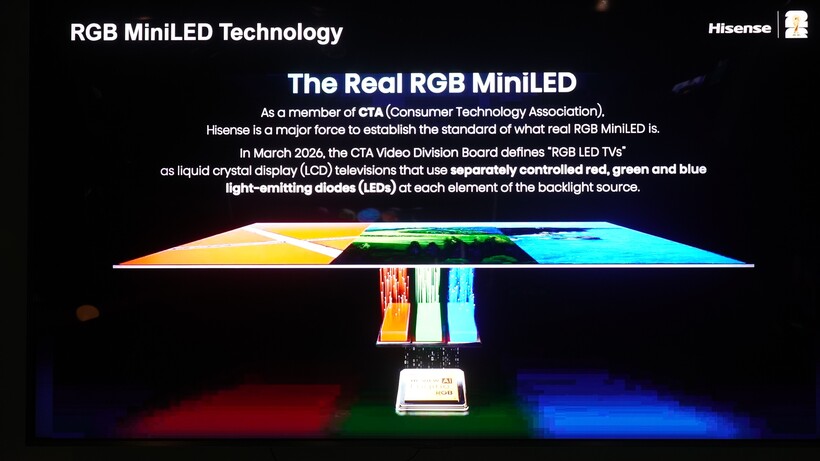
To that extent, it’s been involved in discussions with the CTA Video Divisions Board about determining the standard of ‘real’ RGB Mini LED. As we’ve seen with the Samsung/TCL dispute, it can open up accusations of not delivering true picture quality if some feel you are being misleading.
Advertisement
The definition, by the way, is “RGB LED TVs as liquid crystal display (LCD) televisions that use separately controlled red, green, and blue light-emitting diodes (LEDs) at each element of the backlight source.”
Advertisement
Seems simple enough, but if you’ve watched F1 this season, you’ll know how easy it is for some teams to fall behind.
Hisense is helping to establish the standards, which means it has a stake in what RGB is, and in aligning itself with RGB in marketing terms, the hope is that customers associate the tech first and foremost with Hisense.
Come at the King, you best not miss
Image Credit (Trusted Reviews)
But it’s not as if Hisense is the only player at the table.
Advertisement
The most obvious is Samsung, which will launch several RGB TVs. It’s had good and bad experiences in dictating market trends, winning with QLED and failing with 8K. However, those experiences mean Samsung has more knowledge when it comes to dealing with the ups and downs with new generations of TVs.
Advertisement
Hisense is building up a head of steam but Samsung is an established head. Even if the last few years have been rocky with usurpers to the throne (such as TCL), it is still in the lead, and has fended off challengers for the last twenty years. You can’t lose that level of experience.
But you can (eventually) beat it, but doing so takes a level of organisation. Hisense has been building its personnel by getting people who’ve worked at Samsung, LG, and Sony, but there are still times when Hisense’s thinking does not always seem joined up.
Organisationally, it can be hit and miss. For instance, Samsung have the confidence to hold one event and bring people from across Europe. Hisense is holding separate events across Europe and I can’t imagine they’ll be much different between them. A siloed approach is as effective as a unified one.
To continue the sports analogy, you only need to look at the difference between Arsenal and Manchester City to see the difference between a team that’s almost-there and a team that’s been past the finish line. The last inch is often the hardest to find.
Advertisement
Get ready, set…
Regardless, 2026 could be a pivotal year for Hisense. It’s built up a good reputation and goodwill with customers, and it’s delivering better products. It could be on the verge of something great, but it’s easier to chase than to be chased.
Advertisement
Hisense won’t be at the top of the TV table this year, but it’s planting seeds with its RGB Mini LED TVs. Get it right, and the success could propel it forward.
Hisense is establishing a foundation, but the foundation needs to be strong. We’ll see how strong the fruits of its labour are once the UR8S and UR9S RGB TVs launch later this year.
Caviar is launching the extravagant device to coincide with Apple’s 50th anniversary this year, hence its inclusion of the “50 Anniversary Edition” text on the rear. Read Entire Article Source link
We may receive a commission on purchases made from links.
Few things make you feel more despondent than when you get behind the wheel for a drive and your car won’t start. Congratulations — your battery’s dead! Not only is this an inconvenience on your whole day, but you end up having to spend a lot more money than you initially anticipated. Unfortunately, you’re backed into a corner and have to buy that new battery if you want your car to continue working.
While it’s great to recommend the best batteries for certain vehicles, these top-tier batteries aren’t always the most budget-friendly options. The cost of owning and maintaining a vehicle can be so high that finding any way to save a little bit of cash without sacrificing too much quality is of the utmost importance. That’s where a resource like Consumer Reports comes in handy. For whatever battery size your vehicle may use, CR has determined what it believes which car batteries are going to give you the best bang for your buck, ranging from the smallest sizes (24/24F) sizes to the largest (94R).
Advertisement
These may not necessarily be the best overall battery based on Consumer Reports’ expert testing or the satisfaction scores from actual owners, but they do inhabit that perfect middle ground. Some of these batteries are from the big name brands, while others are from smaller companies you may or may not have heard of. Here, we take a look at five car batteries — each a different size — that Consumer Reports believes will get you the best quality for the value.
Advertisement
Weize Platinum 24F AGM
We’re going to start with the 24/24F battery size. This is the smallest vehicle battery that Consumer Reports has tested and reviewed. You’ll typically find these batteries in vehicles produced by a number of the big name Japanese automakers, such as Honda, Toyota, Nissan, and their luxury brand counterparts. For this size, CR has determined that the best battery for a good price is the Weize Platinum 24F AGM.
This is most certainly a case of not sacrificing quality for price. Among all of the 24/24F batteries tested by the publication, the Weize Platinum has the second highest overall score of them all, barely beaten out by the Duralast Platinum 24F AGM. The reason for that battery’s number one placement comes down to it performing a little bit better than the Weize in cold weather, but the Weize still has very good numbers there as well. The Weize battery even has a “Green Choice” designation from CR, indicating a battery with a lower environmental impact than average.
Even though the two are close together in ratings, there’s a significant difference in their prices. The Duralast battery sells for $259.99, but you can get the Weize Platinum 24F AGM for just $159.99. Neither of these prices include the typical $22 refundable core charge you’ll have to pay when purchasing a new battery. That means getting this Weize battery will save you $100 for a product that performs just about as well as the top-ranked battery in its class. That’s a tough deal to pass up.
Advertisement
Weize Platinum 35 AGM
The love for Weize batteries from Consumer Reports doesn’t stop with the 24/24F sizes. For a variety of different sizes, the publication has found the brand to be the best value for the money that you can get on the market. One of those is the size 35 batteries; here, the Weize Platinum 35 AGM takes the cake. This is basically the same battery as the 24F model but made for vehicles that need that larger size. These are still predominantly found in cars from Japanese companies like Honda, Mazda, Subaru, and Toyota.
Unlike the 24F Weize battery though, the Weize Platinum 35 AGM doesn’t rank quite as highly among batteries of its size by Consumer Reports. Among all of the 35 batteries tested, it’s the lowest rated of the bunch, though it still manages to get a “CR Recommended” stamp of approval. The publication recommends a total of 13 batteries in this size range, more than triple the number of recommended 24/24F batteries. That being said, a battery ending up on the list is still a strong show of quality, and the ratings for things like cold weather performance and reserve capacity stack up very well against the competition.
Advertisement
The top-rated size 35 battery by Consumer Reports is the X2Power Premium AGM SLI35AGMDP, which sells for a whopping $369.99. You can get the Weize Platinum 35 AGM for just $159.99, the same price as the 24F model. It may not be the very cream of the crop, but it’s fairly close to that level. With that slight dip, you’re saving over $200, more than the cost of the Weize itself.
Advertisement
EverStart Platinum AGM H5/47
We move away from Weize for size 47 batteries. Also known as H5s, these are models that you’ll find in certain American vehicle brands like Buick and Chevrolet, as well as international ones like Volkswagen and Fiat. Even though there’s a Weize Platinum battery for this size, Consumer Reports hasn’t tested it. Instead, the best value for your money as determined by the publication is the EverStart Platinum AGM H5/47 battery.
EverStart is Walmart’s exclusive line of car batteries, and by and large, real world owners are quite happy with their EverStart batteries. CR agrees with these findings, as this EverStart H5 ties for second place in its rankings among all of the other batteries of its size the publication has tested. In that four-way tie with batteries made by DieHard, Duracell, and Interstate, the EverStart is the only one to be given the “Green Choice” designation for low environmental impact. This is something it shares with the top-rated Duralast Platinum AGM 47/H5 battery.
The difference in price between the EverStart and Duralast batteries isn’t quite as substantial as the previously mentioned ones, but it’s still savings that anybody would be happy with. The EverStart Platinum AGM H5/47 battery sells for $189, whereas that top-rated Duracell model goes for $259.99. That’s a roughly $70 discount for going from CR’s number one H5 battery to the number two; considering how the publication rates their respective performances, they truly are neck and neck competitors.
Advertisement
Weize Platinum QTF-70
Going to the size 48 — or H6 — batteries, we return to a very familiar face on this list. Weize is once again the brand that Consumer Reports finds to be the best quality for its value. The Weize Platinum QTF-70 is in the same line as the aforementioned 24F and 35 models, but this one is made for vehicles that need H6 batteries. You’ll see these across a wide spectrum of cars, SUVs, and trucks from brands all over the world, including Cadillac, BMW, Mercedes-Benz, Jeep, GMC, Volvo, and more.
Among all of the H6 batteries tested by CR, the Weize model is ranked fourth behind those produced by Champion, Odyssey, and Optima, with the Odyssey Performance 48-720 battery being at the top of the heap. The Odyssey does outperform the Weize when it comes to cold weather performance, but Weize has the edge with reserve capacity. The Platinum QTF-70 even has a distinction of being a battery with one of the longest lifespans you’ll find on the market. Either way, the two models aren’t too far off from one another, and there’s no area where CR finds the Weize battery to be lacking in any major way.
Advertisement
Like the two previous Weize models, the Platinum QTF-70 sells for $159.99. While it’s impressive that Weize has a standardized price for all of these batteries, it’s even more so when compared to the price of that top-rated Odyssey model, which retails for a massive $362.99. A $203 difference between two batteries that Consumer Reports believes to be fairly comparable is enough to make anybody think twice about buying.
Advertisement
DieHard Gold #65-2
For the final battery on this list, we go to a size that Consumer Reports has once again not tested a Weize-branded product. Size 65 batteries are made for larger SUVs and trucks, and you’ll find them primarily under the hoods of Ford and Mercury vehicles. To get the best bang for your buck in this category according to CR, you need to look to the DieHard Gold #65-2. DieHard is admittedly one of the best car battery brands on the market, and this particular model ranks fifth overall in the publication’s ranking of size 65 batteries, finishing just one spot below the Platinum 65 from the same company.
Even though the Platinum performs slightly better in cold weather and has a lower environmental impact, Consumer Reports still finds the DieHard Gold to be the best value. On the market, the Gold goes for $214.99. That’s just $20 less than the Platinum version, but even that small amount is enough for CR to recommended the Gold over it. That shows that it doesn’t find the difference in the two batteries to be that dramatically different.
You get even further savings when you compare the DieHard Gold to the top-rated battery of this size, the Super Start Platinum AGM 65PLT, which sells for $259.99. While $45 may not seem like the deal of the century — especially when compared to the hundreds of dollars other batteries on this list saves you — that’s still a good chunk of change you can put to something else you need. The DieHard Gold #65-2 gets you solid performance for a solid price.
Malicious ads are pushing fake Homebrew installers to Mac users, and the attack relies on trusting the first Google search result.
macOS Terminal
Attackers are buying Google ads to place a fake Homebrew site above the real one, then trick users into running a malicious Terminal command. The tactic is effective because it leans on routine behavior instead of technical exploits. Developers and everyday Mac users rely on Homebrew to install software, which makes it a high-value target. The real installation process already involves pasting a command into Terminal, so the fake version doesn’t immediately stand out. Continue Reading on AppleInsider | Discuss on our Forums
The Loop Quiet 2 look almost identical to the Loop Experience earplugs, but there are two crucial differences: With no acoustic filter, they’re capable of blocking out more noise—24 dB rather than 18—and they’re made entirely from soft silicone, including the round protrusion that sits almost at right angles to the interchangeable tip. That means these silicone earplugs fit right inside the concha of your ear, entirely flush with your head, so when you lie on your side there is very little force applied to the earplug and also less chance of inadvertently knocking them loose. That makes the Loop Quiet 2 the most comfortable earplugs for sleeping.
The loop itself is made of silicone, but it’s rigid enough that putting the earplugs in or taking them out is easy. They feel nice and snug when in situ without giving you that bunged-up feeling that comes with some pairs. You get four different-sized sets of ear tips (though actually changing the ear tips can be a pain), and the whole thing is washable in warm water. They even come in four colors, so you can match them to your bedsheets. —Parker Hall
Best Earplugs for Concerts
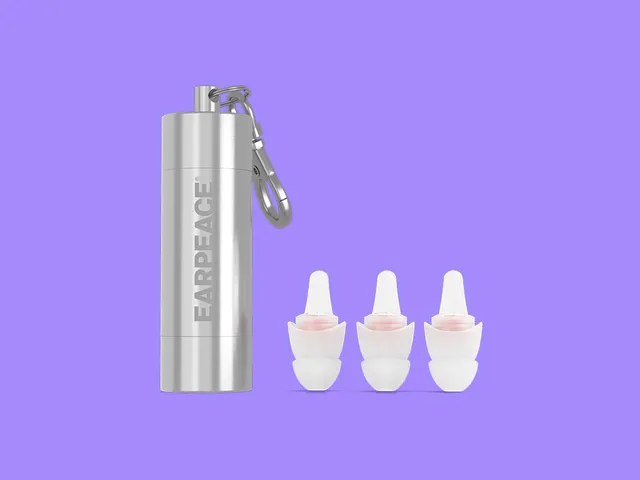
When I went to see my wife’s favorite band, the opener was a doom-metal duo with full stacks of amplifiers. I grabbed some foam earplugs from the bar, but I’d have fared much better if I’d had the Earpeace Music Pros on my keychain.
These NPR-backed earplugs fit perfectly in my ears and come with a small aluminum carrying case. They’re super comfortable and can pull a solid 13 decibels from noisy signals—often the difference between some hearing damage and none—in a way that doesn’t suck all the high end out of the sound. Don’t just take my word for it. Legendary NPR music critic Bob Boilen says he has worn his at thousands of shows. —Parker Hall
Advertisement
Best Cheap Earplugs for Shows
Photograph: Louryn Strampe
Eargasm
High Fidelity Earplugs
These super-comfortable earplugs can reduce noise by up to 22 decibels, and they won’t irritate your ears even if you wear them for 18 hours at a time. The silicone shell is easy to clean, and you’ll get three sizes to ensure a proper in-ear fit, plus a handy metal keychain case where you can store them. I frequently wear them at some of the loudest bass music festivals in the world, and they do a good job at filtering out extreme highs and lows without muffling the sounds I paid to hear. My only complaint is that the silicone shells can get yellow over time, but the attenuators on my oldest pair are still kicking after five years. —Louryn Strampe
Advertisement
Photograph: Louryn Strampe
I keep these on my keychain and wear them almost every weekend, whether I’m watching live dubstep or live hardcore. I love them. They’re tiny, looking almost like jewelry when they’re sitting in my ears, and they stay comfortable once they’re seated properly (which does have a bit of a learning curve, so try them out at home before heading to the show). I like how visible they are when I’m wearing them, which serves the purpose of educating the youth on the importance of hearing protection and preventing my friends from thinking I’m ignoring them when I really just can’t hear them. I also really like the limited-edition Swarovski style, but be aware that the metal can feel quite chilly if the environment is cold (and they’re often sold out). I also like that the included case flips open, which is easier to use if you’re in a crowd getting jostled trying to cram in your hearing protection compared to a metal case that unscrews. I’ve handed a couple of pairs of these earplugs out to my friends and they’ve echoed my approval. —Louryn Strampe
Best Adjustable Volume Earplugs
These earplugs from Loop look like the brand’s other doughnut-shaped buds, but with a special trick up their sleeve. You can toggle the outside of each bud between three positions for variable sound reduction. You can switch between a lot, a little, and nearly no noise, which makes these great for live festivals, where artists can vary in volume from “just a little loud” to “dear Lord, I might never hear again.” I also like that they’re light and comfortable, with easy-to-clean silicone ear tips and plastic outer shells. You can even get them in cute colors like blue and salmon pink.
Republicans spent three years suffering an embolism over Chinese influence over TikTok, but have suddenly gone mysteriously quiet now that $25 billion in Saudi, Chinese, and other foreign cash is helping to bankroll right wing billionaire Larry Ellison’s $111 billion acquisition of Warner Brothers. They’re also suddenly quiet about Larry buying up huge sections of the media environment (TikTok, CNN, CBS, HBO, Warner, Paramount), despite previously pretending to care about media consolidation.
There’s an opportunity for Democrats to highlight the hypocrisy here, provided they’re competent enough to message their concerns in a way that resonates with the press, public, and social media (not historically the party’s strong suit).
In a letter to the FCC, seven Democrats urged the agency to launch an investigation into Saudi and Chinese backing of the deal in the hopes of bringing some additional press attention to journalist-murdering autocracies being tightly intertwined with U.S. media and journalism:
“The national security concerns are specific and serious. Tencent’s relationship with the Chinese Communist Party is well-documented. Chinese law also requires domestic technology companies to cooperate with state intelligence services on demand. A Tencent stake in the parent company of CBS News and CNN, no matter how “passive” on paper, creates concrete avenues for potential foreign influence over the editorial independence of American broadcast journalism and content.”
Brendan Carr’s FCC will, of course, ignore the request. Brendan Carr spent years on cable TV hyperventilating about China’s distant proxy relationship with TikTok, but has since gone curiously silent despite China’s Tencent involvement in the deal.
Advertisement
Paramount is trying to avoid triggering CFIUS scrutiny of foreign influence by insisting that the three Middle Eastern sovereign wealth funds (Saudi Arabia’s Public Investment Fund (PIF), the Qatar Investment Authority (QIA) and the Abu Dhabi Investment Authority (ADIA) “have agreed to forgo any governance rights — including board representation — associated with their non-voting equity investments.”
We’ve noted how the U.S. right wing is trying to mirror Victor Orban’s assault on media in Hungary, which involved autocrat-friendly oligarchs buying up all the media companies while the government strangles independent truth-telling journalism just out of frame. Over long enough of a timeline, this trajectory routinely leads to first the arrest — and eventually murder — of journalists critical of party power.
Republicans are making obvious, steady progress in that goal so far, and will keep pushing until they run into opposition that consists of more than just feckless Democrat “concerns.” Democrats should be highlighting, at every opportunity, not just the potential soft power foreign influence over the deal, but the right wing’s unsubtle goal of widespread information warfare and control.
Even free of autocratic issues, the Warner Brothers Paramount deal is just generally terrible; the massive debt load is expected to trigger unprecedented layoffs across a Hollywood production industry that’s already reeling. The best chance for blocking the deal outright currently sits with a coalition of state attorneys general, though even they likely face a steep uphill climb without some significant political, press, and public support.

















.jpg)
-Offwhite-Background-SOURCE-Loop.jpg)






































You must be logged in to post a comment Login