Connect with us
DAPA Banner
DAPA Coin
DAPA
COIN PAYMENT ASSET
PRIVACY · BLOCKDAG · HOMOMORPHIC ENCRYPTION · RUST
ElGamal Encrypted MINE DAPA
🚫 GENESIS SOLD OUT
DAPAPAY COMING

Tech

NYT Strands hints and answers for Monday, June 29 (game #848)

Published

on

Looking for a different day?

A new NYT Strands puzzle appears at midnight each day for your time zone – which means that some people are always playing ‘today’s game’ while others are playing ‘yesterday’s’. If you’re looking for Sunday’s puzzle instead then click here: NYT Strands hints and answers for Sunday, June 28 (game #847).

Strands is the NYT’s latest word game after the likes of Wordle, Spelling Bee and Connections – and it’s great fun. It can be difficult, though, so read on for my Strands hints.

Want more word-based fun? Then check out my NYT Connections today and Quordle today pages for hints and answers for those games, and Marc’s Wordle today page for the original viral word game.

Advertisement

Source link

Advertisement
Continue Reading
Click to comment

You must be logged in to post a comment Login

Leave a Reply

Tech

BT and Verizon sign ‘major milestone’ tie-up to connect customers across 180 countries

Published

on


  • BT and Verizon new joint venture could target $4 billion in annual revenue
  • The companies are targeting 3,000 global enterprises across 180+ countries
  • AI and cloud are the two primary selling points for this new joint venture

BT and Verizon have come together to form a 50:50 joint venture looking to serve around 3,000 multinational customers across more than 180 countries.

The official announcement details the creation of a new “scaled international connectivity platform” designed for a cloud-first, AI-first world.

Source link

Continue Reading

Tech

UK firm bombarded debt-ridden people with 5.5M texts

Published

on

public sector

KRA Consultancy Ltd fined £300K over fake bailiff threats in ‘calculated’ scheme that caused ‘real fear and distress’

“Am I confident on the data set? As long as I’m doing the cases, I don’t really give a f*** if it’s old as long as it’s making money.” 

According to the UK’s Information Commissioner’s Office (ICO), this was part of a message sent by the director of a company fined for targeting financially vulnerable people with unlawful texts, including fake bailiff messages.

Advertisement

The message, sent by KRA Consultancy Ltd (KRA) director Khuram Rezvan Ahmad, appeared in the watchdog’s monetary penalty notice, which said the firm did not check “the loan decline data was accurate” or whether the recipients had consented to receive marketing messages.

The regulator fined KRA £300,000 last week, saying it had targeted people who were already in financial difficulty and had been turned down for loans. The watchdog described the operation as a “calculated, unlawful scheme,” saying the fake bailiff messages had left recipients fearing that bailiffs were coming to their homes to remove their family’s belongings.

The ICO said KRA sent fabricated bailiff threats in the hope of scaring recipients so much that they would then engage with the company’s debt services. The fake messages were sent using the sender ID “DEMAND.”

It read: “We have attempted on numerous occasions to contact you without any success. This matter has escalated further and an Enforcement agent will attend ****** within 48 hours to remove your goods as per Court Order. If you are on any legal/debt plan you will need proof readily available.”

Advertisement

The ICO also claimed the company deliberately tried to evade detection. It alleged that Ahmad had contacted a telecoms provider based in China and sought assurances from the telco that the mass text messages would be “completely untraceable.”

KRA promoted debt “solutions” to people, sending 5,575,715 unsolicited direct marketing texts between April 2022 and May 2025, the watchdog said.

The campaign generated more than 60,000 complaints to the ICO and Mobile UK’s 7726 spam-reporting service.

The company was not registered with the Financial Conduct Authority, despite directing people towards debt solutions, the ICO added.

Advertisement

In internal WhatsApp messages uncovered during its investigation, the ICO said Ahmad used the term “coaching” as a euphemism for the threats.

“Get through as much as and pitch whatever. Don’t worry about forcing anything back because the coaching will take care of that tomorrow morning.”

During the ICO‘s investigation, search warrants were executed at KRA’s offices and Ahmad’s home. The watchdog said KRA resumed its unlawful marketing activity following the searches, leading to 161 new complaints.

Andy Curry, head of investigations at the ICO, said:

Advertisement

“People in financial difficulty deserve support, not exploitation. KRA deliberately sought these people out – knowing they might be especially susceptible to this kind of high-pressure marketing – and bombarded them with illegal texts. When that wasn’t enough, it sent fake threats telling people bailiffs were coming to their homes to remove their belongings. This was a calculated, unlawful scheme, and it caused real fear and distress to people who were already struggling with debt.

“KRA showed complete disregard for the law throughout our investigation and this £300,000 fine – one of the largest for nuisance marketing in recent years – reflects that. It should leave no doubt that we will pursue any company that thinks it can evade the law and prey on the public.”

Alongside the Monetary Penalty, the ICO also issued KRA with an Enforcement Notice, ordering the company to stop sending marketing messages without consent within 30 days. ®

Source link

Advertisement
Continue Reading

Tech

Polymarket says it will refund users after hackers drained close to $3 million from wallets

Published

on


The prediction market platform said the incident took place on Thursday morning and affected a “small number of users.”
Read Entire Article
Source link

Continue Reading

Tech

Level Home restructuring leaves users safe as founders warn

Published

on

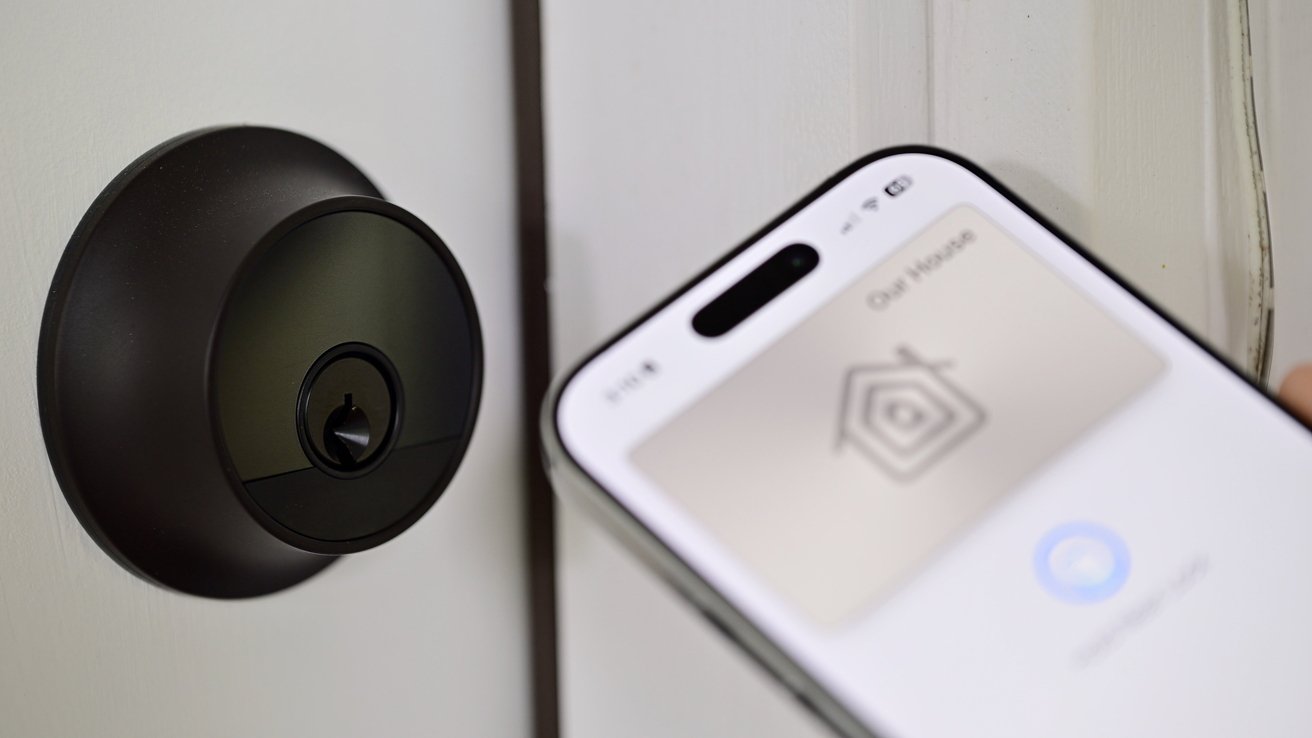
Assa Abloy, the parent company of Level, has laid off most of the company’s staff. While the Apple Home Key locks will work in the short term, others are concerned about the platform’s future.

The Verge reported on June 26 that Assa Abloy laid off most of Level Home’s employees and is folding the smart lock maker into its Kwikset brand. Assa Abloy disputed reports that Level was shutting down.

The company said it will continue developing, selling, and supporting its smart locks while keeping customer support in place. Existing owners shouldn’t expect immediate problems.

Basic locking and unlocking through Apple Home and Matter should continue because those features work locally instead of relying on Level’s cloud. Features such as the mobile app, auto-unlock, and door status updates still depend on the company’s online services.

Advertisement

Assa Abloy hasn’t announced any plans to shut those services down. If that ever changed, cloud-based features could stop working while local Apple Home and Matter functions would continue.

The restructuring reportedly includes the departure of Level co-founders John Martin and Ken Goto along with most of the engineering team. However, a small group of employees will stay on to finish a smart lock designed for multi-family housing.

According to The Verge, the anonymous source who described the restructuring offered a much less optimistic view of Level’s future.

“I think consumers should know that Assa Abloy is not equipped to preserve the customer base,” the source told the publication.

Advertisement

Assa Abloy bought Level Home in 2024 and already owns Kwikset and Yale. Folding Level into Kwikset brings three smart lock brands under the same parent company.

Level will continue operating as a business within Assa Abloy, the company said. Assa Abloy said it remains committed to investing in the smart lock category and doesn’t expect existing customers to see any changes to product support.

Level earned a following by hiding its battery, motor, and electronics inside a standard deadbolt instead of adding a bulky interior box. The design, combined with support for Apple’s Home Key feature, made it one of the more distinctive smart locks in the Apple Home ecosystem.

Current owners don’t need to replace their locks or worry about losing basic functionality based on Assa Abloy’s statements. The bigger unknown is whether Level will keep introducing new products and features, or if the Level cloud functionality will keep working, after losing much of the engineering team that built the platform.

Advertisement

Source link

Continue Reading

Tech

5 Of The Best Modern CD Players You Can Buy In 2026

Published

on


We may receive a commission on purchases made from links.

CDs are still alive and kicking. With Gen Z embracing physical media as a reaction against the algorithm-driven consumption of streaming services, it looks as if the humble compact disc may once again be on its way to some sort of relevance. The format will probably never become as popular vinyl disks, which topped $1 billion worth of sales in 2025, nor will it reach its 2000s peak, but an uptick in year-on-year revenues for 2026 shows that there may be a future for CDs after all.

Advertisement

Of course, buying CDs is of no use if you don’t have anything to play them on, but even that market is seeing something of a renaissance as of late. China-based manufacturers such as FiiO, Moondrop, and Shanling have released a range of compact, portable CD players that are easy to integrate into most lifestyles, relieving buyers of the cost and space requirements of traditional, full-size CD players. Those are the sorts of CD players we’ll focus on in this article.

Now, don’t get us wrong: Full-size players are great, and a valid option for those committed to the format. But for those who aren’t quite ready to step into the world of Hi-Fi, products from the aforementioned manufacturers offer great ways to get into the hobby and experience the joys of physical media without having to break the bank — although that’s an option, if you so desire.

Advertisement

FiiO DM13

FiiO is a veritable titan of the portable Hi-Fi (or “head-fi”) space, having a series of excellent audiophile-grade music players and other gadgets for digital audio fans under its belt. And so it was not at all a surprise when the company jumped on the CD player bandwagon in 2024 with the DM13 — and that it did good job, too.

The $160 FiiO DM13 is not the absolute cheapest CD player you can get, but it’s arguably one of the best places to start for those who want a portable setup. It has dual Cirrus Logic CS43198 digital-to-analog converter (DAC) chips paired with dual headphone amplifiers, and offers both single-ended and balanced headphone outputs, as well as Bluetooth. The rear panel has a balanced 4.4 mm line out jack, as well as a 3.5 mm combo jack that can output analog or digital audio, the latter over coaxial or optical. It runs on a 3,750mAh battery and has a battery bypass switch for desktop use. On top of this, the DM13 will also rip CDs to FAT32-formatted USB storage devices.

The DM13 has the sound quality to back up its solid features, too. No, it’s never going to be the final word in CD playback, but it offers a clean sound that should have you tapping your feet in no time. It may just be enjoyable and full-featured enough that some of you will never feel the need to upgrade.

Advertisement

FiiO DM15

FiiO’s $270 DM15 combines a now-retro format (the CD) with another old-school throwback in the form of the R2R tech it uses for digital-to-analog conversion. Without wishing to get too technical, R2R DACs use a network of resistors do to the conversion, instead of the Cirrus Logic, ESS, or AKM chips you’ll see advertised in other DACs.

Advertisement

Speaking from experience, R2R DACs tend to sound warmer and a bit more like analog media than conventional DACs. Is it a night-and-day difference? Probably not, but these DACs do impart a certain flavor. The DM15 lives up to this promise, with reviews praising the unit’s rich and warm sound. It’s not one for the treble-heads, but it’s an agreeable delivery that many should find enjoyable. Our Andy Zahn spent time with a DM15 and thoroughly liked how it sounded, as well as all the other perks, such as CD ripping and the 7-hour runtime from its 4,700mAh battery.

One big advantage of the DM15 over its cheaper sibling, the DM13, is that this model also functions as a DAC. Simply connect it to a PC over USB and it’ll happily decode your digital files, supporting up to 384 kHz and DSD256. Whether you’re playing digital files or a CD, the DM15 lets you pipe the music through its single-ended and balanced headphone and line outputs, coaxial and optical digital outs, or Bluetooth.

Advertisement

SMSL PL200

Portable CD players are definitely having a moment in the sun, but there are companies still flying the flag for home units. Some of these come in smaller, living room-friendly packages that don’t need a Hi-Fi rack, and one of our favorites is the SMSL PL200.

The $669 SMSL PL200 is a beautiful product with its sleek metal design, tactile piano key buttons, and top-mounted CD loading. The latter certainly offers a novel experience, especially since it means you can see the CD spinning — although it does mean you can’t stack any gear on top of it. It’s not just a good looker, though, and boasts a high-end AKM AK4499EX DAC under the hood. The PL200 has, somewhat contradictory, been described as both a clean, neutral-sounding CD player as well as one that sacrifices detail for a more emotive presentation.

This difference is probably due to the rest of your gear, as reviews have noted that the PL200 can sound a bit thin with the wrong headphones. We found it to be more toward the neutral side of the spectrum ourselves, but that may say more about the debatable meaning of “neutral” than anything else. Either way, as long as you buy from a retailer with a good returns policy, you’ll probably be fine. If you already have a standalone DAC — a must-have audiphile gadget, if you ask us — you can go for the PL200T CD transport instead.

Advertisement

Dunu Concept R

There have been many stylish CD players over the years, but we’d argue that few modern units come close to the visual appeal of the Dunu Concept R. The $750 Concept R, is, as you’d hope given the price, a premium device that combines an eye-catching design with genuine audiophile chops.

Advertisement

The Concept R packs a high-end R2R DAC and an amplifier that can run in either Class A or Class AB mode, letting you choose the which best suits your preferences. The headphone outputs are impressive, too, with the 1.3W output level likely enough for all of the best wired headphones on the market. Sound-wise, the Concept R is reportedly on the warmer side of the spectrum, but not overly so; music still sounds clean and precise, with strong stereo width and depth. Dunu complements the Concept R’s sonic capabilities with USB DAC functionality and TOSLINK optical out, allowing you to integrate it into almost all setups. Its 12,000mAh battery means that it’s technically portable, too, but at around 2.5 pounds and eight inches long, “transportable” might be the better term.

And then there’s the look. We mentioned it earlier, but it bears repeating: The Concept R is a stunning example of product design. Machined out of a single block of aluminum, this premium CD player has a chunky but sleek retro-futuristic look that is a pleasure to look at, whether it’s playing CDs or just sitting there looking pretty. Some rugs may tie a room together, but the Concept R would do just as good of a job.

Advertisement

Moondrop DiscDream 2 Ultra

Moondrop is a fixture in the head-fi world, with a large catalog of headphones, in-ear monitors — including the Chu II, one of the best affordable wired earbuds you can get — and other gear on offer. The company released its first CD player, the DiscDream, in 2023, and quickly followed it up with the DiscDream 2 and DiscDream 2 Ultra in 2024.

All of Moondrop’s portable CD players are well worth considering, but the $350 Ultra is the one that has garnered the most attention — justifiably so, we reckon. Rocking dual Cirrus Logic DAC chips, a bevy of analog and digital outputs, support for up to 384kHz audio (and DSD256), and USB DAC functionality, the Ultra is as full-featured as any portable CD player can be. It also sounds good, with an uncolored and clear sound that will be faithful to whatever it is you’re listening to. In essence, it does what most want their CD players to do.

Now, there are some less-than-stellar design decisions to be aware of. There is only one cutout for extracting the CD, which is a bit awkward. The lid also doesn’t lock, which makes it perhaps less ideal for on-the-go use. If you’re more of an at-home listener, though, then that shouldn’t be an issue. If $350 is a bit rich for your blood, the $180 DiscDream 2 retains most of the functionality but drops down to a single DAC chip. It’s a downgrade on paper, but most — including us — won’t ever be able to tell the difference.

Advertisement

Our methodology

There’s no shortage of CD players on the market, so selecting just a handful of great products required quite a bit of filtering. The first criteria was that they had to be readily available and, ideally, easy to purchase; In other words, a prospective buyer should be able to just hop onto an online retailer like Amazon and order the unit.

Advertisement

Secondly, the units had to sound good, with a strong set of useful features. Audio quality is subjective, of course, so we relied on a combination of first-hand experience and reviews from trusted publications with a strong track record of reviewing Hi-Fi gear.


Advertisement

Source link

Continue Reading

Tech

Today’s NYT Mini Crossword Answers for June 29

Published

on

Looking for the most recent Mini Crossword answer? Click here for today’s Mini Crossword hints, as well as our daily answers and hints for The New York Times Wordle, Strands, Connections and Connections: Sports Edition puzzles.


Need some help with today’s Mini Crossword? Read on for all the answers. And if you could use some hints and guidance for daily solving, check out our Mini Crossword tips.

If you’re looking for today’s Wordle, Connections, Connections: Sports Edition and Strands answers, you can visit CNET’s NYT puzzle hints page.

Advertisement

Read more: Tips and Tricks for Solving The New York Times Mini Crossword

Let’s get to those Mini Crossword clues and answers.

completed-nyt-mini-crossword-puzzle-for-june-29-2026.png

The completed NYT Mini Crossword puzzle for June 29, 2026.

Advertisement

NYT/Screenshot by CNET

Mini across clues and answers

1A clue: Quiet, or a flower
Answer: MUM

4A clue: N.Y.C. home of van Gogh’s “The Starry Night”
Answer: MOMA

5A clue: “Seriously? We’re still doing this?”
Answer: AGAIN

Advertisement

7A clue: Pyramid inhabitant
Answer: MUMMY

8A clue: Top-tier, as celebrities
Answer: ALIST

Mini down clues and answers

1D clue: Super-rich individual
Answer: MOGUL

2D clue: Savory flavor, as in kimchi and soy sauce
Answer: UMAMI

Advertisement

3D clue: Seriously injures
Answer: MAIMS

4D clue: Baby’s first word, maybe
Answer: MAMA

6D clue: Parent company of The Athletic: Abbr.
Answer: NYT

Advertisement

Source link

Continue Reading

Tech

Apple Vision Pro executive leaving Apple for OpenAI

Published

on

Apple has lost yet another upper-level executive to OpenAI, this time Paul Meade from its Vision Products Group.

Longtime Apple executive Paul Meade, known for his work on the Apple Vision Pro, is reportedly leaving Cupertino for Mission Bay. There, he’ll join OpenAI alongside fellow Apple alumni Jony Ive, Tang Tan, and Evans Hankey.

According to Bloomberg, the vice president of hardware engineering for the Vision Products Group is set to depart for OpenAI at some point in the next week. He’ll start working at OpenAI’s hardware unit on OpenAI’s upcoming line of AI-powered devices.

Meade’s tenure at Apple lasted over 15 years. He first joined in 2010 as an iPad manager. Two years later, he oversaw program management for the iPhone.

Advertisement

In 2017, he joined the Vision Products Group. Then, in 2019, after a notable shift in Apple’s management, he overtook all hardware engineering for the Apple Vision Pro.

Meade is just another in a long line of departures. In October 2025, Apple lost Head of the Apple Intelligence Answers, Knowledge, and Information team, Ke Yang, to Meta.

Apple’s VP of Human Interface Design, Alan Dye, also left for Meta two months later.

OpenAI, who acquired Jony Ive’s AI startup in 2025, seems to have a special interest in poaching Apple veterans. Tang Tan, who formerly worked at Apple, was instrumental in recruiting Cyrus Daniel Irani from Apple’s human interface design team and Erik de Jong from Apple Watch hardware.

Advertisement

Source link

Continue Reading

Tech

5 Mazda Models With Excellent Resale Value

Published

on


Mazda has become one of the most recognizable automotive brands in the United States, and the sales numbers back that up. In 2024, Mazda sold a record 424,382 vehicles in the U.S., a 16.8 percent increase over 2023. The brand sold more cars than brands such as BMW and Mercedes-Benz, but not as good as Subaru, Kia, or Nissan. 

Larger vehicles drove the overwhelming majority of that volume, accounting for 377,402 of those sales. The CX-5 led the charge as Mazda’s top-selling model, with the CX-30 and CX-50 also selling well — though Mazda deliberately tanked CX-30 SUV sales in 2025 to limit tariff exposure. But Mazda has never been just about crossovers. The  brand earned its reputation on driver-focused cars — most notably with the MX-5 Miata, the world’s best-selling two-seat roadster. That philosophy carries through to every model in the lineup.

Many Mazda vehicles earn praise for their balance of engaging dynamics, cool interiors, and daily practicality, often offering an experience akin to a more expensive badge. That combination of qualities has a natural side effect: strong resale value. Cars that are well-built, reliable, and broadly desirable tend to hold their value longer than average, and Mazda has made a habit of producing exactly that kind of vehicle. Here are five Mazda models that stand out for their ability to retain value over time.

Advertisement

Mazda MX-5

As previously mentioned, the Mazda MX-5 Miata is the world’s best-selling two-seat sports car — a Guinness World Records first certified in May 2000 and that Mazda has continued to extend since. That sustained global demand shows up directly in resale data because the MX-5 retains it better than any other Mazda out there. According to iSeeCars, the MX-5 Miata retains 69.2 percent of its value after 5 years. The best part is, the Mazda MX-5 RF is ranked second at 67.9 percent. 

Advertisement

Low ownership costs are part of the equation. RepairPal gives the MX-5 Miata a reliability rating of 4.0 out of 5.0 and puts its average annual repair cost at $429, compared to $652 for all vehicle models. The Miata’s $429 annual maintenance cost is lower than that of the Nissan 370Z ($504), Toyota Supra ($561), and Subaru BRZ ($672) -– all notable Mazda MX-5 alternatives. The MX-5 is powered by a 2.0-liter Skyactiv-G four-cylinder producing 181 horsepower and 151 lb-ft of torque, with a standard six-speed manual or an optional six-speed automatic.

Then there is the cult status the MX-5 cultivated throughout the years. It is an enthusiast’s vehicle, not a family crossover SUV like the CX-5. This means that it is likely bought by someone who knows everything about it, and is likely to take decent care of it. All in all, the MX-5 is the Mazda to get if you want superior value retention.

Advertisement

Mazda CX-5

The Mazda CX-5 is Mazda’s best-selling model and one of the most popular compact SUVs in the U.S. According to iSeeCars, the CX-5 depreciates 37.9% after 5 years, compared to 39.9 percent for the compact SUV category and 44.9 percent for all SUVs. CarEdge also places the CX-5’s 5-year depreciation rate at 39 percent. That said, it doesn’t lead its class; the Toyota RAV4 — the world’s best-selling car — depreciates just 28 percent after 5 years. Meanwhile, the Honda CR-V clocks in at at 29 percent, putting both vehicles ahead of the CX-5.

The CX-5 does, however, beat out the Hyundai Tucson (47 percent), Chevrolet Equinox (52 percent), and Ford Escape (55 percent). As is the case with most cars and value, reliability plays a pivotal role. RepairPal gives the CX-5 a reliability rating of 4.5 out of 5.0, ranking it 1st out of 26 midsize SUVs, with an average annual repair cost of $447. That figure compares favorably to $573 for midsize SUVs and $652 across all vehicle models.

The chance of the CX-5 suffering from a major reliability problem is just 8% for the CX-5, compared to 13percent for midsize SUVs and 12 percent for all vehicle models. Not long ago, Mazda announced that cumulative global sales of the CX-5 reached 5 million units as of the end of 2025 — only the third model in the automaker’s history to reach that milestone, after the Mazda 323 and the Mazda3.

Advertisement

Mazda3

The Mazda3 is available in two body styles — sedan and hatchback. Good news is that both hold their value reasonably well for the compact car segment. According to CarEdge, the Mazda3 Sedan depreciates 38 percent after 5 years, with a resale value of $19,620. The Hatchback depreciates slightly more at 41 percent after 5 years. For context, iSeeCars puts the Mazda3 Sedan’s 5-year depreciation at 34 percent, compared to 27.4 percent for the Toyota Corolla.

Advertisement

Reliability is consistently good, just like with the rest of Mazda’s lineup. RepairPal gives the Mazda3 a reliability rating of 4.0 out of 5.0. This translates into it being ranked 9th out of 36 compact cars, with an average annual repair cost of $433. The average annual repair cost for compact cars in the same category is $526, while the average for all vehicles is $652.

The Mazda3 is also the cheapest 2026 Mazda you can buy, and its recent sales numbers have suggested that there is life for compact hatchbacks/sedans in the world of crossover SUVs. For those looking for a compact car footprint with enough space, amenities, and a dynamic driving experience at a budget, the Mazda3 truly is hard to beat.

Advertisement

Mazda CX-30

The Mazda CX-30 sits between the Mazda3 and CX-5 in Mazda’s lineup. According to iSeeCars, the CX-30 depreciates 35.6 percent after 5years, compared to 38.4 percent for the subcompact SUV category and 44.9 percent for all SUVs. CarEdge puts the 5-year depreciation at a near-identical 36 percent, with a resale value of $21,764. When stacked against its rivals, the CX-30 holds its own.

The Subaru Crosstrek depreciates 34 percent after 5 years and the Honda HR-V depreciates 31 percent across the same period — both slightly ahead of the CX-30 on paper, though all three comfortably beat the segment average. On the maintenance side, estimates place the CX-30’s total maintenance and repair costs over its first 10 years at $7,837, beating the industry average for SUV models by $675.

The chances that the CX-30 is going to need a major repair during its first 10 years of ownership is 22.65 percent. Although it does fare slightly worse than its competitors in outright resale value, these repair cost projections are 1.32 percent better than similar vehicles in its segment. When we compared the Mazda CX-30 to the Mazda3, we noted that the CX-30 serves the more utilitarian buyer, thanks to its bigger size and AWD, but the Mazda3 is more fuel efficient.

Advertisement

Mazda CX-50

The Mazda CX-50 is the newest model on this list, having launched for the 2022 model year. According to iSeeCars, the CX-50 depreciates 39.3 percent after 5 years, compared to 39.9 percent for the compact SUV category and 44.9 percent for all SUVs. CarEdge puts the 5-year resale value at a slightly less favorable 37 percent, or in other words, $25,035 on an average new price of $39,979. After 3 years on the market, the CX-50 depreciates 25.9 percent, with a resale value of $22,145.

Advertisement

Maintaining a CX-50 costs $506 per year on average through the first 5 years of ownership. Across all Mazda models, the 10-year maintenance and repair brand average is at $7,381, which is $1,590 less than the industry. However, the CX-50 is still a fairly new model, meaning that long-term cost projections are merely estimates, and that we will have to wait to check whether they are correct.

Still, the market perception of the Mazda CX-50 remains fairly positive. Existing owners deem the Mazda CX-50 a good car, with the hybrid powertrain, the styling, comfort, and driving feel all getting lots of praise. Long-term reliability data remains limited, though some owner reports have mentioned issues not typically associated with Mazda’s reputation for dependability. 

Advertisement

How we made the list

Every model on this list was selected based on depreciation data from iSeeCars and CarEdge and then cross-referenced with reliability data from RepairPal. iSeeCars analyzes over 15 million vehicles to calculate 5-year depreciation rates from MSRP, while CarEdge builds its depreciation curves from historical pricing data. RepairPal’s reliability ratings are based on the cost, frequency, and severity of unscheduled repairs across all model years.

The 5-year window is the industry standard for depreciation comparisons, which is why it is the primary metric used throughout. Models were selected where the data consistently showed depreciation rates below the segment average, combined with low annual maintenance costs. Sales data referenced throughout comes from Mazda’s official press releases and Good Car Bad Car.

Maintenance cost projections from CarEdge assume vehicles in good condition averaging 13,500 miles per year. It is worth noting that depreciation figures represent trends, not guarantees for individual vehicles. A car’s real-world resale value depends on a ton of factors, including mileage, condition, trim, history, and regional demand at the time of sale.

Advertisement


Source link

Advertisement
Continue Reading

Tech

It’s Linux, On A Sega Megadrive

Published

on

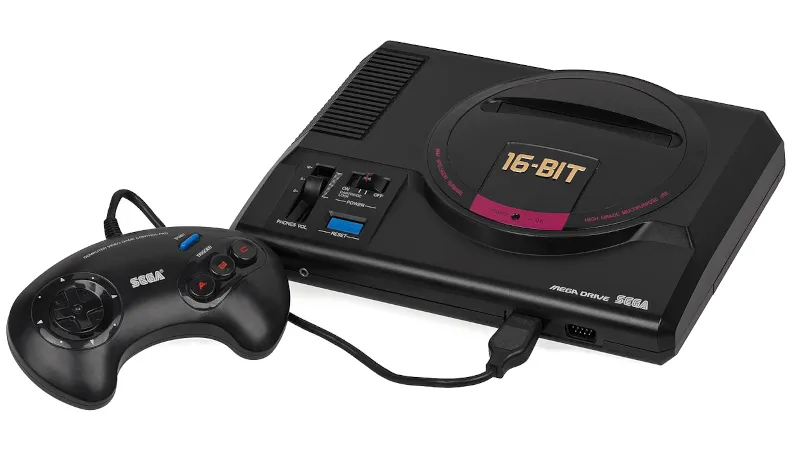
If you were in the market for a games console in 1990, the chances are that the object of your desire was either a Super Nintendo with its 16-bit 6502 derivative, or the Sega Megadrive, sold as the Genesis in North America, with its Motorola 68000. Both machines featured impressive graphics and sound for their time, but they remain firmly in the 16-bit era. Which makes it a surprise to see LinuxMD. It’s Linux, for the Sega Megadrive, with the latest mainline kernel.

The Motorola 68000 series of chips was the first porting target for Linux, and is still maintained in 2026. This build runs from an SD card  in a modern Megadrive storage peripheral, and is reported to run on the original hardware. The lowly 68000 in the Sega doesn’t have a memory management unit required for the full Linux experience, so what’s really running here is a kernel compiled with the -nommu option. That in itself is a feat, on this architecture. On it you get smolutils, a cut down coreutils, and that seems to be it.

We like this project, for pushing both console and kernel to the limit, even though we see that maybe it’s not the most practical Linux machine. Meanwhile though, this isn’t the only UNIX-like OS for this console.

Advertisement

Image: Evan-Amos, Public domain.

Source link

Advertisement
Continue Reading

Tech

Telling internet platforms where to stick public service media will serve nobody. Turn it on its head

Published

on

columnists

Show not tell makes a far finer script

OPINION Microsoft is making massive progress in quantum computing, says Microsoft. Oh no they’re not, say researchers. Anthropic’s frontier models are too powerful for general use, says the US government. No, it’s just Anthropic being punished for not doing what the US government tells them, say critics. Humans-in-the-loop are a pain-in-the-neck, says Amazon exec. Go do one, says this human. 

Three tech news stories from last week, six interpretations. You can probably decide between Microsoft PR and a peer-reviewed paper in Nature. Likewise, whether vindictiveness or virtue is at work with Anthropic. Amazon or a Reg hack? Harder to call.

Advertisement

In all these cases, as in all cases, prior knowledge is the best context in which to judge media reports. Most citizens don’t know much about most news, an eternal truth that is causing the UK government to fret about the future of public service broadcasting – or as it has become, public service media (PSM). With fewer people, especially that dread tribe, Young People, watching the wholesome fare of highly regulated broadcasters but feeding instead on firehoses of algo-spew, public service media risks suffocating on insignificance. 

That’s a reasonable fear, if you feel that public service media deserves to be heard. It is a complicated argument where great forces have clashed since the birth of broadcasting, but if you know that the rhetoric of “fake news” has an antecedent in the German slur “Lügenpresse,” you’ll know the answer is yes, and yes, with a side order of yes. Vivat Reith

Having identified the problem, the brains of Britgov propose exactly the wrong solution. Get the algorithms that drive content consumption on social media to rank the quality PSM product higher. All those lost eyeballs will be brought back into the fold. This won’t work for reasons both obvious and subtle. Forcing a quota of state-mandated media into the stream, even with the best of intentions, is a hostage to fortune. It’s probably unenforceable, will be deeply unpopular with users and companies alike, and will poison PSM across the board.

It also amplifies two falsehoods about PSM: that it’s about news, and that it’s about numbers. Both are important, but neither is anywhere near enough to argue for PSM’s right to life. One of PSM’s primary roles is to provide content that isn’t commercially viable or is otherwise invisible. That reflects culture, art, science, all the human stuff that enriches life. It’s where new ideas and new people come from, and some of those will become box-office hits.

Advertisement

Putting numbers first, as parts of the BBC are moving toward, kills diversity and gives the commercial sector the killer argument that PSM is just unfair competition. PSM has always had the tension between being popular enough to matter to lots of people and broad enough to do the things that only it can do, but it does need both. That has been very expensive, but arguably worth it. High-quality news is one pillar of that, but only one. 

The one thing that keeps PSM alive is the editorial process, the decision-making that understands the purpose, constituent parts, and audiences, and applies that equation to the resources available. Those resources have changed, but they haven’t gone away. What’s needed now isn’t a public service tweak to secret commercial algorithms, but a public service algorithm with humans in the loop, amplifying the good stuff on the platforms by driving traffic through exposure. How to design channels that do that and are compatible with the platforms themselves is an interesting challenge begging to be explored.

However realized, it would be entirely compatible with providing natively sourced news, entertainment, sport, and everything else that keeps a brand current. It adapts seamlessly to multiple platforms, all of which have PSM-worthy content in quantity, if you filter out the toxins. It’s a model that scales up and down, provided only that there are sufficient motivated and trained editorial staff who know who they’re serving and why. 

There have to be ethical standards, transparency, training and support, and just the right level of management. That would turn the threat of the new media environment into a huge promise, all the techniques of distributed, diverse digital content from adversary to amplification. 

Advertisement

Public service broadcasting, at least in the UK, has been moving in this direction for decades, in the name of efficiency, outsourcing more and more programming to independent production companies – usually staffed by ex-BBC employees. You can’t move very far in TV, radio, film, or digital media in the UK without tripping over ex-BBC bodies. That’s another role of PSM, creating a huge pool of talent that irrigates an entire economic sector. A PSM strategy that encourages content creators to align with production and editorial standards would have invigorating effects in the new landscape.

Public service media deserves to survive and thrive in an attention economy driven by so many forces designed to exploit rather than enlighten the public. Done well, it gives voice to the voiceless, describes a nation to itself, and sets standards that inspire trust and quench cynicism. All of this is there to be had, even today, even in the future. We just need to keep the right humans in the loop. Sorry, Amazon. ®

Source link

Advertisement
Continue Reading

Trending

Copyright © 2025