Connect with us
DAPA Banner
DAPA Coin
DAPA
COIN PAYMENT ASSET
PRIVACY · BLOCKDAG · HOMOMORPHIC ENCRYPTION · RUST
ElGamal Encrypted MINE DAPA
🚫 GENESIS SOLD OUT
DAPAPAY COMING

Tech

One man, two kernels, and a lot of RISC-V

Published

on

Yuri Zaporozhets of QRV Systems is a busy chap. He’s built a new RISC-V-based personal computer, a mainframe on an FPGA, and rewritten QNX – twice.

Seemingly every month or two, The Reg FOSS desk gets an email telling us about some astonishing project that he has just got working. We’re delighted to see that his most recent one, a new OS called QSOE, is winning some attention in the FOSS world at present.

But first, we thought we could tell a more complete story of how he got here by describing some of his previous projects.

(By way of a disclaimer, we feel that we should say up front that he does use Anthropic’s Claude LLM to help. To his credit, he does clearly state this.)

Advertisement

GateMate Personal Computer

At the end of 2025, Zaporozhets wrote to tell us about his GateMate Personal Computer. The GateMate PC is something similar to a fairly high-end late-1980s IBM PC-compatible, but instead of a 286 or 386 CPU, it has a 25 MHz RISC-V core.

He told us the main inspiration for the GateMate PC: “The very first computer I saw in my life: an IBM PS/2 Model 30, in 1992. It also started in text mode.” We worked on a few of those, and they were not great machines. The GateMate machine should easily outperform the later, faster Model 30-286. He also acknowledges another project: “the NeoRV32 softCPU by Stefan Nolting is great.”

It has a VGA port that can output 80×30-character text in what back then we used to call Hi-Color, 8 KB of ROM containing a BIOS, and – although it’s still in the early stages – its own OS, which he calls GMDOS. The characters are double-byte ones using UCS-2 Unicode.

Advertisement

The GateMate gets its name from the host hardware because the design is mostly software: it’s implemented on an inexpensive FPGA board, the €50 Olimex GateMate A1-EVB (that’s about £42 or $57). Its video controller is an original design, and he has added extra RAM: the machine has 8 MB of additional PSRAM on two chips, via a QSPI interface.

He blogged about the project, from receiving the board last August to getting a PLL working, to getting video out of it.

Advertisement

The Olimex GateMate board can do a lot more, though – which leads us to his next project.

GateMate System/359

Also implemented on the same FPGA board is Zaporozhets’ miniature mainframe, the System/359. This isn’t a clone of the IBM System/360 mainframe series, the machines that introduced the idea of different computers being software compatible – it’s more of a tribute to it. For starters, the S/359 is a little-endian machine, while the S/390 is big-endian.

So it’s not binary-compatible with the mainframe architecture, but it’s similar. He started the project in January, and later that month, writing about its assembler, said: “GMS/359 keeps what’s beautiful about S/360 – the channel I/O model, the clean instruction formats, the PSW concept – while quietly modernizing the rest. Little-endian bytes. Opcode-first encoding. PC-relative addressing. No more base register juggling. The ‘/359’ isn’t a typo. It’s a declaration: inspired by, not compatible with.”

Zaporozhets told The Register: “There is a working assembler with the POWERFUL macroprocessor – from NASM. I was a NASM contributor from 1999 to 2004 and maintained its RDOFF2 part. Now RDOFF2 is removed from NASM 3.0, but it continues to live in my asm359 project.

Advertisement

“Currently the processor can execute the simple IPL; channel I/O controller works (PS/2 kbd, UART, SYSINFO, even crypto processor (!)). Once I finish the PSRAM module, I will start working with SYS1.NUCLEUS.”

So we can take it that as well as RISC-V and FPGAs, he has some familiarity with low-level systems design. His next project was with an OS that a lot of folks admire: QNX.

Porting QNX 6.4 to RISC-V

Although Zaporozhets wrote to us about this back in March, he also went public with it in a Reddit post: QNX 6.4 kernel ported to RISC-V; petition to BlackBerry to relicense old QNX sources under Apache 2.0.

QNX has an on-again-off-again relationship with FOSS. QNX has been around since the 1980s, as we reported when the company made QNX 8 non-commercial freeware in 2024. In that article, we mentioned that QNX published the source code of an earlier version back in 2007. Back then, QNX was self-hosting and had its own desktop environment – we showed a screenshot of its Neutrino GUI in our roundup of non-Linux PC OSes back in 2013, and GUIdebook has a whole screenshot gallery.

Advertisement

The next year, that QNX 6.4 source code was mirrored from SourceForge over to GitHub, and it’s still there. Zaporozhets took this long-obsolete codebase and ported it to RISC-V, targeting his own FU740 “workstation.” It’s not the whole OS, just “the kernel, the process manager, the C library, the runtime linker.” And the license is very restrictive: you can study it and compile it, but not redistribute it.

He started this effort over Christmas 2020. “The timing made sense in a particular way. RISC-V had matured. The toolchains were stable. The original QNX sources were 32-bit ILP32, targeting x86, ARM, MIPS, SH, and PPC – no 64-bit port existed, let alone RISC-V. Doing the LP64 transition and the architecture port in a single effort seemed like exactly the kind of large, difficult, satisfying project that a long holiday lockdown invites.”

But after the initial effort, it languished for five years. When he came back to it, he ended up with a substantial rewrite. He calls the result QRV.

In March, he described this in a blog post, QRV Operating System: First Publication. As he puts it: “For clarity: QRV is not a patch on the original QNX sources. It is a ground-up reworking of the 32-bit ILP32 codebase into a 64-bit LP64 system for RISC-V, with deliberate simplifications.”

Advertisement

By the end of April, QRV v0.27 could boot to multi-user login. A month later, he declared the project finished with version 0.43: “This is the last development post for QRV. The project set out to port QNX Neutrino 6.4 to RISC-V 64-bit, run it on real hardware, and explore what it would take to bring a clean microkernel architecture to a modern open ISA. Those goals are met. v0.43 is the final release.”

Advertisement

Where next? Well, as the QNX kernel is not truly open source, then the only path forward is to switch to another kernel, one that is truly FOSS. Well, we say “one”… ¿Por qué no los dos?

QSOE – Quick and Secure Operating Environment

The result is QSOE: “QSOE ships in two variants that share one userspace and one build system. QSOE/N runs on Skimmer, a microkernel written from scratch for this project (SMP by design); QSOE/L runs on seL4 as its kernel.”

As The Register covered back in 2014, Secure Embedded L4 is a formally verified microkernel OS. We have written about other OSes that use it before: in 2022, we described the new Neptune OS project, which is a combination of seL4, ReactOS, and Wine. Then, in 2025, we looked at Ironclad, which combines seL4 with the C-based Gloire and an Ada layer.

There are some very serious precedents for building around seL4, but QSOE doesn’t stop there: it also has its own homegrown kernel, called Skimmer, that’s designed for multiprocessor machines. Zaporozhets has been working in this area for a long time. On the QSOE site, he mentions his effort to build a free QNX-like operating system back in 2003. It’s still online – it is called RadiOS.

Advertisement

In How QSOE started, he describes the inspiration: as a fallback option, a Plan B, if his petition to BlackBerry did not succeed. We sympathize. When we wrote about QNX 8, we got nothing useful back from the company either.

Instead, he took all he learned from writing RadiOS and building QRV – via the GateMate PC and mini-mainframe – and did it himself instead. Now he has released QSOE version 0.1. It’s under the Apache 2.0 license, and its source code is on GitLab. He also has a new development blog.

Yes, Claude may be involved, but he was already developing these ideas 20 years before ChatGPT launched. ®

Source link

Advertisement
Continue Reading
Click to comment

You must be logged in to post a comment Login

Leave a Reply

Tech

Ford learned the hard way that AI can't replace experienced engineers

Published

on


It is a shift that comes as Ford returns to the top of J.D. Power’s initial quality rankings among mainstream brands. The improvement reflects changes not only in its processes but also in how the company uses AI – and where it draws the line between automation and human expertise.
Read Entire Article
Source link

Continue Reading

Tech

How The Features Work (And What Users Say About The Service)

Published

on


For some of us, there was a time — however long ago — when we would actually answer a call without knowing who was on the other end. For those of a certain age, answering the phone when it rang was just what you did, a behavior that stemmed from spending time around a landline — a now “ancient” technology, according to the kids. Thanks to the internet and the stunning transformation of cellphones that would eventually give us the smartphones that sit in our pockets today, the way we communicate has drastically changed.

According to a recent YouGov poll, 42% of people don’t answer calls from numbers they don’t recognize, while only 5% claim to answer calls regardless of the number that’s calling. The reasoning for unanswered phone calls is a bit of a nuanced topic, with different age groups having different preferences on what they consider to be the norm. However, one common thread among them is the growing problem of spam.

Advertisement

Spam communications are no longer just limited to calls, but increasingly moving to text messages, as Consumer Reports found that scam text messages have increased by 50%. The FCC has been battling robocalls and spam texts in a number of ways, and network carriers have also introduced their own tools in an effort to stem the tide of unwanted calls and texts. For T-Mobile customers, the company has Scam Shield with both free and premium benefits, and a report spam feature — here’s what you should know.

Advertisement

T-Mobile customers can forward spam messages to 7726

T-Mobile, as well as most major carriers, allow customers to forward suspected spam messages to 7726 — which spells “spam” on most keypads. According to T-Mobile’s support documentation, “We automatically forward the message to the Security Center for analysis. The Security Center is a global system, run by a vendor on our behalf, that helps protect mobile phone subscribers from spam, fraud, and malware.”

T-Mobile also notes that its Security Center is linked to a global database to track and cross reference potential spam messages, and that those messages may be shared with government agencies in an effort to combat spam and fraud. Carriers also use this information to calibrate spam filters and improve other tools, which could include training machine learning, as carriers are relying more on AI to identify potential scam and fraud activity.

Both Android and iOS have features to report spam in their native messaging apps that achieve the same result, and Apple’s recent iOS 26 update has a new feature to prevent spam calls from ringing through. 

Advertisement

T-Mobile Scam Shield is a mixed bag

Scam Shield is T-Mobile’s flagship service for blocking fraudulent calls and robocalls. T-Mobile uses its own network data and machine learning in an attempt to identify and block spam, which includes spoofing, robo-dialers, and anything else that the network deems as “Scam Likely.” T-Mobile’s Scam Shield has been brought in under the company’s T-Life app, and costs $4/line to activate if you want all the benefits. Depending on your service plan, Scam Shield may be included in the price. Many of Scam Shield’s basic features are free to customers, including Scam ID, Scam Block, Caller ID, and Scam Reporting, and Callback Protection. Scam Shield primarily relies on the STIR/SHAKEN caller ID protocol, which has proven to be a major milestone for spam prevention. 

The Scam Shield Premium features include the ability to block categories of callers (like telemarketers), a reverse number look up, and a voicemail-to-text service. Customer satisfaction with the service is mixed: some report a reduction in unwanted calls or texts, while others claim little has changed. Many seem to find the app itself unintuitive, with certain features buried in the user interface. Some people have also reported false positives, causing them to miss legitimate calls they needed to take. The overall sentiment seems to suggest that it’s better to stick what whatever plan T-Mobile provides for free rather than upgrading to a paid plan.

Advertisement


Source link

Advertisement
Continue Reading

Tech

NYT Connections hints and answers for Monday, June 29 (game #1114)

Published

on

Looking for a different day?

A new NYT Connections puzzle appears at midnight each day for your time zone – which means that some people are always playing ‘today’s game’ while others are playing ‘yesterday’s’. If you’re looking for Sunday’s puzzle instead then click here: NYT Connections hints and answers for Sunday, June 28 (game #1113).

Good morning! Let’s play Connections, the NYT’s clever word game that challenges you to group answers in various categories. It can be tough, so read on if you need Connections hints.

What should you do once you’ve finished? Why, play some more word games of course. I’ve also got daily Strands hints and answers and Quordle hints and answers articles if you need help for those too, while Marc’s Wordle today page covers the original viral word game.

Advertisement

Source link

Continue Reading

Tech

Save up to $650 on Amazon M5 MacBook Pro Month-end Deals

Published

on

Amazon’s month-end MacBook Pro deals deliver up to $650 in discounts on M5, M5 Pro, and M5 Max 14-inch and 16-inch configurations.

Amazon’s month-end MacBook Pro sale offers deals from $1,649.99, which after Apple raised prices on June 25, provides up to $650 in savings on M5, M5 Pro, and M5 Max 14-inch and 16-inch models.

Save up to $650 on MacBook Pros

The M5 Max deals are especially enticing at $550 to $650 off, but please note, inventory levels may be constrained as ship dates are starting to slip on select models.

Advertisement

Top 14-inch MacBook Pro discounts

Best 16-inch MacBook Pro sales

For even more deals and easy price comparison across retail and CTO models, be sure to check out our MacBook Pro Price Guide.

Source link

Continue Reading

Tech

Apple’s next Mac Studio could get a new M5 Ultra chip and a cooler upgrade

Published

on

Apple’s Mac Studio may not be getting a fresh new look anytime soon, but it could be getting a meaningful upgrade where it matters most. According to Mark Gurman in the latest edition of his Power On newsletter, Apple is preparing an M5 Ultra-powered Mac Studio as early as this year, while an even more powerful M7 Ultra version is already on the company’s roadmap for 2028. Interestingly, the report also claims Apple is redesigning one component most users will never see: the heat sink.

More power is coming, and Apple wants to keep it cool

Gurman reports that the upcoming M5 Ultra Mac Studio won’t receive a major external redesign. Instead, Apple is reportedly focusing on internal improvements, including a redesigned heat sink, to better manage the additional power of its next-generation Ultra chip.

Apple’s Mac Studio plans include an M5 Ultra model as early as this year and an M7 Ultra model in 2028. Apple is also working on a redesigned heat sink to better support the additional power. https://t.co/q7fQ9IjMK9

— Mark Gurman (@markgurman) June 28, 2026

That makes plenty of sense. As Apple’s silicon continues to evolve, professional workloads such as 8K video editing, 3D rendering, software development, and on-device AI models are becoming increasingly demanding. Better thermal management could allow the Mac Studio to sustain peak performance for longer without throttling under heavy loads.

Advertisement

The roadmap doesn’t stop there. Gurman also says Apple is already planning an M7 Ultra Mac Studio for 2028, suggesting the company is thinking multiple generations ahead for its flagship desktop workstation.

If it isn’t broken, don’t redesign it

If you were hoping for a radical redesign, though, you may have to wait. According to Gurman, Apple appears happy sticking with the current Mac Studio chassis, choosing to refine what’s inside rather than reinvent the hardware itself.

Honestly, that’s probably the right call. The Mac Studio’s compact aluminum design has held up remarkably well since its debut, and professionals shopping for one are far more interested in sustained performance than cosmetic changes. If Apple can deliver a faster Ultra chip with better cooling while keeping the same footprint, it could end up being exactly the kind of upgrade Mac Studio users have been waiting for.

Source link

Advertisement
Continue Reading

Tech

Govee’s smart nugget ice maker makes every iced drink feel like a luxury

Published

on

For some people, the ice in a beverage is almost as important as the drink itself. That’s the audience Govee had in mind when designing its latest ice maker, the GoveeLife Smart Nugget Ice Maker Pro. This $500 premium smart home gadget is aimed at those who crave what’s called “the good ice,” the soft, chewable nugget ice often found in fast food or restaurant drinks. 

Govee says that the modern-design gadget delivers nugget ice in as little as six minutes. That’s a claim that proved true in my testing. It can make up to 60 pounds of ice per day, and has a 3.5-pound ice basket that automatically refills as you scoop out ice.

The hefty price tag means it’s not for people who are perfectly happy with refrigerator ice and don’t know what “good ice” even means. Instead, it’s for self-proclaimed ice enthusiasts willing to splurge on a fun, luxury gadget that makes everyday drinks a little more enjoyable. 

It’s simple to use, as you just need to fill the tank with water and press start on the screen. You can also control the ice maker with the GoveeHome app, which lets you start ice production from your phone or schedule it so ice is ready when you need it, such as before your morning coffee. 

Advertisement
Image Credits:TechCrunch/Aisha Malik

The app control is quite convenient. I could start ice production from my phone while working at my desk, and by the time I wanted an iced latte, there was fresh nugget ice ready to go without ever having to walk to the kitchen to turn the machine on. The app also shows ice production in real time and how much is currently in the ice bin, which is useful for wanting to stop production when you just want a certain amount. 

The ice maker also supports voice commands with Alexa and Google Assistant, which means a quick ““Hey Google, start the ice maker,” leads to fresh ice. 

The ice maker uses what Govee calls AI NoiseGuard technology to keep operating noise low, too. Designed to operate at around 40 dB, the system can automatically trigger defrosting cycles to minimize noise and help ensure a steady supply of ice. The machine does produce a steady hum while making ice, but I didn’t find the noise distracting or overtly loud. 

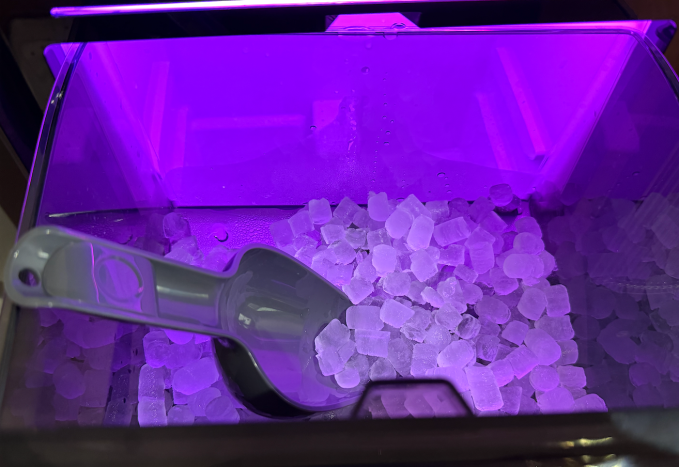
It wouldn’t be a Govee product if it didn’t offer customizable ambient lighting. The smart ice maker has a light that illuminates the ice basket and adds a fun visual element to the appliance. Through the app, you can choose from a variety of presets or create your own custom lighting effects. You can choose how bright you want the lights to be or turn them off altogether. 

I mostly kept it on a light pink setting, but occasionally switched to the “cyberpunk” mode, which casts a changing purple and red glow that felt fun and futuristic when I had people over. 

Advertisement
Image Credits:TechCrunch/Aisha Malik

Measuring 17.28 inches deep, 13.98 inches wide, and 17.01 inches tall, the ice maker takes up a lot of counter space and weighs a hefty 50 pounds. If you have a small kitchen, it can appear bulky, especially because its sleek design doesn’t exactly resemble an ice maker from afar.

As for setup, it was pretty straightforward, but afterwards I definitely needed my husband’s help to place it in our kitchen, and then again when I needed to move it around when it came to descaling and cleaning the machine. 

Overall, the nugget ice elevated my iced drinks, giving them a coffee shop feel at home and making my morning routine more enjoyable. I also observed that the ice melted more slowly than my fridge ice, so my drinks stayed colder for longer without getting watered down as quickly.

Another big plus was its speed. It made ice much faster than my refrigerator, so I always had enough on hand when hosting friends and family. The ice maker itself was something guests noticed when they came over, not just because of its size and beaming lights, but because the nugget ice was a hit with the other self-proclaimed ice connoisseurs in my life (some even threatened to steal it). 

Whether or not the GoveeLife Smart Nugget Ice Maker Pro is for you really comes down to how much you care about having nugget ice on demand and how often you’ll actually use it. If you aren’t much into ice, you obviously don’t need a fairly niche appliance.

Advertisement

But if you’re someone who regularly drinks iced beverages and loves “the good ice,” this ice maker could be the gadget you never knew you needed.

When you purchase through links in our articles, we may earn a small commission. This doesn’t affect our editorial independence.

Source link

Advertisement
Continue Reading

Tech

Lost access to your crypto wallet? Don’t Google your way out of it

Published

on

Forgetting the recovery phrase to a crypto wallet can be stressful enough. Unfortunately, that’s exactly the moment scammers are waiting for. A new warning highlights a growing scam in which cybercriminals disguise malware as cryptocurrency recovery software, tricking desperate users into handing over far more than just access to their wallets.

The fake recovery tool that’s actually malware

According to The Guardian, the scam begins when users search online for a way to recover a forgotten 12- or 24-word seed phrase, the recovery key that unlocks a cryptocurrency wallet. Fake websites then promote seemingly legitimate recovery tools with reassuring names like “Lost Crypto Wallets Finder”, claiming they can help recover lost wallets. The website hosting the malicious software has since been taken offline, but security experts warn that similar scams are likely to reappear under different names.

Instead of recovering anything, the downloaded software quietly installs malware. Researchers at HP Security Lab say it can harvest browser passwords, personal documents, photos, and other sensitive files before packaging everything into an archive that’s sent back to the attackers. Even though this particular website is no longer active, experts caution that cybercriminals often launch near-identical sites just as quickly, making the underlying scam far from over.

Security experts recommend taking a step back before downloading any recovery software. Legitimate recovery services do exist, but users should thoroughly research them, read independent reviews, and avoid downloading tools from unfamiliar websites. If malware has already been installed, experts advise removing it with reputable security software and immediately changing passwords, starting with banking and email accounts.

Crypto isn’t the target. Your panic is.

The funny thing is that this scam doesn’t rely on sophisticated hacking. It relies on human psychology. Losing access to a wallet that could contain thousands of dollars is enough to make almost anyone rush into downloading the first “solution” they find. That’s exactly the reaction scammers are banking on.

Advertisement

It’s also part of a broader trend. From fake Ledger letters and QR code scams to AI-powered phishing campaigns, cybercriminals are increasingly targeting crypto users through social engineering rather than breaking encryption. The lesson is surprisingly simple: if someone promises to magically recover a lost seed phrase with a free download, they’re probably trying to recover something else instead. And this time, that “something” is your personal data.

Source link

Continue Reading

Tech

The memory crisis isn’t going to ease, and you will pay the price for it, says a research firm

Published

on

If you were hoping the memory crisis was about to ease up, I have some bad news for you. It comes directly from Wall Street.

Your next smartphone, laptop, or tablet could cost even more, regardless of whether it has recently been subject to a price hike.

So how bad is it actually going to get?

Investment bank Jefferies has laid out the clearest and ugliest forecast yet. 

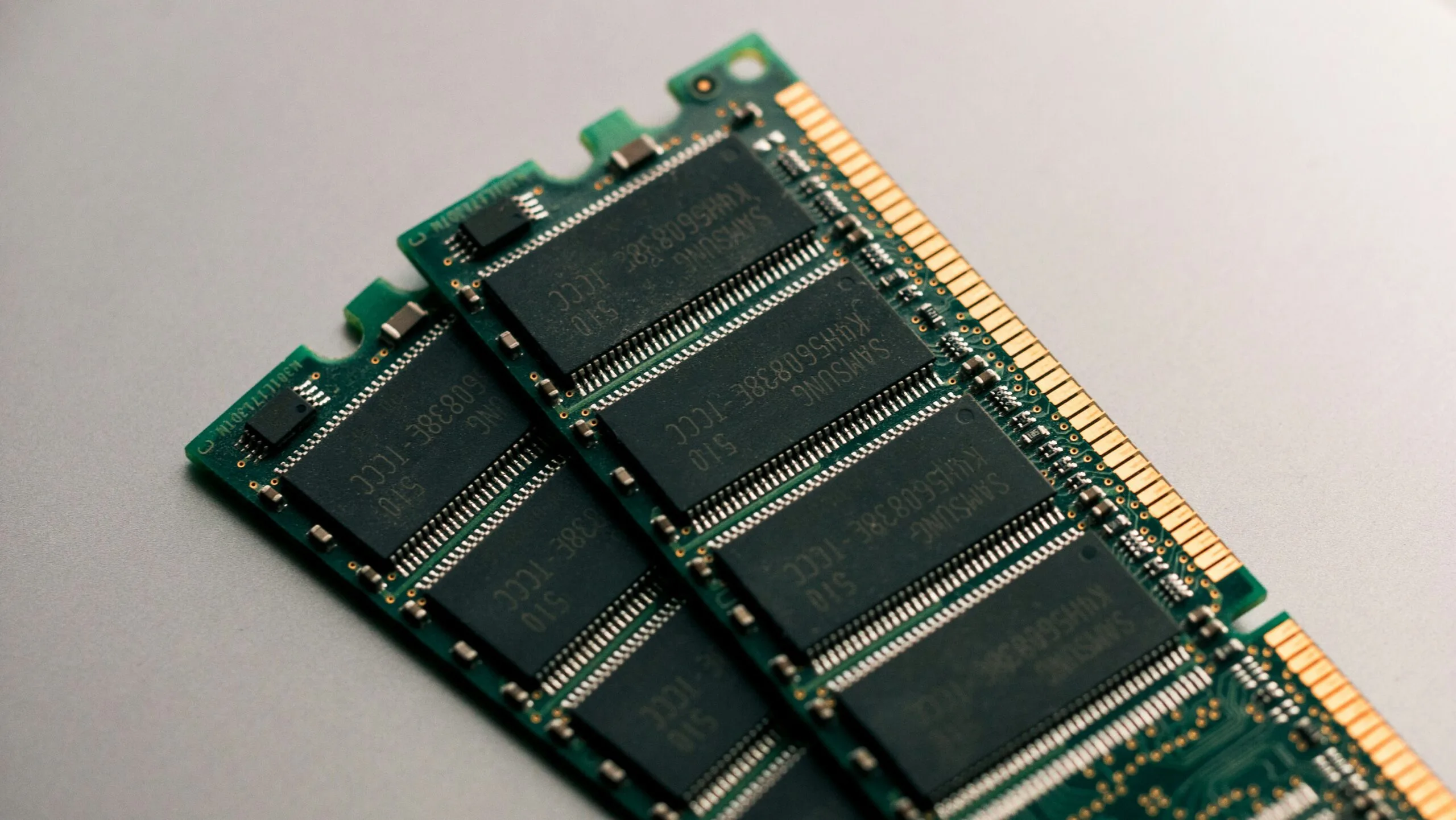
Memory prices are expected to jump by 40-50% in the third quarter of 2026 compared with the current quarter. While it would have been great if they had stopped there, prices could rise by another 30-40% in the fourth quarter of the year. 

For all of 2027, Jefferies projects a 40-45% year-on-year increase. Based on those sequential estimates, we’re looking at a compounded price increase of roughly 150-205% between today and the end of 2027. If I were in the market for a new smartphone or laptop, I’d be worried.

Advertisement

The only real relief comes in 2028, when roughly 15-20% of new manufacturing capacity is expected to come online. Even then, demand for AI and computing will continue to grow simultaneously. In other words, the new supply may not stretch as far (via Wccftech).

What does this mean for the price of your next phone or laptop?

Research firm Gartner had separately predicted that combined DRAM and SSD prices could surge 130% by the end of 2026, pushing average PC prices up 17% and smartphone prices up 13% compared to 2025 levels. 

That 13%, when you do the math, on a $1,000 phone, amounts to an additional $130 on your bill. Gartner also warned that the entry-level PC segment, devices costing less than $500, could effectively disappear by 2028, simply because companies might not be able to recoup their component costs, let alone earn a healthy margin.

Making things worse, 50% of total memory capacity is already locked into long-term contracts with major tech firms, a figure that could increase even further to 70%, leaving even less supply for consumer devices (via CNBC). 

Advertisement

Source link

Continue Reading

Tech

Why Do Some Road Signs Show A Speed Limit With An Arrow On Top?

Published

on


Every single sign you see while you’re driving is vital, even if some are quite confusing. Not only is it against the law if you don’t follow many of these signs, but they’re also there to make the driving experience on the road safer, both for you and for everyone else on it. One of the most important of these signs indicates the speed limit. While the white, rectangular speed limit sign is the most common, there are other speed limit markers you need to pay attention to.

One of those is a yellow diamond warning sign. Within that diamond is the standard speed limit sign, but it’s accompanied by an arrow pointing forward above it. This sign is indicating to drivers that the speed limit is going to decrease ahead, and you can then prepare to slow down your vehicle as you approach that next sign. 

These signs will always be warning of an upcoming speed limit decrease. With this added warning, you don’t have to immediately brake hard (and unsafely) to meet the new lower limit, which will also spare some wear and tear. This also gives you the opportunity to make sure you’re slowed down enough when you reach the new speed limit zone, as it’s pretty common for police to use these speed limit decreasing spots for speed traps. Sometimes, you will see the same yellow diamond sign with just the words that there’s an X MPH Speed Zone Ahead, which is just a different version of this arrowed road sign.

Advertisement

Other road signs with arrows and speed limits

While the ones mentioned above indicate that there’s a new speed zone approaching, there are other road signs with arrows and speed limits that also tell drivers that there’s a decreasing speed limit ahead. However, these are more to indicate temporary limits for specific situations rather than changing the overall speed limit for the road.

Mostly, these are two road signs stacked on top of each other. The one on top is the same yellow diamond shape as mentioned before, but here, that diamond is solely going to feature an arrow. These arrows can take a number of different shapes, such as a 90-degree arrow that points left or right or a long, wavy arrow ultimately pointing forward. 

Advertisement

These arrows tell drivers what the immediate shape of the road will be, warning them of sharp turns, winding roads, hairpin curves, and more. Below these diamond signs will be a yellow square sign. This indicates the maximum speed at which you should maneuver through these trickier roads. Once you make it through this section of road though, you’re free to return to the speed limit of this overall speed zone.

Another specific road sign that features an arrow and a speed limit are to show drivers that they’ll be on a highway exit or ramp that is an extreme curve. These signs are yellow rectangles and feature an arrow that nearly makes a complete circle with the recommended speed limit below it. Importantly, yellow speed limit signs are warnings, so if you’re driving a bit over the limits on these signs, you’re not technically breaking the law. You’re just more in danger.

Advertisement


Source link

Continue Reading

Tech

NYT Strands hints and answers for Monday, June 29 (game #848)

Published

on

Looking for a different day?

A new NYT Strands puzzle appears at midnight each day for your time zone – which means that some people are always playing ‘today’s game’ while others are playing ‘yesterday’s’. If you’re looking for Sunday’s puzzle instead then click here: NYT Strands hints and answers for Sunday, June 28 (game #847).

Strands is the NYT’s latest word game after the likes of Wordle, Spelling Bee and Connections – and it’s great fun. It can be difficult, though, so read on for my Strands hints.

Want more word-based fun? Then check out my NYT Connections today and Quordle today pages for hints and answers for those games, and Marc’s Wordle today page for the original viral word game.

Advertisement

Source link

Advertisement
Continue Reading

Trending

Copyright © 2025