Connect with us

Tech

One Man’s Perfect Retro-Style Monitor Takes All Inputs

Published

on

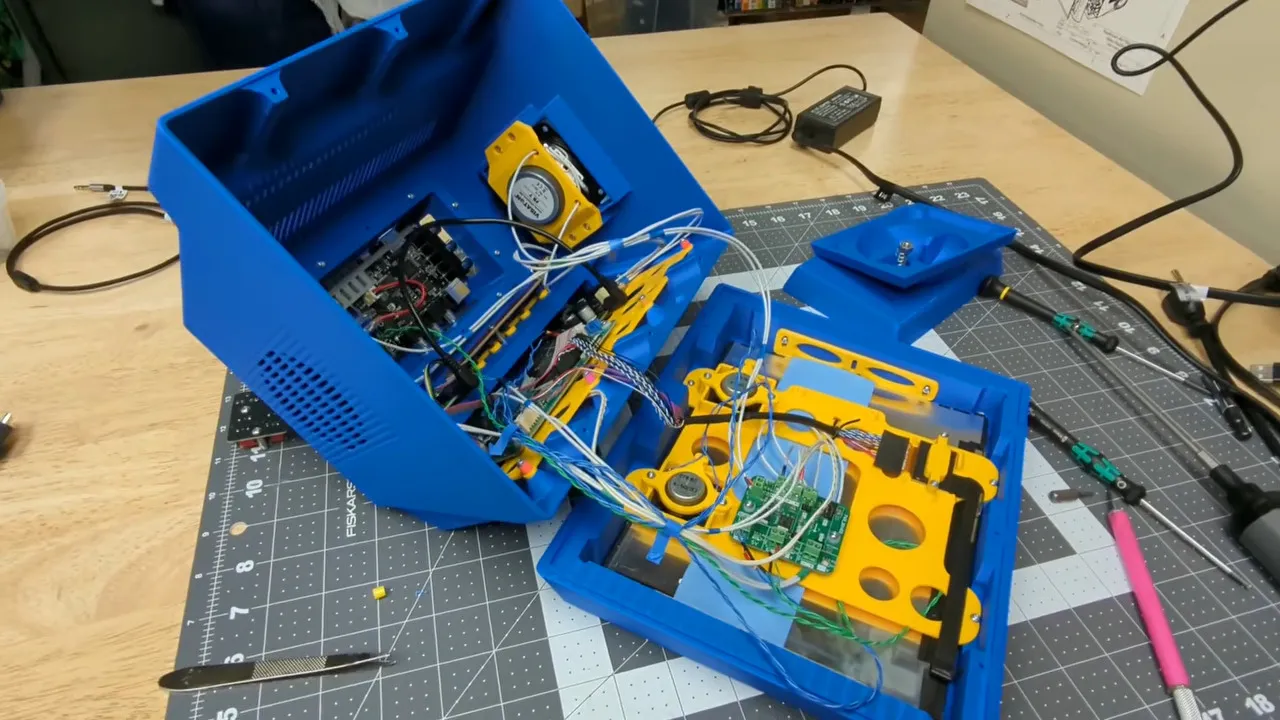
Perfection is an inherently subjective measure, in that one must choose the criteria against which to measure. A perfect circle is an absolutely rubbish octagon, for example. So when you see that [RetroBuiltGames] declares that he has built “the perfect multi-input display for retro gaming and vintage computing” — dubbed the “PixelVision AV1000 MKII”— keep in mind that he means the perfect display for his use case. That’s who he’s building it for, after all! The degree to which you find his product perfect is going to depend by-and-large how similar his use case is to yours. In that sense detailed explanations in the design/build video embedded below may be more valuable than the STEP files and PCBs in the GitHub link above– that way if your use case isn’t identical, you can perhaps learn something on the journey to build your own perfect monitor.

For [RetroBuiltGames] the aesthetic was obviously a big part of it– he’s inspired by the Amiga 1000’s monitor, and a tiny tilting Sony CRT TV.  He was obviously looking for many inputs, as given by the title, and he has an unusually high interest in pixel density for a retro enthusiast. Hence a 9.7″ 2K iPad display forms the basis of the project. The multi-input aspect is provided by a retrotink clone whose PCB lives in a bulge on the back of the unit that could easily house an SBC if you wanted an all-in-one emulation station– it already has a couple of decent speakers mounted in the sides.

Another big piece of the puzzle we don’t see enough of in such projects is Design For Manufacturing– the manufacturing method of choice being FDM 3D printing. The whole assembly was designed in chunks that can be easily printed  with the most visible surface flat on the bed – and if assembly proved difficult, than the parts were redesigned. His explanations aren’t a full DFM course by any means, but it’s good to see these things considered. If you need more detail on that front, we’ve featured plenty of such guides before.

Advertisement

We’re particularly taken by the conceit of creating his own packaging for the unit, and going to the effort of filming an unboxing video for a product he made himself. It’s just a bit of silly fun. We’ve seen boxes before, but generally speaking that sort of thing is saved for when a project becomes a product.

Advertisement

Source link

Continue Reading
Click to comment

You must be logged in to post a comment Login

Leave a Reply

Tech

5 Of The Most Reliable Car Brands To Consider If You’re Buying A Used SUV

Published

on


Car prices have become crazy in the past few years. For instance, the 2016 Nissan Murano’s new price was somewhere around $29,000. Fast forward ten years, and the current entry-level 2026 Nissan Murano will set you back nearly $42,000. A three-to-five-year-old SUV also doesn’t feel nearly as far behind a brand-new one as it once did.

With that in mind, it becomes reasonable to instead consider buying something used, especially since depreciation can gut a modern car’s value in just a few years, so much so that you can even buy used full-on luxury SUVs under $30,000, for the same price a new Nissan Murano used to cost. However, buying used comes with its own set of caveats.

Arguably the two biggest ones are warranty and reliability. With age and mileage, cars develop problems and require servicing, maintenance, and repairs, all of which can negate the very logic of used being the sensible option. To make the most of your savings, you should consider the most reliable and most trouble-free SUV brands that break down the least. Here are five of the most reliable car brands to consider if you’re buying a used SUV.

Advertisement

1. Toyota

For many people out there, reliability and Toyota often go hand-in-hand, and it seems like little has changed in that regard. Consumer Reports‘ latest brand reliability rankings have Toyota back in first place this year, with Subaru — last year’s No. 1 — dropping to second. Toyota’s win comes out of a data set covering close to 380,000 vehicles across 25 model years, from 2000 up through some early 2026 releases.

RepairPal backs that up from the repair-shop side. At $441 a year, the average Toyota costs noticeably less to keep running than the $652 average for other brands across the board, and the site’s own reliability score — 4.0 out of 5.0 — lands Toyota in the top quarter of the 32 brands it tracks. For used SUV shoppers, that combination of strong survey scores and low repair costs is what keeps models like the RAV4 and 4Runner in such high demand on the used market.

Advertisement

The Toyota RAV4, Highlander, and 4Runner are among the best used Toyota models you can buy. Maintenance is also a big part of why Toyota SUVs stand out from the crowd. For example, for the RAV4, CarEdge puts ten-year maintenance costs at $6,004, while for the Honda CR-V, it’s $7,636 over the same span — still pretty decent overall, but notably more than the RAV4.

Advertisement

2. Subaru

Subaru placed second in Consumer Reports‘ latest brand rankings — the same spot Toyota took from it after Subaru won the year before. RepairPal tells a similar story from the repair-shop side: at $617 a year, the average Subaru actually costs less to maintain than RepairPal’s $652 average across all brands it tracks, yet the outlet’s 3.5-out-of-5.0 score still only lands it 14th overall, with a 13% chance any given repair turns out severe — once again, behind Toyota.

Model-level numbers track close to that. CarEdge puts the Subaru Outback’s 10-year maintenance and repair cost at $8,633, while the Subaru Forester comes in slightly lower at $8,609, beating the industry SUV average by $97. Neither figure undercuts the segment average by much, so Subaru’s reputation for toughness doesn’t necessarily translate into the cheapest repair bills on this list.

Longevity data adds another angle. Torque News‘ reporting on iSeeCars’ longevity study puts the average SUV’s odds of reaching 250,000 miles at 15% — the Subaru Outback beats that at 22.3%, good for 1.5 times the segment average. For used buyers, the Outback and Crosstrek make up some of the strongest picks in Subaru’s used lineup, each backed by solid reliability ratings and standard all-wheel drive across nearly every trim.

Advertisement

3. Lexus

If you want a reliable used SUV, but you also want one that is luxurious and gives you an experience you’d be hard-pressed to get from either Toyota or Subaru, Lexus might be right up your alley. Lexus took third place in Consumer Reports‘ latest rankings, a result closely tied to Toyota’s engineering influence across its luxury division.

The repair-cost data backs that up. CarEdge estimates $7,110 in average maintenance and repairs over a Lexus’ first 10 years — $5,429 less than what luxury brands run on average — even though there’s still an 18.75% shot at a major repair somewhere in that decade. JD Power data points in the same direction, with Lexus topping its 2025 U.S. Vehicle Dependability Study for the third year running.

Zooming into the brand’s best-selling model, CarEdge estimates the RX 350’s 10-year cost at $7,840 — $6,515 below the luxury SUV average, according to the outlet. That’s a wide enough gap to matter for anyone cross-shopping the RX against a German rival with a similar sticker price but a reputation for pricier upkeep.

Lexus has sold the RX since 1998, and it remains the brand’s best-selling model today, so used examples aren’t hard to come by. It’s one of the picks in our roundup of the best used Lexus models, alongside the ES sedan. Therefore, if you don’t want to sacrifice luxury but still don’t want to compromise on reliability, Lexus is worth considering.

Advertisement

4. Honda

Consumer Reports slotted Honda fourth in its latest rankings, just behind Lexus. Brand-wide, CarEdge estimates Honda’s average 10-year maintenance and repair cost at $6,799 — $2,172 below the industry average across all automakers — with a 19.95% chance of a major repair over that period, one of the better figures among mainstream brands.

The CR-V doesn’t stray far from that number. CarEdge puts its 10-year cost at $7,636, beating the industry SUV average by $876, with a 21.74% chance of a major repair. RepairPal separately rates Honda at 4.0 out of 5.0 overall, ranking it first among 32 brands. Moreover, SUVs such as the CR-V also appear among the most reliable vehicles in general.

Advertisement

iSeeCars‘ longest-lasting brands study ranks Honda third among all automakers for likelihood of reaching 250,000 miles, trailing only Toyota and Lexus, and Honda is one of just four brands overall — along with Toyota, Lexus, and Acura — to score above the study’s 4.8% industry average, a gap researchers attributed largely to the brand’s SUV and truck lineups.

Reliability data at the brand level only tells part of the story once a car has a fair number of miles on it, though, which is why our breakdown of the most reliable and affordable used Hondas is worth a look too — it flags specific model years to target or skip.

Advertisement

5. Mazda

Mazda doesn’t crack Consumer Reports’ new-car top five, but its separate used-car analysis puts Mazda alongside Toyota and Lexus as the three strongest brands once the data narrows to older, higher-mileage vehicles. JD Power‘s 2025 U.S. Vehicle Dependability Study ranked Mazda second among mainstream brands at 161 problems per 100 vehicles — just ahead of Toyota’s 162, behind only Buick’s 143.

RepairPal has the average Mazda costing $462 a year to repair, with a 10% chance of severity — good for a 4-out-of-5 score, 5th out of the 32 brands it tracks. The CX-5 itself does even better. Edmunds cites RepairPal’s model-specific numbers: CX-5 owners pay just $402 a year in repairs against a $485 midsize SUV average, with an 8.1% severity rate versus the class’s 13.5% — good for a 4.5-out-of-5 reliability score and 4th place out of 32 midsize SUVs.

CX-5 owners on Edmunds rate the current model 4.4 out of 5 across 38 reviews, while the outlet’s expert testers give it a 6-out-of-10 score. A 22.65% chance of hitting a major repair by year 10 comes with a $7,906 total maintenance bill over that span, per CarEdge — $606 under what a typical SUV costs. Brand-wide, CarEdge puts Mazda ownership $1,590 below the all-automaker average, at $7,381 over the same span.

The CX-5 also holds resale value well, per our roundup of Mazda models with strong value retention — built from RepairPal reliability data checked against iSeeCars and CarEdge depreciation figures — making it a strong pick for buyers who want reliability without a Toyota or Honda price tag.

Advertisement

How we listed these brands

Reliability is never a clear-cut metric. Individual ownership experiences, trim levels, engine and transmission choices, model years, region, and plenty of other factors can sway how reliable any given vehicle actually turns out to be. However, when you look across some of the most prominent publications in the space — Consumer Reports, iSeeCars, CarEdge, RepairPal, Edmunds, Torque News, and JD Power — a handful of brands consistently rise to the top.

It’s also worth noting that virtually every brand on this list leans heavily on its SUV lineup to drive sales and turn a profit, which is exactly why SUV-specific data mattered so much in putting this together. Lexus is the only luxury automaker to make the cut, which isn’t always the case when it comes to reliability rankings — most lists like this skew almost entirely toward mainstream brands.

Advertisement

We used the publications above to make sure this list is credible and grounded in real ownership data rather than reputation alone. We also leaned on our own past reporting on these brands to ensure the picks here are actually useful for anyone shopping the used SUV market, not just accurate on paper.


Advertisement

Source link

Continue Reading

Tech

Anthropic’s annualized revenue surges to $65B

Published

on

Anthropic’s revenue continues to not only grow at an historic pace but also to accelerate. The model maker’s annualized revenue run rate — a projection of a full year’s revenue based on a recent, shorter period —surpassed $65 billion at the end of July, Bloomberg reported on Monday, up from $47 billion in May and just $9 billion at the end of last year.

Anthropic didn’t immediately respond to our request for comment.

The company’s investors expect it to continue to grow at approximately the same rate for the remainder of the year, finishing 2026 between $100 billion and $120 billion, the Financial Times reported.

Meanwhile, rival OpenAI has doubled its revenue to $40 billion, up from $20 billion at the end of 2025, Bloomberg reported last week.

Advertisement

The two companies may calculate their revenue metrics differently, but Anthropic’s growth rate has captivated investors far more than OpenAI’s has.

Both companies have filed confidential IPO paperwork. Anthropic is expected to hit the public markets ahead of OpenAI — possibly as soon as this fall. Anthropic will be seeking a public valuation of $2 trillion or more, according to the Financial Times, which would make it the largest market debut on record.

Anthropic was last valued at $965 billion in late May, when it raised a $65 billion round.

Source link

Advertisement
Continue Reading

Tech

Almost nobody pays attention to web standards anymore

Published

on

devops

Screen readers suffer as nearly 90% of top websites tested contain HTML spec violations

Are web coders losing their respect for standards? A recent review of the world’s largest sites suggests so.   

ValidateHTML, a project by independent French developer Théo Ducreux, examined the contents of the 5,000 most widely used web domains, as estimated by the Tranco research project. They include the usual suspects (Google, YouTube, Akamai) plus those without public-facing components (Google’s “gstatic,” EZVIZ’s “Ezviz7”).

Advertisement

Ducreux found more than half – 2,656 sites – served a home page readable by humans. Many of the others, such as Google and EZVIZ’s, were just traffic redirection sites, a beacon for a company’s products to call home.

Headless or not, nearly 90 percent of these sites were not serving proper HTML, as specified by the World Wide Web Consortium (W3C) and the WHATWG (Web Hypertext Application Technology Working Group). These standards are important so that different browsers and reading tools can render the requested pages in more or less the same way.  

Ducreux tallied a total of 100,305 HTML violations (including the most recent HTML5 specs) across all these sites, plus an additional 18,863 CSS errors. In other words, 87.2 percent of sites violate web specs in at least one place. Only 12.8 percent have fully valid HTML. And only 2.6 percent of all sites are completely clean, returning zero errors and zero best-practice warnings.

More alarming, over a third of sites failed accessibility checks, which to their owners is more of a legal liability (and hence a compliance issue) than an embarrassment, given the potential reach of the 2025 European Accessibility Act. (Here in the U.S., woe be the accessibility-inconsiderate e-commerce site that raises the ire of the National Federation of the Blind.) 

Advertisement

Accessibility-wise, 20.4 percent of sites are missing alt text on images, which often contain vital information. Worse, 41.6 percent of pages are missing ARIA labels that identify page regions, potentially leaving screen readers struggling to convey the page’s structure. Here’s an iframe, figure it out. 

“Screen readers don’t have anywhere near the error tolerance Chrome has, so markup that looks totally fine to you can be broken for someone using assistive tech,” Ducreux told The Register

For the project, he used a home-built web crawler and a set of open-source parsers (HTML-validate, CSS Validator, Lightning CSS, fast-xml-parser). “The site, the scoring, and the crawl logic are my own code,” Ducreux explained by email. Ducreux is the principal maintainer for the project and the site. “No team, no funding, no company.”

An electronic Tower of Babel

Does lack of adherence to standards really matter? It’s an open question.

Advertisement

“The web is more a social creation than a technical one,” web creator Tim Berners-Lee wrote back in 1999. If we all go off and make our own standards, then it’s harder to connect and communicate.

The currently fashionable Dead Internet Theory – in which AI machines and not we meat sticks now make up most internet traffic – won’t get developers off the hook. As Shopify engineers have found, even superintelligence prefers shipshape markup. 

Browsers deserve part of the blame. Unless they have a fetish for the short-lived but brutally unforgiving XHTML, browsers today will just ignore any code they can’t grok. 

“Browsers are so good at error recovery that nothing forces anyone to fix” their code, Ducreux wrote on the site, “which is exactly why it accumulates.” Indulgence encourages slothfulness.  

Advertisement

Front-end frameworks create their own mischief. The single most common failure identified (in more than 59 percent of all the sites) is the misplaced element, aka incorrect tag nesting. Did you know you’re not allowed to put a style element within a div box? Many frameworks do, evidently. 

“It is a nesting problem created at build time, not in an editor,” Ducreux wrote on the site. “Nobody writes that by hand.” 

Many folks believe sloppy HTML is no big deal, including some in the peanut gallery at Hacker News. One contributor noted that “HTML5 defines a method for turning more-or-less any sequence of bytes into the same DOM tree,” DOM being the Document Object Model the browser uses to understand a web page. 

Ducreux himself doesn’t see bad HTML as an existential threat to the web, outside of hindering accessibility, which can leave someone guessing at online content they may really need to understand. 

Advertisement

“Honestly, most invalid HTML doesn’t break anything visible, browsers are built to guess what you meant and just patch it silently,” he wrote by e-mail. But at the same time, the web isn’t just about browsers.  

“AI agents reading pages, voice assistants, translation tools, screen readers – none of them have Chrome’s 20 years of guessing your intent,” he wrote. “Writing to spec is what makes a page mean the same thing to all of them, not just to whoever’s rendering it in Chrome that day.” ®

Source link

Advertisement
Continue Reading

Tech

6 Lightweight Tools & Gadgets That Could Save Your Back On The Next Hike

Published

on


We may receive a commission on purchases made from links.

When setting out for a hike, every extra ounce in a backpack counts — it will show up in your back, knees, and pace long before you get back or reach your destination. For that reason, you have to start thinking about cutting as much weight as possible. Shedding the weight in most cases means leaving stuff behind, but you don’t really have to make that sacrifice, especially when it comes to tools you actually depend on. You need lightweight alternatives that still serve the same purpose on your hike.

For example, carrying a compact medical kit instead of the traditional hard-box first aid kit can shave off a few ounces off your back. It might be just a few ounces lighter, but once you do the same for a couple of more gadgets or tools — the weight adds up to several pounds lighter and ultimately less stress on your back and legs the further you walk. Including the compact first aid kit, we’ll look at six lightweight tools and gadgets that take the weight off your shoulders without sacrificing safety or utility on the trail.

Advertisement

Carbon fibre trekking poles

Trekking poles are a must-carry for any hiking trip, and most popular go to options are made of aluminum. If you want to shed a little bit of weight, carbon fiber poles are a great alternative. A pair of aluminum trekking poles will typically weigh anything between 18-22 ounces compared to 12-18 ounces for their carbon fibre counterparts. That’s about four ounces dropped without changing how you hike. The difference may not look like much, but that lighter swing is more noticeable with every step and thousands of pole plants on a long trail.

Advertisement

Carbon fiber poles are also stiffer with less flex under load. This means less vibration and more comfort, especially when moving on loose ground or making a descent. However, there are two trade-offs you’ll have to consider before going for a pair of carbon fiber poles — they are more expensive and durability on rough terrain gets called into question. The material is strong lengthwise but usually vulnerable when subjected to sideways impact harsh bending.

As a result, they may suddenly break rather than bend gradually, unlike aluminum poles, which can be corrected with a simple repair job. For this reason, I usually treat my carbon poles as a way to cut weight on less rugged, well-maintained trails. I still reach for my aluminum poles if I know rock-hopping and tent support will be part of my outing. The $60 Foxelli Carbon Fiber Trekking Poles are a decent pair if you decide the lighter poles are worth a try.

Advertisement

A rechargeable headlamp

Another must-have for my hiking trips is a rechargeable headlamp like the Nitecore NU25 400, which weighs less than two ounces. That’s unnoticeably light if you consider the fact that full-size camping lanterns usually get to north of three pounds in weight. Headlamps are tiny making brightness a genuine concern, but in our roundup of the best rechargeable headlamps, we highlighted how modern units can pull off several hundred lumens.

Besides being more than bright enough, headlamps leave your hands free and always point exactly where you need the light to shine on the trail or campsite at night. These two attributes also make them a much better alternative to flashlights, which always have a hand occupied. With an ultralight headlamp, you really don’t need any other lighting solution apart from your phone’s flashlight, which you will in most cases have on you anyway. Most headlamps also come with SOS mode in case you get stuck or get lost and it gets dark on you.

Advertisement

A compact satellite communicator

A dedicated GPS is one gadget that can keep you safe in the wilderness, where phone coverage may be spotty or nonexistent. Old-school GPS units are usually bulky, but you can always go for a modern, more compact satellite communicator like Garmin’s inReach Mini 2 for navigation. It’s one of our top picks when it comes to portable high-tech backpacking accessories because it’s light (about 3.5 ounces), durable, and can fit in your palm. Despite the small size, the Mini 2 comes feature-packed with interactive SOS alerts, weather forecasting, a digital compass, and Garmin’s TracBack routing.

The SOS alerts and TracBack routing are the most important features here. The former lets you reach 24/7 emergency responders and can send texts to family and friends when connected to your phone. TracBack creates a breadcrumb trail to help you navigate back to your starting point in case you get lost or darkness, fog, or fatigue make finding your way challenging. With these features, compact satellite communicators not only reduce the load you have to lug around but can also be life-savers if something goes wrong on your hiking trail.

Advertisement

A backpacking water filter

Lugging around a full gallon of water is impractical, especially since you’re trying to save your back here. I usually carry a small water bottle that doubles up as a backpacking water filter instead whenever I’m sure my hiking route has water sources. The water along the route will definitely be unsafe for drinking in most cases, but a dependable water filter bottle like the LifeStraw Peak Squeeze will sort it out. Such a filter works by forcing water through a membrane microfilter which traps harmful microorganisms and other contaminants. The water that comes out the other side then becomes safe for drinking.

Advertisement

With such a tool, water sources like creeks, streams, and lakes become safe to drink. There are cheaper filters like the $14 LifeStraw Personal Hiking Water Filter, but you have to use them directly from the source. I prefer the Peak Squeeze because it’s available with two storage options — 22 and 33.8 ounces which means you can scoop water and squeeze as you continue with your journey. If in doubt, this filter does meet the necessary safety standards for removing parasites and bacteria.

Advertisement

A mini emergency kit

I always go for a compact fabric kit like the Protect Life Mini Emergency Kit to save space and weight without sacrificing the essentials. It’s ranked first on Amazon’s Best Seller in Camping and Survival Kits at the time of writing, and it’s not hard to see why. The fabric case lets you tuck a full-size emergency kit into a hip belt pocket or the top lid of your backpack rather than squeezing a large and hard first aid box between the rest of your hiking gear.

In a kit such as the one recommended above, you’ll get a variety of bandages, an emergency blanket, elastic band, an eye pad, scissors, tweezers, and antiseptic towelettes among other essentials. All these items mean you can replace your old bulky first aid box with something much lighter without missing out on any important supplies you might need in a minor trail emergency. One thing you’ll have to be psychologically prepared for with such a kit is having to dig through a cramped-up case, which is the only trade-off over a standard first aid kit.

Advertisement

An ultralight bivy sack

Emergency shelter is just one item hikers tend to forget when setting out for a trek. We don’t expect you to carry a whole tent with you since we’re looking to cut on weight as much as possible. A bivy sack like the SOL Emergency Bivvy is an ultralight way of fixing this problem. This tool is more of an emergency sleeping bag that’s windproof, waterproof, reflects heat, and is light enough to chill at the bottom of your backpack without adding significant weight and bulk.

We’ve highlighted the SOL Emergency Bivvy here since it weighs less than five ounces and you can pack it down to about the size of a soda can. Despite the small real estate, this sack can keep you warm and dry if you get stranded or injured in harsh conditions on a trail. It’s like having a sleeping bag with you though it’s more of a safety plan rather than a substitute for the latter. In the packaging it also comes with a rescue whistle and a paracord drawstring that you can use as tinder to start a fire if the need arises. A bivy sack should be a must-carry for any outdoor adventure, as it can be the difference between surviving or being consumed by Mother Nature when things don’t go as planned.

Advertisement

How I settled on these tools and gadgets

Weight comes at a premium for any kind of backpacking activity. For this reason, I chose those that substitute an otherwise heavy tool or gadget that is critical in backpacking activities — not just a nice to have ultralight gear. My selections cut the weight you have to carry significantly up to about a fraction of what the standard tool or gadget weighs. Some weight differences might be small, but these tweaks quickly add up to reduce the overall load you have to carry while hiking.

Advertisement


Source link

Continue Reading

Tech

Apple Wallet driver’s licenses are coming to North Carolina, but there’s a catch

Published

on

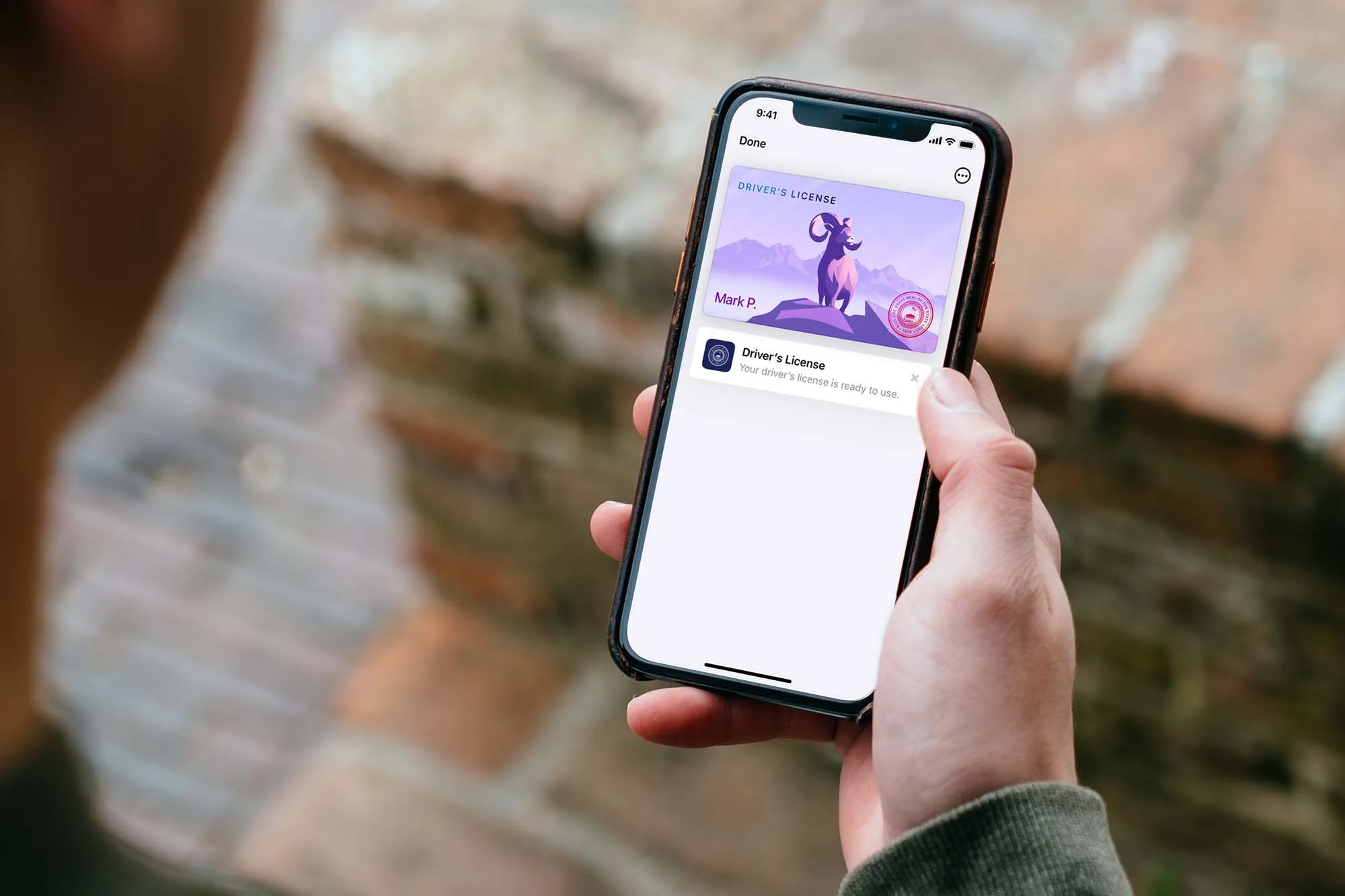
Following California and Ohio, Apple Wallet is getting another driver’s license, with North Carolina preparing to bring digital IDs to the iPhone. The state is currently developing its mobile ID program, but residents won’t be able to add their license directly to Apple Wallet at launch. Instead, North Carolina will first roll out its own NC Wallet app, with support for Apple Wallet, Google Wallet, and Samsung Wallet expected to follow in early 2027.

Apple Wallet support is coming later

The initial NC mobile ID rollout is expected to arrive before the major wallet integrations. North Carolina’s DMV has been pursuing a mobile driver’s license solution as part of its technology modernization efforts, and the state says the digital credential will provide another way for residents to prove their identity without carrying the physical card.

The Apple Wallet version should work much like Apple’s existing digital IDs. Once supported, users will be able to authenticate themselves on their iPhone, with Apple’s system designed to let users control what information is shared rather than simply handing over the entire license. Apple currently supports digital driver’s licenses and state IDs in a growing number of U.S. locations. However, North Carolina isn’t yet listed among the states with active Apple Wallet ID support.

The physical license isn’t going anywhere

There is an important distinction here: a digital license is intended to be an additional option, not an immediate replacement for the physical card. North Carolina’s mobile ID program is being developed alongside the existing physical credential, meaning residents won’t suddenly be expected to leave their plastic license at home.

That makes the eventual Apple Wallet integration more useful than revolutionary. For people who already carry their iPhone everywhere, having the driver’s license alongside payment cards, boarding passes, and other credentials is a natural next step, although the physical driver’s license probably shouldn’t be tossed in the drawer just yet.

Advertisement

Source link

Continue Reading

Tech

Yes, Harbor Freight Does Sell Replacement Parts

Published

on


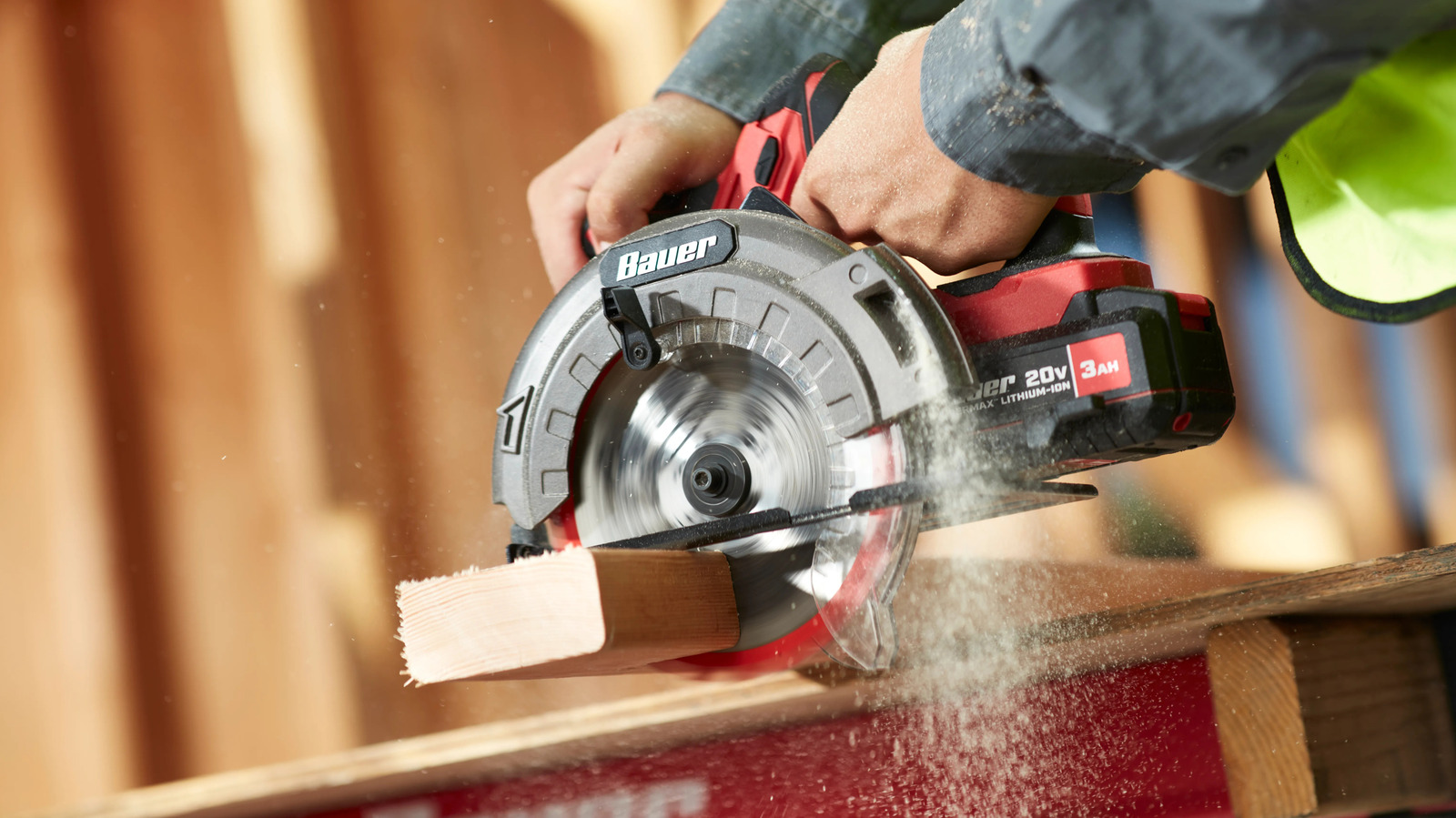
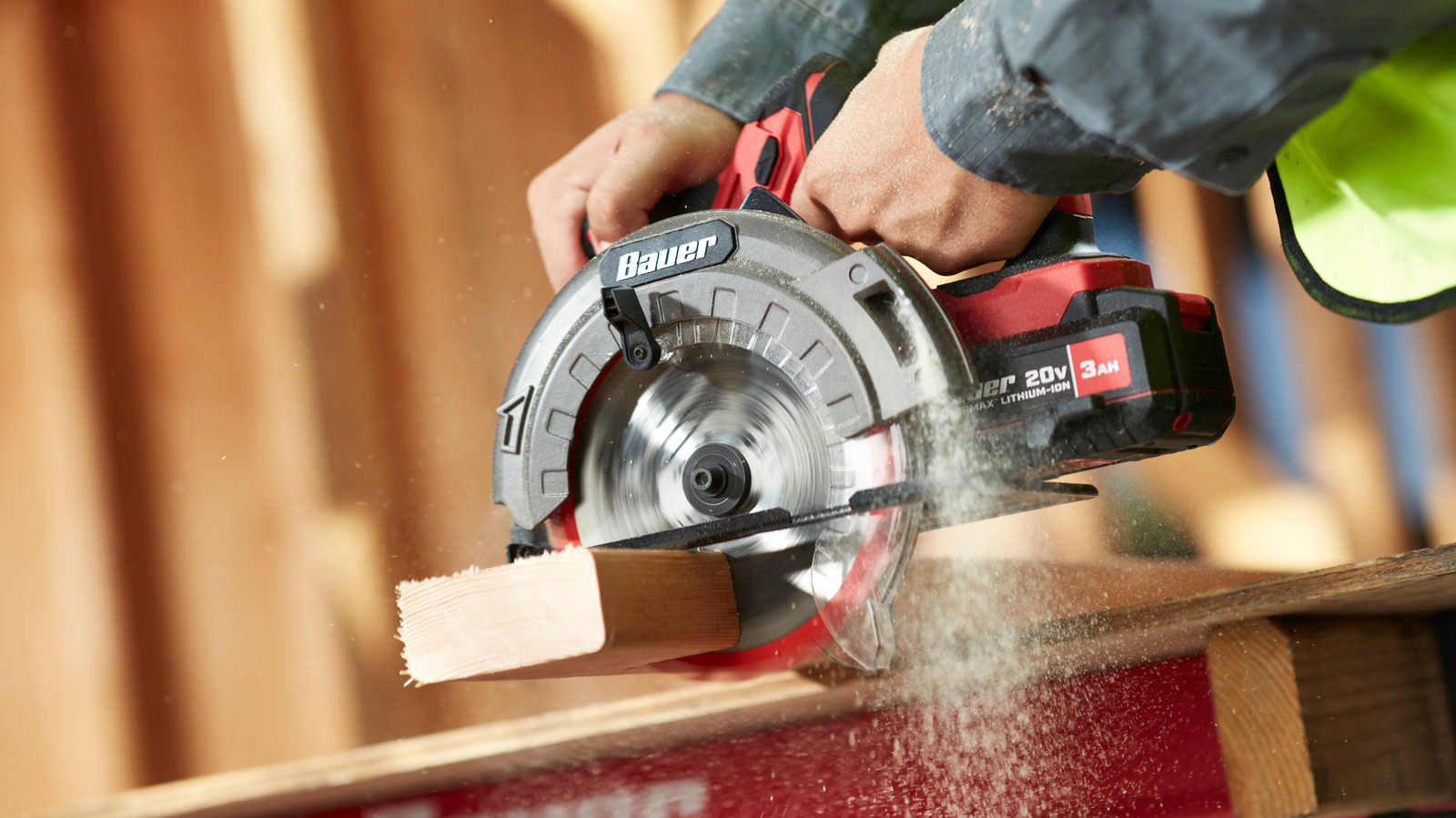
Even tools made by the best Harbor Freight brands are liable to break over time, and when they do, they’ll likely need replacement parts to fix them. Thankfully, Harbor Freight sells replacement parts for a huge variety of products in its range, although there are a few things you’ll need to know before you can buy them.

One of the most important things to note before checking for replacement parts is that Harbor Freight stores don’t sell them. The only place that the retailer sells parts is via its website, specifically via its replacement parts order page.

Advertisement

You can find the part you need by selecting the category of tool you’re looking for and then navigating through Harbor Freight’s catalog until you reach the product. Alternatively, you can also use a tool’s identifying information to get there quicker. Entering either the product’s SKU (stock keeping unit) or UPC (universal product code) into the search bar on the parts page should bring up the corresponding tool.

A word of caution though: Some replacement parts for certain tools may no longer be available to order. Harbor Freight says that every part that is in stock is listed on its website, so if you run a search for a particular tool and the part you’re looking for doesn’t appear as being available, you’re out of luck.

Advertisement

What else is worth knowing about Harbor Freight’s replacement parts service?

The good news is that if a part is in stock, you won’t be hit with any unwelcome shipping fees to receive it. The retailer does not charge shipping for replacement parts ordered through its website, regardless of the size or weight of the part. All parts orders should also ship within 48 hours of the order being placed. Once those parts are shipped to your address, they can’t be returned, as the retailer considers all replacement parts sales to be final.

There are plenty of Harbor Freight finds that are no-brainers at their price, and the chain’s consistent value for money shouldn’t change if you need to order parts to repair one of those finds either. If you have a tool that’s still covered by a warranty, parts are available for free. To make a warranty claim for a replacement part, you’ll need to call Harbor Freight’s customer service line on 1-800-444-3353. Tools bought from places like Facebook Marketplace, Amazon, or any other unauthorized third-party seller usually aren’t covered by Harbor Freight’s warranty, even if they were bought by the original purchaser within the stated standard warranty period.

If necessary, you can also order multiple examples of the same replacement part for a tool. However, Harbor Freight limits each customer to a maximum of five examples of each individual part. There’s no limit on the amount of different parts you can order, so if you have multiple tools that need repairing, you should be able to order everything you need in one purchase.

Advertisement


Source link

Advertisement
Continue Reading

Tech

Why Flash Drive Capacity Keeps Increasing (And Why Small Drives Are Rarely Sold Today)

Published

on

Denser NAND has made yesterday’s tiny capacities increasingly hard to justify.

Once upon a time, 1GB of flash memory was serious capacity (and it wasn’t cheap either). In early 2002, the industry was abuzz about JMTek’s USBDrive and its up-to-1GB capacity. Today, that same capacity is tiny by consumer standards. Most of Kingston’s current DataTraveler models start at 64GB, with some reaching 512GB.

Storage got ridiculously cheap along the way, and the price collapse was just as dramatic. USB flash storage went from more than $8,000 per gigabyte in its early years to 94 cents per gigabyte by 2013. The basic recipe didn’t change much, since a flash drive still needs a USB connector, controller, circuit board, casing and one or more memory chips. The 1GB drive didn’t become impossible to make. It became a pretty lousy thing to sell.

Advertisement

NAND learned to cram in a lot more data

The real trick happened inside those memory chips. For decades, NAND manufacturers have found ways to make memory cells smaller, cram multiple bits into each one and eventually stack those cells vertically with 3D NAND. That lets them pack far more into a flash drive without making the thing so large that you’d need a backpack to carry it.

One neat example came in 2005, when Toshiba and SanDisk announced an 8Gb (gigabit) NAND chip capable of storing 1GB on a single chip. It was less than 5 percent larger than the companies’ previous-generation 4Gb part but offered twice the capacity. In the announcement, the companies said it would become the “production workhorse … bringing significant cost reductions” to the companies’ flash storage products.

The numbers escalated quickly, with a 2.1GB Verbatim Store ‘n Go priced at $250 in 2004. By 2013, Kingston had unveiled a 1TB DataTraveler, while the already available 512GB version cost a fairly brutal $1,750. TLC NAND squeezes three bits into each memory cell and is commonly used in cost-sensitive consumer storage like USB drives. Capacity and speed have both climbed, but larger does not automatically mean faster. The NAND matters, as do the controller and USB interface.

Advertisement

Making tiny drives doesn’t save much

Shrinking a 64GB drive to 1GB doesn’t magically eliminate the rest of the hardware. After all, the low-capacity version still needs a controller, connector, circuit board, casing and packaging. It still has to be assembled, shipped and put on a store shelf too. Once high-density NAND gets cheap enough at scale, cutting storage capacity doesn’t necessarily cut the finished product’s cost by nearly as much.

There’s no neat capacity where the economics suddenly stop working, so there was no magic day when manufacturers decided en masse that 8GB had killed 1GB, but the industry shifted over time. Microsoft’s Windows installation-media tool requires a blank flash drive with at least 8GB of space, making a 1GB stick too small for one of the most ordinary jobs you might give a spare USB drive.

MLC (multi-level cell) NAND is getting squeezed on the production side, too. Global MLC NAND capacity is expected to fall 41.7 percent year over year in 2026 as major suppliers reduce or halt output and put more resources into newer processes. That can create the slightly odd result of an older NAND type getting pricier as supply shrinks.

Advertisement

Small drives haven’t completely vanished. Some survive in industrial and embedded applications where compatibility, endurance or a fixed hardware configuration can matter more than piling on capacity. Delkin sells industrial USB drives starting at 1GB, while Apacer goes lower, with industrial USB flash drives starting at 256MB.

Source link

Advertisement
Continue Reading

Tech

Enterprises with AI context layers report agent failures at more than twice the rate of those without one

Published

on

A company builds a governed context layer specifically to stop its AI agents from confidently giving wrong answers. Once that layer is live, the company is more than twice as likely to report the failure happening — not less.

In the past six months, 68% of enterprises have traced a confident but wrong AI agent answer to missing or inconsistent business context. Thirty-seven percent say it happened more than once, ahead of the 32% who saw it happen only once. The figures come from a VB Pulse July 2026 survey of 101 qualified enterprises with more than 100 employees. That’s up from 57% in a VB Pulse survey conducted in June. Recurring failures climbed too, from 31% then to 37% now.

This is the second time VB Pulse has asked enterprises this exact question, once in June and now in July. The failure rate is climbing, not falling, even as more enterprises report a governed layer in production, up from 25% in June to 32% now.

How agents get context determines whether they’re wrong

Every AI agent needs some way to know what the business actually means, whether a metric is defined consistently, whether a document is current. That’s the operation. The challenge is that enterprises hand agents that context in very different ways, and those ways are not equally reliable.

Advertisement

Retrieval over documents remains the most common approach, the primary source for 31% of enterprises. But a real share of enterprises skip a structured approach altogether. Thirteen percent run agents primarily on long-context loading, feeding documents directly into the model’s context window rather than retrieving them. Five percent give agents no structured context at all, just the model’s general knowledge. Between them, nearly one in five enterprises are feeding agents business context by brute force or not feeding it at all.

Even the leading approach can still produce a confidently wrong answer. Retrieval works by matching a question to text that looks similar in meaning. Similar wording doesn’t guarantee the same meaning. Srijith Rajamohan, an AI research leader at Redis, described exactly this gap in an interview with VentureBeat earlier this year. 

“If you have a sentence like ‘Rome is closer than Paris’ and another that says ‘Paris is closer than Rome,’ and you do an embedding retrieval followed by a text search, you’re not going to be able to tell the difference,” Rajamohan said. “The same words exist in both sentences.”

Buying shifted to access control. Grading didn’t follow.

The way enterprises choose a retrieval system doesn’t help close the gap. Access control and permissions now tie ease of data ingestion as the top selection criteria, at 24% each. It’s the first time in this survey series that a governance property has led to the buying decision. Retrieval accuracy trails at 15%. The property most directly tied to a confident wrong answer isn’t the property most enterprises are buying for.

Advertisement

Once a system is running, correctness is still how enterprises judge it. Response correctness is the primary success metric for 38% of enterprises, twice the next closest answer, security and access control at 19%. Enterprises are shifting how they buy toward governance. They’re still grading success on whether the answer is right.

The companies fixing this are the ones reporting it worst

A governed context layer is meant to fix this. It’s one shared, agreed-on model of what the business’s data means, that every agent and BI tool references instead of guessing on its own. Adoption is far from settled.

Thirty-two percent of enterprises run one in production. Thirty-one percent are piloting or building one right now. Twenty percent are evaluating one. Fourteen percent have no plans to, and 4% don’t know.

Compare that adoption data against who’s actually had the failure, and the picture inverts. Among the 91 enterprises able to say whether they’d experienced the failure at all, those running or building a governed layer report it recurring at 50%. Those without one report it at 21%.

Advertisement

A governed layer doesn’t cause the failure — it’s what makes the failure visible in the first place. Tracing a bad answer to a broken definition or a stale table requires a shared, governed reference point. A context layer provides that. Without one, the same wrong answer still happens — it just gets chalked up to the model, or never gets traced at all.

The pain point predates AI by decades. Kyle Nesbit, founder of the semantic layer startup Credible Data, described it to VentureBeat last month. “It’s the same pain point people have had for 30 years, the lack of governed data analysis,” Nesbit said. “Now with AI, it’s the same problem, but orders of magnitude more chaos and pain.”

Company size sharpens the same point. Enterprises with more than 1,000 employees report recurring failures at 55%, against 30% for those between 101 and 1,000 employees. That’s despite the bigger companies being less likely to have a layer already in production, 24% against 37%. More instrumentation and more people asking why a number was wrong turns up more failures, not fewer. A clean record is not evidence of a healthy context layer. It’s at least as likely to be evidence that nobody’s checking.

What this means for enterprises

Here’s what this adds up to for enterprises building on this layer.

Advertisement

Retrieval alone will not close the context gap. RAG remains the default context source, and nearly one in five enterprises are running agents on long-context loading or no structured context layer at all. More documents or a bigger index doesn’t fix a definition that means two different things in two different systems.

The budget is moving faster than the infrastructure is shipping. Sixty-three percent of enterprises are already building or running a governed context layer. Only 32% have actually gotten one into production. That gap is where the spend is going, not where the problem has been solved.

A clean failure record is a red flag, not a green one. The 22% of enterprises reporting no context failure at all are not the best-governed group. They’re the group least likely to be checking. The size data backs this up directly. Larger enterprises report recurring failures at nearly twice the rate of mid-market peers, despite being less likely to have a governed layer in production, not more.

No one is planning to hand the layer to a single provider. Seventy-nine percent of enterprises intend to keep at least part of the context layer outside any one vendor’s stack, split between best-of-breed tools and an explicit mix. Just 12% plan to consolidate onto a single provider’s native context stack.

Advertisement

The finding that organizations aren’t likely to hand over control to a single provider is a theme that VentureBeat has reported on consistently this year. Michael Ni, an analyst at Constellation Research, put it bluntly earlier this year when DataHub’s context layer push first landed.

 “Whoever controls runtime context, controls the AI decision layer for enterprise data,” Ni said.

Source link

Advertisement
Continue Reading

Tech

Nvidia discloses $21B stake in SpaceX

Published

on

Nvidia has committed more than $100 billion to AI companies in the past two years, with sizeable investments in cloud computing start-ups such as CoreWeave and AI labs including Thinking Machines and Safe Superintelligence.

It has also invested in Cursor, the code-editing start-up that SpaceX acquired for $60 billion this week.

This week, Nvidia disclosed plans to put together more than $500 billion from a consortium of investors, including Apollo Global, Blackstone, BlackRock, Brookfield Asset Management, Goldman Sachs, and KKR to help finance its customers. Nvidia plans to partially guarantee loans from the Wall Street investors that are backed by the value of its chips.

Nvidia’s largesse has helped accelerate the building of AI infrastructure and binds parts of the industry more tightly to the chipmaker’s technology.

Advertisement

SpaceX is planning to increase its computing capacity from 2 gigawatts at the end of this year to “closer to 10GW [than 5GW]” by the end of 2027, Musk told investors last week.

The rocket maker’s IPO handed huge returns to its early backers. Google owns roughly 7 percent of the rocket maker, according to FactSet data, having originally invested $900 million in 2015. The search giant told investors in July that its stake was valued at about $94 billion.

© 2025 The Financial Times Ltd. All rights reserved. Not to be redistributed, copied, or modified in any way.

Advertisement

Source link

Continue Reading

Tech

Apple TV adding ‘classic’ films makes me wonder why they didn’t bid for Warner Bros.

Published

on

According to online reports, Apple has added ‘classic’ films to its TV service, and I imagine that some will exclaim that it’s “about damn time”.

One of the main criticisms (not by me, mind you) levied at Apple TV is that its library isn’t big enough. Yes, I’d agree in the sense that its catalogue is not as big as others, but in another sense I don’t agree because the point of Apple TV is that it is small and building a reputation for good quality TV series (less so about the films).

Every service has to start somewhere, and they all started small. HBO wasn’t a giant when it started (in the vein of Game of Thrones, it was more a usurper). Neither was Showtime nor Comedy Central, to name a few.

Part of Apple TV’s raison d’etre is that it’s a streaming boutique, and if it were to license catalogues for streaming in the vein of Netflix or Prime Video, then what would set it apart from them?

Advertisement

The addition of these ‘classic’ movies is a swerve ball because none of them are particularly recent (Arrival is ten years old this year); they’re not from any one studio but a selection of Sony, Paramount, 20th Century, Walt Disney etc and a very curious selection of genres at that.

It seems as if Apple is testing the waters, but what is it a launchpad for? A wider selection, a buffer for when its own release schedule is a bit thin? It’s made me ponder a few things about why Apple just didn’t buy Warner Bros.

Advertisement

Warner Bros. would have been a great fit

Warner Bros. logo grey backgroundWarner Bros. logo grey background

If there’s any service that Apple TV seems to be aping, it’d be HBO. High-quality, (mostly) original content that tells a wide and diverse range of stories. HBO is the standard that every other channel and TV service wants to match.

But Apple, and I’d wager it could be viewed as either ambitious or arrogant, wants to build something, not acquire it. That certainly takes a much longer time, and recently, there have been questions asked about whether Apple really wants to devote lots of money to a service that’s losing money. That said, it seems most streaming services are losing money, though recently there have been signs of a turnaround.

Advertisement

Nevertheless, buying Warner Bros. would have given it a massive library. It would have given it a built-in subscriber base and audience from HBO Max (140 million compared to Apple’s 45 million), which also means it would have given Apple TV scale and reach – the ability to reach a wide number of people.

Apple seems to think that everyone with an iPhone or iPad would be interested in its streaming service, to the point where it’s virtually given it away in the last few years to ensure people come to the service. That doesn’t build a streaming service, at least not in the long-term.

Advertisement

Apple TV’s films are weak sauce

ghosted_Apple TVghosted_Apple TV
Image Credit (Apple TV)

There is this baffling experiment streamers seem to have indulged in, where they make a film, and it turns out to be not very good.

The best Netflix films tend to be ones already produced outside of the Netflix system that it snaps up at festivals. Very rarely has it developed a manner of consistently creating good content. That’s another reason why Netflix was interested in Warner Bros.

Advertisement

Others have been equally up and down. For every Project Hail Mary there seems to be a Masters of the Universe for Prime Video, but Apple TV has arguably been the worst of the lot because it has spent huge amounts of money, and lassoed star names and managed to produce limp and forgettable efforts. At least Netflix has Beasts of No Nation and The Irishman in its back catalogue; what exactly has Apple done?

Warner Bros.’ slate of 2025 films were virtually all smash hits, generating cultural awareness and becoming part of the conversation, which is something you’d think Apple would like to be a part of. This has been a part of Warner Bros.’ DNA for decades, and it’s not something that you can magic up in an instant.

Advertisement

That said, Apple did make Killers of the Flower Moon, but it felt as if it came and went along with the awards season of that year. Apple TV’s films need staying power. They need to last – it needs its own version of The Sixth Sense that it’s just licensed. Films that people remember and come back to. The films Apple TV has licensed are a reminder of just that.

Advertisement

Apple TV needs a hit factory

Ted Lasso promo imageTed Lasso promo image
Image Credit (Apple TV)

I respect Apple’s approach in the sense that it’s creating original content, but it can’t keep ploughing huge amounts of money into films that are so forgettable that you can’t remember watching them, or exist almost as art exhibits, to be seen, pondered about and then moved on from. It needs things to keep people coming back to.

HBO has Game of Thrones, and it had the likes of Euphoria, The Wire, The Sopranos and Curb Your Enthusiasm. Netflix had Stranger Things and it has One Piece. Prime Video has The Marvelous Miss Maisel and Reacher is currently in its fourth season.

They have shows that people keep coming back to. Apple TV has this as well: Slow Horses, Severance, Silo, Ted Lasso, but does not own all of these shows (Ted Lasso is actually Warner Bros., Silo is co-produced with AMC Studios, and Severance was owned by production company Fifth Season until it bought the rights in early 2026). And as good as these series have been, they’ve not dramatically boosted its subscriber base. 45 million in seven years does not look great. Disney+ has about 132 million in about the same time – that’s almost three times as much.

Whether Apple likes it or not, developing and then extending recognisable films and series is what people react to. There’s admiration in what Apple is doing, but there’s also a sense of naivety. For the established studios, most of whom have celebrated their 100-year anniversaries in the last five years, it’s taken decades to reach this point.

Advertisement

Advertisement

Apple can’t take decades of losses on principle, which makes it all the more galling that Warner Bros. was right there for the taking, and it didn’t even bid. I wonder whether that’ll be a wise decision in a few years’ time.

Source link

Advertisement
Continue Reading

Trending

Copyright © 2025