
Tech
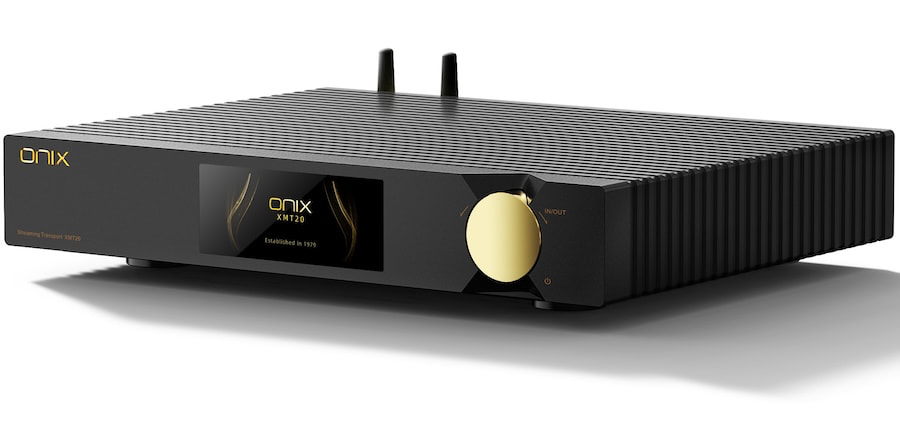
ONIX Zenith XMT20 Streamer Transport Debuts With TIDAL Connect, Qobuz Connect, and Roon Ready Certification

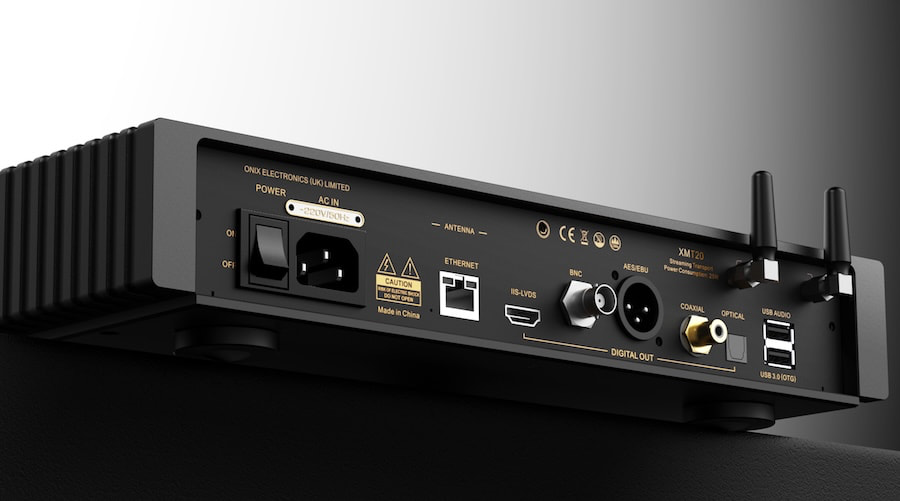
Shanling is pushing deeper into serious digital front-end territory with the ONIX Zenith XMT20 streamer transport, the company’s first product built around its newly developed Linux-based streaming platform. Priced at $2,199 USD internationally and €2,399 in the European Union (North American pricing is still TBD), the ONIX Zenith XMT20 is clearly aimed at listeners who want a dedicated, high-end digital source without the clutter or compromises of an all-in-one solution.
The new platform is designed around faster, simpler operation, with a heavy emphasis on remote control and native support for TIDAL Connect, Qobuz Connect, and full Roon Ready certification.
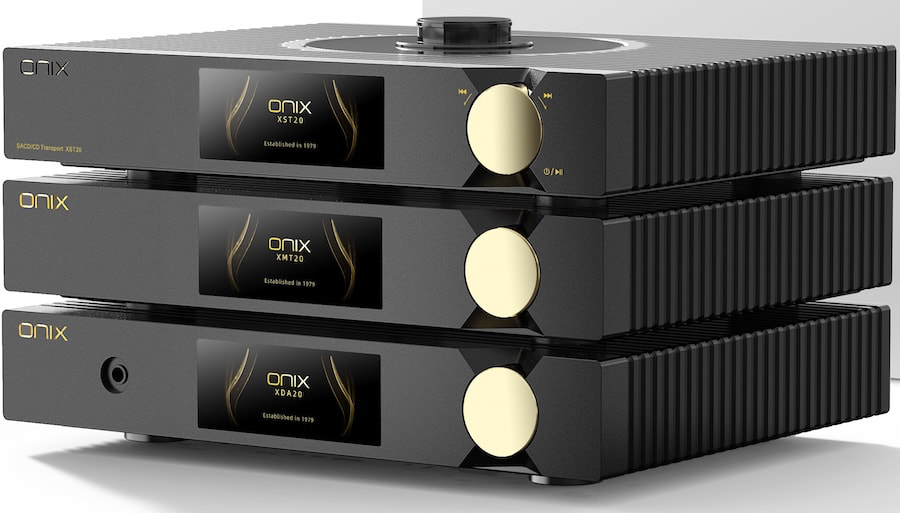
The XMT20 also underscores how tight the relationship between ONIX and Shanling has become. Following a string of recent collaborations, including the XST20 SACD/CD transport, the two brands are clearly aligning their engineering and design efforts across both disc-based and network audio.
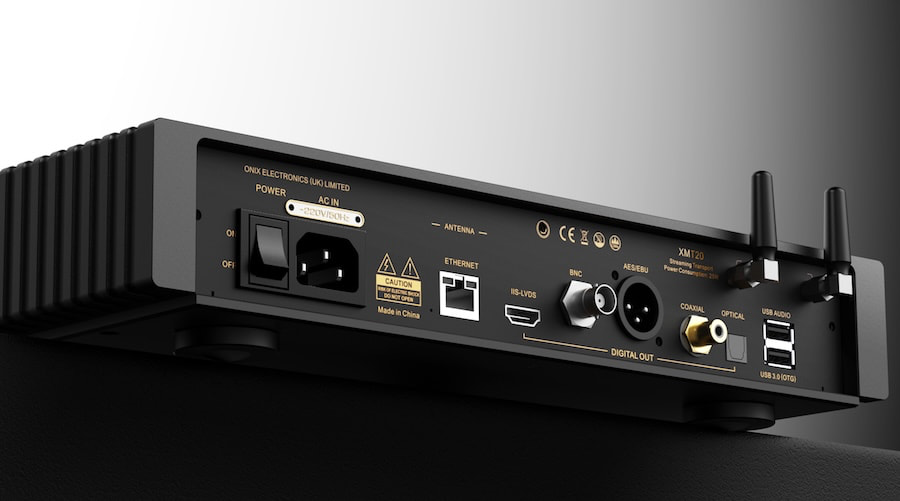
Beyond streaming, the XMT20 supports gapless local playback via USB storage or an internal SSD slot, handles all common Hi-Res formats, and uses the Eddict Controller app for Android and iOS. DLNA and AirPlay 2 round out the feature set, making the XMT20 a flexible but purpose-built transport rather than a lifestyle streamer trying to be everything at once.
High-End Grade Digital Output
The ONIX XMT20 is built to function as a true reference-grade digital transport, offering six digital outputs to accommodate virtually any external DAC. Standard coaxial, optical, BNC, and AES/EBU connections are joined by an advanced USB output and a dedicated I²S interface, making the XMT20 far more flexible than a typical network streamer. The FPGA-assisted I²S output is a key differentiator, providing 10 preconfigured pinout options to ensure broad compatibility with most I²S-capable DACs on the market—no guesswork, no adapters, no excuses.
Digital signal integrity is handled with the same seriousness ONIX applies to its disc transports. A pair of KDS high-precision crystal oscillators anchors the clocking architecture, delivering low-jitter performance intended for high-resolution playback across all supported outputs. In practical terms, the design philosophy mirrors what made the ONIX XST20 such a compelling SACD/CD transport: clean signal paths, stable timing, and an emphasis on musical coherence rather than feature bloat. The XMT20 takes that same approach and applies it squarely to modern network and file-based digital playback.
Adapted for CD Playback & Ripping
The ONIX Zenith XMT20 doesn’t stop at streaming and file playback. It also introduces a new CD playback and ripping system, extending the unit’s role as a central digital hub. The platform supports both basic USB CD drives and the more advanced Shanling CR60, giving users the choice between simple disc access or a higher-grade external transport. CDs can be played directly through the XMT20 or securely ripped to an internal SSD or connected USB storage.
Ripping is handled with minimal friction. The system supports automatic metadata tagging and album art downloads, all managed through the Eddict Controller app, keeping the process streamlined and hands-off once initiated. In practice, this brings the same disciplined, transport-first mindset ONIX applies to disc playback into the file-based world—letting users preserve their CD collections digitally without resorting to a computer-based workflow or third-party software.
Key Specifications
- Dimensions / Weight: 32 x 24 x 7.2 cm / 5.2 kg
- Display: 3.4-inch touch screen
- Platform: In-house Linux-based streaming system
- Streaming Support: TIDAL Connect, Qobuz Connect, Roon Ready
- Networking: Wi-Fi, Ethernet, DLNA, AirPlay 2, NAS
- Local Playback:
- USB storage (rear port, up to 2TB)
- M.2 NVMe SSD slot (bottom-mounted)
- File Support:
DSD (.iso, .dsf, .dff), DXD, FLAC, WAV, AIFF, APE, ALAC, AAC, MP3, OGG, M3U/M3U8 (DST not supported) - CD Playback / Ripping:
USB CD drives and Shanling CR60 - Digital Outputs:
- Optical, Coaxial, BNC, AES/EBU: PCM 24/192, DSD64 (DoP)
- USB & I²S: PCM 24/768, DSD512 (native)
- Power Supply: 25VA Talema transformer
The Bottom Line
The ONIX XMT20 is not trying to be a mass-market streamer, and that’s exactly the point. What makes it unique is its transport-first design: a new in-house Linux platform built around native TIDAL Connect, Qobuz Connect, and full Roon Ready certification, combined with an unusually deep set of high-end digital outputs, including FPGA-assisted I²S with broad DAC compatibility. Add local playback from USB or internal NVMe SSD, plus CD playback and ripping via external drives, and the XMT20 becomes a modern digital hub that treats signal integrity and flexibility as priorities rather than afterthoughts.
Based on €2,399 EU pricing and $2,199 international pricing, it is highly unlikely the North American price will land under $2,000 USD; a figure closer to $2,400 is far more realistic. There is also no Spotify Connect support, which immediately narrows the audience—and intentionally so. The XMT20 is for Roon-centric listeners, Qobuz and TIDAL subscribers, and DAC owners who want a serious, future-proof digital transport without paying for an internal DAC they don’t need. If you’re building a high-end system around external conversion and care more about clocking, output options, and control than app ecosystems or lifestyle features, the XMT20 is very much aimed at you.
For more information: XMT20 Streamer
Related Reading:

Written by Ran Geva, CEO at Webz.io & Lunarcyber.com
In 2026, stolen credentials are a top-tier security priority. They are also a paradox: even though they are considered a significant risk, enterprises still opt for checkbox solutions and generic tools to mitigate the problem.
According to a recent survey commissioned by Lunar, a dark-web monitoring platform powered by Webz.io, 85% of organizations rank stolen credentials as a high or very high risk, with 62% saying they are in their top-three security priorities.
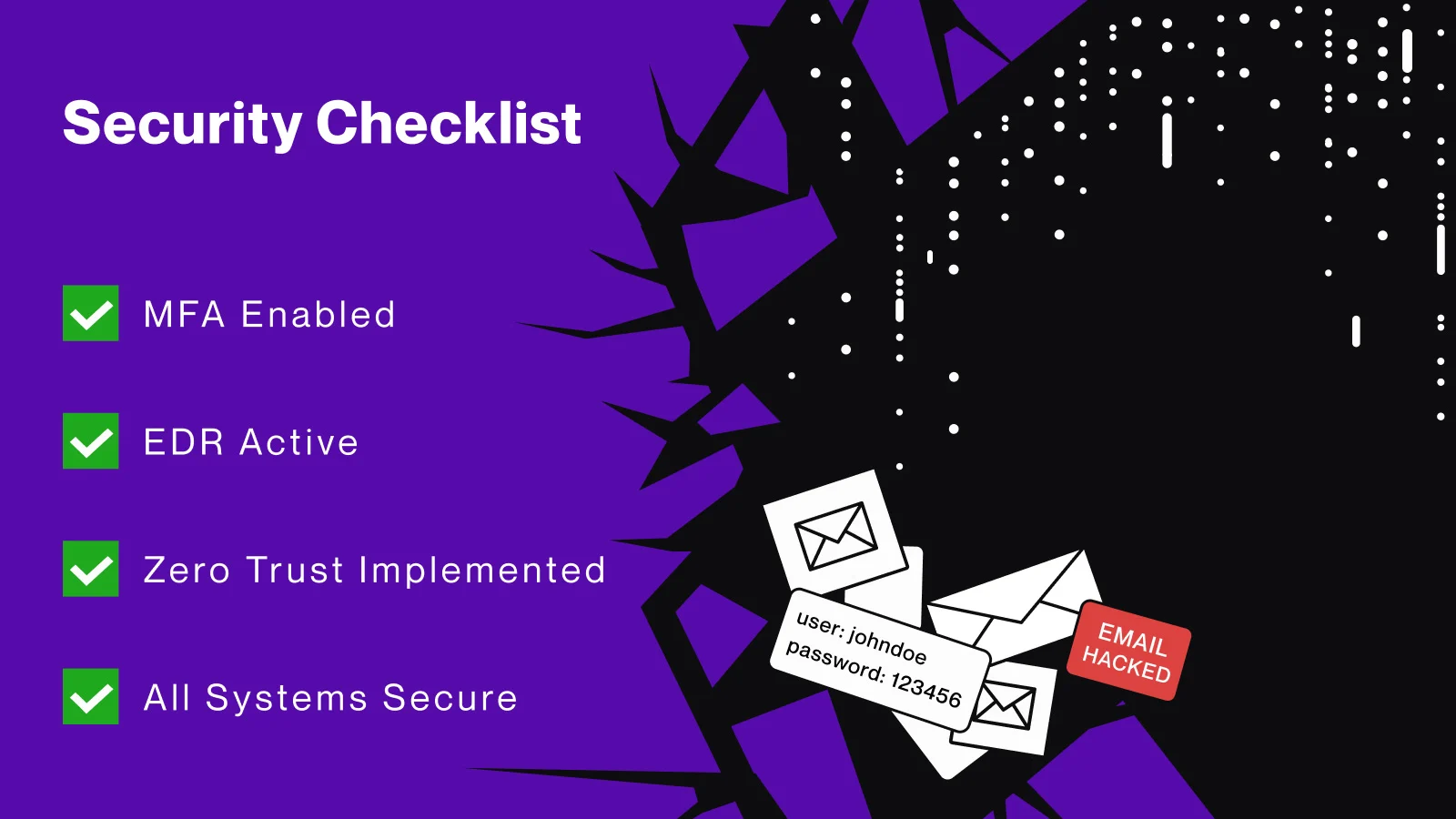
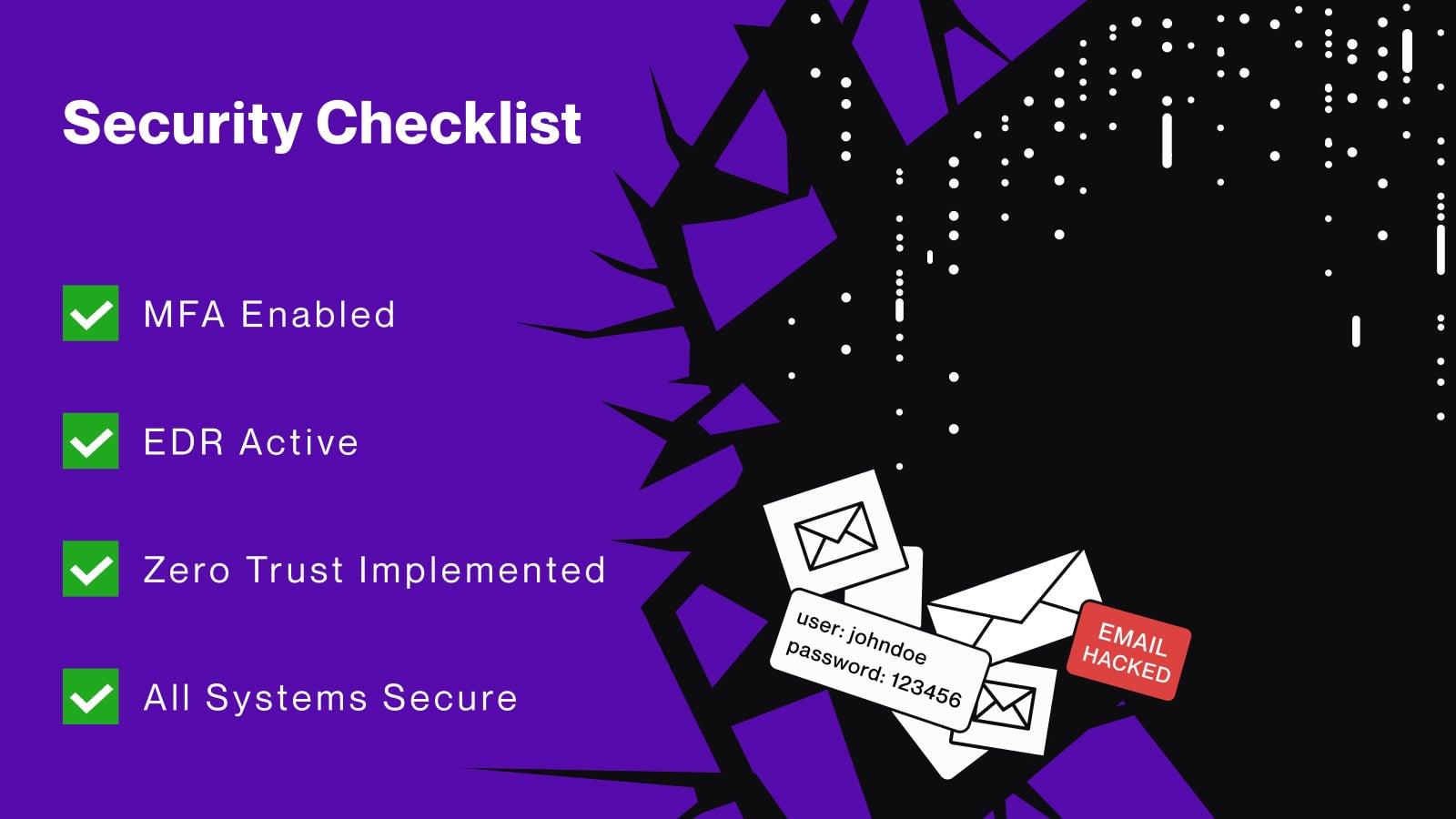
At the same time, I’ve spoken with dozens of organizations using Lunar’s community platform, who have told me things like, “we have MFA everywhere, so we’re covered”, and “our EDR and zero-trust stack already protects our employees.”
They fail to realize that EDR and zero-trust measures offer no protection when an employee logs into a critical SaaS service from an unmanaged home device.
The consequences of failing to detect stolen credentials in time can be catastrophic. According to IBM’s Cost of a Data Breach Report, a breach involving compromised credentials costs between $4.81-4.88 million.
Considering that Lunar observed 4.17 billion compromised credentials in 2025 alone, the potential global cost of these attacks is staggering. All of this means that simple breach monitoring is no longer enough.
An enterprise mindset shift is needed to create a programmatic defense strategy that tackles the ever-evolving threat of infostealers.
Checkbox Monitoring and The Dangers of Using Generic Solutions
When speaking with organizations, I always ask how they mitigated the infostealer threat before onboarding Lunar. The answers I get follow the same pattern: Exposed credentials are a serious problem and we dedicated resources to solutions to mitigate the threat.
What they didn’t realize is that those solutions were lacking and mainly consisted of:
-
A focus on data breaches instead of infostealers
-
ULPs and non-forensic infostealer data
-
High latency and stale data sources
-
No automation, integrations, or investigation capabilities
Our research lays out just how serious the problem is. Only 32% of enterprises that we surveyed use dedicated credential monitoring solutions, while 17% have no tooling at all.
Meanwhile, more than 60% of organizations check for exposed credentials monthly, rarely, or not at all.
We’ve seen firsthand how these solutions perform. When new organizations onboard Lunar, many are shocked to realize that while their previous tools told them that a breach had happened, they never got the tools to properly investigate how it happened.
The forensic details, including the accounts that were compromised, the devices infected, the SaaS apps that could be impacted, not to mention the session cookies that were stolen, were simply not there.
While the checkbox approach is better than no security at all, it rarely provides the forensic detail that enterprises need to successfully mitigate the infostealer threat. So, what’s holding them back from scaling their operations?
See where your company’s credentials and session cookies are already exposed.
Lunar continuously monitors breaches and infostealer logs for your domains and surfaces actionable exposures in a free, enterprise‑grade dashboard.
The Infostealer Threat is Much Bigger Than Enterprises Think
This is where the infostealer paradox enters into our conversations. While everyone knows about the dangers of exposed credentials, they either fail to prioritize budgets or simply don’t know what kinds of solutions successfully mitigate the problem.
Furthermore, they don’t always understand just how prevalent credential theft actually is, the environments they target, and the information they can access.
From the 4.17 billion compromised-credential records we collected in 2025, we analyzed infostealer logs, stealer-derived combolists, marketplaces, and Telegram channels. Infostealers like LummaC2, Rhadamanthys, Vidar, Acreed, and others consistently slipped past enterprise monitoring, even in environments that considered themselves mature.
And while many new Lunar users thought that the macOS was safer than Windows, they were shocked to hear about families like Atomic macOS Stealer (AMOS), Odyssey, MacSync, MioLab, and Atlas.
There is also an awareness problem regarding the data infostealers exfiltrate, which goes far beyond simple username/password pairs. With modern infostealers now sold as full-fledged products, with subscription tiers, dashboards, and documentation tuned to harvesting cookies, session tokens, and SaaS access at scale, organizations are now in a rush to catch up and protect their networks.
For threat actors, session cookies don’t just provide access. They effectively open the front door, letting them skip login pages entirely: no password prompt, no MFA challenge, and often no obvious trace in standard authentication logs.
That is the piece of the puzzle that many organizations are only now internalizing.
What Does a Typical Infostealer Attack Look Like?
When we talk about what an infostealer attack looks like, and why checkbox security is ineffective, we often break it down into the following process:
-
Target is infected: The victim’s device is compromised by an infostealer delivered through vectors such as zero-day exploits, ClickFix campaigns, rogue browser extensions, unverified or pirated software, game mods, or malicious open-source projects.
-
Credentials are exfiltrated: The infostealer extracts the browser for logins and cookies, including those from third-party portals, and sends them back to the malware operator.
-
Credentials are bundled and sold: The stolen credentials are bundled into logs and sold on underground markets and private channels.
-
Attackers access the enterprise network: The attacker who purchases the logs accesses the target network, including third-party portals, using a valid session token.
This entire chain of events can be completed in hours. Meanwhile, many of the organizations we speak with run credential checks once a month or rely on outdated data.
By the time anything shows up in their legacy monitoring tools, attackers have had plenty of time to explore and exfiltrate whatever data they want.
Developing a Mature Breach Monitoring Program
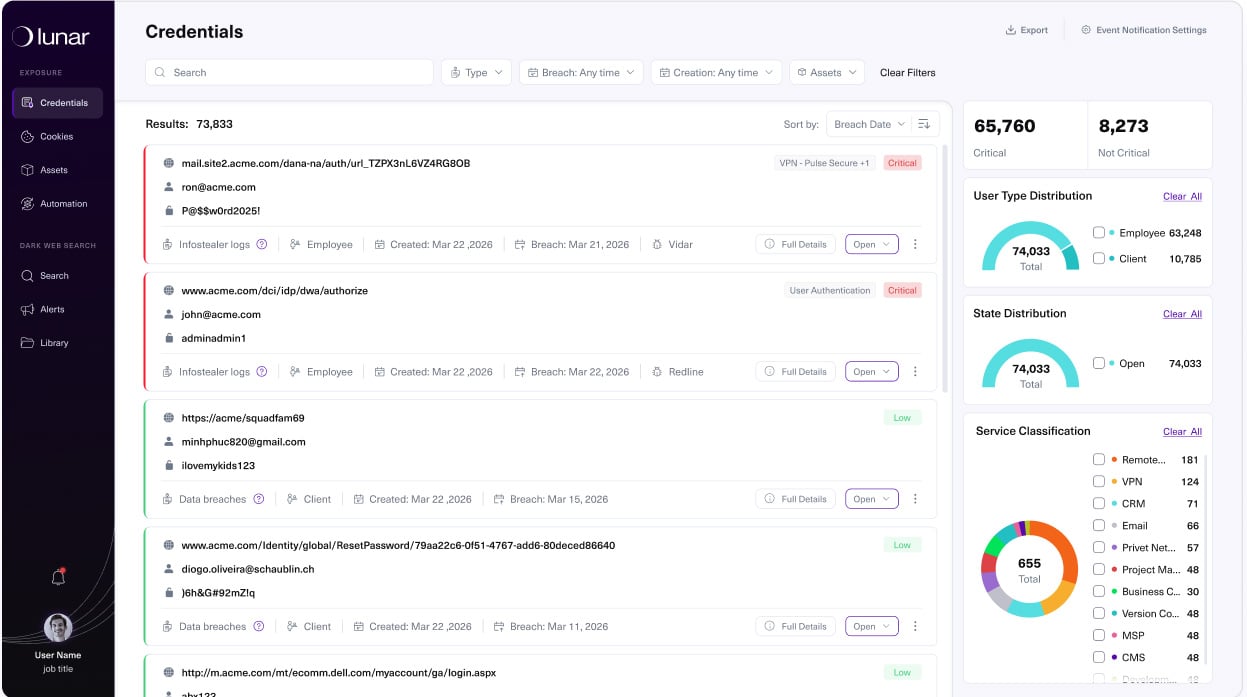
Organizations we work with that make the switch to a mature breach monitoring program have the tools they need to collect information from channels like stealer logs, Telegram groups, and marketplaces. Instead of relying on ad-hoc checks, they focus on three practical capabilities:
-
Continuous monitoring and normalization of key sources (breaches, stealer logs, combolists, marketplaces, and relevant channels), so security teams have a clear and deduplicated view of breach exposures.
-
Targeted automation that reduces false positives and noise, ensuring that analysts spend time on identities and sessions that actually matter.
-
Integrations into existing security and identity stacks (SIEM, SOAR, IDP) that execute playbooks end-to-end, resetting credentials, invalidating sessions, and blocking accounts as soon as exposures are confirmed.
Among Lunar users, we’ve seen a clear mindset shift once they get this right. They treat the infostealer threat as its own domain, complete with ownership, metrics, and playbooks, instead of managing their breach monitoring using unrelated tools.
This all goes back to Lunar’s core mission, which is to provide a free breach monitoring solution to any organization, regardless of budget, that delivers enterprise-grade coverage of compromised credentials, infostealers, and session cookies.
Our philosophy is to openly provide enriched compromised credential intelligence, enabling organizations to regain true visibility and resilience.
Redefining Breach Monitoring in 2026
Even seasoned and knowledgeable security teams can fall into the breach monitoring paradox, where they know the threat but behave as if monthly checks, MFA, and EDR are enough. But in 2026, infostealers move at a speed and scale that checkbox monitoring solutions were never designed to handle.
Treating breach monitoring as a must-have program, instead of a one-off product, provides your enterprise with the visibility needed to view compromised credentials wherever they appear, the context to understand what those exposures mean, and the playbooks to automatically react when an attack is detected.
To see how Lunar can help you find your organization’s compromised credentials, sign up for free access.
Sponsored and written by Lunar.
Tech
Fascinating Look Back at the RCA Colortrak 2000, the CRT Television from 1982 Hidden Behind Glass


Photo credit: This-Profession-1680
Collectors frequently pause for a second when they see one in a thrift store or internet listing. A 1982 RCA Colortrak 2000 stands there with that 25-inch CRT screen behind a full tinted glass panel that swings open like a cabinet door, seeming almost like a piece of furniture at first glance. It protected the tube from dust and made darker scenes appear much more dramatic in well-lit spaces by reducing reflections.
RCA positioned the Colortrak 2000 as the top of their line in the early 1980s. The regular Colortrak sets were fairly reliable at the time, but the 2000 series went one step further by including a specialized comb filter. This item split color signals considerably cleanly than any other way, resulting in incredibly clean edges and minimal “bleeding” between colors on TV or recordings. They also included a light sensor near the screen. Cover it up in a bright area and the display will automatically decrease to reflect the surroundings, since it was quite futuristic stuff for its time, especially given most TVs. You just have a lot of manual knobs to mess with.
Sale

INSIGNIA 50″ Class F50 Series LED 4K UHD Smart Fire TV, Voice Remote with Alexa, Stream Live TV Without…
- 4k Ultra HD (2160p resolution): Enjoy breathtaking HDR10 4K movies and TV shows at 4 times the resolution of Full HD, and upscale your current content…
- High Dynamic Range: Provides a wide range of color details and sharper contrast, from the brightest whites to the deepest blacks.
- All-in-one: Get right to your good stuff. With Fire TV, you can enjoy a world of entertainment from apps like Prime Video, Netflix, Disney+, Hulu, and…
People enjoyed the entire cabinet as much as the hardware itself. Acacia veneer and several good hardwoods received a warm golden finish, polished to a wonderful gloss that blended perfectly with the living room decor. The speakers were located at the bottom of the cabinet, on a glossy chrome base, and featured a dual dimension audio arrangement with two nine-inch oval drivers and a built-in amplifier. RCA even touted it as stereo-ready before stereo broadcasting became popular, and you could connect other sources via audio jacks and tune the bass and treble independently, which was unusual in ordinary sets at the time.

The controls were concealed until you needed them, as a smoked acrylic door moved to one side to display all of the buttons for turning on and off the power, selecting channels, and making picture modifications such as sharpness and hue. There are no large knobs jutting out anywhere. The original remote, later renamed as the Digital Command Center, was compatible with the set and could also control other components in a comprehensive RCA system. A minor but neat feature, since you can push the remote and it will switch on the TV without the need for a separate power button, just a little indication at how RCA conceived of these sets as part of a comprehensive home entertainment package.
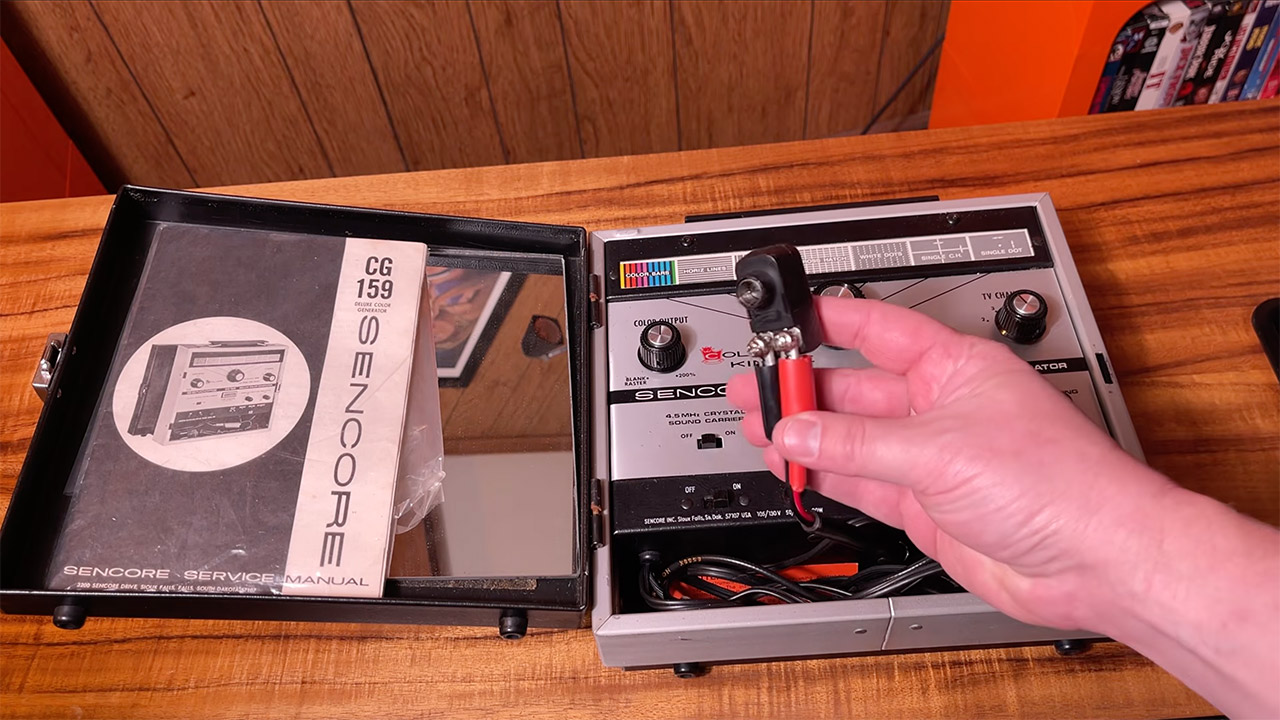
The early models, like this 1982 example, only had RF connectors. Cable-ready tuning supported 127 channels, and a super ACU filter ensured color consistency among stations. Later, certain 2000 model Colortraks added composite inputs and even S-video plugs to the back, which could be accessed by tuning to a specific non-broadcast channel. This made the sets extremely useful even after they were brand new, particularly for plugging in gaming consoles or VCRs without the need for a variety of adapters. Yes, there were a few uncommon types with BNC connectors, an homage to all the professional video equipment that most people never saw.
Sam Altman’s 13-page policy blueprint, ‘Industrial Policy for the Intelligence Age,’ proposes auto-triggering safety nets, containment playbooks for rogue AI, and direct citizen dividends from AI-driven growth. He told Axios it is a starting point, not a prescription.
OpenAI has published a 13-page policy document calling for sweeping economic reforms to prepare for what it describes as approaching superintelligence, including taxes on automated labour, a national public wealth fund seeded partly by AI companies, and pilots of a 32-hour working week.
The document, titled ‘Industrial Policy for the Intelligence Age: Ideas to keep people first,‘ was released as Congress prepares to debate AI legislation. CEO Sam Altman told Axios in an exclusive interview that the scale of change coming from AI is comparable to the Progressive Era and the New Deal, and that the two most immediate dangers are cyberattacks and biological weapons capable of being enabled by advanced AI.
The most radical proposal in the document is the public wealth fund. OpenAI suggests the government create a nationally managed fund, seeded in part by contributions from AI companies themselves, that would invest in AI firms and other businesses adopting the technology and distribute returns directly to American citizens.

The 💜 of EU tech
The latest rumblings from the EU tech scene, a story from our wise ol’ founder Boris, and some questionable AI art. It’s free, every week, in your inbox. Sign up now!
The model is comparable to Alaska’s Permanent Fund, which pays annual dividends to state residents from oil revenues.
On labour, the document floats taxes on automated labour and a shift in the tax base from payroll towards capital gains and corporate income, an acknowledgement that AI could hollow out the wage-and-payroll revenue that currently funds Social Security.
The 32-hour workweek proposal is framed as an ‘efficiency dividend’ from AI-driven productivity gains.
The document includes a section on what it calls ‘containment playbooks’ for scenarios in which dangerous AI systems become autonomous and capable of replicating themselves. OpenAI acknowledges scenarios where such systems ‘cannot be easily recalled,’ and proposes government co-ordination as the response.
The blueprint also envisions automatic safety net triggers: when AI-driven displacement metrics hit preset thresholds, benefits including unemployment payments and wage insurance would increase automatically, then phase out when conditions stabilise.
Altman told Axios that a major cyberattack enabled by near-future AI models is ‘totally possible’ within the next year, and that AI models being used to create novel pathogens is ‘no longer theoretical.’
Altman was candid with Axios about the dual nature of the document. OpenAI is the company racing to build the very technology it is warning about, and positioning itself as the responsible actor proposing solutions is plainly also a strategy to shape regulation before regulation shapes it. Anthropic has occupied a similar lane.
The policy paper arrives at a moment when OpenAI is preparing for an IPO, has closed a $110 billion private funding round, and is simultaneously under scrutiny over its conversion from non-profit.
Whether the altruism is genuine or strategic, Altman told ‘Some will be good. Some will be bad. But we do feel a sense of urgency. And we want to see the debate of these issues really start to happen with seriousness.’
Tech
Supreme Court Shrugs Off Opportunity To Save The First Amendment From The Fifth Circuit’s Antipathy

from the rights-are-for-people-who-never-need-to-invoke-them-I-guess dept
The Supreme Court’s latest recap of its relative inactivity (Trump administration “emergency” appeals aside) has delivered yet more evidence of this court’s indifference to rights violations committed by the government. Other cases involving alleged rights violations that should have — at the very least — been handed over to jury for further consideration were tacitly blessed by the top court in the land by its refusal to grant certori.
This one — involving the retaliatory arrest of an independent journalists by cops who didn’t like her reporting — is yet another miscarriage of justice by a Supreme Court whose majority simply won’t take cases that might force it to hold the government accountable for its actions.
This case has bounced up and down the judicial ladder for more than a half-decade. Laredo, Texas native/independent journalist Priscilla Villarreal has been live streaming and reporting via Facebook under the name “Lagordiloca” for several years. Laredo PD officers don’t like her because she asks them questions they don’t like answering and films them when they’re performing traffic stops and arrests.
After Villarreal published information about a Border Patrol officer who had committed suicide, the Laredo PD worked with local prosecutors to have her arrested. All Villarreal had done was ask a PD employee to confirm information she’d already obtained. The PD responded by opening an internal investigation to oust the employee that had responded to Villarreal’s queries. Then it decided the only way for justice to be done was to arrest the person who had merely received confirmation (via a law enforcement employee) she already had in her possession.
Prosecutors claimed Villarreal’s acquisition and publication of this information violated a state law forbidding people from profiting from “misuse of official information.” To support this claim, the prosecutors claimed Facebook clicks were a form of “profit.” To date, no other citizen has ever been prosecuted under this law that was clearly written to prevent government employees from profiting from information only government employees might have access to.
The local judge immediately tossed the bullshit charges immediately after they were presented to her in court. Somehow, the district court managed to look past the obvious First Amendment violations to give the officers immunity. The Fifth Circuit’s first pass reversed this, with Judge Ho making it clear there’s no way any reasonable officer would have thought arresting a journalist simply for asking questions didn’t violate the Constitution.
This is not just an obvious constitutional infringement—it’s hard to imagine a more textbook violation of the First Amendment.
Then things got weird. A couple of judges in the minority thought this shouldn’t stand and started making noise. The Fifth Circuit agreed to an en banc hearing and reissued this opinion with a new dissent written by Chief Judge Priscilla Richman, along with some additional commentary by Judge Ho about how far removed from sanity Richman’s dissent was.
Two years later, it handed down its second take. And the majority somehow came to the conclusion that it’s okay to engage in retaliatory arrests as long as you can find any criminal statute at all to support the arrest. According to Judge Jones, Villarreal should have either limited herself to official channels or challenged the law itself in court, rather than ask a government employee to verify information Villarreal already possessed.
This was appealed. Eight months later, the Supreme Court sent it back down to the Fifth Circuit for yet another pass, instructing it to apply the Trevino standard. That standard is fairly simple: if a law is rarely, if ever, enforced but somehow shows up conveniently to do the cops’ dirty work when they want to retaliate against a person they don’t like, there’s a good chance this selective application is an established violation of rights. In this case, prosecutors had never used this law to charge anyone ever.
The Fifth Circuit’s third pass — again written by Judge Edith Jones — said the Trevino factor just didn’t matter. If the law was on the books (even if it had never been enforced), it was justification enough for the arrest. And even if that arrest violated the Constitution, the officers should still be given qualified immunity because how could they have known that arresting the only person ever charged with this crime in its 23 years of existence might somehow be unconstitutionally retaliatory?
Now that we’re caught up, this is how it ends for Priscilla Villarreal:
The petition for a writ of certiorari is denied.
There’s a dissent written by Justice Sotomayor that’s even lengthier than my preamble. It’s worth reading, though, and it starts with this admonishment of the majority’s refusal to write this obvious wrong:
It should be obvious that this arrest violated the First Amendment. Yet the Fifth Circuit held that the officials were entitled to qualified immunity, and now Villarreal is left without a remedy. The Court today makes a grave error by declining to hear this case.
The nation’s top court has decided the Laredo PD and local prosecutors can walk away cleanly from a series of extremely obvious rights violations. And in doing so, it emboldens them (and others) to engage in future retaliatory arrests of journalists they don’t like.
The Supreme Court majority is apparently willing to pretend rights don’t exist when it’s convenient to do so, just like the officers whose actions it tacitly blesses with this particular inaction. Sotomayor drills down on this, rubbing the majority’s nose in its deliberate dismissal of constitutional rights:
[T]he Fifth Circuit found that the officials reasonably believed that they had probable cause to arrest Villarreal for violating §39.06(c). Id., at 385–390. Not so. Just like an individual cannot be convicted of a crime for engaging in First Amendment activity, it is axiomatic that a probable cause determination cannot be based on such protected activity either.
[…]
It necessarily follows that when an arrest is based on protected First Amendment activity, that activity cannot constitute probable cause and support adverse police action. All reasonable officers know this.
[…]
Here, it is hard to conceive of a more obvious constitutional violation than arresting a journalist who, in searching for corroboration, simply asks a government source for information. That is the essence of many journalists’ jobs. The arrest does not somehow become reasonable, and constitutional, merely because an unconstitutional application of a statute authorizes it.
All we have is the dissent. All Villarreal has is knowledge Laredo PD officers and local prosecutors will be digging through the state statutes to find something else to charge her with the next time her reporting pisses them off. The Supreme Court issued a short, clear instruction to the Fifth Circuit, telling it to apply a specific legal standard. Instead, the Fifth Circuit — led by the consistently awful Judge Edith Jones – sidestepped this instruction on its way towards granting the officers qualified immunity. And that deliberate refusal to engage with the Supreme Court’s specific instructions has now been ignored by the same court that strongly hinted the Fifth Circuit got this wrong. It’s a shrug that lets the general public know exactly where it stands: at the bottom of the national organization chart with no layers of protection between them and government officials who seek to do them harm.
Filed Under: 1st amendment, 4th amendment, 5th circuit, laredo pd, police misconduct, priscilla villarreal, qualified immunity, retaliation, supreme court

Baseus has launched the PicoGo Air in China, and it’s making a strong case for being the slimmest companion your phone could ask for. At just 6.9mm thin, this magnetic power bank is designed for people who want the extra juice without the bulk.
The PicoGo Air packs a 5,000mAh rated capacity, which is enough to give your phone a solid top-up when you need it the most. It supports 15W magnetic wireless charging and 22.5W wired fast charging, which is good enough for a slim power bank like this one.
What makes it more than a slim power bank?
Slimness is not the only selling point of the Baseus power bank. According to Notebookcheck, one standout feature is PowerSense NFC. Tap your phone to the power bank, and the companion app will show you a detailed battery status. It’s a small touch, but it’s the kind of thing that makes you feel like you know how much charge you have left, instead of guessing from a blinking LED.

One challenge thin power banks face is heat management. Baseus is aiming to solve this problem with its Glacier Heat Dissipation Structure, paired with a VC heat sink and an aluminum alloy body. Together, they should help keep temperatures under control during charging. There’s also an adaptive temperature control feature to ensure your charging stays stable and safe.
Does it come with anything in the box?
Baseus bundles a short cable with the PicoGo Air that supports up to 60W fast charging, so you can use it with other power adapters. The power bank itself comes in three metallic finishes with an Apple-inspired curved design and strong built-in magnets.

The Baseus PicoGo Air is currently available in China for CNY 299, roughly $44. International availability has not been confirmed yet, but Baseus has a solid track record of bringing its PicoGo lineup to global markets, so you can expect it to arrive in the US in the coming months.

Last week in Rhode Island, in a hearing over the Trump administration’s efforts to access the state’s unredacted voter lists, US district judge Mary McElroy asked a Department of Justice lawyer what the agency had been doing with the voter roll data it already amassed from other states in recent months.
“We have not done anything yet,” said Eric Neff, the acting chief of the agency’s voting section, a core part of the DOJ’s civil rights division that focuses on enforcing federal laws that protect the right to vote. Neff added that the data the DOJ collected from states—which can include Social Security numbers, drivers licenses, dates of birth, and addresses—was being kept separate.
“The United States is taking extra concern to make sure that we’re complying with the Privacy Act in every conceivable way,” Neff added. The Privacy Act of 1974 regulates how government agencies collect and use personally identifiable information about US residents.
But Neff was not telling the truth: The DOJ, he later admitted, was pooling the data and already analyzing it to identify voting irregularities.
In a court document filed on March 27, Neff walked back his claims. “The United States represented that each data set was stored separately,” Neff wrote. “The United States also stated that no analysis had yet been conducted on the data. To correct and clarify the record, preliminary internal data analysis of the nonpublic voter registration data has begun. In particular, the Civil Rights Division has begun the process of identifying and quantifying the number and type of duplicate and deceased registered voters in each state.”
The revelation confirms what was widely speculated, which is that the DOJ appears to be pooling the data and using it to identify potential issues with suspected voting irregularities ahead of the midterms, which is a core part of Trump’s broad attack on elections.
Neff and the DOJ did not respond to repeated requests for comment.
Critics have grown increasingly concerned about the DOJ’s voting section, which has undergone a stark transformation since President Donald Trump has retaken office. A newly installed coterie of inexperienced but ultra-loyal lawyers in the DOJ’s voting section, many of whom have supported election denial conspiracy theories, have spent their time on forcing states to hand over their voter roll information.
The initiative began in May last year, when the Department of Justice sent letters to election officials in at least 48 states and Washington, DC, asking for unredacted voter rolls. Some Republican-led states immediately handed over the information, but dozens of others pushed back. As a result, Neff and his colleagues have sued 30 states, asking courts to force them to hand over the information. So far, courts have sided with the states, with judges already dismissing cases in California, Michigan, and Oregon.
In many of the lawsuits, state election officials pointed out the huge security risk involved in sharing such sensitive data, especially when it was unclear how the data would be stored or who it would be shared with. “We still have no idea what the government is doing with this data,” says David Becker, the head of the Center for Election Innovation and Research and a former Justice Department lawyer. “No idea where it is being stored, how it is being protected, or who has access to it. This data is incredibly sensitive. If someone has any of these three data points on any of us, Social Security number, driver’s license number, or date of birth, they can wreck us financially. This is why the states protect this data, and they do a good job of it.”

I have no tolerance for cooking shortcuts that compromise taste and that’s especially true for pricey bacon. If I’m dropping $10 on a package of pork strips, you darn well better believe I’m planning to cook them right.
That said, bacon is largely foolproof. The fat does much of the work in preventing bacon from overcooking or drying out. What it excels at, though, is making a big mess in the kitchen — particularly on the stovetop, where grease has an uncanny range and absolutely no remorse.
In an effort to find the best, cleanest way to make bacon for a Sunday brunch or BLT, I tried several methods, including the stovetop, oven and air fryer.
It turns out I’ve been doing it all wrong.
A frying pan
- Cooking time: 10 minutes
- Hassle: 8/10
- How much bacon: 7-8 strips
I grew up on pan-fried bacon but my test revealed there’s a better way.
This is the way I grew up cooking bacon and it’s perfectly fine. There isn’t much skill needed to fry bacon in a pan, although just about every batch I’ve ever made sends a healthy splatter over the stove. In more unfortunate instances, that infernal grease lands directly on my skin or clothes, presenting two distinct but equally aggravating problems.
Pan-fried bacon soaks up a ton of grease, which is why many turn to paper towels to drain it after cooking. Pan-frying these strips of pork belly also tends to curl them into little bacon balls. While that has no impact on the taste, it can make for a suboptimal presentation.
I can feel the splatter bombs just looking at this photo.
Another drawback of cooking bacon in the frying pan is its limited capacity. A 10-inch frying pan can hold only about 7 average-sized strips of bacon at a time, although you can add more as they shrink during cooking.
Then there’s the matter of cleaning said pan after use. It’s not recommended to put most cookware in the dishwasher, so you’ll have to manage that grease-soaked surface yourself.
The oven
- Cooking time: 18 minutes
- Hassle: 6/10
- How much bacon: 10-12 strips
Oven bacon is best for cooking large batches.
While it requires more prep, oven-cooked bacon has clear advantages over pan-frying. For one, there is little concern about capacity, as a standard cookie sheet or baking tray can hold nearly a full package of bacon, making the oven ideal for cooking large quantities.
Using a baking tray and rack allows grease to drip off. That makes for crispier, less greasy results, but it does present a headache when it’s time to clean. Cookie sheets and baking trays don’t fit well in the sink, and there’s typically enough grease that you don’t want to run them through your dishwasher.
You can line the baking tray with aluminum foil, but it takes a lot of foil, and most of the time, bacon grease finds its way under or through it anyway.
Oven-cooked bacon takes longer than bacon cooked in a frying pan — about 18 minutes — but if you’re planning to cook a whole package and don’t want to tend to the stove while it cooks, your oven is the best bet.
The air fryer
- Cooking time: 7 minutes
- Hassle: 4/10
- How much bacon: 6-7 strips
Thanks to its quick cooking time and hassle-free execution, the air fryer is my new go-to for making bacon.
There’s almost nothing I won’t try to make in the air fryer but, astoundingly, this is my first attempt at bacon. I anticipated a quick cook, because air fryers sizzle most food about 25% faster than a standard oven.
The air fryer proved to be my favorite way to make bacon, with one big caveat (more on that later). My favorite glass-bowl air fryer cooked those strips in about 7 minutes at 375°F — faster than the oven and the frying pan. Because air fryers include a crisping rack, grease naturally drips into the vessel below, so there was no need to nestle it in a paper-towel lasagna.
The crisping tray drained excess fat while the bacon cooked.
The bacon turned out perfectly crispy and kept its shape better than when fried in a pan.
And the mess was minimal. Because the air fryer cooking chamber fits easily in my sink, I was able to wash it in seconds with a sponge and soapy water. My glass bowl air fryer chamber is also dishwasher-safe so another option would have been to wipe the grease and stick it all in the dishwasher.
Air fryer bacon is really crispy, y’all.
The big caveat: Capacity
I use a modest 4-quart air fryer so I can only fit about six strips in at a time. That’s plenty for my partner and me but if I were making bacon for a group, I would have had to cook in batches or invest in a larger model.
That said…
Not having to keep watch over a sizzling, splattering pan or negotiate a grease-filled baking tray pulled from the oven is worth running it back another time to feed a group. There’s also no preheating needed, unlike with an oven, and the sheer speed and cleanliness gave the air frier the edge over the other methods I’ve tried.
Prime Video has steadily built a formidable roster of sci-fi TV shows. Considering the amount of time I’ve put into compiling similar science fiction guides for streamers like Netflix and Apple TV, I like to think I know what I’m talking about. Compared to the two heavy-hitters I just referenced, Prime Video holds its own in the genre space; these sci-fi TV shows hit different.
What do I mean by that? Comparing the three streamers, it’s clear that Prime Video’s genre offerings lean into an indie-film aesthetic. Many of the titles you’ll find below go against the grain. They feature offbeat, edgy narratives, making these shows impactful on many levels.
You want something bleak and dystopian? Prime Video has it. If you want something with lesser stakes and a lighter tone, you can find those types of shows here, too. Below are the best sci-fi shows on Prime Video right now. Please check back each month, as I’ll be updating this article regularly.
Read more: Prime Video: The 30 Absolute Best Shows to Watch
Timeless, which ran for two seasons on NBC, follows an unlikely team of time-traveling experts who are enlisted to return to various points in time to stop a criminal organization from altering history. That may sound silly, and at points the show absolutely is, but that’s just a part of its charm. There’s a serial quality to the story, with major Doctor Who vibes throughout.
Humans came out over a decade ago, yet the AI-themed subject matter still feels surprisingly relevant. The show, which aired on Channel 4 and AMC, explores an alternate reality where synthetic humans are the must-have in-home technology. Can humans and synths live in harmony? The three-season series dares to answer that question. And you can probably imagine, things get a bit bleak.
12 Monkeys is inspired by the Terry Gilliam classic, which posits the notion that a criminal from the future must travel back in time to stop a plague from destroying the human race. The series uses the same theme as a jumping-off point, but it expands the story universe and takes things in new and exciting directions. Its four-season run remains one of the best, underrated sci-fi shows of the past decade.
Person of Interest follows an ex-CIA agent and a billionaire shut-in who fight crime that hasn’t happened yet, thanks to an AI program that predicts the future. Sure, that sounds like Minority Report. I assure you, it’s not. Beneath the network procedural veneer lives a surprising amount of depth in this show. That shouldn’t come as a surprise, considering that it features J.J. Abrams and Bryan Burk — yes, the same Bad Robot duo behind Lost — as executive producers.
Bryan Fuller’s American Gods feels like a dream in that it was here and then gone in a flash. Over its three seasons, the program delved into the ethereal universe created by Neil Gaiman in his iconic novel. The story follows an ex-convict named Shadow Moon who begins working with a man named Mr. Nobody, only to discover a world where the old gods (I’m talking characters like Odin, Anansi and Jesus) and new gods (Media, Technical Boy and Mr. World, among others) are on the brink of war. You can watch the entire first season on Prime Video.
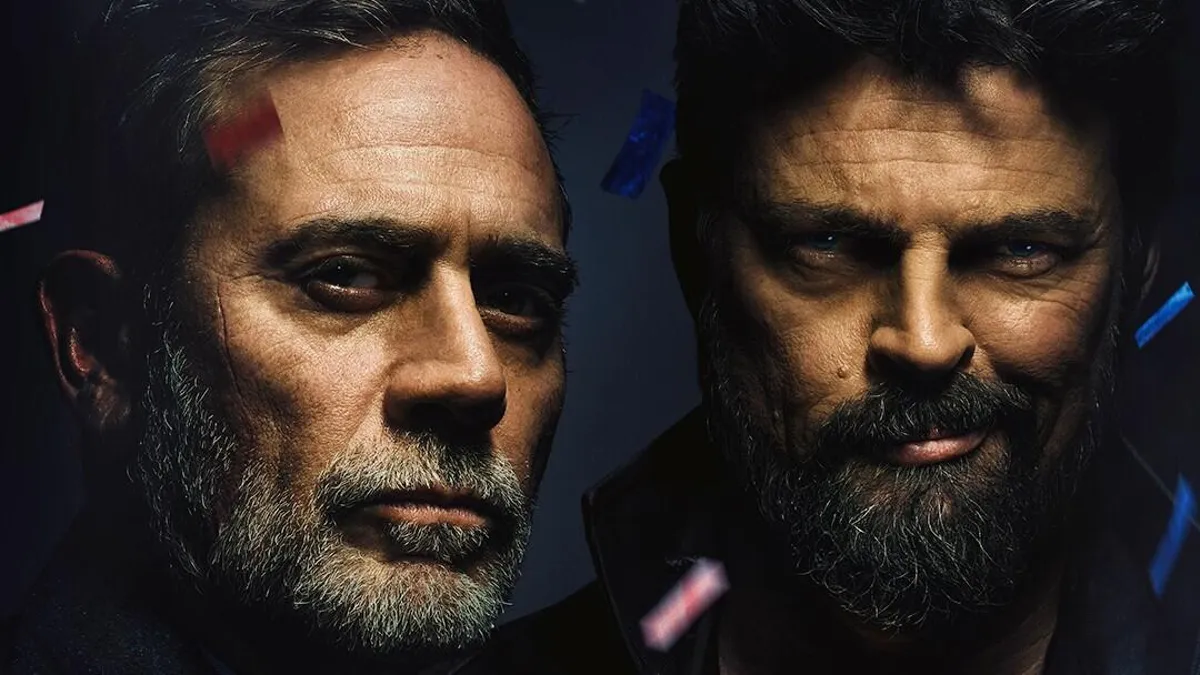
As powerful, violent and bewildering as its parent series The Boys, Gen V shines a light on the next generation of genetically altered superheroes. The usual social and political tropes are on display here. Additionally, Gen V digs into topics like the influence of social media, body image, classism and race in the realm of higher education.
Fallout is a fun, kinetic, action-packed video game adaptation that upholds the vibe of Bethesda’s iconic franchise while also charting a new course, story-wise. You don’t need to be familiar with the games to enjoy this show. Sure, there are loads of cool Easter eggs for fans to appreciate. But Fallout was made with a broader audience in mind. And thanks to the killer performances by the cast — Walton Goggins and Ella Purnell are perfect — and the detailed world-building, you won’t want to miss taking this wild ride into the Wasteland.
The Second Best Hospital in the Galaxy
If you’re looking for a hospital drama with otherworldly flair, may I suggest giving The Second Best Hospital in the Galaxy a spin? It’s like Grey’s Anatomy if every patient were from another planet — which, of course, means all sorts of odd conditions and neuroses to deal with. It’s funny, heartfelt and original, which ticks all the boxes for me.
Secret Level hails from the creators of the animated anthology hit Love, Death and Robots. Each episode is inspired by a different video game, expanding the story world to provide newbies and hardcore gamers with new adventures to revel in. Dungeons & Dragons, Pac-Man, Warhammer 40,000 and Mega Man are just a few of the games featured in the show.
Cyberpunk icon William Gibson wrote the novel that inspired The Peripheral. Created by Jonathan Nolan and Lisa Joy — the duo that brought Westworld and Fallout to the small screen — the series stars Chloë Grace Moretz as Flynne Fisher, a woman who becomes involved in a reality-bending virtual reality video game. A trip to future London and an unexpected mission to save the world flip her life, and this series, on its head.
From The Office to Parks and Recreation and The Good Place, Greg Daniels has extensive experience bringing game-changing comedies to the small screen. In Upload, he brings his quirky sensibilities to the afterlife with a program that posits that, in the near future, tech companies will offer virtual resorts where the consciousnesses of the recently deceased can enjoy a heavenly forever vacation. That is, of course, if they can afford it.
The Expanse is The Little Engine That Could of science fiction TV shows. The series explores a future reality where humanity successfully colonized the solar system. It began as a scripted original series on SyFy but after three seasons, the network dropped the ax on the program. Thankfully, Amazon swooped in to save it from cancellation. Over its six-season run, the series found its legs and audience, blossoming into an intelligent, riveting sci-fi drama.
A few years after Garth Ennis’s Preacher achieved mild success on AMC, the writer’s famous superhero comic The Boys touched down on Prime Video and blew the doors off. In the series, a group of corrupt celebrity superheroes grapple for power and fame as a gang of outlaws (aka The Boys) hunts them down individually. It’s a violent spectacle that smacks the audience in the face with a heaping helping of social and political commentary. And it’s quite good, too.
Inspired by the narrative art book by Swedish retro-futuristic artist Simon Stålenhag, the series balances the sleek aesthetic of a tech-heavy future world with the quiet quaintness of rural America. Jonathan Pryce and Rebecca Hall deliver standout performances in this quirky, slow-burn sci-fi series.
If Yellowstone and The X-Files had a baby, it’d probably be Outer Range. The sci-fi Western follows Royal Abbott (Josh Brolin), the patriarch and owner of the Abbott family ranch. His family lives in the wake of the unexplained disappearance of his daughter-in-law. When a stranger comes to stay with the family, Royal must reckon with his past, present and potential future. This would be it if you’re looking for a trippy series grounded in its writing and stellar performances.
The Man in the High Castle
What if America didn’t win World War II? That’s the central question The Man in the High Castle aims to answer. Based on Philip K. Dick’s novel of the same name, the series takes place in the 1960s and presents an alternate reality where Nazi Germany and Japan share control of the US. When newsreel footage from an alternate timeline where Germany and Japan lost the war surfaces, the seeds of rebellion are planted. Ridley Scott executive produced the poignant, thought-provoking series.
Philip K. Dick’s Electric Dreams
Bryan Cranston (Breaking Bad), Ronald D. Moore (Battlestar Galactica) and Michael Dinner (Justified) came together to bring Philip K. Dick’s Electric Dreams to life. The futuristic anthology series explores how technology can impact humanity in various fantastic and horrific ways. Narrative similarities between Electric Dreams and Black Mirror most certainly abound. However, each episode of the Prime Video program takes inspiration from the work of the titular sci-fi author.
Thematically, Night Sky feels reminiscent of Close Encounters of the Third Kind and Cocoon. The slow-burn series, which lasted only one season, stars J.K. Simmons and Sissy Spacek as an aging married couple grappling with the trials and tribulations of their golden years. Also, a mysterious portal to a strange planet exists beneath their shed. This sentimental mystery box series explores aging and mortality in a surprisingly heartfelt way — thanks to the engaging performances of the two leads.
Inspired by Robert Kirkman’s comic series of the same name, Invincible follows Mark Grayson (Steven Yeun), an ordinary high school kid who happens to be the son of Omni-Man (J.K. Simmons) — the most powerful superhero on the planet. When Mark exhibits special abilities, he discovers the unfortunate truth about who his father is and the insidious things he’s done. This animated series is beautifully designed, well-written and wonderfully acted. It’s seen by many as the best superhero show on TV, and for good reason.
In The Power, Prime Video’s series based on Naomi Alderman’s 2016 novel of the same name, teenage girls all over the globe suddenly develop the ability to shoot electricity from their hands. How exactly does this superpower change the female experience in America and beyond? Toni Collette and Jon Leguizamo star alongside a cast of talented young women in a series that aims to flip gender tropes and dynamics on their heads.
It’s easy to compare Paper Girls to Stranger Things. Parts of the story take place in the ’80s and follow a group of kids struggling to make sense of a supernatural event in town as they ride around on their bikes. The similarities end there, though. Based on the Brian K. Vaughn comic books of the same name, the one-season program kicks off when our 12-year-old paper delivery girls face their future selves and fight for survival amid a time travel war that unfolds around them.
Prime Video took a big swing with Dead Ringers. This updated twist on David Cronenberg’s cult horror classic finds Rachel Weisz in the dual-starring role as doctors Elliott and Beverly Mantle. Their drive to push the health care envelope throws medical ethics to the wind. The result is a program that never shies away from exploring topics like big pharma’s control over women’s health, antiquated reproductive practices, body autonomy and so much more.
The rotoscoping animation used in Undone offers a dreamlike tapestry for the audience to take in. One could easily view the show as an ethereal work of art but there’s also deep substance here. The show follows Alma (Rosa Salazar), a troubled 20-something whose life is turned on its head after she suffers an accident. As her reality shatters itself into something else, she must fight to make sense of her trauma. Part mystery, part thriller and part family drama — it’s safe to say that Undone is unlike any TV show you’ve seen before.
Not to be confused with the short-lived sitcom starring Patrick Warburton, this live-action take on the blue superhero with wiggly antennae is more extensive, more action-packed and takes the comic book genre it’s parodying a bit more seriously. Ben Edlund, the creator of the original comic and 2001 TV series, executive produced this iteration of the character, ensuring the program’s sense of humor and vibe stayed true to his original vision. Peter Serafinowicz and Griffin Newman have a wonderful chemistry together. Jackie Earle Haley’s villainous portrayal of The Terror is an absolute delight. It makes the three-season series a must-watch for any comic book fans.
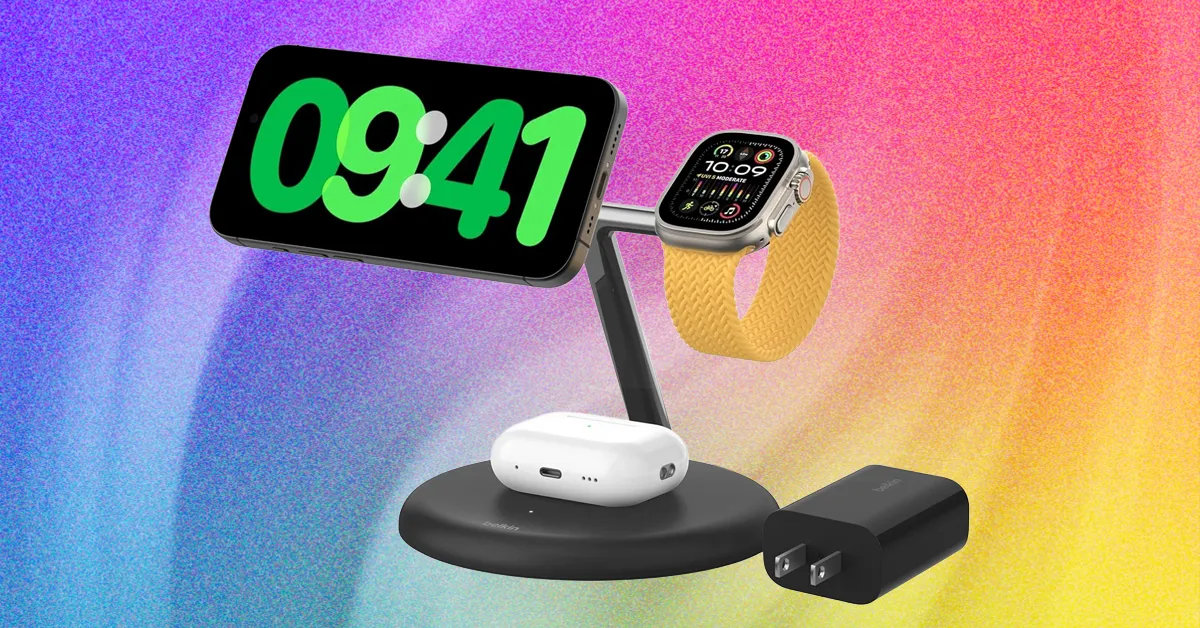
Not only are the Beats Powerbeats Pro 2 the best workout earbuds if you have an Apple Watch, but they are also the best workout earbuds, period. They even have a heart rate monitor that’s built off the one used in the Apple Watch. If you already own an Apple Watch, this feature is superfluous, as iOS will prioritize the Apple Watch’s more sophisticated readings over the earbuds. But if you run with third-party fitness apps like Nike Run Club or Peloton, you will find the extra data useful.
On top of that, the buds are crazy comfortable, sound great, have excellent noise canceling, and have most of the aforementioned Apple-exclusive features, like hands-free Siri (no Adaptive Audio, however, sad). The case also sports wireless charging and, unlike many of Apple’s other products, it comes in bright, fun colors. Our test unit is Electric Orange, but I find the Hyper Purple to be just as good. —Adrienne So


Shoppers have a lot of options when it comes to tech purchases in 2026, including mainstays like Best Buy, online giants like Amazon, and other retail giants like Walmart. Costco is often overlooked, at least by people who don’t actively shop there, despite being a legitimately good source for technology purchases. Costco sells TVs, smartphones, major appliances, computers, and all sorts of stuff. Every retailer has its own pros and cons, and that includes Costco, but Costco probably doesn’t get enough attention when it comes to buying electronics.
Costco is an experience unto itself. You’ve likely heard about the company’s famous loss leaders like the $5 rotisserie chicken that’s been around for decades and the $1.50 hot dog and 20-ounce soda. These loss leaders get people in the door to buy other things, and it’s a brilliant strategy, especially in the wake of swiftly rising gas prices. As it turns out, buying just about anything from Costco is a good idea, so it makes sense that a shopper may want to consider the retailer for their next big purchase.
Below is a list of reasons why you would want to consider Costco over Amazon for your next major tech purchase. It’s a tough call because Amazon’s convenience is excellent in its own right, but there are just some things Costco does better.
Costco has a superior return policy
Buying electronics is often a big deal. A TV is meant to be the centerpiece of a living room, and most TVs can last for many years, so you want to make sure you get the right one. If you don’t, and you have to return it, Costco is a much easier place to do so than Amazon. This is primarily for two reasons. The first is that Amazon’s return policy for most of its electronics is 30 days, while Costco will still take the TV back for up to 90 days. This gives you an extra two months to make sure you really don’t like that TV, and if you do return it, Costco finds a use for those returns.
The other reason is that Costco’s return policy verbiage is a little more liberal when it comes to the condition of the device when it’s returned, in that it doesn’t specify that an item has to be in new or unused condition when it’s returned. Amazon’s return policy does expressly state that the item has to be in “original or unused condition” in order to be eligible for a return.
That isn’t entirely unreasonable, as it keeps people from abusing the policy, and Amazon returns tend to be pretty easy anyway, but it is something to keep in mind. Costco’s return policy has made news headlines for how liberal it is, so it’s generally considered the better one.
Costco often has better deals on larger items
Costco’s deals are legendary, and even its permanent ones tend to be better than what Amazon offers day to day. A famous example of this is the Nintendo Switch 2 Mario Kart World Bundle, which retails for $499. It’s a reasonable deal for a game console and a bundled, popular Mario Kart game, and that’s the price you pay on Amazon when the bundle is in stock from Nintendo. Costco sells the same bundle for $499, but it includes a free 12-month subscription to Nintendo Switch Online, valued at $50.
Business Insider compared hundreds of items from Costco their prices to that of Amazon’s. Costco came out on top roughly 80% of the time overall. This is across a range of categories, including baby and pet, household items, toiletries, and other items. It also applies to electronics, albeit not as obviously. Much like the Switch 2 example above, the benefits are often better from Costco, even when the prices are the same. For example, the LG C5 OLED TV is about $1,400 from both retailers. Costco’s includes a longer five-year warranty, and Executive members get 4% cashback, an increase from the 2% cashback that Executive members usually get.
If you’re shopping for an electronic, don’t just compare prices between the two retail giants. Check the other perks as well. Costco often comes out on top.
Costco memberships pay for themselves
It’s pretty common knowledge that you need a membership to shop at Costco unless you order from Instacart or have a gift card. These memberships are pricy on the surface, costing $65 for a regular Gold Star Membership and $130 for an Executive Membership. The Executive members get expanded shopping hours, 2% annual cashback (after $1,250 spent), and other stuff. The thing is that these memberships ultimately pay for themselves over the course of the year through the various benefits that you get from the store.
As a personal example, the first time my wife and I got a Costco membership, we bought a couple of external SSDs on sale for 50% off, a deal Amazon did not have at the time. We bought a Gold Star Membership and walked out with two hard drives, the savings from which paid for the membership in full, giving us 364 more days of Costco access. In addition, the 2% cashback rewards on the Executive membership will eventually pay for the membership if the shopper spends enough money throughout the year.
Amazon has its Prime membership, which includes a host of various features, and grants access to member-only deals during Amazon Prime shopping events. However, there’s no cashback reward, and many products are still on sale for non-members as well. Prime offers more features overall, but Costco’s membership benefits continually roll in on themselves, making the price a non-issue for many members.
Costco gives away free extended warranties
One of the benefits of buying something new is that if it messes up, you can get it fixed or replaced under warranty. Most warranties are only about a year or two, which is long enough to catch immediate issues, but doesn’t protect you at all after that. Costco helps by adding an extra two years of warranty on top of whatever warranty the device comes with. This isn’t for every electronic, but does apply to televisions, projectors, computers, and major appliances. There are some limitations, for example, like touchscreen tablets and small appliances like mini refrigerators.
This can be a huge boon for shoppers looking to maximize their protection without spending additional money. In some cases, Costco occasionally tosses in free additional coverage from Allstate. An example of this is the LG C5 OLED TV we mentioned earlier. LG usually only grants a 1-year warranty for C-series TVs, but Costco gives you five total years. That’s one year manufacturer warranty, an extra year via Costco directly, and then three years via Allstate.
Amazon doesn’t include an additional warranty with its products by default but may occasionally as part of a promotion. Amazon offers extended warranties that you can purchase with many electronics across the website, but that’s all you’ll be able to get. Costco definitely wins here, and often by more than a year or two. Don’t forget to check out the free tech support if you do buy electronics from Costco.
The convenience of brick and mortar stores
There are some intrinsic advantages to having brick-and-mortar stores in a variety of locations. The ability to walk into a building, make a purchase, and walk out with the product immediately is one of the most obvious. Electronics usually fare okay when being shipped, especially if they’re smaller items like smartphones, earbuds, and DIY PC components. However, electronics are still high up on the list of items that break most frequently during shipment, and larger items like TVs can be very difficult to ship effectively. Thus, being able to retrieve your item from a physical store and take it home is a boon, especially if the product is broken and you have to return it. It’s much easier to return a TV to a physical store than it is to ship it back to Amazon.
There are other, albeit smaller, benefits to shopping in a physical store. You can inspect packaging for damage before purchasing, look around for items you may not have seen while browsing online, and you may find in-store promotions that aren’t available online. These are all benefits you don’t get from shopping at online-only retailers like Amazon. Plus, many Costco stores have smartphone kiosks where you can hold the device before buying it, which is a powerful tool for customers, offering a “try it before you buy it” experience.

This Morning star leaves Rylan Clark and Emma Willis stunned with shocking accident story

Drinkwater Tops the List in 2026

New AI Cybercrime Tool Targets Crypto, Bank KYC Systems via Deepfakes


-

 NewsBeat4 days ago
Steven Gerrard disagrees with Gary Neville over ‘shock’ Chelsea and Arsenal claim | Football
-

 Business4 days ago
No Jackpot Winner and $194 Million Prize Rolls Over
-

 Fashion3 days ago
Weekend Open Thread: Spanx – Corporette.com
-
Entertainment7 days ago
Fans slam 'heartbreaking' Barbie Dream Fest convention debacle with 'cardboard cutout' experience
-

 Crypto World5 days ago
Gold Price Prediction: Worst Month in 17 Years fo Save Haven Rock
-

 Business15 hours ago
Three Gulf funds agree to back Paramount’s $81 billion takeover of Warner, WSJ reports
-
Crypto World6 days ago
Dems press CFTC, ethics board on prediction-market insider trades
-

 Sports2 days ago
India men’s 4x400m and mixed 4x100m relay teams register big progress | Other Sports News
-

 Business4 days ago
Login and Checkout Issues Spark Merchant Frustration
-

 Tech7 days ago
Apple will hide your email address from apps and websites, but not cops
-

 Tech6 days ago
EE TV is using AI to help you find something to watch
-

 Sports6 days ago
Tallest college basketball player ever, standing at 7-foot-9, entering transfer portal
-

 Politics7 days ago
Should Trump Be Scared Strait?
-
Tech6 days ago
Daily Deal: StackSkills Premium Annual Pass
-

 Tech6 days ago
Flipsnack and the shift toward motion-first business content with living visuals
-

 Sports7 days ago
Women’s hockey camp eyes fitness boost, tactics ahead of WC 2026 campaign | Other Sports News
-

 Crypto World7 days ago
U.S. rule change may open trillions in 401(k) funds to crypto
-

 Tech6 days ago
How to back up your iPhone & iPad to your Mac before something goes wrong
-

 Politics7 days ago
BBC slammed for ignoring author of The Fraud
-
 Tech7 days ago
This is a 3D-Printed Macintosh That Apple Never Built
You must be logged in to post a comment Login