Prime Video has steadily built a formidable roster of sci-fi TV shows. Considering the amount of time I’ve put into compiling similar science fiction guides for streamers like Netflix and Apple TV, I like to think I know what I’m talking about. Compared to the two heavy-hitters I just referenced, Prime Video holds its own in the genre space; these sci-fi TV shows hit different.
What do I mean by that? Comparing the three streamers, it’s clear that Prime Video’s genre offerings lean into an indie-film aesthetic. Many of the titles you’ll find below go against the grain. They feature offbeat, edgy narratives, making these shows impactful on many levels.
You want something bleak and dystopian? Prime Video has it. If you want something with lesser stakes and a lighter tone, you can find those types of shows here, too. Below are the best sci-fi shows on Prime Video right now. Please check back each month, as I’ll be updating this article regularly.
Darren Michaels/Sony/NBCU Photo Bank/NBCUniversal via Getty Images
Timeless, which ran for two seasons on NBC, follows an unlikely team of time-traveling experts who are enlisted to return to various points in time to stop a criminal organization from altering history. That may sound silly, and at points the show absolutely is, but that’s just a part of its charm. There’s a serial quality to the story, with major Doctor Who vibes throughout.
Advertisement
AMC Studios
Humans came out over a decade ago, yet the AI-themed subject matter still feels surprisingly relevant. The show, which aired on Channel 4 and AMC, explores an alternate reality where synthetic humans are the must-have in-home technology. Can humans and synths live in harmony? The three-season series dares to answer that question. And you can probably imagine, things get a bit bleak.
Advertisement
Syfy/NBC Universal
12 Monkeys is inspired by the Terry Gilliam classic, which posits the notion that a criminal from the future must travel back in time to stop a plague from destroying the human race. The series uses the same theme as a jumping-off point, but it expands the story universe and takes things in new and exciting directions. Its four-season run remains one of the best, underrated sci-fi shows of the past decade.
CBS
Advertisement
Person of Interest follows an ex-CIA agent and a billionaire shut-in who fight crime that hasn’t happened yet, thanks to an AI program that predicts the future. Sure, that sounds like Minority Report. I assure you, it’s not. Beneath the network procedural veneer lives a surprising amount of depth in this show. That shouldn’t come as a surprise, considering that it features J.J. Abrams and Bryan Burk — yes, the same Bad Robot duo behind Lost — as executive producers.
Starz
Bryan Fuller’s American Gods feels like a dream in that it was here and then gone in a flash. Over its three seasons, the program delved into the ethereal universe created by Neil Gaiman in his iconic novel. The story follows an ex-convict named Shadow Moon who begins working with a man named Mr. Nobody, only to discover a world where the old gods (I’m talking characters like Odin, Anansi and Jesus) and new gods (Media, Technical Boy and Mr. World, among others) are on the brink of war. You can watch the entire first season on Prime Video.
Advertisement
Amazon MGM Studios
As powerful, violent and bewildering as its parent series The Boys, Gen V shines a light on the next generation of genetically altered superheroes. The usual social and political tropes are on display here. Additionally, Gen V digs into topics like the influence of social media, body image, classism and race in the realm of higher education.
Advertisement
JoJo Whilden/Prime Video
Fallout is a fun, kinetic, action-packed video game adaptation that upholds the vibe of Bethesda’s iconic franchise while also charting a new course, story-wise. You don’t need to be familiar with the games to enjoy this show. Sure, there are loads of cool Easter eggs for fans to appreciate. But Fallout was made with a broader audience in mind. And thanks to the killer performances by the cast — Walton Goggins and Ella Purnell are perfect — and the detailed world-building, you won’t want to miss taking this wild ride into the Wasteland.
Prime Video
Advertisement
The Second Best Hospital in the Galaxy
Advertisement
If you’re looking for a hospital drama with otherworldly flair, may I suggest giving The Second Best Hospital in the Galaxy a spin? It’s like Grey’s Anatomy if every patient were from another planet — which, of course, means all sorts of odd conditions and neuroses to deal with. It’s funny, heartfelt and original, which ticks all the boxes for me.
Prime Video
Secret Level hails from the creators of the animated anthology hit Love, Death and Robots. Each episode is inspired by a different video game, expanding the story world to provide newbies and hardcore gamers with new adventures to revel in. Dungeons & Dragons, Pac-Man, Warhammer 40,000 and Mega Man are just a few of the games featured in the show.
Advertisement
Sophie Mutevelian/Prime Video
Cyberpunk icon William Gibson wrote the novel that inspired The Peripheral. Created by Jonathan Nolan and Lisa Joy — the duo that brought Westworld and Fallout to the small screen — the series stars Chloë Grace Moretz as Flynne Fisher, a woman who becomes involved in a reality-bending virtual reality video game. A trip to future London and an unexpected mission to save the world flip her life, and this series, on its head.
Advertisement
Liane Hentscher/Prime Video
From The Office to Parks and Recreation and The Good Place, Greg Daniels has extensive experience bringing game-changing comedies to the small screen. In Upload, he brings his quirky sensibilities to the afterlife with a program that posits that, in the near future, tech companies will offer virtual resorts where the consciousnesses of the recently deceased can enjoy a heavenly forever vacation. That is, of course, if they can afford it.
Amazon Studios
Advertisement
The Expanse is The Little Engine That Could of science fiction TV shows. The series explores a future reality where humanity successfully colonized the solar system. It began as a scripted original series on SyFy but after three seasons, the network dropped the ax on the program. Thankfully, Amazon swooped in to save it from cancellation. Over its six-season run, the series found its legs and audience, blossoming into an intelligent, riveting sci-fi drama.
Amazon Studios
A few years after Garth Ennis’s Preacher achieved mild success on AMC, the writer’s famous superhero comic The Boys touched down on Prime Video and blew the doors off. In the series, a group of corrupt celebrity superheroes grapple for power and fame as a gang of outlaws (aka The Boys) hunts them down individually. It’s a violent spectacle that smacks the audience in the face with a heaping helping of social and political commentary. And it’s quite good, too.
Inspired by the narrative art book by Swedish retro-futuristic artist Simon Stålenhag, the series balances the sleek aesthetic of a tech-heavy future world with the quiet quaintness of rural America. Jonathan Pryce and Rebecca Hall deliver standout performances in this quirky, slow-burn sci-fi series.
Advertisement
Karen Kuehn/Amazon Studios
If Yellowstone and The X-Files had a baby, it’d probably be Outer Range. The sci-fi Western follows Royal Abbott (Josh Brolin), the patriarch and owner of the Abbott family ranch. His family lives in the wake of the unexplained disappearance of his daughter-in-law. When a stranger comes to stay with the family, Royal must reckon with his past, present and potential future. This would be it if you’re looking for a trippy series grounded in its writing and stellar performances.
What if America didn’t win World War II? That’s the central question The Man in the High Castle aims to answer. Based on Philip K. Dick’s novel of the same name, the series takes place in the 1960s and presents an alternate reality where Nazi Germany and Japan share control of the US. When newsreel footage from an alternate timeline where Germany and Japan lost the war surfaces, the seeds of rebellion are planted. Ridley Scott executive produced the poignant, thought-provoking series.
Advertisement
Elizabeth Sisson
Philip K. Dick’s Electric Dreams
Advertisement
Bryan Cranston (Breaking Bad), Ronald D. Moore (Battlestar Galactica) and Michael Dinner (Justified) came together to bring Philip K. Dick’s Electric Dreams to life. The futuristic anthology series explores how technology can impact humanity in various fantastic and horrific ways. Narrative similarities between Electric Dreams and Black Mirror most certainly abound. However, each episode of the Prime Video program takes inspiration from the work of the titular sci-fi author.
Chuck Hodes/Amazon Studios
Advertisement
Thematically, Night Sky feels reminiscent of Close Encounters of the Third Kind and Cocoon. The slow-burn series, which lasted only one season, stars J.K. Simmons and Sissy Spacek as an aging married couple grappling with the trials and tribulations of their golden years. Also, a mysterious portal to a strange planet exists beneath their shed. This sentimental mystery box series explores aging and mortality in a surprisingly heartfelt way — thanks to the engaging performances of the two leads.
Inspired by Robert Kirkman’s comic series of the same name, Invincible follows Mark Grayson (Steven Yeun), an ordinary high school kid who happens to be the son of Omni-Man (J.K. Simmons) — the most powerful superhero on the planet. When Mark exhibits special abilities, he discovers the unfortunate truth about who his father is and the insidious things he’s done. This animated series is beautifully designed, well-written and wonderfully acted. It’s seen by many as the best superhero show on TV, and for good reason.
Advertisement
In The Power, Prime Video’s series based on Naomi Alderman’s 2016 novel of the same name, teenage girls all over the globe suddenly develop the ability to shoot electricity from their hands. How exactly does this superpower change the female experience in America and beyond? Toni Collette and Jon Leguizamo star alongside a cast of talented young women in a series that aims to flip gender tropes and dynamics on their heads.
Advertisement
Prime Video/Amazon Studios
It’s easy to compare Paper Girls to Stranger Things. Parts of the story take place in the ’80s and follow a group of kids struggling to make sense of a supernatural event in town as they ride around on their bikes. The similarities end there, though. Based on the Brian K. Vaughn comic books of the same name, the one-season program kicks off when our 12-year-old paper delivery girls face their future selves and fight for survival amid a time travel war that unfolds around them.
Advertisement
Niko Tavernise/Prime Video
Prime Video took a big swing with Dead Ringers. This updated twist on David Cronenberg’s cult horror classic finds Rachel Weisz in the dual-starring role as doctors Elliott and Beverly Mantle. Their drive to push the health care envelope throws medical ethics to the wind. The result is a program that never shies away from exploring topics like big pharma’s control over women’s health, antiquated reproductive practices, body autonomy and so much more.
Amazon Studios
Advertisement
The rotoscoping animation used in Undone offers a dreamlike tapestry for the audience to take in. One could easily view the show as an ethereal work of art but there’s also deep substance here. The show follows Alma (Rosa Salazar), a troubled 20-something whose life is turned on its head after she suffers an accident. As her reality shatters itself into something else, she must fight to make sense of her trauma. Part mystery, part thriller and part family drama — it’s safe to say that Undone is unlike any TV show you’ve seen before.
Jessica Miglio/Amazon Studios
Not to be confused with the short-lived sitcom starring Patrick Warburton, this live-action take on the blue superhero with wiggly antennae is more extensive, more action-packed and takes the comic book genre it’s parodying a bit more seriously. Ben Edlund, the creator of the original comic and 2001 TV series, executive produced this iteration of the character, ensuring the program’s sense of humor and vibe stayed true to his original vision. Peter Serafinowicz and Griffin Newman have a wonderful chemistry together. Jackie Earle Haley’s villainous portrayal of The Terror is an absolute delight. It makes the three-season series a must-watch for any comic book fans.
Edifier has built its reputation on delivering affordable, feature-rich speakers that don’t feel like compromises, and the new M90 continues that strategy with a compact active design aimed at both desktop and small room use. First introduced at CES 2026, where we got an early look and listen, the M90 is positioned as a flexible all-in-one solution that can move easily between nearfield listening and casual living room duty. After spending time with the system, it’s clear Edifier is targeting listeners who want simplicity, solid performance, and a smaller footprint at an affordable price.
About My Preferences:
This review is subjective, shaped by how I listen and what I value. I do my best to stay objective, but let’s be honest, bias doesn’t just pack up and leave the room.
My ideal sound leans toward controlled sub-bass, textured mid-bass, a slightly warm and natural midrange, and treble that extends cleanly without turning harsh. I also have mild treble sensitivity, so anything overly bright or aggressive tends to stand out quickly.
Testing equipment and standards can be found here.
Advertisement
Edifier M90 Specifications and Key Features:
The Edifier M90 is a compact active speaker system priced at $369.99, with cabinet dimensions of 133 x 212 x 225 mm (approximately 5.2 x 8.3 x 8.9 inches), making it easy to place on a desk, shelf, or media console. It uses a two-way, bi-amped design built around a 4-inch long-throw mid-bass driver and a 1-inch silk-dome tweeter, with dedicated amplification for each driver.
Total system power is rated at 100 watts RMS, split between 35 watts for the mid-bass and 15 watts for the tweeter per channel, and it can reach up to 100 dB SPL. That’s enough for nearfield listening or smaller living spaces without overreaching.
Connectivity is one of the M90’s stronger plays. Around back, you get HDMI eARC, optical, USB-C, and a standard AUX input, which covers everything from TVs and laptops to legacy gear. Wireless playback is handled by Bluetooth 6.0 with LDAC and multipoint support, so you can stream higher-quality audio and switch between devices without the usual friction. The system also supports up to 24-bit/96kHz audio depending on the source.
Ease of use hasn’t been overlooked either. The M90 includes onboard controls for quick adjustments, an omnidirectional remote that actually works from across the room, and support for the Edifier ConneX app on iOS and Android for additional control and setup. DSP is doing a lot of the heavy lifting behind the scenes, managing how the speakers handle music, movies, and gaming to keep performance consistent across different types of content.
Advertisement
Build Quality
The M90 feels well-built in the hand and features high-quality paint finishes. It doesn’t look out of place on a desk filled with high-end gear, which should suite deskscape enthusiasts well. The ports on the rear of the device are firmly set within the active speaker’s chassis, leaving no room for wobble or wiggle.
The included remote is a little basic, but is still put together well. The buttons and responsive and sized well, making them easy to manipulate in a dark room. It has plenty of range too, so even larger living and theater rooms shouldn’t run into distance issues.
I did find the M90 to be a little clumsy when used at my desk, however. Other desktop speakers often feature a front-facing selection of controls such as volume and power. The M90 does not, so you’ll need to use the wireless remote to manipulate its state even when sitting right next to it. Well, that or stand up and reach behind the right speaker , which isn’t a viable option for a wide (and cluttered) desk like mine.
Advertisement. Scroll to continue reading.
Advertisement
Listening
The M90 is a pretty flexible pair of speakers, but it feels most at home when running through your favorite album. Its default tuning is well-balanced, delivering crisp treble and an articulate upper-midrange. The M90 renders vocals nicely, capturing a strong share of nuance, particularly during quieter passages. The M90’s lower mids sit slightly back in the mix and aren’t overly emphasized, contributing to a more neutral, audiophile-leaning tonality.
This, paired with the speakers’ linear bass performance, give it a resolving, but sterile, timbre. You’ll want to pair the M90 with a discrete subwoofer to get a truly full-range experience, as the mid-bass woofer on the speaker doesn’t dig down much further than 150Hz.
Cycling through the other presets add varying degrees of warmth back in to the mix, giving guitars and drums additional substance. This also relaxes the upper-midrange, allowing vocals to settle back towards the middle of the sound-stage rather than center-front. I don’t like the “Monitor” and “Dynamic” presets as much as the “Classic” tuning, but then again, I don’t have any particular need for a pre-calibrated studio-monitor profile.
If you want to dive into personalization and fine-grained customization, the Edifier app allows you to configure and apply your own tuning via a 9-band software EQ. It works pretty and well and is responsive. The app is utilitarian in appearance, but functions smoothly and without bugs on Android.
Strong Gaming Performance
The M90 is a great couch-gaming set of speakers. Hooking it up to my TV via HDMI eARC was easy, and before I knew it I had high-headroom, low-latency audio ready to go. First-person shooters are pretty playable on the M90, even in fairly small rooms. In my gaming den, the speakers are positioned about 10 feet from my chair, flanking a 65-inch OLED TV. In this setup, the M90 delivers its best spatial rendering.
Advertisement
Cramming the M90 on to my work desk delivered somewhat less-exciting results. Its sound-field operates best at longer distances, and my desk (60″ x 38″) didn’t give me enough depth for gunshots and subtle footsteps to accurately render in titles like Call of Duty: Black Ops 7.
Frustrating Quirks, Fixed via Firmware Update
The M90’s excellent performance and great pricing is hamstrung by a few odd-ball choices made on its default firmware. If you’re experiencing unpredictable fade-in behavior or are noticing that the M90 falls asleep during quiet passages in video content, then install the Edifier Connect app and update its firmware. That behavior is a bug that was fixed as of 4/12/2026.
Likewise, if you’ve plugged a subwoofer in to the M90’s line out and found its gain to be too low, you’ll need to update the M90’s firmware and then adjust the gain in the app. This is the only way to adjust the line-out gain, so if you’re not a smartphone owner, you’re out of luck. I’d have liked to have seen additional physical controls for sub-out gain so I can more-easily fine-tune my sub’s output.
Edifier M90 (also available in black)
The Bottom Line
The M90 is a solid, cost-effective speaker for those that want to take advantage of modern eARC capabilities. Its strong technical capabilities, combined with its wide feature-set, make it a compelling proposition, especially when measured against its more-expensive peers. After updating the M90’s firmware, it becomes a capable and hassle-free companion for high-performance audio, especially for those that plan on deploying it in the living room.
Advertisement
Pros:
Wide soundstage
Lots of headroom
Articulate and performant
Customizable via EQ and tuning presets
Solid directional abilities for gaming
Includes responsive wireless remote
Supports wide variety of input modes including HDMI eARC
Cons:
Requires a subwoofer to get full-range sound
Not suited for smaller desktops
Some arrangements may require angled desk stands
No front-facing physical volumes controls, awkward for desktop use
Mythos, unveiled in a limited launch earlier this month, vastly outperforms other AI models in vulnerability detection and exploitation, according to its creator.
Anthropic has only given access to the model to a closed but growing group of companies and financial institutions, including Apple, Google, Microsoft, Nvidia and JP Morgan Chase, to test and bolster their cybersecurity.
Advertisement
UK financial institutions are set to start using Mythos this week, while Japan and Canada are in discussions with their biggest banks on Mythos. Bank of Ireland told SiliconRepublic.com that it is keeping the matter under review.
Last week, Ireland’s National Cyber Security Centre’s director Richard Browne told an Oireachtas Joint Committee that the technology would be in the hands of bad actors within months.
However, a source has now told Bloomberg that a handful of users gained access to Mythos weeks ago, on the same day Anthropic announced its limited launch. The group has been using Mythos regularly since, but not for malicious purposes, the source added.
“We’re investigating a report claiming unauthorised access to Claude Mythos Preview through one of our third-party vendor environments,” Anthropic told news publications in a statement.
Advertisement
Mythos has sent shocks through the tech industry, which is scrambling to bolster its security systems in light of the powerful AI model. Soon after its launch, US authorities told Wall Street leaders to take the matter seriously.
But not all authorities have taken an equally serious approach, with Deutsche Bank commenting that Germany’s financial institutions are well-prepared for cyber risks posed by the model.
“Naturally everyone is trying to get access, but I think it’s entirely appropriate that this access remains restricted for the time being,” said Deutsche Bank CEO Christian Sewing earlier this week.
Don’t miss out on the knowledge you need to succeed. Sign up for the Daily Brief, Silicon Republic’s digest of need-to-know sci-tech news.
The $99 price tag aligns with Valve’s decision not to subsidize its new hardware. The company announced the Steam Controller in late 2025 alongside a new Steam Machine and the Steam Frame VR headset. Read Entire Article Source link
We spend hours testing every product or service we review, so you can be sure you’re buying the best. Find out more about how we test.
Adobe Illustrator began development in 1985, with its initial release coming out in 1987. 39 years in an eternity in computing terms, and it’s amazing this venerable piece of software is still the ruling king when it comes to design, illustrations and vector-based work.
We’ve long championed it as one of the best graphic design software apps around – but now I’m taking a look at some of the new features that are being introduced with the latest version, Adobe Illustrator 2026 (I explored version 30.3).
Advertisement
Adobe Illustrator: Pricing & plans
Subscription-only but the price befits its status as the king of the hill
Cheaper alternatives available like Canva’s Affinity
But they lack all the features and integration with other Adobe software
Adobe Illustrator is a professional app, and as such, is part of Adobe’s Creative Cloud Pro subscription. As has been the case for years now, you can’t purchase the software, you can only rent it.
Creative Cloud Pro includes over twenty high end software packages, including Photoshop, InDesign, and of course, Illustrator, and will cost you $35 a month for the first three months on an annual subscription (after that deal, the price reverts to $70 a month for the remainder of your agreement).
If that’s too much for you, you can subscribe to Illustrator on its own for $23 a month. Students and educational institutions can also get it or the entire suite at a steep discount.
Be aware though that every time you use generative AI, you’ll be spending credits. You get a set number every month with your plan, but also have the option of purchasing more separately, either as a one-off, or as part of another subscription.
Advertisement
OK, time to take a look at some of the new features that caught my eye in Adobe Illustrator’s new release.
Sign up to the TechRadar Pro newsletter to get all the top news, opinion, features and guidance your business needs to succeed!
Adobe Illustrator: Features
(Image credit: Adobe // Future)
Loads of new features added
I especially like those focused on interface improvements like color artboards
Great tools for refining your designs including snapping to tangents
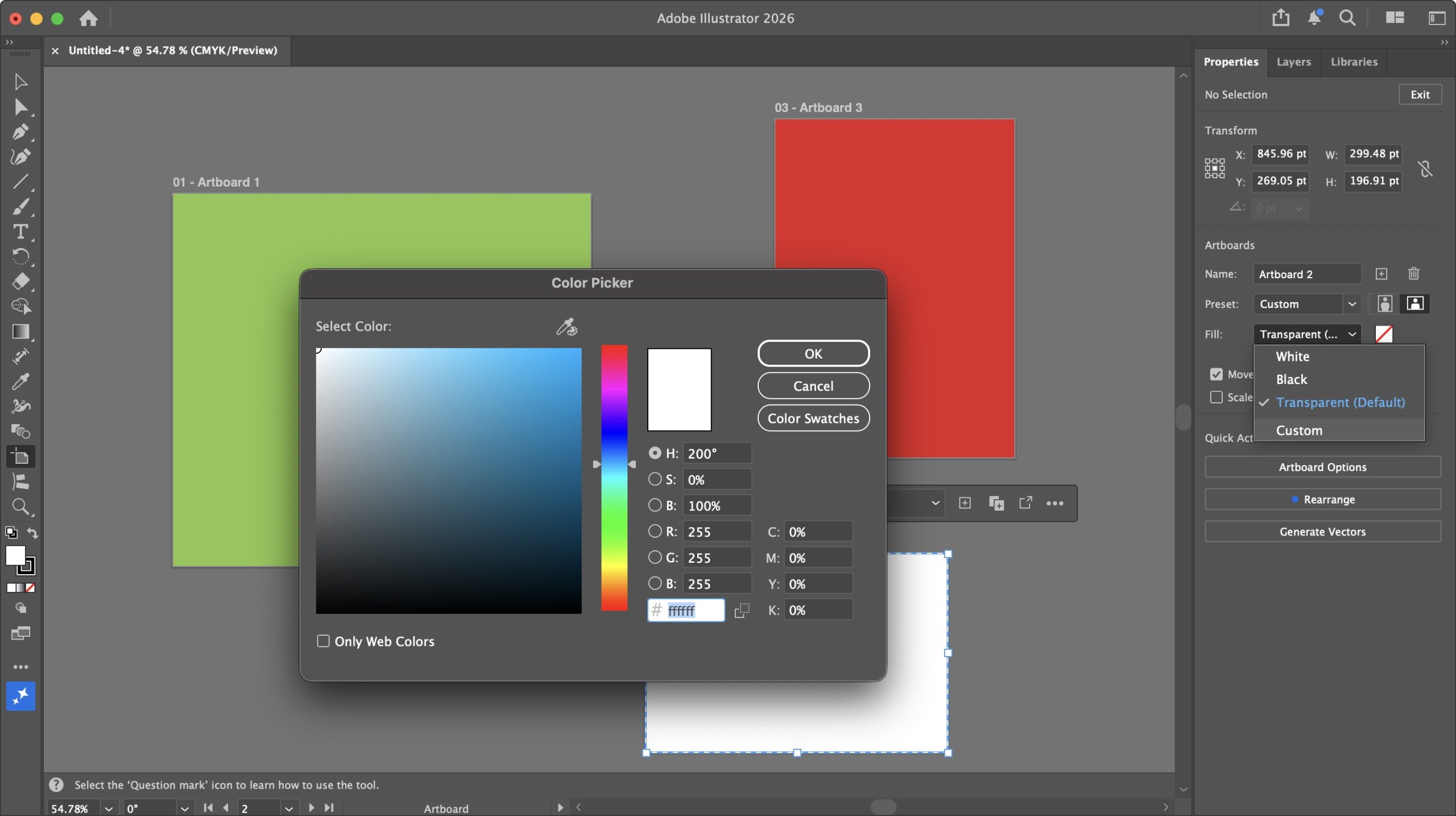
Let’s start with some simple improvements to do with Artboards. Up to now, if you needed them to have colored backgrounds, you’d have to create a rectangle, apply a color to it and use that as your backdrop, which, although doable, was cumbersome.
Now, finally, you can apply different colors to each of your Artboards, right from the Properties panel, through its Fill dropdown menu. By default, it’s set to transparent, but you can also choose either black or white, and if that’s not enough, selecting ‘Custom’ gains you access to a virtually unlimited gamut of colors.
Advertisement
Right-clicking on the canvas offers some handy options to manage your document’s artboards. You’re able to rename, duplicate, or delete them, or even create new ones with ease. There’s also the option to lock a selected artboard, but sadly no option to unlock it – to do that you need to go to Window > Artboards, and click on its lock icon from the popup window. So, I guess ‘cumbersome’ hasn’t completely gone away.
(Image credit: Adobe // Future)
But it’s still an improvement. And speaking of improvements, the classic Eyedropper tool has been enhanced, and I found it works more reliably than before. A single click, for instance, will now properly copy the color and stroke of a selected object (you can extract more of course, but that depends on what you selected in the Eyedropper options).
There’s also shift-clicking. Press and hold the shift key, and you’ll get a large circle around the eyedropper cursor. The bottom half represents the current color, while the top half is the color it’ll change to once you click.
A color picker that works as advertised and has added functionality, I can work with that.
Advertisement
(Image credit: Adobe // Future)
This leads us to some subtle additions you probably never knew you needed, like how the end of a straight line now snaps to a circle’s tangent, or how one line snaps perpendicularly to another. Those are on by default and will make precise designs much easier.
And speaking of much easier, how about gradients with fewer banding – or no banding at all, even? Depending on how close you get to a gradient, you’ll start to notice lines along it as the one color changes to another. This latest version of Illustrator introduces two options to dissipate those lines, creating a much smoother gradient.
(Image credit: Adobe // Future)
The first one is via a new menu in the gradient Properties called “Method”. By default, it’s set to ‘Classic’, but change it to ‘Perceptual’, and it should look more like it would in real life – at least that’s the intention. The change can be quite subtle depending on the complexity of your gradient, and in my experience, it ranged from no discernible change, to a pleasing improvement.
The second option is a ‘Dither’ tick box. This one works in either ‘Method’, and when toggled, it adds a mesh of subtle imperfections to the gradient to conceal any banding, and I found the results to be very effective.
Advertisement
Adobe Illustrator: AI tools
(Image credit: Adobe // Future)
Introduces impressive AI-based tools to expand your creation’s horizons
But why do all the hard work when you can let a complex algorithm do it all for you, right? Right? Well… not quite, but Adobe Illustrator now comes with some interesting “AI” tools to broaden your digital creations, like Generative Expand.
Triggering the tool will give you handles which you then drag beyond the confines of your original creation. This will create pink borders, making it clear where Illustrator needs to apply itself. When you’re ready (and you have enough credits), click on ‘Generate’ and the machine will get to work.
It should only take a few seconds but I found the end results, like Generative Expand on Photoshop, to be impressive – and I don’t particularly like AI! The results weren’t perfect, mind, but it should be much easier to manually refine the output as opposed to creating all that expanded area yourself.
(Image credit: Adobe // Future)
Another complex algorithm feature I was impressed by is Turntable. It’s designed to turn a 2D vector graphic into a 3D one. Your results may vary, and the tool itself warns you if it thinks the image you’ve selected might not yield good results. That warning may, or may not be correct – sometimes the only way to know for sure is to spend your credits and try it out.
Advertisement
The objects I experimented with, varied in their success. The globe was… interesting, but then again Illustrator did warn me it might not work as expected, so kudos for the warning. The butterfly was mostly flawless, and the horse’s head (a sketch of a head, not a Godfather triggering nightmare) was perfect.
So yes, your mileage may vary, but when it works great, it’s eye opening (but not in A Clockwork Orange way). Once done, you’re able to rotate your now-3D object 360 degrees using a slider. To the right of it are Up and Down arrows; these allow you to see your design from above or below by a maximum of 30 degrees either way.
All in all, Illustrator keeps getting refined with each update. The improvements are most welcome, and the new features will certainly please a lot of artists. There’s something here for everyone which is always a positive thing.
Advertisement
Should I buy?
(Image credit: Adobe // Future)
Buy it if… You need a powerful vector-based illustration system with a steady stream of improvements and new features to make the expensive subscription worthwhile
Don’t buy it if… You’re not a fan of the increasing incursion of AI into the software, or despite all its features, the asking price is just too much for you.
Get caught up on the latest technology and startup news from the past week. Here are the most popular stories on GeekWire for the week of April 19, 2026.
Microsoft is offering a one-time voluntary retirement program for the first time in its 51-year history, giving thousands of long-serving U.S. … Read More
Amazon CEO Andy Jassy added AWS infrastructure leader Prasad Kalyanaraman to the company’s S-team and promoted Dave Brown to senior vice president, according to an internal memo viewed by GeekWire. … Read More
Microsoft is dropping Xbox Game Pass Ultimate from $29.99 to $22.99 a month, but future Call of Duty games will no longer be available at launch. … Read More
Seattle’s mayor is exploring a moratorium on new data centers, but the city’s real utility challenges — skyrocketing electricity prices, a looming capacity gap, and an eastside water defection — have nothing to do with data centers. … Read More
Seattle venture capitalist Nick Hanauer responds to Chris DeVore’s recent call for Democrats to embrace capitalism, arguing that the real question isn’t whether to support free markets but which version of capitalism America should be building. … Read More
Qualtrics CEO Jason Maynard shook up the company’s senior leadership team on Friday at its dual headquarters in downtown Seattle and Provo, Utah, less than three months after taking the helm of the experience management technology company. … Read More
Starbucks is laying off workers in its technology organization as new CTO Anand Varadarajan, who joined from Amazon in January, restructures the team. … Read More
Sheetz is an American gas station and convenience store chain concentrated in seven Mid-Atlantic and Midwestern states with over 829 locations in 493 cities. According to the American Customer Satisfaction Index 2025 Convenience Store Study, the company recently tied with Wawa for second place as the best U.S. convenience store. The largest number of Sheetz locations are in its home state of Pennsylvania, where 316, or 38% of all Sheetz stores are based. After Pennsylvania, the next most Sheetz-populous state is North Carolina with 142 stores, followed by Ohio with 135, Virginia with 124, West Virginia with 61, Maryland with 44, and Michigan with seven stores.
The name Sheetz goes back to Jerry Sheets, who married a woman from a family that owned a large dairy business in Altoona, Pennsylvania. When his nametag was misspelled as “Sheetz” as he attended a dairy conference, he liked it enough to officially change his last name to Sheetz. The Sheetz business empire traces its roots to 1952, when Jerry’s son Bob purchased one of Jerry’s unprofitable dairy stores located in Altoona and founded the Sheetz company. Altoona remains the home of Sheetz to this day.
The Sheetz family owns and operates the company with a 90% share, while the employees own the rest through an employee stock ownership plan. Sheetz family members at the helm include Travis Sheetz as president and CEO, Joe Sheetz as chairman of the board, and Stan Sheetz as board director, with additional family members in positions like EVP of operations, EVP of marketing and supply chain, and EVP of strategy and information technology.
Advertisement
What else should you know about Sheetz?
George Sheldon/Shutterstock
Some Sheetz milestones include the first self-service gas pumps in 1973, the introduction of its Made To Order, or MTO, menu in the mid-1980s, and its memorable “Free My Beer” campaign, which successfully led to the state of Pennsylvania allowing the sale of beer in convenience stores that also sold gasoline in 2016. Sheetz will also let you charge your EV at certain locations that have had chargers installed.
The journey from a single store to the current count of 829 took 74 years and the efforts of numerous members of the Sheetz family. Bob’s brother Steve had the idea to expand the Sheetz venture in 1969, and by 1972, there were 14 Sheetz stores. By 1983, Sheetz boasted 100 stores, and Bob turned over the business to Steve. By 1995, Bob’s son, Stan, became president of Sheetz. Stan added Sheetz-branded coffee and bakery products to the stores’ lineups, as well as a touchscreen ordering system. In 2013, Joe S. Sheetz, who was Bob’s nephew, became president and CEO, succeeded by current CEO Travis Sheetz in 2022.
Advertisement
Sheetz gas stations and convenience stores continue to expand their empire, far from their original location in Altoona, Pennsylvania. A newly opened Sheetz location in Macomb County, Michigan, recently dropped its gas price below $2 as a way to generate local customer traffic. It may take some time before gas prices get that low again.
Apple will announce its second-quarter financial results for 2026 on April 30. Here’s what happened in the quarter, and what analysts think is going to be revealed.
Apple CEO Tim Cook
The Q2 2026 financial results will be shared by Apple in a press release on April 30. A short time after, at 5 P.M. Eastern, it will hold its usual analyst and investor conference call. That call will involve both current CEO Tim Cook and CFO Kevan Parekh discussing the quarter and providing guidance for future quarters. There will also be questions from analysts about the quarter and expectations for Q3 and beyond. Continue Reading on AppleInsider | Discuss on our Forums
As a gamer, I’m enjoying the current renaissance of video game adaptations. Whether it’s the new 3D-animated Super Mario Galaxy Movie or Sonic movies or award-winning TV series like The Last of Us, Fallout and Cyberpunk: Edgerunners, Hollywood is now filled with creators who are actually fans of the games they’re adapting, a shift from the 1990s when licenses were often purchased just to cash in on younger audiences.
On Monday, A24 revealed the cast of the live-action adaptation of the Elden Ring movie, which will be directed by Alex Garland (Civil War, Annihilation) and released on March 3, 2028. While this looks promising on paper, it’s hard to ignore the scale of the challenge to adapt a game known for its personality-less protagonist, cryptic lore and multiple endings. Still, there is reason to believe this could become one of the most successful video game adaptations.
To start, A24, the studio behind the production, is known for acclaimed films such as The Brutalist, Moonlight and Everything Everywhere All at Once — all very different films following unique, humanistic visions. While the studio typically produces smaller films with budgets under $50 million, the Elden Ring movie is reportedly set to exceed a $100 million budget.
Advertisement
Filming is already underway, and leaked set photos show what appears to be an almost perfect recreation of locations and scenes from the game. On Wednesday, a video uploaded to YouTube showed a crowd cheering during the hanging of a character known as the Dung Eater, closely mirroring a moment from the game’s opening intro cinematic.
Watching that short clip of a character who isn’t central to the story, yet is depicted with such accuracy, is astonishing. My biggest concern, though, is Elden Ring’s story. Unlike some other adaptations in development, such as Death Stranding, The Legend of Zelda and Resident Evil, Elden Ring is just one game with one DLC (Shadow of the Erdtree) and one multiplayer spinoff (Nightreign). That’s it.
Even so, developer FromSoftware packs an immense amount of lore into the game, though not in the traditional sense through dialogue or readable documents. Instead, as in its other titles, the studio distributes background details about characters and the world through descriptions of items, weapons, armor and spells.
Advertisement
This approach to world-building, which FromSoftware first used in 2009’s Demon’s Souls, is like a jigsaw puzzle. But instead of assembling pieces to form a picture, it’s about taking two or three sentences and building an entire book. Literally, fans who create YouTube videos about the game’s lore are now publishing a 400-page book.
Not only is there a vast amount of lore to dig into, the Elden Ring’s sheer scope is immense. The game’s main story follows the player character’s journey to become an Elden Lord in the Lands Between, a god over mysterious undying lands. That quest is shaped by wars and betrayals that occurred long before the events of the game. It unfolds like a season of Game of Thrones, which is fitting given that George R. R. Martin helped develop Elden Ring’s story.
— 🧸 JustGavinBennett 🧸 (@JustGavNBennett) April 22, 2026
Fortunately, there’s hope that director Alex Garland understands the assignment when it comes to adapting Elden Ring. Unlike earlier video game adaptations, where screenwriters were often tasked with making sense of stories from games they hadn’t played and forcing them into a 90-minute structure, this production is being led by a fan of the game.
Advertisement
A New Yorker article about A24 last year recounted an anecdote involving Garland and Noah Sacco, the studio’s head of film. Sacco visited Garland, who had been enthusiastic about the game, and proposed a film adaptation. Sacco approved the idea, and Garland went on to write a 200-page script that includes 40 pages of visuals. The two later traveled to Japan to seek approval from the game’s director, Hidetaka Miyazaki. Miyazaki was reportedly impressed with Garland’s knowledge of the game, which came from completing it at least seven times — a sizable feat considering it takes 60 hours or more to beat.
We still don’t know which time period the Elden Ring movie will explore. One assumption is that it could serve as a prequel, focusing on the Shattering, the in-game historical event that set the stage for the game’s present-day story. Extensive lore surrounds those events, and because FromSoftware leaves many details open to interpretation, there’s room for Garland to develop a compelling narrative while staying true to the source material.
Looking at all the elements of this production, the pieces are in place for a successful film. An award-winning studio is making one of its largest investments in a video game adaptation, led by a director who is a devoted fan. He has the approval of the game’s creator, who was not quick to grant licensing rights, and Martin is also involved as a producer. The Elden Ring movie has the potential to be not just a worthy adaptation, but one of the best video game adaptations ever made.
It appears that all of life is becoming one big subscription fest. There’s Netflix, Spotify, Xbox Game Pass, PlayStation Plus, food order subscriptions, Duolingo, Amazon, and YouTube. Can you believe there’s even a subscription for buying socks? Look, the list could go on, but I don’t want to bore you or myself.
Subscription services are here to stay, and there’s nothing you or I can do about it. As much as we hate them draining our money every month, if we want the goods, we must accept that, in return, we have to part with our hard-earned cash.
Even though we can’t avoid subscriptions, there is an easy way to manage them, and it’s called Orbit. Yes, the irony is not lost on me. In an attempt to get a grip on our subscriptions, I’m recommending subscribing to another app. It’s just the way it is, I’m afraid.
Advertisement
Article continues below
Homescreen heroes
This is part of a regular series of articles exploring the apps that we couldn’t live without. Read them all here.
Advertisement
Orbit is a beautifully designed subscription tracker app that is designed to solve the growing problem of subscription creep. It acts as a financial watchdog that uncovers every bill draining your account and centralizes them into one elegant interface. This all but eliminates the stress of surprise charges and helps you reclaim control over your wallet.
(Image credit: Future / Paul Hatton)
Adding subscriptions was easier than I thought
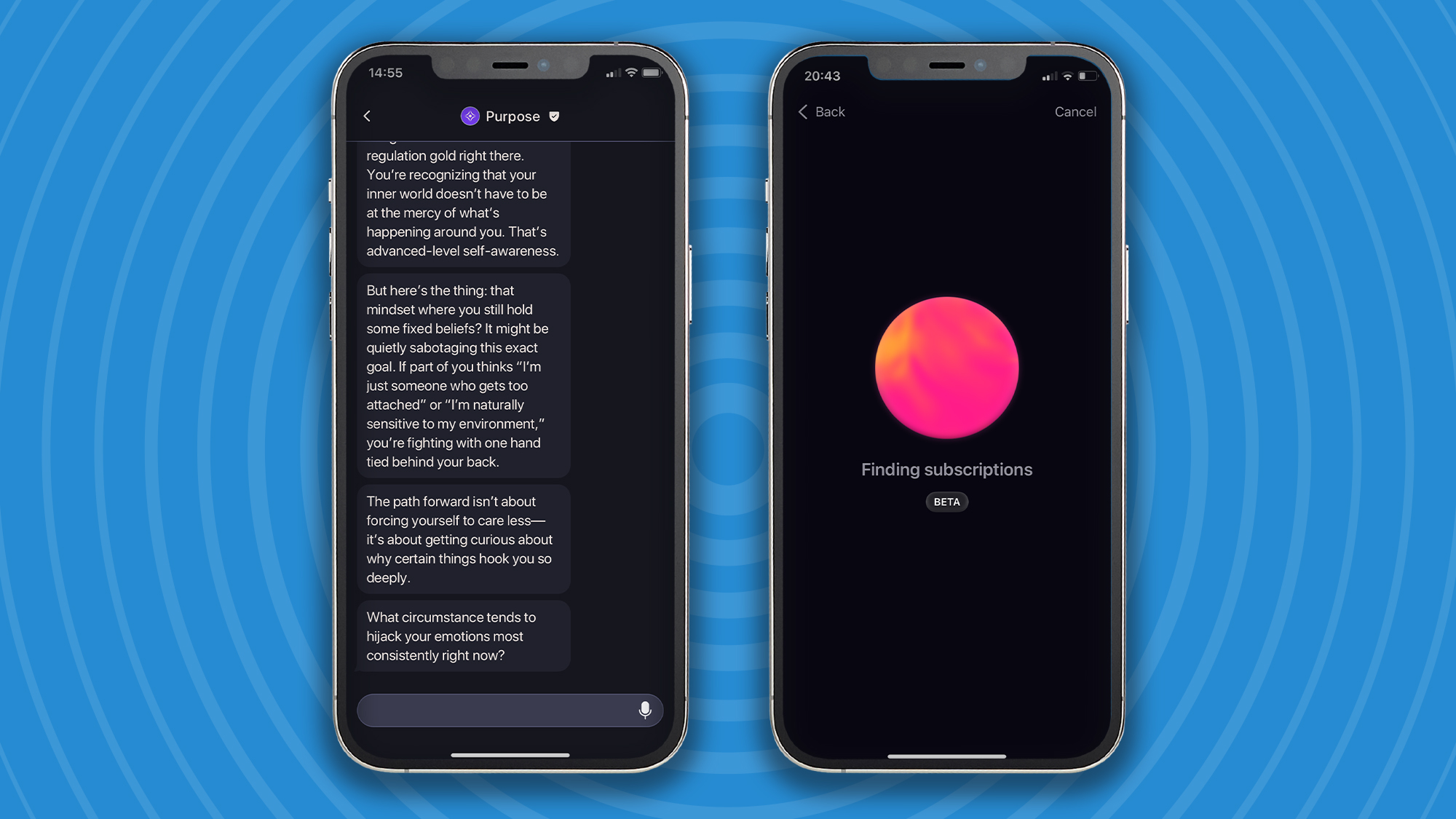
I was expecting to have to add each individual subscription manually, and even though this functionality is present in the app, there’s actually a much smarter way to load all your subscriptions into Orbit.
It’s called Magic Import, and it simplifies the tedious task of manual entry by capturing financial information directly from screenshots, bank statements, CSV files, or PDFs.
Advertisement
This is made possible through a mix of very clever AI and OCR (Optical Character Recognition), and I have to say it’s very good indeed. I uploaded a number of different files and found Orbit reliably picked up what I needed it to.
Sign up for breaking news, reviews, opinion, top tech deals, and more.
On the very odd occasion that Orbit interprets specific details of subscriptions incorrectly, it’s easy enough to dive into that particular subscription and adjust any number of data fields, including its billing cycle, which list you want it in, and whether it’s a free trial or not. These changes can be made when you import a subscription or further down the line if you spot a mistake.
(Image credit: Future / Paul Hatton)
Advertisement
Tracking subscriptions like a pro
The main homescreen lets you see your subscriptions in a list format, but the calendar view shows you when the money is actually going to leave your pocket. This helps you spot heavy payment days or times of the month where multiple subscriptions are bunched together. Armed with this type of information, you can plan ahead to make sure you’ve got the money set aside in your bank account.
The calendar view also includes readouts for the total cost of subscriptions throughout the month as well as a live countdown of how much money you still need to account for before the month ends. I process information visually and have found the calendar invaluable for tracking my own personal subscriptions.
There are also notifications that act as a proactive defense and are designed to bridge the gap between knowing you have a subscription and acting before you are charged. This is maybe most critical when you add a service marked as trial. Orbit will calculate the expiration date and send you a notification, usually 24–48 hours, before the trial period ends.
Advertisement
It’ll also send you renewal reminders for recurring bills. This is incredibly useful for cash flow management, especially for services that cost a lot of money. No one likes being surprised by a sudden large financial deduction, and notification reminders minimize the chances of it happening.
(Image credit: Future / Paul Hatton)
Go premium for the full experience
So, if you’ve ever subscribed to a service only to realize that a number of months down the line, you’re no longer using the service but you’re still paying for it, Orbit is designed just for you. It’s for those people who have anxiety around the build-up of bills and want a simple one-app solution for managing it all.
The free version is extremely limited, so I’d recommend paying the lifetime fee of $24.99 / £24.99 to gain access to the full range of premium features. These include unlimited tracking, magic import, iCloud backup, custom lists, and support for multiple currencies.
Advertisement
Orbit has a number of soon-to-be-released features that include family sharing, a dedicated Mac app, and advanced spending insights. With these new additions, Orbit will go from strength to strength and become increasingly helpful to users who want complete control over their spending.
As it vies to catch up with rivals like OpenAI and Anthropic, SpaceX has done a deal to enable purchase of the fast-growing AI coding start-up Cursor.
In a post on X, SpaceX said the companies were “now working closely together to create the world’s best coding and knowledge work AI” and that “Cursor has also given SpaceX the right to acquire Cursor later this year for $60bn or pay $10bn for our work together”.
In its own statement, Cursor confirmed it was partnering with SpaceX “to accelerate our model training efforts”, which it said had been stymied by lack of compute.
“With this partnership, our team will leverage xAI’s Colossus infrastructure to dramatically scale up the intelligence of our models,” it said.
Advertisement
Cursor had been widely reported to be raising a $2bn round at a $50bn valuation in recent days, as it sought investment to increase compute, but that raise will now be halted as the SpaceX deal will offer it all the capacity it needs to expand, according to Bloomberg sources.
It is likely that the reason SpaceX has bought the rights to purchase Cursor, rather than acquiring it immediately, is that the space tech and AI giant is keen to win the race to IPO, and any acquisition of such a size would require it to refile for IPO.
Reports have suggested a SpaceX IPO between April and June, which means it would precede speculated listings by rival AI giants OpenAI and Anthropic in the near future.
Elon Musk has consolidated various businesses over the past year to arrive at a mooted $1.75trn valuation. In February, SpaceX acquired xAI, which in March 2025 had acquired X.
Advertisement
Revenue growth from SpaceX’s Starlink satellite broadband service is widely and largely credited for the foundation of the valuation. Starlink currently dominates the global satellite internet service industry, with more than 9,000 satellites in orbit and roughly 9m customers.
The February merger deal valued xAI at around $250bn, but preceded the departure of all 11 of Musk’s co-founders from that company. Now Musk looks set to buy in the talent he believes he needs to compete with his major rivals.
Cursor is one of the fastest-growing AI start-ups right now, and well-regarded, boasting some very high-profile investors, including Nvidia, Andreessen Horowitz, Google – and indeed, OpenAI’s venture fund. It remains to be seen whether the expensive acquisition goes ahead, or whether both companies could take up the agreed alternative within the deal to pay $10bn for their collaborative work.
Don’t miss out on the knowledge you need to succeed. Sign up for the Daily Brief, Silicon Republic’s digest of need-to-know sci-tech news.































































You must be logged in to post a comment Login