


Connect with us

Tech

OpenAI launches GPT-5.4 with native computer use mode, financial plugins for Microsoft Excel, Google Sheets

Published

on

The AI updates aren’t slowing down. Literally two days after OpenAI launched a new underlying AI model for ChatGPT called GPT-5.3 Instant, the company has unveiled another, even more massive upgrade: GPT-5.4.

Actually, GPT-5.4 comes in two varieties: GPT-5.4 Thinking and GPT-5.4 Pro, the latter designed for the most complex tasks.

Both will be available in OpenAI’s paid application programming interface (API) and Codex software development application, while GPT-5.4 Thinking will be available to all paid subscribers of ChatGPT (Plus, the $20-per-month plan, and up) and Pro will be reserved for ChatGPT Pro ($200 monthly) and Enterprise plan users.

ChatGPT Free users will also get a taste of GPT-5.4, but only when their queries are auto-routed to the model, according to an OpenAI spokesperson.

Advertisement

The big headlines on this release are efficiency, with OpenAI reporting that GPT-5.4 uses far fewer tokens (47% fewer on some tasks) than its predecessors, and, arguably even more impressively, a new “native” Computer Use mode available through the API and its Codex that lets GPT-5.4 navigate a users’ computer like a human and work across applications.

The company is also releasing a new suite of ChatGPT integrations allowing GPT-5.4 to be plugged directly into users’ Microsoft Excel and Google Sheets spreadsheets and cells, enabling granular analysis and automated task completion that should speed up work across the enterprise, but may make fears of white collar layoffs even more pronounced on the heels of similar offerings from Anthropic’s Claude and its new Cowork application.

OpenAI says GPT-5.4 supports up to 1 million tokens of context in the API and Codex, enabling agents to plan, execute, and verify tasks across long horizons— however, it charges double the cost per 1 million tokens once the input exceeds 272,000 tokens.

Native computer use: a step toward autonomous workflows

The most consequential capability OpenAI highlights is that GPT-5.4 is its first general-purpose model released with native, state-of-the-art computer-use capabilities in Codex and the API, enabling agents to operate computers and carry out multi-step workflows across applications.

Advertisement

OpenAI says the model can both write code to operate computers via libraries like Playwright and issue mouse and keyboard commands in response to screenshots. OpenAI also claims a jump in agentic web browsing.

Benchmark results are presented as evidence that this is not merely a UI wrapper.

On BrowseComp, which measures how well AI agents can persistently browse the web to find hard-to-locate information, OpenAI reports GPT-5.4 improving by 17% absolute over GPT-5.2, and GPT-5.4 Pro reaching 89.3%, described as a new state of the art.

On OSWorld-Verified, which measures desktop navigation using screenshots plus keyboard and mouse actions, OpenAI reports GPT-5.4 at 75.0% success, compared to 47.3% for GPT-5.2, and notes reported human performance at 72.4%.

Advertisement

On WebArena-Verified, GPT-5.4 reaches 67.3% success using both DOM- and screenshot-driven interaction, compared to 65.4% for GPT-5.2. On Online-Mind2Web, OpenAI reports 92.8% success using screenshot-based observations alone.

OpenAI also links computer use to improvements in vision and document handling. On MMMU-Pro, GPT-5.4 reaches 81.2% success without tool use, compared with 79.5% for GPT-5.2, and OpenAI says it achieves that result using a fraction of the “thinking tokens.”

On OmniDocBench, GPT-5.4’s average error is reported at 0.109, improved from 0.140 for GPT-5.2. The post also describes expanded support for high-fidelity image inputs, including an “original” detail level up to 10.24M pixels.

OpenAI positions GPT-5.4 as built for longer, multi-step workflows—work that increasingly looks like an agent keeping state across many actions rather than a chatbot responding once.

Advertisement

Tool search and improved tool orchestration

As tool ecosystems get larger, OpenAI argues that the naive approach—dumping every tool definition into the prompt—creates a tax paid on every request: cost, latency, and context pollution.

GPT-5.4 introduces tool search in the API as a structural fix. Instead of receiving all tool definitions upfront, the model receives a lightweight list of tools plus a search capability, and it retrieves full tool definitions only when they’re actually needed.

OpenAI describes the efficiency win with a concrete comparison: on 250 tasks from Scale’s MCP Atlas benchmark, running with 36 MCP servers enabled, the tool-search configuration reduced total token usage by 47% while achieving the same accuracy as a configuration that exposed all MCP functions directly in context.

That 47% figure is specifically about the tool-search setup in that evaluation—not a blanket claim that GPT-5.4 uses 47% fewer tokens for every kind of task.

Advertisement

Improvements for developers and coding workflows

OpenAI’s coding pitch is that GPT-5.4 combines the coding strengths of GPT-5.3-Codex with stronger tool and computer-use capabilities that matter when tasks aren’t single-shot.

GPT-5.4 matches or outperforms GPT-5.3-Codex on SWE-Bench Pro while being lower latency across reasoning efforts.

Codex also gets workflow-level knobs. OpenAI says /fast mode delivers up to 1.5× faster performance across supported models, including GPT-5.4, describing it as the same model and intelligence “just faster.”

And it describes releasing an experimental Codex skill, “Playwright (Interactive)”, meant to demonstrate how coding and computer use can work in tandem—visually debugging web and Electron apps and testing an app as it’s being built.

Advertisement

OpenAI for Microsoft Excel and Google Sheets

Alongside GPT-5.4, OpenAI is announcing a suite of secure AI products in ChatGPT built for enterprises and financial institutions, powered by GPT-5.4 for advanced financial reasoning and Excel-based modeling.

The centerpiece is ChatGPT for Excel and Google Sheets (beta), which OpenAI describes as ChatGPT embedded directly in spreadsheets to build, analyze, and update complex financial models using the formulas and structures teams already rely on.

The suite also includes new ChatGPT app integrations intended to unify market, company, and internal data into a single workflow, naming FactSet, MSCI, Third Bridge, and Moody’s.

And it introduces reusable “Skills” for recurring finance work such as earnings previews, comparables analysis, DCF analysis, and investment memo drafting.

Advertisement

OpenAI anchors the finance push with an internal benchmark claim: model performance increased from 43.7% with GPT-5 to 88.0% with GPT-5.4 Thinking on an OpenAI internal investment banking benchmark.

Measuring AI performance against professional work

OpenAI leans on benchmarks intended to resemble real office deliverables, not just puzzle-solving. On GDPval, an evaluation spanning “well-specified knowledge work” across 44 occupations, OpenAI reports that GPT-5.4 matches or exceeds industry professionals in 83.0% of comparisons, compared to 71.0% for GPT-5.2.

The company also highlights specific improvements in the kinds of artifacts that tend to expose model weaknesses: structured tables, formulas, narrative coherence, and design quality.

In an internal benchmark of spreadsheet modeling tasks modeled after what a junior investment banking analyst might do, GPT-5.4 reaches a mean score of 87.5%, compared to 68.4% for GPT-5.2.

Advertisement

And on a set of presentation evaluation prompts, OpenAI says human raters preferred GPT-5.4’s presentations 68.0% of the time over GPT-5.2’s, citing stronger aesthetics, greater visual variety, and more effective use of image generation.

Improving reliability and reducing hallucinations

OpenAI describes GPT-5.4 as its most factual model yet and connects that claim to a practical dataset: de-identified prompts where users previously flagged factual errors. On that set, OpenAI reports GPT-5.4’s individual claims are 33% less likely to be false and its full responses are 18% less likely to contain any errors compared to GPT-5.2.

In statements provided to VentureBeat from OpenAI and attributed early GPT-5.4 testers, Daniel Swiecki of Walleye Capital says that on internal finance and Excel evaluations, GPT-5.4 improved accuracy by 30 percentage points, which he links to expanded automation for model updates and scenario analysis.

Brendan Foody, CEO of Mercor, calls GPT-5.4 the best model the company has tried and says it’s now top of Mercor’s APEX-Agents benchmark for professional services work, emphasizing long-horizon deliverables like slide decks, financial models, and legal analysis.

Advertisement

Pricing and availability

In the API, OpenAI says GPT-5.4 Thinking is available as gpt-5.4 and GPT-5.4 Pro as gpt-5.4-pro. Pricing is as follows:

  • GPT-5.4: $2.50 / 1M input tokens; $15 / 1M output tokens

  • GPT-5.4 Pro: $30 / 1M input tokens; $180 / 1M output tokens

  • Batch + Flex: half-rate; Priority processing: 2× rate

This makes GPT-5.4 among the more expensive models to run over API compared to the entire field, as seen in the table below.

Model

Input

Advertisement

Output

Total Cost

Source

Qwen 3 Turbo

Advertisement

$0.05

$0.20

$0.25

Alibaba Cloud

Advertisement

Qwen3.5-Flash

$0.10

$0.40

$0.50

Advertisement

Alibaba Cloud

deepseek-chat (V3.2-Exp)

$0.28

$0.42

Advertisement

$0.70

DeepSeek

deepseek-reasoner (V3.2-Exp)

$0.28

Advertisement

$0.42

$0.70

DeepSeek

Grok 4.1 Fast (reasoning)

Advertisement

$0.20

$0.50

$0.70

xAI

Advertisement

Grok 4.1 Fast (non-reasoning)

$0.20

$0.50

$0.70

Advertisement

xAI

MiniMax M2.5

$0.15

$1.20

Advertisement

$1.35

MiniMax

Gemini 3.1 Flash-Lite

$0.25

Advertisement

$1.50

$1.75

Google

MiniMax M2.5-Lightning

Advertisement

$0.30

$2.40

$2.70

MiniMax

Advertisement

Gemini 3 Flash Preview

$0.50

$3.00

$3.50

Advertisement

Google

Kimi-k2.5

$0.60

$3.00

Advertisement

$3.60

Moonshot

GLM-5

$1.00

Advertisement

$3.20

$4.20

Z.ai

ERNIE 5.0

Advertisement

$0.85

$3.40

$4.25

Baidu

Advertisement

Claude Haiku 4.5

$1.00

$5.00

$6.00

Advertisement

Anthropic

Qwen3-Max (2026-01-23)

$1.20

$6.00

Advertisement

$7.20

Alibaba Cloud

Gemini 3 Pro (≤200K)

$2.00

Advertisement

$12.00

$14.00

Google

GPT-5.2

Advertisement

$1.75

$14.00

$15.75

OpenAI

Advertisement

Claude Sonnet 4.6

$3.00

$15.00

$18.00

Advertisement

Anthropic

GPT-5.4

$2.50

$15.00

Advertisement

$17.50

OpenAI

Gemini 3 Pro (>200K)

$4.00

Advertisement

$18.00

$22.00

Google

Claude Opus 4.6

Advertisement

$5.00

$25.00

$30.00

Anthropic

Advertisement

GPT-5.2 Pro

$21.00

$168.00

$189.00

Advertisement

OpenAI

GPT-5.4 Pro

$30.00

$180.00

Advertisement

$210.00

OpenAI

Another important note: with GPT-5.4, requests that exceed 272,000 input tokens are billed at 2X the normal rate, reflecting the ability to send prompts larger than earlier models supported.

In Codex, compaction defaults to 272k tokens, and the higher long-context pricing applies only when the input exceeds 272k—meaning developers can keep sending prompts at or under that size without triggering the higher rate, but can opt into larger prompts by raising the compaction limit, with only those larger requests billed differently.

Advertisement

An OpenAI spokesperson said that in the API the maximum output is 128,000 tokens, the same as previous models.

Finally, on why GPT-5.4 is priced higher at baseline, the spokesperson attributed it to three factors: higher capability on complex tasks (including coding, computer use, deep research, advanced document generation, and tool use), major research improvements from OpenAI’s roadmap, and more efficient reasoning that uses fewer reasoning tokens for comparable tasks—adding that OpenAI believes GPT-5.4 remains below comparable frontier models on pricing even with the increase.

The broader shift

Across the release and the follow-up clarifications, GPT-5.4 is positioned as a model meant to move beyond “answer generation” and into sustained professional workflows—ones that require tool orchestration, computer interaction, long context, and outputs that look like the artifacts people actually use at work.

OpenAI’s emphasis on token efficiency, tool search, native computer use, and reduced user-flagged factual errors all point in the same direction: making agentic systems more viable in production by lowering the cost of retries—whether that retry is a human re-prompting, an agent calling another tool, or a workflow re-running because the first pass didn’t stick.

Advertisement

Source link

Continue Reading
Click to comment

Leave a Reply

Your email address will not be published. Required fields are marked *

Tech

Avowed PS5 review: Obsidian’s fantasy action-RPG is better than ever on PlayStation 5

Published

on

Why you can trust TechRadar


We spend hours testing every product or service we review, so you can be sure you’re buying the best. Find out more about how we test.

SFollowing in the footsteps of Stalker: Heart of Chornobyl and Indiana Jones and the Great Circle, Avowed is another former Xbox-exclusive that has made its way to PlayStation platforms a year after its initial release.

Review info

Platform reviewed: PS5 Pro
Available on: PS5, Xbox Series X|S, PC
Release date: February 17, 2026

Advertisement

Source link

Continue Reading

Tech

Trump gets data center companies to pledge to pay for power generation

Published

on

On Wednesday, the Trump administration announced that a large collection of tech companies had signed on to what it’s calling the Ratepayer Protection Pledge. By agreeing, the initial signatories—Amazon, Google, Meta, Microsoft, OpenAI, Oracle, and xAI—are saying they will pay for the new generation and transmission capacities needed for any additional data centers they build. But the agreement has no enforcement mechanism, and it will likely run into issues with hardware supplies. It also ignores basic economics.

Other than that, it seems like a great idea.

What’s being agreed to

The agreement is quite simple, laying out five points. The key ones are the first three: that the companies building data centers pledge to pay for new generating capacity, either building it themselves or paying for it as part of a new or expanded power plant. They’ll also pay for any transmission infrastructure needed to connect their data centers and the new supply to the grid and will cover these costs whether or not the power ultimately gets used by their facilities.

The companies also pledge to consider allowing the local grid to use on-site backup generators to handle emergency power shortages affecting the community. They will also hire and train locally when they build new data centers.

Advertisement

The agreement suggests that these promises will protect American consumers from price hikes due to the expansion of data centers and will somehow “lower electricity costs for consumers in the long term.” How that will happen is not specified.

Also missing from the agreement is any sort of enforcement mechanism. If a company decides to ignore the agreement, the worst it is guaranteed to suffer is bad publicity, something these companies already have experience handling. That said, Trump has been known to resort to blatantly illegal tactics to pressure companies to conform to his wishes, so ignoring the agreement carries risks.

That’s important because the companies will struggle to live up to the agreement. (Though Google, for its part, told Ars that it has typically followed the guidelines as a normal part of its process for building new data centers.)

Advertisement

Source link

Continue Reading

Tech

Chinese state hackers target telcos with new malware toolkit

Published

on

Chinese state hackers target telcos with new malware toolkit

A China-linked advanced persistent threat actor tracked as UAT-9244 has been targeting telecommunication service providers in South America since 2024, compromising Windows, Linux, and network-edge devices.

According to Cisco Talos researchers, the adversary is closely associated with the FamousSparrow and Tropic Trooper hacker groups, but is tracked as a separate activity cluster.

This assessment has high confidence and is based on similar tooling, tactics, techniques, and procedures (TTPs), and victimology observed in attacks attributed to the threat actors.

The researchers note that while UAT-9244 shares the same target profile as Salt Typhoon, they could not establish a solid connection between the two activity clusters.

Advertisement

New malware targeting telco networks

The researchers found that the campaign used three previously undocumented malware families: TernDoor, a Windows backdoor; PeerTime, a Linux backdoor that uses BitTorrent; and BruteEntry, a brute-force scanner that builds proxy infrastructure (ORBs).

TernDoor is deployed through DLL side-loading, using the legitimate executable wsprint.exe to load malicious code from BugSplatRc64.dll, which decrypts and executes the final payload in memory (injected into msiexec.exe).

The malware contains an embedded Windows driver, WSPrint.sys, which is used to terminate, suspend, and resume processes.

Persistence is achieved via scheduled tasks and Windows Registry modifications, which are also used to hide the scheduled task.

Advertisement

Additionally, TernDoor can execute commands via remote shell, run arbitrary processes, read/write files, collect system information, and self-uninstall.

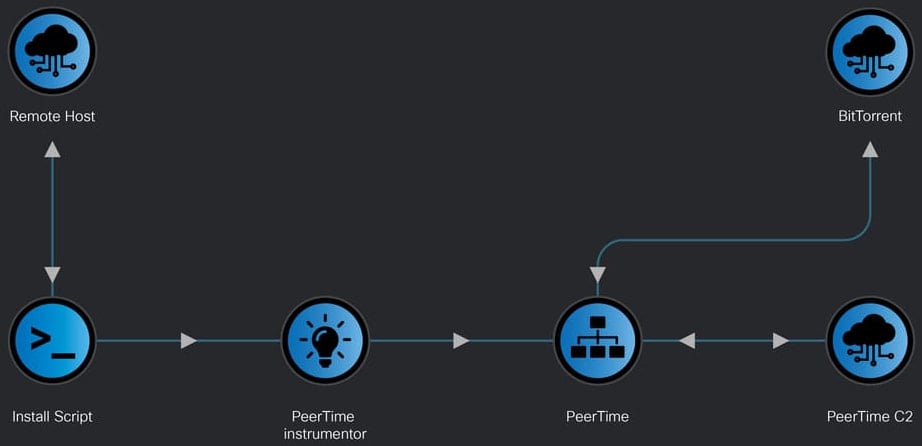
PeerTime is an ELF Linux backdoor that targets multiple architectures (ARM, AARCH, PPC, MIPS), suggesting it was designed to compromise a broad range of embedded systems and network devices used in telecom environments.

PeerTime installation flow
Source: Cisco Talos

Cisco Talos documented two versions for PeerTime. One variant is written in C/C++ and the other is based on Rust. The researchers also noticed Simplified Chinese debug strings in the instrumentor binary, an indicator of its origin.

Its payload is decrypted and loaded in memory, and its process is renamed to appear legitimate.

PeerTime, an ELF-based peer-to-peer (P2P) backdoor, uses the BitTorrent protocol for command-and-control (C2) communications, downloads and executes payloads from peers, and uses BusyBox to write the files on the host.

Advertisement

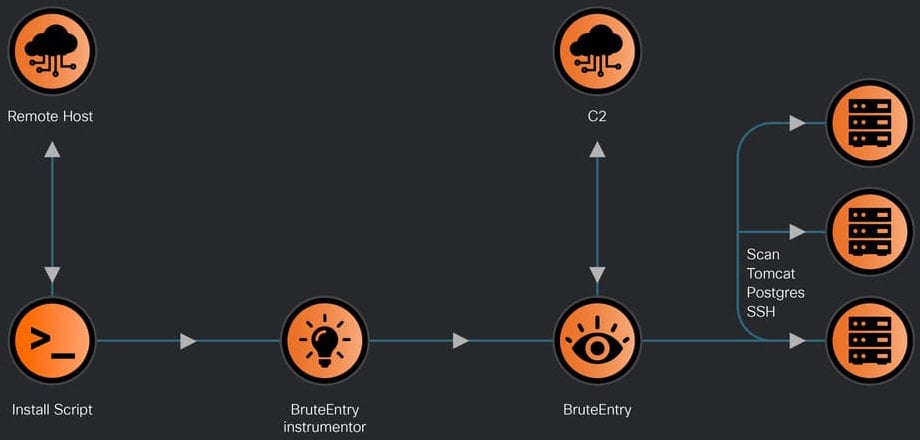
Finally, there’s BruteEntry, which consists of a Go-based instrumentor binary and a brute-forcing component. Its role is to turn compromised devices into scanning nodes, known as Operational Relay Boxes (ORBs).

BruteEntry infection chain
Source: Cisco Talos

The attacker uses the machines running BruteEntry to scan for new targets and brute-force access to SSH, Postgres, and Tomcat. Login attempt results are sent back to the C2 with task status and notes.

In a technical report today, Cisco Talos researchers provide details on the capabilities of the three pieces of malware, how they are deployed, and achieve persistence.

Cisco Talos researchers have listed indicators of compromise (IoCs) associated with the observed UAT-9244 activity, which defenders can use to detect and block these attacks early.

Malware is getting smarter. The Red Report 2026 reveals how new threats use math to detect sandboxes and hide in plain sight.

Download our analysis of 1.1 million malicious samples to uncover the top 10 techniques and see if your security stack is blinded.

Advertisement

Source link

Continue Reading

Tech

For $15.99, this fixes the “why is this TV so slow?” problem

Published

on

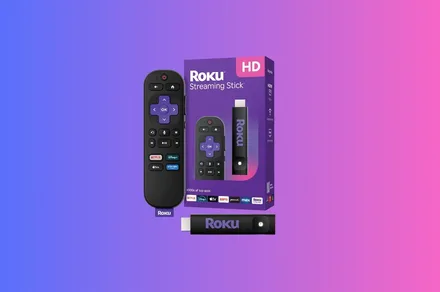
This is one of those simple deals that’s hard to argue with. The Roku Streaming Stick HD is down to $15.99 from $29.99. If you’ve got an older TV in a bedroom, kitchen, dorm, or guest room that’s missing apps (or just runs painfully slow), this is the quick fix. You plug it in, connect to Wi-Fi, and you’ve got a modern streaming setup without buying a whole new TV.

It’s also a great “keep in a drawer” gadget. If you travel, bounce between rentals, or visit family and end up stuck with a clunky TV interface, a cheap Roku stick can save the night.

What you’re getting

This is an HD streaming stick that plugs into your TV’s HDMI port and comes with a Roku voice remote. Roku’s big advantage is that it’s simple and consistent. You get access to the usual major streaming apps, plus free and live TV options through Roku’s platform.

No fancy specs here, and that’s fine. The point is getting reliable streaming with minimal hassle for very little money.

Advertisement

Why it’s worth it

At $15.99, you’re basically paying impulse-buy pricing for something you’ll probably use for years. This is perfect if:

  • your TV is older, and the built-in apps are outdated or slow
  • you want streaming in a second room without spending much
  • you’re setting up a kid’s room, dorm, or guest space
  • you just want a clean interface that doesn’t fight you

If you’ve got a 4K TV and you care about the highest resolution, you’d look at a 4K streaming stick instead. But for basic HD streaming and a smoother experience on an older set, this is a great deal.

The bottom line

For $15.99, the Roku Streaming Stick HD is an easy upgrade that fixes a lot of annoyances fast. If you’ve got any TV in your house that feels “behind,” this is the cheap, simple way to bring it up to date.

Source link

Advertisement
Continue Reading

Tech

University of Washington team working on CPR feedback device wins health innovation challenge

Published

on

The CPRight team, from left: Shubham Bansal, Deeya Sharma, Prisha Hemani, and Atharv Dixit with their Holloman Health Innovation Challenge winnings at the University of Washington in Seattle this week. (UW Buerk Center for Entrepreneurship Photo / Matt Hagen)

A team of students from the University of Washington took home the top prize in the Hollomon Health Innovation Challenge on Wednesday as the UW swept the 11th annual competition.

CPRight won the $15,000 Holloman Family grand prize as well as the $2,500 Naturacur Wound Healing Best Idea for a Medical Device prize in the student competition.

CPRight is a real-time CPR feedback device that provides data on compression rate and depth to ensure bystanders perform high-quality, life-saving chest compressions during an emergency.

The company was co-developed alongside ReviveHer, the 2025 Best Idea for Patient Safety prize winner.

The team consists of Shubham Bansal, a neuroscience undergraduate student; Deeya Sharma, a graduate student in the UW School of Medicine; Prisha Hemani, a computer science and engineering undergrad; and Atharv Dixit, an engineering undergrad.

Advertisement

The Hollomon Health Innovation Challenge, hosted by the UW’s Buerk Center for Entrepreneurship in the Foster School of Business, gives students the opportunity to create meaningful solutions to big health-related problems. The competition is open to undergrads and grad students at accredited colleges and universities across the Cascadia Corridor — Washington, Oregon, Idaho, and British Columbia, as well as Alaska.

Other prize winners:

$10,000 WRF Capital Second Place Prize:

  • TheraT, a drinkable, non-invasive therapy that removes toxins in the gut before they reach the bloodstream, allowing chronic kidney disease patients to lower their reliance on dialysis.

$5,000 Scale LLP Third Place Prize

  • LegUp Prosthetics, a low-cost system that uses smartphone-based 3D scanning to enable accurate fitting from home, reducing costs and expanding access to prosthetic care for underserved and rural patients. Developed by a UW team of molecular engineering, bioengineering, biochemistry, and mechanical engineering students. They also won the $2,500 Population Health Initiative Best Idea for Addressing Health Access and Disparities prize for their focus on expanding care to underserved and rural patients through a point-of-care healthcare service.

$2,500 Mindful Therapy Group Best Idea in Digital Health Prize 

  • ShiftSpark, a workflow-embedded support platform that helps nurses process stress in real time during a shift. Developed by a team of UW public health students who became the first-ever to win the digital health prize in the challenge after also winning the pitch contest as part of the Buerk’s Digital Health Workshop series.

SoundBio Lab Ignite Prize

  • TPT-Finder, a handheld, AI-powered surgical tool that helps surgeons instantly distinguish parathyroid tissue during thyroid surgery to prevent costly and life-altering complications. Developed by a UW team of computer science and electrical and computer engineering students. The prize is a six-month membership to the SoundBio Lab biomakerspace in the U-District.

$1,000 Connie Bourassa-Shaw Spark Award

  • ColoGuide, an AI-powered colonoscopy navigation system building its proprietary data set to automate scope insertion with real-time visual guidance. Developed by UW Medicine students.

This year’s competition attracted 67 participants, two shy of the record set in 2025. Students represented seven schools in the opening round: UW, UW-Bothell, Edmonds College, UW Global Innovation Exchange, University of Idaho, Portland State University, and Seattle University.

There have been 509 participating teams and more than 1,725 students over the 11 years of the challenge and $424,000 awarded.

Advertisement

Source link

Continue Reading

Tech

Minister announces 23 jobs at Kerry’s Net Feasa

Published

on

A €345,000 employment grant from Údarás na Gaeltachta will support the recruitment.

Minister for Rural and Community Development and the Gaeltacht Dara Calleary, TD has approved €12m in funding from his department and its agencies for a range of projects. Calleary also revealed plans for 23 new jobs at Net Feasa, a technology company based in Daingean Uí Chúis, Kerry.  

The 23 new full-time positions will double the company’s workforce over the course of the next three years and will be in software development and engineering, artificial intelligence engineering, wireless network operations and customer support. A €345,000 employment grant from Údarás na Gaeltachta will support the recruitment.

Net Feasa, which comes from the Irish language for “network of knowledge”, is a digital transformation company dedicated to “revolutionising” the global supply chain landscape.

Advertisement

“Our mission is to enhance safety, security and visibility, ensuring that every link in the chain is connected and performing seamlessly,” read a statement on the company’s website.

Commenting on the jobs announcement Calleary said: “I am delighted to be here to celebrate this success story. The jobs at Net Feasa are high-quality well-paid roles in an exciting technology company. Net Feasa was founded in a rural Gaeltacht town, but it has a global reach with offices in Singapore, Hong Kong, Taiwan and the United States.

“With the wealth of talent available in rural areas and the support of my department, and agencies like Údarás na Gaeltachta, we are working hard to create more opportunities like this.”

Calleary today (5 March) began a two-day visit to Kerry where he is opening and visiting projects that have been approved for funding. 

Advertisement

Among other engagements, he will also visit the site of the new housing project in Baile an Fheirtéaraigh that seeks to address the accommodation shortage for Irish language summer colleges in the area and attend the official opening of GTEIC, a working hub which has had investment of more €2.5m.

The Cathaoirleach of Kerry County Council, Cllr Michael Foley said: “I warmly welcome Minister Dara Calleary to Kerry for a series of important engagements. The Department of Rural and Community Development and the Gaeltacht has supported many projects and initiatives in Kerry in recent years, and I am pleased that the Minister will have the opportunity to see first-hand the very positive work being done across the county.”

Don’t miss out on the knowledge you need to succeed. Sign up for the Daily Brief, Silicon Republic’s digest of need-to-know sci-tech news.

Advertisement

Source link

Continue Reading

Tech

Railway End Table Powered By Hand Crank

Published

on

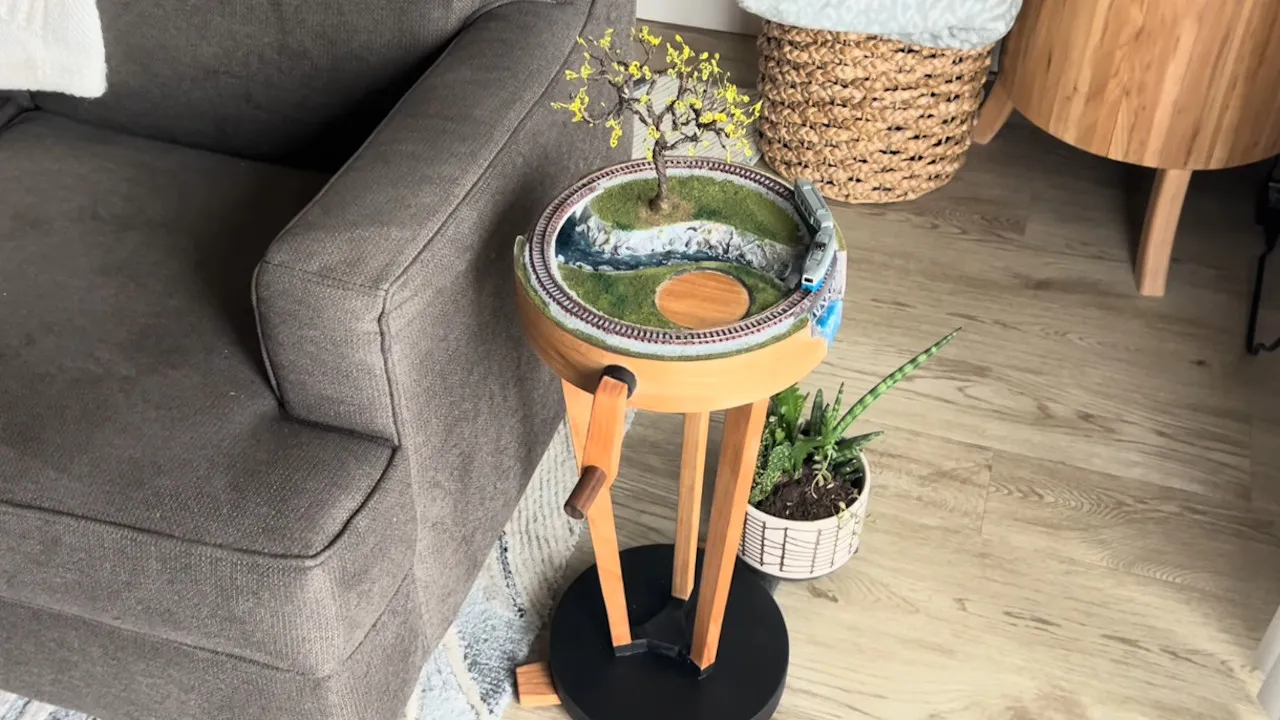
Most end tables that you might find in a home are relatively static objects. However, [Peter Waldraff] of Tiny World Studios likes to build furniture that’s a little more interesting. Thus came about this beautiful piece with a real working railway built right in.

The end table was built from scratch, with [Peter] going through all the woodworking steps required to assemble the piece. The three-legged wooden table is topped with a tiny N-scale model railway layout, and you get to see it put together including the rocks, the grass, and a beautiful epoxy river complete with a bridge. The railway runs a Kato Pocket Line trolley, but the really neat thing is how it’s powered.

[Peter] shows us how a small gearmotor generator was paired with a bridge rectifier and a buck converter to fill up a super capacitor that runs the train and lights up the tree on the table. Just 25 seconds of cranking will run the train anywhere from 4 to 10 minutes depending on if the tree is lit as well. To top it all off, there’s even a perfect coaster spot for [Peter]’s beverage of choice.

Advertisement

It’s a beautiful kinetic sculpture and a really fun way to build a small model railway that fits perfectly in the home. We’ve featured some other great model railway builds before, too.

Advertisement

Source link

Continue Reading

Tech

By any other name: A18 Pro is just as good a Mac chip as M4 for most

Published

on

People are losing their minds over Apple’s decision to put an iPhone chip in the MacBook Neo. All it shows is that they really don’t understand the engineering of Apple Silicon.

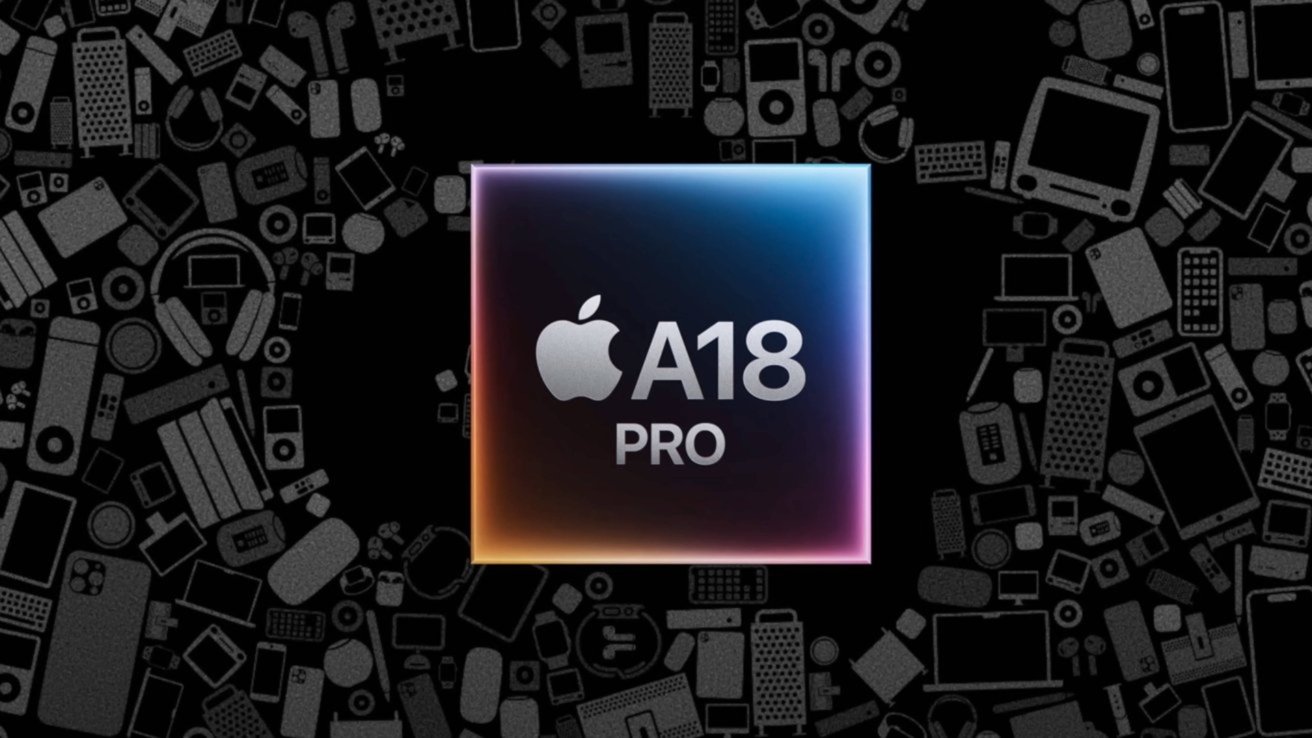
Colorful glowing square chip labeled Apple A18 Pro centered on a dark background filled with faint outlines of various electronic devices and accessories
Apple’s A18 Pro is more than an iPhone chip

After years of rumors, the budget MacBook was revived on March 4, 2026. The MacBook Neo is its name, and people are already losing their minds over one key cost-cutting decision.
The MacBook Neo has the A18 Pro at its heart, the same chip that powered the iPhone 16 Pro. It’s something that had been rumored, yet still seems to have blindsided some of those looking to create a fuss on social media.
Continue Reading on AppleInsider | Discuss on our Forums

Source link

Continue Reading

Tech

SunBriteTV’s latest effort is a challenger to the Samsung Terrace

Published

on

SunBriteTV has launched the Veranda 4, a full-shade outdoor 4K smart TV series that takes direct aim at the covered patio market where Samsung’s Terrace line has established the dominant commercial presence over the past several years.

The outdoor TV category has expanded steadily as homeowners invest in permanent alfresco entertainment setups, with weatherproofed screens becoming a standard fixture in residential outdoor living spaces alongside dedicated outdoor audio systems and covered kitchen installations.

The Veranda 4 enters that market with 600-nit brightness driven by a direct LED backlight, a figure SunBriteTV claims sits 58% higher than its previous generation, giving the panel the output needed to hold picture quality in partially shaded environments without washing out in ambient daylight.

An IP55-rated aluminium exterior handles rain, heat, and humidity, while internal components carry additional protective coatings, and SunBriteTV’s Eco Bright Outdoor Technology prevents backlight failure at operating temperatures up to 50 degrees Celsius, covering the range of conditions a permanently mounted outdoor screen would face across summer months in most North American climates.

Advertisement

LG’s WebOS powers the smart platform, supporting access to a wide variety of third-party streaming apps such as Netflix and Disney+. There’s also a redesigned media bay tucked discreetly within the chassis, giving users flexibility to run their own streaming devices without visible cable clutter behind the screen.

Advertisement

Connectivity covers built-in Wi-Fi, Bluetooth 5.0, and voice control, with two integrated 8-watt loudspeakers handling audio for everyday viewing without requiring a separate outdoor sound system for basic use cases.

The Samsung Terrace, which similarly targets covered outdoor environments and carries comparable weatherproofing credentials, starts at a higher price point than the Veranda 4, giving SunBriteTV a potential cost advantage in the residential installation market where budget often determines product selection alongside brand recognition.

Advertisement

The Veranda 4 is available now in 65-inch and 75-inch sizes, priced at $3,198.95 and $4,648.95 respectively, with additional screen sizes launching later in 2026.

Source link

Advertisement
Continue Reading

Tech

TCL Debuts CrystalClip Wireless Earbuds Along With Swarovski Crystal Edition

Published

on

At MWC 2026 this week, TCL expanded its personal audio lineup with the new CrystalClip open-ear wireless earbuds, including a premium CrystalClip with Crystals by Swarovski edition. While TCL is best known globally for its televisions, the company has steadily built a presence in the true wireless category with models such as the MOVEAUDIO S600, Neo, and S180.

The new CrystalClip series signals a deeper push into the fast-growing open-ear clip-on earbud segment, combining air conduction audio technology, AI-driven features, and extended battery life with a design focused on all-day comfort.

Tip: Watch our TCL CrystalClip news brief on YouTube

Air Conduction vs. Bone Conduction: What’s the Difference?

Open-ear clip-on earbuds rely on air conduction to deliver sound into your ears, directing audio toward the ear canal without sealing it off. This approach has gained traction because it tends to provide a more natural fit, greater long-term comfort, and fuller sound layering with more balanced bass, mids, and treble compared with most bone-conduction designs. At the same time, the open design keeps your ears unobstructed, allowing you to remain aware of your surroundings—an important advantage for commuting, exercising outdoors, or everyday listening where safety and environmental awareness still matter.

Advertisement
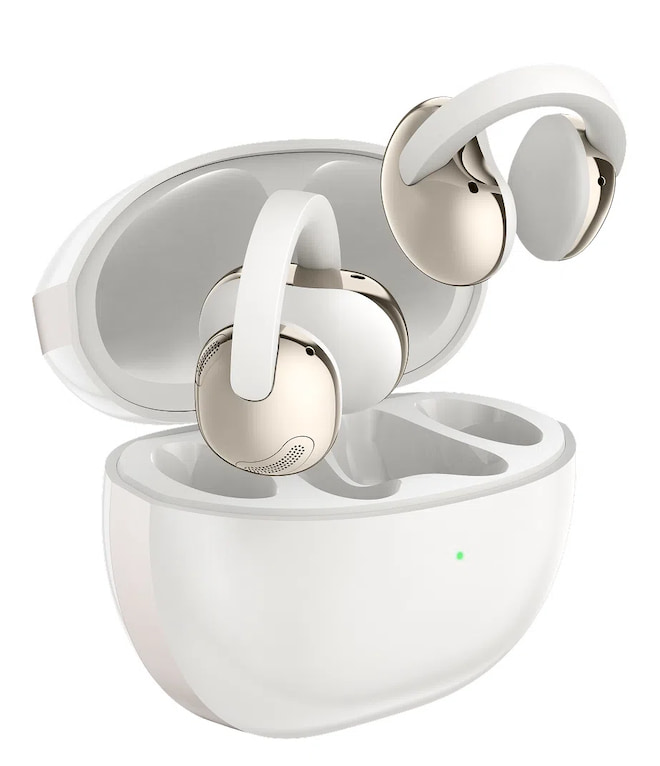
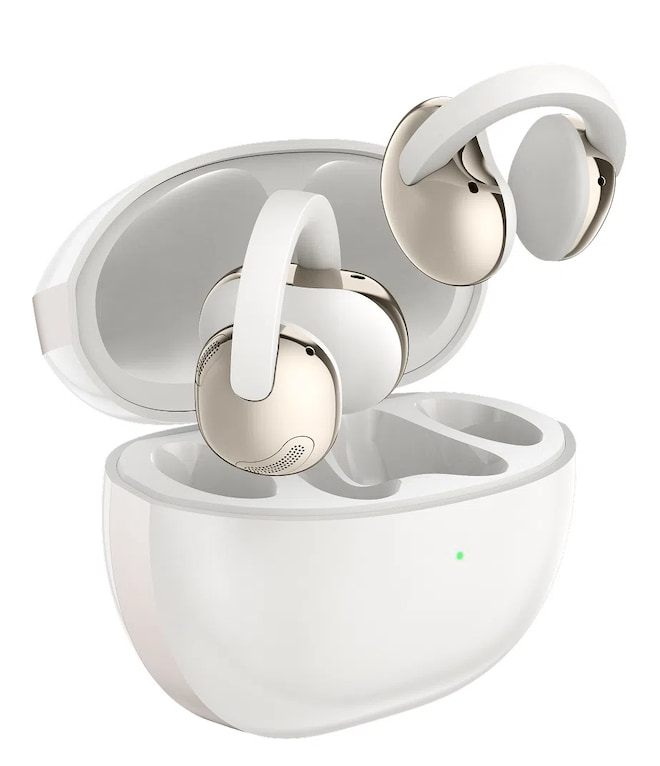
tcl-crystalclip-clip-on-earbuds
TCL CrystalClip Wireless Earbuds with Charging Case

Clip-on Design Prioritizes Awareness and All Day Comfort

The clip-on form factor of the TCL CrystalClip is designed to keep listeners aware of their surroundings while enjoying music, podcasts, or calls. Because the earbuds rest outside the ear canal, users can still hear approaching traffic, public announcements, or nearby conversations without removing the earbuds. This open design supports everyday situational awareness while maintaining continuous playback.

To balance comfort with stability, TCL integrates an ergonomic clip structure engineered for consistent contact without excessive pressure. The CrystalClip applies approximately 43 grams of clamping force to help maintain a secure fit across different ear shapes. A titanium arch bridge reinforces the clip mechanism, contributing to durability and shape retention over extended use.

Each earbud weighs just 5.5 grams, minimizing fatigue during long listening sessions. With an IPX4 water resistance rating, the CrystalClip is built to withstand sweat and light splashes, making it suitable for office use, workouts, commuting, and daily mobility. 

tcl-crystalclip-swaroski-earbuds
TCL CrystalClip with Crystals by Swarovski

Blending Technology & Style

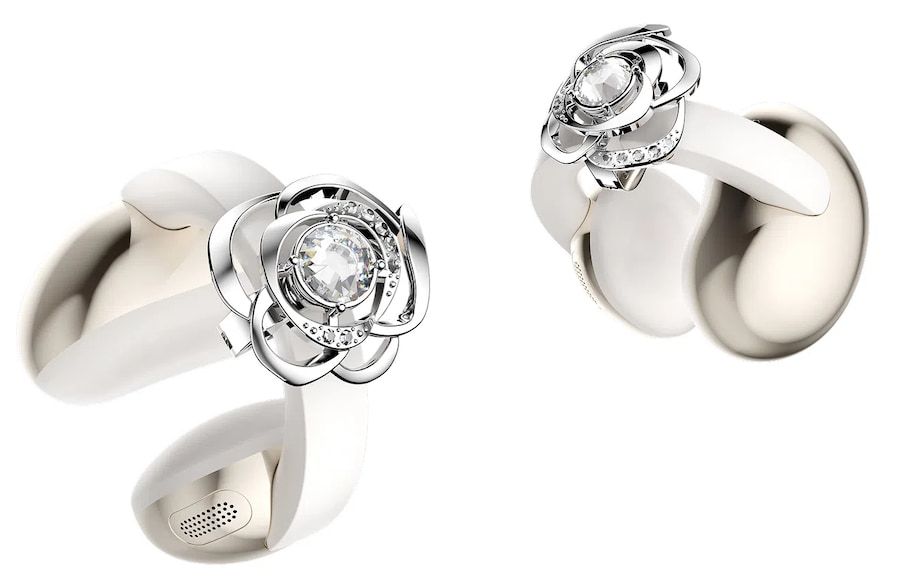
Beyond comfort and stability, the TCL CrystalClip combines practical audio engineering with a design intended to complement everyday style. The earbuds feature a streamlined clip-on silhouette that sits close to the ear, allowing them to function not only as a listening device but also as a subtle accessory. The compact shape and balanced proportions help maintain a clean, understated appearance suitable for commuting, office environments, or casual use.

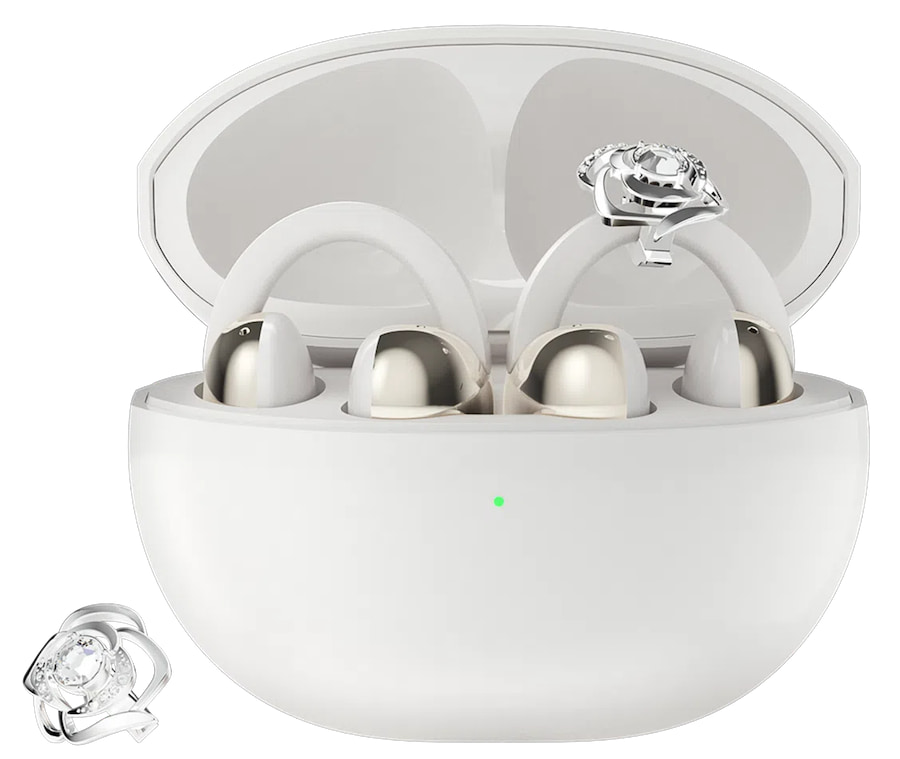
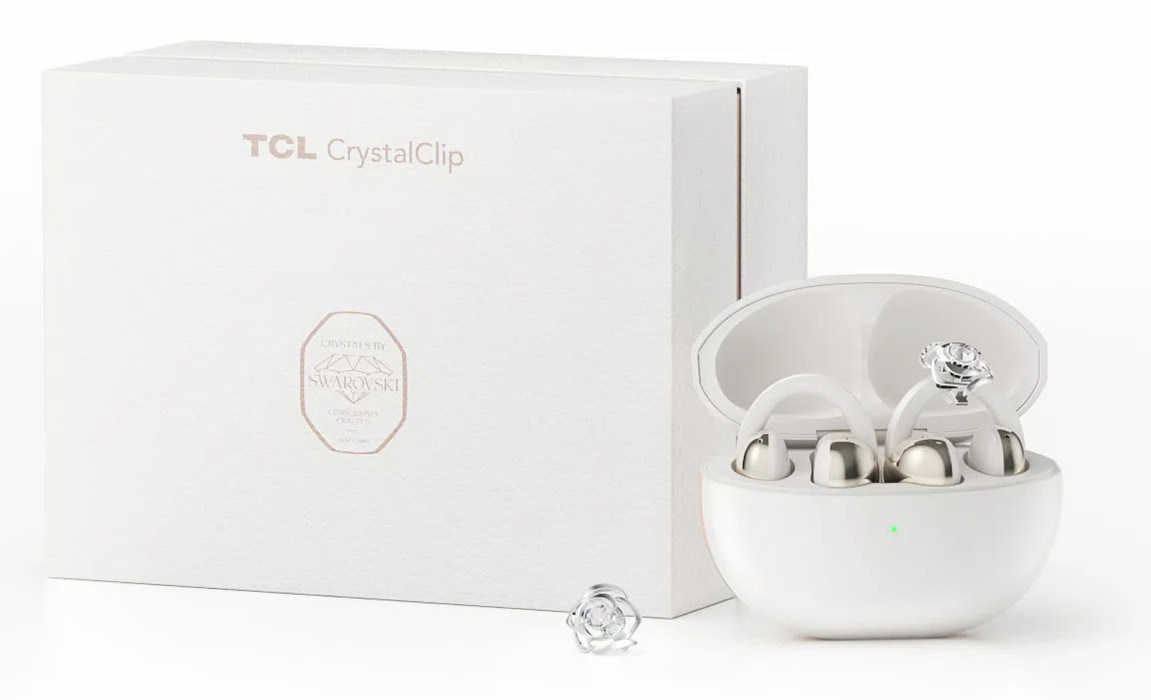
For users who prefer a more fashion-forward option, TCL also offers a CrystalClip with Crystals by Swarovski edition. This version incorporates decorative crystal elements that add a subtle visual accent while maintaining full functionality, including charging and wireless connectivity. The result is a design that blends personal audio technology with a touch of jewelry-inspired styling.

Advertisement

Immersive Audio Experience

Inside the TCL CrystalClip, a 10.8 mm dual-magnetic dynamic driver forms the foundation of its audio performance. The driver is paired with 3D spatial audio processing, designed to create a wider and more layered listening presentation for music, podcasts, and video content while maintaining clarity across highs, mids, and bass.

TCL also incorporates enhanced bass tuning to add greater depth and presence to everyday listening. While the open-ear design prioritizes comfort and environmental awareness, the tuning aims to maintain a balanced and engaging sound profile suitable for a wide range of content.

Advertisement. Scroll to continue reading.

For connectivity, Bluetooth enables wireless playback from smartphones, tablets, and other compatible devices. During calls, dual microphones with ENC (Environmental Noise Cancellation) help reduce background noise so voices remain clearer in busy environments such as cafés, public transit, or crowded streets.

Advertisement
tcl-crystalclip-swaroski-with-case
TCL CrystalClip Clip-on Wireless Earbuds with Crystals by Swarovski

Smart Interaction Powered by AI

Beyond audio playback, the TCL CrystalClip is designed to support communication and everyday productivity through a range of smart features. Touch controls on the earbuds allow users to manage playback, answer calls, and activate additional functions directly from the earbud surface. When paired with compatible TCL smartphones and supported apps, users can also access simultaneous interpretation features, enabling real-time multilingual communication for travel, meetings, or everyday interactions.

CrystalClip also provides quick access to popular voice assistants, including Siri, Google Assistant, and Google Gemini. This allows users to check information, manage schedules, control smart devices, or send messages using voice commands, keeping interactions hands-free while on the move.

All-Day Listening

TCL’s CrystalClip provides up to 36 hours of total battery life and fast charging that delivers hours of playback in just minutes. Bluetooth 5.4 connectivity and dual-device seamless switching further enhance convenience, enabling seamless transitions between smartphones, tablets, and other connected devices.

Comparison

Crystal Clip / Swarovski Edition Sony LinkBuds Clip Bose Ultra Open
Product Type  Wireless Earbuds Wireless Earbuds Wireless Earbuds
Wearing Style Clip-On Clip-On Clip-On
Price $100 / $200 (unconfirmed) $228 $299
Noise Cancelling Yes Yes
Driver 10.8 mm 11mm  12mm 
MIC 2 mic per earbud 2 mic per earbud 2 mic per earbud
MIC Type MEMS MEMS MEMS
Voice Assistant Yes – Native VA Google Assistant, Siri, and Gemini Live Siri, Google Assistant
EQ 3 modes – Bass, Balanced, Podcast Yes  3-band (Bass, Mid, Treble) via app
Lag-free Mode 127ms
OS Android, iOS, Windows Android, iOS  Android, iOS 
Bluetooth Version 5.4 5.3 5.3
Bluetooth Codec Support SBC, AAC SBC, AAC, LC3 SBC, AAC
Google Fast Pair*  Yes Yes Yes
App TCL HOME App Sound Connect App Bose Music App
IP rating IPX4 IPX4 IPX4
Charging Port USB-C USB-C USB-C
Playback Time – Earbuds 8 hours 8 hours 7 hours
Playback Time – With Case 36 hours 14 hours 19.5 hours
Charging Time – Earbuds 1.5 hours 1.5 hours 1 hour 
Charging Time – Case 2 hours 3 hours 3 hours
Fast Charging 15-minutes = 3 hours of playback 3-minutes = 1 hour of playback 10 min = 2 hours of playback
LED lights on the Charging Case Yes Yes Yes
Earbud Weight 5.5 g 6.4 g  6.35 g
Case dimension (HxWxD) 65 x 52 x 29.2 mm 50.4 x 50.4 x 32.6 mm 41.9 x 65 x 26.4 mm
Case Weight 38 g 42 g 44 g
Colors  Lunar White Black
Lavender
Green
Greige
Black
White Smoke
Sunset Iridescent
Carbon Blue
Chilled Lilac
Sandstone
Lunar Blue
Midnight Violet
Driftwood Sand
Moonlight Grey
Diamond 60th Edition
tcl-crystalclip-swarovski-lifestyle-woman
TCL CrystalClip with Crystals by Swarovski

The Bottom Line 

TCL has made significant progress in the television market over the past year, highlighted by flagship displays such as the TCL X11L SQD Mini LED TV and expanded manufacturing partnerships that have strengthened its global presence. With the introduction of the CrystalClip line at Mobile World Congress 2026, the company is clearly looking to extend that momentum into the highly competitive wireless earbud category. Although TCL has previously released models such as the MOVEAUDIO S600, Neo, and S180, its presence in personal audio has remained relatively low profile until now.

The CrystalClip series stands out by combining open ear clip-on design, air conduction audio, spatial sound processing, and AI-driven features at a price that undercuts many established competitors. In addition with CrystalClip with Crystals by Swarovski edition, TCL is leaning into the growing overlap between personal audio and wearable style. On the feature side, the earbuds compete with products such as the Sony LinkBuds Clip and Bose Ultra Open Earbuds, both of which offer similar open-ear concepts but at significantly higher prices.

What ultimately makes the CrystalClip unique is the combination of affordable pricing, fashion-forward styling, spatial audio support, and open-ear situational awareness in a lightweight clip-on design. The addition of a low-latency gaming mode broadens the appeal even further for mobile gamers who want wireless convenience without added delay.

Advertisement

For listeners curious about open-ear earbuds but unwilling to spend premium prices, the CrystalClip may offer an accessible entry point. Commuters, casual listeners, and style-conscious buyers looking for something different from traditional in-ear buds will likely find the concept appealing. Whether TCL can carve out meaningful market share in an already crowded wireless earbud space remains to be seen, but the CrystalClip lineup suggests the company intends to compete on features, design, and aggressive pricing rather than brand legacy alone.

tcl-crystalclip-swarovski-box

Price & Availability

Availability is expected across Asia-Pacific, Europe, and North America beginning March 2026.

Note: U.S. pricing is unconfirmed.

Advertisement

Source link

Continue Reading

Trending

Copyright © 2025