OpenAI and Broadcom have unveiled Jalapeno, OpenAI’s first custom AI chip, designed primarily to handle inference for ChatGPT and other services. It’s a major step in OpenAI’s plan to “build the full stack behind its models and products,” says OpenAI. “By designing more of the stack ourselves, we can serve more intelligence with greater efficiency and keep pushing advanced AI toward broader access.” CNBC reports: The chip with Broadcom is an ASIC, which industry experts say is less flexible than Nvidia’s GPU, but is also less expensive and can be designed for specific AI tasks. OpenAI said that it designed the chip in nine months, and that it also crafted large parts of the computer system where it will be used.
The companies are calling the chip an “Intelligence Processor” and describe it as the first “AI accelerator” in a platform they’re building “to make advanced AI faster, more reliable, and more accessible to more people.” […] A physical sample of the new chip will be delivered to OpenAI on Wednesday. The companies said they’re aiming for initial deployment of the Jalapeno chips by the end of 2026, “expanding in the years ahead.”
I’ve been scouting for Prime Day deals, but this one stopped me in my tracks. Currys is running an excellent summer sale on back-to-school and business laptops, but Amazon has absolutely crushed them on the price of the Asus Zenbook A14 for £500 (was £600) for Prime Day.
This 14-inch OLED laptop features a Snapdragon X X1-26-100 processor that’s engineered for day-to-day work and study tasks, alongside 16GB LPDDR5X memory, and a well-sized 1TB SSD. For general office and school tasks, that’s pitch-perfect for the price.
Over at Currys, however, the exact same model is priced at £599 (was £999) for the Snapdragon-powered machine with 16GB RAM and – wait for it – 512GB SSD. So, you’re getting twice as much SSD storage from Amazon at an even cheaper price. I wouldn’t even look twice at Currys for this specific model while this Prime Day deal is live.
That’s not to say the Currys summer sale is bad. In fact, having charted all the deals, I found it a treasure trove of well-priced laptops for work and study. You can see my article on the top 4 laptop deals at Currys here.
Advertisement
But considering the massive price difference, and the improved SSD size, I’d go for the Amazon deal all-day long (or while it lasts, which might not be long as Prime Day ends tomorrow).
We were impressed with the A14 when we reviewed this laptop. Scoring it 4 stars and awarding it a TechRadar Recommends badge, we found this ultra-lightweight MacBook Air-style Windows laptop possessed “brilliant design, capable all-round performance, and an impressive battery life.”
As a budget-tier laptop, it’s got it faults, but we loved the “fabulously thin and light” design and performance are impressive. Perfect, then, for campus and the commute.
The US has restricted the export of Nvidia’s most powerful AI chips to China since 2022 over fears that they could be used for military purposes. Read Entire Article Source link
Amazon Prime Day 2026 is in full swing, and below you’ll find everything you need to know about the event, including important dates and our constantly updated live blog.
With Amazon’s Spring Deal Days being firmly in the rear-view mirror, the next major event on the consumer calendar is Amazon’s most famous sale of all: Prime Day.
Prime Day is Amazon’s annual mega-sale that brings big-name brands down to tempting prices, exclusively for Amazon Prime subscribers.
It’s the best chance before Black Friday to bag a bargain on the latest tech, so if you’re in the mood for a bit of summertime retail therapy, here’s everything you need to know about Prime Day 2026.
Advertisement
SQUIRREL_PLAYLIST_10148964
Advertisement
How long is Amazon Prime Day 2026?
Prime Day runs from Tuesday, June 23, until Friday, June 26, with fresh deals landing every day.
Do you need Prime for Prime Day?
Yes. Unlike Black Friday, which is open to everyone, Amazon Prime Day is strictly for Prime members who pay for the service monthly or yearly. You can find out how to sign up for Amazon Prime here.
Advertisement
When should you sign up for Amazon Prime?
Timing your sign-up (if you’re not already a member) is key to getting the most out of Prime Day.
If you’re signing up for the 30-day free trial, then we recommend doing so right now, as you’ll have full access to the sale’s exclusive deals and have plenty of time left over to enjoy additional perks like access to Prime Video and fast delivery.
[Aizysse Baga] worked with [Adelaide] on the Divacore record, which was to be released on a mini-CD. The original plan was to include additional CD+G data, featuring artwork to go with the music. CD+G, or CD+Graphics, was often used to display synchronized lyrics for karaoke releases, and stored data in formerly-unused subcodes next to the track start, track number, and running time data. This format allowed storing a slideshow of images with a resolution of 288 x 192 with a 16 color palette.
Note the quality difference between the 16-color CD+G and the 256-color CD+EG images.
The duo got handy with art and some smart dithering to get great 16-bit artwork packed in to the audio CD release, with the aid of a custom Python encoder. CD-TEXT metadata was thrown in for good measure. Then, the existence of the more advanced CD+EG became apparent. This was a 256-color extension to the CD+G format that was backwards compatible to boot. It was a format that was barely ever implemented on any commercial releases, and very little hardware could even display it. Naturally, Divacore had to have it. Much work was done to understand the Red Book documentation on the standard and figure out how to implement even higher quality artwork for the record.
After so much work to understand and implement the CD+G and CD+EG data, the question was whether it would survive the CD reproduction process for the final release. Thankfully, the final discs came out perfectly, and the full 256-color CD+EG artwork can be seen in all its glory if you happen to play Divacore on a Sega Saturn or a super-obscure Victor VS-G2 or VS-G3. Throw it in a less-sophisticated karaoke machine or something like an Amiga CD32, and you’ll still get to see the 16-color versions for your trouble.
We love to see ancient formats brought back to life, particularly those that never got their time in the sun. If you’re working hard to resurrect something the mainstream media world has forgotten, let us know on the tipsline.
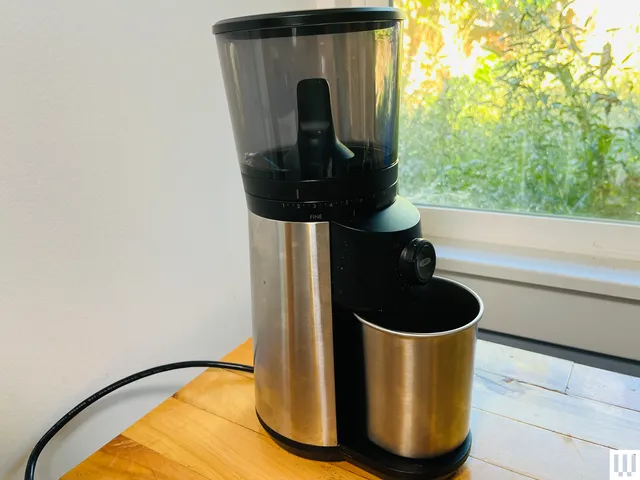
The cost of a good burr coffee grinder—the kind you absolutely need in to make coffee actually taste good—throws a lot of my friends for a loop. They aren’t ready to spend $200, let alone $500 or $1,500, to optimize the flavor of their morning brew.
That’s when I turn to this trusty Oxo conical burr grinder. If you make French press, or Aeropress, or drip coffee, or espresso on a lower-cost machine with pressurized portafilter basket? This Oxo is always the lowest cost coffee grinder I can recommend with my whole heart. It offers reliable flavor, and much more precision than you’d expect. You’ll discover fruity notes, or delicate toffee, in your coffee that you didn’t previously know were there.
Right now for Prime Day, this Oxo is even more accessibly priced than usual: Just $82.
So maybe let this Oxo be the first “good” coffee grinder you buy—the one that shows you how much better coffee can taste when ground fresh, with a conical burr grinder. If you want to go wild on premium grinders later, I support you on your journey.
Three years after the 2023 strikes raised alarms about AI replacing entertainment workers, some of those same workers are now training the technology that worries them. As film and TV jobs grow harder to find, writers, editors, and executives across Hollywood are quietly taking gig work just to pay the bills. It’s called Reinforcement Learning from Human Feedback (RLHF), and it involves fine-tuning AI models.
Hollywood workers explain why they’re training AI models
According to The Hollywood Reporter, editor Gabe Sena turned to AI training after a stretch of unemployment, saying he wanted to understand the technology rather than simply fear it. Former HBO development executive Steven Woolworth had a similar motivation, calling the work a way to stay informed rather than bury his head in the sand while job hunting proved fruitless for over a year.
Both found gigs through a recruiting platform called Mercor, which pairs domain experts with AI companies needing human feedback. This trend lines up with a broader industry pattern, with Amazon also turning to AI to cut film and TV production costs through its own dedicated studio.
Pexels
What the work actually looks like once you’re in it
Screenwriter Ruth Fowler described a far rougher experience in her own essay for Wired, detailing eight months and twenty contracts across five different platforms. The pay ranges from $16/hour for entry-level annotation work up to $150/hour for specialized writing tasks. She described abrupt project cancellations, shifting pay rates, and young, inexperienced managers overseeing workers decades into their careers.
A growing AI industry built on real legal and ethical tension
Unsplash
RLHF work has expanded rapidly regardless, with AI-related job postings within the arts nearly doubling between 2025 and 2026, even as lawsuits pile up alleging worker misclassification and unstable scheduling across the industry. Even Martin Scorsese has officially joined the AI camp, a sign of how far the acceptance of these tools has spread across the industry.
Critics of generative AI in Hollywood, like Breaking Bad creator Vince Gilligan, say they understand why struggling workers take these gigs despite the contradictions involved. For many in Hollywood right now, training the machine has become less about curiosity and more about simply making rent.
The designation represents a significant step forward in improving the handling and escalation of reports relating to illegal online content, particularly in relation to children.
Coimisiún na Meán, under the European Union’s Digital Services Act, has declared the Irish Internet Hotline (IIH) a Trusted Flagger. This recognises IIH’s expertise and track record in the tracking and reporting of illegal content, such as intimate image abuse, financial scams, racism and child sexual abuse material (csam).
Established in 1999 the IHH is Ireland’s national reporting centre, through which members of the public can securely and anonymously report suspected illegal or harmful content. The organisation is a member of the INHOPE network, the Irish Safer Internet Centre and works closely with An Garda Síochána, as well as international partners.
In order to qualify for Trusted Flagger status, organisations must prove that they are independent from online platform providers, show significant subject-matter expertise and indicate a history of the consistent recording of accurate, diligent and objective reporting.
Advertisement
As a Trusted Flagger, notices submitted by the IHH will be prioritised and processed without undue delay, the group will be supported in the faster assessment and removal of illegal content, there will be strengthened cooperation between IIH, online platforms, regulators and other stakeholders and additional support for the sharing of insights and best practices on emerging online threats and systemic risks
Commenting on the announcement, Mick Moran, the CEO of Irish Internet Hotline said, “We’re delighted to have been granted Trusted Flagger status by Coimisiún na Meán. The designation reflects the expertise and experience our team has developed in identifying and reporting illegal content within our areas of competency.
“We’re proud of the work we do and the standards we apply to it. Trusted Flagger status formalises an approach we’ve already been taking for nearly three decades and strengthens our ability to ensure that high-quality reports are prioritised and acted on appropriately.
“We welcome the recognition of Irish Internet Hotline as a knowledge and skills-based expert in this area and look forward to partnership with Coimisiún na Meán in our shared mission to make the internet safer for all users, especially children.”
Advertisement
In early May Coimisiún na Meán also opened dual investigations into Meta to assess issues related to how its recommender systems promote content on Facebook and Instagram and whether it is in breach of the EU Digital Services Act. The watchdog announced that it is investigating concerns that Meta is preventing users from actively selecting the content that appears in their Instagram and Facebook feeds.
Don’t miss out on the knowledge you need to succeed. Sign up for the Daily Brief, Silicon Republic’s digest of need-to-know sci-tech news.
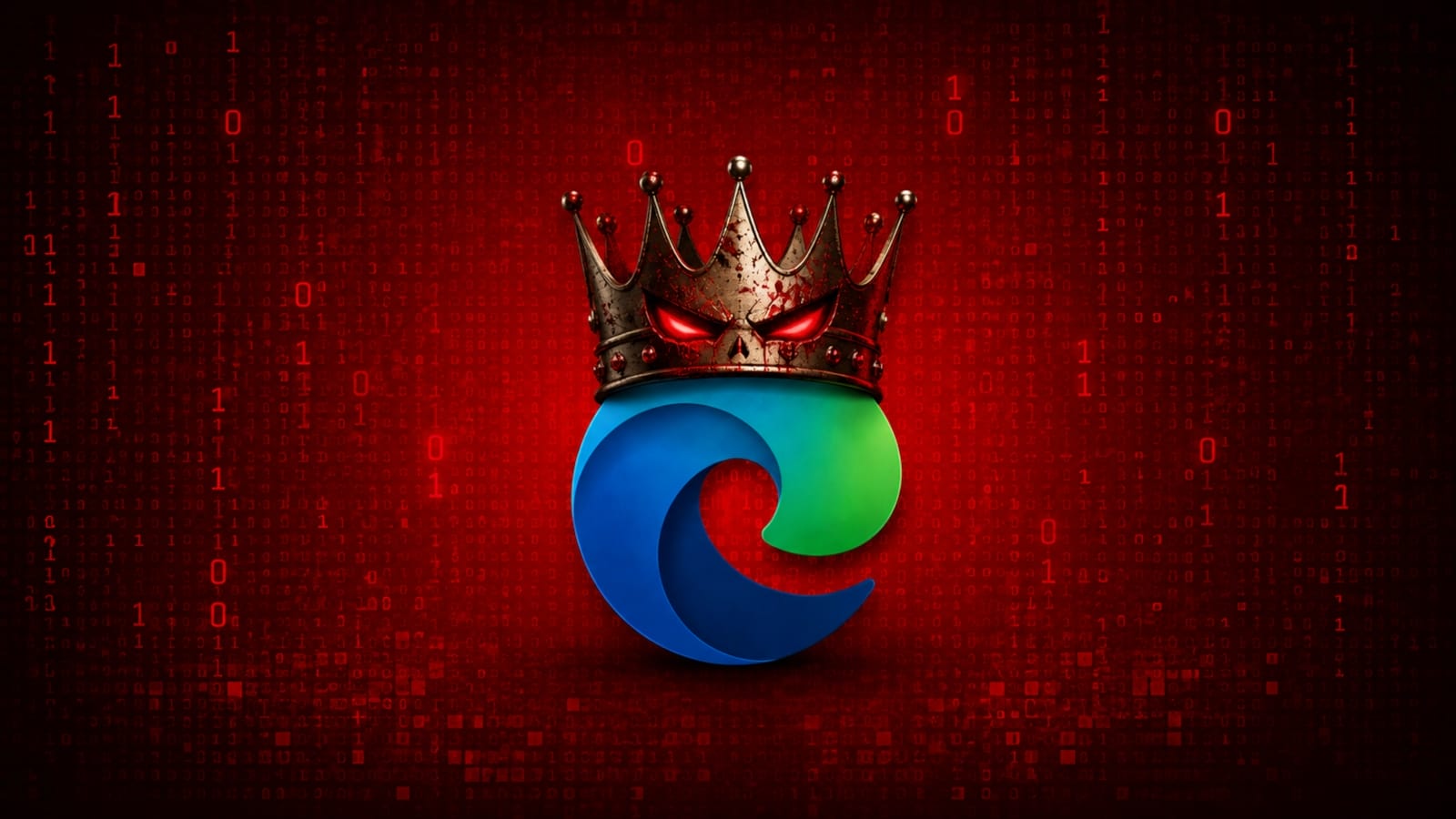
A malicious Microsoft Edge extension dubbed ‘Edgecution’ has been used in a ransomware attack to escape the browser sandbox and deploy a Python-based backdoor.
Access to the local system is obtained by leveraging the Chrome Native Messaging protocol that allows browser extensions to interact with native desktop applications, such as a password manager communicating with the extension to fill in web forms.
This allows the browser to launch the native application as a separate process and communicates with it over standard input/output data streams.
An Edgecution compromise begins with the attacker posing as IT support personnel on Microsoft Teams and directing employees to a fraudulent page under the pretense of installing a spam filter update.
Researchers at cloud security company Zscaler believe that Edgecution is deployed by an initial access broker (IAB) connected to the Payouts Kings ransomware operation.
Advertisement
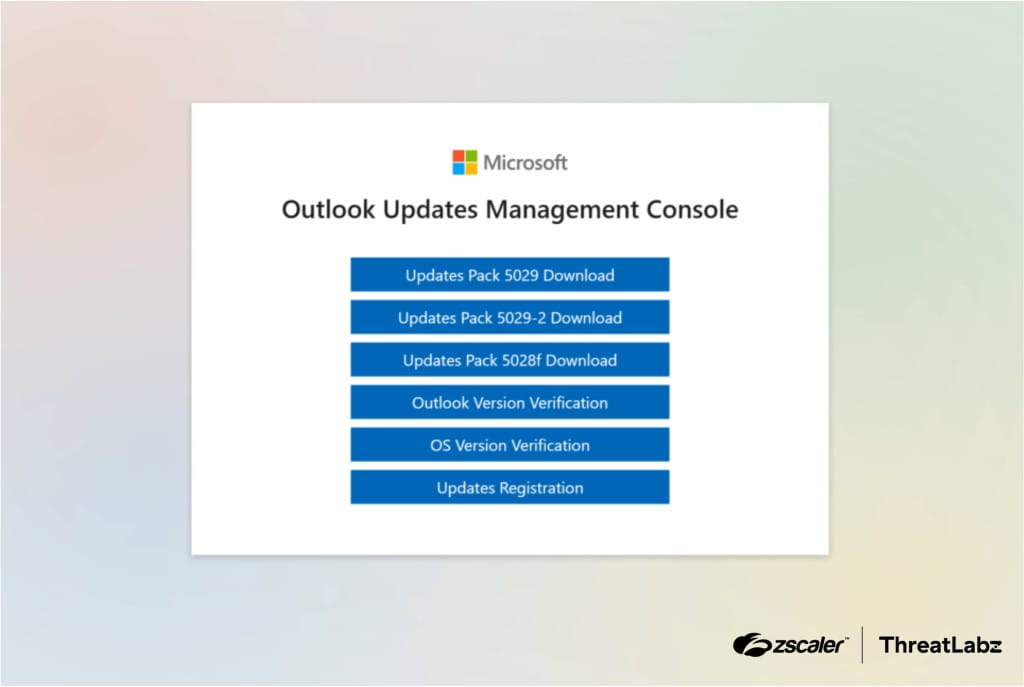
In recent attacks using tactics previously associated with the IAB, the threat actor directed victims to a fake Microsoft “Outlook Updates Management Console” presenting download buttons for update packs or software verification.
However, the buttons downloaded malicious components, copied scripts to the clipboard, or launched forms requesting Microsoft 365 and Outlook passwords.
Fake Microsoft site Source: Zscaler
“These buttons offer the threat actor three different options (via an AutoHotKey script, Windows batch script, and PowerShell script) to deploy the Edgecution malware,” explains Zscaler.
“When the AutoHotKey script or clipboard content is executed, the commands will configure the environment, fix the encrypted ZIP file headers, extract relevant files, and create a scheduled task that executes Microsoft Edge.”
Advertisement
The malware components are fetched from the fake Microsoft update site in a ZIP archive fetched with malformed headers to prevent security products from recognizing it as a valid archive.
According to the researchers, the ZIP file contains an embedded Python version 3.13.3 and two directories named extension and native, providing a hint about the technique used in the attack.
The first malware component is the malicious Microsoft Edge extension disguised as an Edge Monitoring Agent. It connects to the attacker’s command-and-control (C2) endpoint, receives instructions for execution, and sends the results back to the operator.
The Edgecution malware runs in a headless Edge browser, making it invisible to the user, and uses Chrome’s Native Messaging protocol to talk to a local application.
Advertisement
The extension is limited to the browser’s sandbox, but the attacker overcomes this limitation through a second malware component, a Python-based backdoor that serves as the host-level executor.
This component receives commands that are relayed from the malicious extension, and can potentially request the following jobs:
Execute shell commands
Run PowerShell
Run arbitrary Python code
Write files on the host
Enumerate running processes
Gather system information
The role of the scripts is to provide a way for the extension to launch the Python backdoor. This is achieved by creating in the native directory a batch file the extension can invoke.
Additionally, they create the required Chrome native messaging manifest that describes how the browser can connect to the native app.
Zscaler’s technical analyis notes that both malware components have some unused commands that could be activated in future versions.
Advertisement
The researchers warn that the method used by Edgecution “illustrates the evolving sophistication” of threat actors tied to ransomware operations, and allows them to establish persistence on compromised hosts.
They recommend that organizations strengthen monitoring of browser extensions and enforce strict controls over native messaging host configurations to reduce the risk of compromise.
ZScaler’s report provides a list of indicators of compromise (IoCs) that include command and control servers used by Edgecution, hashes for the malicious extension, and the Python backdoor.
Security teams log 54% of successful attacks and alert on just 14%. The rest move through your environment unseen.
The Picus whitepaper shows how breach and attack simulation tests your SIEM and EDR rules so threats stop slipping by detection.
New York’s congressional primaries on Tuesday were supposed to be the moment AI’s top backers definitively proved they could bend US politics to their will. Instead, they left behind a muddy stalemate that only raises more questions about whether their spending can keep pace with an anti-AI backlash.
The stage for the battle was set last year, when some of America’s leading tech investors launched a new, $100 million super PAC dedicated to electing candidates who were “aligned with the pro-AI agenda” and defeating those who weren’t.
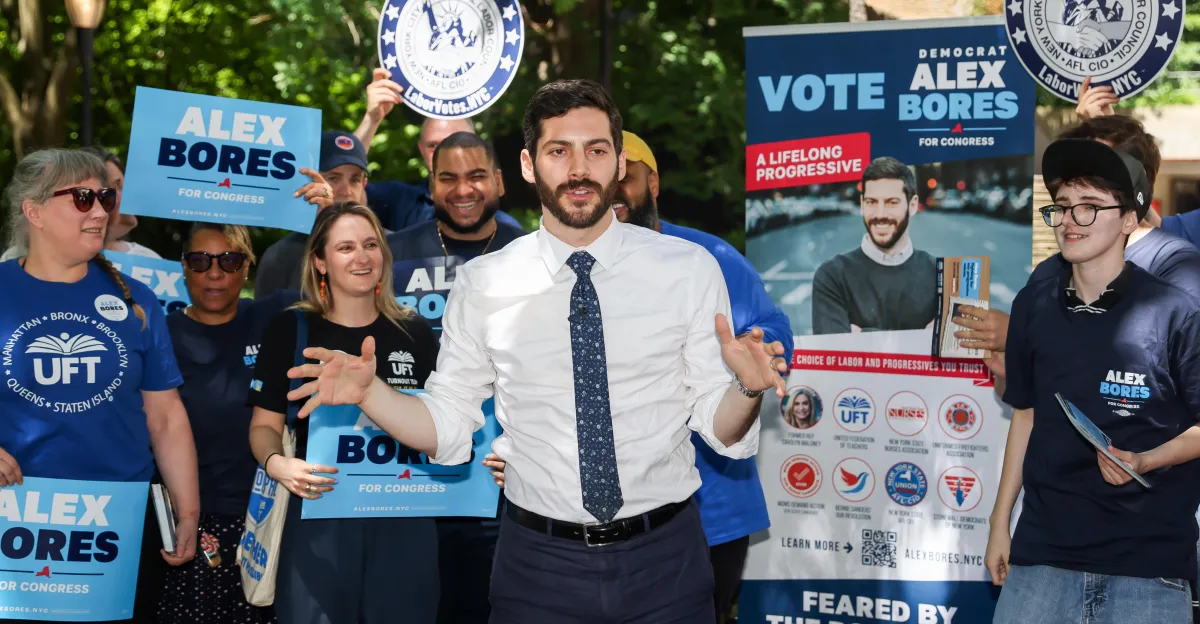
Months later, this group — dubbed Leading the Future (LTF) — named its first target: New York Assembly member Alex Bores.
Bores had been the chief sponsor of the Empire State’s “RAISE Act,” which required developers of frontier AI models to follow various safety protocols or face steep fines. LTF fiercely opposed that bill. Thus, when Bores launched a congressional run, the super PAC sought to teach him — and his fellow Democrats — a lesson: Purse sweeping AI regulations and your next campaign will drown in a flood of opposition spending.
Advertisement
At first glance, it may look like LTF just achieved that objective. Bores lost his bid on Tuesday night to represent New York’s 12th District. Headlines deemed the race a victory for “Big Tech.”
But appearances can be deceiving. In truth, Silicon Valley’s libertarians are losing the fight over AI regulation — and the NY-12 race only underscores this reality.
Bores lost. So did his enemies.
Contrary to LTF’s hopes, Bores’s loss is unlikely to dissuade Democrats from backing far-reaching regulations on AI, for at least four reasons:
Advertisement
First, the race’s winner, Assembly member Micah Lasher, is about as hostile to LTF’s vision as Bores was. Lasher co-sponsored the RAISE Act and campaigned on pausing data center construction nationwide, launching antitrust investigations into the major AI labs, protecting artists from “AI-driven copyright infringement,” prioritizing organized labor’s interests in debates over AI deployment, and myriad other regulatory constraints on the technology. In his victory speech, Lasher directly addressed the AI companies who took an “unusual interest” in the race, saying he “won’t be taking my cues from either of you when it comes to protecting our kids, our jobs and our families.”
Silicon Valley’s proponents of light-touch AI regulation are losing.
Simply put, if the tech industry wants to convince Democrats that backing strict AI regulations is politically self-defeating, they’ll need better evidence than a race won by…a Democrat who backs strict AI regulations.
Second, it’s far from clear that Bores’s candidacy was actually hurt by industry opposition. As my former Vox colleague Kelsey Piper notes at The Argument, when LTF announced it was targeting Bores, betting markets gave him only a 10 percent chance of victory, placing him behind both Lasher and Kennedy scion Jack Schlossberg. Bores ultimately came in a close second, trailing Lasher by only 4 percentage points (or about 4,000 votes).
Advertisement
It’s plausible that LTF unintentionally aided Bores’s rise to contention by validating his bonafides as the bane of Big Tech. Certainly, that identity earned the assembly member abundantmediacoverage. “For voters, tech billionaires spending millions to beat a state legislator wasn’t a flex; it was a tell,” Jesse Ferguson, a Democratic strategist who advised the Bores campaign, told me.
Third — and related — the race ended up becoming a fight between AI companies, not just about them.
Bores’s candidacy was not solely powered by a grassroots backlash to industry meddling. Rather, he was himself the recipient of massive Silicon Valley donations, albeit from the segment of the tech industry that worries about AI safety. Anthropic, the maker of the cha6bot Claude, was an enthusiastic supporter of the RAISE Act. And when LTF came for that law’s chief sponsor, the AI giant’s super PAC rallied to his support, supplying Bores with at least $11 million in outside funding. The crypto billionaire Chris Larsen, meanwhile, tossed another $19 million Bores’s way.
Importantly, this flood of financing was a reaction to LTF’s intervention. In other words, by targeting Bores, the super PAC arguably made it easier for him to raise money — and highlighted the existence of a pro-regulation, tech industry donor network. It is hard to see how this will make Democrats more afraid to meddle with AI.
Advertisement
Finally, Lasher’s victory probably didn’t have that much to do with artificial intelligence, one way or another. Lasher has been involved in New York politics for about a quarter century longer than Bores has, and boasts personal ties to Michael Bloomberg, Kathy Hochul, and other power players in the state’s Democratic Party. He was the race’s favorite for more or less the entirety of the race. Therefore, even if Lasher favored light-touch AI regulation, his narrow victory over Bores wouldn’t prove much. Given his actual positions on AI, his win does nothing to advance LTF’s argument.
The push for AI regulation is coming from inside the (White) House
Meanwhile, since Leading the Future launched last year, the national political climate has turned sharply against them.
In a recent Fox News poll, 80 percent of respondents said they favored regulating AI to protect public interests, even if doing so slows innovation. Other surveys show a large majority of Americans opposing the construction of new data centers in their areas.
Advertisement
By itself, public opinion might not be an insuperable obstacle to Big Tech libertarians’ agenda. Voters are increasingly skeptical of AI, but still don’t typically consider it a top priority.
Yet the national security state is also turning against laissez-faire in the AI sector. And its will is harder to ignore. Amid growing concerns about AI’s capacity to aid cybercrime, the White House released an executive order earlier this month encouraging labs to seek the government’s approval before releasing new models. Weeks later, the Trump administration took the extraordinary step of essentially ordering Anthropic to remove its Fable model from the market, on national security grounds. This represented a more radical and capricious government intrusion into the AI industry than Bores’s signature law ever contemplated.
Leading the Future knows that the ground has shifted beneath its feet. When it first announced its targeting of Bores, it lambasted the RAISE Act as a “clear example of the patchwork, uninformed, and bureaucratic state laws that would slow American progress and open the door for China to win the global race for AI leadership.”
Last month, however, the super PAC announced that it actually supported the RAISE Act, as the law “gets the combination of innovation and safety right.” LTF reconciled these positions by insisting that, while Bores’s initial draft of the legislation was ruinous, the final version was excellent.
Advertisement
This is unconvincing. It’s true that the RAISE Act got watered down before enactment. But the idea that these changes were large enough to transform the bill from an act of catastrophic national sabotage — into a model of pro-innovation lawmaking — is implausible. And LTF’s supposed support for the measure is belied by the months it spent vigorously lobbying the federal government to preempt New York’s law.
In reality, the group has simply retreated in the face of shifting political winds. Silicon Valley’s proponents of light-touch AI regulation are losing. And Bores’s loss did nothing to change that.
The base model of the car is priced at $24,950 and there are a number of color and accessory options available. But Car and Driver points out that it’ll end up costing more than $25,000 after factoring in a destination and delivery fee that the company says will be lower than typical. Even so, that fee could still run $1,200 to $1,500.
This week, as it opened up preorders for the electric truck, Slate gave more details about its range and capabilities, which have changed since the truck was announced last year. New battery specs have raised the truck’s range from 150 miles per charge to 205. Slate is also banking on the truck’s custom options to draw customers: It’s offering more than 100 wrap colors and different ways to convert the two-seater truck to other builds, even after the vehicle is purchased.
Preordering the Slate truck costs $300 and is nonrefundable. The company says the 180,000 customers who already placed refundable reservations for $50 can put that $50 toward a preorder.
According to Slate’s website, the first deliveries of the truck will be later this year. But full production of the Slate truck isn’t expected to ramp up completely until sometime in 2027. Slate has raised $1.3 billion and counts Amazon founder Jeff Bezos as one of its investors.
Reviewers have posted new impressions of the Slate
But those who’ve actually seen and ridden in the vehicle are singing its praises. Nick Yekikian at Edmunds wrote that the truck “is cute and has real charm in person” and said it has evolved since the last time he saw it. He wrote, “The build quality is generally more solid, and it looks ready to hit the road.” He also posted a video about his experiences with Slate.
Aaron Gold at MotorTrend wrote, after riding in the Slate, that it’s “pretty much what we were expecting, which is a good thing, as we at MotorTrend have high hopes for this cute, inexpensive electric truck.”
David Tracy at The Autopian called driving the truck “insanely fun.” He wrote, “It’s a simple pickup truck, and it’s reasonably cheap. Is it the cheapest? No. Is it the most practical for families? No. But what the Slate has going for it is this: It is, by far, the most soulful new vehicle an American consumer will be able to buy for $25,000.”
At least one other inexpensive EV is in the pipeline
As far as competition for inexpensive electric vehicles, the closest to Slate’s planned price is likely the Chevrolet Bolt at just under $30,000. But other automakers are working on less expensive electric vehicle models.
Advertisement
Ford is expected to release a low-cost electric truck in the $30,000 range, due out in 2027. And political changes could open up the possibility of Chinese-built EVs, which have their fans in the US but are not widely available due to tariffs and other factors. As Reuters points out, some Chinese EVs are priced below $12,000; for the average cost of an American car, you could buy three or more of the cheapest EVs in China.



















































You must be logged in to post a comment Login