Editor’s note: GeekWire publishes guest opinions to foster informed discussion and highlight a diversity of perspectives on issues shaping the tech and startup community. If you’re interested in submitting a guest column, email us at tips@geekwire.com. Submissions are reviewed by our editorial team for relevance and editorial standards.
Ben Golden.
I’m an attorney and advisor to many Pacific Northwest startups, investors, and social entrepreneurs, having spent the past two decades in the Washington innovation ecosystem — including as a higher education policy advocate and former co-chair of the WTIA Policy Committee. I love helping transform great ideas into job-creating companies in my community.
Which is why I’m unmoved by the panic surrounding the proposed “millionaires tax.” Every time Olympia proposes that our wealthiest contribute more, we’re told that this is the final straw for our brightest risk-takers, an existential threat to our state’s economy. But the real threat to the startup community is losing focus on building up our strengths as this catastrophizing becomes a self-fulfilling prophecy.
America is at a crossroads. In this defining moment, when our duties as citizens are gravely needed, a growing chorus of local startup luminaries are speaking up. Which issue galvanizes them? Civil liberties, or climate, or gilded age cronyism, or divestment from public interest research, or immigration, or the dignity of work amidst AI disruption, or freedom of speech…?
Disappointingly, much of the startup community’s advocacy efforts have instead been singularly focused on preventing a few very wealthy folks from changing their primary residence to Las Vegas or Jackson Hole or Palm Beach.
Advertisement
My oh my, what an uninspired civic imagination in this moment of peril. We can do better.
So chill with the libertarian fever dream. Read the moment. And read the proposal’s fine print, including important small business tax cuts. And remember what’s made Seattle such a dynamic startup community in the first place.
The tax proposal is (probably) not going to take your money
This is a proposed tax on net income over $1 million in a single year. The first $1 million of income would be exempt. This point merits emphasis, as it’s often misunderstood: no one will pay a penny of tax on the first $0 to $999,999 of annual net income. There are additional carve outs and deductions to encourage charitable giving and avoid double taxation. The minimum threshold will be indexed upward with inflation. And the proposed tax would not begin collecting revenue until 2029, allowing plenty of time to work through rulemaking, legal challenges, and fine tuning.
If enacted as proposed, less than 0.5% of households would ever be impacted. Imagine 1,000 random Washingtonians in a room: you could count on one hand the number of people with enough luck, talent, and timing to ever pay this tax.
Advertisement
What about founders and investors? Many will already benefit tremendously from federal tax advantages like QSBS, which can eliminate up to $10 million in federal capital gains taxes on a successful exit. (An unrelated proposal would apply the state’s capital gains tax on profits that are otherwise exempted from federal taxation; with only a handful of sponsors across both chambers, that proposal appears to have far less traction.)
Further, the same tax avoidance strategies they already deploy, such as staggered sales, deferred compensation, trust and estate planning, and real estate tax shelter investments, will continue to reduce taxes for founders and investors. The idea that a modest state tax on seven-figure net income is going to make entrepreneurship suddenly “not pencil out” is fuzzy math.
Fixing Washington’s regressive tax structure is good for business
Washington consistently ranks among the most regressive tax systems in the country. Relative to other states, lower- and middle-income families pay a disproportionate share of their income in state and local taxes due to our heavy reliance on sales, excise, and business taxes. Addressing this problem is essential to building a resilient state, which matters more than ever in this moment of increasingly reckless and unstable federal governance.
In announcing his initial support for this proposal, Gov. Bob Ferguson tied the tax explicitly to strengthening the Working Families Tax Credit, removing sales taxes on essential personal hygiene products, investing in K-12 education, and greatly reducing B&O taxes for early-stage businesses. In other words, this is a pro-entrepreneurship policy that argues that we’re all better off when we’re all better off.
Advertisement
Of particular importance for startups, the proposal to provide B&O tax relief for small businesses would be a boon for early-stage companies in their earliest cash constrained years, i.e., when they need it most. The current draft legislation would provide a credit for B&O taxes on annual gross receipts less than $250,000, which would benefit thousands of local startups and small businesses every year. Meanwhile, Ferguson has called to go further by zeroing out B&O taxes up to $1 million on revenue.
In responding to the initial proposal, the governor said his ultimate support for the proposal is contingent on a much more aggressive small business tax break — “we need to have the largest tax break for small business owners in state history,” he said this week.
Rather than fear-monger, startup advocates should redirect their efforts toward supporting that effort for targeted savings for early-stage companies.
The Legislative Building in Olympia, Wash. (GeekWire Photo / Lisa Stiffler)
On the pro-millionaire advocates’ counterpoints
There are valid concerns about the proposal’s impact on the business climate and economic growth.
Some argue it “punishes success” by not maximizing exit proceeds. Yet this ignores how the proposal invests in conditions that allow startups to thrive in the first place as well as the urgency of addressing a broken tax system.
A frequent rebuttal to any tax proposal is that the state should cut spending instead. Absolutely, there must be accountability and responsible stewardship of our public resources. But this is not mutually exclusive; as in business, governments can manage their expenses and restructure revenue at the same time.
Critics warn that the income tax minimum threshold will expand in future years. Rep. Jeremie Dufault, R-Selah, calls it “kicking a budget snowball down a hillside. It’s small now, but it will grow as it rolls.” Maybe, but that’s not the proposal under consideration right now. In fact, the current proposal would raise the minimum threshold annually with inflation.
There are also legitimate legal hurdles to implementing the proposed policy. Fortunately, we have multiple branches of government. Jurisprudential ambiguity should not deter legislators from passing policies they deem in the best interest of the electorate.
Large tech companies are downsizing, particularly amongst software engineering teams. Our fizzling “prosperity bomb” is bad news for a local economy supported by so many coders, and those AI-disrupted jobs are not being replaced elsewhere. In this moment of disruption, creating policies that make it easier to be an entrepreneur and live comfortably in a community are more important than ever, regardless of whether a household brings in millions of dollars a year.
Many point to capital flight as the primary concern, though correlation and causation can be muddled on this point. A handful of large tech companies and wealthy individuals have moved operations out of Washington state, and there will likely be a few more (vocal) high net-worth households who will register their primary residence elsewhere to reduce their tax bill — and they may even shift the focus of their investments from local startups to their new neighbors. But the primary cause of capital flight risk is panic; most people do not move to escape tax increases. This tax on outsized annual incomes will not trigger economic ruin, but the outsized investor-class alarm could cause real harm.
Rather than catastrophize, the startup community ought to celebrate the opportunities that would be unlocked by relieving early-stage businesses of B&O taxes, modestly rebalancing our regressive tax structure, and making targeted investments to keep Washington affordable and thriving.
The bill is currently open for debate, and critical details remain to be finalized. The startup community should be in these negotiations, rather than adopting an out-of-touch absolutist approach that reduces their influence and credibility.
Advertisement
Entrepreneurs will build here because we bet on ourselves
Entrepreneurs want to build something from nothing, test ideas, prove their doubters wrong, and ultimately solve problems. And sure, they want to make loads of money. Their ambition to build, ideate, prove, and solve will not be quashed by a tax that only kicks in after annual net income over $1 million.
Most creative, ambitious, and educated people are not primarily motivated by marginal tax rate optimization. They want to live in places with access to world-class universities, vibrant cultural and artistic ecosystems, reproductive health care, diverse neighbors, multimodal transportation, LGBTQ+ rights, respect for the natural environment, libraries that don’t ban books, and a basic sense that society has their back.
The best places in the country to launch a startup include the Bay Area, Boston, New York, and the greater Seattle area. With apologies to the fine folks in Sioux Falls, Houston, and Anchorage (the least taxed large U.S. cities), it turns out startups thrive in communities that invest in themselves and their people. We’ve done that in the Pacific Northwest and are set up for success. Millionaires tax or no tax, the next generation of great companies and scrappy entrepreneurs are primed to emerge from AI House, CoMotion, Foundations, 9Zero, and across our great state.
At the end of day, most of the loudest critics of this proposal — people I respect and work with daily — will almost certainly continue to live and work here in Washington state. So let’s cool it on the millionaires tax hysteria, recognize the criticality of the moment, and bet on ourselves.
Advertisement
Disclaimer: Written in my personal capacity. I’m no startup Lorax — I do not speak for my clients.
The signs that AI could lead to mass job displacement are already piling up: entry-level job postings in the U.S. have sunk 35% since 2023, mass layoffs have swept across Big Tech, and even AI leaders themselves are warning about what’s coming.
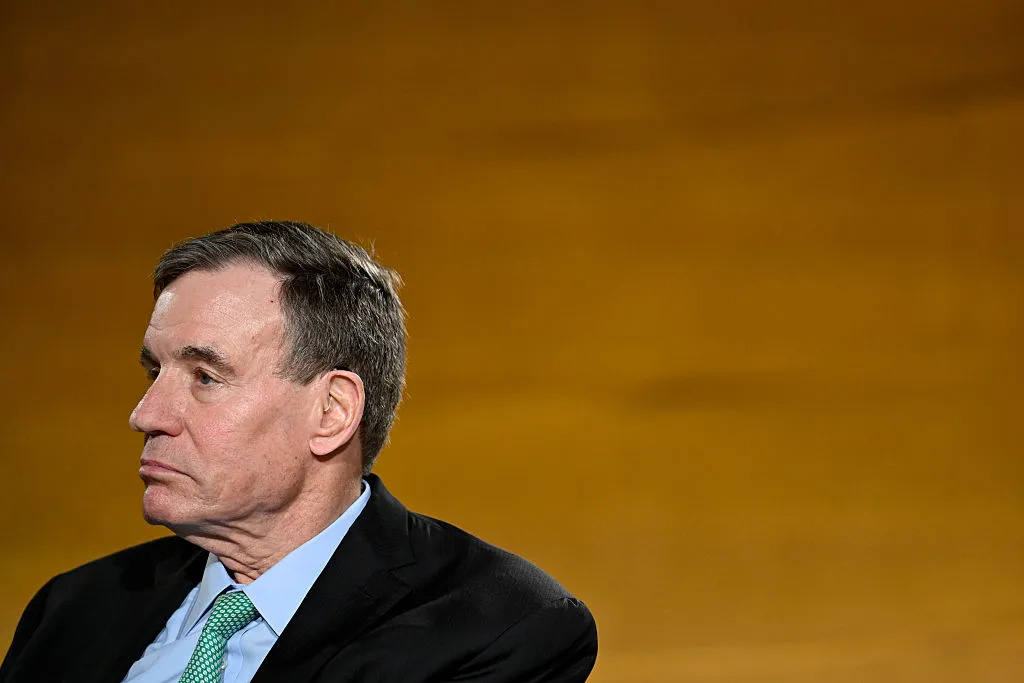
Backstage at the Axios AI Summit in Washington on Wednesday, Sen. Mark Warner (D-VA) said a venture capitalist recently told him he’s writing software investments down to zero in large part due to the strides of Anthropic’s Claude, and a major law firm told him it’s not hiring first-year associates because AI can now handle much of the work once assigned to junior lawyers.
Warner says the fear of AI-related job loss is “palpable,” even as data from one AI company suggests AI hasn’t yet started taking jobs. As those fears grow, they’re bleeding over into a different fight, which is who should foot the bill.
Warner has a proposal: tax the data centers powering the AI boom and use that revenue to help workers through the transition. He hasn’t introduced legislation yet, but the idea is gaining urgency as public anger toward AI and data centers grows.
Advertisement
Across the U.S., there’s been pushback on data centers, including a bill on Wednesday introduced by Sen. Bernie Sanders (D-VT) and Rep. Alexandria Ocasio-Cortez (D-NY), calling for a data center moratorium. The loudest concerns are about noise, pollution, and rising electricity costs. But there’s a bubbling resentment underneath those concerns, a resistance to suffering the potential ill effects of having a data center in your backyard that powers the technology some fear will replace workers.
Warner doesn’t plan to support his colleagues’ bill. On stage at the event, he said: “A data center moratorium simply means China is gonna move quicker, and this is one where we can’t lose.”
There’s no stuffing the genie back into the bottle when it comes to AI and data centers, he added. And while Warner believes in strict requirements that ensure data centers don’t pass their water and power costs to residents, he told TechCrunch he thinks there’s another way for communities to extract their “pound of flesh” in a way that addresses the underlying job loss fears.
Techcrunch event
Advertisement
San Francisco, CA | October 13-15, 2026
“I’ve thought for a long time there’s an obligation from the industry to help figure this out and help pay for it, but one of the questions I was asking was, Who should pay?” Warner told TechCrunch. “Should it be the chip makers, Jensen [Huang, Nvidia’s CEO]? Should it be the large language model companies? Should it be the Goldman Sachs of the world who are using these tools to cut back on a number of first-year associates?”
Advertisement
Ultimately, he said, he thinks the “easiest place to extract the pound of flesh is probably going to be from the data centers.”
That could look like putting data center tax revenue toward training for new nurses or funding AI upskilling programs — so long as there’s a “tangible benefit to communities” as they navigate this economic transition AI companies have foisted on them.
Warner sees it as a way to balance the need to build data centers with some obligation to the communities bearing their costs
The idea is not without precedent. Warner pointed to Henrico County, Virginia which used the tax revenue from a local data center to kickstart a new affordable housing project.
Advertisement
Finding a way to connect data centers to a tangible benefit to the community will be essential, he says, because otherwise, “the pitchforks are coming out.”
The public mood suggests he could be on to something. According to a recent NBC News poll, AI has a lower public approval rating than Immigration and Customs Enforcement (ICE), with 46% of registered voters viewing AI negatively compared to only 26% viewing it positively. In Virginia, that is playing out in a proposal to repeal the state’s tax breaks for data center buildouts, which cost the state and localities nearly $2 billion a year in lost tax revenue in one of the world’s largest data center markets. Warner says other states might follow suit.
AI and data centers, he said, are “easy to demonize.”
Harvey’s platform uses AI agents to reduce manual effort for lawyers by running complete workflows for high-volume and increasingly complex tasks.
AI legal-tech start-up Harvey has raised $200m at a valuation of $11bn.
The new funds will be used to further develop the company’s AI agents for legal firms and in-house legal departments, and grow the engineering teams that support them.
The funding round was co-led by returning investors GIC and Sequoia, with participation from existing investors Andreessen Horowitz, Coatue, Conviction Partners, Elad Gil, Evantic and Kleiner Perkins.
Advertisement
Harvey’s platform uses AI agents to reduce manual effort for lawyers by running complete workflows for high-volume and increasingly complex tasks, according to the company, which has now raised more than $1bn to date.
“AI isn’t just assisting lawyers. It’s becoming the system through which legal work gets done,” said Winston Weinberg, CEO and co-founder of Harvey.
“The law firms and in-house teams leading the way are building agents that execute complex workflows so lawyers can focus on judgement, strategy and outcomes.”
The company said it runs more than 25,000 custom agents executing work in fields such as contracts, compliance, litigation, due diligence, and mergers and acquisitions.
Advertisement
“Harvey has become the platform on which legal work runs,” said Pat Grady, partner at Sequoia.
“More than 100,000 lawyers around the world run their most critical work on Harvey, and we believe it’s positioned to become one of the most important companies of the next decade.”
Harvey was founded in 2022 and is based in San Francisco. It claims more than 1,300 customers – including “global law firms and Fortune 500 enterprises” – in more than 60 countries around the world.
In January, Harvey began hiring for roles at a new Dublin office. At the end of last year, the company was valued at $8bn.
Advertisement
The legal-tech start-up sector is a lively one at the moment.
Two weeks ago, Swedish player Legora announced a Series D raise of $550m, bringing the company’s valuation to $5.55bn.
Last November, Canadian company Clio closed a $500m Series G funding round, taking it to a $5bn valuation, and also unveiled its plans for an office in Dublin.
Norwegian software company Newcode will also open a Dublin office after raising more than $6.5m this week, adding to its existing locations in the US and Europe.
Advertisement
And last November, Ireland and UK-based company TrialView secured $4.1m in a growth funding round led by Elkstone Ventures.
Don’t miss out on the knowledge you need to succeed. Sign up for the Daily Brief, Silicon Republic’s digest of need-to-know sci-tech news.
In a unanimous judgment for Cox Communications, the Court ruled that an ISP is contributorily liable for user infringement “only if it intended that the provided service be used for infringement,” and that intent can be shown “only if the party induced the infringement or the provided service is tailored… Read Entire Article Source link
Reddit is rolling out human-verification checks for accounts that show signs of bot-like behavior, while also labeling approved automated accounts that provide useful services. The social media company stressed that these checks will only happen if something appears “fishy,” and that it is “not conducting sitewide human verification.” TechCrunch reports: To identify potential bots, Reddit is using specialized tooling that looks at account-level signals and other factors — like how quickly the account is attempting to write or post content. Using AI to write posts or comments, however, is not against its policies (though community moderators may set their own rules).
To verify an account is human, Reddit will leverage third-party tools like passkeys from Apple, Google, YubiKey, and other third-party biometric services, like Face ID or even Sam Altman’s World ID — or, in some countries, the use of government IDs. Reddit notes this last category may be required in some countries like the U.K. and Australia and some U.S. states, because of local regulations on age verification, but it’s not the company’s preferred method. “If we need to verify an account is human, we’ll do it in a privacy-first way,” Reddit co-founder and CEO Steve Huffman wrote in the announcement Wednesday. “Our aim is to confirm there is a person behind the account, not who that person is. The goal is to increase transparency of what is what on Reddit while preserving the anonymity that makes Reddit unique. You shouldn’t have to sacrifice one for the other.”
Just this week, Meta was found to be enabling social media addiction, and endangering children on its platforms.
Meta has begun laying off several hundred employees globally, as the company continues to redirect priorities towards AI.
Some news publications have placed the total number of layoffs globally at 700. According to reports, affected departments include Reality Labs, Facebook, global operations, recruiting and sales.
The tech giant employs nearly 79,000 globally, with around 1,800 in Ireland spread across 80 teams. SiliconRepublic.com understands that around 15 jobs were impacted in Ireland, with no roles in Reality Labs affected – which, The Information reports, is expected to be hit hard globally.
Advertisement
“Teams across Meta regularly restructure or implement changes to ensure they’re in the best position to achieve their goals,” a Meta spokesperson told SiliconRepublic.com. “Where possible, we are finding other opportunities for employees whose positions may be impacted.”
Meanwhile, as the company lays off hundreds, a stock option for its key leaders announced on 24 March could see some of them increase their compensation by more than $900m over the next five years.
Earlier this month, Reuters reported that Meta was planning to cut 20pc or more of the company’s global workforce. Meta called this a “speculative report about theoretical approaches.” It is understood that the latest organisational changes are unrelated to Reuters’ story.
The layoffs highlight a strong shift in how Big Tech companies are approaching work and productivity. In January, Meta CEO Mark Zuckerberg said that 2026 might be the year “AI starts to dramatically change the way that we work.
“We’re starting to see projects that used to require big teams now be accomplished by a single very talented person,” he said.
Meta’s not alone in this – Atlassian, Amazon and Block have all laid off thousands in recent months as slimmer teams and AI tools take the industry by storm. Oracle could also cut thousands of jobs to funnel funds into its AI data centre expansion efforts.
The Instagram, WhatsApp and Facebook parent lost two landmark lawsuits this past week, with critics hailing this as Big Tech’s ‘Big Tobacco moment’.
Advertisement
Earlier this week, a New Mexico jury found that Meta endangered children by misleading users about the safety of its platforms, while yesterday, a Los Angeles jury found that Instagram and YouTube design their platforms to addict young users.
However, the $1.5trn company is only facing penalties of less than $380m for both the lawsuits combined.
Don’t miss out on the knowledge you need to succeed. Sign up for the Daily Brief, Silicon Republic’s digest of need-to-know sci-tech news.
Sony seems to have moved on from the PlayStation Vita, but its influence clearly hasn’t gone anywhere.
Anbernic has just unveiled the new RG Vita and RG Vite Pro, which are two handheld gaming consoles that feature a design inspired by the PS Vita. From the wide layout to the button placement and overall aesthetic, these pay homage to Sony’s last true portable console.
But these aren’t a one-on-one copy, and rather serve as a modern take on the Vita idea.
Everything you need to know about the Vitas
RG Vita and Vita Pro SpecsAnbernic
The lineup consists of two variants, namely the RG Vita and RG Vita Pro.
The standard Vita is a more affordable option that featurse a 5.46-inch IPS display with 720p resolution, powered by a Unisoc T618 chipset, paired with 3GB of RAM and 64GB of storage. On the other hand, the RG Vita Pro steps things with a slightly taller 1080p IPS display, a more capable Rockchip RK3576 processor, 4GB RAM, and the same expandable storage support via microSD.
Advertisement
Both models are powered by a 5,000mAh batteries that promise to offer several hours of gameplay.
Built for retro, but doesn’t stick to the past
Anbernic RG Vita ProAnbernic
Anbernic’s new RG Vita series is a throwback to a great age in game, but it isn’t just about nostalgia.
The consoles supports Android (and Linux on the Pro), which allows it to run Android games and the emulators for consoles like PS2, PSP, GameCube, and more. So it is a lot more versatile than its original inspiration. Anbernic is even adding modern touches like WiFi, Bluetooth, USB-C output, and even AI-based features like real-time translate and in-game assistance tools.
That said, this isn’t aiming to be a true successor to the PS Vita. Performane is aimed more at emulation and casual Android gaming rather than running modern AAA titles.
Anbernic has yet to confirm the official pricing, but the devices are expected to land in the budget to mid-range handheld category.
Sony wants to use your phone as a secondary input for a PlayStation controller, and it might actually change how we play games.
Gaming controllers have come a long way, but let’s be honest, they haven’t changed that much at all. Sure, we got haptic feedback, adaptive triggers, and TMR sensors, but the core design and gameplay have remained the same for decades. Sony might be about to change that, and the solution is your phone.
As reported by CheatHappens, a newly discovered Sony patent describes a hybrid input system that attaches your smartphone to a PlayStation controller using a magnetic attachment unit.
CheatHappens
The phone essentially becomes a second controller, giving developers access to its cameras, gyroscope, touchscreen, and other sensors to create entirely new gameplay experiences.
What’s the need for this patent?
The patent makes an interesting argument. Traditional controllers are excellent for certain game genres, such as racing titles, where physical buttons and triggers shine, but they’re not ideal for first-person shooters.
Advertisement
By mounting a phone onto the controller, developers get access to a much wider variety of inputs, making the hybrid system more versatile across all game genres.
CheatHappens
The possibilities are exciting. Developers could use the phone’s camera for in-game avatar customization, leverage motion sensors for spatial awareness, or display extra gameplay data directly on the phone.
Is this just a concept or could it become a reality?
That’s the big question. Sony has filed several unconventional patents in recent years, and most of them haven’t seen the next stage. It’s not just Sony; on average, only 2–5% of patents that are filed actually materialize into a real product, so the probabilities are not in favor.
However, this patent has several advantages that could help it reach the market. It doesn’t require new hardware, the attachment mechanism should be straightforward, and the potential benefits for gamers are real.
If Sony can make this work, it could genuinely add more depth to console gaming without asking players to buy an extra accessory.
One might think that [Da_Rius]’s mostly 3D printed wire stripper would count its insulation-shearing blades among the small number of metal parts required, but that turns out to not be the case. The blades are actually printed in PLA, seem to work just fine for this purpose. (We imagine they need somewhat frequent replacement, but still.)
Proper wire strippers are one of the most useful tools for a budding electronics enthusiast, because stripping hookup wire is a common task and purpose-built strippers make for quick and consistent results.
As far as tools go they are neither particularly expensive nor difficult to source, but making one’s own has a certain appeal to it. The process of assembling the tool is doubtless a rewarding one, and it looks like it results in a pretty good conversation starter if nothing else.
As mentioned, the tool is mostly 3D printed and does require some metal parts: fasteners, heat-set inserts, and a couple springs. Metal nuts and heat-set inserts are easy enough to obtain, but springs of particular size and shape are a bit trickier.
It is perfectly possible to make custom springs, and as it happens [Da_Rius] already has that covered with a separate project for using a hex key and printed jig to make exactly the right shapes and sizes from pre-tempered spring wire.
Mate Rimac, the founder of Croatian electric vehicle maker Rimac Group, started working on electric robotaxis seven years ago. Now, part of his vision is coming to fruition through a strategic partnership between Uber, Chinese autonomous vehicle company Pony.ai, and his own robotaxi startup Verne.
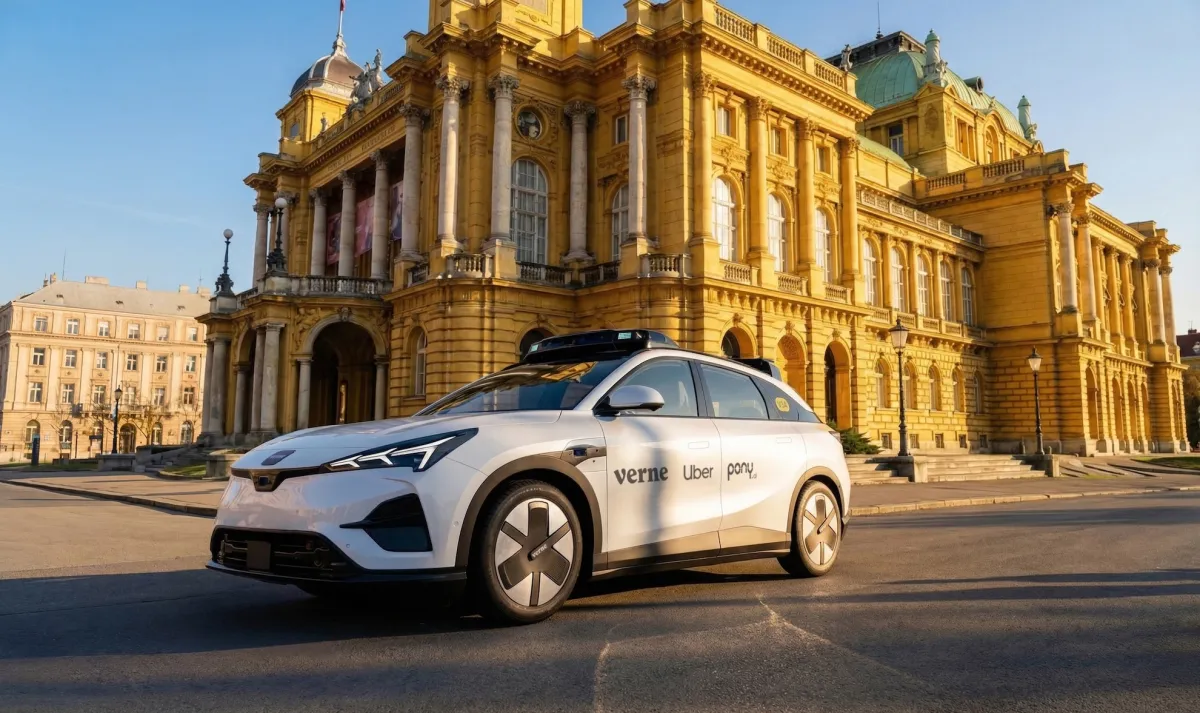
The three companies announced plans Thursday to launch a commercial robotaxi service in Europe, starting in Zagreb, Croatia. Pony.ai will supply the autonomous driving system and a robotaxi called the Arcfox Alpha T5 that was developed with Chinese automaker BAIC. Verne will own and operate the fleet, and Uber will provide its vast ride-hailing network.
The ride-hailing giant also indicated it intends to invest an undisclosed amount into Verne and support future expansion as a strategic partner.
The companies didn’t provide a specific launch date for the commercial service, though on-road testing in Zagreb — where Rimac Group is based — is already underway.
Advertisement
Verne doesn’t have the same name recognition as Waymo or Tesla — at least not in the United States. But it has the same outsized ambitions.
Verne started in 2019 as a project called Project 3 Mobility (or P3) within Rimac Group, a growing ecosystem of companies that includes hypercar maker Rimac Bugatti, Rimac Energy, and Rimac Technology. Mate Rimac holds a 23% stake in the group.
There were occasional updates about the project, but it wasn’t until July 2024 — when Verne launched with 100 million euros in funding — that the public got a more detailed look at its plans.
Techcrunch event
Advertisement
San Francisco, CA | October 13-15, 2026
Rimac’s vision has always been for Verne to operate an urban robotaxi service with purpose-built two-seater electric vehicles. That might sound like an odd mission for the person behind the Nevera, an electric hypercar that starts around $2.2 million. But as he explained to this reporter a couple of years ago, Rimac was never interested in making a high-volume EV that humans would drive — precisely because he believes that autonomous vehicle technology will make that business obsolete.
Advertisement
“It will take a while, but it’s coming; I’m sure about that,” he’d told me at the time.
Verne isn’t developing its own self-driving system. Instead, the company is focused on the urban electric vehicle, the ride-hailing app, and the back-end infrastructure to manage the fleet, including cleaning and maintenance.
Verne plans to produce its robotaxi EVs at a new factory in Lučko, Croatia, expected to begin operations later this year.
Verne hasn’t launched the two seaters yet, nor did it provide an update on the vehicles in its announcement with Uber and Pony.ai. The company said in November that it had produced and tested 60 verification prototypes.
Advertisement
For now, the Verne robotaxi service will use the Pony.ai-BAIC vehicle, the Arcfox Alpha T5. Users will be able to hail one via Uber as well as through Verne’s own app.
Verne is starting small with its commercial launch, but it has plans to scale to a “fleet of thousands of robotaxis over the next few years,” according to Thursday’s announcement. And its aspirations go far beyond the borders of Zagreb, the capital of Croatia and home to Rimac Group.
“Europe needs autonomous mobility that can move from testing to a real service,” said Verne CEO Marko Pejkovic, in a statement. “At Verne, we are bringing together the technology, platform, and operational capabilities required to make this a reality, starting in Zagreb before expanding to new markets.”
The approach of a new school year conjures images of teachers preparing their classrooms and principals greeting students as they walk through the doors on the first day of classes.
But federal data shows that the education jobs that will see the most growth over a decade are supporting roles like substitute teachers, therapists and technologists.
The findings are bracketed by changes in student enrollment and the ending of federal school emergency funds, which are reshaping school districts’ staffing outlooks. School districts across the country continue to grapple with millions in budget deficits, leading to hundreds of job cuts in some cases.
Recent reports show that schools are likely to struggle to fill the most in-demand roles.
Highest-Growth Areas
Looking at 10 education roles that will gain the most net jobs by 2034, short-term substitute teachers top the overall rankings with an increase of more than 10,000.
Advertisement
Malia Hite says that Utah is among the states that will see an increase in jobs for teacher assistants and paraeducators, who will specifically support student behavior and early literacy, thanks to an infusion of state and federal funds. Hite serves as the Utah State Board of Education’s executive coordinator of education licensing.
“However, I will say that those positions, because those positions are typically an entry-level position with a low wage or part-time, they’re hard positions to fill,” Hite says. “Even in the current job market, [where] it’s hard to find positions, we’re still seeing openings in our paraeducator job market statewide. Some of them are making $9 an hour, so why would I do that when I can go somewhere else and make $15 in an entry-level position?”
Hite is cautious when talking about education growth overall because it’s not equal among sectors. Increased demand is expected for non-teacher and non-administrator staff like speech language pathologists, social workers and occupational therapists, she says.
Advertisement
“This is now our second year that we’ve seen a decrease of student enrollment, and so that means we need fewer teachers, there’s less funding, and so we’re seeing a lot of things like schools close,” she explains. “So in that way, there’s no way that education jobs are going to grow.”
A report from the Consortium for School Networking, a professional organization for K-12 tech leaders, found that schools struggle to retain IT staff across all specialities and levels. Among school leaders that it polled, 16 percent said they were in danger of losing IT staff due to the winding down of federal relief money that was allocated to schools during the pandemic.
Health Workers In Demand
The rest of the list, however, is filled by health therapy roles and technology roles. A recent analysis by staffing company ProTherapy predicts physical therapist assistants, speech-language pathologists and physical therapists will be the most in-demand education jobs of 2026 and continue to see double-digit percentage growth.
Schools employ physical therapists and assistants to ensure that students with disabilities can participate in school activities to the fullest extent, while speech language pathologists help students with communication disorders.
Advertisement
Dakota Long, who headed ProTherapy’s 2026 School Workforce Demand Index, says these jobs are growing in demand because schools are aiming to identify students with disabilities and set up interventions as early as possible, as early as age 3 in some schools.
But another factor in the demand for these specialists – physical therapist assistants, in particular – is the job market they are graduating into.
While teacher graduates are overwhelmingly likely to work in the classroom, newly minted health care workers can be wooed by jobs in hospitals, clinics and home health agencies in addition to schools.
“From my perspective in working with schools, they’re wanting to identify those things early on,” Long says, “that way they can provide the best services for these kiddos before it gets to age 7, 8, and then they realize, ‘Oh gosh, we could have been supplying these services earlier.’ So you have early intervention, more kiddos needing these services, but then employees that could be taking on these roles have a lot of different options, as well.”
Advertisement
Hite says that while non-teacher jobs are expected to increase in Utah, though realistically not by as much as ProTherapy’s projections, some nuance is required when looking at what the growth rates mean.
“If I look at the subsector of audiologist, we had two [full-time employees] six years ago, and now we have 11,” she says, an increase of more than five-fold. “We’re talking about 10 people.”






















![BREAKING! Did Trump Fake Iran Peace Talks? [Bitcoin Already Reacting]](https://wordupnews.com/wp-content/uploads/2026/03/1774524428_maxresdefault-80x80.jpg)




































You must be logged in to post a comment Login