America has spent 250 years telling itself stories about freedom, reinvention, courage, money, violence, and who gets included in the national picture. These films do not all agree with one another, and that is precisely why they belong together. They show the country at its most hopeful, cruel, inventive, delusional, funny, ambitious, and occasionally impossible to defend.
Because nothing says “understanding America” like sitting in the dark for two hours watching cowboys, capitalists, the underdog, and Cold War freakouts.
This isn’t just a list of essential films made in America. It is a lineup of films actually set in the United States that dig into what it means to live, dream, scheme, survive, fail, reinvent yourself, or simply spiral here.
From manifest destiny and racial reckoning to suburban dread, war, ambition, greed, Hollywood fantasy, and the more questionable corners of capitalism, each film captures a different piece of the American experience—for better, though usually for worse.
And before anyone starts clutching their vintage film reels about Citizen Kane or The Wizard of Oz not making the cut, they’ve been on every list since the dawn of time. We know. They’re legendary. But honestly? We’re so over it. Back of the bus, Dorothy!
And let’s get this out of the way too: we’re huge fans of the ‘80s. We’ve watched The Breakfast Club and Ferris Bueller’s Day Off about 40 times each. But let’s be real—essential? Nah. We love ‘em, but they’re not making this list.
Honorable mentions? Of course. I’m not a monster, although the medication they put me on might speak otherwise. Mr. Smith Goes to Washington gave us the original idealistic meltdown back when filibusters were dramatic instead of just depressing. Ahem…Senator Booker.
The Apartment and Some Like It Hot reminded us that Americans used to flirt with wit and cross-dressing before Elon Musk and X ruined nuance. Jaws made everyone afraid of swimming, boating, or doing anything remotely fun near the ocean—and basically invented summer panic.
Gettysburg is four hours of facial hair and cannonballs for the History channel crowd.
Rocky? It’s the American Dream in sweatpants. Stallone turned a mumbling meatpacking palooka into a national icon who not only punched out Mr. T, but also singlehandedly ended the Cold War by outlasting a 6’6″ steroid-fueled Soviet science experiment. #Imustbreakyou
Oh, and Bonnie and Clyde: America’s original sexy criminals, armed with great outfits, worse ideas, and enough slow-motion bloodshed to earn permanent residency in cinematic legend.
Advertisement. Scroll to continue reading.
Then there’s The Philadelphia Story, where the problems of the American rich are so charmingly presented that you almost forget you’re rooting for people who have never done laundry, faced a utility bill, or checked their narcissism at the front foyer.
25 Essential American Films
These 25 essential American films span silent comedy, noir, Westerns, musicals, war dramas, political satire, horror, and the darker corners of the American dream. Each is set in the United States and offers something to say about the country’s history, ambition, class divides, race, violence, celebrity, capitalism, and enduring talent for turning disaster into spectacle.
They are also films worth owning. A proper 4K UHD or Blu ray release preserves the cinematography, sound, and detail that streaming services too often compress into submission. Our friends at The Criterion Collection would agree with that point rather strongly.
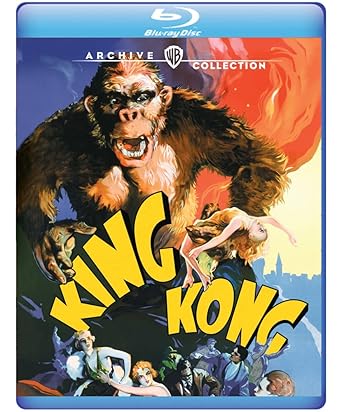
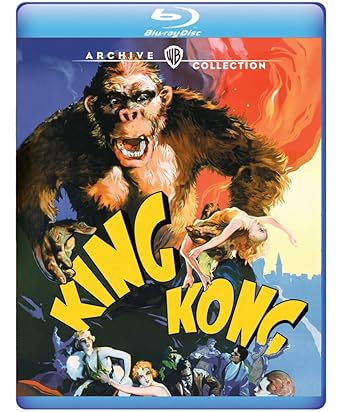
King Kong (1933)
Directed by Merian C. Cooper & Ernest B. Schoedsack
Why it’s essential: King Kong is a giant metaphor for exploitation, ambition, spectacle, and New York’s enduring habit of turning everything into a show until it comes crashing down, literally.
Released during the Great Depression, the film turns Manhattan into both a dream factory and a place of brutal decline, where desperate people chase money, fame, and survival beneath skyscrapers that suddenly feel less permanent than advertised. Kong is exploited, commodified, paraded before a paying audience, and then blamed when the whole arrangement goes predictably sideways. America has repeated that business model with impressive consistency.
It also helped create the modern giant monster movie, proving that visual effects, scale, terror, and genuine pathos could share the same screen. The Empire State Building finale remains one of cinema’s great images, and somehow still feels more honest about New York than half the city’s luxury condo brochures.
Where to buy: $19.99 at Amazon
Gone With the Wind (1939)
Directed by Victor Fleming
Why it’s essential: Victor Fleming’s Gone With the Wind remains one of Hollywood’s grandest and most technically impressive spectacles, even as it asks the audience to mourn a version of the Old South built on selective memory, wealth, and the erasure of slavery’s brutality.
That contradiction is precisely why it still matters. The film is beautiful, romantic, deeply problematic, and impossible to separate from America’s long habit of turning history into pageantry when the truth gets uncomfortable.
It also lands differently now, as Atlanta, Nashville, Memphis, Lexington, Raleigh, Richmond, and Charlotte reshape the economic and cultural map of the South. Money, companies, and people are moving into a region that is no longer content to play supporting character to New York, Boston, Los Angeles, or San Francisco. But the new South still carries the old one with it, including the mythology, inequality, ambition, and unresolved history that Gone With the Wind dresses up in curtains and calls tradition.
Advertisement. Scroll to continue reading.
Where to buy: $23.74 at Amazon
Stagecoach (1939)
Directed by John Ford
Why it’s essential: John Ford’s Stagecoach did not invent the Western, but it gave the genre a working engine. Cowboys, redemption, class anxiety, danger, and a bumpy ride through Monument Valley all arrive in one compact, thrilling package. It also made John Wayne a star and showed Hollywood that the frontier could hold an entire country’s worth of arguments.
The film is still great fun, but its larger importance is how much it helped define the American West on screen. The genre may have largely wandered away from movie theaters, but television has kept the frontier myth on life support with Taylor Sheridan’s endless range of ranches, oil fields, lawmen, and wounded men staring at mountains. Yellowstone, 1883, 1923, Lawmen: Bass Reeves, The Madison, Marshals, and Landman all work different corners of the same territory.
Ford’s version is cleaner, faster, and more mythic than most of what followed. But the basic machinery remains the same: land, money, violence, class, family, and people trying to outrun the country they helped build.
Where to buy: $39.99 at Amazon
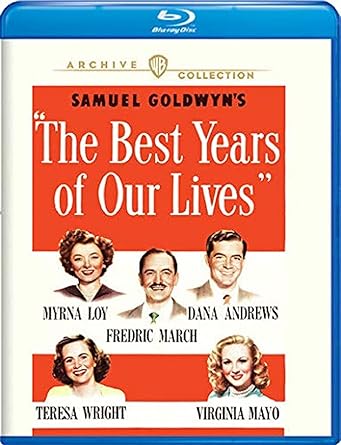
The Best Years of Our Lives (1946)
Directed by William Wyler
Why it’s essential: William Wyler’s The Best Years of Our Lives is a quietly devastating film about three World War II veterans trying to return to jobs, marriages, families, and a country eager to celebrate them without fully understanding what they have brought home.
Fredric March and Dana Andrews are extraordinary, but Harold Russell gives the film its most unforgettable performance. A real World War II veteran who lost both hands during the war, Russell plays Homer Parrish with a directness and vulnerability that no amount of studio polish could fake. His performance was so powerful that the Academy gave him both an honorary Oscar for bringing hope and courage to fellow veterans and the competitive Oscar for Best Supporting Actor.
The film is compassionate without becoming sentimental and honest without turning suffering into spectacle. America loves a victory parade. This film asks what happens after the marching band goes home.
Where to buy: $21.99 at Amazon
The Godfather (1972)
Directed by Francis Ford Coppola
Advertisement. Scroll to continue reading.
Why it’s essential: Francis Ford Coppola’s The Godfather is not merely a gangster film. It is an American family saga about power, immigration, loyalty, capitalism, and the ugly price of treating love as another business arrangement.
Marlon Brando, Al Pacino, James Caan, Robert Duvall, and Diane Keaton give the film its soul, but Gordon Willis gives it its shadows. Every darkened room, amber glow, and half concealed face makes the Corleone world feel both grand and suffocating.
It remains essential because it understands that the American dream can look remarkably noble from across the room, right up until someone closes the door and starts taking meetings. Do not settle for streaming. This one deserves a 4K UHD disc with Dolby Vision and Atmos, preferably watched with the lights down and nobody asking why Michael seems so quiet.
Where to buy: $25.99 at Amazon
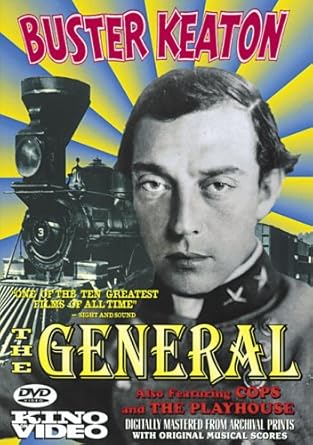
The General (1926)
Directed by Buster Keaton & Clyde Bruckman
Why it’s essential: Buster Keaton’s The General is one of the great silent comedies and one of the most astonishing action films ever made. Keaton turns a Civil War train chase into a machine of perfect timing, impossible stunts, collapsing bridges, and physical comedy so precise that most modern blockbuster directors should be required to watch it before being allowed near a green screen.
Its Confederate point of view deserves context, particularly because the film turns a brutal chapter of American history into an adventure built around loyalty, romance, and locomotives. But as filmmaking, it remains extraordinary. Keaton does not need dialogue to sell danger, heartbreak, or a man trying to save his train, his girl, and whatever remains of his dignity.
Find the best restoration you can, preferably with a strong musical score. The film moves like it was made yesterday, which is more than can be said for most action movies with a budget large enough to purchase a small country.
Where to buy: $16.31 at Amazon
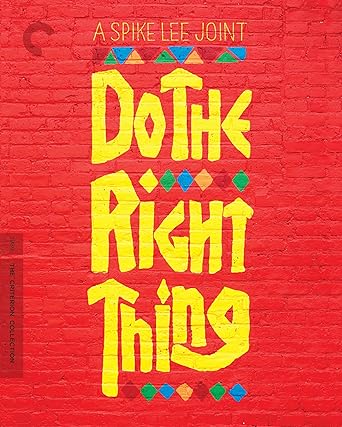
Do the Right Thing (1989)
Directed by Spike Lee
Why it’s essential: Spike Lee’s Do the Right Thing is a blistering, funny, frighteningly alive portrait of race, community, policing, pride, and the pressure that builds when nobody feels heard. It does not offer a tidy lesson or a safe villain. It shows a neighborhood under a brutal summer heat, with every insult, misunderstanding, and act of disrespect adding another degree.
Along with films like Juice and Boyz n the Hood, it forced audiences to look at inner city America without the usual suburban filter or a reassuring studio ending. These were stories many people preferred not to acknowledge because they made poverty, anger, police violence, and racial tension impossible to treat as somebody else’s problem.
Advertisement. Scroll to continue reading.
A great deal has changed since 1989. Black actors and actresses now lead blockbuster franchises, prestige films, major television series, and command serious power in Hollywood. But progress does not hand anyone a lifetime exemption from prejudice. Some of the people who made careers exposing America’s uglier instincts have later shown blind spots of their own, which should raise an eyebrow or two. Empathy is not supposed to stop at the edge of your own group.
That is part of why Do the Right Thing endures. It is not a sermon. It is a warning about what happens when people stop seeing one another as human beings and start treating every disagreement as a reason to burn the whole block down.
Where to buy: $39.95 at Amazon
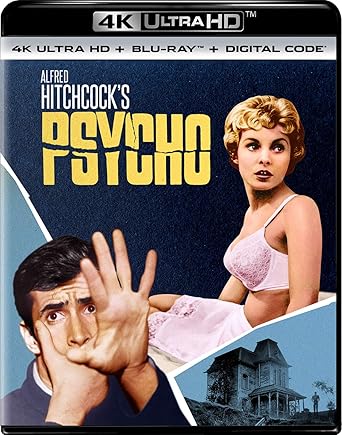
Psycho (1960)
Directed by Alfred Hitchcock
Why it’s essential: Alfred Hitchcock’s Psycho did not merely change horror cinema. It taught audiences that the rules could vanish halfway through the film, that a motel shower was no longer a safe place, and that checking into a roadside motel was perhaps not the carefree adventure it once appeared to be.
Anthony Perkins makes Norman Bates one of cinema’s most unsettling characters because he is so polite, awkward, and quietly broken. Janet Leigh does remarkable work before Hitchcock pulls the rug out from under everyone watching. The film remains a tightly constructed exercise in dread, black humor, repression, and terrible decisions, with its stark black and white photography looking especially vicious in 4K.
Where to buy: $13.99 at Amazon
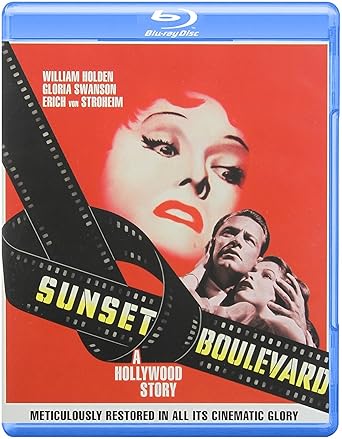
Sunset Boulevard (1950)
Directed by Billy Wilder
Why it’s essential: Billy Wilder’s Sunset Boulevard is a dark, funny, and deeply unsettling autopsy of old Hollywood, fame, vanity, and what happens when an industry decides you are no longer useful but forgets to tell you.
Gloria Swanson is magnificent as Norma Desmond, a silent era star living inside a mansion sized for an empire and a fantasy sized for an entire studio lot. William Holden is no innocent either, which is part of the fun. The film understands that Hollywood will build you a palace, turn you into a legend, and then leave you there with the lights off.
It remains one of the great films about celebrity and self invention, with enough shadows, bitterness, and quotable cruelty to make most modern Hollywood satire look like a polite memo from Human Resources.
Where to buy: $15.99 at Amazon
Advertisement. Scroll to continue reading.
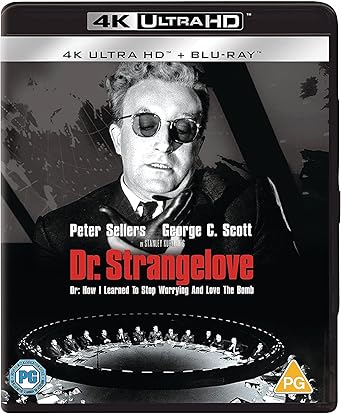
Dr. Strangelove or: How I Learned to Stop Worrying and Love the Bomb (1964)
Directed by Stanley Kubrick
Why it’s essential: Stanley Kubrick’s Dr. Strangelove is a razor sharp Cold War satire about nuclear politics, military incompetence, sexual panic, and the terrifying possibility that the people with the biggest buttons are also the least qualified to touch them.
Peter Sellers is magnificent in multiple roles, but he is hardly carrying the lunatic asylum alone. George C. Scott turns General Buck Turgidson into a masterpiece of red faced military hysteria, Sterling Hayden makes precious bodily fluids sound like a matter of national survival, and Slim Pickens rides into history with one of the most indelible endings in American cinema.
The film remains funny because Kubrick understood that power often looks ridiculous right before it becomes catastrophic. Sellers is at his absolute best, with The Party running a close second, although that film is considerably less likely to end civilization.
Where to buy: $26.99 at Amazon
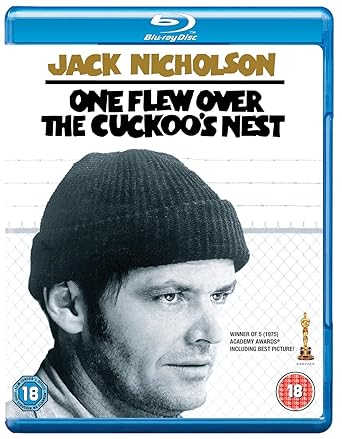
One Flew Over the Cuckoo’s Nest (1975)
Directed by Miloš Forman
Why it’s essential: Miloš Forman’s One Flew Over the Cuckoo’s Nest is a furious, funny, and deeply uncomfortable battle between individuality and institutional power. Jack Nicholson’s Randle McMurphy arrives ready to charm, provoke, and generally make everyone’s life more difficult, then discovers that Nurse Ratched and the system behind her have no intention of playing fair.
The film remains a counterculture landmark because it understands how easily rules, routines, and bureaucracy can become tools for crushing people who do not fit neatly into the approved box. It is America in a padded room, with worse lighting and a much stricter dress code.
Where to buy: $38.63 at Amazon
The Searchers (1956)
Directed by John Ford
Why it’s essential: John Ford’s The Searchers is one of the great American Westerns, but it is far too unsettled and angry to be mistaken for simple frontier nostalgia. John Wayne’s Ethan Edwards moves through Monument Valley like a man possessed, carrying grief, racism, violence, and a very personal version of manifest destiny wherever he goes.
The landscapes are magnificent, the compositions remain staggering, and the film’s influence on generations of directors is impossible to miss. But its real power comes from the way it questions the mythology it helped create. The Searchersunderstands that the American West was built on beauty, brutality, and people who rarely came home unchanged.
Advertisement. Scroll to continue reading.
Where to buy: $9.99 at Amazon
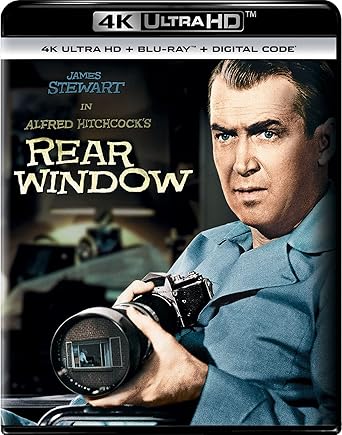
Rear Window (1954)
Directed by Alfred Hitchcock
Why it’s essential: Alfred Hitchcock turns a single apartment, a courtyard, and one bored man with a broken leg into a masterclass in suspense, voyeurism, loneliness, and the dangerous things that happen when curiosity stops minding its own business.
James Stewart spends the film watching his neighbors as though cable television has not yet been invented, while Grace Kelly arrives looking so impossibly elegant that even murder seems briefly beside the point. Rear Window is tense, witty, and endlessly rewatchable, with Hitchcock using every glance, window frame, and suspicious late night trip across the courtyard to remind us that America has always enjoyed watching other people’s lives a little too much.
Where to buy: $12.99 at Amazon
Singin’ in the Rain (1952)
Directed by Gene Kelly & Stanley Donen
Why it’s essential: Singin’ in the Rain is Hollywood looking back at its own panic during the shift from silent films to sound and somehow turning professional terror into one of the most joyful musicals ever made.
Gene Kelly and Stanley Donen give the film its impossible energy, but the real trick is how sharp it remains about vanity, image, talent, and an industry terrified that the next technological change might leave half its stars unemployed. It is funny, romantic, technically dazzling, and still one of the best reminders that Hollywood has always been in the business of reinventing itself before the audience notices the scaffolding.
Where to buy: $24.25 at Amazon
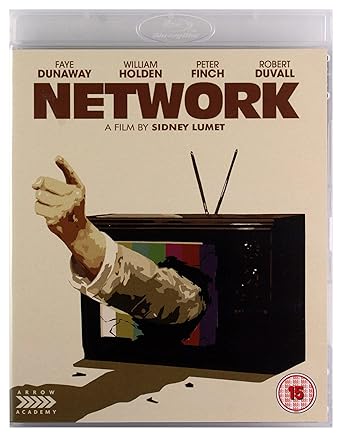
Network (1976)
Directed by Sidney Lumet
Why it’s essential: Sidney Lumet’s Network is a savage, funny, and increasingly uncomfortable portrait of television, corporate power, public outrage, and the moment entertainment decides it no longer needs to pretend it serves the public.
Paddy Chayefsky’s script saw the coming circus with frightening clarity, while Peter Finch turns Howard Beale into more than a man having a breakdown on television. He becomes a product, a ratings weapon, and eventually a warning label nobody bothers to read. The fact that it now feels less like satire and more like a staff meeting is not especially reassuring.
Advertisement. Scroll to continue reading.
Where to buy: $49.95 at Amazon
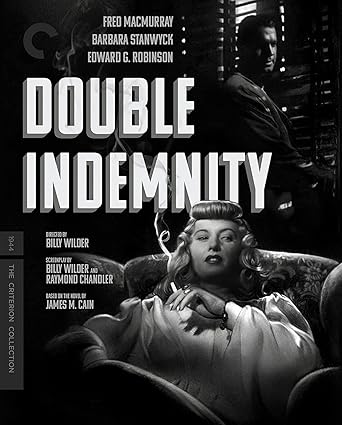
Double Indemnity (1944)
Directed by Billy Wilder
Why it’s essential: Billy Wilder’s Double Indemnity is the defining film noir, a perfect storm of lust, greed, bad judgment, and people making catastrophic decisions in rooms with very poor lighting.
Barbara Stanwyck is all sharp edges and ankle bracelets as Phyllis Dietrichson, while Fred MacMurray spends the film discovering that murder for profit sounds far more efficient before you actually try it. It is stylish, poisonous, and darkly funny, with every shadow suggesting that someone is about to make things much worse.
Where to buy: $49.95 at Amazon
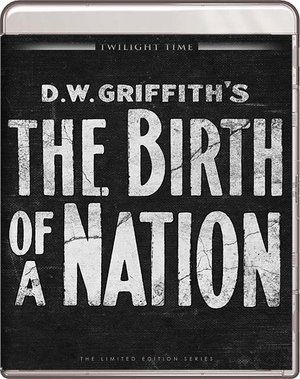
The Birth of a Nation (1915)
Directed by D.W. Griffith
Why it’s essential: D. W. Griffith’s The Birth of a Nation helped establish the language of feature filmmaking through its scale, editing, camera movement, and narrative ambition. Its influence on Hollywood is undeniable.
So is its racism. The film glorifies the Ku Klux Klan, distorts Reconstruction, and turns white supremacy into spectacle. It belongs in any serious discussion of American film history, but not as a casual recommendation or a nostalgic monument. Watch it with context, criticism, and a clear understanding of the damage it helped normalize.
Where to buy: $39.48 at Amazon
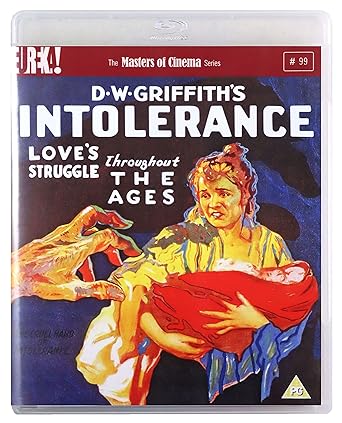
Intolerance (1916)
Directed by D.W. Griffith
Why it’s essential: D. W. Griffith’s Intolerance is a technical and structural landmark, interweaving four stories across different eras to examine persecution, violence, religious extremism, and the human habit of treating cruelty as a civic duty.
Its enormous sets, restless editing, and ambitious crosscutting helped expand what feature filmmaking could attempt in 1916. But it cannot be separated from the racist legacy of The Birth of a Nation, which makes this less a straightforward celebration than a complicated historical artifact. The achievement is real. So is the stain.
Advertisement. Scroll to continue reading.
Where to buy: $39.48 at Amazon
All About Eve (1950)
Directed by Joseph L. Mankiewicz
Why it’s essential: Joseph L. Mankiewicz’s All About Eve remains one of the sharpest and funniest dissections of ambition, celebrity, aging, and professional jealousy ever put on film. Bette Davis is magnificent as Margo Channing, a Broadway star watching a younger woman inch closer to her spotlight with a smile sharp enough to draw blood.
The film understands that American success often comes with a waiting room full of people hoping you will lose your grip on it. It is glamorous, vicious, wildly quotable, and still has one of the greatest warnings in movie history: “Fasten your seatbelts. It’s going to be a bumpy night.”
Where to buy: $39.95 at Amazon
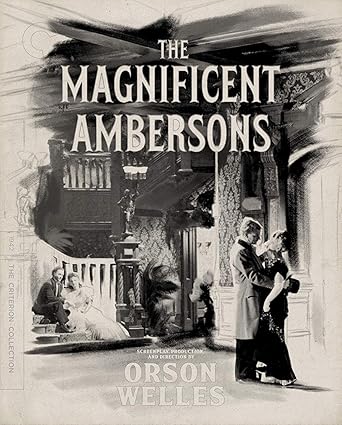
The Magnificent Ambersons (1942)
Directed by Orson Welles
Why it’s essential: Orson Welles’ follow up to Citizen Kane was famously mauled by the studio, with a large portion of his original cut lost to history. And somehow, The Magnificent Ambersons still remains one of the most beautiful and quietly devastating films ever made about old money, family decline, and America’s appetite for progress even when it runs over everyone in its path.
The Ambersons believe their wealth and social standing will protect them forever. Then modern life arrives, the automobiles get louder, and the family discovers that history has no particular interest in preserving anyone’s drawing room. It is a sad, elegant reminder that American dynasties rarely disappear gracefully.
Where to buy: $39.95 at Amazon
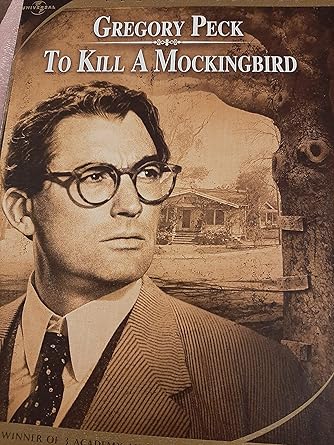
To Kill a Mockingbird (1962)
Directed by Robert Mulligan
Why it’s essential: Robert Mulligan’s adaptation of Harper Lee’s novel remains one of Hollywood’s clearest statements about moral courage, racial injustice, and the obligation to do the right thing when the room would prefer you kept quiet.
Gregory Peck gives Atticus Finch the decency, restraint, and moral authority that made the character an American ideal for generations. The film does not solve the racism at its center, nor should it, but it understands that justice is often less about winning than refusing to look away when everyone else has decided not to see.
Advertisement. Scroll to continue reading.
Where to buy: $29.96 at Amazon
There Will Be Blood (2007)
Directed by Paul Thomas Anderson
Why it’s essential: Paul Thomas Anderson turns the American dream into an oil soaked fever dream about ambition, faith, greed, and the kind of loneliness that can only be cured by owning everything in sight.
Daniel Day Lewis is magnificent as Daniel Plainview, a man who sees every human relationship as either leverage, competition, or an inconvenience standing between him and another barrel of crude. There Will Be Blood is a modern American epic that understands capitalism as both a religion and a contact sport.
And for all of its brutality, the film does not argue that capitalism is a failed system. It argues that it works remarkably well, right up until the people most gifted at winning it decide everyone else is collateral damage. The Mayor of New York City may have some notes, but the rest of us still need to live in the world as it is.
Where to buy: $9.99 at Amazon
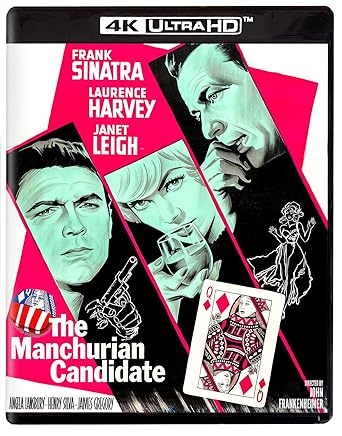
The Manchurian Candidate (1962)
Directed by John Frankenheimer
Why it’s essential: John Frankenheimer turns Cold War anxiety into a nightmare of political manipulation, conditioned violence, personal trauma, and naked ambition. The Manchurian Candidate is not just a thriller about enemies abroad. It is about what happens when power treats people as tools and patriotism becomes something to exploit.
Its influence on political thrillers is enormous, but its real strength is how controlled and unsettling it remains. Frank Sinatra is excellent, Angela Lansbury is terrifying, and the film understands that the most dangerous people in America are often already in the room.
Where to buy: $59.95 at Amazon
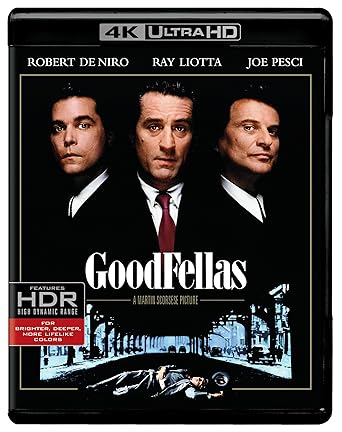
Goodfellas (1990)
Directed by Martin Scorsese
Why it’s essential: Ray Liotta, Robert De Niro, and Joe Pesci deliver the most quotable, cocaine fueled crash course in climbing the capitalist ladder, assuming that ladder is built from stolen goods, threats, and the occasional meat slicer.
Advertisement. Scroll to continue reading.
Scorsese does not merely romanticize mob life. He seduces you with the clothes, money, music, and manic velocity of it all, then reminds you that the bill eventually comes due. Usually at 3 a.m. in a parking lot, or just before someone gets fed to the pizza oven.
Where to buy: $15.95 at Amazon
It’s a Wonderful Life (1946)
Directed by Frank Capra
Why it’s essential: A heartwarming classic that blends optimism, personal sacrifice, and the power of community in a way that resonates with audiences year after year. It’s a Wonderful Life isn’t just a Christmas movie—it’s a timeless exploration of what truly matters in life. James Stewart’s portrayal of George Bailey, a man questioning his purpose, has become emblematic of the everyman’s struggle. A cinematic triumph that proves sometimes the most wonderful thing you can be is simply human.
Where to buy: $25.99 at Amazon
Start With One Tonight
Not sure where to begin? Start here.
For the American dream gone rancid: There Will Be Blood
For race, community, and a country at the boiling point: Do the Right Thing
For media, politics, and public insanity: Network
For war and the complicated business of coming home: The Best Years of Our Lives
For the American West and the myths we still cannot quit: The Searchers






































































You must be logged in to post a comment Login