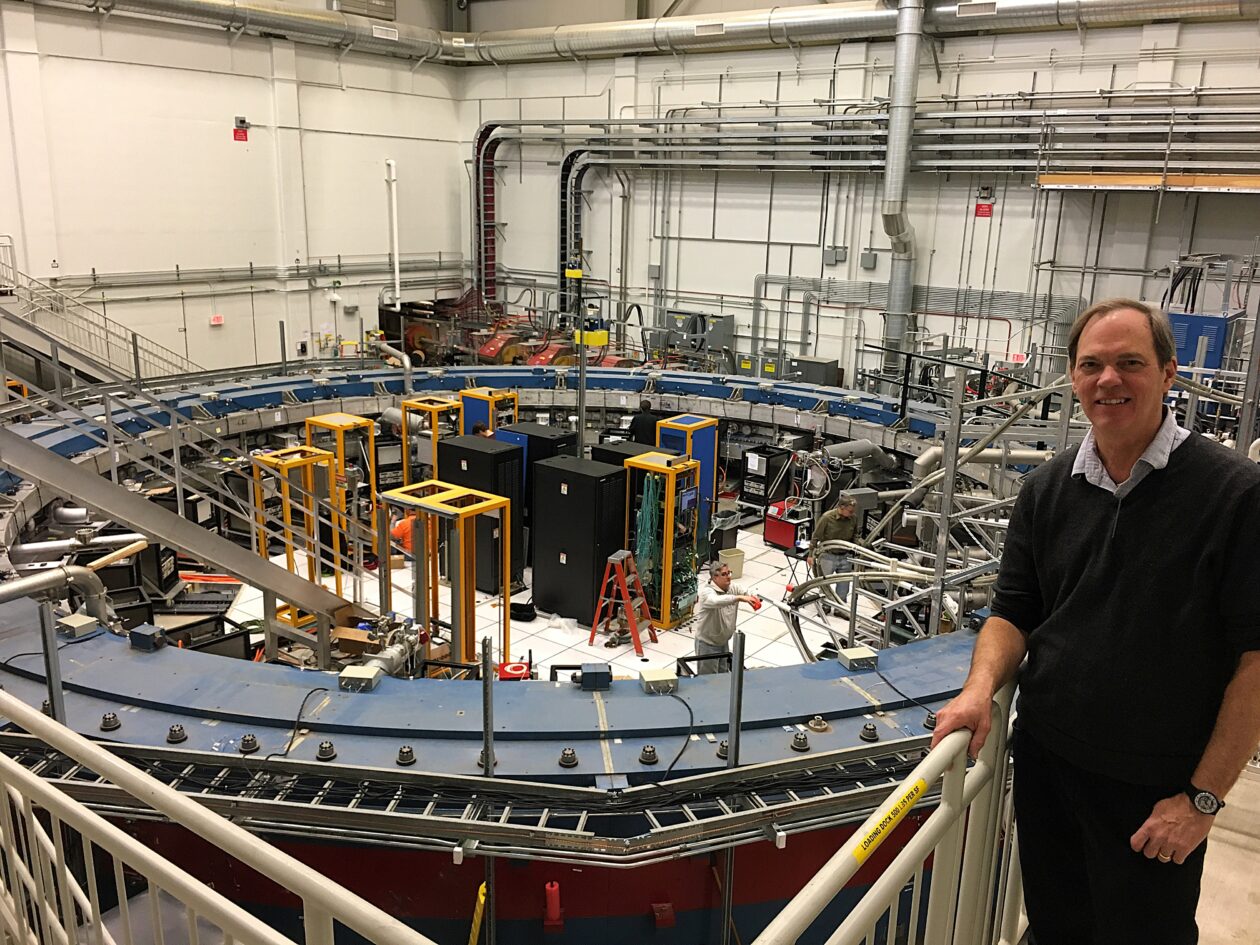
University of Washington physicist David Hertzog checks out the 50-foot-wide superconducting magnetic ring for the Muon g-2 experiment at the time of its startup at Fermilab in 2018. (Photo Courtesy of David Hertzog)
University of Washington physicist David Hertzog can’t wait to find out how hundreds of researchers who worked on a geeky project known as the Muon g-2 Collaboration will react when they hear they’ve each won thousands of dollars for that work.
The money is coming from this year’s $3 million Breakthrough Prize for fundamental physics, which was awarded tonight during a gala ceremony in Los Angeles. Hertzog and his colleagues decided that the prize should be divided equally among everyone who was an author on research papers relating to the decades-long series of muon experiments.
“There are students who were in and out of this thing — two years or less,” Hertzog said. “They’re going to be shocked out of their lives about something they did a long time ago that they don’t remember doing. They’re going to get a phone call or email from the Breakthrough people, and they’re going to go, ‘What!?’ That’s kind of fun.”
Hertzog said the money will be shared by about 400 researchers who were involved in the Muon g-2 experiments at Fermilab in Illinois and at the Brookhaven National Laboratory in New York. The prize also honors the role played by Europe’s CERN research center, going as far back as 1959. “There was one very, very old man who was still alive from the 1970s experiment, but I think he has died,” Hertzog said.
Although the precise math hasn’t yet been worked out, dividing $3 million among 400 people would give each recipient $7,500. “That’s nothing to throw around if you’re a student or a young postdoc,” Hertzog said.
Advertisement
A big moment for the muon
Russian-born tech investor Yuri Milner and his wife, Julia Milner, established the Breakthrough Prize in 2012 to recognize achievements in fundamental physics, mathematics and the life sciences. They also wanted to add some Hollywood-style pizazz to the public perception of scientists, going so far as to spread out a red carpet for celebrities at the “Oscars of Science.” The host for this year’s ceremony was James Corden, and the guest list included Robert Downey Jr., Eileen Gu, Anne Hathaway, Paris Hilton, Salma Hayek Pinault and Michelle Yeoh.
The $3 million Breakthrough Prize is the world’s richest scientific award, outdoing the roughly $1.2 million prize given to Nobel laureates. More than $344 million has been handed out since the creation of the prize program. Past winners from the University of Washington include physicists Eric Adelberger, Lukasz Fidkowski, Jens Gundlach and Blayne Heckel, plus biochemist David Baker.
This year’s prize in fundamental physics touches on a long-running effort to reconcile experimental findings with one of history’s most successful scientific theories: the Standard Model of particle physics. The theory lays out a framework for classifying and understanding a menagerie of subatomic particles — including the muon, which is similar to the electron but 207 times heavier.
The Standard Model predicts the various properties of the muon. One such property is the strength and orientation of the muon’s magnetic field, known as its magnetic moment. The theory’s simplest formulation calls for the value of the muon’s magnetic moment, represented in equations by the letter g, to be equal to 2.
Advertisement
Few things in particle physics are that simple, however. Experimental tests measured the g-factor to be slightly more than 2, and that discrepancy became the focus of the Muon g-2 (pronounced “mew-on gee-minus-two”) experiments.
If there was a confirmed mismatch between the Standard Model and experimental results, that could open the door to new physics. For example, perhaps whole new sets of subatomic particles not predicted by theory had somehow eluded direct observation. So, physicists across the globe marshaled their forces to determine the value of g, either to fill in the gap between experiment and theory or to zero in on a new frontier in physics.
Over the years, physicists have been conducting increasingly fine-tuned experimental runs using powerful magnets at CERN, Brookhaven and Fermilab. Hertzog has been in on the quest since Brookhaven joined in, about 30 years ago, and he was part of the team in 2013 when the experiment’s massive main magnet was moved from Brookhaven to Fermilab.
“We set the goal at 140 parts per billion, and we got 127 parts per billion,” Hertzog said. “When we wrote the proposal, we were ambitious as we could get in our minds, because we wanted to get people to take us on. Then we just blew away all the systematic errors, better than we expected. And then new ones came along, which caused us to have a little bit of a struggle.”
Researchers install the storage ring and magnets for the first Muon g-2 experiment at CERN in 1960. (CERN PhotoLab)
At the same time, other physicists were wrestling with theoretical models. They factored in the ever-so-subtle effects of particles popping in and out of the quantum foam that’s thought to make up the fabric of spacetime at its smallest scale. Last year, one of the models came up with a range of theoretical values for g that overlapped with the Muon g-2 Collaboration’s range of experimental values.
That led some to claim that there was no discrepancy after all. “A famous particle physics experiment has ended not with a bang, but a whimper,” Science magazine reported. But once again, few things in particle physics are that simple. Hertzog insisted that reports of the muon mystery’s death have been greatly exaggerated.
“I just throw up my hands, because after 30-some years of working on this, it’s a little disappointing that it’s not clear,” he said. “Not only has the number that they recommended shifted, but the certainty of their number got way wider. The uncertainty on the theory recommendation is actually pretty big. It’s shifted, but it’s also pretty large.”
Hertzog said the Breakthrough Prize recognizes a scientific quest that’s still in progress. “This story is not finished,” he said. “The story is really about the extraordinary achievement of the precision of this delicate measurement which probes nature to such a deep, deep level.”
Advertisement
Will there ever be a definitive answer to the muon mystery?
“We don’t know it yet, but it’s knowable, as opposed to walking out into a vast cloud of ambiguity,” Hertzog said. “So, I think we will find out in a couple of years where that finally lands. … Who knows whether that’ll lead us to another chapter in this business. But I’m confident that we’ll know it.”
A big night for breakthroughs
The Muon g-2 Collaboration’s Breakthrough Prize was awarded to hundreds of researchers from 31 institutions in seven countries, but just four team members were selected to take the stage for tonight’s award ceremony. Hertzog was joined by Chris Polly from Fermilab, William Morse from Brookhaven, and Lee Roberts from Brookhaven and Boston University.
A special lifetime prize for fundamental physics went to David Gross, a theorist at the Kavli Institute of Theoretical Physics at the University of California at Santa Barbara. Gross won a share of the 2004 Nobel Prize in Physics for filling gaps in the Standard Model relating to the strong nuclear force. More recently, he helped write a landmark 40-year national plan for particle physics.
Another prize went to Stuart Orkin, a physician at Harvard Medical School and Boston Children’s Hospital; and to Swee Lay Thein at the National Heart, Lung and Blood Institute for elucidating the mechanism driving the switch from fetal to adult hemoglobin and validating it as a therapeutic target for sickle-cell disease and beta-thalassemia.
Frank Merle of the Institut des Hautes Études Scientifiques in Paris was awarded this year’s prize in mathematics for achieving breakthroughs in nonlinear evolution equations. His work could have implications from aeronautical engineering and safety to astrophysics.
For his part, Hertzog doesn’t intend to rest on his laurels. Even as the Muon g-2 Collaboration is winding down, he has joined the team for another particle physics experiment called PIONEER. That experiment will probe inconsistencies between the Standard Model and observations of pion decay. As was the case with the Muon g-2 experiments, there’s a chance that PIONEER could point the way to physics beyond the Standard Model.
“This is a stock market golden opportunity,” Hertzog said. “That’s how I look at it.”
The Breakthrough Prize website has the full list of this year’s honorees, including the winners of New Horizons Prizes for early-career physicists and mathematicians, Maryam Mirzakhani New Frontiers Prizes for women mathematicians and the inaugural Vera Rubin New Frontiers Prize for women physicists. The recorded awards show is due to air at noon PT on April 26 via YouTube.
Ever encountered a minor annoying bug in a video game? How about one dating back to 2018? Usually, you have no hope of fixing it, but this time is different. [Joey Cheerio] shows the first-time programmer approach to (with great difficulty) fixing a bouncy ball prop turning invisible when shot in Team Fortress 2.
It starts with a band-aid solution that hides the problem: just turn off jiggle physics! While that works, it also affects many other models in the game, and doesn’t tackle the root cause. Time to investigate. Because this ball often goes overlooked, [Joey Cheerio] didn’t even realize that it was supposed to have jiggle physics, accidentally removing it. Turns out, after scouring the internet for old footage, it’s supposed to jiggle after all.
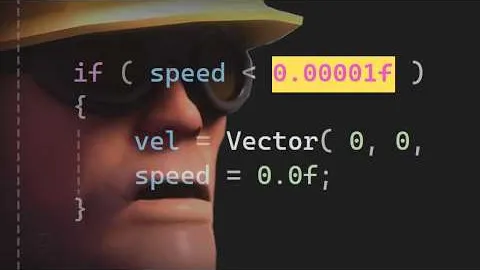
Back to square one, [Joey Cheerio] infers that the jiggle bone accidentally removed was related to the problem, eventually figuring out that the specific type of jiggle bone used (is_boing) caused the issue. Time to dig in the code. Tracking down the problem is no small feat for someone who’s never programmed before, even with the help of LLMs, but eventually, at 4 in the morning, a breakthrough! The ball no longer turned invisible but retained the intended jiggle.
Advertisement
At the limits of his knowledge on the subject, [Joey Cheerio] posts his partial progress so far to GitHub, where [ficool2] tracks down the real problem and turns this second band-aid into a proper fix. [Joey Cheerio] finishes up by explaining the math of what exactly went wrong.
In the past, I’ve stayed away from Asus TUF laptops, as it was the bottom-tier in terms of design. That meant chunky chassis, poor displays, and thick bezels. The models from 2025 looked more modern, but the prices weren’t competitive with some of my favorite cheap gaming laptops like the Lenovo LOQ 15 and Acer Nitro V 16.
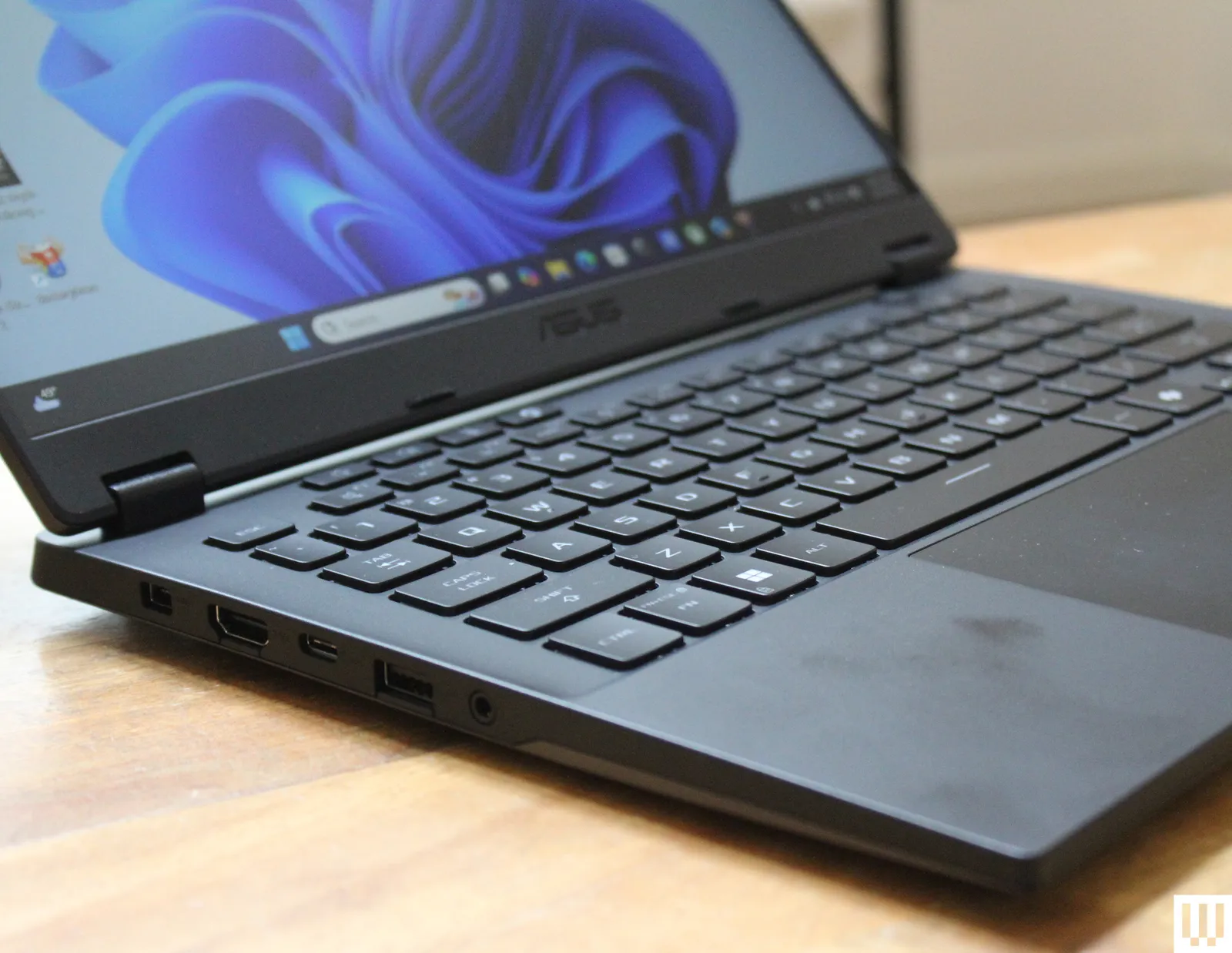
But again, the TUF A14 is something new, and the design is impressive. It’s right around the same thickness and weight as the 14-inch MacBook Pro, and the bezels around the sides of the screen are really trim. The bottom bezel is thick, primarily because the A14 uses a 16:9 aspect ratio screen. I won’t belabor that point, but it means less screen and more bezel in the same footprint. Overall, it’s very subtle. The gaming aesthetic is heavily downplayed, with only a few elements left, such as the typeface on the keycaps and the shape of the vents below the hinge. There’s not even per-key backlighting on the keyboard.
Photograph: Luke Larsen
Photograph: Luke Larsen
Advertisement
You’d never know this was a gaming laptop based on the usability of the keyboard and touchpad; on gaming laptops versus work ones, these can often be afterthoughts. Here, they’re both excellent. The touchpad, in particular, is oversized and surprisingly precise. Although the laptop is made of plastic, it handled the pressure I was putting on it around the lid, keyboard, and palm rests without too much give.
The TUF A14 has a helpful assortment of ports. On the left side, you get a USB-A 3.2 port, USB-C port, HDMI 2.1, headphone jack, and proprietary power jack. You get an additional USB-A and USB-C (USB4) port on the right side, alongside a micro SD card slot. I really like the decision to put the USB4 port on the right side, as it means you can both charge the laptop or connect to an external display from the right side too. Only being able to charge from one side is one of my pet peeves, so good job, TUF A14.
More Than Gaming
Photograph: Luke Larsen
Once I saw the resolution of the display, I knew the TUF A14 was no longer a real “budget” device. It’s 2560 x 1600, a big step up from the typical cheap gaming laptop. It also has a 165 Hz refresh rate, which is useful for when playing in 1200p—and let’s be honest, that’s the go-to the vast majority of the time. The higher resolution, though, plays into why the A14 is a solid hybrid device that can work as well for gaming as it does for school or work.
A new NYT Connections puzzle appears at midnight each day for your time zone – which means that some people are always playing ‘today’s game’ while others are playing ‘yesterday’s’. If you’re looking for Saturday’s puzzle instead then click here: NYT Connections hints and answers for Saturday, April 18 (game #1042).
Good morning! Let’s play Connections, the NYT’s clever word game that challenges you to group answers in various categories. It can be tough, so read on if you need Connections hints.
What should you do once you’ve finished? Why, play some more word games of course. I’ve also got daily Strands hints and answers and Quordle hints and answers articles if you need help for those too, while Marc’s Wordle today page covers the original viral word game.
Advertisement
SPOILER WARNING: Information about NYT Connections today is below, so don’t read on if you don’t want to know the answers.
Article continues below
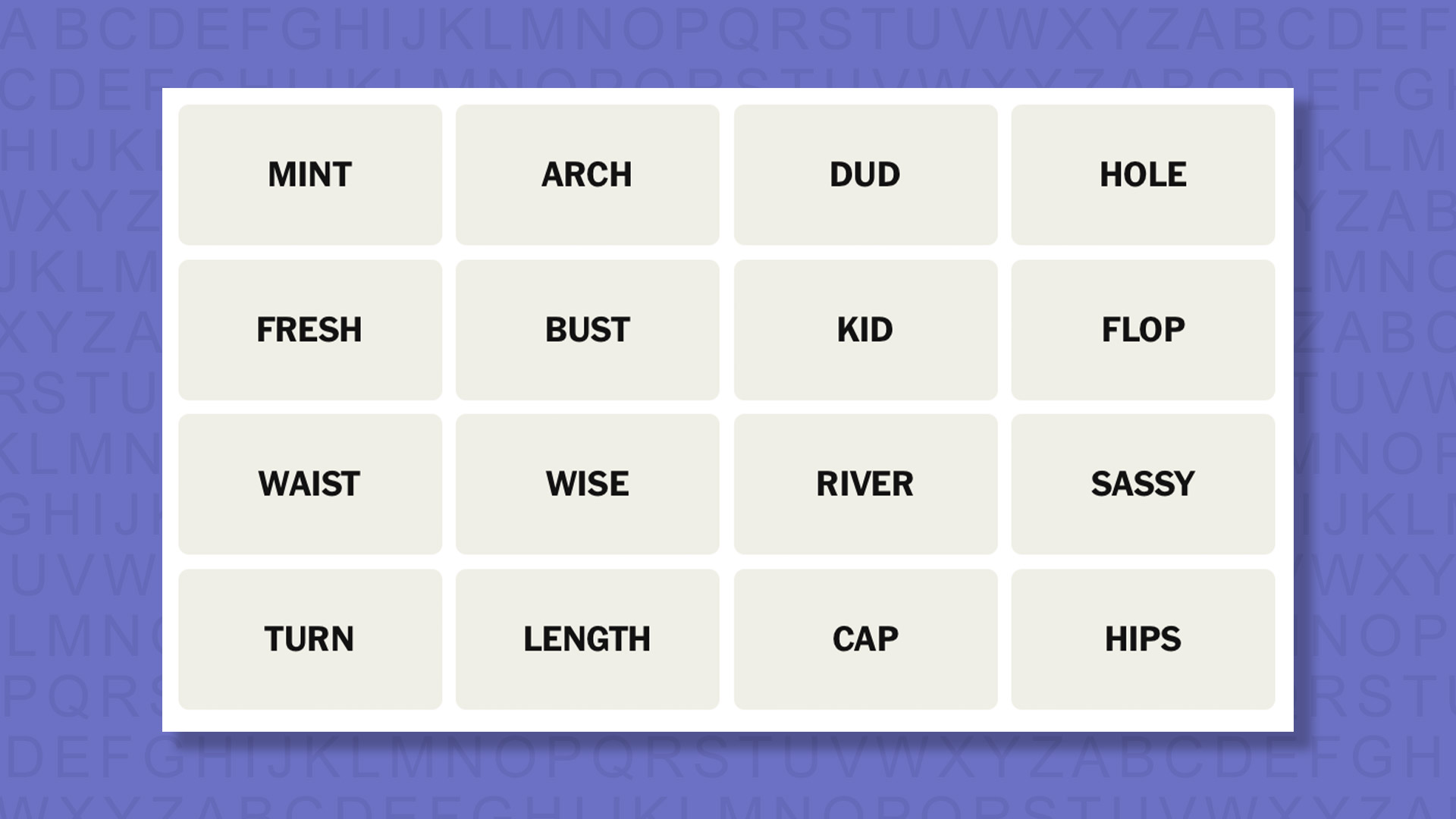
NYT Connections today (game #1043) – today’s words
(Image credit: New York Times)
Today’s NYT Connections words are…
MINT
ARCH
DUD
HOLE
FRESH
BUST
KID
FLOP
WAIST
WISE
RIVER
SASSY
TURN
LENGTH
CAP
HIPS
NYT Connections today (game #1043) – hint #1 – group hints
What are some clues for today’s NYT Connections groups?
YELLOW: A brazen personality
GREEN: Garment construction
BLUE: Poker terms
PURPLE: Confectionery ends
Need more clues?
We’re firmly in spoiler territory now, but read on if you want to know what the four theme answers are for today’s NYT Connections puzzles…
Advertisement
Sign up for breaking news, reviews, opinion, top tech deals, and more.
NYT Connections today (game #1043) – hint #2 – group answers
What are the answers for today’s NYT Connections groups?
YELLOW: CHEEKY
GREEN: DRESS MEASUREMENTS
BLUE: CARDS IN TEXAS HOLD ‘EM
PURPLE: LAST WORDS OF CANDY BRANDS IN THE SINGULAR
Right, the answers are below, so DO NOT SCROLL ANY FURTHER IF YOU DON’T WANT TO SEE THEM.
Advertisement
NYT Connections today (game #1043) – the answers
(Image credit: New York Times)
The answers to today’s Connections, game #1043, are…
BLUE: CARDS IN TEXAS HOLD ‘EM FLOP, HOLE, RIVER, TURN
PURPLE: LAST WORDS OF CANDY BRANDS IN THE SINGULAR CAP, DUD, KID, MINT
My rating: Hard
My score: 1 mistake
Being based in the UK and unfamiliar with some US products, LAST WORDS OF CANDY BRANDS IN THE SINGULAR went over my head.
I did, though, manage to avoid the trap of linking DUD, BUST and FLOP — but only because I couldn’t find another synonym for failure.
Advertisement
Instead, I made a mistake assembling what became CHEEKY, picking KID for my first attempt instead of WISE. Beyond this a rather routine end to the week.
Yesterday’s NYT Connections answers (Saturday, April 18, game #1042)
YELLOW: LOOK AT WITH AWE GOGGLE, MARVEL, STARE, WONDER
GREEN: BASIC ELECTRICITY TERMS AC, DC, POWER, VOLTAGE
BLUE: UNEXPECTED WINNER DARK HORSE, LONG SHOT, SLEEPER, UNDERDOG
PURPLE: STARTING WITH SODA BRANDS CRUSHWORTHY, FANTAGRAPHICS, FRESCADE, PEPSINOGEN
What is NYT Connections?
NYT Connections is one of several increasingly popular word games made by the New York Times. It challenges you to find groups of four items that share something in common, and each group has a different difficulty level: green is easy, yellow a little harder, blue often quite tough and purple usually very difficult.
On the plus side, you don’t technically need to solve the final one, as you’ll be able to answer that one by a process of elimination. What’s more, you can make up to four mistakes, which gives you a little bit of breathing room.
Advertisement
It’s a little more involved than something like Wordle, however, and there are plenty of opportunities for the game to trip you up with tricks. For instance, watch out for homophones and other word games that could disguise the answers.
It’s playable for free via the NYT Games site on desktop or mobile.
Looking for the most recent Strands answer? Click here for our daily Strands hints, as well as our daily answers and hints for The New York Times Mini Crossword, Wordle, Connections and Connections: Sports Edition puzzles.
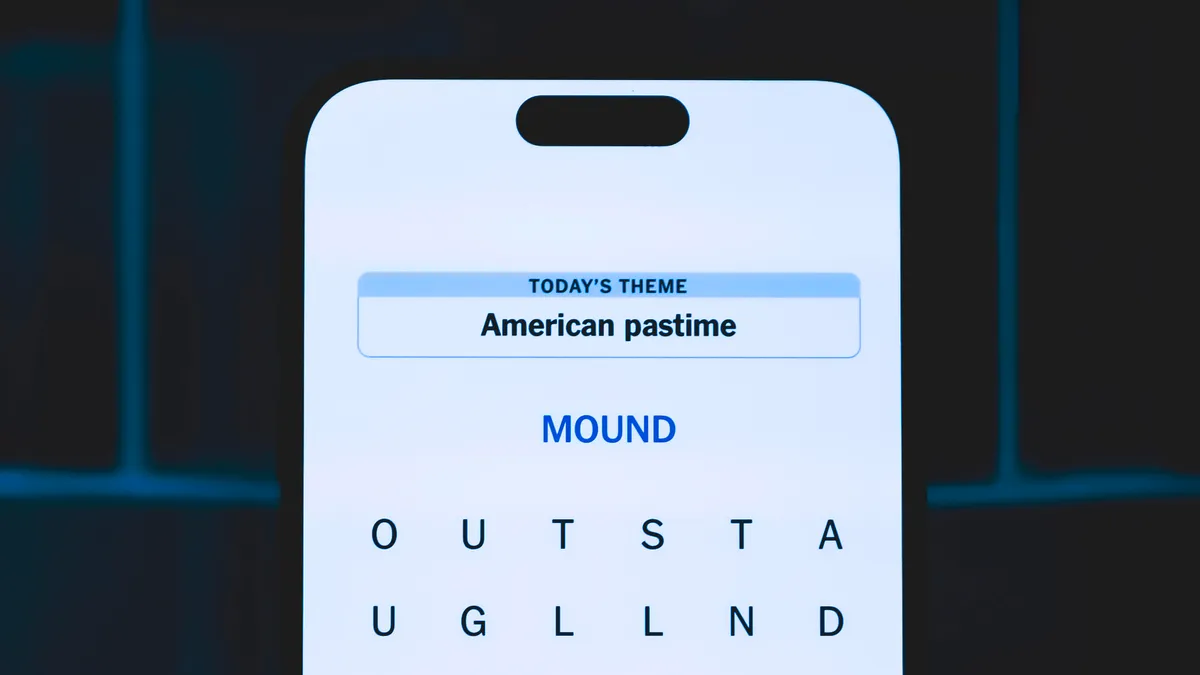
Today’s NYT Strands puzzle features some real stumpers. Some of the answers are difficult to unscramble, so if you need hints and answers, read on.
Your goal is to find hidden words that fit the puzzle’s theme. If you’re stuck, find any words you can. Every time you find three words of four letters or more, Strands will reveal one of the theme words. These are the words I used to get those hints but any words of four or more letters that you find will work:
These are the answers that tie into the theme. The goal of the puzzle is to find them all, including the spangram, a theme word that reaches from one side of the puzzle to the other. When you have all of them (I originally thought there were always eight but learned that the number can vary), every letter on the board will be used. Here are the nonspangram answers:
ALTER, TWEAK, ADJUST, REFINE, MODIFY, IMPROVE
Today’s Strands spangram
The completed NYT Strands puzzle for April 19, 2026.
NYT/Screenshot by CNET
Today’s Strands spangram is THEREIFIXEDIT. To find it, start with the T that’s the first letter on the top row, and wind straight across and down.
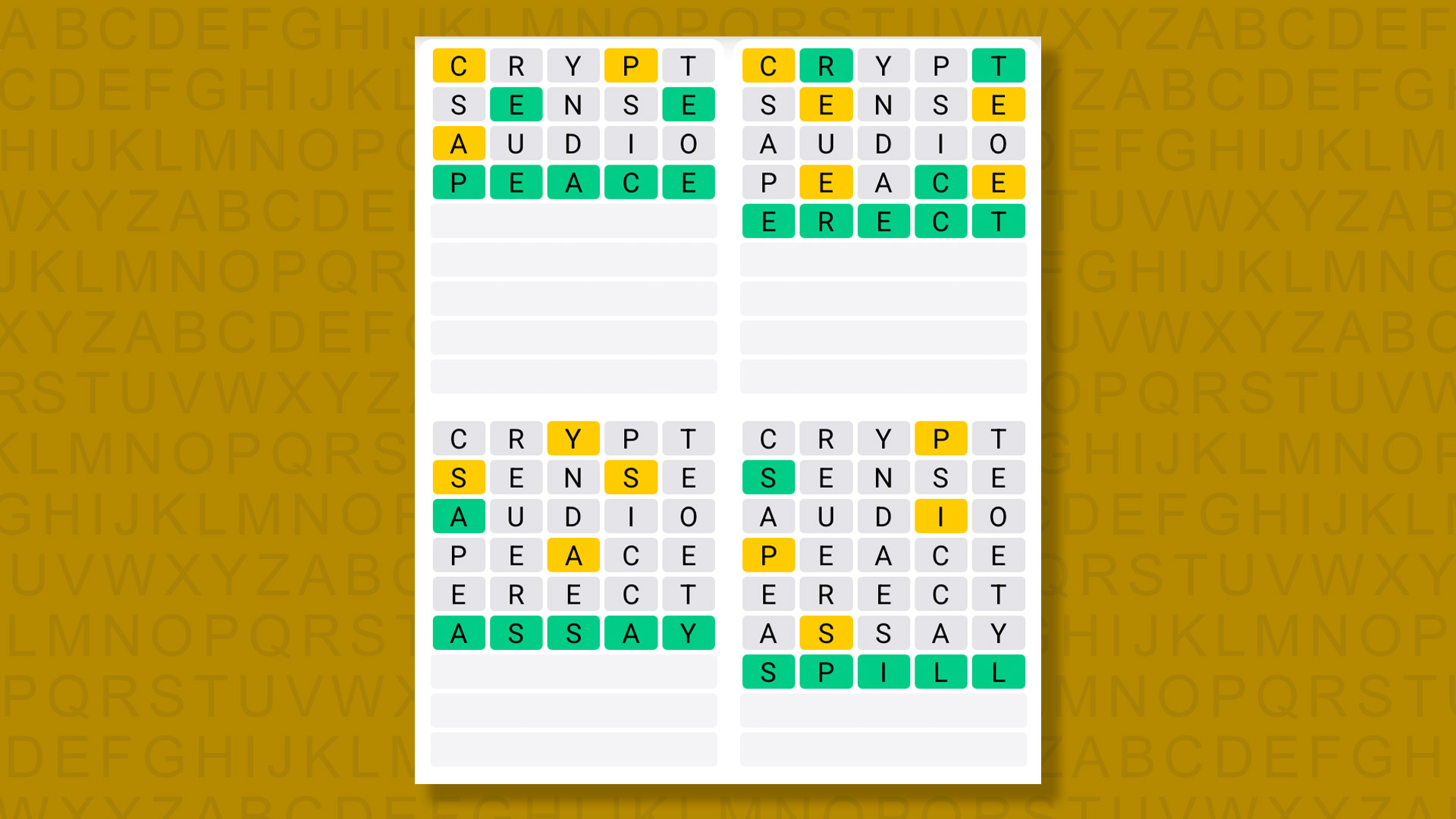
A new Quordle puzzle appears at midnight each day for your time zone – which means that some people are always playing ‘today’s game’ while others are playing ‘yesterday’s’. If you’re looking for Saturday’s puzzle instead then click here: Quordle hints and answers for Saturday, April 18 (game #1545).
Quordle was one of the original Wordle alternatives and is still going strong now more than 1,400 games later. It offers a genuine challenge, though, so read on if you need some Quordle hints today – or scroll down further for the answers.
Enjoy playing word games? You can also check out my NYT Connections today and NYT Strands today pages for hints and answers for those puzzles, while Marc’s Wordle today column covers the original viral word game.
Advertisement
SPOILER WARNING: Information about Quordle today is below, so don’t read on if you don’t want to know the answers.
Article continues below
Quordle today (game #1546) – hint #1 – Vowels
How many different vowels are in Quordle today?
• The number of different vowels in Quordle today is 3*.
* Note that by vowel we mean the five standard vowels (A, E, I, O, U), not Y (which is sometimes counted as a vowel too).
Advertisement
Quordle today (game #1546) – hint #2 – repeated letters
Do any of today’s Quordle answers contain repeated letters?
• The number of Quordle answers containing a repeated letter today is 4.
Quordle today (game #1546) – hint #3 – uncommon letters
Do the letters Q, Z, X or J appear in Quordle today?
• No. None of Q, Z, X or J appear among today’s Quordle answers.
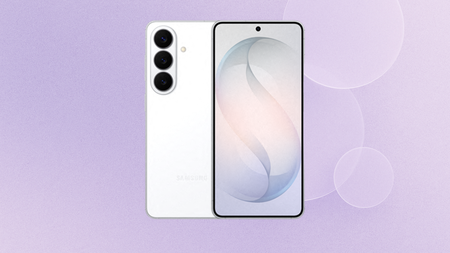
Flagship Android phones rarely drop this far this fast, which makes the current pricing on the Samsung Galaxy S26 one of the more compelling reasons to upgrade if you have been holding off since launch.
The 6.3-inch screen is noticeably brighter than the Galaxy S23, up to 49% so, which means outdoor use in direct sunlight stops being a squinting exercise and starts feeling like something the phone was actually designed to handle.
Advertisement
Galaxy S26‘s screen is powered by a Samsung Exynos 2600 processor alongside 12GB of RAM, a chip that also handles a redesigned Vapour Chamber for improved heat dissipation during sustained workloads, meaning performance holds more consistently during longer gaming or editing sessions.
The triple rear camera system leads with a 50MP f/1.8 wide lens, supplemented by a 10MP telephoto and 12MP ultrawide, and AP-driven Nightography processing brightens and sharpens low-light scenes without the heavy-handed noise reduction that tends to flatten detail in darker conditions.
Wider apertures on the Galaxy S26 compared with previous generations feed more light to the sensor, and that combination of hardware and processing carries through to video, where Super Steady’s Horizontal Lock keeps handheld footage level even during movement that would ordinarily introduce noticeable shake.
Advertisement
Meanwhile, S26’s battery capacity sits at 4300mAh with fast wired charging capable of reaching around 55 per cent in approximately 30 minutes, and video playback endurance is rated at up to eight hours longer than the Galaxy S23, a meaningful step up for anyone who uses their phone heavily away from a charger.
The Galaxy S26 at £589 suits anyone on an older Samsung or a mid-range phone who wants a clear performance and camera upgrade without paying full flagship prices, and the data top-up sweetens the deal further.
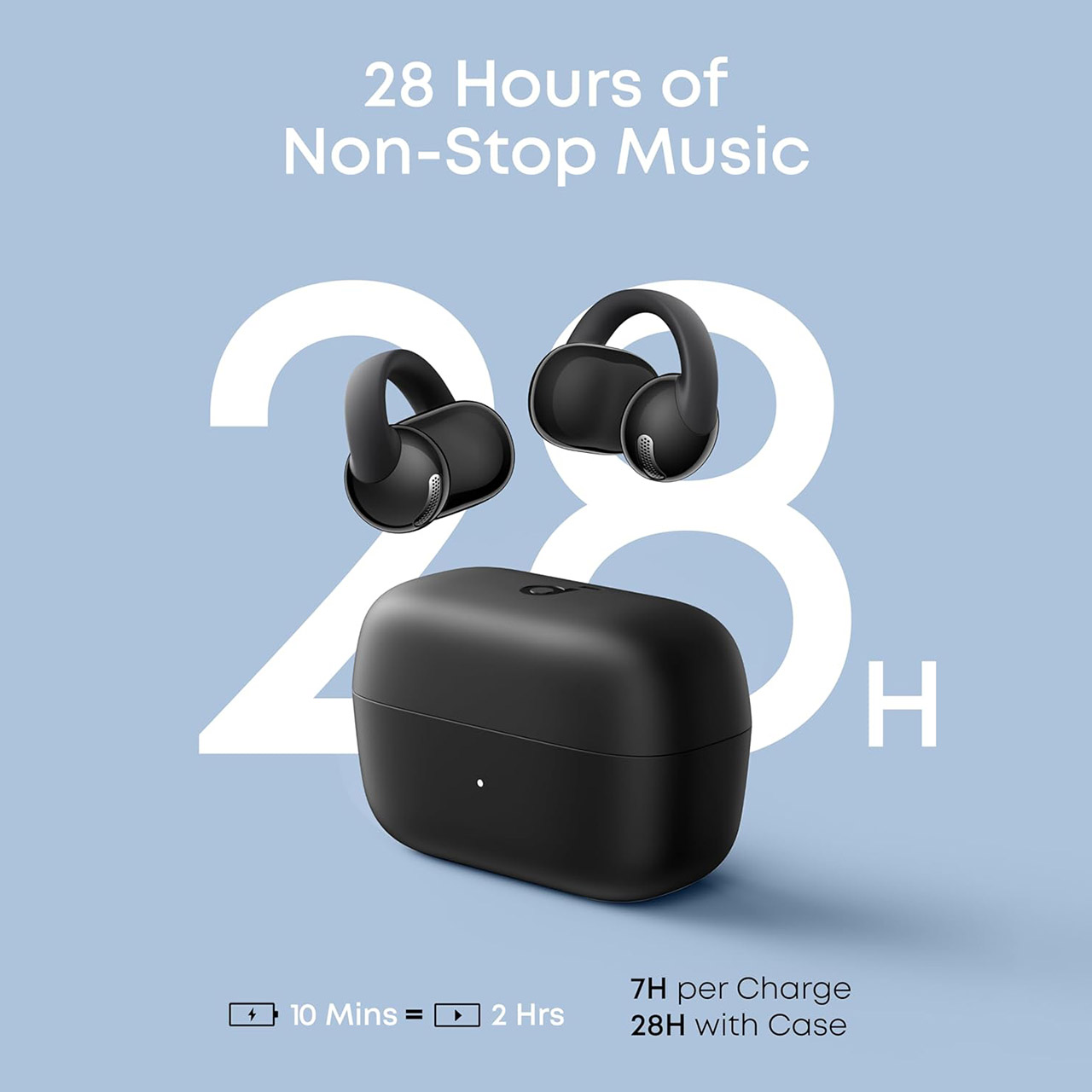
Anker designed the Soundcore C50i, priced at $39.99 (was $70), with one goal in mind: cater to users who prefer not to use standard earbuds that push well down into their ear canals and generate an unpleasant pressure or isolation feeling. They designed these clip-on headphones to rest gently over the ear, with a flexible piece that hinges into place and stays put whether you’re jogging or working out.
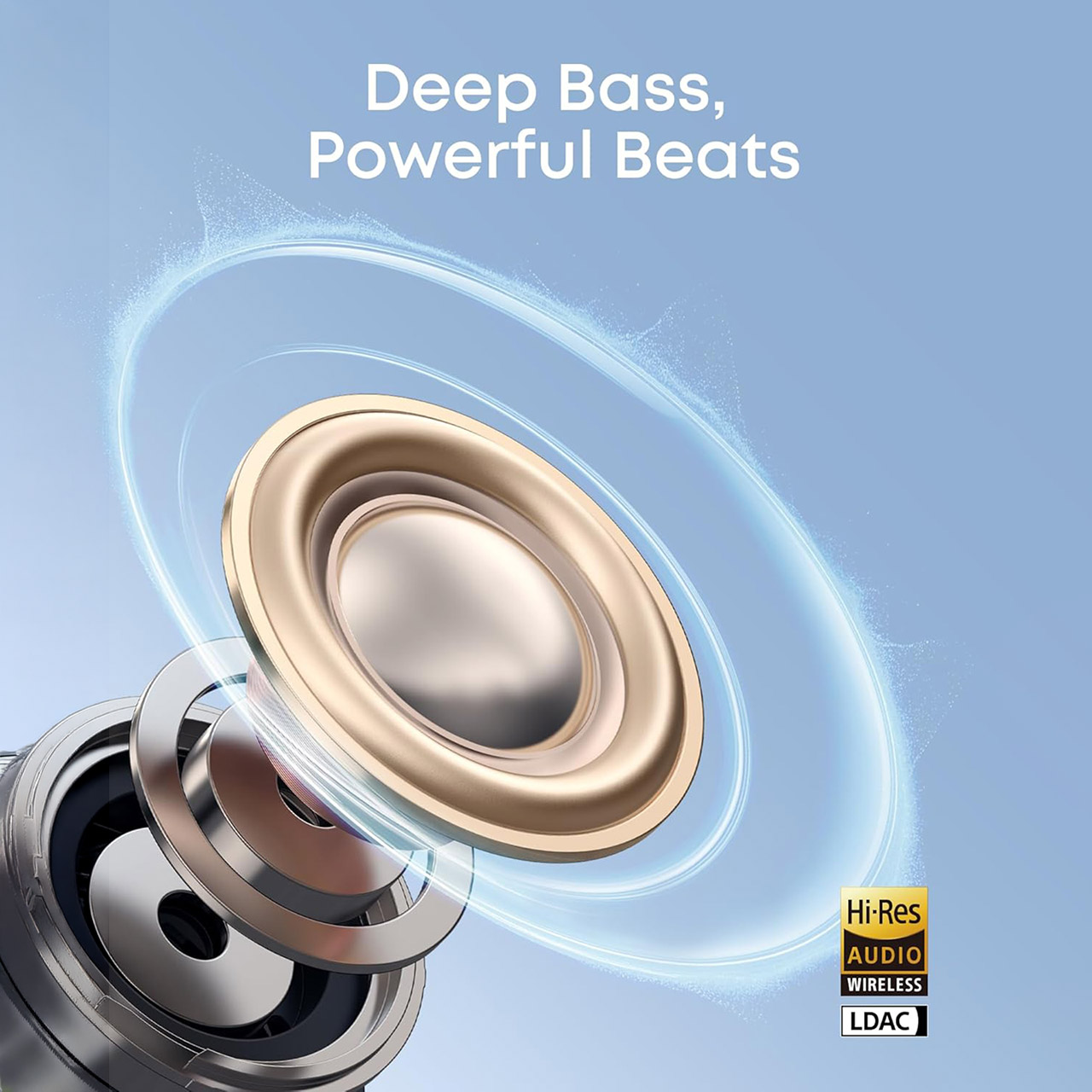
The Memory Titanium bit inside the clip provides a firm but not too tight grasp, while the entire thing weighs only slightly more than 5 grams, thus feeling invisible after a few minutes. Sweat and light drizzle are no match for the IP55 certification, which allows it to withstand daily wear without complaint. Those 12mm drivers are positioned close to the ear canal, delivering powerful bass and a maximum volume of 86 decibels. Tracks have clean mids and treble, which draws the voices out of the mix. Beats have some tremendous kick, and guitars and pianos maintain their tone. There may be some sharpness at maximum volume, but the overall balance sounds well enough for most listening. The sound coming out is low enough that you may have a conversation next to you without being overheard.
Open Ear Earbuds Over Ear for Running & Gym: Clip-on design sits comfortably over your ear without blocking the ear canal. Perfect for running…
FlexiClip Design, Secure Fit: Memory titanium FlexiClip adapts to any ear shape for all-day comfort. Ultra-lightweight and stable—won’t fall off…
Powerful Bass, 12mm Drivers: Custom 12mm drivers deliver deep bass and 86dB max output. Clear, loud sound for gym workouts and running—superior…
Battery life is 7 hours on a single charge, and topping them out in the case gives you 28 hours, while a mere 10 minutes in the case yields 2 full hours. People who wear them all day at work or on a long commute report no ear fatigue, even after hours. There are actual controls on each bud, so you can just flip them to adjust the volume or make a call without messing around. Two microphones combined with basic AI magic ensure that your voice is clear on calls regardless of where you are, whether inside a café or on a windy street. Background noise fades away, and your voice remains full and clear. The multipoint pairing allows for easy switching between a phone and a laptop, eliminating the need for repeated setup steps.
The free companion has basic equalization and other useful features like as real-time translation for over a hundred languages. You may also add some background sound to fill in the calm intervals. Bluetooth 6.0 maintains a stable connection in most scenarios.
As fun as it can be to shop for a washing machine, we’re assuming that nobody really wants to be in the market for a new one. After all, if you are, it is likelier than not that your old machine has spun its last cycle. In that scenario, you’re probably hustling to ensure you and your family have freshly laundered clothing.
If there’s a silver lining to the death of your washing machine, it’s that the major appliance manufacturers of the world have plenty of options available on the retail scene. While those machines are all decked out with different bells and whistles, choosing which brand to buy from will no doubt be one of the first and most important decisions you make.
Given that fact, it may be wise to research the customer satisfaction numbers on washers bearing the logo of major brands like Whirlpool, Samsung, or Bosch. The American Customer Satisfaction Index (ACSI) can offer unique insight into how real-world owners feel about their appliances. When it comes to washing machines, it would seem that none of the aforementioned brands left their customers quite as satisfied as LG. The South Korean manufacturer bested its competitors with an impressive score of 84 out of 100 points in 2025. It is unclear, however, where the likes of Samsung and Whirlpool stand in the rankings, as the ACSI survey only shows the top-rated brand.
Advertisement
LG scored well on the brand’s survey in other departments, too
Roman Chekhovskoi/Shutterstock
You might be wondering how the American Customer Satisfaction Index gathered the information that landed LG in the top spot of the washing machine satisfaction category. The consumer ratings group utilizes numbers collected from customer surveys and interviews as drivers for a multi-equation econometric “cause-and-effect” model first developed at the University of Michigan. The questions are designed to measure satisfaction based on several factors, including customer expectations, perceived quality, perceived value, and customer loyalty, among others.
For the record, those methods also helped LG earn top honors in the dishwasher category, though its score of 82 placed it in a tie with Bosch. Those are the only appliance-specific categories in which LG products took top honors. The brand did, however, score well in ACSI’s 2025 brand satisfaction sector of the survey, placing second overall with a score of 81.
Advertisement
Though LG placed second in the overall satisfaction survey, there are actually two other brands listed ahead of the South Korean manufacturer. Samsung and Whirlpool tied for the top spot with a score of 82. Interestingly, LG would’ve made that a three-way tie if its survey score held over from 2024, when the brand earned an 82. However, the 1% regression still led to a strong showing. Bosch, Electrolux, and Haier rounded out the top five in the ASCI overall brand satisfaction survey, though it should be noted that, since Haier now owns GE and Hotpoint, appliances from those brands are included in Haier’s overall satisfaction rating.
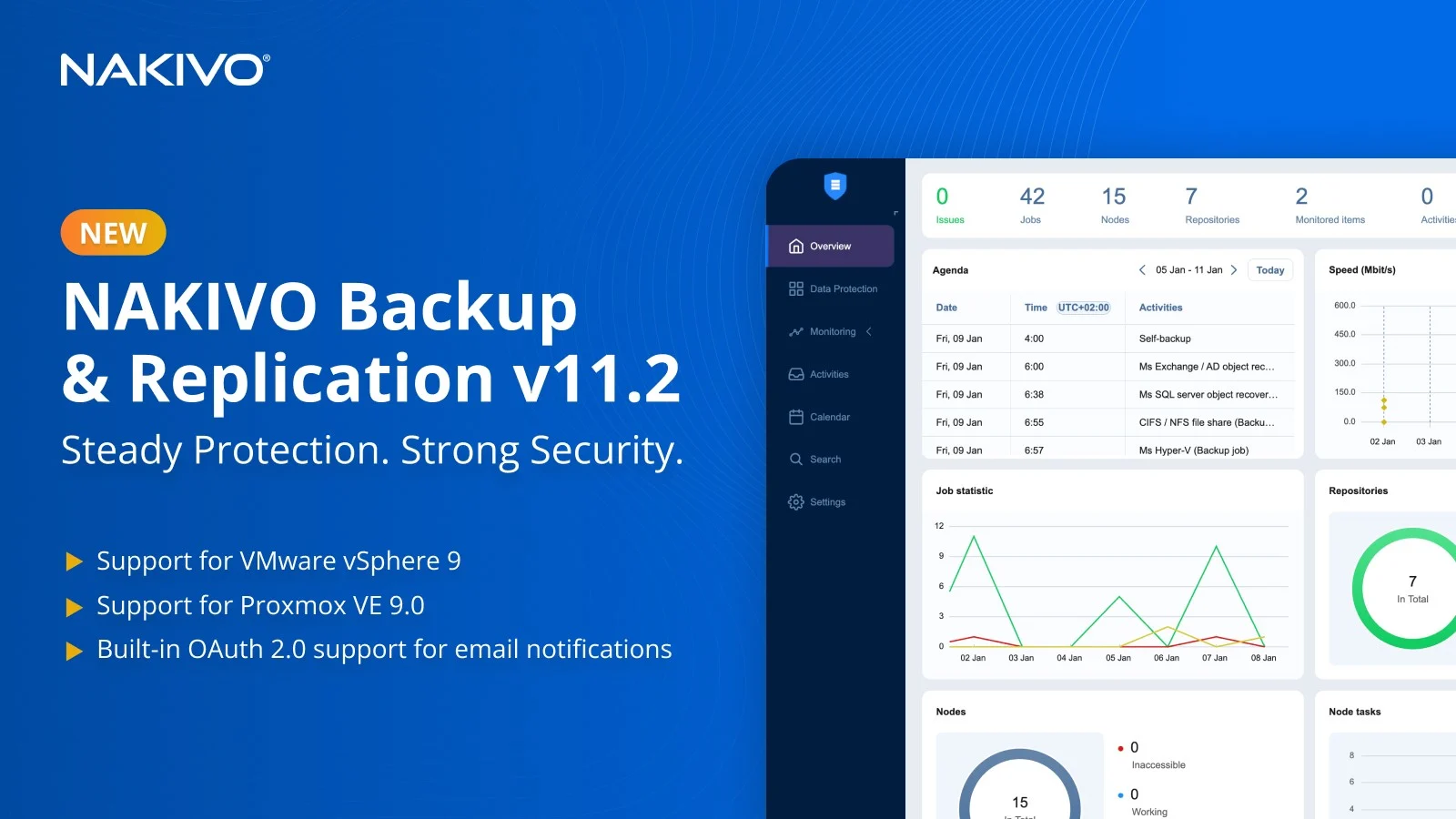
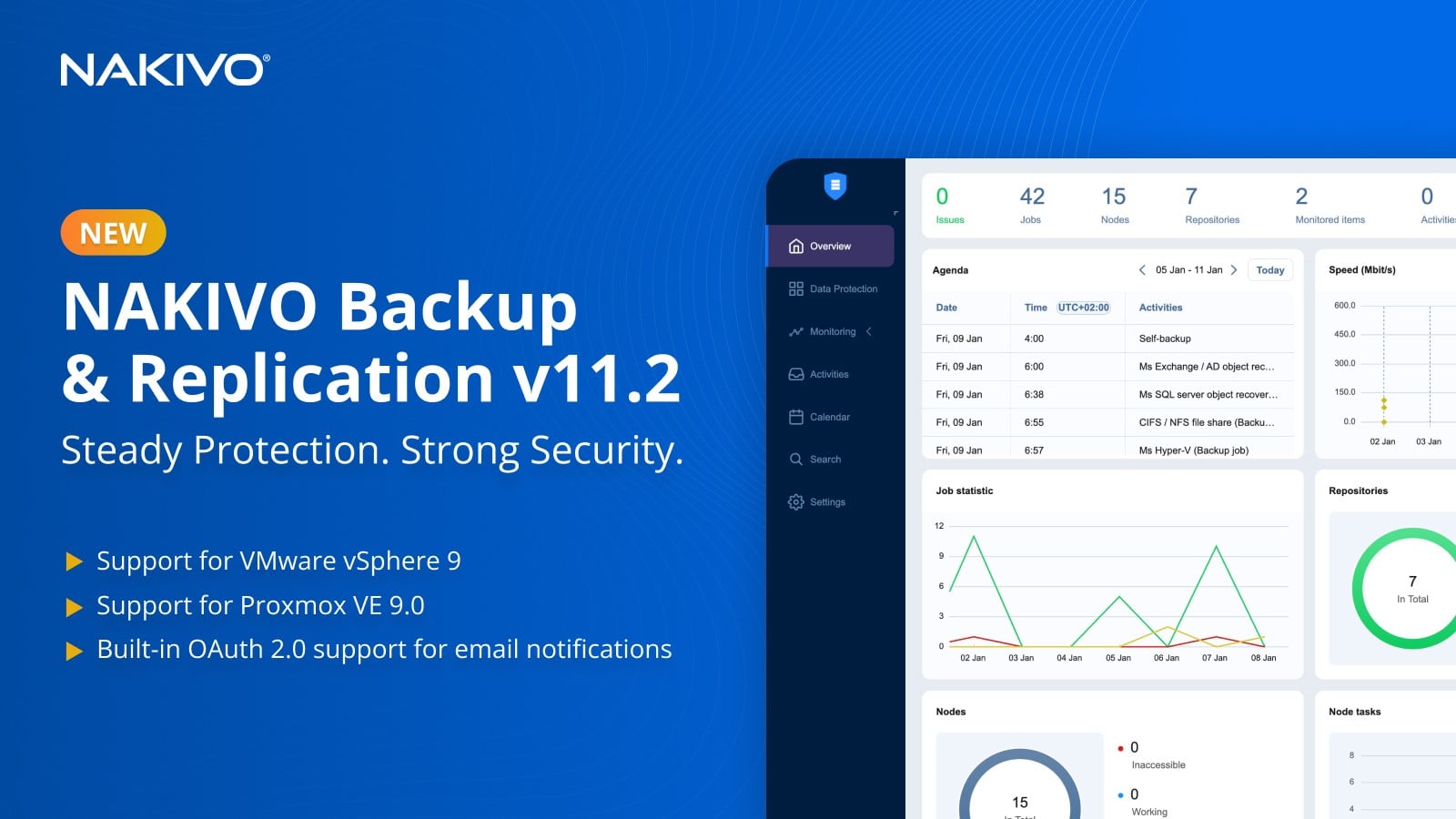
The new release adds automated replication, support for newer VMware vSphere and Proxmox versions, and modern authentication for faster, safer recovery.
Sparks, Nevada – April 3rd, 2026 – NAKIVO Inc., trusted by over 16,000 organizations in 191 countries, announced the general availability of NAKIVO Backup & Replication v11.2, focused on fast, reliable, and proactive data protection.
As ransomware attacks evolve and downtime costs rise, v11.2 provides IT teams with tools to quicken recovery, support next-generation infrastructure, and maintain secure data protection without added complexity.
Automated Real-Time Replication
At the core of v11.2 is an automated real-time replication engine. It keeps replica VMs synchronized with production workloads, allowing organizations to fail over to a recent replica within minutes after hardware failures, ransomware, or human error.
Advertisement
For businesses where every minute of downtime carries measurable financial or reputational consequences, this capability closes one of the most dangerous blind spots in traditional backup strategies: The window between the last scheduled job and the moment of failure.
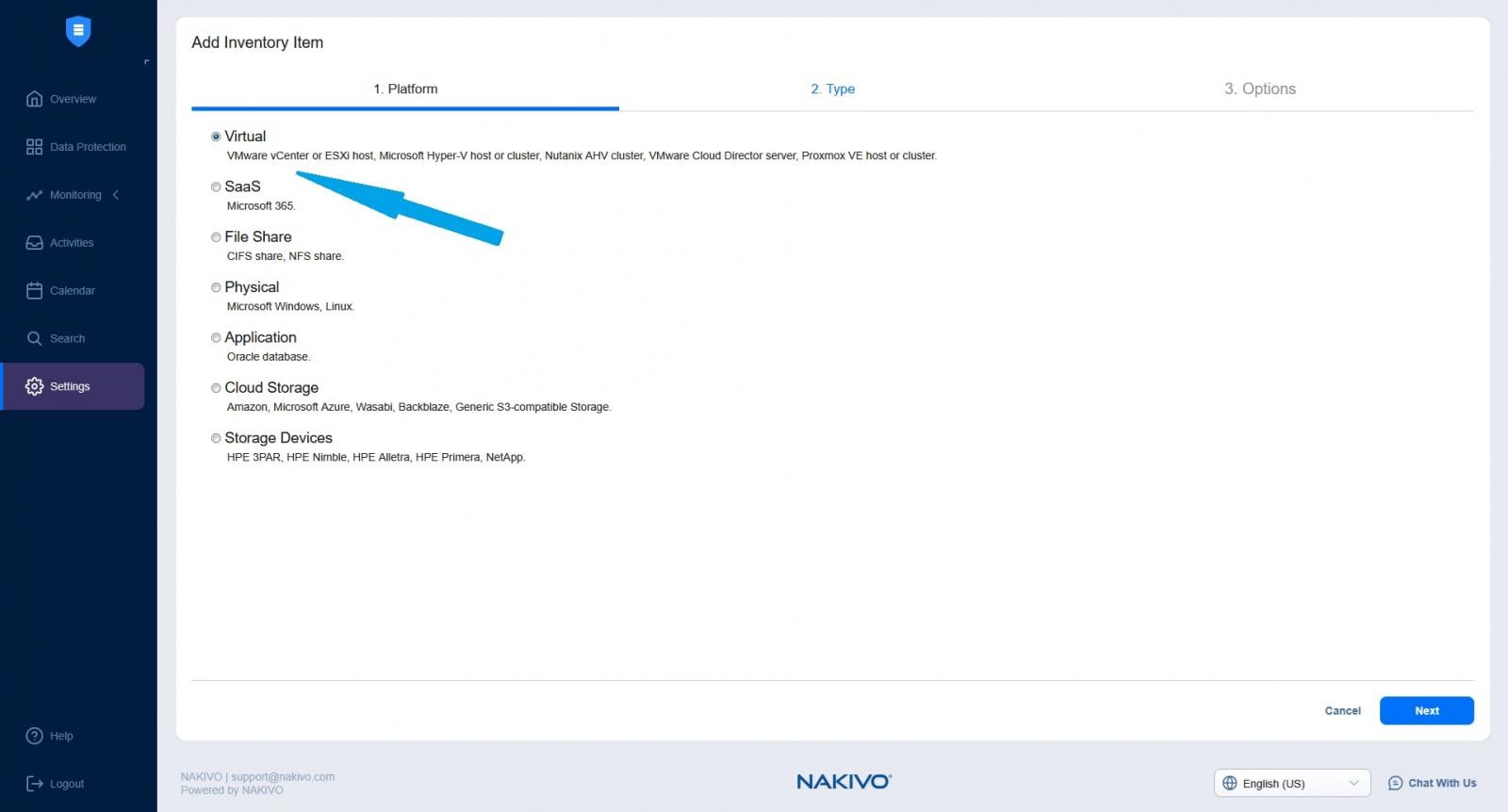
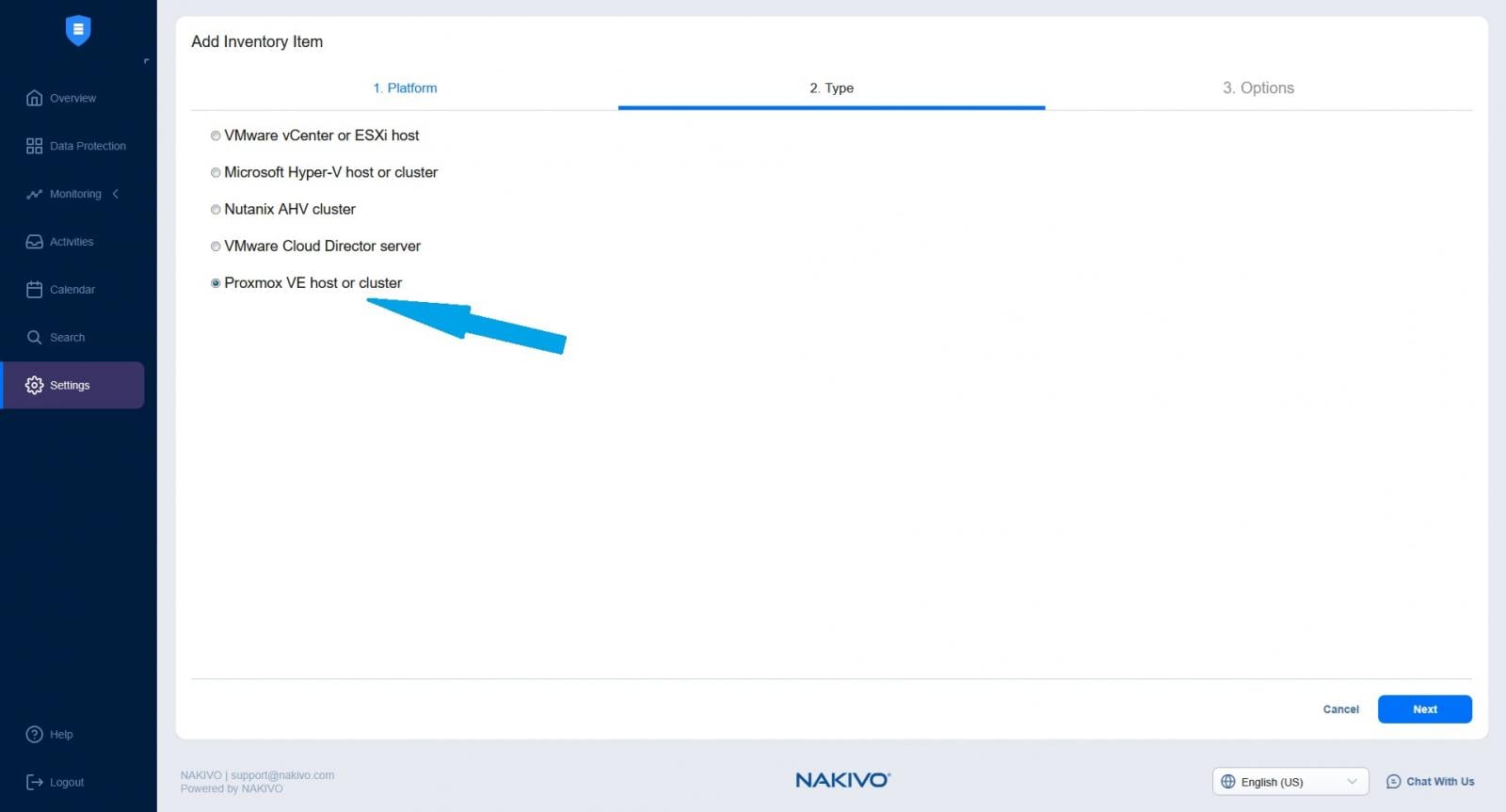
Support for VMware vSphere 9 and Proxmox VE 9.0 and 9.1
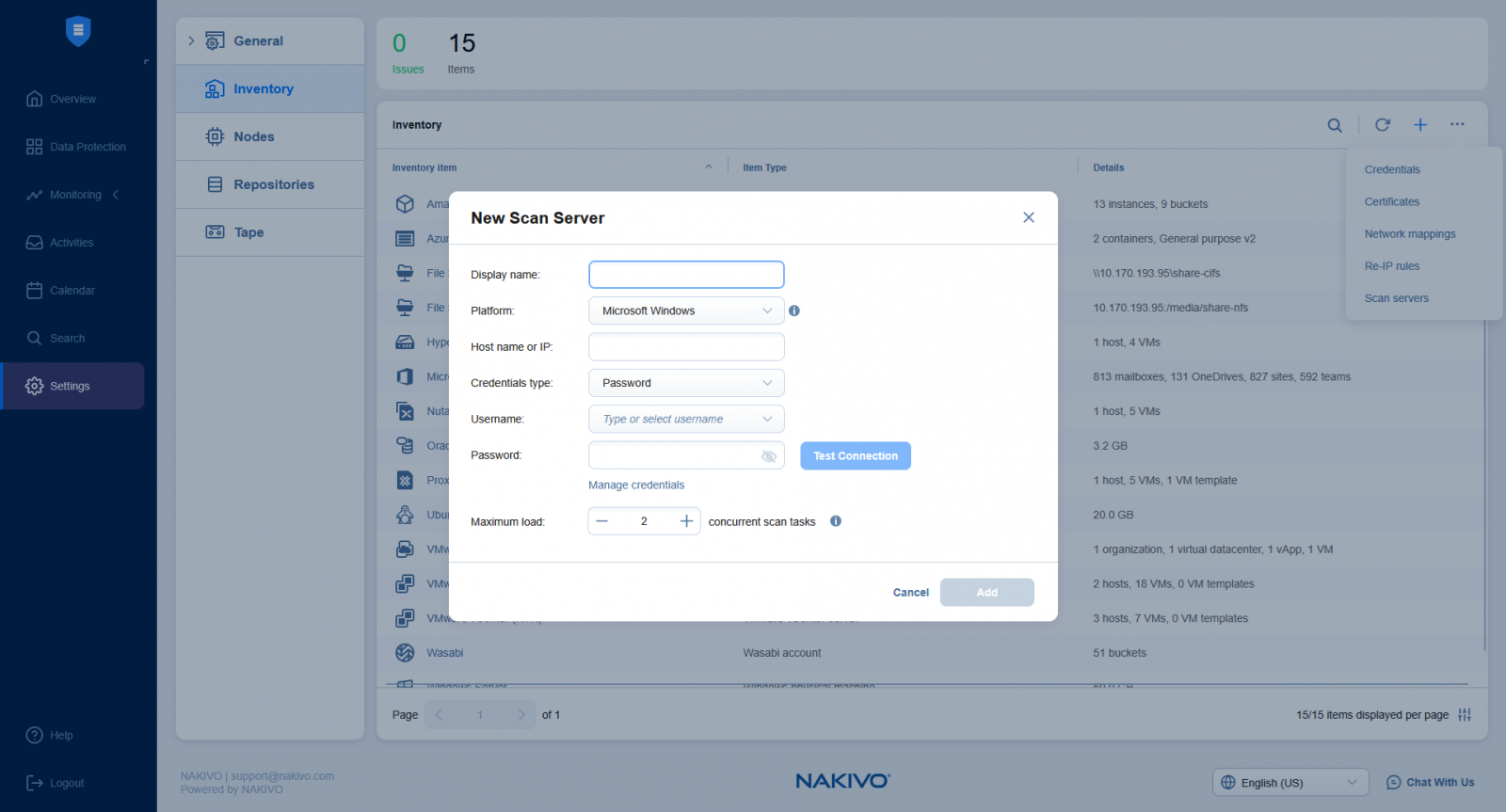
Keeping your backup stack aligned with hypervisor versions is mission-critical for teams managing VMware, Proxmox, or hybrid environments. NAKIVO Backup & Replication v11.2 addresses that directly while also tightening security and laying the groundwork for faster disaster recovery.
Full VMware vSphere 9 Support
The most significant update for VMware administrators: v11.2 delivers complete, production-ready support for vSphere 9, including vCenter Server 9.0.1.0, ESXi 9.0.1.0, and VDDK 9.0.1.0.
Earlier builds introduced initial compatibility, but v11.2 provides full readiness, enabling teams to upgrade their VMware infrastructure with confidence that NAKIVO will operate without disrupting existing jobs.
Advertisement
All core capabilities are fully operational under vSphere 9:
Agentless image-based backup and replication using Changed Block Tracking (CBT) for efficient, low-impact incrementals
Instant VM recovery to restore workloads in minutes, not hours
Granular file-level and application-object recovery for Exchange and SQL workloads, without restoring the entire VM
Built-in DR orchestration with failover, failback, and non-disruptive testing via Site Recovery
Ransomware resilience through immutable backups, AES-256 encryption, air-gapped copies, and pre-recovery malware scanning
Fast, deduplicated, compressed backups to minimize storage footprint across repositories
For organizations tracking the licensing shift away from standalone vSphere Standard and Enterprise Plus editions toward VMware vSphere Foundation 9.0, this update ensures NAKIVO keeps pace with where VMware is heading.
NAKIVO’s Proxmox support continues to mature. v11.2 brings full compatibility with Proxmox VE 9.0, and support for Proxmox VE 9.1 is already built in, letting Proxmox environments upgrade without risking protection gaps.
Advertisement
For environments running Proxmox at the edge, in cost-sensitive production, or as a VMware alternative, the full feature set includes:
Agentless host-level backup and replication with no guest agents required, keeping VM overhead minimal
Block-level incrementals via native change tracking, matching the efficiency of CBT in VMware environments
Instant VM and file-level recovery for rapid restoration of individual machines or specific files
Automated verification with screenshot confirmation to validate recoverability without manual intervention
Immutable backups on S3-compatible and object storage targets, including AWS S3, Wasabi, Azure Blob, and Backblaze B2
AES-256 encryption at source, in transit, and at rest with air-gapped copy options via tape or detached storage
For hybrid environments running VMware and Proxmox side by side, NAKIVO’s unified management interface provides a single workflow that covers both platforms, which matters as infrastructure grows in complexity.
Ransomware Defense Across the Board
Ransomware protection in v11.2 is integrated into the architecture rather than isolated as a single feature. Immutability is supported across a wide range of targets, including AWS S3, Wasabi, Azure Blob, Backblaze B2, HPE StoreOnce, NEC HYDRAstor, and Dell EMC Data Domain. Pre-recovery malware scanning catches threats before they re-enter production. Air-gapped options — tape, detached USB, or offline NAS — provide a last line of defense when network-connected copies are compromised.
“Our priority is to give customers a smooth and secure path forward as their environments evolve,” said Bruce Talley, CEO of NAKIVO. “v11.2 focuses on compatibility, security, and consistent performance as virtualization platforms advance.“
Matt Mitchell, Web Developer at SEHD at the University of Colorado Denver, said: “With NAKIVO Backup & Replication, I can recover VMware VMs within 10 minutes. With data deduplication, we were able to decrease storage space by 80%.“
Advertisement
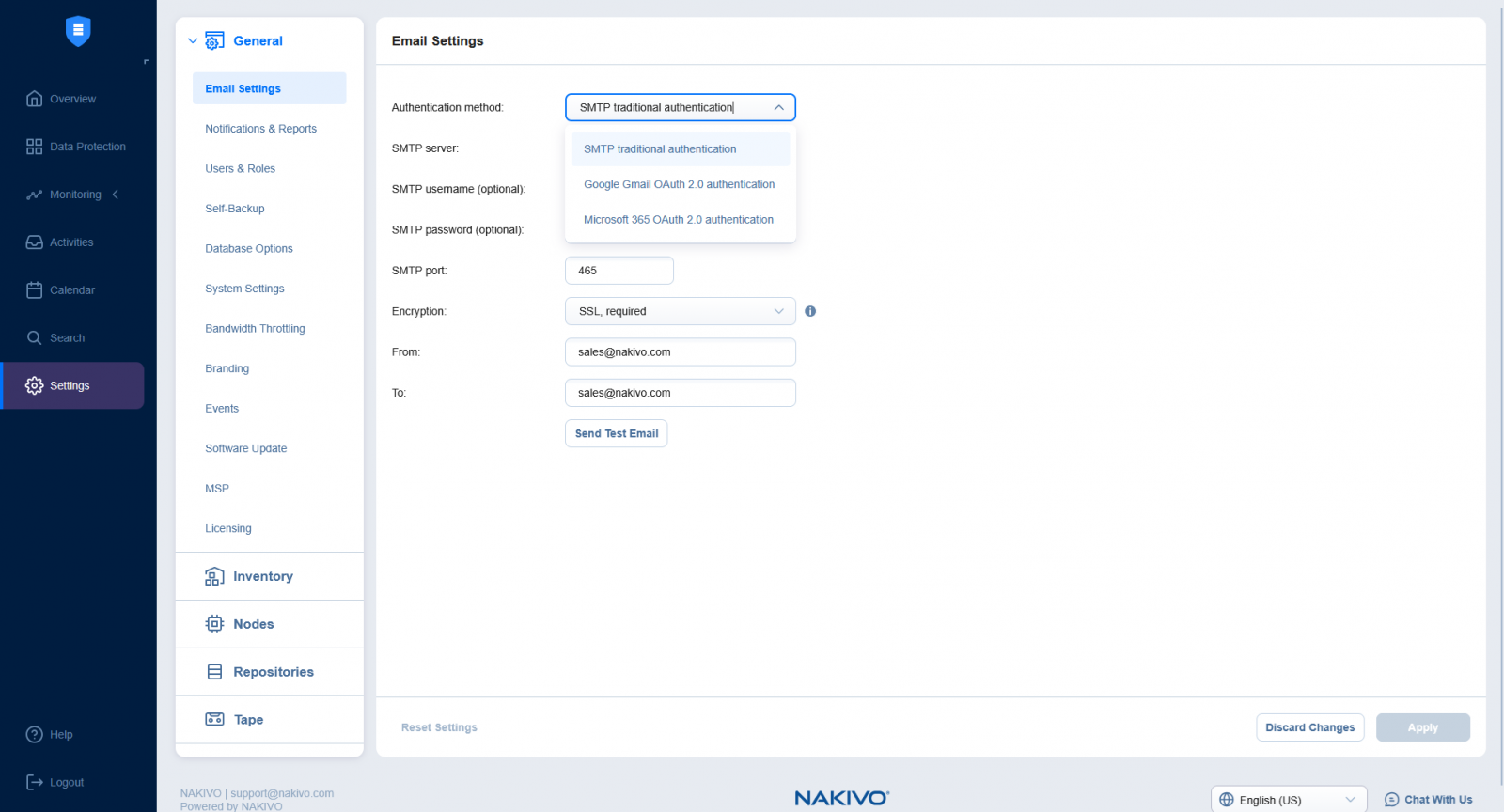
OAuth 2.0: Secure Email Notifications by Default
v11.2 introduces native OAuth 2.0 authentication for email notifications, replacing the deprecated basic authentication that major providers like Google Workspace and Microsoft 365 are actively phasing out.
The shift to token-based authentication removes stored plain-text credentials from the equation, delivering a meaningful compliance and security improvement, particularly for organizations under regulatory scrutiny.
HPE StoreOnce users gain full support for VSA Gen 5, improving deduplication appliance integration and repository performance. The platform has also been updated to Java SE 24 and the latest Spring Framework, delivering stability improvements, security patches, and incremental gains in backup and restore throughput — benefits that compound over time in high-frequency backup environments.
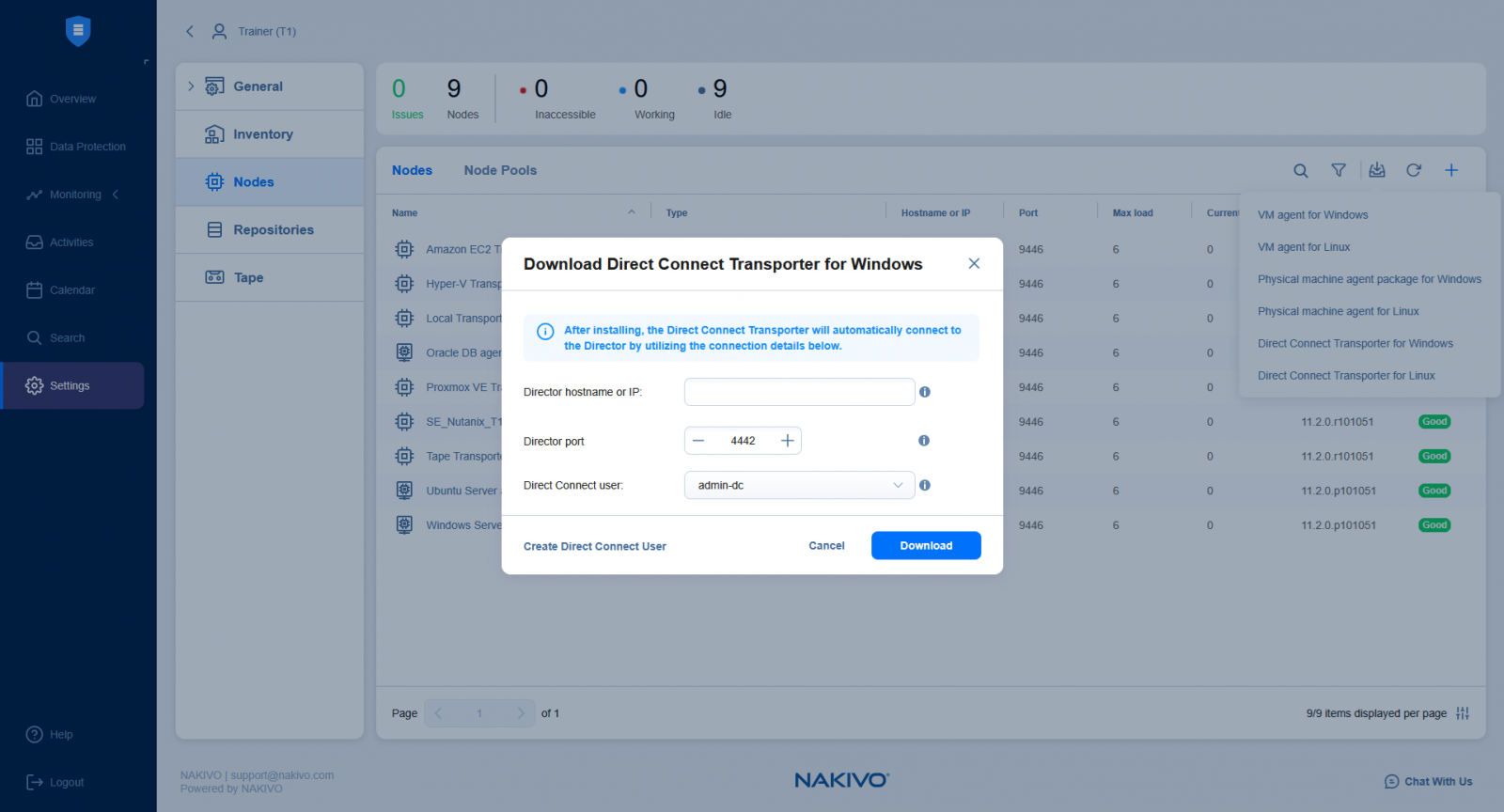
Enhanced MSP Direct Connect for Multi-Tenant Management
Managed service providers running multi-tenant environments gain efficiency through enhanced MSP Direct Connect. The updated interface provides single-pane visibility across multiple tenants, reducing overhead and accelerating response times.
Advertisement
For MSPs scaling their service portfolios, this improvement directly supports growth without a proportional increase in administrative burden.
The Bottom Line
NAKIVO Backup & Replication v11.2 is an operationally important release. It removes the compatibility friction that holds teams back from upgrading infrastructure, strengthens ransomware resilience, and tightens security in areas that are easy to overlook until they become a problem. For VMware administrators preparing for a vSphere 9 migration, Proxmox environments approaching a version upgrade, or any organization seeking to enhance recovery capabilities, v11.2 provides a robust foundation for operational stability.
Availability
NAKIVO Backup & Replication v11.2 is available now. Organizations can download the fully featured free trial at nakivo.com.
Resources:
Advertisement
About NAKIVO
NAKIVO is a US-based corporation dedicated to delivering the ultimate backup, ransomware protection, and disaster recovery solution for virtual, physical, cloud, and SaaS environments. Over 16,000 customers in 191 countries trust NAKIVO with protecting their data, including global brands like Coca-Cola, Honda, Siemens, and Cisco.
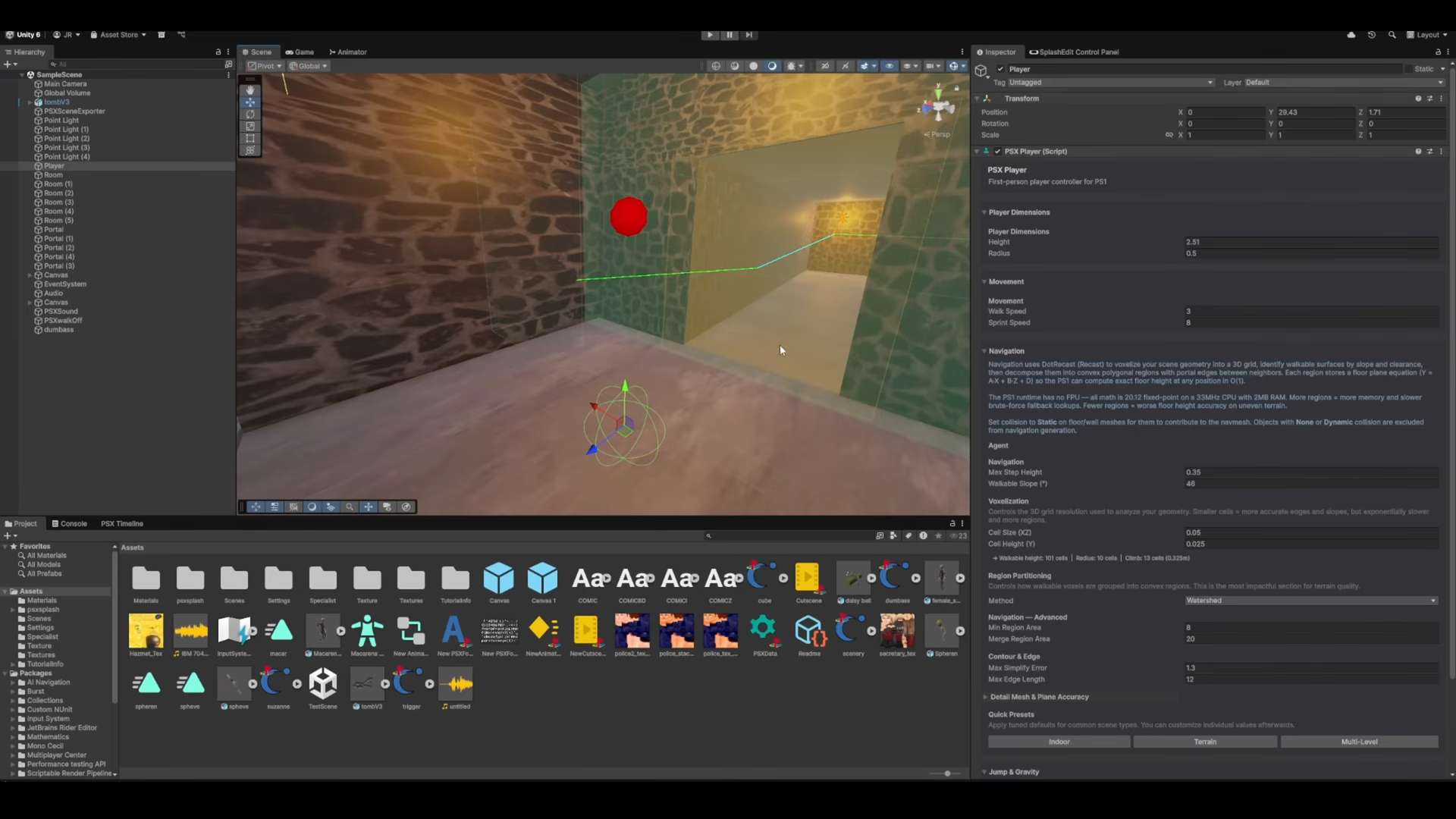
The Unity game development platform was first released in 2005, long after the PlayStation had ceased to be a relevant part of the console market. And yet, you could use Unity to develop for the platform, if you so desire, thanks to the efforts of [Bandwidth] and the team behind psxsplash.
Yes, it really is possible to design games for the original PlayStation using Unity and Lua. Using a tool called SplashEdit, you can whip up scenes, handle scripting, loading screens, create UIs, and do all the other little bits required to lash a game together. You can then run your creation via the psxsplash engine, deploying to emulator or even real hardware with a single click. Currently, development requires a Windows or Linux machine and Unity 6000.0+, but other than that, it’s pretty straightforward to start making games with a modern toolset for one of the most popular consoles of all time. Just remember, you’ve only got 33 MHz and 2MB of RAM to play with.
We still love to see the legendary grey machine get used and hacked in new and inventive ways, so many decades after release.



















































You must be logged in to post a comment Login