Security teams log 54% of successful attacks and alert on just 14%. The rest move through your environment unseen.
The Picus whitepaper shows how breach and attack simulation tests your SIEM and EDR rules so threats stop slipping by detection.





A major sports piracy ring linked to the illegal PirloTV streaming platform has been disrupted in an action that targeted 44 domains.
PirloTV is a network of websites that aggregate and embed links to unauthorized live sports streams, primarily soccer, replaying feeds from various licensed broadcasters, depending on the event.
The platform, which does not stream content directly, is notorious for its aggressive migration to new domains following takedown actions from authorities.

The Alliance for Creativity and Entertainment (ACE), together with UEFA, UC3, and Mexican authorities, collaborated to shut down the 44 domains that collectively generated more than 950 million visits every year.
“Collectively, the domains targeted in the operation generated more than 950 million visits worldwide each year, including approximately 230 million visits from Mexico alone,” reads the ACE announcement.
“The service primarily targeted viewers throughout Latin America, with particularly strong audiences in Mexico and Colombia, while also attracting significant traffic from markets such as Spain and the United States.”
ACE noted that the action took place ahead of the UEFA Champions League final on May 30.
However, with the FIFA World Cup currently underway, taking down any domains used by the PirloTV network could have a significant impact on the piracy ecosystem in Latin America.
Spanish media report that PirloTV is heavily used by people who want to watch World Cup 2026 matches on mobile phones, where legal access is complicated by the segmentation of broadcasting rights and platform-related access restrictions.
It appears that PirloTV can quickly pivot to new domains, and at the time of writing, there are still domains indexed by public search engines that provide illegal streaming for sports events.
Some of them offer multiple live streams from more than a dozen channels, including ESPN, Fox Sports, TNT Sports, DSports (formerly DirecTV Sports), and TyC Sports.
UEFA became the first holder of sports rights to join ACE in October 2025. Since then, the organizations have worked together to identify operators, map piracy networks, investigate infrastructure, and coordinate with local law enforcement agencies to dismantle backend services.
ACE says the latest action against PirloTV marks its first collaboration with Mexico’s Institute of Industrial Property (IMPI) under a newly signed Memorandum of Understanding aimed at strengthening anti-piracy cooperation.

Security teams log 54% of successful attacks and alert on just 14%. The rest move through your environment unseen.
The Picus whitepaper shows how breach and attack simulation tests your SIEM and EDR rules so threats stop slipping by detection.

Looking for a different day?
A new NYT Strands puzzle appears at midnight each day for your time zone – which means that some people are always playing ‘today’s game’ while others are playing ‘yesterday’s’. If you’re looking for Tuesday’s puzzle instead then click here: NYT Strands hints and answers for Tuesday, July 21 (game #870).
Strands is the NYT’s latest word game after the likes of Wordle, Spelling Bee and Connections – and it’s great fun. It can be difficult, though, so read on for my Strands hints.
Want more word-based fun? Then check out my NYT Connections today and Quordle today pages for hints and answers for those games, and Marc’s Wordle today page for the original viral word game.
SPOILER WARNING: Information about NYT Strands today is below, so don’t read on if you don’t want to know the answers.
• Today’s NYT Strands theme is… “What is… “
Play any of these words to unlock the in-game hints system.
• Spangram has 10 letters
• First side: top, 3rd column
• Last side: bottom, 5th column
Right, the answers are below, so DO NOT SCROLL ANY FURTHER IF YOU DON’T WANT TO SEE THEM.

The answers to today’s Strands, game #871, are…
A very mysterious theme today that could have meant absolutely anything.
With this in mind I went hunting for non-game words to get me a hint (or two) and in the process chanced upon QUESTION.
In truth, the letter Q is where I should have begun if I was a proper Strands player — rare letters often unlock the starts of games.
With this in mind, BUZZER unlocked the theme as it slowly dawned on me that we were searching for elements of a gameshow and in particular Jeopardy!
Strands is the NYT’s not-so-new-any-more word game, following Wordle and Connections. It’s now a fully fledged member of the NYT’s games stable that has been running for a year and which can be played on the NYT Games site on desktop or mobile.
I’ve got a full guide to how to play NYT Strands, complete with tips for solving it, so check that out if you’re struggling to beat it each day.
A French aerospace startup is developing a 24-foot inflatable drone designed to remain airborne for more than 10 hours while covering roughly 500 miles one way.
The company recently completed early flight testing for the drone dubbed daS10, which uses a pressurized textile envelope and pneumatic wings.
When deflated, the drone can reportedly fit inside a normal car with its seats folded, giving operators an unusual transport option.
Celeste Ecoflyers developed the daS10 around an 8-meter fixed-wing structure that uses internal air pressure to maintain its shape during flight.
The inflated wing generates lift while avoiding some of the structural weight associated with conventional aircraft designs.
That approach is intended to reduce energy demands and allow the drone to remain airborne for much longer periods than many small multirotor systems.
The company is developing the aircraft for inspection, surveillance and remote logistics missions that require persistent aerial coverage.
Small consumer drones such as the DJI Mavic 4 Pro can remain airborne for around 50 minutes before requiring a recharge.
That endurance may be insufficient for monitoring pipelines, remote infrastructure or large areas affected by disasters.
Longer-range unmanned aircraft can address those missions, although traditional fixed-wing platforms and vertical-takeoff aircraft can involve higher acquisition, transport and operating costs.
The daS10 instead relies on a lightweight structure that can be deflated when the aircraft is not flying.
Celeste Ecoflyers describes the aircraft as a new class of aerial system designed to make persistent coverage lighter, safer and easier to deploy.
However, the company has not disclosed every operational specification needed to independently assess those claims.
The drone’s inflatable structure could allow teams to transport a large aircraft without requiring a dedicated trailer or specialised ground equipment.
Once deployed, operators would inflate the structure before preparing the aircraft for its mission.
The design could therefore suit remote operations where storage space and transport access are limited.
Potential missions include inspecting long pipelines, surveying disaster zones and monitoring areas where sending crewed aircraft would create unnecessary risks.
The drone also has a reported range of approximately 500 miles in one direction, allowing it to cover substantial distances before returning to its launch area.
The daS10 is still an emerging aircraft concept, and its real-world performance will depend on flight testing, payload capacity, weather tolerance, and the durability of its textile structure.
Its ability to combine long endurance with compact transport could make the design useful for operators needing extended coverage without conventional large aircraft infrastructure.
Via Celeste Ecoflyers | Yanko Design

Follow TechRadar on Google News and add us as a preferred source to get our expert news, reviews, and opinion in your feeds.


The Korean company plans to establish robotics research hubs in the US, China and Japan and consolidate those operations under a strategy led by Dongkun Lee.
Samsung Electronics is establishing a new robotics division reporting directly to its chief executive and to be overseen by a recently hired former Hyundai Motor Group robotics strategist.
The new ‘robotics experience’ (RX) division of the South Korean giant will oversee mid- to long-term robotics strategy, core technology development and business execution while expanding research capabilities at home and internationally, according to media reports today (21 July).
The company plans to establish robotics research hubs in the US, China and Japan and consolidate those operations under RX, whose strategy will be led by Dongkun Lee. Lee was previously in charge of Hyundai Motor Group’s robotics strategy, including the direction of its now wholly owned subsidiary Boston Dynamics.
Bloomberg reported that Samsung’s moves are likely to lead to expanded collaboration between it and Hyundai in the field of robotics.
The RX division has also hired two academics with prominent backgrounds in guidance and control for autonomous robots and drones, and the design of robotic hands and grippers that aim for dexterity function that humanoid robots would need for physical tasks.
Samsung has previously noted the cost and complexity of implementing dextrous hand-like function in humanoids.
Earlier this year, the company said it wanted tangible humanoid robotics results in 2026 and would consider investments and acquisitions where needed. It has a goal of deploying humanoid robots at manufacturing sites before potentially expanding to homes and retail.
Samsung’s shares rose by around 6pc today following the news. Reports suggest that the company plans to invest around $13bn in developing physical AI infrastructure and humanoid robot manufacturing facilities at its site in the city of Gumi.
Last week, following its full acquisition of Boston Dynamics, it was reported that Hyundai is aiming to deploy Atlas humanoid robots at some of its factories in the US.
American tech giants have been making investments in the robotics space in 2026. In May, Meta acquired humanoid robotics start-up Assured Robot Intelligence; in March, Amazon bought the New York-based Fauna Robotics.
Don’t miss out on the knowledge you need to succeed. Sign up for the Daily Brief, Silicon Republic’s digest of need-to-know sci-tech news.

The Masimo trial ultimately failed to get a permanent ban on Apple Watch sales or use of the blood oxygen sensor, but the final verdict will have Apple pay $634M to Masimo’s new owner Danaher after the appeal was rejected.
Apple Watch users have been able to take advantage of the blood oxygen sensor in Apple Watch since a software update in January 2024 successfully bypassed a sales ban. Masimo’s attempts to reinstate a ban failed, and all that was left in the case for Apple to pay a fine.
Apple appealed the merits of the jury’s findings based on the definition of a “patient monitor.” According to a report from Law360, U.S. District Judge James V. Selna turned down Apple’s request.
That means Apple must pay the $634 million fine. There doesn’t appear to be any other path for appeal or recourse, as the judge rejected both requests for either a new judgement or trial.
Given the complexity of the United States legal system, don’t put it past Apple to find some other avenue for appeal. The money owed to Masimo is a paltry sum for the multi-trillion-dollar company, but Apple will always appeal where it can.
In the end, Masimo didn’t succeed in getting the Apple Watch banned or fundamentally redesigned. It won an empty victory with the funds it will be paid, and the patents affecting the lawsuit will expire in 2028 and 2029 anyway.
Masimo isn’t a patent troll in the traditional sense of the word, as it does build products with its patents. However, it isn’t clear why the CEO pursued this lawsuit with such vehemence when the end result cost a lot of time and money.
As usual with these lawsuits, the real loser is the customer. At the least, it seems we may finally be able to put the Masimo saga to bed.
Masimo was purchased by the technology company Danaher on June 10, 2026 for $9.9 billion. It isn’t clear if the new parent company will care about the lawsuit or the patents in question.
That acquisition did tell us one thing — Danaher expects Masimo to generate EBITDA of more than $530 million in 2027. So, Apple’s $634M payment will be quite the boon for the new owners.
Time will tell if this Masimo case is somehow brought back from the dead.
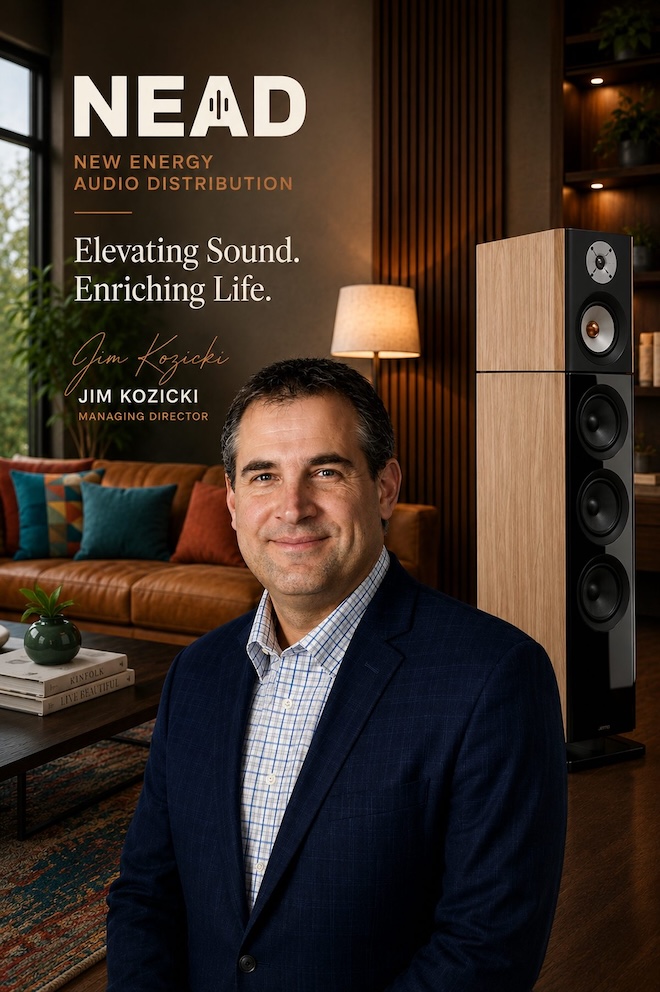
Audio brands do not return because somebody issues a press release, unveils a handsome loudspeaker at a trade show or revives a familiar logo on social media. They return when dealers can order products, customers can hear them, inventory arrives on time and somebody answers the telephone when a tweeter stops working.
That is why the launch of New Energy Audio Distribution, or NEAD, matters more than the usual distributor announcement.
The Chicago-based company will represent Jamo, Energy, Juke Audio, XLO and OXS Audio across the United States and Canada, creating a new North American sales and dealer network for five brands spanning passive loudspeakers, Bluetooth speakers, distributed audio, cables, gaming headsets and Dolby Atmos soundbars.
NEAD is led by Managing Director Jim Kozicki and was founded by Xiaodong Yang and his family, who also operate Chinese premium-audio distributor Cinemaster and have invested in Shenzhen-based audio engineering company Rayleigh Labs.
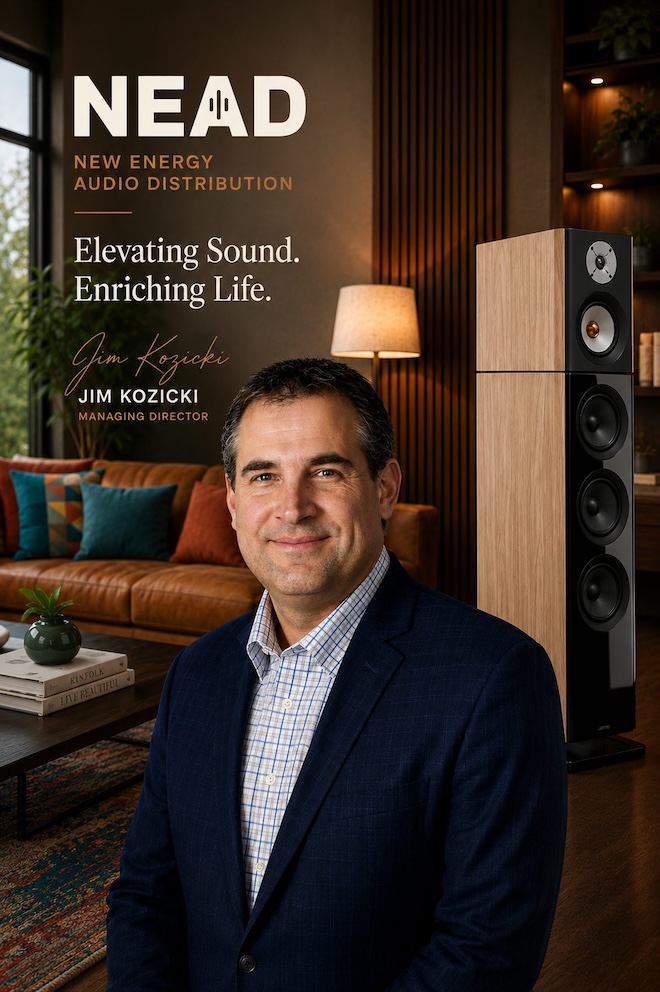
For consumers, the more important question is not who printed the new business cards. It is whether NEAD can turn the highly visible Jamo relaunch into a sustainable North American business and give Energy a credible path back into listening rooms after years of relative silence. We do not want this to turn into another Mirage situation where expectations were raised and nothing happened.
Distribution is not particularly glamorous, but neither is discovering that the loudspeaker you want has no local dealer, no confirmed inventory, uncertain warranty support and a delivery date apparently determined by the alignment of several planets in the Outer Rim and the availability of some Jedi Knights to handle any trade route disputes. Didn’t work out well.
A capable distributor has to establish dealer relationships, maintain pricing, manage inventory, coordinate marketing, provide training and make sure replacement parts and service remain available after the launch event has ended.
That has become especially relevant in 2026. Dynaudio recently announced that it would close its U.S. subsidiary and exit direct North American operations, reminding consumers and dealers that even established audio brands can struggle when regional support, costs and market strategy stop aligning.
NEAD is moving in the opposite direction by assembling a portfolio and attempting to build a more focused route into the United States and Canada. The line card is diverse enough to serve traditional hi-fi dealers, custom integrators and gaming-focused retailers, although those categories do not automatically become a coherent business merely because they appear together in a press release.
Execution will decide whether NEAD succeeds. The North American market has seen more than a few distributors stumble in recent years. For every strong operation such as Fidelity Imports or Playback Distribution, there are others whose names are better left out of print.
eCoustics has followed the Jamo revival from the beginning, when the Danish loudspeaker brand re-emerged under a new international ownership and engineering structure after being dropped by Voxx International in 2024.
The new organization combines Jamo’s Danish identity with development and manufacturing resources connected to Cinemaster and Rayleigh Labs. Xiaodong Yang had worked with Jamo previously, which gave the relaunch something more useful than a newly purchased trademark and a mood board filled with pale wood.
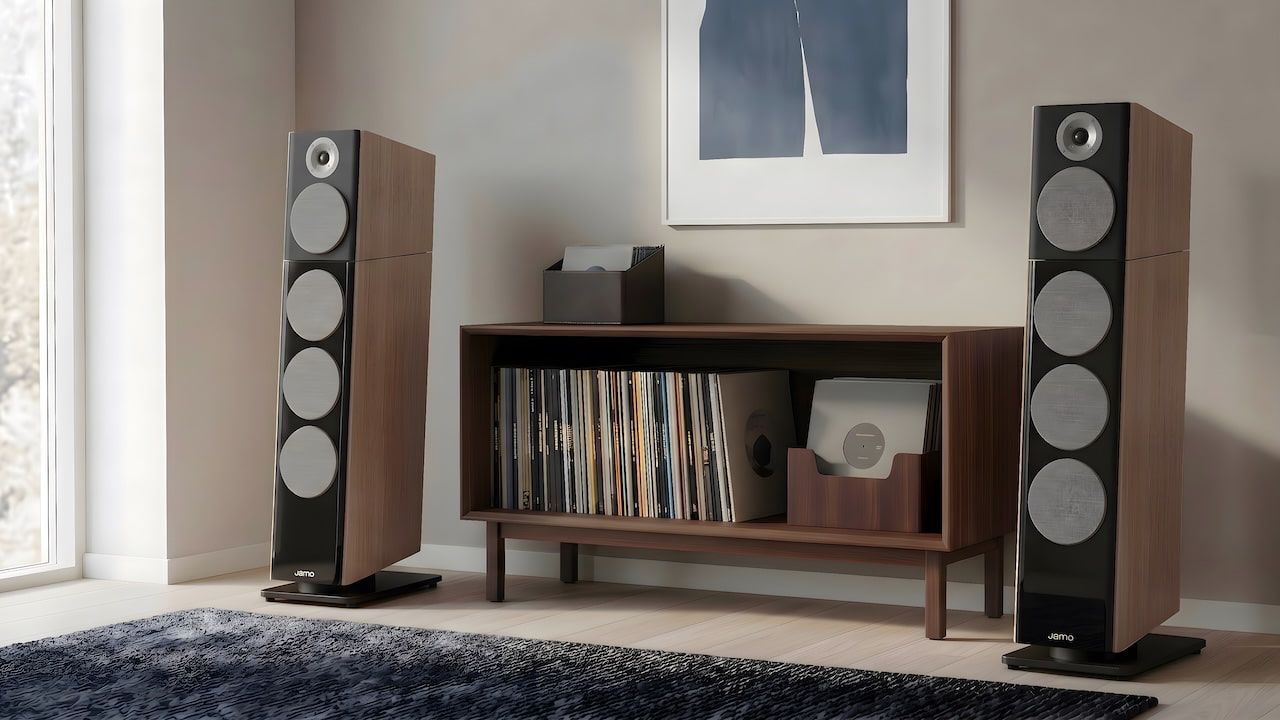
The first major products arrived ahead of High End Vienna 2026 with the Concert Legacy and Concert Element loudspeaker families.
Concert Legacy is the premium range, with three passive models priced from $2,999 to $7,999 per pair. The series is manufactured in Denmark and uses drivers developed with Scan-Speak and SEAS, while its design references the original Jamo Concert 8 and Concert 11 without simply copying speakers from 1996 and hoping nobody notices.
The more affordable Concert Element range begins at $1,099 per pair and extends to $2,499, with a matching $699 subwoofer. Both series are scheduled to reach the market in August 2026.

Jamo has also entered the lifestyle category with the HYG Flex, HYG Reflect and HYG Flow Bluetooth speakers, priced from $129 to $279. The lineup includes Bluetooth 6.0, Auracast support on select models, LC3, ambient lighting and as much as 27 hours of battery life, although Wi-Fi, app control, LDAC and aptX Lossless are absent.
That is a broad relaunch covering entry-level portable audio, two-channel systems and home theater.
The challenge is getting those products into stores, maintaining inventory and persuading dealers to allocate floor space to a revived brand competing with DALI, KEF, Wharfedale, Q Acoustics, Monitor Audio, Polk Audio, Paradigm and several dozen others that never left.
NEAD gives Jamo the regional structure it needed. Whether it gives the brand enough momentum is the more difficult question.
Energy carries a different kind of weight, particularly with Canadian listeners who remember the brand’s work with the National Research Council and loudspeakers such as the Energy Pro 22, Veritas, Connoisseur and Take 5.
Introduced in the early 1980s, the Pro 22 became one of the defining Canadian loudspeakers of its era. Its development was influenced by the NRC’s pioneering research into psychoacoustics, loudspeaker measurements and controlled listening tests, work that also helped shape the design philosophy of several other major Canadian audio companies.
NEAD says Energy is preparing a new generation of loudspeakers inspired by the Pro 22 and built around the brand’s historical emphasis on broad dispersion, low distortion and an accurate frequency response.
That is an encouraging direction, but consumers should keep their expectations under control. No new Energy model names, specifications, prices, photographs or shipping dates have been announced.
The Pro 22 name will attract attention, but it also creates a very high standard. Canadian loudspeaker buyers tend to remember the original Energy, Mirage and Sound Dynamics products rather fondly, and some of them still own working pairs. A new badge and a curved cabinet will not be enough.
Energy needs real engineering, competitive pricing and products that can stand beside current models from Paradigm, PSB, Totem, Monitor Audio, KEF and Revel without requiring buyers to grade on a heritage curve.
Until those speakers exist, Energy’s return remains a promising plan rather than a completed comeback.
Juke Audio gives NEAD a foothold in the custom-installation and whole-home market.
The American company produces multi-zone streaming amplifiers designed to power in-ceiling, in-wall and outdoor speakers without requiring separate matrix switchers, streamers and amplifiers for every zone.

The current lineup includes the Juke 6 and Juke 8, priced from $1,499, and the higher-powered Juke+, priced at $2,499. Depending on the model, the systems support six or eight powered zones, app-based control, Apple AirPlay 2, Spotify Connect, DLNA and Bluetooth.
Juke has also introduced AudioMate ($249), which can transmit television or analog-source audio into the company’s whole-home system using HDMI ARC or eARC and RCA connectivity. That makes it possible to distribute TV audio, a turntable or another local source to multiple rooms without pulling another long cable through the walls.
This may be the least familiar consumer brand in the NEAD portfolio, but it could become one of the most important commercially because custom integrators require products that are easy to specify, install and support. They are less interested in Scandinavian heritage than whether the system will still work after the homeowner changes the Wi-Fi password.
XLO was founded in 1991 by audio designer Roger Skoff and built its reputation around high-performance analog, digital, speaker and power cables.
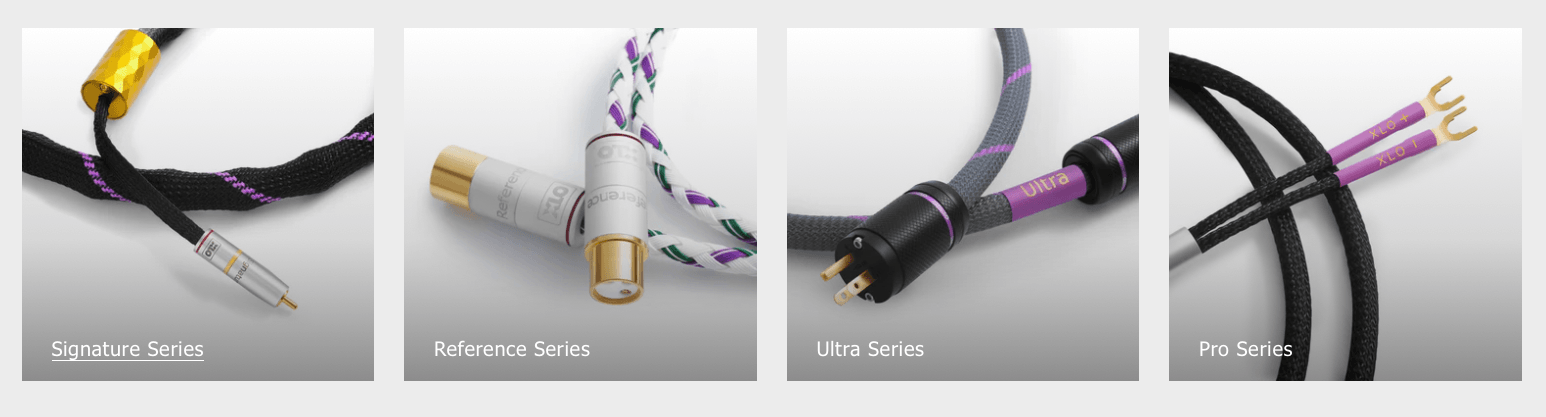
The current catalog includes the Signature, Reference, Ultra and Pro ranges, covering entry-level systems through expensive reference installations. XLO continues to promote low capacitance, conductor geometry, dielectric control and signal neutrality as central parts of its engineering approach.
eCoustics has covered XLO products for nearly two decades, including its Reference and Signature generations, home-theater cables and earlier ownership changes.
The fifth brand is OXS Audio, not “OSX Audio,” as it is written in portions of the distributor announcement. The official company name and website use OXS.
OXS develops gaming soundbars, home-cinema systems and wireless headsets, including Dolby Atmos products offering configurations as ambitious as 7.1.2 channels. Its lineup also uses the company’s proprietary Xspace spatial-audio processing.

We previously covered the OXS Storm A2, a wireless gaming headset with hybrid active noise cancellation, virtual 7.1-channel audio, low-latency wireless operation and support for multiple gaming platforms.
OXS broadens the NEAD portfolio beyond conventional hi-fi and custom installation into gaming, a category with a much larger and younger potential audience. It also creates some overlap with Jamo’s lifestyle products, but that is not necessarily a weakness if the brands are directed toward different retailers and customers.

Jim Kozicki brings 34 years of consumer-electronics and premium-audio experience to the distributor. His background includes leadership roles at Abt Electronics, territory development involving Bowers & Wilkins and Klipsch, and most recently business development at the ProSource buying group.
That dealer and retail experience matters because the five brands need different sales strategies. A Jamo Concert Legacy loudspeaker, Juke multi-room amplifier, XLO speaker cable and OXS gaming headset are unlikely to reach consumers through precisely the same channel.

Xiaodong Yang adds the international and manufacturing side of the operation through Cinemaster and his family’s investments in audio brands and Rayleigh Labs. His direct involvement in the Jamo relaunch also makes NEAD more than an unrelated third-party logistics company hired after the products were finished.
The companies are connected strategically, which should make product planning, inventory and regional marketing easier—at least in theory.
NEAD says its portfolio is available across the United States and Canada, but it has not yet published a complete authorized-dealer list, detailed warranty arrangements or specific inventory dates for every brand.
There are also no final details for Energy’s new loudspeakers, while Jamo’s Concert products are still expected in August.
The company says additional specialty brands and product categories will be announced. That may create more scale, but there is also a point at which a “focused portfolio” becomes another distributor with 37 logos and no time to explain any of them.

The launch of NEAD is good news for Jamo, Energy, Juke Audio, XLO and OXS because North American distribution is the difference between being announced and actually being available.
Jamo has already completed the most visible part of its comeback. It has new products, clear pricing and a design direction that reaches from $129 Bluetooth speakers to $7,999 Danish-made floorstanders. What it needed was a credible dealer and support structure in the United States and Canada.
Energy has more work to do. The Pro 22 connection will generate interest, especially in Canada, but the brand must reveal products capable of supporting the weight of that history. There are enough resurrected audio names in the market already; nobody needs another one returning solely because the trademark was available.
Juke Audio, XLO and OXS give NEAD useful reach into custom installation, high-end accessories and gaming audio, making this a more diverse portfolio than a loudspeaker-only operation.
For more information: newenergyaudio.com


GPU memory is the most expensive resource in production AI, and it’s also the one running out fastest.
Long context windows and multi-turn conversations force AI models to repeatedly recompute information they’ve already processed, consuming GPU memory and compute that could otherwise serve additional users or generate new responses.
Instead of treating GPU memory as the limiting resource, why not extend it with much cheaper storage technologies?
Weka, for one, believes that cheap flash storage can close that gap. The company’s NeuralMesh 6 software platform, launching alongside its first self-designed hardware line, Wekapod 3, extends what Weka calls Augmented Memory Grid, an approach that aggregates NAND flash to behave like GPU memory at a fraction of the cost.
This is an active and increasingly crowded category. Dell, NetApp, Pure Storage and VAST have all repositioned toward AI infrastructure over the past two years and Weka is one of several vendors arguing it’s built for this specific moment rather than adapting to it.
“What we’re seeing now with customers is they’re chasing availability of compute, and once they get new allocation from anyone, they want to be able to grab it and start running right away,” Weka co-founder and CEO Liran Zvibel, told VentureBeat.
The potential payoff is straightforward: better utilization of existing GPU investments, lower inference costs and faster deployment of new AI workloads without waiting months for additional GPU capacity.
The technology is most relevant for organizations already operating AI at scale or expecting rapid growth in usage, particularly enterprises building internal copilots, customer service agents, software engineering assistants or retrieval systems with long context windows. Smaller deployments may see less immediate benefit than organizations where GPU utilization has already become a limiting factor.
NeuralMesh 6 adds four capabilities aimed directly at a functionality gap Zvibel says has been costing Weka deals in competitive evaluations.
Composable and virtual multi-tenancy. Composable clusters give anchor tenants full hardware-level isolation, dedicated CPU, memory, and storage. Virtual multi-tenancy runs through Weka’s RDMA fabric, delivering network-level isolation that scales past 1,000 tenants per cluster, with provisioning in under 30 minutes. Combined, a single cluster running 50 composable clusters can support up to 50,000 tenants.
Unified file and object storage. Most storage systems keep two separate paths: a file-based path (the standard way servers and applications read and write files, used heavily in training and fine-tuning pipelines) and an object-based path (S3, the format inference and cloud-native tools typically expect). Normally a gateway translates between the two, meaning the data effectively exists twice. Weka’s claim is that the same physical data on disk is directly readable through either path at once, no translation layer, no second copy. Zvibel is targeting non-AWS GPU clouds specifically, naming Lambda, Nebius, G42, and CoreWeave, with what he described as roughly two orders of magnitude higher performance than conventional S3 and a capacity-based pricing model instead of per-API charges.
Metadata-first replication. Destination environments become browsable before a full data copy arrives, with data hydrating only when accessed.
“They had to wait for all of that to make it to the other side, and this takes days or weeks, in extreme cases a month,” Zvibel said. “We now allow our customers to grab some allocation of new GPUs and get up and running within an hour.”
AlloyFlash and Always-On data reduction. TLC and QLC are two types of NAND flash memory. TLC is faster and more durable but costs more per terabyte, while QLC is cheaper and holds more data per chip but is slower. AlloyFlash mixes both within a single cluster, automatically routing latency-sensitive work to TLC while running bulk-capacity workloads on QLC, cutting cost per terabyte without a performance penalty on the work that needs speed. Data reduction now runs by default rather than as an option.
Multi-tenancy and object storage solve how enterprises and neo clouds operate the platform day to day. A harder problem sits underneath: as context windows and multi-turn interactions grow, so does the GPU compute wasted recalculating work a model has already done. Augmented Memory Grid, a NeuralMesh 6 feature built specifically for this, is Weka’s answer.
Every prompt triggers two stages. Prefill calculates attention, the core mechanism behind how large language models process input, and it’s computationally expensive. Decode converts that calculation into output and is comparatively lightweight.
The cost shows up hardest in multi-turn sessions like chat or coding, where each new turn re-triggers prefill for everything that came before it, unless that work has been cached.
“If you have 10 turns, you may overcalculate 100 times because you’re redoing all of them. If you have 20, you’ll overcalculate 400 times,” Zvibel said. “You can put two orders of magnitude more NAND than you could afford in shared memory, and we can cache 100% of the pre-calculated tokens, so you never need to redo it.”
Storage vendors have spent the past year and a half repositioning around AI, and separating genuine capability from repositioned messaging is now a real evaluation problem for buyers.
“The storage world is shifting its focus from serving bits to enterprise workloads to managing data at the speed of AI. We’ve seen that most clearly over the past 18 months from Dell, NetApp, and Pure,” Steve McDowell, chief analyst at NAND Research, told VentureBeat. “The interesting thing is that companies like Weka, and VAST, are the true AI-native data companies, solving these problems since day one.”
McDowell singled out Augmented Memory Grid as Weka’s clearest technical lead.
“Weka continues to have the most technically capable KV cache implementation on the market with its Augmented Memory Grid,” he said. ” They were early with this technology, and continue to innovate. This is critical for AI inference, as it enables a level of GPU efficiency that, without question, saves money on GPUs and memory. That’s key for today’s memory and GPU constrained market.”
He also flagged Weka’s contractual guarantee on its data reduction claims as underappreciated.
“One flying a little under the radar: Weka is putting its money where its mouth is with its contractual guarantees for its data reduction promises,” he said.
McDowell’s advice to buyers evaluating competing claims from Weka, VAST, Pure and NetApp alike was pointed suggesting that enterprise buyers should look hard at what vendors are promising versus what they’re actually delivering.
“A smart buyer will look at how competing vendors are solving real-world problems today,” McDowell said. ” They do this by talking to organizations running similar workloads at similar scale. If a vendor can’t point to that, then it should be a warning sign.”


off-prem
AWS’ me-south-1 region has been offline for months, so more like beating a dead cloud
Iran’s Islamic Revolutionary Guard Corps (IRGC) claims it hit an AWS datacenter in Bahrain months after taking it offline for the first time, in a move it claimed as retaliation for a US attack on a nuclear plant that was under construction.
The IRGC said in a statement on Tuesday that it had struck back at what it called the “child-killing US Army” by attacking Amazon infrastructure in Bahrain, claiming AWS’s “central data infrastructure” had been “destroyed” after being hit by “several cruise missiles,” according to Google Translate. The IRGC said the claimed strike was retaliation for what Iran described as a US attack on the under-construction Darkhovin nuclear facility.
A look at the AWS Health Dashboard shows that there are definitely issues in Bahrain and the UAE, with issues in both regions being blamed on the US-Iranian conflict. While the status of AWS me-central-1 (UAE) is just “unable to reliably support customer applications,” me-south-1 (Bahrain) is said to be “currently unavailable.”
The last update to the state of AWS services in Bahrain and the UAE in the open issues area of the Dashboard was on April 30, and the Service History tab shows that every single AWS service in Bahrain has been offline for months.
Per our previous reporting, Iranian state-affiliated media claimed that strikes on AWS infrastructure in Bahrain and the UAE were deliberate, after US and Israeli attacks on Iran in late February. AWS-hosted providers including Snowflake and Red Hat subsequently urged affected customers to fail over or move workloads to other regions after the facilities were damaged.
AWS waived all usage-related charges for March 2026 in its me-central-1 region in the UAE following the attacks on its infrastructure. Iran has also reportedly designated facilities associated with Google, IBM, Microsoft, Nvidia, Oracle, and Palantir as legitimate targets for retaliatory strikes, citing their alleged support for US military operations.
The fact that services in Bahrain have been unavailable for months, and continue to be offline, makes it challenging for El Reg to confirm the legitimacy of Iranian claims it hit the site again. We’ve reached out to AWS to learn more, but didn’t hear back. ®
The biggest publicly traded tech companies in the world, commonly known as the “Mag 7” — or magnificent seven — may not be enjoying their stranglehold at the top of the US economy for much longer. That’s, of course, if the leaders of a swathe of new AI-centric tech firms, including OpenAI and Anthropic, have their say as they plan to IPO in the coming months. But positioning these businesses in the new big tech landscape has been a major challenge.
“If you pick a business model that fundamentally conflicts with your values, you’re gonna have a hard time. Either you betray your own values, or you become irrelevant… It’s far better to pick a business model that’s compatible with your values.”
The Anthropic CEO Dario Amodei was reflecting on his history in the AI industry during an interview with Bloomberg that aired earlier this year.
Quote of the day
This article is part of TechRadar Pro’s QOTD project to provide an insight into the minds of the brightest and most recognized figures in the technology industry today and in years gone by. Read the full series here.
In an exchange themed around the success of Anthropic’s enterprise-centric AI tools like Claude Code and Claude Cowork, Amodei took the opportunity to opine on the nature of doing business and the importance of business models that align with your values.
Commenting that many in the tech industry prioritize models that tap into elements like engagement, advertising, and the promotion of AI slop, Amodei noted that compromising your own values is not a long-term and sustainable way forward.
This is at least as far as he’s concerned. That’s why, he suggested, he’s attempting to make Anthropic more “useful” to the world by targeting enterprise customers.
Amodei, an ex-OpenAI executive, co-founded Anthropic in 2021 largely as a rejection of the values that drove OpenAI at the time and the paths the company had taken.
In particular, reports suggest that Amodei was frustrated and disturbed by the willingness to bypass what he considered to be crucial safety measures, like the slowing of updates to prevent malicious use of AI.
Critics of Anthropic, however, also point out that despite positioning itself as a safety-first AI company, engineers are releasing increasingly powerful models — including Mythos lately — that threaten to undermine safety if they get into the wrong hands.


Honda New Zealand has listed 16 vehicles from the heritage car collection up for auction. Before the auction went live, these collectible cars were located on the Nelson Bays site. The auction is the result of Honda New Zealand closing this location and moving distribution to Auckland. Proceeds from the auction, which closes on July 29th, 2026, will go to various charities.
Assembled in New Zealand, the 16 vehicles range in age from a 1981 Accord to a 2000 Civic Type R. The latter is the highlight, a desirable JDM with manual transmission and high-revving engine with a starting price of $30,000 and no reserve. The first-generation Type R is a fun drive, with great handling and a loud engine. Other standout listings include a 1995 Accord LXi with just 4,722 miles — which is possibly the lowest mileage example in the world — currently at $11,000, and a 1988 Honda City Jazz, a cute compact car with a quirky design, lightweight construction, and manual transmission with a current bid of $6,050 at the time of writing.
Honda was founded in Hamamatsu, Japan in 1948, but quickly established itself as a global company. By 1959, the American Honda Motor Co. Inc was established in Los Angeles, California — the first overseas subsidiary — and the Honda N600 became the first car sold in the United States in 1969. However, the United States wasn’t where the expansion ended.
The 1976 Honda EB1 Civic was the first vehicle Honda assembled outside of Japan — and the first hatchback car it assembled in New Zealand. Its design was boundary pushing at the time for its fun, small look. Every EB1 was assembled at Petone, but Honda later started assembling the second-generation Civics at the Panmure and Nelson Bays plants.
Before Honda moved in, however, the Nelson Bays assembly plant location originally manufactured Jaguar, Triumph, and other British vehicles. These brands started to lose favor in New Zealand in the 1970s, which is when it switched to Honda. When Petone shut down completely in 1982 and sporty cars started gaining popularity, Honda ramped up production at Nelson Bays. Honda continued to assemble vehicles at Nelson Bays for 50 years, although it largely served as a location to store new cars and prepare them for sale in recent years.


offbeat
Don’t worry – it can autonomously attack ground targets, too
The US military is adding autonomous gun-based counter-drone systems intended to reduce its reliance on expensive interceptor missiles. They also have the potential to kill humans.
Defense robotics firm Allen Control Systems (ACS) announced a deal with the US Marine Corps on Monday to get its Bullfrog autonomous weapon system attached to the Light Marine Air Defense Integrated System (L-MADIS) expeditionary counter-drone platform. L-MADIS consists of pairs of off-road vehicles, one carrying a suite of sensors and the other slated to be outfitted with a Bullfrog autonomous weapon station.
Videos on ACS’ YouTube page demonstrate the Bullfrog in action, taking down a number of small drones in demonstrations over the past couple of years. While we didn’t hear back from ACS about the Bullfrog’s capabilities to target manned vehicles and troops, a short video on the company’s channel also shows a Bullfrog unit switching from targeting aerial drones to ground targets with ease. This suggests that Bullfrog systems aren’t just capable of knocking drones out of the sky. They are also fully capable of – and lack any software protections against – the fully autonomous targeting and killing of humans with complete autonomy.
Bullfrog systems are a little different from your typical AI-controlled counter-drone systems in that they’re not built with an attached weapon, but are designed to slot in “any legacy or modern firearm” in order to turn them into systems able to “detect, track, and defeat incoming threats at a fraction of the cost of even the least expensive kinetic interceptors.”
In other words, ACS claims it’s cheaper to build a system that can adapt existing military firearms than to invest in a purpose-built counter-drone weapon system. Bullfrog units provide the AI, computer vision, and precision aiming robotics to take out drones, while the military only has to plug in its own hardware.
There are several variants of the Bullfrog available from ACS, with units designed for everything from the M240 machine gun to the M2 50-caliber machine gun. The company is currently working on M230 chain gun and M134 minigun variants as well. In the case of the Marine Corps contract, it appears the service is taking on some M240 variants based on a link in ACS’s press release to the M240-variant’s page.
The M240, the smallest of the weapons designed for the Bullfrog, fires up to 850 7.62×51 mm NATO rounds per minute and is effective up to 800 meters in the Bullfrog. The Bullfrog M240 is capable of taking down drones up to DoD Group 3, meaning anything with a max gross takeoff weight less than 1,320 lbs, able to operate as high as 18,000 feet above sea level, and with an airspeed of less than 250 knots. The DoD grouping goes up to Group 5, which includes some of the military’s largest drones, such as the RQ-4 Global Hawk.
The US Army and US Navy are both already fielding Bullfrog units, making the Marines the third branch to get their hands on the system. ACS cited the proliferation of cheap drones in the Russia/Ukraine conflict and in the Middle East as a need for comparable cheap counter drone tech. ®



London Mayor Sadiq Khan handed a peerage by Keir Starmer alongside 15 other Labour figures… just days before the PM leaves No10


Weekend Open Thread – Corporette.com


The House | The City of London can help the new chancellor deliver growth in every postcode


Young campaigners urge incoming PM to act on outdoor junk food ads

Two July Windows Left: The CLARITY Act’s Senate Fight and What Failure Means


CFTC blocks Kalshi from unwinding Michigan trades after court order


Ripple Payments Joins MiCA With 14 Firms, Does It Mean Anything For XRP?


Nvidia Stock Slips After Big Tuesday Rally as Huang Confirms Vera Rubin Chip Is Now in Production Today


Democrats look to World Cup watch parties to register thousands of voters

Disney’s Most Ambitious Failed Star Wars Attraction Is Coming to SDCC


Ripple wins EU-wide access as ESMA adds it to MiCA register


Grayscale Files For Worldcoin ETF, WLD Registers Sharp Rise


Injective Submits SEC Transfer-Agent Registration to Onchain Ownership Records


Palantir Shares Rise After Expanded Nvidia Partnership and Fresh Analyst Upgrades Ahead of Earnings Day


Sail Virtually Aboard The “Itanic” With IA-64 Emulator
Turtle Beach Command Series KB7 review: a nifty screen-equipped gaming keyboard


Registration is now open for March for Men with Kev 2026


Unregistered fitter used Gas Safe logo on business flyers

New Cornerback Enters Vikings Trade Rumor Mill


Money | Class 12 Economics | CBSE Board Exam 2026-27




You must be logged in to post a comment Login