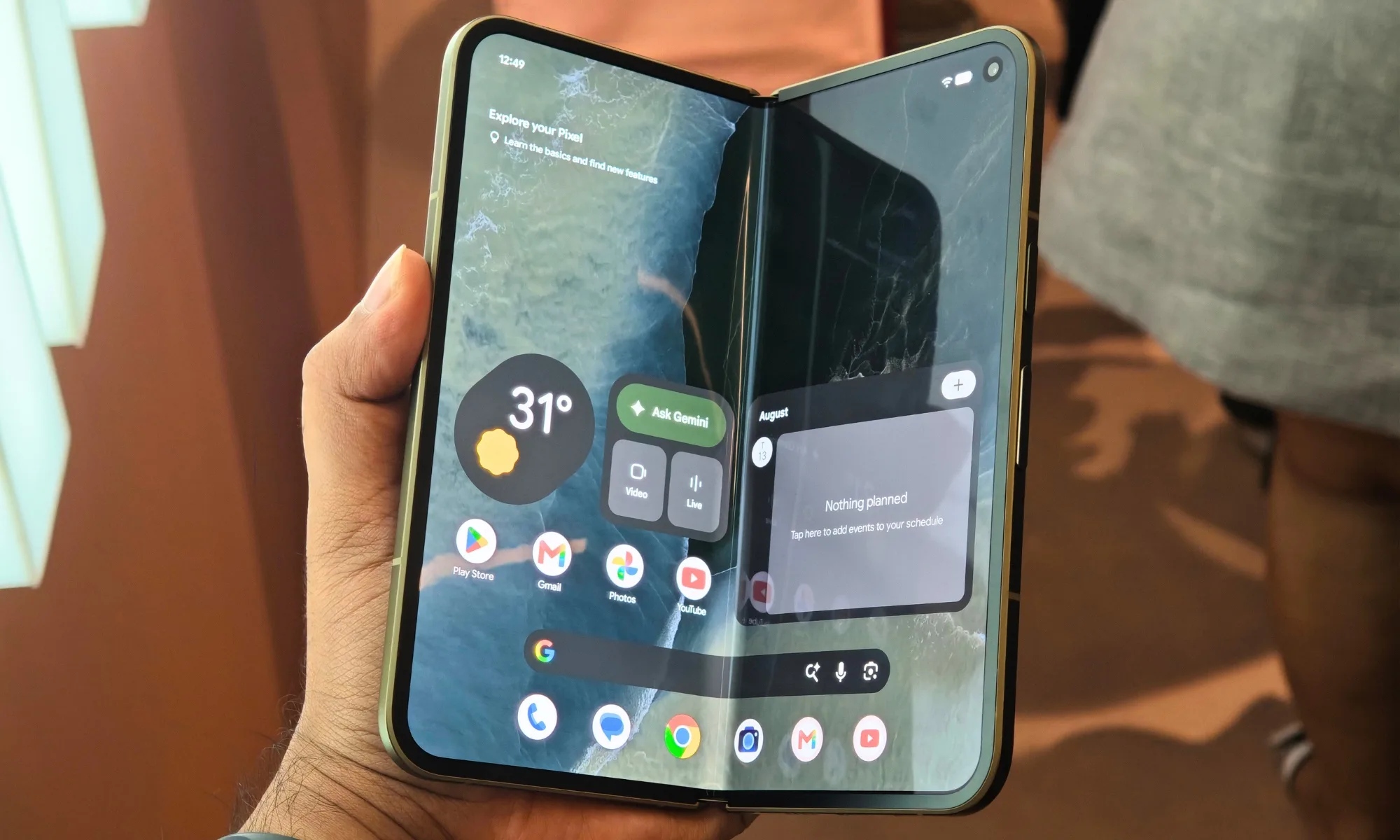
Google just pushed the prices higher for the entire Pixel 11 lineup. The hikes weren’t surprising at all, especially considering the rising component costs and the ongoing RAMmageddon. But a new report hints that we might soon see a solution to all of this.
According to Nikkei Asia, Google plans to stop producing all Pixel devices in China starting in 2027, shifting manufacturing toward India and Vietnam. The reported move covers Pixel phones, watches, and wireless earbuds as Google continues reducing its reliance on Chinese manufacturing. As always, there’s no guarantee Google will pass any resulting savings along to buyers. Though reducing its exposure to China at a time of volatile trade policy and spiralling component costs could give the company more flexibility when it comes time to price future Pixels.
Did Google just get serious about leaving China?
Nadeem Sarwar / Digital Trends
Google already has Pixel manufacturing infrastructure in India, while Reuters reported in January that the company was moving development and manufacturing of its high-end Pixel phones to Vietnam during 2026. This move apparently included the Pixel, Pixel Pro, and Pixel Fold families, while development of the cheaper A-series remained in China at the time.
The newer Nikkei report claims that Google has told suppliers that all Pixel production will leave China in 2027, with successful development and production of premium Pixels in Vietnam giving it confidence to make the transition. India is also becoming increasingly important, as Google and its manufacturing partners are looking to expand Pixel production in the region as well.
A cheaper Pixel would be very welcome right now
Nadeem Sarwar / Digital Trends
Google’s new Pixel 11 starts at $899, $100 above the Pixel 10’s $799 launch price. Google also doubled the base storage from 128GB to 256GB, which softens the blow, while rising memory costs have been putting pressure on smartphone prices across the industry.
So simply moving production doesn’t magically erase those pressures. Building and validating new manufacturing lines carries costs of its own, and PhoneArena reasonably points out that stable prices may be a more realistic outcome than an outright reduction. Another aspect to consider is the tariff situation.
Advertisement
After watching the Pixel’s entry price climb from $799 to $899 this generation, I’m perfectly happy if Google’s grand manufacturing reshuffle manages to keep the pricing stable. Just keep the Pixel 12 from becoming a $999 phone.
A speed limit sign anywhere in the United States serves the same basic function, but there are more differences between signs across the country than you might imagine. In Oklahoma, you can find signs confirming that a speed limit has “no tolerance,” while in Texas, some speed limit signs have a red border to boost their visibility to drivers.
In very rare cases, you might even see a speed limit sign that uses a completely different system of measurement than usual. There are a few speed limit signs around the country that display the limit in kilometers per hour (km/h) as well as in miles per hour (mph). According to the U.S. Metric Association, examples of these signs have been documented in many different states, from Maryland and Florida on the East Coast to Washington on the West Coast. As well as speed limit signs, there are a number of highway signs with distances posted in kilometers still dotted around the country.
Advertisement
These signs are often a remnant of a push to get the U.S. to move to the metric system, with the Metric Conversion Act being signed into law in 1975. The new law encouraged businesses and organizations to switch to the metric system, but it didn’t mandate them to do so. After the bill was passed, campaigners tried to introduce further bills to guarantee a switchover period or speed up the transition, but government enthusiasm for the idea had already fizzled out. The board that was originally set up to oversee the transition was shut down in 1982.
Advertisement
Some metric signs have a more practical purpose
Nalidsa/Shutterstock
Signs that were installed during various efforts to encourage the metric switch sometimes still carry their metric markings today. However, virtually all of them also have limits posted in mph as well as in km/h. Some of the remaining signs are primarily kept for their historical value rather than for a practical purpose, although in some instances, metric signs are used near the northern border of the U.S. to aid Canadian drivers.
Today, the U.S. is one of only a few countries around the world that still uses mph to indicate speed limits. The only other major country to use mph rather than km/h is the U.K., although, confusingly, many commercial vehicles in the U.K. have speed limiters and tachographs that operate in km/h. Although many industries and authorities in the U.S. did not make the switch to metric, the nation’s auto industry did, and as a result, engine displacements have been measured in liters for many decades now.
What makes Skylight great is its software. It’s easy to use, and it quickly imported my Google Calendar and the wide variety of calendars shared to it, so I could immediately add all of my family’s schedules to the device. The left-side menu bar shows all the pages you can toggle between. Calendar, Lists, Tasks, Rewards, Meals, and Recipes are the main areas you’ll use; you can also access the Photos, Sleep, and Settings pages from the same menu.
The app and device interface are clean and intuitive compared with other models, many of which feel like Android tablets with a fancy calendar mode added. I was able to easily assign calendars I created on the device to family members. For example, I assigned my husband’s calendar to him without needing him to log in or import it, and I could have assigned any calendar I created to my son as well. I also liked that shared events only appear once on the Skylight, but with both of our designated colors added to show the event in question applied to both of us.
Lists and Tasks sound similar, but Tasks are meant to function as a chore chart, connecting back to the Rewards page to build habits and earn the reward you set after hitting a certain goal. The main audience for this is children who are old enough to check the calendar. Lists are for things like your groceries. If you add recipes to the Recipe tab and then add those to your meal plan for that week, Skylight will offer to put the corresponding ingredients on your shopping list.
The downside of Skylight is the paywall. To access some of the best features—meal planning, rewards, photo screensaver, and the in-app AI assistant tool Sidekick—you’ll need to be a Plus subscriber for either $79 a year or $8 a month. Having this device double as a digital photo frame makes it worth the cost to me. I love getting to have my two favorite things nearby: photos of my family and instant access to our shared calendars.
Advertisement
Best Without a Subscription
Everblog
HomeCal 21.5″ Calendar
The Everblog HomeCal has an operating system that feels pleasantly similar to the Skylight. It has a bit of an Android undertone to it, but it doesn’t feel like a giant tablet as much as the Apolosign or Cozyla calendars (both below). Setup was pretty seamless, but there was a delay for the device to update with my calendar invites. It would also take a while for the Everblog to reflect changes I made to my Google Calendar on another device. While it worked well for the most part during testing, I occasionally noticed events missing from my Everblog. It also turned each calendar email account I connected to the device into a separate profile, which was annoying. I could toggle off the extra emails when I was on pages outside of the calendar, though, so I didn’t have three profiles for myself on my Chores page, for example.
It also reportedly closed outlets in Taiwan & Indonesia
Couples with upcoming wedding shoots at Korea Artiz Studio Singapore are scrambling for answers after the popular bridal photography studio appeared to abruptly cease operations.
A notice shared on Reddit on Tuesday (August 18), purportedly displayed outside the studio’s Bras Basah outlet, claimed employees had not received outstanding salaries due to “internal operational issues” and said management had not provided any clear update on the company’s next steps.
As a result, the notice said the studio could not guarantee that scheduled photography sessions, photo selection appointments, or other services would proceed as planned.
Customers were urged not to visit the studio until further notice to avoid making a wasted trip.
Advertisement
“We understand that many customers have already made arrangements, planned their schedules, and looked forward to completing their wedding photography,” the notice read. “We sincerely apologise for the inconvenience, difficulties, and uncertainty that this situation may cause you.”
Image Credit: Ong via Google Reviews
A second notice also appeared to be displayed outside the studio, this time from Artiz Studio’s photo and album production partner, claiming it was holding more than 50 completed photo sets belonging to customers.
“We currently have more than 50 sets of your photographs in our possession. If you would like to collect or arrange for the return of your photographs, please feel free to contact me.”
The Reddit thread quickly filled with anxious comments from affected customers.
Some said they had completed their photoshoots but had yet to receive their images, while others claimed their sessions had not even taken place despite having paid upfront.
Advertisement
CASE has received 66 complaints involving over S$271,000
Image Credit: Wendy, Shu via Google Reviews
The situation has already drawn the attention of Singapore’s consumer watchdog.
In response to media queries, Consumers Association of Singapore (CASE) president Melvin Yong said the organisation received 66 complaints between Aug 14 and 18, involving more than S$271,000 in prepayment losses.
According to CASE, complainants reported that Artiz Studio was unresponsive when they sought either fulfilment of contracted services or refunds.
The association has since contacted the company to determine whether scheduled shoots will proceed and what remedies may be available if services cannot be delivered.
Yong also advised consumers to negotiate progressive payment arrangements where possible, obtain written confirmation of key deliverables, and retain contracts and proof of payment.
Advertisement
While Artiz Studio’s Singapore location currently appears as “Temporarily closed” on Google, the business entity Korea Artiz Studio Pte. Ltd. remains listed as a Live Company on ACRA’s BizFile portal at the time of writing.
Closures extend beyond Singapore
Founded in Busan, South Korea, in 2008, Artiz Studio describes itself as a Korean luxury bridal photography brand with dozens of studios worldwide.
Taiwanese media reported that Artiz Studio’s Taiwan operations ceased business around Aug 10, while customers commenting on Artiz Studio Jakarta’s Instagram page have also demanded refunds and compensation.
Advertisement
While Artiz’s official Singapore and global materials identify the brand as Korean-founded, Jiahao International Holdings—a Chinese wedding industry conglomerate led by entrepreneur Allen Shi—has publicly listed Artiz Studio among its portfolio of wedding brands.
The group reportedly operates across bridal photography, wedding dresses, jewellery, hospitality, education, and other wedding-related businesses, with more than 20 wedding brands and over 200 physical stores worldwide.
Vulcan Post has reached out to Korea Artiz Studio for comment.
Featured Image Credit: Ong, Sabrina Abdullah via Google Reviews
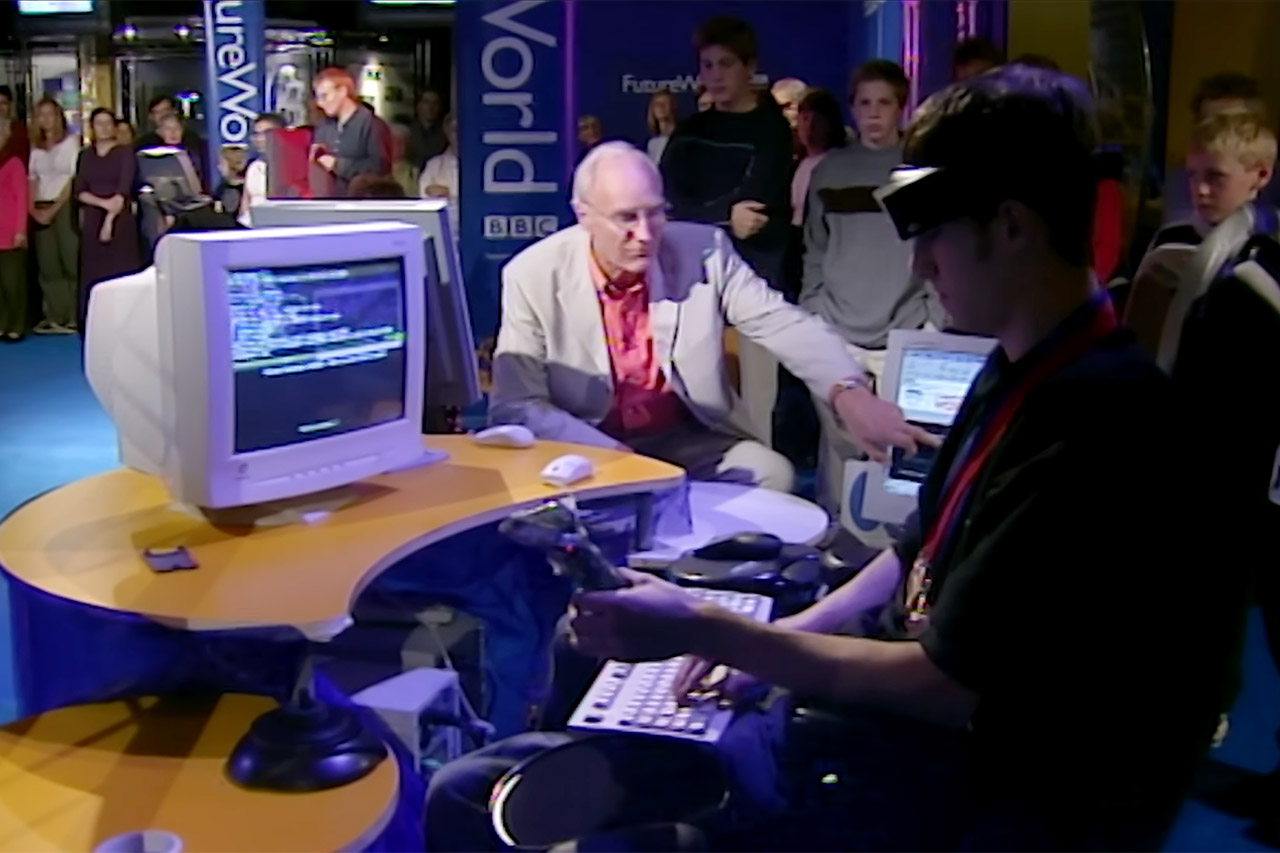
Peter Snow and Lindsey Fallow opened their special edition of Tomorrow’s World with a simple greeting from the BBC Futureworld exhibition in Bristol. This was a Webwise special meant to give viewers a practical head start on the internet. More than 330 million people were already online around the planet, and new users were joining every second. The live show mixed demonstrations of new hardware and software with challenges for ordinary families still getting their bearings.
Elliot, the teenage gaming champion, sat down in a chair outfitted with fancy haptic feedback technology while wearing some very spectacular 3D goggles. The chair began to get the old pulse going with each explosion and rocket launch as he played an online game against hundreds of opponents from all around the world, all in real time. To add to the amusement, a webcam stream showed several of the opponents joking around at a London cyber cafe. The setup effectively transformed what would otherwise be a faraway online contest into something that felt very real.
Most Comfortable And Relaxing: Equipped with headrest and lumbar pillow. When your neck feels sore from gaming or working with head down for a long…
More Stable Than Others: Common gaming chairs are equipped with plastic legs generally to save costs, but we still insist on applying the same…
Liberate Your Feet: Will you feel tired for sitting all the time? Sure. Then you can choose the chair with footrest to relax your feet. When you…
Faster connections were put through a quick side-by-side test. Now we’re talking: one machine started on a regular telephone line, while another used ADSL broadband. They were both watching the same video of Olympic rower Steve Redgrave flying around online. The dial-up version appeared smeared and unappealing to view, whereas the ADSL stream came through in quite high quality and remained connected without the typical dial-up delay. Families who were already utilizing the speedier connection raved about the instant access to games and even TV-style viewing via the internet.
Advertisement
Meanwhile, mobile phones carried a watered-down version of the internet called Wireless Application Protocol. A smartphone generated a weather forecast for Southampton in a matter of seconds, replete with temperature and sailing conditions (which is quite useful, I suppose). Another demo sprung into action, transmitting a live video feed of some children to a parent’s phone. It wasn’t the smoothest operation in the world, but it worked. Presenters kept their chins up, knowing that third-generation networks will soon be able to handle clearer footage and faster speeds, even if the monthly price would be a tidy fifty pounds.
DJ Mark Goodier plugged a spanking new internet radio directly into a phone line (which is exactly how you would want to do it, right?). The item had access to thousands of stations from all around the world. A jazz broadcast from Washington, DC had sound that was at least as excellent as FM. And, of course, broadband promised to bring it much closer to CD quality in a few months.
When Anya Sitaram met her digital clone, she had a really weird experience. Technicians had scanned her face with hundreds of images, created a three-dimensional mesh, added texture and clothing, and loaded an electronic gadget with information about her hobbies, memories, and opinions. The finished avatar talked in her voice and responded in ways that matched her recorded characteristics, including a forecast about the upcoming American presidential election. A more basic free service, on the other hand, allowed anyone to email images and receive a virtual head that could spin around and try on various funny hats and glasses.
Remote health monitoring appeared in the form of an intelligent shirt jam-packed with sensors. The device measured heart rate, temperature, breathing, and other vital signs before transmitting the information to a cardiologist in New York via a webcam. The aim was that persons with chronic diseases may remain under the radar without having to make frequent hospital trips, particularly those who lived far away from specialists.
Lindsey Fallow threw down the gauntlet, embarking on a day-long endeavor to create and publish her own website from scratch. She grabbed her 2.1-megapixel digital camera to take still photos, connected a digital video camera via FireWire to record short videos, and even carried a portable scanner to scan in text and printouts. Then there was the trick: she was able to get a website up and running without knowing a single line of code. Netscape Composer, a free piece of software, did the heavy job for her. The finished website, which offered advice on how to become a TV presenter, went up on a free web hosting provider. When staff at a local computer cafe reviewed it, they scored it a 6 and 1/2 out of ten.
The Goodmans, a local family who were completely new to the internet, were up next. They gave themselves three rather basic tasks. The first step was creating an email invitation for a Halloween party, replete with music and quirky visuals downloaded from the internet. Then they began researching the history of their surname. Finally, they arranged a brief trip to Florence, which came in just under their £250 budget, which they were quite pleased with, but not everything went as planned; one of their assignments fell somewhat short. [Source]
New high-performance IEMs are hitting the shelves at a dizzying rate in 2026. It seems that every month, five, six, or even 10 new products clamor for customers’ attention and cash. Not every IEM is worth the investment, however, and between worsening global economic conditions and ballooning IEM price tags, audiophiles are getting hit hard.
Enter the SIVGA Lyrebird. On paper, it does everything right. Price tag? $165, which puts it well within reach for most consumers. Materials? Premium, with quality aluminum and genuine hardwood. Technology? Advanced, thanks to an impressive quad-driver array. But as I’ve said many times before, the number of drivers doesn’t matter if the sound quality isn’t there. So, does the Lyrebird deliver on audiophile expectations? Let’s get into it.
About My Preferences: This review is a subjective assessment and is therefore influenced by my personal preferences. While I try to mitigate this as much as possible during the review process, I’d be lying if I said my biases were completely eliminated. So, for you, my readers, keep the following in mind:
My ideal sound signature includes competent sub-bass, textured mid-bass, a slightly warm midrange, and extended treble.
Advertisement
I have mild treble sensitivity.
Testing equipment and standards can be found here.
SIVGA Lyrebird IEM | Photo credit: Resonance Reviews
Key Specifications:
Driver Configuration: Quad-driver hybrid system per earpiece
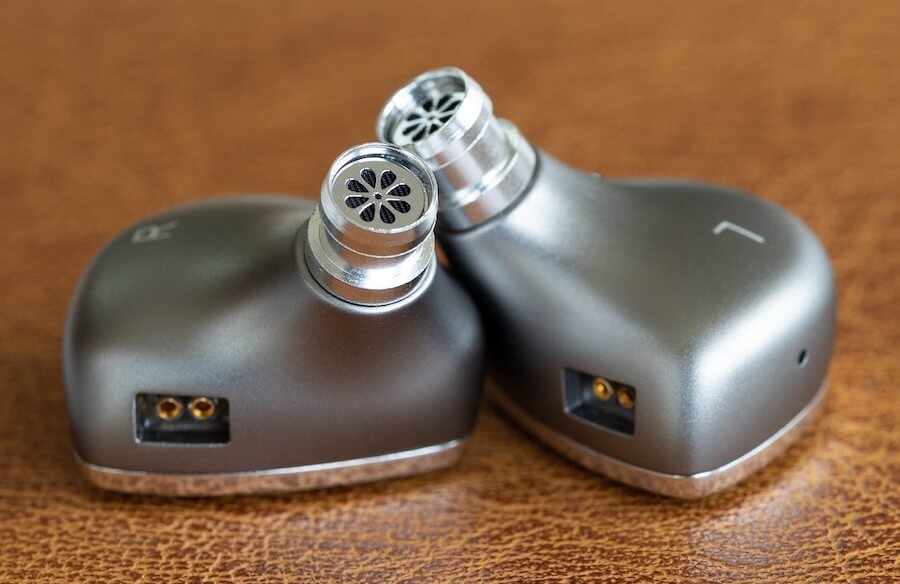
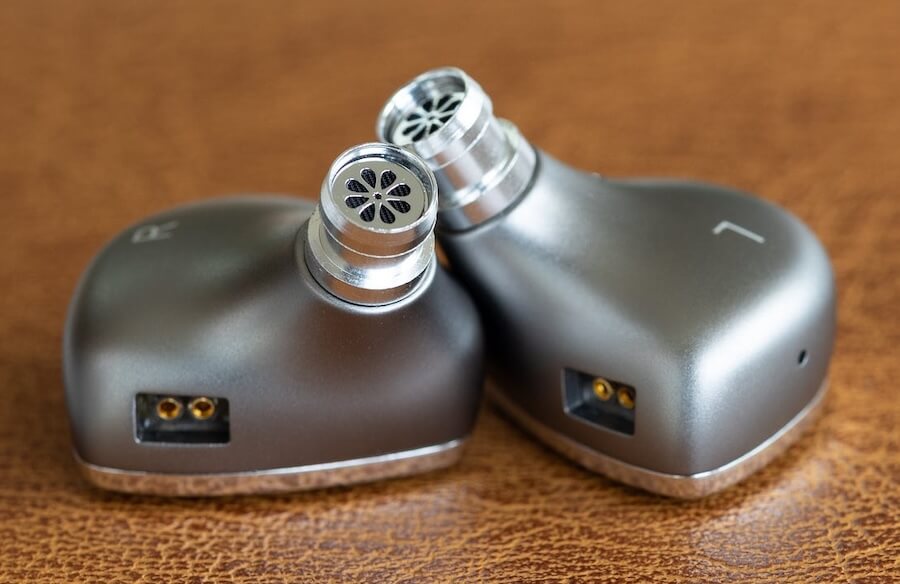
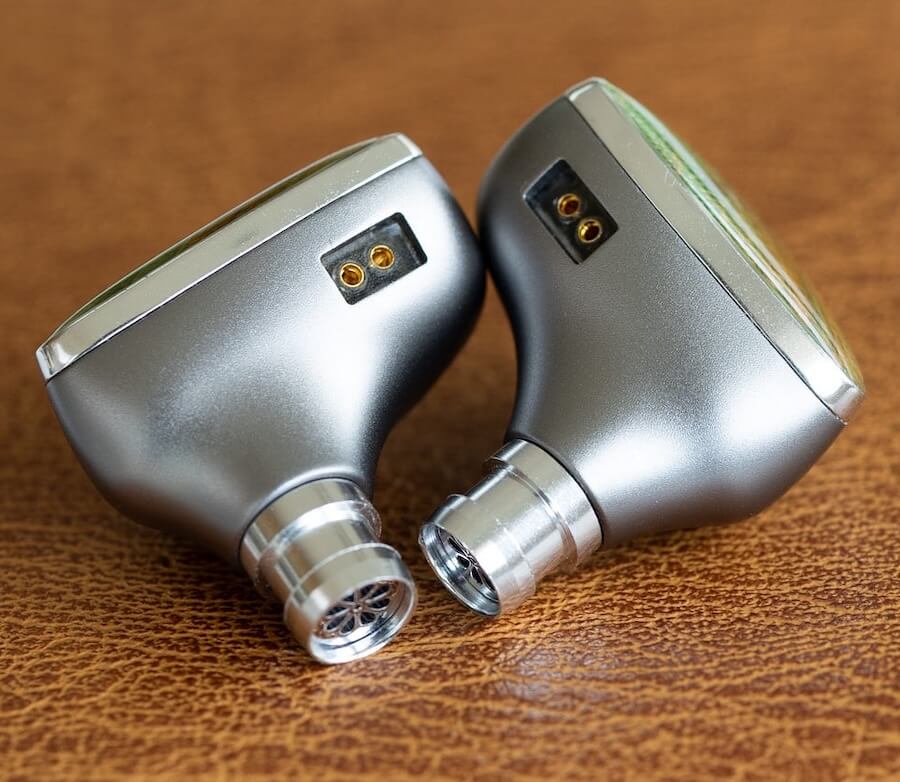
Once again, SIVGA’s engineering and material choices blow away those of its peers. The Lyrebird is constructed from a gorgeous combination of aluminum and stabilized hardwood, creating a unique industrial-luxury aesthetic.
SIVGA Lyrebird | Photo credit: Resonance Reviews
The top of the Lyrebird’s shells houses its slightly recessed 0.78mm 2-pin sockets. They’re set firmly within the shell and don’t noticeably wiggle. SIVGA went with metal nozzles here, which is great from a durability perspective. The Lyrebird’s nozzles are capped with two layers of debris filtering, with a decorative metal plate sitting just above a hydrophobic mesh.
Photo credit: Resonance Reviews
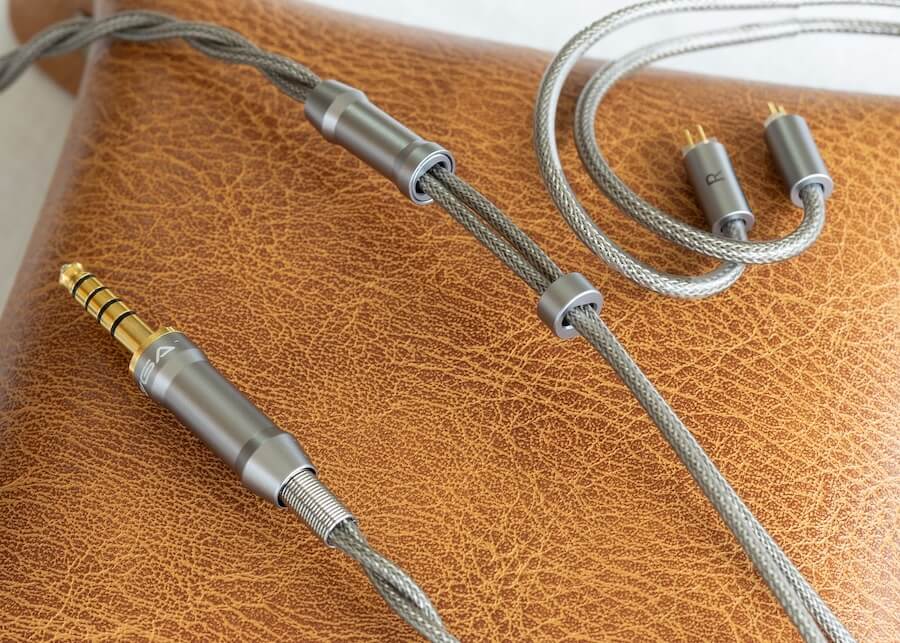
The Lyrebird’s stock cable could easily have come with a $500 IEM. It is generously thick but remains soft and ergonomic. Every component aside from the wire itself is made from precisely cut metal, including the spring-based strain relief at the base of its fixed 4.4mm termination.
Advertisement
Comfort
Comfort is a metric that depends heavily on your individual ear anatomy, so mileage will vary.
The Lyrebird is light and somewhat compact for a four-driver “quadbrid” IEM. It has a below-average insertion depth and sits relatively shallow in the ear canal. I was able to get several hours of comfortable listening from the Lyrebird, though imprecise positioning could lead to minor earaches after roughly 75 minutes.
Advertisement. Scroll to continue reading.
Accessories
Photo credit: Resonance Reviews
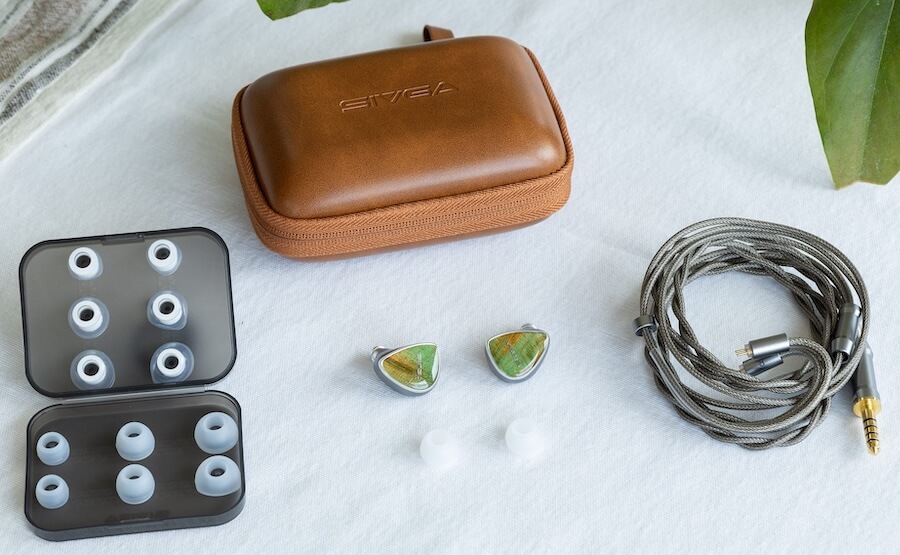
Inside the box, you’ll find:
1x Semi-hard carrying case
1x 4.4mm cable with 0.78mm 2-pin connectors
7x Pairs of silicone ear tips
Is this a particularly luxurious accessory package? Well, no, but it’s perfectly usable out of the box. Between the Lyrebird’s well-sized, protective carrying case and its comfortable stock ear tips, there’s no real need to supplement the package with third-party accessories. While it would have been nice to see SIVGA include foam ear tips, they’re hardly a necessity at this price point.
Listening
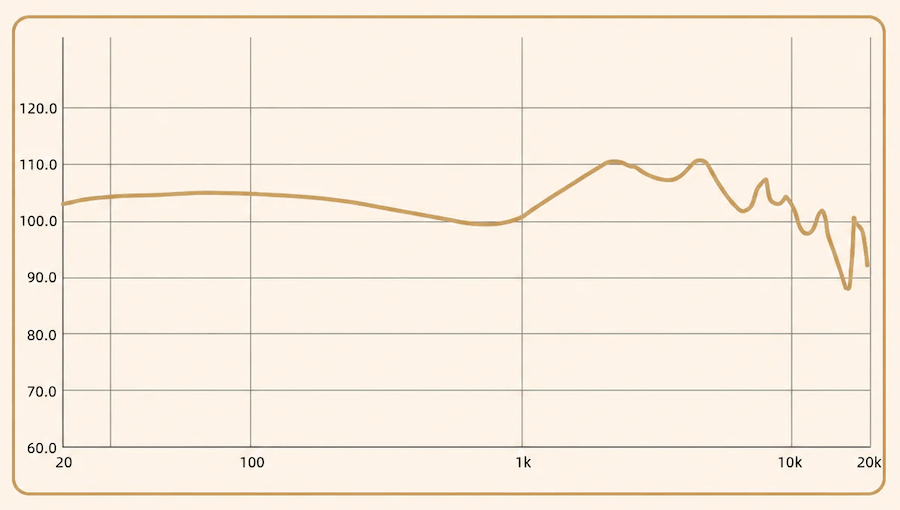
Graph, for the sniffers. Source: SIVGA
Broadly speaking, the Lyrebird is a linear IEM with a bright, lifted upper register. That means it has well-extended but slightly rolled-off sub-bass, a mild lift in the mid-bass, and a warm, linear lower midrange. The Lyrebird dips just below 1 kHz before rising into a substantial upper-midrange peak in the 2–3 kHz range. Its treble sits just above the upper mids, extending nicely beyond 10 kHz. The bulk of the Lyrebird’s treble energy is concentrated in the lower treble, though the upper treble isn’t lacking in emphasis and maintains a healthy presence in the 12–15 kHz range.
Impressively Performant Treble
My gut feeling when looking at the Lyrebird’s spec sheet was that its BA + planar + piezo driver array would leave the treble a disjointed mess. These are very different driver technologies, and each demands careful engineering to be properly exploited. Thankfully, my assumption was wrong. The Lyrebird’s treble is performant, cohesive, and free from harshness. Busy, sharply mastered tracks don’t generate any discomfort for me, even when played at elevated volumes.
Advertisement
The Lyrebird’s treble is refined and performant, delivering levels of texture, control, and expressiveness typically reserved for far more expensive IEMs. Listening to tracks like Paramore’s “Misguided Ghosts,” it becomes obvious just how much technical headroom this IEM has. Air, nuance, and spatiality are phenomenal, and the Lyrebird beautifully renders the edges of the string instrumentation with precision. Airy tracks like M83’s “Midnight City” are similarly well staged, with the Lyrebird competently capturing the vast sense of emptiness and space generated by the recording.
SIVGA’s Cleanest Midrange to Date
SIVGA’s habit of tuning the midrange to be warm and flat(ish) is one that is certainly divisive. While useful from a reference perspective, this style of tuning generally produces IEMs far warmer than I prefer. The Lyrebird iterates on the SIVGA house sound, ditching overt thickness for moderate warmth. Vocals are centered but not pushed, and they’re intelligible to boot. The Lyrebird’s vocal clarity is nothing to scoff at, as it delivers weighty, rich timbre while matching the detail retrieval and separation levels found at higher price points with more sterile sound signatures.
The Lyrebird presents instrumentation nicely as well, rendering drum slams with harmonic completeness and substance. Guitars, ranging from acoustic to drop-D electric, sound detailed and textured. The wobbly, distorted guitar in Pearl Jam’s “Dark Matter” is a nice example, filled with grit and crunch. The Lyrebird’s layering ability is also impressive, with it staging a wide swath of instrumentation in Manchester Orchestra’s “Apprehension.” The Lyrebird’s delicate balance between warmth and cleanliness pays off here, placing the lonesome piano, guitar, and drums with convincing depth and space.
Polite but Firm Bass
The Lyrebird is not a basshead IEM, nor is it designed to appeal to the V-shaped-loving masses. It is gentler and more linear. The Lyrebird’s bass is therefore polite but firm. Its sub-bass is lifted above the lower mids, blending into a small mid-bass peak. The Lyrebird’s mid-bass is punchy, clean, and textured but doesn’t produce much in the way of sheer size. That said, the Lyrebird one-ups your average meta mid-bass scoop by properly capturing organic bass tonality. Far from being dry, the Lyrebird properly renders the juicy bass drops in “Gold Dust (Flux Pavilion Remix),” giving them life and vigor. It still doesn’t pack very much punch or rumble, however, rendering clean and distinct bass elements in a way that will primarily appeal to audiophile-minded listeners. Similarly, the bass drops in “Hello (Schoolboy Remix)” possess texture and contrast while maintaining a restrained degree of body and presence.
Advertisement
Rock and alternative tracks fare much better, synergizing with the Lyrebird’s restraint. Sonically complex elements like the bass guitars and drum beats in Incubus’ “Wish You Were Here” sound deep and full-bodied, lending a solid and cohesive foundation to the track.
Comparisons
Comparisons are selected solely based on what I think is interesting and relevant. If you’d like me to add more comparisons, feel free to make a request in the comments below.
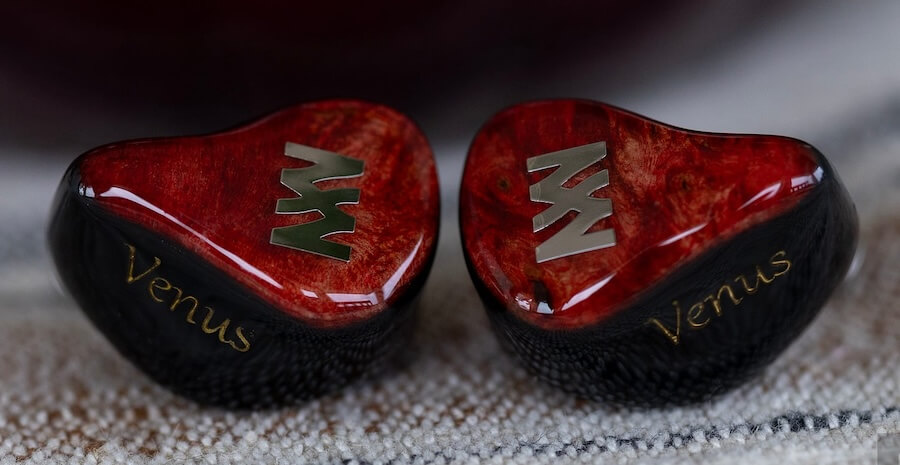
The Venus is the debut IEM from Melody Wings, a brand based in China. Coming in at $168, the Venus sits just above the Lyrebird in terms of price. The Lyrebird features metal shells with wooden faceplates, while the Venus is built from HeyGears-derived resin with similar stabilized-wood faceplates. Both IEMs have metal nozzles and detachable cables, though the Venus comes with a modular termination that includes a USB-C plug. The Lyrebird’s fixed 4.4mm cable is comparatively limiting, though it looks and feels much nicer in the hand.
Sonically, the Venus and Lyrebird have a lot in common. Both adopt a gently V-shaped sound signature, though the Venus leans into its lower register with more substance. The Venus’s fuller and moderately richer low end plays better with large-scale bass drops, such as in Nero’s “Satisfy.” The Lyrebird trades some of the Venus’s mid-bass weight and warmth for a more forward upper-midrange peak. The Lyrebird’s treble is brighter across the board, offering an increase in air and overall treble energy. Neither IEM is sharp or sibilant, though the Lyrebird delivers its upper register with a little more sparkle and shine. Tracks with dense, treble-heavy texturing surface their details more easily on the Lyrebird, though the Venus does resolve most of them further back in the mix.
Advertisement. Scroll to continue reading.
Advertisement
While I have immense respect for what the Lyrebird pulls off, and I enjoy its build quality much more, I have to go with the Venus here. Its richer, higher-contrast sound signature is addictive, and the Lyrebird’s comparatively colder tuning doesn’t mesh as well with my preferences. The Lyrebird, while the more technically capable of the two, is better suited to listeners with brighter, north-of-reference tuning preferences.
Kefine Quatio
Kefine Quatio | Photo credit: Resonance Reviews
The Quatio is another all-metal hybrid IEM, featuring 2x dynamic drivers and 2x balanced-armature drivers per side. It costs $129, which is about $40 less than the Lyrebird. Both IEMs feature nice stock cables, though the Quatio’s cable is modular, with 3.5mm and 4.4mm terminations, while the Lyrebird’s is fixed at 4.4mm. The Quatio’s cable is thinner and chain-braided, and I prefer the weightier, softer cable that comes with the Lyrebird.
The Quatio comes with tuning filters, though I only ever use its gold (treble) filters. The others are varying degrees of “too dark,” so I won’t be covering them in this comparison.
Sonically, the Quatio is much more of a “reference” IEM than the Lyrebird. It is linear, with mild increases in treble and bass emphasis. That means it possesses noticeably less bass presence than the Lyrebird, as well as a bit more warmth. The Quatio’s upper mids are more relaxed, placing instrumentation and vocals closer to the center of the mix.
The Lyrebird has a moderate increase in lower-treble emphasis and a slight increase in upper-treble energy compared to the Quatio. Both IEMs are cohesive and performant, though the Lyrebird extracts more detail in the upper register, particularly during the decay of metallic instruments like hi-hats and cymbals. Male vocals and deeper string instrumentation sound slightly fuller and more complete on the Quatio, though that’s at least partially due to brain burn-in.
Advertisement
Between the Quatio and Lyrebird, I’m probably going with the Lyrebird. While it’s not a “clear winner” in the sense that the Lyrebird is a strict upgrade over the Quatio, it does possess a more exciting sound signature and delivers a bit more technical acumen in the upper register. Paired with its better synergy with bass-driven electronic music, the Lyrebird is generally better suited to my listening preferences.
The Odyssey 2 is a well-tuned hybrid IEM featuring metal shells and a modular cable. It comes with a wider selection of accessories and costs $249, making it roughly $90 more expensive than the Lyrebird. Both IEMs are materially sound, though the Lyrebird’s fixed 4.4mm cable is thicker and feels more durable in the hand.
Sonically, the Odyssey 2 has moderately increased bass presence and warmth in the lower register. The Lyrebird has a smoother, less peaky upper-midrange hump while also packing more emphasis into the lower treble. Both IEMs have lifted upper treble, though each places its peaks at slightly different points on the frequency-response curve. These are both performant IEMs, each possessing strong extension and overall detail retrieval.
The Odyssey 2, while more present below 150 Hz overall, is roughly in line with the Lyrebird in terms of bass texture. The Lyrebird’s midrange is cooler and smoother than the Odyssey 2’s, offering an alternative tuning with similar vocal intelligibility and instrumental separation. The Lyrebird’s treble is brighter overall and places treble-bound details closer to the front of the mix. The Odyssey 2’s treble is a tad grainier and doesn’t capture ultra-fine transients as well during busy passages.
At a nearly $100 discount, the Lyrebird stacks up against the Odyssey 2 extremely well. It competes evenly on build quality while including a superior stock cable, has a largely equivalent selection of ear tips, and comes with a solid carrying case. The Odyssey 2 doesn’t present a clear improvement in technical ability either, further strengthening the Lyrebird’s comparative value proposition. I wholeheartedly recommend the Lyrebird to those looking for a price-efficient, “lean and clean,” gently V-shaped IEM, given its notably lower price. But for those who want something meatier and warmer than the Lyrebird, the Odyssey 2 is still a solid choice in the sub-$250 range.
Advertisement
The Bottom Line
The SIVGA Lyrebird feels like a genuine step forward for the company’s IEM lineup. Its quad-driver architecture, excellent build quality, premium stock cable, and impressive upper-register resolution make the $165 asking price feel almost aggressive. More importantly, the different driver technologies sound cohesive rather than stitched together, with clean mids, refined treble, strong separation, and better technical performance than many IEMs hovering around the $200 mark.
The tradeoff is tuning. The Lyrebird leans bright, clean, and comparatively lean, with enough bass to sound balanced but not enough weight or warmth to satisfy bassheads or listeners who favor richer, more relaxed presentations. If your tastes run toward a gently V-shaped, north-of-neutral sound with plenty of air, detail, and treble energy, the Lyrebird is an easy recommendation. If you want deep bass impact, substantial warmth, or a softer upper register, there are better matches elsewhere.
Advertisement. Scroll to continue reading.
Pros:
Beautiful, premium construction with aluminum and stabilized hardwood
Excellent tonal cohesion across its four-driver architecture
Refined, highly articulate treble with strong extension and air
Impressive detail retrieval, separation, and layering for the price
Clean, textured midrange with excellent vocal intelligibility
Well-extended, controlled sub-bass
Excellent stock cable with premium materials and ergonomics
Comfortable fit and high-quality silicone ear tips
Outstanding overall value at $165
Cons:
Fixed 4.4mm termination limits compatibility without an adapter
Bright-leaning tuning will not suit treble-sensitive listeners
Mid-bass lacks enough weight and impact for some EDM and electronic music
Not enough bass quantity or rumble for bassheads
Cooler presentation may leave listeners wanting more warmth and richness
They were taken by the Lunar Reconnaissance Orbiter.
NASA Goddard/Intuitive Machines
In the early hours of August 5, the upper stage of a SpaceX Falcon 9 rocket crashed into the lunar surface. Now, NASA has released a series of images captured by the Lunar Reconnaissance Orbiter (LRO) from August 11 to 12, showing a new crater on the moon caused by the wandering rocket.
To capture the images, NASA engineers had to tilt the spacecraft sideways so its cameras would point downward as it passed 60 miles above the crater. Specifically, they used LRO’s Narrow-Angle Camera, which can see features on the lunar surface as small as three feet wide.
It wasn’t an easy feat, as the spacecraft flew from pole to pole every two hours at a speed of 1 mile per second, while the Moon rotated on its axis underneath. NASA had to wait for the LRO and the crash site to align, and that took six days. The agency did, however, release before-and-after photos, which you can see on the official site.
Advertisement
Meanwhile, the photos above show the crash site from different angles. The darker streak radiating out of the crater is made of older materials from near the surface: Dust and rocks whose colors and components have already been altered by years of exposure to solar winds and cosmic rays. The lighter materials near the rim came from deeper underground.
Independent astronomer Bill Grey first drew attention to a rocket on a collision course with the Moon in April. He used orbit-computing software to figure out where and when the rocket was crashing. Grey and his colleagues also used a physics simulator to analyze the data, predicting that the upper stage wouldn’t make much of an impact. The rocket was 39 feet long and 13 feet wide, weighing around 4,000 kilograms. It slammed into the Moon at 5,400 mph and, based on NASA’s calculations, created a crater 60 feet wide and 12 feet deep.
The Falcon 9 rocket in this crash came from the January 15, 2025 Blue Ghost mission, which carried two lunar landers to orbit. It used most of its fuel bringing the landers to their intended orbit, so it couldn’t make its way back to Earth. Gravity and solar activity brought it to the Moon instead.
New code references found in macOS Tahoe describe how the rumored HomeHub will work. If you’ve got an Apple Watch, you’ll feel right at home.
Apple has been rumored for years to be making what has variously been known as a HomeHub, a HomePad, or just a HomePod with a screen. Now in the midst of many future products seemingly revealed in a macOS release, there is evidence of how the device will function.
The code specifically says that the device will have a home screen that features what are called “Faces” and a “Face Gallery”. It sounds similar to the Apple Watch, and users will be able to select widgets to go on these faces like Complications.
Those widgets will include Smart Stacks, as seen on both the Apple Watch and iPhone. So the device will display different widgets, different information, on its screen throughout the day.
Advertisement
There are already countless widgets that have been made for the iPhone, and it looks as if they may be used on this new device. That would be similar to how iPhone widgets can now be displayed on a Mac.
Significantly, the code implies that there will be a layer of privacy over what will be displayed. An Apple Watch or an iPhone already know the correct user is using them, because of passcodes or Face ID, but a HomePod with screen would not.
Except it appears this device will check for an iPhone being nearby. If one is, the screen will display data for that specific user.
The majority of the code details refer to the user interface like this. But there is one further section that appears to be concerned with the physical design of the device.
Advertisement
As first spotted by Engadget, the code references include “HomeAccessory” and “HomeAccessory_wall.”
So the new device, whatever its final name is, will presumably be wall-mountable.
When it will launch
If there were ever doubts that this product is coming, they are now over. Although note that Apple has cancelled devices before, such as the AirPower charging stand, and the Apple Car.
The presence of these code references means that Apple is testing the device. Unfortunately, it doesn’t necessarily mean much more than that.
Advertisement
However, the most recent rumors about a HomeHub have claimed that it will now launch in fall 2026. That fits in with Apple have been testing the device, and it also aligns with how it’s been claimed the device was only waiting for the launch of the improved Siri.
The new Siri AI is to be launched officially alongside the full release of iOS 27, which is expected to be announced at the iPhone 18 Pro launch.
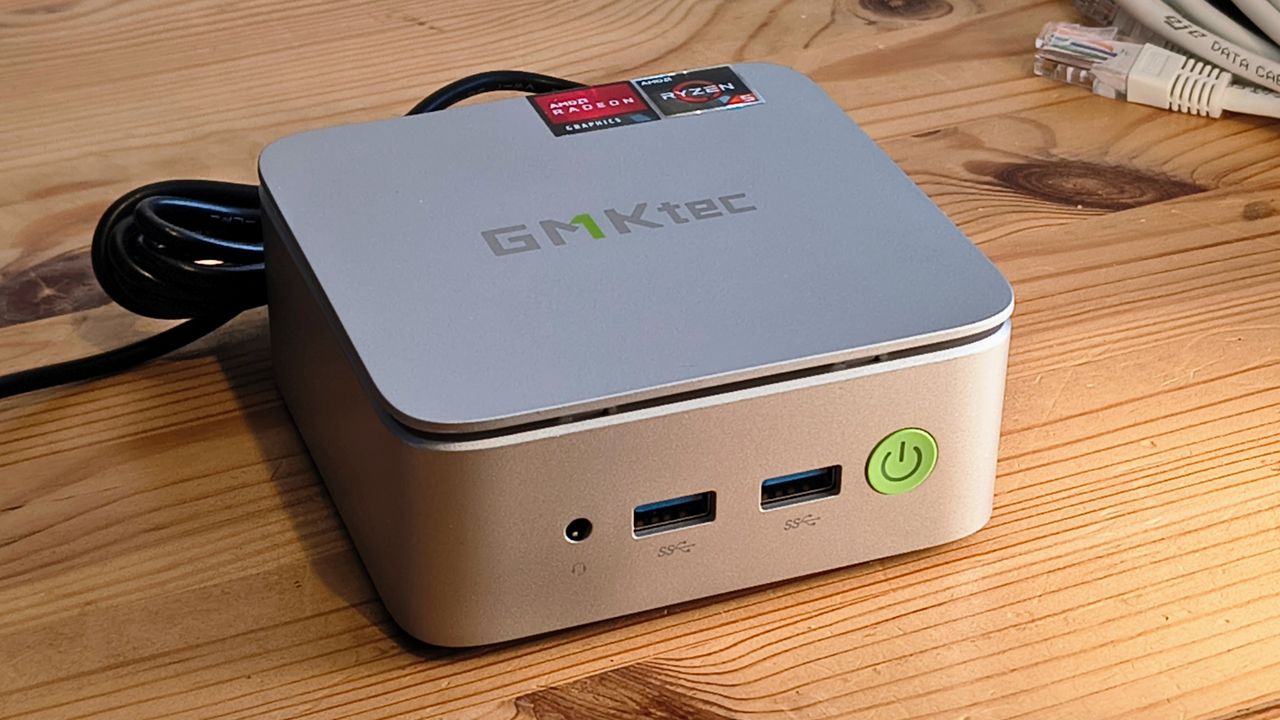
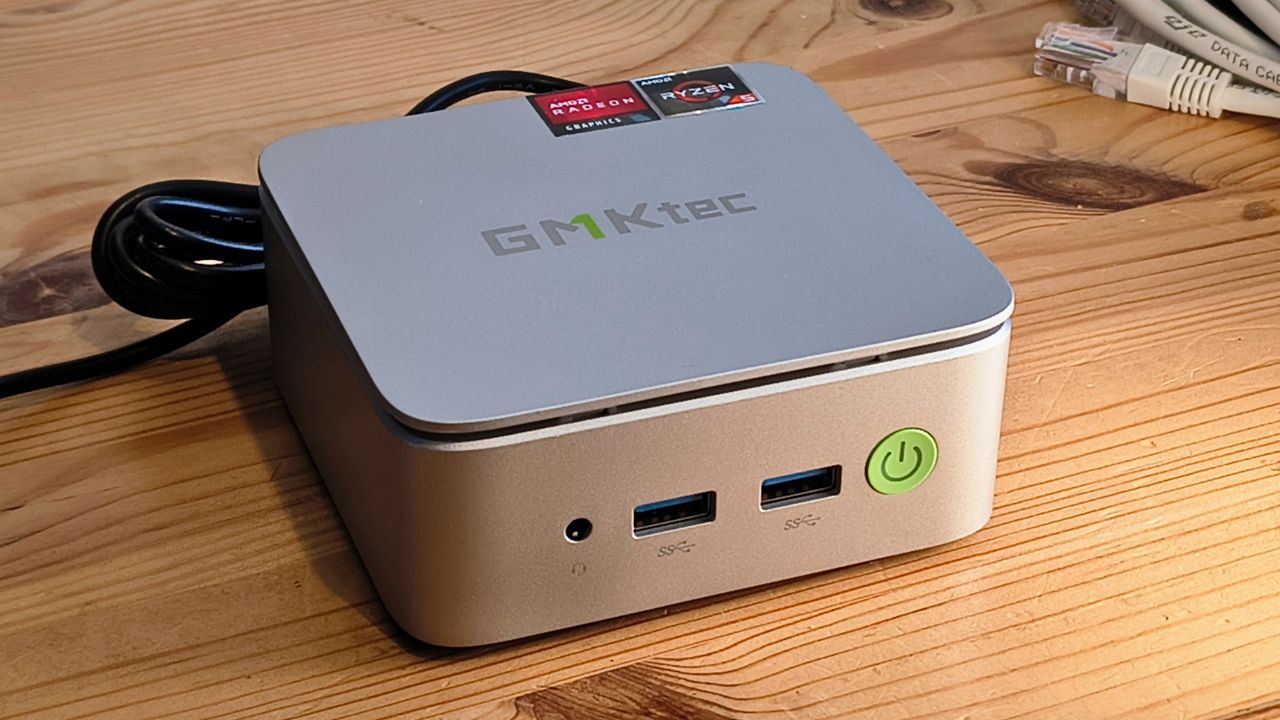
That’s a saving of $104.50, or around 28%, on a complete mini PC with 16GB of dual-channel DDR4 memory and a 256GB SSD, meaning it’s ready to use rather than being a barebones system that requires you to populate it with your own memory and storage.
The G10 can drive three displays via HDMI, DisplayPort and USB-C, and 2.5GbE Ethernet gives you much faster wired networking than the Gigabit connection commonly found on inexpensive PCs.
Advertisement
Why we recommend it
The G10 gets the basics right without stripping away useful features to hit a low price. There’s also considerable scope for upgrading it later. It has two M.2 2280 PCIe 3.0 slots with support for up to 16TB of SSD storage, so its relatively small 256GB drive doesn’t have to remain a limitation. The memory can also be expanded to 64GB.
We said “You can find a lot of cheap Windows 11 mini PCs these days, but the GMKtec G10 was a stand-out in our tests. In our review, we said, “at the asking price, this is a terrific little system that can easily be upgraded to handle larger tasks with more memory and storage.”
We also added, “Sure, it’s not going to win any awards for speed. And it’s hardly a work-horse — you’d struggle to edit 4K videos, play games, or run complex software. But if your goal is to find a budget mini PC that can tackle light duties, like browsing, streaming, and office work without breaking the bank, the G10 proved to be a superb machine.”
For more top-tested machines, see our guide to the best mini PCs.
Advertisement
Price context & historical value
The GMKtec G10 usually sells for $379.99 in this configuration, but Amazon has reduced it to $275.49. That knocks $104.50 off the price, equivalent to a discount of around 28%.
That isn’t the cheapest we’ve seen it, though. The price dropped to $252 at the very start of July this year for a very short — blink-and-you’ll-miss-it — period.
At under $280, you’re still getting the complete system with 16GB RAM and an SSD included, so it’s still worth buying if you’re looking for an inexpensive ready-to-use mini PC rather than a barebones machine.
You want an inexpensive, compact PC for office work, studying, web browsing, streaming and general home computing and we picked the G10 as our best budget mini PC for good reason.
Advertisement
Support for three 4K displays gives you plenty of desktop space for spreadsheets, browser windows, video calls and other productivity tasks.
❌ Skip the GMKtec G10 if…
You need a machine for heavy creative workloads. Radeon Vega 8 integrated graphics can handle casual and lighter tasks, but this isn’t a substitute for a PC with a discrete graphics card.
The Ryzen 5 3500U is also an older processor, and the 256GB SSD isn’t particularly generous. Neither is necessarily a problem at this price, but there are considerably faster mini PCs available if you’re willing to spend a little more.
Advertisement
The Catch: What to know before you buy
The biggest compromise is age rather than basic functionality. AMD‘s Ryzen 5 3500U is a 4-core, 8-thread processor that dates from an earlier Ryzen generation, so don’t mistake its Ryzen 5 branding for the performance you’d get from a more recent Ryzen 5 chip.
Wi-Fi 5 is similarly behind the latest wireless standards, and 256GB can disappear quickly once you’ve installed your applications and personal files. Thankfully, the latter is much easier to address thanks to the G10’s storage expansion options.
This Buc-ee’s vs. the Beaver’s Mini-Mart is just not going to go away. While Buc-ee’s has made quite the name for itself as a trademark bully over the past several years, it may have finally run into a combination that is more than the corporation can handle. Between John Oliver’s continued coverage of this lawsuit, in which he is clearly on the side of the mini-mart and in which he is attempting to goad Buc-ee’s into a lawsuit, combined with the community of Beavercreek which isn’t having this shit, the PR is starting to look really bad here.
As a result, the locals in Beavercreek are getting ornery. You can see blurry proof of that in a picture of what vandals apparently did to a Buc-ee’s billboard nearby.
A Buc-ee’s highway advertisement along state Route 4 in Riverside, Ohio, was vandalized amid a controversial lawsuit between the popular chain and a small mini-mart in Beavercreek, Ohio.
My friends in the media can do their half-assed blurring all they want, but someone turned “Buc-ee’s” into “Fuc-ee’s” and then added some otherwise indecipherable graffiti. Now, I’m not here to encourage anyone to participate in vandalism, or break any other law for that matter. But actions like this certainly do give you a sense of just how pissed off the locals are at Buc-ee’s bullying one of its local businesses. This has become a national story and a local one, meaning that the breadth of anger at the company is both intimate and wide-spread.
And I have very little time for the obvious gaslighting that Buc-ee’s is attempting to pull off as a result. Huber Heights is the Ohio town in which Buc-ee’s opened up its first Ohio location and CEO Arch Aplin apparently attempted to enlist the town’s mayor to try to placate the locals.
In a public Facebook post published Aug. 7, Huber Heights Mayor Jeff Gore wrote that there were “two sides to every story” and that he had been in contact with Buc-ee’s CEO Arch Aplin.
Gore wrote that Vik Boparai had filed for the trade name “Beavers Mini Mart” and that the name was in conflict with a federal trademark owned by Buc-ee’s. He said Aplin informed him that Boparai had filed for a federal trademark for “Beavermart,” which “would have given him access to set up Beavermarts all across the country.” Gore noted that the filing was made a “few months after” Buc-ee’s officials announced a location in the Dayton area.
Advertisement
“Mr. Aplin told me directly that Buc-ee’s had no issues with Beavermart using the Beaver logo in Beavercreek. He understood and said that makes sense. What Buc-ee’s did not want was a series of Beavermarts popping up across the state or regionally or eventually nationally that violated their trademark,” the post reads in part.
Two things on this. First, whether two trademarks are in conflict is not for any mayor, nor even one of the trademark holders to determine on their own. That is for the USPTO and the court system to decide, should it get that far. Gore’s commentary here on that is pointless and meaningless.
As for Aplin’s comments about having no issues with the current location’s name or signage, his own fucking lawsuit says otherwise. I’ve embedded the suit below so you can read it for yourself. The complaint specifically calls out the current signage, the cartoon beaver mascot, the current color scheme of its branding, and even the expression of said beaver mascot and states that this is all trademark infringement in its current form. In fact, it asks for relief specifically in the form of an injunction against the mini-mart for continued use of that branding as it currently exists and then asks for a written report from the mini-mart confirming under oath that it has complied.
This is gaslighting. Aplin is lying about what his own lawsuit is demanding. And if there is any one rule in crisis PR above all else, it’s simply: don’t lie. Because that makes the PR even worse as a result, which is exactly what has now happened.
A study of more than 64,000 people born around the end of Britain’s postwar sugar rationing found that those exposed to less sugar during their first 1,000 days had lower rates of five cancers decades later, including roughly 69% lower liver cancer risk and 36% lower breast cancer risk. They also “showed signs of slower biological aging” and “continued to consume less sugar and had healthier diets overall,” according to the authors of a new study published in The Conversation. From the report: After the second world war, sugar remained rationed in Britain for several years. But in September 1953, rationing ended and people started eating a lot more sugar. Consumption nearly doubled. This meant that children born just a few months apart had very different levels of sugar exposure both in the womb and during early childhood. For our study, we used data from over 64,000 people born in Britain between 1951 and 1956. Those born earlier spent a larger share of their first 1,000 days under sugar rationing, while those born later experienced progressively less of it.
[…] What is most surprising, however, is not the cancer results or the biological markers of ageing. It’s how early-life sugar exposure continued to affect people’s diets even 50 years later. We found that people who experienced sugar rationing early in life still consumed less sugar in adulthood, around age 50. They also ate less overall, and their diets were healthier and more diverse. This suggests that the level of sweetness people are exposed to very early in life may shape their taste preferences for a long time.

























































You must be logged in to post a comment Login