If you’re in need of a budget-friendly pair of wireless earbuds that don’t skimp on features then look no further than the Pixel Buds 2a.
These wireless earbuds Pixel Buds 2a were designed with one specific goal in mind: to provide a compact, lightweight pair of earbuds that you can adjust to suit your needs.
For instance, despite the Pixel Buds 2a weighing a mere 4.3g each, Google’s included active noise cancellation within the design to filter out any unwanted background noise in favour of what you’re hearing through the buds.
Advertisement
Advertisement
The ANC is surprisingly effective for such a budget device, but it can be evened out to meet your preferences.
The buds themselves have a lightweight and comfortable fit, easily slipping into the contours of your ears . They even boast a degree of water resistance so you can feel confident in wearing them in light showers or during a tough workout.
You can even use a Pixel phone to can get real-time Google Assistant updates on your commute, or have some relaxing music to listen to when you’re trying to drown out the sound of London Underground.
And because these pods integrate with Google’s Gemini voice assistant, you don’t need to reach for your phone when controlling the Pixel Buds 2a either. Want to change the song? Just ask Gemini to do it. Need to turn up the volume? Again, Gemini has you covered.
Battery life is also competitive here, with up to 20-hours when ANC is engaged, so you’ll always be set to get you through a day’s work.
Advertisement
They might not have quite the same level of feature parity with Apple’s AirPods, but for what the Pixel Buds 2a offer, they’re a better buy for users of the Google ecosystem.
OpenAI is shuttering Sora, its stand-alone AI video generation app and social network, and the availability for developers to access the Sora 2 video model family through its application programming interface (API) to rely on it for their own products or video generation pipelines.
The announcement came abruptly this afternoon with OpenAI posting a message on X and not giving an exact shutdown date for the services, instead promising “timelines for the app and API and details on preserving your work.”
Sora wowed the world with its highly realistic scene-crafting when it was first previewed by OpenAI in February 2024, more than two years ago now, only to be released to mixed reception as an updated Sora Turbo model 10 months later, at which point, many other competing video AI model providers such as Runway, Luma, and Chinese AI companies Kling and Minimax had already shipped impressive rivals.
But OpenAI seemed intent on continuing to build out the video model and enabling creators until just now, releasing a Sora 2 model over API and apps for iOS, then Android in the latter half of 2025 — and the iOS app briefly hit number one in downloads on the Apple App Store. The application itself was designed to be a social network where users could insert AI generated lifelike versions of themselves and their friends into videos.
Advertisement
The company released updates to Sora on a regular cadence all the way through this week, making the news of the shutdown even more abrupt.
And Sora was even so enticing for a while that entertainment giant Disney pledged a $1 billion equity investment deal with OpenAI announced in December 2025, just four months ago, to bring popular Disney characters to Sora, allowing users to generate new videos with them that Disney planned to share through Disney+, its streaming TV service. As that announcement read:
“Under the license, fans will be able to watch curated selections of Sora-generated videos on Disney+, and OpenAI and Disney will collaborate to utilize OpenAI’s models to power new experiences for Disney + subscribers, furthering innovative and creative ways to connect with Disney’s stories and characters. Sora and ChatGPT Images are expected to start generating fan-inspired videos with Disney’s multi-brand licensed characters in early 2026”
The Hollywood Reporter states the Disney deal has now been canceled. We’ve reached out to OpenAI for more information and will update if and when we receive it.
The move comes as OpenAI has openly stated its intent to focus on building a “super app” that would fold in some or all of the capabilities of its various products including chatbot ChatGPT, AI coding model and application Codex, and others into one interface. Reports from The Wall Street Journal and other outlets suggest the strategy shift is an effort at refocusing the entire company to take on the rise of competitor Anthropic and its Claude family, especially with regards to enterprises and software developers — as Claude has seen rapid adoption and enterprise usage in the last few months, according to data from SimilarWeb and Ramp, driven by its prowess at coding and autonomously completing digital tasks.
At the same time Apple announced the AirPods Pro 3 last year, the company also introduced a new feature called Live Translation. It makes the idea of the Babel fish, so evocatively described in The Hitchhiker’s Guide to the Galaxy, a reality: Something sitting in your ear that can instantly translate between languages, on demand.
Rather than an exotic fish though, here we have wireless headphones from Apple. This isn’t actually exclusive to the latest earbuds, despite the launch timing—it’ll work with the AirPods 4 with active noise cancellation and the AirPods Pro 2, as well as the AirPods Pro 3. It also works with the recently updated AirPods Pro Max, but just the 2026 version, not the original version of the Max.
There are some requirements on the iPhone side too: an iPhone 15 Pro or iPhone 15 Pro Max, or any iPhone 16 or iPhone 17 model, are needed. You also have to have downloaded and installed the latest iOS 26 software update on your phone.
With those prerequisites out of the way, you can get your very own instant language interpreter in your ears. From FaceTime video calls to foreign trips, it’s a feature that can be hugely useful in understanding others and making yourself understood.
Advertisement
Set Up Live Translation
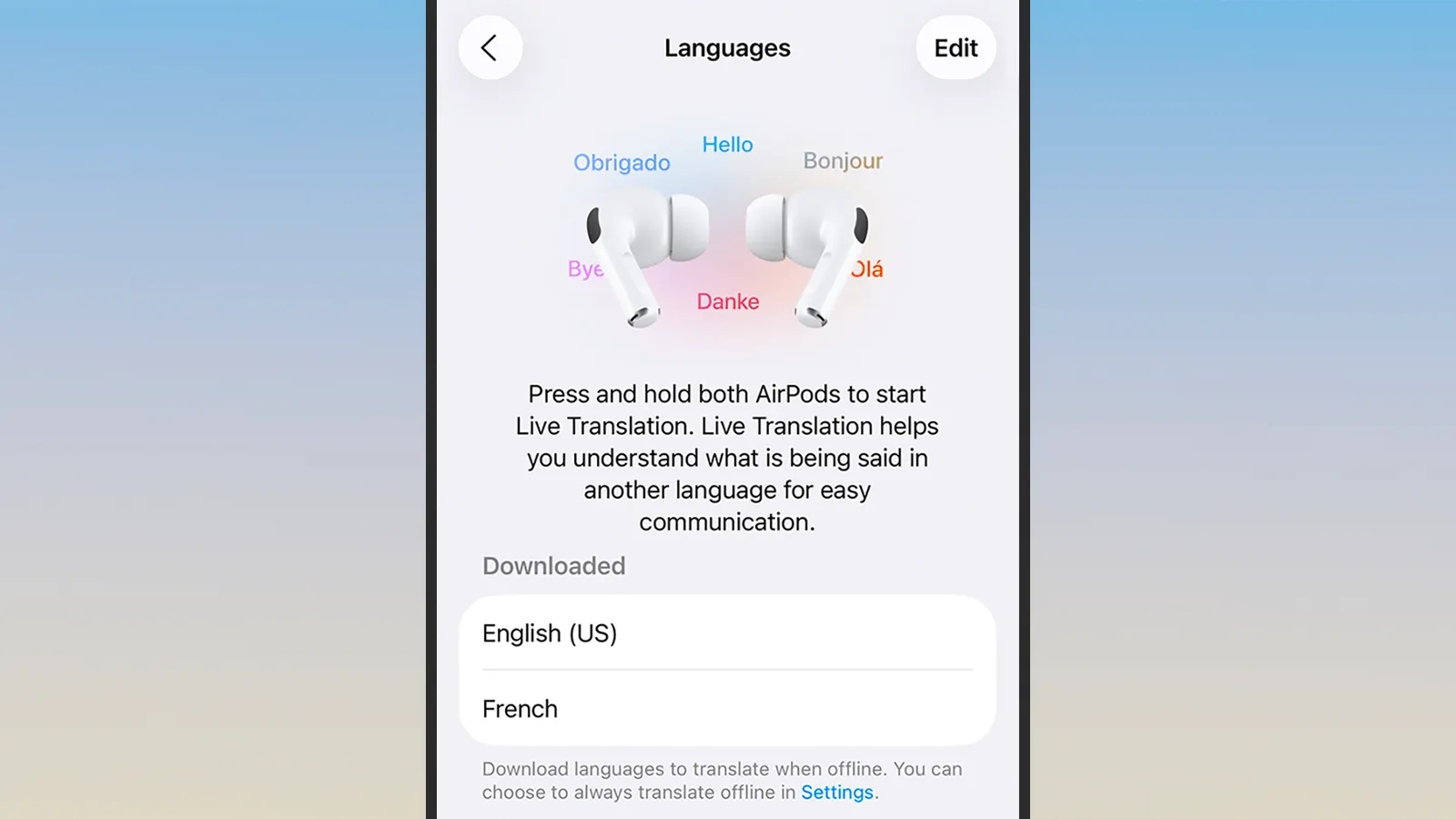
Download the languages you need in advance.
Courtesy of Apple
This works via Apple Intelligence, so as well as having checked all the requirements that are mentioned above, you also need to turn on your iPhone’s AI capabilities if they’re not enabled already. From Settings in iOS, tap Apple Intelligence & Siri, and make sure the Apple Intelligence toggle is switched on.
Next, you need to specify the languages you want to work with. You need both the languages you’re translating from and the languages you’re translating too, so make sure you’re fully covered before you try and strike up a conversation.
We’re assuming you’ve already been through the AirPods setup process and they’re connected to your iPhone. Pop them in (or on) your ears and find the AirPods in the iOS Settings menu. Tap on the name you’ve given the headphones, then Languages to download whichever ones you need.
Advertisement
Apple says that all the processing required for Live Translation is handled privately on your phone. Your conversations aren’t being piped back to Apple’s servers so they can be translated between languages. (It’s one of the reasons you need a newer iPhone and newer headphones, so the necessarily work can be done on-device).
Use Live Translation
You can launch the feature from the Live tab of the Translate app.
Courtesy of Apple
With all the setup out of the way, you can get started with a Live Translation in a few ways. You can head to the Apple Translate app on your iPhone, tap the Live button at the bottom, choose the relevant languages, and then select Start Conversation.
Charles Lamanna (left), Microsoft’s executive vice president of Business Applications & Agents, interviewed by GeekWire co-founder Todd Bishop at GeekWire’s Agents of Transformation event at Block 41 in Seattle on March 24. (GeekWire Photo / Kevin Lisota)
Work perks are taking on new meaning in the AI boom.
Speaking at GeekWire’s Agents of Transformation event in Seattle on Tuesday, Microsoft EVP Charles Lamanna talked about a job candidate who said they would come aboard as long as their team was given a certain dollar amount of AI tokens — the fuel that powers interactions with AI systems.
Lamanna didn’t reveal the exact dollar amount request, but said “you should think of $100 to hundreds of dollars of token cost per day, at the limit.”
The anecdote reflects how access to AI models is becoming as fundamental as salary — and how quickly AI is moving from experimentation to a core part of day-to-day work.
Advertisement
If a “fully loaded” (total cost of an employee to a company) engineer costs $500,000 a year and the employee asks for $100,000 worth of tokens — which makes them three times as efficient — Lamanna said it’s a great deal for everyone involved.
He compared denying engineers sufficient AI resources to stripping away basic workplace tools. Imagine showing up to work with no mouse, no email, no Microsoft Teams — that’s how an engineer accustomed to AI-powered coding agents would feel working under a tight token budget, he said.
“So how you think about what it means to hire, and fully loaded cost, and where we invest is going to change completely as a result of this,” said Lamanna, Microsoft’s executive vice president of Business Applications & Agents. He sees this happening beyond software engineering — to multiple other forms of office and information work, such as financial planning.
“They’ll be like, I’m not going to work there unless I actually get a certain amount of token budget,” he said.
Advertisement
Lamanna isn’t alone in seeing this shift. Nvidia CEO Jensen Huang last week said AI tokens would become “one of the recruiting tools in Silicon Valley,” CNBC reported. In a blog post last month, venture capitalist Tomasz Tunguz described inference costs as a potential fourth pillar of engineer compensation alongside salary, bonuses, and equity. “Will you be paid in tokens?” Tunguz wrote. “In 2026, you likely will start to be.”
The New York Times last week reported on how employees at tech companies are competing on internal leaderboards that track token consumption, creating a new status game called “tokenmaxxing.”
We may receive a commission on purchases made from links.
Big news for anyone who swears by DeWalt tools — Amazon is now offering the DeWalt 20V Max 2.0 Ah battery for just $36, a 73% discount. Originally $131, this rechargeable battery works with DeWalt’s range of 20V Max tools, which includes garage essentials like cordless drill/drivers, wrenches, grinders, nailers, and flashlights.
Advertisement
The DeWalt 20V Max battery is great to grab, even if you already have a few handy. At under one pound, it’s a lightweight, small battery that can be easily fit into your tool bag as a backup. DeWalt claims that it charges fully in 35 minutes and has a 33% longer battery life than other batteries of its size. Amazon reviews are generally quite positive, with many satisfied customers. If you’ve been thinking of getting one (or more) for your DeWalt tools, this seems to be a perfect time to do so. This massive discount comes just ahead of Amazon’s Spring Sale 2026 event, which officially kicks off on March 25.
Advertisement
When is Amazon’s 2026 Big Spring Sale?
Daria Nipot/Getty Images
Amazon’s first big savings event of the year goes live very soon. The online retailer’s Big Spring Sale goes live on March 25 and runs until March 31, giving you seven days to take advantage of some big discounts. Unlike Prime Day and Black Friday, the Big Spring Sale is more focused on cleaning items, household essentials, and clothing instead of tech. This coincides with the “spring cleaning” theme of the season.
You don’t need a Prime membership to access the discounts, but some items will have a “Prime Spring Deal” badge that indicates exclusive savings. Despite not having officially started yet, Amazon is already offering some deals on DeWalt products. This includes not just this DeWalt 20V Max 2.0 Ah battery, but also a 20V Max combo kit that’s nearly 50% off and a DeWalt Atomic 20V Max cordless impact driver that’s 27% off — all of which are compatible with this battery, by the way.
DeWalt has a history of offering discounts on tools during Amazon’s Big Spring Sale, and this year should be the same. So, if you’re looking for DeWalt tools to add to your kit (or need batteries for those tools), it looks like a great time to buy.
An anonymous reader quotes a report from the BBC: Hong Kong police can now demand phone or computer passwords from those who are suspected of breaching the wide-ranging National Security Law (NSL). Those who refuse could face up to a year in jail and a fine of up to $12,700, and individuals who provide “false or misleading information” could face up to three years in jail. It comes as part of new amendments to a bylaw under the NSL that the government gazetted on Monday.
The NSL was introduced in Hong Kong in 2020, in wake of massive pro-democracy protests the year before. Authorities say the laws, which target acts like terrorism and secession, are necessary for stability — but critics say they are tools to quash dissent. The new amendments also give customs officials the power to seize items that they deem to “have seditious intention.”
Monday’s amendments ensure that “activities endangering national security can be effectively prevented, suppressed and punished, and at the same time the lawful rights and interests of individuals and organizations are adequately protected,” Hong Kong authorities said on Monday. Changes to the bylaw was announced by the city’s leader, John Lee, bypassing the city’s legislative council. The NSL also allows for some trials to be heard behind closed doors.
Although usually nylon (generally PA6) filament is pretty cheap, there are some more exotic variants out there, such as the PA12-based Lyten 3D graphene filament that comes in at a cool $150 for a 1 kg spool. Worse for [Dr. Igor Gaspar] here was that the company doesn’t ship to the EU, and didn’t respond to emails about obtaining a sample for testing. Fortunately he got a spool via a different route, so that he could test whether this is the strongest nylon filament or not.
The full name for this filament is PA1205, though it’s not certain what the ’05’ part stands for. PA12 is a less moisture-sensitive version of PA6, however. Among the manufacturer’s claims are that it’s the strongest nylon filament, as well as very lightweight and heat-resistant. Interestingly the datasheet recommends printing with an 0.6 mm nozzle, which is the only major deviation from typical nylon FDM filaments. Of course, printing with an 0.4 mm nozzle had to be tried.
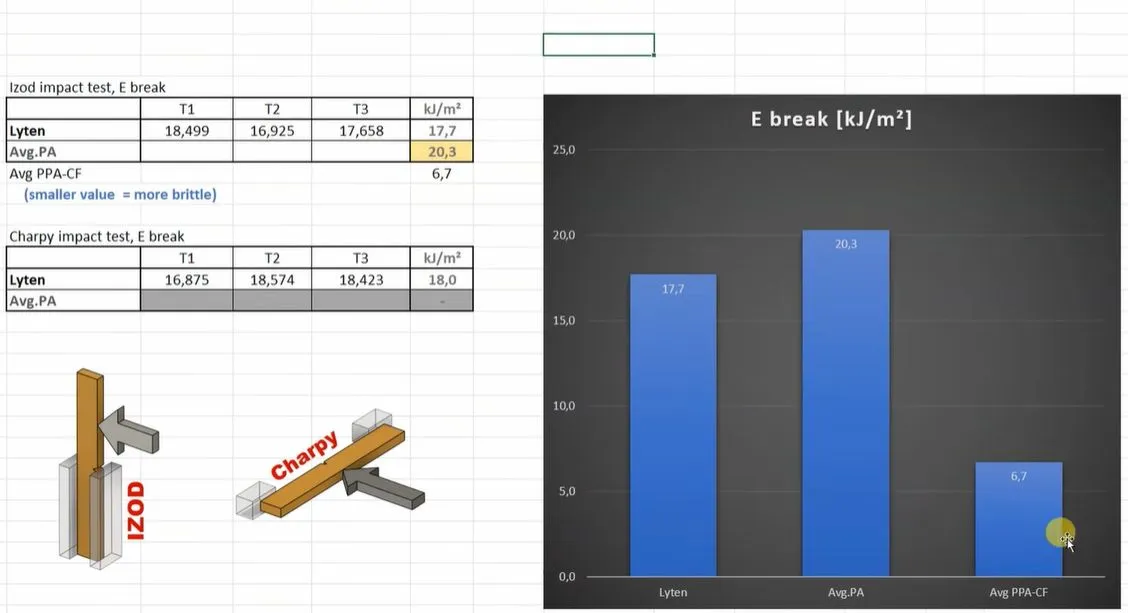
With a standard PA-CF preset in Bambu Lab’s slicer the printing of test parts worked without issues, which was promising. With load testing the filament made a good showing compared to average PA filaments, though as with most fiber reinforced filaments it’s more brittle than the pure material. Compared to PA-CF this PA1205 was much less brittle than PA-CF, however. Overall it’s not a bad filament, but for the asking price it’s a tough ask.
A new survey shows households with children under age 18 are experiencing economic strain, with parents suffering from depression, burnout and hopelessness.
“This is the baseline,” said Elliot Haspel, a senior fellow with Capita. “We really want to be able to ask questions that serve as an early warning system for family well-being.”
Haspel said what stood out to him from the survey is “how much parents are facing precarity right now… I think that it tells us that families are really struggling and they really need support.”
Advertisement
The questions
YouGov, on behalf of Capita, surveyed 1,000 parents with children under age 18 between Feb. 2 and Feb. 16, 2026. North Carolina is one of four states that were oversampled in the survey, meaning the results are especially representative of those facing parents in those states. (The others are Colorado, Michigan and New Jersey.)
The survey consists of 69 questions (available here) designed to track families across three dimensions: stability, predictability, and quality of life. Capita defines the question underlying each dimension:
Stability: Can families meet basic needs without falling into crisis?
Predictability: Can they plan their lives without constant disruption?
Quality of life: Do they have the time, health, and connection to flourish, not just survive?
Haspel explained that this survey is meant to fill the gap between surveys such as RAPID, which focuses on parents and caregivers of young children, and surveys of all Americans more broadly.
He said two-thirds of the survey questions will remain the same each time, and another third will shift based on Capita’s specific areas of interest at a given moment.
Haspel pointed out that for all Americans, life can be stressful, and parenting in particular will always come with its own stressors.
Advertisement
“The issue is, what are the artificial, unnecessary stressors that we put on families as a result of policy choices?” Haspel said.
The answers
One of the main findings from the survey revolves around the economic pressure that families are facing. As the Capita report puts it: “Multiple indicators point to significant and widespread financial stress.”
Here are some of those indicators:
More than a third were worried at some point in the last year that food would run out before they had money to buy more — and almost as many actually had that happen.
One in 5 reported skipping out on needed medical care due to costs in the last year, and 15 percent skipped filling a prescription for the same reason.
In the last three months, 20 percent of households reported a member losing a job or having their hours cut.
In the last month, 25 percent of respondents said they had a shift canceled, shortened, or extended with less than 24 hours’ notice. The same percentage were required to be “on call” — available without guaranteed hours — during that period.
Financial stress can be a leading driver of “toxic stress.” This compounding, long-term stress can do permanent damage to the health of parents and the development of children — and can sometimes lead to adverse childhood experiences.
Evidence shows that safe, stable and nurturing relationships with adults can protect children from the negative outcomes of adverse childhood experiences and toxic stress. But the survey suggests most parents are struggling to maintain that kind of relationship with their children.
Advertisement
Two-thirds of respondents said that in the last month, stress made it hard to be as patient with their children as they wanted to be. And half of parents reported feeling down, depressed or hopeless in the last two weeks.
There are several questions in the survey that pertain specifically to work and child care. Here are some related findings:
More than 70 percent of respondents describe their job as family friendly.
Almost two-thirds said family life is a top priority, and they want their job to fit around it.
In the last year, 27 percent of respondents missed work or lost pay because of child care problems.
One in 5 parents regularly supervise their children while working.
Despite the challenges presented by scheduling, about 70 percent of parents report being satisfied with their existing child care situation, whether they have children who are school age or below. And 81 percent said their communities are welcoming to families with minor children.
But 43 percent said their work schedules made it hard to keep consistent routines for their children, and that matters.
“That lack of control over one’s schedule contributes to lack of control over one’s life more broadly, and it can affect parenting relationships,” Haspel said.
Advertisement
As the Capita report explains:
Volatile schedules make it hard for people to be the kind of parents they want to be. They may have to forego baseball games or dance recitals they planned to attend, skip sitting down to dinner as a family, or miss tucking their kids into bed. Instability also has a significant impact on child development. Consistent routines are the foundation for children’s growth, learning, and feelings of security. Chronically disrupting those routines not only stresses parents but also interferes with their children’s long-term trajectory. Inconsistent or nonstandard parent work schedules are associated with cognitive delays and behavioral outcomes, especially if they begin during a child’s first year of life.
“Job quality or schedule quality is often thought of as labor policy, it’s not thought of as a family policy,” Haspel said. “If you care about having strong, healthy families, this is a contributing factor.”
The meaning
While this first set of survey results represents the baseline of what Capita plans to measure over time, there are still significant takeaways from this early warning system.
“A lot of what we’ve been hearing around the issues with affordability, the issues with being able to navigate all the extra challenges of parenting in 2020s America is showing up in family well-being,” Haspel said.
Advertisement
Here’s what Capita has to say about the initial survey results:
This first survey of Quarterly Insights paints a troubling picture of families feeling economic strain and suffering from depression, burnout and hopelessness. These conditions reinforce one another, making it harder for parents to show up for their children, their partners, and themselves, maintain routines and flourish. Ultimately, all of these factors make stability feel perpetually out of reach. While the heaviest burdens often land on those earning the least, working-class and middle-class families also feel the enormous weight of these compounding pressures.
The report goes on to point out that policies supporting the well-being of children and families are most likely to succeed if they address multiple aspects of family hardship and reach all families who are affected.
Arm, one of the world’s leading chip design firms, announced Tuesday that it is producing its own semiconductors. The move is a departure from its long-standing model of licensing intellectual property to companies that manufacture and sell chips themselves. Speaking to a live audience in San Francisco, Arm CEO Rene Haas made his pitch for how the new Arm CPU could benefit the tech industry and why this is the right time for the company to step outside of its lane and go head-to-head with other chipmakers.
“Let me be clear: We are now in a new business for ARM, and we are supplying CPUs,” Haas said, holding up one of the company’s new chips. Arm’s primary reason for moving in this direction, Haas said, is demand from customers.. But as artificial intelligence proliferates throughout the economy and demand for computing resources skyrockets, Arm is also trying to capture a sliver of the growing AI CPU market.
Arm’s in-house chip efforts had long been rumored, but now the company is finally offering a clearer picture of what it’s doing. The new chip is called the Arm AGI CPU, a nod to artificial general intelligence, an often-invoked but still hypothetical form of AI that could match human performance across domains. It’s designed to be coupled with other chips in high-performance servers inside data centers and to handle agentic AI tasks. The chip is being fabricated by Taiwan Semiconductor Manufacturing Corporation, the world’s leading semiconductor foundry, and is being built using TSMC’s 3nm process.
At the chip reveal event, Arm executives emphasized the company’s history of designing energy-efficient chips and claimed that its new AGI CPU will be the world’s “most efficient agentic CPU on the market.” Compared to competitors like the latest x86 chips made by Intel and AMD, Arm says this chip will deliver better performance per watt, or the amount of energy a computer uses to operate, and could save customers billions of dollars in electricity spending.
Advertisement
The first major customer of Arm’s new chip is Meta, which the company says has received samples of the CPU. OpenAI, SAP, Cerebras, and Cloudflare, as well as the Korean tech firms SK Telecom and Rebellions, have also agreed to buy the chip. Arm projects its AGI CPU will reach “full production availability” in the second half of this year.
Santosh Janardhan, Meta’s head of infrastructure, appeared on stage and said he thought the Arm chip was going to “expand the [chip] industry on multiple axes.” As Meta pushes toward “personal superintelligence”—AI that will make its apps deeply personalized—Janardhan said the company needs more silicon, and is especially interested in power efficiency.
OpenAI’s vice president of science and former chief product officer, Kevin Weil, also showed up on stage alongside Haas. “One of the most common things I hear inside of OpenAI: ‘I need more compute,’” Weil said. “It’s kind of the coin of the realm.”
Nvidia CEO Jensen Huang, Amazon senior vice president and distinguished engineer James Hamilton, and Google AI infrastructure chief Amin Vahdat appeared in pretaped video testimonials praising Arm’s new hardware. None committed to buying it, but all three tech giants already use Arm’s designs in their own processors.
Advertisement
Arm’s history traces back to the late 1970s, when it was known as Acorn and produced microprocessors. In the 1990s the entity changed its name to ARM (Advanced RISC Machines) and its then-CEO began licensing the firm’s chip designs to other companies. Arm, which has since dropped the all-caps “ARM” branding, saw its business boom during the mobile revolution. By the 2010s many of the world’s largest tech companies, including Apple, Nvidia, Microsoft, Amazon, Samsung, and Tesla, were all relying on its technology.
Linux gamers are seeing massive performance gains with Wine’s new NTSYNC support, “which is a feature that has been years in the making and rewrites how Wine handles one of the most performance-sensitive operations in modern gaming,” reports XDA Developers. Not every game will see a night-and-day difference, but for the games that do benefit from these changes, “the improvements range from noticeable to absurd.” Combined with improvements to Wayland, graphics, and compatibility, as well as a major WoW64 architecture overhaul, the release looks less like an incremental update and more like one of Wine’s most important upgrades in years. From the report: The numbers are wild. In developer benchmarks, Dirt 3 went from 110.6 FPS to 860.7 FPS, which is an impressive 678% improvement. Resident Evil 2 jumped from 26 FPS to 77 FPS. Call of Juarez went from 99.8 FPS to 224.1 FPS. Tiny Tina’s Wonderlands saw gains from 130 FPS to 360 FPS. As well, Call of Duty: Black Ops I is now actually playable on Linux, too. Those benchmarks compare Wine NTSYNC against upstream vanilla Wine, which means there’s no fsync or esync either. Gamers who use fsync are not going to see such a leap in performance in most games.
The games that benefit most from NTSYNC are the ones that were struggling before, such as titles with heavy multi-threaded workloads where the synchronization overhead was a genuine bottleneck. For those games, the difference is night and day. And unlike fsync, NTSYNC is in the mainline kernel, meaning you don’t need any custom patches or out-of-tree modules for it work. Any distro shipping kernel 6.14 or later, which at this point includes Fedora 42, Ubuntu 25.04, and more recent releases, will support it. Valve has already added the NTSYNC kernel driver to SteamOS 3.7.20 beta, loading the module by default, and an unofficial Proton fork, Proton GE, already has it enabled. When Valve’s official Proton rebases on Wine 11, every Steam Deck owner gets this for free.
All of this is what makes NTSYNC such a big deal, as it’s not simply a run-of-the-mill performance patch. Instead, it’s something much bigger: this is the first time Wine’s synchronization has been correct at the kernel level, implemented in the mainline Linux kernel, and available to everyone without jumping through hoops.
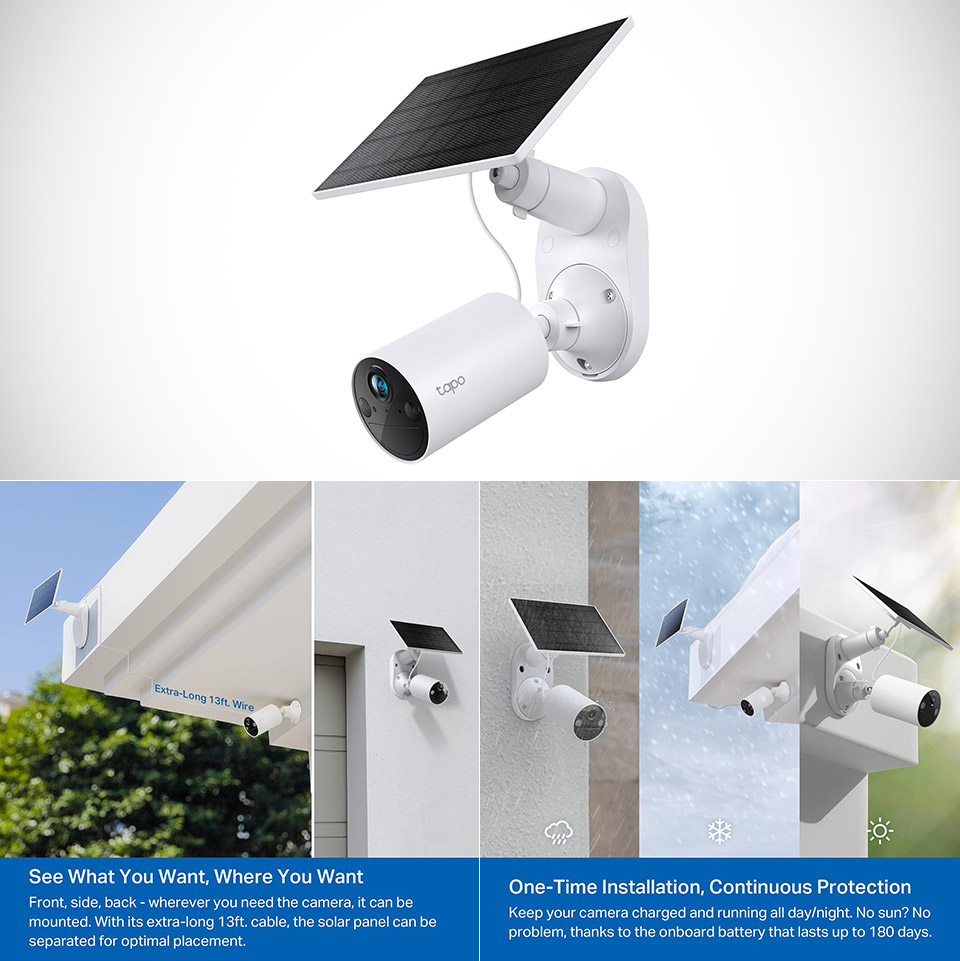
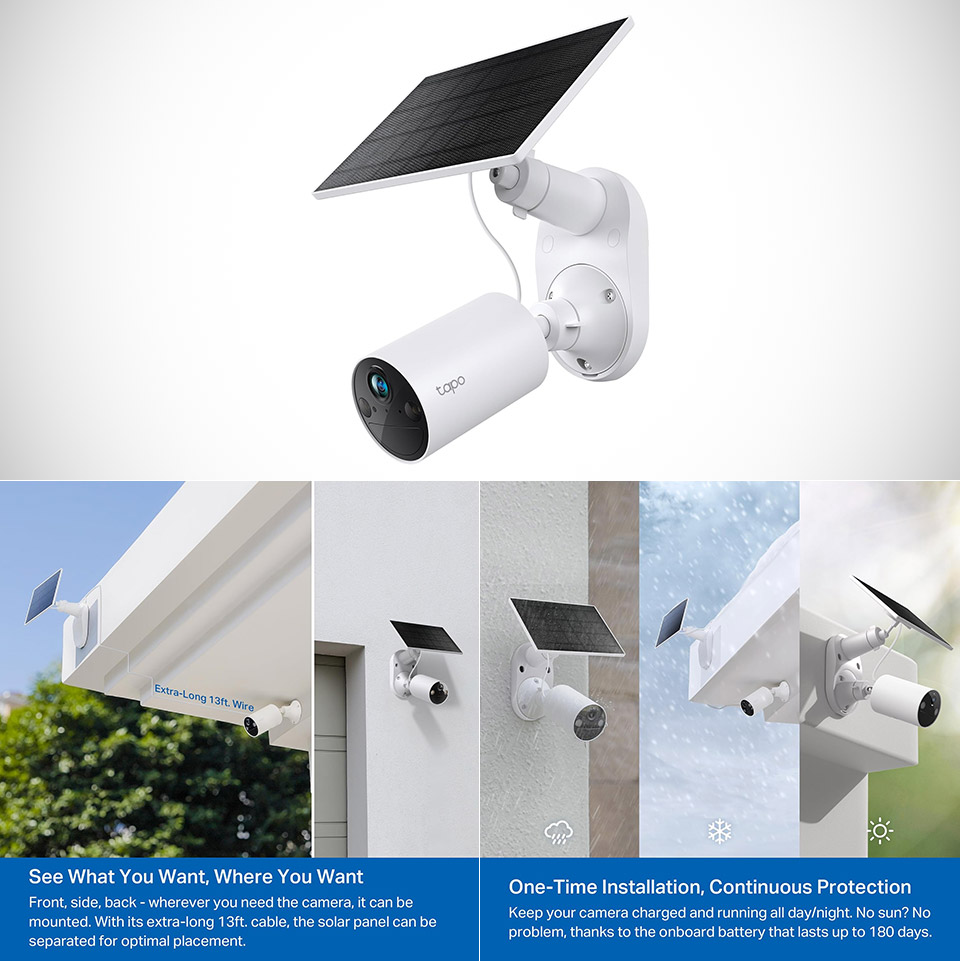
Security cameras can be a real money pit because you have to deal with wiring, batteries that need to be replaced on a regular basis, and membership fees that add up every month. What if I told you there’s a way to bypass all that hassle for less than $60? The TP-Link Tapo SolarCam C402 Kit accomplishes exactly that, and at full price, it’s typically a good deal. When it is on sale (like now), you can get it for about $40.
Setting up the camera is simple, and anyone can do it in under an hour. Simply launch the Tapo app on your phone, scan the code on the camera, and connect it to your home Wi-Fi. Simply screw the accompanying bracket to a wall or eave using the template and hardware provided. If you want to get more out of your solar panel, simply clip it somewhere with adequate sunshine or extend the cable up to 13 feet. Simply put the camera onto the mount and plug the panel in. There is no need to consult an electrician, and no outlet is necessary; simply screw it into place.
【Endless Power from Solar Energy】The Tapo SolarCam C402 KIT harnesses the power of the sun to keep your security system running smoothly. The…
【Easy Wire-Free Installation – Install Anywhere】Enjoy the flexibility of wire-free installation with the Tapo SolarCam C402 KIT. Free from outlet…
【Prioritize What Matters】Eliminate unnecessary notifications by defining activity zones specifically monitoring for motion or people. Receive…
When daylight hits, the footage is remarkably vivid and clear, with a 125-degree field of vision. Faces can still be recognized from 20 to 30 feet away, and registration plates on your driveway read correctly. Any motion triggers will send you a message within seconds, and the app will even put a blue box around whatever moved so you can see exactly what caused the alert. The free built-in detection is really quite useful; it separates people, vehicles, and dogs from random movement, so you don’t get notified by every stray car that drives by.
Advertisement
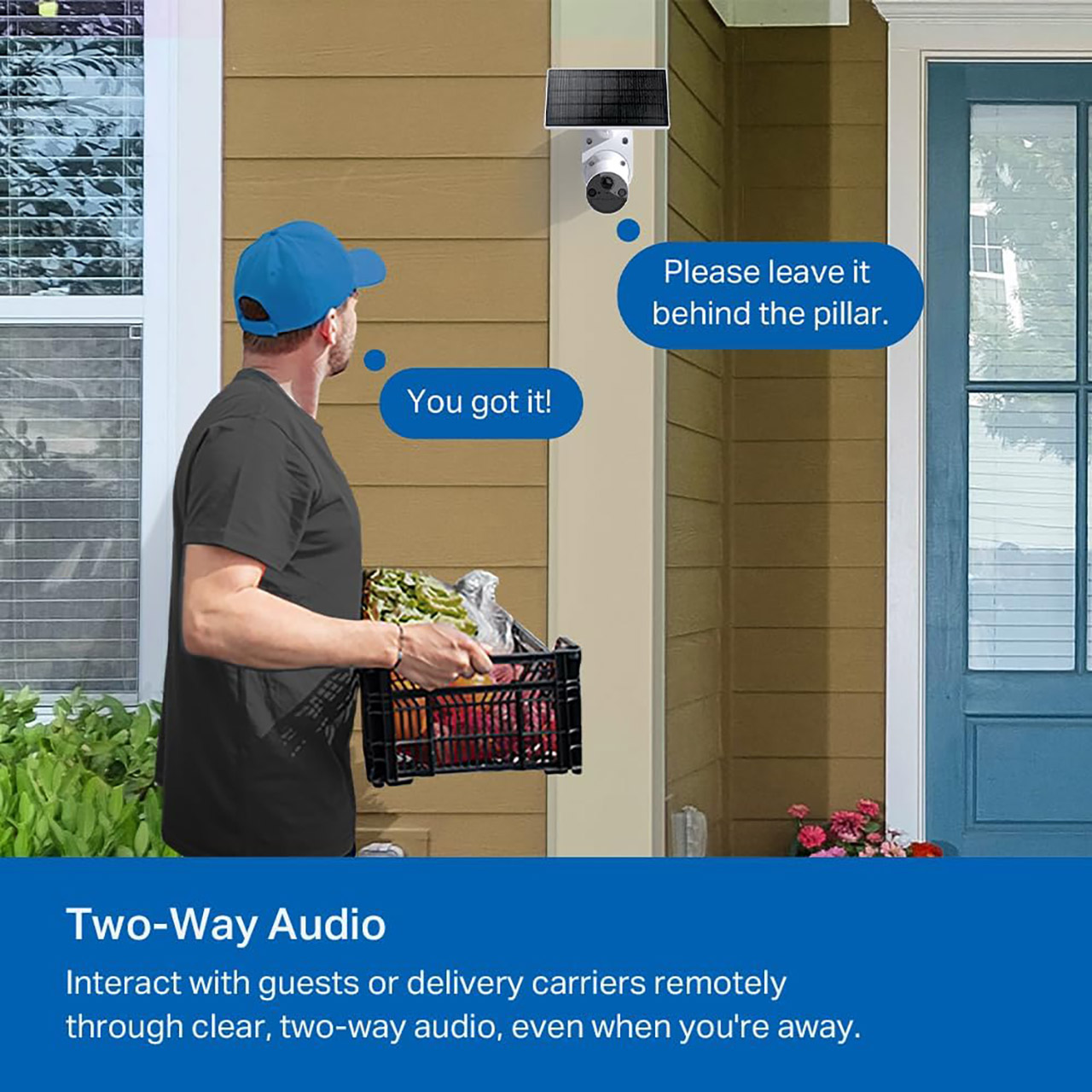
At night, this camera has a unique trick up its sleeve. When movement begins, the two spotlights will instantly activate and highlight the entire area in color from roughly 30 feet out. The colors are little weaker than you might think, but they are still rather clear to read, especially when compared to the standard black and white infrared on most inexpensive devices. If you’re not utilizing the lights, simply turn them off in the app, and the device will fallback to regular infrared for times when it’s entirely dark outside. And whether you need to speak with the delivery guy or shoo away a stray animal, the two-way audio works perfectly.
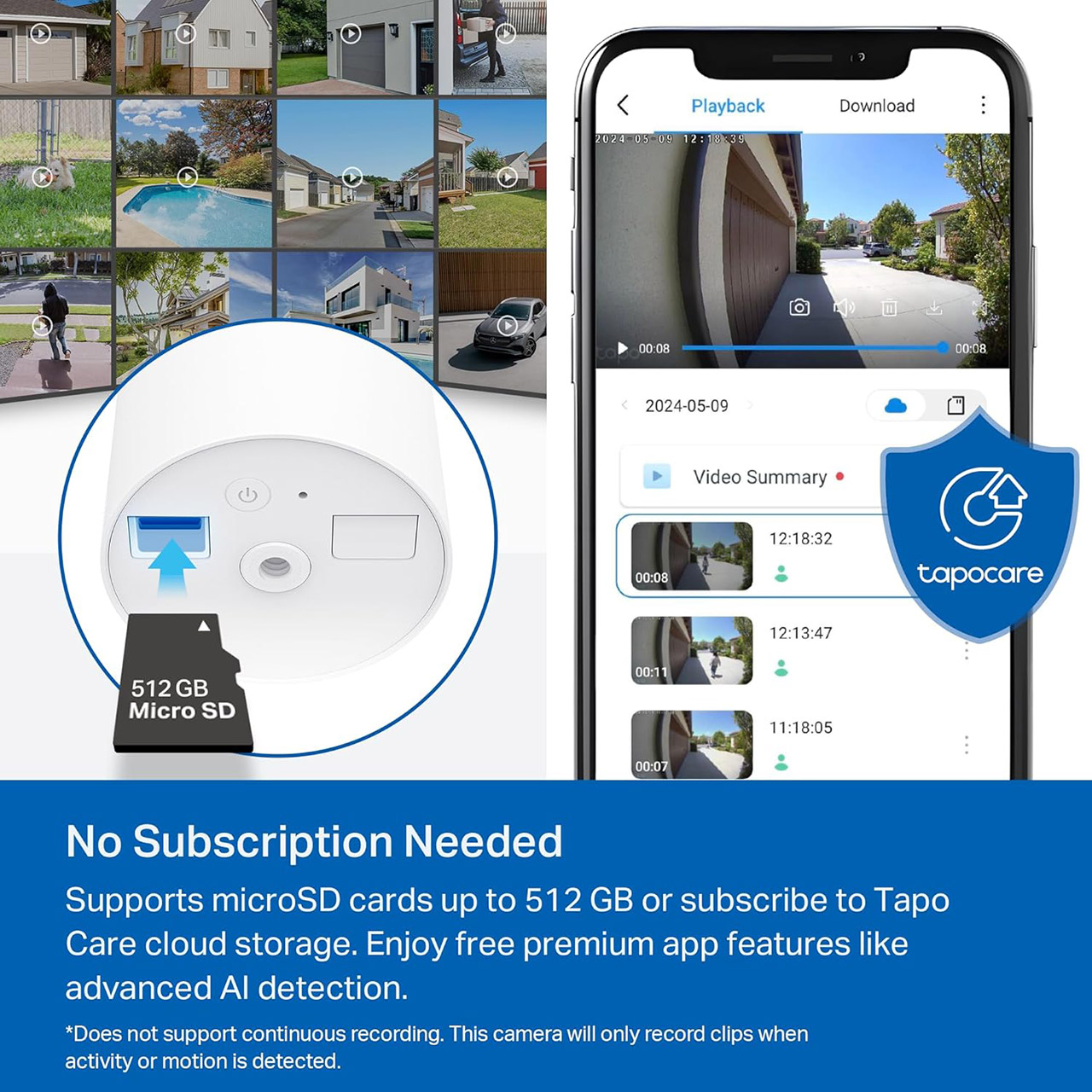
The solar panel should keep the 6,400mAh battery charged after only 45 minutes of direct sunlight per day. Even if you don’t receive any sunlight, the battery should last up to 6 months, depending on your usage. Another benefit is that you won’t have to worry about storage space. Simply insert a microSD card (up to 512GB) to record private local videos. The program allows you to watch, download, and delete events directly from the timeline. If you want cloud backup, you can purchase the Tapo care plan, which includes 30 days of history and more advanced sorting. However, none of the basic alerts or live view require additional payment.
Then there’s voice control, as the Tapo app integrates perfectly with Alexa or Google Assistant, so you can simply ask your Echo Show to display the stream from the front porch, and it will appear. If you want to get even more creative, IFTTT recipes can do a variety of things, such as flashing a smart lamp when motion is detected or recording events to a spreadsheet.























































You must be logged in to post a comment Login