Jacob Wendt composes, arranges, and leads his own music while resisting the urge to make every track about the drummer. His new album, The Gallery, was recorded by Kevin Gray at Cohearent Records (aka. Hackensack West) and becomes the fourth release from Cohearent Records when it arrives in late summer.
In this episode of the eCoustics Podcast, Eric Pye (@audioloveyyc) and Mitch Anderson (@black_circle_radio) speak with Wendt and Gray about The Gallery, Wendt’s earlier album Silver Street, ensemble chemistry, getting the horns right, analog recording, and promoting independent jazz.
The app also offers workouts, which auto-adjust the speed to your pace via sensors under the belt. It felt awkward, since I couldn’t figure out how to slow the pace without the device totally stopping. You switch between modes within the app or on the display, and you can stop and start the machine using the app or remote. I like to use the machine in manual mode, and I tend to use the app more than the remote, because the remote connectivity is inconsistent.
The machine feels like it will have a long lifespan. Its heft makes it harder to move around than the Sperax, and while the folding capability is a win in general, if you plan to slide this under something, make sure the folded height (5.4 inches) will work. Here’s my full review. —Kristin Canning
Most Versatile Walking Pad
Urevo
Strol 2S Pro Treadmill
Advertisement
WIRED
Doubles as a treadmill with an adjustable handrail
Impressive speed and incline ranges
User-friendly companion app that syncs to unit
TIRED
Speed may not be fast enough for users who want to run
Workout data was occassionally wonky on the app
The Urevo Strol 2S Pro doubles as a treadmill and feels shockingly stable underfoot for how relatively lightweight it feels. I’ve tested several affordable treadmills, and they tend to feel wobbly at higher speeds, but this one remained firmly in place even as I ran on it at top speed and incline (7.6 mph and 9 percent). That top speed isn’t fast enough if you’re looking to really sprint, but it’s definitely ample for a good workout.
If you want to use the treadmill as a walking pad, you can keep the handrail down, which limits the top speed to 4 mph (though you can still use the full incline functionality). There’s a display on the front of the machine that cycles between time, distance, calories, incline, and speed. To access faster speeds, you have to put the handrail up, which requires you to use a hex tool to tighten it into place. The handlebar has a display as well, and you can control the machine’s basic functions from there. There’s also a tablet holder you can attach.
After months of speculation, it’s official: parent company Oppo is pulling OnePlus devices out of US and European markets. While existing customers are still going to get after-sales support and software updates from OnePlus, we’re not going to see any more new phones, tablets, or smartwatches in these regions in the future.
Oppo is branding this as a “strategic” move, but the decision is based on simple economics. OnePlus has always struggled to maintain the all-important carrier relationships in the US, and is being squeezed by Samsung, Apple, Google, and Chinese manufacturers in terms of sales.
We’re not here to dissect what went wrong in this particular article though — we’re here to celebrate some of the fantastic smartphones that OnePlus has made down the years, since the company was founded back in 2013. There have been dozens of OnePlus handsets launched since then, but these are our five favorites (in order of release).
Advertisement
Latest Videos From
1. OnePlus One (2014)
The debut OnePlus phone (Image credit: Future)
We had to start with the OnePlus One really, as it set the tone for OnePlus, and epitomized everything the fledgling company was about. Boldly marketed as a “flagship killer” and with the tagline “never settle” — as in, never settle for a poor compromise between price and performance — it really did shake up the market in a significant way.
Our review praises the value-for-money proposition — it was less than half the price of the flagship Samsung Galaxy, at the time — as well as the top-notch specs (a Snapdragon 801 and 3GB of RAM) and the customization features available in CyanogenMod, which is the operating system that the first OnePlus phone came running.
It almost defied belief that a phone this well made, with such good internal specs, could cost this little — and from nowhere, OnePlus was suddenly on the scene in a big way. As a historical note, it’s also funny looking back to see the 5.5-inch screen described as being relatively big, in 2014 terms.
Advertisement
2. OnePlus 7 Pro (2019)
Spot the pop-up selfie camera (Image credit: Future)
There were some excellent handsets between the debut phone from OnePlus and the OnePlus 7 Pro in 2019 — it was hardly a fallow time for the company — but this was the first handset to really wow us since the OnePlus One. That was partly down to its great party trick: a pop-up selfie camera.
Sign up for breaking news, reviews, opinion, top tech deals, and more.
Thanks to that pop-up camera, there was no need for a notch or cut-out on the front screen, and it looked gorgeous from the front (and the back, as it happens). It was a phone that genuinely turned heads when you took it out of your pocket, and our review waxed lyrical about the performance levels and charging speeds, too.
Advertisement
By this stage, OnePlus wasn’t quite giving us the same jaw-dropping value for money with its flagship phones as it did with the OnePlus One, but this phone still held its own in terms of pricing with the best flagships on the market in 2019. The screen had been upped to 6.67 inches in size, and — notably — boasted a 90 Hz refresh rate too.
3. OnePlus Open (2023)
A foldable phone done right (Image credit: Future)
You could make a strong argument that despite the best efforts of Samsung and Google, OnePlus was the first phone maker to get a foldable phone right in every department: the OnePlus Open was awarded 4.5 stars out of 5 in its TechRadar review, with the biggest pros listed as the displays, the cameras, and the thin and light build.
As we put it at the time: “The OnePlus Open is the only big foldable phone that doesn’t feel like a compromise. It looks and feels like a normal phone, and the camera is the best you’ll find on any foldable.” Of course, it was still expensive (what book-style foldable isn’t), but this was finally a folding phone that could justify the cost.
OnePlus was able to improve on what had gone before in this form factor in multiple areas, including the foldable’s hinge and crease, and it still managed to score highly in all the categories that matter on any type of smartphone. Meanwhile, the OxygenOS software responded nimbly and seamlessly to the folding design too.
4. OnePlus 13 (2024)
The excellent OnePlus 13 (Image credit: Future)
Admittedly our list is a little biased towards later models: that’s no criticism of the many fantastic earlier handsets, but OnePlus really has been hitting it out of the park in the last couple of years. As our reviewer for the OnePlus 13 put it: “I’m dumbfounded, I can’t find anything wrong with this phone.”
Advertisement
It had a huge 6,000 mAh battery, it ran super-smooth thanks to its Snapdragon 8 Elite processor, and it had an IP69 rating — a first for a OnePlus phone. The handset also boasted a gorgeous 6.82-inch display, and powerful triple-lens rear cameras. This handset was a real return to top-tier OnePlus.
You can probably guess what the main downside was for customers in the US — it wasn’t possible to buy the OnePlus 13 in local carrier stores, which didn’t help with brand awareness and recognition. Looking back, this may be one of the phones that made up Oppo’s mind about exiting international markets: it was a device that deserved to sell in much higher numbers than it actually did.
5. OnePlus 15 (2025)
The OnePlus 15 really impressed us (Image credit: Future)
We’ll close out this list with last year’s OnePlus 15, which earned a rare 5-stars-out-of-5 ranking in its TechRadar review. There was so much to love about this phone: the battery life, the performance, the design, the software, the durability… it basically checked all of the boxes you would want, and there was really nothing bad to say about it.
Advertisement
The phone also shows that OnePlus was making great handsets right up until the end (in the US and Europe). It was other issues that were the problem — again, the OnePlus 15 couldn’t be found inside carrier stores in the United States, which meant it wasn’t as visible to consumers, and you had to pay more up front to get it.
While this wasn’t quite the last OnePlus phone to launch internationally, it still stands as a testament to the quality of the handsets the company has put out down the years. It more than holds its own against anything Apple, Google, and Samsung have ever made, and it’s a shame that most of the world won’t see these handsets any more.
The moment Wales have dreaded for months has arrived with Matchday 3 of Nations Championship 2026 – a clash with the Springboks in South Africa. Rassie Erasmus hasn’t yet put out anywhere near a full-strength team, yet the world champions have cruised to a pair of bonus-point victories that place them right at the top of the Southern Hemisphere standings.
Although there have been plenty of positives for Wales, who beat the Barbarians and Fiji after closing out their Six Nations campaign with a shock victory over Italy, they were brought back to earth with a bump last weekend. They conceded five tries in a 35-21 beatdown by Argentina, who simply overpowered Steve Tandy’s men.
Cue the most muscular team in rugby. South Africa meted out Wales’ heaviest ever home defeat the last time the sides met, a 73-0 hammering in Cardiff last November. The 10 changes that Erasmus has made to the starting lineup means a repeat of sorts is unlikely in Durban on Saturday, but Wales will still be braced for the worst.
Advertisement
Fly-half Vusi Moyo is one of four Springboks debutants, along with Jaco Williams, Ruben van Heerden and Carlu Sadie, while Pieter-Steph du Toit continues to deputise for injured skipper Siya Kolisi. Wales’ own captain Dewi Lake has been deemed fit enough to start following a groin concern, while Louis Rees-Zammit returns to the starting lineup at right wing as part of a raft of six changes.
Read on as we explain how to watch South Africa vs Wales for free in the 2026 Nations Championship.
Can you watch South Africa vs Wales for free?
Yes. South Africa vs Wales is being shown on free-to-air Rugbypass TV in the US, on ITVX in the UK, and on Virgin Media Play in Ireland.
Advertisement
Free-to-air Welsh-language coverage is also available from S4C via BBC iPlayer.
Traveling abroad right now? You can use a VPN to watch South Africa vs Wales for free as if you were right at home.
Use a VPN to watch South Africa vs Wales live streams
A VPN is handy piece of software that can make your device appear as if it’s back in your home country, so you can unlock your usual service. The best VPN right now? We recommend NordVPN – it does everything and comes with up to 75% off.
Advertisement
How to watch South Africa vs Wales live streams in the US
South Africa vs Wales, along with all 42 Nations Championship games, is available to live stream for FREE on Rugbypass TV in the US.
You can tune in via the Rugbypass TV website or app, and it works with Chromecast, Airplay, Apple TV and Android TV.
Outside of the US? Use a VPN while you’re traveling away from home to unlock your stream.
Advertisement
How to watch South Africa vs Wales live streams in the UK
In the UK, South Africa vs Wales is free-to-air on ITV1, with live streaming available via ITVX.
All you need is an account, a TV license and a UK postcode (e.g.HA9 0WS). Sign up here!
Fans who’d prefer to watch South Africa vs Wales with Welsh commentary can tune in for free on S4C via BBC iPlayer.
Advertisement
If you’re out of the UK but still want to tune in, explore the VPN route set out above, which will help you access your accounts from anywhere.
How to watch South Africa vs Wales live streams in Ireland
South Africa vs Wales is free-to-air on Virgin Media One in Ireland, with live streaming available via the Virgin Media Play platform.
Outside Ireland? You’ll need to download a VPN, as detailed above, to tap into your free Nations Championship stream from abroad.
Advertisement
How to watch South Africa vs Wales live streams in Australia
In Australia, South Africa vs Wales is exclusive to Stan Sport.
Stan Sport costs AU$20/month on top of a Stan subscription, which itself starts at AU$12/month.
Not in Australia right now? You can simply use a VPN like NordVPN to watch the action as if you were back home.
Advertisement
How to watch South Africa vs Wales live streams in New Zealand
In New Zealand, Sky Sport NZis showing the South Africa vs Wales game.
You can access Sky Sport through satellite TV or get a live stream, with the Sky Sport Now subscription service starting at NZ$29.99 per day or NZ$59.99 per month.
Those outside of New Zealand for any part of the Nations Championship can use NordVPN to gain access to their home streaming service.
Advertisement
How to watch Springboks vs Wales live streams in South Africa
The Springboks vs Wales game is being shown on Supersport in South Africa.
You’ll need a DStv access package to watch the Nations Championship, with prices starting at Rs99/month for the streaming version.
Abroad right now? Just use a VPN and tell your device that you’re back home and you’ll be good to go.
Advertisement
How to watch South Africa vs Wales live streams in Canada
(Image credit: Other)
In Canada, South Africa vs Wales is being shown on Premier Sports.
A monthly pass costs CA$29.99. You’ll need either the CA$79.99 six-month pass or the CA$139.99/year annual subscription to tune into the whole tournament.
If you’re out of Canada but still want to catch the action, explore the VPN route set out above, which will help you access your accounts from anywhere.
Advertisement
What is the South Africa vs Wales start time?
The scheduled South Africa vs Wales kick-off time on Saturday, July 18 is 5.40pm SAST local time in Durban, which is 8.40am PT / 11.40am ET / 4.40pm BST.
That’s 1.40am AEST on Sunday, July 19 in Australia.
What is the South Africa vs Wales head-to-head?
The Springboks have won 36 of their 44 previous encounters with Wales. Wales have won seven and the other ended in a draw.
In South Africa, the head-to-head stands at 12-1.
Advertisement
Can I watch South Africa vs Wales on my mobile?
Of course, most broadcasters have streaming services that you can access through mobile apps or via your phone’s browser. For example, Rugbypass TV, ITVX, BBC iPlayer and Virgin Media Play all have dedicated apps.
We test and review VPN services in the context of legal recreational uses. For example: 1. Accessing a service from another country (subject to the terms and conditions of that service). 2. Protecting your online security and strengthening your online privacy when abroad. We do not support or condone the illegal or malicious use of VPN services. Consuming pirated content that is paid-for is neither endorsed nor approved by Future Publishing.
Features: Dynamic Island could be smaller and cameras might have a variable aperture — plus, there are rumors of a bigger battery. However, there is concern over memory component shortages and their high prices.
Colors: Apple could launch light blue, dark cherry and dark gray versions or variations thereof.
Price: After Apple hiked prices on Macs, iPads, HomePods and the Apple TV, it’s looking like iPhones won’t be immune to higher costs.
Release date: Apple might split the iPhone 18 launch between fall 2026 and spring 2027.
The flow of rumors about Apple’s upcoming iPhone 18 lineup is nonstop now that its debut is just a few short months away. There was even leaked footage of iPhone 18 Pro drop tests that were then taken down. Current high RAM prices are especially of concern, as that could affect both specs and pricing of the new handsets.
The iPhone 18 lineup is shaping up to be one of Apple’s most consequential in years and also one of its most complicated. The Pro and Pro Max models are expected to arrive in September, joined for the first time by Apple’s long-rumored foldable device, widely referred to as the iPhone Fold or iPhone Ultra, which is expected to start above $2,000.
The standard iPhone 18, iPhone 18E and a second-generation iPhone Air, meanwhile, are reportedly being pushed to spring 2027, a significant departure from the all-in-one-fall-event model Apple has followed for years. If you’ve been waiting to upgrade to a standard iPhone, that shift changes the calculus considerably.
The company is only a year or so away from the 20th anniversary of the original iPhone’s launch. While the company sells more phones in the US than rival Android phones, Apple is consistently behind Samsung in global sales and just ahead of Chinese phone-makers like Xiaomi. A lot is at stake for Apple with the next iPhone, including building interest in a possible foldable device, such as the rumored iPhone Fold.
Some of the hottest rumors include Dynamic Island shrinking, along with the possibility that the iPhone 18 and 18 Pro will have the same RAM as the iPhone 17 Pro and Pro Max. Also, word is that Apple could split the launch of its iPhone 18 lineup, with the premium models coming out this year and more entry-level models following next year. Here’s a look at all the rumors and leaks we’ve uncovered about the potential iPhone 18 series.
Advertisement
Latest rumors
iPhone 18 design differences
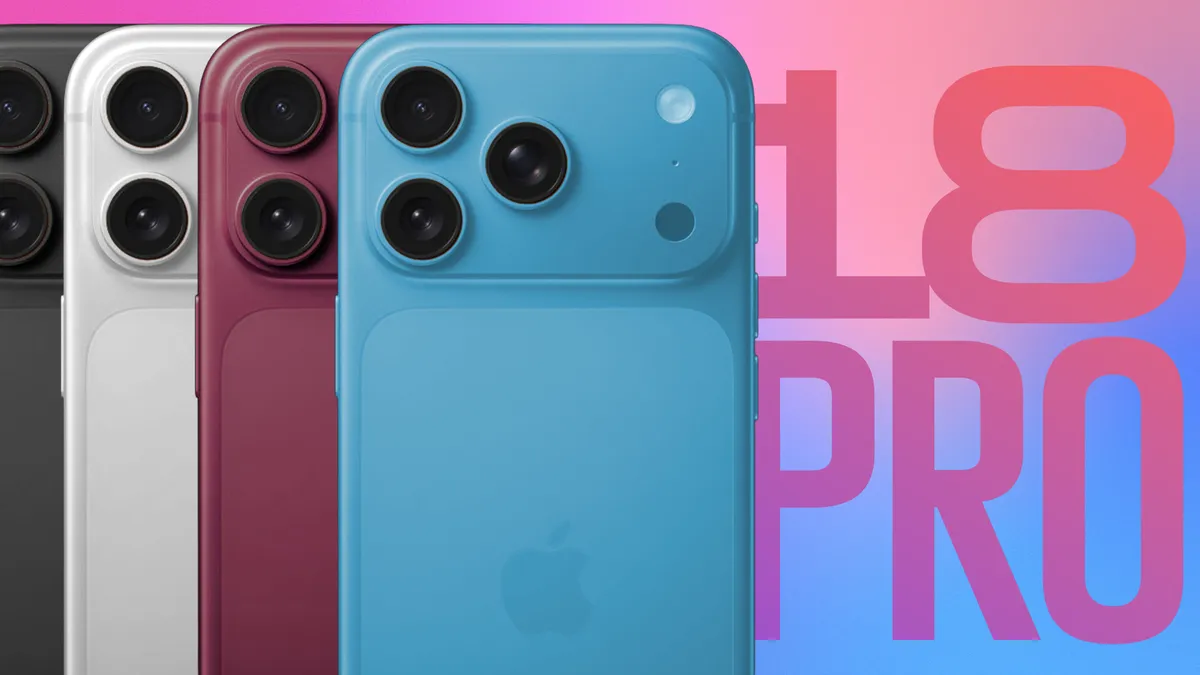
We had CNET’s creative director show us what a light blue-colored iPhone Pro might look like.
Jeffrey Hazelwood/CNET
We’re hearing there likely will be three models: the base iPhone 18, the iPhone 18 Pro and the iPhone 18 Pro Max. There also may be iPhone models not in this series, like a second-generation Air or the much-rumored folding iPhone. That could mean a total of six iPhone models that are in the works if you include the also-rumored 18E.
Designs for the iPhone tend to remain the same year after year, and current rumors suggest this trend will continue. The screen sizes of the three handsets look to be the same as before — 6.3 and 6.9 inches, respectively — with minor design differences in the camera bumps on the back. A Weibo tipster also appears to hint that Apple’s brightness requirements are incredibly demanding, which might result in OLED supply issues. This leads some to suspect it has a much brighter screen.
Advertisement
The base iPhone 18 is rumored to have a smaller camera bump compared to its predecessor, while the Pro and Pro Max will retain the wider “plateau” to accommodate their three rear cameras.
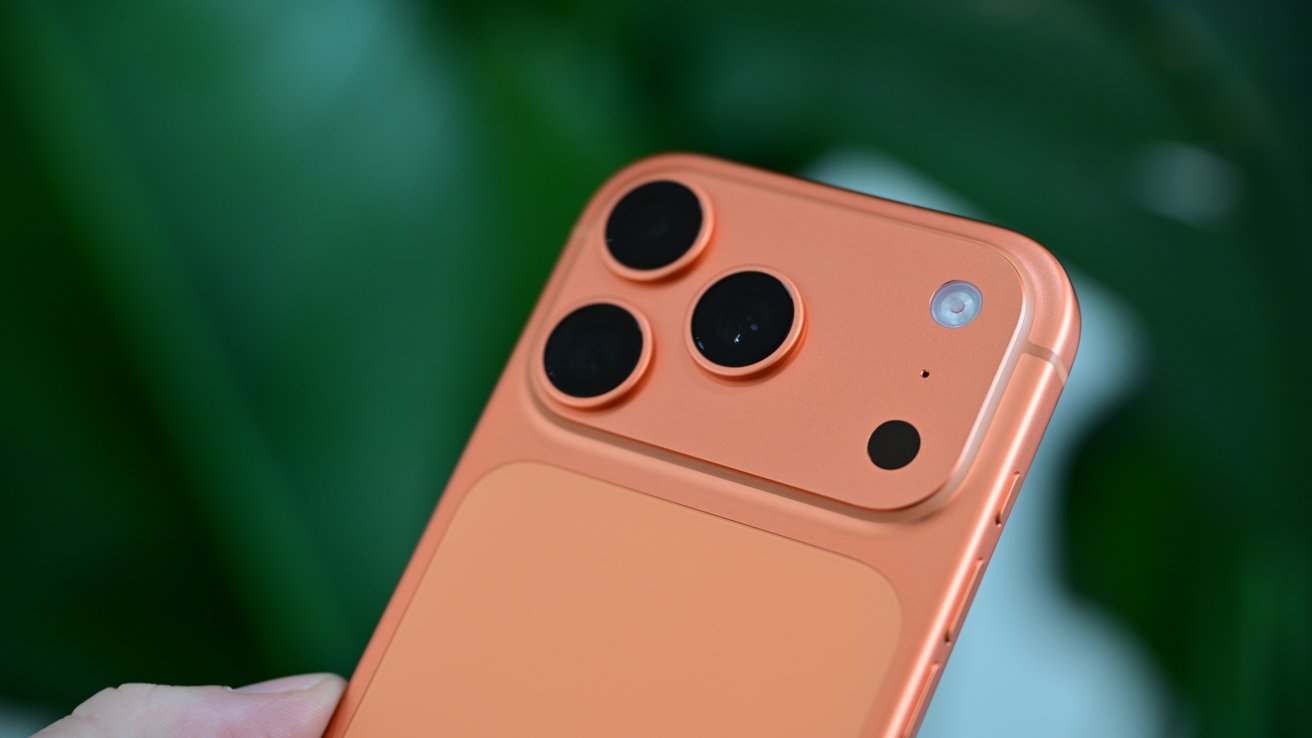
According to a leak from the Chinese social media site Weibo, the Pro model could get a “subtle transparent finish” on the rear glass panel. A Chinese leaker reportedly said that the iPhone 18 Pro could have a more unified design versus the two-tone look it has now. Some rumors also suggest that it could have a heavier, thicker build.
It might also come in three new colors: light blue, dark cherry and dark gray. Earlier rumors pointed to a coffee brown color; however, that option appears to have been scrapped, according to supposed dummy units shared by Sonny Dickson on X.
Other rumors suggest that changes may be coming to the iPhone’s Dynamic Island. Gurman and Weibo user Digital Chat Station suggest that Apple may reduce the size of the Dynamic Island on the iPhone 18 models. This could result in a small pinhole cutout for the camera, as the Face ID sensors may be located beneath the display.
Advertisement
The Information also recently reported that the iPhone 18 Pro and iPhone 18 Pro Max will feature under-screen Face ID, confirming the Bloomberg rumor. Additionally, the outlet said the front camera would be moved to the top left corner of the screen and, as a result, would miss the Dynamic Island cutout.
Contrary to that claim, X account Ice Universe alleges that the Dynamic Island cutout on the iPhone 18 Pro models will remain, but will instead be “approximately 35% narrower” than on current iPhone 17 Pro models. This relates to how the Dynamic Island looks by default: the area enlarges when Live Activities or other information are displayed, just like the existing Dynamic Island. MacRumors suggests that the new iPhone will only have partial under-screen Face ID, which still requires a Dynamic Island.
On June 29, there was a cyberattack targeting Apple’s Indian manufacturing partner, Tata Electronics, which apparently resulted in leaked footage and images of the iPhone 18 Pro undergoing some drop tests. According to MacRumors, the images showed a silver-gray iPhone 18 Pro with a uniform rear look instead of the two-tone look of the current 17 Pro model. The site said that the lenses appeared to protrude more, and that the Apple logo has a reflective finish.
Advertisement
Watch this: No Regular iPhone 18? Why Apple May Split the iPhone Event
Another piece of evidence that supports the shrinking Dynamic Island claim is recently leaked images from the X account @earlyappleleaks. The photos show what appears to be an iPhone 18 Pro prototype with a much smaller Dynamic Island cutout. Similarly, X account Ice Universe shared a photo of what it claims to be an iPhone 18 Pro screen protector. It, too, shows a much smaller Dynamic Island.
We’ve tested under-display cameras on several phones over the years. The part of the display in front of the camera features fewer screen elements and translucent wiring, allowing the selfie camera to “see through” the screen, much like looking out a window with open blinds. While the idea of a display with minimal or no cutouts is a worthy one, under-display cameras often result in poor image quality. However, maybe Apple is the company that will finally figure out how to integrate a high-quality camera under the display.
Otherwise, Bloomberg’s Gurman also warns that the 18 Pro could be “underwhelming,” noting that it could feature only minor tweaks. This is a bit of a departure from prior iPhone Pros, as the Pro has usually been the more premium version of the iPhone lineup.
iPhone Air 2 rumors
There have been some conflicting rumors on whether we’ll see an iPhone Air 2. A report from The Information says the release is being delayed, perhaps due to disappointing iPhone Air sales last year. There are also those who say that Apple will still release an Air successor eventually, though it might be in 2027 rather than 2026.
Advertisement
Recently, leaker Jon Prosser reported that the iPhone Air 2 could have a second 48-megapixel ultrawide camera. Seeing as one of the biggest criticisms against the iPhone Air was its single wide camera, this could be welcome news. The iPhone Air 2’s Face ID unit may be redesigned to accommodate the second camera. He also said that it could have improved battery life, a similar titanium design as the first Air and come in a lavender model.
A bigger battery for iPhone 18 Pro
After years of customers asking, Apple finally chose battery over case slimness in the iPhone 17 Pro. And that model continues to surprise us, coming out on top in Patrick Holland’s recent comparison of battery life across 35 phones. We’re especially curious about whether Apple will adopt new silicon-carbon battery technology.
Based on a post on the Chinese social media site Weibo, spotted by 9to5Mac, the iPhone 18 Pro could include a battery in excess of 5,000 mAh — specifically, 5,000 mAh for models with a physical SIM card slot (as required in some countries) and 5,200 mAh for models that rely solely on eSIM (which give up more internal space that can be filled with more battery).
A recent post by Chinese Weibo-based leaker Digital Chat Station claims that Apple is trying out different battery capacities for different regions. The China model is apparently testing out a 4,056-mAh battery while the US model is testing out a 4,288-mAh battery. MacRumors suggests this is because the US model doesn’t have a physical SIM card slot and therefore has more space for a larger battery.
Advertisement
New cameras on iPhone 18
The iPhone 17 Pro had three rear cameras: a wide-angle lens, an ultrawide and a 4x telephoto.
CNET
The iPhone’s cameras are another feature that may receive a significant upgrade in 2026. Macworld reports that Weibo leaker Digital Chat Station said the iPhone 18 Pro Max could feature a variable-aperture camera, similar to how lenses on DSLR and mirrorless cameras work. This allows people greater control over depth of field and image brightness. The Information also reported that at least one rear camera on the 18 Pro would have a mechanical iris, another name for a lens’ aperture.
We’ve seen variable aperture phone cameras before. The Galaxy S9 launched in 2018 with a mechanical dual-aperture lens on its main camera that could switch between f1.5, allowing more light to enter and creating a shallower depth of field, and f2.4, which sharpened the subject more. But the S9’s image sensor was tiny, and photos from it were just OK. Xiaomi had a variable aperture, between f1.9 and f4.0, on the 2023 13 Ultra and 2024 14 Ultra, but each had a large 1-inch-type sensor that could take advantage of it. Sadly, to the frustration of CNET’s Andrew Lanxon, the company removed the variable aperture on the Xiaomi 15 Ultra.
Advertisement
Macworld also says the telephoto lenses on the iPhone 18 Pro and Pro Max could get a faster aperture, letting more light hit the sensor for better low-light shots. Additionally, MacRumors reports that all iPhone 18 models (except the 18E) would get upgraded 24-megapixel front-facing cameras for improved selfies. We should note that the iPhone 17 series and Air all have Apple’s new Center Stage selfie camera, which has a square 18-megapixel sensor and can take either horizontal or vertical photos, no matter which way you’re holding the phones.
There is also some speculation that the iPhone’s Camera Control button could be simplified. Instead of capacitive and pressure sensors, it might just be pressure-sensing for all of the Camera Control’s functions.
Updated A20 chip and iPhone 18 specs
The new iPhone models run iOS 26 and have either an A19 or A19 Pro chip: (left to right) iPhone 17, iPhone Air, iPhone 17 Pro Max and iPhone 17 Pro.
Advertisement
Patrick Holland/CNET
As the iPhone 17 lineup uses the A19 and A19 Pro chips, it makes sense that the upcoming iPhone 18 would use Apple’s new A20 processor. The rumored chips are said to use a new process called Wafer-Level Multi-Chip Module, which incorporates the RAM directly into the same wafer as the CPU, GPU and neural engine. This apparently results in better efficiency and faster performance because everything would be located on the same chip.
We’re also hearing that the iPhone 18 lineup could use Apple’s next-gen C2 modem chip for improved wireless connectivity. Additionally, The Information reports that Apple is preparing to support 5G networks from satellites, potentially giving iPhone 18 models full satellite phone capabilities, not just for emergencies and texting.
That said, a recent rumor on Weibo suggests that the iPhone 18’s specs could be “downgraded” to be closer to an iPhone 18E model. That could also be more focused on reducing production costs on the back end.
MacRumors recently reported that the iPhone 18 could have 12GB of RAM, according to a research note by analyst Jeff Pu. Analyst Ming-Chi Kuo, on the other hand, has reported that Apple’s lower-end phones like the iPhone 18 and iPhone 18E could have 9GB instead (1 better than the 8GB currently on the iPhone 17 and 17E) perhaps due to the current high cost of RAM. Kuo appears to indicate that 9GB could be sufficient enough to handle all of the new AI capabilities of iOS 27.
Advertisement
Although this is not exclusive to the iPhone 18, Apple also recently announced that Google’s Gemini will be running its AI-powered Siri later this year.
Yep, it looks like prices are going up
Outgoing Apple CEO Tim Cook sent up a warning flare that the company would be increasing prices due to the “RAMageddon” component shortage, and sure enough, the next week prices jumped on Mac, iPad, Home Pod and Apple TV models. Although that doesn’t promise more expensive iPhones, MacRumors pointed to Chinese leakers who purport to confirm that you’ll pay more for the new models.
Although no one would argue that iPhone models have been cheap, the prices have stayed fairly consistent for years. Now, with a possible iPhone Ultra foldable in the works, the top end of the line could push well past the $2,000 mark.
iPhone 18 and iPhone 18 Pro release date
Advertisement
The logo for Apple’s fall 2026 event invitation is interactive: a heat signature stays where you touch or click and hold.
Screenshot by Jeff Carlson/CNET
For years, Apple has held its annual iPhone launch event in the fall. But according to multiple reports, Apple’s smartphone release schedule could look different in the coming years.
Bloomberg has reported that Apple plans to release the more expensive iPhone 18 Pro, the iPhone 18 Pro Max and its new foldable in fall 2026, while the more affordable iPhone 18 and the iPhone 18E (and maybe a potential iPhone Air 2) could debut six months later in February or March 2027.
Seeing as Apple has released the iPhone 16E and 17E in the spring of 2025 and 2026, that’s not a surprising development. It does mean, however, that if you’re holding out for a more affordable iPhone, you could have to wait until next year to plan your purchase.
Advertisement
Watch this: The iPhone 17’s Unexpectedly Satisfying Tips and Accessories
Turns out decades-old email tricks still work against some LLM-powered email filters
Notice more spam getting through that corporate email filter lately? Attackers are using a technique known as “text salting,” which hides benign-looking words intended to confuse some AI-powered email filters, says cybersecurity firm Barracuda.
The email security outfit said on Thursday that it had detected more than one million retail-themed phishing attacks using text salting since April. It’s not a new technique by any stretch and has been used to fool traditional secure email gateways for years, but Barracuda says it can also confuse machine-learning and LLM-based security tools.
Advertisement
Text salting involves peppering (sorry) a malicious email with random, harmless-seeming words in order to fool an email scanning system into thinking there’s nothing off about the flavor of a message (sorry again), tricking the system into passing it to its recipient for consumption (I’ll stop with the food jokes here).
Pour a pile of salty text on top of an email and a human reader would probably get suspicious, however, so attackers typically use one or more of three flavor variations (okay, I’m done – promise) to hide the additives from human readers, but not automated scanners, per Barracuda.
Typical techniques include CSS cropping, which sets the visible window small enough that a human won’t see the hidden filler text; text manipulation to move the salty copy outside the visible screen; and zero font techniques which insert misleading words between suspicious phishing copy that’s visible to a machine but not a human.
The end result of each of those techniques is a message that reads less malicious, more gibberish to a machine, leading it to assume the email is fine, and which looks exactly as the attacker intended when viewed by a human.
Advertisement
Modern email security systems have largely adapted to these techniques, with newer tools able to remove hidden text to see what a reader is supposed to see, sounding alarms when a lot of hidden stuff is inserted in an email, and the like. AI, however, hasn’t managed to follow suit, says Barracuda.
“Text salting and related techniques can be used to confuse AI-driven content analysis engines by flooding the email with random terms that encourage the AI system into making an incorrect classification decision,” the company wrote in its report – just like those early 2000s SEGs. What a technological leap we’ve made!
LLMs, Barracuda explained, are typically designed to process email text and source code plainly, with no understanding of whether text is visible or hidden from a user. They can be trained to do so, but that just means most tools probably aren’t doing that by default.
So, what can enterprises do to stop the flow of salty spam to their employees? Barracuda recommends a layered approach to email security rather than relying solely on keyword detection, including checking sender reputation, authentication results, embedded URLs, HTML-rendering techniques, and differences between user-visible and hidden content.
Advertisement
Ditching that AI spam filter might not be a bad idea, either. ®
An anonymous reader quotes a report from Ars Technica: As smoke from hundreds of burning wildfires spread across Canada and the United States, the first three operational satellites in the Google-backed FireSat program successfully launched into orbit. The satellites will begin providing wildfire detection capable of spotting even small fires in the United States, Australia, and Europe before the end of the year. The launch of the microsatellites aboard a SpaceX Falcon 9 rocket from Vandenberg Space Force Base in California on July 7, 2026 marks a transition to “initial operational capability” for the FireSat constellation managed by the nonprofit Earth Fire Alliance. After a three-month testing period, the three satellites will begin actively providing data to fire agencies while covering every fire-prone region on Earth at least twice per day.
FireSat represents the first satellite constellation purpose-built for detecting wildfires, including spotting smaller fires that other satellites may miss. The satellites were designed by California-based satellite manufacturer Muon Space and have received over $15 million from Google to support initial deployment. Other notable financial supporters include the Bezos Earth Fund that committed $26 million. Each satellite is equipped with multispectral imaging that can peer through smoke and clouds and detect fires as small as five by five meters — about 16 by 16 feet. That capability was proven by a FireSat Protoflight satellite that launched in March 2025 and collected more than one million images, while showing it could detect low-intensity blazes invisible to existing satellites.
The “early adopter” organizations that will start using FireSat data this year include fire agencies in California, Colorado, Australia, and Portugal. As more satellites launch, the FireSat program aims to provide the latest imagery anywhere in the world on an hourly basis by 2029. Such imagery would eventually become available every 20 minutes once the full constellation of more than 50 satellites is launched by the early 2030s. Detection of small wildfires before they burn out of control could prove extremely helpful. The Earth Fire Alliance has projected that even an hourly revisit rate by the FireSat constellation could help save more than $1 billion in fire damage costs and prevent nearly 22 million tons of carbon emissions, along with protecting 3,500 homes and 1.3 million acres of land.
To assist with that capability, Google Research plans to use the company’s AI models to compare operational FireSat data with historical images in order to accurately identify very small fires and to inform predictive modeling of wildfires. Google celebrated the launch of the first operational FireSat satellites by describing the event as “another tangible step forward in putting practical AI to work for climate resilience.”
Amazon asks users not to panic as it works to fix the bug
Your AWS billing estimate might look just a little inflated right now. If you woke up to find an email from Amazon Web Services this morning telling you that you’d gone over your billing threshold by a few hundred million dollars, don’t panic: Something’s gone wrong in the AWS Billing Console, the company admitted.
An open issue on the AWS Health Dashboard (archived copy at the time of writing) popped up at 1:33 am Pacific time on Friday informing users that Cost Explorer was “reflecting inaccurate estimated billing data.” As of writing, the issue is still unresolved despite AWS trying several different things to get it fixed.
Advertisement
The company apparently identified the root cause within an hour and a half of beginning its investigation, only describing it as “an issue with unit pricing within the estimated billing computation subsystem.”
AWS followed up by pausing estimated bill updates, saying customers would continue to see the inflated figures already displayed, but that those estimates would not increase further.
“The displayed billing estimates do not reflect actual usage and charges,” AWS explained, noting that customers don’t need to take any action, like, we imagine, flooding the help portal with tickets telling them what they already know, for instance.
“Once the issue has been mitigated, we expect full resolution to take multiple hours as we work through recomputing the estimated billing data,” AWS added.
Advertisement
After we first published this article, Amazon updated the issue page to indicate that it had identified the root cause and mitigated the underlying issue. The company says that it’s begun backfilling data in the Cost Management Console to correct billing numbers, and that all customers should see corrected amounts by Saturday, July 18 at noon pacific time.
We owe HOW much?
Users took to Reddit and Hacker News this morning to report they’d received overage emails for massive amounts – we weren’t exaggerating with that hundreds of millions opening line. If anything, it was an understatement.
Screenshots posted in the Reddit thread showed one user whose AWS charges totaled just $0.19 last month receiving an estimated bill of nearly $2.5 billion. Others in the thread claimed to have received estimated monthly charges ranging from $126,000 to as much as $2.5 trillion. Hacker News users similarly reported estimates in the billions.
Amazon said the figures shown in customers’ accounts were inaccurate estimates rather than actual charges. As for when users might see their billing portal reflect an accurate number, that could take a while.
Advertisement
AWS declined to explain the issue aside from pointing us to the dashboard page linked above. We’ll be keeping an eye on this developing story and update it as we learn more. ®
Updated at 1903 to show that Amazon has updated its issue page with a resolution.
Researchers demonstrate that something interesting happens when a small drone with a spindly airframe spins at a high speed: it very nearly turns invisible. The spidery device is shown mounted in its launcher in the image above. The dark blur at the rightmost side is an outlet on the wall behind the drone, not motion blur from a moving part.
There’s not much to do about the noise, but a high-speed spin becomes nearly invisible.
There’s not a lot of detail about the Phantom Twist’s hardware design but it appears to use a downward-angled motor for lift, relying on a high-speed control system to maneuver and maintain altitude.
This does away with the need for a wing, at the cost of only being stable while rotating at a high speed. We imagine it is also a touchy design that depends greatly on being balanced just so.
Advertisement
A hand launcher spins the device up before releasing it for flight. The visual effect once it is up and running is pretty striking; see for yourself in the short video, embedded just below.
Forrester’s research measures several countries’ ability to develop, operate and secure critical technologies independently of foreign governments’ influence.
Forrester has published the findings of its new ‘Global Sovereignty Forecast, 2025 to 2030’ report, which takes a look at how AI and technology sovereignty is likely to evolve across 14 major global economies between now and 2030.
The study measured countries’ ability to develop, operate and secure critical technologies independently of foreign governments’ influence.
What was discovered is that despite significant investment in sovereign AI, chip manufacturing, cloud infrastructure and national technology capabilities, it is projected that global tech sovereignty will advance slowly over the next few years, with China and the US maintaining a lead position.
Advertisement
The average tech sovereignty score across all 14 countries assessed – which were Australia, Brazil, Canada, China, France, Germany, India, Italy, Japan, Mexico, South Korea, Spain, the UK and the US – predicts only a minimal rise from 39pc in 2025 to 40pc in 2030.
Each country was analysed across nine dimensions of technology sovereignty: government AI investment; cloud sovereignty; technology workforce availability; AI model development; data centre capacity relative to technology spending; data centre autonomy; semiconductor production; software creation; and rare earths processing.
With China and the US recording the highest overall tech sovereignty scores at 82pc and 79pc respectively, the report suggests that tech sovereignty will remain concentrated among a small number of geopolitical and economic powers. If other regions are serious about closing capability gaps and reducing tech dependencies, they will need to commit to strategic partnerships and alliances.
Key highlights
Perhaps unsurprisingly given the recent worldwide focus, across all technology dimensions, semiconductor manufacturing was found to have the strongest projected improvement. The US’s and South Korea’s chip production scores are set to increase from 45pc in 2025 to 79pc in 2030. Meanwhile, Japan is expected to jump from 36pc to 53pc, China from 40pc to 51pc and India from 0pc to 13pc.
Advertisement
However, the report also noted that even amid the improvements, semiconductors and software will remain among the most significant sovereignty challenges due to concentrated chip supply chains and a handful of dominant software providers.
Sovereignty was also divided in terms of which country in North America you belong to. While the US is forecast to remain a global leader, Canada is expected to improve modestly, going from 33pc to 34pc. Mexico will continue to remain the lowest among the 14 countries assessed at 20pc, highlighting the region’s uneven distribution of technology power.
It was also noted that Europe’s largest economies are likely to remain overly dependent on resources from foreign technology providers. Sovereignty scores in Germany and Spain will only rise by two percentage points from 34pc in 2025 to 36pc in 2030, France will rise from 33pc to 35pc, the UK from 30pc to 32pc and Italy from 27pc to 29pc.
“Despite these improvements, Europe’s lower scores reflect significant dependencies on chips, cloud, software and data centre capacity,” said the report.
Advertisement
Commenting on the report, Dario Maisto, a principal analyst at Forrester said: “Ongoing geopolitical volatility, AI competition and semiconductor supply chain risks have put tech sovereignty firmly in the spotlight.
“Today, tech sovereignty is concentrated in the hands of a few global leaders, creating an uneven competitive advantage for some countries. To compete in the AI era, nations must understand their strategic dependencies and build durable partnerships that safeguard their data, infrastructure and long-term autonomy.”
Don’t miss out on the knowledge you need to succeed. Sign up for the Daily Brief, Silicon Republic’s digest of need-to-know sci-tech news.
Apple stock ended trading on Friday as the world’s most valuable publicly traded company, overtaking Nvidia for the first time since April 2025 after a sustained recovery for the iPhone maker met a sharp selloff in chip stocks.
Apple shares closed at $333.74, leaving the company with a market capitalization of approximately $4.88 CAP trillion. Nvidia ended down about 3.5% on the day, with a value of about $4.86 trillion.
The distinction is largely symbolic, and a lead this narrow could disappear during the next trading session, if not in after-hours trading over the weekend. Still, Apple’s return to the top caps a striking reversal from the tariff, China, and artificial intelligence concerns that weighed on its shares the last time it held the position.
Apple took a difficult route back to the top
Apple entered the spring of 2025 facing doubts about whether its first Apple Intelligence rollout could drive meaningful upgrades. The company confirmed on March 7 that its more personalized Siri features were taking longer than expected.
Advertisement
Tariff fears added a more immediate financial threat. Apple shares lost about 15% during the first half of 2025 as investors considered the company’s reliance on Asian manufacturing.
At the time, Tim Cook warned that tariffs could add about $900 million in costs during the June quarter. It ultimately paid $800 million, but has filed for a refund of those, which Apple says will be used to expand US manufacturing.
Nvidia moved in the opposite direction. Surging demand for AI processors carried the chipmaker back to the top of the market in June 2025, past $4 trillion the following month, and briefly beyond $5 trillion in October.
Apple’s underlying business nevertheless began producing results that were difficult for Wall Street to dismiss. Revenue rose 10% to $94 billion during the June 2025 quarter, followed by an 8% increase to $102.5 billion during the September quarter.
Advertisement
Strong early demand for the iPhone 17 helped Apple reach a $4 trillion valuation in October. Services continued producing record revenue and substantially higher margins than the company’s hardware divisions.
Apple shares lost about 15% during the first half of 2025
Momentum accelerated during fiscal 2026. Apple reported an all-time record of $143.8 billion for the holiday period, up 16%, followed by a March-quarter record of $111.2 billion, up 17%.
The March quarter set records for total revenue, iPhone revenue, earnings per share, and Services. Greater China returned to strong growth despite earlier concerns over local competition and delayed Apple Intelligence features.
Wall Street changed how it views Apple’s AI strategy
Apple previewed Siri AI at WWDC in June, demonstrating the personal context, onscreen awareness, app control, and conversational features promised in 2024. The technology is due with the fall operating-system updates and is already available to beta testers.
The launch reinforced Apple’s strategy of adding AI to products and services without matching the massive infrastructure spending of Microsoft, Alphabet, Amazon, and Meta. As investors question those returns, Apple can leave much of the model and data-center expense to partners while distributing AI features across more than two billion active devices.
Advertisement
The March quarter set records for total revenue, iPhone revenue, earnings per share, and Services
Apple is also nearing its first CEO transition since 2011. Tim Cook will become executive chairman on September 1, with hardware engineering chief John Ternus succeeding him, but the planned handoff has done little to slow the stock’s rise.
Nvidia’s decline helped Apple finish the job
Apple didn’t retake the top position because of a single announcement or earnings report. Its valuation recovered over more than a year, while Nvidia’s decline on Friday erased enough market value to allow Apple to move ahead.
Nvidia’s role in the AI industry hasn’t diminished. Its processors remain central to the data-center expansion that pushed the company past Apple, and even a modest rebound could reverse their positions again.
Apple’s return instead suggests Wall Street no longer sees massive AI spending as the only credible path to growth.
After spending much of 2025 as the industry’s most conspicuous AI laggard, record iPhone sales, Services growth, a China recovery, and a tangible Siri roadmap have made Apple’s restraint look more like strategy than failure.






-Reviewer-Photo-SOURCE-Adrienne-So.jpg)






























































You must be logged in to post a comment Login