
Security teams log 54% of successful attacks and alert on just 14%. The rest move through your environment unseen.
The Picus whitepaper shows how breach and attack simulation tests your SIEM and EDR rules so threats stop slipping by detection.




The NotePin S AI wearable, seen here on the wrist of CNET’s Katie Collins, could be really useful for my job. And it’s on sale for Prime Day.
I took over the role of CNET’s editorial leader earlier this year, and while I’ve participated in Prime Day sales as a TV reviewer and general deals editor here for (literally) decades, this is my first Prime Day as EIC. In case you’re wondering what purchases a person like me is considering this time around, here’s a sampling.
iPad 11-inch A16 ($300): My artistic daughter has been asking for an iPad and if my wife approves, I’ll likely get her this basic version, our top pick for most people. I’d also get her the Apple Pencil (on sale for $60). We’d save both of these for Christmas presents.
Belkin Portable Charger Bank ($38): My family and I always need portable chargers. Half our devices call for Lightning and the other half for USB-C. This does both and I like the built-in cables.
Plaud NotePin S AI Notetaker ($152): In my new role I take more meetings than ever, and I also have plenty of valuable face-to-face conversations in the office and beyond. I currently depend on the Otter app on my phone and Gemini+Google Meet recordings at work to take notes (with appropriate permission, of course). This AI wearable could be my “secret weapon” to consolidate everything in one place.
JBL Go 4 Bluetooth Speaker ($38): I actually bought this one a few days ago when it was $40 – still a great deal, but now even better. It’s no longer one of our best Bluetooth speakers but it’s good enough for my (other) daughter, who wants one for the beach. At this price, I won’t be too annoyed if (when?) it gets destroyed by sand and surf. And yes, I got her the pink one which I know she’ll love. We’re saving this for her birthday.
Anker Solix F2000 portable power station ($749): I own a travel trailer and upgraded to solar with an inverter, but at a recent (shady) campsite, I still had to break out my loud, annoying propane generator. Sure, I could just add more standard 12V LiPo4 batteries, but this portable power station is so much more versatile. It includes a 30A RV outlet, and the wheels make it worth the extra $50 over the Bluetti AC200L. No way my wife approves this one, but it stays on the list anyway because I’m camping tech obsessed.
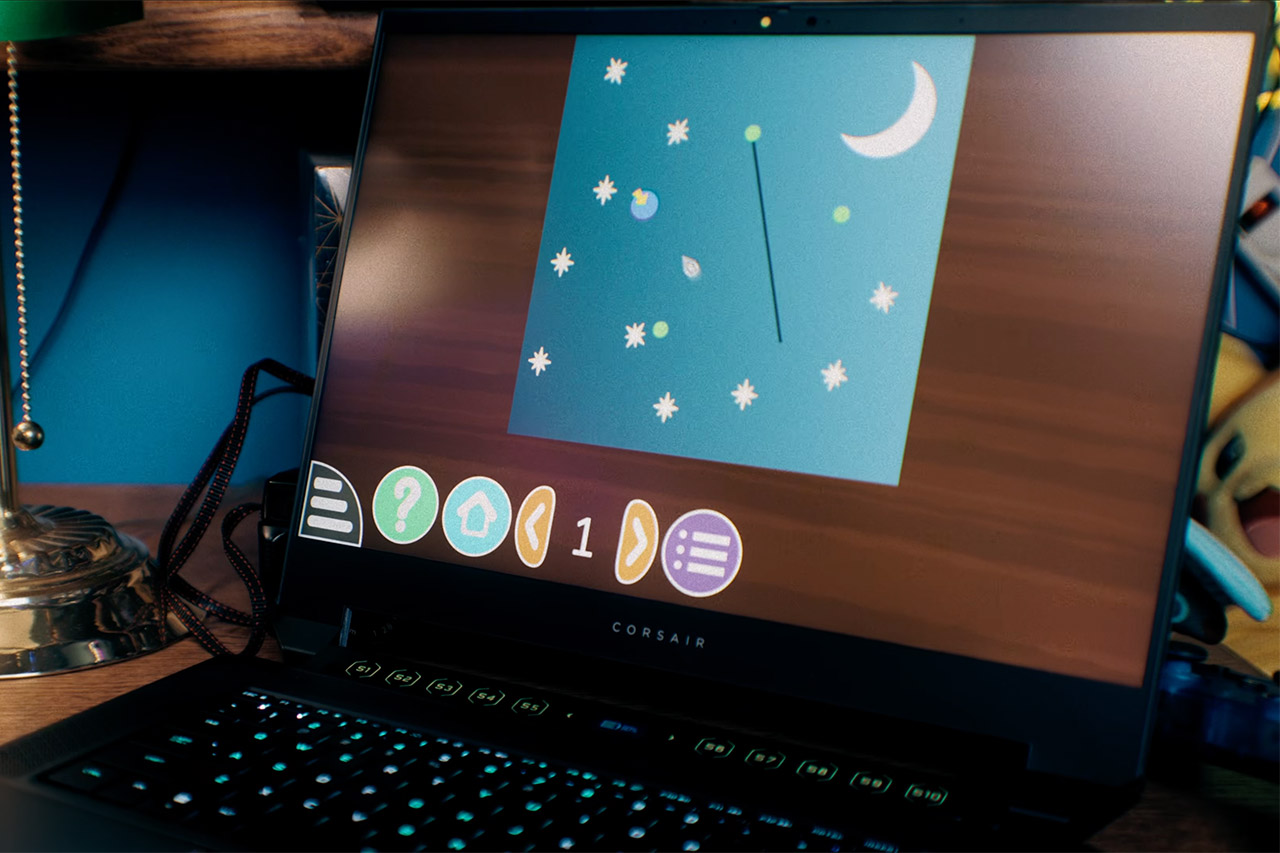
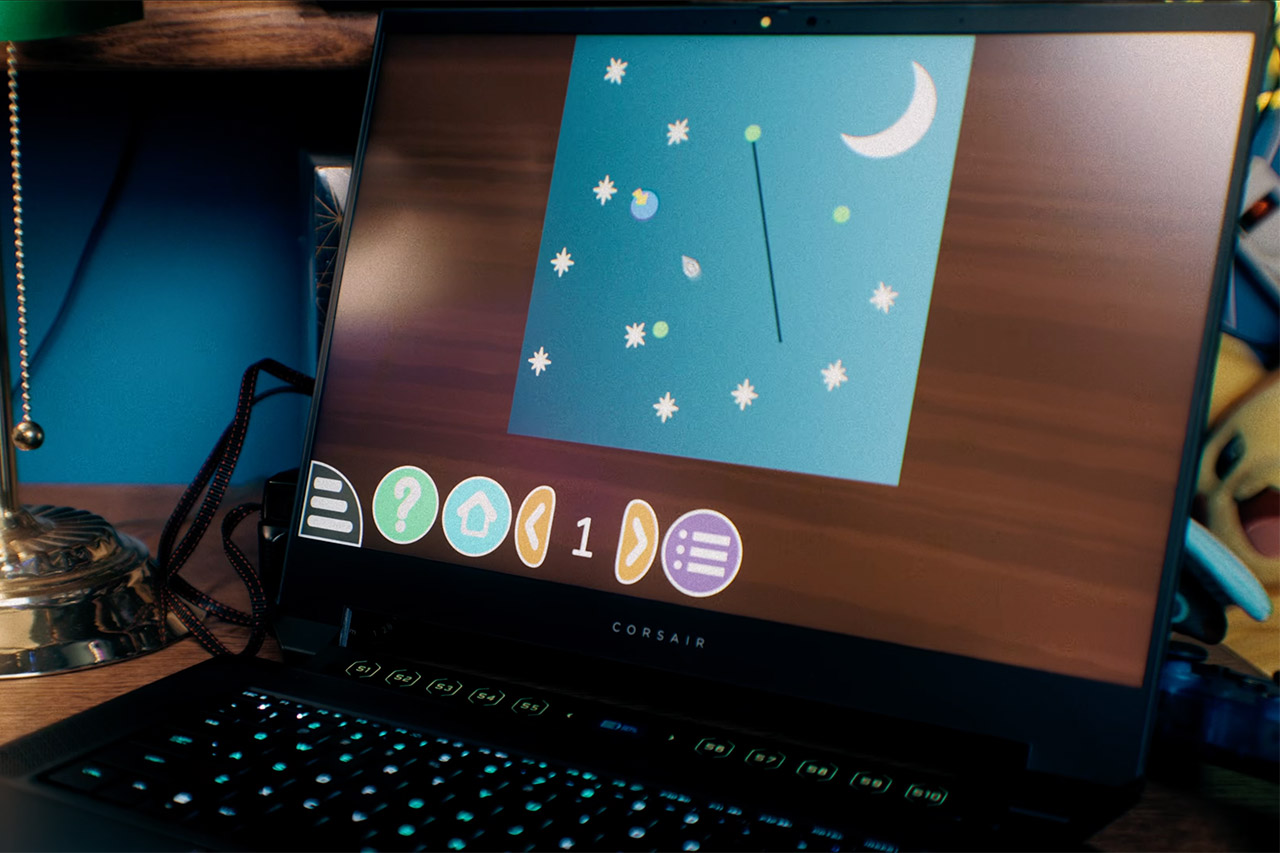
Parents watch their children reach for screens earlier each year. Short videos and social platforms pull attention hard, and the effects show up in shorter focus, less interest in slower activities, and early exposure to material that simply does not belong in a young life. One father decided the standard options did not fit what he wanted for his seven-year-old son. He took an older laptop and shaped it into something different.
The machine began life as a Corsair Voyager A1600, a beast of a machine with more power than was required to handle the majority of what we were going to throw at it. He ensured that it had enough horsepower to keep things working smoothly even when he had multiple instructional programs open at the same time. A few modifications in the BIOS settings were required to reduce the fans to a whisper and get the trackpad to behave properly by eliminating accidental touches, because when precision is required, we prefer to use a separate mouse.
Sale

As it is, the system feels robust, responsive, and quiet, with no annoying fan noises. Kubuntu was chosen as the foundation operating system because it provides a consistent day-to-day functioning with relatively low memory requirements and complete control over the screen’s appearance. Installation was a bit of a trial and error process using a few different USB tools before it finally clicked, but once installed, the system was smooth sailing, with no need for constant babysitting. The upgrade process is fairly methodical, as opposed to the all-at-once events that some other platforms are known for, which is exactly what we desired.

The desktop has been reduced down to its minimal bones, with a few large icons for the programs the child actually uses displayed prominently. The usual comprehensive menu, including all loaded apps, is not available; nevertheless, a simple clock remains visible. There are no superfluous panels or notice sections that take up space. The concept is that the child opens what they need and stays there, while adults may still access the whole menu or a terminal via a few keyboard commands when something needs to be changed.
Safety was a top priority. Before any software is launched, a free service is utilized to filter out the bad stuff, including DNS filtering to prevent known adult content, malware sites, and other trouble locations. Only allowed web activities are accessible in the browser as direct shortcuts, because at 7 years old, we weren’t about to turn them loose on the wide web. The browser only allows access to pre-selected games or utilities; everything else is restricted and inaccessible.

The majority of the space is taken by a collection known as GCompris, which has dozens of activities to keep the child entertained. There are games to assist improve early reasoning, alphabet practice, elementary math, science explorations, and creative projects all in one place. The images are clear, and the feedback is kind, so even if the child makes a mistake, they are rewarded for trying again. KidPix brings drawing to life, allowing you to transform a blank sheet into a work of art complete with stamps, sounds, and all the colors. A basic paint software is included for when they wish to get more creative with shapes and fills.
Scratch Jr allows kids to bring games to life by dragging blocks to move their characters, adjust the scene, and narrate simple stories. Meanwhile Teach Your Monster has a way of sneaking in some reading and math practice through delightful small adventures that don’t feel like work at all. Other fun options to look into include a fancy dress-up game with a potato head character, a simple maze where a mouse chases pizza, a classic Minesweeper puzzle that keeps them thinking, a calculator that they probably already enjoy using, and a word processor that gets them typing away at an early stage. Not to add a small weather monitor on the desktop that connects the screen to what’s happening directly outside the window.
[Source]


Amazon Web Services and Microsoft Azure are now so important to Europe’s digital economy that they may be required to comply with additional rules when doing business with customers in the EU. Otherwise, they could face hefty fines.
Read Entire Article
Source link


The U.S. Cybersecurity and Infrastructure Security Agency (CISA) is giving federal agencies until Sunday to patch a vulnerability in Cisco Unified Communications Manager Server that is being actively exploited.
Identified as CVE-2026-20230, the security issue is server-side request forgery (SSRF) and has been added to the agency’s catalog of Known Exploited Vulnerabilities (KEV).
Per Binding Operational Directive (BOD) 26-04, the remediation is deemed urgent and must addressed by Sunday, June 28.

Cisco marked CVE-2026-20230 with critical severity and released a patch on June 3, warning that it could be exploited remotely and without authentication via specially crafted HTTP requests.
At the time, the company noted that a proof-of-concept exploit existed, but had found no evidence of active exploitation.
Last weekend, threat detection startup Defused observed the vulnerability being exploited in attacks to write arbitrary text files to affected endpoints.
It is currently unknown what type of threat actor is leveraging CVE-2026-20230 in attacks.
CISA has also added CVE-2026-12569 to the KEV catalog, an improper input validation flaw impacting the PTC Windchill and FlexPLM software products.
Both are product lifecycle management (PLM) systems developed by PTC specifically for the manufacturing, engineering, retail, footwear, apparel, and consumer products industries.
CVE-2026-12569 is a critical-severity remote code execution (RCE) vulnerability that can be exploited through the deserialization of untrusted data.
PTC disclosed the issue on June 18 and published a security advisory, pointing customers to the complete list of vulnerable Windchill and FlexPLM versions and urging them to immediately take remediation steps.
According to the vendor, the flaw affects all versions up to 11.0 and multiple versions of the 11.1, 11.2, 12.0, 12.1, and 13.0 release branches.
CISA set the same June 28 deadline for federal agencies to patch CVE-2026-12569.
Agencies and organizations bound by BOD 26-04 should take immediate action to secure their systems by applying available security updates and vendor-recommended mitigations, or stop using the products mentioned by the set deadline.

Security teams log 54% of successful attacks and alert on just 14%. The rest move through your environment unseen.
The Picus whitepaper shows how breach and attack simulation tests your SIEM and EDR rules so threats stop slipping by detection.


In the immediate aftermath of Microsoft’s announcement that it was raising prices of the Xbox Series X and S for the third time this generation, a tiny trend broke out on our technology news feed. A smattering of stories appeared encouraging readers to run out and buy an Xbox console before the price hike goes into effect on August 1. Combine this deadline with the allure of active Prime Day deals on Xbox consoles, and the message from these articles is clear: The best and most fiscally responsible time to buy an Xbox is right now, so go do it.
Allow me to play devil’s advocate.
While it often makes sense to plan purchases around known price hikes, it’s a dumb time to buy an Xbox. Yes, even with discounts offering an Xbox Series S for $350 and an Xbox Series X for $573 — hell, especially at these prices. In 2020, the Xbox Series S launched at $300 and the Xbox Series X was $500. Over the past couple of years, I personally picked up a Series X for less than $400 and a Series S for $250. These consoles are now in their sixth year, and normally around this time in the generation, hardware prices would be dropping and we’d be getting cool colorways and bundles. Today’s discounted Xbox prices are obscene for a console entering its sixth year.
It’s worth noting that today’s marketplace is uniquely unmoored, fueled by a memory and storage shortage that’s driving up hardware prices across the tech industry. However, Microsoft is a core part of the problem here. The company is exacerbating the RAM shortage with massive investments in AI data centers, and its feigned ignorance around spiking Xbox console prices is laughable.
Corporate chicanery aside, it’s simply not a great time to buy into the Xbox ecosystem. You could say there’s never been a worse time, in fact. Microsoft is in disarray following years of layoffs and studio closures, falling console profits, and executive-level changes to the Xbox business in 2026. Just this month, news broke that Double Fine, Ninja Theory and Compulsion Games are in imminent danger of being shut down, while new Xbox CEO Asha Sharma and Chief Content Officer Matt Booty set the stage for more layoffs in July.
On the software side of things, Xbox doesn’t have a ton of exclusive games, as its first-party titles are widely available on PC. Its recent hits like Avowed, Indiana Jones and the Great Circle and Keeper are all available on Steam, and Xbox is legally obligated to distribute its largest first-party franchises (i.e., Call of Duty) across platforms. That’s not to mention the push to get its games on PlayStation and Switch, no matter how short-lived that may end up being. One of Microsoft’s loudest marketing points has been the fact that its games will work on subsequent consoles and eventually come to PC, and even if they’re not saying it out loud any more, the company is a leader in platform-agnostic cloud play. When everything is an Xbox and Xbox games are available anywhere, you don’t really need an Xbox at all.
There is zero reason to rush out right now and buy a six-year-old gaming console for more than its launch price, just because it’s going to become even more expensive soon. If you haven’t needed an Xbox before now, chances are, you still don’t need one. This might be rich coming from a consumer tech blog, but there is no real-world achievement for collecting every piece of contemporary gaming hardware — the closest we get is clout, but the returns on social media likes and comments are hollow and diminishing. Unlike Xbox prices, which are only rising. The actual smart move is to wait until the next generation hits — which is apparently very soon — and either pick that up or grab a Series console that will then be priced to clear.
This is nothing against the media outlets that’ve run stories encouraging people to take advantage of Prime Day Xbox console prices. Truthfully, there is a very small market for this advice and it’s fine to show these six people where the best deals are at the moment. But as general-audience advice, it sucks.
Besides, aren’t you saving up for a Steam Machine right now?

Microsoft has quietly extended free Windows 10 security updates for consumers by another year, pushing the Extended Security Updates (ESU) program’s end date from October 12, 2026, to October 12, 2027. “The ESU support page was updated with that date, and Microsoft’s blog post on the program has a new editor’s note confirming the change,” reports Ars Technica. From the report: The prevalence of Windows across so many devices and form factors has given Microsoft a massive customer base for decades, but it has also stymied the company’s efforts to roll out new operating systems. Microsoft famously extended the support window for Windows XP numerous times throughout the 2010s as it became apparent that millions of PCs would never be updated. Windows 10 isn’t quite as entrenched as XP was, but it has still been a slog getting people to upgrade to Windows 11 even nearly five years after release.
Unlike many past Windows updates, Windows 11 required some users to buy new PCs with specific CPU technologies and a Trusted Platform Module (TPM). Microsoft was widely criticized for excluding perfectly serviceable PCs, and that’s turning into a problem in 2026. The AI-driven shortage of storage and memory has made system upgrades vastly more expensive, potentially slowing upgrades. Some have also avoided Windows 11 due to Microsoft’s intense focus on AI features.
The result is that Windows 10 remains stubbornly popular. According to StatCounter data, Windows 10 is still running on about 26 percent of PCs, while Windows 11 sits at 72 percent. That means there are still hundreds of millions of active Windows 10 installs, but those machines will be up to date for at least an additional year.

Ibnu Taufan, a PhD researcher at UL, discusses vibration research and his particular interest in a ‘dancing bridge’ phenomenon.

For many researchers, the origins of their interest in a particular scientific area can be traced back to a specific event or place. For Ibnu Taufan, the link can be found in two specific events – the first one involving the longest bridge in Indonesia.
“When I was young, my father and I used to travel from Sumenep (my hometown) to Surabaya (the second largest city after Jakarta) by a ferry. On the ferry, I watched Suramadu Bridge as it was being constructed,” he says.
“It took six years to complete the bridge. I asked my father why it took so long to build the bridge, but without a proper answer.”
The second event can be traced to Taufan’s time studying for a degree in engineering physics at the Institut Teknologi Sepuluh Nopember in Surabaya, where he finally got an answer to the question he asked his father.
“The lecturer explained the resonance phenomenon on a bridge. He showed the famous example of Tacoma Bridge, which collapsed due to a resonance phenomenon,” says Taufan. “This bridge has revolutionised vibration research, rendering bridges all over the world safer. He explained and proved the resonance using a simple mathematical model and the physics behind it.
“I loved math and physics in secondary high school, and, due to his explanation, I loved the study of vibrations even more.”
Taufan went on to complete his bachelor’s degree with a specific interest in vibration research, and began a career as a product and development engineer in vibration engineering at a pump manufacturing company in Indonesia.
“Mostly I worked on research about how to utilise vibration signals for machine health monitoring and to reduce excessive motion of structures using vibration control,” he says.
A few years into his career, Taufan was presented with an opportunity to pursue a PhD in vibration energy harvesting at University of Limerick (UL). Interested by this new research direction, Taufan decided to follow up on the opportunity and move to Ireland.
“This topic is fascinating for me because instead of reducing the uncomfortable vibrations (from cars), the goal of this research is to harvest ambient – waste – vibrations from machines into electricity to power Internet of Things (IoT) sensors for Industry 4.0 applications,” he tells SiliconRepublic.com.
“In this context, I am eager to solve vibration research challenges in order to contribute to both industry and society.”
Taufan’s PhD research topic is to develop a novel broadband piezoelectric vibration energy harvester (PVEH) technology to sustainably power IoT sensors for preventive maintenance and performance optimisation in Industry 4.0.
“Generally, the industry relies on batteries or the electricity grid to power sensors for machine monitoring purposes. However, these types of energy sources are not sustainable and are expensive in remote locations,” he explains. “The PVEHs (battery-free devices) created in my PhD can harvest ambient vibrations from the machines themselves to sustainably power the IoT sensor for machine health monitoring in real time.”
He says the importance of this research lies in its capability of reducing battery waste and overreliance on the electricity grid.
“Batteries not only contribute to contamination in soil and groundwater due to metal waste during their production, but also the battery waste contains toxic heavy metals which can cause soil and water contamination on residential areas if not correctly disposed of,” says Taufan. “Also, the electricity grid needs physical wires or cables to thousands of remote sensors which would be impractical and expensive.”
Vibrational energy harvester (VEH) technology, he explains, can be employed to power thousands of IoT sensors in remote locations for machine monitoring in Industry 4.0. The IoT sensors can then make the data accessible via the internet to monitor the industrial assets in real time without batteries or electricity connections.
Within his vibration research, one of Taufan’s favourite topics is resonance, the previously mentioned phenomenon which can cause catastrophic failure in improperly constructed bridges, buildings, trains or aircraft.
Resonance is defined as a phenomenon which occurs when an external vibration frequency matches with a structure’s natural frequency, causing the amplitude of vibration to increase dramatically – though Taufan has a better (and more fun) way of explaining it.
“In simple terms, if someone loves a specific music (A), he or she will dance when hearing the music they like. However, if he or she hears another music (B) that they do not like, they will not dance.
“The person can be depicted as a structure, such as a bridge, while the music is an external vibration source (such as vibration from vehicles crossing the bridge or vibration due to the wind).
“The dancing phenomenon is the reason why the bridge can collapse.”
Taufan says that as part of his PhD research, he needs to design a harvester – or structure – which has a natural frequency similar to the operational frequency of a machine (ambient vibration).
“Therefore, the harvester will ‘dance’ if I put it on the machine,” he says. “The dancing phenomenon on my harvester will generate high-output power that can sustainably power IoT sensors for machine monitoring in Industry 4.0.
“This is why I love resonance, and the mathematics and physics behind it!”
Taufan believes that in the near future, battery waste can be reduced significantly due to his research area, and that VEH tech plays “an important role” in Industry 4.0.
“The maintenance engineer in industry will not need to manually monitor machines or replace the batteries of the IoT sensors,” he says. “In railway industry, the VEH can be utilised to monitor railway condition using IoT sensors.
“Vibrations from railway (due to crossing trains) is sufficient to power the sensors – thus, the railway company does not need to conventionally monitor the track, which causes travel disruptions.”
He says some people think VEH can replace batteries in devices like smartwatches because it is perceived that the ambient vibration when we are walking, running or biking could charge the smartwatch using VEH technology.
“In my opinion,” he says, “VEH can partially – but not totally – replace batteries, recharge the rechargeable batteries in our smartwatch. This is because when the total VEH volume is small – such as within a smartwatch – the natural frequencies of the VEH will be higher than 30Hz.
“In this context, the frequency contents of ambient vibrations (from human motions) are below 30Hz. There is still an open challenge to VEH researchers to propose VEHs (with small volume like smartwatches) to power these devices without batteries. “
With his PhD still underway, what lies ahead for this researcher after he completes his studies?
While he’s open to R&D opportunities in industry, Taufan says he plans to stay in academia.
“I love both teaching and research in related to vibration,” he says. “I believe that my expertise and passion in vibration research can contribute to solve many problems related to vibration and sustainability in both industry and society.”
Don’t miss out on the knowledge you need to succeed. Sign up for the Daily Brief, Silicon Republic’s digest of need-to-know sci-tech news.

Samsung makes some of the very best OLED monitors out there, and some of its top gaming monitors are getting some solid discounts for Prime Day.
The strongest deal on offer is on the Odyssey G6 (G61SH). This 27-inch monitor is one of the company’s latest displays, offering a 240-Hz refresh rate at a 2560 x 1440 resolution. It’s 36 percent off for Prime Day, coming in at $385 (down from $500). It’s been sold below its retail price off and on over the past few months, but this is the lowest it’s ever dropped to.
We tested the previous version of the G6 in late 2024, but the main difference is the lower refresh rate in the newer model. It was far more expensive at the time, however, and even the 360-Hz option is down to $600 (from $900). Either way, you’re getting a gorgeous gaming monitor. In SDR it only goes up to 250 nits, but games explode in HDR glory, maxing out at up 1,000 nits.

Samsung
OLED also gets you that lightning-fast response time and motion clarity in games that traditional IPS displays can’t compete with.
One of my favorite aspects of Samsung’s OLED monitors is how thin the monitors are, giving them a very modern aesthetic. The same goes for the very flat base, which doesn’t waste a bunch of space on your desk.
The Odyssey G5 is also on sale, which was last updated last year. It shares a lot in common with the G6, as it’s also OLED and has the same resolution. The main difference is that the refresh rate is down to 180 Hz. It also uses a different base and stand design. At only $334, it’s a solid deal at $50 cheaper than the G6.
It’s startling how fast pricing on OLED monitors has dropped over the past few years. Once a premium technology reserved for the $1,000+ buyers, it’s now accessible to mainstream PC gamers. Samsung’s more refined design also makes it a more serious buy for content creators or anyone who wants a high-end display to work on.
We haven’t tested it ourselves, but Samsung’s massive ultrawide G75F is also on sale for $630, which is its lowest price in at least the last few months. This 49-inch monstrosity is not OLED, but it’s curved and has a 180-Hz refresh rate. And lastly, the company’s cheaper Odyssey G30D is on sale. It’s 1080p, but slides under $200.
Make sure to check out the entire list of the best Amazon Prime Day deals we’ve been gathering all week.
Power up with unlimited access to WIRED. Get best-in-class reporting and exclusive subscriber content that’s too important to ignore. Subscribe Today.

Artificial intelligence has already helped write code, discover drugs, and generate videos. Now, it’s trying to make a better burger. Researchers at Stanford University have unveiled BurgerAI, a new AI system that designs burger recipes by balancing taste, nutrition, sustainability, and cost. The surprising part? In blind taste tests, diners liked some of the AI-created burgers just as much as, and in some cases more than, a popular fast-food burger.
According to Stanford, BurgerAI was trained using more than 2,200 burger recipes to understand how different ingredients interact. Rather than predicting which existing burger someone might like, the model generates entirely new recipes based on factors such as age, nutritional needs, personal taste, and even sustainability goals.
The researchers say there are an estimated 1043 possible burger combinations, making it an ideal challenge for AI-driven design.
To see whether the AI actually worked, the team prepared five BurgerAI recipes and served them to more than 100 diners in a blinded taste test. Two of the AI-designed burgers matched or outperformed a popular fast-food burger in overall liking, flavor, and texture. Even more impressively, one sustainable mushroom-based recipe delivered a significantly lower environmental footprint without sacrificing consumer acceptance.

Lead researcher Ellen Kuhl says that’s exactly the point. Instead of asking, “What burger is most likely?” BurgerAI asks, “What burger best satisfies these competing objectives?” In other words, the AI isn’t simply predicting outcomes. It’s inventing entirely new ones.
The funny thing is that BurgerAI isn’t meant to revolutionize fast food. The burger simply serves as a proof of concept. The researchers believe the same AI framework could eventually help design everything from new medicines and biomaterials to sustainable manufacturing processes, where engineers must constantly balance competing goals rather than optimize for just one outcome.

That’s what makes this research so interesting. Most generative AI models today focus on creating content that resembles what already exists. BurgerAI takes a different approach by generating solutions that have never existed before and then validating them in the real world. However, the burger is just the beginning. If AI can successfully navigate trade-offs between taste, health, cost, and sustainability, it may eventually help solve far more consequential engineering problems than what’s on the dinner menu.

Norton VPN has added support for split tunneling on MacOS as part of a wider push for feature parity across platforms and operating systems.
The feature allows users to specify the websites and apps they’d like to use Norton VPN for, while leaving the rest of their traffic untouched.
This can be useful for, say, accessing a website based in another country while streaming video content from your home region. Furthermore, some mobile banking apps or streaming services may block access entirely if a VPN is detected.
To use the new feature, open the Norton VPN app, head to the Settings tab, head to Connection Settings, and then select Split Tunneling to exclude specific apps and websites from the VPN connection.
As Norton VPN Product Lead, Himmat Bains, explained: “With Split Tunneling now available on Norton VPN for Mac, our customers have full control over which apps and websites travel through the VPN and which stay on their everyday connection.”
“This brings Mac users the same flexibility we already offer on Windows and Android,” he added.
Split tunneling is a staple feature across the best VPNs, but, despite MacOS officially supporting split tunneling, Mac users have seen slower rollouts for the feature, with some VPNs even removing split tunnel capability for years at a time.
Norton also shared that more updates are on the way for NortonVPN across various platforms, such as post-quantum encryption for its WireGuard protocol and manual IP shuffling for its iOS app.

Split tunneling has long been a point of contention for VPN users on macOS. While Apple’s desktop operating system does technically support split tunneling, user reports suggest that Apple services like FaceTime won’t work when a split tunnel is active.
What’s more, support for split tunneling on Mac has been inconsistent from many VPN service providers. Private Internet Access pulled split tunneling support from its MacOS VPN app between 2021 and 2024, after Apple removed Network Kernel Extension APIs from macOS Big Sur.
While split tunneling capability returned to MacOS in 2022, VPN providers have been cautious in rolling out the feature. ExpressVPN, for example, only introduced split tunneling at the end of 2025.
Where split tunneling is implemented, it may have limitations not present on Windows or Linux computers. Mullvad VPN introduced split tunneling in 2024, with the caveat that it could not exclude Safari or Apple’s WebKit API from VPN connections.
And some of the best VPNs on the market still don’t offer split tunneling for macOS at all, including our pick for the best VPN overall, NordVPN.

Prime Day deal: $1 a month for two months, then regular price
That’s right: Any of 29 seasons of South Park. Every sociopathic Tyler Sheridan Texas melodrama. All for a buck a month for two months. After this, it’s back to regular price.

Regular price: $14 a month
Prime Day deal: $1 a month for two months, then regular price
I don’t need to tell you who you are. If you’re the sort of person who spends your sunny months indoors watching the palest people on earth have relationship problems, diabolical mysteries, and/or sardonic ennui, here’s some Britbox! It’s a buck a month for the first two months before returning back to its normal monthly price.

Regular price: $11 a month
Prime Day deal: $1 a month for two months, then regular price
MGM Plus is a perfect candidate for a $1 trial subscription. You get access to a bunch of movies, like Fargo, that you may want to revisit. But among the series, you’re probably just going to get intentionally creeped out by From, because it’s a wonderful little creepshow. Then maybe you’ll watch a few episodes of The Institute, hoping for the same. And then you’re going to go get a different subscription.
Funimation and Crunchyroll are combining forces as relatively new entrants to anime like Netflix and Hulu are throwing their weight around.Courtesy of Funimation

Regular Price: $100/year Fan subscription, $140/year Mega Fan





Renter of Home in Anne Heche Crash Denies Settlement With Son

Two goals and an assist by sheer aura: Cristiano Ronaldo just entered the World Cup chat


Microsoft accidentally kills epic Outlook email threads


Soccer-U.S. defends Iran World Cup travel restrictions, says discussions ongoing


The House | Manchesterism won’t survive the painful trade-offs unless it gets citizens on board


Andy Burnham and the meaning of Makerfield


Weekend Open Thread: Staud – Corporette.com


Potential 2028er World Cup attendee leaderboard


A Look At A Gaggle Of Transputer Boards
Bitcoin (BTC) Dips Below $62K, Ethereum (ETH) Plunges 6% Daily: Market Watch


Asia stock markets slide as tech shares slump


Securitize Wraps Roubini's SEC-Registered ETF as Dubai VARA Digital Security

Dell (DELL) Shares Tumble Over 5% Following Analyst Downgrade to Hold
Entergy settles forward sale agreements, raises $672 million in cash proceeds

Wall Street Week Ahead: Investors see Micron earnings as pulse check of AI rally momentum

Can Charles Hoskinson Really Rescue Cardano?


Jose Alvarado Wants Taylor Swift at More Knicks Games


RTX holders must register wallets before token distribution begins


HIVE shares jump as $220M AI deal speeds Bitcoin mining pivot

Hyperliquid Named on Singapore MAS Investor Alert Register


You must be logged in to post a comment Login