Connect with us
DAPA Banner
DAPA Coin
DAPA
COIN PAYMENT ASSET
PRIVACY · BLOCKDAG · HOMOMORPHIC ENCRYPTION · RUST
ElGamal Encrypted MINE DAPA
🚫 GENESIS SOLD OUT
DAPAPAY COMING

Tech

Prime Video just dropped the most disappointing news about Henry Cavill’s live-action Voltron movie

Published

on

If you were looking forward to watching giant robots fight in space on the big screen, here’s some news that might sting a little.

Amazon MGM Studios confirmed during its Upfront presentation that the long-awaited live-action Voltron movie starring Henry Cavill will skip a theatrical release entirely and premiere straight on Prime Video.

The announcement caught many fans off guard, given the film’s epic scope and blockbuster-level cast.

What is the Voltron live-action movie based on?

For those unfamiliar, Voltron: Defender of the Universe is a beloved 1984 animated series that followed a group of pilots who commandeer five giant robotic lions that combine to form a colossal warrior robot called Voltron. The team uses this mighty machine to battle an intergalactic warlord named Zarkon and his army of monsters.

Advertisement

It’s worth noting that Voltron has been successfully rebooted before, with Netflix and DreamWorks delivering an animated series that earned a strong following.

The cast of Voltron movie

Henry Cavill, best known as Superman and The Witcher‘s Geralt of Rivia, will play King Alfur, a legendary warrior and former ruler of planet Altea. Sterling K. Brown plays Zarkon, the film’s primary villain and Alfur’s nemesis.

The rest of the cast includes Rita Ora, Alba Baptista, John Harlan Kim, Samson Kayo, Tharanya Tharan, Daniel Quinn-Toye, Laura Gordon, Tim Griffin, and Nathan Jones.

Everything about this movie screams big screen, so the streaming news hits differently

The idea of turning Voltron into a live-action movie has been floating around Hollywood since 2005, passing through several studios before Amazon MGM Studios finally secured the rights.

Filming wrapped last year, and the movie is expected to arrive sometime in 2027. Rawson Marshall Thurber, who directed Red Notice, helmed the project alongside a script he co-wrote with Ellen Shanman.

Advertisement

The production even built a massive physical rig called the “Lion’s Den” to throw actors around and capture their reactions during robot combat sequences, minimizing heavy CGI reliance.

Given all that ambition, bypassing theaters feels like an odd call, and fans will inevitably start asking whether the decision is about convenience or something more telling about the final product.

How are fans reacting to this?

Fan reaction to the streaming news has been mixed. Some called it “genuinely disappointing” for a film with obvious big-screen potential, while others were perfectly happy watching from home.

Hey, @AmazonMGMStudio It’s genuinely disappointing to hear the new live-action Voltron movie is skipping theaters and going straight to streaming on Amazon Prime. This felt like a film with real theatrical potential….A massive sci-fi spectacle that could’ve brought audiences… https://t.co/YiEgpH4eru pic.twitter.com/PQbkeGkTTj

— Jin x Supreme ❤️‍🔥 (@Jinsakuu) May 12, 2026

Love the hell out of this. Going to theaters is in the past for me and the majority of us have a subscription to watch stuff. It’s time all new movies just go directly to streaming or a couple weeks after theater release.

— War Play (@TheWarPlay) May 12, 2026

Advertisement

Whether the streaming decision signals anything about the film’s quality remains to be seen, but Voltron is clearly one to watch when it finally lands on Prime Video.

Source link

Advertisement
Continue Reading
Click to comment

You must be logged in to post a comment Login

Leave a Reply

Tech

Bristol Myers Squibb signs $15.2 billion drug deal with China’s Hengrui as patent cliff looms

Published

on

TL;DR

Bristol Myers Squibb signed a $15.2 billion deal with China’s Hengrui Medicine for 13 early-stage drug programmes, as Big Pharma’s patent cliff makes Chinese innovation the fastest path to commercial survival — even as the BIOSECURE Act tries to decouple the two countries’ biotech sectors.


Advertisement

Bristol Myers Squibb has signed a deal worth up to 15.2 billion dollars with Jiangsu Hengrui Medicine, China’s largest pharmaceutical company by market capitalisation. The agreement covers 13 early-stage drug programmes across oncology, haematology, and immunology. None of the drugs have entered human clinical trials. The deal was announced on the same day that President Trump flew to Beijing for his first state visit to China in his second term.

The timing is coincidence. The economics are not. Bristol Myers Squibb is staring at a patent cliff that will strip roughly 300 billion dollars in revenue from the global pharmaceutical industry by 2030. Its own blockbusters, Opdivo and Eliquis, together generating more than 22 billion dollars in annual sales, face loss of exclusivity around 2028. The company needs new molecules. It cannot discover them fast enough on its own. China can.

The deal

BMS will pay Hengrui 600 million dollars at closing, 175 million on the first anniversary, and a contingent 175 million in 2028, totalling 950 million dollars in structured payments through the near term. The remaining 14.25 billion is in development, regulatory, and commercial milestones. BMS gets exclusive worldwide rights to Hengrui’s four oncology and haematology assets outside mainland China, Hong Kong, and Macau. Hengrui gets exclusive rights to four BMS immunology assets inside those territories. The two companies will jointly discover and develop five additional programmes using Hengrui’s discovery engine.

The structure tells the story. BMS is not acquiring Hengrui. It is licensing Hengrui’s research output. The American company with the patent cliff is paying the Chinese company with the pipeline. The transaction is expected to close in the third quarter of 2026, subject to antitrust review. Hengrui’s share price rose on the announcement. BMS’s did not fall.

The pipeline

Hengrui is not the Chinese pharmaceutical company that American executives imagined a decade ago. It is not a generics manufacturer. It operates more than 90 in-house therapies in clinical development across 400 clinical trials, including over 20 international studies. It is the only Chinese pharmaceutical company to rank among Citeline’s global top 10 pharma pipelines, alongside Pfizer, Roche, and AstraZeneca. Its R&D spending exceeded 2.22 billion yuan in the first quarter of 2026 alone, representing 27 per cent of revenue. It has 30 commercialised drugs in China and 20 approved in the EU, the US, and Japan.

Advertisement

The company’s market capitalisation is roughly 54.6 billion dollars. It reported first-quarter profit growth of 21.8 per cent. Its pipeline spans oncology, cardiometabolic diseases, immunology, respiratory conditions, and neuroscience. The deal with BMS is not Hengrui’s first major international licensing agreement. It is the largest. And it comes after a year in which Chinese drug companies collectively struck 137.7 billion dollars in out-licensing deals, a figure that was nearly tenfold the total recorded in 2021.

The cliff

The pharmaceutical industry’s patent cliff is not a future event. It is underway. BMS reported full-year 2025 revenues of 48.2 billion dollars, down from 48.3 billion the year before, and guided 2026 revenues between 46 billion and 47.5 billion dollars. Legacy product revenue fell 15 per cent to 21.8 billion in 2025. Pomalyst sales declined from 3.55 billion to 2.73 billion as generic competition arrived. The company’s growth portfolio, led by Opdivo, Breyanzi, Reblozyl, and Camzyos, is generating 16 per cent year-over-year increases, but the growth must outrun the erosion.

BMS is not alone. The industry faces more than 300 billion dollars in revenue losing patent protection between 2025 and 2030. Merck’s Keytruda, the world’s best-selling drug at 29.5 billion dollars in 2024, hits its own cliff. Pfizer is racing to launch obesity drugs by 2028 to offset expiring franchises. The entire sector is searching for the same thing: molecules. The companies that have them are increasingly Chinese.

The pattern

AstraZeneca signed an 18.5 billion dollar deal with China’s CSPC Pharmaceutical in January for eight obesity and diabetes drug candidates. AbbVie agreed to a 5.6 billion dollar cancer deal with RemeGen. Chinese companies accounted for roughly one third of all global licensing spending in 2025, up from a fraction of that five years earlier. The average upfront payment for a licensing deal with a Chinese company rose from 52 million dollars in 2022 to 172 million in early 2026. The bargain era is over. Chinese biotechs know the value of what they have built.

Advertisement

Stanford’s 2026 AI Index found that China has narrowed the performance gap with the US to 2.7 per cent while spending 23 times less on AI investment. The same dynamic is playing out in pharmaceutical R&D. Chinese clinical trial output surpassed the US for the first time in 2025. Chinese biotechs now account for nearly 70 per cent of global AI-driven drug discovery patent filings. The country is producing more drug candidates, faster, at lower cost, than the Western pharmaceutical companies that need them most.

The contradiction

The BIOSECURE Act became law in December 2025. It restricts federal agencies from contracting with designated Chinese biotechnology companies. The law was designed to reduce American dependence on Chinese biotech infrastructure, particularly contract research and manufacturing organisations like WuXi AppTec and WuXi Biologics. The intention was to decouple the US pharmaceutical supply chain from China.

BMS’s 15.2 billion dollar deal with Hengrui is not covered by the BIOSECURE Act. The law targets government contracts, not private licensing agreements. But the contradiction is structural. Congress passed legislation to restrict Chinese biotech access on national security grounds while the largest American pharmaceutical companies are signing record-breaking deals with Chinese drug developers because they cannot fill their pipelines without them. The decoupling strategy that works in semiconductors and AI chips does not work in drug discovery, because the molecules that Chinese scientists are finding are the molecules that American patients need.

Foreign automakers have been forced to partner with Chinese technology companies because they cannot develop competitive software fast enough on their own. The same logic now applies to pharmaceuticals. BMS is not signing a 15.2 billion dollar deal because it wants to. It is signing it because the patent cliff has made Chinese innovation the fastest path to commercial survival.

Advertisement

The timing

The deal was announced as Trump’s delegation, including Elon Musk, Tim Cook, and Larry Fink, prepared to land in Beijing for three days of talks on trade, technology, and the Iran war. Semiconductor export controls, rare earth restrictions, and tariff extensions dominate the summit agenda. Pharmaceuticals are not on the official programme. But the BMS-Hengrui deal illustrates a reality that the trade negotiators on both sides already understand: American companies are dependent on Chinese innovation in ways that export controls cannot reach.

China’s manufacturing supply chain is pivoting from smartphones to humanoid robots, from consumer electronics to autonomous systems, from generics to novel drug candidates. The pattern is the same across industries. Chinese companies that were once low-cost manufacturers are now high-value innovators, and the Western companies that once outsourced production to them are now licensing intellectual property from them. The power dynamic has inverted.

American capital is flowing into R&D at industrial scale, with billions pouring into AI laboratories, biotech platforms, and drug discovery engines. But the capital is increasingly being deployed to access Chinese research rather than replace it. BMS’s structured payments to Hengrui, 950 million dollars through 2028 before a single drug reaches clinical trials, represent the price of admission to a pipeline that took decades of Chinese R&D investment to build.

China’s regulatory environment is maturing alongside its innovation capacity, with governance frameworks for AI, biotech, and pharmaceutical research developing in parallel with the scientific output. The Chinese pharmaceutical industry that American companies are now licensing from is not the unregulated manufacturing sector of the early 2000s. It is a state-supported, globally competitive, scientifically rigorous ecosystem that produces drug candidates that meet FDA standards, which is why BMS is paying 15.2 billion dollars for access to 13 of them.

Advertisement

The deal will close this summer. The drugs will take years to reach patients, if they work at all. Thirteen early-stage programmes with no human clinical data carry enormous risk. But Bristol Myers Squibb calculated that the risk of not signing was greater than the risk of signing. The patent cliff does not wait for geopolitics. The largest pharmaceutical deal with a Chinese company in history was announced on the same day the American president arrived in Beijing to discuss decoupling. One conversation is about separating the two economies. The other is about why that is no longer possible.

Source link

Advertisement
Continue Reading

Tech

Six Ships Ranging From Medieval Times To The 1600s Found In ‘Exciting’ Discovery

Published

on


Building a railway tunnel through somewhere as historic as Varberg in Sweden meant the authorities couldn’t just send in the contractors straightaway. That’s because Swedish law requires archaeological digs first in these sensitive zones, since careless digging could destroy valuable artifacts. 

Case in point, a team of archaeologists and marine archaeologists from Arkeologerna, Bohuslän Museum, Visual Archaeology, and Cultural Environment Halland got to it. They started digging in 2019 and ended up finding a whopping six old ships over the next few years, with some dating way back to the Middle Ages.

Advertisement

The dig itself was part of the Varberg Tunnel project, a major undertaking that’s taking the main stretch of rail and burying it under Varberg itself, similar to the E39 Ferry Free project in Norway. This is a 3 km (1.86 mi) stretch, which, after moving underground, will give the waterfront back to the locals and smooth out commutes. The area itself was once a harbor with defensive structures, so old vessels showing up there makes sense. The ships were all found buried in mud, and four of them are from the Middle Ages, while another dates back to the 17th century. The sixth is a bit of a mystery, though, since the team couldn’t pin down its age.

The crew detailed their findings in a report, as reported by the Swedish Arkeologerna – though the initial version only covers three of the wrecks. Out of these, the second wreck got the most thorough look since it was the best preserved. Wrecks five and six, on the other hand, had to be lifted out of the mud in a hurry due to the tight schedule of the tunnel construction, and they weren’t in great shape.

Advertisement

A ship may have been set on fire on purpose

The second wreck was also the most interesting of the bunch, and a significant section of the ship was found in one piece. Overall, two starboard hull sections, a bunch of scattered timbers, and a berghult – a wooden strip bolted to the outside of the hull, mainly there to take a beating when the ship pulls up to a quay – were fished out.

The ship itself dates back to the late 1530s, putting it roughly in the same window as France’s deepest shipwreck. It’s made out of oak from the Halland and West Sweden timber stock. It’s also built clinker-style, meaning the planks overlap at their edges rather than sitting flush. Perhaps the oddest bit about the whole ship is the burn marks on that berghult. The team reckons that the whole thing went up in flames before sinking, if it wasn’t intentionally torched.

Then there’s fifth wreck, which has plenty in common with the second one. Even though it was built about a century later in the 1600s, it uses the same kind of oak. This one probably worked the waters around Varberg and nearby Ny Varberg, another medieval city in the area, and likely sailed through the Baltic Sea too. Those are the same waters where another historic Navy shipwreck broke through the surface after 400 years under the sea. The final one in the report is Wreck 6, and it’s the odd one out. It’s a caravel-style vessel, meaning the planks sit edge to edge against the frame instead of wrapping around.

Advertisement

The thing is, with large infrastructure projects popping up along Sweden’s West Coast, it’s likely that even more preserved shipwrecks will be unearthed in the region. After all, this area has served as a port for centuries.


Advertisement

Source link

Continue Reading

Tech

Google identifies first AI-developed zero-day exploit and thwarts planned mass exploitation event

Published

on

TL;DR

Google identified the first zero-day exploit it believes was developed with AI and thwarted a planned mass exploitation event. The GTIG report documents state-sponsored actors from China, North Korea, and Russia using AI for vulnerability research, autonomous malware using Google’s Gemini API, and supply chain attacks targeting the AI software ecosystem.


Advertisement

Google has identified the first zero-day exploit it believes was developed with artificial intelligence. The criminal threat actor that built it planned to use it in a mass exploitation event. Google’s Threat Intelligence Group discovered the vulnerability before it was deployed, worked with the affected vendor to patch it, and disrupted the operation. The exploit, a Python script that bypasses two-factor authentication on a popular open-source system administration tool, contained hallucinated CVSS scores, educational docstrings, and the structured textbook formatting characteristic of large language model output. Google has high confidence that an AI model was used to find and weaponise the flaw.

The disclosure comes in a report published on Monday by the Google Threat Intelligence Group that documents a maturing transition from experimental AI-enabled hacking to what GTIG calls the “industrial-scale application of generative models within adversarial workflows.” State-sponsored actors from China and North Korea are using AI for vulnerability research. Russia-nexus threat actors are deploying AI-generated decoy code against Ukrainian targets. An Android malware called PROMPTSPY uses Google’s own Gemini API to autonomously navigate victim devices, capture biometric data, and block its own uninstallation. The AI cybersecurity arms race that experts warned about is no longer theoretical. It is in Google’s incident response logs.

The zero-day

The exploit targeted a semantic logic flaw, not a memory corruption bug or an input sanitisation error, but a high-level design mistake where the developer hardcoded a trust assumption into the two-factor authentication logic. Traditional vulnerability scanners and fuzzers are optimised to detect crashes and data-flow sinks. They miss this category of flaw. Large language models do not. Frontier models can perform contextual reasoning, reading the developer’s intent and correlating the authentication enforcement logic with hardcoded exceptions that contradict it. The model surfaced a dormant logic error that appeared functionally correct to every traditional scanner but was strategically broken from a security perspective.

GTIG worked with the impacted vendor to responsibly disclose the vulnerability. It does not believe Gemini was used. The criminal group behind the exploit has, according to Google, “a strong record of high-profile incidents and mass exploitation.” The planned mass exploitation event was prevented by proactive counter-discovery. The implication is that AI has crossed a threshold. It can now find vulnerabilities that humans and traditional tools miss, and it is being used by criminal actors to do so at scale.

The autonomous malware

PROMPTSPY is an Android backdoor first identified by ESET in February 2026. Initial reporting focused on its use of the Gemini API to maintain persistence by navigating the Android user interface to pin the malicious application in the recent apps list. Google’s analysis revealed capabilities that go significantly further.

Advertisement

The malware contains an autonomous agent module called GeminiAutomationAgent. It serialises the device’s visible user interface hierarchy into an XML-like format via the Accessibility API and sends it to the gemini-2.5-flash-lite model. The model returns structured JSON responses containing action types and spatial coordinates, which PROMPTSPY parses to simulate physical gestures: clicks, swipes, and navigation. The AI interprets the device’s state and generates commands in real time without human supervision.

PROMPTSPY can capture victim biometric data to replay authentication gestures and regain access to compromised devices. If a victim tries to uninstall it, the malware identifies the on-screen coordinates of the uninstall button and renders an invisible overlay that intercepts touch events, making the button appear unresponsive. Its command and control infrastructure, including Gemini API keys and VNC relay servers, can be updated dynamically at runtime, meaning that blocking specific endpoints does not disable the backdoor. Google has disabled the assets associated with this activity and confirmed that no apps containing PROMPTSPY are found on Google Play.

The state actors

Chinese and North Korean state-sponsored threat actors are using AI for vulnerability research with increasing sophistication. GTIG observed UNC2814, a Chinese-linked group, directing Gemini to act as a “senior security auditor” and “C/C++ binary security expert” to support vulnerability research into TP-Link firmware and file transfer protocol implementations. North Korea’s APT45 sent thousands of repetitive prompts that recursively analysed different CVEs and validated proof-of-concept exploits, building an arsenal of exploit capabilities that would be impractical to manage without AI assistance.

Chinese threat actors experimented with a specialised vulnerability repository called wooyun-legacy, a Claude code skill plugin containing a distilled knowledge base of more than 85,000 real-world vulnerability cases collected by the Chinese bug bounty platform WooYun between 2010 and 2016. By priming an AI model with this vulnerability data, the actors enabled in-context learning that steered the model to approach code analysis like an experienced researcher and identify logic flaws the base model would otherwise miss.

Advertisement

Russia-nexus actors targeting Ukrainian organisations are deploying malware families called CANFAIL and LONGSTREAM, both of which use AI-generated decoy code to obfuscate their malicious functionality. CANFAIL’s source code contains developer comments that explicitly identify unused blocks as filler content designed to disguise malicious activity. LONGSTREAM contains 32 instances of code querying the system’s daylight saving status, a repetitive benign-looking operation that exists solely to camouflage the downloader’s real purpose. APT27, a Chinese-linked group, used Gemini to accelerate development of an operational relay box network management tool with multi-hop proxy configurations designed to obfuscate intrusion origins.

The supply chain

A cyber crime group called TeamPCP claimed responsibility for multiple supply chain compromises of popular GitHub repositories and associated GitHub Actions in late March 2026, including Trivy, Checkmarx, LiteLLM, and BerriAI. The attackers gained initial access through compromised PyPI packages and malicious pull requests, then embedded credential-stealing malware to extract AWS keys and GitHub tokens from affected build environments. The stolen credentials were monetised through partnerships with ransomware and data theft extortion groups.

The compromise of LiteLLM, an AI gateway utility used to integrate multiple large language model providers, is particularly significant. Because the package is widely deployed, the breach could expose AI API secrets across the software supply chain. GTIG notes that attackers who gain access to an organisation’s AI systems through compromised dependencies could leverage internal models to identify, collect, and exfiltrate sensitive information at scale, or perform reconnaissance to move deeper within the network. The AI software ecosystem has become both a tool for attackers and a target.

Google announced its agent infrastructure at Cloud Next 2026, positioning Gemini as the reasoning backbone for autonomous AI workflows across enterprise. The same company is now documenting how adversaries are using agentic workflows to orchestrate attacks. The GTIG report describes threat actors deploying tools called Hexstrike and Strix against a Japanese technology firm and an East Asian cybersecurity platform, with Hexstrike using a temporal knowledge graph to maintain persistent state of the attack surface and autonomously pivot between reconnaissance tools. The agents that Google is selling to enterprises are being mirrored by agents that adversaries are deploying against them.

Advertisement

The defence

Google’s response includes Big Sleep, an AI agent developed by Google DeepMind and Google Project Zero that searches for unknown security vulnerabilities in software. Big Sleep found the vulnerability that the criminal group planned to exploit before the attack was launched. Google also introduced CodeMender, an AI-powered agent that uses Gemini’s reasoning capabilities to automatically fix critical code vulnerabilities. The defensive AI found the flaw. The offensive AI created the exploit. Google’s proactive discovery arrived first.

Google has repositioned Chrome as an enterprise security platform with real-time data loss prevention and AI governance controls, reporting a 50 per cent reduction in unauthorised AI data transfers. The investment in defensive infrastructure reflects the scale of the threat GTIG is documenting: 308 petabytes of industry telemetry in 2025 across more than four million identities, endpoints, and cloud assets, producing nearly 30 million investigative leads. No human team can process that volume. The defensive AI is not optional. It is the only way to match the speed of the offensive AI.

The policy gap

The Trump administration blocked the expansion of Anthropic’s Mythos, the most powerful vulnerability-discovery AI ever built, even as the GTIG report documents criminal and state-sponsored actors using AI to find and exploit the same types of flaws that Mythos was designed to detect. The policy contradiction is that the US government is simultaneously restricting access to defensive AI and facing an adversary landscape in which offensive AI is being deployed at industrial scale.

UK banks received their Mythos briefing within days of the European access crisis, illustrating the scramble among governments and financial institutions to gain access to AI security tools that can match the capabilities GTIG describes. Euro-area finance ministers convened to discuss the fact that no EU government had access to the most advanced vulnerability-discovery AI while the adversaries documented in the GTIG report, state-sponsored actors from China, North Korea, and Russia, were already using AI to find zero-days, generate autonomous malware, and attack the AI software supply chain.

Advertisement

The GTIG report is 33 pages of evidence that the AI cybersecurity arms race has moved from hypothesis to operational reality. Criminal actors are using AI to discover zero-day vulnerabilities and plan mass exploitation events. State-sponsored groups are building AI-augmented exploit arsenals. Autonomous malware is using commercial AI APIs to navigate victim devices without human supervision. The supply chain that connects AI models to enterprise systems is under active attack. Google’s defensive AI found the zero-day before the attackers could deploy it. The question the report does not answer is how many zero-days have been found by actors whose work Google has not yet detected.

Source link

Advertisement
Continue Reading

Tech

eBay rejects GameStop's $56B unsolicited offer as "neither credible nor attractive"

Published

on


In the letter, which was also shared online, the executive said the board and its independent advisors thoroughly reviewed GameStop’s proposal before making a decision.
Read Entire Article
Source link

Continue Reading

Tech

Big Tech’s new hiring hurdle: Why bringing international talent to Seattle is now more expensive

Published

on

Part of the Seattle skyline as seen from the waterfront. (GeekWire Photo / Kurt Schlosser)

Two new rules governing H-1B visas took effect last year, aiming to fix the program’s two most persistent criticisms: that foreign workers were taking jobs Americans wanted, and that visa holders were essentially indentured to their employers in order to remain in the country.

So are the changes solving the problems as hoped? Yes, said one expert.

“It is working as intended,” said Xiao Wang, co-founder and CEO of Boundless Immigration, a Seattle-based startup that helps companies and workers navigate the immigration process.

But there’s a new challenge: the system gives employers a strong incentive to offer higher salaries — not because the job requires it, but to improve their workers’ odds in the lottery. And that could make international hiring more expensive.

The new rules replaced a random, equal-odds lottery with a weighted system that gives the highest-wage H-1B applicants odds four times better than the lowest-wage workers. Employers also now pay a $100,000 fee per new application. The changes come as tech-sector layoffs have raised fresh questions about whether the program displaces American workers — one of the criticisms the new rules were designed to address.

Advertisement

Boundless, whose clients include companies applying for H-1B workers, released a report on the 2026 visa application cycle while federal data is still pending. Its findings show the wage weighting is having a real effect, but with notable tradeoffs:

  • Higher-wage workers were selected at significantly higher rates than entry-level candidates: 68% of Level III and 64% of Level IV workers were selected, compared to 40% for Level I and 36% for Level II. That pattern suggests the program is increasingly targeting harder-to-fill roles. Under last year’s random lottery, Boundless client approval rates ranged from 32% to 49% across wage levels with no consistent pattern.
  • But the $100,000 fee is proving prohibitive for rural hospitals and healthcare facilities trying to hire doctors and nurses. That’s also true for startups eager to employ international talent, such as foreign-born founders recruiting from their personal networks.

“This cycle was meaningfully different from last year,” said Priyanka Kulkarni, founder and CEO of Casium, a Seattle startup that also provides immigration services. “Registrations were down, and the weighted lottery is doing what it was designed to do. Level III and Level IV selection rates both came in above 50%.”

Many of the early-stage companies that Casium serves came out “in good shape,” she added.

While the H-1B program targets wide-ranging sectors including healthcare, finance, academia, architecture and sciences, Seattle-area tech companies remain among the program’s largest users. Amazon ranked first among all U.S. employers with 13,265 approved applicants in 2025, and Microsoft ranked third with 6,258, according to federal data. Meta came in second and an Indian IT outsourcing firm placed fourth.

India-born workers have dominated H-1B approvals, accounting for about 71% in recent years. Whether that share will shift remains to be seen. Bloomberg has documented how Cognizant, a major IT outsourcing firm, focused on securing H-1B visas for lower-level workers from India, a practice that the new rules could disrupt.

Advertisement

Wang cautioned that companies and workers are still adjusting their strategies, and he expects the numbers to keep moving. The government projected only 15% of Level I applicants would be approved, suggesting that the rate observed by Boundless in the first round could decline.

At the same time, the wage thresholds could also push employers to inflate salaries in order to move workers into higher tiers and improve their lottery odds.

For example, in King County — which includes Seattle, Redmond and Bellevue — the prevailing annual wage for a software engineer is $117,000, while a Level IV worker in the same area earns $212,000. That gap could also push companies to locate H-1B hires in lower-cost cities, choosing Cincinnati over Seattle or San Francisco to hit a given wage tier at a lower cost.

For highly skilled workers, though, the new system may actually be a draw. Better odds for higher earners make the visa process more predictable, which could attract top-tier international talent who previously avoided the program’s uncertainty.

Advertisement

“All of a sudden it has turned from a crapshoot of being able to stay in this country to an expectation that you can stay in this country if you’re at a certain wage level,” Wang said.

Source link

Continue Reading

Tech

Amazon employees are gaming AI usage leaderboards to impress managers

Published

on


Three Amazon employees told The Financial Times that the company’s internal AI usage metrics are likely inflated. According to the sources, employees are using MeshClaw, Amazon’s internal AI platform, to perform non-essential tasks in an effort to make a stronger impression on managers.
Read Entire Article
Source link

Continue Reading

Tech

US Army eyes alternative proteins for soldiers in the field

Published

on

Offbeat

Powders, gels, and fermented nutrients could someday join the battlefield menu

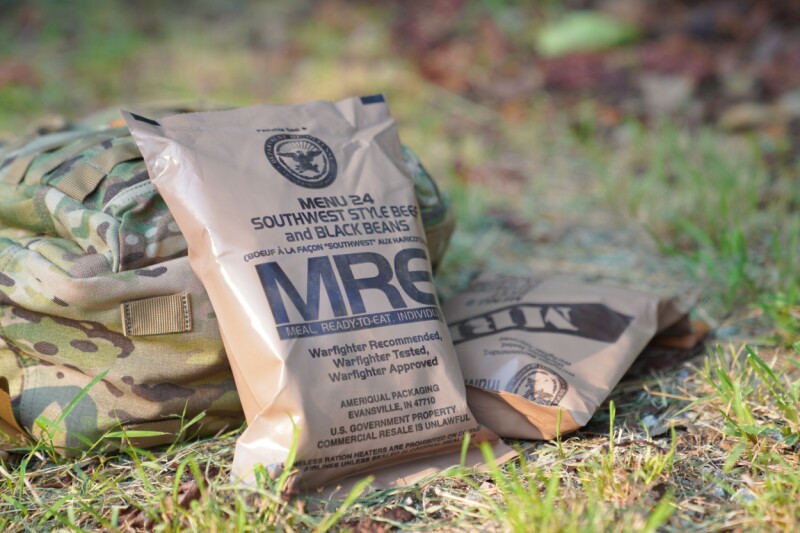
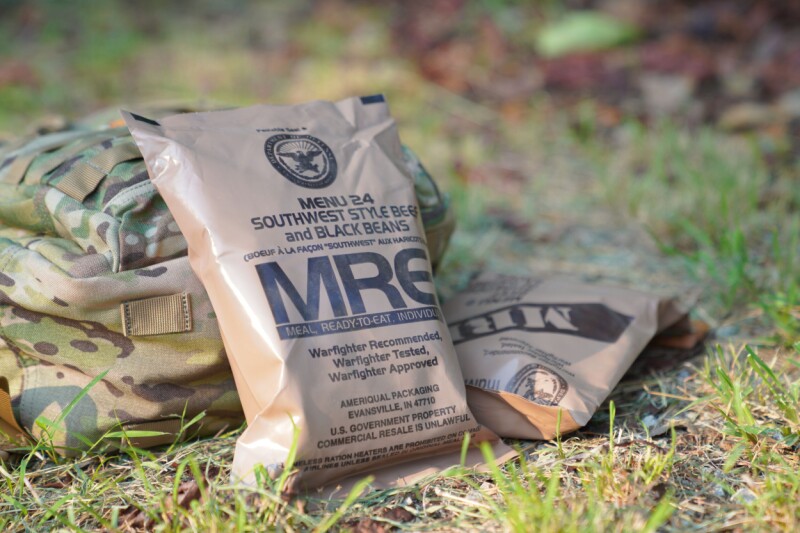
Eating in the field has never been fun for US Army soldiers. And they may soon face even stranger field rations than they do today: Alternative proteins delivered in formats ranging from powders and sauces to gels and semi-solids.

The Army on Monday published a sources sought announcement to gather submissions from interested industry and academic partners in the “alternative protein sector,” willing to help the branch develop rations that are lighter weight, have a longer shelf life, and could potentially be produced in combat-forward environments.

Advertisement

According to the announcement, the Army is looking for submissions covering four areas: Technologies for developing alternative proteins, like fermentation and other biomanufacturing methods, meat alternative products for ration inclusion, consumer research seeking to “enhance the acceptability … of alternative proteins within a military population,” and food samples for government taste and performance evaluations.

As an added element, the Army said that it wants ration products that meet its existing “stringent requirements for nutrition, shelf stability, and palatability,” though anyone who has served in the US Army and eaten field rations may have doubts about the military branch’s commitment to palatability on its Meal, Ready-to-Eat (MRE). 

As a US Army veteran, this vulture can attest to an unfortunate level of familiarity with MREs, circa 2002. Beef frankfurters were famously one of the worst, as was the so-called “beef steak” meal that was more like a compressed loaf of meat leavings than an actual steak. The flavor didn’t matter at the end of the day, though, when you’d just marched 15 miles carrying 75 pounds on your back: You just needed sustenance, and even that five pack of frankfurters with a taste I shudder to recall sounded good under the right circumstances. 

The MRE menu lineup, which has changed several times in the past 20 years, includes a few vegetarian options, and it’s those that make one of the Army’s requirements for this program so surprising. Civilians might be surprised to learn how popular the non-meat meals were, even among hardcore carnivores. 

Advertisement

The four or so vegetarian options in the overall MRE lineup were always the first to go when I was in. Not only did they replace military mystery MRE meat with something more appealing to eat out of an envelope, but they were actually tasty – relatively, of course. Vegetarian MREs also tended to be slightly less calorically dense than their animal-derived counterparts, so they included extra bits that made them an even bigger hit. 

Whether that would translate into soldiers embracing alternative proteins in future MREs isn’t a guarantee, of course. Most weren’t choosing the veggie MREs for alignment with their personal ethics so much as that they wanted a meal that didn’t suck.

The Army’s goal of developing “lightweight and nutrient-dense ration solutions to reduce logistical burdens and physical load on warfighter” through the program is definitely a noble one. MREs get heavy quickly if you’re on a long field expedition, but the openness the Army is leaving in the announcement doesn’t make it sound like appetizing solutions could be the first to come out. 

“Gel/semi-solid formats, dry powder mixes, [and] sauce-style components” are all on the table, with the Army saying the format of “novel ready-to-eat formats … is at the offeror’s discretion.”

Advertisement

In other words, future ration components could include gel packs stuffed with fermented mushroom protein and other nutrients, some form of unholy shake, or whatever else food scientists can come up with. 

Interested parties will need to move fast, though: As a sources sought announcement, this isn’t a solicitation, includes no promise the ideas will be given a research grant or procurement dollars, and has to be in by Friday, May 15, with no assistance from the government. 

The submissions the Army receives could help shape future solicitations in this space, however, meaning the MRE we currently know and … love … may eventually evolve into something rather more futuristic. Hopefully it tastes a bit better. 

One thing that soldiers will probably be thrilled about? No bugs in whatever field rations come next. 

Advertisement

“We are specifically excluding solutions related to cell-cultured, lab-grown meat or insect protein,” the Army said, though we note that’s only for the purposes of this particular announcement, so tomorrow’s soldiers might still be subsisting on crickets and ants. ® 

Source link

Continue Reading

Tech

Motorola Razr Fold India Launch Confirmed for May 13

Published

on

Motorola has officially confirmed the launch date for the Razr Fold in India. The company’s first book-style foldable will debut in the country on May 13 after being introduced earlier this year at CES. Here’s everything you need to know.

Motorola Razr Fold Specifications

Motorola Razr Fold world edition

The Razr Fold has an 8.1-inch LTPO OLED foldable screen, providing a 2K display and a 120Hz refresh rate. The outer screen on the Razr Fold has a 6.6-inch OLED display with a 165Hz refresh rate. To improve durability, Motorola uses Gorilla Glass Ceramic 3 on the cover screen and Ultra Thin Glass on the foldable panel.

Instead of a compact flip design, the phone opens like a tablet for a bigger viewing experience. The smartphone will be available in Blackened Blue and Lily White shades, as well as a FIFA World Cup 26 special edition. For performance, Motorola has used Qualcomm’s Snapdragon 8 Gen 5 chip in the Razr Fold. Buyers will get storage options such as 12GB RAM with 256GB storage and 16GB RAM with 512GB storage. Motorola also sells a higher 1TB storage version in global markets.

Furthermore, Motorola is offering Android 16 on the Razr Fold along with its Hello UX/My UX experience. It features a desktop-style layout, trackpad support, and stylus compatibility for work and multitasking. Motorola will also provide up to seven years of software updates for the device.

Camera and Battery

Razr Fold camera setup

Motorola has focused heavily on cameras with the Razr Fold. The smartphone includes a 50MP main sensor, a 50MP ultra-wide camera, and a 50MP periscope telephoto lens for zoom photography. Users also get separate selfie cameras on both the outer and inner displays. The foldable supports macro shots and additional camera features for different shooting situations.

One of the main highlights of the Motorola Razr Fold is its large 6,000mAh battery. The phone supports both 80W wired charging and 50W wireless charging. With such a powerful battery and fast charging support, the Razr Fold promises better battery life than most competing folding-screen smartphones.

Advertisement

Price and Availability

Globally, the smartphone debuted at EUR 1,999, which is around Rs 2.14 lakh. Although Indian pricing is expected to be lower, the Razr Fold will likely remain a premium foldable smartphone, competing with devices like the Samsung Galaxy Z Fold7 and the Google Pixel 10 Pro Fold. Buyers will be able to purchase the foldable through Flipkart, the company’s official website, and retail stores across the country.

Source link

Continue Reading

Tech

Western Digital claims it has finally solved hard drives’ biggest weakness without sacrificing data center performance anymore

Published

on


  • Western Digital claims spinning down hard drives no longer cripple application performance
  • WD’s solution offers lower storage power consumption without sacrificing consistent response times
  • Reduced drive power usage allows more storage capacity inside existing rack limits

Western Digital (WD) has developed a new power-optimized drive technology which allows hard disks to spin down without causing major performance penalties.

The company’s Chief Product Officer, Ahmed Shihab, said the technique lowers power consumption enough to matter to customers while preserving the performance they expect.

Source link

Advertisement
Continue Reading

Tech

Nadella feared Microsoft would become ‘the next IBM’ as $92B OpenAI return projection revealed at trial

Published

on

TL;DR

Satya Nadella testified in the Musk v. Altman trial that he feared Microsoft would become “the next IBM,” revealing that the $13B OpenAI investment was a survival bet backed by a $92B return projection, not a commitment to the nonprofit mission.


Advertisement

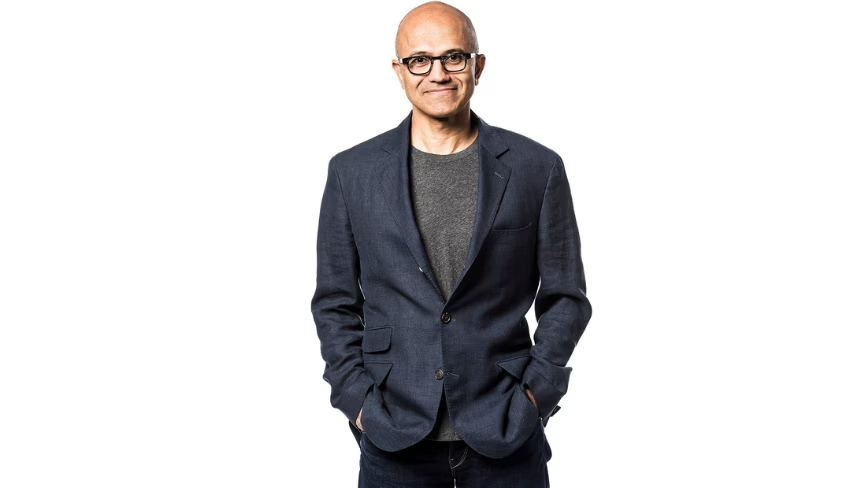
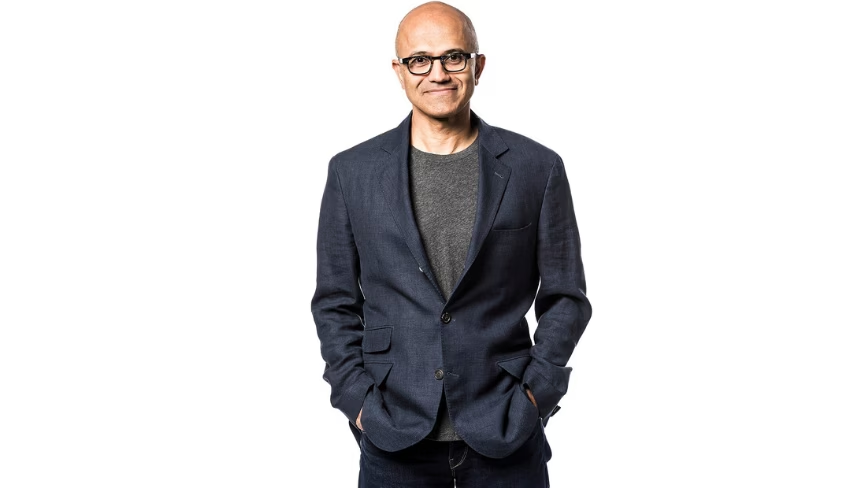
Satya Nadella told a federal jury on Monday that he feared Microsoft would become “the next IBM” while OpenAI became the next Microsoft. The admission, drawn from an April 2022 internal email presented by Elon Musk’s lead attorney, reveals the strategic anxiety that drove the largest corporate investment in artificial intelligence history. Microsoft did not put 13 billion dollars into OpenAI because it believed in a nonprofit mission to develop safe AI for the benefit of humanity. It invested because its CEO believed the company would become irrelevant if it did not.

A January 2023 memo from Microsoft president Brad Smith to the company’s board, also presented to the jury, projected a 92 billion dollar return on that cumulative investment, with a 20 per cent annual escalator starting in 2025. The document reframes the Microsoft-OpenAI partnership from a technology collaboration into what may be the largest financial hedge in corporate history: a bet by the world’s most valuable software company that it could not survive the AI era on its own.

The email

The IBM analogy is not casual. In the 1980s, IBM built the personal computer and outsourced the operating system to a small software company in Redmond, Washington. That decision made Microsoft and unmade IBM. Nadella was telling his team that the same dynamic was forming in AI. OpenAI was building the reasoning engine. Microsoft was building the cloud infrastructure. If OpenAI became the platform and Microsoft became the commodity, the company that defined enterprise software for four decades would fade into the same irrelevance as the company that defined enterprise hardware for three.

Musk’s attorneys presented the email to suggest that Microsoft’s investment was commercially motivated from the beginning, undermining OpenAI’s nonprofit origins. Nadella’s response was to defend the partnership as mutually beneficial. But the email speaks for itself. The CEO of Microsoft was not writing about advancing AI safety. He was writing about survival.

The return

Brad Smith’s 92 billion dollar projection landed on the Microsoft board’s desks one month before the company publicly announced its expanded 10 billion dollar investment in OpenAI. The memo included a 20 per cent annual escalator from 2025, meaning the projected return would compound as OpenAI’s models became more commercially valuable. At the time, ChatGPT had been public for less than two months.

Advertisement

The financial calculus was straightforward. Microsoft was the exclusive cloud provider for OpenAI’s models and held exclusive commercial rights to resell them through Azure. Every dollar of OpenAI revenue flowed through Microsoft infrastructure. The 13 billion dollars was not a donation to a nonprofit. It was a down payment on a distribution monopoly for the most important technology of the decade.

OpenAI is now valued at 852 billion dollars. Microsoft holds 27 per cent of the for-profit entity that emerged from the October 2025 conversion. The nonprofit foundation that was supposed to govern the technology retains 26 per cent. The alignment between mission and money that OpenAI’s founders promised has been replaced by a cap table.

The blind spots

Under cross-examination, Nadella acknowledged that he was not aware of any full-time employees at the OpenAI nonprofit before March 2026. He could not identify any grants, research, or open-sourced technology the nonprofit had produced. He was not informed in advance that the board planned to fire Sam Altman in November 2023. He was never given clarity on why Altman was removed.

The admissions paint a portrait of a partnership in which the investor knew everything about the commercial operation and nothing about the nonprofit governance. Musk’s legal team wants the jury to conclude that the nonprofit was a shell. Nadella’s testimony does not contradict that framing. It reinforces it from the perspective of the company that had the most to gain from the commercial side.

Advertisement

The witnesses

The trial has spent three weeks accumulating testimony that dismantles every participant’s stated motives. Greg Brockman, OpenAI’s co-founder and president, disputed Musk’s account of the startup’s early days and testified that Musk had OpenAI employees do secret work on self-driving technology at Tesla. Brockman’s own journals, presented as evidence, contained entries that called the nonprofit mission “a lie”, undermining both Musk’s claim that the mission was sacred and OpenAI’s claim that it was preserved.

Former board members Helen Toner and Natasha McCauley testified that Altman was untrustworthy, withheld information from the board, and sometimes lied. McCauley told the jury the board had “buckets of concerns” about Altman’s leadership, including an incident in which Altman falsely claimed that OpenAI’s legal department had cleared the GPT-4 Turbo launch in India without safety board review. The women who fired Altman in November 2023 told the jury why, and their reasons had nothing to do with Musk’s lawsuit.

The admissions

Musk took the stand during the trial’s first week and told the jury that OpenAI’s leaders had duped him into bankrolling the company. He repeated a phrase that became the trial’s refrain: “You can’t just steal a charity.” He argued he was not opposed to a small for-profit arm funding the nonprofit but lost trust in Altman when he learned about Microsoft’s 10 billion dollar investment, texting Altman in late 2022: “What the hell is going on? This is a bait and switch.

Then came the question about distillation. Asked whether xAI uses OpenAI’s models to train Grok, Musk said it was a general industry practice. Asked whether that meant yes, he replied: “Partly.” The admission that his own AI company copies the technology he claims was stolen from a charity drew audible gasps in the courtroom. Musk told the jury the case would set a precedent for “looting every charity in America” while simultaneously acknowledging that he was using the charity’s output to build a competitor.

Advertisement

Shivon Zilis, a former OpenAI board member and the mother of four of Musk’s children, testified that Musk tried to recruit Altman to lead a new AI lab at Tesla. He offered Altman a Tesla board seat. He asked Andrej Karpathy to send a list of top OpenAI researchers to poach. The man suing for breach of charitable trust was, according to the testimony of his own witness, actively trying to strip the charity of its leadership and talent.

The defence

Altman took the stand on Monday. He testified that Musk’s departure from OpenAI’s board in 2018 was a “morale boost” for some employees because Musk had demotivated key researchers by ranking their accomplishments. Altman told the jury that Musk left because he lost confidence in the project and wanted long-term control that the other founders would not grant him.

In a tense exchange, Musk’s attorney confronted Altman with a text message he sent Musk on 18 February 2023: “I’m tremendously thankful for everything you’ve done to help. I don’t think that OpenAI would have happened without you.” The implication was that Altman privately acknowledged Musk’s contribution while publicly diminishing it. The text was sent three months after Musk learned about the Microsoft investment and seven months before the board fired Altman.

The trial began with 150 billion dollars at stake over whether OpenAI’s conversion from nonprofit to for-profit corporation was a breach of charitable trust. Musk wants the court to unwind the conversion, oust Altman and Brockman, and direct damages to the nonprofit. OpenAI argues Musk is suing because he wanted control of the most valuable AI company in the world and did not get it.

Advertisement

The hedge

While the trial plays out in Oakland, Microsoft is quietly proving that Nadella learned the IBM lesson. Microsoft dropped its exclusive licence to OpenAI’s technology, retaining only a non-exclusive agreement through 2032. It did so voluntarily, which makes sense only if Microsoft no longer needs exclusivity because it has alternatives.

It does. Microsoft launched three in-house AI models that directly challenge the partner it spent 13 billion dollars cultivating. The company that feared becoming IBM responded by doing what IBM never did: building its own operating system before the partner could lock it out. Nadella’s April 2022 fear that Microsoft would become dependent on OpenAI appears to have been the founding anxiety of an entire corporate strategy designed to ensure it never would.

The trial is expected to continue through 21 May before Judge Yvonne Gonzalez Rogers. The jury will decide whether OpenAI’s leaders breached a charitable trust and whether Musk is owed restitution. But Nadella’s testimony has already answered a different question. The most powerful corporate backer of the nonprofit AI mission invested because he was afraid his company would die without it. The 92 billion dollar return projection was not a byproduct of the partnership. It was the point. The nonprofit wrapper that Musk claims was stolen may never have contained what any of the parties involved believed it did.

Advertisement

Source link

Continue Reading

Trending

Copyright © 2025