Are statistical programmers coalescing around a handful of popular languages? That’s the question asked by the CEO of software assessment site TIOBE, which every month estimates the popularity of programming languages based on their frequency in search results:
This month, the programming language R matched its all-time high by reaching position #8 in the TIOBE index once again. This is not a coincidence. The statistical programming language market is clearly undergoing a major consolidation. The biggest winners are Python and R, while many long-established alternatives continue to lose momentum. The era in which the statistical computing landscape was fragmented across many niche languages and platforms appears to be coming to an end.
Several established players are steadily declining:
— MATLAB is close to dropping out of the TIOBE top 20.
Advertisement
— SAS is about to leave the top 30 for the first time since the TIOBE index began.
— Wolfram/Mathematica remains well below its historical peak and is losing further ground.
— SPSS dropped out of the top 100 last month….
Elsewhere in the index, Java and C++ swapped positions this month. Java gained momentum following the successful release of Java 26. Another notable riser is Zig, which is approaching the TIOBE top 30 for the first time. Zig’s growing popularity appears to be driven by its rare combination of low-level performance, straightforward tooling, and relative ease of use compared to traditional systems programming languages. Their estimate for the most popular programming languages in May:
Advertisement
Python
C
Java
C++
C#
JavaScript
Visual Basic
R
SQL
Delphi/Object Pascal
The five next most popular languages on their rankings are Fortran, Scratch, Perl, PHP, and then Rust at #15. Rust is up for positions from May of 2025 — while Go has dropped to #16, seven ranks lower than its May 2025 position of #7.
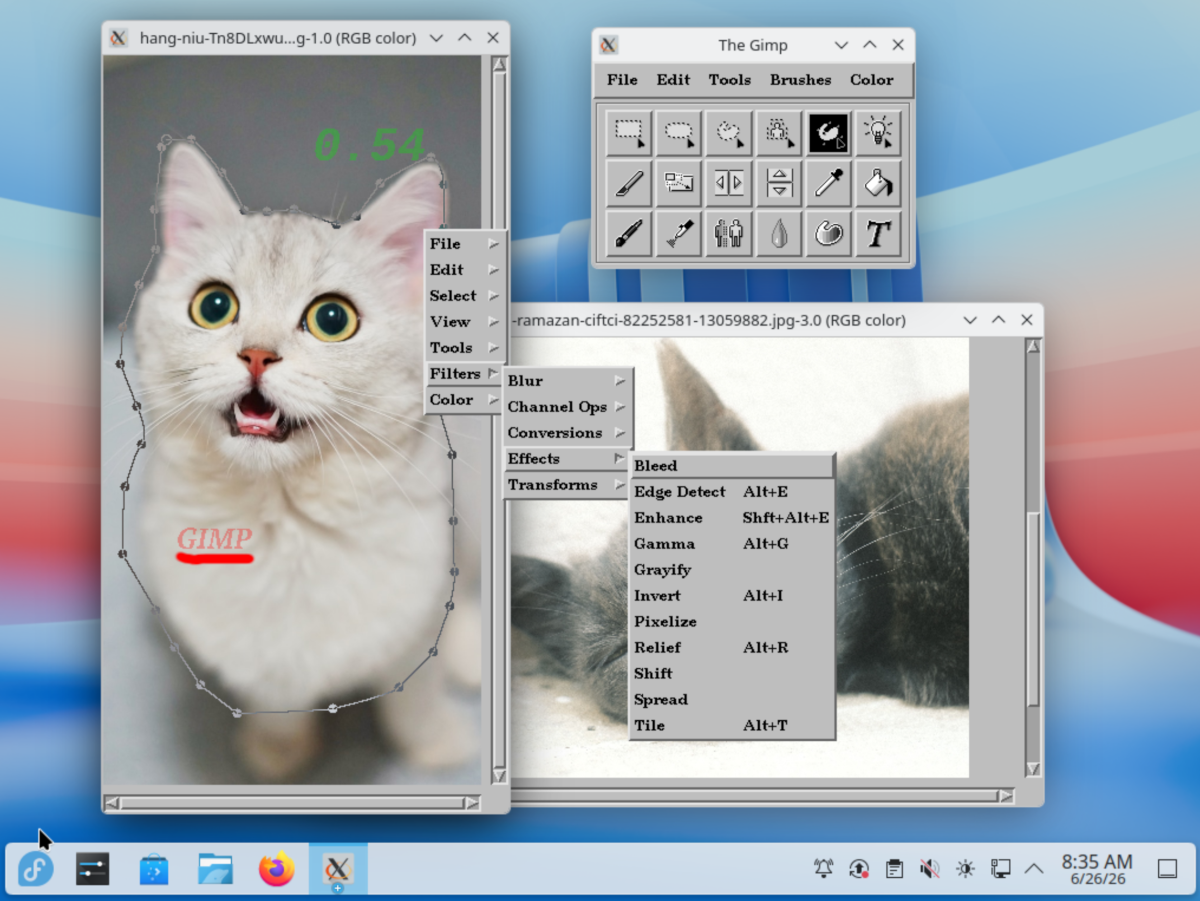
Although there’s probably no good reason to want to run image editing software from 1996 other than for nostalgia’s sake, if you ever wanted to run the GIMP version 0.54 from back when Windows 98 was still called Windows 97, you can do so now from the comfort of a modern-day Linux desktop. What enables this is a Flatpak version of a beta release, assembled by [balooii] for everyone’s enjoyment.
It wasn’t a simple matter of compiling the old software’s code and packaging it up, with the repository for the project containing a series of patches that were required to make this possible. Also of note is that this is the first version of GIMP with full surviving source code. Back then, GIMP used the Motif widget toolkit. Later on, it switched to the GIMP Toolkit (GTK).
Bundled with this Flatpak release are a lot of plugins and tutorials that were created at the time, making it a veritable time capsule of a more innocent era. As noted by [balooii], this version of GIMP was very much Beta software, with all of the UI quirks you’d expect. It also features the multiple unconnected windows (not MDI) approach to its UI – dropped in more recent GIMP releases — that has enraged proponents of the single window approach, as used by all commercial competitors, including Paint Shop Pro and Photoshop.
Modi has inaugurated commercial production at CG Semi’s $870m OSAT plant in Sanand, Gujarat, which will initially package 200 million chips a year and scale to 500 million. It is the third packaging plant to come online under the India Semiconductor Mission, after Micron and Kaynes Semicon.
Prime Minister Narendra Modi has inaugurated commercial production at CG Semi’s chip assembly and testing plant in Sanand, Gujarat. The facility will initially turn out 200 million chips a year, according to ANI, with plans to scale to 500 million.
Advertisement
The plant is an outsourced semiconductor assembly and test, or OSAT, facility. That covers the packaging and testing end of the chip supply chain rather than fabricating silicon from scratch.
CG Semi is a joint venture between Mumbai-listed CG Power and Industrial Solutions, Japan’s Renesas Electronics, and Thailand’s Stars Microelectronics. CG Power holds 92.3% of the venture, which is investing INR 7,600 crore (around $870m) over five years.
The 💜 of EU tech
The latest rumblings from the EU tech scene, a story from our wise ol’ founder Boris, and some questionable AI art. It’s free, every week, in your inbox. Sign up now!
Chips packaged at Sanand will go into cars, scooters, and industrial equipment, with a significant share exported to Japan, the US, and Europe. The plant is expected to create around 5,000 direct and indirect jobs over the next five years, according to local reports.
Third plant off the line
CG Semi is not India’s first packaging plant to fire up. Micron’s Sanand facility began operations in February and Kaynes Semicon followed in March.
Six semiconductor projects worth a combined $14.7bn have now been approved in Gujarat, including ventures from Tata Electronics and Suchi Semicon. Sanand is emerging as the country’s first chip packaging cluster.
Advertisement
At full ramp, CG Semi has said the site could handle 15 million units a day, a peak annual capacity of roughly 4.7 billion chips. It will produce legacy packages such as QFN and QFP alongside advanced FC BGA and FC CSP formats for automotive, consumer, industrial, and 5G customers.
Speaking at the inauguration, Modi called semiconductor growth the next phase of “Make in India” and pledged to build out the entire electronics value chain. Whether Sanand’s packaging lines can anchor that ambition is the question the next few years will answer.
Imagine if you could bring 250 people together in a massive room and have them discuss and debate an important issue, arguing the points and counterpoints, and converging on answers that accurately reflect their collective knowledge, wisdom, values, and sensibilities.
Now imagine that you convened this debate on America’s 250th birthday and asked 250 randomly selected Americans to come up with the top three innovations that America has contributed to the world over the last 250 years.What would they come up with?
I know – this all sounds impossible.
After all, you can’t get more than a dozen people to have a productive conversation on anything. At large scale, nobody would get enough airtime to express their views or respond to others. This is why typical business meetings or focus groups never have more than 8 to 10 people. Thoughtful real-time conversations just don’t scale.
Advertisement
To solve this, a new category of AI technology called “hyper-communication” is greatly expanding the size, scope, and efficiency of large-scale deliberations. It uses specialized AI agents to connect groups in real-time, allowing people to discuss and debate issues at any scale. The goal is to enable hundreds or even thousands of participant to hold thoughtful discussions where they can express their views and argue the merits of any issue.
I first wrote about this emerging technology in VentureBeat two years ago in an article about “Collective Superintelligence.” In that piece, I explain how large human groups can be hyper-connected by AI agents in ways that greatly amplify the group’s collective intelligence. You can check out the science behind hyper-communication in that prior VentureBeat piece. Here I am focusing on the debate among 250 Americans on America’s birthday.
To do this, I asked the team at Unanimous AI to field a randomly selected group of at least 250 Americans (with a broad distribution from every region in the country and diverse mix of political and social demographics) and invite them to a twenty-minute online debate inside a hyper-communication platform called Thinkscape that enables massively scalable discussion by text, voice, or video.
Once connected, we asked the group to come up with the top three contributions that America has made to the world over the last 250 years – not a survey of opinions, but deliberation of ideas, arguments, evidence, and reasoning. The group converged on a set of top answers that surprised me – but on reflection, they were sensible and well-reasoned.
Advertisement
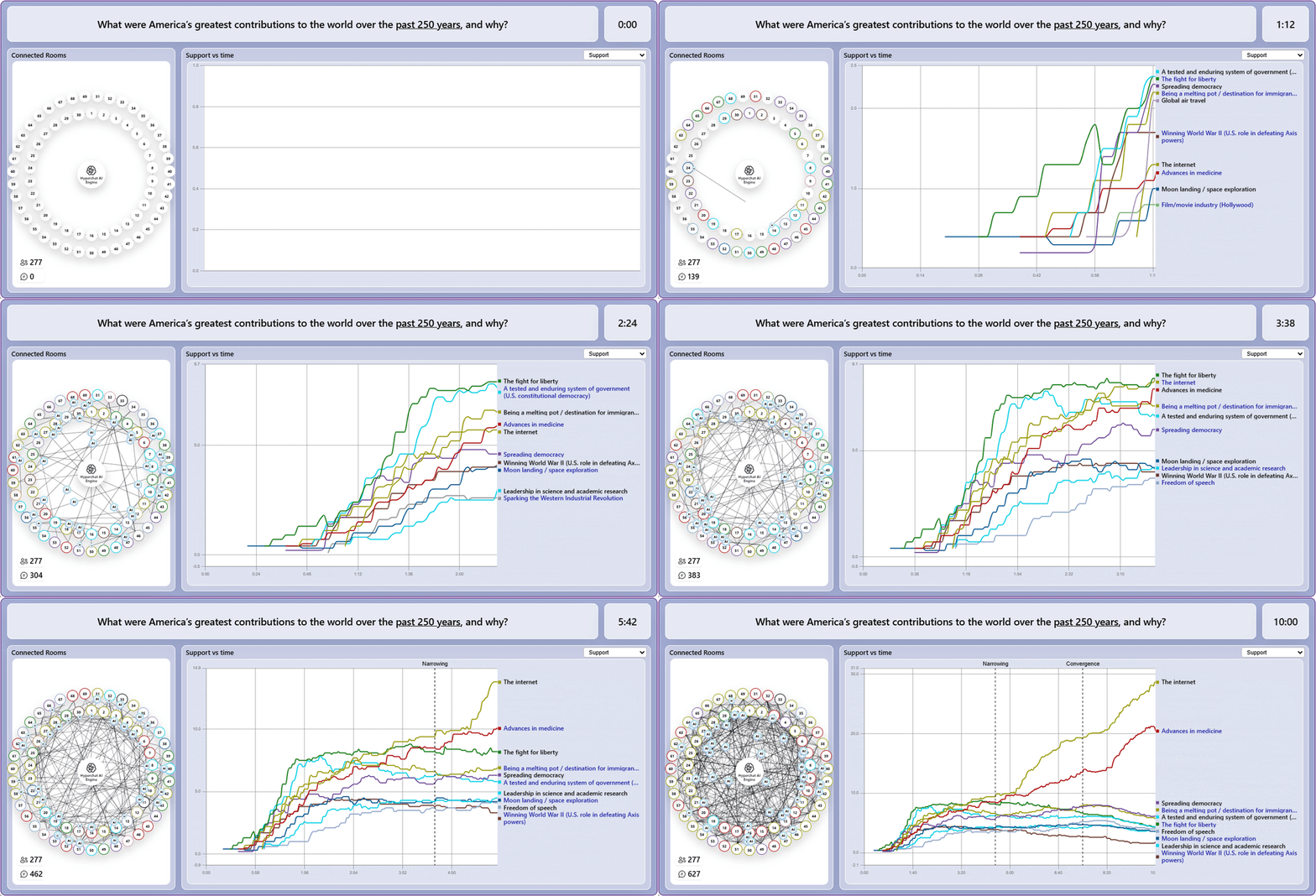
Before getting into the answers, let me show you what the debate looks like behind the scenes. There were 277 people, each of them debating the issues with four or five other people in parallel discussion spaces. The magic is the swarm of AI agents that connect all the small groups together into a single real-time deliberation.This is what it looks like at high speed:
In the debate above, the group of 277 people came up with 94 different ideas and then narrowed it down to a top 10, then a top 3. In the gif above, we just plot the top ten ideas as they emerged and battle for support during the live conversational debate.
The most interesting part of a large debate like this is not the answers, but the reasons that emerge to justify the answers. Here is the group’s reasoning behind the “top three innovations” that America has given to the world over the last 250 years:
#1: The Internet:“Our collective perspective is that America’s greatest contribution to the world over the past 250 years is the internet. It was born exclusively in the U.S. through academic and government research and was scaled globally with profound impact. It transformed communication, democratized information and education, enabled commerce, medicine, research and cultural exchange, and amplified soft power and civic organizing. We also acknowledged significant harms (misinformation, addiction, privacy loss) and arguments that it’s recent, global, or not uniquely American.”
#2 Advances in medicine: “Our collective perspective is that the United States has saved and prolonged hundreds of millions of lives worldwide. American-developed vaccines have successfully eradicated or controlled once-deadly diseases, significantly extending life expectancy and enabling broader societal and technological progress. From major breakthroughs in cancer research and treatments to cutting-edge medical technologies that have revolutionized hospital safety and procedures, U.S. ingenuity has redefined healthcare. Ultimately, while the global diffusion of affordable medicines and vaccines has extended these benefits across borders, the U.S. remains a premier medical destination where people from around the world travel to receive the most advanced treatments.”
Advertisement
#3: Spreading democracy: “Our collective perspective is that one of America’s most significant global contributions is the nation’s system of governance. The US has long demonstrated democracy in practice as an enduring global model. The U.S. Constitution provided a vital blueprint for representative government, inspiring democratic movements and revolutions worldwide while actively promoting human rights and individual liberties internationally. By empowering citizens with the fundamental power to vote and choose their own leaders, this framework has served as a foundational framework for broader societal advances and directly helped establish thriving democracies around the world.”
It’s important to remember, this is 100% human intelligence — a pure reflection of the collective knowledge, wisdom, and values of 277 randomly selected Americans. That’s because the role of the AI agents in a hyper-communication system is to connect people, not replace them. The agents work to enable scalable human deliberation in which every participant is given optimized ability to express their views, respond to others, and converge on solutions based on their merits. The only question left is — what should we ask next?
Louis Rosenberg earned his PhD from Stanford University, was a professor at California State University (Cal Poly) and has been awarded over 300 patents for his work in human-computer interaction, AI, and collective intelligence.
Welcome to the VentureBeat community!
Advertisement
Our guest posting program is where technical experts share insights and provide neutral, non-vested deep dives on AI, data infrastructure, cybersecurity and other cutting-edge technologies shaping the future of enterprise.
Read more from our guest post program — and check out our guidelines if you’re interested in contributing an article of your own!
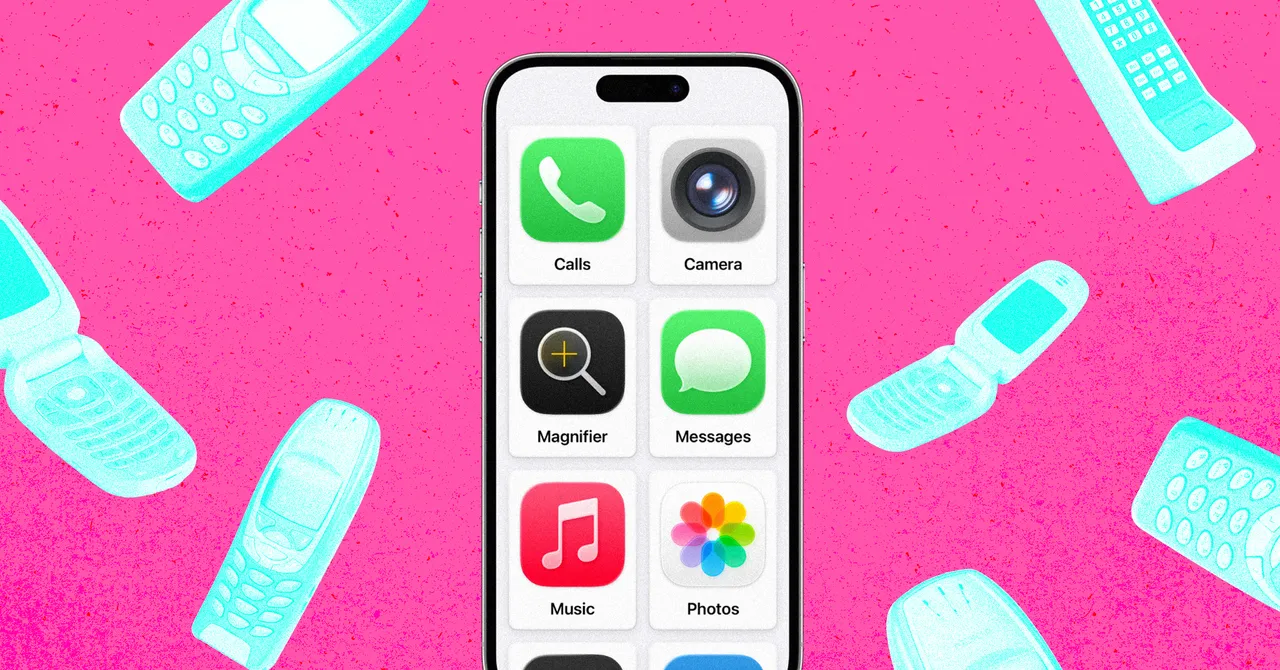
It’s called Assistive Access. Introduced with iOS 17, Apple designed it for those with cognitive disabilities. If you’ve never encountered or stumbled across it, it’s a distinctive iOS experience: fewer options, more focused features, easier to navigate. The aesthetic is ideal for kids: large, friendly tiles for the apps replace the smaller icons of the “normal” Apple interface.
Here’s how you set it up: Head into Settings, tap Accessibility, scroll down to the General section at the very bottom, and tap Assistive Access. Now, tap Set Up Assistive Access, then Continue. It will then ask you to select your preferred appearance: rows or a grid. I suggest choosing a grid. This is how you get those super-large tiles. Now the OS will ask you to select allowed apps—tap the green plus icon next to the apps you want to allow.
Crucially, this is where, unlike with Apple’s standard child screen-time restrictions, you can choose to completely block internet browsing by simply not allowing Safari, Chrome, or any other similar app. And, unlike with those screen-time restrictions, if someone texts your child a link, it won’t work. Why? Assistive Access is designed to prevent accidental navigation, so the system restricts unexpected web browsing.
Advertisement
Even though Assistive Access on Apple devices allows internet access, it is heavily restricted by design, and it’s turned off by default. In this mode, the phone treats any link in a message as plain text, preventing the user from accidentally leaving the simplified interface.
Made for caregivers or trusted supporters, the user must specifically add internet-enabled apps like Messages, Safari, or third-party web apps to the Assistive Access interface. And once you add, say, Messages or Calls, you then choose whether your child can contact or be contacted by everyone, their contacts only, or just selected favorites.
Building your ideal hi-fi setup is no small task. Depending on your specific goals, you could be in for buying a lot of different gear to perfect your sound and make sure you have everything you need to listen to what you love, how you’d love to. That’s an expensive endeavor — and sometimes, a confusing one. It’s sometimes difficult to tell what different devices can do, or how they differ from one another.
Deciding how to play vinyl is similarly difficult, yet vital. If you’re interested in vinyl, then there’s a good chance that you’re already committed to achieving the best sound you can at home. So, naturally, you’ll want to make sure you pick up the most suitable gear possible. There’s a great turntable out there at almost any budget, but there’s a crucial difference to be aware of before you splash the cash: whether you need a record player or a turntable.
Although the two phrases are used interchangeably, they’re actually different equipment. Generally speaking, a record player is an all-in-one device that has everything you need to play vinyl, including built-in speakers. Turntables, on the other hand, only play records themselves, with no speakers. That means you need to hook turntables up to amps and speakers if you want to hear anything. That offers invaluable flexibility if you’re an audiophile crafting your dream listening experience, even if it can be a little inconvenient.
Advertisement
A turntable offers more flexibility
kopi std/Shutterstock
When you pick a turntable, you’re just choosing the device that spins your records and the stylus that translates the grooves into electrical signals, not your speakers, amplifier, subwoofer, or anything else. As a result, you can build the exact setup you want by picking up a turntable instead. Think of it as a modular system, where the turntable makes up one part of the wider hi-fi setup. Meanwhile, when you pick a record player, you’re also often picking the amplifier, speakers, and anything else it comes with.
For many audio lovers, selecting the equipment to get the sound they want is a big part of the fun. Audiophilia is a hobby, after all. With that in mind, using ready-out-of-the-box audio equipment — like a record player with a built-in amplifier and speakers — can take some of the joy out of the process. Using a turntable, on the other hand, opens up a world of possibilities, since you can use it with other components you may be interested in.
Advertisement
While it’s convenient to grab a record player and be able to use it straight away without needing other equipment, that convenience comes with a compromise: you’re generally restricted to the components it comes with, at least to some extent. That’s not always the case, though, as some record players do essentially double up as turntables, allowing you to hook them up to other equipment like speakers. But you’re still going to be somewhat restricted by the player’s internals and overall capabilities.
Advertisement
All-in-one record players don’t always offer the best sound
New Africa/Shutterstock
Being stuck with the amplifier and speakers that your record player comes with isn’t only a problem of limited customizability. Unfortunately, sometimes whatever’s built into your all-in-one record player just doesn’t sound that good to start with. These decks have to spin the records, amplify the sound, and push it through the built-in speakers, and this all-in-one nature can lead to sonic compromises. If you can’t enjoy the sound, it defeats the purpose of investing time and money into your setup.
Generally speaking, all-in-one record players don’t offer the best sound quality. They can sound tinny and lack clarity, stopping you from getting the most out of your collection’s potentially high-fidelity capabilities. Instead, you run the risk of getting a listening experience you could just as easily get from a small radio, speaker, or even your phone. For that reason, some opt to skip all-in-one options in favour of turntables designed to work with proper hi-fi equipment.
Interference is also a common problem with all-in-one record players. That happens when the stylus picks up vibrations from the built-in speakers as it’s playing a record. Usually, this happens with a slight delay, which can lead to a messy, discordant, and even distorted sound. This can happen with any vinyl setup, but the proximity of the speakers to the turntable’s stylus means it’s much more common with record players.
Advertisement
Issues are easier to deal with
Josefephotography/Getty Images
When a record player breaks, you could be looking at anything from a duff speaker to a busted amplifier and a good few things in between. That’s because of all the functions they perform. In some cases, a broken part could even be the end of the line for that record player altogether, leaving you to pick up an entirely new one.
Turntables, on the other hand, are typically a little more straightforward. Sure, there is still plenty that can go wrong — including the belt (or drive motor), cartridge, arm, or power supply — but it’ll be something specific to the vinyl-spinning process itself. Pretty much everything else that makes up your setup is separate, meaning that replacing a busted speaker is a matter of buying some new speakers rather than opening up your player to see what’s inside, or replacing the player altogether.
One related area where record players are at a significant disadvantage compared to turntables is the stylus or needle. Styluses wear down over time, and you should replace them to reduce the risk of damaging your records. However, some record players are designed in a way that means you can’t replace the stylus. So, that means that when your needle reaches the end of its life, your record player does as well. That’s a lot of waste, and a fair amount of risk for your records.
Advertisement
Some record players can even damage your records
Tatiana Dyuvbanova/Getty Images
Even with all their faults, an all-in-one record player might still tempt some with its ease of use and affordability. However, that convenience and cost could quickly turn into an expensive and awful ordeal if it ends up damaging your records. There are a couple of culprits behind this, but one of them is down to the placement of your record player’s speakers.
All sound is vibration. That means that when your record player’s speakers blare out whatever you’re spinning, your deck is also vibrating. Your record spins on top of the deck, while it’s being read by the player’s needle. Except that the vibrations will cause all of it to move slightly. In turn, the player’s stylus might move around more than it should, and it may skip across the record and scratch it. Some slight scratches on records can go unnoticed, but damage builds up over time, and deeper scuffs can cause audible imperfections or even skips. Nobody wants that, audiophile or otherwise.
That isn’t the only time that needles can cause damage to your records. Records can wear down over time, and this can happen on any system, regardless of whether it’s a record player or turntable. However, budget all-in-one record players may also have budget needles, which could cause more damage in the long-term compared to a finer needle. Another thing to keep in mind is that you won’t have much room to adjust settings like the tracking force.
Advertisement
Record players can have tonearm limitations
Taigi/Shutterstock
All-in-one record players are at a particular disadvantage compared to turntables when it comes to the tonearm. The tonearm is a crucial part of any record deck, as it holds the cartridge in place, allowing it to follow grooves on a vinyl record and for the turntable to produce sound. It also ensures the needle is stable and that the pressure (or tracking force) is consistent, reducing the risk of damaging your records while reproducing the music as clearly as possible. Overall, being able to adjust the tracking weight is important for playback, ensuring your records sound great, don’t skip, and don’t wear out too quickly. Despite that, it’s not an option on many popular all-in-one record players.
In some cases, the arm is set to the wrong weight altogether, so the tonearm places far too much pressure on the record. That’s no big deal if you can adjust the weight, but if you can’t, you’re stuck with a significant risk of your LPs getting damaged over time. That’s the last thing anyone would want, but it’s probably going to be a deal-breaker if you’re especially invested in enjoying the highest fidelity sound possible, or if you collect rare records. As a result, any gear that doesn’t offer tonearm adjustability is inherently less appealing than gear that does.
This article is crossposted from IEEE Spectrum’s careers newsletter. Sign up now to get insider tips, expert advice, and practical strategies, written in partnership with tech career development company Parsity and delivered to your inbox for free!
You want to become a senior developer. A CTO, maybe. Start your own company, perhaps. Or maybe you just want to land your first role in tech.
You will not get there from raw engineering skill alone.
There’s a skill that’s quietly essential to technical leadership and yet consistently overlooked: public speaking.
Advertisement
If you’re anything like I used to be, you’re already listing reasons not to. “I got into this to code, not to give presentations.” “I don’t want to lead.” “I’m too junior to speak about anything.” No, no, and no again. There’s a ceiling on the return from technical skill alone.
I was terrified of public speaking for the first three years of my career. I wanted to hide behind code, and for the most part it worked. I did my job and did it well.
Then I joined a startup where hiding wasn’t an option. The whole company was five people. I was one of two developers. I had to form opinions on our technical direction and defend them, and the CTO told me directly that I needed to speak up more.
A few things happened once I did. I took more pride in my work. I said some cringe-worthy stuff, lived through the mini-anxiety attacks, and got better. To my own disbelief, I’m now an engineering manager whose job is largely speaking to groups of developers and leading presentations, online and in person.
Advertisement
Here’s why this is worth your time:
Leadership. Communicating ideas clearly, influencing decisions, and aligning your team are core leadership functions, and they matter more the further you climb.
Visibility. Speaking lets you show your expertise, build a reputation, and connect with people who open doors to better roles.
Durability. As automation absorbs more routine technical work, skills rooted in human interaction and judgment are far harder to replace.
Advertisement
The good news is you can build this deliberately, in low-stakes steps.
Record yourself. Use a screen-recording tool to walk through your work, explain a concept, or narrate your code. You can edit, re-record, and over-think it as much as you want. That’s the point. It gets you comfortable on camera before the stakes are real.
Volunteer for demos. Next time you ship a feature or fix a bug, ask your manager for a short time slot to walk the team through it. No format for that on your team? Suggest a monthly lunch-and-learn and kick it off with a 15-minute lightning talk on something you know.
Start small—really small. If your anxiety is spiking, don’t jump into the deep end. In your next meeting, ask one question. Write it down beforehand if you have to. Then be the first to break the awkward silence when someone else asks one. Developers are a famously quiet bunch, so it doesn’t take much to stand out.
Advertisement
The further you grow, the more you’ll be expected to hold opinions and voice them publicly. So start now. Record yourself, ask questions, get uncomfortable, and notice that it gets easier every time you do it.
—Brian
Salome Mikadze-Struk built her tech company Movadex as an undergraduate student at the height of the COVID-19 pandemic—then kept it running during the outbreak of war in her native Ukraine. Now, she’s channeling what she learned into mentoring tech founders and speaking about the importance of resilience as AI upends the software industry.
LLMs are now part of many engineers’ daily workflow, and the demand for technical expertise in implementing and securing the models is rising. But to build tools that work consistently, developers must have a strong understanding of the core principles that govern how the models work. IEEE is now offering a five-course program to teach how to use LLMs effectively, starting with the fundamental engineering behind the technology.
Two researchers at the City University of Hong Kong developed a method to make a circuit trace by simply bending a piece of paperlike material. With the right ingredients—isopropanol and liquid metal—you can make your own origami circuit board. The researchers also created a toolkit, called LiqMetCraft, with software tools and instructions to make it easy for beginners, whether in papercraft or electronics.
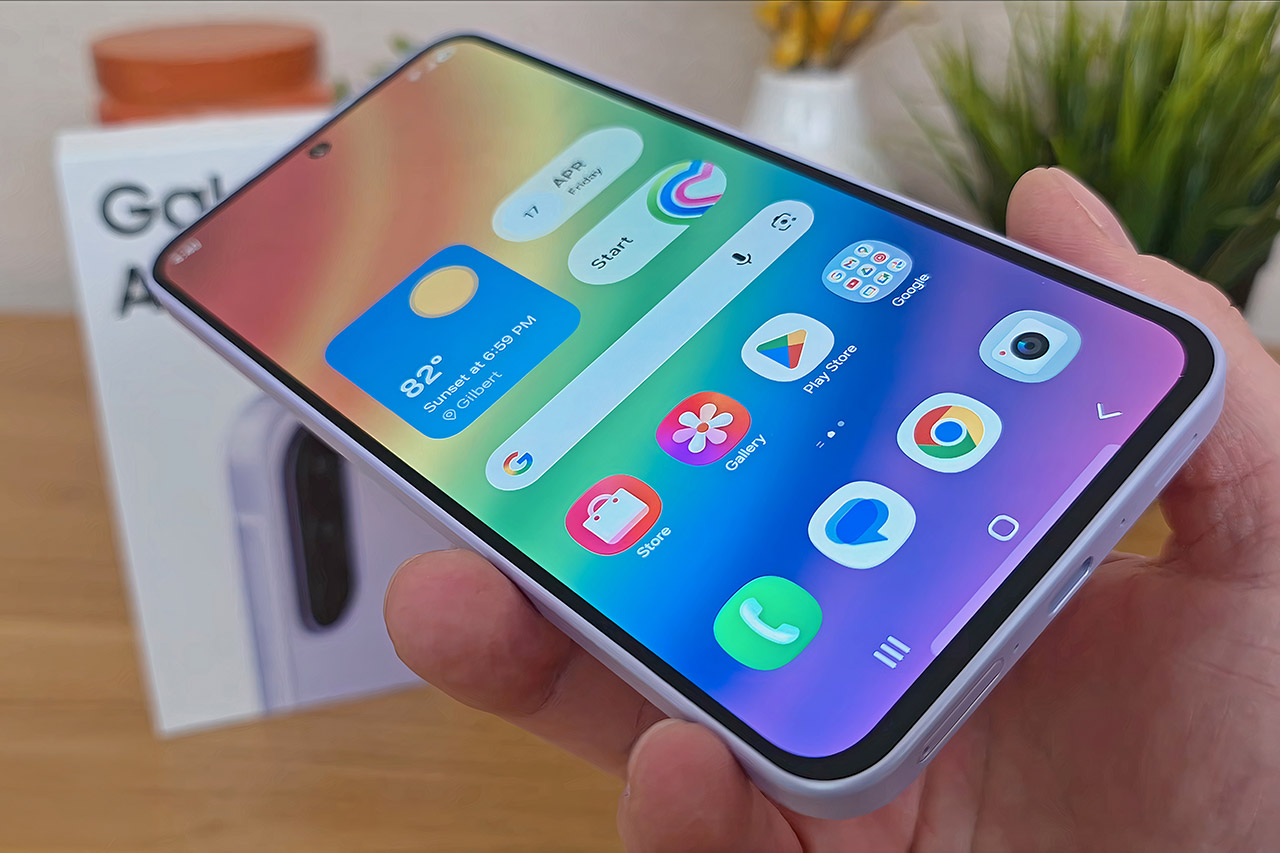
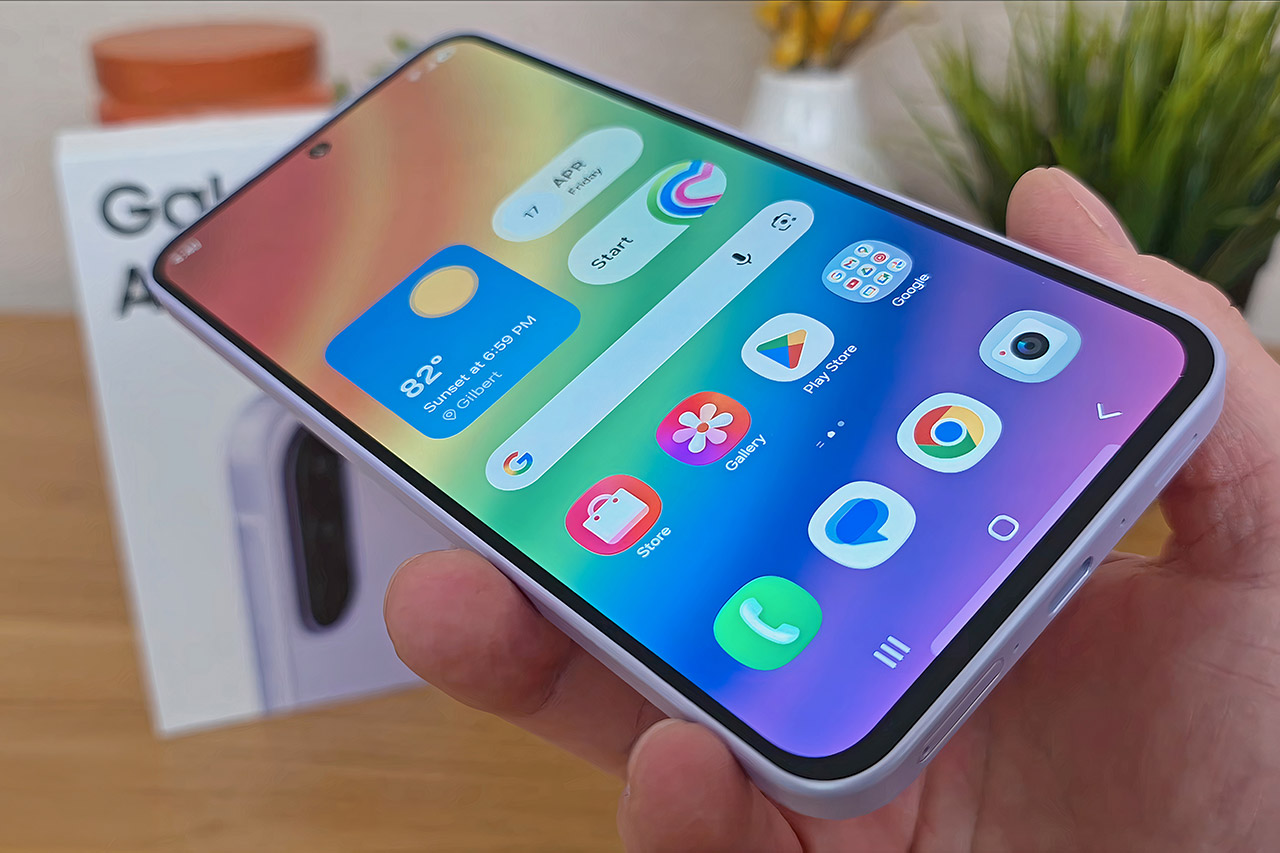
Many smartphone shoppers today simply want a device that manages their routines smoothly. They need reliable calls, zippy apps, clear photos for everyday moments, and enough battery to last without constant worry. Samsung built the Galaxy A37 5G, priced at $399.99 (was $539.99), around those priorities.
Samsung delivers the Galaxy A37 5G in a compact package, measuring just 7.4 millimeters thick and weighing only 196 grams. A layer of glass coated with Corning Gorilla Glass Victus+ protects both the front and back, making it more than capable of withstanding the wear and strain of everyday living. The phone also has an IP68 rating, so it will easily recover from an accidental drop in water.
AWESOME SCREEN. ENDLESS POSSIBILITIES: Elevate your content no matter where you are with the 6.7″ Super AMOLED display¹ of the Galaxy A37 5G. Enjoy…
LONG-LASTING BATTERY: Whether it’s family moments or important calls, stay powered without the wait with Galaxy A37 5G. Super Fast Charging…
NEVER MISS THE SHOT, EVEN IN LOW LIGHT: With effortless Nightography, you can capture clear high-quality photos and videos on your phone automatically…
The Galaxy A37 5G’s impressive screen quality is thanks to a 6.7-inch Super AMOLED panel that delivers full high-definition resolution with a smooth 120-hertz refresh rate. This means you’ll be able to easily cycle through feeds and enjoy your apps with silky smooth animation. Furthermore, it is quite bright, allowing you to see what is going on in the sunshine. Let’s not forget about the colors, which are brilliant and natural, as one would expect from a high-quality display. The same Gorilla Glass protection that shields the screen from scratches and drops also protects you from pocket detritus.
Advertisement
The Galaxy A37 5G features an Exynos 1480 processor with 6GB of RAM. This combination results in a very responsive interface that works continuously throughout the day. To top it all off, you get 128GB of internal storage, which will greatly improve your load times and multitasking capabilities. A 5000-milliamp-hour battery provides plenty of juice to go through the day and typically has plenty left over for the next one, as long as you don’t push it too hard. If you’re doing a little bit of everything, including calls, social applications, navigation, and the occasional video, this power consumption is quite efficient. If you run low, simply plug it in and the 45-watt charging will bring it back up to speed in about 30 minutes, or a full recharge in around 70.
The Galaxy A37 5G’s rear cameras are based on a 50-megapixel primary sensor with optical stabilization. It does an excellent job of capturing detailed photos throughout the day and even outperforms expectations in low-light circumstances. However, the 8-megapixel ultra-wide lens allows you to record a wider image, while the 5-megapixel macro lens is available for close-up shots. With video recording at 4K and great steady stabilization, you’ll be able to shoot some extremely smooth footage. A 12-megapixel camera on the front is in charge of taking selfies and video calls, and it does a pretty good job with the added punch of Super HDR.
Android 16 is preloaded with Samsung’s One UI, which is quite simple to use. As a bonus, Samsung will keep the phone updated with new software and security patches for at least six years, ensuring that it remains safe and current for a long time to come.
The company’s robotaxi roadmap mentions future expansions to Orlando and Tampa.
Miami residents are getting another option for autonomous taxi services, at least for those who live in a specific portion of the Floridian city. As posted on X, Tesla has expanded its Robotaxi service to a small section of West Miami.
Like we saw with the robotaxi rollout for Dallas and Houston earlier this year, Tesla is limiting its initial Miami availability to outside of the busy downtown. However, customers were already seen riding in unsupervised Tesla robotaxis in videos circulating on X. Notably, the Teslas are seen operating without a safety monitor in the car, which was a controversial inclusion when the company first rolled out its autonomous ridehailing service in Austin, Texas. We’re expecting Tesla to expand the geographic scope of its Miami robotaxi service eventually, considering it expanded availability to the entirety of the Austin metro last month.
Advertisement
For those wondering why Tesla is expanding to Miami, the city is already home to Waymo’s autonomous robotaxis that kicked off in January. Similarly, Zoox is targeting an expansion to Miami and has begun testing its fleet with its employees as of this year. Beyond Miami, Tesla’s roadmap includes introducing its robotaxi service to more cities across the US, including Phoenix and Las Vegas along with Orlando and Tampa, Fla.
Xbox at a gamescom briefing in 2014. Microsoft is pressing its games division to turn a profit. (Microsoft Photo)
In 2007, Microsoft’s Xbox 360 consoles started dying — overheating until three lights on the front blinked red, a defect gamers came to call the “red ring of death.” Microsoft’s response was to extend the warranty on every machine and take a charge of more than $1 billion to fix the problem, making it one of the costliest product failures in the company’s history.
Microsoft could afford it financially, but the bigger factor was strategy. Xbox was a bet on the living room, and for a company minting money on Windows and Office at the time, losing a billion or so was a justifiable cost of staying in the game.
Nearly two decades later, that patience has run out.
“Going forward, this cannot continue,” the new Xbox CEO Asha Sharma wrote in a memo to employees last month, offering a blunt assessment of a business that has spent more than $20 billion over five years, only to see its core revenue fall by nearly half a billion dollars, running at a thin 3% profit margin, by Microsoft’s own internal measures.
Asha Sharma took over as CEO of Microsoft’s Xbox business in February. In a memo to employees last month, she wrote that the division’s heavy spending and shrinking revenue “cannot continue.” (Microsoft File Photo)
With thousands of layoffs expected to be announced across Microsoft as soon as next week, the Xbox division is likely to be among the hardest hit.
The cuts reach across the company — including sales and consulting — part of a restructuring that has become routine around the close of Microsoft’s fiscal year. But for Xbox, they’re an early step in a broader effort to reset the business, rein in costs, and position the division for healthier profits.
Advertisement
Microsoft CEO Satya Nadella has been blunt about it: the company has spent years subsidizing Xbox rather than profiting from it, and that era is over. The videos and livestreams of people playing Xbox games that fill YouTube generate more money than Microsoft makes from the games themselves, he noted in an appearance on the Hard Fork podcast.
“No one can accuse Microsoft of not having invested for the last 25 years,” Nadella said. “And now we have to turn this into a sustainable business.”
Long-term strategic bet
Turning it around means breaking a pattern that runs through Xbox’s entire history.
Xbox launched in 2001 and lost money for most of its first decade. Microsoft absorbed the losses and stayed in — going up against Sony’s PlayStation and Nintendo — because it saw a strategic prize in owning a piece of the living room, and later of mobile. Online gaming also gave the company early experience running services at scale, which fed its cloud ambitions.
Advertisement
Over time, the goal shifted from selling hardware to selling subscriptions.
Xbox Live, launched in 2002, turned online play into recurring revenue. Game Pass, which arrived in 2017, let players pay a monthly fee — the top tier is about $23 — for a library of games, including Microsoft’s own new releases the day they come out. The idea was to get people paying for Xbox everywhere: consoles, PCs, phones and the cloud.
And when growth stalled, Microsoft doubled down. It paid $7.5 billion in 2021 for Bethesda, the studio behind Fallout and The Elder Scrolls, then $69 billion in 2023 for Activision Blizzard (whose games include Call of Duty, World of Warcraft, Diablo and the mobile hit Candy Crush) the largest acquisition in Microsoft’s history.
A series of economic headwinds
Microsoft could afford to be patient through all of it. Now it’s not so simple. In recent years, almost everything about the economics of gaming has turned against Xbox at the same time.
Advertisement
Hardware loses money, and AI is making it worse. Microsoft sells consoles at or below cost, banking on games and subscriptions to make up the difference. But AI data centers are consuming so much memory and storage that chip prices have spiked. That has forced Microsoft to raise Xbox console prices, most recently a $100-to-$150 hike this summer that it blamed directly on component costs.
Xbox lost the console war. By most estimates, Sony’s PlayStation 5 has outsold the Xbox Series X and S more than two to one. A smaller base means fewer game sales and subscriptions to offset the upfront hardware losses. That has left Xbox a distant second for the entire generation.
Revenue is shrinking. Even setting aside the games it gained from Activision, Xbox’s annual revenue has fallen nearly $500 million over five years — while the money going into the business keeps climbing. It has been investing more to earn less.
Microsoft’s most recent quarterly filing shows gaming revenue of $16.8 billion for the nine months through March, down about $1.1 billion, or 6%, from a year earlier.
Advertisement
Game Pass cuts into sales. Handing subscribers a new game the day it launches undercuts the roughly $70 they would have paid to buy it. The service delivers steady subscription income, but thinner economics on the games themselves.
Activision didn’t fix the margins. Even with one of gaming’s most profitable businesses folded in, Xbox earns only about 3 cents of profit on every dollar — well under the 17 to 22 cents typical in the industry. If the biggest acquisition in company history can’t move the margin, little will.
Every spare billion is flowing to AI. Microsoft is pouring more than $100 billion a year into the data centers and chips behind its AI push, trying to capitalize on the boom. Against a risk and payoff that big, a gaming business that barely breaks even feels like yesterday’s strategic bet.
What’s next for Xbox
The cuts have already started. In recent weeks, Microsoft has signaled plans to close or sell some studios, including Ninja Theory, maker of the acclaimed “Hellblade” series.
Advertisement
Shedding staff, studios and marketing will lift Xbox’s profit margins in the near term. What it won’t do is fix the underlying problem: a business can trim its way to a better number only so much before it has to generate more revenue.
Sharma’s plan, so far, is to concentrate on Xbox’s biggest franchises, funding blockbusters like Halo and Fallout while pulling back elsewhere. It’s leaning on Game Pass and releasing most of its games on PCs and rival consoles from Sony and Nintendo, reaching players well beyond Xbox’s shrinking base, even as it holds back a few new exclusives like Gears of War to give owners a reason to stay.
Microsoft is also rethinking the console itself. In her memo, Sharma described a “hardware component crisis” that has left the company unable to make as many consoles as players want, and called for “a new business model and partnerships” for its hardware.
How far the reset ultimately goes is an open question. The Information reported that Microsoft has weighed making Xbox a standalone subsidiary, a joint venture, or a spin-off, though nothing is imminent.
Advertisement
Microsoft’s response to the Xbox 360 “red ring of death,” July 6, 2007. (Seattle Post-Intelligencer / NewsBank)
Whatever happens next, it’s clear that times have changed. In 2007, as the red ring of death crisis emerged, Peter Moore, who ran the Xbox business at the time, and his boss Robbie Bach went to then-CEO Steve Ballmer to ask for the money to repair and replace the failing consoles.
Told it was $1.15 billion, Ballmer said, simply: “Do it.”
Moore credits that decision with saving Xbox. There would have been no Xbox One, he said, without Ballmer’s willingness to spend more than a billion dollars to protect the brand.
Advertisement
But nearly two decades later, Microsoft is done writing that kind of check for Xbox.
A US government entity paid about $1m to the Kairos extortion group to keep stolen files private, according to a Ransom-ISAC case study based on a leaked negotiation chat and blockchain analysis. The clues point to Union County, Ohio, though neither party has confirmed it. The case illustrates how much of today’s “ransomware” involves no encryption at all.
A US government entity paid around $1m to stop stolen files from being published, according to a case study by researcher Rakesh Krishnan for Ransom-ISAC. The analysis draws on a leaked negotiation chat and the blockchain trail the payment left behind.
Advertisement
The group behind the deal calls itself Kairos, but it may not be a ransomware gang in any traditional sense. Krishnan reportedly found no encryptor, no locker, and no demand for a decryption key, just stolen files and a price for keeping them private.
The case study does not name the victim, but file names in the proof-of-theft samples, including an archive called union.rar, point to Union County, Ohio. Neither the county nor Kairos has confirmed the connection, and The Hacker News says it has contacted the county for comment.
The clues do line up with a real incident. In May 2025, Union County detected ransomware on its network and later notified 45,487 people that data including Social Security numbers, fingerprints, and passport details had been taken.
If the identification holds, a county of roughly 70,000 residents made a $1m payment it never publicly disclosed. The attacker reportedly leaned hardest on a folder marked “prosecutors office”, warning that a leak would help criminals evade charges.
Advertisement
Anatomy of a $1m deal
The negotiation ran for about a month, according to the case study. Kairos opened at $3m and claimed to hold more than 2TB of data across some 1.6 million files.
The county reportedly countered at $100,000 and inched up to $430,000, while Kairos dropped to $2m before fixing a final $1m deadline. The victim paid on 13 June 2025, ten times its opening offer.
The payment of roughly 9.44 bitcoin matched about $1m at that week’s market prices. Within hours it was reportedly split and routed through a chain of wallets towards deposits at Bybit, OKX, and BELQI, a Russian service that recalls earlier ransomware laundering through WEX and BTC-e.
What the money bought is another question. Kairos handed over a “proof of deletion” file, but a list of file names only proves the attacker once held the data, and promises to delete stolen data have unravelled before.
Ransomware without the ransomware
Union County described the incident as ransomware, yet nothing in the Kairos case was ever encrypted. A growing share of what still carries that label now skips lockers entirely and uses the stolen data itself as the pressure point, a playbook that recent extortion-only breaches have aimed at the private sector too.
Sophos reported in 2025 that only around half of ransomware attacks involved encryption, down from 70% a year earlier and the lowest rate in six years. Silent Ransom Group, an offshoot of the Conti ecosystem, has spent years running encryption-free extortion against US law firms, drawing repeated FBI warnings.
The bargaining arc is familiar too. When Black Basta’s internal chats leaked in February 2025, one deal moved from a $1.5m demand to a $100,000 counter and a $1m payment, almost the same curve.
Advertisement
Kairos itself has gone quiet, with its leak site offline and its last known victim posted in June 2026, per the case study. A linked wallet was reportedly still moving funds in May, so a dark leak site should not be read as a retired crew.
Unglamorous lessons
For small government networks, the takeaways are deliberately dull. Kairos claimed it got in by guessing a password, so multi-factor authentication and alerts on repeated failed logins would have raised the cost of entry considerably.
Defenders should also watch outbound transfers and throwaway file-sharing links, such as the temp.sh addresses the attacker used, and keep legal and citizen records segmented from the wider network. Above all, a thief’s receipt for deleted data is worth exactly what it cost to type.


























































You must be logged in to post a comment Login