Connect with us

Tech

Qobuz is making it clear which music is AI-produced on its service

Published

on

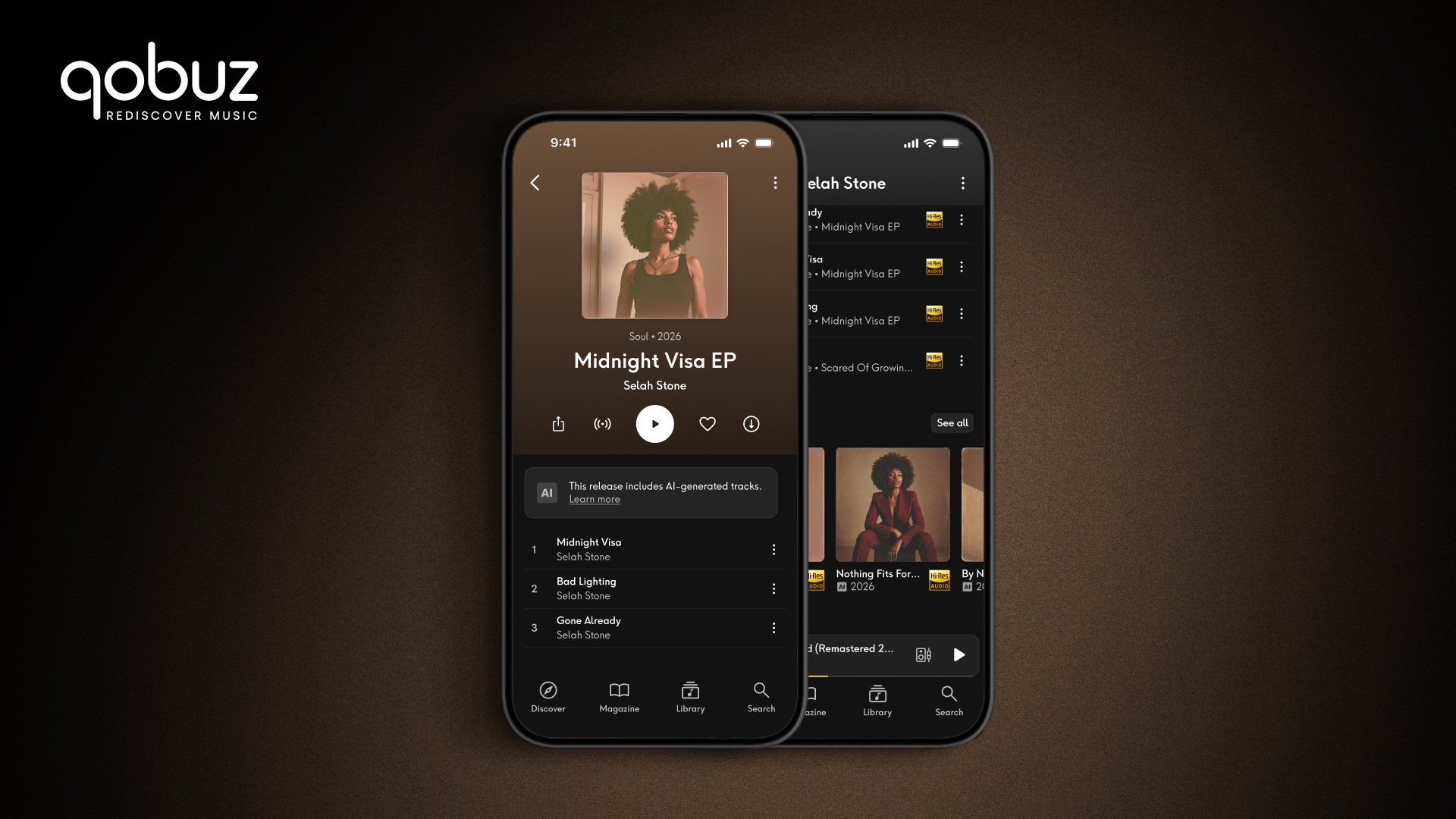
Qobuz has begun displaying a tag inside its app to flag tracks identified as AI-generated.

The tag appears directly above the track listing on flagged releases, reading “This release includes AI-generated tracks” alongside a Learn more link that gives listeners more detail on how Qobuz identifies such tracks.

Major streaming platforms across the industry are grappling with a rising volume of AI-generated tracks entering their catalogues, some of which artificially inflate streaming numbers and divert royalties away from human artists.

Qobuz’s editorial approach has been guided by its interest in music, with handpicked playlists and featured selections coming from human curators rather than automated recommendation engines, a distinction the French platform has long used to set itself apart from algorithm-driven rivals.

Advertisement

Editorial curation already keeps AI-generated material out of the selections and playlists, so the new tag mainly covers tracks that surface through search or direct upload.

Advertisement

Georges Fornay, Qobuz’s Deputy CEO, said: “Today, the challenge is no longer just detecting AI-generated music but enabling listeners to identify it clearly. At Qobuz, this transparency—which is our hallmark—comes with a core conviction: musical discovery must remain guided by human choices. Everyone should be able to know what they are listening to and make informed choices”.

Qobuz reports that just 0.38% of its total streams come from tracks identified as AI-generated, a figure the platform attributes to its human-led approach to musical discovery rather than algorithms.

Advertisement

Among the AI-identified tracks that do get streamed, Qobuz’s anti-fraud systems currently classify 60% of those streams as fraudulent, and excludes them from rights-holders’ royalty payouts entirely.

Qobuz became the first platform to have its per-stream rate independently audited at $0.01873, currently the highest rate in the industry, so maintaining this approach and identifying AI tracks will help make sure that humans are at the centre of music creation and can profit of it.

A purge of more than a third of AI-generated albums with no listening activity has already stripped roughly four million tracks from Qobuz’s search engine, a scale that underlines how much unlistened AI content had accumulated on the platform.

Advertisement

Advertisement

Qobuz designed and built the new tagging system in-house, and the company frames it as a further step under the AI Charter it published in February 2026, with further revisions expected as regulation around AI-generated content continues to develop across the streaming industry.

Source link

Advertisement
Continue Reading
Click to comment

You must be logged in to post a comment Login

Leave a Reply

Tech

New York sues Polymarket over unlicensed gambling operation just as it did rival Kalshi

Published

on

What just happened? Less than two months after filing a lawsuit against prediction market platform Kalshi for allegedly running illegal gambling operations in the state, New York has sued Kalshi’s rival, Polymarket, over similar allegations. The lawsuit claims that Polymarket does not have a valid license to operate in New York and does not pay state taxes, unlike licensed casinos and mobile sports betting platforms.

The lawsuit, filed in the New York Supreme Court in Manhattan by Attorney General Letitia James and Governor Kathy Hochul under Executive Law 63(12), noted that Polymarket’s products are also being marketed to New Yorkers between the ages of 18 and 20, even though state law requires a person to be at least 21 to participate in mobile sports betting.

New York is asking the court to impose financial penalties on Polymarket for exposing New Yorkers to “serious personal and financial risk,” proposing that the fines should be “equal to three times the gains the company made through its illegal actions.” The state also wants the company to forfeit its allegedly illegal profits and pay restitution to people who lost money on the platform.

In a statement, Governor Hochul said Polymarket’s “unlicensed gambling operation” not only violates state law, but also puts New Yorkers at risk, especially underage users, who are most vulnerable to gambling addiction. She added that the lawsuit should serve as a reminder that nobody is above the law in New York, and that companies operating illegally will be held accountable for their actions.

Advertisement

Echoing Governor Hochul’s sentiments, Attorney General James said New York’s gambling regulations are designed to protect its residents from “potential harms of problem gambling” and ensure funding for educational and public benefit programs. She added that “by avoiding taxes, Polymarket is hurting the most vulnerable New Yorkers and depriving them of critical services and support.”

Polymarket denies violating any New York law, arguing that its presence in the state is good for the local economy. In a statement, the company’s chief legal officer, Neal Kumar, vowed to fight the lawsuit in court, noting that Polymarket started out of a “tiny NYC apartment” and now has 350 employees in the city. “We believe in New York and we’re staying here,” he added.

Polymarket previously opposed being classified as a gambling platform, insisting that its products are legally distinct from traditional sports betting as it provides odds based on “measurable events.” It also claimed that it is offering financial services and should not therefore be subject to gambling regulations.

James has sued other gaming and crypto platforms in the past for allegedly violating state laws. In July, she sued Kalshi, accusing it of running an illegal and unlicensed gambling operation. In 2023, her office secured more than $22 million from crypto exchange KuCoin for operating illegally, while in 2024, she settled with crypto brokerage firm Genesis for $2 billion over similar allegations.

Advertisement

A relatively new addition to the online gaming space, prediction markets currently lie in a legal gray area in the US, with no consensus on how they should be regulated and taxed. US courts have previously disagreed on the classification of prediction markets, issuing conflicting verdicts on who gets to regulate their operations.

In April, a federal appeals court in New Jersey ruled that the state could not regulate Kalshi because its business falls under the purview of federal regulators. But in a seemingly contradictory verdict in August, a federal appeals court in Nevada allowed the state to apply its own gambling regulations to Kalshi’s sports contracts.

Source link

Advertisement
Continue Reading

Tech

A Modular Macro Keypad | Hackaday

Published

on

The introduction of the ATmega32U4 microcontroller, with its integrated USB controller, made a lot of hardware tasks much simpler than they were before. One of the arenas it revolutionized was custom keyboards, making it much easier to build not only standard mechanical keyboards, but keyboards of all kinds of shapes and layouts and custom macro keyboards as well. This trend has continued on for the better part of the past decade with other microcontrollers beyond the 32U4 now available as well, but this modular macro keypad takes it to a new level by keeping that simplicity but also keeping costs down.

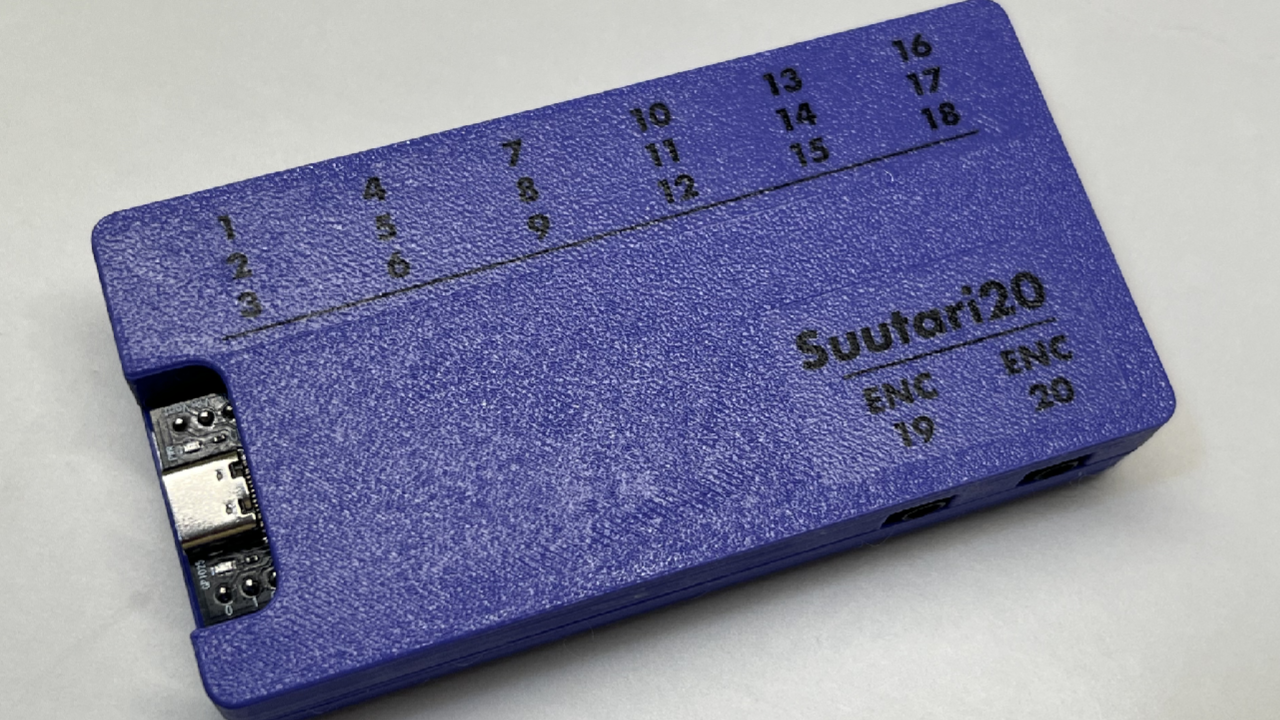
The suutari20, as it is called by its creator [Squalius] is able to achieve these aims by using 3.5 mm jacks commonly found in audio equipment. Each jack can support up to three keys, with the hub ultimately able to support 18 different keys. Those can include analog devices as well, such as volume knobs or jog controllers. The macro pad is powered by an RP2040 microcontroller from a Raspberry Pi Pico and uses QMK firmware, so those already familiar with custom keyboard programming will have no problem getting started.

From there, all that’s needed is a case, in this example a 3D printed one, and the commodity audio hardware to plug everything in to. It enables whatever functions can be thought of in a macro pad, and although the design focuses on simplicity and cost, this macro pad takes the concept to the extreme with modular keys that each have their own microcontroller built-in.

Advertisement

Source link

Advertisement
Continue Reading

Tech

Say goodbye to roaming fees with Airalo’s travel eSIM

Published

on

Landing in a new country and watching data charges creep up before the first coffee is ordered is one of travel’s most avoidable frustrations. Airalo fixes it with an eSIM installed before you even board.

Airalo has earned its scale rather than bought it, growing since 2019 into the world’s leading travel eSIM service used by more than 30 million travellers across 200-plus destinations.

What began as a way to skip the airport SIM kiosk has become the default fix for anyone who wants their phone working the moment the plane doors open, whether that’s for maps, messages, or checking into a hotel.

Instant connectivity

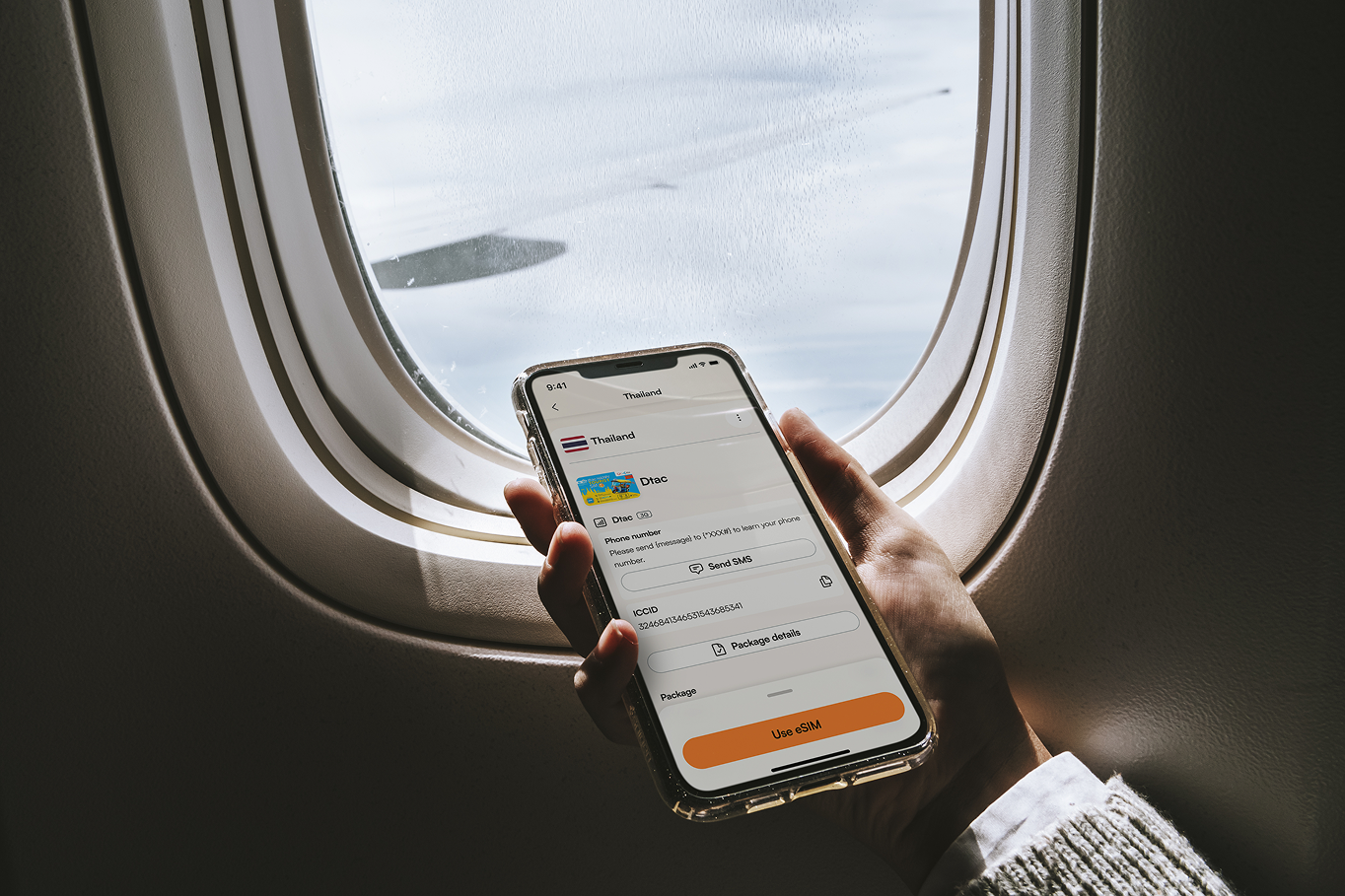
Instead of hunting for a signal or relying on patchy hotel Wi-Fi, an Airalo eSIM installs digitally through the app in minutes and connects the second a traveller lands. Local, regional, and global data packages cover the same trip differently depending on whether it’s a single city break or a multi-country route, so the plan can match the itinerary rather than forcing one contract to stretch across borders. They also offer unlimited data so you never need to worry about running out, and you can hotspot to as many devices as you wish! 

Advertisement

That flexibility carries real weight for business travellers checking emails between meetings, families coordinating logistics across time zones, and solo travellers navigating unfamiliar transit systems, since all three need data that works immediately rather than data that needs troubleshooting. Existing eSIMs can also be topped up once a package runs low, so a longer trip doesn’t mean starting the setup process over from scratch.

Easy installation and pricing

Setting one up only requires checking that a device is eSIM-compatible and unlocked, then downloading the Airalo app and following the prompts to install the plan before departure. Once activated, the eSIM connects automatically to a supported local network on arrival, without a physical SIM ever changing hands or a phone needing to restart.

Advertisement

Plans start from just £3.50, and applying the code TRUSTEDREVIEWS10 at checkout adds a further 10% off sitewide, available to new and existing users until 31st December 2026. Between the local, regional, and global options on offer, there’s a package suited to a weekend abroad and to a longer route through several countries alike.

Advertisement

Stay connected with an Airalo eSIM. Prices start at just £3.50, and the code TRUSTEDREVIEWS10 saves an extra 10% sitewide.

Source link

Advertisement
Continue Reading

Tech

KDE and GNOME Developers Ponder How to Handle AI-Generated Contributions

Published

on

Last weekend KDE’s annual Akademy conference included a presentation proposing
an AI-native KDE,” writes The Register. This led KDE developer Nate Graham to open a discussion about proposed restrictions on LLM-assisted contributions which “rapidly became heated. Moderators issued warnings, restricted further comments, and eventually removed the thread.”

But as Graham writes on his blog, “A bunch of people mostly outside of KDE who disapprove of LLM usage derailed KDE’s attempt to add restrictions to LLM usage.”

Two people unknown to any KDE contributors appeared and began fighting with one another about the broader topic of the morality of AI, not the proposed guidelines… Someone else outside of KDE set up kdeforpeople.com in an attempt to… pressure KDE into banning LLMs. A bunch of people signed onto it, almost none of whom are known KDE contributors.
The topic was picked up on social media and the press with… varying levels of accuracy. The draft proposal was removed and the whole topic hidden… Yep, that’s where we’re at in the state of online discourse around AI…

The “lovable, sovereign, AI-native KDE” idea was presented by two people important to KDE in decades past, but who had not made any contributions recently besides this Akademy talk. Their idea does not reflect the overall direction of KDE or Plasma, and I don’t think it ever will. If “a lovable, sovereign, AI-native KDE” freaks you out, I believe it is completely reasonable and safe to ignore…

Advertisement

I completely understand why a lot of people have problems with LLMs. I have these concerns as well.

He concluded by asking people not to derail any future process to set usage guidelines, fighting over “the broader topic of AI in general.”

“The discussion is gone, but the argument continues,” adds The Register:

GNOME developer Jordan Petridis has also published The GNOME LLM Policy That I Want, proposing that LLMs be barred from creating or modifying anything submitted to GNOME or hosted on its infrastructure.

Advertisement

“You might be asked to prove your code meets this requirement,” Petridis writes, arguing for proposals that target the norms around developer behavior. His rationale? “The GNOME Project prioritizes the social and human aspects of collective software creation,”

Read more of this story at Slashdot.

Source link

Advertisement
Continue Reading

Tech

How Powerful Of A Power Bank Do You Need To Safely Charge A Laptop?

Published

on

Don’t let the big mAh number fool you. The better comparison is watt-hours.

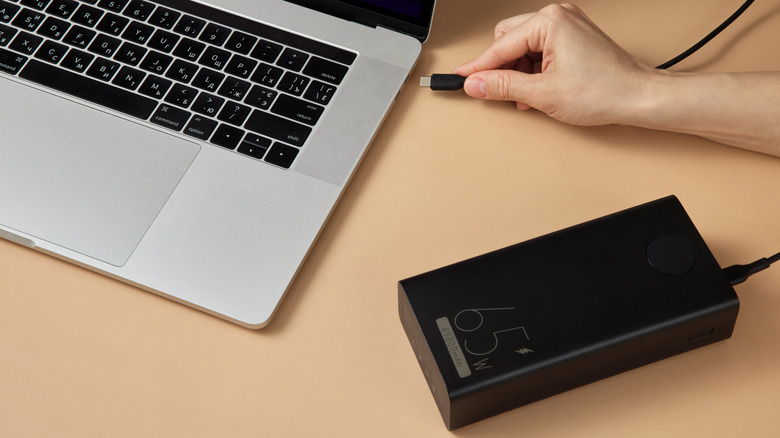
While most good power banks can theoretically extend your laptop’s runtime by providing a small amount of charge, a proper laptop power bank will store enough energy and charge faster than the battery drains. Two values explain the experience you’ll have: watt-hours (Wh) for capacity and watts (W) for output. Power banks provide their capacities in milliamp-hours (mAh), but for a proper measure of capacity across devices (especially for a higher-drain device like a laptop), you need to multiply this value by the voltage to get the true amount of energy stored in watt-hours.

Most power banks store energy in lithium-ion cells at about 3.7 volts (V). Watts are equal to volts times amperes, and you must divide the mAh count by 1,000 since 1,000 mAh is one amp. So for example, a 10,000 mAh bank stores roughly 37Wh (3.7V x 10Ah) before conversion loss. Doubling the mAh doubles the Wh as long as voltage stays consistent, so a 20,000 mAh bank is about 74Wh.

Next, you need to know the Wh rating of your laptop’s battery, which you should be able to find on the manufacturer’s website. Without a wattmeter, it’s difficult to know how much power your laptop uses on average, so we can estimate it by dividing the Wh capacity by how many hours the battery lasts. For example, a 70Wh battery that runs for 5 hours is averaging 14W of power usage. Of course, the instantaneous power usage differs based on what you’re doing (scrolling a PDF uses far less energy than rendering video).

Advertisement

Using modern MacBooks as an illustration, their batteries are rated from ~37Wh (MacBook Neo) up to 100Wh (16-inch MacBook Pro). That means charging your MacBook with a 10,000 mAh (37Wh) bank won’t even provide a full top-up in most cases. And the capacity doesn’t tell you how fast the charging happens.

Understanding what your power bank is capable of

Before you calculate how long a power bank should run your laptop for, you also must take into account that the charging process isn’t perfectly efficient. For fast charging standards like USB Power Delivery, the bank has to increase its voltage to push enough power (watts) to charge your laptop quickly enough that it doesn’t drain. Some energy is lost in this changeover, as well as generally from heat. 20 percent efficiency loss is a general rule for normal charging, but around 30 percent (or even higher) is more realistic when fast charging.

Advertisement

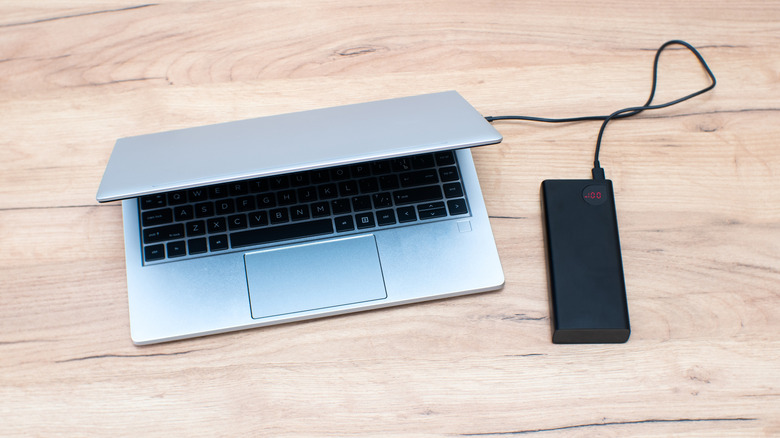
With all these values, you can finally estimate how much additional time a power bank will run your laptop for. Say you connect a 20,000 mAh 45W USB-C bank to the theoretical laptop mentioned above. Subtracting 30 percent for the overhead, that 74Wh power bank has an effective capacity of ~52Wh. With a laptop averaging 14W, the power bank would extend its runtime by around 3.7 hours. If the laptop ever needs to draw more than the 45W the bank can provide, it will draw power from its internal battery alongside it — the bank is thus supplementing the internal battery to extend its life.

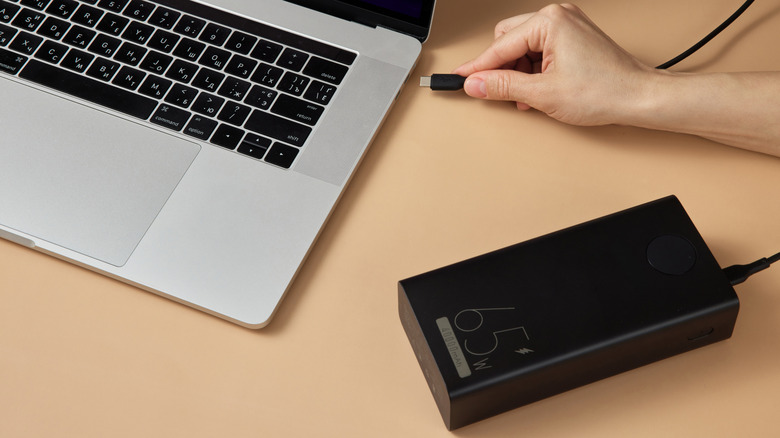
The important point is that you can’t assume a power bank’s capacity is the same as its output. A portable 50,000 mAh battery is great, but that capacity doesn’t tell you how much power it pushes. A large-capacity bank rated at 15W will only slow the laptop’s power drain, or it could be rejected entirely. For laptop banks, the label to look for is “USB-C PD.” In simple language, this means the bank and laptop negotiate a higher charging level than an ordinary USB port.

Always check the bank’s per-port output too, because the total output number can be deceptive. For instance, if the bank description says “100W total,” it may not be capable of this full output on any given port, or it may deliver less than 100W when you’re charging a phone and a laptop at the same time.

For most people, a 20,000 mAh/74Wh bank is a reasonable emergency or partial-charge option, while a 27,000 mAh/100Wh is closer to the sweet spot. In the US, 100Wh is also the limit for power banks allowed on a plane without approval. if you need suggestions, our favorite laptop power banks span all needs.

Advertisement

Why can’t my power bank charge my laptop?

Similarly to plugging your laptop into your car’s USB port, a weak power bank might be providing power to your laptop, but not as fast as the laptop’s battery is draining under use. There are a few other possibilities. Check whether your laptop supports charging through USB-C. Some USB-C ports handle data, video or other accessories, but can’t run a charger. If there’s no indication on the ports themselves, check the manual if you still have it or look at the product specs online. 

Next, check whether the bank supports USB-C Power Delivery at a high enough per-port wattage. A basic 15W USB-C output can charge a phone, but won’t make a dent in a laptop drawing 65W+. If the bank’s output is below the laptop’s needs, the computer will either reject it or only charge under light use after warning you of a “slow charge.”

Lastly, check the cable, as not every USB-C cable is rated to carry high-wattage power. A standard USB-C cable generally supports up to 3 amps, while higher-power 100W and Extended Power Range connections will require a 5-amp-rated cable. USB PD 3.1 can provide up to 240W, but only when the laptop, bank and cable all support the needed power level.

Advertisement

As long as the hardware is compliant, your USB-C PD devices will negotiate a compatible voltage and current. Avoid anything that’s damaged or ancient cables you hauled out of a cardboard box — those aren’t going to handle today’s power needs.

Source link

Advertisement
Continue Reading

Tech

Demand for iPhone 18 Pro is up in India because of higher prices

Published

on

Far from hurting sales, raising iPhone prices has brought Apple growing market share in India, at least for now, and at least while it also has installment plans.

Analysts have predictably yet plausibly argued that higher iPhone prices and no base iPhone 18 would hit Apple’s bottom line. That may well be true in most places, but a new CNBC report says it definitely is not in India.

Reportedly, the iPhone 18 Pro is seeing almost 20% more demand in the country than the iPhone 17 Pro at this point in 2025. “Apple’s volume market share is likely to hit 10% in 2026,” said Counterpoint Research director Tarun Pathak, “reaching double digits in a single calendar year for the first time, up from 4% in 2022.”

On September 18 when the new models were released, customers traveled for hours to buy them at the Apple Stores in major cities such as Mumbai. Once there, some are said to have waited in line for up to ten hours.

Advertisement

Significantly, the demand is apparently not linked to the new features of the iPhone 18 Pro. Based on comments from customers at the Apple Stores, what mattered much more was simply owning the latest iPhone.

The now higher prices are affirming the iPhone as a premium and so aspirational smartphone. This Indian “premiumization” is not limited to smartphones, but Apple is benefiting from it.

And Apple is helping the situation through providing various financing offers. The base iPhone 18 Pro costs the equivalent of $1,700 in India, but zero-interest payment programs mean buyers can pay under 10% per month for a year.

Only Apple is benefiting

Apple’s sales in India have actually dropped in the June quarter, but that’s reportedly because of supply constraints. Otherwise, sales have been growing for four years.

Advertisement
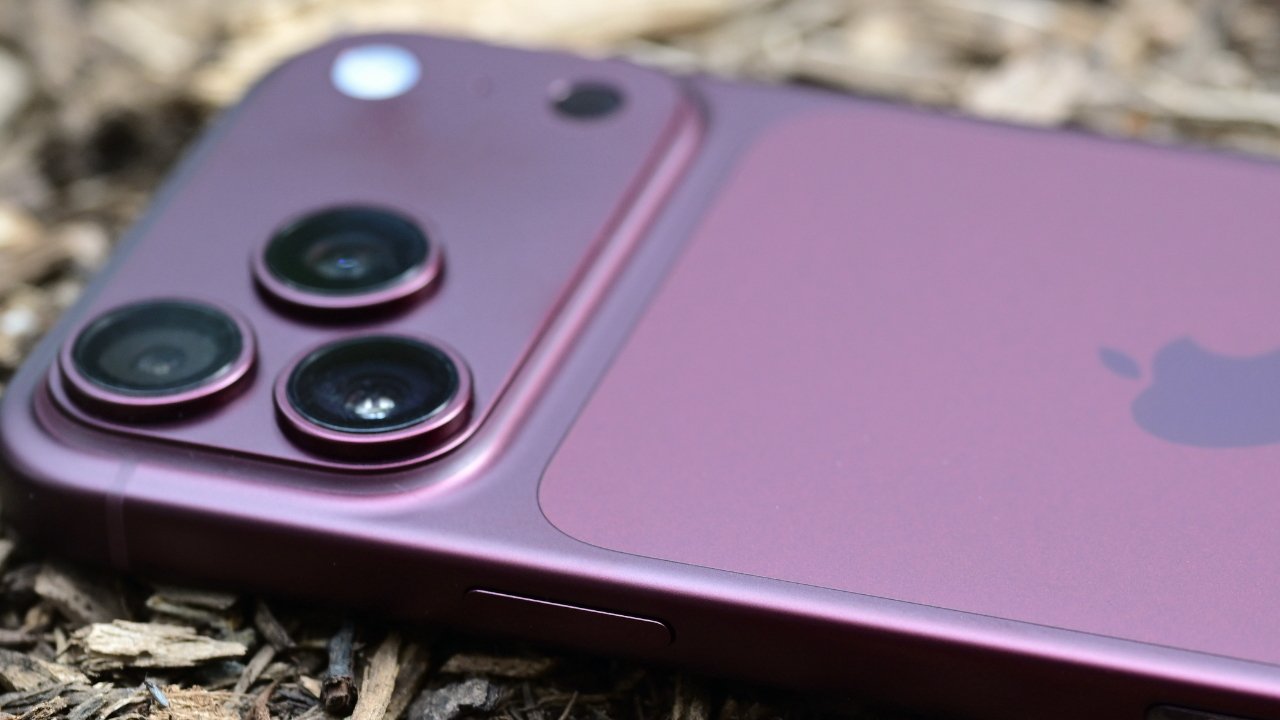
Close-up of a purple iPhone lying face down on rough wood chips, highlighting its triple rear camera lenses and sleek metallic finish

Apple’s new iPhone 18 Pro comes with a variable aperture camera, but new features are not the reason sales are up in India.

The same can’t be said for rival manufacturers, though, and particularly not for those making entry-level smartphones. The sales drop for those is said to have been acute since the start of 2026, although no figures were given.

It may not last

If Apple gets the balance of aspirational purchase and zero-interest purchase plans wrong, it could mean the end of the iPhone as a status symbol. Then, too, there can always be a new status symbol.

There won’t be one from Samsung, though, as Apple’s main smartphone rival has consistently struggled in China. A Chinese rival is more likely, and at times phones by local manufacturers have taken market share from Apple.

Advertisement

If new features are not the priority for customers, then it’s hard to predict when a sales bubble might burst. But one reason that Chinese brands have done well has been because of locals favoring them during the US/China trade disputes.

That may well happen again as the new US sanctions against Russia may affect that country’s sale of energy to India. Then, too, there are reportedly boardroom disputes at the Tata Group, which is now a major manufacturer of the iPhone.

The Tata Group’s iPhone factory was recently accused of contaminating local water supplies and came close to being shut down. Then it was also hit by a hack that exposed confidential Apple documents.

But then India, already a growing manufacturing hub for the iPhone, has recently introduced tax breaks to sweeten Apple’s deals there.

Advertisement

And while it has yet to be officially launched, it appears that Apple Pay may finally be coming to India. If so, it’s going to be limited to a few banks at first, which could even increase its status as a premium device.

Source link

Advertisement
Continue Reading

Tech

PNOE’s new face mask wants to make lab-grade breath testing a self-serve affair

Published

on

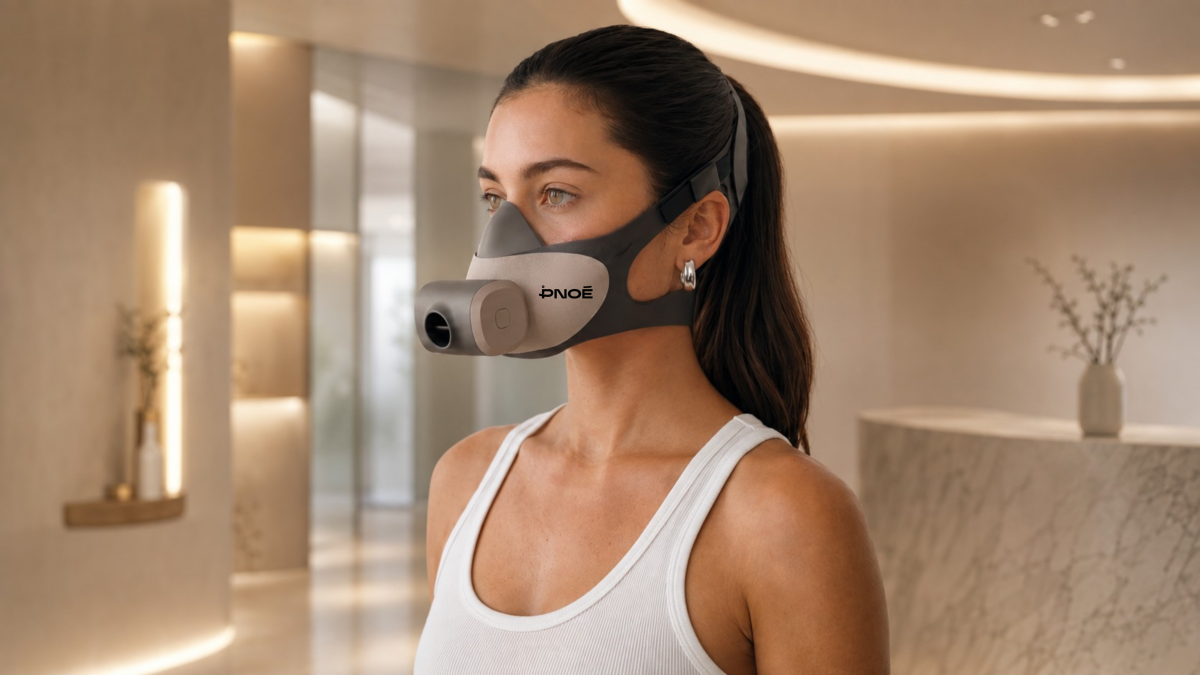
At first glance, the newest device from PNOĒ looks like something a comic-book villain might wear. The mask, which covers the nose and mouth and straps around the back of the head, bears more than a passing resemblance to the one worn by Bane, Batman’s hulking nemesis. But its purpose is far more benign; it measures how much oxygen you consume and how much carbon dioxide you exhale, then turns that data into advice about how to eat, train, and, the company hopes, live longer.

PNOĒ, which is based in Malden, Massachusetts, and has operations in Athens, Greece, is preparing to launch the PNOĒ 2.0 on October 1. The big change from its current device is that users can administer the test themselves. According to co-founder and CEO Apostolos Atsalakis, someone can walk into a gym, “just wear the mask, push the button, sit down,” and breathe for eight minutes. “That’s it. It’s that easy,” he said recently, talking with this editor over a Zoom call from the company’s Athens location.

That matters because PNOĒ’s current device requires a trained operator, which limits where it can be used. A self-serve version could open the door to fitness centers without dedicated staff and potentially even pharmacies, Atsalakis said.

The science behind PNOĒ isn’t new. Metabolic testing, which analyzes the gases in a person’s breath to gauge how their body produces energy, has been around for more than a century. For decades, it has been the gold standard for measuring VO₂ max, the maximum amount of oxygen the body can use during exercise and a widely used measure of cardiorespiratory fitness. But the tests have traditionally required bulky, expensive equipment found mainly in sports labs and hospitals, which is why they’ve largely been the province of elite athletes and executive wellness programs.

Advertisement

What 10-year-old PNOĒ promises is the same accuracy in a portable package, paired with software that translates the results into recommendations. “We made it accessible to everyone,” Atsalakis said.

The company says its test captures 23 biomarkers, including (beyond measuring VO₂ max) one’s resting metabolic rate (how many calories the body burns at rest), and metabolic flexibility (how well the body switches between burning fat and carbohydrates). Atsalakis argues that these metrics answer questions that blood tests can’t, such as how many calories a person needs or how they should train.

The timing is good for PNOĒ. VO₂ max has become a buzzword among longevity enthusiasts, thanks in part to research linking higher cardiorespiratory fitness to lower mortality. Atsalakis calls VO₂ max the strongest predictor of human longevity, and he sees his company’s data as a kind of scorecard for the booming wellness industry.

The new device is smaller and more compact than its predecessor, with fewer parts, which Atsalakis said makes it more reliable. It was designed with Milan-based Design Group Italia over what Atsalakis described as “a lot, a lot, a lot of iterations,” since a self-administered metabolic testing device hadn’t been done before.

Advertisement

It also addresses a question that post-pandemic users are likely to ask: who wore it last? The answer: it doesn’t matter, as the electronics detach from the silicone mask and straps, so multiple people can share the costly hardware while each user keeps their own mask.

For all its clinical ambitions, PNOĒ is careful about what it claims. The device isn’t cleared by the U.S. Food and Drug Administration, and Atsalakis said that “we do not provide medical recommendations.” Instead, PNOĒ considers itself a wellness device. “It’s like a body composition device, like a scale,” he said. “A doctor cannot prescribe medication based on our results.”

That could change down the road. Researchers have long explored whether compounds in human breath can signal diseases such as cancer, and Atsalakis believes the company’s growing trove of data could eventually help it flag health issues. But he acknowledged that full diagnoses are “definitely a couple of years away,” with regulatory hurdles likely stretching that timeline further. “We’re not there yet,” he said.

PNOĒ traces its roots to Atsalakis’s PhD work in sensing technologies at the University of Cambridge, when wearables were taking off and he became fascinated by what the breath could reveal about the body. He co-founded the company with Panos Papadiamantis, a childhood friend who is now the company’s chief product officer.

Advertisement

The startup went through Y Combinator’s Winter 2019 batch, back when “longevity” was not yet the industry it is today. It has since raised about $22 million, including a recently closed $11 million round, from investors including 50 Years and Google Maps co-founder Lars Rasmussen, who is himself now based in Athens.

PNOĒ sells only to businesses, which then offer the test to their customers. Its clients include Equinox, where it’s available at almost all clubs, said Atsalakis, as well as Four Seasons hotels, Red Bull, the NBA, the Mount Sinai Health System, and the med spa chain Restore Hyper Wellness.

About 85% of its business comes from the U.S., which Atsalakis described as “by far the most advanced market globally” for longevity. The company is now expanding in Europe and, through partners, in Latin America and Asia.

Businesses pay a subscription ranging from $400 a month to more than $1,000, which covers the hardware, software, training, and marketing materials, a package Atsalakis calls a “business in a box.” PNOĒ also links its results to the services a business sells, so a gym or spa can recommend specific offerings based on a customer’s test. Many clients use the test during onboarding, Atsalakis said, positioning it somewhere between a full clinical workup and the estimates people get from their smartwatches.

Advertisement

That middle ground is increasingly crowded. Apple, Garmin, and Whoop all estimate VO₂ max from heart-rate data, while consumer devices like Lumen analyze breath to gauge fat and carb burning. At the high end, traditional metabolic carts remain the standard in labs and hospitals.

PNOĒ, which employs 110 people, says it recently turned profitable, while growing more than 100% a year. Atsalakis said the company plans to raise a Series B within the next six to 12 months as it tries to put its mask — Bane comparisons and all — in front of more faces.

When you purchase through links in our articles, we may earn a small commission. This doesn’t affect our editorial independence.

Source link

Advertisement
Continue Reading

Tech

Why We Won’t Know How Visible The iPhone Duo’s Crease Is For A Long Time

Published

on

Apple’s nano-texture screen might not hide the crease forever.

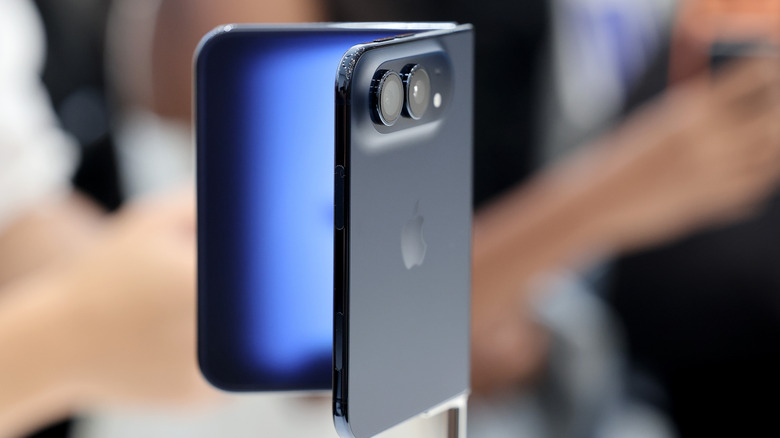
Apple’s first foldable phone is coming soon, and it caused quite a stir upon its announcement earlier this month. That’s no surprise, since everyone was waiting to see how the iPhone Duo would address the competition’s shortcomings. It’s still early to tell, given that it won’t hit stores until next month and all we’ve had so far are a few brief hands-on experiences. 

But one of the most anticipated features is the new nano-texture display, which promises to make the crease on the screen much less visible. In fact, it does seem to be much less noticeable — but it will be a long time before we know for sure.

Advertisement

The biggest trade-off with foldable phones: The crease

Historically, foldable phones have had an unpleasant flaw: the crease. And it all comes down to physics. With today’s technology, it’s nearly impossible to have a flexible display that folds without leaving any crease marks. Companies have gotten much better at this, and the creases have become less noticeable even though they’re still there. 

Apple took a clever approach to make the crease less visible. The iPhone Duo’s screen has a matte coating on top, which significantly reduces light reflection. Some people who have seen the iPhone Duo in person say the crease is barely noticeable. Others say it’s still visible and that it’s only a matter of time before it gets worse. 

Our own hands-on report found the crease is “easier to feel with your finger than observe with your eyes.” But does that mean Apple has finally solved the crease problem once and for all with the iPhone Duo? Not really.

The biggest problem here is cumulative damage. Take the Galaxy Z Fold 8 as an example. Samsung ships its foldable phones unfolded in the box, and when you look at them for the first time, the screen looks super flat. But as you start folding and unfolding it, the crease definitely becomes more noticeable. Now imagine folding that screen thousands of times over the course of months or years. It’s not hard to find photos of foldable phones with damaged screens online.

Advertisement

Only time will tell if Apple got it right

Multiple Apple executives have publicly stated how proud they are of the iPhone Duo and how they believe the device will be much more durable than the competition. But we won’t know for sure how the iPhone Duo’s nano-textured screen will perform until the phone reaches a mass of consumers. Not only that, but it will likely take some time before we have any idea of how future-proof it is. That will certainly be something many YouTubers will put to the test in their extreme durability experiments.

So yes, the crease on the iPhone Duo’s screen was barely visible during the hands-on sessions at the Apple event. But even the most thorough hands-on impression is really just a snapshot of a crease that hasn’t had time to develop yet. The reviews that will roll in soon, ours included, can only speak to what the iPhone Duo looks like fresh out of the box. That might be different after using the device for a few months.

Still, you have to give Apple credit here. The fact that the company created a screen that already makes the crease look much less noticeable in the first few days is certainly promising. It’s also something we should expect to see the competition rushing to catch up on soon.

Advertisement

Source link

Advertisement
Continue Reading

Tech

How To Safely Clean Your Electronics With Compressed Air

Published

on


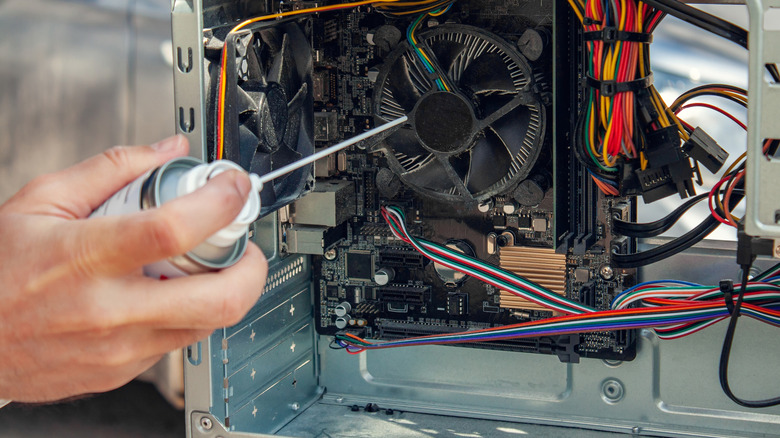
Safely cleaning your electronics means using the right method to ensure a smooth process. That’s why many people choose compressed air, as it can get the job done both quickly and efficiently. But before you begin cleaning with compressed air, it’s important to turn the device off and disconnect it from its power source, if possible. It’s the best way to ensure you and the components themselves stay safe while working.

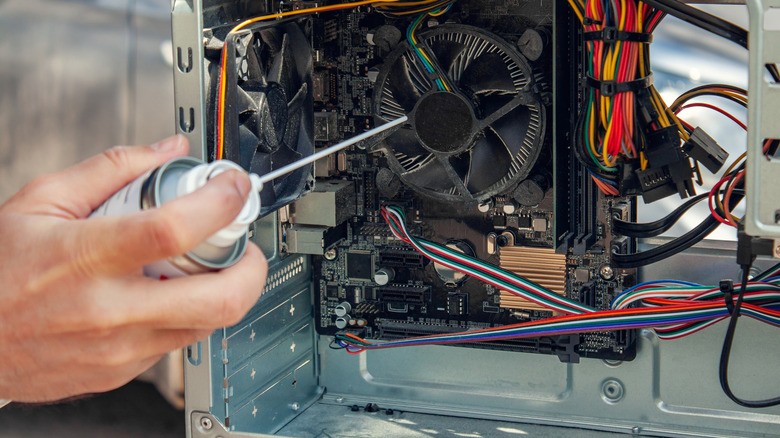
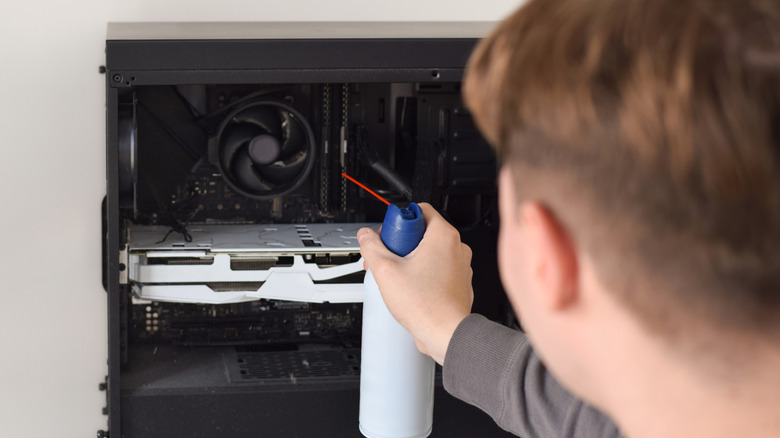
Once the device is powered down, hold the can upright and keep it a reasonable distance from the device. Use short, controlled bursts of compressed air and work around the areas that need cleaning. This will allow dust and other debris to escape, rather than just pushing it farther down into the device. For a device like a keyboard, be sure to use the straw that comes with the can and move from left to right as you clean.

When it comes to cleaning external vents, you should direct the airflow away from the device rather than blowing dust farther into the case. The vents allow warm air to escape from a computer so it’s important to keep them clear. If the compressed air doesn’t quite get the vents as clean as you’d like, you can wipe them down with a clean, soft cloth. This can help remove any remaining dust that could otherwise interfere with the computer’s cooling system.

Advertisement

The risks of using compressed air

While compressed air can make cleaning electronics easier, using it incorrectly can cause problems for your devices. For example, an excessive amount of air pressure can damage the cooling fan blades, which is why an air compressor should never be used as a canned air substitute. There’s also a danger of accidentally pushing dust and debris farther down into the vulnerable parts of a device, which could make the problem worse later on. Finally, if you do not hold a compressed air can upright, you can accidentally blow freezing propellant into the machine instead of just compressed air.

That risk isn’t limited to larger devices, as Sony warns against using compressed air to clean its earbuds. Compressed air can push dust into the microphone or the speakers of its earbuds, potentially interfering with their operation. Presumably the same warnings could be used for all small electronics, so keep that in mind.

Advertisement

This is why it’s always important to check your owner’s manual before using compressed air on any electronic device. This also applies to the instructions for the type of compressed-air duster you’re using. Air dusting devices often have their own safety precautions, along with information on how to direct the airflow. The same goes for traditional cans of compressed air. Taking the time to read both sets of instructions can help you avoid a potentially costly mistake.


Advertisement

Source link

Continue Reading

Tech

7 Lawn Mower Brands Owned By Stanley Black & Decker

Published

on


Stanley Black and Decker has shaped the tool industry since 1843. With its headquarters located in the United States, the company has a global presence in 60 countries. It operates more than 100 manufacturing facilities worldwide, employs 50,000+ people, and is committed to making customers’ lives easier by developing exceptional products with the most advanced, innovative technology. 

The company owns a collection of well-known brands, including Craftsman, DeWalt, Stanley, Hustler, and more. Customers widely recognize these as some of the most reliable tool brands owned by Stanley Black & Decker. They also offer walk-behind, riding, zero-turn, and other types of lawn mowers. They are reliable and perform well for cutting tasks across your lawn and yard. Consequently, if you are looking for your next lawn mower, Stanley Black and Decker offers many options through its brands.

Users make many mistakes with lawn mowers; for instance, mowing when the grass is wet, because it’s harder to get an even cut after rain. So check the skies and saddle up; we’re going through lawn mower brands owned by Stanley Black & Decker. 

Advertisement

DeWalt

One of the major power tool brands, recognized by its signature yellow-and-black color, DeWalt was founded in 1924 to create tools and equipment that boost jobsite productivity. In its outdoor category of equipment, DeWalt offers a range of lawn mowers, including push lawn mowers and self-propelled lawn mowers. These are designed for power, durability, and reliability to keep your lawns and yards looking sharp year-round. 

Advertisement

Among the featured products in the self-propelled category is the 60V Max* RWD Self-Propelled Lawn Mower Kit that is built with a 21-inch steel cutting deck and lets you adjust the walking speed and cutting mode for an efficient cut. You can also get accessories and attachments for the machine at DeWalt, like drive belts, mower blades, and more, to save you from hefty replacement costs if a part is damaged during use.

DeWalt takes quality very seriously — its lawn mowers come with a limited lifetime warranty, meaning the manufacturer will repair or replace the product in case of any manufacturing defect, given that you buy it from official stores or authorized sellers. The brand was acquired by Stanley Black and Decker in 1960.

Advertisement

Craftsman

Craftsman is another popular tool brand owned by Stanley Black and Decker. It made its debut in 1927, creating high-quality hand and power tools, which later led to its acquisition by the group in 2017. In 2022, the brand received nine Pro Tool Innovation Awards for its best-in-class products across multiple categories. It manufactures several kinds of outdoor power equipment, including lawn mowers, like riding, zero-turn, self-propelled, and push lawn mowers that make yard work easier and more effortless by providing a reliable cutting performance. You can choose the type of mower that best fits the needs of your yard to execute an efficient cut.

Riding lawn mowers, especially, minimize user effort by a significant margin, as all you have to do is sit on the tractor and steer it along the garden to cut the grass. For instance, the 46-in. HP Kohler Gas Riding Lawn Mower is designed with a 46-inch cutting deck and hydrostatic transmission to cut through thick grass with ease.

Advertisement

Cub Cadet

Specializing in outdoor equipment, Cub Cadet has an extensive collection of lawn mowers, including zero-turn, riding, and walk-behind mowers. The machines are engineered to handle different terrains and yard types. Its Ultima Series zero-turn mowers are integrated with advanced technology that meets the needs of the 2026 era. 

For example, the Ultima Series ZS can climb slopes up to 20 degrees and is designed with Synchro Steer technology that provides stability and mowing control on steep surfaces. You can also find electric lawn mowers, such as the ZT1 42E, if you want to eliminate the hassle of gas and oil refills.

Advertisement

In 2019, the brand received a Good Design Award from the Chicago Athenaeum Museum for its 2018-2019 Ultima Series zero-turn mower line. Dating back to 1961, Cub Cadet designed and manufactured its first-ever lawn mower to meet the needs of gardeners across the state. In 1966, it introduced the world’s first hydrostatic-drive garden tractor to set new benchmarks in the industry. Stanley Black and Decker bought Cub Cadet in 2021. The products can be bought from local dealers near you and are also up for purchase at The Home Depot and Tractor Supply.

Advertisement

Hustler

In 1964, John Regier, founder of Hustler, saw the need for riding lawn mowers in the industry that could cover irregular lawns and yards with easy maneuverability, leading to the creation of the world’s first zero-turn lawn mower in the same year. The brand divides its products into two main categories — commercial and residential lawn mowers — that you can shop for through the nearest retailer.

Additionally, the brand offers a series of accessories and attachments for the mowers that can level up their performance, for instance, side baggers, trash bin kits, side lights, and USB kits. Other than this, you can also request a demo from Hustler and experience the mower first-hand to recognize how it differs from other brands and to select the right type of mower for your needs. Hustler became a part of the Stanley Black and Decker group in 2021.

If you are a commercial buyer, the Hustler Fleet Program may be of interest to you. You become eligible for the program by purchasing two or more eligible units on the same invoice. Then, purchasing another unit within 12 months of the original purchase gets you a discount of 25% or more, depending on how many products you bought initially. The invoice validity resets with every purchase.

Advertisement

Troy Bilt

Troy-Bilt is another brand owned by Stanley Black and Decker since 2021, though the company has been in existence for more than 80 years. In 1937, it introduced the first residential rototiller and has since expanded to introduce several types of lawn mowers in its collection. There are riding (lawn and zero-turn) and walk-behind (push and self-propelled) lawn mowers that you can choose between based on your needs. 

These mowers are built for your needs with a variety of features that aid in particular types of yard work; for instance, the riding mowers can mow flat yards or hills and can also help with snow removal by pairing them with external attachments.

Advertisement

Moreover, the website has complete video tutorials along with step-by-step guides on using and troubleshooting its mowers, such as the oil-changing process, changing blades, difficulties starting the mower, and more. Consequently, you can take help from the professionals if you are a new user.

Advertisement

Stanley Tools

Stanley Tools is another brand that comes under the ownership of Stanley Black and Decker. Along with a wide assortment of hand and power tools, the brand also offers lawn mowers, such as walk-behind and self-propelled mowers. Taking one product, for example, the 18V Stanley V20 Self-Propelled Mower from the FatMax range has a 28 cm ultra-low profile deck that can sneak under decks or other yard obstructions, and you won’t upset your napping neighbors with its quiet battery operation. 

The brand has been serving the needs of its consumers for over 175 years since it was founded by Frederick Stanley in 1843. Back then, the brand was known as Stanley Works, which later merged with Black and Decker in 2010 to become what we now know as the Stanley Black and Decker. It continued innovating with newer products with utmost dedication and quality to serve high-precision and reliable tools and equipment to its global customers.

Advertisement

Rover

Rover is a lawn mower brand owned by Stanley Black and Decker since 2021; however, the brand originated in 1956 in Australia and has served the Australian nation exclusively with its reliable mowers. It offers a diverse range of mowers, such as ride-on, zero-turn, and walk-behind, that are designed to meet the needs of your green land. The Lawn King 18/42 has been among the finest lawn mowers produced by the brand, built with a 42-inch cutting deck and an automatic hydrostatic transmission enabled by a Kawasaki V-Twin engine.

According to Rover’s official website, the brand bids goodbye to the Australian market with the following message: “As Rover closes this chapter in Australia, its legacy lives on in well-kept lawns, weekends outdoors and the pride of a job well done.” On the other hand, there has been no official confirmation from Stanley Black and Decker as of yet on whether the brand is completely shutting down, though Rover says that “eligible Rover lawn mowers will continue to receive parts and warranty support through 2032.”

Advertisement


Source link

Advertisement
Continue Reading

Trending