Alibaba says its Qwen models have passed 3 billion downloads, making them the most used open-weight family in the world. The Hugging Face report published a day earlier counts 2,045 million for Qwen this year, and 151,448 derivatives against Alibaba’s claim of more than 300,000.
Alibaba says its Qwen models have passed 3 billion downloads, putting the family ahead of anything from Meta or Google. It is the clearest claim yet that Chinese labs are winning the open-weight race.
The report it rests on says something slightly different. Hugging Face’s State of Open Models, published the day before, counts 2,045 million Qwen downloads this year, or 2,061 million including every repository. The 3 billion figure came from Alibaba’s own emailed statement.
The gap does not change who is first. It does mean the headline number is about a third larger than the platform being cited actually recorded.
Advertisement
The same pattern appears in the derivatives. Alibaba says its ecosystem has produced more than 300,000 derivative models, while Hugging Face counts 151,448 Qwen-based derivatives on its Hub, which is still 2.6 times Meta’s entire footprint there.
This is familiar ground. TNW noted earlier that Alibaba called Qwen3.8 the world’s second-best model and showed no proof.
Hugging Face is careful about what its numbers mean. Downloads measure activity inside its own hub and do not capture API usage, private deployments or models distributed elsewhere, and Alibaba runs its own distribution platform in ModelScope.
None of which touches the direction of travel. “Qwen has become part of the default workflow for developers deciding what models to fine-tune and deploy,” the report says.
Advertisement
The method is volume and reach. Alibaba has open-sourced more than 460 models under permissive licences and pushes them through its cloud into Southeast Asia and Africa, though it has also said it wants to charge the heaviest users of those open models.
American labs are answering in kind. Meta and Nvidia have both shipped new open models in recent weeks, and Nvidia has been explicit that it is chasing China on open weights.
The bigger threat to Qwen’s run may be domestic. Beijing has been weighing curbs on overseas access to the country’s best models, which would take the reach that produced these numbers away.
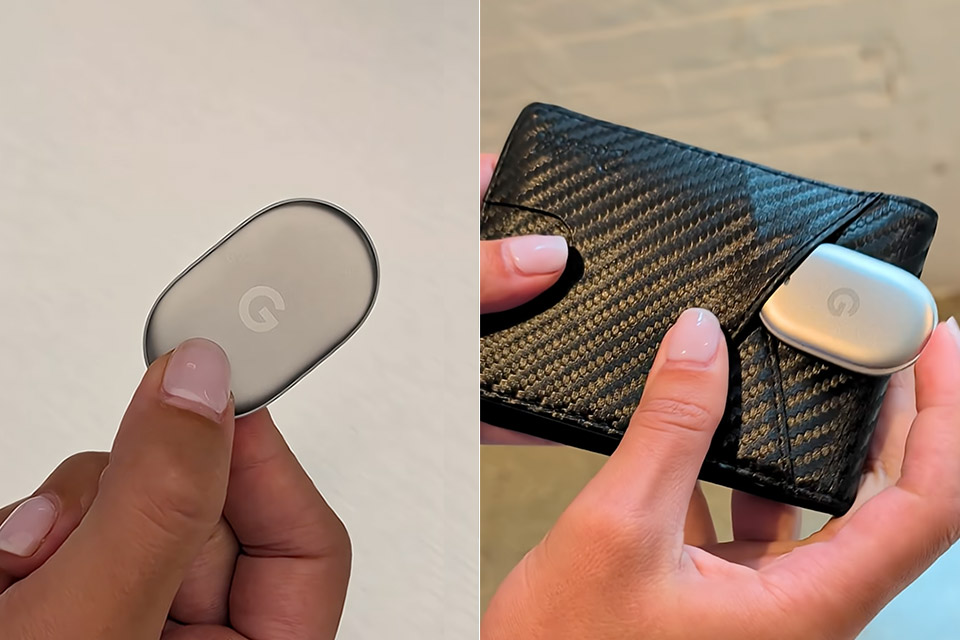
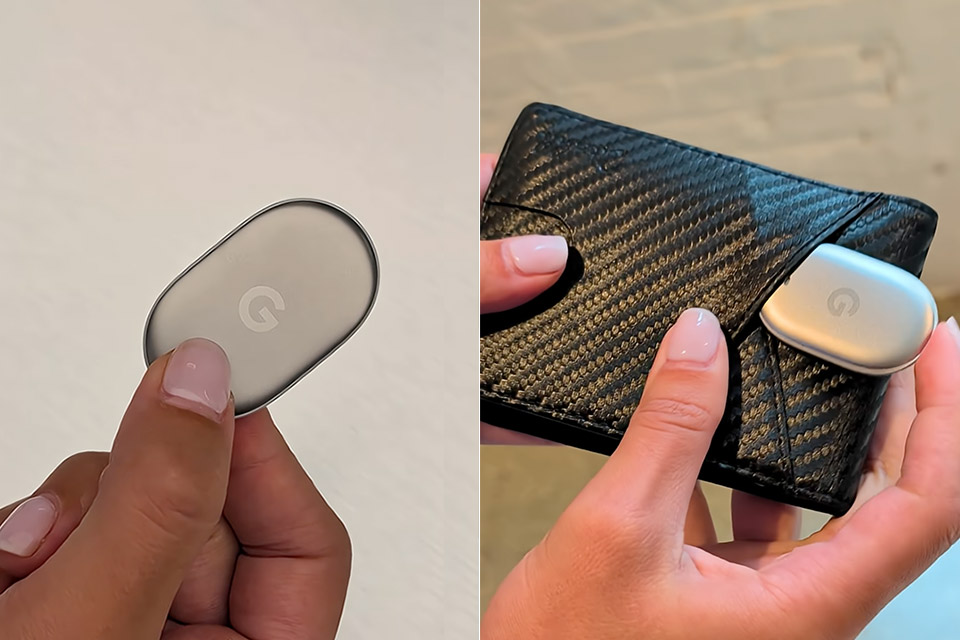
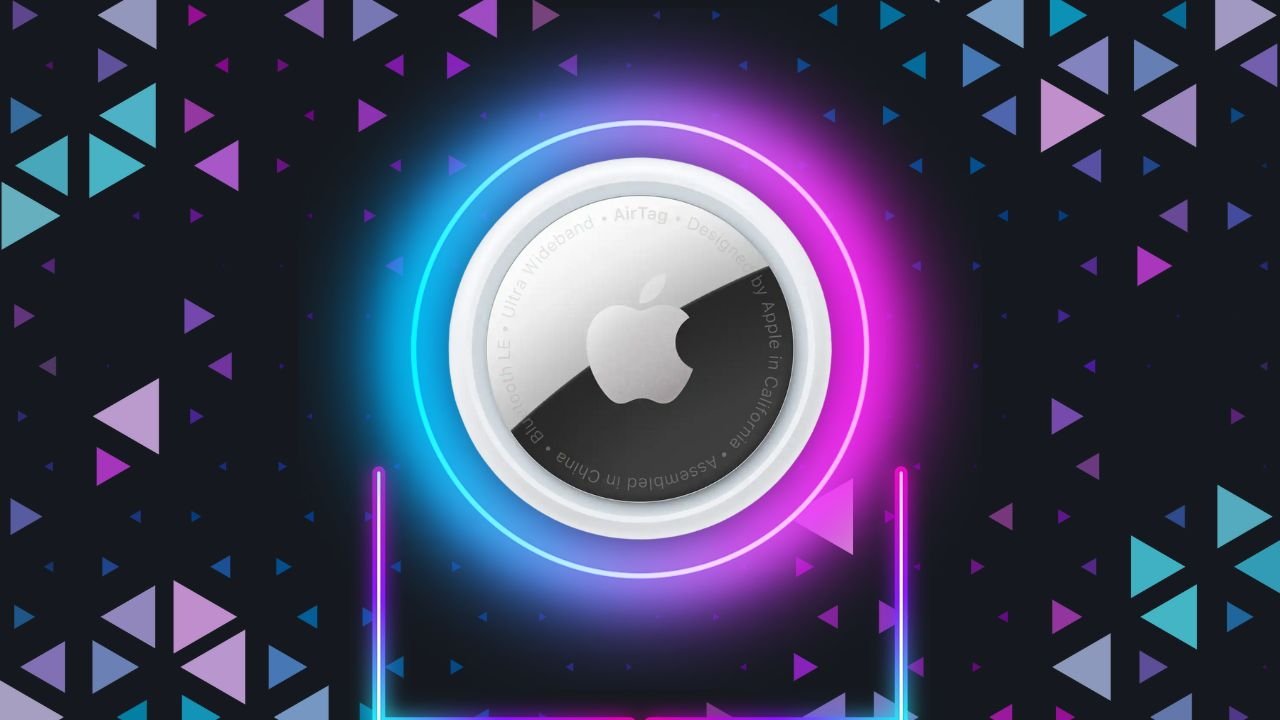
Keys sneak into couch cushions, wallets slip behind desks, and luggage disappears from the airport carousel. For years, Android users saw Apple’s AirTag handle routine disappearances, while Google delegated the task to third-party devices. That gap was bridged this week. Google developed its own finder, the Pixel Tag, a small oblong tracker designed to travel alongside the items people really lose.
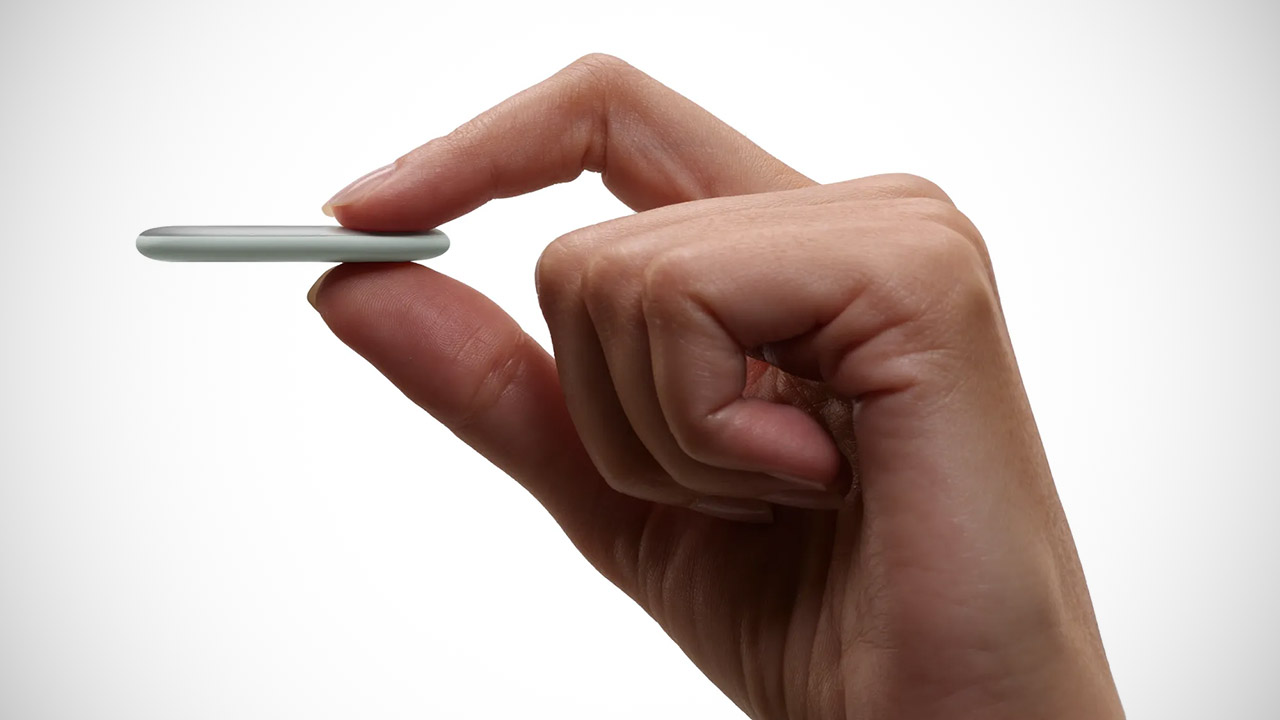
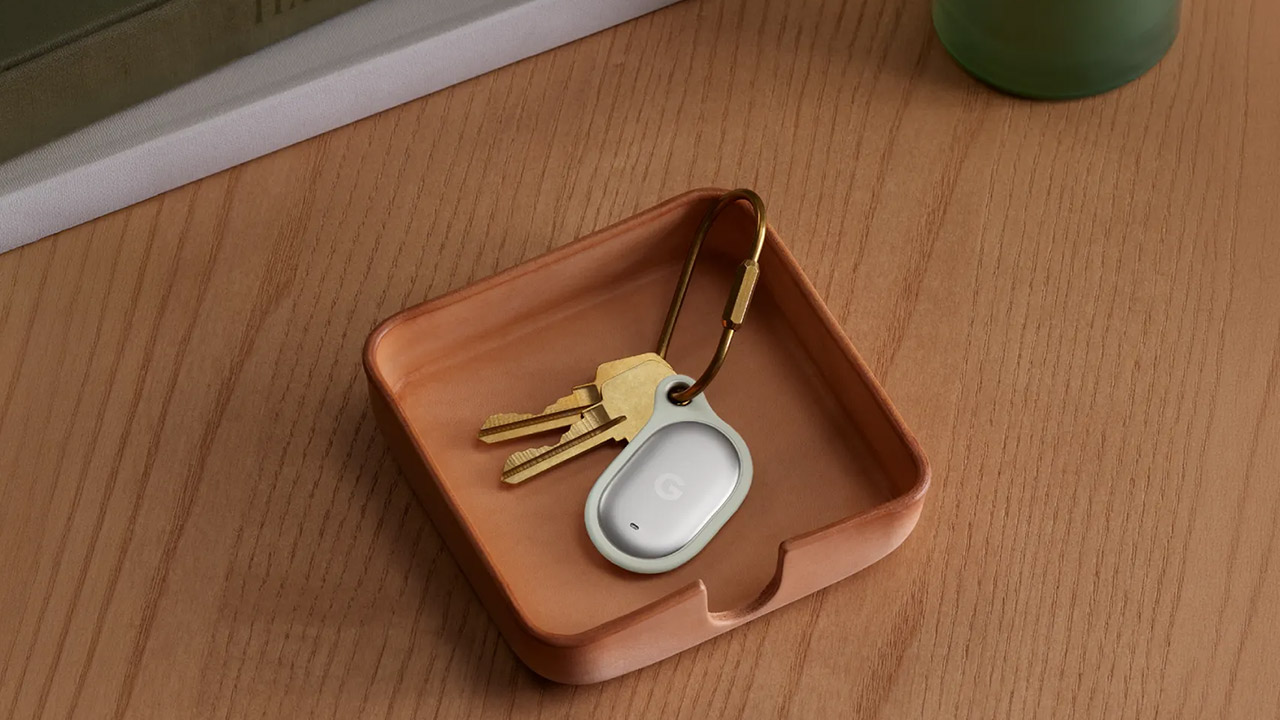
The Pixel Tag is noticeably slimmer than Apple’s circular AirTag, measuring just 1.8 inches tall and 1.1 inches wide. And at only 0.2 inches thick, it’s a clear and pleasant contrast. The Pixel Tag, weighing barely 0.4 ounces with its battery inside, is available in only one soft grey-green color, Fog, as named by Google. The Pixel Tag is made of stainless steel and polycarbonate, with a little G logo sitting on the metal face next to a speaker opening, resulting in a basic yet effective design. The battery cover can be removed from the back by twisting it, and it accepts a regular CR2032 coin cell. Google estimates that the battery will last more than a year in ordinary use, and you can replace it yourself if necessary. The IP67 seal keeps dust out and can resist a 30-minute submersion in a meter of water.
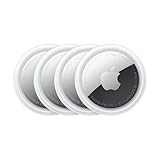
FIND YOUR ITEMS ON FIND MY — AirTag (2nd generation) helps you keep track of what matters. Attach one to an item you want to keep track of using the…
EXPANDED PRECISION FINDING ON IPHONE AND APPLE WATCH — Get step-by-step directions to your lost item on iPhone and, now, Apple Watch.*
ENHANCED SPEAKER — With a 50% louder speaker and a new, distinctive chime, it’s easier than ever to hear and find AirTag.*
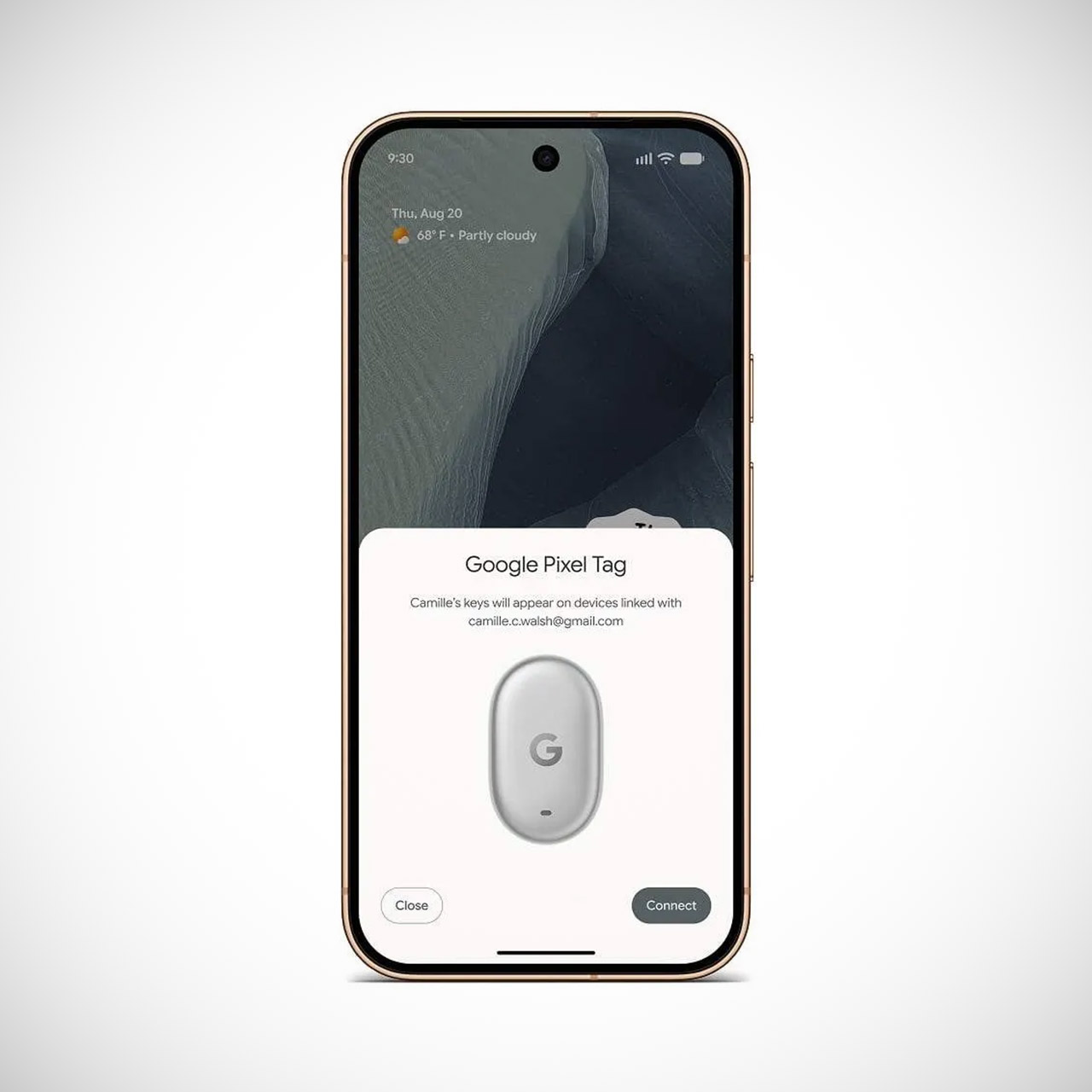
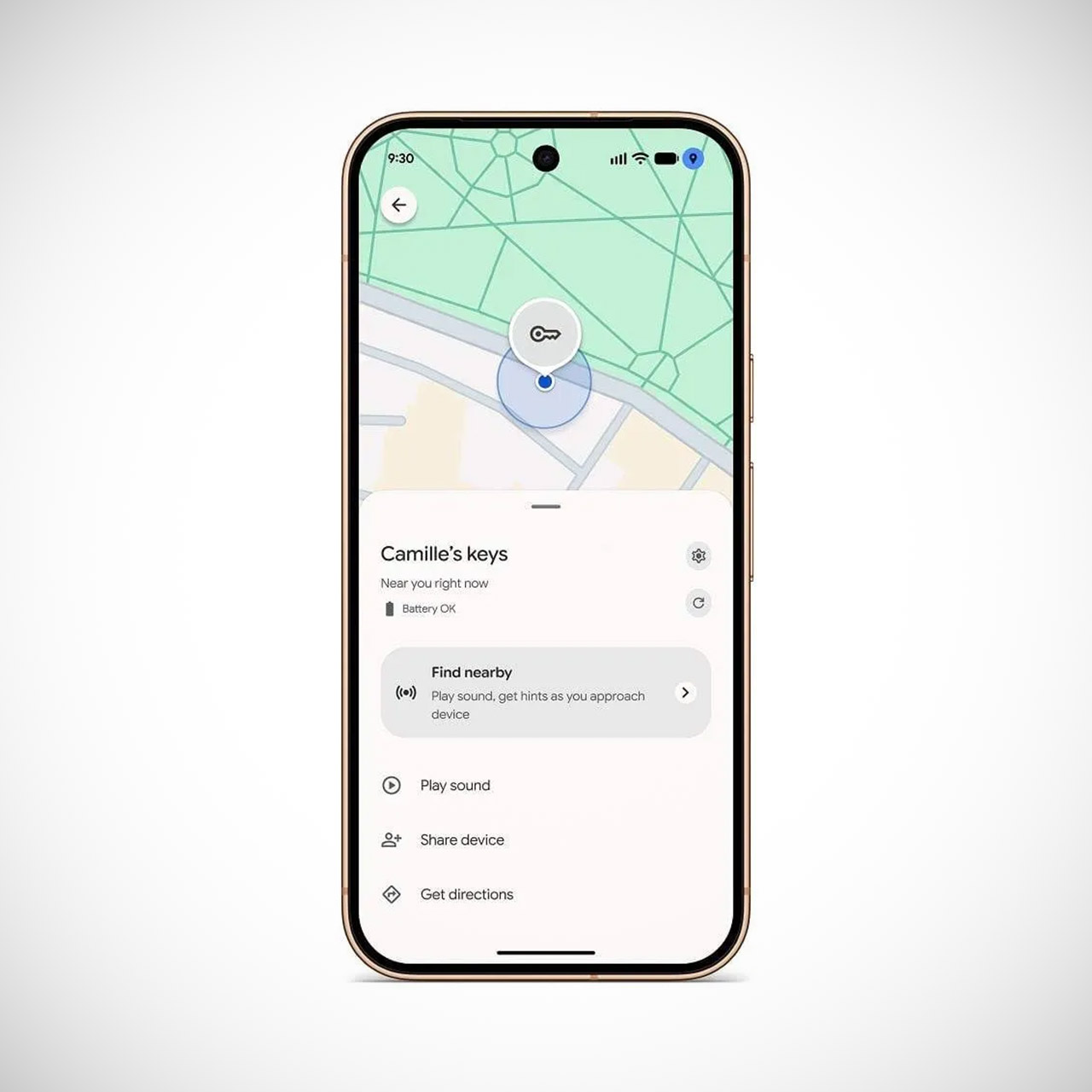
Users simply pull the battery tab, bring the tag near any phone running Android 9 or later, and Fast Pair will do the rest. Once linked, the tag displays in the Find Hub app, where you may name it to distinguish between your keys and your bag. When the item is nearby, the phone can play a sound thru the tag’s speaker, and if you push the physical button on the tag itself, your phone will ring even if it is on quiet, which is a handy feature when the phone is missing.
Advertisement
As soon as the tag leaves your Bluetooth range, Google’s Find Hub network will step in to assist. More than a billion Android devices quietly listen for the signal and send the owner an encrypted position. Google is quite concerned with privacy, so rest assured that location data is encrypted from beginning to finish, and they are also keeping an eye out to warn you if an unknown tag appears in your presence. You can also share a single tag with up to 10 individuals, which is particularly useful for family keys or a shared suitcase.
Precision improves greatly as you get closer. Phones with Ultra Wideband capability show not only the distance to your item but also the direction, which is quite useful while looking for misplaced items. There’s also a feature called Bluetooth Channel Sounding, which adds another layer of accuracy to distance measurements. However, some features necessitate a current device, such as the new Pixel 11 series or certain high-end Samsung handsets. Older phones continue to track the tag via basic Bluetooth and the network.
The rest of the Pixel family can lend you a helping hand. Your Pixel Watch can simply locate or ring your Pixel Tag via the Find Hub app or a browser. If you have Pixel Buds, simply ask Gemini to make the tag beep. Left-behind alerts will also notify you if your tagged item remains behind as you walk away, as the Pixel Tag contains an accelerometer that detects when the object starts or stops moving, providing the app with extra important data.
Google charges $29 for a single Pixel Tag and $99 for a four-pack, which is the same as Apple’s AirTags. They will be available on the Google Store on November 11th. Even while it does not come with a built-in loop or clip, you can easily add a keychain or case, exactly like with the competition’s AirTags.
Anthropic CEO Dario Amodei recently pushed back against the idea that he’s been painting an overly pessimistic picture of artificial intelligence and how it might shape the future.
Claiming that Amodei has “lost the argument” when it comes to AI regulation (Anthropic has advocated for some regulations, including a California bill that imposes transparency requirements on large AI companies), and given that “he is about to be the CEO of one of the most important companies in the world,” Baker wrote, “I respectfully think he should make an effort to be a more positive advocate for his own industry.”
Baker is far from the only one arguing that AI skepticism and even government crackdowns stem in part from simply taking the dire warnings of some AI executives seriously. But in his response, Amodei disagreed with the idea that his “messaging has been disproportionately negative.” Instead, he said that his writing has been “about equally balanced between risks and benefits,” and that he wrote his essay “Machines of Loving Grace” because he “didn’t feel the AI industry was painting an inspiring enough picture of how the technology could radically transform the world for the better.”
Advertisement
Nonetheless, Amodei acknowledged that “the public has a negative view of AI” and he agreed that “this is a big problem.” Where he disagreed was with the idea that this is “primarily caused” by Amodei “or any other AI leader warning about AI’s risks.”
“I think it is fundamentally a crisis of trust,” Amodei said. “I think that ordinary people don’t trust companies, governments, or the tech industry and always suspect that we are cooking up some new way to screw them over.”
Indeed, “trust” is a word that often comes up in debates about the AI industry, especially around OpenAI CEO (and Amodei’s rival) Sam Altman. In Amodei’s telling, however, this is a crisis that’s been decades in the making, with the AI backlash “just the latest iteration of it.”
“I think by far the most accurate criticism of AI companies including Anthropic is that we haven’t yet delivered on our big promises to benefit the world,” Amodei said. “That is totally on us, and I think it’s the criticism you should be making, instead of all this stuff about messaging and marketing.” (Naturally, he also said Anthropic is “doing our best to fix this.”)
Advertisement
As for regulation, Amodei argued that Baker was painting “a false choice” between distributing AI widely without regulation, or concentrating the technology in the hands of a few companies through regulation.
“I know that there’s a sort of Silicon Valley shorthand where regulation = regulatory capture = concentration of power, but I’ve always found this to be an overly simplified picture of the world,” Amodei said. “Many people outside this bubble think of regulation as something that constrains corporate power and benefits ordinary people.”
Amodei added that he doesn’t “necessarily agree with that perspective either,” but he said that’s “why Anthropic has always made its policy proposals very carefully.”
“We try very hard to make proposals that disadvantage (slow down) frontier AI companies while *advantaging* smaller competitors,” he said.
Advertisement
2/2 Second, on the messaging around AI. I do not agree that my messaging has been disproportionately negative. In fact it has been about equally balanced between risks and benefits: I’ve written one major essay about each, and even in interviews where I discuss the risks, I…
Michael MJD picked up a decommissioned MoneyGram self-service kiosk PC that once sat in places like pharmacies, ready for customers to start money transfers or bill payments before heading to the counter. The unit arrived as a solid metal enclosure weighing around 60 pounds, built more like industrial equipment than a regular computer. An Elo DuraTouch resistive screen sat in front of a Dell monitor, with a card reader, speakers, wireless antenna, and a Belkin power strip riding along for the various ports. Power, USB, audio, ethernet, and display connections filled the back. It powered on by itself once electricity reached it, with no obvious external button needed.
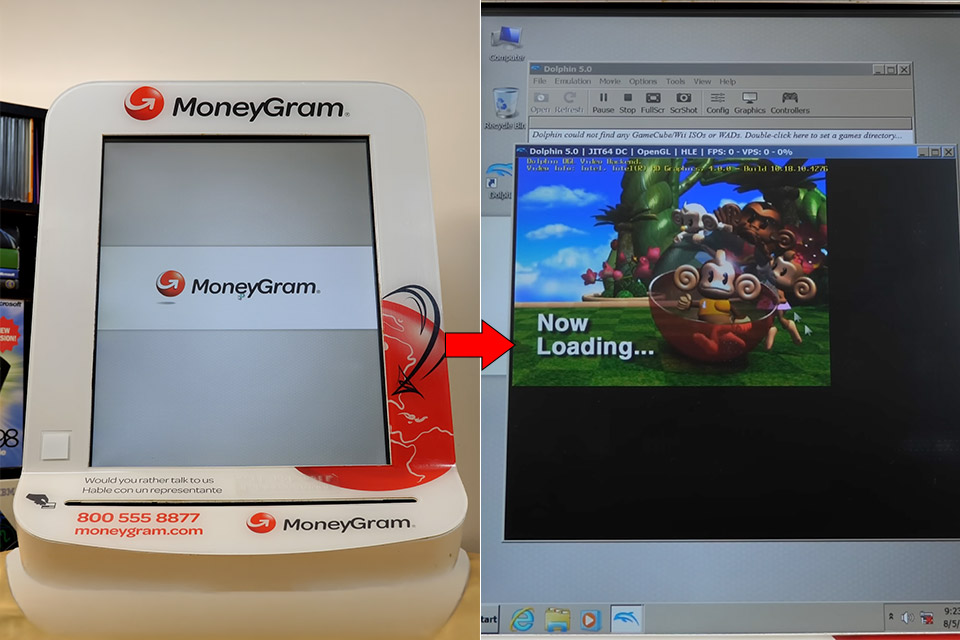
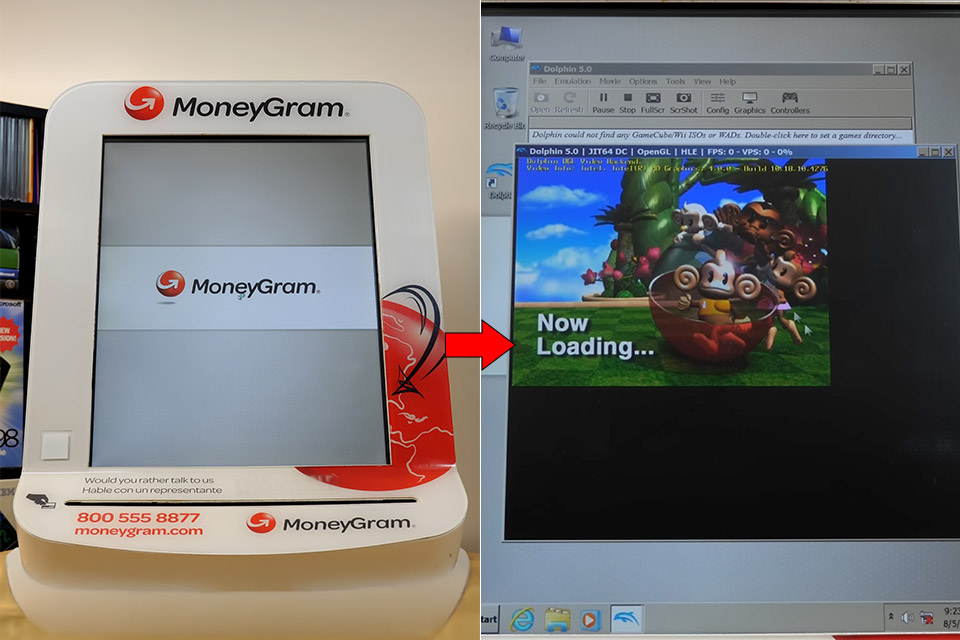
The first time it booted, Windows Embedded Standard 7, a 2014 version, appeared to say hello, coupled with a MoneyGram splash screen. When you boot up offline, the system goes into maintenance mode. Once a network connection was established, the interface appeared, but the actual transfer feature had been blocked and replaced with some error messages. So you have two accounts to play with: kiosk admin and kiosk user. The touchscreen literally wouldn’t budge at first, and the card reader wouldn’t even let you swipe your card
2K IPS TOUCHSCREEN DISPLAY – 1920 x 1200 resolution delivers incredible detail, wide-viewing angles, and lifelike color reproduction
AMD RYZEN 3 30 PROCESSOR – Everyday performance you can count on; multitask, stream, game casually, and edit photos smoothly with responsive power and…
ENJOY UP TO 14 HOURS AND 15 MINUTES OF BATTERY LIFE – HP Fast Charge restores battery from 0 to 50% in approximately 45 minutes
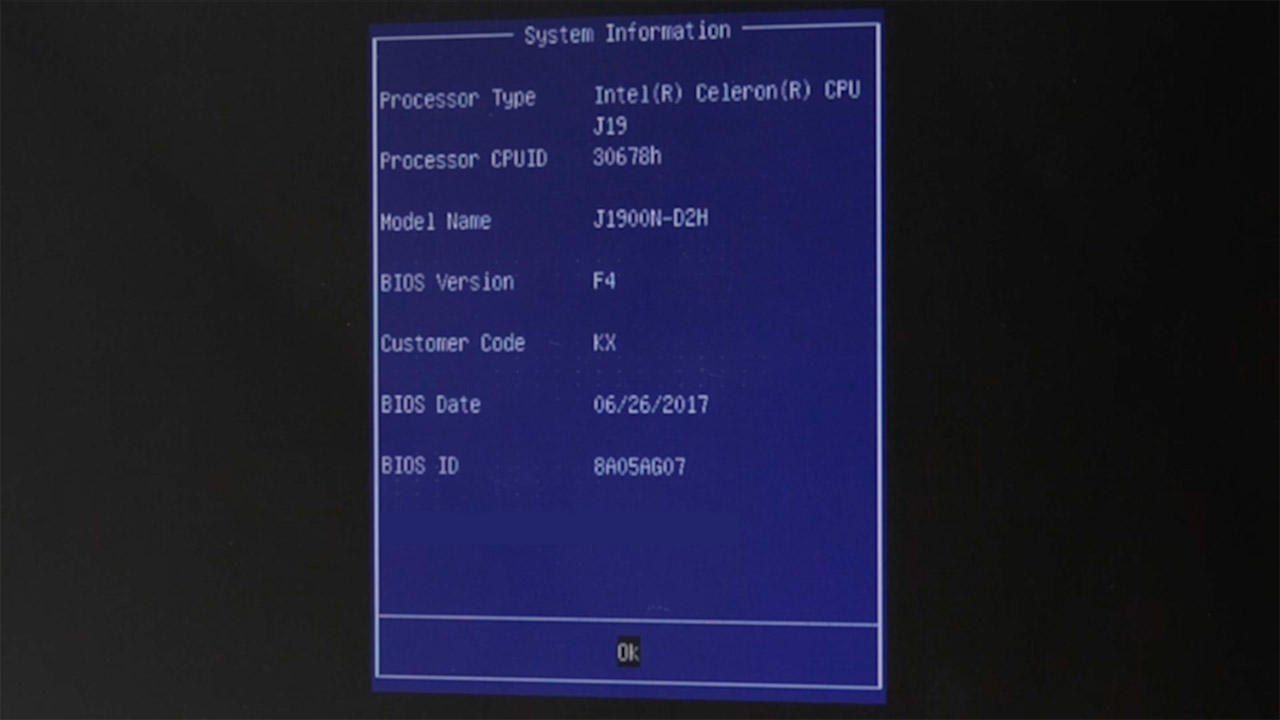
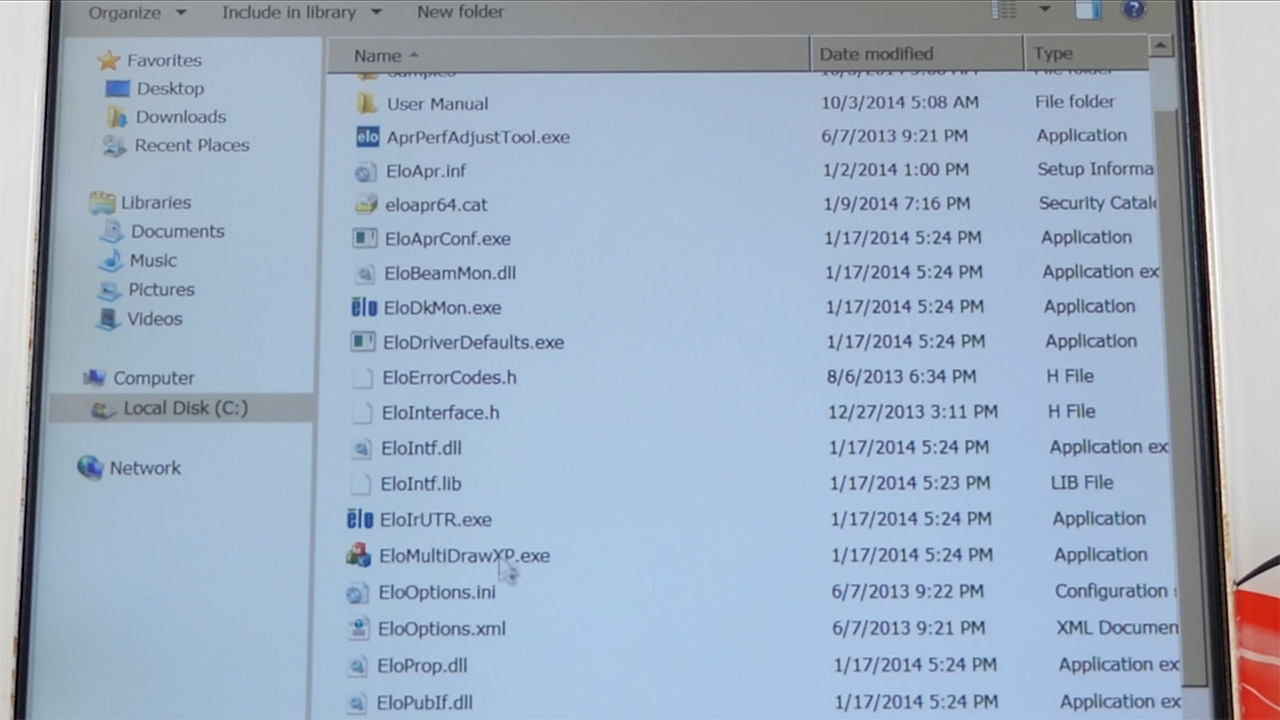
It took some time to get around the lockdown. Hiren’s Boot CD, as well as the tried-and-true sticky keys method using sethc.exe, began to cause problems. Safe mode was the key that eventually enabled the administrator account and unlocked the entire desktop after logging in. When you finally got inside, the different things on the hard drive became much clearer, as the operating system and apps were all on a Transcend 2.5-inch 64 GB solid-state drive, you had 8 gigabytes of RAM split into two 4 GB modules, and the Intel Celeron J1900 quad-core processor was clocked at 1.99 GHz on a Gigabyte motherboard. Kaseya remote management software, Elo touch drivers, and the moneygram.exe app with all of its supervisor tools took up the majority of the drive space. The remaining storage was subsequently sorted using WinDirStat.
The touchscreen calibration would not stick no matter how many times you tried in normal or enhanced mode. What was strange was that the touchscreen worked perfectly while you logged in as an administrator, but when the kiosk software closed everything down, it simply stopped operating.
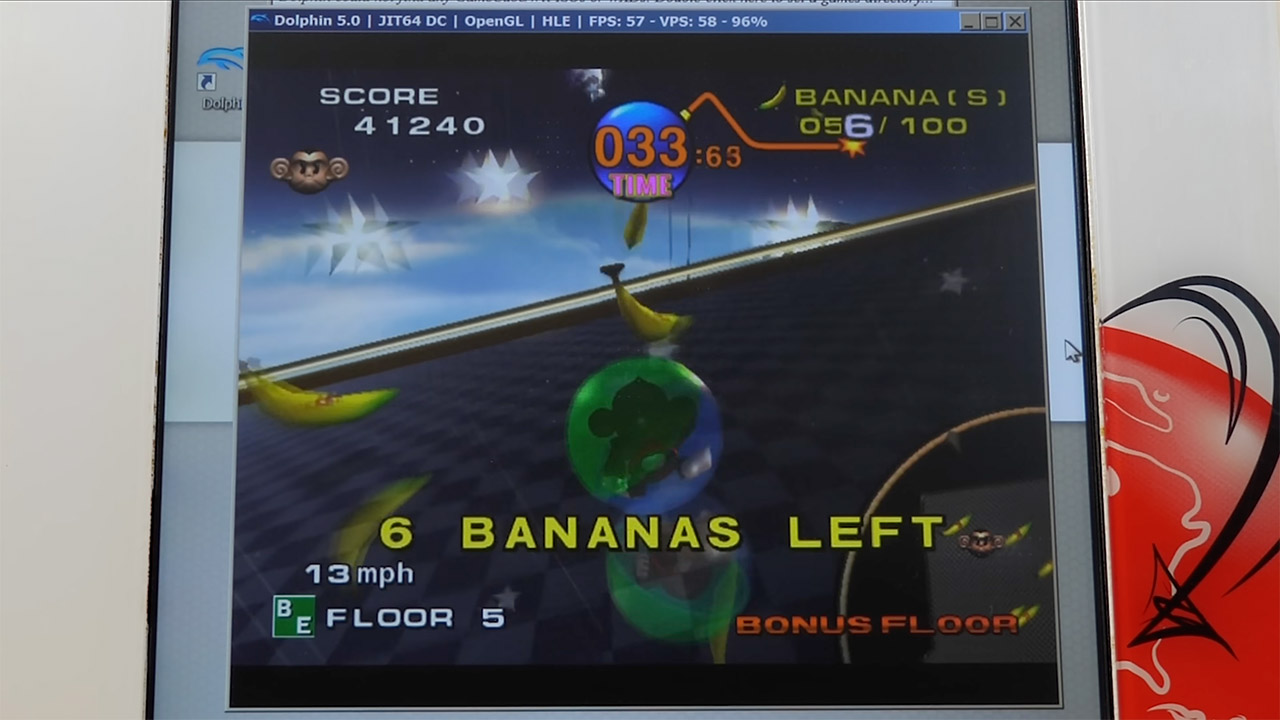
When all of the restrictions were finally lifted, a few older games were loaded up to get a sense of how the machine was handling. Half-Life ran at low resolution, but once the output was adjusted to direct, it played quite smoothly and with no jitter. Super Monkey Ball on the Dolphin emulator using the keyboard was still relatively playable; frame rates were fixed at 30-50, so it could handle a few light retro games without entirely going over.
Even if your hardware is secure, quantum-ready, encrypted, and future-proof, no one is immune to a supplier letting the side down
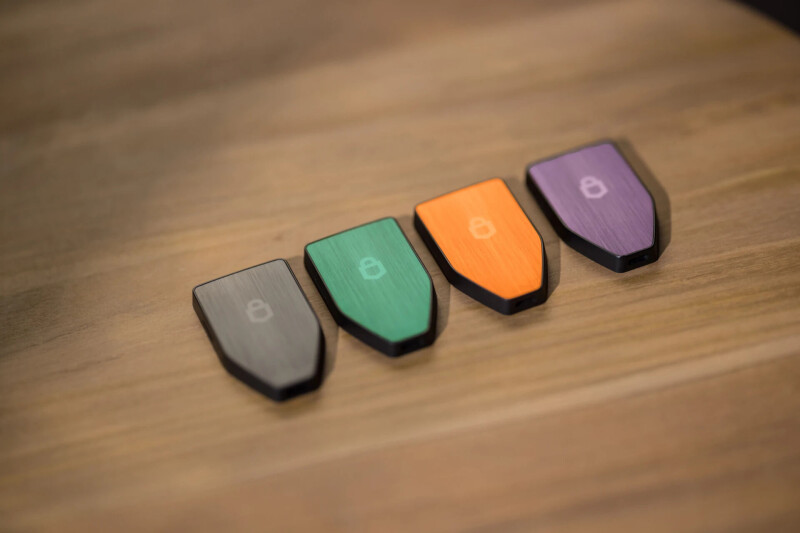
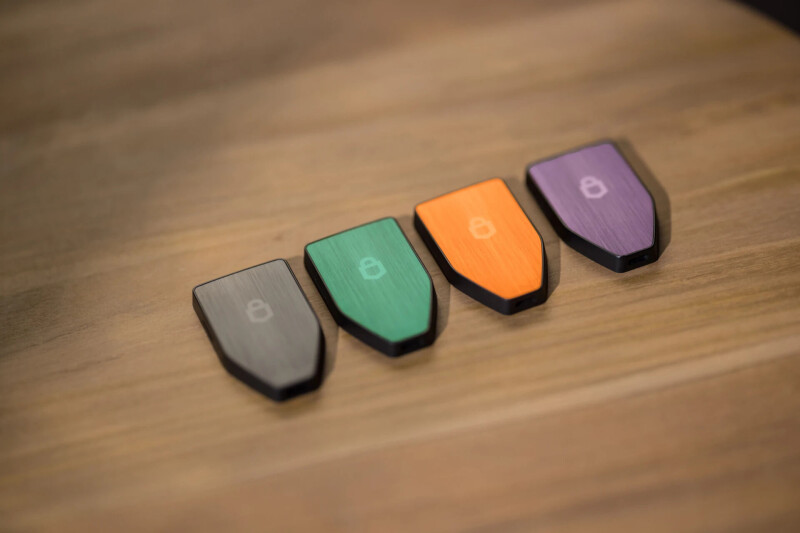
Cryptocurrency hardware wallet maker Trezor has confirmed that a breach at one of its shipping partners exposed the personal data of more than 13,000 customers.
The company’s initial findings suggested the breach was limited to orders placed in certain countries during the previous 90 days. New information indicates that earlier orders may also be affected.
Advertisement
The breach exposed the names, email addresses, phone numbers, and shipping addresses of 11,742 customers in the US, UK, Sweden, Colombia, Brazil, Italy, and Portugal who ordered Trezor products between May 10 and August 8.
An additional 1,947 customers had their names, home cities, and email addresses exposed. Some members of this group may have placed their orders before May 10.
“We are verifying this information and the timeframe with ShipMonk,” said Trezor.
ShipMonk is Trezor’s logistics partner. It stores and ships products on the company’s behalf and collects the information needed to fulfill orders.
Advertisement
ShipMonk is subject to Trezor’s 90-day retention policy, which requires partners to delete or anonymize customer data within 90 days of collecting it for an order.
ShipMonk did not immediately respond to a request for comment.
Trezor markets itself as a purveyor of secure, offline, hardware-based cryptocurrency wallets. With its products, it aims to shield customers from cyberattacks and malicious apps.
While it assured customers that its own systems and devices remain secure, Trezor warned that “affected customers could experience an increase in phishing attempts.”
Advertisement
The exposed details could help criminals craft convincing phishing attempts impersonating banks, crypto exchanges, or Trezor itself.
The company said it contacted affected customers directly and advised them to check any communications against information published through its official channels.
“Never enter your wallet backup on a website or share it with anyone,” Trezor said in an apologetic advisory.
“This is the first time since Trezor was founded in 2013 that we have experienced a breach that exposed customer phone numbers and shipping addresses.
Advertisement
“We absolutely understand how serious this is and the potential risks it poses to our customers and are deeply sorry to those affected.”
Trezor said in a supplementary social media post, separate from the advisory, that its “top priority” project at the moment is to establish an “Anonymous Delivery” option for customers.
The service will allow buyers to complete checkout without linking their home address or real-world identity to an order.
Customers using Anonymous Delivery will go through a dedicated checkout, use a nickname or label ID in place of a real name, and have their product shipped to an automated delivery locker instead of their home.
Advertisement
The delivery will also come in unbranded packaging with a generic sender label. The carrier will only use email or SMS to send a PIN for the locker.
Trezor said the service is gearing up for a September launch in the EU and by the end of the year in the US.
Alas, that didn’t stop Cake Wallet, a rival crypto wallet, from poking fun at Trezor.
“Another rough day for self custody,” it Xeeted, before suggesting crypto holders instead use an old smartphone with Cake Wallet installed because “there is no order, no shipping address, or customer data tied to the purchase.” ®
A 25% discount has hit AirPods 4 with ANC, delivering better-than-Prime Day pricing. Apple’s AirTag 2 is also marked down to $24.99, a 30-day low price.
Steeper AirPods 4 ANC price drop
Kicking off the Apple sale at Amazon is a steeper price drop on AirPods 4 with Active Noise Cancellation (ANC). Get the higher-end version from the 4th generation line for just $134.99, a discount of 25% off MSRP.
Russia is accelerating Rassvet faster than Ukrainian intelligence previously expected
Moscow plans to expand Rassvet into a 924-satellite constellation by 2035
Rassvet currently provides intermittent coverage rather than Starlink-level continuous connectivity
Russia is building its own satellite constellation, called Rassvet, at a pace that has outrun Ukrainian intelligence projections, experts have warned.
The program is intended to give Moscow the same kind of persistent, real-time coverage that Starlink has given Ukraine for over three years.
That capability shift is what now makes confrontation over these satellites appear difficult to avoid.
Latest Videos FromTechRadar
Advertisement
Why Russia’s satellite push raises the stakes
According to Major General Vadym Skibitskyi, deputy chief of Ukraine’s Defense Intelligence directorate, Russia had already placed 16 satellites into low Earth orbit as of March 2026.
He also claims that Moscow now plans for another 292 satellites by 2027, expanding further to 924 satellites by 2035.
“For now, the system can operate only intermittently, when a satellite passes over our territory,” Skibitskyi said.
That limitation means Rassvet currently functions as a proof of concept rather than an operational rival to Starlink.
Sign up to the TechRadar Pro newsletter to get all the top news, opinion, features and guidance your business needs to succeed!
Once completed, the constellation would let Russian forces coordinate drone strikes and share targeting data without depending on ground infrastructure.
Advertisement
Reliable satellite links are what currently allow Ukrainian drones to be piloted in real time across contested terrain.
A functioning Russian equivalent would remove the connectivity advantage that has favored Ukraine for most of the war.
Because electronic warfare cannot easily disrupt satellites the way it jams ground-based signals, countering Rassvet requires a different approach entirely.
Advertisement
Why neutralizing these satellites may become unavoidable
Skibitskyi confirmed that discussions are already underway within Ukraine’s defense establishment on how to respond once Rassvet matures, but offered no specifics on what form that response might take against the satellite network itself.
Eliminating the threat Rassvet poses would likely require disabling the satellites directly, since jamming alone cannot reach them – but that kind of action would extend the conflict into orbit, a domain neither side has directly fought in so far.
Russia’s satellite expansion overlaps with other reported upgrades, including turbojet-powered Geran-4 and Geran-5 attack drones, which drones accounted for roughly 50% of drones used in one recent reported strike, according to Ukrainian intelligence.
Advertisement
Moscow says it plans to produce 11,000 strike drones in August 2026 alone, as it shifts production toward these newer models.
It has also begun implementing mesh networking, a method enabling coordinated real-time control of drone swarms.
Both upgrades would depend heavily on the kind of persistent coverage Rassvet is designed to eventually provide.
At the moment, there is no independent verification of the specific satellite figures that Ukrainian intelligence is giving, and the Russian government or military has also not commented publicly on the recent development.
Advertisement
Ukraine’s ongoing review of its options suggests that any response to Rassvet will not remain confined to conventional territory.
Whether that response takes shape in orbit, on the ground, or through other means remains an open question for now.
The new Apple Upgrade program makes the monthly cost of an iPhone even cheaper than before.
photoschmidt/Shutterstock
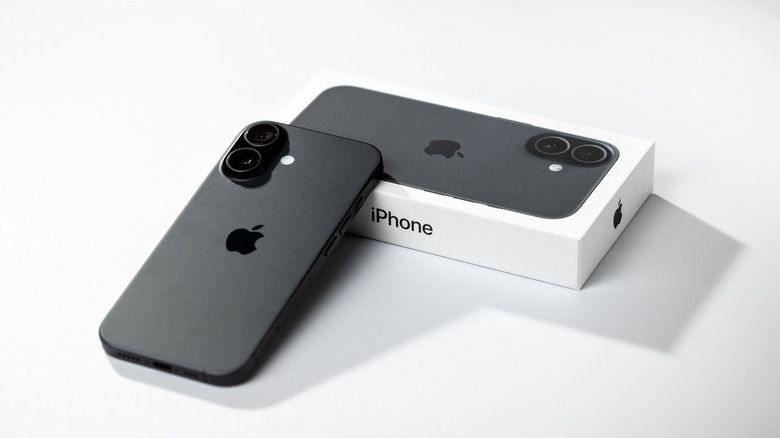
With the newly announced Apple Upgrade Program, you can get access to all the latest Apple products without the hefty initial price tag by leasing instead of buying. It’s part of a new partnership with Klarna, replacing the previous iPhone Upgrade Program. The new program is interest-free leasing only, and expands to cover iPads, Apple Watches and Macs instead of just iPhones.
According to Apple, the decision to discontinue the iPhone Upgrade Program in favor of the new system was done as a way to offer “more flexibility, better value, and a more seamless experience.” Coming off the heels of a sharp price increase in Apple products, the Apple Upgrade Program does seem like a much easier way to experience the company’s tech without breaking the bank. This is how you can take advantage of the new program.
Advertisement
How to lease an iPhone (or other product) with the Apple Upgrade Program
The directions for leasing an iPhone depend on if you’re already enrolled in the iPhone Upgrade Program or not. Those within the old program can continue making payments as usual until their previous contract is up, then can choose to either keep their existing device or switch to the Apple Upgrade Program to get a new one.
For new users wishing to lease a device with the Apple Upgrade Program, simply proceed to the Apple Store (online or in person) as usual, select the device you wish to lease, and choose Apple Upgrade as your payment option. From there, you’ll fill out a Klarna application for the lease, which needs you to supply basic information like your name, date of birth and Social Security number. Klarna will run a soft credit check, which means it won’t impact your credit score. Once approved, you’ll receive your device and can manage the lease within the Klarna app.
Not everything on the Apple Store can be leased with the program, but many things can. It’s worth noting that to lease an iPhone, it’ll need to be activated with AT&T, T-Mobile or Verizon. The products you can lease with Apple Upgrade Program are:
Advertisement
When you enroll, you can also trade in an old device to potentially lower the payments on your initial lease agreement. You can lease multiple devices with the program, but you’ll need to apply for each lease separately. The product you choose will determine the potential length of your contract: iPhones and Apple Watches have 12 to 24 month lease terms, while iPads and Macs are 24 to 36. When your lease period ends, you’ll receive a notification from Apple, and will have three options: return your current device and upgrade to a new one, leave the program and return your device or buy the device outright with a one-time payment.
How is the Apple Upgrade Program different from the iPhone Upgrade Program?
Yarrrrrbright/Shutterstock
The biggest difference between the Apple Upgrade Program and the iPhone Upgrade Program (besides the eponymous change in products included) is that in the previous system, payments were applied directly to the phone. This meant that at the end of the contract, users would own their phone outright with no additional fee.
The iPhone Upgrade Program also included AppleCare protection, while the new one does not. Apple does recommend a separate subscription to the service, as leased devices that are returned damaged will incur a fee. Devices that have AppleCare that are sent back damaged may still get a service fee, though, and the company doesn’t specify the difference in price.
Advertisement
Though users don’t get easy ownership with the new program, the monthly prices are lower than before. The lowest monthly rates in the iPhone Upgrade Program generally hovered around $30, and now begin at just $17.99 for an iPhone. Watches and iPads are even cheaper, starting at $11.99. With the official reveal of new Apple products likely on the horizon this September, the Apple Upgrade Program could be a good deal for those looking to upgrade. Users should just be sure to consider whether leasing rather than owning is their preferred method, and if the often-incremental updates between Apple generations necessitate always staying up to date.
Welcome back to TechCrunch Mobility — your central hub for news and insights on the future of transportation. To get this in your inbox, sign up here for free — just click TechCrunch Mobility!
Something was in the air this week because we had a heck of a lot of electric aircraft news. Ba-dum-tss.
But really, it’s no joke — two of the bigger deals of the week involved companies developing electric vertical takeoff and landing aircraft (eVTOL). Together they illustrate how the burgeoning sector continues to consolidate and seek out near-term revenue streams even as they go through the lengthy regulatory process to eventually deploy electric air taxis.
In one of the crazier twists in the nascent eVTOL industry, Archer Aviation announced that it now owns its former rival Wisk Aero. Under the terms of the deal, Boeingagreed to sell Wisk Aero and two other subsidiaries to Archer in exchange for an ownership stake in the company. Boeing now holds a 16.5% stake in Archer. The other subsidiaries are SkyGrid, a digital airspace and air traffic management software company, and drone maker Insitu.
Advertisement
For those unfamiliar, Wisk sued Archer in 2021 over allegations of the “brazen theft” of confidential information and intellectual property. The case went on for two years before the companies reached an unusual settlement that not only ended the lawsuit and Archer’s countersuit against Wisk seeking $1 billion in damages, but also led to a new collaboration.
Wisk has taken a rather winding path. It started as Kitty Hawk, an electric aviation startup led by Sebastian Thrun, who co-founded the Alphabet moonshot factory X, and backed by Google co-founder Larry Page. Kitty Hawk shut down in September 2022, but its Cora program, which had spun off into a joint venture with Boeing, lived on. That joint venture was renamed Wisk Aero.
Then there’s Joby Aviation, which made a more predictable deal this week. The company acquired Resonant Sciencesfor $500 million, marking the electric air taxi developer’s push into the defense sector.
Resonant Sciences, which makes radio frequency and sensor systems, will become a dedicated defense business under Joby aptly called Joby Defense.
Advertisement
Joby has been slowly expanding into the defense sector over the past couple years even as it has pursued its original mission to certify and manufacture electric vertical takeoff and landing aircraft for use as urban air taxis. Joby says it is sticking with its mission, but also sees opportunity — not to mention revenue — in the defense sector.
A little bird
Image Credits:Bryce Durbin
For the past two years, Uber has been laser-focused on locking up partnerships with, and even investing in, autonomous vehicle technology companies. But this week Uber did the opposite. The ride-hail company sold off its entire stake in Serve Robotics, the autonomous delivery robot company that spun out of Uber more than five years ago.
Here’s the interesting part. According to some little birds, Serve Robotics was surprised by the sell-off and only learned about it when Uber’s regulatory filing was posted. Uber and Serve are still business partners, and that contract, which puts Serve’s delivery robots on the Uber Eats app, is set to expire in 2027.
Uber is investing in Galgo, a Chilean fintech company that specializes in extending credit to buy motorcycles, Bloomberg reported.
Electric mobility startup Yuluraised $93 million in a Series C round comprising $63 million in equity led by GEF Capital Partners and $30 million in debt financing.
Advertisement
Notable reads and other tidbits
Image Credits:Bryce Durbin
Aurora Innovation and Kodiak AI have received permits from the California Department of Motor Vehicles to begin testing their self-driving trucks on public roads in the state. And Kodiak AI has already started.
Avride said it has surpassed 100,000 autonomous rides on the Uber app in Dallas. There are some caveats here, of course, namely that there is still a human safety operator behind the wheel. Avride wouldn’t supply me with a weekly ridership breakdown, but it has been about two months since the company announced it had reached the 60,000-ride milestone.
DeltaAir Lines is investigating a cybersecurity incident in which an unidentified passenger allegedly created a fake Wi-Fi network on a flight, prompting pilots to alert air traffic control.
Flock announced a series of new policies and tools, claiming they will help curb abuse of its automated license plate camera reader systems and help keep its law enforcement customers accountable.
Ford said it’s on track to complete its $2 billion overhaul of its Louisville Assembly Plant in Kentucky, which will use a new assembly system to build its next-generation of EVs, starting with the midsize Fathom truck.
Advertisement
Ground Truth, an art project created to raise awareness about housing affordability in New York, created a gadget that will trigger the brakes on Citi rental bikes, making it harder to pedal through rent-burdened neighborhoods, Wired reported.
Hiroshi Okuda, a longtime Toyota executive who served as president and eventually chairman, died this week, according to the company. Okuda took some big swings during his time at Toyota, notably pushing for the gas-electric hybrid Prius vehicle. Bloomberg has a lengthy writeup on Okuda.
Pony.ai and Uber plan to bring 2,000 robotaxis to four cities in Europe as part of an expanded partnership.
Department of Transportation Secretary Sean Duffytook to X this week to promote the DOT’s effort to recruit video gamers as air traffic controllers. According to Duffy, 2,000 candidates have been hired through this program, although he didn’t say if they were all gamers.
Advertisement
Uber Freight is investigating a cyberattack and data breach that hacking and extortion gang Helix recently took credit for.
Waymo is expanding in California again after the state’s Public Utilities Commission approved terms of its commercial ride-hailing permit. The company’s robotaxis can now commercially operate (i.e., charge for rides) in a broader territory across the San Francisco Bay Area and Los Angeles. The service can also expand to Sacramento and San Diego — although the Waymo folks say this hasn’t happened yet.
Zoox released its safety case framework, a critical document for any company that wants to build trust with the public and show how and why it thinks its technology is safe enough. This framework is particularly important because today there is no federally mandated test, or AV “driver’s license” so to speak.
One more thing …
TechCrunch Disrupt 2026 is just a couple of months away and I wanted to flag one guest who might be interesting to you.
Advertisement
Rivian CEO RJ Scaringe will join me onstage at Disrupt, our annual tech conference that brings together thousands of founders, investors, CEOs, policymakers, engineers, and media. Have a question for Scaringe? Shoot me an email and I’ll take a look.
Disrupt will be held October 13 to October 15 at the Moscone Center in San Francisco.
Check out the programming that’s been announced so far here, and if you don’t already have a ticket, lock in yours before our next price increase on August 22.
When you purchase through links in our articles, we may earn a small commission. This doesn’t affect our editorial independence.
While they do represent a marvel of modern engineering, jet engines ultimately rely on one relatively simple requirement: air. In order to turn fuel to fire, and fire to thrust, a fighter’s engines must ingest, compress, and combust enormous quantities of air. At full power, this could equate to up to 500 pounds of oxygen being ingested per second.
The importance of airflow can be seen across the design principles of every modern fifth-generation fighter. The F-22 Raptor, Su-57 Felon, and J-20 Mighty Dragon all feature large, lateral, twin intakes capable of scooping and driving huge amounts of air directly into the engine. Simultaneously, these intakes are designed to ensure the airflow remains clean. “Clean” air, in the context of air combat, generally refers to smooth, undisturbed, high-velocity airflow entering the compressor. To achieve this, modern jets employ highly sophisticated inlet designs intended to provide a continuous, smooth, and highly compressed airflow.
But beyond that complex realm of air-breathing jet propulsion and the Brayton Cycle, “clean” air also demands consideration in its most literal sense. Dust, stones, fragments of concrete, pieces of metal, and other debris all represent potential foreign object debris, or FOD. This simple detritus exists on all airfields, but if sucked into an engine, can strike compressor blades at extraordinary speeds, causing critical damage or catalyzing cascading failures.
Advertisement
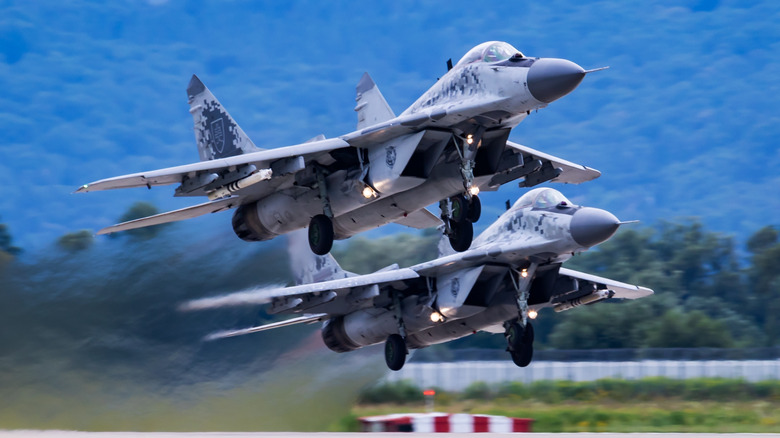
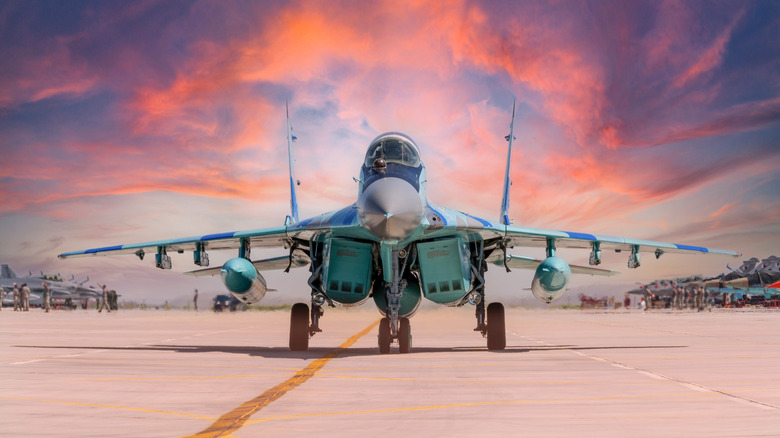
Today’s fighters solve airflow problems brilliantly. But the Mikoyan MiG-29 Fulcrum was also designed to solve the FOD problem. How do you keep a core-airflow turbojet breathing when the runway itself may be trying to feed it gravel? The answer is one of the Fulcrum’s strangest and most ingenious features: intake-covering anti-FOD doors, combined with top-mounted auxiliary air intakes.
Advertisement
The MiG-29: a fighter built for a broken runway
Ali _Cobanoglu/Shutterstock
The MiG-29 was conceived during the Cold War, being designed to fight on a very different battlefield than the ones modern fighters have evolved on throughout the counterinsurgency era of the past few decades. Soviet planners had every reason to believe that airfields would be among the first targets of a major European war. Runways would be cratered, parking aprons and taxiways would be struck, and instead of carefully swept surfaces, aircraft would be scrambled on runways littered with shattered concrete and metal scrap.
For a fighter expected to operate close to the front, that created a serious vulnerability. FOD is not merely an inconvenience, as a piece of debris entering a jet engine can strike guide vanes or compressor blades, deforming or breaking them. Even apparently minor damage can create an aerodynamic imbalance, reduce efficiency and, in severe cases, catalyze compressor stalls or cascading mechanical failure down the core of the engine.
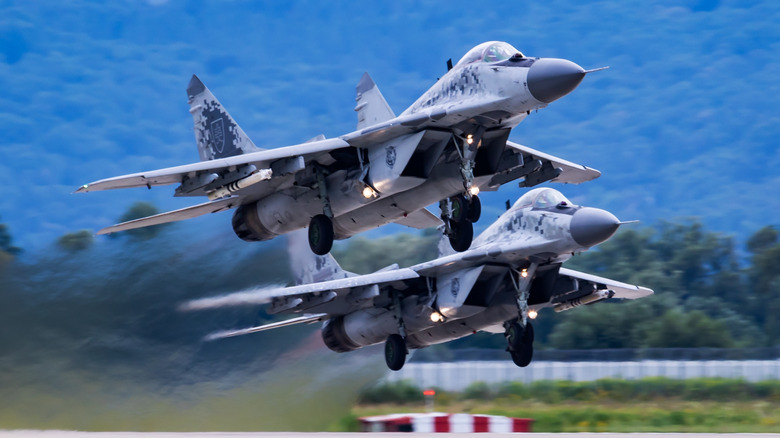
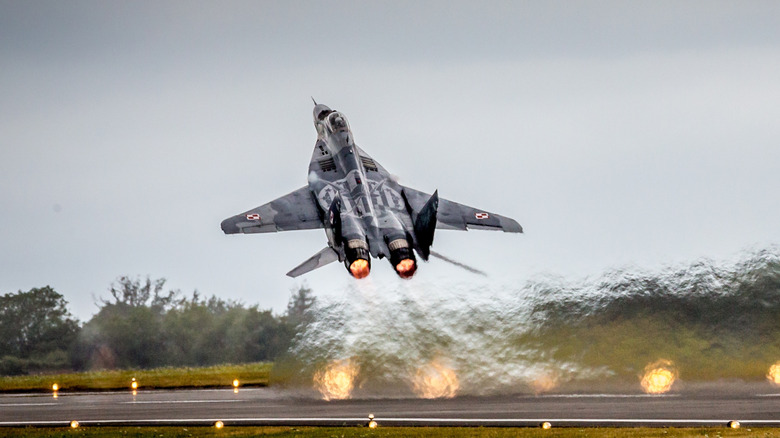
The MiG-29’s answer was remarkably simple. During takeoff and landing, while the weight-on-wheels sensor was engaged, FOD “doors” would automatically seal off the aircraft’s main ventral engine intakes. Instead, the engines would draw air through auxiliary intakes on the upper surfaces of the wing-root extensions. This kept the primary air source for takeoff and landing away from the debris being kicked up beneath the aircraft.
Once airborne, the main intakes would open and take over. As an added bonus, under some disturbed airflow conditions, such as during a high-angle-of-attack maneuver, the auxiliary intake louvers would flutter as pressure worked against the springs holding them closed, opening a second route for air into the engine as the main intakes struggled against airflow separation or a poor inlet flow angle.
Advertisement
The forgotten danger of symmetric contest
Jasper Dalgliesh/Shutterstock
Within the world of technical intelligence, a shift in the threat environment is becoming apparent. Today’s fighter aircraft represent evolution through a strategic era in which air supremacy was often assumed, and asymmetric adversaries did not possess the capability to target rear airbases. Decades of expeditionary counterinsurgency warfare reinforced the belief that fighters would only operate from heavily defended and well-maintained facilities, far beyond the reach of an enemy. Cratered runways littered with combat debris weren’t considered a concern, so mechanical solutions dedicated specifically to FOD protection could therefore be traded away to save weight and allow for more aerodynamically efficient designs.
However, that assumption is beginning to look increasingly fragile in an impending era of symmetric conflict between peer adversaries. Airfields are once again valuable, and reachable, targets. Drones, missiles, and other long-range weapons can turn a previously secure runway into a debris field in minutes. Shrapnel, wreckage, or fragments of concrete, all FOD, are becoming an increasingly likely issue for near-future air operations, and one that no fifth-generation fighter has a genuine solution for.
Even a minor dent, crack, or defect in a compressor blade, guide vane, or other internal component can create stresses and compound issues that propagate downstream. In high-performance air combat, where aircraft components operate close to their limits, that small defect can have immense consequences. In many aspects, a wayward bolt or chunk of tarmac can be almost as dangerous as an adversary missile.
Advertisement
Although the MiG-29’s auxiliary FOD doors may look like an artifact of the Cold War, they were designed around a problem that may be making a comeback. So while the Raptor may be the deadliest thing in the sky, that means nothing if a gauntlet of FOD seals its fate before takeoff.
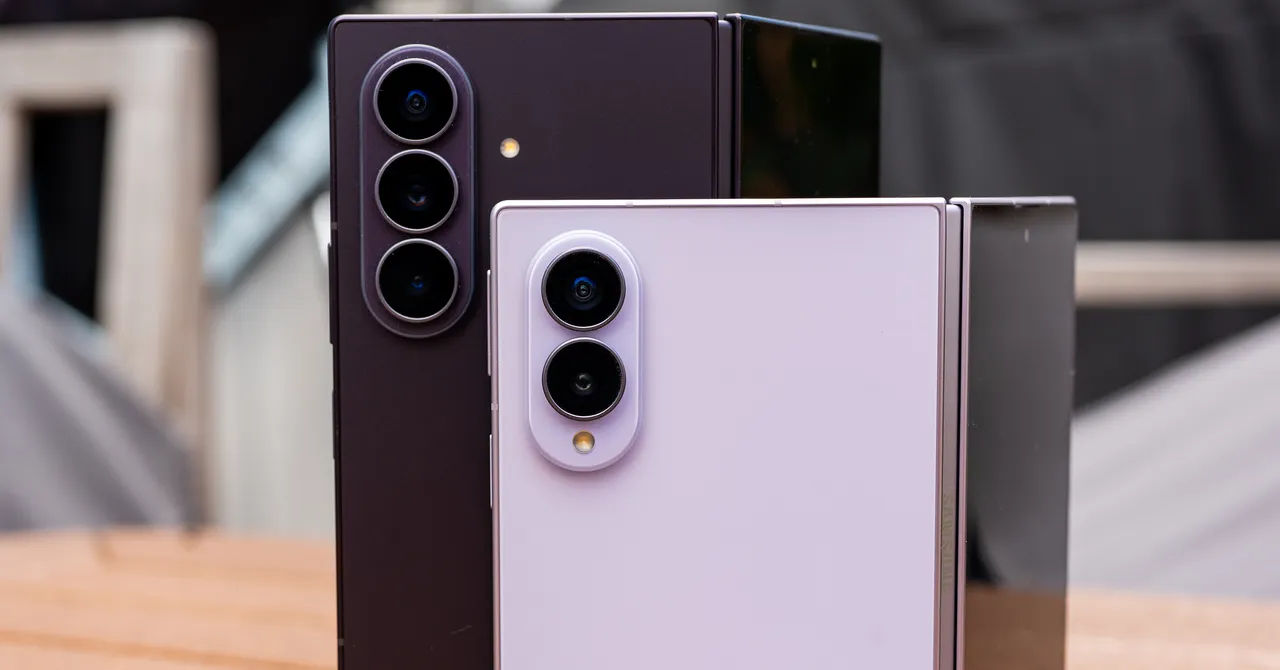
On both phones, the crease—the point in the display where it folds—looks significantly less obvious and feels better than on prior models, with less of a bump as your fingers swipe across the screen. That’s great, but my biggest design complaint with these Folds is the camera jutting out on the back. It means that whenever you set the phone on any surface, it rocks so much that it’s annoying. A case doesn’t really fix this either. Google’s figured this out with a horizontal camera bar for its Pixels (and so has Apple, apparently).
The Fold8 is immensely nicer to use in every way. I even prefer the way it handles split-screen mode more than the Ultra because things don’t feel super squished on the wide screen. There’s just more breathing room. And it’s nice to have the option to put three apps side by side.
Ultra Power
There’s a $200 difference between these two very expensive folding phones, a difference that doesn’t sting as much when you’re dropping two grand. But if you opt for the cheaper Fold8, you will be making some sacrifices from a pure spec-to-spec comparison. Thankfully, there is no sacrifice in performance; the Qualcomm Snapdragon 8 Elite Gen 5 chip is the same on both and delivers a buttery-smooth experience in every app and game.
Battery life is stronger on the Ultra, which makes sense considering its larger 5,000-mAh cell, compared to the Fold8’s 4,800-mAh capacity (marking Samsung’s first devices with silicon-carbon battery technology). But I’ve still been satisfied with both. I’ve been able to hit more than six hours of screen-on time with the Fold8 Ultra, and five to six on the Fold8, though I’m using the larger display far less on the Ultra, so it’s a bit of an unfair comparison. If you prefer the Ultra’s shape and use that inner display more, it’ll suck up more juice than mine did in my testing.
Advertisement
It’s really the camera system where you’re losing out. The Fold8 has a 50-megapixel primary sensor and a 50-megapixel ultrawide, with two 10-megapixel selfie cameras on the outer and inner screens, respectively. The Fold8 Ultra’s 200-megapixel main sensor is stronger overall in a variety of lighting conditions, but it’s the fact that you have access to the 10-megapixel 3X optical zoom that gives it a leg up. I wish Samsung offered a greater zoom option like the 5X optical on the Pixel 11 Pro Fold, and as a big zoom photographer, the lack of this on the Fold8—especially given its high price—is frustrating. Hopefully Samsung can remedy that in the Fold9.










































You must be logged in to post a comment Login