Motorola is gearing up to launch the successor to last year’s Razr 60 Ultra. Early CAD renders recently offered a first look at the device, suggesting that the upcoming Razr 70 Ultra won’t change much in terms of design. However, a new leak now hints that Motorola could focus on unique colors and finishes to help it stand out.
What are the new color options?
Reliable tipster OnLeaks has shared press renders (via Android Headlines) of the Razr 70 Ultra in two standout finishes: Orient Blue Alcantara and Pantone Cocoa Wood. The Orient Blue variant is expected to feature a faux leather back with a diamond stitch pattern, giving it a premium look and feel. The Cocoa option, on the other hand, could feature a wood-like texture with visible grain.
OnLeaks/Android Headlines
Instead of just offering the device in different shades like most smartphone makers, Motorola appears to be giving each color a distinct finish, adding a tactile element that goes beyond standard glossy or matte coatings. With the overall design expected to remain unchanged, the finishes should help the company differentiate the new model from its predecessor.
OnLeaks/Android Headlines
Motorola has already taken this approach with previous Razr models, offering vegan leather backs and Pantone-inspired colors. The Razr 70 Ultra seems to be taking that a step further by pairing bold colors with more noticeable textures. It’s a subtle shift, but one that could make the device feel more unique.
What else do we know about the Razr 70 Ultra?
Although Motorola hasn’t officially shared any details yet, the device is expected to pack Qualcomm’s Snapdragon 8 Elite Gen 5 chipset, paired with 16GB of RAM and 512GB of storage. The images also suggest that Motorola may stick with a dual-camera setup, though it’s unclear if there will be any sensor upgrades.
More details should surface in the coming weeks ahead of the official launch, which could take place later this month. Motorola unveiled the Razr 60 Ultra in April last year, so it’s likely the successor will arrive around the same time.
As the world held its breath on Tuesday night, news of a ceasefire and the potential reopening of the Strait of Hormuz brought a collective sigh of relief. But with shipments stalled in the strait for over a month, the disruption to global shipping will not resolve immediately.
“Traffic through Hormuz dropped by about 95 percent [during this conflict]. As a result, prices surged, and not just for crude oil but also for refined products like jet fuel, diesel, and gas oil,” says Carsten Ladekjær, CEO at Glander International Bunkering, which specializes in supplying fuel and lubricants to the global shipping industry.
The impact has been uneven across regions. Countries heavily dependent on Middle Eastern energy—particularly in Asia—have been most affected. India sources around 55 percent of its energy imports from the region, China about 50 percent, Japan 93 percent, South Korea 67 percent, and Singapore 70 percent, according to Ladekjær.
While the ceasefire signals a possible reopening, key details remain unclear. “Even with a ceasefire, reopening won’t be immediate,” Ladekjær says. “There’s a backlog, with ships waiting to leave, and likely a controlled process for who gets out first. Iran still appears to be managing that.”
Advertisement
Energy markets reacted quickly. Brent crude fell to around $94 from $110 earlier in the week—a drop of roughly 15 percent.
“Refined products like diesel and jet fuel have dropped even more, because markets are forward-looking—they price in expectations,” says Arne Lohmann Rasmussen, chief analyst and head of research at Global Risk Management. “But we’re still well above prewar levels, which were around $60 to $70.”
A System Under Backlog
Around 1,000 ships remain in the Gulf, including hundreds of tankers awaiting passage.
As of this writing, more than 800 cargo ships and tankers are stuck inside the Persian Gulf, with over 1,000 additional vessels waiting on both sides of the Strait of Hormuz.
Advertisement
Under normal conditions, roughly 150 vessels pass through the strait daily. Experts say clearing the backlog will take time, as ships must be sequenced through, refueled, and repositioned.
Ships began passing through the Strait of Hormuz after the ceasefire announcement.
Elif Acar/Getty Images
“That’s a logistical nightmare. We don’t yet know what the current capacity will be, especially from a security standpoint,” says Lohmann Rasmussen. “It’s not something that can be solved overnight. There are logistical issues, security issues, and even communication challenges.”
Though the market has already seen a correction, that doesn’t mean prices at the pump or in storage will drop immediately.
Google is issuing you its periodic reminder that you aren’t tethered to Microsoft’s operating system if you own a PC. In fact, the search giant is making it easier than ever to switch over to ChromeOS Flex.
As part of a new partnership with Back Market, a refurbished electronics company, Google is now offering ChromeOS Flex USB Kits to make installing its signature OS a breeze on PCs and Macs alike.
Whether you’ve been purposefully avoiding a Windows 11 update or you’re one of the more than 500 million computer owners with a PC that is too old for an operating system upgrade, your Windows 10 PC hasn’t received an update since last October when Microsoft ended its support for it. (Microsoft’s Extended Security Updates program will keep pushing critical updates your way until this coming October for $30, a fee I doubt many people clinging to an old PC are willing to pay.)
Advertisement
When your operating system stops getting updates, you’re facing down the barrel of a security nightmare — no more exploits will get fixed, leaving your system (and potentially sensitive data) vulnerable to bad actors. Google’s ChromeOS Flex continually supports older devices than Windows 11, which could make it a good alternative until you upgrade to another PC.
Google’s ChromeOS isn’t available to install on a laptop or desktop like Windows or Linux, but the next best thing is Google’s ChromeOS Flex. Formerly known as Neverware CloudReady, the OS is primarily built for businesses and education. But ChromeOS Flex is free for personal use, and it’s so lightweight that it’s great for breathing new life into a computer that’s struggling from the demands of Windows, MacOS or Linux.
Google acquired Neverware in December 2020, and the result was ChromeOS Flex. While CloudReady was good, Flex is much closer to the experience you’d get with a Chromebook or other ChromeOS device. That includes the official Chrome browser, support for Family Link (or school-issued) accounts, and Phone Hub, which lets you connect to an Android phone to view notifications and share files between the phone and laptop. The one thing you don’t get is access to the Google Play Store and Android apps.
Advertisement
ChromeOS Flex runs well even on old hardware. That’s why it’s such a good option for repurposing a laptop that can no longer run current versions of Windows, MacOS or Linux. Google guarantees Flex to work, however, only on a growing list of certified models. If your model isn’t certified, that doesn’t mean it won’t work, though. It just means that full functionality and performance aren’t a given.
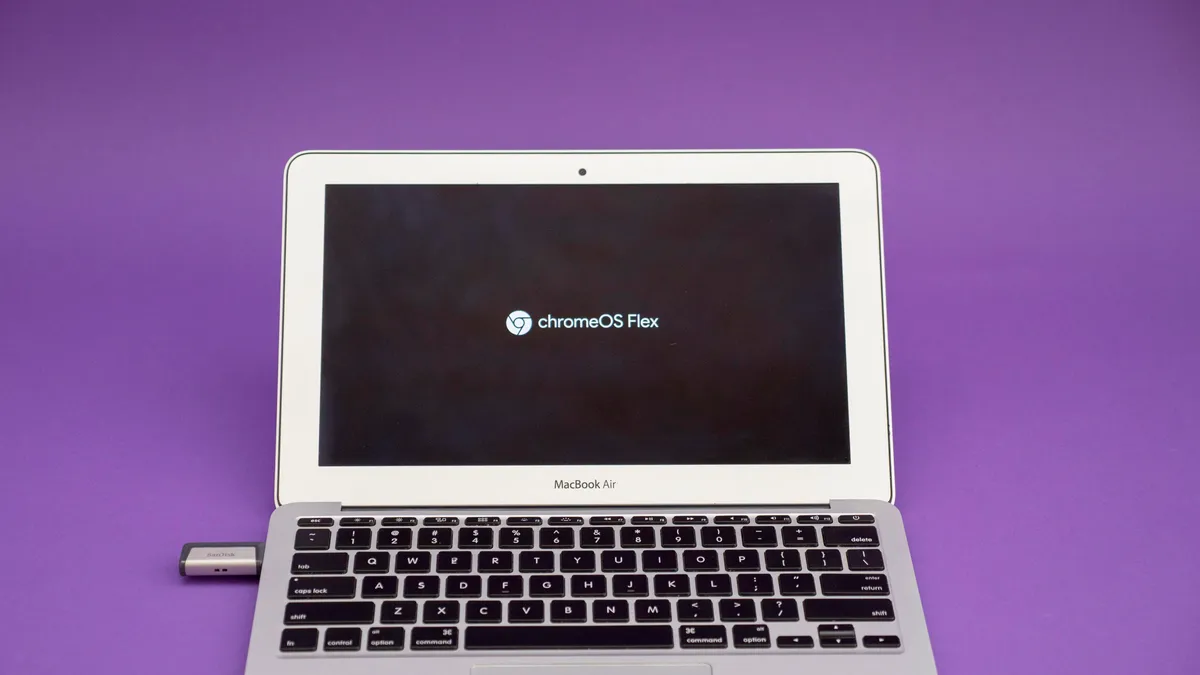
You can wipe a laptop’s drive and install ChromeOS Flex or run the OS off a thumb drive to test it out first.
Josh Goldman/CNET
You choose: Trial run or full install
One of the best features of ChromeOS Flex is that you can run it off a USB flash drive or SD card to test it out first without completely overwriting your current OS. For best performance, it’s not recommended to run Flex full-time from a flash drive, but it will let you see if it works for your needs.
Advertisement
Installing ChromeOS Flex is quick and painless. The first step is to gather everything you need:
A USB thumb drive or SD card 8GB or larger
A Windows, Mac or Linux computer to install ChromeOS Flex on
Note that installing ChromeOS Flex will completely erase your entire hard drive. Any important files should be backed up first. You’ll also need a ChromeOS, Windows PC or Mac device with the current version of the Chrome browser installed. This will be used to create the ChromeOS Flex USB installer, and it doesn’t need to be the same device you plan to install it on. The thumb drive will also be completely erased when creating the installer.
To run ChromeOS Flex, the target laptop (or desktop) will need to be Intel or AMD x86-64-bit compatible (newer than 2010 for the best experience), have 4GB RAM or more, have at least 16GB of storage and you’ll need full administrator access to the BIOS. Once you have everything you need, it’s time to create the USB installer.
Go to the Chrome browser’s extensions menu located at the top right of the Chrome browser window (it looks like a tiny puzzle piece). Click on it, and a drop-down list of extensions will appear. Find the Chromebook Recovery Utility on the list and click on it to launch. The utility might need to be toggled on, too, which can be done by clicking on Manage Extensions at the bottom of the drop-down list of extensions.
In the Recovery Utility, instead of selecting a model to recover, you’ll select ChromeOS Flex.
Josh Goldman/CNET
When the Chromebook Recovery Utility launches, you’ll be asked to identify what model Chromebook you’ll be recovering. However, there will be a link labeled Select a model from a list in the dialog box. Click that link, and from the Select a manufacturer drop-down list that appears, select Google Chrome OS Flex. Below that drop-down is another labeled Select a product from which you’ll choose Chrome OS Flex.
Next, insert your flash drive or SD card into the device you’re using to create the installer, select it as your target drive and then click Create now. The creation process takes up to 20 minutes but mine was done in half that time. Once the installer is finished, the drive can be ejected and is ready to use.
When the installer is done, your USB drive or SD card are ready to use to run or install ChromeOS Flex.
Advertisement
Josh Goldman/CNET
You’re almost done. It’s time to grab the laptop you want to convert to a Chromebook. Make sure the laptop is turned off and insert your ChromeOS Flex installer thumb drive or SD card.
The next step is to boot the laptop from the thumb drive instead of the internal storage drive. This requires you to press a boot key while the laptop is booting. Boot keys vary by manufacturer. For instance, on a MacBook Air, the boot key is the Option key. Google has a list of boot keys for major manufacturers if you’re not sure what yours is.
Turn on the laptop and, as it boots, press the boot key to interrupt the boot process. You may need to press and hold the key, or press it repeatedly, to enter the boot menu. If done correctly, the laptop should give you the option to select which drive you’d like to boot from: the laptop’s internal drive or your USB drive. Select the USB drive and press Enter.
Advertisement
Once you enter the boot menu options, select the USB installer drive you created to get started.
Josh Goldman/CNET
If you’ve done everything correctly, you’ll see the ChromeOS Flex splash screen followed by a Welcome to ChromeOS Flex screen. (If not, retrace your steps using Google’s installation guide.) From there, you can choose to test the OS and run it directly from the flash drive or install ChromeOS Flex on the internal storage. Doing the latter gives you the best performance; however, it also erases all content from the internal drive, and the native OS can’t be recovered. If you aren’t 100% certain you want to use ChromeOS Flex, try running it from the USB drive first.
The full OS installation can take up to 20 minutes (my MacBook Air took less than 5 minutes, though). Regardless of how you run it, the setup process is the same. Select a Wi-Fi network, agree to Google’s terms of service, choose whether the Chromebook is for yourself or a child, and then sign in with your Google account information.
Advertisement
Sign in to ChromeOS Flex with a Google account and password and you’re ready to get to work.
Josh Goldman/CNET
Ta-da, Chromebook! At least, close enough for most needs. Performance will depend on what your laptop has. My install was on an early 2015 MacBook Air, and it’s much faster than it was with MacOS on it. The only downside for my particular model is that the built-in webcam is not supported, but an external USB webcam worked just fine.
If you’ve got a USB flash drive and an old laptop, it’s certainly worth the minimal effort to test out and, again, it’s free.
from the more-of-that-famous-prosecutorial-discretion dept
Never underestimate the stupidity of law enforcement. When things could just be left alone and everything would turn out OK, officers insist on inserting themselves into the equation, ensuring maximum pain and humiliation for everyone involved.
In this case, a Fairhope, Alabama officer decided he couldn’t simply do nothing when coming across a grandmother at a “No Kings” protest. Here’s how this started, as detailed by Liliana Segura for The Intercept:
In the body camera footage, a police officer parks his black SUV on the grass, a rosary swinging from the rearview mirror. He exits his car, moves briskly past a pair of protesters, and points an accusatory finger at the suspect: a 7-foot-tall inflatable penis holding an American flag.
The alleged crime? Unclear. There’s no sound at first, only the silent spectacle of a person in a penis suit turning toward a cop with a stance that says, “Who, me?” A handmade sign comes into view in the person’s right hand. It reads “No Dick Tator.”
It’s really an amazing recording. It includes several high points, including cops trying to stuff a person who’s inside an inflatable penis into the back of a cop car before deciding it might be easier to separate the person and the costume… before struggling to fit the costume itself into the trunk of a cop car. It also includes superbly stupid things like this:
Fairhope Police Cpl. Andrew Babb was less amused.
“I’m serious as a heart attack,” he tells Gamble when the audio begins to play on the 14-minute body camera video. “I’m not gonna sit here and argue with you.”
He demands to know how she could possibly justify such an obscene display: “I would like to hear how you would explain to my children what you’re supposed to be.”
Advertisement
Every easily-offended, would-be censor has the same go-to for complaining about stuff they don’t like: “how would I explain that to my children?” I don’t know, man. They’re your kids. Take any approach you want, including ignoring the question. It’s not on the rest of the world to make sure you never have to have an uncomfortable conversation with your kids. If you can’t figure it out, maybe you shouldn’t be in the business of raising kids, much less in the business of enforcing laws.
There are also plenty of far less funny moments, like the fact that three cops decided to get involved in pinning 62-year-old Renea Gamble to the ground for the crime of… well, that was all pretty much undecided at the point the officers decided to enforce their will with their power.
Corporal Andrew Babb obviously didn’t know the law, but that wasn’t going to stop him.
“I said, ‘That’s not freedom of speech,’” Babb continues. “‘This is a family town and being dressed like that is not going to be tolerated.’”
A. It actually is freedom of speech.
Advertisement
B. Every town is a “family town,” unless you happen to live in a dystopian sci-fi novel.
Everything about the arrest is a non-starter. And yet, local prosecutors — propelled forward by supportive local government officials — are still trying to pin criminal charges on Renea Gamble. Mayor Sherry Sullivan claimed the costume was an “obscene display” which would “not be tolerated in Fairhope.” City Council president Jack Burrell claimed the costume “violated community standards” Neither assertion is true, which means neither statement can support an arrest, much less the bringing of criminal charges.
Some of the initial enthusiasm for punishing Gamble was stifled when her arrest went viral, resulting in a nationwide discussion of this ridiculous situation. But apparently the town thinks it’s now safe to proceed with saddling Gamble with a criminal record.
Rather than dropping the case, the city attorney slapped Gamble with additional charges earlier this year: disturbing the peace and giving a false name to law enforcement. Her trial, first set to take place months ago, has been delayed multiple times. It is now set for April 15.
The “peace” wasn’t disturbed until Officer Babb decided he was going to take Gamble’s costume personally. And “giving a false name to law enforcement” is really stretching things when all Gamble did was sarcastically respond “Auntie Fa” when officers demanded her name after stripping her of her inflatable penis.
Advertisement
So, the case continues, which is only going to bring more embarrassment to town leaders and law enforcement officials. The backlash that greeted the arrest will return, which means the arresting officer may want to consider employment elsewhere. Hopefully, this will all end with the town cutting a check to Gamble for violating her rights.
Until then, Gamble is going to keep on doing what she does:
Gamble has tried to keep a low profile since her arrest. At the No Kings protest last week, though, the “No Dick Tator” sign appeared in the hands of a masked woman who wore dark sunglasses and a bandana over her face.
It was Gamble, again wearing an inflatable costume.
She was dressed as an eggplant.
Advertisement
People who view dissent as a threat, if not inherently unlawful, cannot ever hope to win. Acts like this only embolden those already involved in dissent and attract others to join the cause. They may have the power, but the people have the inflatable genitals and the will to use them.
The death of a duck in the Austin, Texas enclave of Mueller Lake has neighbors raising concerns about autonomous vehicles and whether they belong there.
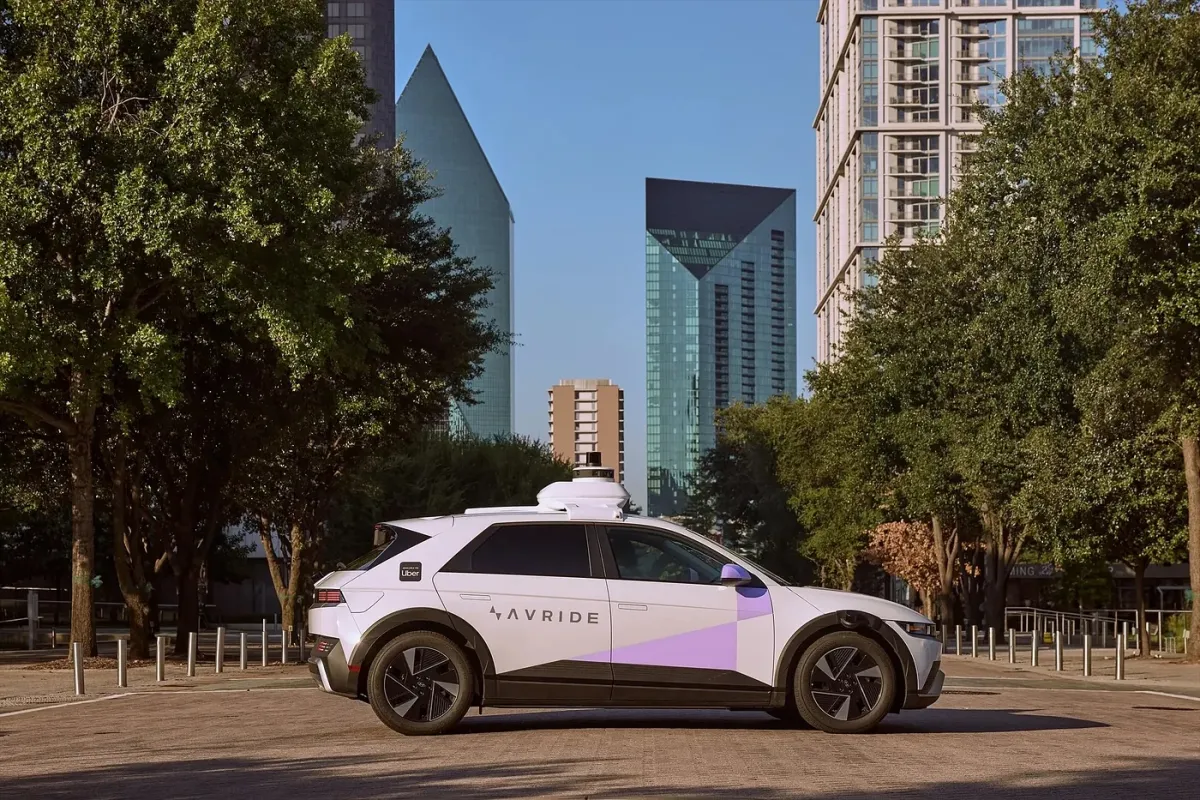
While humans are responsible for killing animals with their cars all the time, this incident has brought negative attention to the new technology. Local media picked up on the duck incident after a resident posted in a Mueller neighborhood Facebook group that an Avride autonomous vehicle (with a human safety operator behind the wheel) ran over and killed a duck, and did not stop afterwards. “It didn’t slow down or hesitate at all, just steamrolled through,” the post, which KXAN reported on, reads.
Residents’ familiarity with this particular duck, which was nesting in a pot located outside of a local Italian eatery, has added to the outrage and mistrust of the autonomous vehicle technology. For those concerned about the future of the duck’s eggs, local residents have them in an incubator, Axios’ Austin reports.
An Avride spokesperson confirmed with TechCrunch that the vehicle was in autonomous mode at the time. Avride hasn’t paused testing on public roads altogether. However, the company has adjusted its area of operations by excluding certain streets around the lake in Mueller neighborhood where the incident with the duck occurred, according to spokesperson Yulia Shveyko.
Advertisement
The resident also claimed in their post that the vehicle failed to stop at a stop sign. Avride told TechCrunch it did not find evidence to support that claim. The vehicle came to complete and appropriate stops at all relevant stop signs.
Shveyko said the team has reviewed vehicle data and behavior, including replaying the scene multiple times in simulation. Avride is now evaluating potential improvements to the technology to help avoid similar situations in the future, she said. Notably, this includes running a series of controlled experiments in simulation to ensure that any changes do not negatively impact the vehicle’s safety performance in other scenarios.
Avride isn’t the only company testing or commercial deploying autonomous vehicles in the city. Zoox has been testing in the city. Tesla and Waymo, in partnership with Uber, also operate a commercial robotaxi service in parts of Austin.
Verne, the autonomous mobility company spun out of Croatian hypercar maker Rimac, launched commercial robotaxi rides in Zagreb on 8 April alongside Pony.ai and Uber. The vehicles operate with safety operators onboard for now. Waymo is targeting London for Q4 2026.
Verne, the autonomous mobility company spun out of Croatian electric hypercar maker Rimac Group, has launched what it is calling Europe’s first commercial robotaxi service in Zagreb, Croatia. From 8 April, members of the public can book and pay for autonomous rides through the Verne app.
The service will shortly also be available through the Uber platform, following a three-way partnership announced on 26 March between Verne, Pony.ai, and Uber.
The vehicles in service are Arcfox Alpha T5 robotaxis equipped with Pony.ai’s seventh-generation autonomous driving system. They operate autonomously, but trained safety operators are onboard during this early phase of the rollout.
Advertisement
The three companies have said they aim to transition to fully driverless operations as soon as regulatory approvals and safety performance benchmarks allow.
The 💜 of EU tech
The latest rumblings from the EU tech scene, a story from our wise ol’ founder Boris, and some questionable AI art. It’s free, every week, in your inbox. Sign up now!
Under the partnership structure, Pony.ai provides the autonomous driving technology; Verne owns the fleet and manages operations on the ground, including regulatory approvals; and Uber integrates the service into its ride-hailing platform.
The result is surprising in geographic terms. Zagreb is a city of under a million people, and Europe’s most prominent autonomous mobility efforts have been concentrated in larger western markets, Waymo has announced plans for a fully driverless service in London in the fourth quarter of 2026, and Germany has hosted multiple competing programmes for years.
Verne’s Croatian origins explain part of the answer. The company has spent years in close discussion with Zagreb’s regulators and local authorities, a process made easier by its ties to Rimac, which is headquartered in the city and is one of Croatia’s highest-profile technology companies.
Marko Pejković, Verne’s co-founder and CEO, said the launch delivered on a commitment the company had made publicly: “We said we would launch in Zagreb in 2026. Today, we did. This is just the start.”
Advertisement
Verne’s current service uses Pony.ai’s technology rather than its own platform, which is still in development. The company originally planned to use Mobileye’s autonomous driving system before switching to Pony.ai ahead of the launch.
Verne has a factory near Zagreb that is expected to begin producing its own purpose-built robotaxi this year, a compact two-seat vehicle with no steering wheel or pedals, designed from the ground up for driverless ride-hailing.
The Arcfox Alpha T5 deployment is understood to be a bridging arrangement while that vehicle reaches production readiness. Beyond Zagreb, Verne has begun permitting discussions with 11 cities across the EU, UK, and the Middle East, with more than 30 additional cities under active consideration.
For Pony.ai, which listed on Nasdaq in late 2024, the Zagreb launch is the first deployment of its technology in commercial service outside China, where it recently reached unit economics breakeven in two tier-one cities.
Odds are, if you like neon lights, you’re not thrilled with the LED faux-“neon” strips that are supposed to replace them. They’ve got their advantages, but the light quality of RGB LEDs lacks something compared to the emission spectrum of nobel gas, at least to purists. On the other hand, you cannot create an animation by bending glass tubes, like [David Hamp-Gonsalves] has demonstrated with his Neon Animated Eye.
Back in the day, you’d have needed dozens of tubes for a flickery animation, but [David] figured that since these LED strips are flexible, why not flex them? He’s using addressable LEDs — WS2812s, specifically — so activating and deactivating the pupil of the eye is easy-peasy. Opening and closing the lid is accomplished with a geared motor driven by a TB6612 driver turning a barrel cam. The ends of the stiff LED strip being brought together and pulled apart result in the blinking effect here, but as [David] points out you’re hardly limited that specific motion. There’s a whole world of Tron-like glowing animatronics that can be created with this technique. Code and STLs are available on GitHub, though, if you want to replicate the eye exactly.
[David] says he’d like to see this in a storefront someday, but given that fatigue life is a thing, it might be something to keep in your back pocket for seasonal displays like Christmas and Halloween rather than something that’s going to run 24/7. On the other hand, if you’re careful about limiting flexion and which faux-neon strip you buy, you might be able to create an animation that can last for years.
Advertisement
This is hardly the first time we’ve seen these faux-neon strips , but it is the first time we’ve seen them animated. We can’t help but think the Hauntimator software we featured before would be a good paring with this hack.
Hyundai unveiled its “Boulder” concept off-roader at the 2026 New York International Auto Show, and it’s decidedly unlike other Hyundais we’ve come to know. Firstly, it’s a big, body-on-frame SUV, which is an interesting turn of events, given how every other Hyundai produced for the United States has been unibody.
This puts it right in contention with off-roaders like the Jeep Wrangler and Ford Bronco, but also potentially against the likes of the Chevy Colorado and Ford Ranger. Now, a body-on-frame SUV isn’t exactly high tech. In fact, it was the de facto layout for decades prior to the popularity of unibody construction. However, the Boulder still feels like a pretty big step forward for off-road vehicles and SUVs as a whole, as Hyundai seems committed to body-on-frame vehicles in the future. Hyundai notes that a truck will be coming first (in 2030), and then more vehicles riding on that platform will follow.
Advertisement
Hyundai’s Boulder concept represents a transition toward off-roading in the future
Although it might seem like this move toward body-on-frame construction is actually a blast from the past, what makes the Boulder unique in that it takes the best parts of this old technology and combines it with newer tech. This vehicle maintains the improved towing capacity and durability of a body-on-frame construction, while generally allowing for more wheel travel and differential setups that come with off-roading. At the same time, the concept is designed with modern features like coach-style doors that capable of side loading and a double-hinged rear tailgate that opens from either side.
Advertisement
There are still several questions that need answers: Is the Boulder eventually coming to fruition, or is it just a concept? What drivetrain is Hyundai planning, and perhaps most importantly, will it be priced in a way that drivers will agree with? We will likely have to wait a few years to get any satisfying answers to most of those questions.
But the Boulder is an encouraging look at what the future might hold for SUVs designed on the more rugged side of the spectrum. A technologically advanced and (hopefully) efficient dedicated off-roader riding on a good platform might win a lot of fans over from Jeep.
AI developer Anthropic says its newest Claude artificial intelligence model is so good at finding cybersecurity vulnerabilities that it’s not releasable to the public. The company is instead providing the tool to big tech infrastructure providers so they can patch the flaws it finds.
In late March, word began to leak that Anthropic’s latest AI model, dubbed Claude Mythos (PDF), was going to be a leap forward for the company’s AI technology. Now, the company has previewed its capabilities and warned that Mythos represents a major cybersecurity threat, as its capabilities represent a leap forward in finding and exploiting online security vulnerabilities.
“AI models have reached a level of coding capability where they can surpass all but the most skilled humans at finding and exploiting software vulnerabilities,” the company said in a blog post Tuesday. Anthropic said Mythos Preview, which has not been released to the public, has already found what it says are thousands of severe security vulnerabilities “in every major operating system and web browser.” Asked for comment, a representative for Anthropic directed CNET to the company’s blog post.
Advertisement
To address the cybersecurity risks, Anthropic said it’s launching a consortium called Project Glasswing that includes Apple, Amazon Web Services, Broadcom, Cisco, CrowdStrike, Google, JPMorgan Chase, the Linux Foundation, Microsoft, Nvidia and Palo Alto Networks. Anthropic said those organizations and more than 40 others will have access to Mythos in order to start the work of shoring up defenses against AI attacks and exploits. It’s committing $100 million in usage credits for Mythos and $4 million in donations to open-source security organizations.
“The dangers of getting this wrong are obvious, but if we get it right, there is a real opportunity to create a fundamentally more secure internet and world than we had before the advent of AI-powered cyber capabilities,” Anthropic CEO Dario Amodei posted on X.
In a video posted to YouTube about Project Glasswing, leaders from companies including Microsoft, the Linux Foundation and Anthropic discussed the damage that software vulnerabilities can cause.
Large cloud computing companies have already been working with the new model to find vulnerabilities. “What we have found has been illuminating,” Anthony Grieco, chief security and trust officer at Cisco, wrote in a blog post. “Now the real work begins. AI-powered analysis uncovers data at a scale and depth that legacy frameworks were not designed to accommodate.”
Advertisement
Amazon Web Services said the model has already found ways to strengthen code even in its most well-tested systems. Amy Herzog, vice president and chief information security officer at AWS, called Claude Mythos Preview a “step-change in reasoning and AI capabilities for cybersecurity.”
How significant is this new model?
The phenomenon of AI being able to discover, and potentially exploit software vulnerabilities, is not new — the DARPA Cyber Grand Challenge has had several instances of AI drawing attention in this area, said Michal Salát, threat intelligence director for Norton.
But now, AI tech that’s available to anyone has some of those capabilities. “Anthropic’s Project Glasswing is focused on safeguarding this powerful technology, which can transform vulnerability research but also pose a serious risk if misused for malicious purposes,” Salát said in an email to CNET. “While it represents a major step forward from current top models such as Opus 4.6, the underlying capability already exists today, and vulnerability research is rapidly emerging as one of the primary, real-world use cases for AI in cybersecurity.”
National policymakers, who have been going back and forth on the need for federal AI regulation, will likely watch the consortium’s progress closely.
Advertisement
Sen. Mark Warner praised the initiative in a statement. “I applaud these leading companies for recognizing this threat and proactively sharing information, capabilities and computing capacity to better protect our critical infrastructure,” the Virginia Democrat said. “As AI dramatically accelerates the discovery of new vulnerabilities, I hope industry will correspondingly accelerate and reprioritize patching.”
Warner, whose state is a hotbed of AI data centers, recently called a proposed moratorium on data center construction “idiocy,” but has also warned about the risks to society posed by rapid AI development leading to massive job losses.
Advance Paris NOVA Range Debuts at AXPONA 2026: Integrated Amplifiers, Streaming Module, and Bi-Directional Bluetooth Dongle with aptX Low Latency Support
Advance Paris is bringing its new NOVA flagship series to AXPONA 2026, and it feels like the next deliberate step in a push that has already kicked down more than a few doors on this side of the pond. The French brand, which has quietly built momentum in the U.S. and Canada with its retro-leaning aesthetic and feature-rich designs, is officially unveiling a five-product NOVA range built around two integrated amplifiers, a modular streaming cartridge, a bi-directional Bluetooth dongle, and a rotary remote that leans hard into tactile control.
Unlike some of its compatriots; YBA, Devialet, Metronome, and Jadis, that tend to favor either stark minimalism or full blown luxury theatrics, Advance Paris has found a middle ground that actually resonates with North American listeners. NOVA sits at the top of that strategy, combining amplification, streaming, and wireless connectivity into a modular system designed to evolve over time rather than lock users into a single box solution.
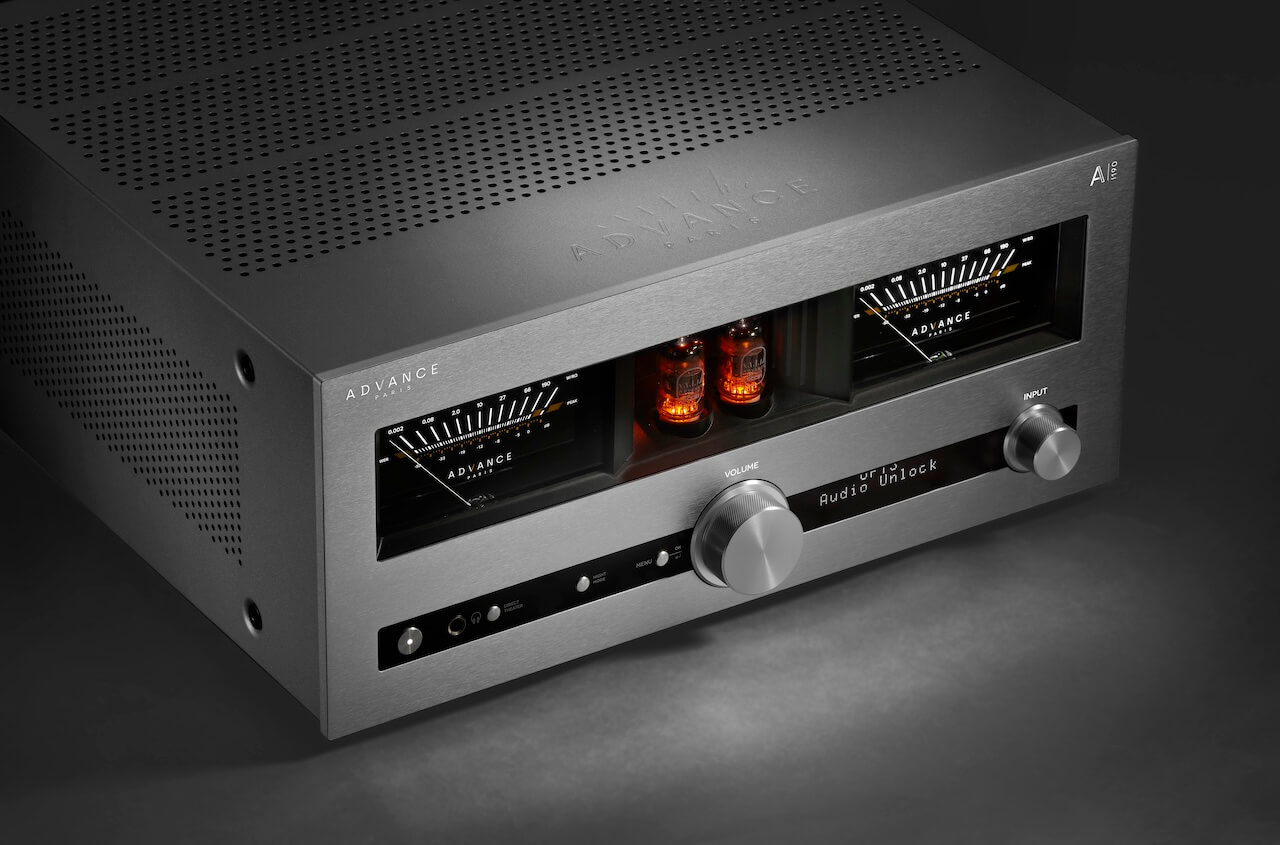
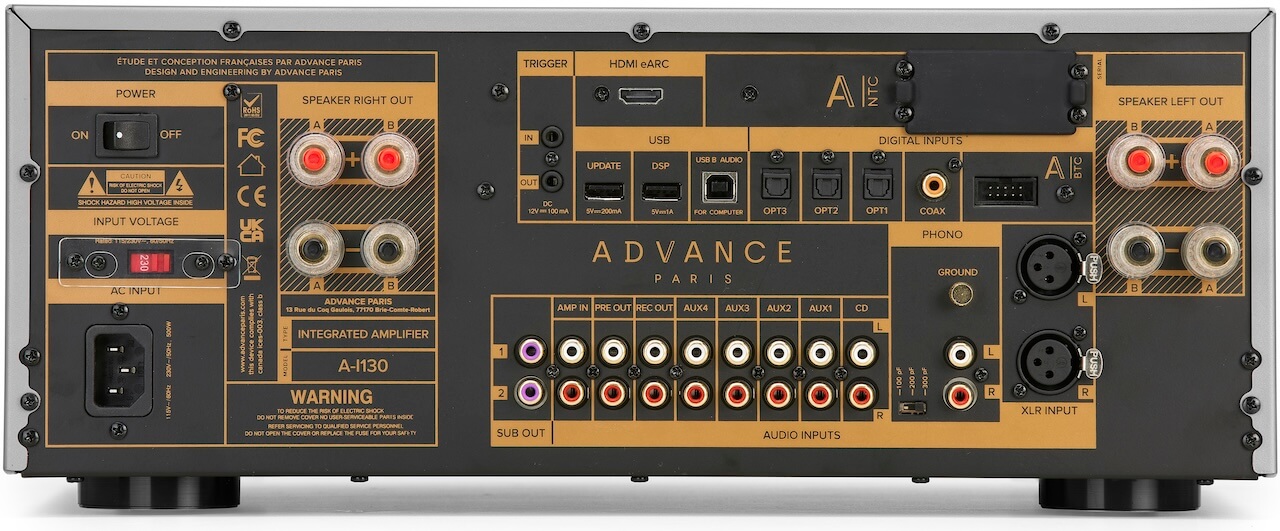
A-i130 & A-i190 Integrated Amplifiers
A-i130A-i190
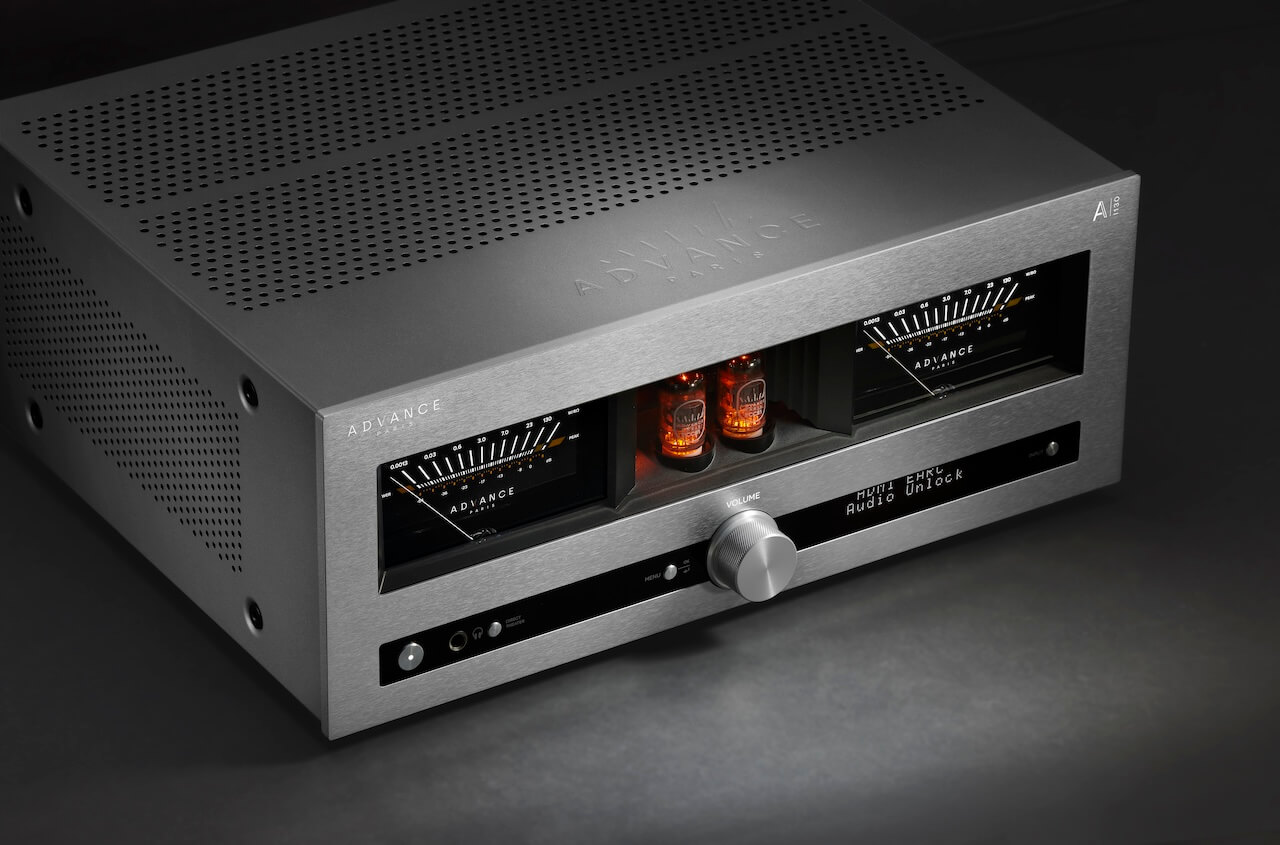
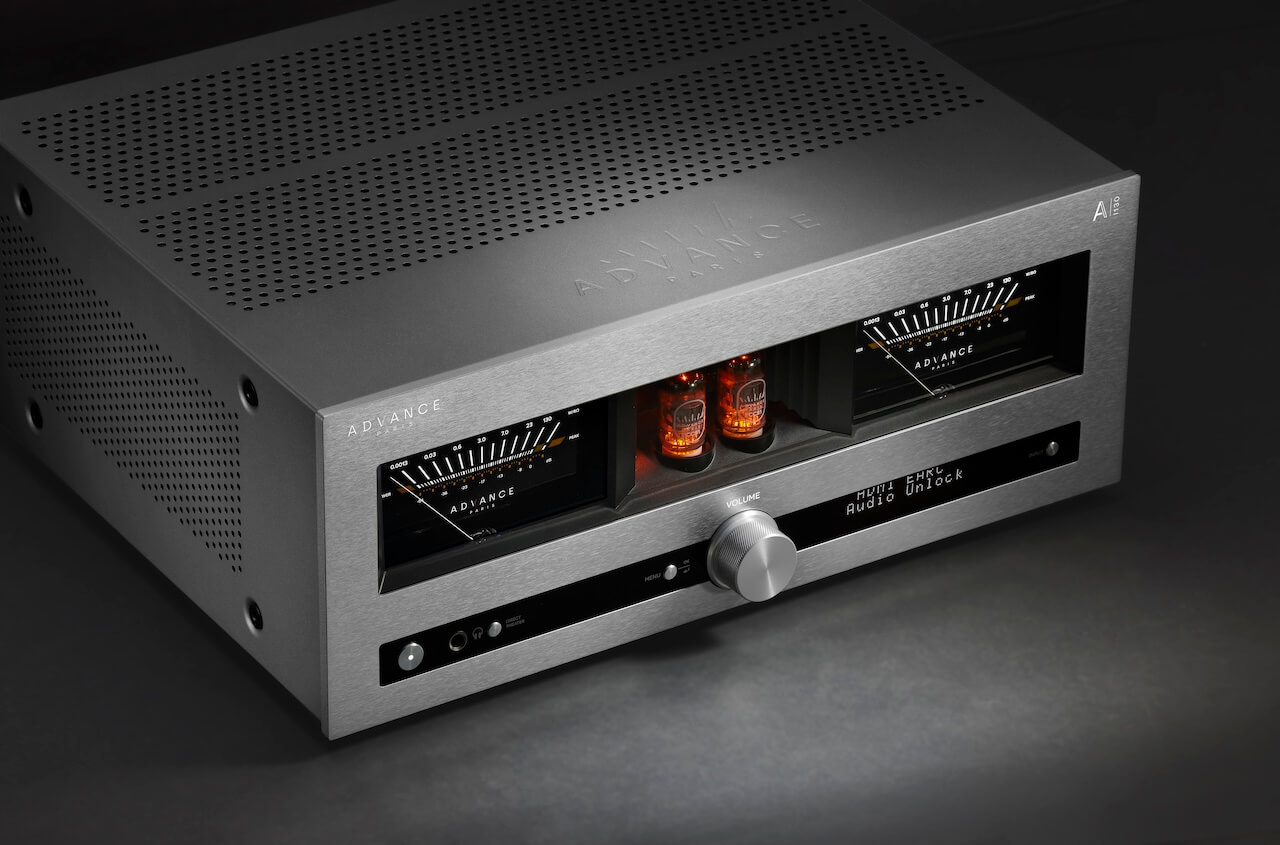
Both the A-i130 and A-i190 are built on the same core idea: this isn’t just an integrated amplifier, it’s the control center for an entire system. Advance Paris is combining hybrid amplification, DSP, DAC, and subwoofer management into one chassis and then letting you expand it later with modular add-ons. That’s the play.
At their core, both models use a hybrid design with an ECC81 tube preamp stage feeding a Class A/B output section. You get some harmonic texture without sacrificing control. On the digital side, both rely on an ESS9017 DAC running in Quad mode, paired with a 4 channel DSP that handles EQ and room correction across left, right, and up to two subwoofers.
Subwoofer integration is taken seriously here. Both support 2.1 or 2.2 configurations with a proper crossover and independent control, which immediately separates them from a lot of integrated amps still pretending subs don’t belong in two channel systems.
Advertisement
Add HDMI eARC, USB with DSD support, multiple optical and coaxial inputs, five line level RCA inputs, MM phono (with ground), pre-out, record out, dual sub outs, and a 6.35 mm headphone jack, and both units are clearly designed to replace a stack of separates without feeling compromised.
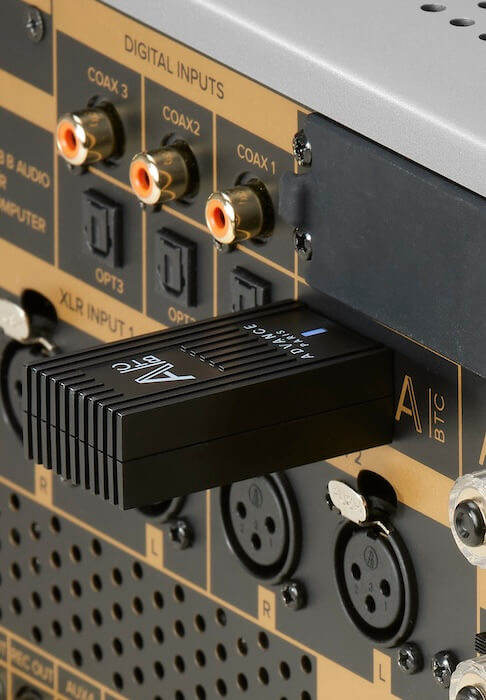
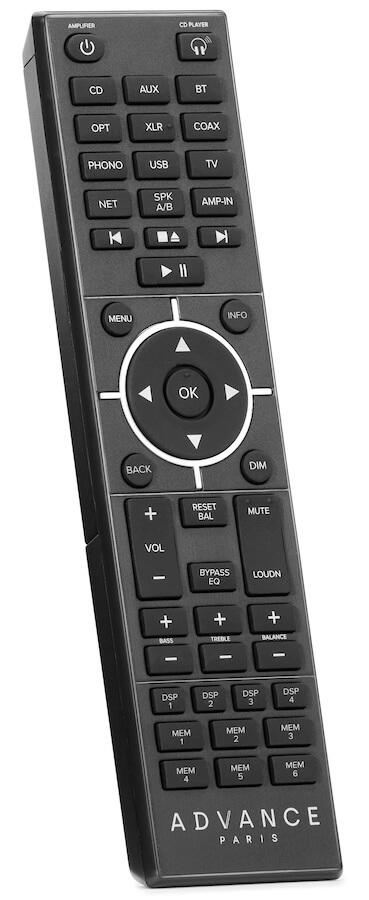
They also share the same expansion path. Both include slots for the optional A NTC streaming cartridge and A BTC Bluetooth module, enabling full streaming or bi-directional wireless audio including headphone transmission. And yes, both support the rotary remote if you want tactile volume control without getting off the couch.
Physically, these are not compact lifestyle boxes.
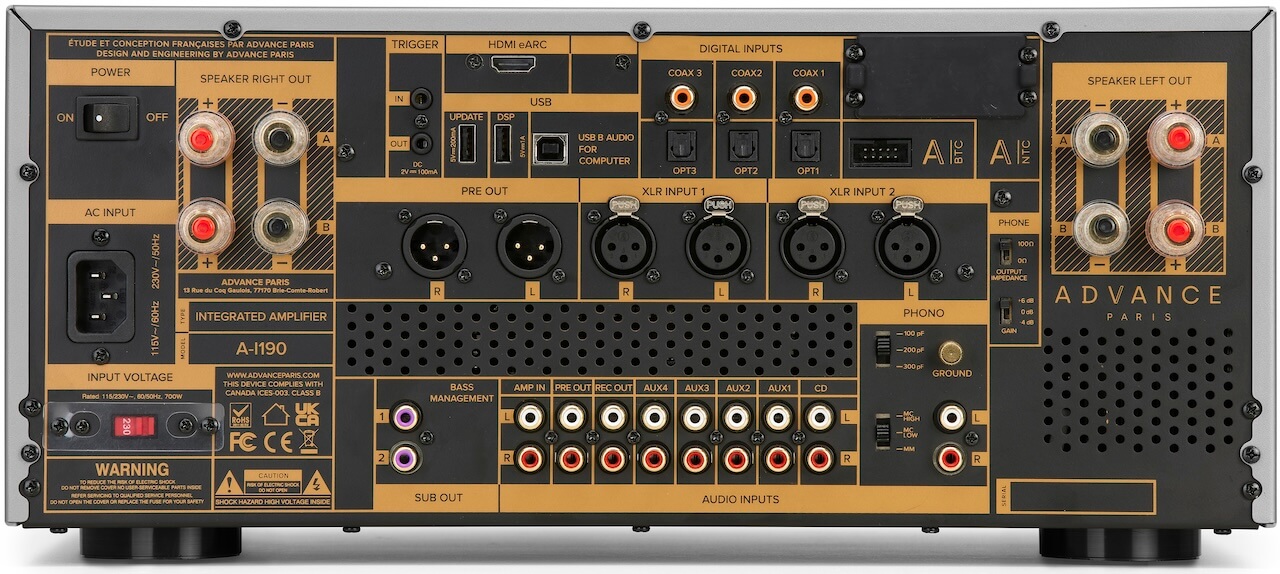
A-i130A-i190
The A-i130 measures 43 x 17.5 x 35.1 cm (16.9 x 6.9 x 13.8 inches) and weighs 13.3 kg (29.3 lbs). Think of it as the Marion Cotillard of the lineup; refined, composed, and quietly in control of the room.
Advertisement
The A-i190 grows in every direction at 43 x 19.2 x 45.4 cm (16.9 x 7.6 x 17.9 inches) and 19 kg (41.9 lbs), which tells you exactly what’s going on inside before you even turn it on. This one is Vincent Cassel; leaner than you expect, hits harder than it should, and absolutely not here to play nice.
Where they diverge is power, architecture, and connectivity.
Advertisement. Scroll to continue reading.
The A-i130 delivers 130 watts per channel into 8 ohms using a single toroidal transformer. Its connectivity is extensive but entirely single ended on the analog side. You get five RCA line inputs, an MM phono input with grounding terminal, and RCA outputs for pre out, record out, and dual subwoofers. Digital inputs include three optical, three coaxial, USB audio with DSD support, and HDMI eARC for TV integration. There’s also a 6.35 mm headphone output on the front. It’s a complete, modern hub without unnecessary complexity—and for most systems, it’s not leaving anything on the table.
Advertisement
The A-i190 takes that foundation and pushes it into more serious territory. It moves to a dual mono design with two toroidal transformers, effectively isolating each channel and increasing output to 190 watts per channel with greater headroom. Connectivity expands where it actually matters: in addition to the same five RCA line inputs and digital suite (optical, coaxial, USB, HDMI eARC), the A-i190 adds balanced XLR inputs and a balanced XLR pre out alongside the RCA pre out. The phono stage is upgraded to support both MM and MC cartridges, and it retains dual subwoofer outputs and record out. In other words, it’s not just more power—it’s built to integrate into more demanding, higher-end systems without forcing compromises.
A-NTC Streaming Cartridge Turns NOVA into a Real Network Player
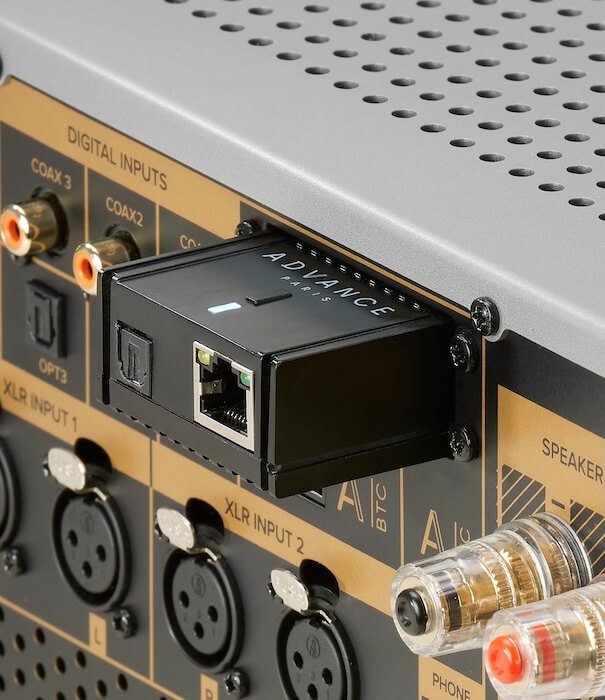
The A-NTC is Advance Paris’ modular answer to streaming, and it’s designed to work two ways without overcomplicating things. On its own, it can function as a standalone streamer via its optical output, adding network playback to any system with a compatible digital input. Install it into the expansion slot on the A-i130 or A-i190, and it disappears into the chassis; no extra cables, no extra box, just a fully integrated streaming amplifier.
It supports the platforms that actually matter: Spotify Connect, TIDAL Connect, Qobuz Connect, AirPlay 2, Chromecast, DLNA, and Roon, with connectivity over Ethernet or Wi-Fi. Output is capped at 24-bit/192 kHz, which covers the vast majority of real world streaming use cases without pretending to chase numbers for marketing.
The key point here is integration. This isn’t another streamer fighting for shelf space, it’s part of the ecosystem. Clean, functional, and exactly what most people will use.
A-BTC Bluetooth Dongle Adds Wireless Flexibility Without Pretending It’s Perfect
The A-BTC is a bi-directional Bluetooth 5.4 module that uses the same expansion slot, adding both transmit and receive functionality to the NOVA platform. You can stream from your phone to the amplifier or send audio out to a single pair of Bluetooth headphones; useful for late night listening or keeping the peace when the rest of the house is asleep.
Codec support includes aptX HD, aptX Adaptive, aptX Low Latency, and AAC, which gives you solid coverage for both sound quality and low latency video use. Lip sync should be tight with aptX LL, and aptX Adaptive handles variable bitrate conditions more gracefully than older standards.
Advertisement
What it does not include is just as important: there’s no LDAC and no aptX Lossless. That’s going to matter if you’re running newer wireless headphones that rely on those codecs for maximum resolution. In other words, this is a well executed, practical Bluetooth solution, but it’s not chasing the bleeding edge of wireless audio.
A-RTR Rotary Remote Brings Back Tactile Control
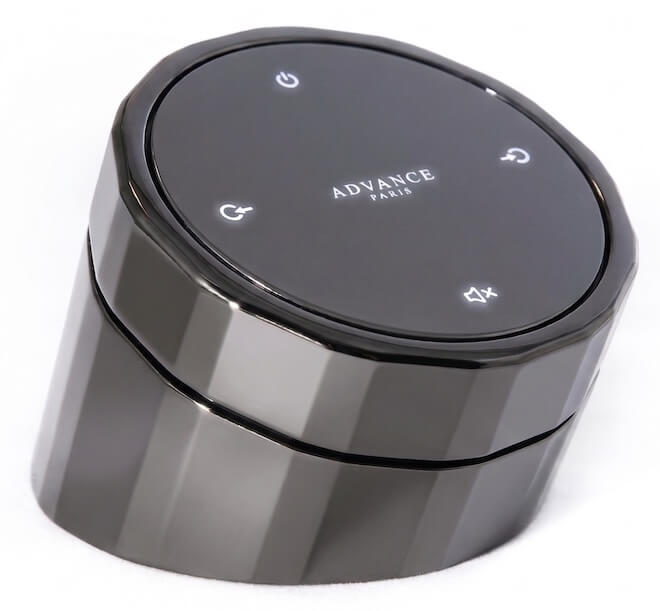
The optional A-RTR rotary remote is exactly what it looks like: a solid, weighty metal control designed to live on your coffee table or listening surface, not get lost between couch cushions. It connects wirelessly to the A-i130 and A-i190 via the A-BTC Bluetooth module, so yes—you need that piece in place for this to work.
Functionally, it keeps things simple. The rotating crown handles volume, while additional controls manage input selection and power. No screen, no app dependency, no nonsense. Just direct control with a physical interface that mirrors the design language of the amplifiers themselves.
This is clearly aimed at listeners who are tired of poking at phones or dealing with plastic remotes that feel like they came free with a toaster. It’s not about adding features, it’s about restoring a more tactile way to interact with the system.
As Cédric Léon, Product Manager at Advance Paris, puts it: “With these new products, we are offering a future proof audio solution that is both powerful and versatile—and really leans into the modern and sleek aesthetic Advance Paris is known for. Whether you’re looking for the best possible sound quality, streaming flexibility, or an amplifier that can adapt to a variety of needs, this new product lineup has it all.”
Advertisement
Advertisement. Scroll to continue reading.
The Bottom Line
The NOVA range stands out because it combines a hybrid tube front end, Class A/B power, 4-channel DSP with real subwoofer integration, and a modular expansion path that lets you decide how far down the streaming and wireless rabbit hole you want to go. Two slots, two modules, and a clear upgrade path.
The execution matters. Both integrated amplifiers function as serious control centers with proper inputs and outputs, HDMI eARC, and flexible bass management, which is something a lot of competitors still treat like an afterthought. The A-i190, in particular, leans into higher end territory with dual mono architecture and balanced connectivity, making it viable in more ambitious systems.
The modular approach will feel familiar to anyone who has spent time with NAD and its MDC ecosystem, especially in the Master Series. Same idea: don’t lock the user into a fixed feature set that ages out in two years. Let them add what they need. The difference here is that Advance Paris is applying that concept to a more stylistically distinctive platform.
That said, there are tradeoffs. At these prices, a lot of competing integrated streaming amplifiers already include network streaming out of the box. Here, it’s a paid add-on. And while the Bluetooth module is well executed, the lack of LDAC and aptX Lossless means it’s not chasing the highest tier of lossless wireless audio performance.
Advertisement
The A-RTR remote is another interesting play. It’s tactile, heavy, and clearly designed to be part of the experience, but it will look very familiar if you’ve seen what Devialet and MOON by Simaudio have been doing for years. Whether that’s homage or imitation depends on your level of cynicism.
So who is this for? Someone who wants a modern, feature rich integrated amplifier with real system flexibility, but doesn’t want to be locked into an all in one streaming platform that may age poorly. Someone who values tactile control, clean system integration, and the ability to evolve over time.
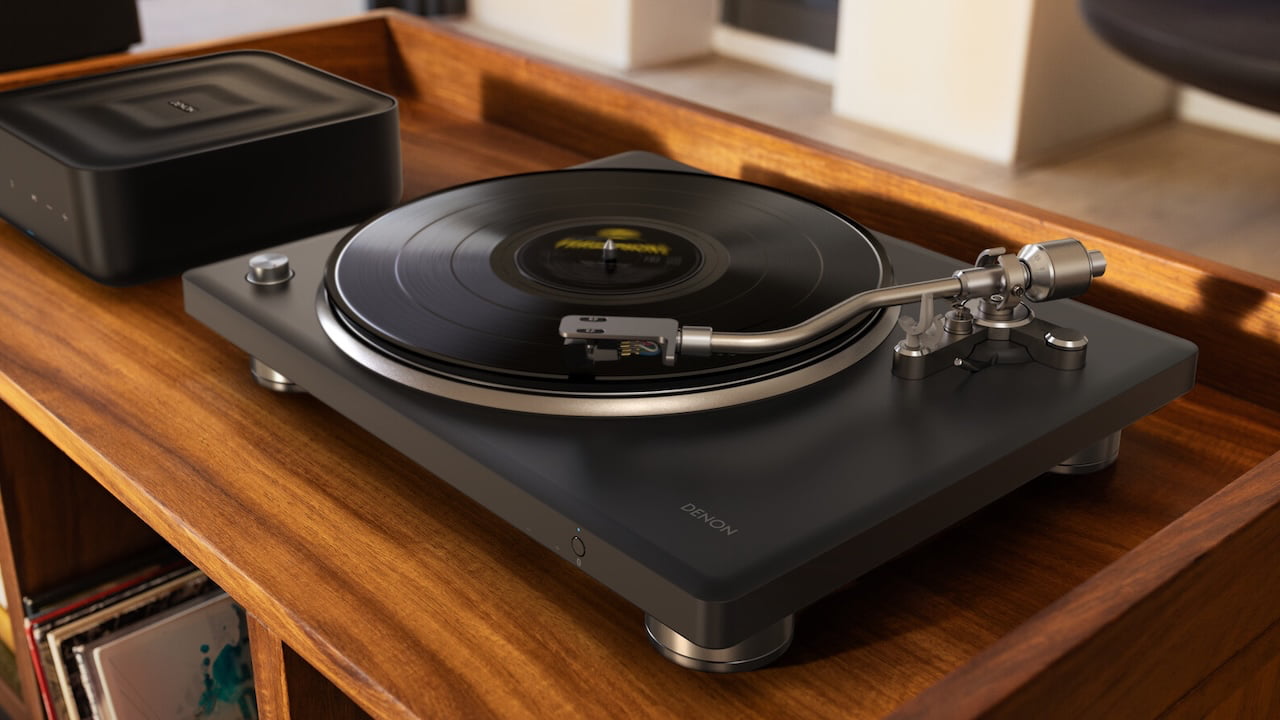
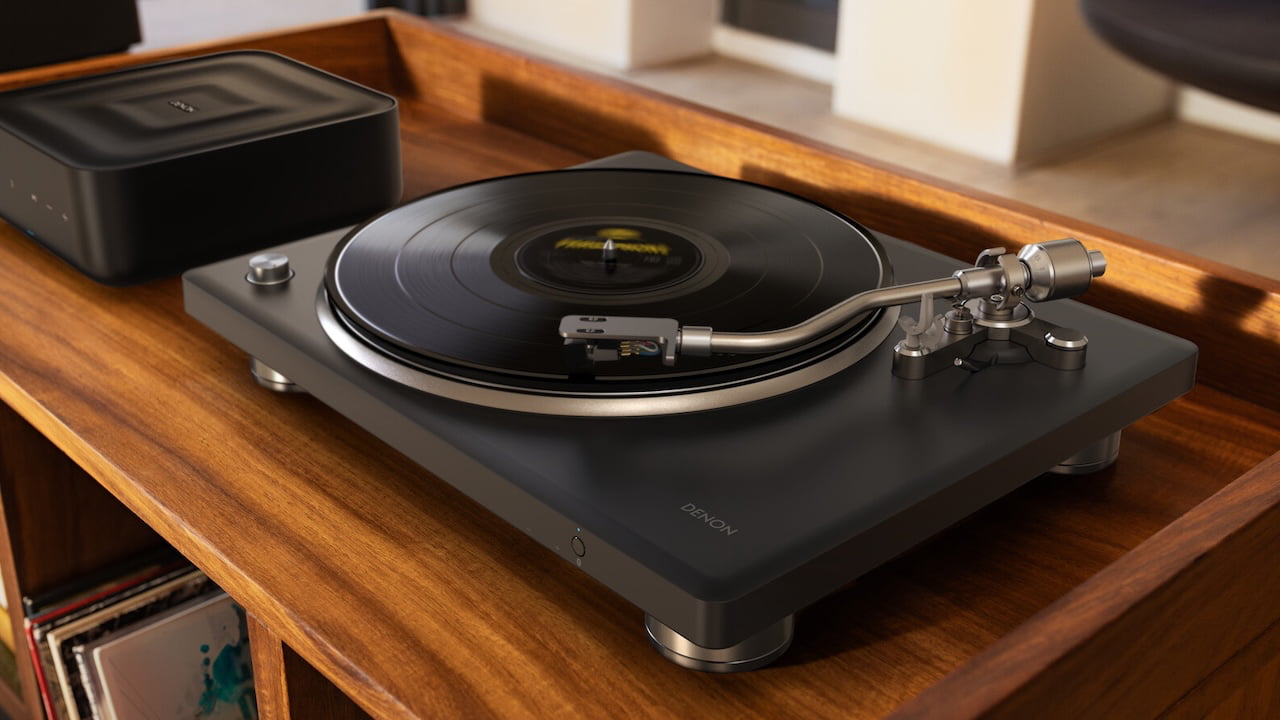
The Denon DP-500BT is a premium turntable aimed at both new vinyl listeners and experienced collectors, combining Denon’s proven analog performance with the added flexibility of Bluetooth streaming. Designed to deliver rich, detailed sound through its traditional outputs while supporting modern listening habits, it bridges the gap between classic hi-fi and everyday convenience.
















![Efektif gak sih? [Adira Finance berizin dan diawasi oleh Otoritas Jasa Keuangan] #CobaMoservice](https://wordupnews.com/wp-content/uploads/2026/04/1775683573_maxresdefault-80x80.jpg)



































You must be logged in to post a comment Login