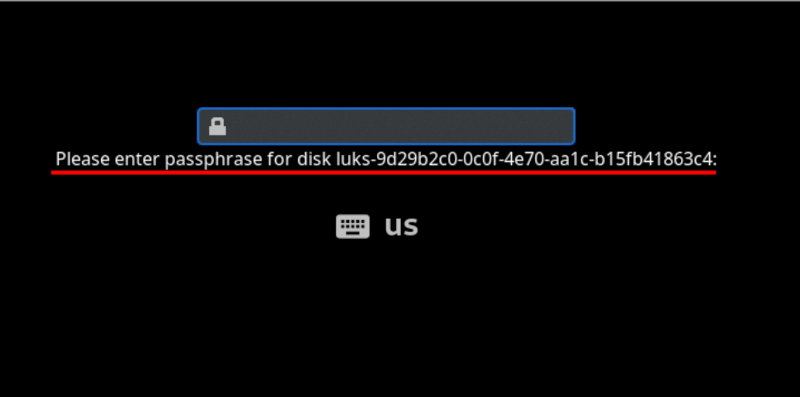
Can you remotely unlock an encrypted hard disk? [Jyn] needed to unlock their home server after it rebooted even if they weren’t home. Normally, they used Tailscale to remote in, but you can’t use tailscale to connect to the machine before the hard drive decrypts, right? Well, you can, sort of, and [Jyn] explains how.
The entertaining post points out something you probably knew, but never thought much about. When your Linux box boots, it starts a very tiny compressed Linux in RAM. On [Jyn’s] machine using Arch, this is the initramfs.
That’s not news, but because it is an actual limited Linux system (including systemd), you can add tools to it. In this case, adding dropbear (an ssh server) and Tailscale to the limited boot-time Linux.
Advertisement
Doing this in the most straightforward way presents several issues related to security. However, using a few configuration items, you can limit it to showing the unlock screen and nothing else.
The only limitation is that the setup, as written, will only work with an Ethernet interface. WiFi should be possible, but getting the wireless network up in this environment would likely be challenging.
Nguyen, known online as theflow0, has turned a retail PlayStation 5 into a Linux gaming box powerful enough to run Grand Theft Auto V Enhanced with ray tracing at 1440p and 60 frames per second. Read Entire Article Source link
As innovation accelerates and software teams face more pressure than ever to ship quickly, an essential step in the innovation process is often overlooked in favor of speed.
While traditional quality assurance practices are important, the real transformation happens when developers go beyond their role as builders and become genuine users of their products. This shift from creator to customer changes how product value is understood, validated and delivered.
Thomas Reisenbichler
VP of Delivery, Reliability & Security at Dynatrace.
Leading by example means that developers can demonstrate tangible value while ensuring exceptional customer experience before asking users to depend on the solution. This approach transforms the development process from a static process of build, test and ship into a dynamic cycle of value validation.
Practice what you preach
When companies use their own software, they dramatically accelerate innovation. Internal adoption means that developer teams will discover what is working well and what is not, through natural, lived experience that traditional testing cannot reproduce.
Our ‘Dynatrace on Dynatrace’ philosophy embodies this mindset. Internal teams don’t just test the platform, they operate within it daily.
This deep engagement reveals not only how the system performs technically, but how it supports end-to-end workflows, enhancing the team’s understanding of how our observability platforms do more than just monitor.
Advertisement
This internal engagement with our own tools also enhances the innovation loop. As the product evolves, new internal use cases emerge organically, creating a self-sustaining cycle where today’s solutions inspire tomorrow’s innovations.
Sign up to the TechRadar Pro newsletter to get all the top news, opinion, features and guidance your business needs to succeed!
Many features that define Dynatrace today exist precisely because internal teams identified needs that perfectly aligned with customer requirements.
Advertisement
It is better to fail in private
Issues that occur post-deployment damage customer trust. When problems surface in customer environments, they ripple through support channels, damage customer relationships and create lasting impressions that can shift a brand’s reputation.
A poor first experience is difficult to recover from. By contrast, a-try-before-you-ship approach ensures real internal users experience the full journey early, surfacing usability gaps and functional issues long before customers ever see them.
This protected environment creates a learning opportunity rather than a reputation risk. Internal stakeholders offer more patience for iteration and remain readily available for immediate feedback sessions, unlike paying customers who may simply abandon problematic features.
Advertisement
This approach results in dramatically higher confidence at launch and creates smoother customer experiences from the moment of first contact.
Trusting your own products
Beyond strengthening the customer experience, when technology vendors actually rely on their own solutions, it communicates a powerful message: we trust our own solutions to run our business. That level of transparency and self-confidence creates credibility that no marketing story or sales pitch can match.
The transparency of internal use creates a unique form of credibility that’s increasingly valuable in today’s sophisticated software market. Decision-makers can observe how vendors handle their own challenges using their products, gaining insights into real-world performance that no demo or case study can provide.
Advertisement
This visibility builds confidence not just in the product’s capabilities but in the vendor’s commitment to continuous improvement.
Customers also notice when vendors’ internal teams do not employ their own tools for critical operations, raising questions about product limitations, vendor confidence and the gap between marketing promises and operational realities.
At a time when software buyers are more knowledge and skeptical than ever, trust is built through actions rather than just words. There is no more compelling proof point than being your own success story.
Advertisement
Introspection before you launch
Shipping new features signals progress but delivering real customer value requires a moment of introspection. Teams must experience their own product firsthand. Becoming your own customer builds confidence, strengthens product quality and ensures that what you bring to market truly meets user needs.
In an increasingly competitive landscape, using your own tools isn’t just good practice, it is essential to delivering exceptional customer experiences and proving your product’s value through lived experience.
This article was produced as part of TechRadarPro’s Expert Insights channel where we feature the best and brightest minds in the technology industry today. The views expressed here are those of the author and are not necessarily those of TechRadarPro or Future plc. If you are interested in contributing find out more here: https://www.techradar.com/news/submit-your-story-to-techradar-pro
It’s a busy time for the reviews team and Engadget, and with Apple announcing new devices this week, we aren’t letting up any time soon. New products from Samsung, Dell, Google and ASUS headline the roundup this time, and we’ve got a few unique items to discuss as well. Read on to catch up on anything you might’ve missed, including the latest installment of Pokémon.
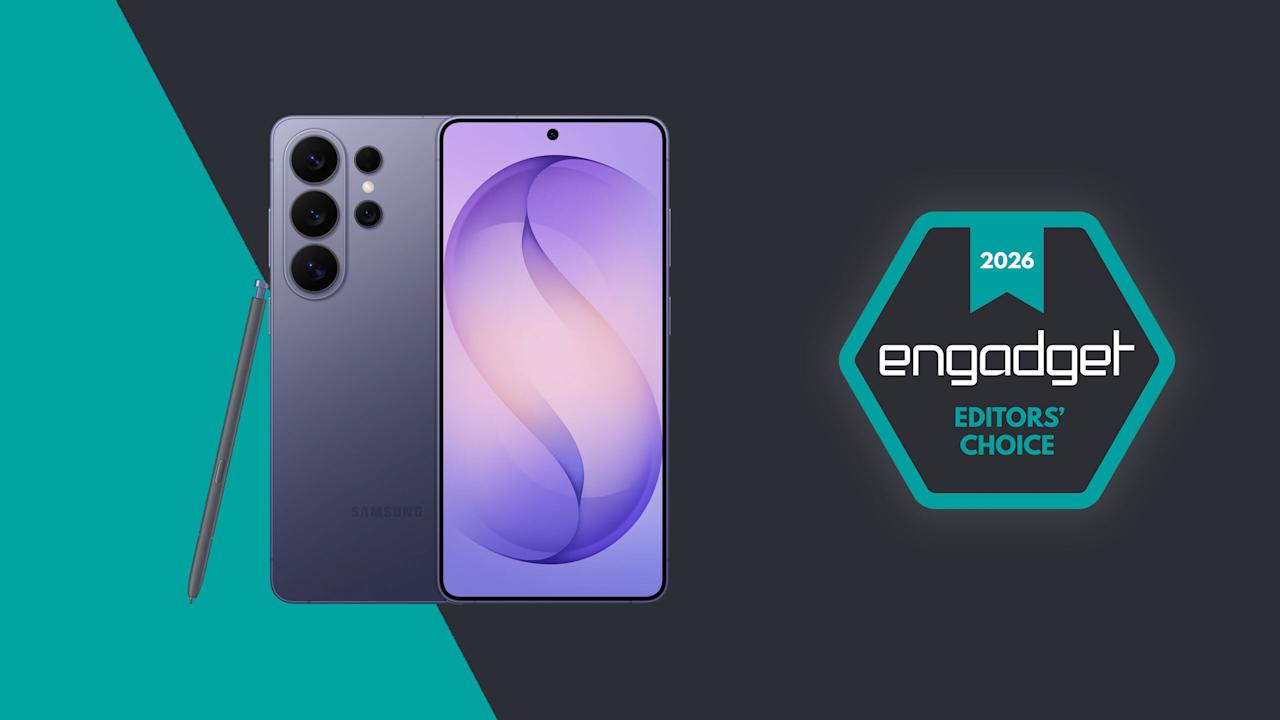
Samsung Galaxy S26 Ultra
Samsung / Engadget
While the S26 Ultra might not wow you with a ton of major improvements, it brings subtle upgrades across the board along with a new standout display for anyone who cares about privacy.
Pros
Advertisement
Superb Privacy Display
Great performance
Strong battery life
Wider aperture for main and 5x telephoto lenses
Cons
Expensive
S-Pen is unchanged
No built-in magnetic ring for Qi2 accessories
This year’s Samsung flagship phone may not impress you with a load of new features, but there’s one in particular that senior reporter Sam Rutherford was wowed by. “This goes double for the S26 Ultra, whose biggest upgrade — the Privacy Display — is something meant to stop other people from snooping at what you’re doing.,” he said. “When it’s on, you probably won’t even be able to tell, which is kind of the point.”
Samsung Galaxy Buds 4 and 4 Pro
Samsung/Engadget
The Galaxy Buds 4 Pro are the best earbuds for Samsung’s phones, due to device-specific features and the combination of great sound quality and capable ANC.
Pros
Refined design
Excellent audio
Lots of features
Cons
Design is still unoriginal
ANC performance is good, not great
Many features require a Samsung phone
Samsung went all-in with with AirPods mimicry last year, and that continues on the Galaxy Buds 4 and 4 Pro. However, despite big improvements to sound quality and the continued addition of new features, Samsung could certainly do more. “The company is really only lagging behind Apple in two areas: hearing health and heart-rate tracking,” I wrote. “Samsung currently offers the option to amplify voices on its earbuds, but it hasn’t built a hearing test or the hearing protection tools Apple has. The biggest update on the AirPods Pro 3 was the addition of heart-rate tracking last year, which would be a great foundation for a fitness-focused version of the Galaxy Buds.”
Dell XPS 14 (2026)
Dell
Advertisement
Dell’s revamped XPS 14 is lighter and more powerful than ever, but it’s hampered by an annoying keyboard.
Pros
Gorgeous and light design
Powerful Intel chips
Lovely OLED screen
Fixes previous design mistakes
Cons
Baffling keyboard issues
Expensive for beefy configs
Mediocre battery life
We review a lot of devices that are almost excellent, except for one big flaw. That’s the case with the new XPS 14, where senior reporter Devindra Hardawar had a hard time with very basic functionality. “If I were to judge the XPS 14 based purely on its specs and design alone, it would be my favorite Windows laptop available today,” he wrote. “Dell is so close to making a PC that’s a true MacBook Pro competitor, it’s a shame a simple keyboard issue holds the XPS 14 back from true greatness.”
Google Pixel 10a
Google / Engadget
Despite few upgrades, the Pixel 10a remains an excellent option for those looking for an affordable smartphone.
Advertisement
Pros
Bright, vivid 120Hz display
Great camera software
Satellite SOS included
Available in a handful of lovely colors
Cons
Slow wired and wireless charging
No Pixelsnap support
Google’s A-series devices have consistently been a great option if you’re looking to spend less on phone but still want a capable handset. Despite minimal upgrades on the Pixel 10a, that sentiment still holds true. “On the one hand, part of me wants to dock points because Google has added so few updates,” senior reporter Igor Bonifacic said. “On the other, the 10a is still a great phone for $500, and at a time when consumer electronics are becoming more expensive by the day, the fact it hasn’t gone up in price is a small miracle.”
ASUS ProArt GoPro Edition PX13
ASUS/Engadget
The ASUS ProArt GoPro Edition is the best Windows creator laptop on the market, thanks to the excellent blend of performance and battery life. However, it’s quite expensive at $3,000.
Advertisement
Pros
Excellent performance
Good battery life
OLED touchscreen with accurate colors and rich blacks
Good keyboard and trackpad
Cons
Display lacks brightness
High price
Fans are loud under load
Creators often need a combination of power and display quality in a laptop that would be overkill for most of us. For those who do need it, contributing reporter Steven Dent found the ASUS ProArt GoPro Edition PX13 nearly checked all the boxes. “ASUS is one of the few PC manufacturers trying to compete with Apple in the creator market, and with the ProArt GoPro Edition laptop, it has largely succeeded,” he said. “This model offers excellent performance and battery life, a huge amount of memory, a very nice OLED HDR display, a nice range of ports and an excellent keyboard and trackpad.”
Ambient Dreamie, Seattle Ultrasonics and more
We also recently reviewed a couple of off-beat gadgets, both of which earned high marks from our team. The Ambient Dreamie is a “bedside companion” that functions as an alarm clock with both bedtime and morning routines. Weekend editor Cheyenne MacDonald was so impressed by how it improved her sleep that she bought one for herself. And the Seattle Ultrasonics C-200 was dubbed “the future of kitchen knives” by Sam.
Sam also played a few hours of Pokémon Pokopia and he was charmed by the new take on gameplay for the series. Lastly, Devindra put the Falcon Northwest FragBox through its paces, discovering a powerful gaming rig in machine that looks a bit like a box of fried chicken
Every driver has their own tolerance level for reliability. For some, anything less than faultless is a disappointment; for others, a slightly lower level of dependability is a worthwhile compromise to get a car that’s more fun or more prestigious to drive. Likewise, measuring reliability isn’t always an exact science, but some car brands see a higher percentage of owners reporting problems than others.
In a JD Power survey published in February 2026, one car brand saw more reports of problems than any other, earning it the unenviable title of being the least dependable brand on the market. That brand was Volkswagen, which had 301 problems per 100 cars, far above the industry average of 204 problems per 100. The study analyzed issues that were reported by survey respondents who had bought a new car within the last three years. It sorted them into nine categories, evaluating things like powertrain, seats, infotainment, climate controls, and exterior.
Across the study, the two most often complained about categories were infotainment systems and exterior, with the former being the most problematic by a significant margin. Overall, buyers reported more problems with their cars in 2026 than they did in 2025, a rise that JD Power attributes in part to the rising complexity of vehicle software systems.
Advertisement
Volkswagen’s infotainment system is historically not a driver favorite
Given that infotainment faults were the most frequently cited category in the JD Power study, it shouldn’t come as a surprise that Volkswagen scored poorly. We previously included Volkswagen’s recent infotainment systems in our recent roundup of those that we felt really missed the mark, citing the lack of buttons as a particularly annoying development. After years of criticism, Volkswagen announced in 2025 that buttons would be returning to its newest cars, so hopefully the brand’s future infotainment systems will receive a better reception from drivers.
Advertisement
While Volkswagen languished at the bottom of JD Power’s rankings, it wasn’t the only brand that the study found to be less dependable than the rest. Volvo ranked second lowest overall for dependability, which might come as a surprise given the brand’s historic reputation for vehicle longevity. Land Rover was the third lowest ranked, while Jeep and Audi rounded out the bottom five manufacturers.
At the other end of the table, Lexus and Buick saw owners report the fewest problems. The two brands took the first and second spots respectively, while Mini, Cadillac, and Chevrolet also scored well. While Lexus was a top performer, its parent company Toyota did not score so well, ranking in eighth place behind Subaru and Porsche.
Depending who you ask, 3D pens are silly toys or handy tools. Those who use them as tools find them handy to fill gaps in printed assemblies or to use them as a PLA or PETG-based hot glue gun for their prints. [half-baked-research] on YouTube is in the second category, but knows that welding is better than gluing — so he built himself a 3D pen designed for plastic welding.
You can weld with a regular 3D pen, and [half-baked] demonstrates that in the video. But thanks to the low-conductivity tips on commercial pens, it’s a slow, fiddly business. By using a normal 3D printer hot-end, with its conductive brass nozzle, [half-baked] is able to get a lot more heat where it’s needed. That means the plastic on either side of the weld melts for a good bond with the stuff coming out the nozzle. He’s also able to push plastic much faster with the modified extruder he’s squeezed into the hot-glue-gun looking contraption. Those two things together conspire to make the whole process go much faster than with a commercial 3D pen. He calls his build a 3D pen, but given the form factor it might be more accurate to call it a ‘plastic extrusion gun’.
Starting at around 13:38 in the video, he performs some strength tests, something we wish more YouTubers would do. He’s able to demonstrate a stronger bond with his welding pen than the normal 3D pen, and a much, much stronger join than the usual superglue. A traditional plastic weld with hot air is even stronger, but [half-baked] points out elsewhere in the video that on thin-walled prints (as opposed to the solid test articles) hot air welding can be a very dicey business. Pen-welding offers much greater control, so is an interesting technique to keep in mind.
Alas, [half-baked-research] apparently still considers this idea too half-baked to release the design. If you don’t have time to wait or reinvent this particular wheel, we featured a much simpler implementation of a similar idea years ago, using PLA in a hot glue gun. If that won’t work for you — maybe you aren’t a fan of PLA — perhaps you might try friction welding with filament.
Watch Wrexham vs Chelsea live streams to see if the in-form Championship club can overcome their Premier League opponents and reach the quarter-finals of the FA Cup for the first time in almost 30 years.
Four years ago, this fixture would have been seen as a walkover for Chelsea. But after three consecutive promotions and in the midst of another excellent campaign, Wrexham now present a serious challenge for the eight-time winners of the FA Cup.
Phil Parkinson’s side are in the Championship play-off places and appear to be coming into form at just the right time. They currently have a four-point cushion over the chasing pack thanks to a run of three straight victories and will be determined to keep this streak going against Chelsea.
Advertisement
They’ll certainly present a challenge for the Chelsea defenders, having shown their attacking quality last month when putting five past Ipswich Town, who arrived in Wrexham with the best defence in the league.
However, they did concede three in that game and there is no doubt that the likes of Cole Palmer, Enzo Fernandez and João Pedro provide the sort of attacking quality that is a cut above Championship level. Liam Rosenior will also see the FA Cup as a realistic opportunity to win his first piece of silverware as a manager.
Here’s where to watch Wrexham vs Chelsea FA Cup 5th Round live streams online from anywhere.
Advertisement
How to watch Wrexham vs Chelsea for free
Wrexham vs Chelsea: Team news
TBC
How to watch Wrexham vs Chelsea using a VPN
A VPN is handy piece of software that can make your device appear as if it’s back in your home country, so you can unlock your usual service. The best VPN right now? We recommend NordVPN – it does everything and comes with a 74% discount.
Advertisement
How to watch Wrexham vs Chelsea live streams in the US
ESPN Select will broadcast Wrexham vs Chelseain the US.
A standalone subscription costs $12.99 a month or $129.99 a year, but you can also get their ESPN Unlimited package that includes everything ESPN has to offer. Or you can watch through the Disney Plus/Hulu/ESPN bundle, which costs from $19.99.
Of course, most broadcasters have streaming services that you can access through mobile apps or via your phone’s browser. For example, the BBC iPlayer app in the UK.
You can also stay up-to-date with all key moments from the EPL on the official social media channels on X/Twitter (@EmiratesFACup), Instagram (@emiratesfacup), TikTok (@emiratesfacup) and YouTube (@TheFACup).
We test and review VPN services in the context of legal recreational uses. For example: 1. Accessing a service from another country (subject to the terms and conditions of that service). 2. Protecting your online security and strengthening your online privacy when abroad. We do not support or condone the illegal or malicious use of VPN services. Consuming pirated content that is paid-for is neither endorsed nor approved by Future Publishing.
In a bumper week of launches, Apple has just unveiled its latest MacBook Air series.
As the MacBook Air now sports the same M5 chip as the MacBook Pro, what really separates the laptops? Do you really need to spend more on the MacBook Pro?
To help you decide which laptop to should go for, we’ve compared the specs of the MacBook Air M5 and Pro M5 below.
We should disclaim that we’ll be looking solely at the MacBook Pro M5 specs, and not the recently announced M5 Pro or M5 Max. However, if you’re interested to learn more about the new chips in the MacBook Pro, then visit MacBook Pro M5 Pro vs M5 Max instead.
Advertisement
Keep reading to see which MacBook will likely suit your needs best. Otherwise, make sure you visit our MacBook Neo vs MacBook Air M5 guide to see whether Apple’s affordable option is a better fit for you.
Not sold on a MacBook? Our list of the best laptops from the past year has you covered.
Advertisement
Price and Availability
At the time of writing, you can pre-order the MacBook Air M5 ahead of its official launch from March 11th. Available in four colours (Sky Blue, Silver, Midnight and Starlight), the MacBook Air M5 has a starting price of £1099/$1099.
Advertisement
The MacBook Pro M5 is available in just two colours (Silver and Space Black) and has a starting price of £1699/$1699.
MacBook Air has a choice between two sizes
The MacBook Air M5 comes as either a 13- or 15-inch model, while the MacBook Pro M5 sits firmly between the two at 14-inches. Although the MacBook Air 15-inch is the largest, the heaviest of the lot is actually the MacBook Pro which weighs 1.55kg.
With this in mind, if one of the most important factors in choosing a laptop is its portability, then the MacBook Air series will likely suit you best. In fact, the 13-inch MacBook Air isn’t just the smallest of the lot, but at just 1.23kg it’s impressively lightweight too – making it easy to slip into a bag.
MacBook Air M5. Image Credit (Apple)
Advertisement
Both run on Apple’s M5 chip
As their titles suggest, Apple’s current flagship MacBook Air and MacBook Pro run on the M5 chip. While we’re yet to review the chip, Apple promises that the chip delivers “incredible performance for everything users want to tackle, from everyday productivity to creative workflows.”
Advertisement
Do keep in mind that the default 13-inch MacBook Air comes with an 8-core GPU whereas the 15-inch model and MacBook Pro have a 10-core GPU by default. You can upgrade the 13-inch to a 10-core, but this will cost an additional £100/$100.
Otherwise, the M5 chip enables the MacBook Air and MacBook Pro to run the entire Apple Intelligence toolkit too.
MacBook Pro M5 Writing Tools. Image Credit (Trusted Reviews)
MacBook Pro promises a longer battery life
The MacBook Pro not only claims a longer battery life between charges than the MacBook Air series, but it also promises faster charging too. That’s a pretty noteworthy claim, as Apple has never been a brand known for its speedy charging ability.
So, while the MacBook Air promises up to 15 hours of wireless web and up to 18 hours of video streaming, the MacBook Pro should see up to 16 hours of web and up to a whopping 24 hours of streaming too. We’re yet to put these claims to the test, but they undoubtedly sound impressive.
Advertisement
Advertisement
In addition, the MacBook Pro is fast-charge capable when paired with a 96W or higher power source. The MacBook Air, on the other hand, supports 70W instead.
Again, we’re yet to see how long the laptops really take the charge, but it’s certainly a promising upgrade.
MacBook Pro M5. Image Credit (Trusted Reviews)
MacBook Pro has more ports
Apple has taken a “less is more” approach when it comes to supplying the MacBook Air series with ports, which is undoubtedly a shame. That means both the 13- and 15-inch laptops are equipped with just two Thunderbolt 4 USB-C ports, a 3.5mm headphone jack and a MagSafe charger. This is more or less the same as the MacBook Neo, although the affordable laptop’s USB-Cs aren’t Thunderbolt 4.
Instead, the MacBook Pro is equipped with everything found on the MacBook Air plus an additional Thunderbolt 4 USB-C, a HDMI and an SDXC card slot too. It might not be as well equipped as the likes of Asus ProArt P16 or Samsung Galaxy Book 6 Pro, but it’s certainly an improvement over the MacBook Air.
Advertisement
Advertisement
MacBook Pro has a Liquid Retina XDR display
Arguably one of the main reasons to opt for the MacBook Pro is its display. While the MacBook Air’s Liquid Retina display promises up to 500 nits brightness, supports the P3 wide colour gamut and True Tone technology, the MacBook Pro’s own panel has a few extra features up its sleeve.
Firstly, the MacBook Pro sports a Liquid Retina XDR display which also supports the P3 wide colour gamut and True Tone technology. However, the panel also benefits from 3024×1964 pixels, up to 1600 nits peak HDR brightness and ProMotion technology. Essentially, this means the MacBook Pro has an adaptive 1-120Hz refresh rate which means streaming, scrolling and games look and feel smoother. The MacBook Air instead caps out at just 60Hz.
MacBook Pro M5. Image Credit (Apple)
Finally, you’ll also have the option to kit the MacBook Pro with a nano-texture coating which helps to reduce glare and reflections. Although it will cost an additional £150/$150, it’s something we would recommend investing in, as we found the coating in the MacBook Pro M4 was brilliant, and made looking at the screen for longer periods that bit easier.
Early Verdict
Judging by its specs, the MacBook Air M5 seems like a brilliant alternative to the MacBook Pro M5, for those who want a powerful laptop but for a cheaper price. However, you’ll have to keep in mind that you will miss out on the more generous port selection, a Liquid Retina XDR display and longer battery life.
We’ll update this versus once we review both the MacBook Air M5 and MacBook Pro M5.
There’s a lot to love about popcorn: the crunch, its customizable nature and especially the fact that it’s a great source of fiber. Plus, it’s even healthier if you air-pop it without using any oil. But if you, like me and don’t have a popcorn maker, you’re likely to make it in a pot on the stove.
However, the last time I made popcorn, I looked over at my air fryer and wondered if I could pop popcorn in it. When I went online to search for an answer, I couldn’t find a conclusive response, so I decided to reach out to an air fryer manufacturer and professional chefs for their expert advice.
Well, technically it can, but that doesn’t mean it should.
“At Ninja, we’re always testing the boundaries of what our technology can do, and popcorn in an air fryer is something our culinary and product development teams have explored. However, we advise against trying to make popcorn in an air fryer,” a Ninja Kitchen representative tells CNET. “Air fryers circulate heat differently than traditional popcorn makers, which means kernels don’t reach the sustained heat needed in the required time.”
Because popcorn is lightweight, Sharniquia White, chef and registered dietitian, explains that if you try to make it in an air fryer, it can fly up into the device’s heating element, get stuck near the fan, burn from uneven airflow and leave you with a frustrating amount of unpopped kernels. All cons, no pros.
Given the safety hazards and unsatisfying results, you’ll want to avoid using an air fryer for popcorn. At least until the technology catches up.
Advertisement
While air fryers such as the Ninja Crispi Pro can roast an entire chicken, they can’t pop popcorn just yet.
Ninja
Pro chefs on the best way to make popcorn
Since the air fryer is out for popcorn, I asked my chef sources for their recommendations on making the best popcorn.
White says that the stovetop wins every time if you want a fluffy texture, rich flavor and full expansion of your kernels. She provides these handy instructions for getting the best results:
Add 2-3 kernels to test if the oil is hot enough. When they pop, add ½ cup kernels.
Cover and gently shake the pot occasionally.
Remove from heat when popping slows.
You control the oil, the salt and the outcome.
However, if you make popcorn all the time, plant-based chef Shauna McQueen, MS, RD, founder of Food School, recommends purchasing a low-cost pan with a lid you can crank to move the popcorn kernels around.
“The other option is automatic and will self-stir the kernels,” McQueen adds. “I’ve used both and have had to replace both within a few years of use, but find the automatic one most convenient.”
As for the healthiest way to make popcorn…
“If you’re reaching for the air fryer because you want to use less oil, you’re thinking in the right direction,” White says. “However, an inexpensive air popper or a measured stovetop method is more reliable and safer. Popcorn is already a whole-grain, fiber-rich snack. The goal isn’t to eliminate oil entirely; it’s to be intentional about how much you use and what you add.”
Whether you pop it on the stove or buy a device that air-pops your popcorn, it’s best to avoid microwave popcorn. According to McQueen, it may contain additives like TBHQ, which is used to extend the shelf life of processed foods. While the FDA considers it safe in appropriate amounts, it has been linked to potential health issues.
Advertisement
If you want less oil on your popcorn, you may want to invest in an air popper. Or, be more intentional about the toppings you use.
Jonathan Knowles/Getty Images
The healthiest popcorn toppings
If extra flavor is what you’re after, McQueen suggests the following anti-inflammatory toppings: curry powder, cayenne, garlic powder or chili powder. For a cheesy flavor plus B-vitamins, opt for nutritional yeast. Her favorites include a curry-style popcorn made with curry powder, garlic powder and a small amount of nutritional yeast; chili powder with lime and za’atar; or everything bagel seasoning.
As for White, she likes adding smoked paprika, cinnamon with a pinch of salt, fresh lime zest and sea salt or dried dill, “for an unexpected herb twist.”
The bottom line
Though it’s tempting, you shouldn’t make popcorn in your air fryer. Instead, use what you already have on hand and prepare it on the stovetop.
Advertisement
If you can’t get enough of the stuff and make it all the time, consider these options that are under $50: a stovetop popcorn maker or an oil-free air popper.
Either way, to keep your popcorn as healthy as possible, go light on the oil, butter and salt. Personally, I’ll be topping mine with chili powder, lime and za’atar next time my popcorn craving strikes, which will likely be in a few minutes after writing this tasty piece.
There’s a reason we’re called WIRED. If there’s one thing most of today’s gadgets have in common, it’s that they typically need to be plugged in from time to time. But all those cables, cords, and wires can be tough to manage. They don’t have to end up in a tangled nest under your desk; you can bring order to the cable chaos.
As a gadget reviewer, I have more cords than most people, which is why I also have a regimented cable management strategy to keep everything orderly. Here are my tips and product recommendations for hiding those cords and power strips, and keeping your desktop tidy.
Jump To:
Planning and Prep
Advertisement
Start by surveying the scene, unplugging and untangling everything, and removing anything that doesn’t need to be there. You might be surprised to find a stray USB-B or Micro-USB you haven’t used in years in the mix. Before you get started on cable management, take a slightly damp microfiber cloth and wipe down all the surfaces and cables. Now, you can start planning routes and figuring out which cables it would make sense to bundle together.
Ideally, cables will be the exact required length, so if you have spares or you don’t mind snagging some new cables, it’s worth switching and getting as close as possible to exact lengths to reduce the excess cable you have to hide. If you have a standing desk, remember to take into account the cable length required for a standing position (trust me, dear reader, it’s no fun when you hit stand on the desk and it pulls your PC tower into the air by a DisplayPort cable that is now forever stuck in that port).
Cable Management
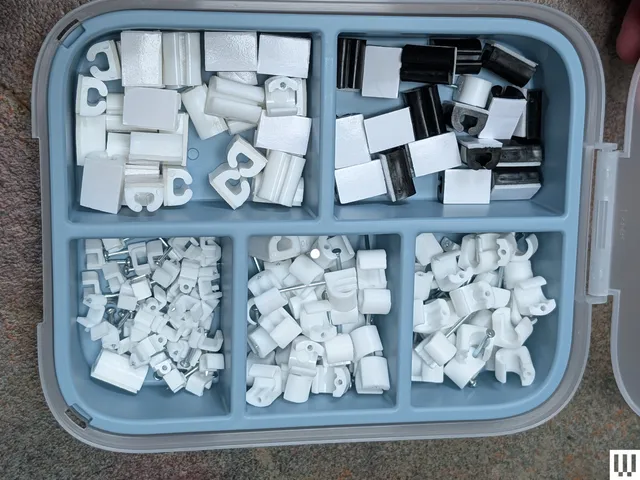
Tidying your tech often comes back to cable management, but there are several ways to keep those cords neatly out of sight. Many desks have channels, grommets, and power strip trays built-in, so have a quick look to make sure you’re using what’s available. Some monitor arms also have built-in cable management. You also likely have a bunch of cable ties in your junk drawer or toolbox, so gather them together.
‘Our world is full of these wild ghosts’: Werner Herzog’s new National Geographic documentary gives a rare glimpse of some of the world’s most elusive animals
When Dr Steve Boyes first saw himself in Werner Herzog’s new film Ghost Elephants at the Venice International Film Festival in August last year, he saw an intensity within himself that he didn’t always realize was there.
The conservation biologist and National Geographic Explorer has devoted the past decade of his life to finding a mysterious, elusive herd of elephants in the highlands of Angola with such dedication that it immediately caught the attention of Herzog, who has since chronicled the epic journey in a National Geographic documentary.
“Watching it I thought, ‘wow — I look completely deranged’,” Boyes told TechRadar. For the record, Boyes is anything but deranged. He was more so referring to Herzog’s filmmaking style, which often focuses on chasing what the director calls “static truth” through protagonists with obsessive, almost mythic passions.
Advertisement
Boyes fits the bill perfectly. He’s dedicated his life to pursuing these animals long believed to be a myth, and runs one of the largest land based scientific, exploration programs with National Geographic in the world.
“We’ve discovered more than 300 new species and mapped major wetlands and water systems across Africa. But despite that I still spend most of my time on expeditions sitting around fires eating rice and beans sleeping under the stars. I’m supposed to be chairman of several organizations but I always joke that I’m still working on the factory floor,” Boyes said.
Ghost Elephants | Official Trailer | National Geographic Documentary Films – YouTube
Despite not having seen may of Herzog’s acclaimed documentaries (the two biggest are Aguirre, the Wrath of God and Fitzcarraldo), Boyes immediately hit it off with the filmmaker after a meeting in “the strangest place imaginable”.
That place was a restaurant in Beverly Hills, where the two didn’t just talk about Boyes’ search for the elephants but the meaning of life, philosophy and even their personal experiences of loneliness.
Advertisement
Sign up for breaking news, reviews, opinion, top tech deals, and more.
“Eventually [Herzog] came to Namibia as a creative adviser. I’d invited him out at the last minute after we received a small grant from National Geographic. Within the first two days it became clear to everyone that he needed to tell this story himself. And then this unstoppable creative force just took over.”
One of the few Herzog documentaries that Boyes remembers most is Grizzly Man, which funnily enough follows a very similar story to his own about a conservationist that lived with wild grizzly bears on an Alaskan reserve.
It’s these stories stories centered around obsession that tend to gravitate towards Herzog in a peculiar way, Boyes reveals. “Werner has a funny way of describing how stories come to him. He says it’s like hearing a noise downstairs in your kitchen and realizing that someone has broken in and when you go down there you find four burglars and one big one runs straight at you and that’s the story you have to deal with. That’s the film you make.”
Advertisement
This intangible link also extends to Ghost Elephants, which showcases how cutting-edge tools like motion heat-sensing cameras failed where the wisdom of Indigenous master trackers succeeded.
Advertisement
“Technology is really about measurement. Cameras and acoustic sensors are measuring things. Even a photograph is just a measurement of a moment. But it’s incredibly limiting. We tried everything. Camera traps, acoustic sensors listening for elephants, drones, satellite imagery. None of it worked.
“When the master trackers joined us, everything changed. Someone like [a master tracker] interacts with an elephant footprint the way we interact with a human face. He sees a track once and then again the next day and instantly recognizes it as the same individual. Very quickly he starts naming the elephants and building stories about them,” Boyes said.
The documentary isn’t just about finding an elusive animal, it’s about spotlighting what Boyes believes is the most endangered human resource on the planet right now: traditional ecological knowledge. “Our world is full of these wild ghosts,” Boyes revealed.
Ghost Elephants will premiere on National Geographic on March 7, and be available to stream the following day on Hulu (US) and Disney+ (internationally).
And of course, you can also follow TechRadar on YouTube and TikTok for news, reviews, unboxings in video form, and get regular updates from us on WhatsApp too.