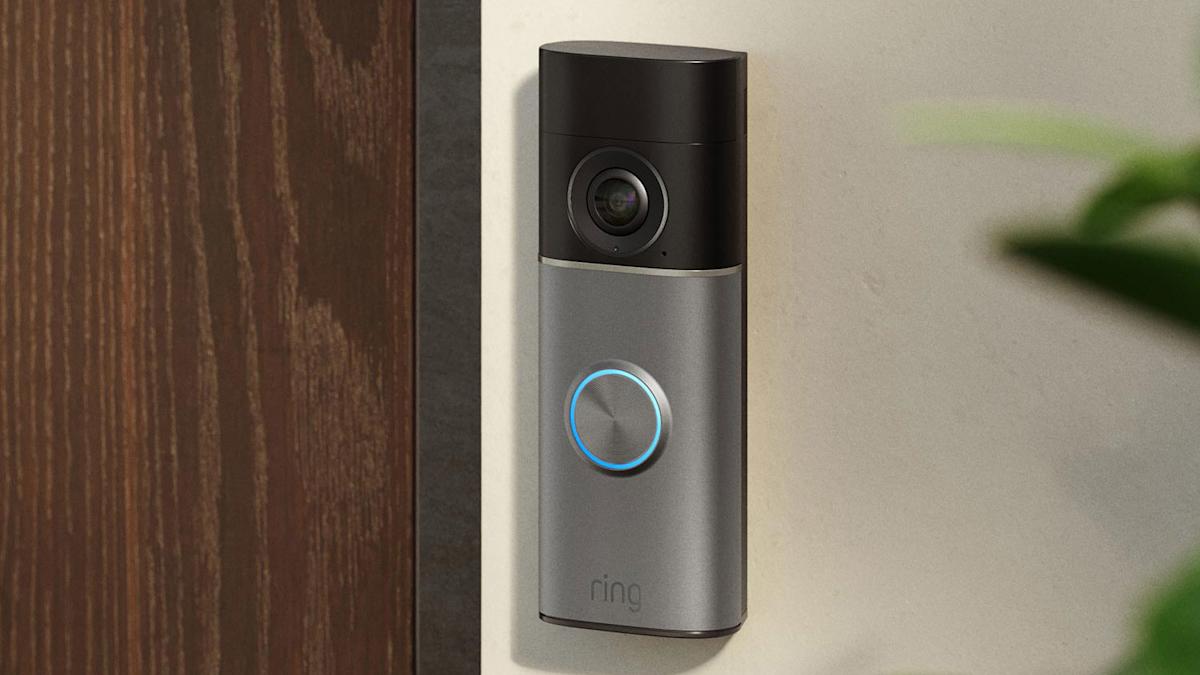
Ring has today announced a spec bump to its battery-powered video doorbells for all those folks who can’t wire their units to power. The flagship Battery Doorbell Pro (2nd gen) gets 4K video, with 10x zoom and the promise of far longer time between recharges than the previous model. At the same time, it’s bringing 2K imaging to its lower-end battery doorbells, the Battery Doorbell Plus and Battery Doorbell (2nd gen). The former, as fitting its higher price, gets a quick-release battery pack, while both models get 2K video and 6x zoom. Naturally, these features are already available on Ring’s wired products, the bulk of which were announced back in September 2025.
The company is also aware that swapping out batteries isn’t ideal if you really need a doorbell to work all of the time. That’s why it’s also launching a new Solar Charger which integrates into the mount, keeping your doorbell running for longer between trips to the wall outlet. There’s also a bigger Solar Panel, which pumps out more juice than its smaller sibling, and can be mounted in a wider variety of places. All of the above are available to pre-order from today, and are priced as follows: Pro ($250), Plus ($180), Battery Doorbell ($100), Solar Charger ($50), Solar Panel ($60).
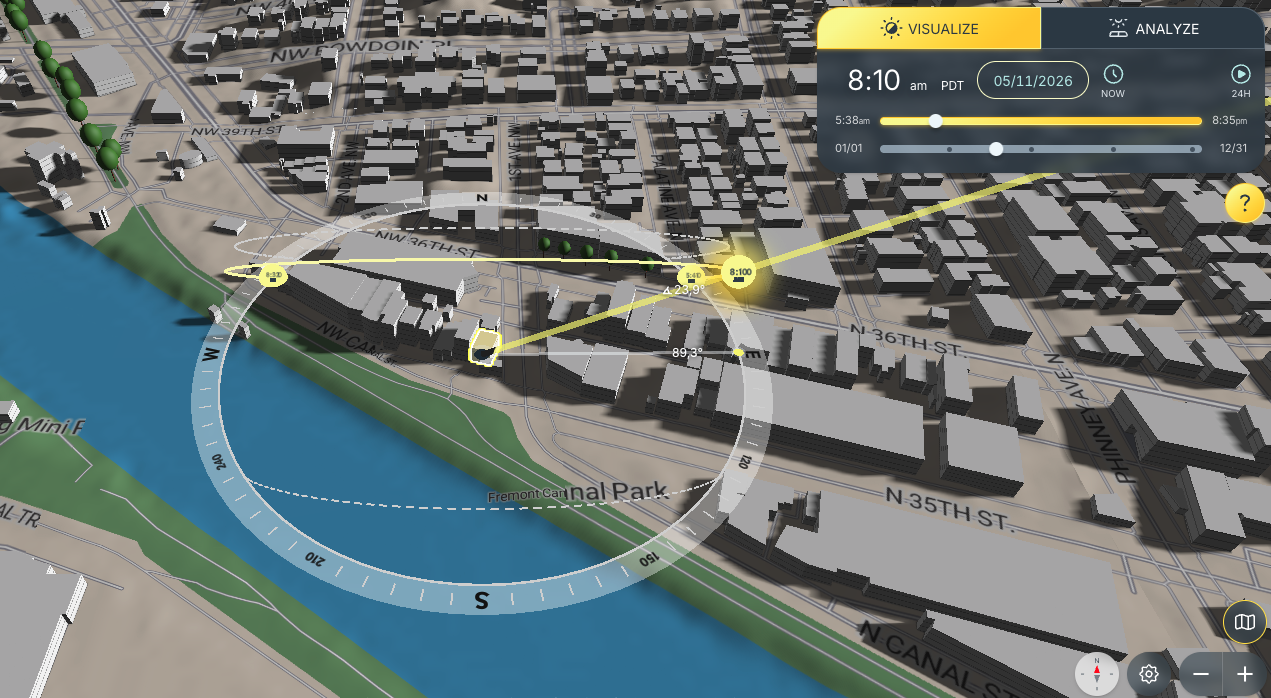
An interactive “Sunscore” visualization on Redfin shows the path of sunlight on GeekWire’s offices in Seattle. (Image via Redfin)
What’s it take to be a neighbor with a sunny disposition? Perhaps more sunlight, for starters.
Seattle-based real estate brokerage Redfin launched “Sunscore” on Monday, a new interactive feature that lets home searchers see how much natural light a property receives throughout the day.
The 3D map offers a property-level sun-path visualization, tracking sunlight and the shadows cast by surrounding terrain, buildings and trees. Different times of day and times of the year are analyzed to provide a full picture of potential shadows. Properties are scored 0-100 — the more sunlight, the higher the score.
“We know from customer feedback that sunlight is a priority for house hunters,” said Ariel Dos Santos, Redfin’s chief product and design officer, in a news release. “When you tour a home, you want to see brightly lit spaces with natural light pouring through windows. Sunscore gives home searchers that information upfront in a simple-to-understand way.”
A recent Redfin survey found that nearly 70% of people say the amount of sunlight in their home affects their satisfaction with their living situation, and 11% say it’s non-negotiable when searching for a home.
Advertisement
And the amount of light a home receives isn’t just a mood-booster or an aesthetic factor; the score on property-level sunlight can be also help homeowners measure the potential for solar energy and long-term cost savings.
Sunscore is developed by Austria-based Shadowmap, and the partnership with Redfin-owned Rocket is a U.S. exclusive. The feature is now available on all for-sale homes listed on Redfin.com and will be available on Redfin’s iPhone and Android apps later this year.
Who else is feeling physically sick every time they tune into Half Man? That’s testament to Richard Gadd’s incredible character creation, but my word is Ruben absolutely vile.
As we’re finding out, the show follows brothers Niall (Jamie Bell) and Ruben (Gadd) through 30 years of their lives, exploring the highs and lows of their turbulent relationship. Frankly, “lows” is putting things politely.
Things will probably get worse than what we’ve already seen. But when will Half Manepisode 4 be released on HBO Max and BBC iPlayer?
Advertisement
Latest Videos From
What time can I watch Half Man episode 4 on HBO Max and BBC iPlayer?
Five-year-old European military drone startup Helsing is reportedly close to raising a new $1.2 billion round at about an $18 billion valuation. The round is expected to be led by Dragoneer and co-led by existing Helsing investor Lightspeed, the Financial Times reported.
Helsing last raised just under a year ago, in June 2025, in a deal that was led by billionaire Spotify founder Daniel Ek. That was a €600 million investment at an estimated €12 billion valuation ($14 billion USD). So this new round is a step-up.
While Helsing isn’t the only European unicorn defense tech, it is by far the one that investors deem the most valuable. For instance, German drone maker Quantum Systems raised €180 million in November, which valued it at more than €3 billion. And a year ago, Lisbon-headquartered Tekever raised £400 million at a valuation above £1 billion. Amid Russia’s ongoing war in Ukraine, the proving ground for new technologies, autonomous defense startups have become a hot area for VCs.
Helsing, Dragoneer, and Lightspeed could not be immediately reached for comment.
Starbucks headquarters in Seattle. (GeekWire Photo / Kurt Schlosser)
A new filing with Washington state shows that Starbucks’ recent job cuts will impact 61 tech jobs at its Seattle headquarters. The Seattle Times first reported on this round of layoffs in April, citing an internal message that did not include the number of roles, their location or specific job titles.
The layoffs are the result of “a reorganization of the technology department at the Starbucks Support Center,” the letter states. The cuts take effect between June 20 and Aug. 28.
The Worker Adjustment and Retraining Notification (WARN) letter states that the affected roles include cybersecurity analyst, technical product manager, systems analyst, systems administrator, scrum master and architect. Employees at the director and manager levels are among those being let go.
The tech department shake-up also follows the hiring of Anand Varadarajan as chief technology officer in January. He joined the coffee company after 19 years at Amazon, where he most recently led technology and supply chain for its global grocery business.
Advertisement
In a September filing with the U.S. Securities and Exchange Commission, Starbucks warned that it needed to keep improving its marketing, data analytics and AI tools or risk losing consumer interest and market share.
The tech sector has seen a wave of layoffs in recent months, including cuts in the Pacific Northwest impacting Amazon, Meta, Microsoft, Expedia Group, T-Mobile, Oracle, Zillow and others. Companies generally frame the cuts as a mix of post-pandemic restructuring, tighter cost discipline, and a shift of resources toward AI and other strategic priorities.
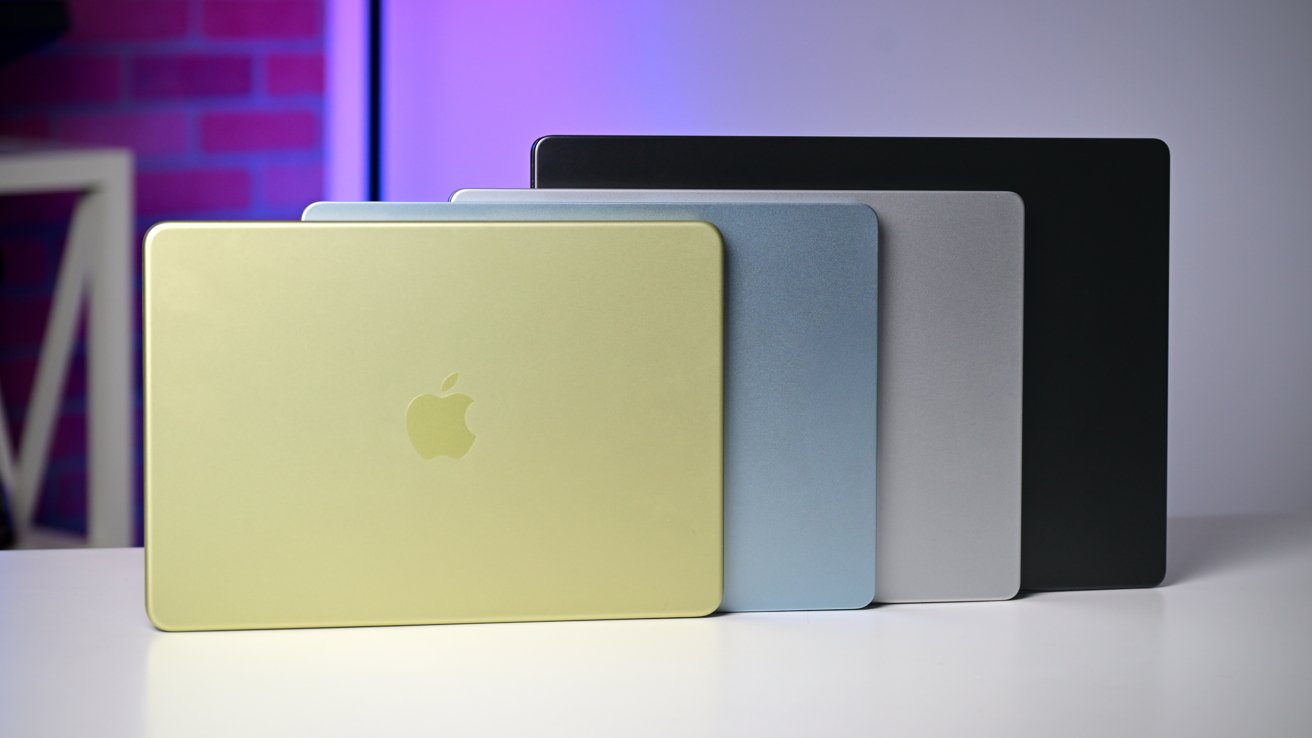
Apple’s macOS 26.5 has been released, delivering a quiet update focused on stability, subscription changes, and system-level improvements rather than new user-facing features.
The release arrives without major additions across the interface or built-in apps. macOS Tahoe 26.4, which shipped on March 24, 2026, introduced visible updates across apps and system features, while version 26.5 shifts attention to compatibility and platform work.
Mac users shouldn’t expect a major shift after installing it. Apple uses the release to support new App Store billing options and refine system behavior without changing how macOS works day to day.
macOS 26.5 is build number 25F71.
Advertisement
Maps ads expand to macOS in a broader services push
Apple has expanded ads in Maps to macOS as part of the same rollout across its platforms. Ads now appear at the top of some search results and sit alongside standard listings, which changes how locations are surfaced without altering navigation tools.
Suggested Places also appears in Maps and highlights nearby locations based on trends, recent searches, and local activity. Results no longer rely only on relevance and proximity, as paid placements can influence what appears first.
Apple uses the change to extend its advertising model into local search on the Mac. Ads are clearly labeled and rely on signals like search terms and location instead of user profiles.
App Store subscription changes carry over to macOS
Apple’s new subscription model reaches macOS with the 26.5 release. Developers can offer monthly payments tied to a 12-month commitment in most regions, excluding the United States and Singapore.
Advertisement
Users get pricing that usually matches discounted annual plans without paying for a full year upfront. The model still commits subscribers to 12 monthly payments once a subscription starts, even though the price appears as a monthly plan.
Subscribers can cancel at any time, but service continues until all committed payments are completed. Account settings show completed payments, remaining payments, and renewal timing, which makes the commitment clear over time.
Developers gain a more predictable revenue stream while presenting pricing as a lower monthly cost. Monthly billing doesn’t provide monthly flexibility under this model.
macOS 26.5 focuses on under-the-hood improvements rather than visible changes across the interface or built-in apps. Apple directs the release toward stability, compatibility, and updates that support how apps run and interact with the system.
Advertisement
Safari and core system components receive updates that improve reliability and behavior in everyday use. These changes help reduce bugs and inconsistencies without introducing new features that users can see directly.
macOS 26.5 follows macOS 26.4 as a quieter release with a narrower purpose. Most users will see an incremental update that keeps the Mac current rather than changing how it looks or behaves day to day.
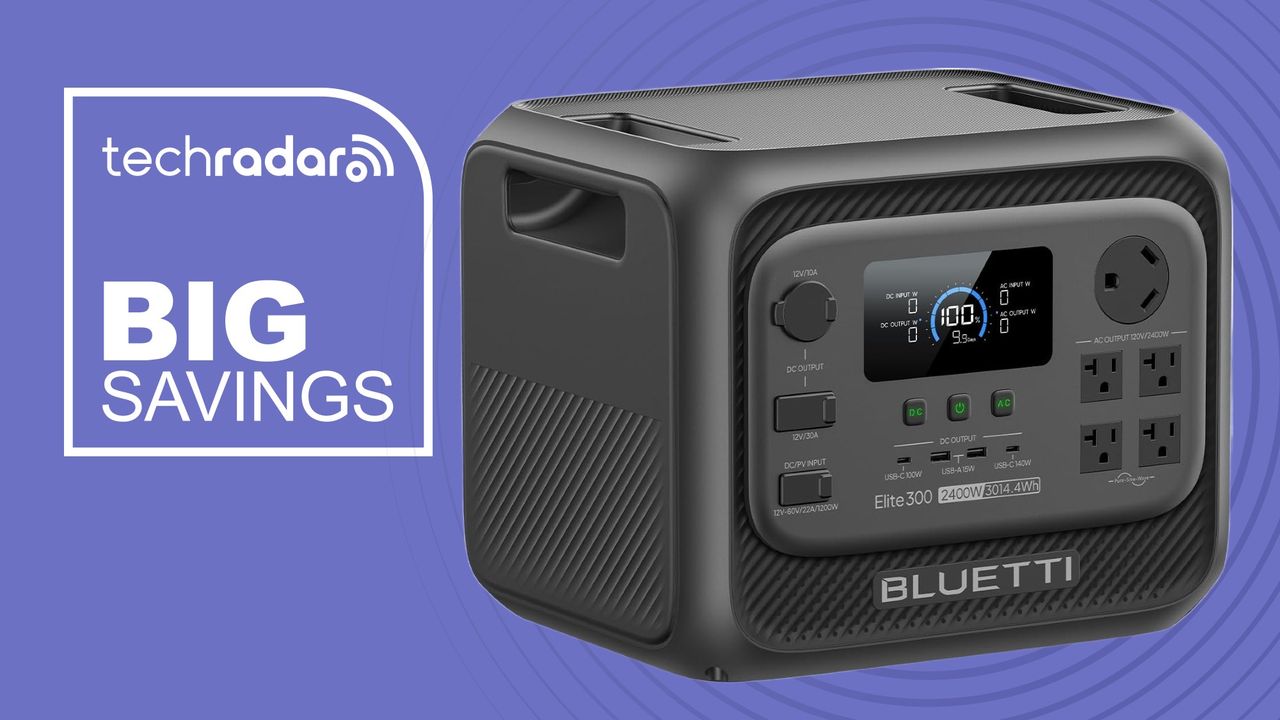
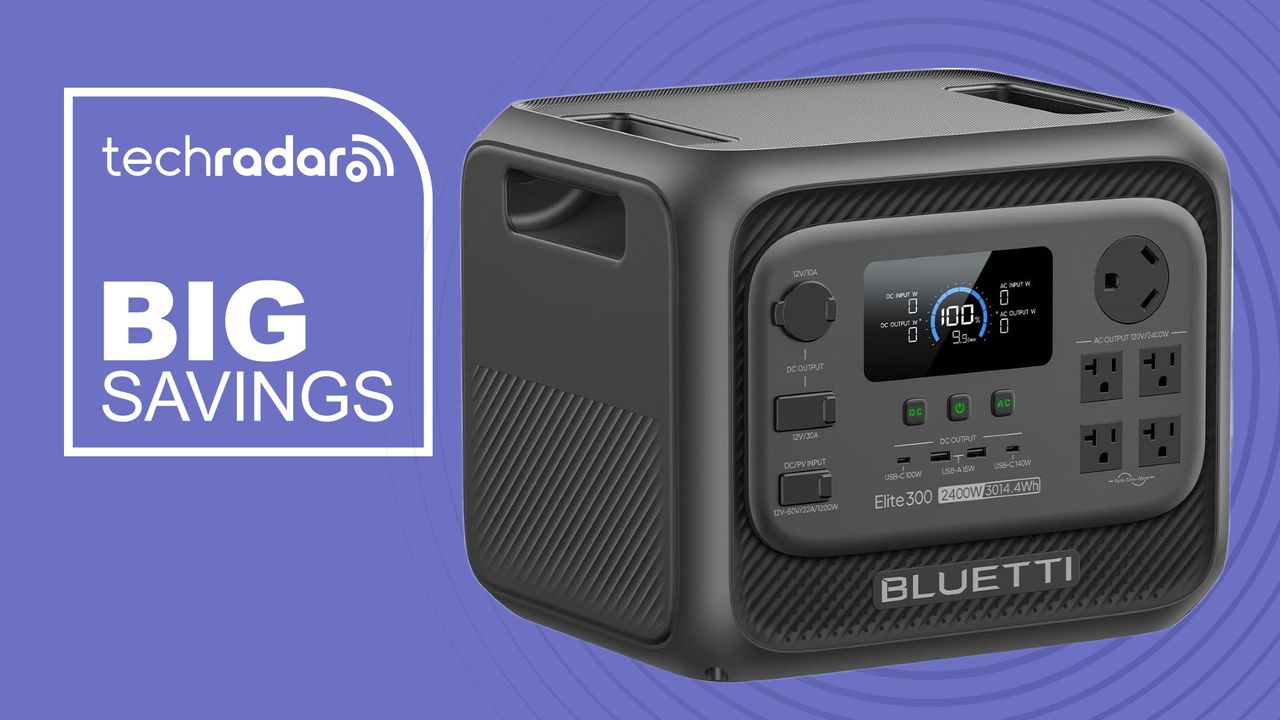
There are some major portable power station deals over at Amazon right now. I’ve selected 7 that are worth exploring, although there’s one truly stand-out deal right now.
The one that really caught my eye is the Bluetti Elite 300 that’s now $1099 (was $1499). That’s a major discount on a heavy-duty unit with a 3014Wh battery capacity. After testing out the Elite 300, we found it “powerful, flexible and impressively rugged.”
Now, we did find it pretty heavy to carry – it’s stretching the definition of ‘portability’ to the limit. But it really impressed us. At the time, we called it “a mobile power solution. Compared to smaller power stations, it opens up entirely new possibilities: cooking proper meals, running tools, and living comfortably off-grid.”
Speaking at Sequoia Capital’s AI Ascent event last May, OpenAI CEO Sam Altman said young people were using ChatGPT like an operating system for life — not just for productivity, but for major personal decisions.
“I mean, that stuff, I think, is all cool and impressive,” Altman said. “And there’s this other thing where, like, they don’t really make life decisions without asking ChatGPT what they should do.”
Advertisement
Latest Videos From
At the time, the comment sounded provocative. A year later, though, ChatGPT has become something closer to a therapist, life coach, confidant, and companion for many of its users. Now OpenAI is building an actual emotional-support infrastructure around the chatbot with a feature called Trusted Contact.
The feature is still rolling out, so Trusted Contact is not available to everybody yet, but to find it, you click or tap on your profile name in ChatGPT, then look in Settings. You can nominate a trusted adult contact, who must accept the role before the feature becomes active.
If ChatGPT’s automated systems detect conversations that may indicate a serious risk of self-harm, the user is warned that their Trusted Contact could be notified and encouraged to reach out themselves first.
Advertisement
A specially trained human review team then assesses the situation before any alert is sent. If reviewers believe there is a genuine safety concern, the Trusted Contact receives a notification by email, text, or in-app alert encouraging them to check in.
Sign up for breaking news, reviews, opinion, top tech deals, and more.
OpenAI says the alerts do not include chat transcripts or detailed conversation history in order to protect user privacy, and you can remove or change your Trusted Contact at any time.
Being contacted by the Trusted Contact feature in ChatGPT on an iPhone. (Image credit: OpenAI)
Advertisement
Reassuring or unsettling?
OpenAI says Trusted Contact was developed with input from mental-health experts, suicide-prevention specialists, and a global network of more than 260 doctors across 60 countries. Taken together with all the parental controls that OpenAI has already introduced and the safety guardrails already in place, Trusted Contact is another sign that the company is acknowledging that ChatGPT is something that can affect users emotionally, not just technologically.
The recent product announcements from OpenAI have really played down the use of ChatGPT as a confident, and emphasised ChatGPT’s productivity focus more, particularly regarding the Codex tool for creating code. Yet at the same time, more and more safety features aimed at ChatGPT users’ emotional well-being are being added.
The idea that we are now being monitored by ChatGPT is also concerning to some. When my colleague Becca Caddy recently interviewed Amy Sutton from Freedom Counselling for an investigation into AI monitoring tools in the workplace, she noted that knowing you’re being monitored by your AI, especially in the workplace, could actually worsen the problem it’s trying to solve. Sutton commented, “With mental health stigmas still rife, AI observation would likely lead to greater efforts to hide evidence of struggles. This could create a dangerous spiral, where the greater our efforts to hide low mood or anxiety, the worse it becomes.”
Whether Trusted Contact feels reassuring or unsettling probably depends on how you already see AI and ChatGPT. But the feature is another example of how AI companies acknowledge that their products are not just tools for productivity and information, but as systems people may increasingly rely on emotionally during some of the most vulnerable moments of their lives.
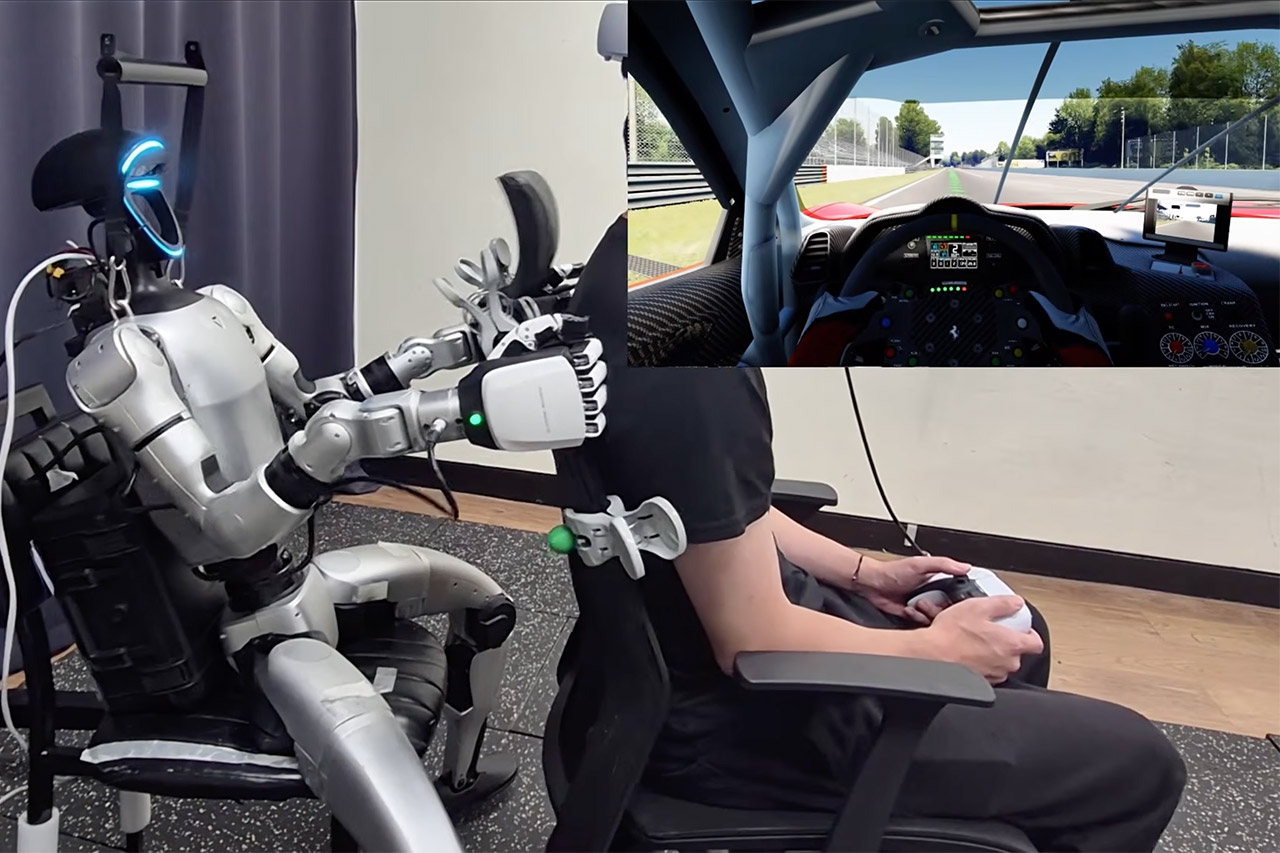
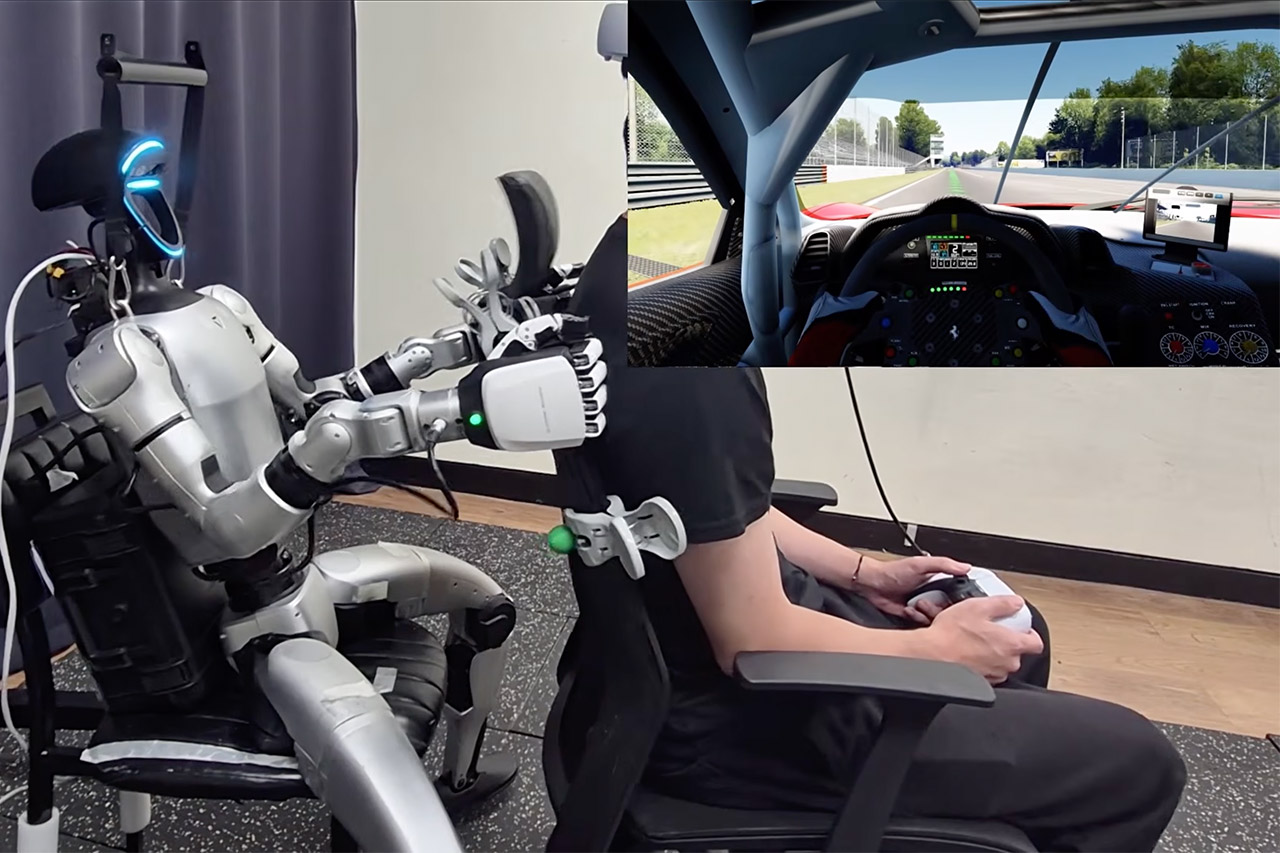
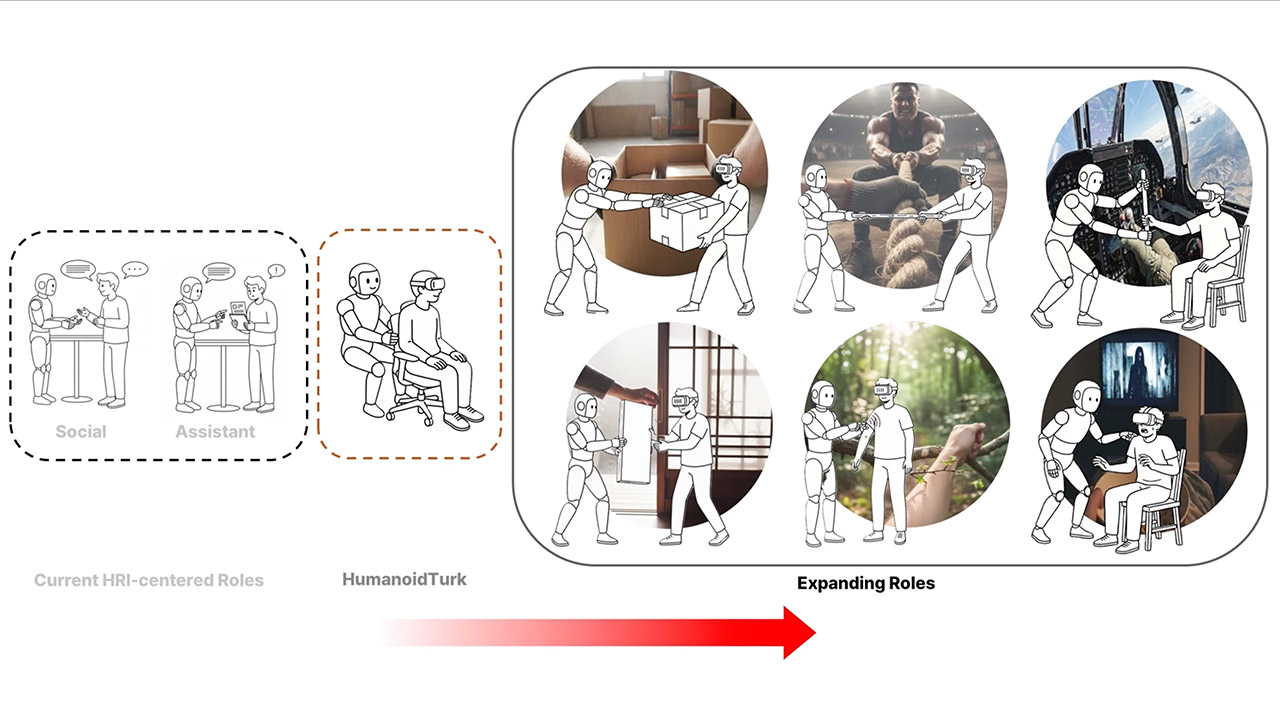
Full motion racing simulators deliver that stomach-dropping feeling of speed and cornering, yet most setups carry prices that put them out of reach for regular players. Researchers saw an opportunity in the growing number of humanoid robots already available in some homes and labs. Their solution carries the name HumanoidTurk and centers on a Unitree G1 robot that sits right behind whoever is playing.
Players simply sit on an ordinary chair, put on a VR headset, and launch Assetto Corsa on their computer. There are little balls on the chair that the robot uses to track its exact position with a depth camera installed on it. The game then feeds real-time force data, such as acceleration, braking, and turns, to the robot. Hands on the back of the chair, the robot then moves the seat forward, backward, or side to side to match those forces exactly.
Most Comfortable And Relaxing: Equipped with headrest and lumbar pillow. When your neck feels sore from gaming or working with head down for a long…
More Stable Than Others: Common gaming chairs are equipped with plastic legs generally to save costs, but we still insist on applying the same…
Liberate Your Feet: Will you feel tired for sitting all the time? Sure. Then you can choose the chair with footrest to relax your feet. When you…
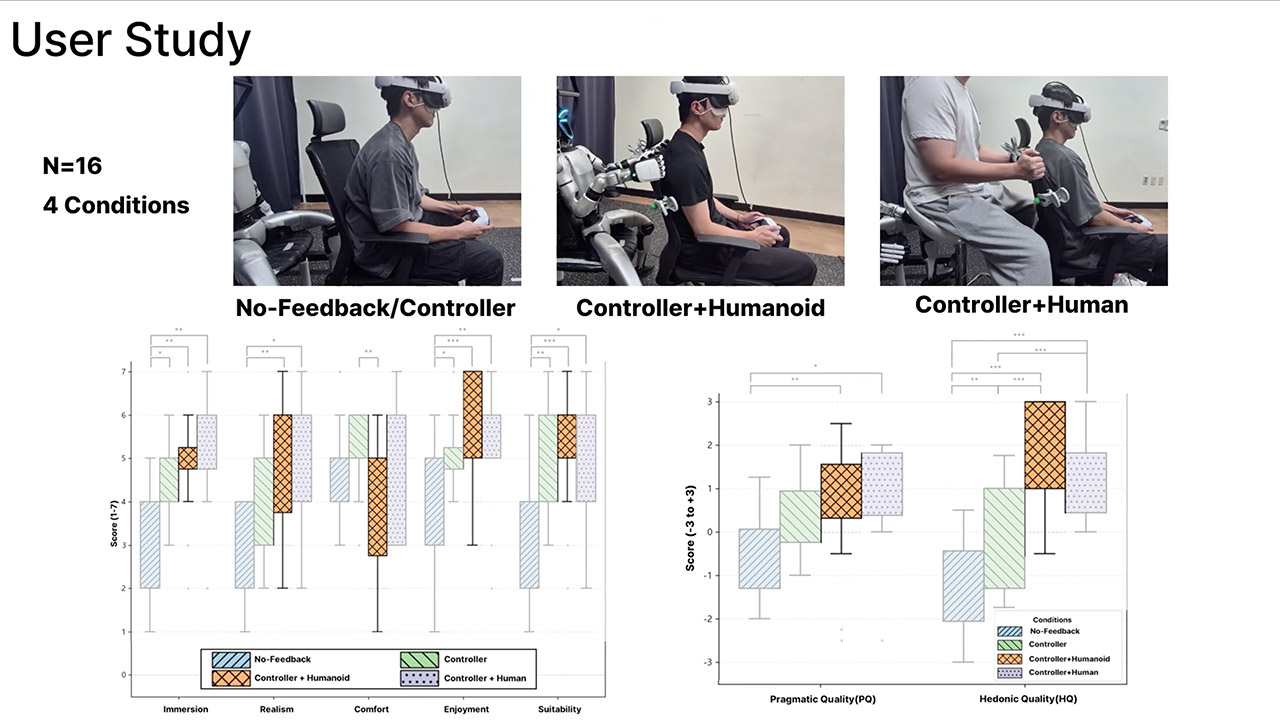
Testing helped the team determine that applying a filter to smooth out the game signals was the best method to minimize jarring or jerky motions in the robot. In a bigger study 16 people took part, comparing 4 different setups. Some simply drove normally, receiving no further feedback. Others used just the game controller for some vibrations. One group had the robot moving the chair in sync with the controller input, while another had a person just shifting the chair for them.
People rated the overall quality higher in both practical and fun aspects. Nonetheless, the robot’s continual changes made some feel fatigued after prolonged sessions. A few people reported that the increased motion in the VR headgear made them feel more uncomfortable. This approach means people who already own a compatible humanoid robot gain access to advanced motion feedback without buying separate expensive hardware. Limitations exist, of course, especially around comfort during extended play. Even so, the project points to fresh ways humanoids can serve in entertainment beyond their usual tasks. [Source]
DubHacks Next Batch 5 founders at Demo Day on May 7 at the University of Washington. (DubHacks Photo)
Senior engineers are retiring faster than companies can replace them, creating a widening expertise gap in industries from aerospace to nuclear energy.
Hera, a project developed by University of Washington students, is aiming to address the issue with technology that automates the design of parts that meet safety and industry rules, a process that normally requires many years of knowledge and experience.
The product is timely, as 1.9 million manufacturing jobs are expected to go unfilled in the $2.3 trillion sector by 2033, according to Deloitte.
“Hera answers design questions 10-times faster than a senior engineer,” said Meera Patel, co-creator of Hera. “Once it knows the drawing can be manufactured, it pulls data from all your machines and gives you an exact production plan.”
That’s one of several problems University of Washington students tackled through DubHacks Next, a 16-week startup incubator. On Thursday, May 7, student founders pitched 20 startups hoping to turn their ideas into viable companies.
Advertisement
Since 2022, DubHacks Next has spurred 68 startups and at least 25 active companies. Participants get access to free workshops, mentorship sessions, customer discovery meetings and networking with potential investors.
This year’s batch of 20 startups includes AI salon receptionists, a student subleasing platform and an emotional recovery app.
“I’ve never had the experience of building such a large-scale idea and bringing it to life,” said William Pantel, co-developer of Catalvst, an AI audio plugin builder.
The incubator’s past projects have raised more than $5 million collectively, with alumni going on to join accelerators such as Y Combinator and Techstars or land jobs at major tech companies.
Advertisement
Starting this year, students could apply to join the Pack Ventures portfolio, including $50,000 up front and $150,000 when another firm buys in.
Hera co-creators Meera Patel and Noelle So pitch their manufacturing automation tool at DubHacks Next Demo Day. (DubHacks Photo)
Patel and Hera co-creator Noelle So are among the students working with Pack. The demo is now live in three production plants, Patel said.
Here are more standouts from this year’s batch:
Chameleon: For the 1.3 billion people living with disabilities worldwide, nearly 96% of the internet’s top homepages are considered inaccessible. Enter Chameleon, an AI-powered web accessibility tool suite.
The suite includes a Chrome extension with tools like focus rulers, voice commands and head-tracking controls for accessible web navigation on any site, say co-founders Aditya Shirodkar and Ajit Mallavarapu.
Advertisement
“Especially with vibe coding, people are quick to develop software and don’t think about accessibility needs,” Shirodkar told GeekWire. “It’s a silent barrier that isn’t really addressed.”
Chameleon is entering a market with growing need – and financial opportunity. The global digital accessibility market is estimated at $1.8 billion, and is projected to reach $3.2 billion by 2034, according to Straits Research.
“It’s not just about making something cool,” Mallavarapu said. “It’s about making something people will actually use every day.”
Iris: Sthiti Patnaik and Saachi Dhamija focused on another technological headache: spreadsheets.
Advertisement
Universities often rely on sprawling spreadsheets to track alumni for fundraising, networking and event planning, but records quickly become outdated and difficult to search. With Iris, alumni associations and other groups can more easily maintain member databases.
“We ingest their spreadsheet, then present it in a more visual format with bubbles and graphs,” Dhamija told GeekWire.
Along with data enrichment and interactive visual mapping for organizers, Iris helps members discover one another through shared experiences and interests. Patnaik, a recent graduate and managing director for DubHacks Next, hopes the solution will help her stay connected to other founders.
“All of our alumni go on to do really fantastic things, such as raise money, start their own startups, or work at really great companies,” she said.
Advertisement
After presenting Iris, Patnaik and Dhamija landed a design partnership with Pack Ventures.
Catalvst: For Aaron Li and William Pantel, the incubator became a launching pad for Catalvst, what may be the first-ever AI audio plugin builder.
High-end audio plugins – software tools that shape and manipulate sound – can cost music producers hundreds or even thousands of dollars. Li, who began producing EDM three years ago, said software costs have delayed his progress.
“I remember working all summer just to save up,” he said. “It’s a domino effect. You get one piece of software, and realize there’s another one you need that’s super expensive.”
Advertisement
With Catalvst, users can describe the sound they want in plain language and generate downloadable, working audio software in under a minute.
“If you’re like, ‘I want my songs to sound like I sing them in a cathedral,’ it’ll create software that makes your song sound like that,” Pantel said.
The founders distinguish their product from AI-generated music platforms, emphasizing that their goal is to empower human creators rather than replace them. They’re currently beta testing with music producers to refine the product and grow its user base.
“We’re using AI to build tools human producers can use,” Pantel said.
Advertisement
Applications for the incubator’s sixth batch open this fall.
Other Batch 5 startups:
BeamBell: AI salon receptionist | Arvin Hakakian, Anant Dhokia, Aur Shalev Merin
European diesels can be had at both ends of the spectrum; there are magnificent ones like Audi’s 12-cylinder, and catastrophic failures like Land Rover’s inline-six. Over here in America, we tend to associate diesel engines almost exclusively with trucks and heavy machinery, but Europeans have been doing things a little differently for the past three decades or so. It’s not uncommon at all to see a diesel-powered sedan or hatchback on the continent, although newer models in the region are gradually ditching diesels too.
Aside from the cultural acceptance of diesels in Europe, there were also emission laws so strict that CARB — the reason why you can’t get the new Hemi V8 in some states — would be put to shame by comparison. As a result, the amount of innovation in European diesel engines was much higher, and that’s why we got some truly spectacular engines out of it. And it’s not like these were three-cylinder econobox engines either; the Germans were busy stuffing V10 diesels into anything they could get their hands on, from a family SUV to an executive sedan, and pretty much everything in between. But where there’s trial and experimentation, there’s also error. So it is with Euro diesels, because we also got some real dogs along the way, two of which we’ll cover here. One was subjectively the worst engine from a brand already famous for unreliability, and the other treated timing chains like a consumable item.
Advertisement
Best: Audi 5.5 V12 TDI
First up, a V12 from Audi, which is one of the many car brands that Volkswagen owns. The Volkswagen group had made many legendary diesels at the time, including a V10 for the Phaeton and Touareg, and a V12 diesel for the Q7. For the V10 production version, the final unit ended up being a five-liter engine, with the TDI suffix indicating that it used diesel injection. The cars it powered were the Phaeton, where it made 313 hp and 553 lb-ft of torque, and the Touareg, where the final power output stood at 310 hp and the same torque.
As you can imagine, these cars were blisteringly quick, with the Touareg managing a 0-60 mph time of an estimated 7.5 seconds. Later on, Audi would make their own V12 diesel engine for their Le Mans LMP1 race vehicle. This car, called the Audi R10, got a 5.5-liter version of the engine, but with 12 cylinders making 650 hp and 811 lb-ft of torque, and to say that the Audi dominated the next season would be an understatement.
Advertisement
With its newfound diesel powertrain and 12 cylinders, the electronically limited Audi R10 LMP1 romped home to victory in several races, and even took home overall victories at Le Mans three times. In doing so, the Audi R10 became the first diesel car ever to win Le Mans — and it ran on biodiesel.
Advertisement
Best: BMW M57
While BMWs don’t exactly have the best reputation when it comes to reliability — we’ve all seen the oil leak and check engine light jokes online — the BMW M57 diesel is an exception. The engine was a three-liter, six-cylinder unit with the cylinders arranged in an inline configuration, and it came with turbochargers as well, of course. BMW has had a long history of making diesel engines even for passenger cars, such as the widely used M47 and B57, though these are not considered as reliable as the M57 that we’re looking at.
It was first released in the U.S. for the 2009 model year, though it had been in production since 1998, and the U.S.-spec version made 265 hp and 425 lb-ft of torque. It was offered in many mainstay models from BMW, initially in the 335d sedan and the X5 SUV. In the 335d, which is arguably the most famous of the models we just listed, the M57 could push the car from 0-60 mph in about 5.7 seconds and gave the car the ability to run the standing quarter-mile in 14.2 seconds.
While somewhat average by modern standards, remember, this was back in the late 2000s, when even supercars like the Aston Martin Vantage had 0-60 mph times of around 4.7 seconds. With all that said, there are certain years where the BMW M57 diesel engine should be avoided, but overall, it was a pretty solid option that delivered on all fronts.
Advertisement
Best: Volvo D13
There aren’t many people who’ve heard of the Volvo D13, but if you’ve ever bought anything from Europe, there’s a decent chance part of its journey involved a truck powered by a Volvo D13. Widely considered to be the best truck engine that Volvo has made — though there have been newer versions released at the time of writing — the D13 has powered trucks like the Volvo VNR, VAH, VNL, and VHD, all of which are part of Volvo’s North American lineup. Displacing a herculean 12.8 liters across six inline cylinders with a bore of 131 mm and a stroke of 158 mm, this 2,635-lb engine is primarily a diesel variant that makes between 1,450 and 1,900 lb-ft of torque at a relatively low 900 RPM.
This is in addition to a maximum power output of 500 hp, with peak hp available at 1,300 RPM — and while the utility of this power would largely be dependent on the choice of transmission in the truck, it’s still impressive nonetheless. As with many truck engines, there are different power ratings available, with the lowest variant of the D13 coming with 405 hp and 1,450 lb-ft of torque, while the top-of-the-line variant makes the aforementioned 500 hp and up to 1,900 lb-ft of torque.
Advertisement
Also, we said “primarily” a diesel variant because there is also a very similar engine from Volvo called the D13-LNG that runs on natural gas, which is generally understood to be a cleaner fuel source than diesel.
Advertisement
Worst: Land Rover 2.0 Ingenium
Widely considered to be the worst Land Rover engine ever made by experts and users alike, the 2.0 Ingenium was introduced to the world in 2015. The inaugural version was used to power the Jaguar XE, though it was later also slotted into the Land Rover Discovery Sport and Range Rover Evoque. The displacement is two liters across four cylinders , and is turbocharged. On paper, the 2.0 Ingenium is quite powerful, making at least 197 hp along with 236 lb-ft of torque, though models with higher power outputs are available.
In real life, however, everyone — from end users to industry experts — has a laundry list of woes. First up, there are reliability concerns that are too numerous to name, but the big and unfortunately common ones are oil dilution, timing chain breaks and rattles, and the turbos flat-out failing. However, the silver lining in there’s the fuel economy; the Discovery Sport with the 2.0 Ingenium diesel engine netted a 58 mpg figure on launch in 2015, according to Land Rover. Note that the European fuel economy measuring test (NEDC at the time, WLTP today) is different from the EPA system used in the U.S., so the readings aren’t exactly the same.
And lastly, mechanics seem to dislike working on the engine too, complaining about things like component placement and the engine generally being troublesome to work on. All of the above, coupled with the frequent breakdowns, make it one of the most horrible things to come out of Land Rover.
Advertisement
Worst: BMW N47
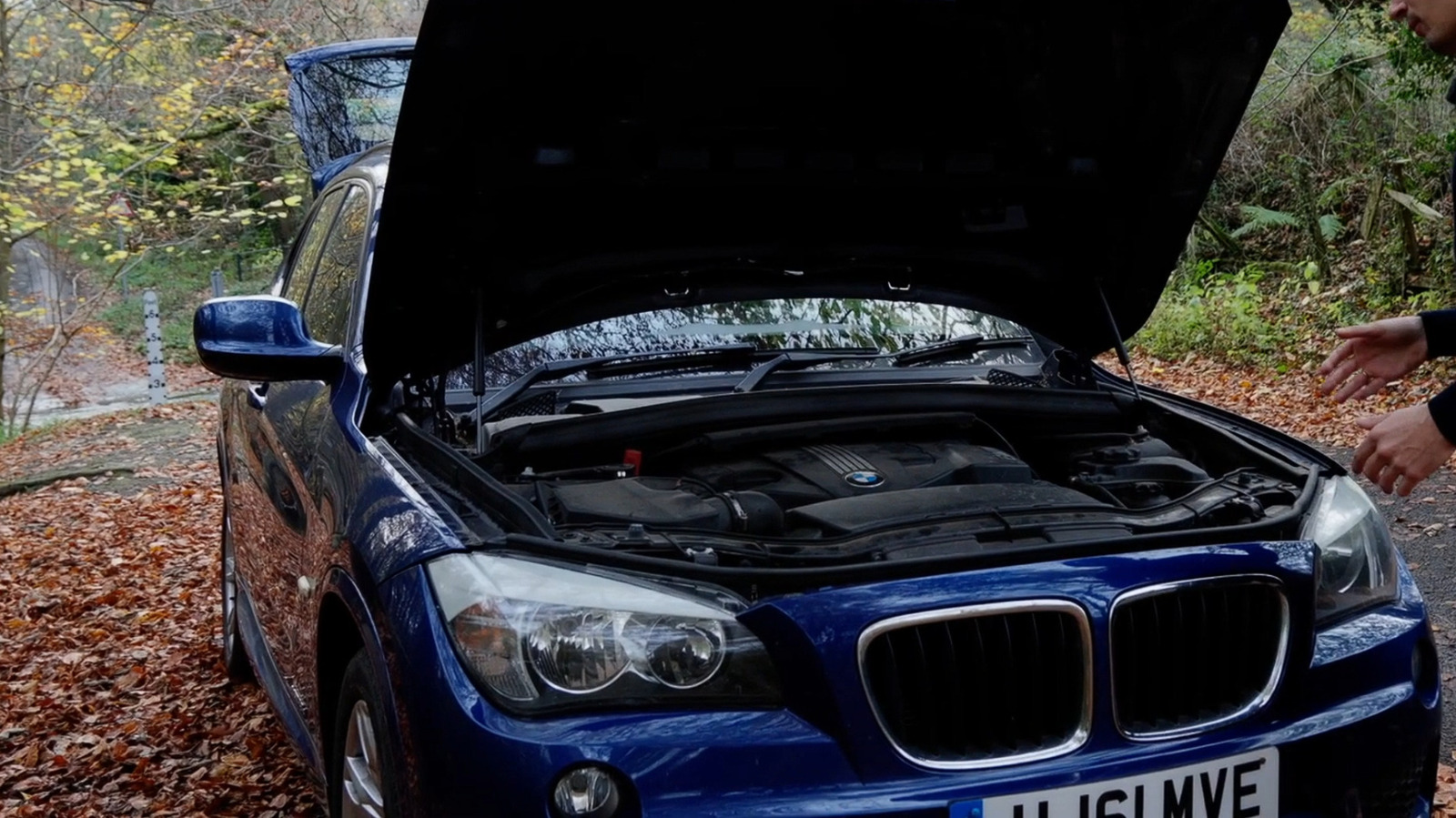
Where the BMW M57 that we looked at above was a star, the four-cylinder N47 that made between 94 and 215 hp was the complete opposite. It first entered BMW’s lineup in 2007, where it remained until 2014, marking a production span of about seven years, but it’s easy to see why the engine was quickly discontinued. For starters, let’s first say that the selling point for the N47 was its efficiency; in the 2009 BMW X1, it was able to net an impressive 48 mpg combined fuel economy figure across city and highway driving. Again, the European testing methods would differ from the EPA’s methods, so bear that in mind.
However, this was an engine that treated its timing chains like a consumable item. Furthermore, like many other BMW engines the timing chain is located at the back of the engine bay. As such, when something goes wrong that needs a timing chain replacement, the labor is prohibitively expensive and time-consuming.
Advertisement
Other issues that plague the N47, albeit to a lesser degree than the timing chain woes, include premature turbocharger failure, high oil consumption, and a whole suite of problems with the EGR, or exhaust gas recirculation system. To be clear, we’re not saying that it’s inevitable that the N47 will be a dog, but it’s highly likely that maintenance bills for this engine will be higher than usual. Unless your heart is really set on one, it’s probably best to go with another option.

























































You must be logged in to post a comment Login