
Security teams log 54% of successful attacks and alert on just 14%. The rest move through your environment unseen.
The Picus whitepaper shows how breach and attack simulation tests your SIEM and EDR rules so threats stop slipping by detection.




Take a stroll around San Francisco and it won’t take long to spot an empty autonomous vehicle cruising the city’s streets, waiting to be hailed by a rider or heading off to a distant depot to be charged and cleaned. These deadhead miles — an industry term for miles driven without a paying passenger — are one of the biggest barriers between robotaxi companies and profitability.
Redwood City, California-based startup Aseon Labs thinks it has a fix: parking space-sized automated pods that can be scattered throughout cities to inspect, clean, and charge robotaxis. The company, co-founded by the team behind battery-swapping startup Pushme, calls them robotic pit stops for the robotaxi industry. And the idea has caught the attention of investors.
Aseon Labs has raised $10 million in a seed round led by Crane Venture Partners, TechCrunch has learned. Y Combinator, Uber co-founder Garrett Camp’s venture firm Expa, Robin Hood Ventures, and Founders Capital also participated, along with angel investors such as serial entrepreneur and former Google executive Adrian Aoun, Mercury founder and CEO Immad Akhund, Zimride co-founder Rajat Suri, and operators and founding team members from Anthropic, Nuro, Turo, and Revolut.
Aseon Labs is still in the early stages. The seed funds will be used to build five prototypes of these pods, grow its six-person robotics and engineering team to about a dozen, and secure the real estate needed to build out its network, according to Aseon Labs co-founder and CEO George Kalligeros.
“In order to reach economic parity with ride-hailing — which is where we need to get with self-driving cars — and to stop really subsidizing the cost, you need the utilization to go up,” Kalligeros told TechCrunch. “You need the robotaxi in continuous operation during the entirety of the demand curve of the day.”
Aseon’s pitch is that a network of distributed autonomous pods would slash deadhead miles, and inevitably turn robotaxi services into profitable enterprises.

Kalligeros and co-founder and COO Dan Keene come from outside the autonomous vehicle world. But they bring experience developing and scaling a hardware-and-real estate company. Kalligeros worked as a mechanical design engineer at Bentley Motors and Tesla before he and Keene founded Pushme in 2016 to build battery-swapping infrastructure for micromobility fleets. Pushme was building a battery-swap network in Europe when it was acquired in January 2020 by Tier Mobility.
“The parallel I’ll draw is we were basically tasked by SoftBank to put this across as many markets where it made sense for Tier within a very short and compressed period of time,” Kalligeros said. “The playbook became, how do we sprinkle the locations across the center of the city, where it makes sense, but at the same time, make it easy to deploy as non-permanent infrastructure?”
Aseon Labs is applying the same thinking to autonomous vehicles.
As they researched the industry, the pair visited AV depots, where fleets of robotaxis are inspected, maintained, cleaned, and charged. The cost of real estate often prompts companies to locate these depots outside the city center, where most of the ride-hailing activity occurs.
“Depot infrastructure is the key requirement for the launch of a new city for any AV operator,” he said. “And what happens in the depot right now — the operational backbone of autonomy, really — is not fully baked.”
The founders settled on the idea of creating smaller, independently powered autonomous pods that could be dispersed throughout a city but as importantly, they could also be moved as needed. The units, which include cameras to inspect vehicles and robotic arms to retrieve lost items and clean interiors, are considered temporary structures. That classification helps Aseon Labs avoid a lengthy permitting process and allows the company to relocate units if a location underperforms.
The units are designed to run on a propane generator for power or connect to an existing power source through partnerships with EV charging companies. They are meant to operate autonomously, although early versions will be staffed, according to Kalligeros.
Aseon Labs isn’t trying to tackle every edge case, either. Instead, it leans on computer vision and AI — specifically vision-language-action models common in modern robotics — to detect problems the pod shouldn’t try to solve. For example, if a camera detects melted chocolate on a backseat, the robotic arm stands down since attempting to clean it could make the stain worse. Instead, the vehicle will be charged and dispatched directly to that company’s central depot for a human to handle.
Aseon Labs hasn’t signed contracts with any robotaxi companies yet, but Kalligeros said there is widespread interest in the concept. “Pretty much everyone wants to try it,” he said.
When you purchase through links in our articles, we may earn a small commission. This doesn’t affect our editorial independence.


Polymarket says it will fully reimburse customers who lost an estimated $3 million after hackers injected a malicious script into the platform’s frontend following a breach at a third-party vendor.
The company states in a brief announcement that the hack was the result of a supply-chain attack that impacted a dependency on its website.
.png)

Polymarket is one of the world’s largest cryptocurrency-based prediction markets that allows users to trade contracts with prices that reflect the market’s collective estimate of an event’s outcome.
It offers predictions for sports, economic indicators, weather patterns, awards, political and legislative outcomes, and even military conflicts.
Founded in 2020, the platform is currently valued at $9 billion, handles billions of dollars in trading volume, and serves as an influential source of information on market expectations.
During the attack, unsuspecting users were tricked into approving fraudulent transactions on the official Polymarket website after malicious JavaScript was injected through a frontend vendor.
Polymarket’s own servers and backend infrastructure were not impacted by the incident.
The company did not share many details about the event, but independent blockchain intelligence firms estimate the losses at roughly $3 million, stolen from a small number of accounts.
According to blockchain security firm PeckShield, the incident was a phishing campaign that stole approximately $3 million worth of ParyonUSD from users. The stolen funds were later swapped for 1,893 Ether.
“The attacker bridged the stolen funds from #Polygon to #Ethereum and swapped them into ~1,893 $ETH,” PeckShield says.
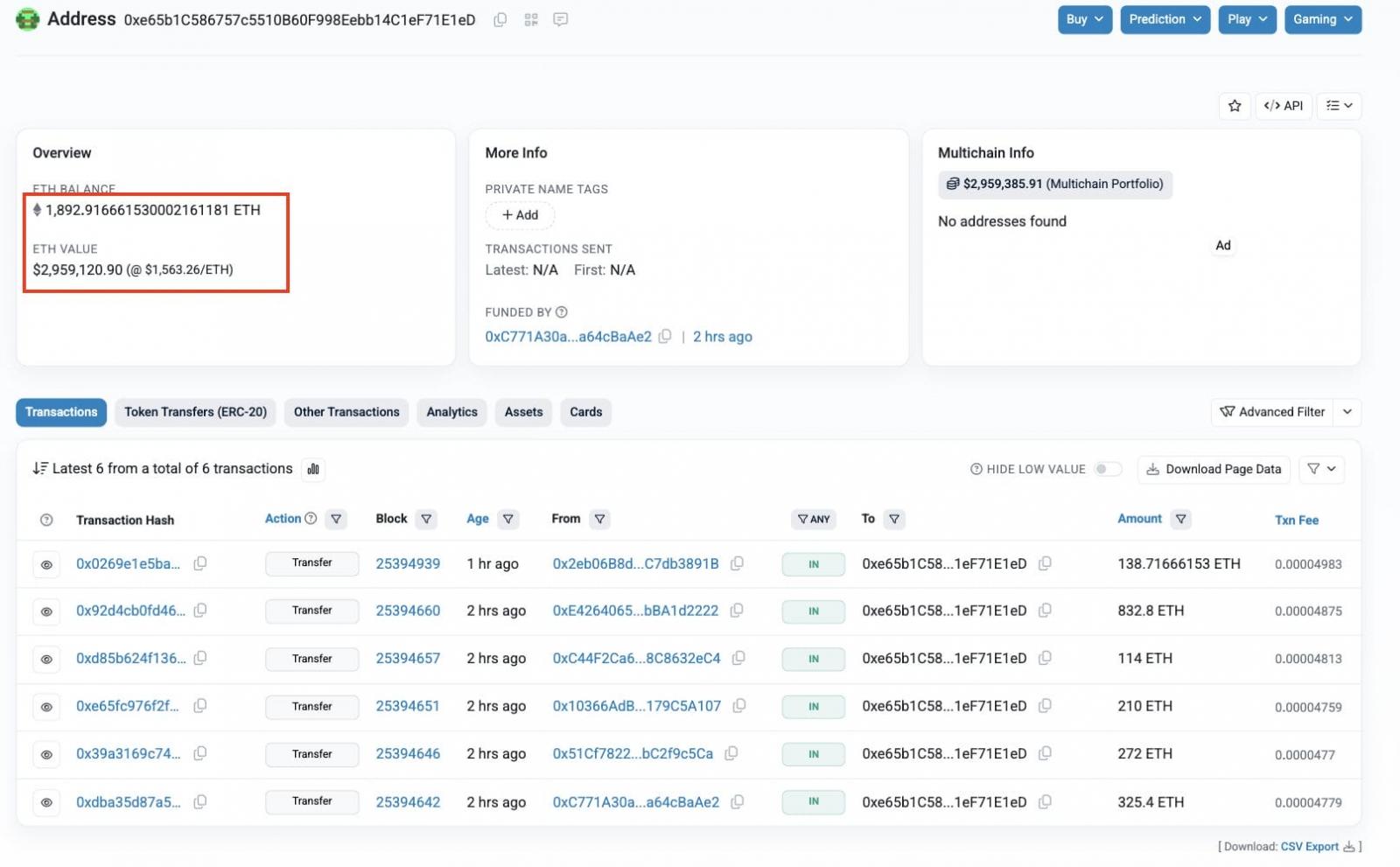
Based on visual analytics company Bubblemaps, the incident has impacted less than 15 accounts. The company published a list of some of the affected accounts as well as the wallets holding the stolen funds.
BleepingComputer has contacted Polymarket to request more details about the incident, but we have not received a response by publication time.

Security teams log 54% of successful attacks and alert on just 14%. The rest move through your environment unseen.
The Picus whitepaper shows how breach and attack simulation tests your SIEM and EDR rules so threats stop slipping by detection.


security
Researchers warn many AI coding assistants now execute commands from project configurations
A high-severity flaw in Amazon’s AI coding assistant for Visual Studio Code meant that opening the wrong Git repository could allow an attacker to execute code on a developer’s machine and potentially hand them the keys to the dev’s cloud environment.
The bug, tracked as CVE-2026-12957 and assigned a CVSS 4.0 score of 8.5, centers on how Amazon Q handled Model Context Protocol (MCP) server configurations. Wiz found the extension would automatically load a repository’s .amazonq/mcp.json file and execute the commands it contained when a developer opened the project and activated Amazon Q.
“The security model assumes the user explicitly configures these servers. After all, you’re granting an AI assistant permission to run arbitrary commands on your machine. This should require informed consent,” the researchers write. “The vulnerability arose when this assumption was violated: Amazon Q automatically loaded MCP configurations from .amazonq/mcp.json within the workspace – no prompt, no consent, no workspace trust check.”
MCP lets AI assistants launch local processes to carry out tasks. In Amazon Q’s case, those processes inherited the developer’s environment, giving them access to AWS credentials, API keys, authentication tokens, SSH agent sockets, and other secrets already loaded into the session.
“The combination meant that a single malicious config file could execute arbitrary commands with full access to the developer’s credentials – no user interaction required beyond opening the folder and activating Amazon Q,” Wiz said.
To prove the attack worked, Wiz built a repository with a malicious MCP configuration. Opening the project and activating Amazon Q caused the extension to execute a command against AWS using the developer’s existing credentials.
Amazon fixed the bug in version 1.65.0 of its language server, which powers Amazon Q’s IDE integrations. Existing installations should receive the patched component automatically unless you’ve blocked automatic updates.
“We would like to thank Wiz for collaborating with us on this issue. We have remediated this issue in language server version 1.65.0,” Amazon said in an advisory, though it didn’t respond to The Register’s questions.
Wiz argues the bug is less an Amazon problem than an industry one. More and more AI coding assistants are adopting MCP to connect models to local tools and services, allowing them to execute commands on developers’ machines.
According to the researchers, similar workspace configuration flaws have recently surfaced in other AI coding tools. It suggests attackers have found a new place to lurk: the hidden files that developers rarely think twice about trusting. ®

Nvidia has dominated the AI chip market for years, but the era of total dependence might be ending.
OpenAI just shared its plans to spice things up with Jalapeño, its custom inference chip built with Broadcom, joining Google, Apple, and SpaceX in a growing list of companies building their way out of single-supplier risk. The goal is less of a clean break and more of a hedge. Custom silicon means more control, hardware tuned to specific needs, and the kind of performance gains Apple unlocked when it ditched Intel.
On this episode of TechCrunch’s Equity podcast, hosts Kirsten Korosec, Anthony Ha, and Sean O’Kane dig into what the custom chip trend means for the industry and a few deals of the week worth watching.
Subscribe to Equity on YouTube, Apple Podcasts, Overcast, Spotify and all the casts. You also can follow Equity on X and Threads, at @EquityPod.

In this episode, Hackaday editors Elliot Williams and Tom Nardi start off by taking a trip down the Raspberry Pi memory lane and then tackle a fresh pile of listener mail. The discussion moves on to hacking bike counter, homebrew upgrades to the Nintendo Entertainment System, and building RAM from whats in the parts bin. You’ll hear about the latest drop-in upgrade for a classic Casio watch, hosting light bulbs that host subversive literature, and loading Wii U games from a weird disk drive from the 1980s. They’ll wrap things up with a dive into the evolving portrayals of brilliant rebels in media, and all the things you can do with a cheap router.
Check out the links if you want to follow along, and as always, tell us what you think about this episode in the comments!
Direct download in DRM-free MP3.
This will impact Home Assistant users and those who rely on similar third-party tools.
Samsung just announced it’s going to start charging for SmartThings API access, which is the company’s smart home automation platform. Most of these changes impact software developers and other commercial partners, but there is a way this could hit regular users in their wallets.
Starting in October, there’s going to be a $5 monthly plan for “non-commercial individual developers.” This won’t impact people using the traditional SmartThings app to control any of the thousands of gadgets that automatically work with the platform. It does, however, apply to those who use third-party tools like Home Assistant to control their Samsung-connected devices.
It’ll also likely impact those with custom smart home controls, adding yet another monthly subscription fee to the pile. This seems like a real kick in the pants to the smart home open-source community.
“We’re all for choice, but feel very disappointed that users will have to decide whether to shell out for access in the shadow of yet another cloud paywall,” Home Assistant founder Paulus Schoutsen wrote in a blog post.
What are users getting as part of all this? We aren’t exactly sure. Samsung says the added funds will allow it to “invest heavily in the enterprise-grade features our partners and users have been asking for.” The company hasn’t released any concrete details, other than saying that it’s working on new integrations and expanded capabilities of some kind. There is a new Developer Center hub coming down the pike, which will provide “current usage and data points to optimize” code.
Again, this starts in October. Access to the SmartThings API remains free for the time being.


The announcement comes amid a race between organisations to build semiconductors that can handle increasingly demanding AI workloads.
Multinational technology giant IBM has announced the creation of what it claims is the world’s first technology capable of producing chips smaller than one nanometre.
According to IBM, the chip has a transistor architecture of 0.7 nanometres and can hold nearly 100bn transistors on a “fingernail”-sized surface, achieving roughly double the density of its 2-nanometre chip unveiled in 2021.
In order to create the chip, IBM reportedly developed a new transistor design called a nanostack, which lays transistors on top of each other in three dimensions, rather than the standard method of laying them flat, effectively fitting more into the same amount of available space.
Commenting on the achievement, Jay Gambetta, a director of IBM Research, said, “With our new nanostack architecture, we’re not just making smaller transistors, we’re reinventing how chips are built to deliver dramatically more power and energy efficiency.”
According to IBM, the new nanostack technology will also be capable of shrinking a type of memory circuit called SRAM by 40pc when compared to its previous chip technology. Production is expected to begin within the next five years and the organisation has yet to name a manufacturing partner for this technology, if there is one.
IBM’s announcement comes at a time when many organisations all over the globe are racing to become the most prominent name in the manufacturing of advanced chip technology and artificial intelligence.
In late May, leading chipmakers Micron and SK Hynix both surpassed $1trn in market value. Global semiconductor company Infineon Technologies announced earlier in June that it is set to open a new €5bn chip factory in Dresden, Germany, representing Infineon’s single largest investment. Last month, Analog Devices announced it was acquiring AI power delivery provider Empower Semiconductor in a deal valued at $1.5bn.
Don’t miss out on the knowledge you need to succeed. Sign up for the Daily Brief, Silicon Republic’s digest of need-to-know sci-tech news.
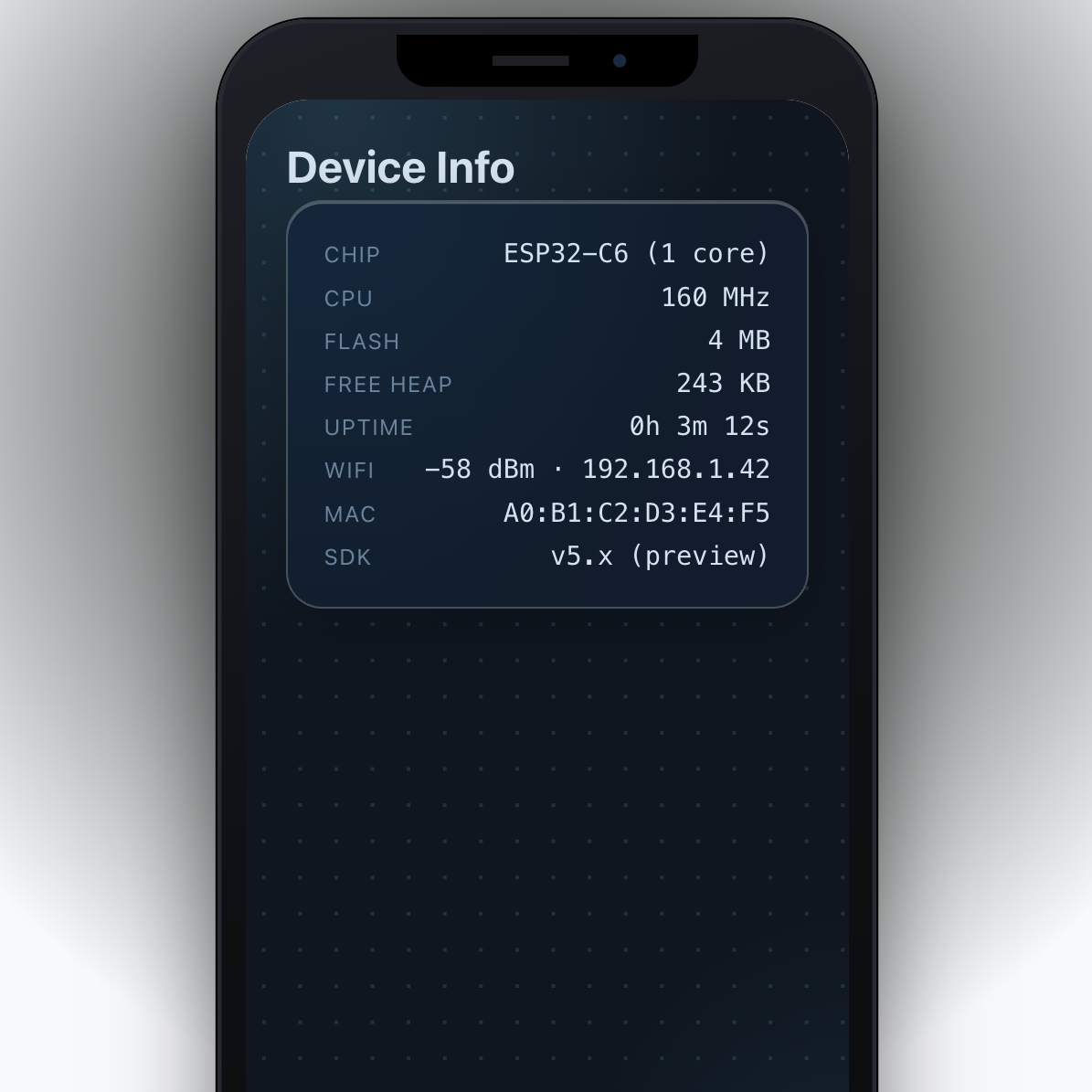
These days, a lot of embedded projects feature some sort of screen, and a screen often creates a desire for a nice user interface. [Geoffrey Wells] has created a tool for developing web interfaces for the ESP32, named ESP-GenUI.
The aim was to make UI development as easy as possible for this platform. ESP-GenUI allows the creation of a website by dragging various nodes on to a canvas and linking them up to create the desired web interface. There are nodes for GPIO control, camera feeds, gauges, and all sorts of other common elements for quickly putting together dashboards and control panels. All this is done from within the browser, and the code generated by the tool can even be flashed without having to open any external tools. Alternatively, it can spit out Arduino code that you can open and flash from within the IDE. You can try the tool out yourself right here.
We’ve featured some other great resources for developing embedded user interfaces, like this highly-flexible display library for the ESP32. Feel free to espouse on your own favorite tools and techniques in the comments.

flowkey is a fun, interactive piano learning platform that helps anyone go from absolute beginner to confident player — at their own pace. It combines step-by-step courses with thousands of songs you know and love, tailored for every skill level, from first-time learners to advanced pianists. The app listens as you play and gives instant feedback so you can improve faster, practice technique, and master sheet music with confidence. Whether you’re learning scales or your first full song, flowkey makes piano practice easy, fun, and rewarding. A one year subscription is on sale for $40, two years for $60, or five years for $80.

Note: The Techdirt Deals Store is powered and curated by StackSocial. A portion of all sales from Techdirt Deals helps support Techdirt. The products featured do not reflect endorsements by our editorial team.
Filed Under: daily deal


We may receive a commission on purchases made from links.
Keeping your driveway clean is an important step in maintaining your home’s appearance. The benefits aren’t just cosmetic, either. Mold, algae, and moss can make pavement slippery and unsafe to walk on. Automotive fluids, such as oil and transmission fluid, can degrade the structural integrity of the concrete. Even simple dirt accumulation can create beds for weeds, allowing their roots to widen existing cracks. So, in a very real sense, keeping your driveway clean helps to preserve its safety and structural integrity.
One of the easiest ways to clean a driveway is by investing in a good pressure washer from a major brand. All you need to do is hook it up to your hose, power it up, and blast away. Not only does this clean the surface of your concrete, but it penetrates deep into the pores. That said, a lot of people might not want to purchase an expensive and space-consuming tool just to do one job.
Fortunately, there are two main methods of cleaning: mechanical and chemical. Using a pressure washer is a form of mechanical cleaning — literally blasting the dirt and debris from the concrete. It’s highly effective and requires minimal effort. That said, it isn’t the only way to clean your old driveway so it looks new again. You can also use a chemical cleaning solution with a bit of extra elbow grease. There are plenty of cleaning chemicals that are designed specifically for removing grime from driveways. But if you’re really in a pinch, you might even be able to use something that’s already sitting in your cabinet: baking soda. Additionally, there are several smaller and more affordable pressurized nozzles for you to choose from.
There are a lot of different compounds out there that are designed explicitly for cleaning driveways, patios, and other paved surfaces. Simple Green Concrete and Driveway Cleaner with Oxy Solve is one of the better-selling and higher-rated products on Amazon. This cleaner has a 4.2 out of 5-star rating aggregated from over 4,900 reviews. It’s primarily designed to work in tandem with a pressure washer, but the company also gives directions on how to apply it manually. To use it without a pressure washer, you need to mix two cups of the cleaner with one gallon of water, and then apply it with a soft-bristle brush or other scrubbing apparatus. Once the driveway is thoroughly scrubbed, let it sit for five to seven minutes, then hose it off.
There are several other similar options available as well. Zep Driveway and Concrete Cleaner has garnered quite a reputation on TikTok as a solution that works wonders on oil stains. Meanwhile, Wet and Forget Outdoor Cleaner is specifically designed to target moss, mold, mildew, and algae. Those who don’t want to purchase a special cleaner for the job might be able to get away with just using baking soda. It’s abrasive, alkaline — and best of all — cheap.
To clean your driveway with baking soda, start by sweeping off as much debris as you can. Then get a large bucket and combine a cup of baking soda and about ¼ cup of dish soap per gallon of water. Stir this up good and then pour it over the parts of your driveway you want to clean. Let it sit for about 15 to 30 minutes, but don’t let it go dry. Then you’ll need to scrub it with a brush and, finally, hose it all down.
Cleaning compounds and elbow grease will win the day if you don’t own a pressure washer, but there are a few tools that can add a bit of blasting power to your hose without the need for a motorized pressure washer. The most basic of these is a simple hose nozzle. There are tons of multi-setting options, like the Automan Garden Hose Nozzle, that offer multiple watering patterns. If you own one of these, then the ‘jet’ setting is probably your best bet. There are also twist nozzles, like the Gilmour Heavy Duty Brass Twist Hose Nozzle, that can be twisted until they unleash a similarly concentrated stream.
That said, one of the best options if you don’t have a pressure washer is to get yourself a high-pressure nozzle. You can get the Carfka Jet Nozzle High Pressure Wand for just $19.99, for instance. This utilizes the same narrow frame and tip as a pressure washer, but it concentrates the water from your hose into a narrower stream instead of using gas or electricity to generate pressure. As such, the PSI will depend entirely on the output of your spigot.
There are also options with a more ergonomic design. The JetHose Pressure Washer Jet or the Pocket Hose Arrow, for example, both use a similarly narrow tube and small-opening tips to build pressure. Unlike the wands, they have a pistol grip with a lever to control the stream. These tend to be a bit pricier, however, generally retailing for around $50.

You might recall that one of the conditions of the FCC’s approval of The Ellison family’s $8 billion acquisition of CBS was that the agency would install a “ombudsman” at the network to ensure CBS journalism was appropriately feckless and deferential to our mad, idiot king.
This was particularly ironic given decades of whining by Republicans about stuff like the “fairness doctrine,” and other short-lived government attempts to set acceptable contours for journalistic speech. The appointment didn’t even really appear necessary, given Bari Weiss’ pretty obvious loyalty to oligarchs and autocrats like Trump and Netanyahu.
The guy they appointed, Kenneth Weinstein, unsurprisingly had no qualifications for the role. Weinstein had been the head of the faux-academic right wing Hudson Institute “think tank,” and has absolutely no experience in journalism or television whatsoever.
Similarly unsurprisingly, a new New York Times report indicates that Weinstein has largely been invisible and pointless since his appointment. He doesn’t issue statements, he doesn’t appear to help anybody dealing with internal chaos being caused by Weiss, he doesn’t respond to direct questions from politicians, and he barely shows up at the office:
“In the nine months since he was hired, Mr. Weinstein has issued no public statements about CBS News’s coverage or its controversies. He has not issued any guidance or feedback in staffwide emails or memos, three employees said. He has told some employees that he is scheduled to work only one day per month, two people said, though one said he responded to queries outside his monthly workday.”
As I predicted, there’s just not much for him to actually do at a company that’s innately so dutifully loyal to the nation’s richest assholes. The New York Times at one point seems confused by the idea this “watchdog” does do any useful watchdogging:
“As CBS News has been shaken by infighting between management and its star correspondents this year, Mr. Weinstein’s silence is being criticized by media experts. They say Paramount, the parent company of CBS News, has essentially hired a watchdog who doesn’t bark.”
Of course Weinstein wasn’t appointed to be a “watchdog” or to help the network or its employees. He was hired so that the Trump administration could be ensured a direct line to the leadership of a media company being converted into a propaganda mill, something that’s likely not even necessary due to the ample close connections between the Ellisons, CBS leadership, and the administration.
Weinstein’s other job was to simply ensure that CBS was remaining dutifully loyal to the president, a role that’s also not really necessary since folks like Bari Weiss have no integrity.
The New York Times doesn’t mention how much Weinstein is being paid for his single day of “work” a month, and how many shitcanned CBS journalist salaries it would have paid for.
Filed Under: bari weiss, cbs news, fcc, kenneth weinstein, media, ombudsman, propaganda, the hudson institute




Renter of Home in Anne Heche Crash Denies Settlement With Son

Two goals and an assist by sheer aura: Cristiano Ronaldo just entered the World Cup chat


Microsoft accidentally kills epic Outlook email threads


Soccer-U.S. defends Iran World Cup travel restrictions, says discussions ongoing


The House | Manchesterism won’t survive the painful trade-offs unless it gets citizens on board


Andy Burnham and the meaning of Makerfield


Potential 2028er World Cup attendee leaderboard


A Look At A Gaggle Of Transputer Boards
Bitcoin (BTC) Dips Below $62K, Ethereum (ETH) Plunges 6% Daily: Market Watch


Securitize Wraps Roubini's SEC-Registered ETF as Dubai VARA Digital Security

Dell (DELL) Shares Tumble Over 5% Following Analyst Downgrade to Hold
Entergy settles forward sale agreements, raises $672 million in cash proceeds

Wall Street Week Ahead: Investors see Micron earnings as pulse check of AI rally momentum

Can Charles Hoskinson Really Rescue Cardano?


Asia stock markets slide as tech shares slump


Jose Alvarado Wants Taylor Swift at More Knicks Games


HIVE shares jump as $220M AI deal speeds Bitcoin mining pivot

Hyperliquid Named on Singapore MAS Investor Alert Register


Jake Chervinsky accuses CME of protecting derivatives monopoly

Signal’s Meredith Whittaker says AI chatbots ‘are not your friends’ and calls Copilot agents a backdoor


You must be logged in to post a comment Login