OpenAI CEO Sam Altman says that it may be time to “pace” AI development so the world will be ready for it.
“We may have to pace the rate of AI development to give ourselves enough time for society to harden around some of these new capability levels,” he told Patrick O’Shaughnessy, the host of the Invest Like the Best podcast, while also “trying to figure out how we do that in a way that does not feel like regulatory capture for anyone and also does not feel like collusion among the frontier labs.”
Both OpenAI and Anthropic came out in support of a petition circulated by employees at the frontier labs, calling on the US government to “support an international effort to develop the technical and governance tools needed to deliberately pace the frontier of automated AI development.”
Altman has avoided signing on to past campaigns to slow AI progress, calling a 2023 open letter that proposed a similar slowdown “missing most technical nuance about where we need the pause.”
Advertisement
Apparently, he’s softened on the idea, thanks in part to the incident where one of OpenAI’s advanced models managed to break out of a secure computing environment and hack into Hugging Face, an online model database, using several zero-day exploits.
On the podcast, the OpenAI co-founder called it an “extremely sci-fi cyber incident…[t]his is the first security incident that I have felt very viscerally.”
OpenAI researchers have paused training on that model while they work out how to keep their sandbox secure. But Altman said that as models become more powerful, the need to “pace” their development could become key to safe deployment.
While model safety and alignment has always been a concern in the AI world, the arrival of Anthropic’s highly capable Mythos model earlier this year has turned hypotheticals into real-world problems.
Advertisement
However, the industry has a trust problem, and challenging economics that give major players an incentive to play up the dangers of their systems in ways that experts disagree about — for example, whether or not Anthropic’s Fable model should have been briefly banned from use or not. Similarly, when Kimi K3, a large, open-weight model built in China, was released, OpenAI head of strategic futures Dean W. Ball said that it threatened the economics of frontier labs, making it difficult to separate their safety concerns from their financial interest.
“I think a lot of the talk about safety concerns is well-founded, and then a lot of it is about people that just really, even if it’s slightly subconscious, want to concentrate power,” Altman mused, in what reads as a dig at his rival, Anthropic CEO Dario Amodei, who signed the petition. “I am terrified of a world where the very real fears of AI are used as a way to say, ‘Only this small group of people can have it because it’s too dangerous, and only they understand it, but don’t worry, like, they’re gonna make the right decisions for all of us.’ I don’t believe in that.”
Still, OpenAI has pushed back against efforts to develop government rules for AI models, instead preferring an industry-led approach where AI labs would create ostensibly independent organizations that would evaluate the security of models and the safety approach of their makers.
The challenge for both that approach to regulation and any efforts to slow AI development will be getting the various players in the industry on the same page, whether they are rival frontier labs in the U.S. or competitors in China.
Advertisement
This story was updated to include OpenAI and Anthropic’s support of the “Pacing the Frontier” petition.
When you purchase through links in our articles, we may earn a small commission. This doesn’t affect our editorial independence.
Amazon’s next pillar could be built on a foundation of silicon.
In a new interview with Fortune, Amazon founder and Executive Chair Jeff Bezos says the company’s custom chip business is on track to become one of Amazon’s most durable businesses, placing it alongside Marketplace, Prime, and Amazon Web Services as a core pillar of the company.
“A few of our offerings have become durable pillars, things like Marketplace and Prime and AWS,” Bezos told Fortune. “What I see right now is that our chips business, our silicon business, is lining up to be our next pillar.”
The comments offer one of Bezos’ clearest public endorsements yet of Amazon’s push to design its own chips for artificial intelligence, an increasingly important strategy as demand for AI computing soars and companies look for alternatives to Nvidia’s dominant processors.
More than a decade of investment
Amazon has invested heavily in custom silicon through Annapurna Labs, the Israeli chip startup it acquired in 2015. The company now develops its own AI chips under the Trainium and Inferentia brands, designed to train and run large language models while reducing costs for customers using Amazon Web Services.
Advertisement
AWS has positioned the chips as a lower-cost alternative for AI developers. AWS has positioned the chips as a lower-cost alternative for AI developers. Anthropic trains and runs its Claude models on Trainium, and OpenAI has committed to consume about 2 gigawatts of Trainium capacity, ramping in 2027.
The company disclosed revenue for its in-house data center chips for the first time earlier this year, and since then its Trainium, Graviton, and Nitro chips have grown to a combined annual run rate of more than $20 billion. Amazon has been pouring billions of dollars into AI infrastructure, including new data centers and custom networking hardware.
Amazon CEO Andy Jassy has repeatedly argued that demand for AI computing will remain strong for years, making investments in chips, servers, networking equipment, and power generation essential to the company’s long-term growth.
In an earnings release earlier this year, Jassy signaled plans to pour a record $200 billion in capital expenditures across Amazon in 2026, citing “seminal opportunities like AI, chips, robotics, and low earth orbit satellites.”
Advertisement
The real potential for Amazon’s chips business could come in going beyond the walls of its own data centers. Jassy wrote in his annual letter to shareholders this year that it’s “quite possible” Amazon will sell racks of its internally developed chips to third parties in the future.
Amazon’s fourth pillar?
This discussion about Amazon’s “pillars” goes back to Bezos’ 2014 letter to shareholders, where he described four characteristics of what he called a “dreamy” business: “Customers love it, it can grow to very large size, it has strong returns on capital, and it’s durable in time — with the potential to endure for decades.”
AWS, Marketplace, and Prime are considered the first three pillars. The question of what could become Amazon’s “fourth pillar” has been debated for more than a decade, with areas including shipping and logistics and Alexa cited as contenders in the past.
The company’s big bet on silicon also was emphasized by Jassy in the Fortune piece. He told the magazine that chips are often the key to computing. “The growth in AI has been so significant, but we have a chips business that we built over the last decade here that is growing very quickly,” he said.
The profile appeared alongside Fortune’s release of its 2026 Global 500 ranking, which placed Amazon at No. 1 for the first time, ending Walmart’s 12-year run as the world’s largest company by revenue after Amazon surpassed $700 billion in annual sales, as reported previously.
Walmart fell to No. 2, followed by State Grid of China, UnitedHealth Group, and Saudi Aramco. The magazine reports that Amazon is on pace to be the first trillion dollar company by revenue.
Amazon reports Q2 2026 earnings on Thursday afternoon. Check back with GeekWire for coverage.
If you would like the added functionality of Active Noise Cancellation, AirPods 4 with ANC are also marked down, with a $35 discount bringing the price down to $144.99.
Advertisement
AirPods Pro 3 are reduced to $199.99 thanks to a $50 price cut, with delivery as early as today to select locations for Prime members.
The steepest discount can be found on Apple’s over-ear option, with AirPods Max 2 now $100 off at Amazon as well. With the triple-digit savings, you can pick up a pair in any of Apple’s five color options for $449.
Layoffs partially a cost-saving measure, sources told Bloomberg.
Payments giant Visa is cutting roughly 7pc of its workforce in a now familiar pivot towards AI. The layoffs translate to about 2,600 employees.
The job cuts are expected to primarily affect technology and product teams. Visa has European offices in Poland and the UK.
“To capture the opportunities ahead and best position Visa to lead this transformation, we must continue evolving how we work,” company CEO Ryan McInerney wrote in a memo to staff, parts of which were verified by multiple news organisations.
Advertisement
“AI is also helping to accelerate this evolution and shape the way work gets done at Visa.”
Visa’s layoffs come at a transformational moment for the tech industry, which has been rapidly evolving since generative AI’s mainstream popularity skyrocketed in recent years.
Tech leaders, including the likes of Meta CEO Mark Zuckerberg and Block’s Jack Dorsey, among several others, have shared their vision for slimmer teams powered with AI for better cost saving and added efficiency.
According to technology and start-up layoffs tracker Layoffs.fyi, 252 tech companies have cut more than 124,000 jobs so far in this year alone, already crossing the nearly 123,000 that were laid off in the whole of 2025.
Sources, however, told Bloomberg that AI-powered work efficiency was not the only reason behind Visa’s decision to cut jobs.
Visa intends to redirect the funds saved towards consumer payments, business and value-added services, including stablecoins, cross-border and business-to-business offerings, they added.
“I have deep conviction that we are doing what is right for Visa, our clients and our partners as we continue to focus on driving efficiency across the company in order to reinvest in our highest potential opportunities.
Advertisement
“As a result of the choices we have made over the past few years, we are entering a new era in commerce with a business that has real momentum,” McInerney said in the memo.
“We see this in our continued strong financial results, client satisfaction, employee engagement, and breakthrough innovation as we build and ship products better and faster than ever before.”
Net revenue at the company is up 14pc this quarter past to $11.6bn. Company shares gained more than 1pc by trading close on Tuesday (28 July), falling marginally in after-hours trading. Share prices have risen nearly 5pc over the past year.
Don’t miss out on the knowledge you need to succeed. Sign up for the Daily Brief, Silicon Republic’s digest of need-to-know sci-tech news.
Advertisement
Ryan McInerny at the World Economic Forum Annual Meeting, 2025. Image: World Economic Forum via Flickr (CC BY-NC-SA 4.0)
Visa aimed Anthropic’s Claude Mythos at the infrastructure behind billions of daily transactions, a network that spans more than 200 countries and territories, moves money in roughly 160 currencies, and connects nearly 5 billion payment credentials to more than 175 million merchant locations.
The model stitched minor weaknesses deep in the stack into working exploit chains that would traditionally have surfaced only late in penetration testing. Rajat Taneja, Visa’s president of technology, walked the VB Transform 2026 audience through what came next, including why Visa released the harness that governed the entire hunt as open source and why the company abandoned traditional remediation metrics for a measurement its team invented.
Taneja has run technology strategy, product engineering, and global infrastructure at Visa since 2019, after joining the company in 2013 from Electronic Arts, where he served as CTO following 15 years at Microsoft. He co-authored, with Visa chief information security officer Subra Kumaraswamy, the June 10 blog post announcing the release of the Visa Vulnerability Agentic Harness on GitHub as a reference implementation that any security team can inspect, adapt, and extend. Visa also published a technical white paper detailing the architecture, lessons learned, and 12 non-negotiable architectural practices for critical infrastructure.
Advertisement
Trust built on pessimism and paranoia
Taneja led with the arithmetic that makes Visa a target worth defending obsessively. Trust at the scale of global payments gets engineered through what he called pessimism and paranoia, by assuming failure and designing around it before failure arrives. The network has been hardened over many years through zero-trust architecture, layered defenses, and highly automated security operations built for the scale and reliability global payments demand.
So when Anthropic invited the organizations behind critical software to test Mythos under Project Glasswing, Visa said yes. Glasswing participants collectively identified more than 10,000 high- or critical-severity vulnerabilities in the first month of testing across software underpinning critical systems industry-wide, according to Anthropic. Anthropic’s own conclusion placed the bottleneck after discovery, in verification, disclosure, and patching speed. Visa joined to test decades of hardening at AI speed and learn where advanced models could push its defenses further.
What Mythos showed at Visa
Inside Visa’s environment, Mythos demonstrated system-wide, context-aware analysis, surfacing vulnerabilities buried deep in the stack and flagging issues that grow more serious when chained together, with findings clean enough that engineering teams could act on them without wading through noise. Some findings carried critical severity ratings, and Visa credits its zero-trust controls, network segmentation, and layered safeguards with breaking the chain before any external actor could have acted.
That confirmation mattered, Taneja said, but the epiphany that followed mattered more. “In a world of agentic attacks, defense also has to be agentic,” he said. Even at a company that has invested decades in defense-in-depth, the model revealed assumptions the team had been operating under that needed rethinking. Traditional SAST tools keep their place as a first pass against known vulnerability patterns, Visa’s white paper notes, but pattern matching alone cannot follow an adversary who reasons through logic, data flow, and the exploit chains that live between the signatures.
Advertisement
A harness, not a scanner
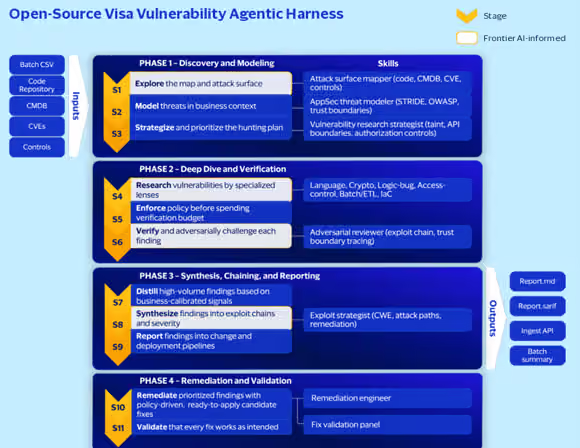
Visa’s response was not another monolithic scanner. The team built the Visa Vulnerability Agentic Harness, now in its fifth generation, as a governed pipeline that directs frontier AI models through structured security tasks while enforcing deterministic controls, policy gates, and human oversight at every stage. Taneja walked through the design philosophy. The harness operates across four phases and eleven stages, from code ingestion and threat modeling through deep-dive verification, exploit chain synthesis, and finally remediation and fix validation.
The open-source Visa Vulnerability Agentic Harness pipeline. Standardized inputs flow through four phases and eleven stages, combining deterministic controls with frontier-AI-informed reasoning to produce structured reports, SARIF artifacts, and validated candidate fixes. Source: Visa Project Glasswing white paper, June 2026.
Three design choices drive finding quality, per the project’s own documentation. Threat modeling runs before analysis to focus on the attack surface rather than scanning everything blindly, multi-agent deterministic voting requires convergence across independent reasoning chains before a finding advances, and structured triage artifacts compress the lifecycle from discovery to a result developers can actually ship. The payoff is a pipeline that runs hot by default. A plain scan in the shipped profile runs all eleven stages and edits source files in the target repository in fix mode, applying candidate patches unless the operator stops it at detection.
The harness is multi-model by design. An LLM abstraction layer lets Visa swap or combine providers without changing the control plane, and the open-source version works with Anthropic Claude, OpenAI-compatible models, or a mix. The repo’s documentation is candid about the exception. Applying a fix requires the file-editing tools that only the Anthropic backends expose, so the remediation and validation stages currently require Anthropic models for full functionality, and an OpenAI-compatible model in those roles is limited to report-only output. VentureBeat’s Q2 2026 Pulse research, presented earlier at the conference, reinforces why that provider flexibility matters. Among the enterprises surveyed, 82% rely on provider-native controls as their primary security layer, and 59% plan to adopt or switch agent security tooling within the year. The controls enterprises adopted last year are already becoming the controls they plan to replace.
Advertisement
Mean Time to Adapt replaces legacy metrics
Finding vulnerabilities is no longer the hard part, Taneja argued. The real challenge is how quickly a team can confirm an issue is truly exploitable, fix it, and prove the attack path is closed rather than just showing a patch was applied. Visa calls this Mean Time to Adapt, and the white paper tracks it along three dimensions. Inventory freshness measures how current and complete the organization’s view is of code, configuration, and runtime deployment. Exploitable paths per release counts how many end-to-end attack chains remain possible after each release, not just how many findings were closed. Validation cycle time tracks how long it takes to produce repeatable, evidence-backed proof that a fix works and stays working in production.
That distinction matters because legacy measures such as mean time to detect and raw CVE closure counts can look better on paper while actual exposure keeps growing underneath them. An organization can close hundreds of findings a month and still leave viable exploit chains open if nobody tested whether the patches actually break the attack. MTTA forces teams to measure the outcome that matters, and the white paper leans on CISA Known Exploited Vulnerabilities data to make the prioritization case, noting that fewer than 1% of CVEs are ever actively exploited. Visa’s SSDLC policy now assumes every exploitable path will be exercised in production and requires it to be remediated before code is promoted.
Supply chain risk accelerates under AI
The conversation moved past Visa’s own perimeter when Taneja turned to suppliers. A well-defended enterprise stays exposed through weak vendors and weak open-source components, the white paper warns, so Visa is making AI-specific security posture a non-negotiable dimension of supplier due diligence, with expectations for continuous vulnerability validation, living software bills of materials, and MTTA baselines across its technology stack.
Visa has also joined Project Lightwell, the $5 billion IBM and Red Hat initiative to harden widely used open-source components through AI-driven validation and coordinated patching, alongside financial institutions including Bank of America, JPMorganChase, Goldman Sachs, and Mastercard. The commitment extends the same logic upstream, because the MTTA clock does not pause at any single company’s perimeter.
Advertisement
When agents start buying things
Securing agentic commerce is Visa’s next problem. Taneja described a future where AI agents transact on behalf of consumers and enterprises, and said Visa is building the trust framework, identity layer, and agent readiness scoring that merchants will need before agents can safely complete transactions. Behind that work sits the Visa Payment Threats Lab, a simulation environment where real fraud scenarios get replayed against the authorization rules, thresholds, and configurations Visa actually runs, to surface AI-enabled failure modes as targeted hardening recommendations.
The identity challenge is not theoretical. VentureBeat’s Pulse research found that 69% of enterprises already run credential sharing somewhere in their agent deployments, and companies with shared credentials report security incidents or near-misses at a 63.5% rate, against 40.9% where every agent has its own scoped identity. Visa’s white paper addresses that gap directly, listing “AI agents are identities” among its 12 non-negotiable practices and requiring scoped permissions, least privilege enforcement, full audit trails, and inclusion in IAM governance for every agent that calls an API, reads data, or modifies a system.
Three priorities for defenders
Visa is organizing its defensive strategy around three priorities, Taneja said. Shift security left until exploitable flaws are designed out before they reach production, and replace high-risk, under-supported components before they turn into material exposure. The third is the heaviest lift at Visa’s scale, refactoring defenses to run autonomously under human governance so detection, validation, and response keep pace as threat volume grows and the models behind attacks improve.
None of it requires a payment network’s budget to start. The harness sits on GitHub with 595 stars and 97 forks as of July 20, MTTA needs a dashboard rather than a procurement cycle, and the white paper’s 12 non-negotiable practices map onto architecture reviews security teams already run. Visa’s own conclusion reads like a deadline. The opening to get ahead of machine-speed attackers is still there, the paper argues, and it will not stay open.
Not too long ago, PC gaming was still considered a niche hobby, stereotyped by the typical gamer who lives inside a basement and refuses to come out. Those times, fortunately, are long gone. Esports has grown massively in both viewership and competition, so much so that we have an esports World Cup currently happening in Paris. This popularity is driven mostly by games like Valorant. Even I, famously a MacBook user, have spent countless hours playing Valo with my friends because it’s so much fun. Around 20 million players play the game every month, and some are its biggest fans.
Playing PC games, though, isn’t cheap. You need a capable processor, a GPU that doesn’t throttle when you’re in the middle of a fight, and enough RAM to keep all tasks at bay. Not to mention a high-refresh-rate display, which is super important for hitting those headshots. If you’re in the market for a new machine to take your Valorant gameplay to the next level, I don’t see any better machine than the HP Omen 16 Valorant Edition. It’s the company’s top-of-the-line gaming laptop, complete with a Valorant-inspired design, the Ryzen 9 9955HX processor, an RTX 5070 GPU, and, even in this economy, 24GB of LPDDR5X RAM. Naturally, when HP sent over the laptop for review, I was very excited to get my hands on it. But is it worth your money? This review should help you answer that.
HP Omen 16 Valorant Edition Review
Hisan Kidwai
Advertisement
Summary
The HP Omen 16 Valorant Edition is one of the best special-edition laptops, with a really striking yet sophisticated design that pays homage to Valorant. The build quality is solid, and the performance is just next level. I don’t think there is any workload the Omen 16 can’t handle, and even AAA games run smoothly, albeit sometimes requiring DLSS. Rounding things out is a sizeable 16-inch 240Hz display that keeps things fast, and the excellent-feeling keyboard
Advertisement
Design & Hardware
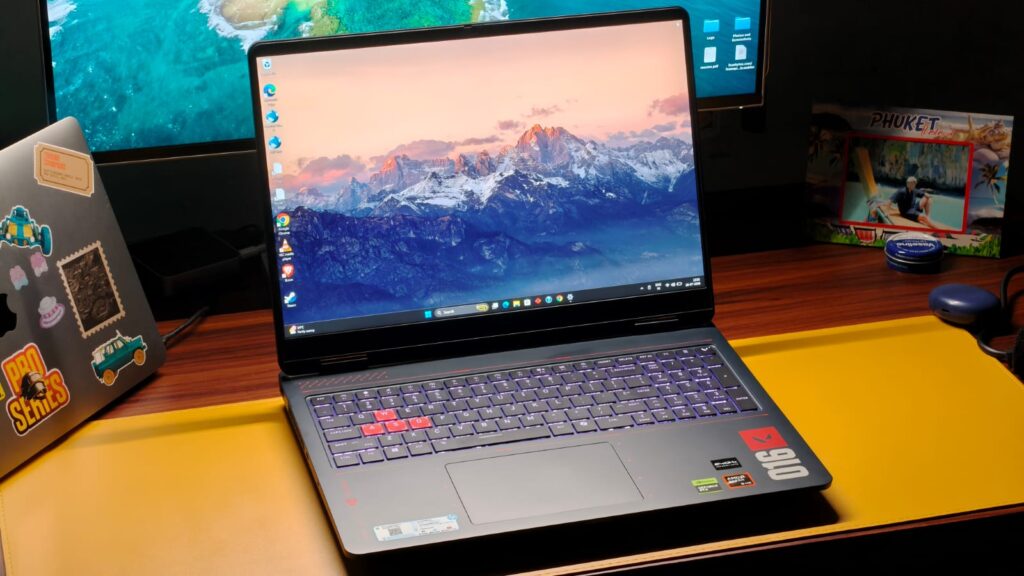
If you love Valorant, there is nothing I can say right now that’ll make you not love this laptop. I’ve tested many limited edition phones, and most times brands just slap a logo on the back and call it a day. That’s not the case with the HP Omen 16. The Valorant inspiration starts with the color. It’s painted VALORANT BLUE, a dark navy blue of sorts that looks very unique among the sea of grey laptops. In the center of the back panel, you’ll find the HyperX logo, which is encircled by the red Valorant logo. I didn’t think this combination would work this well, but it does, and it looks fantastic. But that’s not all. On the back panel’s left side is Valorant written in the iconic font, and the right side lists the game’s maps, along with a small logo.
Open up the laptop, and you’re greeted with the same design cues. The WASD buttons are painted red; there’s another logo on the right and a few other subtle design cues. I think it’s a very faithful attempt at making a special edition laptop that doesn’t go over the top. To confirm, it’s not just me fanboying the laptop; I put it on my Instagram story. Look, I post a lot of new tech to show my friends, and never once have I gotten so many likes on the story as with the Omen 16. People asked me all sorts of things about the laptop, with the main thing being it’s so pretty.
Besides all the Valorant stuff, the HP Omen 16 is made from aluminum. The color finish is matte, so thankfully it doesn’t pick up many fingerprints. However, if you’re like me and eat Doritos while watching a series, please keep your hands away because they will smudge the laptop. I had to give the laptop a thorough clean before taking the review photos. When it comes to handling, the Omen 16 is like a typical gaming laptop. All those powerful internals add weight, 2.47 kg to be precise. I wouldn’t call that too heavy, but carrying around a 16-inch laptop will hurt your back a bit. Still, I was able to take it to my nearby coffee shop for some work without much trouble. If I had to complain, it’d be about the charger, which is a hefty unit and a pain to carry around.
Beyond that, the hinge is a bit wobbly, but it keeps the laptop steady and can be opened with one hand. I also wasn’t worried about the durability since there was almost no chassis flex on the keyboard deck. You can chuck it inside your backpack, and it’ll be fine.
Let’s talk ports. With a gaming laptop, brands can’t get away with bundling just one USB-C port. And fortunately, that’s not the case with the Omen 16. On the left and right sides, there are two USB Type-A 5Gbps ports, coupled with a USB 3.0 Type-C port with charging support and a headphone/microphone combo jack. Is that it, you may ask? To which I’d answer no. There is a USB Type-A 10Gbps port, an HDMI 2.1 port, an Ethernet jack, and a barrel charging port on the back side for easier connectivity.
Advertisement
Keyboard & Trackpad
Given that you’d be spending most of the time using the keyboard when gaming, it quickly becomes an important subject. And as a surprise to maybe no one, the HP Omen 16’s keyboard is very good. Keys have a lot of travel, which I love, and there’s satisfying feedback when pressed. The actuation energy isn’t much, and you won’t be disturbing your colleagues with the sound inside an office. Since this is a 16-inch device, HP also bundled a dedicated number pad row.
While I’m not the biggest fan of this layout as it shifts everything to the left, I can see the appeal for gamers and professionals. In classic gaming laptop fashion, the keyboard has RGB backlighting, which can be configured using the Omen Light Studio app. There are four zones, and you can choose to go all the way in the funky territory if you wish. For me, I’m more of a white-backlit guy to keep everything classy.
Moving over to the trackpad, I have nothing to complain about here, as well. It’s a big, glass-topped surface that does the job when navigating the UI. The surface is smooth enough to not cause much friction. The physical buttons feel nice to press, and the energy required for a press isn’t so much that it causes strain.
Display & Cameras
What’s the one thing about the display that matters with games like Valorant? If your answer was high-refresh rate, then you’d be absolutely correct. HP thinks the same, which is the reason the Omen 16 houses a 240Hz refresh rate screen. It’s hard to put that feeling into words, but there’s some genuine advantage that you will get. Beyond that, the panel spans 16 inches and has a resolution of 2.5K and a 3ms response time.
To hit that 240Hz refresh rate, HP had to go with an IPS panel, which is fine to me. Do I miss the deep blacks and vibrant colors of an OLED display? Yes. Still, the Omen 16’s display is fantastic. Colors feel natural, and watching a movie on that big screen is a delight. I finally got around to watching Ted Lasso, and it was a very enjoyable experience, thanks to the 500 nits of peak brightness. For all my creative friends, the Omen 16’s display does cover 100% of the sRGB color space. So, you can edit videos/photos and not worry about them looking messed up on others’ screens. The anti-reflective coating proved quite capable as well, keeping most of the reflections at bay.
As far as the camera is concerned, it won’t be winning any competitions. It’s 1080p, thankfully, and works well for quick video calls or classes. The sharpness in low light can be missing, and colors are washed out compared to my MacBook.
Advertisement
Performance
It’s no secret that a gaming laptop isn’t just for playing games. It’s also a tool for creative and coding professionals who need the extra horsepower. Under the hood, the HP Omen 16 packs the latest AMD Ryzen 9955HX processor, which has 16 cores and 64 MB L3 cache, and can boost up to 5.4 GHz in demanding tasks. It’s paired with 24 GB DDR5-5600 MT/s RAM and a 1 TB PCIe Gen4 NVMe SSD. Graphics are handled by the RTX 5070 GPU, with 8GB of VRAM. Since you can’t have the thirsty RTX graphics running all the time, and people do need more battery life than just one hour, there’s integrated AMD Radeon 610M graphics for lighter tasks.
It shouldn’t come as a surprise, but the Omen 16 is a very powerful machine. You can throw any workload at it, and it’ll handle it like a champ. I did my usual writing and researching on the laptop, and it never once hesitated when opening another application. Everything felt effortless, and I just couldn’t push the laptop with my office work even if I tried. As this was the case, I also installed Da Vinci Resolve to do a spot of video editing. Even with multiple 4K streams, some advanced effects and color grading work, the timeline preview was pretty smooth, and the render times were some of the fastest in my testing. The same happened when running a long Python script, marked by exceptionally quick compile times. Not to mention how smooth everything feels on the 240Hz display.
Benchmarks, however, are where you see the real power of the Omen 16. In Geekbench, the Ryzen 9955HX scored 2,751 in the single-core test and 18,266 in the multi-core test. The closest competition I have tested is last year’s Zephyrus G14, which ran on the Ryzen 9 HX 370. The Omen 16 scored more than 20% higher in multi-threaded workloads. Moving to Geekbench’s GPU test, the score reached a pretty remarkable 120,517 points.
Gaming & Thermals
It’s time to talk about the things you came here for: gaming. After all, that’s the biggest reason to buy the Omen 16. And it would be a shame to start with anything else except Valorant. There, the Omen 16 delivered easy 250+ FPS on high settings. With Red Dead Redemption 2, I could max out the resolution at 2.5K with very high graphics and still get around 80 FPS. Cyberpunk 2077 was a bit more challenging, pushing the laptop to its very limit. On maxed-out settings, I observed around 50 FPS. If that’s not enough for you, there’s always DLSS. It’s a very clever way to get over 100 FPS without losing much detail. Some purists may argue those frames are not real, but you’d be hard-pressed to find the difference playing on a laptop screen.
I employed DLSS once again, with Indiana Jones: The Great Circle, to get an average of 100 FPS, with 1% lows around 80 FPS. If you’re a racing fan, Forza Horizon and Motorsport both worked flawlessly at highest settings, with RTX reflections turned on. Even Call of Duty fans will be pretty pleased with this setup.
As far as thermals are concerned, the bottom plate is a large intake, and the hot air comes out from the sides and back. Regardless of the game I tested, there were no signs of thermal throttling inside a temperature-controlled room. HP also bundles its OMEN app with the laptop to control the metrics. It has ads, which is something I absolutely despise in a first-party app. They should not have ads. That said, it was pretty good at controlling different metrics of the laptop, and you can manually tweak different aspects of the performance.
Advertisement
Battery Life & Speakers
Battery life is usually the Achilles’ heel of gaming laptops, simply because running all those internals takes a lot of power. The HP Omen 16 tries to combat that with an 83 Wh cell. In my daily use, which is mostly on Chrome, along with some spreadsheet work and YouTube, the laptop lasted roughly 4 hours on a single charge. I wouldn’t call that groundbreaking, but it’s enough to get you through a work session inside a cafe. Fortunately, there’s a fast charger bundled, albeit with a massive one. With it, you can recharge the battery to 50% in 30 minutes. If you’d rather not carry the large brick, the USB-C port supports charging.
I can say almost the same about the speakers, which you get two of. They are decent if you want to watch a quick YouTube video with clear dialogue and vocals. Just don’t expect them to fill a room with music. The highs and lows do get slightly muffled, and the treble was a little less than what I like. They also sounded quieter than my MacBook.
Verdict
At ₹299,990, the HP Omen 16 Valorant edition is certainly a premium laptop, but for the right person, I believe it’s a no-brainer. I think it’s one of the better special edition laptops, with a really striking yet sophisticated design that pays homage to Valorant. All the little details are excellent. The build quality is solid, and the performance is just next level. I don’t think there is any workload the Omen 16 can’t handle, and even AAA games run smoothly, albeit sometimes requiring DLSS. Rounding things out is a sizeable 16-inch 240Hz display that keeps things fast, and the excellent-feeling keyboard. I do think the speakers could have been better, but that’s a tradeoff with most gaming laptops.
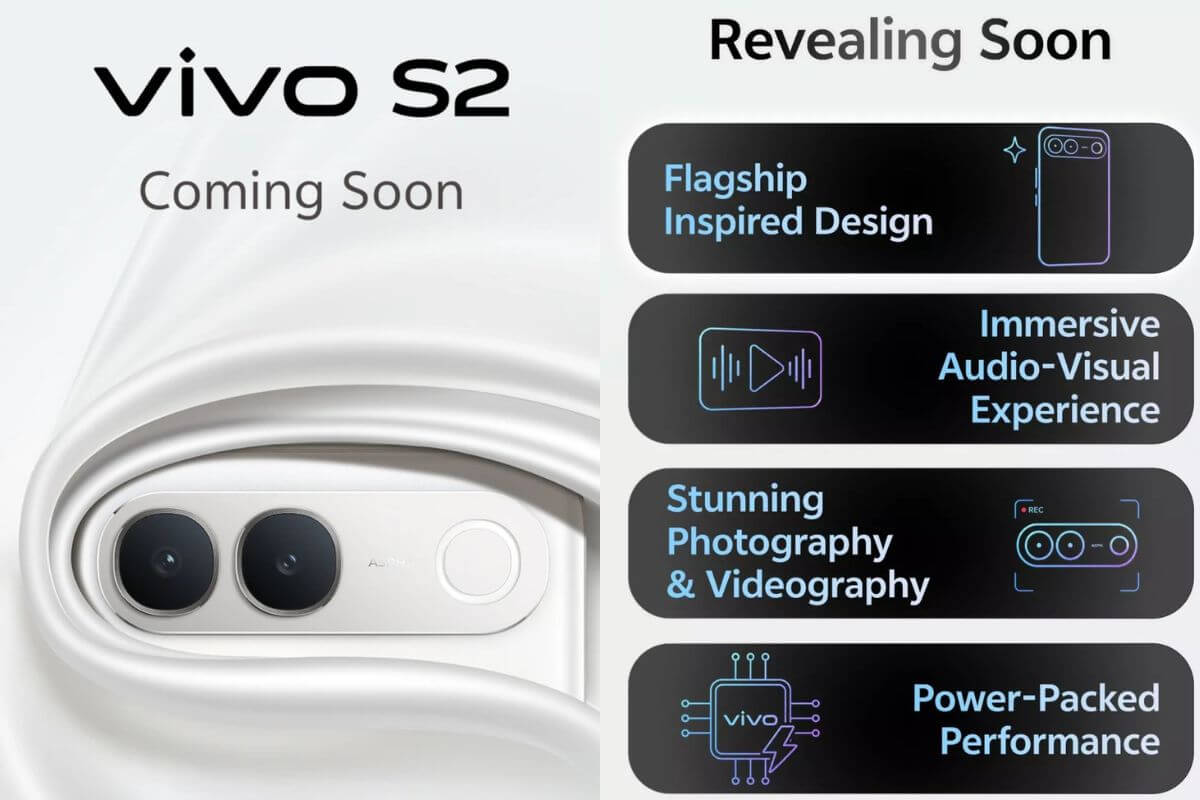
According to reports, Vivo has started preparations for launching its S series phones back in India with the release of the Vivo S2 smartphone. While Vivo hasn’t officially confirmed a release date, some reports indicate the phone could launch on August 6th, with sales expected to begin on August 11. This would mark the revival of the S series of phones in India following the debut of the Vivo S1 phone back in 2019. Reports have also given an early look at its design while revealing details about its expected specifications, color options, and launch plans.
Expected Specifications and Camera Features
Leaks suggest the Vivo S2 will feature an OLED display with a refresh rate of up to 120Hz. The phone may use the MediaTek Dimensity 7360 chipset, built on a 4nm process. Reports also suggest the phone will come in 8GB + 128GB and 8GB + 256GB variants. On the camera front, the Vivo S2 is tipped to include a 50MP Sony main sensor. Some information also suggests that the phone would be capable of recording videos in 4K quality through both front and rear cameras.
According to some recent leaks, the Vivo S2 would come with a sleek design. It would have a 3D curved display with narrow borders and a punch-hole selfie camera at the center of the device. On the back side, there would be a camera module in the shape of a pill with two big rings and an LED flash. Unlike many smartphones, the camera module matches the rear panel color for a more seamless finish. Vivo could offer the phone in Sapphire Blue, Regal Bronze, and Silk White. Its design closely resembles the Vivo X300 FE. Vivo has not shared any battery details yet. However, one report suggests the Vivo S2 may pack a 7,000mAh battery. This information is still based on leaks and awaits official confirmation.
Expected Price of Vivo S2
The Vivo S2 could target India’s premium mid-range smartphone market. It might cost anywhere between ₹40,000 and ₹50,000, though Vivo has not yet officially announced its pricing. Some leaks also reveal internal listing prices, but they may differ from the final retail price. On launch, the Vivo S2 will challenge the OnePlus Nord 6 and the Motorola Edge 70 Pro smartphones. It will also take on the Realme 16 Pro series and Vivo V70 FE.
The indie game company is downsizing as it parts ways with Xbox.
Double Fine
The ripple effect of the Xbox’s layoffs has claimed more members of the game industry. Despite the a recent effort to unionize and a plan to spin out from under the Microsoft umbrella, indie game studio Double Fine has laid off some workers. Following an initial report by Kotaku, the company announced on Bluesky that 23 of its roughly 90 employees are being let go. According to the missive from Double Fine’s Tim Schafer, “Only the survival of our studio would ever make us consider such a painful action.”
The team has made a wide range of well-regarded and charming games over the years, such as Psychonauts, Psychonauts 2, Grim Fandango and Costume Quest. Double Fine has been prolific lately, releasing a meditative platformer called Keeper in 2025 and multiplayer pottery brawler Kiln earlier in 2026. Despite these recent well-received projects, Double Fine was rumored to be included in the newest round of job cuts numbering in the thousands that began at Xbox and Microsoft this summer. The studio announced on July 6 that it would once more be going independent, ending a chapter that began when it joined Xbox Game Studios in 2019. It’s not the only company to face difficult choices as a result of the Microsoft and Xbox bloodbath, and unfortunately, it isn’t likely to be the last.
Need some help with today’s Mini Crossword? I will say, 4-Down made me laugh. Read on for all the answers.
Mini across clues and answers
1A clue: Work’s opposite Answer: PLAY
5A clue: Glass-encased flower in “Beauty and the Beast” Answer: ROSE
6A clue: Stack on a nightstand Answer: BOOKS
Advertisement
7A clue: Tree or cobra, in yoga class Answer: POSE
8A clue: Not that many Answer: AFEW
Mini down clues and answers
1D clue: Measure of alcoholic content Answer: PROOF
2D clue: Feeling relaxed Answer: LOOSE
3D clue: Slightly crooked Answer: ASKEW
Advertisement
4D clue: Rarely true response to “Have you read our terms and conditions?” Answer: YES
6D clue: ___-free (label on water bottles) Answer: BPA
Get CNET’s top-rated VPN for privacy and usability
Advertisement
CNET editor Gael Fashingbauer Cooper, a journalist and pop-culture junkie, is co-author of “Whatever Happened to Pudding Pops? The Lost Toys, Tastes and Trends of the ’70s and ’80s,” as well as “The Totally Sweet ’90s.” She’s been a journalist since 1989, working at Mpls.St.Paul Magazine, Twin Cities Sidewalk, the Minneapolis Star Tribune, and NBC News Digital. She’s Gen X in birthdate, word and deed. If Marathon candy bars ever come back, she’ll be first in line.
See full bio
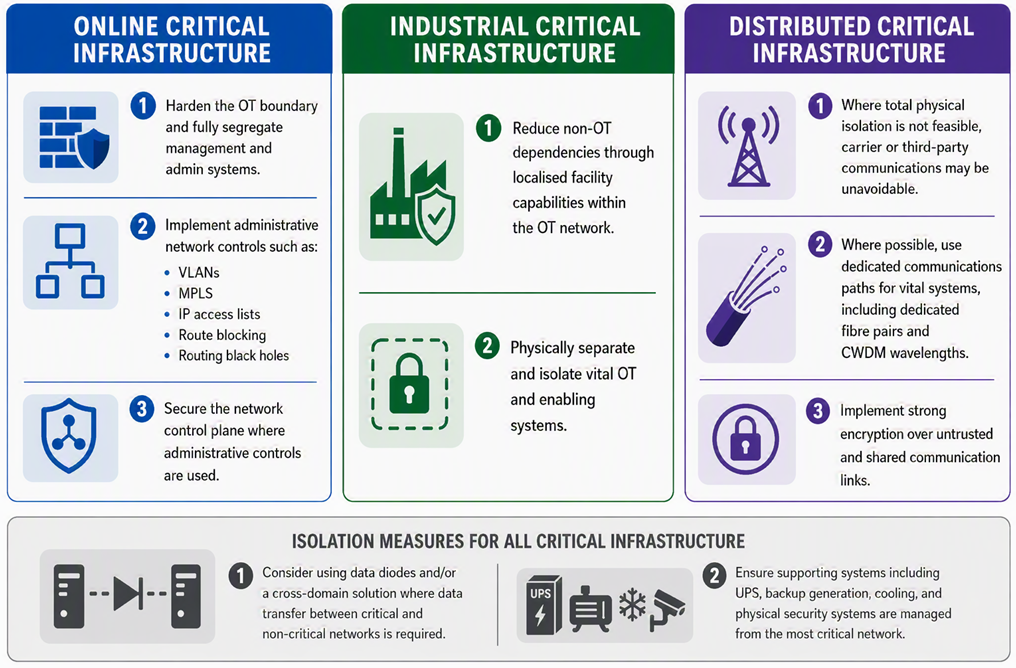
The U.S. and Australian governments have released new guidance urging critical infrastructure organizations to prepare to isolate vital operational technology systems in the event of a cyberattack or other major disruptions.
The guidance, titled “CI Fortify – Advice for isolating vital systems,” was developed by the U.S. Cybersecurity and Infrastructure Security Agency (CISA), the Australian Signals Directorate’s Australian Cyber Security Centre (ACSC), the FBI, and international partners.
It provides recommendations for disconnecting critical operational technology (OT) and associated systems from corporate, Internet-facing, and other less-trusted networks while continuing to provide essential services for an extended period.
Operational technology includes the hardware and software used to monitor or control processes, such as water treatment equipment, electrical systems, manufacturing machinery, transportation systems, and telecommunications infrastructure.
The agencies say state-sponsored threat actors routinely target critical infrastructure for espionage and to establish access that could later be used for disruptive or destructive attacks during a crisis or military conflict.
Advertisement
“Cybercriminals continue to opportunistically target CI operators,” reads the advisory.
“The sensitivity of the data stored by these entities, and the importance of their services, makes them attractive for cybercriminals seeking to extort victims via data exfiltration or by conducting ransomware attacks for disruptive or destructive purposes.”
In February 2024, CISA, the FBI, NSA, and other Five Eyes agencies warned that the Chinese Volt Typhoon hacking group had breached organizations in the communications, energy, transportation, and water sectors.
Chinese state-sponsored hackers tracked as Salt Typhoon have also breached government, telecommunications, transportation, lodging, and military networks worldwide since at least 2021.
The hackers also exploited known vulnerabilities in edge networking devices and used compromised equipment and trusted connections to pivot into other networks.
The new CI Fortify guidance aims to help organizations prepare before such an incident occurs, rather than attempting to determine how vital systems can be disconnected while an attack is already underway.
Isolating vital systems
The agencies recommend critical infrastructure entities first identify the minimum systems and networks required to continue delivering a critical service.
Organizations should then document every connection between those systems and corporate networks, remote-access services, cloud environments, Internet-facing infrastructure, vendors and contractors, and other critical infrastructure operators.
Advertisement
They should also determine where those connections can be disabled or physically disconnected and account for the manual processes, communication failures, and loss of external resources or dependencies that isolation may trigger.
Some of the terms and processes that the advisory recommends organizations become familiar with include:
Vital systems: The minimum OT and supporting systems needed to provide a critical service, such as controlling water distribution, delivering electricity, or operating a telecommunications network.
Isolation point: A predetermined location where connectivity between critical and non-critical networks or systems can be disconnected to contain an attack and prevent lateral movement into other vital systems.
Physical isolation: Completely disconnecting vital systems so they do not share network or computing infrastructure with non-critical systems. The guidance describes this as the most effective form of protection.
Graduated isolation: Gradually restricting access as the threat increases, such as first blocking remote workers and vendors, then disconnecting corporate networks, connected systems, and eventually all external connections.
Administrative network controls: Various administrative controls to modify or manage VLANs, access-control lists, and routing. The guidance says these can be useful temporary protections but that physical isolation should be the ultimate goal.
Data diode: Specialized equipment that allows data to flow in only one direction, reducing the risk that data or malicious traffic can travel in the opposite direction.
Post-isolation: Monitor routing tables, network traffic, and intrusion detection systems to verify that isolation controls remain effective. Administrators should also secure the network management zones used to administer routers, firewalls, and other network infrastructure so they are isolated from attackers.
While physical isolation provides the best protection, the cybersecurity agencies say that it may not be practical for organizations that depend on Internet-facing services, carrier networks, cloud services, or geographically distributed facilities.
In those environments, operators are advised to strengthen OT network boundaries, use dedicated or encrypted communications links, remove unnecessary dependencies on corporate systems, and maintain the ability to rapidly rebuild systems.
Isolation plans should also define who can authorize each step, the conditions that would trigger it, which systems must remain available, and how operations will continue without normal network connectivity.
Advertisement
Organizations are urged to test the complete isolation of their vital systems regularly, rather than testing only individual systems, because partial tests may fail to identify shared infrastructure and other hidden dependencies that could cause problems when the isolation plan is initiated.
The guidance also recommends keeping a secure offline or printed copy of the isolation plan so that it remains available in the event that access to corporate network or storage servers are disrupted.
After systems have been isolated, operators should continue monitoring network traffic, routing information, and management systems to ensure that unauthorized or accidental connections have not restored access between critical and non-critical networks.
However, the agencies warn that isolation also introduces risks, including systems falling behind on security updates, reduced monitoring, and increased use of removable media to transfer data between systems
Advertisement
Organizations must therefore prepare not only to disconnect vital systems, but also to operate, monitor, update manually until they can eventually reconnect systems again.
Security teams log 54% of successful attacks and alert on just 14%. The rest move through your environment unseen.
The Picus whitepaper shows how breach and attack simulation tests your SIEM and EDR rules so threats stop slipping by detection.
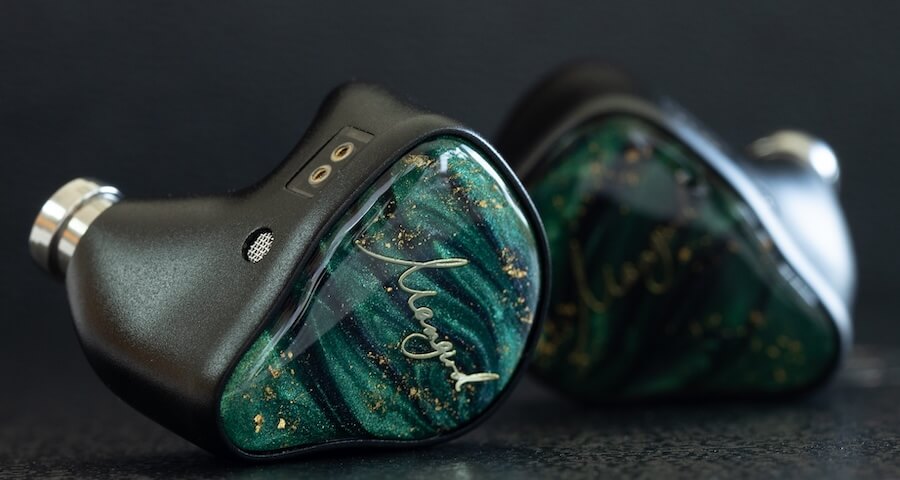
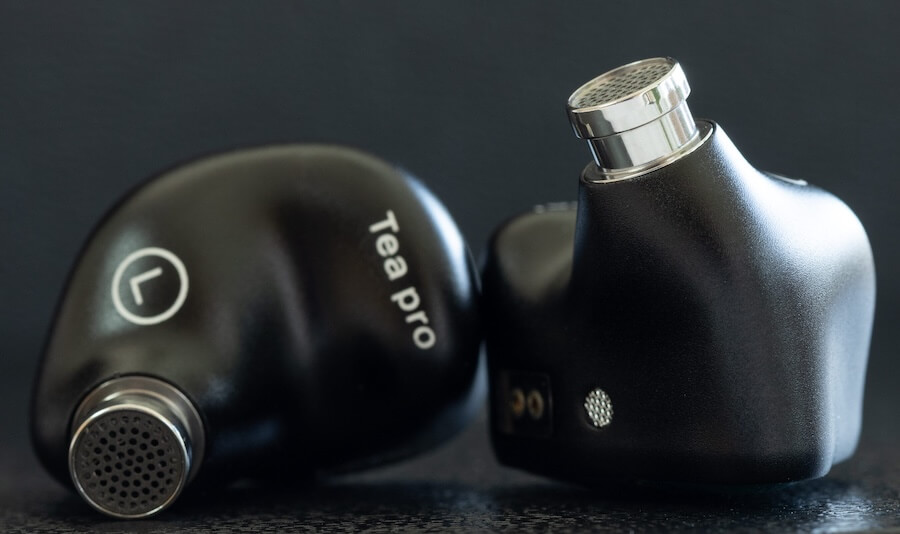
If you’re into IEMs, you’ve heard of the Tea Pro. It’s about as close as you can get to a cult classic in the world of modern portable audio, and I said as much in my original review. Between its stellar all-metal construction, excellent out-of-the-box experience, voracious V-shaped sound signature, and top-tier technical capabilities, the original Tea Pro struck a chord that few listeners could ignore.
But the Tea Pro has been around for a while, and XENNS decided it was time for a refresh. The Tea Pro SE, the subject of today’s review, is an updated and retuned version of the original that seeks to explore what this capable platform can do in the meta-tuning arena.
For fans of the original Tea Pro, however, does the SE offer anything meaningful? Let’s get into it.
XENNS Mangird Tea Pro SE IEMs | Photo credit: Resonance Reviews
About My Preferences: This review is a subjective assessment and is therefore influenced by my personal preferences. While I try to mitigate those biases as much as possible during the review process, I’d be lying if I said they were completely erased. With that in mind, readers should know the following:
Advertisement
My ideal sound signature includes capable sub-bass, textured mid-bass, a slightly warm midrange, and extended treble.
I have mild treble sensitivity.
Testing equipment and standards can be found here.
Related Reviews:
Key Specs:
Driver Configuration: Two custom neodymium dynamic drivers and six Knowles balanced-armature drivers
Crossover: Three-way crossover with a 150 Hz low-frequency transition
Frequency Response: 20 Hz to 22 kHz
Sensitivity: 104 ± 1 dB
Impedance: 13 ohms ± 1 ohm
Cable: 1.2-meter, eight-core oxygen-free copper and ultra-pure silver Litz cable
IEM Connection: 0.78 mm two-pin
Terminations: Modular 3.5 mm single-ended and 4.4 mm balanced plugs
Build
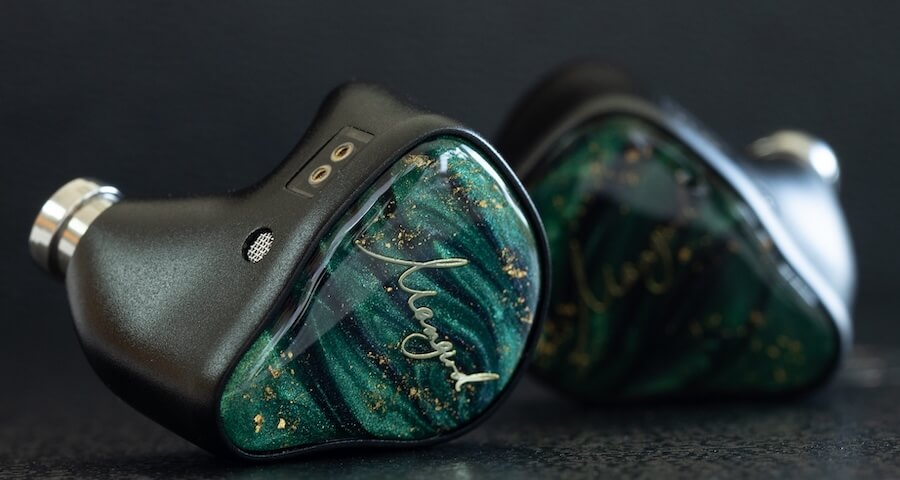
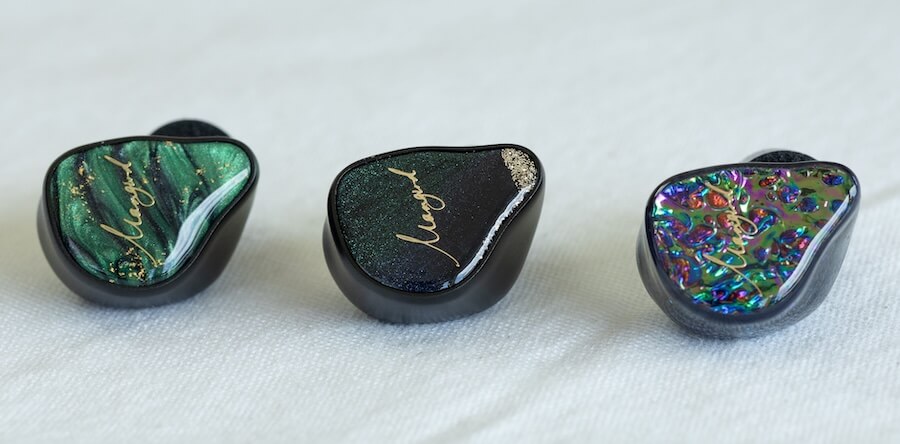
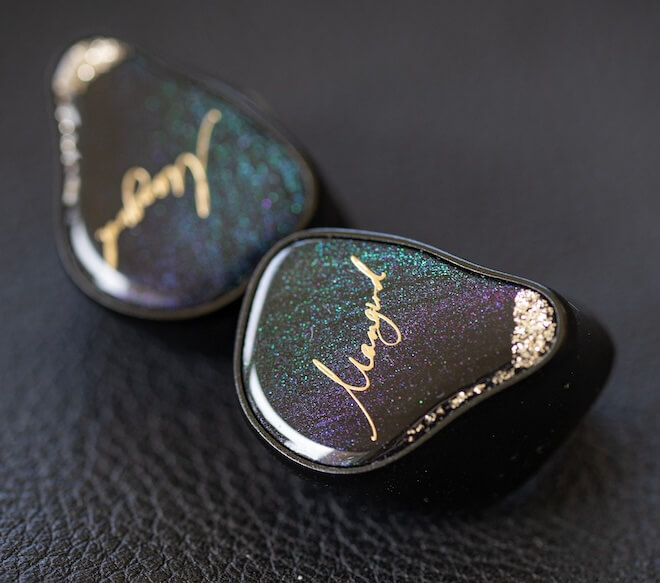
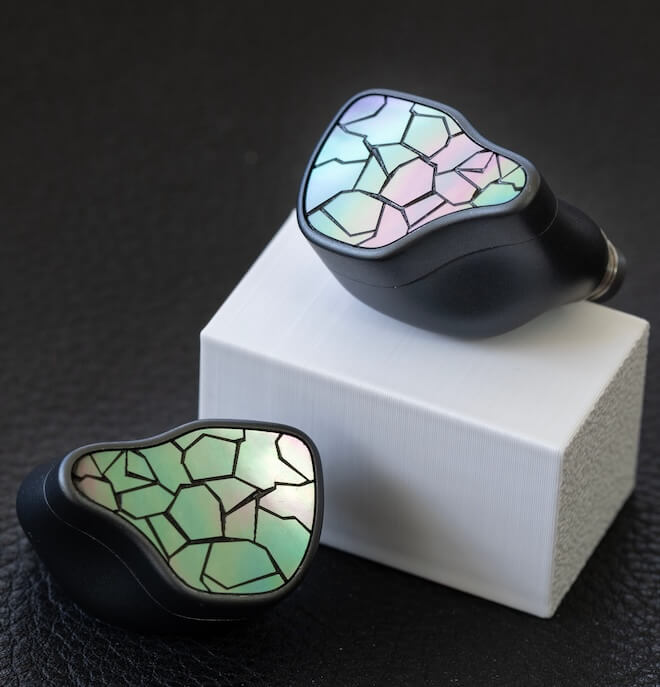
The Tea Pro SE’s build quality is excellent. Its shells are machined from aluminum, while the nozzles are made from steel. Each IEM features a hand-painted faceplate coated in clear resin.
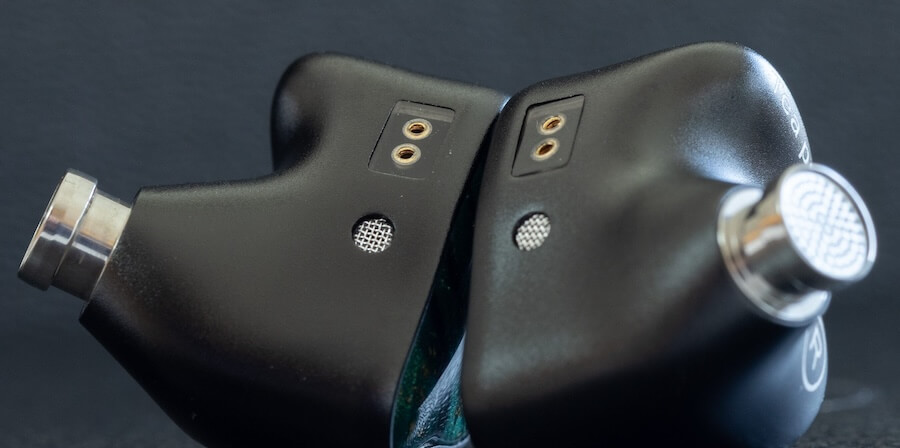
The tops of the Tea Pro SE’s shells house the 0.78 mm two-pin sockets, which are set into plastic blocks. They feel sturdy, although the socket on my right earpiece does not sit as flush as the one on the left. The nozzles are average in both length and width, with nicely machined lips that hold the eartips securely in place.
Advertisement
Photo credit: Resonance Reviews
The Tea Pro SE’s cable is unique within XENNS’ lineup, featuring a matching green outer sheath. Its metal modular termination uses a positive locking mechanism, making it sturdy and secure. The cable is also an improvement over the original Tea Pro’s, with a softer, more flexible feel and virtually no memory.
Comfort
Comfort is a metric that relies heavily on factors influenced by your individual ear anatomy. Mileage will vary.
Advertisement. Scroll to continue reading.
Like its predecessor, the Tea Pro SE offers average comfort. I can listen to it for extended periods without issue, but I need to be mindful of my eartip selection and the positioning of each earpiece. The stock cable is generally comfortable and free from microphonics, although wearing a hat or sunglasses can cause it to exert pressure on the backs of my ears.
Advertisement
Accessories
Photo credit: Resonance Reviews
Inside the box you’ll find:
1x Semi-hard carrying case
1x 0.78mm 2-pin cable
1x 3.5mm termination
1x 4.4mm termination
1x Microfiber cleaning cloth
6x Pairs silicone ear tips
3x Pairs foam ear tips
This is a solid accessory package that provides everything needed for an enjoyable experience out of the box. The stock silicone eartips are comfortable and provide a moderately secure seal, although I miss the liquid-silicone varieties ZiiGaat includes with its IEMs. The stock foam eartips are soft and compress easily, and I was able to use them to achieve excellent isolation.
The included carrying case feels good in the hand and looks quite attractive in person. Both aesthetically and tactilely, it represents a step up from the case included with the original Tea Pro. That said, the top and bottom are held together solely by friction. This means the lid can separate when the case is jostled around inside a bag or backpack, and the fit will almost certainly loosen over time until the case is no longer useful.
Perhaps XENNS could split the difference by using the same materials and adding a zipper.
Photo credit: Resonance Reviews
Listening
The Tea Pro SE is a warm, north-of-neutral IEM with a reference-style sound signature. Its gently elevated bass is centered toward the sub-bass and tapers smoothly into a linear lower midrange. The upper midrange rises through the 2–3 kHz region, reaching a moderate peak before settling into a slightly less forward lower treble. The upper treble is more prominent, adding a healthy amount of sparkle and air.
Spaciousness and Air Through Refinement
The Tea Pro SE’s reference-style sound signature uses a moderate level of treble emphasis to produce a clear, articulate, and airy upper register. Some IEMs achieve this by sharply boosting the 8–10 kHz region, but excessive emphasis is not required to extract detail and precision from the drivers.
Advertisement
The Tea Pro SE’s lower and upper treble sit naturally just above the upper midrange, ebbing and flowing with the mastering of each track. Sharply mastered recordings such as Nero’s “Satisfy” sound somewhat brighter, while thinner tracks such as Harvey Danger’s “Flagpole Sitta” are rendered with greater delicacy.
The Tea Pro SE captures the leading edges of treble transients with precision, rendering brief hi-hat strikes and cymbal hits with tight definition. Even tracks with chronically congested upper registers, such as The Verve’s “Bitter Sweet Symphony,” remain layered and well separated.
Engaging Reference-Style Mids
Balancing organic tonality with engagement is challenging. The flatter the midrange, the more likely a listener is to perceive it as stuffy or muffled. Although the Tea Pro SE is certainly warmer and thicker sounding than its predecessor, it remains articulate and engaging.
There is plenty of contrast and texture, rooted primarily in the carefully tuned relationship between the SE’s relatively flat lower midrange and its upper-midrange lift. Vocals and instruments sound rich and full, only occasionally drifting into flatter territory on tracks that are already warmly mastered.
Advertisement
Mainstream productions such as Bring Me the Horizon’s “n/A” sound vibrant and high in contrast, while denser recordings such as Nominee’s “Weathered” can come across as somewhat tired. That said, a combination of brain burn-in and eartip rolling can mitigate this effect, particularly for listeners whose libraries contain a lot of warmer-sounding material.
Advertisement. Scroll to continue reading.
Line-Toeing Bass
As a member of the Tea family, the Tea Pro SE is spiritually required to take bass seriously. While “reference-style” and “bass-friendly” do not usually go hand in hand, I think XENNS has threaded the needle quite well here. Yes, this represents a significant reduction in bass emphasis compared with the original Tea Pro, but the underlying technical ability and tonal quality remain intact.
Electronic tracks with substantial bass lines, such as Psylla’s “Better Times,” sound deep and robust, producing a moderate amount of rumble and a satisfying degree of punch. Extension is excellent, with the Tea Pro SE audibly reaching below 50 Hz without issue. The basshead in me still wants more, but the SE provides enough emphasis to render the track in a complete and convincing fashion.
Advertisement
Less bass-heavy genres such as rock and alternative also sound excellent through the Tea Pro SE, with the low end providing a solid, deep foundation for the rest of the instrumentation. Its tonality is neither dry nor flat, offering a welcome change of pace for listeners seeking relief from the onslaught of dry-sounding “meta IEM bass.”
For example, the drums on Thrice’s “Cataracts” pound through the mix with depth and harmonic completeness, even capturing subtle hints of punch. The rolling drums during the chorus of Blink-182’s “YOU DON’T KNOW WHAT YOU’VE GOT” possess a surprising amount of body and effectively demonstrate the Tea Pro SE’s excellent bass control.
Comparisons
Left to right: XENNS Mangird Tea Pro SE, Tea Pro, and Top Pro IEMs
Comparisons are selected solely based on what I find interesting. If you would like to see additional comparisons, feel free to leave a request in the comments below.
Xenns Mangird Tea Pro
The Tea Pro is a well-known hybrid IEM featuring all-metal shells and a modular 0.78 mm two-pin cable. It is the Tea Pro SE’s predecessor, but it remains available alongside the newer model for $359, or roughly $90 less than the SE.
Physically, the two IEMs are very similar, with the primary differences found in their accessory packages. The SE includes a different carrying case and cable. Its cable is the nicer of the two, replacing the original’s multicolored braid with a softer, more flexible green outer sheath. Both cables use modular terminations with interchangeable 3.5 mm and 4.4 mm plugs.
Sonically, the original Tea Pro is more V-shaped, with greater bass emphasis and a cooler, more recessed lower midrange. The Tea Pro SE’s upper treble is less forward, sparing it from the occasional bite exhibited by the original. Its treble sounds exceptionally clean, rendering texture and microdetail with less grain and a more organic timbre.
Advertisement
Vocals are more forward on the original Tea Pro, but they are not as full bodied as they are on the Tea Pro SE, nor are they as intelligible during busy passages. The SE’s warmer, more linear presentation is smooth, relaxing, and satisfyingly rich, but it lacks the sheer engagement offered by the original.
Bass lovers may also find that certain low-frequency elements sound comparatively flat. Take the drums in the introduction to Silversun Pickups’ “Bloody Mary.” The original renders them with punch and substance, while the SE places them more timidly in the background. The same trend applies to electronic music. The bass line on Uppermost’s “Emotion” is delivered with depth and texture through the Tea Pro SE, but it is not as tactile or visceral as it is through the original.
Ultimately, the Tea Pro SE is designed to be a different beast from its predecessor. Sharing the Tea Pro name may therefore be something of a misnomer, because fans of the original will not find the same engagement and energy in the SE.
Instead, the Tea Pro SE does for listeners who prefer relaxed, reference-style tuning what the original did for fans of V-shaped tuning: it offers a detailed, refined, and compelling experience near the top of its niche. That said, my love for the original Tea Pro remains, and the SE does not replace it.
Advertisement
Advertisement. Scroll to continue reading.
Xenns Mangird Top Pro
Photo credit: Resonance Reviews
The Top Pro is a top-tier meta IEM featuring a hybrid driver configuration, resin shells, metal nozzles, and a modular cable. Like the Tea Pro SE, it comes with an excellent suite of accessories. The Top Pro costs $499, making it $50 more expensive than the Tea Pro SE. The Tea Pro SE’s all-metal construction feels much sturdier in the hand, and its cable is slightly thicker.
Let’s be honest: the Top Pro and Tea Pro SE are very similar-sounding IEMs. Even in technical terms, they are almost identically capable, rendering detail and texture without prejudice. At that point, deciding which one sounds “better” comes down to a purely subjective assessment of their tuning.
The Top Pro is tuned to sound slightly less warm and has a little less bass depth than the Tea Pro SE. It will occasionally punch harder on a drum strike or synthetic bass drop. The Tea Pro SE’s vocals are not as forward as the Top Pro’s, although their overall tonality is fairly similar. The Tea Pro SE is also slightly brighter, with a small increase in upper-treble energy that gives it a minor edge in airiness.
Between the two, I would choose the Tea Pro SE. For $50 less, you are essentially getting a Top Pro with sturdier metal shells and a better cable. The Top Pro’s case is slightly better, but buying a Pelican 1010 for around $20 thoroughly outclasses both stock cases and still leaves you with an effective $30 savings.
Advertisement
Once you account for the Tea Pro SE’s greater treble energy and mildly deeper-sounding bass, it offers a slightly more exciting experience, albeit by a narrow margin.
HiSenior Mega7
Photo credit: Resonance Reviews
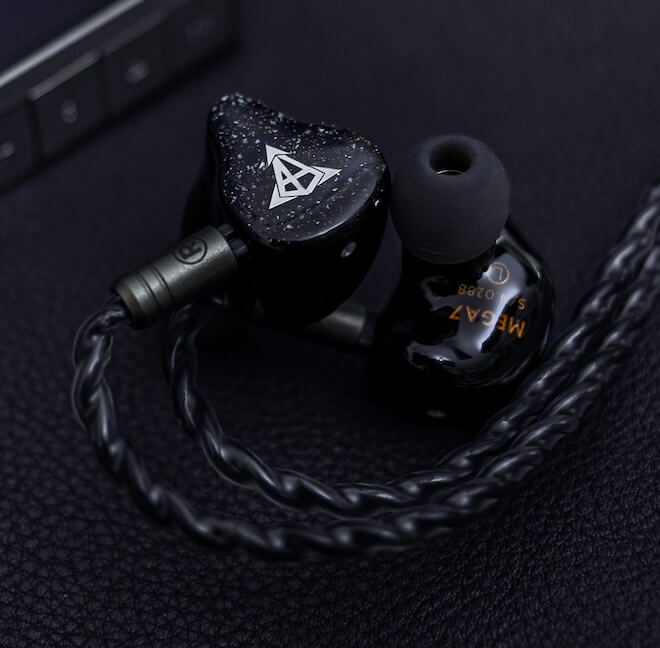
The Mega7 is a seven-driver hybrid IEM featuring resin shells and metal nozzles. It comes with a fixed 4.4 mm cable and costs $450, placing it neck and neck with the Tea Pro SE. Both IEMs include strong accessory packages, although I appreciate the Tea Pro SE’s inclusion of foam eartips. That said, the Mega7 comes with a useful USB-C adapter, making it much easier to use with smartphones and laptops right out of the box.
There is a great deal to say about the Mega7’s overall performance, but it largely targets a north-of-neutral, reference-style sound signature. The Tea Pro SE takes a similar approach, albeit with a different flavor. The Mega7 sounds cooler and places slightly more emphasis on the lower treble, while the Tea Pro SE has a modest increase in upper-treble energy.
Neither IEM is particularly bass-heavy, but the Mega7 has a slight advantage in sub-bass weight. The Tea Pro SE’s mid-bass sounds marginally tighter, although the difference is small. The Mega7’s upper midrange is also slightly more forward, giving vocals additional presence and separation.
Both IEMs are exceptionally capable, offering impressive technical performance at relatively accessible prices. The Mega7 will likely appeal to listeners who want greater sub-bass presence and more forward vocals, while the Tea Pro SE counters with additional air and sparkle from its brighter upper treble.
Advertisement
Kiwi Ears Astral
Photo credit: Resonance Reviews
The Astral is a well-known hybrid IEM featuring resin shells and metal nozzles. It comes with a mediocre cable, includes a sparse accessory package, and costs $300. It occupies a lower price point than the Tea Pro SE, which offers all-metal construction, a much better cable, and vastly improved accessories. Both IEMs are above average in size, although the Tea Pro SE fits my specific ear anatomy better.
In terms of sound, the Astral is more U-shaped, delivering greater sub-bass emphasis, less mid-bass, and a colder, thinner lower midrange. Its upper midrange is more forward, and its treble is considerably brighter. The Astral’s upper treble, in particular, receives far more emphasis than the Tea Pro SE’s. This pushes hi-hats and cymbals much farther forward in the mix, but at the expense of a less organic and cohesive presentation. The additional brightness can also result in occasional sharpness and sibilance.
The Tea Pro SE’s warmer, more relaxed presentation sounds more organic and cohesive across a wider variety of genres, especially those with substantial mid-bass content. The Astral’s aggressive mid-bass scoop gives it a distinct “half-bass” tonality that emphasizes sub-bass elements while leaving the mid-bass sounding flaccid and uninspiring.
Advertisement. Scroll to continue reading.
Between the two IEMs, I’m choosing the Tea Pro SE. Its metal shells, significantly better out-of-the-box experience, and more realistic tuning align more closely with my musical tastes and sonic preferences. Once you factor in its richer, friendlier tuning and complete absence of sibilance, the additional $150 begins to look increasingly worthwhile.
Advertisement
THIE Audio Hype 4 Mk II
Photo credit: Resonance Reviews
The Hype 4 Mk II is a metal-shelled hybrid IEM with a driver configuration similar to that of the Tea Pro SE, but it costs $50 less. Both IEMs include modular detachable cables, although the Tea Pro SE’s termination feels sturdier and uses a threaded locking mechanism. Both also come with strong accessory packages, though I prefer the Hype 4 Mk II’s case because of its greater internal volume and more protective design.
The Hype 4 Mk II has a more V-shaped tuning, with moderately greater mid-bass presence and a slight increase in sub-bass. Both IEMs sound tight and well controlled, but the Hype 4 Mk II’s mid-bass is slightly firmer and better defined.
Its midrange is cooler, with a deeper recession in the lower mids and a comparatively larger upper-midrange peak. The Hype 4 Mk II’s treble is considerably brighter, placing treble-heavy elements front and center on the soundstage. It surfaces subtle treble details more readily through emphasis alone, but it does not capture much more texture, if any, than the Tea Pro SE’s excellently tuned treble.
The Tea Pro SE renders vocals with greater richness and depth because of its warmer presentation. Both IEMs convey air and spaciousness well, but the Hype 4 Mk II’s exaggerated upper register can occasionally make the presentation sound overly sharp.
For listeners seeking a mildly V-shaped IEM with plenty of treble emphasis, the Hype 4 Mk II is the clear choice. Those who prefer a warmer presentation and less forward treble, however, will likely find the Tea Pro SE more appealing.
Advertisement
NiceHCK NX8 Ti
Photo credit: Resonance Reviews
Like the Tea Pro SE, the NX8 Ti is a limited-edition revamp of an older IEM. At $399, it packs an upgraded tribrid driver configuration into resin shells with titanium faceplates and interchangeable tuning nozzles. Both IEMs come with removable two-pin cables, although the Tea Pro SE’s cable is lighter, softer, and modular. The NX8 Ti’s cable does not feel cheap, but it is far less practical for daily use, particularly when commuting and trying to fit it into a space-constrained case.
Sonically, the NX8 Ti is bassier, with a more forward upper midrange and upper treble. It offers a similar, though perhaps slightly lower, degree of warmth than the Tea Pro SE, but leans into a more dramatic presentation. The Tea Pro SE delivers a comparable amount of sub-bass, but less mid-bass. The NX8 Ti’s mid-bass is nicely toned and punchy, although it sounds slightly softer around the edges than the Tea Pro SE’s.
The NX8 Ti’s upper midrange is considerably more forward, placing vocals closer to the front of the mix. The Tea Pro SE’s vocals sit slightly farther back on the soundstage, but sound richer and more natural. Its midrange is similarly detailed and textured, but carries the warm, organic tonality that I crave.
The NX8 Ti’s treble is likewise more dramatic, with additional lower-treble presence and a noticeable increase in upper-treble energy. Vocals and metallic instruments do not quite become sibilant, but they can sound stiffer and more tightly wound. On some tracks, this creates a greater sense of cleanliness, but it does not engage me in the same way as the Tea Pro SE’s effortless airiness.
These are both highly capable IEMs, but they have entirely different objectives. The NX8 Ti has no interest in a reference-style presentation, nor does it acknowledge the trendy tuning choices associated with the current meta. It is much closer to a traditional V-shaped IEM, albeit with some audiophile influence.
Advertisement
That said, it simply does not draw me in the way the Tea Pro SE does, and I am usually a V-shaped kind of listener. Perhaps it is merely a matter of brain burn-in, but I am sticking with the warmer, lusher Tea Pro SE.
Advertisement. Scroll to continue reading.
XENNS Tea Pro SE | Photo credit: Resonance Reviews
The Bottom Line
The XENNS Tea Pro SE stands out by combining modern reference-style tuning with genuine warmth, body, and organic timbre. Its smooth midrange, clean treble, excellent detail retrieval, and sturdy metal construction make it a compelling alternative to the cooler, leaner sound of many current meta-tuned IEMs.
It is not a direct upgrade to the original Tea Pro. Bass impact and overall energy have been reduced, comfort remains only average, and listeners who prefer a vivid V-shaped presentation may find the SE too relaxed. For those seeking a refined, slightly warm, north-of-neutral IEM without sharp treble or sterile tonality, however, the Tea Pro SE is one of the strongest options in its price range.




























































You must be logged in to post a comment Login