Samsung has extended SmartThings support to IKEA’s Matter-over-Thread devices, covering air quality sensors, remote controls, smart lights, and smart plugs from the Swedish furniture brand’s connected home range.
The two companies conducted multiple rounds of validation before the rollout, with Samsung building dedicated integrations and a tailored user experience within the SmartThings app to improve connectivity stability across IKEA’s supported hardware.
That level of platform-specific work stands in contrast to what Matter is supposed to deliver, as the smart home standard was designed to eliminate the need for manufacturer-by-manufacturer integration by offering universal compatibility across different ecosystems.
IKEA’s Matter devices have a documented history of connectivity difficulties, with users reporting persistent problems connecting the company’s hardware to home networks since the brand adopted the standard across its smart home product lines.
Advertisement
Advertisement
Those difficulties illustrate a broader gap between Matter’s stated ambitions and its real-world performance, as the standard has struggled to deliver the frictionless cross-platform experience it originally promised to both manufacturers and consumers looking for a unified smart home solution.
Samsung and IKEA’s closer alignment on SmartThings also signals a wider industry shift toward platform holders taking a more hands-on role in validating third-party Matter devices, rather than relying on the standard alone to guarantee compatibility across brands and product categories.
That hands-on approach extends to how the integration surfaces within the SmartThings app itself, where Samsung has implemented a dedicated interface for IKEA devices to reduce friction for users managing the brand’s hardware alongside other connected products in the same environment.
Advertisement
The SmartThings and IKEA integration follows Samsung’s recent addition of Siri voice command support to the platform, continuing a period of steady expansion as SmartThings works to position itself as one of the more broadly compatible smart home hubs available to consumers across different device ecosystems.
The integration is available now and covers IKEA’s current range, with the SmartThings app receiving the dedicated IKEA user experience as part of the same update that brought the expanded device support to the platform.
Time to hang it up? Microsoft will be giving some employees that chance. (GeekWire Photo / Todd Bishop)
Microsoft is offering a one-time voluntary retirement program for the first time in its 51-year history, giving thousands of long-serving U.S. employees a chance to leave with a financial payout and extended healthcare as it works to control costs amid a massive buildup in AI infrastructure.
An estimated 7% of Microsoft’s 125,000-person U.S. workforce, or about 8,750 employees, would be eligible based on a formula that takes into account their years at the company and their age.
It’s a highly unusual move in the tech world. Voluntary retirement programs are common in older industries, such as telecom and manufacturing, but the largest tech companies have instead turned to layoffs, stricter performance reviews, and return-to-office policies to thin their ranks.
The retirement program was outlined Thursday in a memo to employees from Chief People Officer Amy Coleman, who described it as a one-time offering for long-serving workers.
Advertisement
The program is open to U.S. employees at Level 67 — the equivalent of senior director — and below, excluding those on sales incentive plans, whose years of service plus age total 70 or more. Eligible employees will be notified May 7 and will have 30 days to decide.
“Many of these employees have spent years, and in some cases, decades, shaping Microsoft into what it is today,” Coleman wrote. “Our hope is that this program gives those eligible the choice to take that next step on their own terms, with generous company support.”
In the same memo, Coleman outlined changes to Microsoft’s compensation system, reducing the number of pay levels from nine to five. It’s also decoupling stock awards from bonuses, giving managers flexibility to use stock to reward long-term contributors regardless of their latest performance rating.
Microsoft isn’t providing specific details of the retirement package yet, saying eligible employees and their managers will receive more information on May 7. Details of the healthcare component will be significant for employees who are not yet old enough to qualify for Medicare at age 65.
Advertisement
There are not expected to be any restrictions on future employment for those who take the deal.
The program would take effect in Microsoft’s fiscal fourth quarter, and CFO Amy Hood is expected to discuss it on the company’s earnings call next week.
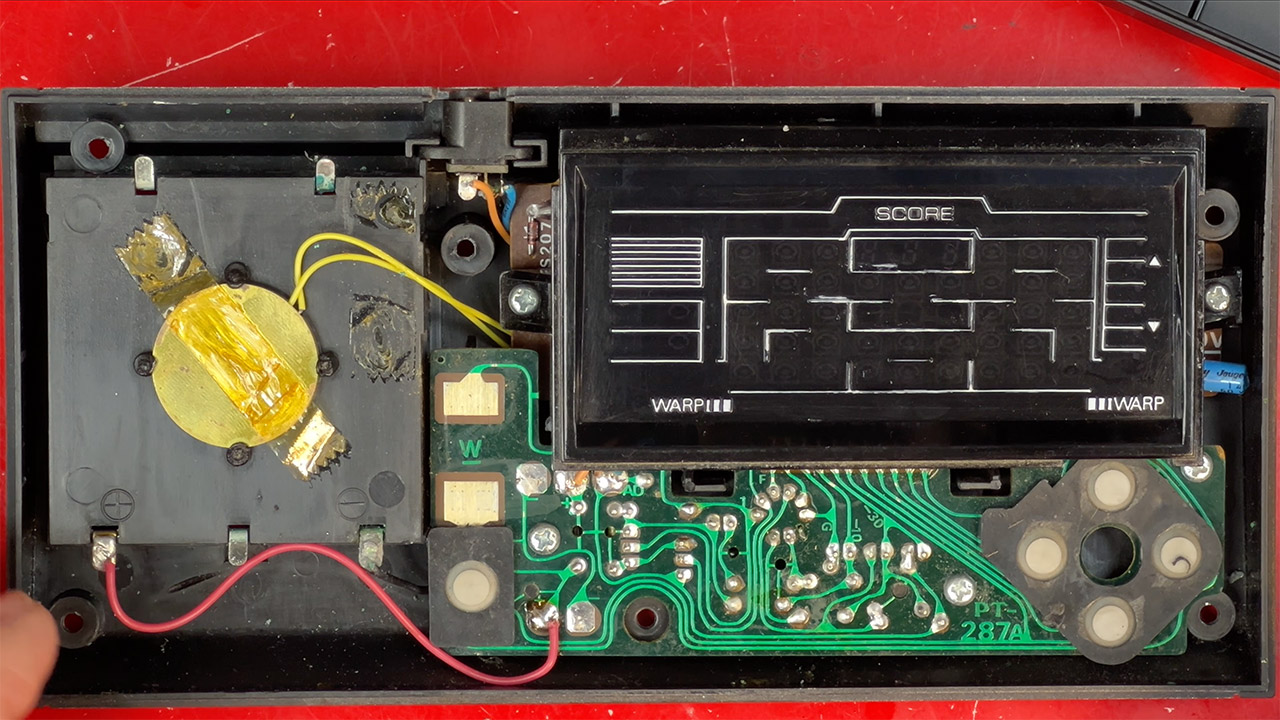
Back in the early 1980s, Radio Shack sold a variety of gadgets that caught the eye of both curious children and tech enthusiasts. Among those goods was Gobble Man, a small handheld game that placed maze chases directly into your palms years before the larger portable consoles that came later. Bandai first released this in Japan during 1981 as a game known as Packri Monster. Tandy then scooped it up, licensing the design for its US stores before selling it as Gobble Man in 1983. To add to the confusion, Tandy sold the exact same units under the titles Hungry Monster and Ogre Eater.
Four AA batteries powered everything from start to finish. A vacuum fluorescent display, which was basically a tiny little screen, made the game feel extremely bright; even in a dark room or on a vehicle journey, you could see every wall and dot in the maze clearly. Inside the handheld was a Hitachi HD38800 chip, a specialized microcontroller designed specifically to operate this game and nothing else.
Play Your Game Collection with Remote Play – PlayStation Portal Remote Player can play compatible games you have installed on your PS5 console…
Cloud Streaming from the Game Catalog and Classics Catalog – Discover an awesome library of PS5 games on the PlayStation Portal Remote Player with…
Cloud Streaming for PS5 Games in Your Library – With PlayStation Plus Premium, stream select digital PS5 games in Your Library from PlayStation Store…
Players took a rectangular plastic case about the size of a large paperback book to play with. A four-way joystick on the front let you to direct the yellow monster through the curving courses; the stick itself employed a dual pivot mechanism that required a forceful push to register every turn. The monster continued to move in the same direction until the player altered course or it collided with a wall. The controls included a start button and a power switch, as well as a small orange indicator that signaled when the gadget was turned on.
The music came from a very small built-in speaker that played the tunes and effects at the same constant volume, such as beeps and rudimentary melodies, and alerted you when something happened in the game. There was no volume control, so the cacophony was part of the experience, whether you liked it or not. The gameplay took place on a single fixed maze, with green food pellets to chew on. The goal was simple: move the monster so that it ate every pellet before the bogey caught up, and if it did, game over. Red power food would sometimes materialize in specific locations. Eating one of those would transform the monster into a coward who would back direction and flash briefly. For a certain period of time, you might pursue them and get some bonus points.
However, the difficulty level increased with each subsequent round. More enemies joined the chase, and speeds rose, giving the maze the sensation of closing in around you when the strain was on. Your score would skyrocket if you timed your power snacks perfectly and wiped the board clear without making a single error. Round after round, the whole thing just kept going until the batteries died or your thumbs gave out in frustration. Anyone who picked up Gobble Man in 1983 would immediately feel as if they understood the game because the rules were so familiar.
Gobble Man was never really trying to compete with the big boys, such as Pac-Man, home consoles, and coin-op machines. It was simply a nice little distraction to keep you engaged while on the run, regardless of where you were. Six years later, Nintendo released the Game Boy, which very well defined what portable gaming was all about. But first, Tandy created Gobble Man, which proved that the concept worked and left many people wanting more.
More than half of the outlets listed on its website are reportedly closed
Homegrown supermarket and minimart chain Hao Mart has closed a large share of its outlets as losses deepen, The Straits Times reported.
As of publication, Hao Mart’s website lists 20 outlets across Singapore. However, a check by The Straits Times found that only seven remain in operation after visiting all listed locations over a two-week period in the second half of Mar.
The remaining seven include six regular Hao Mart stores, located in Bedok South Avenue 3, Canberra Link, Potong Pasir Ave 1, Petir Road, Whampoa Drive and Pasir Ris Street 21; and one premium Eccellente outlet in the Marina Square shopping mall.
According to Accounting and Corporate Regulatory Authority (ACRA) records obtained by the publication, the company has been in the red since 2023, and its losses have worsened over the years.
Advertisement
For FY2025, Hao Mart reported a S$49.6 million loss. The amount is up from S$32.8 million in FY2024 and S$23.2 million in FY2023, following two years of profitability. The company also posted a S$2.2 million loss for FY2019, its first year of filings.
FY2025’s figures were filed with ACRA belatedly in Jan. ACRA told The Straits Times in Mar that it has taken enforcement action against Hao Mart for failing to file annual returns within six months of its financial year-end.
While the regulator did not disclose the specific penalty imposed, its website states that late filings can incur fines of S$300 or S$600, depending on the length of the delay.
Separately, Hao Mart is also facing four High Court lawsuits, including a dispute with landlord OG over the termination of its lease for its flagship five-storey Taste Orchard mall on Orchard Road.
Advertisement
Vulcan Post has reached out to Hao Mart about the scaling down of its operations and financial situation.
Some closed stores taken over by rivals
Hao Mart’s first minimart in Whampoa./ Image Credit: T T Teo, Saad Chinoy via Google Reviews
Hao Mart was founded by Dr Tan Kim Yong in 2016, with its first store at Block 74 Whampoa Drive. The chain expanded rapidly over the years, peaking at 51 stores in Dec 2021.
But by Dec 2024, Hao Mart stores had dwindled to just 20, according to its website. Among the outlets that The Straits Times found to be closed, four had been replaced by Hao Mart’s rivals.
Sheng Siong now occupies Hao Mart’s former Punggol East and KINEX Mall spaces, while ValueMart runs the Punggol Walk site near Waterway Point.
Newcomer ACE Signature took one of three Geylang shophouses. Of the remaining two Geylang units, one became a coffeeshop, and the other was demolished in Sep 2024 for a five-storey rebuild. The Redhill Road minimart is now a tuition centre.
Advertisement
Elsewhere, Indian supermarket chain Sri Murugan Supermarket now runs Hao Mart’s former Bayshore Park condo minimart. Its Parksuites condo-facing outlet has been converted into an after-school care centre. The Far East Plaza outlet is now a food court, the Esplanade Xchange space has become a travel agency, and the East Village supermarket has been replaced by a gym.
Read other articles we’ve written on Singaporean businesses here.
For those who have them available, a garage or home workshop can be sort of a sacred space to tinker away on a restoration car or DIY improvement project. For others, those locales might be little more than a space to store things like bicycles, sports gear, and lawn equipment. Yes, some people probably even still use them as a safe space to park their cars.
However you choose to utilize that space, those who spend even small amounts of time in the garage or workshop know that they are in constant need of tending to. They also know that even the smallest of upgrades can make a massive difference in not just how comfortable that space can be, but also how functional it ultimately is.
In fact, smaller upgrades may be preferable for many who have those spaces available to them, particularly if the locations are already in decent enough shape that they do not need a major overhaul. In those cases, a few economically priced finishing touches could indeed transform your garage or workshop into a workflow wonder. If you are among the budget-minded masses in the world, we spent a little time scouring Lowe’s Home Improvement online outlet for in-stock and ready to purchase items that can currently be purchased for about $50 or less. Here are a few things we think are essential for any garage or home workshop setup.
Advertisement
Utilitech 28-in Indoor Tower Fan – $31.98
Both garages and home workshops tend to err on the warm-to-hot side of the heat spectrum, and it’s not always easy or cheap to run an HVAC vent in to cool them. As a result, any sort of airflow comes at a legitimate premium in those spaces, especially when warmer weather settles in over your region.
Advertisement
On top of that, garages and workshops often don’t offer quite enough windows to easily create such an airflow. Garages are obviously equipped with a car-sized doorway that can aid that airflow problem, but even an open garage door may not allow enough air in to fully cool things down, and the options tend to be fewer when it comes to many workshops. You could, of course, seek to cool things down with a mobile air-conditioning unit, though that may be a pricier option than some are comfortable with. Instead, a shop fan or mister like those sold by Ryobi may be the best fix to beat the heat.
Another option is the Utilitech 28-inch Tower Fan, which is currently selling for $32.98 through Lowe’s Home Improvement’s online outlet. The 120-Volt tower fan — which produces 565 CFM of airflow – is equipped with three speed settings that allow users to tailor the fan to their needs. It also oscillates to 60 degrees, meaning you can use it to properly circulate air throughout your space if you like. Its tower design makes it a nice space-saver too, with customer reviews largely praising it for those features.
Advertisement
Rubbermaid Steel Paper Towel Rack – $32.98
As far as universal truths go with garages and workshops, it is a legitimate given that messes can and often will happen within their walls. Given the likelihood that you are working with certain chemicals in those spaces, such messes may require more than just a broom and a dust pan, which are hardly ideal for liquids. While shop towels are a good enough way to manage messes, depending on the chemicals you’re cleaning up, those towels may be beyond saving after one use, and replacing them will eventually get pricey.
That being the case, heavy-duty paper towels may be a preferable option for some shop and garage dwellers. The only real issue with going that route is finding a space to store your shop-ready paper towels where they are both out of the way and incapable of rolling away. The folks at Rubbermaid were no doubt considering those factors when they developed their Steel Paper Towel Rack.
Rubbermaid isn’t exactly the first name that comes to most minds when thinking about garage-ready gear. To that end, some Lowe’s customers who’ve purchased this paper towel holder have noted that it may have trouble properly securing certain rolls of paper towels. However, once you find the right size, the holder’s durable steel design should make it long-lasting, and it even has a small shelf on top for extra storage. The device is compatible with Fast Track Slat Wall setups, too, and is backed by a limited lifetime warranty.
Advertisement
Craftsman 3-Gallon Shop Vacuum – $44.98
On the subject of garage and workshop cleanup, it should go without saying that a roll of paper towels will not be anywhere near enough to tackle some of the messes you will encounter from one project to the next. That is particularly true if you work with wood, but even if you don’t, garages tend to collect dirt and debris with considerable ease.
Advertisement
Brushes and push brooms have always been helpful in combating such messes, of course, and if you prefer to keep things old school like that, more power to you. If, however, you’d rather not spend time pushing a broom around your garage or workspace, a good wet/dry shop vacuum should be included in your DIY cleaning arsenal.
Once you’ve decided to go with one, there are still decisions to be made, as the top shop vacuum brands offer them in all shapes, sizes, and price ranges. Don’t worry, there are plenty of models available for $50 or less, including Craftsman’s 3-Gallon Shop Vacuum, which can be purchased from Lowe’s for $44.98. Yes, this is a pretty standard, no-frills model, but it should be powerful enough to handle any run-of-the-mill shop or garage mess. It also comes with hoses, nozzle heads, and a reusable filter, so it’s ready to roll right out of the box. With a 10-foot power cord and a weight of just 7.72 pounds, it should be easy to lug around the shop, too, with Craftsman backing the device with a 3-year limited warranty.
Advertisement
Gladiator 2-ft LED Shop Light – $50.99
We are aware that this handy little light is just a touch over the $50 price range we’ve been covering. In all honesty, if you’re willing to spend that much on an essential item to upgrade your garage space, we don’t believe that a mere $0.99 should, or even would, be a deal breaker. That is especially true when it comes to something like lighting, which can be a make-or-break factor in the work you can and cannot properly accomplish in your garage or home workshop.
There are, obviously, tons of options available to consumers for less than $50, but quality can vary dramatically in the budget garage lighting sector. That is particularly true with USB-rechargeable models, as few are deemed bright enough to legitimately light up these spaces or versatile enough to use for multiple different jobs. Gladiator’s 2-ft LED Shop Light would seem to be one of the exceptions, which is largely why we’re making one for that paltry $0.99.
At present, this 300-lumen light boasts a 4.7-star rating from users, with the majority praising the shop light for its power and variable brightness options, as well as its long-lasting, fast-charging battery. Versatility would seem to be a true separator, with many users citing the cordless light’s ability to be fixed in one location via different wall mounting options or removed and carried about their space as needed as a major plus. It’s even got a built-in hook for hanging.
Advertisement
Stalwart Multi-Tool Tool Organizer – $40.74
Whether you’re working in the garage or a basement workshop, you’ve no doubt got tools and gear aplenty strewn about most of the space’s available flat surfaces. Such clutter can make it difficult to find enough space to work, let alone the tools required for the job. That is, unless you have a suitable storage option that lets you put everything in its right place at the end of every project.
Advertisement
Those in need of a good power tool organizer are hardly hurting for options these days, either, so there’s really no excuse not to have one at work in your home, garage, or workshop at this very moment. If, however, you’ve been slow to pick one up, or have only recently crossed the power tool ownership threshold to actually need an organizer, Stalwart’s Multi-tool Organizer looks to be as solid an option as you’ll find through Lowe’s Home Improvement. It’ll only set you back a reasonable $40.74 to boot.
That price is for the 2-piece, 23.9-inch version of the wall-mounted tool organizer, which includes a 4-slot power tool holder as well as a 3-shelf rack with additional slots for hand tools like hammers, pliers, and screwdrivers. The shelves are weight tested to hold between 80 pounds and 140 pounds, so you should be able to properly fill them up, too. While tools are the primary organizing objective here, some users have noted they turned their Stalwart into a dedicated charging station for their battery-powered devices, giving the organizer a welcome bit of versatility.
The era of enterprises stitching together prompt chains and shadow agents is nearing its end as more options for orchestrating complex multi-agent systems emerge. As organizations move AI agents into production, the question remains: “how will we manage them?”
Google and Amazon Web Services offer fundamentally different answers, illustrating a split in the AI stack. Google’s approach is to run agentic management on the system layer, while AWS’s harness method sets up in the execution layer.
The debate on how to manage and control gained new energy this past month as competing companies released or updated their agent builder platforms—Anthropic with the new Claude Managed Agents and OpenAI with enhancements to the Agents SDK—giving developer teams options for managing agents.
AWS with new capabilities added to Bedrock AgentCore is optimizing for velocity—relying on harnesses to bring agents to product faster—while still offering identity and tool management.
Advertisement
Meanwhile, Google’s Gemini Enterprise adopts a governance-focused approach using a Kubernetes-style control plane. Each method offers a glimpse into how agents move from short-burst task helpers to longer-running entities within a workflow.
Upgrades and umbrellas
To understand where each company stands, here’s what’s actually new.
Google released a new version of Gemini Enterprise, bringing its enterprise AI agent offerings—Gemini Enterprise Platform and Gemini Enterprise Application—under one umbrella.
The company has rebranded Vertex AI as Gemini Enterprise Platform, though it insists that, aside from the name change and new features, it’s still fundamentally the same interface.
Advertisement
“We want to provide a platform and a front door for companies to have access to all the AI systems and tools that Google provides,” Maryam Gholami, senior director, product management for Gemini Enterprise, told VentureBeat in an interview. “The way you can think about it is that the Gemini Enterprise Application is built on top of the Gemini Enterprise Agent Platform, and the security and governance tools are all provided for free as part of Gemini Enterprise Application subscription.”
On the other hand, AWS added a new managed agent harness to Bedrock Agentcore. The company said in a press release shared with VentureBeat that the harness “replaces upfront build with a config-based starting point powered by Strands Agents, AWS’s open source agent framework.”
Users define what the agent does, the model it uses and the tools it calls, and AgentCore does the work to stitch all of that together to run the agent.
Agents are now becoming systems
The shift toward stateful, long-running autonomous agents has forced a rethink of how AI systems behave. As agents move from short-lived tasks to long-running workflows, a new class of failure is emerging: state drift.
Advertisement
As agents continue operating, they accumulate state—memory, too, responses and evolving context. Over time, that state becomes outdated. Data sources change, or tools can return conflicting responses. But the agent becomes more vulnerable to inconsistencies and becomes less truthful.
Agent reliability becomes a systems problem, and managing that drift may need more than faster execution; it may require visibility and control.
It’s this failure point that platforms like Gemini Enterprise and AgentCore try to prevent.
Though this shift is already happening, Gholami admitted that customers will dictate how they want to run and control any long-running agent.
Advertisement
“We are going to learn a lot from customers where they would be using long-running agents, where they just assign a task to these autonomous agents to just go ahead and do,” Gholami said. “Of course, there are tricks and balances to get right and the agent may come back and ask for more input.”
The new AI stack
What’s becoming increasingly clear is that the AI stack is separating into distinct layers, solving different problems.
AWS and, to a certain extent, Anthropic and OpenAI, optimize for faster deployment. Claude Managed Agents abstracts much of the backend work for standing up an agent, while the Agents SDK now includes support for sandboxes and a ready-made harness. These approaches aim to lower the barrier to getting agents up and running.
Google offers a centralized control panel to manage identity, enforce policies and monitor long-running behaviors.
Advertisement
Enterprises likely need both.
As some practitioners see it, their businesses have to have a serious conversation on how much risk they are willing to take.
“The main takeaway for enterprise technology leaders considering these technologies at the moment may be formulated this way: while the agent harness vs. runtime question is often perceived as build vs. buy, this is primarily a matter of risk management. If you can afford to run your agents through a third-party runtime because they do not affect your revenue streams, that is okay. On the contrary, in the context of more critical processes, the latter option will be the only one to consider from a business perspective,” Rafael Sarim Oezdemir, head of growth at EZContacts, told VentureBeat in an email.
Iterating quickly lets teams experiment and discover what agents can do, while centralized control adds a layer of trust. What enterprises need is to ensure they are not locked into systems designed purely for a single way of executing agents.
Run by two students, Project6 hosts 48-hour mansion hacker houses in S’pore & beyond
Singapore’s startup scene has a problem.
It’s organised, well-funded, and growing, but it’s missing something essential: a “scrappy culture,” a sense of urgency, and spaces where builders can just… build, at least according to Canaan Poh, 23, and Xander Minzenmay, 21, the founders behind Project6.
So they did something unconventional: they rented a mansion and filled it with founders.
For 48 hours, participants are expected to do one thing—build. Sleep is optional. Shipping (turning an idea into a working product, for those not in the startup world) is not.
Advertisement
They’ve not only hosted their mansion hacker houses in the region, but also in Montreal, with plans to expand to more international locations, drawing hundreds of founders from across the globe. And it all started because Canaan and Xander got frustrated with how Singapore’s startup ecosystem actually worked.
Bringing the Silicon Valley spirit to Singapore
Xander Minzenmay (left) and Canaan Poh (right)./ Image Credit: Project6
Canaan and Xander are currently both students, but deeply interested in the startup system.
Canaan studies at NTU and also runs lythe, an AI infrastructure startup. Meanwhile, Xander studies at the University of Queensland in Australia and has directed one of the largest university-focused startup conferences in the country.
A student founder pitch night hosted by lythe and Block71./ Image Credit: lythe
The two met at a student networking event hosted by Canaan’s startup in Singapore while Xander was on exchange at SMU—and that’s where things began to take shape.
After the event, Xander left with the sense that the conversations weren’t going far enough. Much of the room was focused on introductions, LinkedIn exchanges, and conversations around fundraising and investor updates. While connections were being made, it felt like there was less emphasis on what people were actually building day to day.
He vented to Canaan afterwards. And Canaan got it immediately—he’d been feeling the same thing.
Advertisement
Compared to Silicon Valley in San Francisco, the culture felt different. There, high school dropouts raise millions and college students build billion-dollar companies. Credentials mattered less, and execution mattered more.
The question was obvious: Why couldn’t Singapore be like that?
They started by hosting founder dinners
The duo started small.
They began by hosting dinners at Canaan’s apartment, inviting founders they knew from hackathons and their network.
Advertisement
A founder dinner hosted by Canaan Poh and Xander Minzenmay./ Image Credit: Project6
Each gathering brought together around 10 people, with no pitches or structured networking—just a deliberate effort to get the right people in a room and let conversations develop naturally.
They later expanded beyond Canaan’s home, holding dinners at cafés and restaurants. As interest grew, larger organisers began to take notice. Organisations such as SCAPE, along with other community spaces, eventually came on board to co-host these gatherings.
But dinners only went so far. They created space for conversation, but not necessarily for building. Ideas were discussed, connections were made, but most people still left and returned to their day-to-day work unchanged.
If the goal was to shift founders from talking to building, the format itself needed to change. So they started thinking bigger.
Inspired by hacker houses in Silicon Valley, they began experimenting with a new model: bringing founders together under one roof for short, high-intensity residencies.
In Jan 2026, they tested the idea for the first time. The pair rented a mansion in Johor Bahru and invited 10 founders from Singapore’s ecosystem for a 48-hour sprint.
Once the founders arrived, the structure was simple. After a short introduction phase, they quickly moved into building. Teams formed based on shared ideas and complementary skills, then spent the weekend developing products, coding, and iterating.
By the end of the 48 hours, each group presented what they had managed to build, ranging from early prototypes to functional demos.
Operating the hacker houses have not been straightforward
That first mansion went viral on LinkedIn. VCs and tech giants wanted in. More founders were keen on attending.
By Apr 2026, they had run a total of four 48-hour residencies. Applications for each cohort numbered in the hundreds.
Advertisement
Image Credit: Project6
But operating these hacker houses has not been straightforward, particularly in Singapore.
“The main challenge has been designing something that is sustainable and properly aligned with the local housing environment,” said Canaan.
As a result, their first founders’ meet-up took place in Johor Bahru, where short-term rentals were more feasible, followed by a second in Kuala Lumpur.
They eventually managed to organise a third residency in Singapore, in collaboration with AI.SEA, a builder-first initiative focused on Southeast Asia, with support from engineers at OpenAI.
Even so, the duo said they are still working closely with government stakeholders to explore how such residencies can be run more effectively within local constraints. They are currently planning to launch a dedicated house in Singapore, though details remain under wraps.
Advertisement
The mansion hacker house in Singapore ran concurrently with the Montreal edition. While founders were based in Singapore for the local residency, the Montreal house was operated in partnership with two individuals embedded in Canada’s startup scene.
15 projects shipped & over S$500K raised
Image Credit: Project6
Outcomes from Project6’s 48-hour residencies have been tangible.
“We have had multiple startups launched, with some already raising angel rounds of over S$500,000,” said Xander.
According to its website, 15 projects have been shipped across all houses.
This includes automotion, a tool that takes a static design, like a screenshot of an app or a UI layout, and automatically turns it into animation instructions and developer-ready code. Another one is TACK,
Advertisement
Another project is TACK, a real-time AI meeting moderator designed to keep discussions on track. It helps teams stay focused, captures key points as they emerge, and ensures conversations move forward productively rather than drifting off-topic.
The automotion website./ Screengrab from automation.dev
For Canaan and Xander, the shipped products and capital raised serve as validation for their approach, evidence that short, intensive residencies can consistently translate into real startup outcomes.
They describe the initiative as a “third space for founders”—a setting outside of home and traditional offices where builders can live, work, and collaborate in a more immersive, high-intensity environment.
Looking ahead, Project6 is focused on scaling that model.
“Over the next one to two years, we see Project6 evolving to be active in more than 50 countries,” said Canaan, adding that cities such as Shenzhen, Hong Kong, and California are among the potential locations under consideration.
Advertisement
The long-term goal, he explained, is to establish flagship hacker houses in Singapore and San Francisco, effectively creating a bridge between the two ecosystems—giving Singapore-based founders greater access to global capital and networks, while also providing a landing point for international founders looking to build in Singapore.
We are bullish that hacker houses will become the new sourcing layer instead of the traditional accelerator model for the next wave of talent founders and builders, and ultimately, we will grow to support these founders on their journey.
X is closing its Communities feature in May, X Head of Product Nikita Bier has announced. Communities were introduced before Twitter was acquired and rebranded by Elon Musk, and act as a way for users to create, join and moderate public groups focused on a particular interest. Communities make it possible to follow a feed made up of only the people or subject matter you care about, but they haven’t been used at the scale the social platform wanted.
“Communities had a great vision, but they were used by less than 0.4% of users — yet contributed to 80% of spam reports, financial scams, and malware on X,” Bier said in a separate post. “It occupied half the team’s time some weeks, while the rest of the app suffered.” And while some real people did use groups to organize around niche topics, the most active groups were “user-acquisition channels for Kick or compensated clipper communities,” according to Bier, not really the intended uses for the feature in the first place.
X’s proposed replacement for Communities is its new XChat app, which can currently host group chats of up to 350 people, and will be expanded to support group chats of up to 1,000 people in the future, Bier says. Moderators are able to pin links in their Communities so members can join a group chat before the Communities feature is fully retired on May 30, an extension to the previously proposed deadline of May 6.
While that could keep groups together, a live group chat is fairly different from the asynchronous, separate-timeline-of-posts experience that Communities offered. Group chats are typically active and demand your attention in a way a separate feed doesn’t. To get a timeline of posts focused on an interest, users will now have to turn to X’s new custom timelines feature, which uses Grok to automatically organize posts into feeds focused on topics like food, art or photography.
High energy costs are forcing AI workloads out of the UK
Cheaper electricity is becoming the deciding factor for AI deployment
The US infrastructure advantage is accelerating the shift of AI workloads
British businesses are paying more than four times as much for electricity as their American counterparts, and the AI industry is taking notice.
According to CUDO Compute, 20% of UK firms have already moved AI workloads out of the country due to high power costs.
The gap between where businesses want to run AI and where they can actually run it is widening rapidly.
Article continues below
Advertisement
Why British AI firms are looking overseas for cheaper power
“What we are seeing is a growing tension between where businesses want to run AI and where they actually can,” said Matt Hawkins, CEO of CUDO Compute.
“If it is cheaper or easier to run workloads elsewhere, they will move, regardless of sovereignty ambitions.”
Advertisement
A third of UK organisations say energy costs are limiting their ability to scale AI operations, according to the survey of over 700 senior AI decision-makers.
When asked which markets look most attractive for new AI cluster capacity, 72% of UK respondents pointed to the United States.
Sign up to the TechRadar Pro newsletter to get all the top news, opinion, features and guidance your business needs to succeed!
India followed at 62%, Eastern Europe at 58%, and China at 55%. Western Europe and the Nordics scored lower at 45% and 44%, respectively.
Advertisement
The message is clear: cost and performance still outweigh sovereignty for 43% of organisations when deciding where to deploy their AI tools.
While 46% of UK organisations say geopolitical instability is pushing them to keep workloads within home markets, the economic pressure to relocate is intense.
Nearly one in three UK firms say they are actively considering moving workloads overseas due to geopolitical pressures.
Advertisement
Almost half say data sovereignty, regulatory compliance, or national security concerns are shaping their AI deployment strategy.
Yet 32% of AI-first businesses say they would consider moving workloads overseas due to power costs, compared to 18% of traditional enterprises.
The businesses running the most compute-intensive workloads are also the most likely to look beyond the UK as economic conditions tighten.
The UK has ambitions and policies for AI sovereignty, but there is a clear disconnect between those goals and what is actually available.
Advertisement
Organisations want to build in the UK, but they need the infrastructure to do so. The countries that solve this first will shape the future of AI, and the UK still has a window to lead, but it needs to act quickly.
The research exposes a hard truth for British policymakers. Talk of AI sovereignty means nothing without the power infrastructure to support it.
The United States, with its lower energy prices and aggressive buildout of AI-ready data centres, is already reaping the benefits of the UK’s inaction.
Every week that passes without meaningful progress on energy costs and grid capacity, more British AI workloads will migrate overseas.
Redwood Materials chief operating officer Chris Lister is leaving the battery recycling company to retire, TechCrunch has learned — and he’s not the only executive that recently departed.
Lister, a former vice president who led operations at Tesla’s Nevada Gigafactory, has been with Redwood since late 2023. He started as the company’s chief supply chain officer and was quickly promoted to the COO role in 2024. The promotion put him closer in the org chart to Redwood founder and CEO JB Straubel, who was Tesla’s longtime chief technology officer and currently sits on the automaker’s board.
Redwood Materials recently informed employees that Lister was retiring, according to an employee who was granted anonymity to speak about the announcement. The company confirmed Lister’s departure to TechCrunch on Thursday. “We wish him the best in his retirement,” a spokesperson said via email.
News of Lister’s retirement comes just a few days after TechCrunch revealed Redwood Materials recently laid off around 10% of its workforce, or roughly 135 employees.
Advertisement
Those cuts were part of a restructuring that Straubel told employees about in an email viewed by TechCrunch earlier this week. He said the shuffle will help support the company’s growing energy storage business. Redwood has recently signed deals with automaker Rivian and artificial intelligence company Crusoe to provide refurbished batteries that can be used as grid storage.
Other executives have left Redwood in recent months, too.
Bradley Mayhew, Redwood’s vice president of integrated supply chain and a former Tesla employee, left the company earlier this month, according to LinkedIn. Guillermo Urquiza, Redwood’s vice president of mechanical engineering — and another former Tesla employee — left in March. And Carlos Lozano, the company’s vice president of manufacturing, left earlier this year for a leadership role at Panasonic, according to LinkedIn.
Techcrunch event
Advertisement
San Francisco, CA | October 13-15, 2026
Mayhew, Urquiza, and Lozano didn’t respond to requests for comment. Redwood declined to specifically comment on their departures, but noted that Straubel said in his all-staff email that he is trying to reduce layers of management at the company.
Advertisement
Straubel also told employees in his message that “parts of the company have expanded faster than needed” and that he was “more excited than ever with our path ahead as we build the most integrated and cost-effective critical materials and energy storage business in the world.”
“We are confident that we can deliver on our critical projects with a smaller team that is more focused,” he wrote. “We have successfully adapted to changes in the market that have bankrupted many of our competitors.”
When you purchase through links in our articles, we may earn a small commission. This doesn’t affect our editorial independence.
Porsche will start selling an all-electric Cayenne coupe in late summer, the latest signal from the German automaker that it still sees market demand for EVs.
The Cayenne coupe EV — which has four doors, unlike a traditional coupe — will join several other all-electric variants of the SUV when it comes to market later this year, including the base Cayenne Electric, Cayenne S Electric, and Cayenne Turbo Electric. Porsche does, after all, love its variants.
And it could be its most successful. When Porsche introduced a coupe version of its gas-powered Cayenne in 2019, it took just a year for the sportier version of the crossover SUV to capture 20% of sales within the Cayenne lineup. Five years later, the coupe variant accounts for 40% of Cayenne sales, according to Porsche. In some markets, the coupe accounts for as much as 90%.
In other words, the numbers suggest that the all-electric Cayenne coupe is a worthy bet even with its six-figure price tag.
Advertisement
The Cayenne Coupe Electric (as it is officially branded) won’t replace its gas-powered or hybrid brethren, unlike the Porsche Macan compact SUV, which will only be sold as an EV after this year.
The company says the Cayenne coupe EV will be sold alongside the other fuel variants well beyond 2030, according to a Porsche spokesperson. That could produce some valuable data for Porsche on what flavor of Cayenne coupe consumers actually want to buy — and whether this electric variant proves to be its most popular. (The extra front trunk space alone could influence some buyers, not to mention gas prices.)
None of those questions can be answered, however, until the Cayenne Electric, Cayenne S Electric, Cayenne Turbo Electric, and Cayenne Coupe Electric go on sale globally later this year — about nine months after the EV version was first unveiled.
Techcrunch event
Advertisement
San Francisco, CA | October 13-15, 2026
Image Credits:Porsche /
When the Cayenne coupe EV does go on sale, it will be offered in three variants: the base version, an S coupe, and a turbo coupe. (If you think that’s a lot, go check out how many versions of its flagship Porsche Taycan EV exist.)
The Cayenne Coupe Electric starts at $113,800, not including the $2,350 delivery fee. Prices rise from there with the Cayenne S Coupe Electric at $131,200, and the Cayenne Turbo Coupe Electric at $168,000. Consumers can, of course, spend even more by adding on options like the lightweight sport package, which includes a carbon roof, performance tires, and motorsports-inspired interior features.
Advertisement
For that kind of money, consumers will get a lot of horsepower and torque tucked inside a crossover body with a sloping roofline that is reminiscent of the iconic 911. All variants of the coupe EV come with an 800-volt powertrain, air suspension, and a shared roof design that features a new windshield and an adaptive rear spoiler. The Cayenne coupe EV is also equipped with the North American Charging Standard port, or NACS, that Tesla popularized, as as well as an additional AC charging port.
From here, some specs change depending on the version a consumer buys. The base coupe EV generates up to 435 horsepower and 615 pound-feet of torque, with a top speed of 143 miles per hour and a zero-to-60 time of 4.5 seconds.
For those who aren’t satisfied, there are two more powerful options that push those performance specs much higher. At the top end, the turbo version generates up to 1,139 horsepower and 1,106 pound-feet of torque — putting it up there with the Tesla Model S Plaid, Lucid Air Sapphire, and Porsche Taycan Turbo GT. The turbo version has a top speed of 162 mph and can travel from 0 to 60 mph in an eye-watering 2.4 seconds.
Porsche hasn’t released EPA estimates for the range these coupe EVs will deliver on a single charge. But early real-world testing is in line with other Cayenne electric variants, which is about 360 miles. Of course, if coupe EV buyers opt for those larger tires — which create more rolling resistance, requiring the battery to work harder — the range could drop about 10%.
Advertisement
When you purchase through links in our articles, we may earn a small commission. This doesn’t affect our editorial independence.































































You must be logged in to post a comment Login