The Samsung Galaxy Book6 Ultra is a fantastic pro-grade Windows laptop with immense battery life, a lovely OLED screen and a hefty industrial feel, complete with a snappy keyboard, huge trackpad and solid port selection. I am left a little underwhelmed by its performance, though, not least with the very hefty price tag that’s attached to this laptop.
Stylish aluminium chassis
Surprisingly long battery life
Lovely OLED screen
Expensive
Rivals can have more power
Key Features
Advertisement
RTX 5070 inside
The Galaxy Book6 Ultra features a beefy mid-range Nvidia GPU for extra graphical oomph alongside a new Intel Panther Lake processor.
Advertisement
16-inch 3K 120Hz OLED screen
It also features a large, detailed and smooth OLED screen that’s ideal for creatives.
Advertisement
83Whr battery
This Samsung laptop also has surprisingly strong endurance that puts a lot of its rivals to shame.
Introduction
The Samsung Galaxy Book 6 Ultra feels like the South Korean brand is doing its best MacBook Pro impression.
Advertisement
It takes a fair amount of cues from Apple’s laptop, with a redesigned keyboard and trackpad arrangement, plus a similarly industrial chassis. Otherwise, this Samsung laptop is beefed up with the latest Intel Panther Lake processors and an RTX 5070 GPU inside for extra graphical oomph.
For good measure, Samsung has stuck with a lovely 16-inch 3K resolution 120Hz OLED screen, and you get a large 83Whr battery inside to keep this laptop chugging. All of this won’t come cheap, though, with this laptop coming in at £3099/$2999.99.
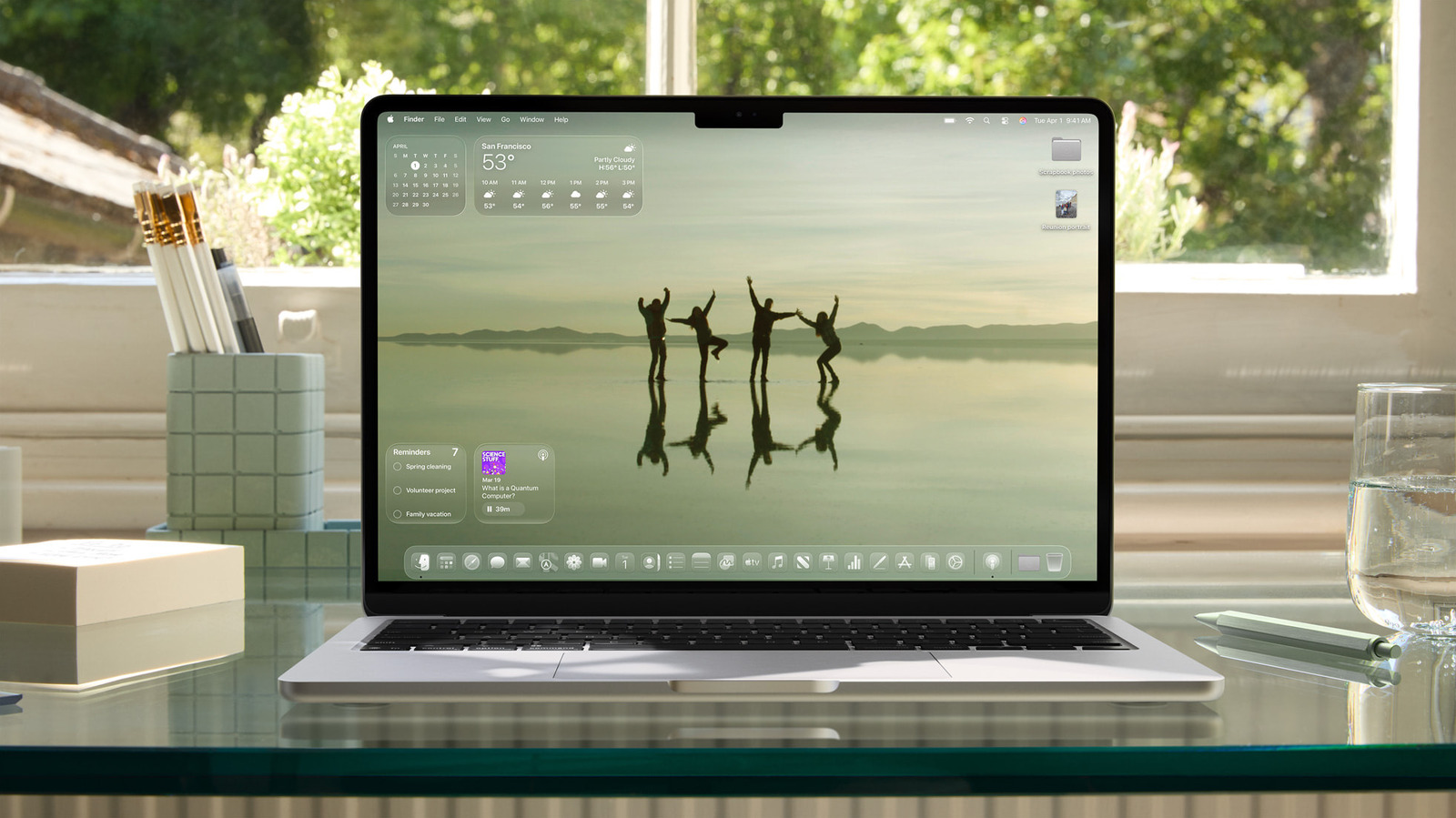
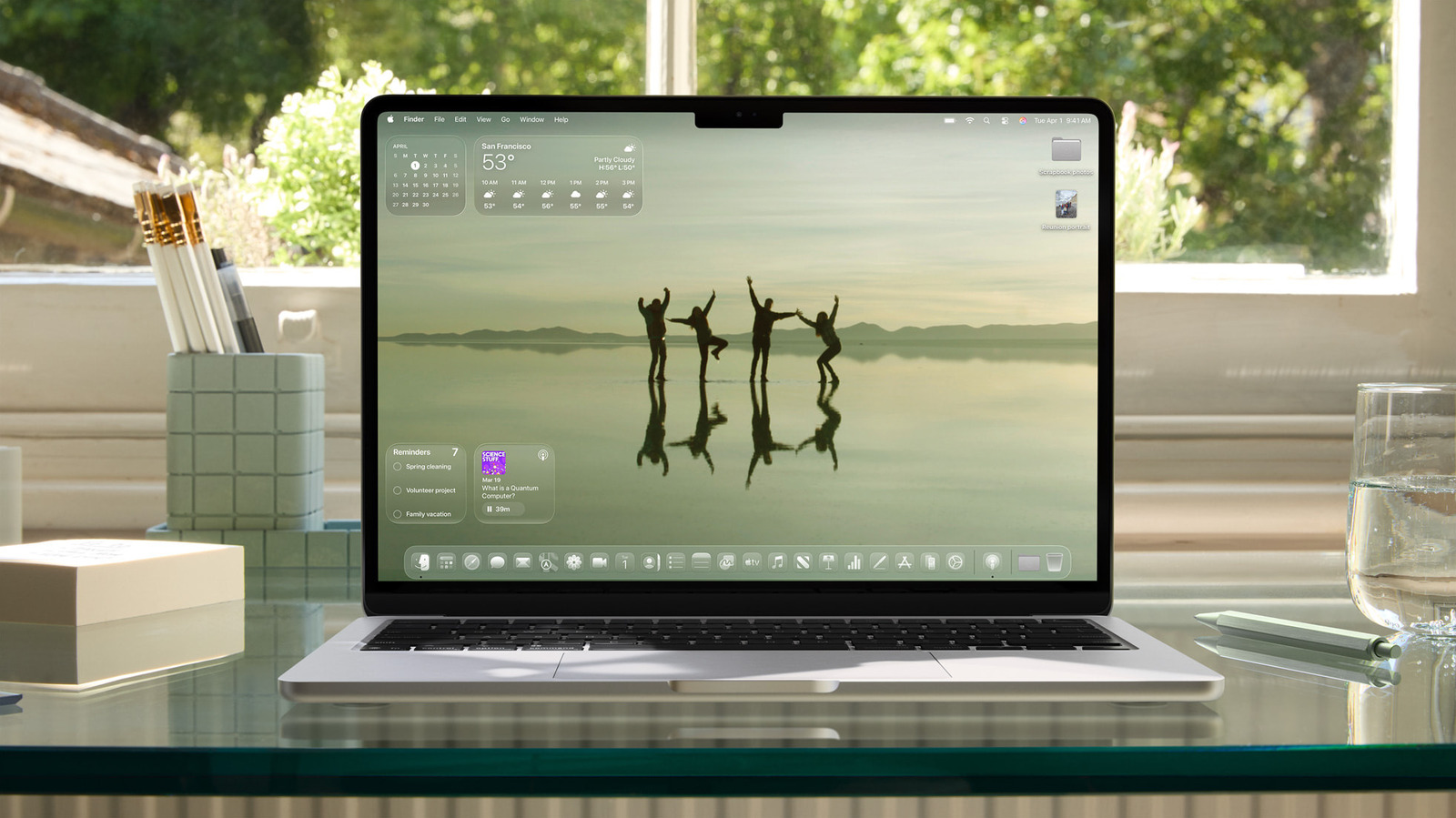
The Galaxy Book 6 Ultra continues Samsung’s industrial-chic design for its top-end laptops, with a lovely dark grey aluminium finish that feels excellent. As is typical with the brand’s laptops, there is a MacBook Pro flavour to its look, which fits the Ultra namesake rather well here.
At 1.89kg, this is a heavy brute of a laptop, weighing some 300g more than the Galaxy Book6 Pro, although we are packing a discrete GPU and therefore more cooling as a result. This mass is slightly reduced against an equivalent-sized MacBook Pro, although a near 2kg laptop isn’t necessarily what I’d call ‘portable’. For a lightweight, large-screened laptop, the LG Gram Pro 16 is hard to beat.
Image Credit (Trusted Reviews)
Advertisement
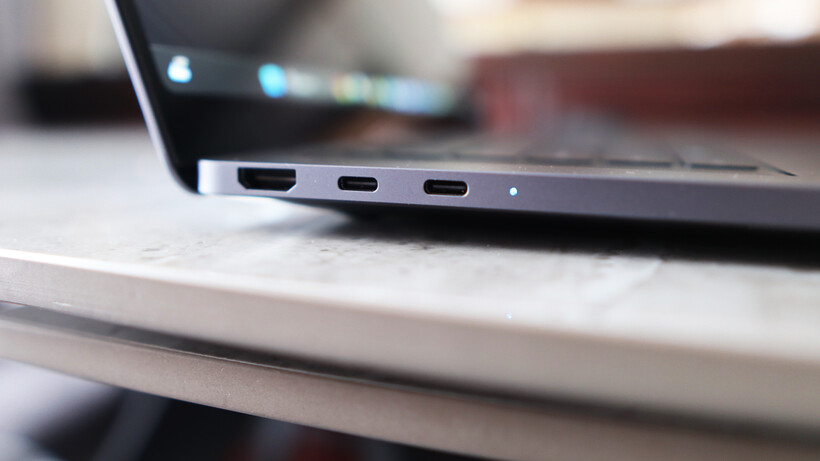
As for ports, the Galaxy Book 6 Ultra is bestowed with a vast selection, with the left side having a pair of Thunderbolt 4-capable USB-C ports alongside an HDMI 2.1 port. On the right, there’s a headphone jack, a singular USB-A and a full-size SD card reader. That exceeds the MacBook Pro by a simple USB-A port – thanks, Samsung.
Against the previous model, Samsung has changed the keyboard layout of this laptop. The number pad is gone, and the keyboard has been centralised, a la MacBook Pro. The layout also mimics Apple’s keyboard, with arrow keys in the bottom right corner, a button in the top right that doubles as a fingerprint sensor for Windows Hello, and a feature-rich function row across the top. It’s a functional and tactile keyboard with a short and positive travel that feels very similar to the Galaxy Book6 Pro.
Image Credit (Trusted Reviews)
The haptic trackpad of this latest model has also been enlarged to MacBook levels of size, providing your fingers with some serious real estate for navigation and gestures. It’s also as smooth as silk, and very pleasant to use.
Display and Sound
Smooth and detailed OLED panel
Excellent black level, contrast and colours
Upgraded, beefier speaker array
Samsung has stuck with a large 16-inch 2880×1800 resolution OLED screen with a 120Hz refresh rate on the Galaxy Book6 Ultra, which is immensely detailed, smooth and rather ideal for creative workloads.
Advertisement
Advertisement
We’ve got deep blacks and fantastic contrast, as measured by my colorimeter, with results of 0.01 and 25470:1. The 6800K colour temperature is also pretty good.
Image Credit (Trusted Reviews)
The virtually perfect colour accuracy here is also no surprise, given this is an OLED screen. To be specific, we’re getting 100% coverage of both the mainstream sRGB and creative DCI-P3 gamuts, while Adobe RGB coverage at 92% is also excellent, making this screen an ideal pairing for both mainstream and more colour-sensitive workloads.
Against some of Samsung’s older large-screen laptops, the Galaxy Book6 Ultra benefits from a boosted brightness figure with a peak HDR brightness of 1000 nits. There is also a bump up in SDR brightness, as I noted with my colorimeter, with a peak of 484.4 nits, which is some 25% brighter than the peak of the old panel, for even punchier images.
Image Credit (Trusted Reviews)
Samsung has also upgraded the speaker system of this laptop compared to the other Book6 models, kitting this top model out with two upfiring tweeters and four force-cancelling woofers. It’s one of the better speaker systems I’ve dealt with on a Windows laptop, with good clarity and depth, and a surprisingly meaty sound.
Advertisement
Performance
A new powerful Panther Lake chip inside
Underwhelming graphical performance from an RTX 5070
Fast SSD and sensible RAM capacity
The Galaxy Book6 Ultra can be specced as high as the top-end Intel Core Ultra X9 388H Panther Lake chip if you’ve got a bottomless pit of money, although my sample is a little more stripped back in terms of its processor choice.
Here, we’ve got a 16-core/16-thread Intel Core Ultra 7 356H, which is designed to be the follow-up to the Core Ultra 7 255H Arrow Lake-H chip that powered some of my favourite laptops from last year, such as the Acer Aspire Vero 16 (2025).
Advertisement
The performance in Geekbench 6 and Cinebench R23 didn’t move the needle much against this chip’s predecessor, although it was still immensely strong for a pro-grade ultrabook. It’s in the multi-threaded scores where the extra cores count, making the Core Ultra 7 356H a powerful chip against AMD’s Ryzen AI 9 HX 370 with fewer cores but more threads, and pulling even further ahead of the Core Ultra 200V chips.
Image Credit (Trusted Reviews)
To help the graphical capabilities of this laptop, the Galaxy Book6 Ultra can be specced with up to an RTX 5070 discrete GPU, which my sample has. This aids in this laptop posting a solid 3DMark Time Spy benchmark score, and increasing its credentials for more graphically intensive workloads such as video editing and gaming.
Advertisement
With this in mind, the gaming numbers aren’t as strong as other RTX 5070-powered gaming laptops such as the Medion Erazer Deputy 15 P1. For instance, at 1080p, we’re seeing 73.55fps in Cyberpunk 2077 and 82fps in Returnal, which are around 20-25% down on fully-fledged gaming laptops, although the 121fps in Rainbow Six Extraction is enough to max out the 120Hz refresh rate of the display.
Moving up to 1440p, results drop down to 46.13fps in Cyberpunk 2077 and 60fps in Returnal, the latter of which is much more playable. The lighter Rainbow Six Extraction remains decent at 81fps.
Advertisement
Image Credit (Trusted Reviews)
Adding DLSS in Cyberpunk 2077 put it up to 84.35fps at 1080p, and also took the gruelling RT: Ultra preset from 32.73fps without it to 55.56fps with it, making the game rather playable even at tough settings. Ray-traced Cyberpunk 2077 at this laptop’s native resolution did turn things into a slideshow, though.
Being a 50-series laptop also means this Galaxy Book6 Ultra can benefit from Nvidia’s clever multi-frame-gen tech with the 5070 that’s present. With this, it adds up to three ‘fake frames’ for every ‘real’ frame rendered to increase your FPS to play well with high-refresh-rate screens. The results are reliant upon there being a high enough base frame rate to prevent displayed images from being choppy or there being horrible latency.
For whatever reason, running this test on RT: Ultra at native resolution didn’t yield any real return, although at 1080p, it took Cyberpunk 2077 to 163.28fps. Likewise, on the Ultra preset used otherwise and the maximum 4x frame gen, Cyberpunk 2077 went all the way up to 234.53fps at 1080p and 140.25fps at native resolution.
Advertisement
Image Credit (Trusted Reviews)
My sample of the Galaxy Book6 Ultra came with a solid 32GB of RAM plus a very generous 2TB SSD at this mid-range price. It’s also a decently brisk SSD in my testing, with reads and writes of 7071.93 MB/s and 5855.31 MB/s, respectively.
Software
Windows’ typical AI functions are all present and correct
Some handy extras, including webcam effects
Lots of integration with Samsung Galaxy phones
This Galaxy Book6 Ultra also has the usual AI features that its contemporaries have, and is a Copilot+ PC, as the Panther Lake chip inside has enough AI horsepower. This includes image creation features in Photos and Paint, as well as the clever blurred background, auto framing and eye contact tools with the Windows Studio webcam effects.
Samsung’s laptop also naturally comes with some of the brand’s own software, including Galaxy Book Experience, which is a central hub of sorts for accessing features such as SmartThings control for any smart home devices, or Live Wallpaper for keeping your desktop fresh with a new wallpaper every two weeks. There is also Samsung Studio inside the Galaxy Book experience app, which gives you access to a decent video editor, and an AI Select tool that can be used for everything from translation to identifying things in pictures.
Advertisement
Image Credit (Trusted Reviews)
Advertisement
Naturally, you can also hook up a Galaxy handset to reap even more benefits with the Galaxy Book6 Ultra’s software, including handy features such as Transcript Assist, which can convert recorded meetings into written summaries, and Chat Assist, which can provide quick replies to conversations to keep things easy. These only work when your phone is connected to Microsoft Phone Link, which turns the laptop’s panel into a large phone screen.
Battery Life
Lasted for 15 hours 34 minutes in the battery test
Capable of lasting for two working days
Samsung is very optimistic about the rated endurance of the Galaxy Book6 Ultra, rating it to last for up to 30 hours on a charge while video streaming. From a laptop with an 83Whr battery and a beefy CPU and GPU combo, that’s virtually unheard of around here.
Nonetheless, for testing the laptop’s battery life, I took the brightness down to the requisite 150 nits and streamed a 1080p video until it conked out. In this test, Samsung’s candidate managed half of runtime it claimed – some 15 hours and 34 minutes. As much as that is only half, it’s still a fantastic result for a laptop with a discrete GPU, and means you’ll be able to get through two working days before needing to charge the laptop back up.
As for recharging, this is where things get a bit funny. Owing to new EU laws (which the UK has signed up to), the Galaxy Book6 Ultra doesn’t come with an included charger, although it should come with a 140W USB-C power brick if you’re in a place where it comes supplied. Luckily, my MacBook Pro charger is 140W, and with it, it took this Samsung laptop just 30 minutes to get back to 50%, while a full charge took 75 minutes – that’s very speedy.
Advertisement
Advertisement
Should you buy it?
You want surprisingly long battery life:
The Galaxy Book6 Ultra impresses with some fantastic endurance for a laptop with a discrete GPU and a hungry OLED screen that puts its rivals to shame.
Advertisement
This Samsung laptop feels a little less ‘Ultra’ against its rivals owing to some underpowered benchmark results that could leave demanding users wanting a little extra.
Advertisement
Final Thoughts
The Samsung Galaxy Book 6 Ultra is a fantastic pro-grade Windows laptop with immense battery life, a lovely OLED screen and a hefty industrial feel, complete with a snappy keyboard, huge trackpad and solid port selection. I am left a little underwhelmed by its performance, though, not least with the very hefty price tag that’s attached to this laptop.
For similar money, you can get a very tricked-out Apple MacBook Pro that’s likely to have a faster processor (although it may skimp out on graphical power) or the Asus ProArt P16 (4K Lumina Pro OLED) that has more graphical grunt and a richer, more detailed tandem OLED panel, although at the expense of half the battery life.
The Galaxy Book6 Ultra is a lovely Windows laptop for pros that blends performance and portability well, although that price tag leaves me wincing a tad, just like it did on the Samsung Galaxy Book6 Pro and the Asus Zenbook Duo (2026). For more choices, check out our list of the best laptops we’ve tested.
How We Test
This Samsung laptop has been put through a series of uniform checks designed to gauge key factors, including build quality, performance, screen quality and battery life. These include formal synthetic benchmarks and scripted tests, plus a series of real-world checks, such as how well it runs popular apps and extensive gaming testing.
Advertisement
FAQs
How much does the Samsung Galaxy Book6 Ultra weigh?
The Samsung Galaxy Book6 Ultra weighs 1.89kg, making it quite heavy for a 16-inch laptop.
Current systems emphasize sight and sound, with some progress in haptics. Smell remains largely absent, despite its unusually strong connection to memory and emotion. Read Entire Article Source link
Rare earth materials are a hot button topic these days. They’re important for everything from electric vehicles to defence hardware, they’re valuable, and everyone wishes they had some to dig up in their backyard. Lithium, too, is a commodity nobody can get enough of, with the demand for high-performance batteries grows each year.
When a material is desirable, and strategically important, we often start thinking of ways to conserve or recycle it because we just can’t get enough. In that vein, researchers have been developing a new technique to recover rare earth metals and lithium from waste streams so that it can be put back to good use.
Get It Back
Enter the technique of flash joule heating. The method is relatively straightforward, in concept at least. It involves a high energy discharge from a capacitor bank, which is passed through a sample of material to be recycled or refined. The idea is that the rapid energy discharge will vaporize some components of the sample, while leaving others intact, allowing the desired material to be separated out and collected in a straightforward and economically-viable manner. It does this in a manner rather contrary to traditional techniques, which often involve large amounts of water, acids, or alkalis, which can be expensive and messy to dispose of or reprocess to boot.
A flash joule heating apparatus used to recover rare earth materials. Credit: Jeff Fitlow, Rice University
Researchers from Rice have developed this technique to recycle rare earth metals from waste magnets. Imagine all the magnets that get thrown away when things like hard drives and EV motors get trashed, and you can imagine there’s a wealth of rare earth material there just waiting to be recovered.
In this case, the high-energy discharge is applied to waste magnet material in an effort to vaporize the non-rare earth components that are present. The discharge is performed in the presence of chlorine gas, which would chlorinate materials like iron and cobalt in the sample, removing the volatile elements and leaving the rare earth elements behind in solid form. Laboratory experiments were able to refine the material to 90% purity in a single step.
Advertisement
In the rare earth case, the undesired material is vaporized and removed by the chlorine gas while the rare earths remain behind in the solid phase. For capturing lithium from spodumene ore, it’s the opposite. Credit: research paper
As per the research paper, lifecycle analysis suggested the technique could reduce energy use by 87% compared to contemporary hydrometallurgy recycling techniques, while also reducing greenhouse gas emissions in turn and slashing operating costs by 54%.
The technique can also be applied to separate lithium from spodumene ore. It’s an abundant material, particularly in the United States, and improved ways to process it could increase its value as a source of lithium. When it comes to processing spodumene with flash joule heating, the discharge of electric current makes the lithium in spodumene available to react with chlorine gas. The rapid heating causes the vaporized lithium to form lithium chloride which can be bled off, while other components of spodumene like aluminium and silicon compounds remain behind. It’s basically the opposite of the rare earth recovery method.
As outlined in the research paper, this method achieved recovery of lithium chloride with 97% purity and a recovery rate of 94% in a single step. It’s also a lot simpler than traditional extraction methods that involve long periods of evaporating brine or using acid leeching techniques. Indeed, the laboratory rig was built using an arc welder to achieve the powerful discharge. Other researchers are examining the technique too and achieving similar results, hoping that it can be a cleaner and more efficient method of recovery compared to traditional hydrometallurgy and pyrometallurgy techniques.
The lithium recovery process using flash joule heating. Credit: research paper
These methods remain at the research stage for the time being. Pilot plants, let alone commercial operations, are still a future consideration. Regardless, the early work suggests there is economic gain to be had by developing recycling plants that operate in this manner. Assuming the technique works at scale, if it makes financial sense and recovers useful material, expect it to become a viable part of the recycling industry before long.
The New York startup has built AI that reads handwritten fax forms, processes prior authorisations, and completes patient intakes in under five minutes, all without asking providers to change how they work. It has reached multiple millions in revenue in under a year and is targeting 4x growth by end of 2026.
Coral, the New York-based AI startup automating administrative workflows for specialty healthcare providers, has raised $12.5 million in a Series A led by Lightspeed and Z47.
The company was founded in 2024 by Ajay Shrihari, a robotics and AI researcher, and Aniket Mohanty, who has a background in medical image processing.
In under a year of commercial operation, Coral has reached multiple millions in annual revenue and is targeting 4x growth before the end of 2026.
Advertisement
The 💜 of EU tech
The latest rumblings from the EU tech scene, a story from our wise ol’ founder Boris, and some questionable AI art. It’s free, every week, in your inbox. Sign up now!
The problem Coral is solving is not technological complexity, it is administrative volume. In American healthcare, every appointment generates a trail of prior authorisation requests, referral packets, insurance eligibility checks, and discharge paperwork.
Much of this flows through fax machines, which remain deeply embedded in clinical workflows despite being a technology from a previous era.
Advertisement
Rather than attempting to replace fax infrastructure, an approach that would require providers to rebuild systems they cannot afford to rebuild, Coral connects to existing EHR systems, fax lines, and payer portals and automates around them.
Providers do not change how they work. Coral changes what happens inside that workflow.
The company began in the durable medical equipment sector, one of the most fax-intensive corners of outpatient care, where a single order can require multiple rounds of documentation before approval.
DASCO, a home medical equipment provider, has been an early customer, describing turnaround times dropping from hours or days to minutes.
Advertisement
Coral then extended the same model into infusion centres, where a delayed authorisation means a missed dose, not a delayed appointment, and into specialty pharmacy.
In each new vertical, the same administrative bottleneck appeared in the same shape. The product’s core capability is document understanding at healthcare’s specific level of messiness: handwritten fax forms, scanned insurance cards, prior authorisation templates, and payer portal screens.
Coral’s models have reached 99.7% accuracy across these document types, a threshold the company describes as the minimum viable standard for healthcare, where errors have clinical and financial consequences.
Complete patient intakes, including complex cases, now run in under five minutes. When information is missing, which is frequent in this environment, the platform coordinates with payers, patients, and referral sources to resolve the gap without requiring staff intervention.
Advertisement
The strongest signal in the commercial story is not the revenue figure but the payment behaviour. A portion of Coral’s customers are paying the full contract value upfront, an unusual dynamic in enterprise software, and a striking one in a sector where vendor evaluation cycles are typically slow and risk-averse.
The explanation is mechanical: when a workflow that previously took hours completes in under five minutes at high accuracy, the return on investment is immediate and visible. Commit now, stop the queue now.
Coral recently shipped AI-powered voice and text workflows that automate follow-ups with payers, patients, and referral sources, replacing calls that previously required a staff member to pick up the phone.
The next phase of product development includes an AI workflow builder that will let providers design and deploy their own administrative processes without involving IT, and a co-pilot layer that surfaces operational intelligence from the data already flowing through the platform: which payers have the highest denial rates and why, where cases are stalling in the authorisation process, which referral sources convert reliably and which do not, and what changes would improve outcomes on insurance claim resubmissions.
Advertisement
Rohil Bagga, investor at Lightspeed, described the company as “delivering real outcomes at scale” in an environment where legacy automation has historically failed.
Ashwin KP, investor at Z47, framed the investment thesis around the specific characteristics of healthcare administration: over a trillion dollars in annual overhead, chronically underserved by technology, and requiring deep vertical expertise to crack.
The Series A funds team growth and product development, with Coral adding engineering talent alongside people who have spent careers inside healthcare operations.
Apple is expected to introduce its first foldable iPhone later this year, and early reports suggest it may be called the iPhone Ultra. Newest leaks from tipster Jon Prosser suggest the device could bring one of the biggest changes to the iPhone lineup in years, especially in terms of design and usability. Here are six major upgrades that the iPhone Ultra is expected to offer.
Foldable Design with a New Look
Image: FPT
The iPhone Ultra is expected to come with a completely new foldable design. Instead of a regular smartphone shape, it may open like a book, giving users a much larger screen when unfolded. It will also have a wider design instead of the usual tall shape seen in other foldables. For example, while using the outside screen, the user will have a smaller screen measuring 5.3 to 5.5 inches. Once unfolded, the second screen will expand up to 7.8 inches, bringing the user experience closer to that of an iPad mini.
The use of a titanium frame may help make it durable while keeping it lightweight. Another key highlight is the expected crease-free inner screen, which could improve the overall viewing experience. In terms of looks, the device may be limited to black-and-white color options.
Like other folding phones, TouchID will probably find its way back. It’s much easier to use a fingerprint sensor on the power button than to integrate Face ID sensors into both displays.
Software & Camera Configuration
Image: FPT
One of the key differences between the iPhone Ultra and Pro models is the camera configuration. Unlike other models, the iPhone Ultra will have only two cameras. One will be a primary camera with a 48 MP sensor, while the other will be an ultra-wide camera with a 48 MP sensor. Unfortunately, since there won’t be a telephoto lens, zooming options may be limited for the users. Besides, the dual screen will require two front-facing cameras.
The iOS 27 is likely to introduce new multitasking features designed for the iPhone Ultra. Among the expected improvements are multi-app functionality, where users can perform multiple functions simultaneously, and app designs that more closely match what the iPad offers, particularly when used on the inner display. It is not going to be iPadOS but rather selected elements from the operating system.
Advertisement
Everything will be handled by the new A20 Pro chip, which may work on the 2nm manufacturing process. It’s very early to judge the performance numbers, but we are expecting the iPhone Ultra to feature 12 GB RAM and use the new C2 modem.
Expected Price
Apple is expected to position the iPhone Ultra as a premium product. The device is expected to start at around $1,999, making it Apple’s most expensive iPhone yet. However, since it offers both phone- and tablet-like experiences in a single device, some users may find the premium pricing justified.
When Asus launched the Drop Zone program last year, it was seen as a commendable gesture to make repairs less taxing for consumers. Now, keeping in the same vein, Asus is expanding its Drop Zone initiative in India by adding 22 new stores to the network. The program, which allows users to submit laptops for servicing at ASUS Exclusive Stores instead of dedicated service centers, is now being rolled out across multiple regions, including Delhi NCR, Haryana, Karnataka, Kerala, Maharashtra, Tamil Nadu, Uttarakhand, Uttar Pradesh, and West Bengal.

What is Asus Drop Zone Service?
The Drop Zone initiative is designed to simplify the repair process by allowing customers to drop off and collect their devices at nearby ASUS stores. This eliminates the need to travel to service centers, which can often be inconvenient—especially for users in tier-2 and tier-3 cities.
With this expansion, ASUS is clearly trying to address common pain points like accessibility, turnaround time, and service transparency. Customers also get multiple service options, including carry-in support for immediate consultation, on-site servicing by technicians, and the Drop Zone model for easier logistics.
ASUS says it already has a wide after-sales network in India, with over 200 service centers and on-site support covering more than 17,000 pin codes across 761 districts. The Drop Zone expansion adds another layer to this ecosystem, bringing services closer to users. The company also offers 24/7 support through calls, chat, email, and remote troubleshooting. Speaking on the matter, Arnold Su, VP, Consumer and Gaming PC, System Business Group, ASUS India, said
Advertisement
At ASUS, our focus has always been on delivering a reliable and consistent ownership experience that extends well beyond the product itself. The expansion of our Drop Zone initiative into 22 additional stores marks a significant step towards making after-sales support more accessible and transparent for our customers. Guided by our 4A framework, we remain committed to building a service ecosystem that is responsive, convenient, and aligned with evolving customer needs.
At current market prices, the hardware appears valuable. Comparable SK hynix registered DDR4 modules currently sell for about $287.95 each, putting the total value at more than $20,000. However, that figure reflects today’s pricing, not what the hardware was worth when it was removed from service. Read Entire Article Source link
Klipsch is returning to Milan Design Week 2026 with something that goes beyond another product launch; it’s a continuation of one of the more interesting collaborations in modern hi-fi. Following the limited-run kO-R1 in 2024, Klipsch and OJAS have officially unveiled the kO-R2, a new loudspeaker created with Devon Turnbull, the artist and acoustic designer behind OJAS, as part of Klipsch’s 80th anniversary.
That matters more than the usual show-floor debut. The first kO-R1 wasn’t just a speaker, it was a statement about where heritage audio could go when handed to someone outside the traditional engineering echo chamber. Turnbull approached Klipsch’s horn-loaded DNA with a minimalist, almost gallery-first mindset, and the result landed somewhere between serious hi-fi and functional art. It sold out quickly and didn’t need a stack of Audio Science Review graphs to justify itself. Turns out art and musical enjoyment still carry more weight than rigid objectivism.
The kO-R2 builds directly on that foundation. Klipsch and OJAS describe it as a blend of minimalist design, advanced acoustic thinking, and bespoke materials, with an emphasis on form that’s meant to live as comfortably in a design exhibition as it does in a listening room. There are no performance specifications or pricing details yet, which feels intentional. This isn’t being positioned as a spec war product; it’s being framed as a continuation of an idea.
Klipsch OJAS kO-R2
And that’s the real story. At a time when much of the industry is chasing incremental upgrades and feature checklists, Klipsch is doubling down on a collaboration that prioritizes identity, experience, and cultural relevance. Bringing the kO-R2 to Milan Design Week instead of a traditional audio show makes that point clear: this is as much about design language and audience expansion as it is about sound.
Whether the kO-R2 ultimately delivers on the acoustic side will come later. For now, Klipsch and OJAS have done something more difficult; they’ve made people outside the usual audiophile bubble pay attention.
Advertisement
Unveiled at Milan Design Week 2026
Set against the backdrop of the Fondazione Luigi Rovati, in partnership with USM Modular Furniture and Karimoku, Klipsch and OJAS are hosting curated, appointment-only listening sessions during Milan Design Week through April 26, 2026. Those who get access are encouraged to bring their own music, turning the kO-R2 preview into something more personal than the usual show-floor demo.
After its debut in Milan, a broader launch for the kO-R2 is expected in June 2026.
“Working with Klipsch continues to be an exploration of how we can strip audio down to its most essential, emotional core,”said Devon Turnbull. “With the kO-R2, we focused on creating something that feels immediate and human—where the technology disappears, and the listener is left with a pure, physical connection to the music.”
kO-R2 Design Concept
The kO-R2 is a two-way, sectoral horn-loaded loudspeaker positioned as the next step in the Klipsch x OJAS collaboration. It’s handcrafted in Hope, Arkansas, by the same team behind Klipsch’s legacy designs, and features an OJAS-developed multisectoral horn paired with Baltic birch cabinetry. The goal is clear: deliver the dynamic, low-distortion traits horn systems are known for, while presenting something that looks just as considered as it sounds.
Advertisement
Klipsch OJAS kO-R2 Loudspeaker in Hammertone Silver.
The core of the latest speaker design is the OJAS 1506 multisectoral horn, fabricated from heavy cast aluminum and finished with electrophoresis and a flat black powder coat.
The exponential horn pulls from classic Western Electric and Altec Lansing design cues, but it’s not a straight throwback. The square, isosceles trapezoidal mouth is doing real work here, controlling dispersion in both planes rather than just looking the part. The result should be more even frequency distribution and a wider, more stable listening window, which is exactly what these older horn concepts were chasing in the first place.

Advertisement. Scroll to continue reading.
The kO-R2 leans into a restrained, material-first design without skimping on the hardware. It uses a high-quality compression driver, anodized aluminum binding posts, and anti-vibration feet—nothing flashy, just components that make sense for a horn-loaded design like this.
Details like the laser-engraved metal ID plate add a layer of exclusivity without turning it into a gimmick, and the five-step high-frequency attenuator is there for a reason: dialing in top-end energy to match the room and placement, which matters more with horns than most speaker types.
Advertisement
Calling it a “museum piece” isn’t entirely off base, but the real goal here isn’t to redefine audiophile expectations. It’s to bridge two worlds that don’t usually overlap this cleanly: serious acoustic design and industrial design that people actually want to live with.
“The kO-R2 represents a powerful intersection of heritage and forward-thinking design. Partnering with Devon allows us to honor Klipsch’s 80-year legacy while pushing into new creative territory—delivering a product that is as culturally relevant as it is acoustically exceptional,” said Vinny Bonacorsi, COO of Klipsch.
The Bottom Line
This isn’t a typical brand crossover. Klipsch is working within its core strength—horn-loaded design—while Devon Turnbull brings a different perspective on how these systems look and live in real spaces. The kO-R2 builds on the kO-R1 with a larger, more complex horn and a move to a floorstanding design, which should translate into greater scale and output.
There are still no detailed specifications or pricing, but the context matters. The kO-R1 launched at $8,498 per pair and sold out quickly. For the kO-R2, production is expected to be limited to around 600 pairs, so availability is going to be tight from the start.
It’s aimed at a specific buyer: someone who values both the design and the underlying acoustic approach, and who is comfortable buying into the concept without a full data sheet upfront. Between the prior pricing and limited run, this won’t be a mainstream Klipsch product—and that’s the point.
Advertisement
Klipsch OJAS kO-R2 Loudspeaker in Red Oak veneer.
Price & Availability
Once released (expected to be June 2026), 600 pairs of the kO-R2 will be available worldwide in either Red Oak veneer or Hammertone Silver with a powder-coated, matte-black horn. Price has yet to be announced.
Two entrepreneurs, Benson Phelps and Carroll Faye, teamed up to open a small coal and wood delivery company in Baltimore in 1907. The business saw success in its early years, expanding rapidly over its first couple of decades. Faye decided to move on to other ventures and sold his stake in the business to Phelps, but the company continued to use Faye’s first name as its brand. The Carroll Independent Fuel Company began selling oil in the 1930s under the guidance of Phelps, and it never stopped. Today, drivers can still buy fuel from the same company, although they’ll now recognize it as Carroll Motor Fuels.
The Carroll network of gas stations might have grown significantly over its century-plus of trading, but its ownership structure has remained consistent. It’s still an independent, family-owned business, with various members of the Phelps family at the helm. John Phelps serves as the company’s CEO and President, while Richard B. Phelps III holds the title of Executive Vice President alongside C. Howard Phelps. Several more Phelps family members hold leadership roles.
Carroll isn’t the only gas station chain that has remained family owned since its inception. The Love’s chain of gas stations is also still owned by members of its founding family, and it has risen to become one of America’s largest privately owned companies.
Advertisement
The Carroll network operates under multiple brands
Alongside its own-brand gas stations, Carroll Independent Fuel also operates stations under various other names. The East Coast chain’s network includes stations that use Sunoco branding, which is most famously associated with the NASCAR Cup Series. Other locations are branded as BP gas stations, with Carroll working with the British-owned oil company since 2006.
Advertisement
In 2012, Carroll Independent Fuel also acquired High’s, a Baltimore-based chain of convenience stores. In an interview with the Baltimore Business Journal, Executive Vice President Howard Phelps said that the company realized that “competition on the gasoline retail side was transitioning to convenience,” and that Carroll wanted to “to go toe to toe” with rivals like Sheetz and Wawa.
The Carroll network continues to grow, with the company acquiring seven new sites in 2022. The new locations helped develop its network outside the company’s home state of Maryland, with Delaware, New Jersey, and Pennsylvania all seeing new Carroll-operated locations launched.
We’ve always been interested in fluidic computers, a technique that uses moving fluids to perform logic operations. Now, Spectrum reports that researchers have developed an electronics-free contact lens that monitors glaucoma and can even help treat it.
The lens is made entirely of polymer and features a microfluidic sensor that can monitor eye pressure in real time. It also has pressure-activated drug reservoirs that dispense medicine when pressure exceeds a fixed threshold. You can see Spectrum’s video on the device below.
This isn’t the first attempt to treat glaucoma, which affects more than 80 million people, with a contact lens. In 2016, Triggerfish took a similar approach, but it used electronic components in the lens, which poses problems for manufacturing and for people wearing them.
Naturally, the device depends on 3D printed molds to create channels and reservoirs in the lens. A special silk sponge in the reservoirs can absorb up to 2,700 times its weight. One sponge holds a red fluid that is forced by pressure into a serpentine microchannel. A phone app uses a neural network to convert the image of the red fluid into a pressure reading.
Advertisement
Two more sponges hold drugs that release at a given pressure determined by the width of the associated microchannel. This allows the possibility of increasing the dose at a higher pressure or even delivering two drugs at different pressure levels.
Even if you’re 250,000 miles from Earth, sleep is important. However, for all the life-sustaining accoutrements aboard the Orion spacecraft, the capsule lacked bedrooms, leaving the four-person Artemis II crew with a truly bizarre sleeping arrangement.
“I slept really close to an air conditioning vent. And so I’d wake up and I just see this big hunk of metal,” Glover told CNET during a video call. “And it was like, ‘Oh, I’m in space. I am weightless.’”
Sleep wasn’t just a means for the astronauts to recharge; it also grounded them during their historic journey. Glover explained, “What really resonated with me is we’re also humans. It’s like camping, and this is a very important part of this journey.”
Advertisement
Watch this: Artemis II’s Victor Glover Chats With CNET
Artemis II was the first crewed mission to the moon in over 50 years. It followed Artemis I, a 2022 uncrewed mission that was the first for NASA’s new Space Launch System rocket and Orion spacecraft. The goal for Artemis II was to have a crew test the spacecraft, life support systems, the SLS rocket and the procedures needed for future lunar missions that will involve landing on the moon and eventually building a base there.
Glover, the Orion’s pilot, along with commander Reid Wiseman and mission specialists Christina Koch and Jeremy Hansen, made up the Artemis II crew. The mission made a lot of history. It’s the first time a woman, a Black man or a Canadian has journeyed to the moon. The four Artemis II astronauts traveled 252,756 miles from Earth, farther than any other human being, surpassing the record set by the 1970 Apollo 13 mission.
Advertisement
This image of NASA’s Orion spacecraft was taken with a camera mounted on its solar array wings.
NASA
This wasn’t Glover’s first time in space. In 2020, with a Falcon 9 rocket for liftoff, he piloted the Crew Dragon capsule to and from the International Space Station for NASA’s SpaceX Crew-1 mission, spending over 167 days in space. But Artemis II gave Glover the opportunity to be the first to fly the Orion, a new vehicle designed for Artemis missions. For the majority of the nearly 10-day journey, Orion was on autopilot. But Glover had several opportunities to take manual control of the spacecraft to test its handling.
“It was such a treat and a joy,” Glover said about flying the Orion. “It was a test pilot’s dream to fly a new spaceship for the first time by hand.”
Advertisement
Even after spending time training to fly in a simulator back on Earth, he was surprised by how responsive the Orion’s hand controller was and by the clarity of the cameras, used to maneuver the craft around the Interim Cryogenic Propulsion Stage that holds the fuel for the upper stage of liftoff. He said the view from the cameras and monitors was like “looking out a window.”
Artemis II astronaut and pilot Victor Glover wears an orange flight suit.
NASA
When I asked Glover if he felt like Han Solo when piloting the Orion, he retorted, “Han Solo wants to be me when he grows up!” Throughout my interview, Glover was gracious, passionate and funny.
Advertisement
“I get to do stuff that’s cooler than Han Solo. I mean, just the fact that it’s real, it’s better.”
While landing on the moon wasn’t in the cards for this trip, the Orion crew traveled about 4,000 miles beyond the moon, allowing them to see parts of the moon that had never been seen before. For comparison, Apollo missions flew about 70 miles above the moon to make landings, limiting how much of it they could actually see.
Earthset captured through the Orion spacecraft window at 6:41 p.m. EDT, April 6, 2026, during the Artemis II crew’s flyby of the moon.
Advertisement
NASA
The images that Glover and the crew took of the moon were stunning. Shots like the Earthset were a reminder of how beautiful our planet is and our place within the solar system. The astronauts even witnessed a total solar eclipse as they rounded the far side of the moon. But none of the photos they took compares to what they saw, according to Glover.
“I could see the curvature of the moon. Depth is just one aspect that you cannot see in the pictures. But here’s the other thing, the pictures lack scale.”
When the Artemis II flew over the terminator, the crew said that this boundary between day and night was “anything but a straight line,” according to NASA.
Advertisement
NASA
For the lunar flyby, the Orion was moving fast: 60,863 mph relative to Earth, but only 3,139 mph relative to the moon, according to NASA. The speed meant the shadows across the surface were constantly morphing into different shapes. Glover was particularly enamored with the moon’s terminator, where the light and dark sides of the moon meet. The terminator isn’t fixed and depends on the moon’s position relative to the sun. As Orion moved, it transformed into various shapes that looked like letters of the alphabet.
“People know, I fell in love with the terminator when I got to see the real one up close. I watched the terminator go from a letter C to a letter D, which means there was a point when the moon was half light, half dark. It was pointing right at me.”
The Artemis II astronauts take a selfie of themselves wearing eclipse glasses using an iPhone 17 Pro Max.
Advertisement
NASA
Artemis II’s lunar flyby was a highlight of the journey for many of us on Earth, in part because we could watch it in real time on streaming services like Netflix. Nearly the entire mission was streamed live on NASA’s website and YouTube channel, making it feel like a reality show. One minute you’re watching the crew eat, work out, take photos of the moon; the next, there’s a random jar of Nutella floating by one of the cameras. I asked Glover whether it felt like he was on a TV show while on the Orion.
“It did not feel like a reality show on my end,” said Glover. “For you to see the science and hear us describing the moon, and to see us flying the spaceship by hand, and to see bedtime and bath time and teeth brush time, that’s what it’s like. The mission was all of those things.”
Glover was ecstatic to hear how I and others felt so connected to the crew during their mission. He said it was important to NASA to let the world in on everything it took to send four people a quarter of a million miles away.
“I think that maybe one of the really, most special things about this mission is how much you were able to see,” Glover said with a smile. “It makes me feel good that you felt like you were there.”
Advertisement
Watch this: Getting Personal With the Crew of Artemis II | Tech Today
You must be logged in to post a comment Login