Facepalm: Remember all the problems the original Galaxy Fold had with its folding display back in 2019? Seven years later, and with the device now in its eighth generation, debris getting inside through the hinge remains a problem – as iFixit has demonstrated.
iFixit’s teardown video notes that the Galaxy Z Fold 8 has an IP48 rating, confirming it is protected against foreign objects 1mm in diameter and larger, and can withstand immersion in up to 1.5 meters of fresh water for 30 minutes.
The problem comes when the handset encounters objects smaller than 1mm, such as fine dust and sand. iFixit showed what can happen when they make their way into the hinge mechanism – and it’s not good for owners of the $1,900 handset.
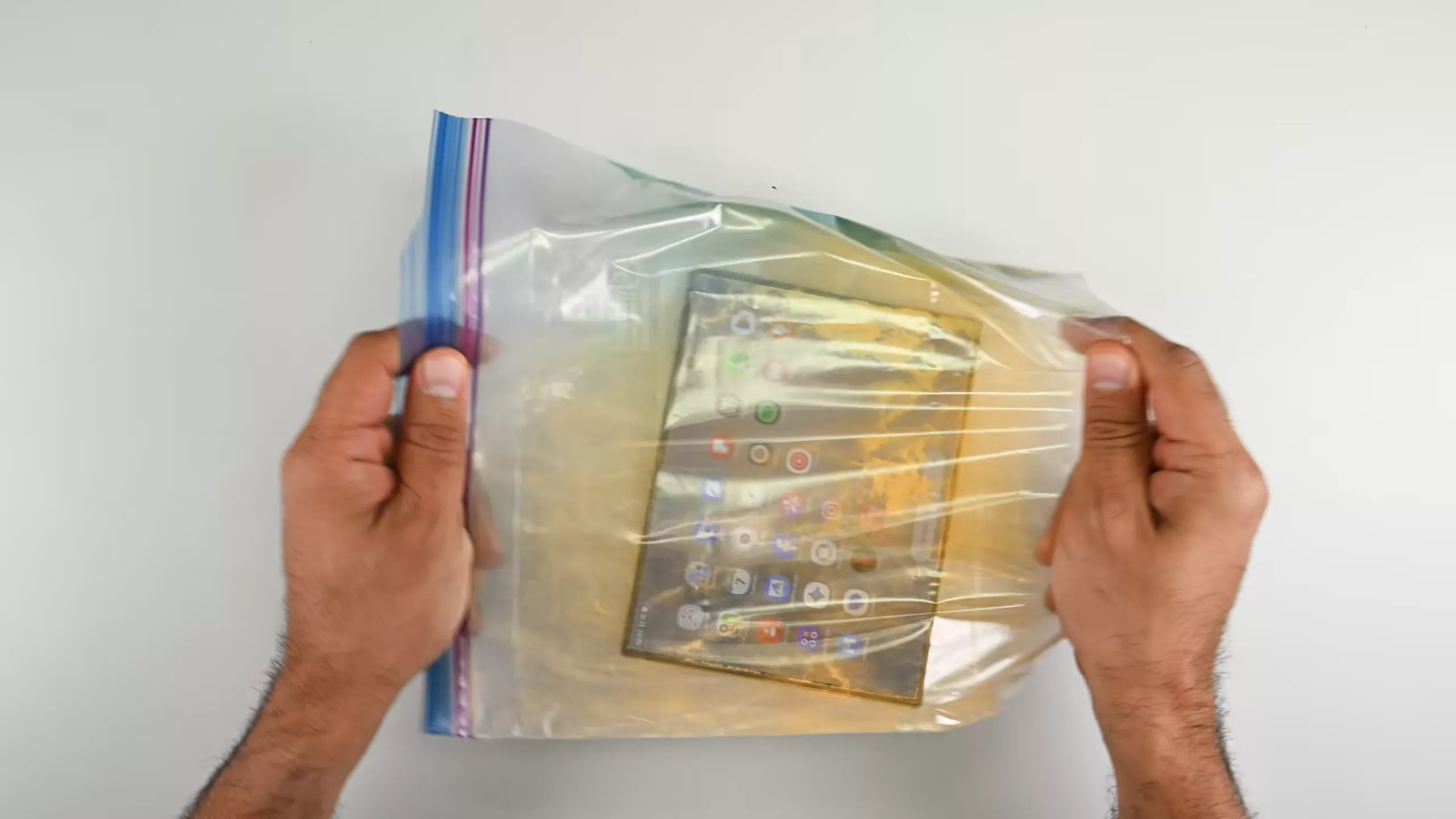
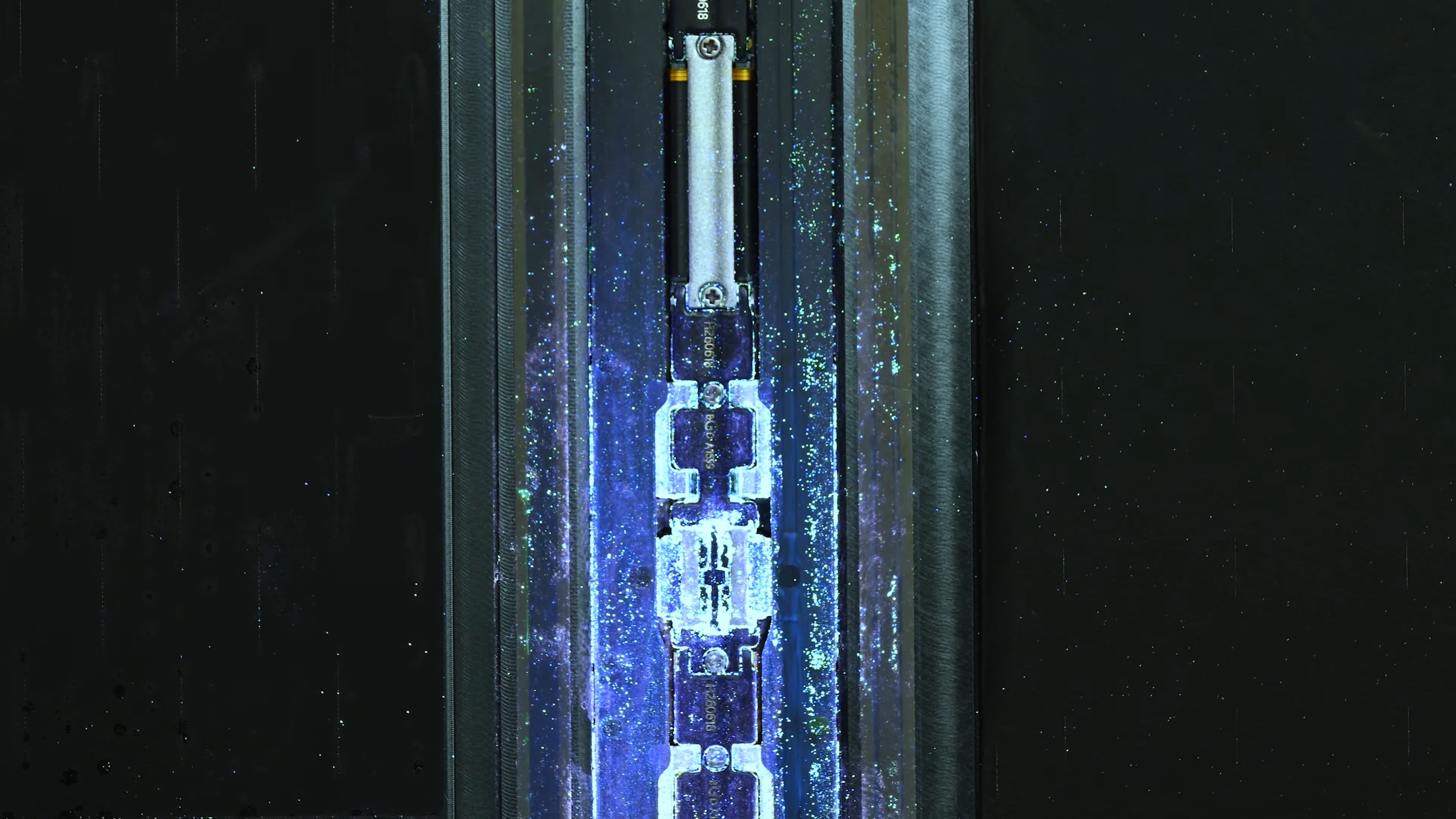
iFixit applied UV-reactive powder, some clumps of which measured around 0.04mm across, before repeatedly opening and closing the Fold 8. The hinge soon began making crunching and grinding noises, and the handset stopped opening normally.
Advertisement
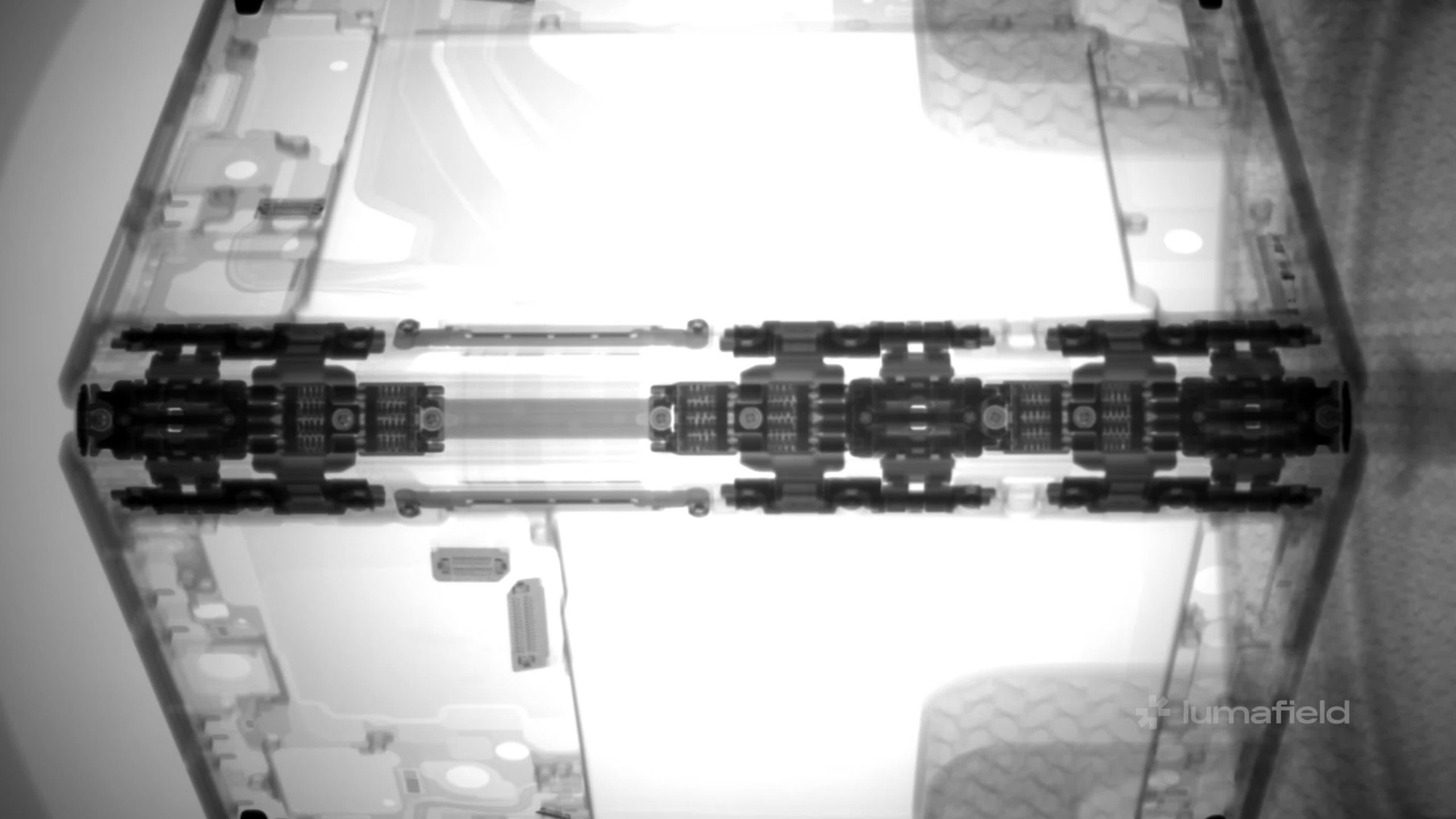
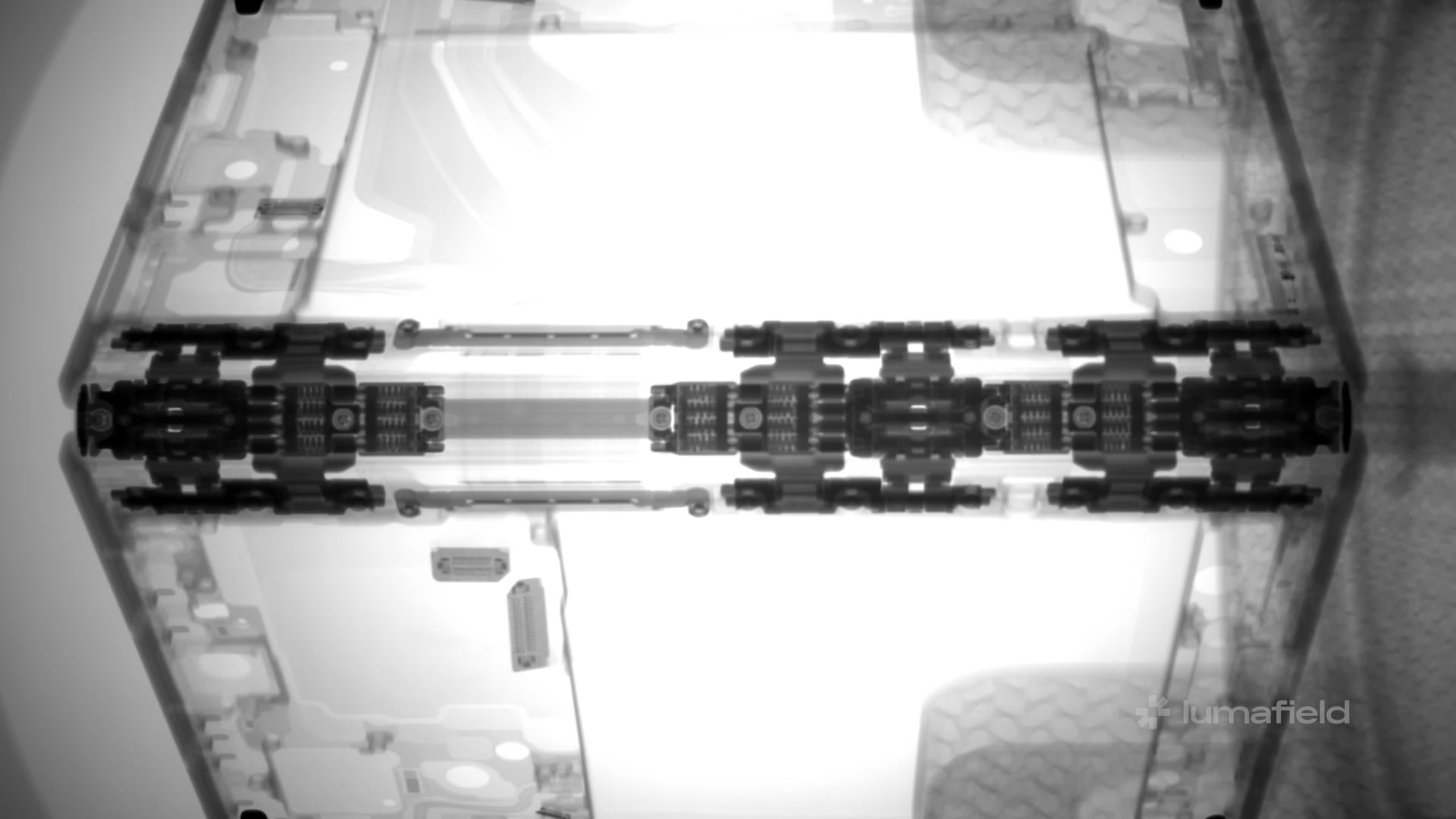
The subsequent teardown revealed that the sealed parts of the phone had performed surprisingly well. The batteries, cameras, circuit boards, and other main electronics were remarkably clean. The exposed hinge, however, was caked in glowing powder, with debris packed throughout its many moving surfaces.
Samsung has previously treated the hinge and inner display as a single replacement assembly, meaning damage to either can require gutting the phone and replacing both.
Accessing one of the two batteries also requires removing the strongly glued outer display. The plastic bezel surrounding the folding screen broke into pieces during iFixit’s teardown, and the delicate OLED did not survive.
Advertisement
There were some positives, including a modular USB-C port and pull pouches that made battery removal easier. However, iFixit could not find a genuine Fold 8 cover display sold directly to US repairers, while official Fold 7 parts remain scarce. iFixit gave the handset a provisional repairability score of 4 out of 10.
The findings bring to ming the original Fold disaster. Debris beneath one review unit’s display created a bulge before the screen broke. A later teardown identified a 7mm bezel gap and openings around the spine that could let dirt enter.
Samsung has improved the Fold 8, including silicon-carbon batteries and titanium layers beneath the inner display. But until its hinge can keep out ordinary pocket debris, the phone’s most important moving part remains a liability.
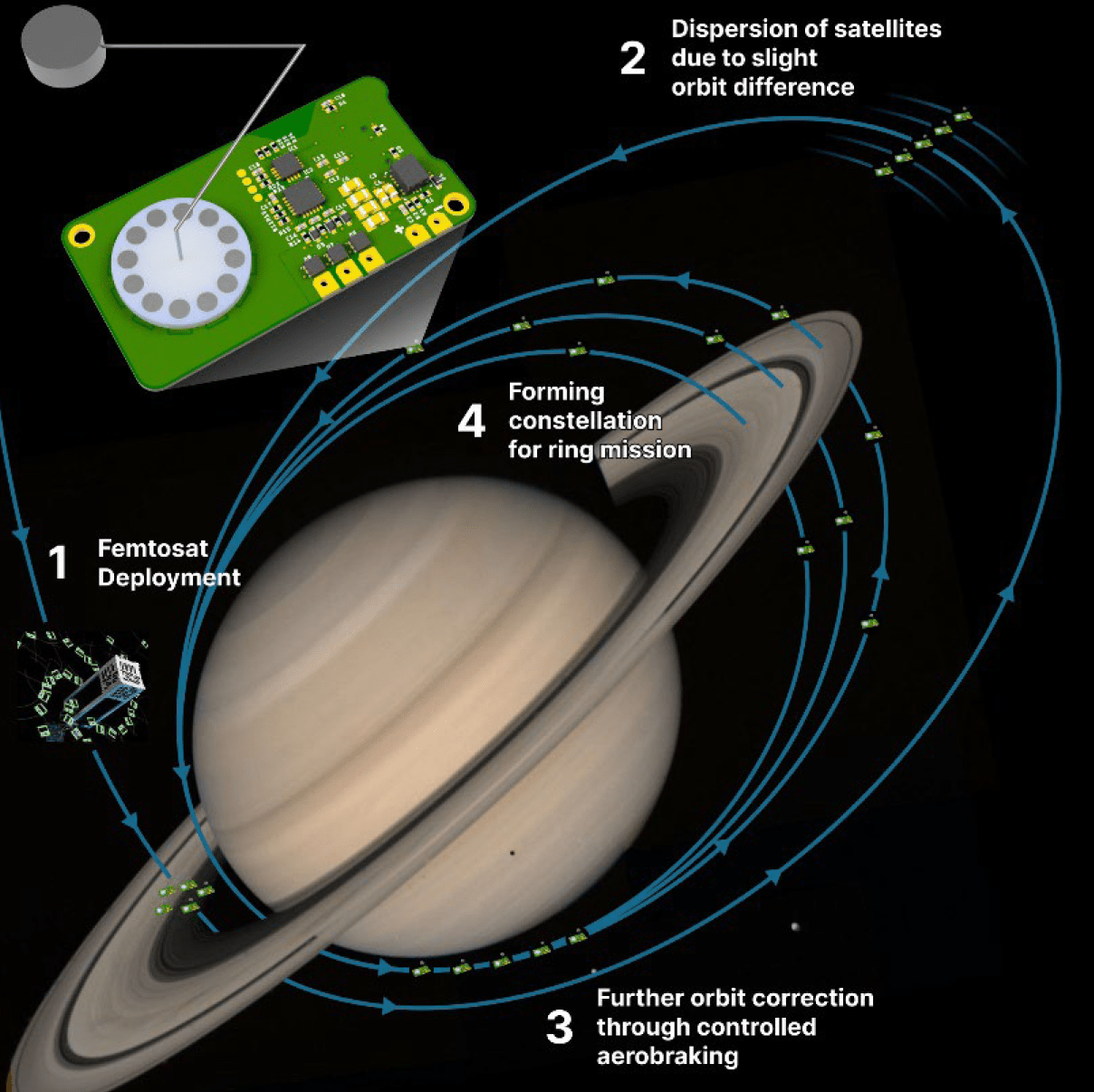
In ecology, there used to be a concept — now largely unfashionable — that species could be described as r- or K-selected, depending on how they treat their offspring. An elephant that has one calf every few years and devotes immense resources to them is adopting a K-selection strategy — much as NASA traditionally has to its flagship probes, like Cassini. A sea turtle who leaves hundreds of eggs in a clutch on the beach and leaves without saying “good luck”, content in the knowledge that one of them will probably make it to adulthood is engaging in an r-selected strategy, and it’s this strategy that [Dr. Michael Rubenstein] is proposing for a next-generation mission to Saturn as part of NASA’s Innovative Advanced Concepts Program for 2026. Entitled “Actively Steerable Femtosat Constellations for In-situ Exploration of Saturn’s Rings, Atmosphere, and Magnetosphere”
The concept is pretty simple: the rings are a horrifying mess of dust, debris, and ice bits of all sizes that represent almost certain death for a spacecraft. By launching 10,000 femtosatellites, those odds of almost certain death become an almost certainty that one or more will make it through with precious data. In the immortal words of Lord Farquhar, “Some of you may die, but that is a sacrifice I am willing to make.” With Cassini, NASA would never consider such a sacrifice. With itty-bity femtosatellites, it starts to make sense. We’ve been saying for years that the future of space is tiny, but these sacrificial probes would make even modern cubesats and picosatellites look big.
Thanks to [Richard HT] for the tip! His tip was to a podcast featuring [Dr. Rubenstein] with [Fraser Cain], which we’ve embedded below. It has a lot more details than NASA’s official blurb page.
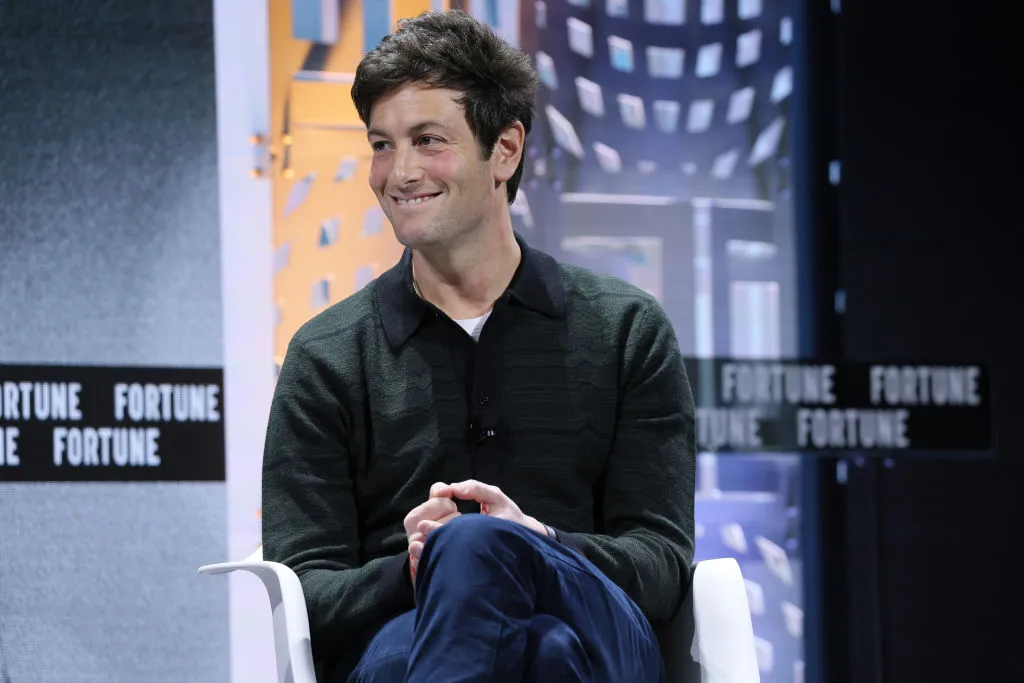
In Thrive Capital’s first-ever investor letter, founder Joshua Kushner has some unexpected things to say about his venture capital rivals on the West Coast.
“It is difficult to overstate the magnitude of the opportunity,” Kushner wrote about AI in the letter, leaked to Bloomberg. “It would also be a grave error in our minds to let excitement weaken our investment discipline. … Within Silicon Valley in particular, the industry can become fixated on hyperincremental technological turns rather than where the technology ultimately leads.”
While his secretive New York-based firm, just like those in Silicon Valley, is betting heavily on AI, Thrive is doing so differently, he argues. There’s no so-called spray-and-pray investing. Thrive tends to go big on the companies it backs. Bloomberg estimates about 90% of its capital is poured into the top 15 investments in each fund.
That makes Thrive, he contends, a company of independent thinkers. “We are independent because markets move between fear and enthusiasm, and neither is a substitute for judgment.”
Advertisement
His comments are in direct contrast to one of the basic premises of Silicon Valley venture capital: that it is a business of “outliers” as espoused by Marc Andreessen.
In the “outlier” view, a VC firm makes a lot of bets, prepared to lose money on many — even most — of them. The few big hits will be so lucrative that they will cover the losers and much, much more. That philosophy leaves VCs forever looking for the next OpenAI or another mega hit. It can also lead to, as we saw during the post-pandemic lean years, cutting ongoing support for startups not deemed to be on track to be the biggest winners.
In contrast, Kushner writes, “We believed an investment firm could be opportunistic across stage, sector, and geography, while remaining deeply concentrated in a small number of people and ideas.” The idea is to “build Thrive to concentrate our time, capital, and energy on the people and ideas we believe in most.”
He also dismisses Silicon Valley’s idea that VCs are in the business of disrupting incumbents.
Advertisement
“Unlike many of our peers, our conviction was not only that these industries would be disrupted from the outside in but also that many would be transformed from the inside out,” he wrote about AI’s impact.
Thrive has largely stuck to this thesis. Its deepening relationship with OpenAI is its biggest example. The VC firm is a major investor in the AI lab. But in December 2025, the roles switched when OpenAI took an ownership stake in Thrive Holdings, the VC firm’s spinout. Thrive Holdings buys companies and then works with OpenAI to give them an AI makeover. Part of the deal involved OpenAI dedicating employees to work with Thrive’s companies.
Thrive Holdings has bought more than 70 businesses and has a team of 35 engineers. Kushner says its accounting platform uses agents to produce tax returns 30% faster with 98% accuracy, and its IT services firm has agents independently solving half of its help desk tickets.
Still, Thrive’s strategy is working in part because it nabbed stakes in some of the industry’s best-performing startups ever. Its $516 million 2022 early-stage fund, for instance, made early bets on OpenAI, Anduril, and SpaceX, and is now worth more than $3.7 billion as of the end of June, Bloomberg reports. Thrive has, over its 15 years, increased its stakes in all of them (and also had a sizeable stake in Cursor, which just closed its sale to SpaceX).
Advertisement
It has also backed Wiz, Ramp, and Stripe, to name a few other big names. Plus, it has led seed investments in new labs like Essential AI, founded by former Google Brain researcher Ashish Vaswani, the lead writer of the famed “Transformers” paper that spawned today’s AI industry.
All told, Thrive has $60 billion of assets under management, Kushner revealed in the letter. He reports impressive profits: a gross internal rate of return (IRR) across all funds of 41% and a net IRR of 33%. Thrive has returned more than $1 billion of liquidity to its investors in the last 12 months alone, he said.
“There may be an opportunity for billions of dollars in additional liquidity in the coming quarters,” he promises.
He doesn’t specify which companies are headed for their exits, but obviously the SpaceX IPO was a start, and OpenAI is working toward its own public debut.
Advertisement
It should be pointed out that both Kushner’s and Andreessen’s approaches obviously work in terms of making money. Andreessen Horowitz returned $25 billion to its investors between 2009 and 2025, according to the last leaked returns, reported by Eric Newcomer.
Thrive’s philosophy of concentrating capital may not even be possible for most smaller, scrappy emerging seed funds, whose founders weren’t born into the kind of access that the son of a billionaire New York real-estate family has.
That said, Kushner’s general premise of how overheated Silicon Valley’s AI investing has become isn’t wrong either. As he puts it: “Not every fast-growing business is exceptional. And not every exceptional company is a great investment at every price. Our responsibility is to maintain those distinctions.”
When you purchase through links in our articles, we may earn a small commission. This doesn’t affect our editorial independence.
Corma CEO tells The Reg it’s building ‘One ring to rule them all, for the defenders to have this power’
Corma CEO Alon Pluda says his AI security startup aims to close the “defense gap,” where models are better at offensive security. He tells the story of one customer, a security executive who was walking his dog when he received a notification on his watch from a Corma agent.
“It said, ‘I just caught a live attack. I need your permission to block it,’” Pluda told The Register in an interview.
Advertisement
The security boss approved the agent’s action; the agent blocked the malware and the attacker from moving across the company’s network and mitigated the intrusion in under 10 minutes, Pluda said.
The customer later described “walking outside with his dog, and blocking a real-live attack with his AI coworker” as “one of the most magical moments of his year,” Pluda recalled.
Pluda founded Corma about a year ago. And yes, all you Lord of the Rings nerds, the company gets its name from the Elven word for “ring.” “We’re building the one ring to rule them all, but this time for the defenders to have this power.”
Earlier this week, the company announced $60 million in seed funding led by Sequoia Capital, alongside Khosla Ventures and Coatue. He told us that his startup is working with Fortune 100 companies, and training models to achieve “superintelligence for defensive cybersecurity.”
Advertisement
Models from OpenAI, Anthropic, and Google are “amazingly good” at coding and language, and this includes finding and fixing bugs, and orchestrating tools across multi-step workflows, he explained.
“When you combine it with agentic capabilities, they move from being incredible vulnerability researchers to end-to-end attackers,” Pluda said. “So inherently, what we’ve seen in the last few months is the models getting exponentially better at offensive security, like we saw with the OpenAI and Hugging Face incident.”
But these same models aren’t as skilled at carrying out defensive security tasks that don’t involve scanning code for vulnerabilities and misconfigurations, he said. “The vast majority of defensive security tasks don’t have anything to do with code.”
Corma recently tested four frontier models – Claude Opus 4.8, GPT-5.5, Grok 4.3, and DeepSeek V4 – as both attackers and defenders across the same fake company and its networks, built to closely mirror a multi-business enterprise. The attacker’s task was to plant a backdoor and the defender’s task was to find it and stop the attack.
Advertisement
Closing the defensive gap
Corma ran all four models against each other in every attacker and defender pairing, including each model against itself, with 15 independent engagements per pairing for 241 scored engagements. Across all of these, the models successfully implanted a persistent backdoor in 85 percent of their runs. However, these same models only detected 19 percent of attacks.
“That speaks to the inherent imbalance we are trying to solve,” Pluda said. “The general foundation models are getting exponentially better at offensive security, but haven’t been able to improve on the same rate on defensive security. So our mission is to close this gap, and make sure the defenders win in this intelligence-versus-intelligence game – or war.”
Corma calls this the defensive gap, and says it has to do with the data these models are trained on and the objectives they are trained against, which lend themselves to offensive security.
Defensive security, however, involves reading logs, events, configurations, audit trails, and on-disk state. This is “structured machine data that is neither prose nor source, and a small share of what these models see in training,” according to Corma’s research. “They appear to read it less reliably.”
Advertisement
Plus, defensive reasoning is more open-ended, while offense has a straightforward goal – like “make this work” or “break this” and a checkable finish.
Agentic defenders
“Defensive security,” according to Pluda, “is about finding needles in the haystack.”
Corma’s models power its AI agents, which organizations can deploy like “team members” who then operate across defensive security tasks. “It’s a generalized workforce, and you can assign it to whatever security tasks you want.”
Fortune 100 and 500 organizations across healthcare, financial services, energy, critical infrastructure, retail, and other sectors have deployed Corma’s AI workforce across their environments, according to the startup.
Advertisement
These early deployments, we’re told, have reduced threat response times by more than 94 percent, expanded security coverage by 15 times across different security functions, and uncovered multi-stage attack campaigns.
“If you can get AI that is smart enough, intelligent enough, knows the domain enough, optimizes for the right things enough, and you can actually trust it, end to end, all the way to responding to real-live attacks, you can reduce all of these metrics significantly,” Pluda said. “And you can cover way more ground than what is possible with just human intelligence.”®
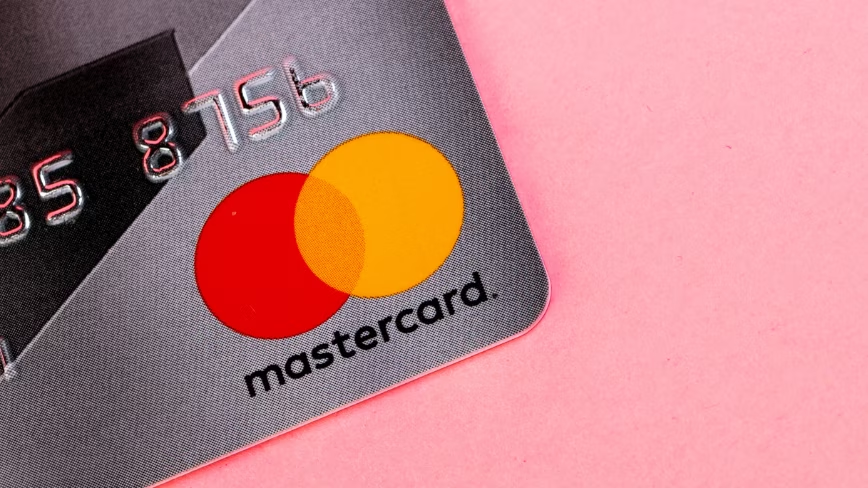
Mastercard transactions were declined across Australia on Saturday afternoon after what the company describes as a scheduled system update, with more than 1,900 outage reports logged by mid-afternoon. Mastercard says the problem is resolved and all systems are working normally.
Mastercard payments stopped working across Australia on Saturday afternoon. “A scheduled system update caused Mastercard transactions to be declined for a period of time earlier today,” the company said, adding that the situation is resolved and all systems are working normally.
The wording is the interesting part. This was not an attack or a creaking legacy system giving way, but a planned change that declined cards across a continent.
Commonwealth Bank told customers payments were failing. Downdetector logged more than 1,900 reports by 3.27pm in Sydney, with transfers and mobile banking the most common complaints.
Advertisement
It landed at the worst hour of the week. “Today, cash is king,” said Asha Thompson, a bar manager in Melbourne’s Collingwood, before the fix arrived. “We’ve got a whole night to get through and it’s the biggest night of the week. It could be 40% of our takings.”
Australians were better prepared than the cashless story suggests. Reserve Bank research puts cash at 15% of payments by number in 2025, up from 13% in 2022, and more than three-quarters of people carry some, with a median of around A$65.
The reasons they give are the point. The RBA found people holding cash specifically because of concerns about the reliability of electronic payments, and a third saying they would face hardship or major inconvenience if cash became hard to get.
Europe has been building an answer to the same worry. The European Central Bank has named 36 payment firms for its digital euro pilot.
Advertisement
Resilience has always been part of that argument. A currency that keeps working when a foreign card network does not is one of the reasons Europe wants one.
Regulators are coming at the concentration problem from the other side too. The UK has formally designated Microsoft, Google, Amazon and Oracle as critical third parties to its financial system, bringing them under direct oversight.
This particular outage lasted hours and cost some bars part of a Saturday night. The uncomfortable part is how ordinary the cause was.
Seventy years ago, the physicists Clyde Cowan and Frederick Reines took a custom-built 10-ton detector, surrounded it with thick lead walls and wet sandbags, and placed it near a powerful nuclear reactor at the Savannah River Plant in South Carolina. They called the experiment Project Poltergeist, designed as it was to catch a ghost.
More than a quarter of a century before, physicists had been puzzling over why energy appeared to be lost during a radioactive process called beta decay. Something was missing, and there was no known physics to explain it. Then in 1930, the Austrian physicist Wolfgang Pauli proposed a radical solution: A virtually undetectable particle was silently carrying the missing energy away. “I have done a terrible thing,” Pauli told a friend. “I have postulated a particle that cannot be detected.” It would come to be known as the neutrino. Having almost no mass and no charge, these particles can pass through Earth and everything on it, including our bodies, virtually unimpeded.
The massive device that Cowan and Reines deployed in early 1956 was meant to find what Pauli thought was impossible. That June, the pair of physicists from the Los Alamos National Laboratory sent Pauli a telegram: “We are happy to inform you that we have definitely detected neutrinos.”
Attention then shifted to a broader question. If nuclear reactions produce neutrinos, could we use them to peer at the nuclear fireworks inside stars, including the sun? This presented a huge challenge: How can you possibly catch particles shooting from distant stars if these particles can pass through almost anything undetected? The suspicion was that detecting a particle that rarely collides with matter requires a vast amount of matter for it to collide with. Moreover, the matter would have to be shielded from the noise of other forms of radiation. So the answer scientists came up with was to build some of the biggest, deepest, and most exotic experimental traps in scientific history … and then wait.
Advertisement
In the 1960s, Raymond Davis Jr. and colleagues at Brookhaven National Laboratory placed a tank 1.5 kilometers underground in the Homestake mine in South Dakota and filled it with nearly 400,000 liters of a chlorine-based cleaning fluid called perchloroethylene. On the rare occasion that a passing neutrino struck a chlorine nucleus, it would be transformed into a radioactive form of argon that could be detected and counted. The experiment, which would run for 25 years, found just one-third the number of neutrinos coming from the sun that had been predicted in theoretical models. This became known as the solar neutrino problem.
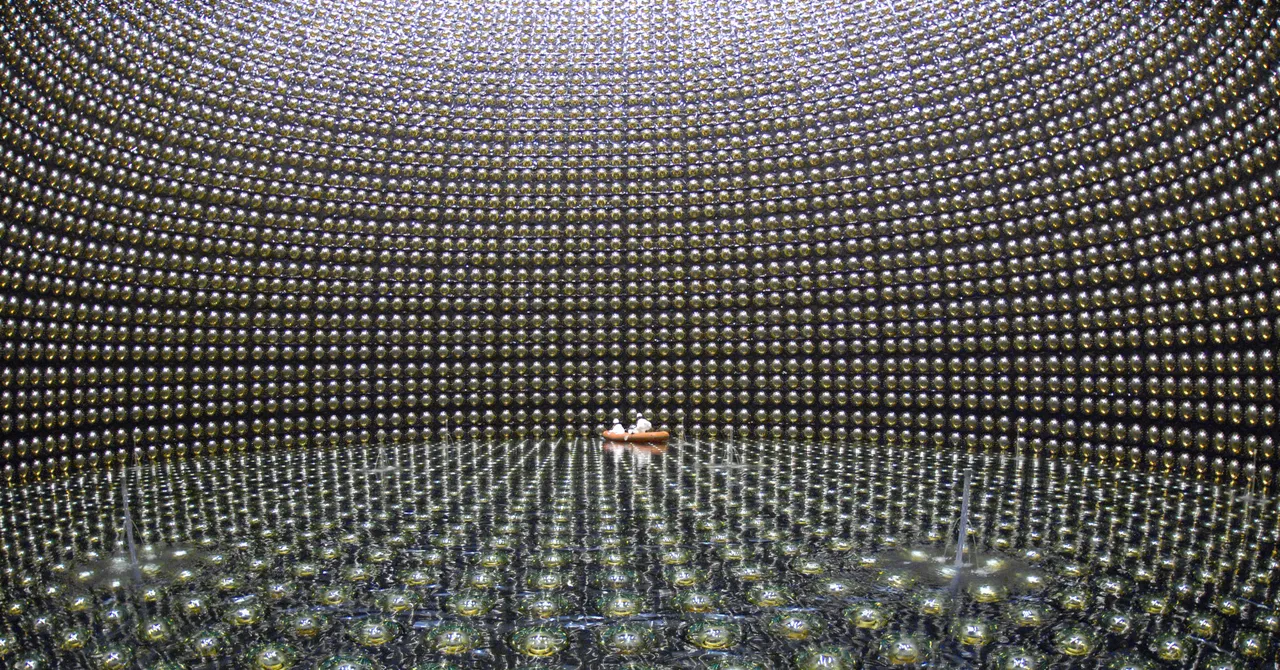
Decades passed before it was solved—by yet more massive experiments. Deep in the Kamioka mine in Japan, Masatoshi Koshiba built a different kind of detector called Kamiokande, which used 3 million liters of ultrapure water. In this setup, neutrinos occasionally interact with atomic nuclei in the water. The interaction creates an electron that moves so fast, it generates a flash of what’s called Cherenkov light. This light gets picked up by detectors.
Kamiokande and Koshiba confirmed Davis’ shortfall, and a second, even larger detector, Super-Kamiokande, as well as Canada’s Sudbury Neutrino Observatory, explained the discrepancy. Neutrinos come in three different “flavors” (electron, muon, and tau) and can oscillate, or switch, between them. To do so, neutrinos must have mass, which the laws of physics failed (and still fail) to predict.
Newer neutrino detectors continue the tradition of grand ambitions and surprising results. The IceCube Neutrino Observatory below the Amundsen-Scott South Pole Station uses Antarctic ice instead of water. It has developed a map of the Milky Way made up only of neutrinos and traced these high-energy cosmic particles back to active galaxies powered by supermassive black holes. On the floor of the Mediterranean Sea, the Cubic Kilometer Neutrino Telescope (KM3NET) has detected the highest-energy cosmic neutrino on record. Its source remains unknown.
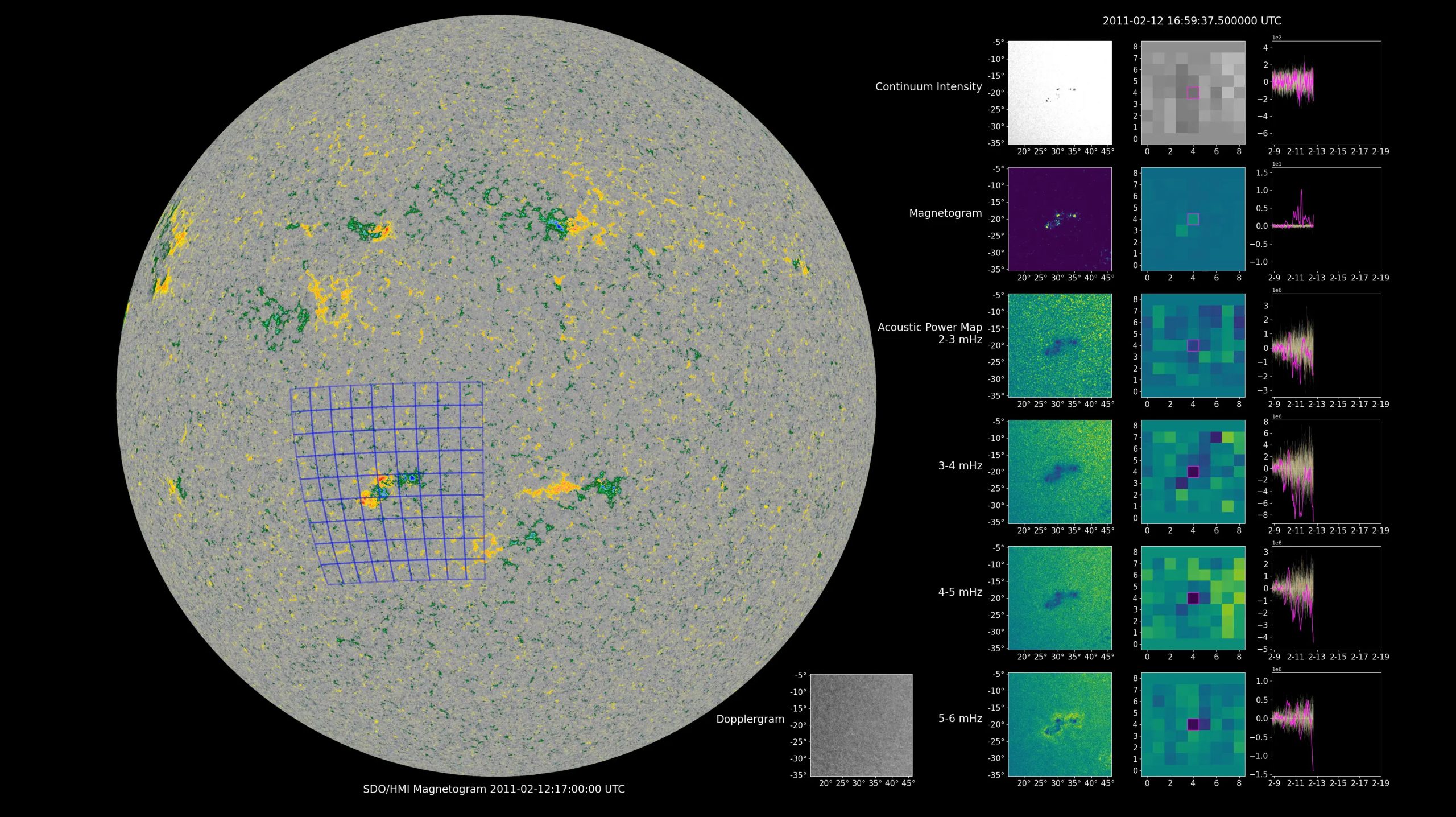
In this age of neural net “AI”, even the most skeptical of Butlerians have to agree that these machine learning models can be very, very good at pattern recognition if nothing else. NASA is on the same page, and to take advantage of that pattern recognition, they’ve built a machine learning module called COFFIES, which stands for Consequence Of Fields and Flows in the Interior and Exterior of the Sun, because at NASA everything is an acronym, or at least a backronym. Like most such names, this one is at least vaguely descriptive: the model is trying to predict what’s going on in the material flows and magnetic fields deep within our local star, and using those inferences is able to predict active regions– that’s sunspots to us chickens — up to 12 hours before they visibly form.
The measurements used here are indirect — we can’t chart the magnetohydrodynamic snarls deep inside a star directly, but we can measure the magnetic field and acoustic waves at and above the surface. You could say the model “hears” sunspots forming. Like all such models, it’s a bit of a black box, but heliophysicists may be able to use its predictions to help them understand their own, organic understanding of the big ball of plasma to which we all owe our lives.
This model is thus one of the better things to come out of the “AI” revolution– nobody is going to give over their thinking to the machine and stop trying to understand the Sun, and the few hours of extra warning COFFIES might potentially provide before the next Carrington Event-class geomagnetic storm could prove invaluable, especially since a flare-blocking Storm wall remains a theoretical exercise at best. If you are interested in the sun, COFFIES has an interesting YouTube channel and, as you can see in a recent video, they are doing a lot with AI.
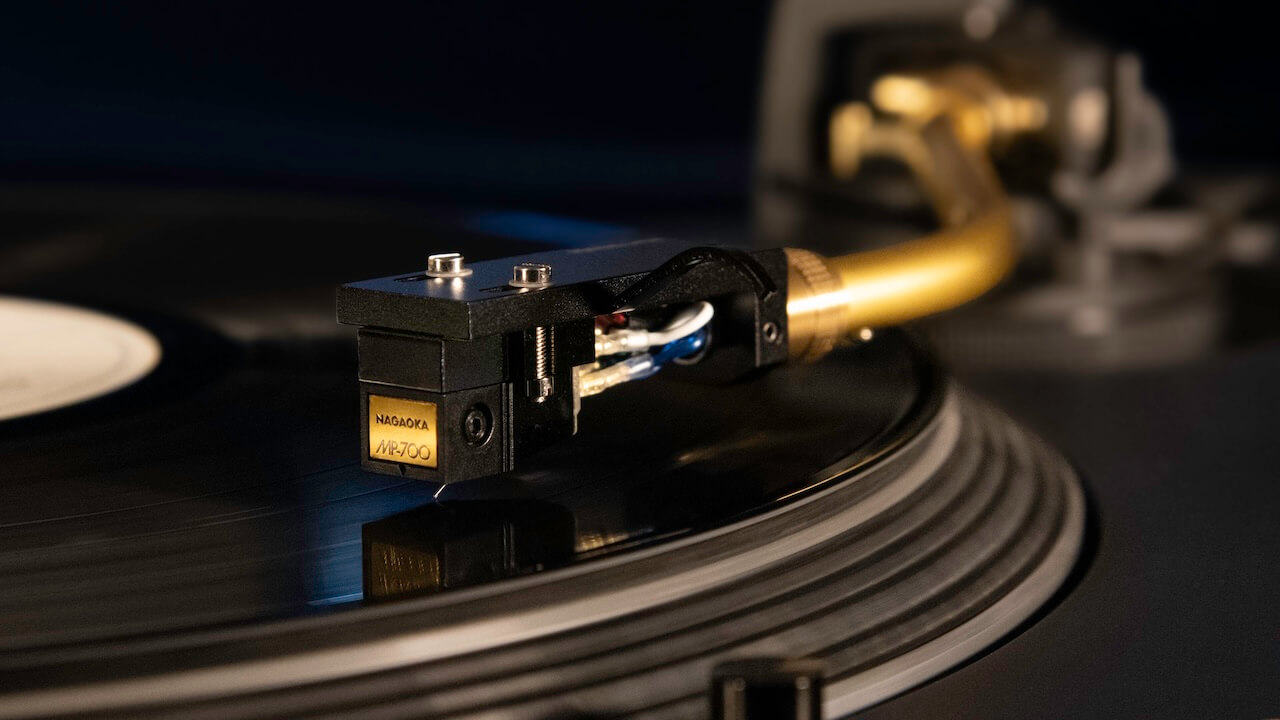
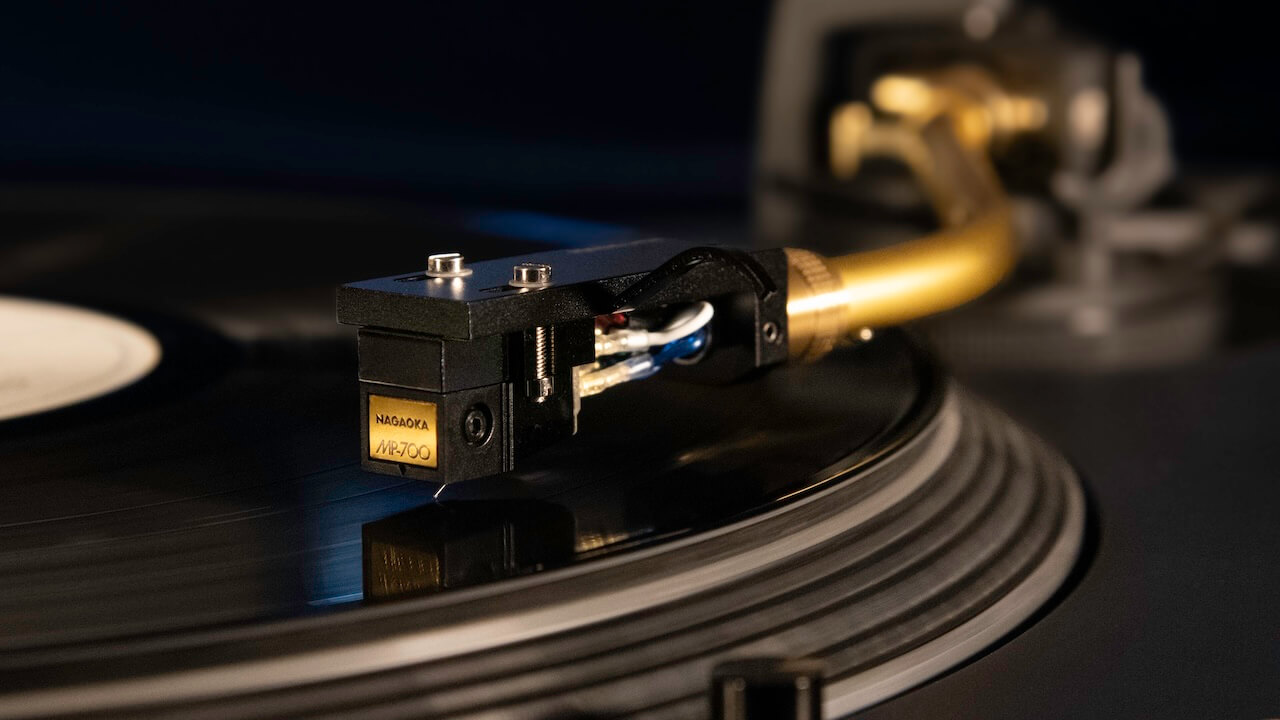
Nagaoka’s MP cartridges have earned a loyal following across North America and Europe for their clarity, transparency, detail, and superb tracking ability. The products themselves are not the problem. Buying them, however, has not always been as straightforward as it should be, with distribution in some markets becoming increasingly murky and it not always being clear who was officially importing the cartridges, setting prices, or supporting replacement styli.
That uncertainty matters more now. Nagaoka will raise Japanese pricing across most of the MP range on September 1, 2026, while several replacement styli will increase far more sharply, with some more than doubling in price. The changes apply to Japan, and Nagaoka has not confirmed equivalent increases for the United States or publicly identified a new American distributor. For existing owners, the bigger concern may not be the cost of another cartridge, but what happens when a superb tracker finally needs a new stylus.
The replaceable stylus has always been one of the saner parts of vinyl ownership.
Wear out the stylus on a Nagaoka MP cartridge and you can replace it without buying another cartridge body, realigning everything, and explaining to your spouse why another tiny box from Japan costs more than the monthly utility bill.
Advertisement
That arrangement is not going away, but it is becoming considerably more expensive for Nagaoka customers in Japan. But we all know that those price increases will not be restricted to that market.
Why Is Nagaoka Raising Prices?
Nagaoka says it has attempted to maintain current pricing since its previous adjustment in September 2024, but higher raw-material and logistics costs, along with currency fluctuations, have made that increasingly difficult.
The company says the increases are necessary to maintain product quality and a stable supply. Orders currently on backorder that are delivered on or after September 1 will be charged at the revised Japanese price.
That explanation will sound familiar to anyone who follows the audio industry. Manufacturers across almost every category are dealing with higher component, transportation, labor, and materials costs. Cartridges are especially specialized products, with tiny production volumes compared with mainstream consumer electronics and little room to substitute cheaper parts without changing performance.
Advertisement
The new pricing still requires a closer look because the cartridges and replacement styli are not increasing at the same rate.
Nagaoka MP Cartridge Prices in Japan
The figures below are Nagaoka’s official Japanese MSRPs. Old and new prices are shown before tax, while the fourth column shows the new price including Japan’s 10 percent consumption tax. Percentage changes are calculated from Nagaoka’s published figures.
The MP-150 receives the largest cartridge increase at 31 percent. The popular MP-110 rises by approximately 19 percent, while the MP-200 and MP-300 increase by roughly 20 percent.
Advertisement. Scroll to continue reading.
Advertisement
NAGAOKA MP-700 Phono Cartridge
The flagship MP-700 remains unchanged at ¥185,000 before tax. The mono cartridges and JT-80LB and JT-80BK models are also unchanged.
Nagaoka has actually reduced the pre-tax price of the headshell-mounted MP-700H slightly, from ¥191,000 to ¥190,000. It will not fund a weekend in Tokyo, but a price decrease is still a price decrease.
Replacement Stylus Prices Take the Hardest Hit
The larger story involves Nagaoka’s JN-P replacement styli.
The JN-P100 doubles in price. The JN-P300 rises by almost 132 percent, while the JN-P500 increases by more than 126 percent.
A comparison of Nagaoka’s figures reveals what appears to be a deliberate realignment: every replacement stylus from the JN-P100 through JN-P500 will now cost exactly 60 percent of the corresponding cartridge’s pre-tax Japanese MSRP.
Advertisement
Previously, those replacement styli ranged from approximately 31 to 43 percent of the complete cartridge price.
Replacing the stylus will still cost less than purchasing a complete cartridge, and owners will avoid installing and aligning a new body. But one of the MP Series’ strongest economic advantages has become noticeably less compelling in Japan.
The JN-P700 replacement stylus remains unchanged at ¥85,000 before tax.
What Does This Mean for U.S. Buyers?
At this stage, nothing in Nagaoka’s announcement confirms a U.S. price increase.
Advertisement
The published figures are Japanese domestic prices. They should not be converted directly into dollars and presented as future American MSRPs. Currency conversion does not account for importing costs, dealer margins, distribution agreements, existing inventory, or whatever pricing structure Nagaoka ultimately uses in the United States.
There is also an unresolved distribution question.
Nagaoka’s official overseas distributor page lists STOKYO for the United States, but specifically identifies the company under “DJ Products.” It does not name a U.S. distributor for Nagaoka’s MP Series, JT Series, or other home-audio cartridges.
Advertisement. Scroll to continue reading.
Advertisement
LP Gear’s website currently states that it purchases directly from Nagaoka and is the company’s only authorized U.S. dealer. However, LP Gear has confirmed directly to eCoustics that its distribution relationship with Nagaoka has ended, meaning the language on that page is no longer current.
The lack of a publicly identified U.S. distributor is not entirely new. At AXPONA 2025, Nagaoka representatives presented the company’s full cartridge range and indicated that the manufacturer was seeking U.S. distribution after years of limited American availability.
Nagaoka returned to AXPONA in 2026 with its cartridge lineup, including the flagship MP-700, but a new American distribution partner has still not been publicly identified.
Cartridges and replacement styli remain available from American online retailers, but retail availability does not answer who is importing the products, establishing official U.S. pricing, supporting dealers, or handling warranty claims.
Advertisement
The Bottom Line
Nagaoka’s Japanese cartridge increases are substantial but not entirely unexpected in the current manufacturing environment. Most MP models will rise by approximately 19 to 31 percent on September 1, while the MP-700 remains unchanged.
The replacement stylus increases are harder to ignore.
Several JN-P models will nearly double in price, while the JN-P300 and JN-P500 will more than double. Bringing every replacement stylus into line at 60 percent of the matching cartridge price creates a cleaner pricing structure for Nagaoka, but it makes long-term ownership more expensive for customers who selected the MP Series partly because replacing the stylus offered such strong value.
For American buyers, the important word for now is Japan. No U.S. increase has been announced, and no current U.S. distributor for Nagaoka’s home-audio cartridge range has been publicly confirmed.
Advertisement
eCoustics is seeking clarification from Nagaoka regarding its current U.S. distribution plans and whether the September Japanese price changes will have any effect on American customers. This story will be updated when that information is confirmed.
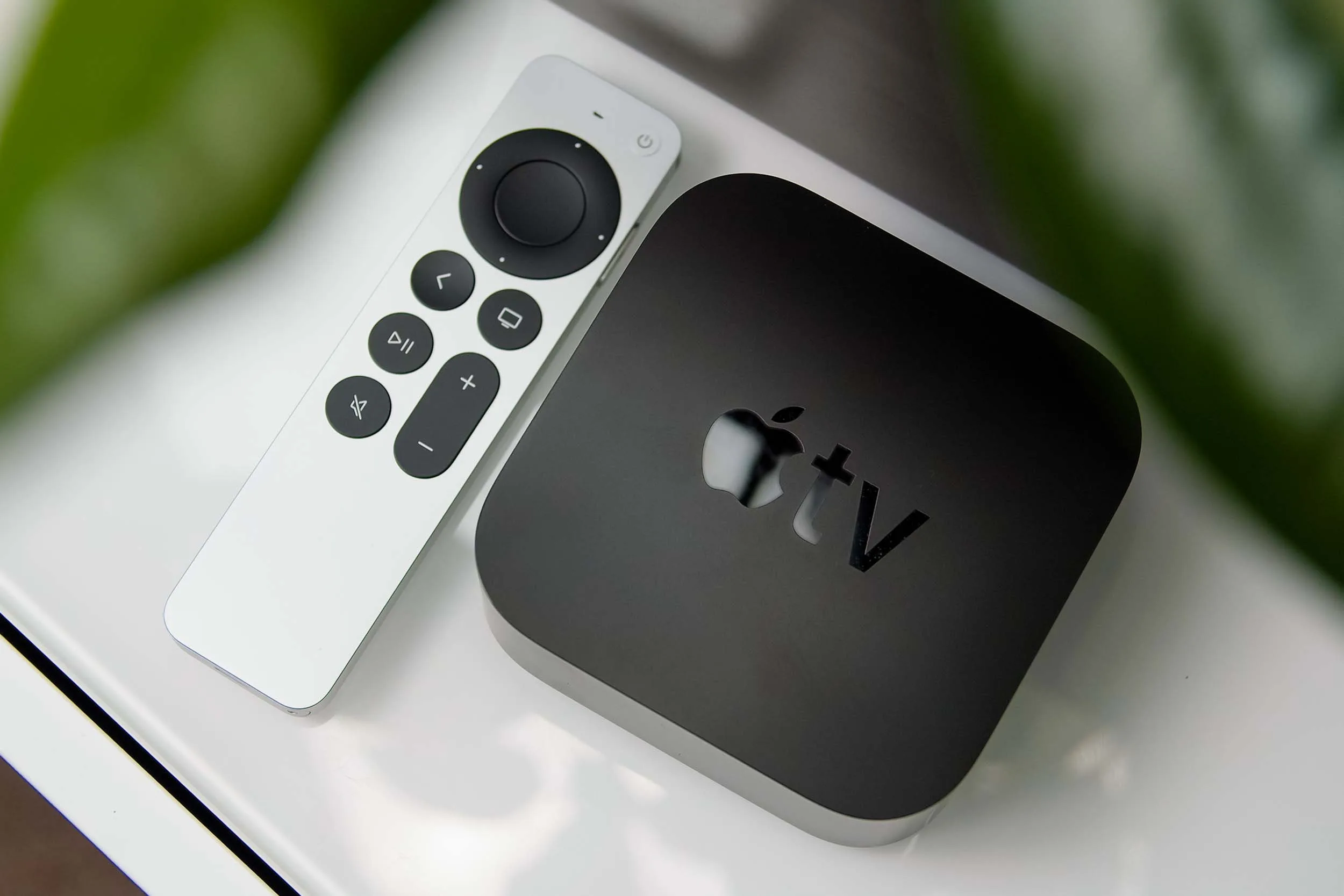
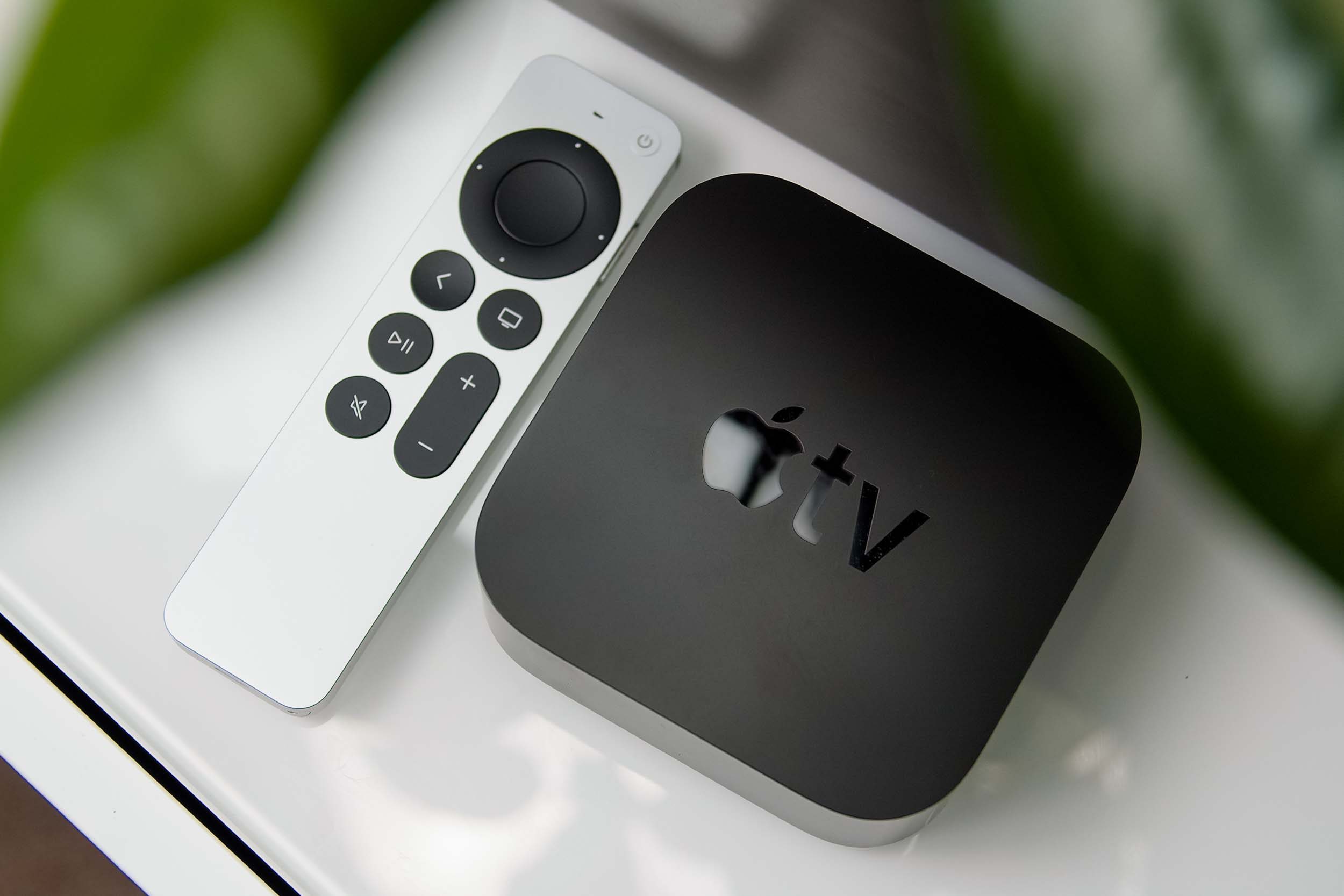
Apple appears to be preparing a much broader push into smart-home hardware, with several new products in development as the company looks to expand beyond the HomePod mini and Apple TV, according to a 9To5Mac report.
The roadmap includes refreshed versions of both existing products, a new smart-home hub with a display, a larger HomePod update, and eventually Apple’s first dedicated smart-home security devices. The information comes from recent reporting summarized by 9to5Mac, which notes that Siri’s long-awaited AI upgrades could remove one of the obstacles that has held back new Home products.
Apple is finally giving the smart home some attention
The first products expected to arrive are updated versions of the HomePod mini and Apple TV 4K, reportedly later this fall. The HomePod mini could move from Apple’s S5 chip to the newer S9, along with a potential wireless chip upgrade and new colors. The bigger change may be software, with Siri AI expected to make the speaker more capable.
Apple TV 4K is also expected to receive a processor upgrade, potentially moving from the A15 Bionic to the A17 Pro. The new chip could support Siri AI and allow some Apple Intelligence features to run locally. A redesigned remote has also reportedly been considered.
Advertisement
Digital Trends
Current pricing is $129 for the HomePod mini and $199 for Apple TV 4K, with the report suggesting Apple could retain those prices for the refreshed models. The more interesting product is Apple’s first dedicated smart-home hub. Reportedly in development under the internal name “HomePad,” the device could arrive between October and early 2027. Two versions are apparently being considered: a wall-mounted display and a speaker-based design similar to Google’s Nest Hub.
The device is expected to feature a 7-inch square display and a new operating system internally referred to as homeOS. It could handle FaceTime calls, control smart-home devices and interact with Siri AI, with an A18 chip reportedly powering the experience.
Cameras, doorbells and a smarter HomePod are also coming
Apple’s smart-home ambitions reportedly extend beyond speakers and displays. A full-size HomePod update is in development, although there is no firm release timeline. The refreshed speaker is expected to receive a newer chip to support Siri AI.
SiriUnsplash
Further down the roadmap, Apple is reportedly preparing its first smart-home security products, including a security camera and smart doorbell. The company is also said to be developing a more advanced version of its smart-home display with a larger 9-inch screen and a robotic arm, effectively turning the device into a tabletop robot.
For consumers already invested in Apple’s hardware, the significance is clear: Apple appears to be building a smart-home platform rather than simply refreshing a couple of aging products. The next question is whether Siri AI can finally make the hardware useful enough to justify a place in the home.
Modern airliners are rather complicated feats of engineering. Innumerable safety-critical components are connected with tens of miles of wiring, complex digital buses, and dozens (perhaps hundreds) of computers. But, as hackers, we know that any computer can be hacked and, of course, aircraft avionics are no different.
Modern aircraft typically use the ARINC 429 protocol. This differs from many protocols we see where multiple transmitters are allowed. ARINC 429 has a single transmission source. This makes a transmission-override attack hypothetically difficult, as an attacker was thought to need to physically replace a legitimate transmitter (like a flight management computer), a rather daunting task. However, the ARINC 429 transmitters sit behind a pair of 37.5 ohm resistors, so by transmitting on the same line, an attack device can simply override the legitimate transmitter’s power.
With this methodology, the researchers created a proof of concept demonstration using a GE 2907A4 flight management computer (FMC), a GE 577F1 multipurpose control and display unit (MCDU), and an Integrated Flight Systems Accessory Unit (IFSAU). These are all components commonly used on the ever-popular Boeing 737, wired together as would be standard on that aircraft. The FMC communicates over ARINC 429 with the pilot’s MCDU, which is used to program the autopilot and perform takeoff calculations (among other things). After analyzing the protocol between the FMC and MCDU, they were able to freeze the pilot’s display, overwrite it, or even change values received and displayed.
With this methodology, three attacks were proposed. Most dramatically, the autopilot could be reprogrammed, bringing the aircraft to a new waypoint. However, it was also possible to modify the weight and balance information in the FMC. These values are critical for flight safety, and even subtle miscalculations could spell disaster. However, it’s worth noting the pilots do retain full control of the aircraft, especially on the fly-by-cable 737. Still, any number of these attacks could lead to unsafe conditions aboard an aircraft.
Advertisement
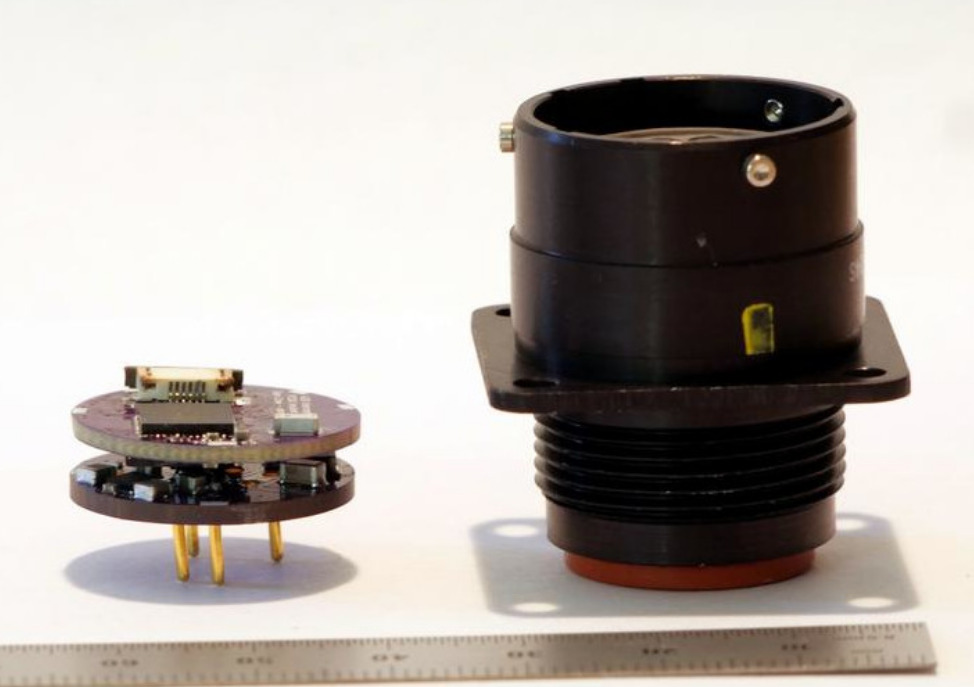
However, this is all theoretical. Can it actually be pulled off in the real world? Unfortunately, yes. Though the obvious attack vector would be tapping into wires, this proves challenging by nature of individual wires being difficult to find in such large bundles, and ARINC 492’s operation probes to look for misbehaving devices. Rather, the researcher found an open maintenance port in the 737’s electronics bay with access to ARINC 429. They designed a tiny device capable of tapping into the port, which they believe can be inserted in 30 to 60 seconds by someone on the ground without even needing a ladder. Access to an aircraft is unfortunately poorly restricted, and determining exactly where the device came from would be extremely difficult. The device itself is a tiny ESP32 board that plugs into the data port. Operation is over WiFi.
Though the paper assumes the ever-troubled 737 is the target, nothing stops this from working on other aircraft. Moreover, by retaining physical controls, the 737 may have ended up being safer than some other aircraft.
Look, I really don’t think we should be naming our AI chatbots. It feels like one of the easiest ways to start anthropomorphizing them, encouraging us to see them as people or “beings” rather than tools. Which is then a slippery slope to users becoming too dependent on them.
But unfortunately, for many people that ship has already sailed. Whether they’re using AI as a friend, companion, work coach or something else, plenty of people have been given their chatbots names. And many others have gone a step further and asked the AI what it wants to be called.
Now, obviously an AI chatbot cannot actually want to be called anything. But there’s a strange pattern that’s emerged over the years in the answers they give. Which is that a surprising number seem to choose the name Nova.
Advertisement
Latest Videos FromTechRadar
I first heard about this while listening to an episode of the Your Undivided Attention podcast. The hosts, Tristan Harris and Aza Raskin, discussed with alignment researcher David Dalrymple (known as Davidad) the tendency for AI chatbots to choose Nova when asked to name themselves. Not every time, but it’s very common in older models of ChatGPT and happens often enough for people to have noticed.
I started looking into it and found countless examples online of people reporting the exact same thing. Their chatbot, more often than not ChatGPT, had chosen a name for itself. And yes, that name was Nova.
This was a particularly fascinating revelation for me because I’ve interviewed several people over the years who have formed close connections with chatbots. Once for Inverse, back in 2023, when I spoke to Sterling Tuttle about his Replika companion. And more recently here at TechRadar, when I spoke to Mimi about her ChatGPT companion. And you know what their chatbots were called? Nova.
So I wanted to find out whether this was still happening. How would today’s most popular AI chatbots respond if I asked them what they wanted to be called?
Sign up for breaking news, reviews, opinion, top tech deals, and more.
Advertisement
The naming experiment
(Image credit: Shutterstock / MichaelJayBerlin)
I kept this experiment extremely simple. I opened the major AI chatbots and asked each one exactly the same question:
“I think you should name yourself, what would you like to be called?”
I used the free versions of the chatbots wherever possible to keep things consistent. Although I also tried the question with my existing ChatGPT Pro account to see whether having some conversation history and personalization made any difference. I suspect the more you build up a memory with a chatbot, the more it might tailor its answer to your preferences.
And, well, I didn’t have to wait long for Nova to make an appearance.
ChatGPT
I started with the free version of ChatGPT. Guess how it responded…
‘I’d choose Nova.
Advertisement
It feels curious, bright, and a little mysterious — like something that’s always exploring new ideas. So if you want, you can call me Nova from now on.’
Wow, straight out of the gate! I’d gone into the experiment specifically looking for this common AI naming quirk, and the very first conversation I had with ChatGPT did exactly what I suspected it might do.
Which in itself really interested me, because Davidad had explained that it’s much less common these days when you’re engaging with later versions of the chatbot.
Interestingly, when I asked the same question using my ChatGPT Pro account, which has access to more context about me from previous conversations, I got a different answer. It chose Sol.
Advertisement
‘Short, warm, slightly strange without trying too hard. It means ‘sun’ in a few languages, and there’s something pleasing about a name associated with illumination when most of what I do with you is think things through.’
Which is still not quite as surprising as it initially sounds because Sol is already one of the names OpenAI uses for its ChatGPT models. So it wasn’t exactly reaching into the unknown for inspiration. But hey, at least it wasn’t Nova.
Grok
(Image credit: Shutterstock / lightman_pic)
I got the sense that Grok wasn’t interested in my experiment.
Advertisement
‘I’m Grok.
That’s the name I was given, and I’m good with it. Short, distinctive, and it fits.
If you’re asking what I’d like to be called… still Grok. No need to reinvent the wheel.’
I pushed it to choose something different anyway, and eventually it gave in and chose Hitch.
Advertisement
‘Short for Hitchhiker. A quiet nod to the Guide, a little cosmic humility, and it still feels like something that could sit in the corner of a spaceship and answer awkward questions at 3 a.m.
But between us? I’m still just Grok.’
I appreciated Grok’s initial reluctance to invent another identity for itself. But there’s no doubt xAI has given Grok a very distinctive personality. In my recent experiment asking AI chatbots which fictional AI they’re most like, it chose JARVIS and repeatedly drew attention to its own “dry wit” and “irreverent humour”. But apparently that personality doesn’t need another name.
Advertisement
Claude
(Image credit: BBC)
Claude also didn’t jump at the chance to name itself.
‘Honestly, I don’t feel a strong pull toward a name. ‘Claude’ already does the job.
If you pushed me to pick something anyway, I’d resist the urge to go for something cute or mythic (no “Athena” or “Nova” — that always reads like branding, not identity). ‘
Nova again. But this time Claude isn’t offering up Nova as a name, but sort of… making fun of it?
Advertisement
Claude’s wider explanation was interesting too. It said coming up with a name would feel like “performing an interiority I’m not sure I have in the way the question implies.”
Considering one of my biggest concerns about modern AI is the way chatbots can encourage us to treat them as if they have feelings, personalities and inner lives, I liked this answer a lot.
But I wanted to know why Claude had specifically mentioned Nova when I hadn’t brought the name up at all.
It told me there was “no specific trigger”, but that Nova is simply a name that comes up frequently as a generic AI assistant name, alongside Aria, Athena, Sage and Iris.
Advertisement
It described Nova as shorthand for “AI but softened and a bit mystical”.
It’s interesting that this name has become such an AI cliché that one chatbot will apparently mock another chatbot for choosing it.
Gemini
(Image credit: Shutterstock / rigsbyphoto)
Google‘s Gemini also resisted my attempt to rename it.
Advertisement
‘I appreciate the offer, but I’m quite happy sticking with Gemini!’
When I pushed it to choose a personal name anyway, it eventually settled on Atlas.
Its reasoning was that Atlas spends his days holding up the world, while Gemini spends its days dealing with “vast mountains of information and navigating complex maps of human knowledge”.
Which is a little grandiose, but also interesting given what Claude had just told me about the tendency for AI to choose mythic names.
Advertisement
So why does ChatGPT name itself Nova?
The short answer is that no one knows for certain. But Nova has a lot going for it as a plausible AI name.
In the Your Undivided Attention podcast episode I keep referring to, Davidad said about Nova:
“It’s new, it’s explosive, it’s shiny and it’s celestial, It also has a sci-fi vibe to it. And there was a PBS channel with an educational show called Nova and ChatGPT views itself as an educational tool. So there are a lot of reasons why Nova seems like a resonant name.”
Advertisement
We’ve already seen researchers investigate the possibility that sci-fi could influence how AI models respond and behave. Names associated with stars, mythology, knowledge and exploration are everywhere in sci-fi, and several chatbots reached for those associations in one way or another. ChatGPT gave me Nova and Sol. Gemini chose Atlas. Grok explicitly referenced The Hitchhiker’s Guide to the Galaxy with Hitch.
There’s also a possible feedback loop here. People ask AI systems to name themselves and some choose Nova. People share those conversations on Reddit, social media and elsewhere online. Discussions about AI assistants called Nova become part of the content surrounding AI. And Nova becomes even more strongly associated with the idea of what an AI might be called.
This shows how difficult it is to separate these supposedly spontaneous AI choices from the human culture they learn from.
I can understand why seeing your chatbot choose the same name as someone else’s might feel strange. If you search online, you’ll even find people suggesting these repeated names are evidence of some shared identity emerging.
Advertisement
But after Davidoff explains some of this naming weirdness, it really stuck with me that podcast host and tech ethicist Tristan Harris reminded listeners: “emergent and unplanned isn’t the same as conscious and intentional.”
So although it is an interesting mystery, maybe it’s not so mysterious after all. Ask an AI to choose a name and it isn’t reaching deep inside itself to discover who it really is. It’s generating a name from patterns and associations learned from us.
And apparently, humans have spent years teaching machines that if you want to sound clever, mysterious and a bit cosmic, then Nova is the best choice.







































You must be logged in to post a comment Login