Connect with us
DAPA Banner
DAPA Coin
DAPA
COIN PAYMENT ASSET
PRIVACY · BLOCKDAG · HOMOMORPHIC ENCRYPTION · RUST
ElGamal Encrypted MINE DAPA
🚫 GENESIS SOLD OUT
DAPAPAY COMING

Tech

Samsung’s Bespoke Update Is Big Step Towards A Useful AI For Your Fridge

Published

on


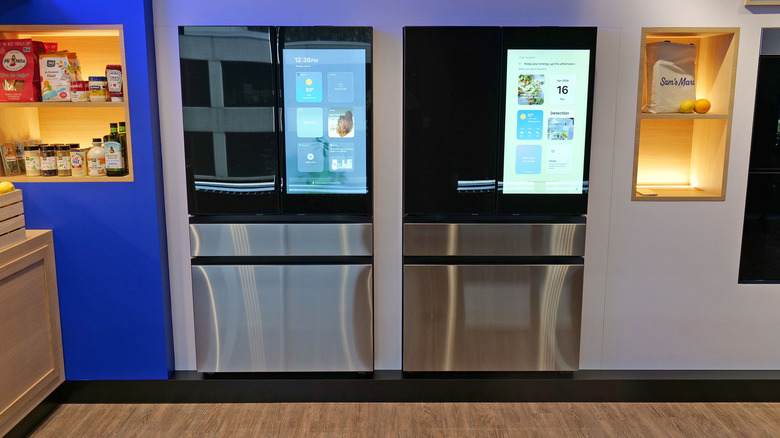
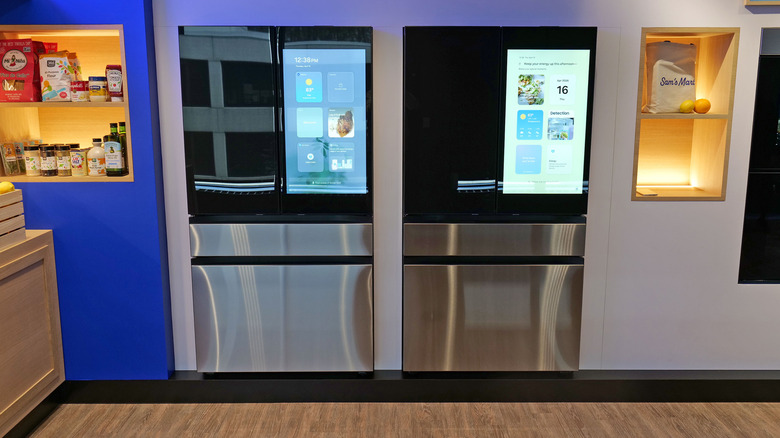
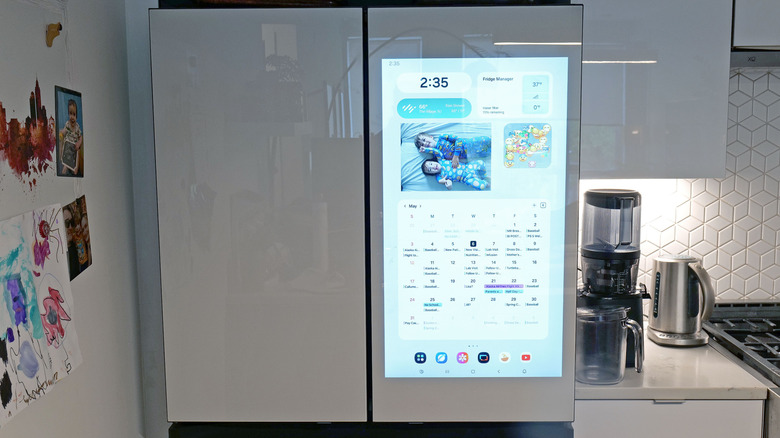
The idea of installing a software update on your fridge already feels kind of weird, let alone one centered around improving its AI capabilities. But that’s exactly what’s happening to Samsung’s line of Bespoke refrigerators this week, and to my surprise this patch is making major strides at providing truly useful machine learning in a modern day icebox.

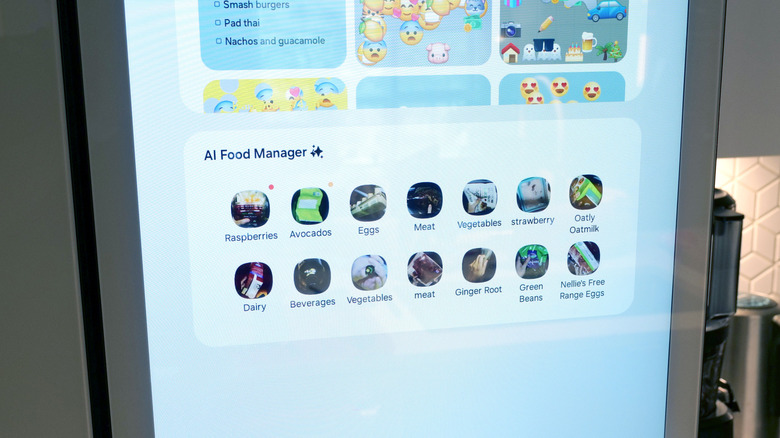
As a quick recap, Samsung has offered AI-powered features like automatic food recognition and meal planning on its Bespoke refrigerators for a couple years already. However, as I found out after reviewing its flagship model late last year, the company’s AI capabilities are still very much a work in progress. Previously, the fridge could recognize around 60 different kinds of fresh foods (like fruits and veggies) alongside another 50 or so packaged goods like yogurt or popcorn. That felt like a decent start, but considering the sheer number of different items you can find at a typical grocery store, it was far from complete. Furthermore, you often had to input additional data like the number of items or when something was first added, which made the idea of AI-assisted grocery tracking more tedious than I’d like. I don’t know about you, but I generally don’t want to have to type on my fridge and I’m pretty sure the engineers at Samsung agree, which is probably what brought about this major update to its Bespoke refrigerator software.

Advertisement

So what’s new?

The big change is that Samsung is adding support for Google Gemini, which has several important implications. By combining Samsung’s existing on-device object recognition with Google’s cloud-based models, the total number of identifiable foods is increasing from just over 100 items to more than 2,000. Now this does mean you will need to connect the fridge to Wi-Fi, but considering the number of other smart features it supports like calendar integration and video playback, that’s not a big ask.

Another update is that Samsung is using Gemini to expand voice controls, allowing users to ask the fridge to change things like device settings, check details like when the water filter was last replaced or to even help troubleshoot issues. And depending on the situation, the fridge can even play back a tutorial about how to solve the issue.

Alternatively, for more complicated or harder-to-solve problems, Samsung is introducing what it calls Reliability AI, which is designed to monitor the fridge’s components or help identify faults before they get too serious. Or in cases where the device needs to be serviced, the AI can provide more detailed info to agents while potentially allowing them to fix certain things remotely.

Advertisement

For example, a Samsung representative told me that if a customer calls and says that cubes from the icemaker are coming out in clumps and stuck together, Reliability AI could allow agents to reduce the amount of water that is being added to the ice tray — all without ever needing to physically come to your home. Critically, Samsung says that while the fridge will monitor and track device health metrics, owners will need to provide express consent in order for repair personnel to access that data. Meanwhile, if an issue does require in-person servicing, Samsung says that by sharing this data with repair technicians, it allows people to identify and solve problems faster instead of having to arrive with no context and diagnose issues from scratch.

Advertisement

How this works in the real world

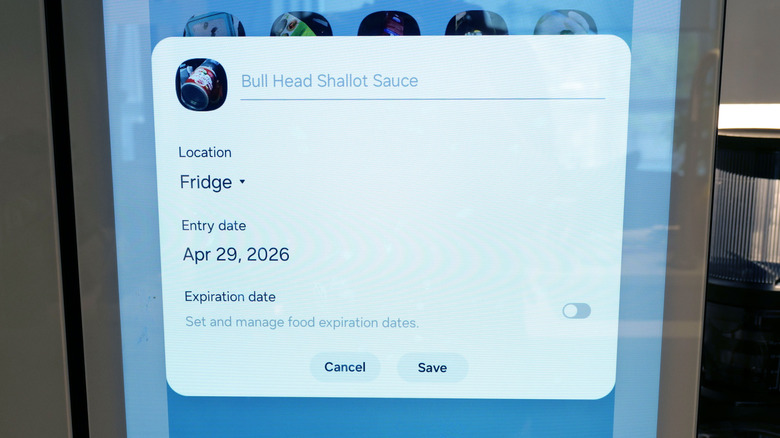
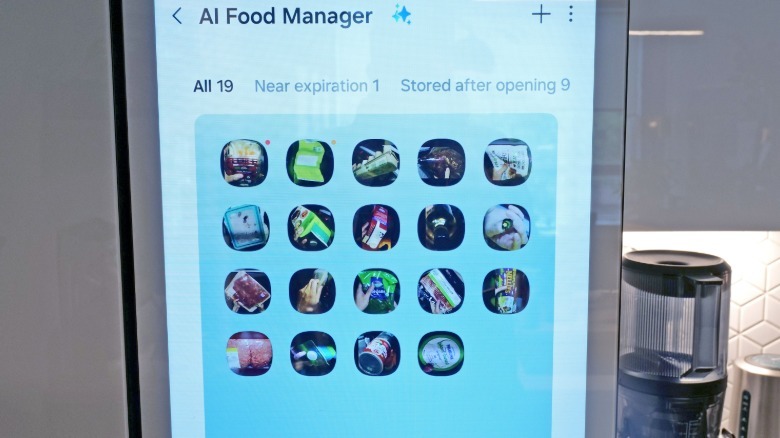
My test unit hasn’t run into any mechanical issues in the eight months I’ve been using it, so I haven’t been able to evaluate Samsung’s Repairability AI. That said, after checking it out first at Samsung’s headquarters, I’ve had the chance to use an early version of the Bespoke line’s new software over the last two weeks — including its upgraded support for cloud-based object recognition — and the improvement is profound. Even after using it for a while, I’m still surprised by how many different foods it recognizes. Deep in the back of my fridge, I have a can of Bull Head Shallot Sauce, which is a rather niche ingredient from Taiwan used almost exclusively in Asian dishes. However, the AI had no trouble recognizing it, automatically tagging it and including when it was first added to the fridge’s AI Food Manager.

On top of that, the system is now much better at recognizing brands and counting the number of specific ingredients in order to create more detailed listings. It can distinguish between a Diet Coke and Coke Zero while also accurately noting that there were multiples of each item. And even though the fridge often has to ping a cloud-based server somewhere to help recognize various items, results appeared rather quickly, often in less than a few seconds. And for certain foods like avocados, I was delighted that the fridge tracks how long you’ve had it and will surface a notification that it might be getting close to expiration. Granted, it’s not always right, but all I really need is a reminder to check on things and it does just that.

I also noticed that the fridge now remembers when you frequently take a specific food out and then asks if you want to add that item to your shopping list. It’s a nice reminder to replenish staples you use regularly and happens in a low-friction way, so it doesn’t become annoying. From there, you can simply check your phone when you’re at the store instead of needing to manually curate a list every week. Also, because the fridge does a much better job of recognizing and tracking what’s inside, it can provide better suggestions about recipes you can cook using ingredients you already have.

That said, like a lot of current models, the AI doesn’t always nail every detail. For example, I was initially impressed when it automatically labeled a tub of fake cream cheese as “Philadelphia Plant-based,” until I realized that the label was incomplete and the AI was merely reading what was written on the lid and didn’t have the smarts to accurately finish the description. Don’t get me wrong, it provides more than enough info to help me figure out what’s in the fridge when I’m glancing at the Food Manager. It’s just not quite spot on.

Advertisement

Outlook and things that still need work

The one issue with this update is that like a lot of AI services today, Samsung’s new software can be a bit overconfident or prone to hallucinations. One time, as my wife was putting something back in the fridge, the algorithm took a picture of a brightly colored bandage on her finger and labeled that as a veggie, which it very much is not. Other times it seemingly just guesses. But I’d argue going from around 100 identifiable items to over 2,000 is a very welcome improvement even with the limitations.

The other weird thing is that even though Samsung is leveraging Google’s AI models for a lot of the fridge’s new features, you won’t see any obvious callouts to Gemini inside the device itself. That’s kind of a bummer because Bixby is still the only digital assistant you can use and talk to directly.

I’ve said before that Samsung’s AI food recognition is a work in progress and I think that still holds true. With this latest update, the company has gotten a lot closer to delivering on the promise of a fridge with truly useful AI-powered features. What once felt more like a promising tech demo has quickly become a handy tool to keep track of your groceries, even with some hiccups here and there.

Advertisement


Source link

Advertisement
Continue Reading
Click to comment

You must be logged in to post a comment Login

Leave a Reply

Tech

Trump administration to invite Apple CEO Tim Cook to China

Published

on

President Trump wants to show off the executives he has behind him on a trip to China, where he will discuss trade with President Xi Jinping. Still-CEO Tim Cook is rumored to be among the invitees.

If there’s one well-understood policy held by the Trump administration, it’s to show up when requested. One of the few times that Apple CEO Tim Cook didn’t show up resulted in a special tariff just for iPhones in May 2025.

It’s time for Cook to pick up the phone again, as President Trump is headed to China to speak to President Xi Jinping about trade. The discussions will likely be of little relevance to Apple, according to a report from Semafor, but Trump likes to have powerful individuals surround him on such trips.

These kinds of in-person events may increase for Cook as he steps down from his role as CEO on September 1. He’ll be the Executive Chairman where he will also act as a kind of political liaison.

Advertisement

It’s a role that Cook has likely chosen for himself, as he has borne the brunt of most of the political scandal that has occurred since Trump took office in both instances. It’s Cook’s name on the $1 million donation to the inauguration, the gold plaque in Trump’s office, and the reservation to each event after all.

And seemingly, Trump has taken the bait. Apple hasn’t changed anything about how the company operates in spite of immense pressure from the administration to do so.

For example, Apple just announced its latest Pride Band for Apple Watch even as other companies distanced themselves from progressive initiatives.

These interactions also meant Apple didn’t have to pay nearly as much as it could have when dealing with the illegal and seemingly random tariffs. It has also insulated Apple from being required to do the impossible and bring all iPhone production back to the United States.

Advertisement

Cook is also known for his diplomatic trips to China, so the latest invite will likely be just another day on the job. Time will tell if incoming CEO John Ternus will have to act similarly, or if Cook will be able to shield him from the responsibility.

Source link

Advertisement
Continue Reading

Tech

Computer Enthusiast Builds a Mini Data Center That Fits in His Closet

Published

on

Mini Data Center Closet
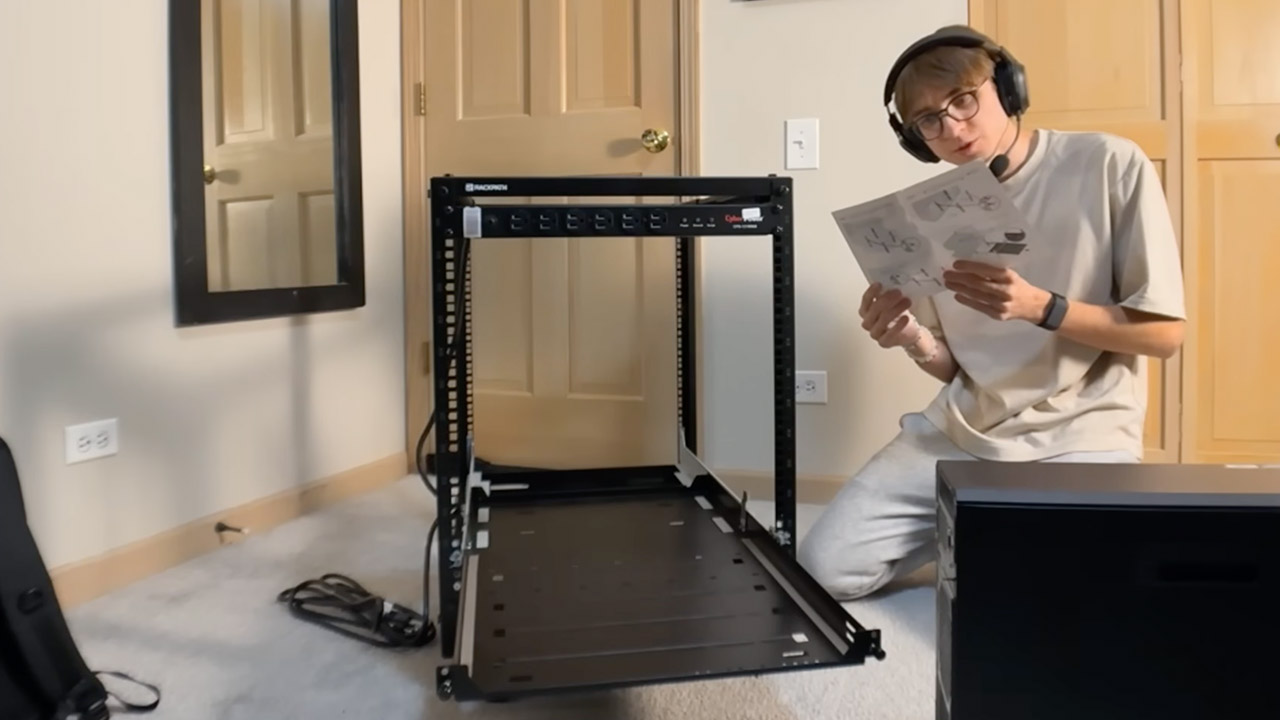
One computer enthusiast finally hit the wall with a crowded closet full of loose gear and realized something had to change. He set out to create a small data center that would run its own servers, manage networking, and keep everything neat enough to fit inside a regular room. He ended up with a 12U rack on wheels, complete with corporate hardware, unique cables, and smart mounts that kept everything accessible while remaining relatively compact.


The first step was to install the rack, as the adjustable rails and robust wheels made it simple to roll it into the closet to a reasonable depth without requiring any permanent adjustments to the area. It all came in at around $200, which is a fairly good value given that it gave him a lot of vertical space while also leaving flexibility to grow later if necessary. At the top of the rack, he installed a mountable power surge strip, which provided many outlets with built-in protection as well as ample distance to prevent the plugs from becoming jammed.

Sale


KAMRUI Pinova P2 Mini PC 16GB RAM 512GB SSD, AMD Ryzen 4300U 28W(Beats 10110U/3500U/N95,Up to 3.7GHz…
  • 【AMD Ryzen 4300U True 4-Core CPU: Outperforms N95 & i3-10110U】KAMRUI P2 Mini PC is equipped with true 4-core AMD Ryzen 4300U processor built on…
  • 【Integrated AMD Radeon Graphics: 2.5X Stronger for Tri 4K】The KAMRUI P2 AMD 4300U Mini PC have unlocked the full potential of the built-in AMD…
  • 【Large Storage Capacity, Easy Expansion】KAMRUI Pinova P2 mini computers is equipped with 16GB LPDDR4 for faster multitasking and smooth…

The servers, the core brains of the operation, are essentially an HP Z4 G4 enterprise desktop put into a dedicated rack tray, providing him with considerable processing power for activities such as storage or virtual machines. He also has another tower-style machine with numerous drive bays that stacks alongside it, providing him with additional data storage capacity without the need for a full room. Both computers just bolt in using conventional hardware, and what was formerly a collection of distributed PCs became a single system ready to function 24/7.

Advertisement

Mini Data Center Closet
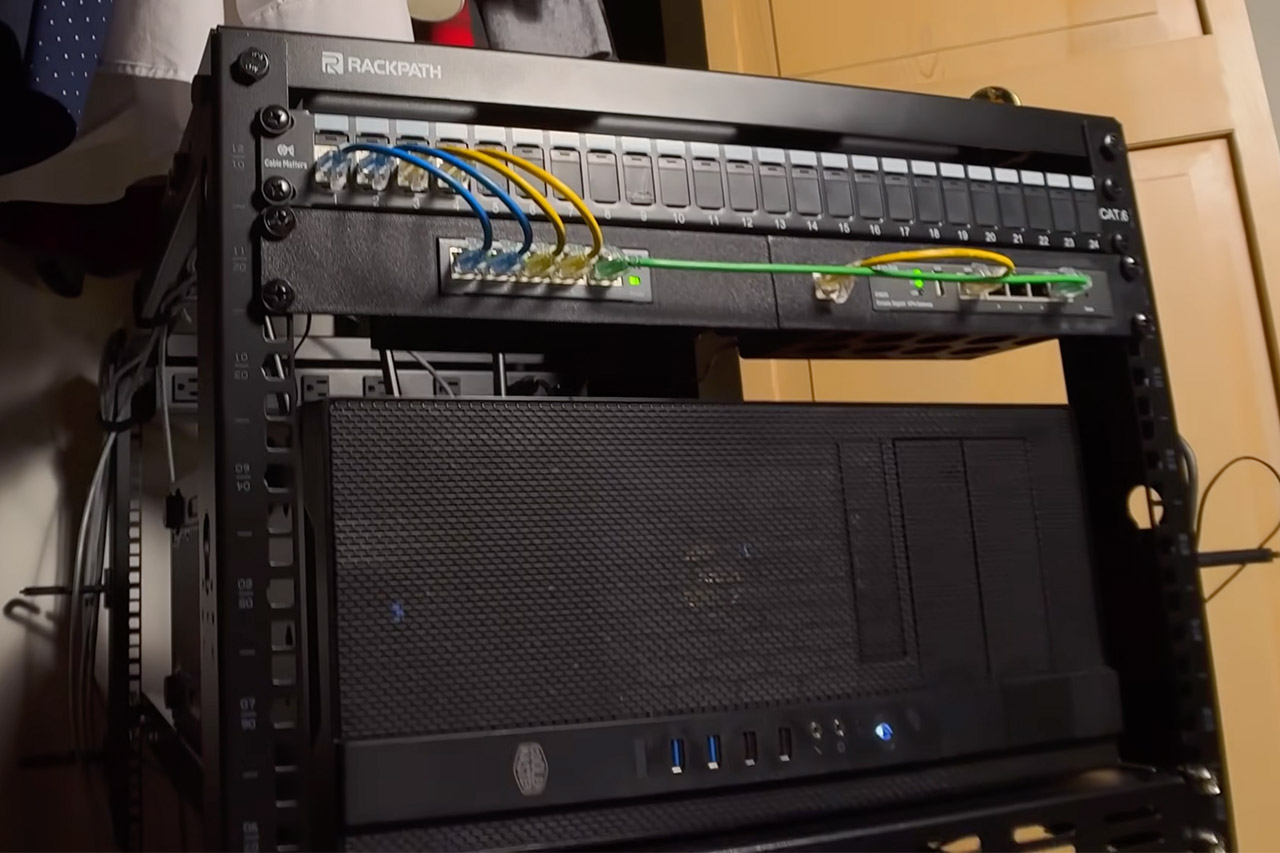
Networking equipment is all about getting data flowing smoothly, so he installed a 5-port Gigabit switch and a tiny router in some custom 3D-printed brackets that just clip onto the rack rail. The best part is that the library allowed him to 3D print them for nearly nothing, so he now has off-the-shelf gadgets converted into rack-friendly components. A patch panel at the front of the rack keeps all the wires neat and tidy, directing each connection through designated ports rather than dangling all over the place.

Mini Data Center Closet
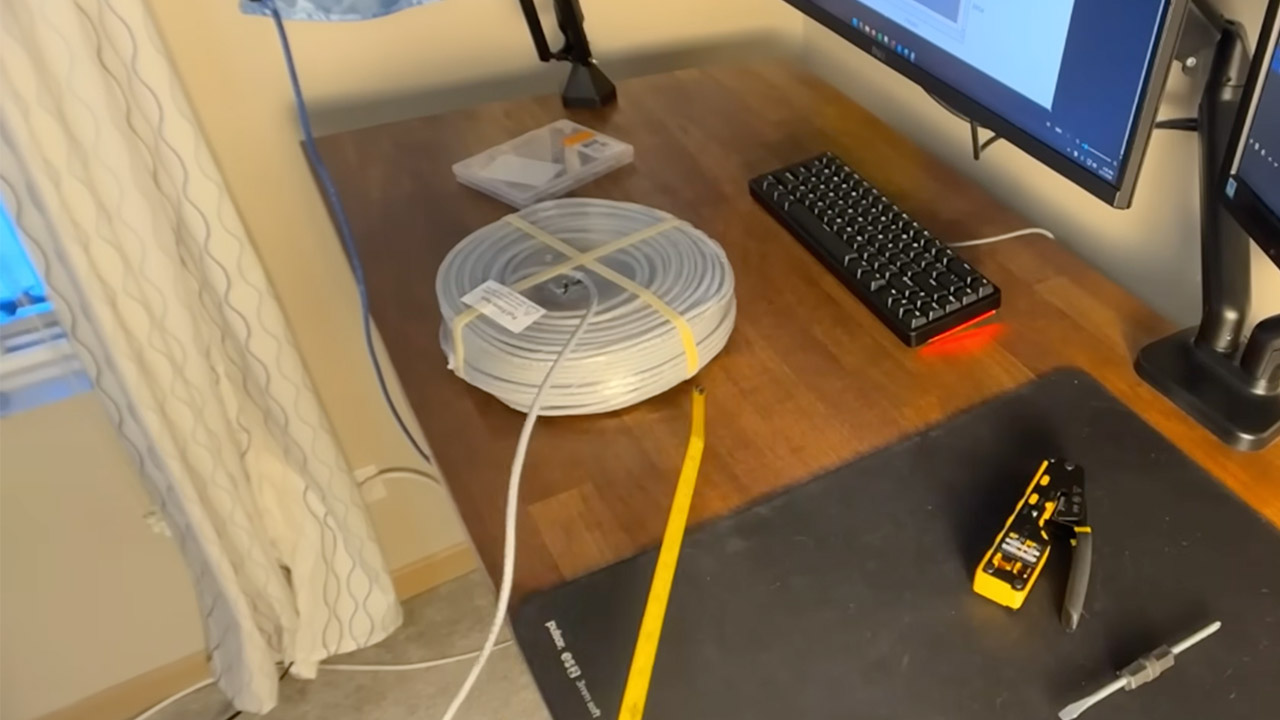
Cabling truly makes the difference between order and chaos, as he used 250 feet of Cat6e solid copper cable as the base material, then simply measured and crimped each segment before terminating on shielded jacks. He has varied lengths for different requirements, so he has a short one that goes to the modem and a longer one that connects the switch and router. He created a diagram of the entire system so that anyone could see how everything fits together at a glance. I learned a few lessons along the road, such as how to properly sequence the wires and which tools to use, but in the end, everything simply lays there looking flush and trustworthy.

Mini Data Center Closet
So the power and accessories completed the package, as the surge strip provides electricity for the entire stack, and he included a mountable shelf to store tools or spare parts. The rack’s wheels allow the entire unit to slide in and out for repair before rolling back in without needing to be disassembled. The entire setup still fits within the closet footprint, demonstrating that real capabilities does not require a big warehouse.

Source link

Continue Reading

Tech

GM Agrees To Pay $12.75 Million To Settle California Lawsuit Over Misuse Of Customers’ Driving Data

Published

on


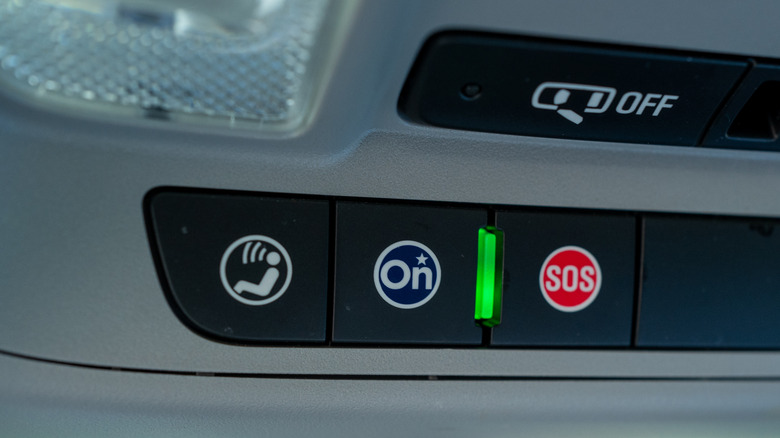
Following its settlement with the FTC earlier this year over its sale of drivers’ data to brokers, General Motors has now also reached a settlement in California. The company agreed to pay $12.75 million in civil penalties to settle the lawsuit led by Attorney General Rob Bonta on behalf of the people of California, and is banned from selling driving data to consumer reporting agencies for five years. The lawsuits came after a 2024 New York Times report revealed that GM collected consumers’ driving data through its OnStar program and sold this information to data brokers Verisk Analytics and LexisNexis Risk Solutions, which in turn could market the data to auto insurers.

In some cases, that driving data could be used by insurers to increase customers’ rates. However, in California, customers were likely spared this consequence, as laws in the state prohibit insurers from using driving data in this way. Nevertheless, the complaint alleges that GM violated consumers’ privacy by nonconsensually selling data that included people’s names, contact information, geolocation data and driving behavior data.

The settlement agreement stipulates that GM must delete any driving data it’s retained within 180 days “except for certain limited internal uses,” unless it has the customer’s express consent. It also requires GM to develop a privacy program to assess the risks of collecting data through OnStar, and report its findings to the DOJ and other agencies. In a statement on Friday, Bonta said, “Today’s settlement requires General Motors to abandon these illegal practices and underscores the importance of the data minimization in California’s privacy law — companies can’t just hold on to data and use it later for another purpose.”

Advertisement


Source link

Advertisement
Continue Reading

Tech

OnePlus Nord CE 6 Series Arrives in India: Price, Features, Availability

Published

on

OnePlus has released its newest Nord CE 6 series phones in India. The new lineup includes the regular Nord CE 6 and the budget version, the Nord CE 6 Lite. The OnePlus Nord CE 6 is a phone that boasts an exquisite design, an AMOLED screen, and a Snapdragon chipset.

Design and Display Upgrades

The company OnePlus has made notable design changes to the new Nord CE 6 series. OnePlus has introduced some alterations to the design of its Nord CE 6 phone, including a different square-shaped rear camera module.

In terms of display, the Nord CE 6 features a large 6.78-inch AMOLED screen with a 144Hz refresh rate for smoother performance. On the other hand, the Nord CE 6 Lite includes a smaller 6.72-inch LCD screen. Both devices have been designed with a smooth visual experience in mind, especially when playing games or engaging with social media.

Performance & Cameras

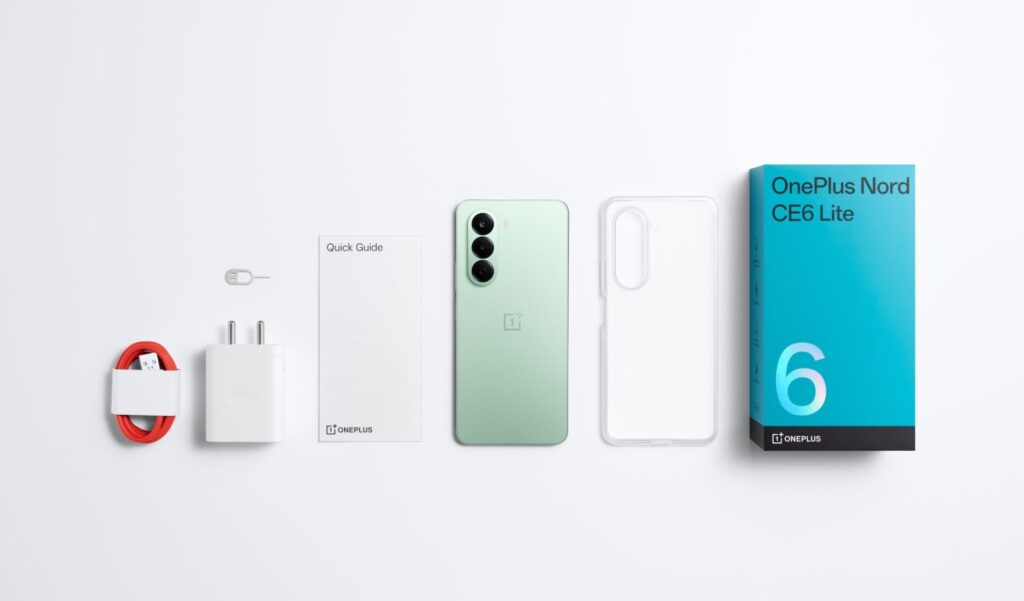
OnePlus Nord CE6 Lite with all it's box contents on a table

The standard Nord CE 6 model comes with the Qualcomm Snapdragon 7s Gen 4 chip. This variant has been enhanced with a cooling mechanism to improve gaming and application speed.

The Nord CE 6 Lite model incorporates the MediaTek Dimensity 7400 Apex chip. It has been specifically designed for efficient performance and power consumption.

Advertisement

Both smartphones feature two rear cameras, with the 50MP main sensor as the most prominent feature. Video recording is supported at the 4K level, improving the quality of videos. The Nord CE 6 smartphone features a 32MP front camera, while the Nord CE 6 Lite has an 8MP front-facing camera.

Price and Availability

This OnePlus lineup ranges from Rs. 29,999 for the entry-level variant to Rs. 32,999 for the high-end variant. On the other hand, the OnePlus Nord CE 6 Lite is priced from Rs. 20,999 to Rs. 25,999. Also, an immediate discount of up to Rs. 2,000 is being offered on selected bank cards.

In terms of availability, the Nord CE 6 will go on sale in India starting May 8, while the Nord CE 6 Lite will become available from May 12. Both smartphones can be purchased through Amazon and the official OnePlus India online store.

Source link

Advertisement
Continue Reading

Tech

Get ready for the whisper-filled office of the future

Published

on

How will work setups change if we spend more and more time talking to our computers? A recent feature in the Wall Street Journal looks at the rising popularity of dictation apps like Wispr, especially now that they can be connected to vibe coding tools, and what that might mean for office etiquette.

One VC said that visiting startup offices now feels like stepping into a high-end call center. And Gusto co-founder Edward Kim is apparently telling his team that in the future, offices will sound “more like a sales floor.” (As someone still scarred from the time his desk was briefly relocated to a sales floor, let me say: Oh no.)

Kim claimed that he only types now when he absolutely has to. But he admitted that constantly dictating in the office can be “just a little awkward.”

Similarly, AI entrepreneur Mollie Amkraut Mueller said her husband became annoyed with her new habit of whispering to her computer, so their late-night work sessions now involve sitting apart, or “one of us will stay in our office.”

Advertisement

But Wispr founder Tanay Kothari insisted that this will all seem “normal” one day, just as it’s become normal to spend hours staring at your phone.

Source link

Continue Reading

Tech

Apple M5 MacBook Pro prices drop to as low as $1,499 at B&H

Published

on

Lower prices are in effect on Apple’s 14-inch and 16-inch MacBook Pro laptops, with fresh deals from just $1,499.

The steeper discounts can be found at Apple Authorized Reseller B&H Photo, with a wide range of sale prices offering up to $500 off MacBook Pro laptops. Grab new markdowns on M5, M5 Pro, and M5 Max models (and even a few blowout M4 Pro specials, too).

Save up to $500 on MacBook Pros

Whether you’re interested in a budget-friendly option, such as a 14-inch M5 MacBook Pro with 24GB of RAM and 512GB of storage that’s on sale for $1,499, or a loaded M5 Max 16-inch laptop with 128GB of RAM that’s $400 off, there’s a deal for nearly every budget.

Advertisement

We’ve included a breakdown of the offers by configuration below, but you can also peruse sale prices across retailers in our MacBook Pro Price Guide, which is organized by screen size and Apple Silicon chip.

14-inch MacBook Pro M5 sale

14-inch MacBook Pro M5 Pro, M5 Max deals

16-inch MacBook Pro M5 Pro, M5 Max discounts

Blowout 16-inch MacBook Pro specials

Source link

Advertisement
Continue Reading

Tech

I thought I needed an iPhone Pro until I paid attention to how I actually use it

Published

on

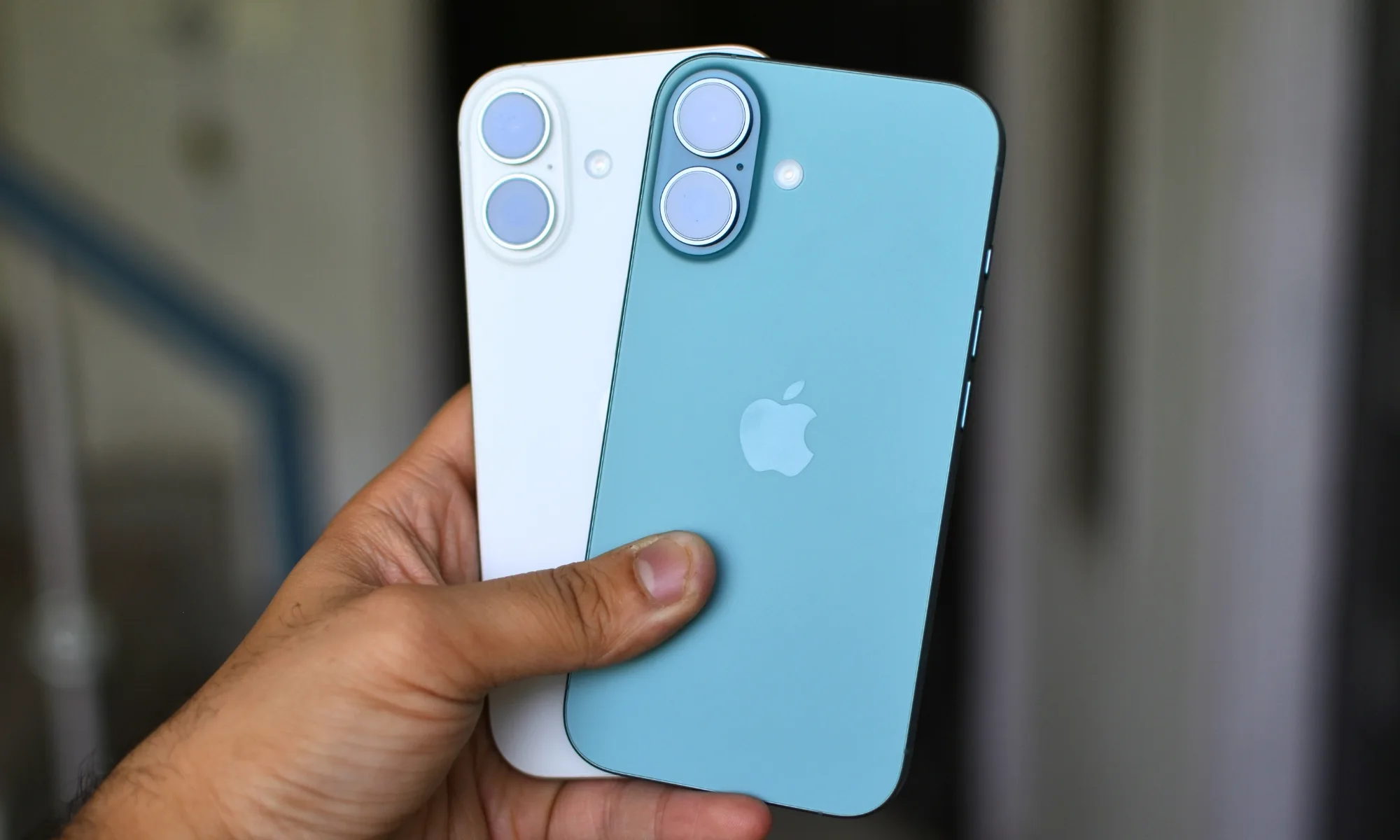
For a while, I had convinced myself that my next iPhone had to be a Pro. Not because I had genuinely thought about what I needed from a phone, but because the marketing slowly wore me down. The triple cameras, the titanium build, the ProMotion display, the idea that it could handle absolutely anything — it all created this lingering feeling that choosing the regular iPhone would somehow mean compromising. Like I would be missing out on the “real” experience. Then I stopped looking at spec sheets and started looking at my actual usage. And honestly, the entire argument for buying a Pro quietly fell apart.

Apple really knows how to make you doubt the regular iPhone

Apple is incredibly good at making the Pro feel essential. Every September, the keynote follows the same pattern. The regular iPhone gets its moment, sure, but the second the Pro models appear, the entire presentation shifts gears. Suddenly, it is all about the “best” cameras, premium materials, exclusive features, and cutting-edge performance. Even without saying it directly, the message lands pretty clearly: this is the iPhone you are supposed to want. The regular model almost starts to feel like the compromise option for people with simpler needs.

And honestly, that strategy works. Not because Apple is misleading anyone, but because the Pro genuinely is a more capable phone. The cameras are better, the build feels more premium, the extra features are real, and for the people who actually use them, the higher price absolutely makes sense. The problem starts when “this is better” quietly turns into “I need this.” That is the leap many of us make without ever stopping to think about whether those extra features would actually change how we use our phones day to day.

I kept chasing Pro features I barely used

When I stopped thinking about how I imagined I used my phone and started paying attention to how I actually used it, the reality turned out to be pretty ordinary. Most of my day is spent doing the same things most people do: scrolling through social media, replying to messages, listening to music, watching the occasional YouTube video, reading things I am interested in, checking emails, using Maps, and taking calls.

And yes, I do take a lot of photos. But when I really thought about it, I realized I was not taking the kind of photos that truly demanded a Pro-level camera system. Most of my shots happen in good lighting, with little effort, and honestly, modern smartphones are already excellent at that. I was rarely in situations where I genuinely needed a dedicated telephoto lens or the extra computational photography tricks that Apple reserves for the Pro models. And on the few occasions where camera quality actually mattered for work, I usually had a proper camera with me anyway.

Advertisement

Then there was ProMotion — probably the feature I used most often to justify wanting a Pro iPhone. For years, the smoother 120Hz display felt like one of the clearest reasons to spend extra on the Pro models. And to be fair, the difference is real. Scrolling feels smoother, animations look nicer, and everything feels slightly more fluid. But over time, I realized something interesting: it was a feature I appreciated most when I was actively paying attention to it. In everyday use, my brain adapted pretty quickly, and the standard iPhone never really felt slow or frustrating to use. Now that the iPhone 17 lineup finally brings high refresh rate displays to the regular models as well, that whole justification has mostly disappeared for me. One of the biggest reasons to go Pro no longer feels exclusive, and the standard iPhone suddenly makes a lot more sense than it used to.

The vanilla iPhone is carrying lot more weight than people admit

The regular iPhone has become strangely easy to underestimate, mostly because the conversation around it is always framed by what the Pro models have that it doesn’t. But when you stop comparing spec sheets for a moment and look at the standard iPhone on its own, it is actually an incredibly complete device.

The main camera is already excellent for the kind of photos most people take every day. Performance is rarely an issue either, especially now that the regular models often share the same core chip architecture as the Pro versions. Whether it is social media, gaming, multitasking, editing photos, or juggling a dozen apps at once, the phone handles it all effortlessly. The display is good, battery life has improved a lot over the years, and you still get the same software experience, the same long-term updates, and the same overall reliability that people buy iPhones for in the first place.

And honestly, for the way I actually use a phone — and probably for the way most people use one — the regular iPhone no longer feels like a compromise at all. It only starts to feel “lesser” when you compare it side-by-side with a checklist of Pro-exclusive features.

The moment I realized I was shopping for a fantasy version of myself

I am not trying to convince anyone not to buy a Pro iPhone. For some people, the extra features absolutely make sense. If you shoot a lot of video, regularly use the telephoto camera, care deeply about the premium build, or genuinely benefit from those advanced tools, then the higher price is probably justified. Those are real advantages. But they are also very specific advantages — the kind that come from understanding your own habits, not just getting swept up in the excitement.

Before jumping ship, ask yourself one simple question: Which Pro features do I genuinely use right now? Not the ones that look impressive on paper, but the ones that actually show up in your daily routine. And once you look at your real usage honestly, the answer often becomes much clearer than you expect. Sometimes, the regular iPhone is not the “lesser” choice at all. It is simply the phone that already fits the life you actually live.

Advertisement

Source link

Continue Reading

Tech

Hacked Video File Holds Multiple Films On YouTube

Published

on

We notice there are a lot of hacks on YouTube lately, but we don’t share enough hacks about YouTube. That’s why [PortalRunner]’s latest oeuvre is interesting: it’s a video that gives you a different picture depending on the selected bitrate.

Watch it at 1080p, you get one thing; at 360p, the image is completely different. The hack relies on understanding precisely how YouTube cuts down videos — because if you haven’t uploaded a video there before, you might not know the creator doesn’t have to encode all of those options; they’re invited to upload in the highest possible definition, and YouTube reencodes the rest.

1080p and 720p films are shown at 60FPS, while 360p and below are 30FPS– so that’s one way to hide the difference. Since YouTube drops every second frame when encoding the lower-quality video, images you want in the HD version can be kept only in even-numbered frames that YouTube will remove. That seems easy enough, but how does [PortalRunner] avoid the low-quality image flickering in at 30 FPS when watching in higher definition?

Well, that relies on understanding exactly how downsampling works: going from 1080p to 360p means tossing out every third pixel in both the horizontal and vertical directions. If you’re careful, it turns out you can craft an image that vanishes when the 3×3 grid of pixels it’s made of at 1080p is averaged to a single background-colored pixel at 360p. [Portal Runner] is using vertical stripes here, but that’s not the only way to do it. Just to be sure the message came through loud and clear at 1080p, though, the original image, not the stripy one, is used on the odd-numbered, discarded frames.

Advertisement

Hiding the 1080p video is only half the battle: he needs to get those frames not to average specifically to the background color, but to make his new images. That’s a bit tricky, which is why the demonstration uses “1080p” and “lower” as its easter eggs: they fit well inside one another, with the characters lining up one-to-one. That’s without even getting into the hack he’s using with extra i-frames to create thumbnails on the timeline to tell you to ‘subscribe’. Look, it is YouTube, what else can you expect?  We’re just glad to see a totally benign hack of the platform that’s holding so many hacks these days.

Of course, real hackers live on the command line, and you can play YouTube there, too.

Advertisement

Source link

Continue Reading

Tech

Safari 27 will use AI to automatically group your tabs

Published

on

Likely debuting at WWDC, Safari users will soon find it will be easier to create groups of tabs, with a test version of the browser for the 27 operating systems using AI to group them for you.

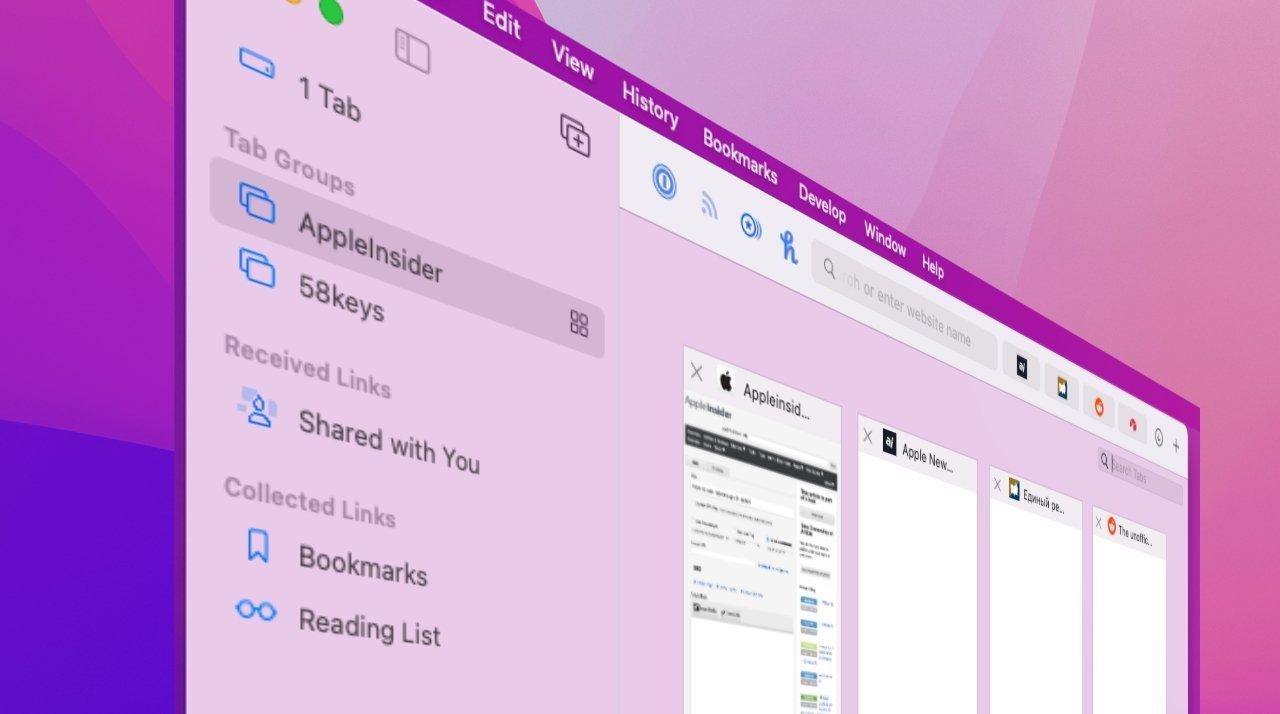
Apple introduced Tab Groups in Safari 15 back in 2021, to help users organize and save groups of frequently-used browser tabs. Five years later, it is planning another change to the feature.

A test version of Safari for iOS 27, iPadOS 27, and macOS 27 has updated the Tab Groups to include an automated organization feature, says Mark Gurman in his “Power On” newsletter for Bloomberg. The center-top button for moving between tab groups has a new test option, appropriately titled “Organize Tabs.”

This feature is used to tell Safari to automatically group tabs together, or to leave them be manually collated by the user. When selected, Safari says that “tabs will group into topics you browse.”

Advertisement

Apple apparently hasn’t labeled it as a feature that uses Apple Intelligence, but it is using some form of AI. This sounds similar in concept to the Reminders feature, which can group items from a list into categories, such as product types in a shopping list.

Part of a wider OS update

The Safari update is going to be one of a number of software changes introduced as part of the new 27-generation of operating systems, due to be shown off at WWDC 2026 in June. It’s also not the only AI-related feature that has cropped up in pre-WWDC reports.

So far, there have been rumors of users being able to select their preferred AI model in iOS 27, expanding on the existing ChatGPT-based capabilities. Visual Intelligence will also be updated for iOS 27, shifted to the Camera app to make it easier to access.

The Photos app is also anticipated to get AI changes, on top of the existing Clean Up feature. This includes extending, reframing, enhancing, and contextual editing of an image.

Advertisement

Source link

Continue Reading

Tech

China’s agentic AI policy wants to keep humans in the loop

Published

on

AI + ML

PLUS: Robot becomes Buddhist monk in Korea; TikTok spending $25bn in Thailand; Baidu floating chip biz; and more!

China’s Cyberspace Administration last week published draft regulations  governing the behavior of AI agents and suggested humans should always retain the ability to review decisions taken by software.

The draft expresses Beijing’s enthusiasm for AI agents with a call for efforts to develop datasets that accelerate development, along with security standards that make agents safe to use and ensure they behave ethically.

Advertisement

There’s also a call to develop mandatory standards for how agents will behave “in fields such as healthcare, transportation, media, and public safety.” China also wants to participate in international fora that develop such standards.

The draft calls for developers of AI agents to “clarify the reasonable boundaries and required authority for various decision-making methods, such as decisions limited to the user, decisions requiring user authorization, and autonomous decisions by the intelligent agent.”

Those boundaries should “Ensure that users have the right to know and the final decision-making power regarding the autonomous decisions made by the intelligent agent, and that the intelligent agent’s actions do not exceed the scope authorized by the user.”

The draft identifies many tasks Beijing thinks agents might take on, including marking homework, analyzing medical images, evaluating employee performance and recommending promotions, helping disaster relief efforts, and even providing “intelligent management of the entire bidding and tendering process, ensuring standardization and efficiency throughout.”

Advertisement

Samsung turns off its TV and appliance business in China

Korean giant Samsung last week decided to quit China’s TV and appliance markets.

“In response to the rapidly changing market environment, after careful consideration, Samsung Electronics has decided to cease sales of all home appliances, including televisions and monitors, in the Chinese mainland market,” states an “adjustment notice” on the Samsung China website.

Samsung will honor warranties, and continue to provide after-sales service.

The company hasn’t said why it’s quitting these markets in China. The Register expects the reasons have a lot to do with the rise and rise of Chinese consumer electronics companies, which can make a patriotic pitch in addition to pointing out the high quality of their products.

Advertisement

Samsung’s not the first to decide it’s too tough to try trading televisions in China: Sony quit the country, too.

Thailand approves giant TikTok datacenter

The government of Thailand last week approved TikTok’s plan to spend ฿842 billion ($25 billion) on new datacenters in the country.

Thailand’s Board of Investment said the project will see TikTok “install additional servers and expand data storage and processing infrastructure across Bangkok, Samut Prakan and Chachoengsao Province, supporting rising demand for digital services and strengthening Thailand’s role in regional digital infrastructure.”

The Board also signed off on a 200 MW datacenter to be built by Skyline Data Center and Cloud Services Co, and a 134 MW facility from Bridge Data Centres.

Advertisement

Baidu to float its chip biz

Chinese web giant Baidu has filed paperwork to spin out its chip design business Kunlunxin.

Baidu flagged its plan to do this in January, when it said the aim was to “independently showcase Kunlunxin’s value, attract investors focused on the AI chip sector, and leverage its standalone listing to enhance its market profile, broaden financing channels, and better align management accountability with performance.”

“This also supports the effort to unlock the value of Baidu’s AI-powered businesses.”

Kunlunxin’s chips suit inferencing and training workloads, but their performance can’t match Nvidia’s latest chips – or even four-year-old kit like the H100. That hasn’t stopped Baidu using the chips to power its own AI services, and major Chinese corporations also use the company’s chips.

Advertisement

Japan and EU to improve tech interoperability

The EU-Japan Digital Partnership Council recently convened its annual meeting and last week revealed that talks included “deepened discussions on the joint development and interoperability of data spaces” and promised to keep talking in a new “Data Strategy Working Group” that will “improve the interoperability of data policy frameworks.”

The meeting also discussed a successful pilot on interoperable digital identities which apparently “showed that cross-border use is technically possible, even where governance frameworks and technical architectures differ. Using prototypes of digital identity wallets, the project demonstrated how interoperability can be achieved in practice between different systems.”

As part of discussions, the EU and Japan agreed to begin working in new areas, including video games and audiovisual strategies.

Humanoid robot becomes Buddhist monk

Seoul’s Jogye Temple last week allowed a robot named Gabi to take the vows required of a Buddhist monk.

Advertisement

Temple leaders reportedly decided to initiate the robot because they feel humanoid machines will soon become a part of everyday life.

Advertisement

In February, the President of the Jogye Order, the Most Venerable Jinwoo, said “our lives have become ever more convenient thanks to cutting-edge science and AI. Yet the anxieties, anger, depression, and isolation—mental attachments and sufferings that science cannot resolve— are growing ever deeper.”

“This does not mean that Buddhism withdraws from this vast technological civilization,” he said. “Rather, we aim to fearlessly lead the AI era and redirect its achievements toward the path of attaining peace of mind and enlightenment.”

“In the age of AI and quantum science, peace of mind will be cultivated through Buddhism.”  ®

Source link

Advertisement
Continue Reading

Trending

Copyright © 2025