Connect with us
DAPA Banner

Tech

Setting New Performance Standards with IEEE 802.11bn: An In-Depth Overview of Wi-Fi 8

Published

on

More Information

IEEE 802.11bn introduces the ultra-high reliability amendment that will serve as the basis for Wi-Fi 8. Unlike previous Wi-Fi generations that focused primarily on increasing peak throughput, IEEE 802.11bn targets measurable improvements in real-world performance: a 25% throughput increase under rate-versus-range conditions, a 25% reduction in 95th-percentile latency, and a 25% decrease in packet loss probability during basic service set transitions. The amendment retains the core physical layer parameters of Wi-Fi 7 — up to 320 MHz channel bandwidth, 4096-level quadrature amplitude modulation, and eight spatial streams — while adding new physical layer capabilities such as distributed resource units and enhanced long range protocol data units, alongside advanced medium access control features including multi-access point coordination and seamless roaming within a mobility domain.


Source link

Advertisement
Continue Reading
Click to comment

You must be logged in to post a comment Login

Leave a Reply

Tech

What is Google Gemini? Google’s answer to ChatGPT dissected

Published

on

You’ll undoubtedly have heard of Google Gemini, as it’s found within many of the best Android phones

Essentially, Gemini is Google’s AI-powered virtual assistant that can do everything from answer questions, search the web and even create music. And it’s free to use too.

But what really is Google Gemini and how does it actually work? Which devices can you use Gemini on?

We explain everything you need to know about Gemini AI below. If you’re keen to see how Google’s assistant compares to some of the top dogs, then visit our Apple Intelligence vs Google Gemini and Claude vs Gemini comparisons too. 

Advertisement

What is Gemini AI?

Gemini was officially announced back in February 2024, as Google revealed it would replace its previous AI system, Bard.

Advertisement

Although you might only know it as a chatbot, Gemini is actually the collective name for multiple AI models that fall under the same umbrella. However, the name “Gemini” refers to both the models and the public-facing chatbot.

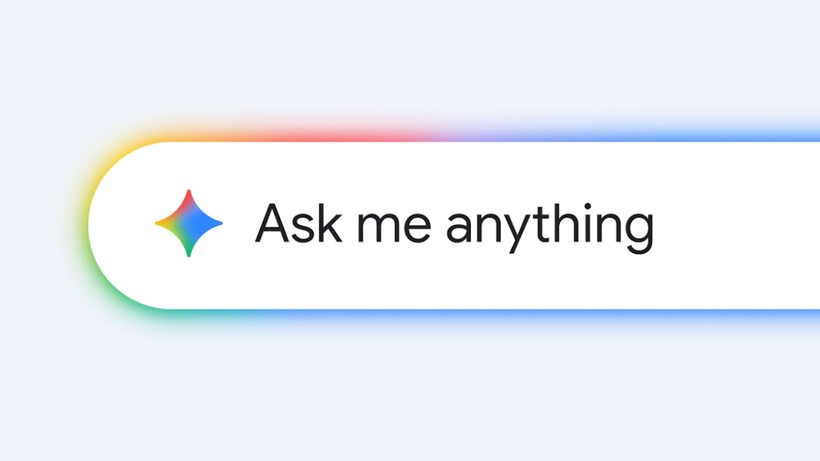
Gemini Chatbot barGemini Chatbot bar
Google Gemini

Essentially, Gemini is described as being the interface to a multiple modal LLM (Large Language Model) which can handle text, audio and image-based prompts. It’s based on Google’s research into LLMs which started back in 2013.

What can you do with Gemini?

Gemini can understand and answer user’s questions or their provided prompts with relevant results. For example, you can ask Gemini to create an email draft, summarise long-bodies of text and even write code.

Advertisement

Gemini can also be used to generate images, create videos and even music with just a simple prompt. In addition, with the use of Gemini Live which is found within the Gemini smartphone app, you can have in-depth conversations with the AI system in real-time too.

GeminiGemini

Advertisement

How does Gemini work?

Google breaks down the technicalities of how Gemini actually works into four stages:

  • Pre-training
  • Post-training
  • Responses to user prompts
  • Human feedback and evaluation

Google explains that its AI models are pre-trained on a “variety of data from publicly available sources”, although Google does disclaim that it applies “quality” and “safety filtering” to remove content that may violate policy. 

After initial training, Google explains the LLMs are then put through additional steps to refine responses. Then there’s Reinforcement Learning from Human Feedback, where the model learns to generate better responses based on “scores or feedback from a special Reward model” that’s trained on human preference data.

Once Gemini is then given a prompt by a user, it will call on its training and use external sources like Google Search to generate relevant responses.

Advertisement

In the instance where Gemini gets something wrong or needs tweaking, then this is where the fourth stage kicks in. Basically, it relies on humans to flag any mistakes and identify areas for improvement too.

Advertisement

Gemini LiveGemini Live
Gemini Live. Image Credit (Trusted Reviews)

How to access Google Gemini

There are a few ways you can access Gemini, with the main being via its free-to-download iOS or Android app. That’s probably the easiest way to access the chatbot, and you’ll benefit from access to Gemini Live too.

Otherwise, you can access the chatbot via its website instead. 

Does Google Gemini cost money?

While Gemini is free to use, you can unlock more features and up-to-date models by paying a subscription. At the time of writing, while the free version of Gemini runs on Gemini 3, you can upgrade to Google AI Plus to access Google’s most capable 3.1 Pro model. Not only that, but you’ll have access to Nano Banana Pro, alongside limited access to Google’s new video generator Veo 3.1, Gemini within Google apps and 200GB storage too. That’s the cheapest of the available plans, at £6.99/$7.99 a month.

Advertisement

The next available plan is Google AI Pro, which includes everything found in Plus, alongside Google Home Premium (Standard), Fitbit Premium and access to Google Antigravity and Google Developer Programme Premium. This is slightly pricier at £18.99/$19.99 a month, but you will also see 2TB of storage too. 

Advertisement

Finally, the top-tier plan is Google AI Ultra, which will set you back a whopping £234.99 a month. However, you’ll get everything from the Pro plan, plus the highest limits for all Gemini features and models, YouTube Premium, Google Home (Premium Advanced) and 30TB of storage too.

Advertisement

Source link

Continue Reading

Tech

‘When can you dare to be brave and say how you actually feel?’: Harry Potter TV series star Paapa Essiedu is unrecognizable in new heartbreaking BBC drama Babies

Published

on

Now that the first teaser trailer for the upcoming HBO Max Harry Potter TV series is out in the world, everyone is talking about Paapa Essiedu taking on the role of Dark Arts professor, Severus Snape.

However, we’re looking in the completely wrong direction. Sure, there were always going to be many contradicting opinions about the adaptation of the Harry Potter movies from the jump, but let’s wait until it releases this Christmas before we make any judgments.

Advertisement

Source link

Continue Reading

Tech

OpenAI pauses erotic ChatGPT plans to prioritise enterprise market

Published

on

OpenAI shuttered its AI video generator Sora just days earlier.

Plans for an erotic ChatGPT are reportedly on hold “indefinitely”, as OpenAI scrambles to redirect attention towards an enterprise market being overtaken by Anthropic.

ChatGPT’s “adult mode” launch had already been delayed amid internal discussions over safety and concerns from both staff and investors around the effects of sexualised AI content, the Financial Times reported.

OpenAI told the publication that the erotic model is on hold with no timeline for a future release, adding that it wanted to have long-term research on the effects of sexual chats as part of product development.

Advertisement

At the time of its announcement last October, CEO Sam Altman said that a “restrictive” ChatGPT was “less enjoyable” to its users. He said he wanted to “treat adult users like adults”.

Though the company aimed at relaxing restrictions by gradually tightening safeguards, sources told the Financial Times that OpenAI had difficulties removing illegal sexual behaviour from datasets with adult content.

A number of lawsuits also allege ChatGPT poses harm to its users, including one that accuses it of being a “suicide coach”. OpenAI began rolling out age prediction on its chatbots earlier this year.

Earlier this week, Meta lost a landmark child safety lawsuit which found that the company’s platforms enable sexual exploitation.

Advertisement

News of the erotic model being placed on hold comes just days after OpenAI shuttered its controversial AI video generator Sora, which was widely criticised for copyright infringement by artists and publishers alike.

Despite being a juggernaut in the AI industry, OpenAI is facing increasing pressure from rivals – the biggest being Anthropic, which is now capturing a majority of enterprise newcomers.

To compete, OpenAI is building a new desktop ‘superapp’ by fusing together ChatGPT, Codex – the company’s coding tool – and Atlas, its ChatGPT-powered browser. It also poached the founder of the viral OpenClaw projects to develop the “next-generation” personal agents.

Forrester’s VP principal analyst Thomas Husson noted days earlier that OpenAI has likely decided to minimise the associated risks arising from experimental social apps to prioritise profits and enterprise tools, as it plans for its upcoming IPO this year.

Advertisement

Meanwhile, the company is raising an additional $10bn on top of the $110bn it raised last month.

Don’t miss out on the knowledge you need to succeed. Sign up for the Daily Brief, Silicon Republic’s digest of need-to-know sci-tech news.

Source link

Advertisement
Continue Reading

Tech

Shrinking PhD Cohorts May Strain Engineering Workforce

Published

on

U.S. doctoral programs in electrical engineering form the foundation of technological advancement, training the brightest minds in the world to research, develop, and design next-generation electronics, software, electrical infrastructure, and other high-tech products and systems. Elite institutions have long served as launchpads for the engineers behind tomorrow’s technology.

Now that foundation is under strain.

With U.S. universities increasingly entangled in political battles under the second Trump administration, uncertainty is beginning to ripple through doctoral admissions for electrical engineering programs. While some departments are reducing the number of spots available in anticipation of potential federal funding cuts, others are seeing their applicant pools shrink, particularly among international students, who make up a significant portion of their programs.

In 2024 alone, U.S. universities awarded more than 2,000 doctorates in electrical and computer engineering, according to data from the National Center for Science and Engineering Statistics. The number of computing Ph.D.s grew significantly in the 2010s, according to data from the National Academies, but there is still high demand for those with advanced degrees across academia, government, and industry. Now, some universities point to warning signs of waning enrollment.

Advertisement

Though not all engineers have Ph.D.s, if enrollment continues to shrink, fewer doctoral students could mean fewer engineers developing cutting-edge technology and training the next generation, potentially exacerbating existing labor shortages as global competition for tech talent intensifies.

Federal funding cuts affect admissions

Public universities in particular are feeling the strain because they rely heavily on federal grants to support doctoral students.

The University of California, Los Angeles, for instance, must fund Ph.D. students for the duration of a degree—typically five years. In August 2025, the U.S. government pulled more than US $580 million in federal grants over allegations that the university failed to adequately address antisemitism on campus during student protests. A federal judge has since ordered the funding to be restored, but faculty began to worry that research support could be clawed back without notice, says Subramanian Iyer, distinguished professor at UC Los Angeles’s department of electrical and computer engineering.

According to Iyer, departments across UC Los Angeles, including engineering, plan to scale back Ph.D. admissions this year. “The fear is that at some point, all this government money will be taken away,” Iyer says. “Lowering the admissions rate is just a way to prepare for that reality.”

Advertisement

In response to a request for comment, a spokesperson for the U.S. National Science Foundation—a major source of federal research funding at UC Los Angeles and elsewhere—said, “NSF recognizes the essential role doctoral trainees play in the nation’s engineering and STEM enterprise” and noted several of the foundation’s awards and programs that support graduate research.

Funding shocks may also force Pennsylvania State University to reshape future admissions decisions, according to Madhavan Swaminathan, head of Penn State’s electrical engineering department and director of the Center for Heterogeneous Integration of Micro Electronic Systems (CHIMES), a semiconductor research lab.

In 2023, the Defense Advanced Research Projects Agency (DARPA) and industry partners awarded CHIMES a five-year $32.7 million grant. But in late 2025, the agency pulled its final year of funding from the center, citing a shift in priorities from microelectronics to photonics, Swaminathan says. As a result, CHIMES’ annual budget, which supports research assistantships for roughly 100 engineering graduate students, the majority pursuing Ph.D.s, will fall from $7 million in 2026 to $3.5 million in 2027. If these constraints persist, Penn State’s engineering department may reduce the number of doctoral students it supports.

In a statement, a DARPA spokesperson told IEEE Spectrum: “Basic research is central to identifying world-changing technologies, and DARPA remains committed to engaging academic institutions in our program research. By design, a DARPA program typically lasts about 3 to 5 years. Once we establish proof of concept, we transition the technology for further development and turn our attention to other challenging areas of research.”

Advertisement

Penn State’s enrollment numbers reflect Swaminathan’s caution. He says the electrical engineering Ph.D. cohort shrank from 28 students in 2024 to 15 students in 2025. Applications show a similar pattern. After rising from 195 in 2024 to 247 in 2025, Ph.D. applications fell roughly 30 percent to 174 for the upcoming 2026 cohort, a sign that prospective students may be wary of applying to U.S. programs.

Immigration restrictions and application declines

In late January, the Trump administration announced it had paused visa approvals for citizens of 75 countries. Months earlier, the administration proposed new restrictions on student visas, including a four-year cap.

For Texas A&M University’s graduate electrical and computer engineering programs, up to 80 percent of applicants each year are international students, according to Narasimha Annapareddy, professor and head of the department. Annapareddy says applications for the fall 2026 Ph.D. cohort have dropped by roughly 50 percent.

Annapareddy says the United States is “sending a message that migration is going to be more difficult in the future.” Foreign students often pursue degrees in the U.S. not only for academic training, he says, but to build long-term careers and lives in the country. Fewer applications from international students mean that the university forgoes a “driven and hungry” segment of the applicant pool who are highly qualified in technical fields.

Advertisement

“The fear is that at some point, all this government money will be taken away.”— Subramanian Iyer, UC Los Angeles

At the University of Southern California, the decline is more moderate. The freshman Ph.D. class fell from about 90 students in 2024 to roughly 70 in 2025, a reduction of 22 percent, according to Richard Leahy, department chair of USC’s Ming Hsieh Department of Electrical and Computer Engineering.

While Leahy says applications are down modestly overall, domestic applications have increased by roughly 15 percent. Beyond immigration restrictions, international students, particularly from countries such as India and China, may be staying in their home countries as their technology sectors expand.

“A lot of those students that would normally have come to the U.S. are now taking very good jobs working in the AI industry and other areas,” Leahy says. “There are a lot more opportunities now.”

Advertisement

Workforce pipeline strains

Some faculty say shrinking cohorts could erode the tech workforce if the pattern continues.

At UC Los Angeles, Iyer describes a doctoral ecosystem built on a chain of mentorship. Among the roughly 25 students in his lab, senior doctoral students mentor junior Ph.D. candidates, who in turn guide master’s students and undergraduates. The system depends on overlapping cohorts. Reducing the number of students hired weakens that overlap and the trickle-down benefits of the mentorship model that keeps labs functioning.

The real benefit of the university system isn’t just the teaching but also “the community that you build,” Iyer says. “As you decrease admissions, this will disappear.”

At Penn State, Swaminathan points to specialization as key to a strong workforce. Many doctoral students train in semiconductor engineering, feeding expert talent into the domestic chip industry. If enrollment continues to shrink over the next few years, Swaminathan says, companies may need to hire students with bachelor’s or master’s degrees, who might lack the necessary skills required to design and innovate new chips.

Advertisement

“Without that specialization, there’s only so much one can do,” Swaminathan says.

The industry–academia gap

Not all departments are shrinking. At the University of Texas at Austin, overall enrollment has remained relatively steady, according to Diana Marculescu, chair of UT Austin’s Chandra Family Department of Electrical and Computer Engineering.

While she says recent fluctuations aren’t raising alarms, her concern lies more with alignment between research and industry. Doctoral students often train according to current grant priorities, she says. But by the time graduates enter the job market four to six years later, their specialization may not align neatly with open roles. That creates friction in the talent pipeline.

“That lack of connection might be problematic,” Marculescu says. She argues that closer collaboration between universities and the private sector could help create stronger feedback loops between hiring needs and academic research priorities.

Advertisement

For now, USC’s Leahy says Ph.D. graduates remain in high demand, and the current shifts have not yet translated into measurable workforce shortages. “We should be concerned about the number of Ph.D.s,” he says. “But there isn’t a crisis at this point.”

From Your Site Articles

Related Articles Around the Web

Source link

Advertisement
Continue Reading

Tech

It's not just memory anymore: AI data centers are taking all the CPUs, too

Published

on


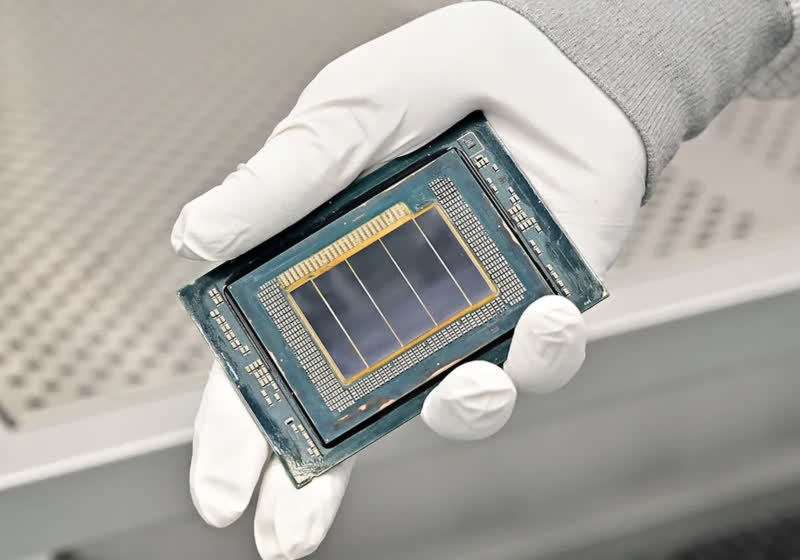
PC and server manufacturers recently informed Nikkei Asia that they are no longer receiving enough processors from Intel and AMD to satisfy demand. Server and OEM PC manufacturing could face delays, and prices might rise by 10% to 15%.
Read Entire Article
Source link

Continue Reading

Tech

Robert Malone Resigns From ACIP After Internal Squabble

Published

on

from the bye-bye dept

Even at the best of times, the hallmark of RFK Jr.’s Health & Human Services is chaos. Whether it’s misinformation on vaccines and other public health matters, his unique ability to exit very smart people from public health agencies, or his desire to upend established government health protocols, it’s a constant frenzy when Kennedy is in charge.

But these aren’t the best of times for Kennedy. In fact, it appears that both legal and political mechanisms are starting to mete out consequences for all the nonsense going on at HHS. It was only days ago that a federal court issued an injunction on the CDC’s changes to vaccination schedules since Kennedy remade ACIP in his image, and in fact the new ACIP appointments themselves may be illegal. Almost simultaneously, reports came out that the White House is attempting to yank Kennedy and HHS out of the spotlight due to their becoming a political liability heading into the midterms.

And now, in what will both be a reaction to and furtherance of all of that chaos, Robert Malone has announced that he is leaving ACIP altogether. Malone is a proud anti-vaxxer and claims to have “invented” mRNA technology, a claim that is heavily disputed, to put it mildly. In the wake of the court’s injunction on ACIP and its recommendations for vaccine schedules, there was reporting that Kennedy was planning to disband ACIP once again and remake it with all new members as a quicker fix than appealing the court’s decision. As a result, Malone jumped straight to social media to claim that’s exactly what happened, before later retracting his statement.

On Thursday, Malone claimed on social media that the Department of Health and Human Services (HHS) had disbanded ACIP and planned to completely reconstitute it (again), without appealing the judge’s ruling or defending Kennedy’s ACIP picks from the judge’s claims that they were unqualified. But soon after, Malone retracted his claim, saying it was a miscommunication and that disbanding ACIP was merely one of the “options being considered.”

In other words, he took half-baked information and made definitive claims to the masses, claims that turned out to be incorrect. So, you know, basically on par with all of the nonsense he’s spewed about vaccines. HHS spokesman Andrew Nixon then had to issue a statement to the press to clean all of this up, stating that anything that doesn’t come directly from him or HHS brass was “baseless speculation”.

Advertisement

And it was that, of all things, that caused Malone to quit.

Malone told Roll Call today that Nixon’s response was what led to his departure. “After Andrew trashing me with the press, I am done with the CDC and ACIP,” Malone said in a text message Tuesday morning. “That was the last straw.”

“Suffice to say I do not like drama, and have better things to do,” he added.

And then he went to the New York Times as well.

“Hundreds of hours of uncompensated labor, incredible hate from many quarters, hostile press, internal bickering, weaponized leaking, sabotage—I have better things to do,” he said.

On the one hand, I don’t think much of Malone’s qualifications for being a member of ACIP, so I’m not exactly sad to see him exit stage left. But it is interesting to see that the impression of chaos, infighting, bickering, and internal backstabbing that you get viewing HHS from the outside is mirrored by someone on the inside.

Advertisement

This would be funny if this weren’t a matter of public health. If there weren’t a measles outbreak that is still ongoing in this country (we’re already at 1,487 CDC confirmed cases this year). If some of the public and some doctors didn’t take what comes out of this very important government agency seriously.

But all those things are true. The chaos has to end. And for that to happen, RFK Jr. must go.

Filed Under: acip, anti-vaxxers, cdc, health & human services, rfk jr., robert malone, vaccines

Advertisement

Source link

Continue Reading

Tech

America’s Most Powerful Aircraft Carrier Returns To Port After Troubled Months At Sea

Published

on


The U.S.S. Gerald R. Ford, the lead ship of the Gerald R. Ford-class of nuclear-powered aircraft carriers, is taking a short break to freshen up during a long deployment to the Middle East. Souda Bay, in Greece, will be the Gerald R. Ford’s home for at least a few weeks, according to the United States Naval Institute. 

This current deployment for the ship has been a busy one, between a number of issues onboard the ship, including a large fire in the laundry room that resulted in over 200 smoke inhalation injuries. That, and the ongoing conflict with Iran means that the Gerald R. Ford is more than ready for repairs.

Importantly though, the ship is not out of the fight. A statement from U.S. Fleet Forces Command states: “The aircraft carrier remains fully mission capable,” continuing on to say: “The port call allows for the ship to undergo efficient assessment, repairs, and resupply. Gerald R. Ford Carrier Strike Group continues its overseas deployment.”

Advertisement

The biggest and newest carrier

Given that operations in and around Iran and the Strait of Hormuz don’t seem to have a clear end date, it’s likely that the Gerald R. Ford will remain in theater after repairs are made. It also appears that the Navy isn’t taking any chances at de-arming it for the repairs in Greece. 

The Gerald R. Ford measures at 1,106 feet and a displacement of 100,000 tons, making it the largest warship ever made. It is the first ship of its namesake class and represents the tip of the spear when it comes to aircraft carrier technology. It is in the process of replacing the Nimitz-class of nuclear-powered aircraft carriers.

Advertisement

As of now, there is a single Gerald R. Ford-class carrier in service. It was designed to have a 50-year service life that, thanks to its two nuclear reactors, only needs to be refueled once, giving it essentially unlimited range on the ocean.


Advertisement

Source link

Continue Reading

Tech

Sony and Honda pull the plug on $90,000 Afeela EV as electric dreams stall

Published

on


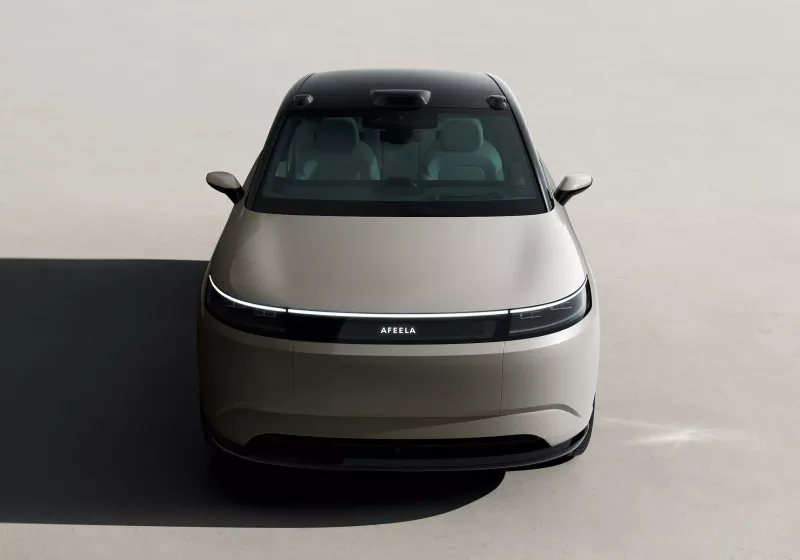
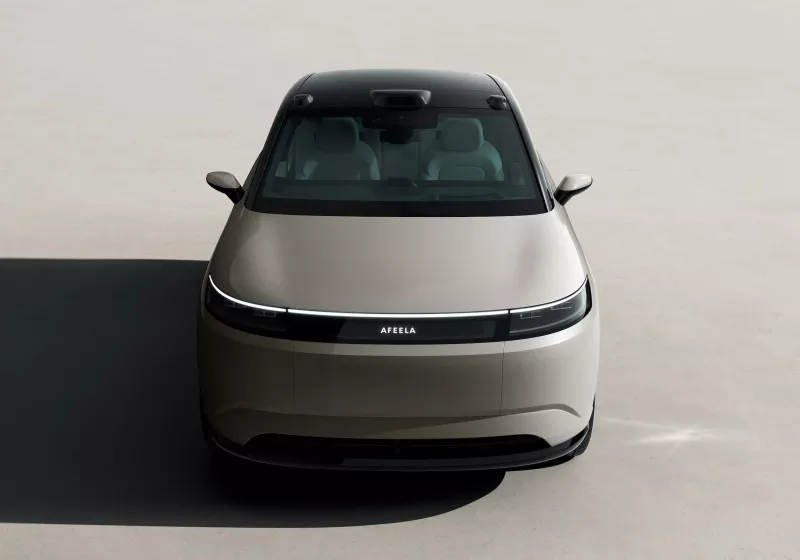
The cancellation marks the latest retreat in a broader industry pullback from electric vehicle programs, as automakers grapple with falling demand, shifting regulations, and rising costs. More than a dozen global carmakers have already delayed or abandoned their all-electric goals, reversing commitments made when government incentives and climate policies favored…
Read Entire Article
Source link

Continue Reading

Tech

Anime streaming service Crunchyroll is now available in Apple TV channels

Published

on

Crunchyroll has finally arrived on Apple TV as a dedicated channel, which means users can stream and download their favorite anime all within the Apple TV app.

An ad in Apple TV showing Crunchyroll as an available channel
Crunchyroll is now an Apple TV channel

When Apple first revealed Apple TV channels, it felt like the obvious endpoint for all streaming services. Netflix never joined up, and others like HBO exited channels, but one beloved service has finally appeared.
The anime streaming platform Crunchyroll has shown up as a channel within the Apple TV app. It may be officially launching Friday, as there is no announcement or documentation showing the change.
Continue Reading on AppleInsider | Discuss on our Forums

Source link

Continue Reading

Tech

Anthropic wins injunction against Trump administration over Defense Department saga

Published

on

A federal judge has sided with Anthropic in its twisty legal battle with the Trump administration, awarding the tech company an injunction against the government’s recent order that labeled it a “supply chain risk,” the Wall Street Journal reports.

On Thursday, Judge Rita F. Lin of the Northern District of California ordered the Trump administration to rescind its recent designation of Anthropic as a security risk, as well as to back off its order that federal agencies cut ties with the company.

“It looks like an attempt to cripple Anthropic,” Lin reportedly said during the court proceedings. Lin ultimately argued that the government’s orders had flouted freespeech protections for the company.

The drama between the Pentagon and Anthropic erupted last last month over a dispute concerning guidelines for the government’s usage of the AI company’s software. Anthropic had reportedly sought to enforce certain limits on how the government could use its AI models, such as banning their use in autonomous weapons systems or mass surveillance. The government disagreed with those limitations, ultimately labeling the company a supply chain risk—a designation typically reserved for foreign actors. President Trump further ordered federal agencies to cut ties with the company.

Advertisement

Not long afterward, Anthropic sued the agency, along with Hegseth.

The White House has spent recent weeks attacking the company, characterizing it as “a radical-left, woke company” that is jeopardizing America’s “national security.” Anthropic CEO Dario Amodei, meanwhile, has called the Defense Department’s actions “retaliatory and punitive.”

On the heels of Judge Lin’s ruling, Anthropic sent TechCrunch the following statement: “We’re grateful to the court for moving swiftly, and pleased they agree Anthropic is likely to succeed on the merits. While this case was necessary to protect Anthropic, our customers, and our partners, our focus remains on working productively with the government to ensure all Americans benefit from safe, reliable AI.”

Techcrunch event

Advertisement

San Francisco, CA
|
October 13-15, 2026

TechCrunch has separately reached out to the White House for comment.

Advertisement

Source link

Continue Reading

Trending

Copyright © 2025