Tech
SIVGA Nightingale Pro Review: Premium Planar IEM Craftsmanship or a Surprising Miss?

SIVGA is a Chinese HiFi audio brand that was founded in 2016. They’re an end-to-end organization, running their own R&D, branding, and manufacturing, in-house. This all-original approach gives SIVGA freedom to experiment and innovate, but also creates a distinct “SVIGA-iness” across their lineup. The company builds both over-ear headphones and in-ear monitors, and its latest release, the Nightingale Pro, revisits the original planar magnetic Nightingale IEM with revised tuning and execution.
The first Nightingale earned a loyal following but never crossed into broad market relevance. The question now is simple and unavoidable: does the Nightingale Pro finally have the balance, refinement, and accessibility to break out of the niche—or is it still speaking mainly to the faithful?
About My Preferences
This review is a subjective assessment, and pretending otherwise would be dishonest. I do my best to separate personal taste from performance-based criticism, but bias never fully disappears—it just gets managed. So consider this your calibration point. My ideal sound signature prioritizes competent sub-bass, textured mid-bass, a slightly warm midrange, and extended but controlled treble. I also have mild treble sensitivity, which means I’m quick to notice glare, edge, or artificial sparkle.
Sources, DAPs, and Dongles Used
Listening was split between dedicated digital audio players and dongles to reflect how most people will actually use the Nightingale Pro. DAPs included the HiFiMAN SuperMini, Hidizs AP80 Pro MAX, and the Astell&Kern PD10, covering everything from ultra-portable to genuinely high-end. Dongle testing included the Astell&Kern HC5, Audioengine HXL, Meze Audio Alba Dongle, and the ubiquitous Apple USB-C dongle.
Testing equipment and standards can be found here.
Build

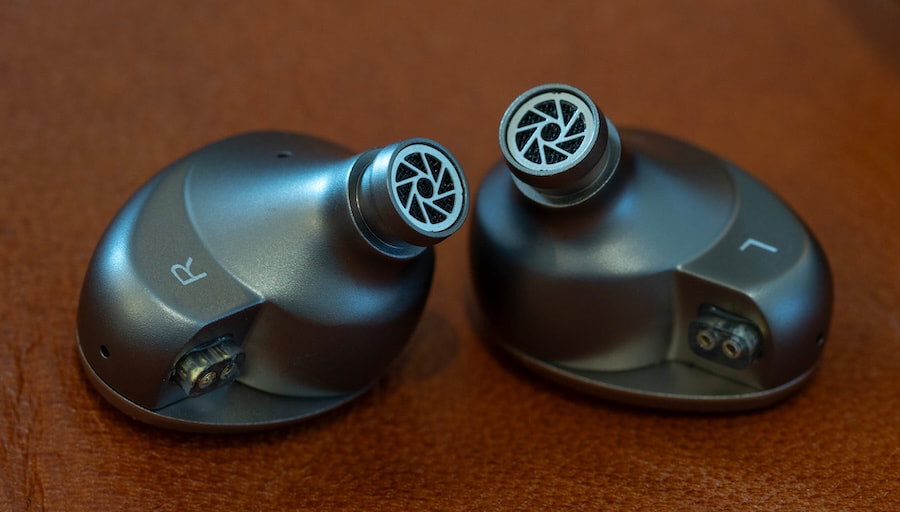
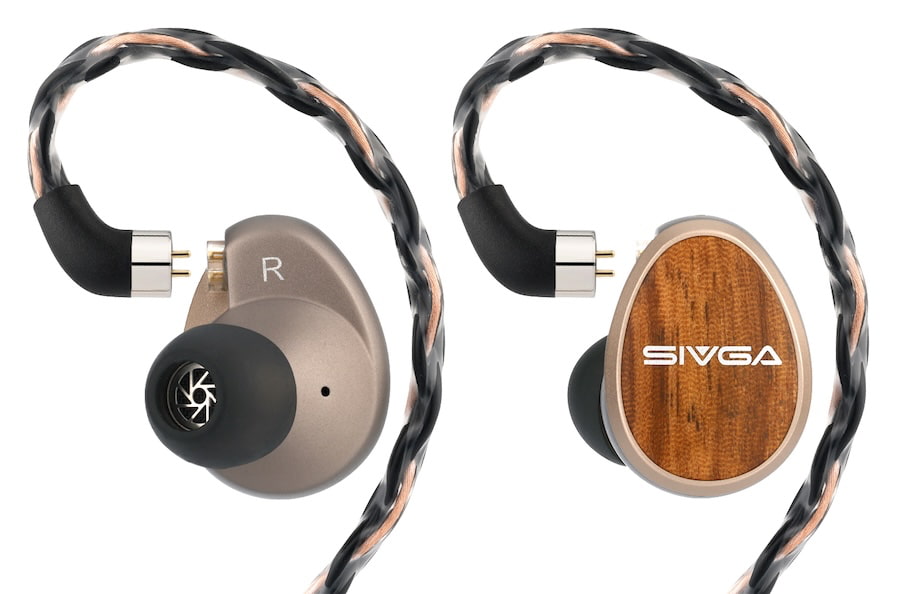
As is typical for SIVGA, the Nightingale Pro is constructed from a carefully chosen mix of high-quality, tactile materials. The faceplate is carved from polished zebrawood and set into a precisely anodized aluminum chassis, giving the IEM a premium, handcrafted feel that’s immediately apparent in the hand and consistent with the brand’s design ethos.
The Nightingale Pro uses metal nozzles with an integrated debris filter positioned just below the lip, a practical touch that should help with long-term durability and maintenance. At the top of each shell is an extruded 0.78 mm two-pin socket, firmly set into the housing to ensure a secure cable connection and reduce long-term wear from repeated swaps.
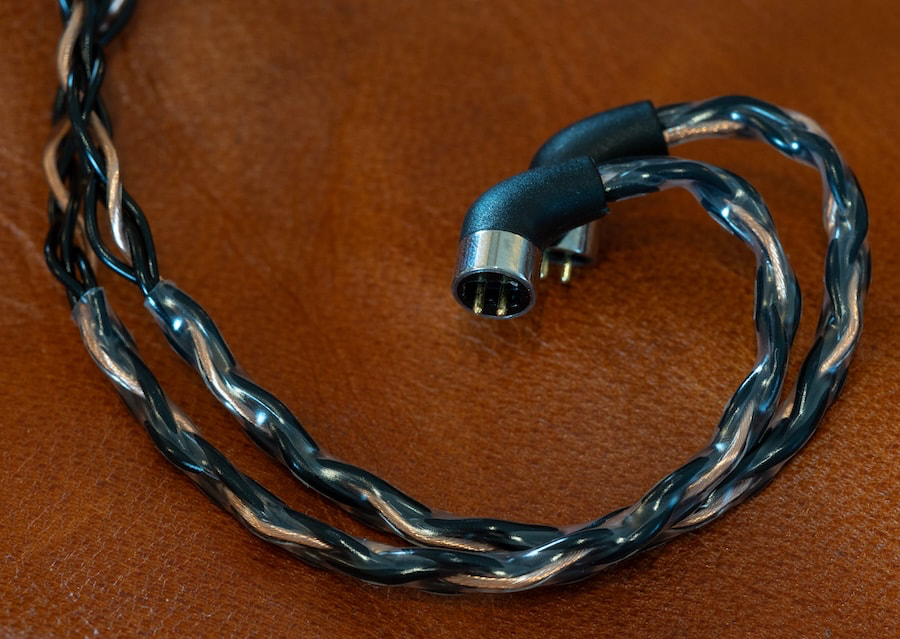

Because of the extruded design of the Nightingale Pro’s sockets, the pool of compatible third-party cables is smaller than with a standard flush 0.78 mm connection. Fortunately, that limitation is softened by the fact that the included cable is genuinely solid.
It uses a two-tone twisted braid paired with metal hardware and feels purpose-built rather than disposable. SIVGA also employs a substantial spring as strain relief near the base of the fixed 4.4 mm termination, lending the cable an almost industrial look while adding real-world durability. From a construction and longevity standpoint, there’s nothing here that raises red flags.
Comfort

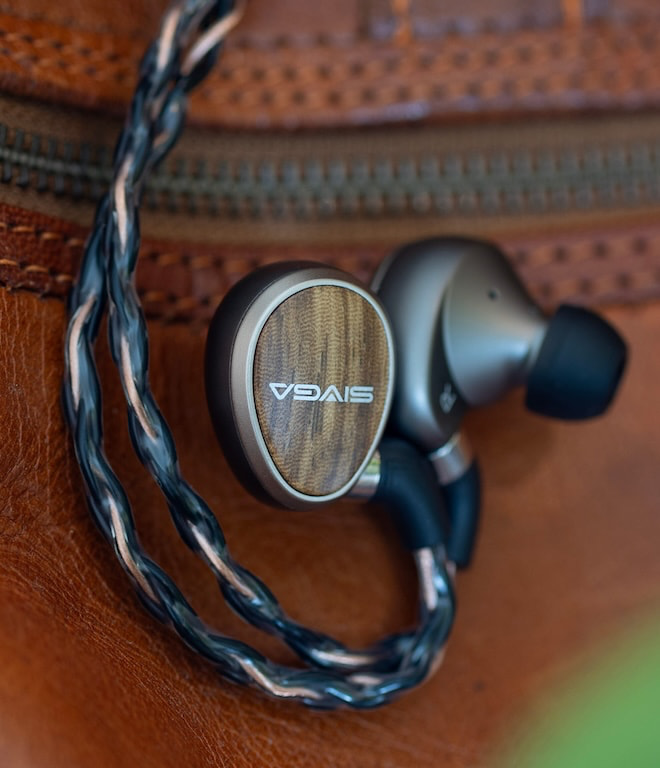
Comfort is inherently personal and heavily dependent on individual ear anatomy, so mileage will vary. The Nightingale Pro features a shallow fit profile, with nozzles that are slightly shorter than average. As a result, some experimentation with eartip sizes and shapes is likely required to achieve an optimal seal.
That said, the IEMs themselves are neither heavy nor bulky, and once dialed in, they proved comfortable for multiple consecutive hours of listening. The trade-off is isolation. The shorter nozzle and shallower insertion mean passive noise attenuation is below average, especially compared to deeper-fitting designs. For that reason, the Nightingale Pro isn’t an ideal choice for air travel or consistently noisy environments, where isolation matters as much as comfort.
Accessories

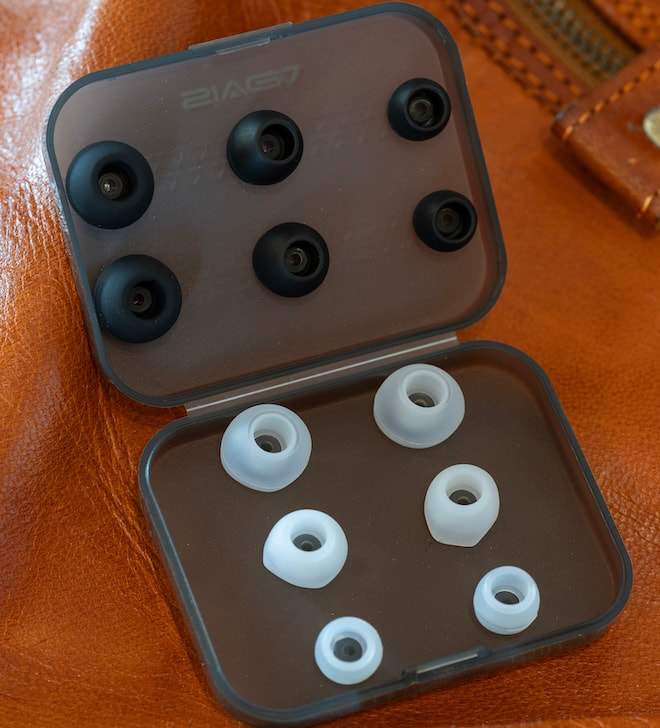
The Nightingale Pro’s accessory bundle is fairly bare-bones. Inside the box, you’ll find a semi-hard carrying case and six pairs of silicone eartips—and that’s about it. Unfortunately, the included eartips are the weak link here. Paired with the Nightingale Pro’s shallow fit profile, they simply didn’t work well for my ears and made achieving a consistent seal more difficult than it should be.
For an IEM in this price range, the accessory selection feels underwhelming. At a minimum, higher-quality silicone eartips would be a welcome upgrade. Including a pair or two of Comply-style foam tips would also go a long way toward improving comfort, seal, and perceived value out of the box.

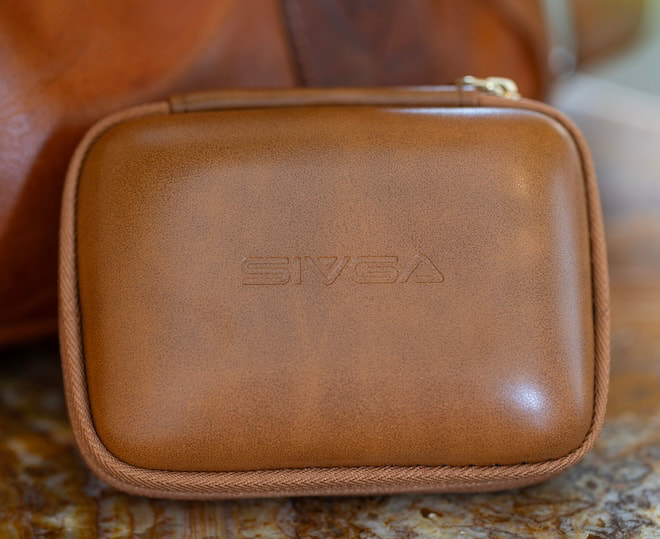
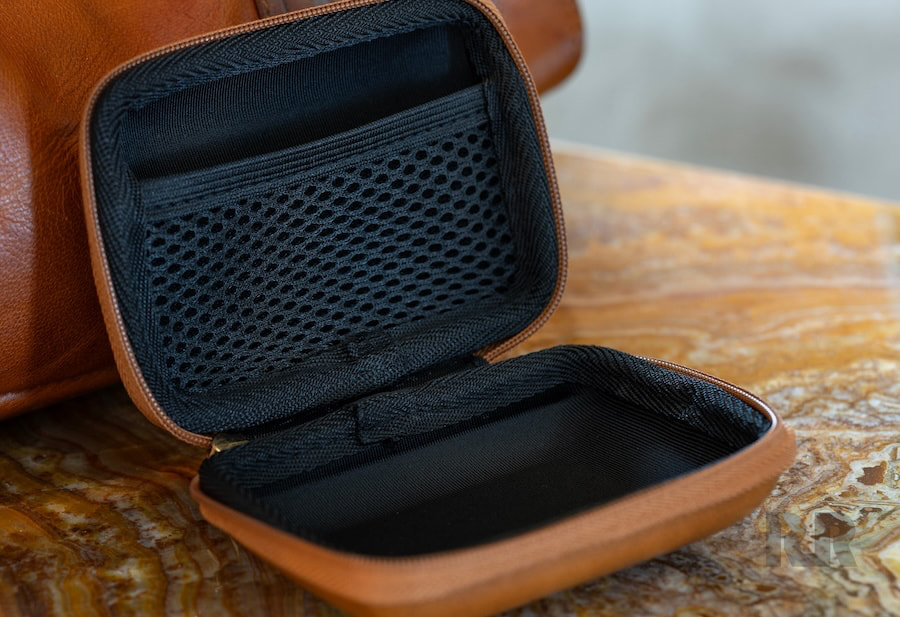
The Nightingale Pro’s carrying case is a bright spot in an otherwise modest accessory bundle. It offers enough internal space to comfortably store the IEMs, the attached cable, and even a compact dongle without feeling cramped. With a bit of careful arrangement, you can also fit a few spare pairs of eartips. Protection is solid but not exceptional—best described as average—making the case well suited for static storage and light travel rather than heavy-duty, throw-it-in-a-bag use.

Technical Specifications
The Nightingale Pro is built around a 14.5 mm planar magnetic driver, a relatively large diaphragm for an in-ear monitor. With a 16 ohm impedance and 107 dB sensitivity, it’s an easy IEM to drive and performs well from dongles and portable sources without requiring excessive power.
Its rated frequency response of 20 Hz to 40 kHz aligns with the Nightingale Pro’s airy top-end and controlled low-frequency extension, while the supplied 1.25 m cable terminates in a 4.4 mm balanced connector, reinforcing its intended use with modern balanced sources. At 14 g, the shells remain light enough for long listening sessions, even with the slightly shallow fit. Overall, the specs point to a planar IEM designed for portable versatility rather than source dependency, with few practical barriers to entry for everyday listening.
Listening
The Nightingale Pro presents a largely linear tuning with a subtle warm tilt. Its low end is well extended and lightly emphasized in the lower registers, while the midrange remains even and neutrally voiced overall. The upper mids receive a modest lift to improve instrumental separation and vocal clarity without pushing the presentation forward.
Treble is expressive but deliberately restrained, never asserting itself as the focal point. By carefully attenuating energy around the 8, 10, and 12 kHz regions, the Nightingale Pro avoids sharpness and metallic timbre. Extension, however, is excellent, reinforcing the point that convincing air and detail don’t require aggressive treble peaks to fully articulate the upper registers.
Glittering, Gleaming, Subtlety
The Nightingale Pro is not an in-your-face IEM, and that restraint is most evident in its treble tuning. While planar drivers are often associated with a boisterous or overly dramatic upper register, that reputation is more a byproduct of inconsistent tuning than an inherent trait of the technology itself. Here, the Nightingale Pro operates firmly in the realm of linearity, delivering strong resolution, texture, and dimensionality while integrating treble information naturally into the soundstage rather than spotlighting it.
The gentle, muted snares in the background of “Anna Sun” by Walk the Moon peek through the edges of the soundstage during the intro, then open up and sit more forward in the mix during the chorus. The Nightingale Pro’s carefully measured treble makes that kind of finesse easy to follow. A brighter treble would have been more “exciting,” sure—but it also would have been more likely to smear that detail and mask what the track’s mastering is actually doing.
Muted Mids
SIVGA tuned the Nightingale Pro’s midrange to be deliberately linear, resulting in a warm, smooth presentation that stands in clear contrast to the more aggressive upper-midrange peaks often associated with planar IEMs. This predictable, even-handed approach makes the Nightingale Pro a strong candidate for reference-style listening, but it also places it outside the comfort zone of more mainstream tastes. Certain genres and mastering styles can come across as overly warm, which in turn affects the perceived width and scale of the soundstage.
EDM tracks like “Light Up The Sky” by Wooli are largely unaffected by this tuning, retaining their drive and structure. Rock recordings, however, such as “Lost in the Echo” by Linkin Park fare worse. On tracks like these, the soundstage can feel compressed, with vocals and guitars sounding dense and constrained.
Male vocals, while full-bodied and weighty, can lean heavy at times. Female vocals and higher-pitched male vocals are better served by the tuning and tend to sound clearer and more balanced. Even so, lyric intelligibility remains strong, and instrumental layering is consistently well handled. The Nightingale Pro presents music in an intimate, close-up manner, but it avoids sounding muddy thanks to its solid technical performance. Listeners accustomed to a more recessed lower midrange may take issue with this tuning choice, as it meaningfully reshapes how instruments and vocals are positioned within the mix.
Gentle and Firm Bass
Thanks to its mildly lifted bass shelf, the Nightingale Pro is reasonably well equipped to resolve low-frequency information. Drum hits carry a touch of punch and a hint of rumble, though not to the extent you’d expect from a traditional dynamic-driver design. The lower register isn’t boisterous, but it is clean, quick, and well controlled, which makes the Nightingale Pro a capable partner for fast-moving genres like metal.
Electronic music can also fare well, depending on the mastering. The Nightingale Pro is able to dig into the sub-bass to resolve deep synth lines and will occasionally deliver a convincing sense of rumble. This gives it enough low-end contrast to support tracks like “Swimming in the Sky” by ARMNHMR, helping establish tonal depth without overwhelming the rest of the presentation. It won’t shake your skull, but it also avoids the flat or anemic low-end character that plagues some planar IEMs.
Comparisons
Kiwi Ears Aether
The Kiwi Ears Aether is a $170 planar IEM built around plastic shells with metal nozzles and a thin 0.78 mm two-pin cable. It uses a fixed 3.5 mm termination, rather than the fixed 4.4 mm balanced termination found on the Nightingale Pro. At roughly $130 less, the Aether clearly targets more cost-sensitive buyers—and it looks the part. Build quality and material choices fall short across the board, from the faceplates and nozzles to the cable itself. Nothing about the Aether’s physical execution approaches the Nightingale Pro’s level of refinement.
Sonically, however, the gap narrows considerably. The Aether ranks among the stronger planar IEMs currently available, offering a well-balanced, natural tuning and solid technical performance at an accessible price. The Nightingale Pro, by contrast, caters more directly to listeners who favor linearity and a flatter, reference-leaning presentation. The Aether brings slightly more mid-bass presence and a less emphasized lower midrange, while its upper mids are marginally more forward. Treble is another point of divergence: the Nightingale Pro is more restrained overall, whereas the Aether’s lower treble is noticeably more forward, making it easier to create a sense of air and openness.
Between the two, the Aether is the easier recommendation for everyday listening. Its broader genre compatibility and less linear tuning make it more forgiving and more enjoyable across a diverse music library. Listeners who are treble-averse or specifically seeking a more reference-oriented presentation, however, will likely find the Nightingale Pro better aligned with their preferences.
7Hz Divine
The Divine is a relatively recent planar IEM from 7Hz, typically priced around $150. It features polished metal shells and a detachable cable that’s noticeably thicker and heavier than the Nightingale Pro’s. That cable terminates in a fixed 3.5 mm plug rather than a 4.4 mm balanced connection. Despite costing roughly half as much as the Nightingale Pro, the Divine ships with a larger carrying case and a more generous selection of eartips.
In terms of tuning, the Nightingale Pro leans more linear and reference-oriented, with a warmer overall balance than the Divine. Both IEMs employ modest bass shelves, but the Divine’s low end comes across drier and more matter-of-fact. The Divine also features a larger upper-midrange lift and a more pronounced upper treble, giving it a cooler, airier presentation. From a technical standpoint, both perform competently, though the Nightingale Pro does a better job of capturing fine vocal inflections that the Divine tends to smooth over. The Divine can surface certain details more readily, but it misses some of the subtler mastering nuances that the Nightingale Pro renders more convincingly.
Between the two, the Nightingale Pro edges ahead. While the Divine offers broader genre flexibility, the Nightingale Pro’s bass tonality is more satisfying, and its overall presentation is easier to live with over long sessions. Comfort also plays a role: despite its attractive design, the Divine can become fatiguing to wear, whereas the Nightingale Pro proves more accommodating for extended listening.
Juzear Harrier
The Juzear Harrier is a tribrid IEM built with resin shells and metal nozzles, typically priced at $330, though it was available for $300 at the time of writing. It includes a modular 0.78 mm two-pin cable with both 3.5 mm and 4.4 mm terminations. The cable itself is quite good—noticeably thicker than the Nightingale Pro’s—and feels more substantial in hand. In terms of construction, the Nightingale Pro’s metal-and-wood chassis is clearly sturdier than the Harrier’s resin build, though the Harrier does fit my ears more comfortably.
Sonically, the Harrier takes a very different approach. It is the bassier of the two, with a much more pronounced low end and a particularly forward mid-bass. The Nightingale Pro counters with tighter, more controlled mid-bass and sub-bass performance, along with stronger technical discipline. The Harrier leans cooler overall, with a larger upper-midrange lift and greater treble emphasis.
By comparison, the Nightingale Pro sounds more linear and noticeably more cohesive from top to bottom. While the Harrier’s treble is more forward, it can also come across as grainier. The Nightingale Pro generally exhibits superior technicalities, though it can sound congested when directly A/B tested against the Harrier on certain tracks.
Between the two, the Nightingale Pro takes the nod. Its sturdier build quality, stronger technical performance, and greater tonal cohesion work in its favor. The Harrier is still an appealing option, but it feels like a less fully realized execution of its tuning vision. Listeners who are sensitive to warmth or prefer a more open, brighter midrange and treble balance may gravitate toward the Harrier. Personally, I’m comfortable sticking with the Nightingale Pro.

The Bottom Line
The Nightingale Pro is a thoughtfully built planar IEM that sticks closely to SIVGA’s established design language and tuning philosophy. Its presentation leans linear and reference-minded, with real sub-bass reach, a touch of warmth through the mids, and a treble response that stays extended without ever tipping into sharpness or sibilance. The craftsmanship is legitimately excellent—shells and faceplates feel premium in a way that’s immediately apparent—but sound quality, not aesthetics, is where buying decisions are made.
And this is where the Nightingale Pro becomes selective rather than universal. The restrained mid-bass and more relaxed treatment of male vocals and electric guitars limit its emotional punch, especially for listeners accustomed to more forward or dynamic presentations. In a price range crowded with strong alternatives, build quality alone isn’t enough to move it to the top of the list.
That said, there is a clear audience here. Listeners chasing a clean, sharpness-free planar sound, engineers looking for balance over excitement, and anyone drawn to a controlled, reference-style tuning will find a lot to respect. Bassheads, V-shaped devotees, and those who want vocals pushed front and center should keep moving. The Nightingale Pro doesn’t try to win everyone over—and that may be its most honest trait.
Pros:
- Sibilance-free tuning that stays composed even on hot recordings
- Expressive, nuanced midrange with strong vocal and acoustic texture
- Genuine sub-bass extension with reach and control
- High-quality craftsmanship that feels deliberate, not mass-produced
- Excellent layering and separation, especially in complex mixes
- Impressive upper-treble extension that adds air without bite
Cons:
- Mid-bass lacks authority, limiting slam and rhythmic weight
- Cable feels wiry above the Y-split, detracting from overall ergonomics
- Included silicone eartips are sub-par and do the IEM no favors
- Shallow shell profile demands careful tip selection to get proper seal
- Below-average passive isolation, especially for commuting or travel
- Male vocals and electric guitars sound muted on select tracks
You must be logged in to post a comment Login