SIVGA is a Chinese HiFi audio brand that was founded in 2016. They’re an end-to-end organization, running their own R&D, branding, and manufacturing, in-house. This all-original approach gives SIVGA freedom to experiment and innovate, but also creates a distinct “SVIGA-iness” across their lineup. The company builds both over-ear headphones and in-ear monitors, and its latest release, the Nightingale Pro, revisits the original planar magnetic Nightingale IEM with revised tuning and execution.
The first Nightingale earned a loyal following but never crossed into broad market relevance. The question now is simple and unavoidable: does the Nightingale Pro finally have the balance, refinement, and accessibility to break out of the niche—or is it still speaking mainly to the faithful?
About My Preferences
This review is a subjective assessment, and pretending otherwise would be dishonest. I do my best to separate personal taste from performance-based criticism, but bias never fully disappears—it just gets managed. So consider this your calibration point. My ideal sound signature prioritizes competent sub-bass, textured mid-bass, a slightly warm midrange, and extended but controlled treble. I also have mild treble sensitivity, which means I’m quick to notice glare, edge, or artificial sparkle.
Sources, DAPs, and Dongles Used
Listening was split between dedicated digital audio players and dongles to reflect how most people will actually use the Nightingale Pro. DAPs included the HiFiMAN SuperMini, Hidizs AP80 Pro MAX, and the Astell&Kern PD10, covering everything from ultra-portable to genuinely high-end. Dongle testing included the Astell&Kern HC5, Audioengine HXL, Meze Audio Alba Dongle, and the ubiquitous Apple USB-C dongle.
Advertisement
Testing equipment and standards can be found here.
Build
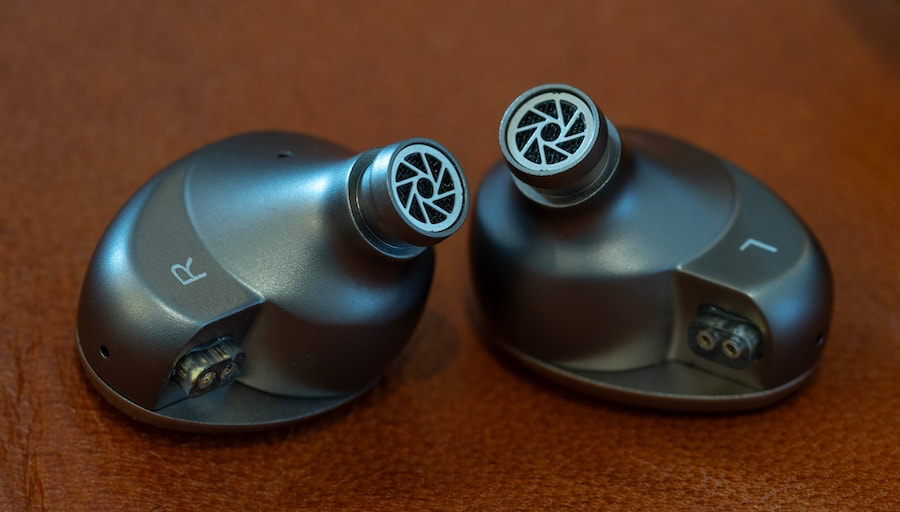
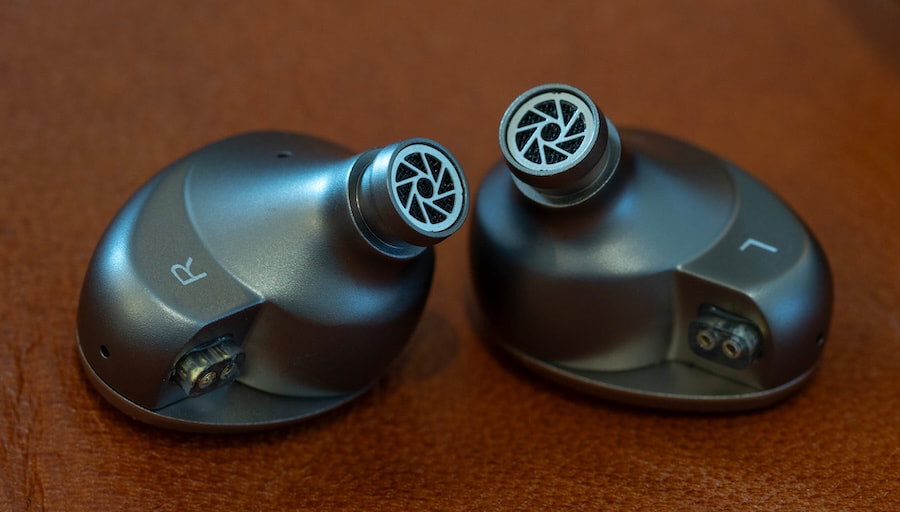
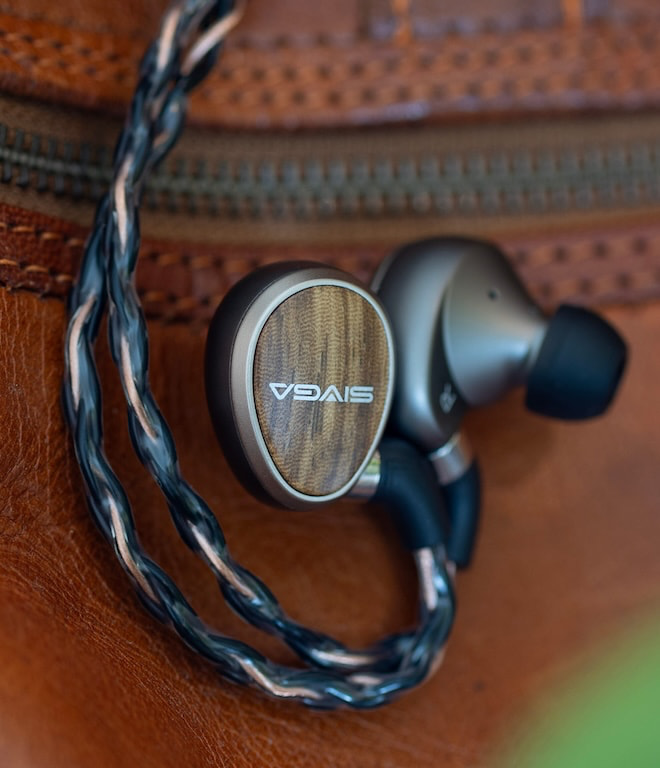
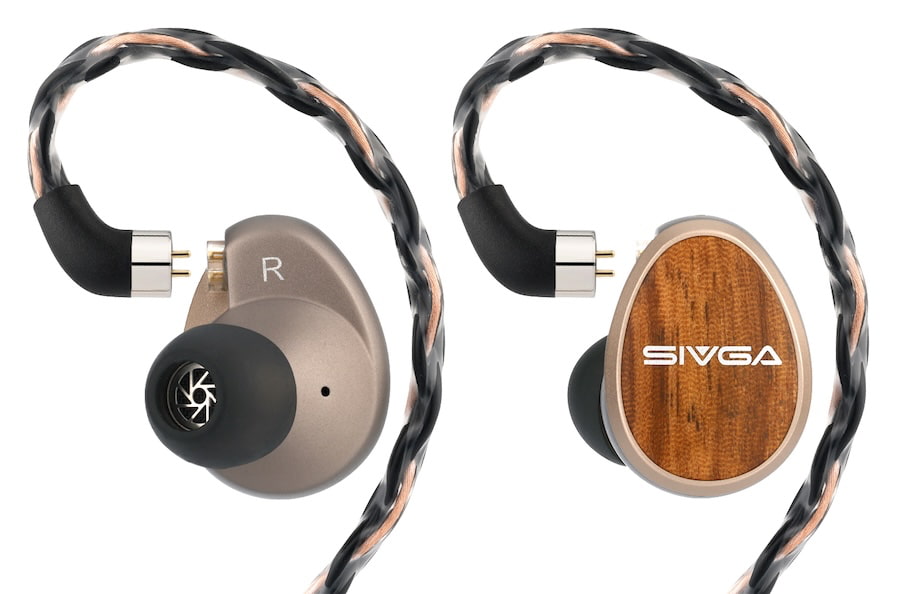
As is typical for SIVGA, the Nightingale Pro is constructed from a carefully chosen mix of high-quality, tactile materials. The faceplate is carved from polished zebrawood and set into a precisely anodized aluminum chassis, giving the IEM a premium, handcrafted feel that’s immediately apparent in the hand and consistent with the brand’s design ethos.
The Nightingale Pro uses metal nozzles with an integrated debris filter positioned just below the lip, a practical touch that should help with long-term durability and maintenance. At the top of each shell is an extruded 0.78 mm two-pin socket, firmly set into the housing to ensure a secure cable connection and reduce long-term wear from repeated swaps.
Because of the extruded design of the Nightingale Pro’s sockets, the pool of compatible third-party cables is smaller than with a standard flush 0.78 mm connection. Fortunately, that limitation is softened by the fact that the included cable is genuinely solid.
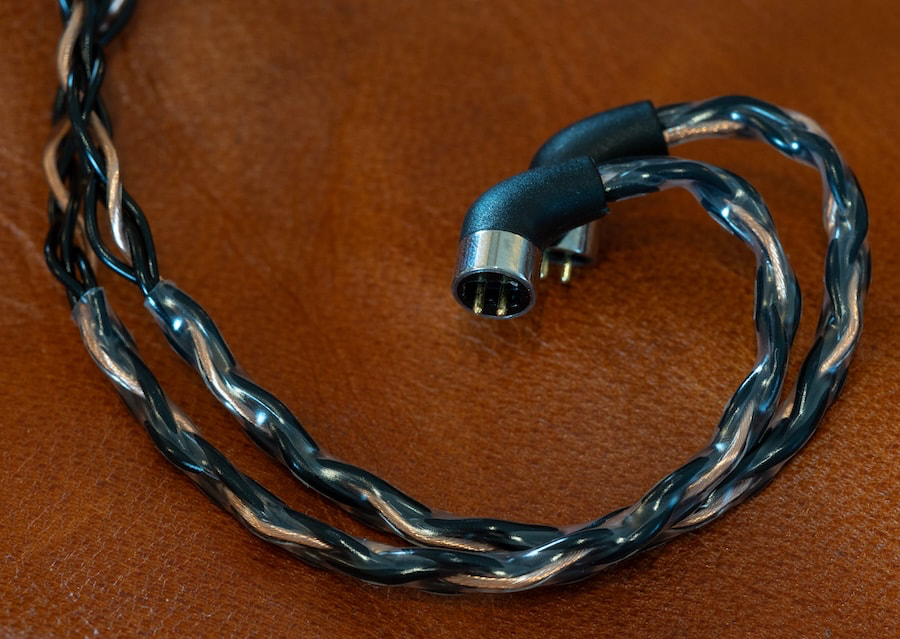
It uses a two-tone twisted braid paired with metal hardware and feels purpose-built rather than disposable. SIVGA also employs a substantial spring as strain relief near the base of the fixed 4.4 mm termination, lending the cable an almost industrial look while adding real-world durability. From a construction and longevity standpoint, there’s nothing here that raises red flags.
Advertisement
Comfort
Comfort is inherently personal and heavily dependent on individual ear anatomy, so mileage will vary. The Nightingale Pro features a shallow fit profile, with nozzles that are slightly shorter than average. As a result, some experimentation with eartip sizes and shapes is likely required to achieve an optimal seal.
That said, the IEMs themselves are neither heavy nor bulky, and once dialed in, they proved comfortable for multiple consecutive hours of listening. The trade-off is isolation. The shorter nozzle and shallower insertion mean passive noise attenuation is below average, especially compared to deeper-fitting designs. For that reason, the Nightingale Pro isn’t an ideal choice for air travel or consistently noisy environments, where isolation matters as much as comfort.
Advertisement. Scroll to continue reading.
Accessories
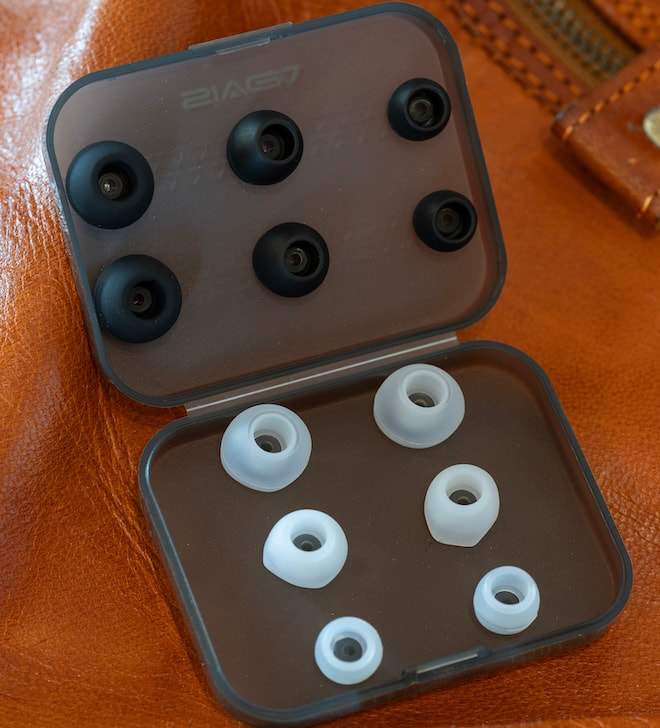
The Nightingale Pro’s accessory bundle is fairly bare-bones. Inside the box, you’ll find a semi-hard carrying case and six pairs of silicone eartips—and that’s about it. Unfortunately, the included eartips are the weak link here. Paired with the Nightingale Pro’s shallow fit profile, they simply didn’t work well for my ears and made achieving a consistent seal more difficult than it should be.
For an IEM in this price range, the accessory selection feels underwhelming. At a minimum, higher-quality silicone eartips would be a welcome upgrade. Including a pair or two of Comply-style foam tips would also go a long way toward improving comfort, seal, and perceived value out of the box.
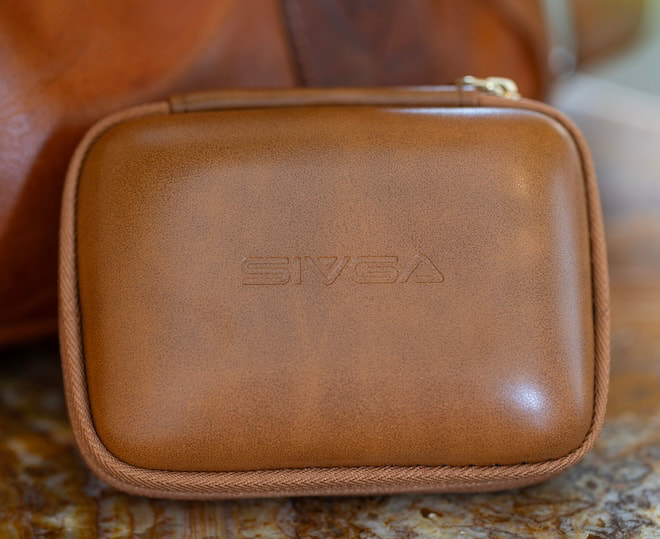
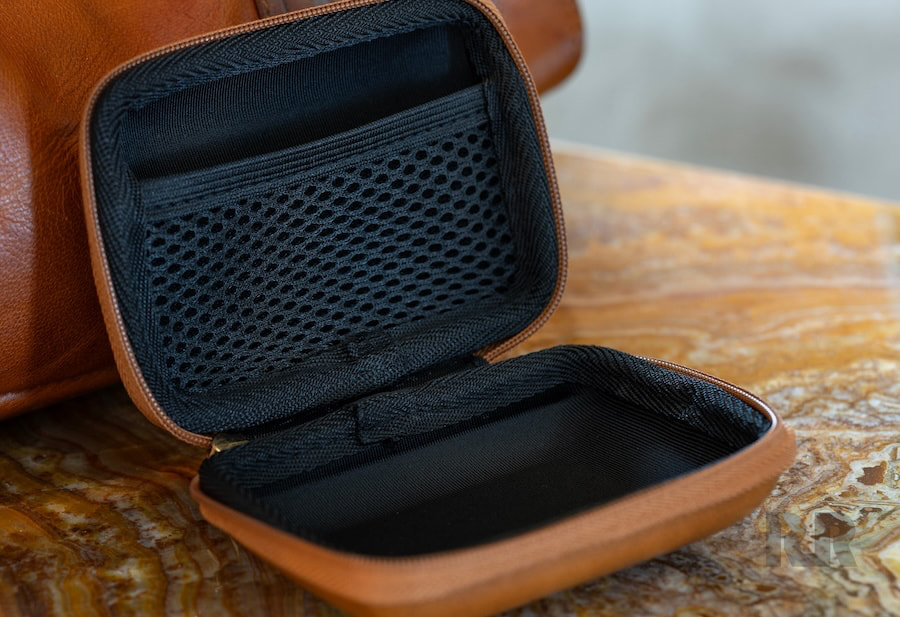
The Nightingale Pro’s carrying case is a bright spot in an otherwise modest accessory bundle. It offers enough internal space to comfortably store the IEMs, the attached cable, and even a compact dongle without feeling cramped. With a bit of careful arrangement, you can also fit a few spare pairs of eartips. Protection is solid but not exceptional—best described as average—making the case well suited for static storage and light travel rather than heavy-duty, throw-it-in-a-bag use.
Technical Specifications
The Nightingale Pro is built around a 14.5 mm planar magnetic driver, a relatively large diaphragm for an in-ear monitor. With a 16 ohm impedance and 107 dB sensitivity, it’s an easy IEM to drive and performs well from dongles and portable sources without requiring excessive power.
Advertisement
Its rated frequency response of 20 Hz to 40 kHz aligns with the Nightingale Pro’s airy top-end and controlled low-frequency extension, while the supplied 1.25 m cable terminates in a 4.4 mm balanced connector, reinforcing its intended use with modern balanced sources. At 14 g, the shells remain light enough for long listening sessions, even with the slightly shallow fit. Overall, the specs point to a planar IEM designed for portable versatility rather than source dependency, with few practical barriers to entry for everyday listening.
Listening
The Nightingale Pro presents a largely linear tuning with a subtle warm tilt. Its low end is well extended and lightly emphasized in the lower registers, while the midrange remains even and neutrally voiced overall. The upper mids receive a modest lift to improve instrumental separation and vocal clarity without pushing the presentation forward.
Treble is expressive but deliberately restrained, never asserting itself as the focal point. By carefully attenuating energy around the 8, 10, and 12 kHz regions, the Nightingale Pro avoids sharpness and metallic timbre. Extension, however, is excellent, reinforcing the point that convincing air and detail don’t require aggressive treble peaks to fully articulate the upper registers.
Glittering, Gleaming, Subtlety
The Nightingale Pro is not an in-your-face IEM, and that restraint is most evident in its treble tuning. While planar drivers are often associated with a boisterous or overly dramatic upper register, that reputation is more a byproduct of inconsistent tuning than an inherent trait of the technology itself. Here, the Nightingale Pro operates firmly in the realm of linearity, delivering strong resolution, texture, and dimensionality while integrating treble information naturally into the soundstage rather than spotlighting it.
Advertisement
The gentle, muted snares in the background of “Anna Sun” by Walk the Moon peek through the edges of the soundstage during the intro, then open up and sit more forward in the mix during the chorus. The Nightingale Pro’s carefully measured treble makes that kind of finesse easy to follow. A brighter treble would have been more “exciting,” sure—but it also would have been more likely to smear that detail and mask what the track’s mastering is actually doing.
Muted Mids
SIVGA tuned the Nightingale Pro’s midrange to be deliberately linear, resulting in a warm, smooth presentation that stands in clear contrast to the more aggressive upper-midrange peaks often associated with planar IEMs. This predictable, even-handed approach makes the Nightingale Pro a strong candidate for reference-style listening, but it also places it outside the comfort zone of more mainstream tastes. Certain genres and mastering styles can come across as overly warm, which in turn affects the perceived width and scale of the soundstage.
EDM tracks like “Light Up The Sky” by Wooli are largely unaffected by this tuning, retaining their drive and structure. Rock recordings, however, such as “Lost in the Echo” by Linkin Park fare worse. On tracks like these, the soundstage can feel compressed, with vocals and guitars sounding dense and constrained.
Male vocals, while full-bodied and weighty, can lean heavy at times. Female vocals and higher-pitched male vocals are better served by the tuning and tend to sound clearer and more balanced. Even so, lyric intelligibility remains strong, and instrumental layering is consistently well handled. The Nightingale Pro presents music in an intimate, close-up manner, but it avoids sounding muddy thanks to its solid technical performance. Listeners accustomed to a more recessed lower midrange may take issue with this tuning choice, as it meaningfully reshapes how instruments and vocals are positioned within the mix.
Advertisement
Advertisement. Scroll to continue reading.
Gentle and Firm Bass
Thanks to its mildly lifted bass shelf, the Nightingale Pro is reasonably well equipped to resolve low-frequency information. Drum hits carry a touch of punch and a hint of rumble, though not to the extent you’d expect from a traditional dynamic-driver design. The lower register isn’t boisterous, but it is clean, quick, and well controlled, which makes the Nightingale Pro a capable partner for fast-moving genres like metal.
Electronic music can also fare well, depending on the mastering. The Nightingale Pro is able to dig into the sub-bass to resolve deep synth lines and will occasionally deliver a convincing sense of rumble. This gives it enough low-end contrast to support tracks like “Swimming in the Sky” by ARMNHMR, helping establish tonal depth without overwhelming the rest of the presentation. It won’t shake your skull, but it also avoids the flat or anemic low-end character that plagues some planar IEMs.
Comparisons
Kiwi Ears Aether
The Kiwi Ears Aether is a $170 planar IEM built around plastic shells with metal nozzles and a thin 0.78 mm two-pin cable. It uses a fixed 3.5 mm termination, rather than the fixed 4.4 mm balanced termination found on the Nightingale Pro. At roughly $130 less, the Aether clearly targets more cost-sensitive buyers—and it looks the part. Build quality and material choices fall short across the board, from the faceplates and nozzles to the cable itself. Nothing about the Aether’s physical execution approaches the Nightingale Pro’s level of refinement.
Advertisement
Sonically, however, the gap narrows considerably. The Aether ranks among the stronger planar IEMs currently available, offering a well-balanced, natural tuning and solid technical performance at an accessible price. The Nightingale Pro, by contrast, caters more directly to listeners who favor linearity and a flatter, reference-leaning presentation. The Aether brings slightly more mid-bass presence and a less emphasized lower midrange, while its upper mids are marginally more forward. Treble is another point of divergence: the Nightingale Pro is more restrained overall, whereas the Aether’s lower treble is noticeably more forward, making it easier to create a sense of air and openness.
Between the two, the Aether is the easier recommendation for everyday listening. Its broader genre compatibility and less linear tuning make it more forgiving and more enjoyable across a diverse music library. Listeners who are treble-averse or specifically seeking a more reference-oriented presentation, however, will likely find the Nightingale Pro better aligned with their preferences.
7Hz Divine
The Divine is a relatively recent planar IEM from 7Hz, typically priced around $150. It features polished metal shells and a detachable cable that’s noticeably thicker and heavier than the Nightingale Pro’s. That cable terminates in a fixed 3.5 mm plug rather than a 4.4 mm balanced connection. Despite costing roughly half as much as the Nightingale Pro, the Divine ships with a larger carrying case and a more generous selection of eartips.
In terms of tuning, the Nightingale Pro leans more linear and reference-oriented, with a warmer overall balance than the Divine. Both IEMs employ modest bass shelves, but the Divine’s low end comes across drier and more matter-of-fact. The Divine also features a larger upper-midrange lift and a more pronounced upper treble, giving it a cooler, airier presentation. From a technical standpoint, both perform competently, though the Nightingale Pro does a better job of capturing fine vocal inflections that the Divine tends to smooth over. The Divine can surface certain details more readily, but it misses some of the subtler mastering nuances that the Nightingale Pro renders more convincingly.
Advertisement
Between the two, the Nightingale Pro edges ahead. While the Divine offers broader genre flexibility, the Nightingale Pro’s bass tonality is more satisfying, and its overall presentation is easier to live with over long sessions. Comfort also plays a role: despite its attractive design, the Divine can become fatiguing to wear, whereas the Nightingale Pro proves more accommodating for extended listening.
Juzear Harrier
The Juzear Harrier is a tribrid IEM built with resin shells and metal nozzles, typically priced at $330, though it was available for $300 at the time of writing. It includes a modular 0.78 mm two-pin cable with both 3.5 mm and 4.4 mm terminations. The cable itself is quite good—noticeably thicker than the Nightingale Pro’s—and feels more substantial in hand. In terms of construction, the Nightingale Pro’s metal-and-wood chassis is clearly sturdier than the Harrier’s resin build, though the Harrier does fit my ears more comfortably.
Sonically, the Harrier takes a very different approach. It is the bassier of the two, with a much more pronounced low end and a particularly forward mid-bass. The Nightingale Pro counters with tighter, more controlled mid-bass and sub-bass performance, along with stronger technical discipline. The Harrier leans cooler overall, with a larger upper-midrange lift and greater treble emphasis.
By comparison, the Nightingale Pro sounds more linear and noticeably more cohesive from top to bottom. While the Harrier’s treble is more forward, it can also come across as grainier. The Nightingale Pro generally exhibits superior technicalities, though it can sound congested when directly A/B tested against the Harrier on certain tracks.
Advertisement
Between the two, the Nightingale Pro takes the nod. Its sturdier build quality, stronger technical performance, and greater tonal cohesion work in its favor. The Harrier is still an appealing option, but it feels like a less fully realized execution of its tuning vision. Listeners who are sensitive to warmth or prefer a more open, brighter midrange and treble balance may gravitate toward the Harrier. Personally, I’m comfortable sticking with the Nightingale Pro.
Advertisement. Scroll to continue reading.
The Bottom Line
The Nightingale Pro is a thoughtfully built planar IEM that sticks closely to SIVGA’s established design language and tuning philosophy. Its presentation leans linear and reference-minded, with real sub-bass reach, a touch of warmth through the mids, and a treble response that stays extended without ever tipping into sharpness or sibilance. The craftsmanship is legitimately excellent—shells and faceplates feel premium in a way that’s immediately apparent—but sound quality, not aesthetics, is where buying decisions are made.
And this is where the Nightingale Pro becomes selective rather than universal. The restrained mid-bass and more relaxed treatment of male vocals and electric guitars limit its emotional punch, especially for listeners accustomed to more forward or dynamic presentations. In a price range crowded with strong alternatives, build quality alone isn’t enough to move it to the top of the list.
That said, there is a clear audience here. Listeners chasing a clean, sharpness-free planar sound, engineers looking for balance over excitement, and anyone drawn to a controlled, reference-style tuning will find a lot to respect. Bassheads, V-shaped devotees, and those who want vocals pushed front and center should keep moving. The Nightingale Pro doesn’t try to win everyone over—and that may be its most honest trait.
Advertisement
Pros:
Sibilance-free tuning that stays composed even on hot recordings
Expressive, nuanced midrange with strong vocal and acoustic texture
Genuine sub-bass extension with reach and control
High-quality craftsmanship that feels deliberate, not mass-produced
Excellent layering and separation, especially in complex mixes
Impressive upper-treble extension that adds air without bite
Cons:
Mid-bass lacks authority, limiting slam and rhythmic weight
Cable feels wiry above the Y-split, detracting from overall ergonomics
Included silicone eartips are sub-par and do the IEM no favors
Shallow shell profile demands careful tip selection to get proper seal
Below-average passive isolation, especially for commuting or travel
Male vocals and electric guitars sound muted on select tracks
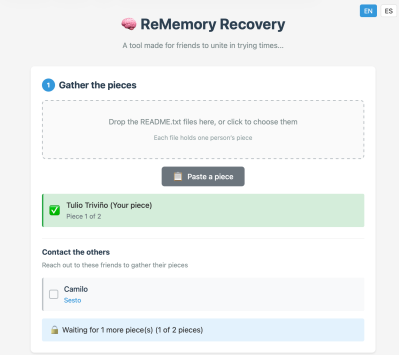
What would happen if you lost your memory, even partially? With so much of our lives being digital, forgetting your passwords (or the master key to your password manager) could be disastrous. Haunted by that specter after a concussion, [eljojo] created ReMemory, a tool based on Shamir’s Secret Sharing to help your friends help you.
Shamir’s Secret Sharing, for the uninitiated, is a way to split up important data between parties so that the full picture is only available when a quorum comes together. The classic example is giving everyone a couple of digits out of the combination to the bank vault, but no one the full combination. Together, they can open the vault.
ReMemory works the same way. Rather than the combination to a bank vault, the locally-hosted, browser-based interface splits the encryption key to your sensitive data. If you’re old fashioned that might be a plaintext list of passwords, or for the more modern the recovery codes to your password manager. It could be literally anything, like your Aunt Edna’s famous cupcake recipe, which surely should not be lost to time.
Aunt Edna could probably handle this.
You can chose how many friends to split your data betwixt, and how many will be required to meet quorum– the minimum, of course, being two, but the suggested default is to split the data five ways, and allow decryption from any three parties. Each bundle includes the complete recovery tool, so anyone in your circle of trust can start the process of decrypting your data if they get the others on board. Since it’s self-hosted and browser based, those friends don’t have to be particularly tech-savvy, as long as they can be trusted to hold onto the files. Everything is explained in the readme included in each bundle.
This does have the downside of requiring you to have multiple close friends, at least some of whom you trust to come through in a crunch, and all of whom you trust not to collude behind your back. Still, if you’re the social type, this seems like it might be a useful tool. The code is available under an Apache 2.0 license, so you can audit it for yourself — a must for any tool you plan on entrusting your secrets to.
As Anthropic expands into India, a local software company has filed a court complaint saying it was already using the name “Anthropic,” spotlighting how the rapid global push of AI firms can collide with local incumbents.
The filing comes amid Anthropic deepening its focus on India, announcing an India office last October and more recently appointing former Microsoft India managing director Irina Ghose to lead its operations in the country, underscoring the South Asian market’s growing importance to global AI companies expanding beyond the U.S. and Europe.
In a complaint filed in a commercial court in Karnataka in January, reviewed by TechCrunch, the Indian company Anthropic Software says it has used the name since 2017 and that Anthropic’s recent entry into India has led to customer confusion. The firm is seeking recognition of its prior use and relief to prevent further confusion, along with ₹10 million (about $110,000) in damages.
Anthropic Software founder and director Mohammad Ayyaz Mulla told TechCrunch that the Indian company was not seeking confrontation, but clarity and recognition of its prior use in India, adding that litigation was a fallback if clean coexistence could not be achieved.
Advertisement
“As of now, I am exercising my legal right as it’s causing huge confusion to my customers,” he said.
India, the world’s most populous nation and one of the fastest-growing internet markets, has become a key battleground for AI companies like Anthropic and its rival OpenAI. The country is also set to host an AI Impact Summit in New Delhi next week, where Anthropic co-founder and chief executive Dario Amodei is appearing alongside other industry leaders like Sam Altman, Jensen Huang, and Sundar Pichai.
A court order dated January 20 and seen by TechCrunch shows that the court has issued notice and suit summons to Anthropic. However, it declined to grant an interim injunction and listed the matter to return on February 16.
Techcrunch event
Advertisement
Boston, MA | June 23, 2026
Anthropic did not respond to a request for comment.
Way back in 2018, a series of events in Samoa brought about the country’s worst measles outbreak in years. It started in July of that year when two 1-year old children who were given a measles vaccine subsequently died. While anti-vaxxers around the world gleefully jumped into action to blame the vaccine for those deaths, it turns out that the vaccine didn’t kill the children at all. Instead, medical professionals had accidentally mixed the vaccine with a muscle relaxer solution instead of sterilized water like they were supposed to. Despite that fact, the anti-vaxxers sowed all kinds of fear and disinformation throughout the country, whipping up negativity around measles vaccines. As a result of that, the government put a 10 months ban in place on the vaccine.
In June of 2019, RFK Jr. visited Samoa. He met with anti-vaxxer crusaders and government officials. Despite that, he has said publicly and in testimony before Congress that his trip there had nothing to do with vaccines and was instead about a medical records and tracking system the country was interested in. You can see an example of that claim in his own confirmation hearing.
Lots of people questioned that claim. And rightly so. The people he was meeting with, the timing in conjunction with the vaccination ban, it all lined up to yet another anti-vaxxer visiting the country to push their anti-vaxxer message.
Advertisement
Two months later, Samoa experienced a massive measles outbreak.
An outbreak began in October 2019 and continued for four months. Before seeking proper medical treatment, some parents first took their children to ‘traditional healers’ who used machines purchased that claimed to produce “immune-protective” water.
As of 22 December, there were 79 deaths. This was 0.4 deaths per 1,000 people, based on a population of 200,874, an infection fatality rate of 1.43%. There were 5,520 cases, representing 2.75% of the population.61 of the first 70 deaths were aged four and under. All but seven of the deaths were from people aged under 15.
At least 20% of babies aged six to 11 months contracted measles. One in 150 babies died.
This past week, documents and emails obtained by The Guardian and The AP show that everyone on the Samoan government’s side of the house understood Kennedy’s visit to be explicitly about vaccines, contrary to his statements, including statements before Congress. He was sworn in for that confirmation hearing, to be clear.
Advertisement
Documents obtained by The Guardian and The Associated Press undermine that testimony. Emails sent by staffers at the U.S. Embassy and the United Nations provide, for the first time, an inside look at how Kennedy’s trip came about and include contemporaneous accounts suggesting his concerns about vaccine safety motivated the visit.
The documents have prompted concerns from at least one U.S. senator that the lawyer and activist now leading America’s health policy lied to Congress over the visit. Samoan officials later said Kennedy’s trip bolstered the credibility of anti-vaccine activists ahead of the measles outbreak, which sickened thousands of people and killed 83, mostly children under age 5.
The AP post has a ton of details further down the article, but here is an example of the content.
Embassy staffers got a tip about Harding’s involvement in the trip from Sheldon Yett, then the representative for Pacific island countries at UNICEF, the United Nations Children’s Fund.
“We now understand that the Prime Minister has invited Robert Kennedy and his team to come to Samoa to investigate the safety of the vaccine,” Yett wrote in a May 22, 2019, email to an embassy staffer based in New Zealand. “The staff member in question seems to have had a role in facilitating this.”
Two days later, a top embassy staff member in Apia wrote to Scott Brown, then the Republican U.S. president’s ambassador to New Zealand and Samoa, alerting him to Kennedy’s trip and Harding’s involvement.
Advertisement
“The real reason Kennedy is coming is to raise awareness about vaccinations, more specifically some of the health concerns associated with vaccinating (from his point of view),” the embassy official, Antone Greubel, wrote. “It turns out our very own Benjamin Harding played some role in a personal capacity to bring him here.” Greubel wrote that he told Harding to “cease and desist from any further involvement with this travel,” though the rest of the sentence is redacted.
Now, I have zero problem believing that Kennedy is lying about all of this. Lying is just what he does. And regularly. I also put the blood of all those dead children, and any long term health issues in the thousands of others, partially on Kennedy’s ledger. This is all simply common sense.
But the real travesty is something quite similar is happening right here, right now. The measles outbreak in America is speeding up, not slowing down. Kennedy, as with Samoa, is taking zero responsibility for it. If he’s taking any real concrete actions to combat it, I don’t know what those would be, nor would I understand why they’ve been hidden so completely from public visibility. Kennedy once opined that maybe it would be better if everyone just got measles.
If that is his real goal, it appears we’re on our way. But somebody besides a couple of press outlets should be investigating Kennedy for lying to Congress, at a minimum. And perhaps having a hand in the deaths of children, as well.
Military flyovers are an impressive sight, especially when viewed from sea level. This usually requires being on terra firma during a major sporting event, patriotic holiday, or military funeral; but anyone in the Caribbean Sea on or near the world’s largest aircraft carrier in late January got a free show courtesy of the U.S. Navy Carrier Air Wing 8 as part of a ceremony marking a change of command. Photos appear to show seven fighters, a Grumman E2D early warning aircraft, and two SeaHawk helicopters flying directly over the USS Gerald Ford. The official procedure to hand command over from Capt. Rick Burgess to Capt. David Skarosi was held on board the ship May 12, 2025 while it was docked safely at the Naval station in Norfolk, Virginia.
Capt. Skarosi was in command when the ship headed to the North Atlantic less than six weeks later. The massive carrier paid a visit to the Arctic Circle before heading to the Mediterranean, where it stayed through November 2025. At that point, the Navy’s top brass decided to send it back across the ocean to the Caribbean to support U.S. Southern Command operations there.
Advertisement
Why did the Navy have a change-of-command ceremony?
The ship’s original six-month mission has been extended twice, and as of this writing, the carrier and crew have been at sea for 230 days. That’s not uncharted territory for the Gerald Ford, though. It was previously on continuous deployment from May 2, 2023, through January 17, 2024 — a stretch of 239 days — under the command of Capt. Burgess. Although Capt. Skarosi remains in charge of the ship, the ceremonial flyover in January was to mark a change of command for the entire Carrier Air Wing 8.
Advertisement
Show of force 💪⚓
U.S. Navy Carrier Air Wing 8 aircraft fly in formation over the world’s largest aircraft carrier, Ford-class aircraft carrier USS Gerald R. Ford (CVN 78), during Carrier Air Wing 8’s aerial change of command ceremony while underway in the Caribbean Sea.
A January 28 post to the U.S. Navy’s X account showed two F-18E Hornet fighters zooming low along the ship’s deck and used the hashtag PeaceThrough Strength to lend an element of ‘show of force’ to the proceedings. The Gerald Ford, along with its aircraft and personnel, has been busy in the region in the first few weeks of the year. The ship can carry up to 90 aircraft at once, and at least one MH-60 SeaHawk helicopter took part in a right of visit boarding operation on January 15. Ford class carriers are an upgrade over the older Nimitz class, thanks to a state-of-the-art electromagnetic launch and arrestor system that replaced older cable catapults.
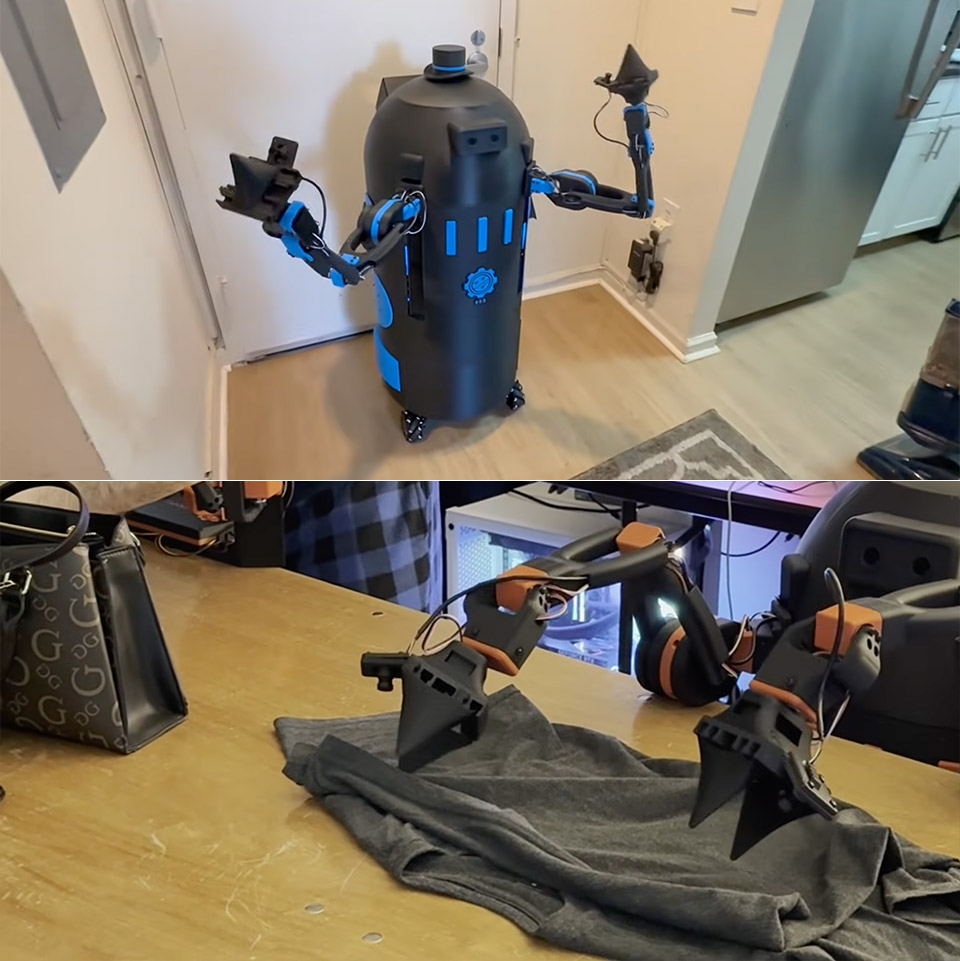
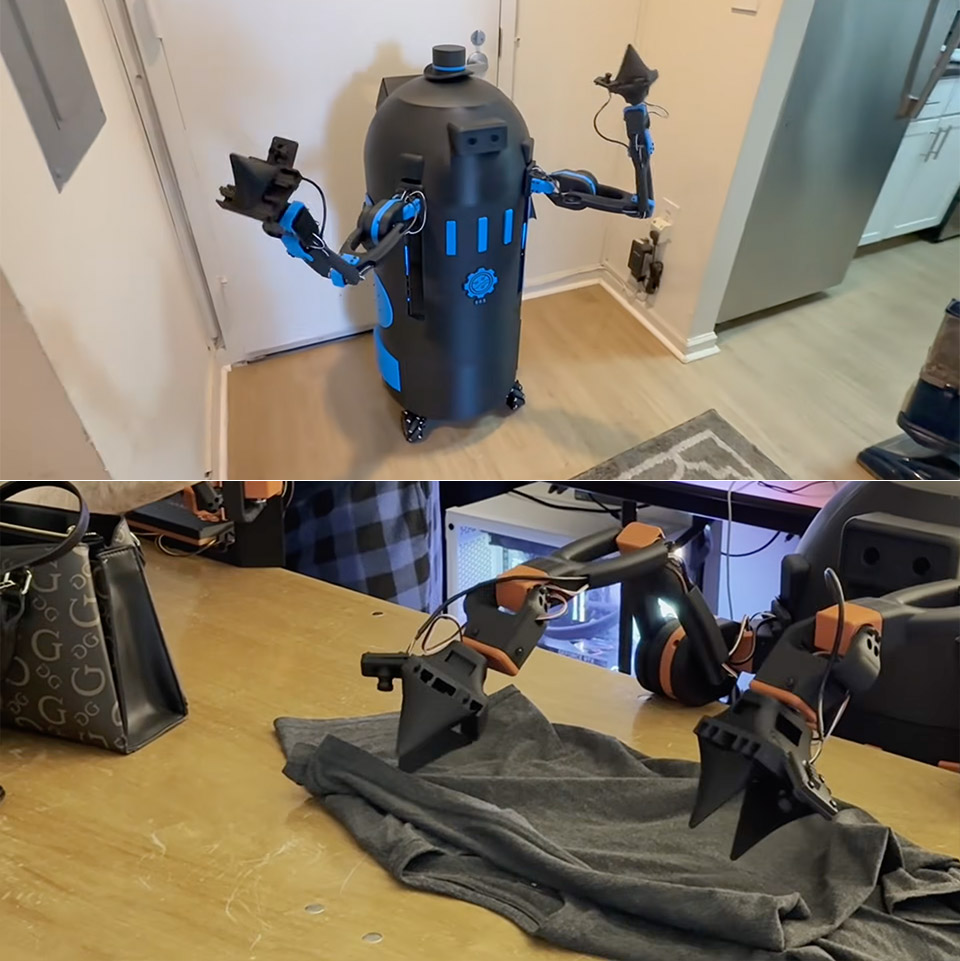
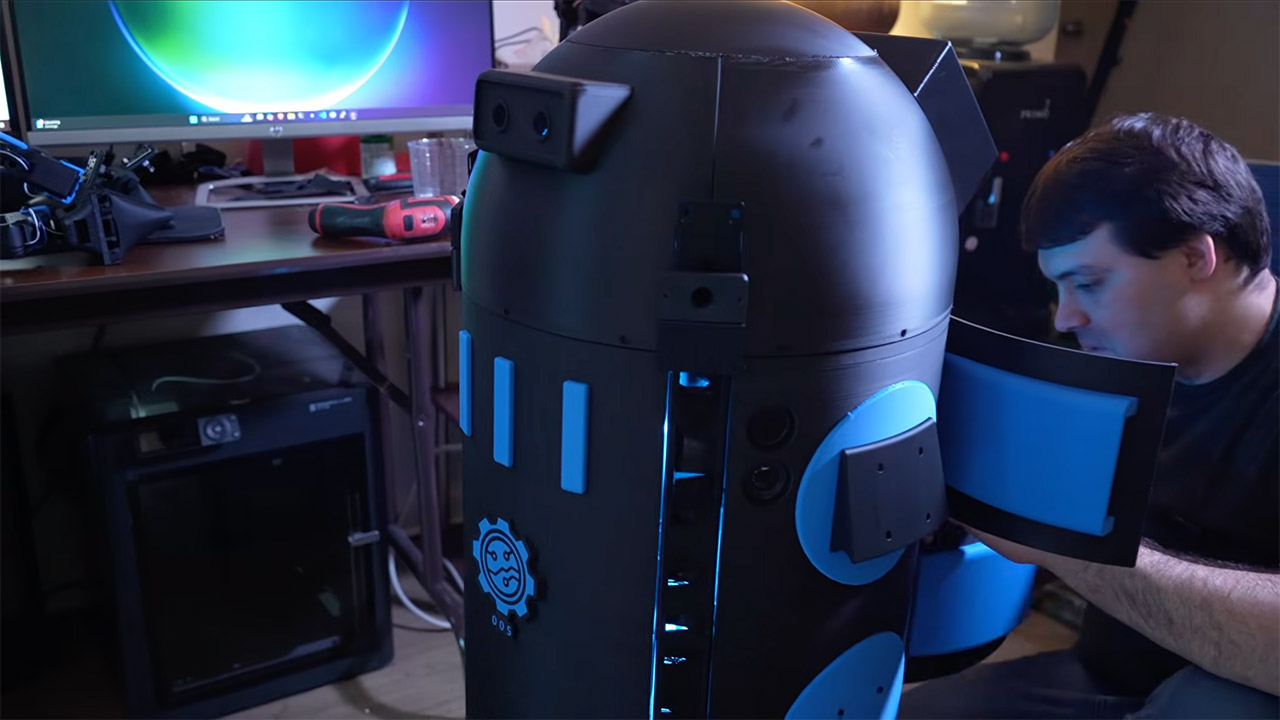
Maker Nick Maselli created a pretty decent laundry folding robot prototype in under 24 hours for a client who simply needed the job done. He named it Sourccey, and it’s essentially a movable, cylindrical box with a dome on top, two articulated arms, and a center vertical lift to access items. The majority of the structural components, from arm parts to outer enclosures, were created using a 3D printer that produced PLA filament. The fact that it can print so quickly allows them to swap items out throughout the build window.
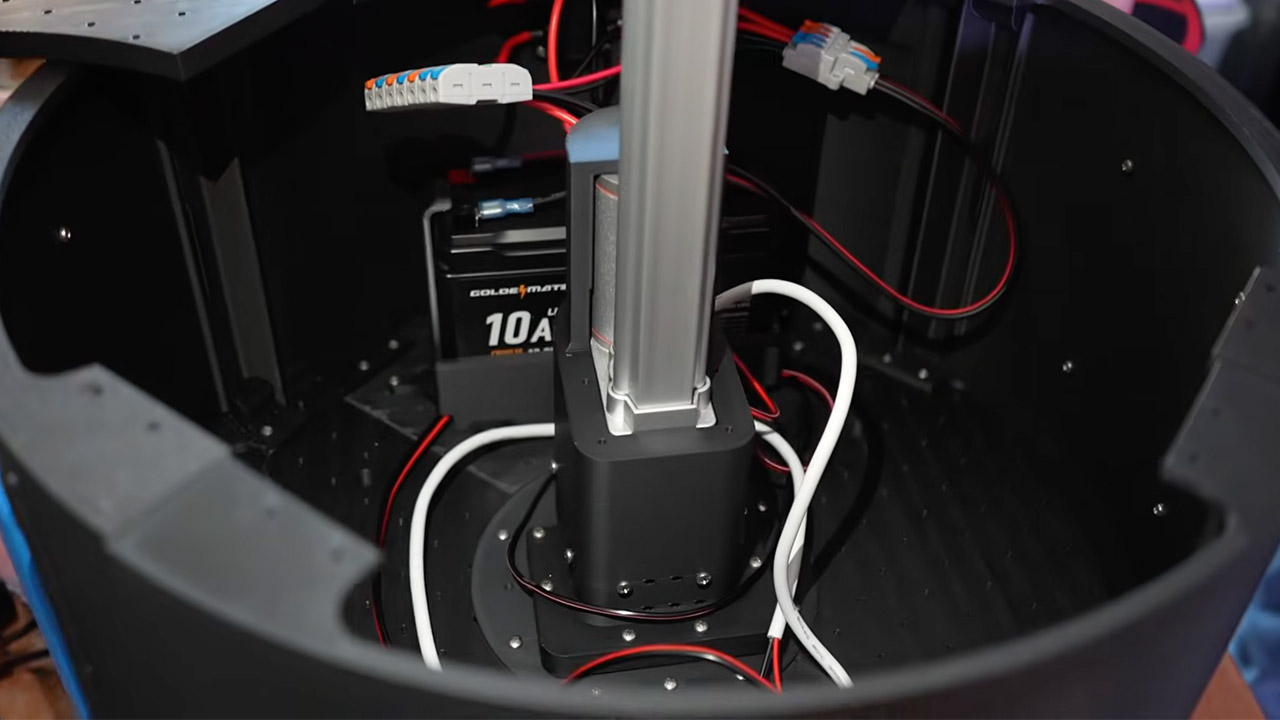
A Raspberry Pi 5 handles all computational tasks, including taking feeds from four cameras, controlling the motor drivers, running a display, speakers, and microphone, and overseeing the entire operation. Its power source is a 12 volt, 10 amp hour lithium iron phosphate battery, which was chosen for its safety and longevity. A custom power distribution board, combined with voltage converters, ensures that everything receives a constant supply without overloading.
Height, width and thickness (standing): 1270x450x200mm Height, width and thickness (folded): 690x450x300mm Weight with battery: approx. 35kg
Total freedom (joint motor): 23 Freedom of one leg: 6 Waist Freedom: 1 Freedom of one arm: 5
Maximum knee torque: 90N.m Maximum arm load: 2kg Calf + thigh length: 0.6m Arm arm span: approx. 0.45m Extra large joint movement space Lumbar Z-axis…
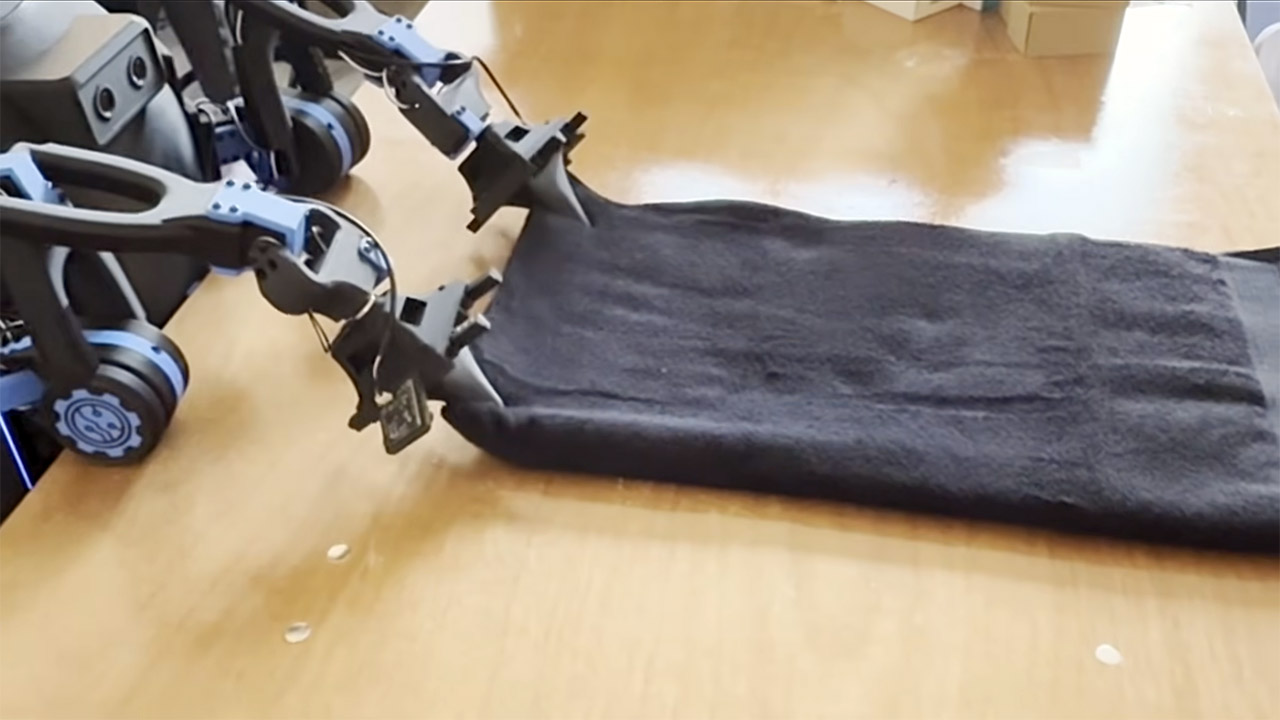
To achieve proper folding, the arms use several servos for ultra precise, coordinated motion. A vertical Z-axis actuator runs through the center, allowing the arms to reach up and grab objects from the floor or a table. The grippers at the ends hold the fabric tight. Getting all of stuff sorted requires careful wiring and safety features like as fuses to keep everything stable.
The way it folds a towel or whatever it is avoids all the hard-coded stuff and instead relies entirely on artificial intelligence. A human demonstrates how to perform the move first, which serves as training data for the AI model, which then trains overnight on several powerful GPUs. Once it’s all done, the model is deployed back to the Raspberry Pi, and Sourccey can then do its thing independently: cameras spot a towel, work out where it is and what it looks like, grab it, and then execute the folding sequence it learned on the Pi, but here’s the thing, it’s not just tough on this one task, it can handle the natural give in fabric because it’s using vision to guide the whole process and learned patterns rather than just being told exactly what
The entire build took less than 24 hours, with the hardware assembled during the day and the AI training taking place at night. There were a few hiccups along the way, such as a missing motor clip that needed to be resoldered and a defective 3D-printed bit that needed to be reprinted, as well as a couple of team members calling it a day early, which cut into their time, but despite the rush, everything seemed to work fine and the prototype completed the task. [Source]
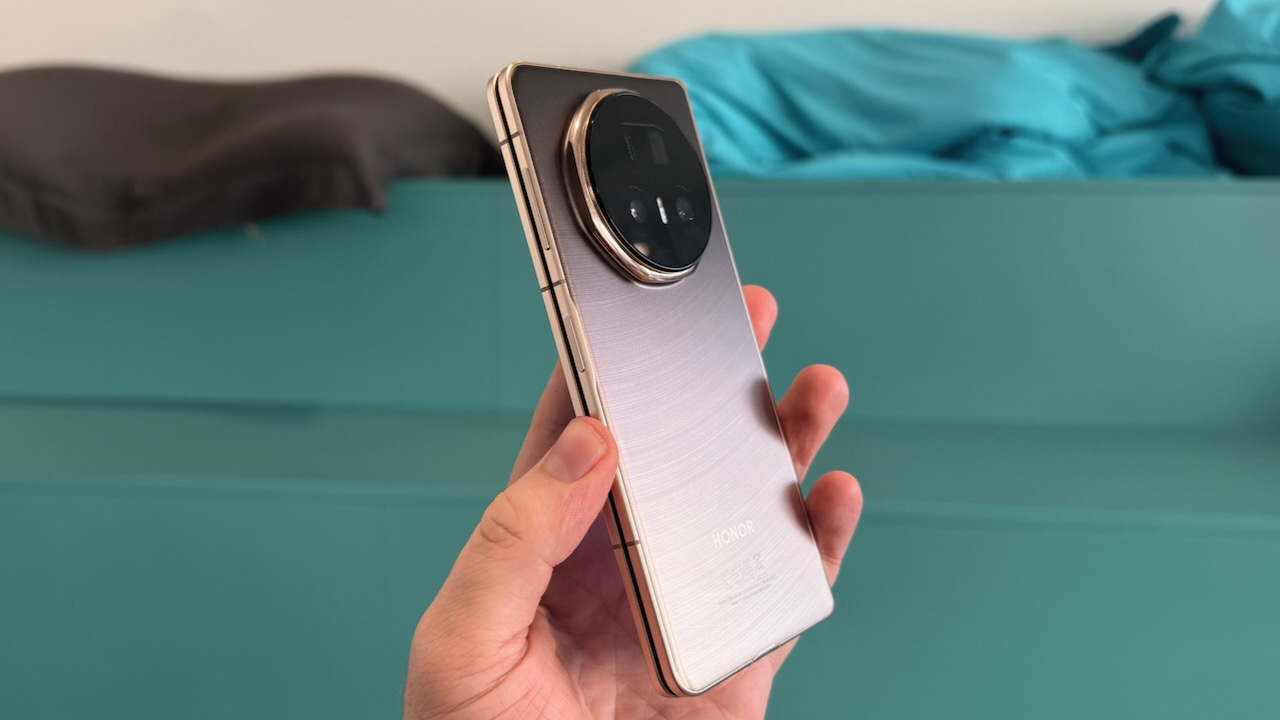
Certification from China’s CCC authority reveals support for 120W wired charging, which is nearly double the 67W maximum offered by the Magic V5.
Advertisement
This upgrade could make the V6 the quickest foldable to recharge, a significant advantage in a category where battery life and charging speeds remain pain points. For comparison, Samsung’s Galaxy Z Fold7 is still capped at 25W wired charging, while Google’s Pixel 10 Pro Fold manages 39W, and Oppo’s Find N5 sits in the 67W range.
Advertisement
The leak also indicates that Honor will release two versions of the Magic V6, labelled PNM‑AN10 and PNM‑AN20, with the latter expected to include Beidou satellite messaging support. This feature could appeal to users who value connectivity in remote areas, though it is unlikely to be a mainstream selling point in the UK.
More universally appealing is the rumoured battery capacity: the flagship model may carry a 7150mAh cell, while cheaper variants could ship with a slightly smaller 6,850mAh unit. Either way, the combination of high‑capacity batteries and ultra‑fast charging should deliver a practical improvement in day‑to‑day usability.
Advertisement
Performance is another area where Honor appears determined to compete. All Magic V6 models are expected to run Qualcomm’s Snapdragon 8 Elite Gen 5 chipset, which integrates Oryon Gen 3 cores capable of up to 4.6GHz and offers multi‑core performance that rivals Apple’s A19 Pro.
This SoC also supports advanced AI features and high‑bandwidth LPDDR5X memory, ensuring the V6 will be competitive with other 2026 flagships. Combined with rumours of a 200MP primary camera and periscope lens, the Magic V6 could be one of the most technically ambitious foldables yet.
Finally, the timing of the launch gives Honor a chance to capture attention before rivals announce their own MWC updates. If the Magic V6 delivers on its charging promises, it could set a new benchmark for foldables and force competitors to rethink their approach.
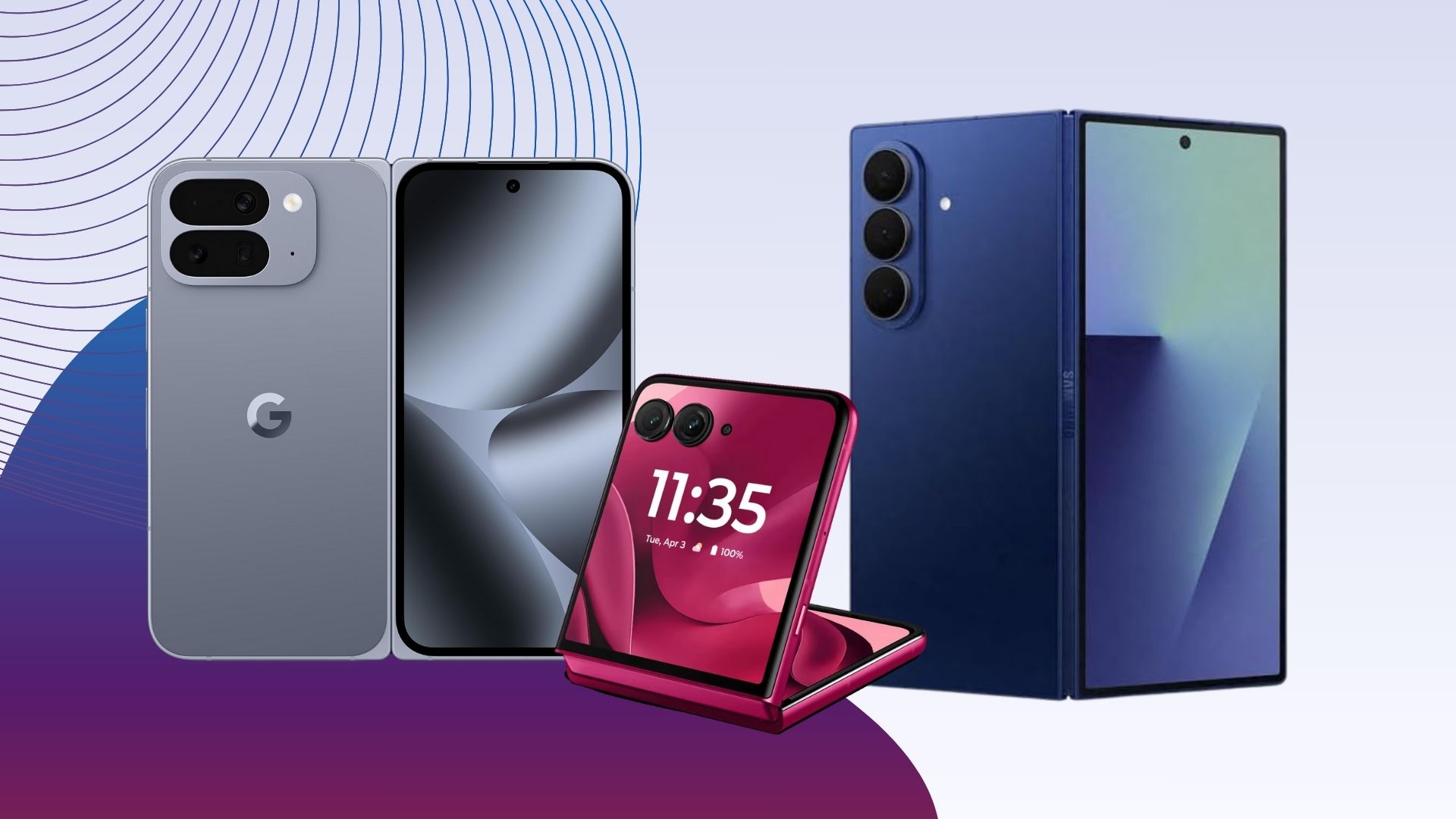
Foldable smartphones have gone from strength to strength in the past couple of years; these once-chunky, fragile devices are now slimmer, more robust and more capable, and that means they’re more tempting than ever.
The question is, which foldable should you buy? While there was initially a limited number of foldable available, that number has greatly expanded in the past 12 months. Whether you’re looking for the slimmest book-style foldable around, a compact clamshell-style foldable that fits in the palm of your hand or something that helps you multitask on the go, there’s a foldable for your needs.
Generally, it’s worth keeping in mind that foldable phones are still more fragile than regular smartphones with the flexible nature of foldable screens means that there is more potential for damage, but this could be a worthy trade-off depending on your needs.
In fact, durability issues and premium prices are the main reasons why we’ve yet to give any foldable the coveted five-star rating and remain key reasons to opt for a traditional flagship – though a couple of foldable entries have come closer than ever, suggesting that foldables are slowly but surely closing the gap.
However, if that doesn’t put you off, keep reading. In this list, we’ve detailed the top-performing foldables we’ve tried and tested.
Advertisement
Best foldable phones at a glance
SQUIRREL_ANCHOR_LIST
Advertisement
Learn more about how we test phones
All the phones included in our Best foldable phone list have been thoroughly tested and used by one of our expert reviewers.
We don’t review phones based purely on benchmark scores or marketing hype. We use them as our everyday device for the review period, which is usually at least five days but can often be much longer if the device requires it.
Whenever you read a phone review published on Trusted Reviews, you should be confident that the reviewer has put their personal SIM card into the phone, synced across their most-used apps and logged into all their typical accounts. We do this so you’ll feel confident in our review and trust our verdict.
Our review process includes a mixture of real-world tests, more than 15 measured tests, and industry-standard benchmarks. We believe this gives the most rounded view of a device.
Advertisement
Pros
Excellent and brighter external display
Solid camera performance
Unique finish options
Smooth performance
Cons
Only 3 years of Android OS updates
Moto AI still needs work
No telephoto lens
Pros
Lightest book-style foldable around
Ultra thin design makes it really nice to use
Larger, wider, wholly more useful screens
Same main camera as Galaxy S25 Ultra
Cons
Relatively small 4400mAh battery
Slow 25W wired charging
Zoom camera could be better for the price
Pros
Larger cover screen is a much-needed improvement
More convenient 21:9 ratio screen is much easier to use
Improved camera performance
Fast, flagship performance with strong battery life
Cons
Cover screen software could be better
Samsung software is full of duplicate/redundant apps
No dedicated zoom camera
Pros
Really solid, durable build for a foldable
IP68 is the highest dust-water resistance in a folding phone
Gorgeous, colour-rich displays with great stereo sound
Cons
It’s big and heavy
Underpowered compared to competitors
Zoom and ultrawide cameras are underwhelming in lower light
Pros
Bright displays
Excellent cameras
Proper two-day battery life
Solid performance across the board
Cons
MagicOS is still a letdown
Excellent and brighter external display
Solid camera performance
Unique finish options
Smooth performance
Only 3 years of Android OS updates
Moto AI still needs work
No telephoto lens
Samsung may have been the first company to truly bring new-age flip phones to the masses, but it’s Motorola that’s taken the torch and run with it, emboldening the concept with key areas of innovation that have culminated thus far in the outstanding Motorola Razr 60 Ultra.
Advertisement
The key headline here is that both the internal and external displays have been given several upgrades. For starters, the internal display is now slightly bigger, moving from 6.9-inches to 7-inches, so you have more space than ever to help make gaming and watching films feel even more immersive.
The brightness of that internal display has also shot up to 4500nits, making it easier than ever to use outdoors against direct sunlight. The 4-inch external display hasn’t been left behind either, with that also seeing a brightness boost, going from 2400nits to now 3000nits, which really goes a long way towards making the more compact screen pop.
Even with those screen upgrades in tow, Motorola hasn’t forgotten about the one thing that should always be the focus of any foldable device: durability. Thankfully the company has introduced a new titanium-infused hinge which not only feels more sturdy than before, it has also allowed the phone to now carry an IP48 dust and water resistance rating, which significantly outperforms the IPX8 rating of the Razr 50 Ultra.
Powering all of this is the super fast Snapdragon 8 Elite chipset, which has a sizeable 16GB RAM to lean on for everyday operations. You won’t have any issues playing the latest games here, and with 512GB storage as standard, you won’t be running out of room where apps are concerned either.
Advertisement
SQUIRREL_PLAYLIST_10207648
Lightest book-style foldable around
Ultra thin design makes it really nice to use
Larger, wider, wholly more useful screens
Same main camera as Galaxy S25 Ultra
Relatively small 4400mAh battery
Slow 25W wired charging
Zoom camera could be better for the price
The Samsung Galaxy Z Fold 7 marks a genuine leap forward for Samsung’s book-style foldable, finally delivering the ultra-slim, lightweight design many have been waiting for.
Advertisement
Shedding much of the bulk and weight of its predecessors, the 4.2mm-thick Fold 7 is now among the thinnest foldables around, and at 215g, it’s both lighter than the book-style competition and even the Galaxy S25 Ultra. It makes it a joy to handle, and it’s almost unnoticeable in the pocket as a result.
Samsung has also nailed the usability of both displays this year. The wider 6.5-inch cover screen is genuinely practical for everyday tasks, while the 8-inch internal panel feels more solid with a way less intrusive crease. Both screens are bright, vibrant and ideal for everything from gaming to multitasking.
Camera performance is another highlight, with the main 200MP sensor borrowed from the S25 Ultra delivering sharp, detailed shots that put the Fold 7 on par with regular bar phones. General performance is equally impressive, thanks to the Snapdragon 8 Elite and up to 16GB of RAM.
Battery life and charging remain the main drawbacks with a 4400mAh cell and 25W charging falling far behind rivals. Still, for most users, the Fold 7 will comfortably last a day, and the overall package is compelling enough to make it the standout book-style foldable of 2025.
Advertisement
SQUIRREL_PLAYLIST_10207783
Larger cover screen is a much-needed improvement
More convenient 21:9 ratio screen is much easier to use
Improved camera performance
Fast, flagship performance with strong battery life
Cover screen software could be better
Samsung software is full of duplicate/redundant apps
No dedicated zoom camera
TheSamsung Galaxy Z Flip 7 takes the crown for the best design in the foldable space, with a slimmer, lighter build and a hinge that feels both robust and satisfyingly smooth.
Advertisement
The new 4.1-inch cover screen finally makes the Flip genuinely useful when closed, and the wider 6.9-inch internal screen is a joy to use, with a less noticeable crease and a more comfortable aspect ratio for typing and media.
Powered by the Exynos 2500, the Flip 7 delivers fast, reliable performance for everyday tasks, and the 4300mAh battery is the biggest yet in a Flip, easily lasting a full day as a result.
Camera performance has also been improved, with more natural colours and solid results in most conditions, though the lack of a zoom lens remains a limitation.
The software, meanwhile, is packed with features and offers seven years of updates, but the cover screen experience still trails behind Motorola’sRazr 60 Ultra in terms of flexibility and ease of use.
Advertisement
Still, if you want a foldable that nails the basics and looks fantastic doing it, the Z Flip 7 is a great choice.
SQUIRREL_PLAYLIST_10207784
Advertisement
Really solid, durable build for a foldable
IP68 is the highest dust-water resistance in a folding phone
Gorgeous, colour-rich displays with great stereo sound
It’s big and heavy
Underpowered compared to competitors
Zoom and ultrawide cameras are underwhelming in lower light
If you want a foldable but are concerned about its durability, then the Pixel 10 Pro Fold is an easy recommendation. Not only does it sport a thick frame that feels reassuringly sturdy in hand, but it’s the first foldable with an IP68 rating.
In addition, the Pixel 10 Pro Fold benefits from a new dual-layer protection over the display and a redesigned hinge which, according to Google, can handle up to 10 years’worth of folding and unfolding.
Otherwise, its 6.4-inch OLED cover display is brilliant for quick uses, thanks to its convenient aspect ratio that makes quickly replying to messages, following a route on Google Maps or operating the camera easy without needing you to open the phone up.
Even so, the main draw is undoubtedly the eight-inch square OLED panel which is great to use and offers a vibrant picture quality. Sure, you will have to overlook the visible crease, but it’s still a great display for streaming, gaming and multitasking between apps too.
Advertisement
The Pixel series has a reputation for being among the best camera phones, and although the Pixel 10 Pro Fold might not be as impressive as the Pixel 10 Pro XL, it still performs admirably. While its 48MP main lens is supported by measly 10.8MP telephoto and 10.5MP ultrawide lenses, the 10 Pro Fold can still take a good shot in most conditions.
Powering the Pixel 10 Pro Fold is Google’s Tensor G5 chip, which although doesn’t achieve particularly high benchmarking scores, still performs well in everyday use – and especially when running Google’s AI toolkit. In fact, arguably one of the reasons to opt for the Pixel 10 Pro Fold is its range of AI features from Magic Editor and Camera Coach for photography, to Live Translate and the use of Gemini.
Like the rest of the Pixel 10 series, the Pixel 10 Pro Fold’s battery life is decent enough as it should comfortably see you through a day’s use. Charging speeds aren’t particularly fast, with 30W support, but it’s enough to see a 50% charge in about 30 minutes.
If you want to finally embrace a foldable smartphone but worry about its longevity, then the Google Pixel 10 Pro Fold is a brilliant choice.
Advertisement
Bright displays
Excellent cameras
Proper two-day battery life
Solid performance across the board
MagicOS is still a letdown
Building upon the already excellent foundations of the Honor Magic V3, the V5 doesn’t just take Honor’s foldable range to a new level, it elevates the market as a whole to show just how far the engineering in this sector has come. This is the phone that other foldables will be emulating for quite some time to come.
The biggest boon with the Magic V5 is just how sleek the whole thing is. With the slimmest version being just 8.8mm thick and weighing only 217g, it honestly doesn’t feel like you’re carrying a foldable phone as it’s barely that much bigger than a standard candy-bar style phone. That lightweight frame also makes it easy to use when unfolded, as it never leads to fatigue of holding the device as you enjoy the benefits of the larger display.
Advertisement
Speaking of displays, while the outer display is near identical to the one from the V3, the interior 7.95-inch panel has been given a serious spec boost to pack the same 5000 nits peak brightness as the outer display. This degree of parity between the two screens now means that you’re getting a top-shelf experience regardless of which one you’re looking at.
Also helping the phone to stand out against its closest competitors is the use of the super fast Snapdragon 8 Elite chipset which doesn’t just allow the device to blitz through tasks such as writing up emails or scrolling through social media – it also enables a superior gaming experience too. We were able to get through a couple of rounds of Call of Duty Mobile running with impressive levels of performance, which is only made all the more immersive when you play on the larger display.
Maybe what is most perplexing about the Honor Magic V5 is that, in spite of its super slim frame and all of the tech that’s been crammed in here from the flagship level chipset to the versatile camera array, it still manages to bring the heat where battery life is concerned. With a massive 5820mAh cell that uses silicon carbon technology, the Magic V5 can last for up to two days at a time, so you never have to worry about serious battery drain when running intensive apps.
Advertisement
FAQs
Is Apple going to make a foldable phone?
Apple hasn’t released or announced any intention to make a foldable phone yet, however rumours swirl that we’ll see a big play for this category from the Cupertino company in the coming years. For now, all the best foldable phones run on Android.
Advertisement
Advertisement
Test Data
Motorola Razr 60 Ultra
Samsung Galaxy Z Fold 7
Samsung Galaxy Z Flip 7
Google Pixel 10 Pro Fold
Honor Magic V5
Geekbench 6 single core
2828
2318
2251
2317
1151
Geekbench 6 multi core
8552
8828
7584
6251
4818
1 hour video playback (Netflix, HDR)
6 %
8 %
7 %
7 %
–
30 minute gaming (light)
5 %
7 %
6 %
5 %
–
Time from 0-100% charge
80 min
87 min
89 min
–
70 min
Time from 0-50% charge
39 Min
31 Min
28 Min
–
30 Min
30-min recharge (no charger included)
40 %
49 %
54 %
–
50 %
15-min recharge (no charger included)
23 %
24 %
29 %
–
29 %
3D Mark – Wild Life
6294
5574
4896
3328
–
GFXBench – Aztec Ruins
105 fps
70 fps
109 fps
49 fps
60 fps
GFXBench – Car Chase
95 fps
71 fps
107 fps
52 fps
74 fps
Full Specs
Motorola Razr 60 Ultra Review
Samsung Galaxy Z Fold 7 Review
Samsung Galaxy Z Flip 7 Review
Google Pixel 10 Pro Fold Review
Honor Magic V5 Review
UK RRP
£1099.99
£1799
£1049
£1749
£1699.99
USA RRP
–
$1999
$1099
$1799
–
Manufacturer
Motorola
Samsung
Samsung
Google
Honor
Screen Size
7 inches
8 inches
6.9 inches
8 inches
–
Storage Capacity
512GB
256GB, 512GB, 1TB
256GB, 512GB
256GB, 512GB, 1TB
512GB
Rear Camera
50MP + 50MP
200MP + 12MP + 10MP
50MP + 12MP
48MP + 10.8MP + 10.5MP
50MP wide, 64MP telephoto, 50MP ultra-wide
Front Camera
50MP
10MP + 10MP
10MP
10MP
Dual 20MP cameras
Video Recording
Yes
Yes
Yes
Yes
Yes
IP rating
Not Disclosed
Not Disclosed
Not Disclosed
IP68
IP57
Battery
4700 mAh
4400 mAh
4300 mAh
5015 mAh
5820 mAh
Wireless charging
Yes
Yes
–
Yes
Yes
Fast Charging
Yes
Yes
Yes
Yes
Yes
Size (Dimensions)
74 x 7.1 x 171 MM
143.2 x 4.2 x 158.4 MM
75.2 x 6.5 x 166.7 MM
150.4 x 5.2 x 155.2 MM
74.3 x 8.8 x 156.8 MM
Weight
199 G
215 G
188 G
258 G
217 G
ASIN
B0F68G1YR8
–
–
–
–
Operating System
Android 15
OneUI 8 (Android 16)
OneUI 8 (Android 16)
Android 16 (Material 3 Expressive)
MagicOS
Release Date
2025
2025
2025
2025
2025
First Reviewed Date
20/05/2025
17/07/2025
09/07/2025
08/10/2025
28/08/2025
Resolution
2992 x 1224
2184 x 1968
2640 x 1080
2076 x 2152
x
HDR
Yes
Yes
Yes
Yes
Yes
Refresh Rate
165 Hz
120 Hz
120 Hz
120 Hz
120 Hz
Ports
USB-C
USB-C
USB-C
USB-C
USB-C
Chipset
Qualcomm Snapdragon 8 Elite
Qualcomm Snapdragon 8 Elite for Galaxy
Samsung Exynos 2500
Google Tensor G5
Snapdragon 8 Elite
RAM
16GB
12GB, 16GB
12GB
16GB
16GB
Colours
Pantone Rio Red, Pantone Cabaret, Pantone Mountain Trail, Pantone Scarab
YouTube is rolling out a new AI-powered playlist-generation feature that allows Premium users on iOS and Android to use text prompts to create playlists.
Users can go to the Library tab, tap the “New” button, and select the “AI playlist” option to get started. They can then use text or voice to enter the prompt of their choice, such as “raging death metal,” “sad post rock,” “progressive house mix for a chill party,” “indie pop” or “90s classic hits,” to build a playlist.
YouTube Premium and @YouTubeMusic Premium users can now instantly turn an idea, mood or genre into a personalized playlist using our new AI playlist feature 🎧
Here’s how to use it:
1. On Android & iOS, tap the “New” button in the Library tab of YouTube Music 2. Select “AI… pic.twitter.com/YR1GVCqwvu
YouTube has been toying around with using AI to create playlists for a while. In July 2024, the company was testing a feature to let people create custom radio stations using prompts in the U.S.
Other rival streaming services like Spotify, Amazon Music and Deezer, have also rolled out AI-powered playlist or radio creation features.
YouTube has been trying to make its Premium plan more attractive to users. Earlier this week, the company started restricting free users from viewing song lyrics on the YouTube Music app. The company told TechCrunch that the restriction was an experiment it was running “with a small percentage of ad-supported users,” and that song lyrics are available to the vast majority of free users.
WhatsApp web video calls are starting to roll out, so you can place voice and video calls straight from a browser tab. You won’t need the desktop app for the basics anymore, at least if the feature has reached your account.
The first wave is limited to one-to-one chats. Open a conversation, tap the call icon, and you can start a voice or video call without leaving WhatsApp Web. Group calls aren’t part of this initial release.
This is a practical fix for people who live in the browser all day, and it’s especially useful on Linux, where WhatsApp still doesn’t offer an official desktop app.
The web version gets serious
WhatsApp has been building toward this for roughly a year, aiming to make the web experience feel closer to its desktop apps instead of a messaging-only companion. The big change is that calling now sits alongside chat in the same window, which reduces friction when you’re working on a laptop.
Advertisement
Security doesn’t shift with the move to the browser. Calls on WhatsApp Web keep end-to-end encryption, using the Signal protocol WhatsApp already uses across messages, calls, and status updates.
WhatsApp Web also supports screen sharing, but only during a video call. If your goal is to show a document or walk someone through a settings menu, you’ll need to start a video session even if you don’t plan to be on camera.
The next milestone is bringing group calling to the web. The same report points to group calls with up to 32 participants, plus extras like call links and scheduled calls, once that phase is ready.
What you should do now
WhatsApp has begun its gradual rollout of native voice and video calling for beta users. If you’re in the WhatsApp Web beta, the simplest check is inside a one-to-one chat. If you see calling controls, you can use the browser for voice and video calls, plus screen sharing during video.
Advertisement
If you don’t see it yet, you’re likely still waiting on the wider rollout, and WhatsApp hasn’t said which browsers or platforms get priority first. For now, treat web calling as the fast option for one-to-one chats, and keep the phone app handy if group calls are part of your routine.
London-based energy software company Tem has closed a $75 million Series B round led by Lightspeed Venture Partners, with additional funding from AlbionVC, Atomico, Hitachi Ventures, Schroders Capital, Voyager Ventures, Allianz, and others. The round reportedly values the company at more than $300 million and will fund its expansion into the United States and Australia. Tem builds an AI-native energy platform designed to automate the pricing, matching, and execution of electricity transactions, a market that has long relied on manual processes and legacy infrastructure. Its core system uses machine learning to forecast supply and demand, match buyers with suppliers, and… This story continues at The Next Web