Tech
Solid-State EV Batteries Just Got One Step Closer To American Roads

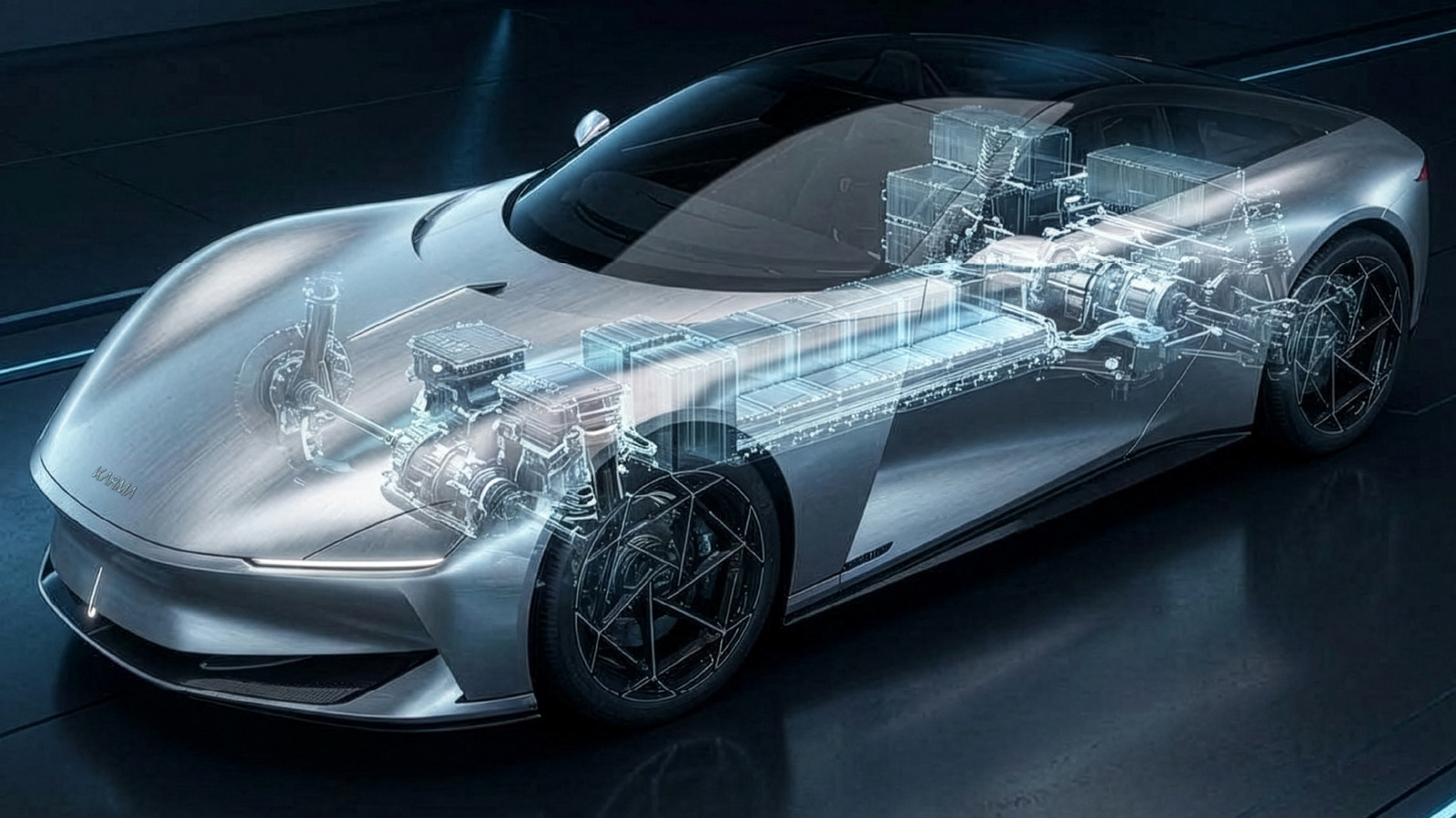

Just about every modern electric vehicle on American roads is powered by one of three battery types: lithium-iron phosphate (the most common, also known as LFP), nickel-manganese cobalt (NMC), and nickel-cobalt aluminum (NCA). Each of these is a relatively mature and well-understood system, with each holding certain advantages — LFP batteries are cheap and stable, whereas NCA batteries are energy-dense and powerful. But these EVs have only really been commonplace on today’s roads for the past two decades or so, a comparatively small amount of time when measured against the common internal combustion engine’s history spanning almost 140 years. Technology advances at an ever-increasing pace, and we may be on the precipice of that next evolution — at least on American roads.
Enter the solid-state battery, a pioneering technology that promises to combine all the benefits of the aforementioned configurations into a single entity. High performance, excellent energy density, potentially lasting many years, and stable thermal conductivity, though it comes at a steep cost — one that Karma Automotive appears to be willing to pay. As of February 2026, Karma Automotive announced plans to ship the first mass-production vehicle powered by solid-state batteries stateside, equipped with Factorial FEST SSBs.
Karma Automotive is the only American ultra-luxury manufacturer offering a diverse portfolio of vehicles, a specialized firm dedicated to producing EVs deep into six-figure USD territory. The company currently fields six distinct models, but only one will receive the solid-state battery at first: the Kaveya super coupe, scheduled for a 2027 debut. Let’s dive in and explore more about the car and solid-state batteries, along with what the technology promises to accomplish.
How solid-state batteries work
First thing’s first: what is a solid-state battery and how does it differ from most other EV battery types? In short, the typical EV battery houses two poles on either side, the anode and cathode — positive and negative, respectively. In between these is an ion that’s constantly shifting from the positive to negative side, like a relay runner, going from one electrolyte solution to the other. There are several types of these batteries, the most common of which is lithium-ion, but they all use a sort of gel-like electrolyte. Solid-state batteries, or SSBs for short, use a solid electrolyte instead, providing a more stable and energy-dense solution to power storage.
There are several variants of SSBs in service; the one Karma Automotive is testing is actually known as a quasi-solid-state battery. Produced by Factorial Energy, the quasi-SSB design prioritizes a combination of thermal stability (quasi-SSBs are inherently far less flammable than standard lithium-ion batteries) and high energy density, which translates to double the range. The company website cites range figures of at least 500 miles for the next generation of EV while weighing roughly one third less, based on the typical 90 kWh battery. Factorial also lists the Solstice SSB as a potential candidate for future EVs alongside the FEST quasi-SSB.
With standard battery technology fully matured, the current consensus is that SSBs represent the next technological leap forward for battery technology. Implementing such designs in cars holds a number of benefits: lighter vehicles with higher ranges, greater battery longevity, and greater power. However, because it’s still an emerging technology as far as EVs go, costs are currently prohibitively expensive for regular mass-production cars in the United States, and so you still can’t buy them for any U.S.-sold EV — yet.
The Karma Kaveya
As for the car itself, the Karma Kaveya is a sleek, ultra modern super coupe designed with a high-end grand tourer aesthetic. The name “Kaveya” is Sanskrit, meaning “power in motion,” a theme present in the promised statistics — Karma claims the high-end coupe to be capable of 0-60 times in less than 3 seconds and speeds in excess of 180 mph, thanks to its 1,000 hp powertrain. All of that is speculative for now, of course — especially given the emergent nature of the battery it houses.
According to the official figures listed on Karma’s website, the battery boasts a HV120 kWh output for a grand total of 1,270 lb-ft combined available torque, coupled with a 10-80% charging time of about 45 minutes. This contrasts an earlier estimate by Stellantis, which announced a partnership with Factorial back in April 2025 to use the batteries in Dodge demonstration vehicles to promote SSB technology; their figures listed an estimated charging time of 18 minutes from 15-90%.
Regardless of the battery’s performance now, it’ll likely exceed that of even the most advanced mass-production standard battery pack, albeit for a steep cost. But Karma isn’t in the business of cheap vehicles, so it’s a model that suits the company well. With the Kaveya representing the current cutting-edge of EV technology, Karma looks poised to leave a definitive mark in the ongoing electric arms race no matter what happens.
You must be logged in to post a comment Login