Tech
Sony BRAVIA Theater Trio Speaker System Solves Every Soundbar’s Biggest Problem
Soundbars are popular because they’re easy to set up and provide a sonic upgrade over TV speakers, sometimes a huge upgrade. But as TVs have gotten larger – and wider – every year, soundbars have basically stayed the same size. This means the little bar may not be able to match the audio to the on-screen action in terms of its soundstage width and immersion.
Most soundbars measure in at anywhere from 2 feet wide for the compact ones to around 4.5 feet wide for the larger ones. Sony’s flagship BRAVIA Theater Bar 9 is around 52 inches wide and SONOS’ flagship ARC Ultra is around 46 inches wide. Even the average 65-inch TV is wider than both at 57 inches. And if you’re opting for a 100-inch TV, those are around 88 inches wide – that’s over seven feet wide. This means the edges of your TV may each be up to two feet or more beyond the soundbar’s outermost speakers. And this can lead to the sound seeming much smaller than the picture.


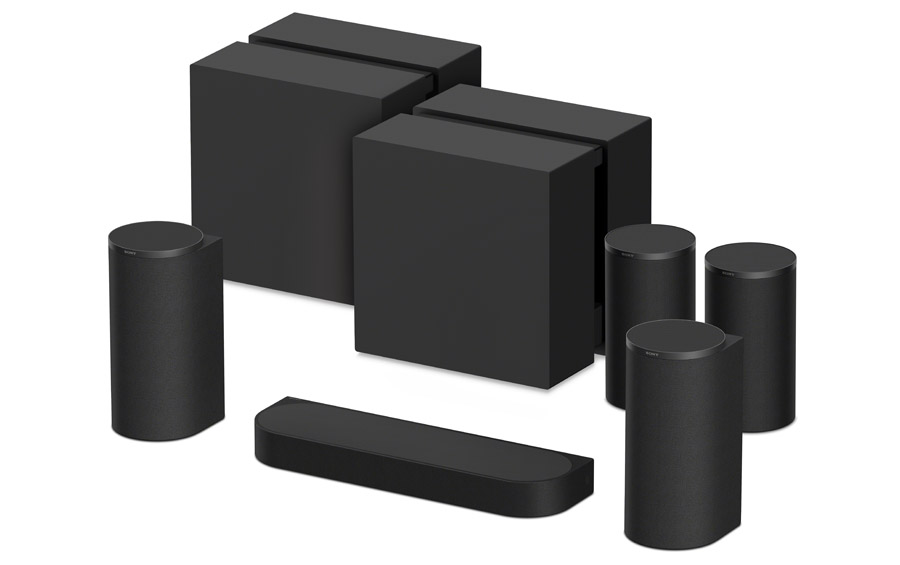
Sony just addressed this problem with their new BRAVIA Theater Trio. Also known by model number HT-A8, the Trio is a powered three-speaker system with dedicated left, center and right speakers that allows you to place your main speakers on either side of your TV or projection screen for a wider, more immersive soundstage even with the largest TV or projection screens.

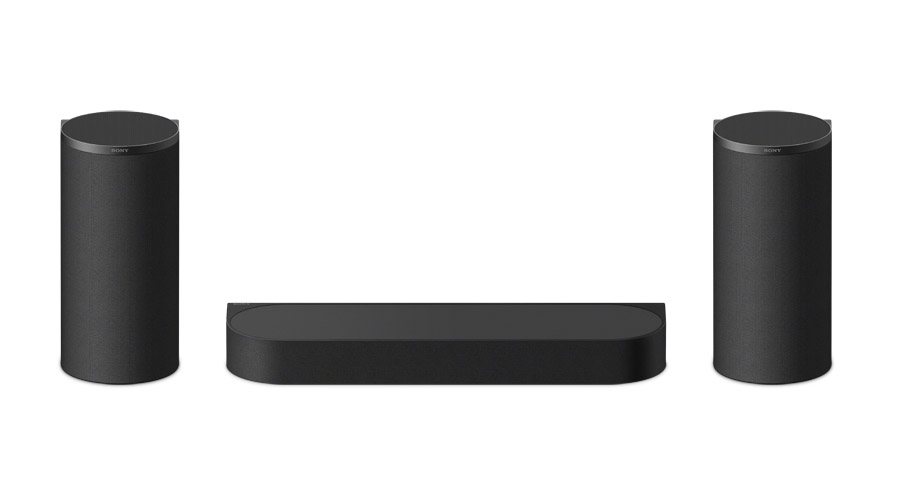
You may say, “But wait! Doesn’t Sony already offer the BRAVIA Theater Quad for just this reason?” And the answer is “YES!” But the new Trio has something the Quad doesn’t have: a dedicated center channel speaker. And this heps to improve dialog intelligibility compared to the phantom center created by the Quad system. The Trio also supports up to two powered subwoofers, while the Quad currently only supports one.
Based on our listening tests in events in Japan and New York, we’d say the BRAVIA Theater Trio works well on its own to improve the dynamics and immersiveness of TV sound, thanks to its high quality front and up-firing drivers. But it can also be upgraded with rear speakers and one or two powered subwoofers for much more immersive surround sound with deep extended bass.
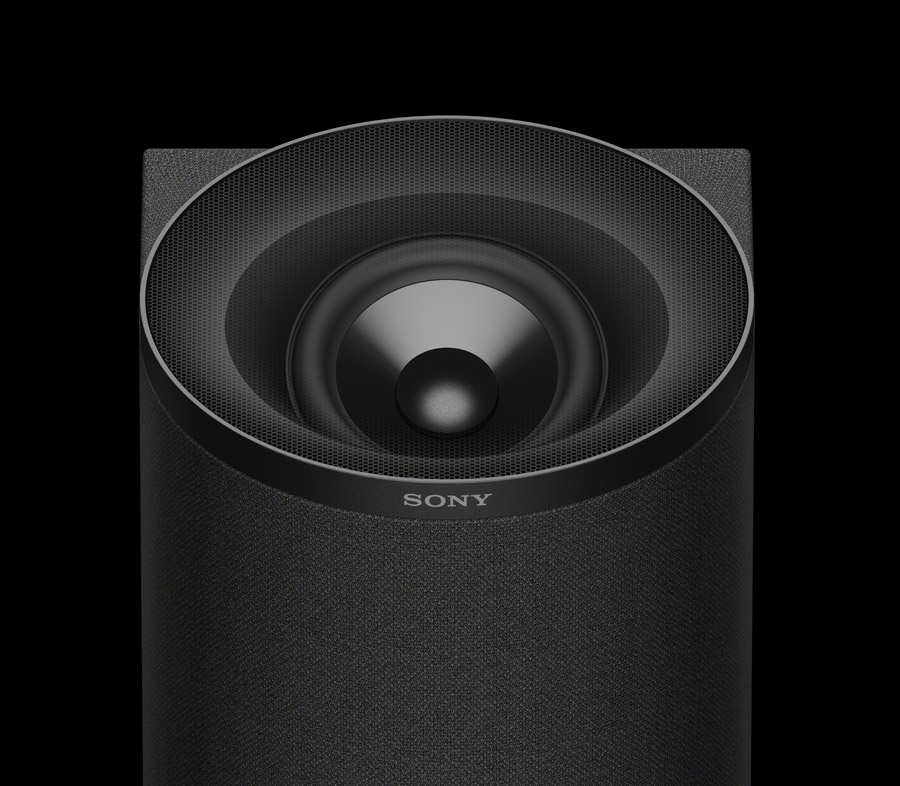
The BRAVIA Theater Trio is compatible with all of Sony’s current rear speakers and subwoofers including the Bravia Theater Rear 8 and Rear 9 surround speakers and the BRAVIA Theater Sub 7, Sub 8 and Sub 9 powered subwoofers. For best effect, we recommend adding the Rear 9 speakers as they include both front firing and top-firing drivers as well as an integrated swivel stand that allows you to point the front drivers toward your listening position.

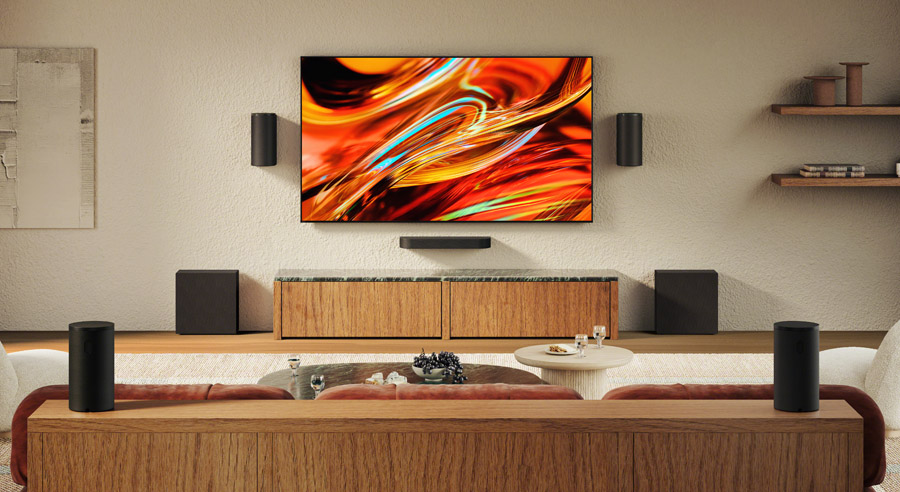
Which subwoofer you pick will depend on room size and how much you love that low bass. The entry-level Sub 7 would be fine in a small apartment or listening space to fill in that bottom end without shaking the walls. But in a larger room, you may want to consider the larger Sub 8, with one 8” driver or the flagship Sub 9 which features two force-balanced 8-inch bass drivers in a larger cabinet for deeper bass extension. To even out the bass response in all parts of your room, and provide the most substantial bottom end, the BRAVIA Theater Trio supports the addition of a second subwoofer.

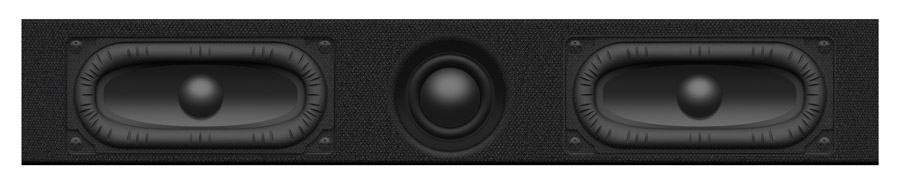
Like a soundbar, the Trio needs no separate amplifier or receiver as it’s got the power built in. Just connect one HDMI cable from the TV or projector’s HDMI ARC/eARC port to the center channel speaker and plug it into wall power and that center speaker unit communicates wirelessly with the rest of the speakers in the system. The front speakers, and any optional rear speakers and subwoofers do need their own power connections, however, as they need electricity for both the built-in amplifiers and wireless connectivity.
All Hype? Or Is There Some Merit Here?
We got to hear a demo of the full BRAVIA Theater Trio system at Sony’s headquarters in Tokyo earlier this year. It was matched with two of the company’s flagship BRAVIA Theater Sub 9 subwoofers and a pair of the BRAVIA Theater Rear 9s in the rear. The system provided excellent, dynamic sound overall, which was more than a match for the 115-inch BRAVIA 9 II True RGB TV it was paired with. Bass was deep and extended, thanks to the dual subs, and dialog was clear and crisp. Music and effects extended nearly the full width, height and depth of the room, giving the whole experience a dynamic cinematic feel.

The Trio isn’t replacing the Quad. It’s just providing another option for those who like the idea of variable width front left and right speakers and a dedicated center channel, without the wiring complexity of an A/V receiver and passive speakers.
Keep it in the Family (BRAVIA Family)
If you match the Trio up with a Sony TV, then you’ll be able to make all your audio adjustments right in the TV’s quick settings menu, and you’ll be able to take advantage of Sony’s AI-enhanced Voice Zoom 3 feature which elevates dialog without impacting the rest of the soundtrack.

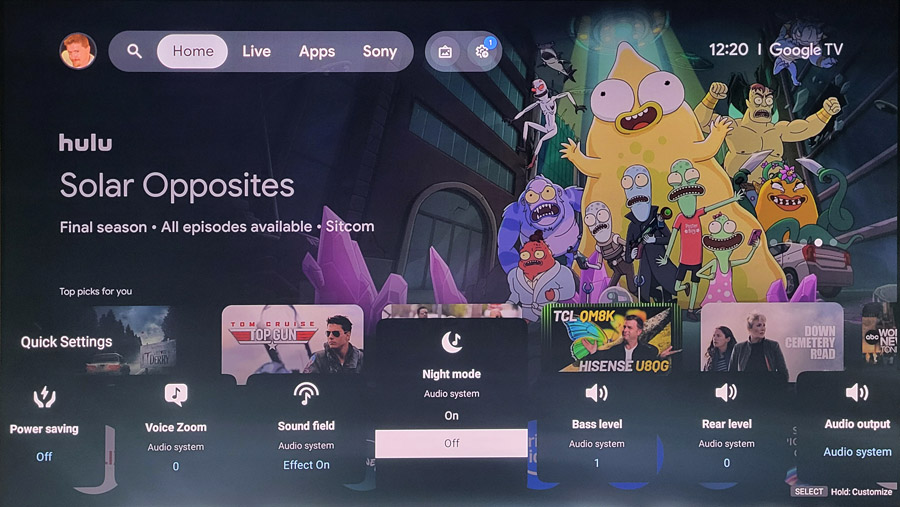
The Sony BRAVIA Theater Trio system can decode Dolby Atmos and DTS:X immersive surround sound, in both lossless and lossy versions. However, unlike the BRAVIA Theater Bar 8 and Bar 9 as well as the QUAD system, the Theater Trio does not support 360 Reality Audio, an immersive format for music which competes with Dolby Atmos. To be fair, the catalog of music titles available in 360RA format is pretty limited, so this omission is not likely to be a deal breaker for most buyers.


The BRAVIA Theater Trio is certified IMAX Enhanced, which means it can decode the IMAX Enhanced DTS-X soundtracks on Blu-ray Disc, UHD Blu-ray and in streaming services including Disney+ and Sony Pictures Core, applying the necessary EQ to the soundtrack for maximum impact.
For wireless connectivity, the Theater Trio supports WiFi 6e network for high reliability as well as Bluetooth and Apple AirPlay 2.
New Improved Calibration Microphone
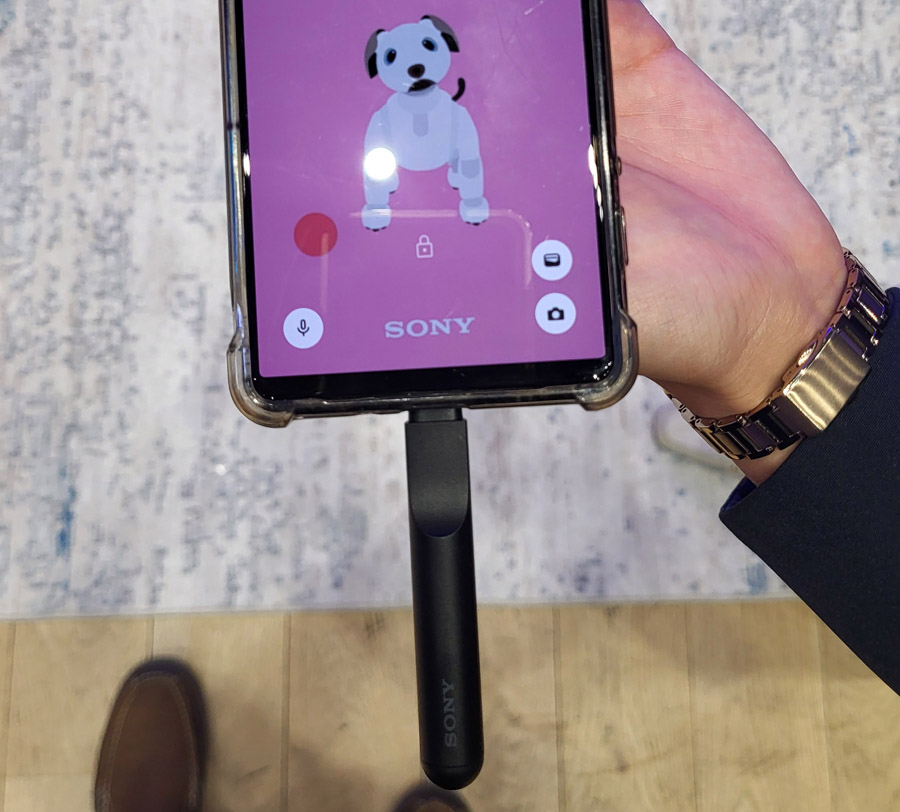
While previous Sony home theater products have used the microphone built into your phone for calibration, the BRAVIA Theater Trio comes with a dedicated high quality mic that plugs into your phone’s USB-C port for greater accuracy. This helps the system to better identify speaker positions and compensate for less-than-perfect speaker placement and room anomalies.

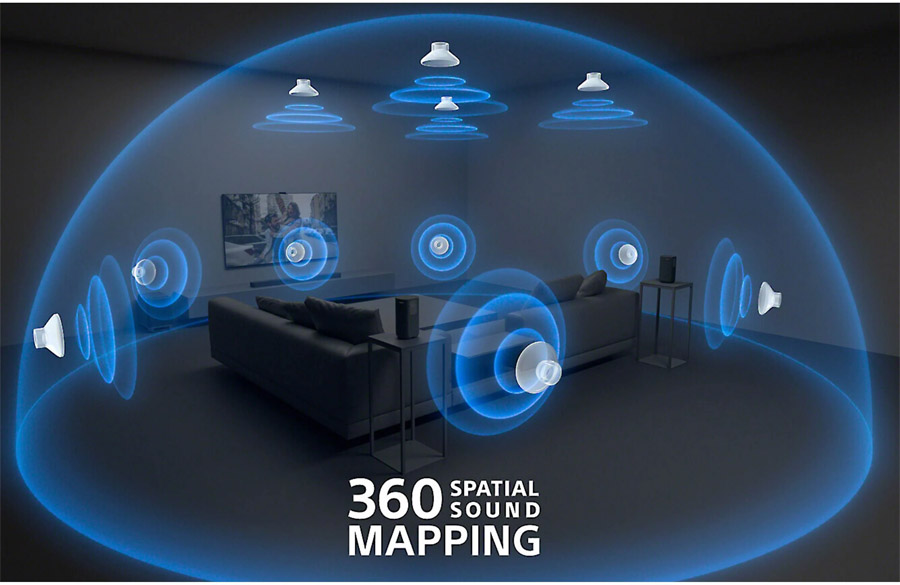
Speaking of speaker placement, the BRAVIA Theater Trio also has Sony’s 360 Spatial Sound Mapping (360 SSM) on board. This system compensates for imperfect speaker placement by creating phantom speaker channels all over the room in order to reproduce a more cohesive and expansive dome of sound.

What’s The Catch?
At $2,199, Sony’s BRAVIA Theater Trio is significantly more expensive than Sony’s flagship soundbar, the BRAVIA Theater 9 ($1,198 at Amazon). And if you opt for the fully loaded system, with a pair of BRAVIA Theater Sub 9 subwoofers ($899 each) and BRAVIA Theater Rear 9 speakers ($748/pair), the list price of the full TRIO system gets pretty close to $5,000 (MSRP). At that price point, you might consider putting together a full home theater system with receiver and external speakers. You’ll be able to get better bang for your buck this way, though the set-up and wiring will be more complicated.

The Bottom Line
Apparently Sony likes to give its customers options. While soundbar-based systems offer simple set-up, the soundstage can be a bit narrow, simply due to the size of the bar. By offering an option to widen that stereo separation and keep a dedicated center channel for dialog reproduction, Sony is now giving buyers of extra large TVs and projection-based systems another potential solution. And it’s one we haven’t seen other companies match.
The Sony BRAVIA Theater Trio offers the wireless simplicity of a soundbar system with a hint at the performance of home theater separates. Its option to add not only rear speakers with up-firing height drivers but also up to two powered subwoofers gives buyers a clear upgrade path toward an audio system that can keep up with the visuals on a plus-sized TV screen. If you already own or are planning to purchase an extra large TV or home theater projection system, and the price point is within your budget, then the Sony BRAVIA Theater Trio is definitely worth a look and a listen.
Pricing & Availability
The Sony BRAVIA Theater Trio is available June 1, 2026 for $2,199.99 at authorized Sony dealers, with pre-orders being accepted now.
You must be logged in to post a comment Login