







Connect with us
DAPA Banner

Tech

Sony WH-1000XM5 Wireless Noise-Canceling Headphones Quiet the World for $250

Published

on

Sony WH-1000XM5 Noise Canceling Headphones
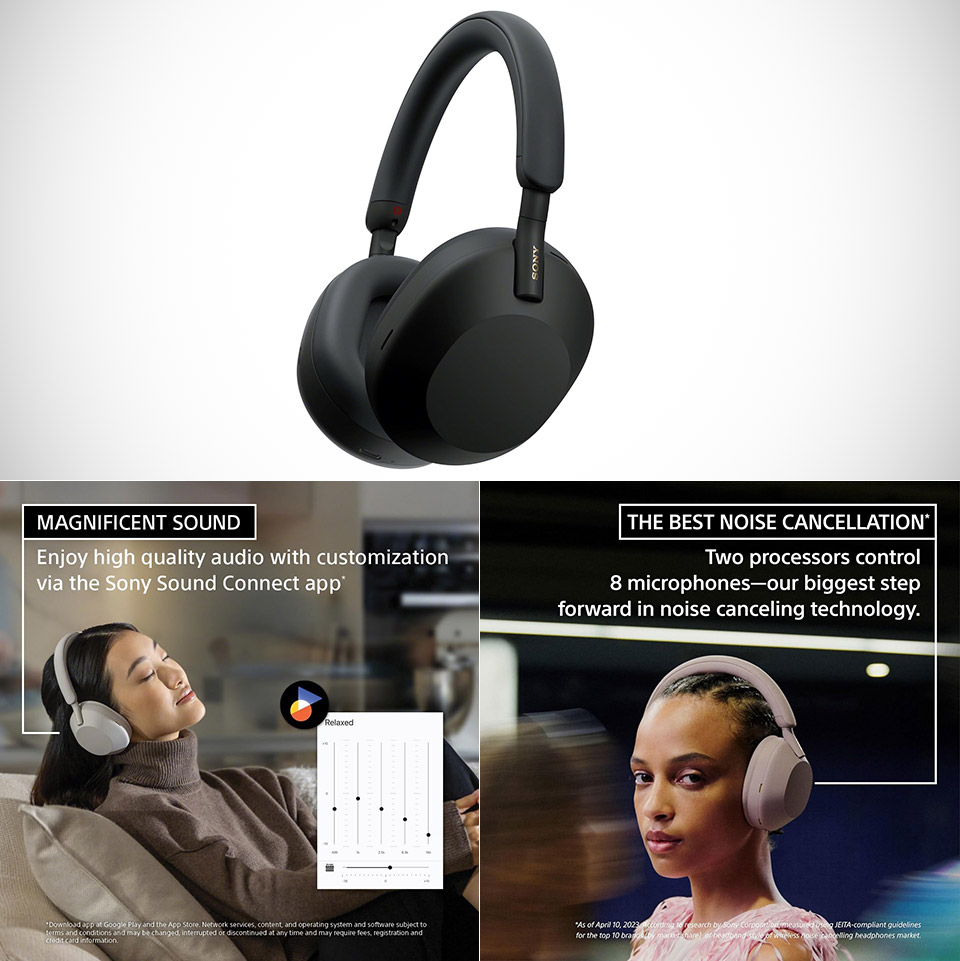
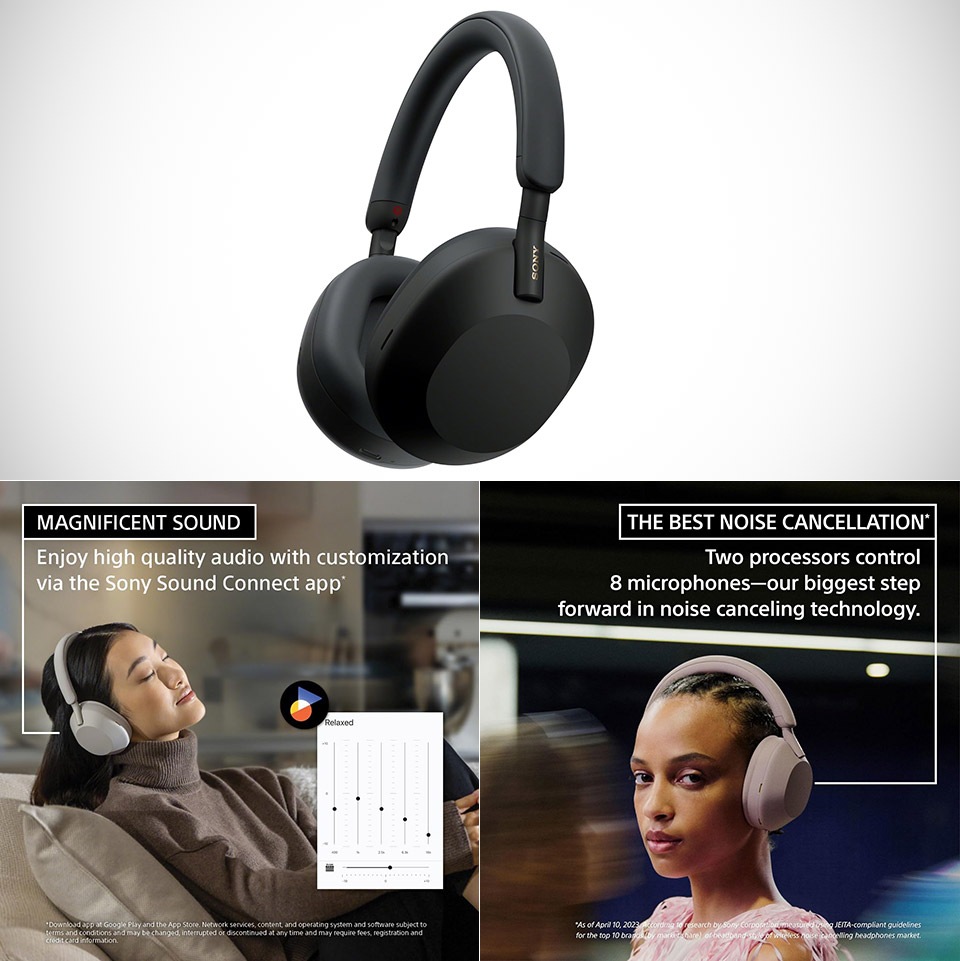
Sony’s WH-1000XM5 noise-canceling wireless headphones, priced at $250 (was $400), feature 8 microphones and two processors to read the environment and instantaneously adjust to whatever noise is there. When you lift off, say from an airplane, distracting background noise disappears, while office banter or city traffic fades into a distant hum that no longer draws your attention.


Regular travelers notice a significant difference on flights, trains, and even the daily commute. Those persistent background noises simply vanish, allowing you to focus on the music or podcast in your headphones without distraction. The optimiser conducts all of the work for you, so there is no need for fiddling or following instructions. Simply plan your day, and the noise is taken care of behind the scenes.

Sale


Sony WH-1000XM5 Premium Noise Canceling Headphones, Auto NC Optimizer, 30-Hour Battery, Alexa Voice…
  • NOISE CANCELLATION: Immerse yourself in the world of music with these noise cancelling headphones, the Sony WH-1000XM5. They come equipped with an…
  • HANDS-FREE CALLING: Step into the future of communication with the Sony WH-1000XM5, a pair of over-ear headphones that make crystal clear hands-free…
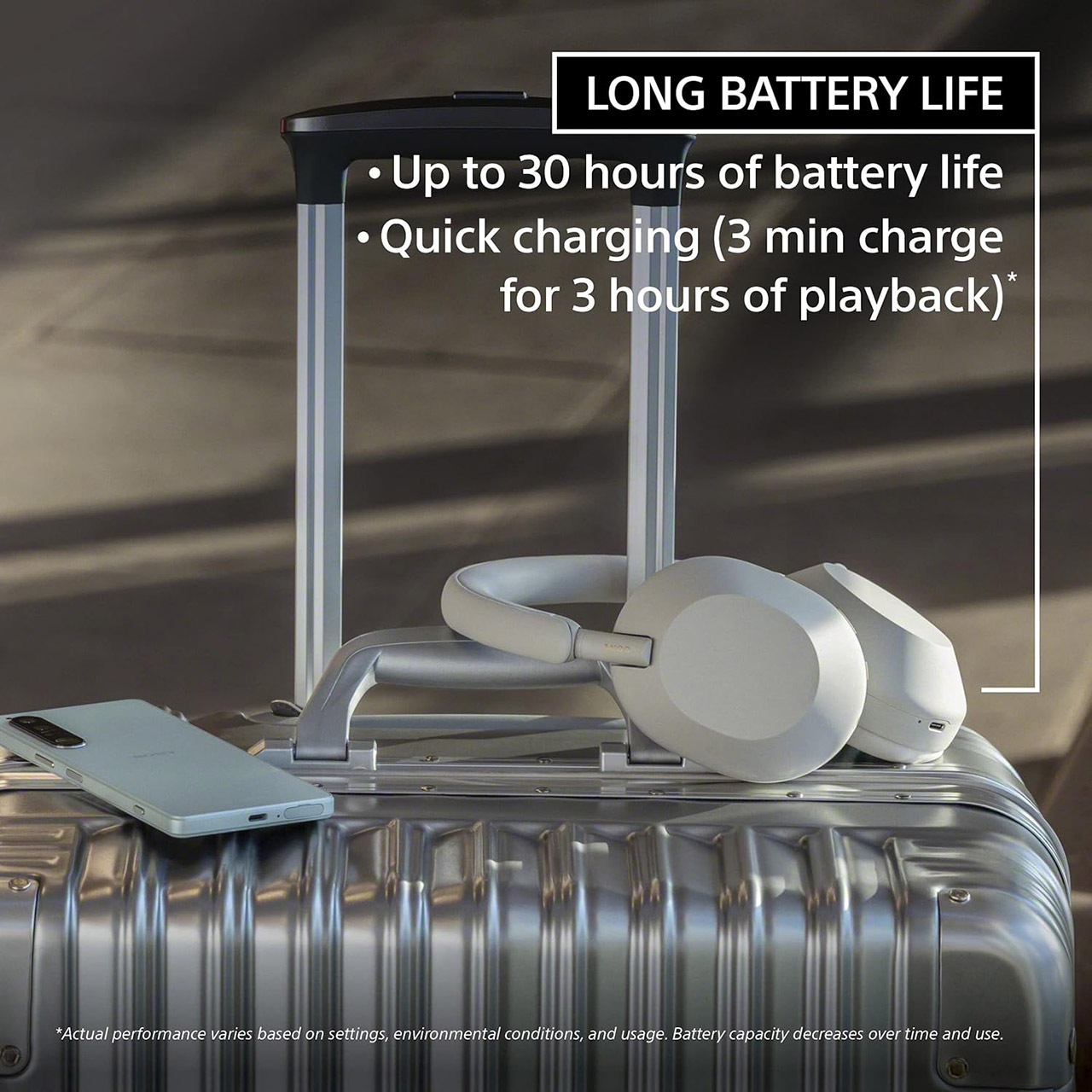
  • LONG BATTERY LIFE: Say goodbye to battery anxiety with the Sony WH-1000XM5, a wireless headset that offers up to 30 hours of playback time on a single…

Sony WH-1000XM5 Noise-Canceling Headphones
It’s also clear that they spent a lot of effort into making these extremely comfortable. The lightweight frame and super-soft cushions sit comfortably on your ears, ensuring that no pressure points bother you even after hours of wear. Yes, some people wear them for an entire working day without ever taking them off. The battery life is also outstanding, lasting up to 30 hours with noise canceling turned on. If you get to the end of that and still need some power, plugging in for 3 minutes will give you another 3 hours of sound time, which comes in handy on unexpected detours.

Sony WH-1000XM5 Noise-Canceling Headphones
The sound quality is great and balanced, regardless of what you’re listening to. The bass is tight but not muddy, and the vocals and instruments are crystal clear. If you want to change things up a little, the program allows you to change parameters to make jazz tunes sound smoother and richer or electronic beats seem more energetic. Phone calls sound as clear as day because the beamforming mics pick up your speech while filtering out any background noise, allowing the person on the other end to hear how you sound in real life. It’s especially useful for meetings in noisy environments since it prevents you from feeling like you’re shouting into the wind.

Sony WH-1000XM5 Noise-Canceling Headphones
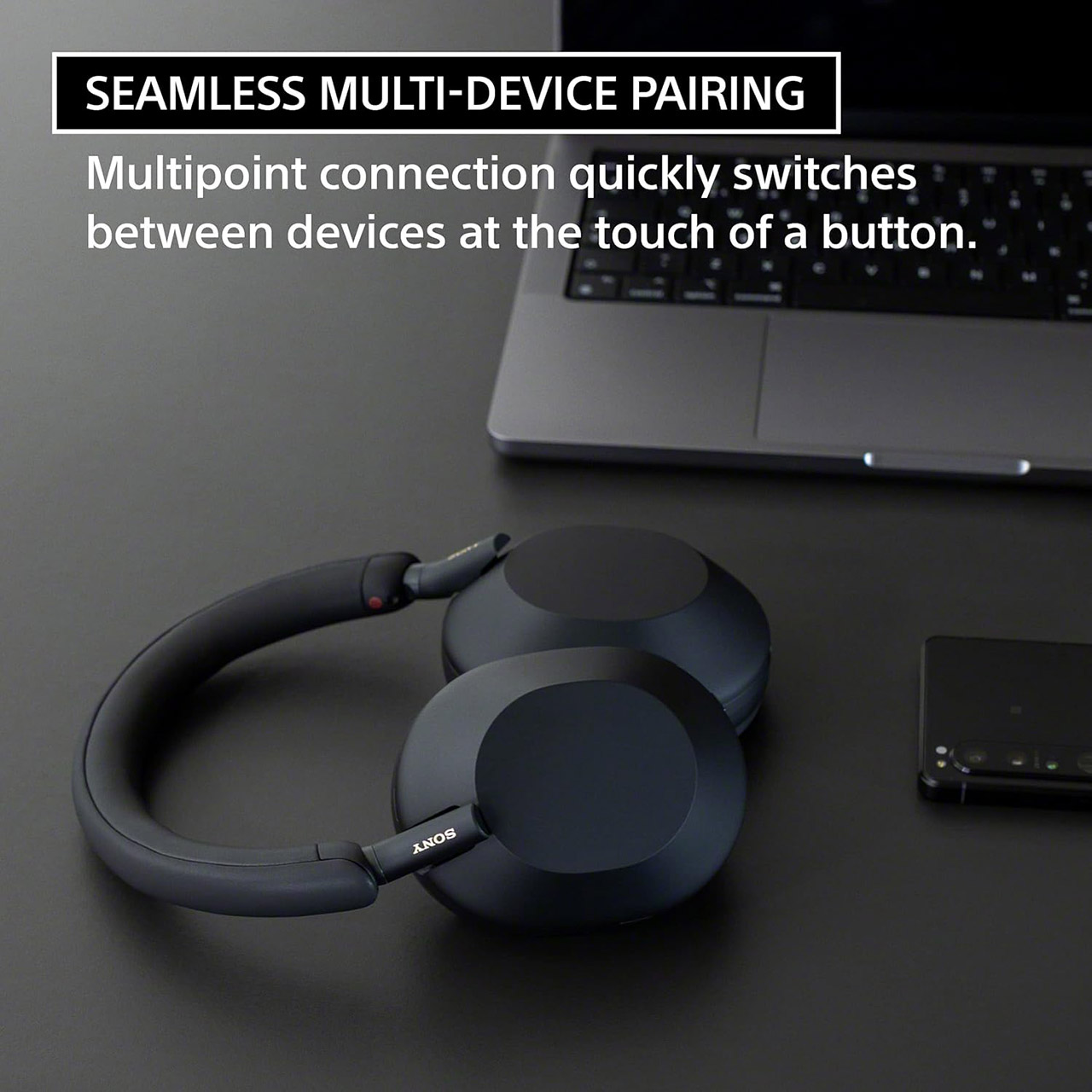
The touch controls are simple to use; simply tap or swipe the earcup to instruct the headphones what to do, such as alter the volume. A single finger covering the right cup pauses the music; another lift resumes it, and a fast double touch allows you to communicate with your voice assistant. After some practice, all of the gestures work consistently, and you’ll find yourself doing them without even thinking about it. Another thing to note is that they have considered travel and storage options. The included durable case protects your headphones, while the charging and audio cords are all neatly stored within.

Advertisement

Source link

Continue Reading
Click to comment

You must be logged in to post a comment Login

Leave a Reply

Tech

Historic Apple Porsche colors return on Porsche 963 at Laguna

Published

on

More than four decades after an Apple-branded Porsche first hit the track, Porsche Penske Motorsport revives the rainbow livery on its 963 prototypes for a one-off run at Laguna Seca.

The livery revives the rainbow-striped look of a 1980 Porsche 935, marking the 75th anniversary of Porsche Motorsport and the 50th anniversary of Apple. It will appear on May 3 at WeatherTech Raceway Laguna Seca.

Porsche based the look on a Dick Barbour Racing Porsche 935 K3 that carried Apple branding during the 1980 season, including an entry at the 24 Hours of Le Mans. Both factory-entered 963 cars will wear it for the fourth round of the IMSA WeatherTech SportsCar Championship, limiting the tribute to a single race.

Oliver Schusser, Vice President Apple Music, Sports and Beats, said the collaboration continues a relationship that began in 1980, when a Porsche race car first carried its logo. The companies are using Laguna Seca to reconnect with today’s motorsport program, but the change is limited to branding.

Advertisement

Porsche Penske Motorsport enters Laguna Seca leading the championship standings after early-season wins at the 24 Hours of Daytona and the 12 Hours of Sebring. Kevin Estre and Laurens Vanthoor will drive the No. 6 Porsche 963, while Julien Andlauer and Felipe Nasr will share the No. 7 car.

Top view of a sleek white Porsche race car with colorful rainbow stripes, aerodynamic bodywork, large rear wing, and black cockpit, photographed on a bright, clean backgroundThe livery revives the rainbow-striped look of a 1980 Porsche 935. Image credit: Porsche

Laguna Seca serves as a deliberate choice for the tribute because the track sits about 80 miles south of Apple Park in Cupertino. The circuit has also hosted multiple Rennsport Reunion events, which ties the collaboration to both companies’ history.

Both anniversaries land in 2026, with Apple marking 50 years since its 1976 founding and Porsche Motorsport reaching 75 years since 1951. Porsche uses that direct link to give the tribute more weight and to justify keeping the design to a single race.

The Laguna Seca round runs two hours and 40 minutes and serves as the fourth stop on the IMSA calendar. Porsche’s 963 program remains the focus on track regardless of the one-off livery.

Apple stays involved through partnerships and services tied to motorsports without expanding its role. Porsche uses the tribute to reinforce its heritage while its prototype program continues to run at the front of the championship.

Advertisement

Source link

Continue Reading

Tech

Geeks Give Back: AI House and UW’s Center for an Informed Public to be honored at GeekWire Awards

Published

on

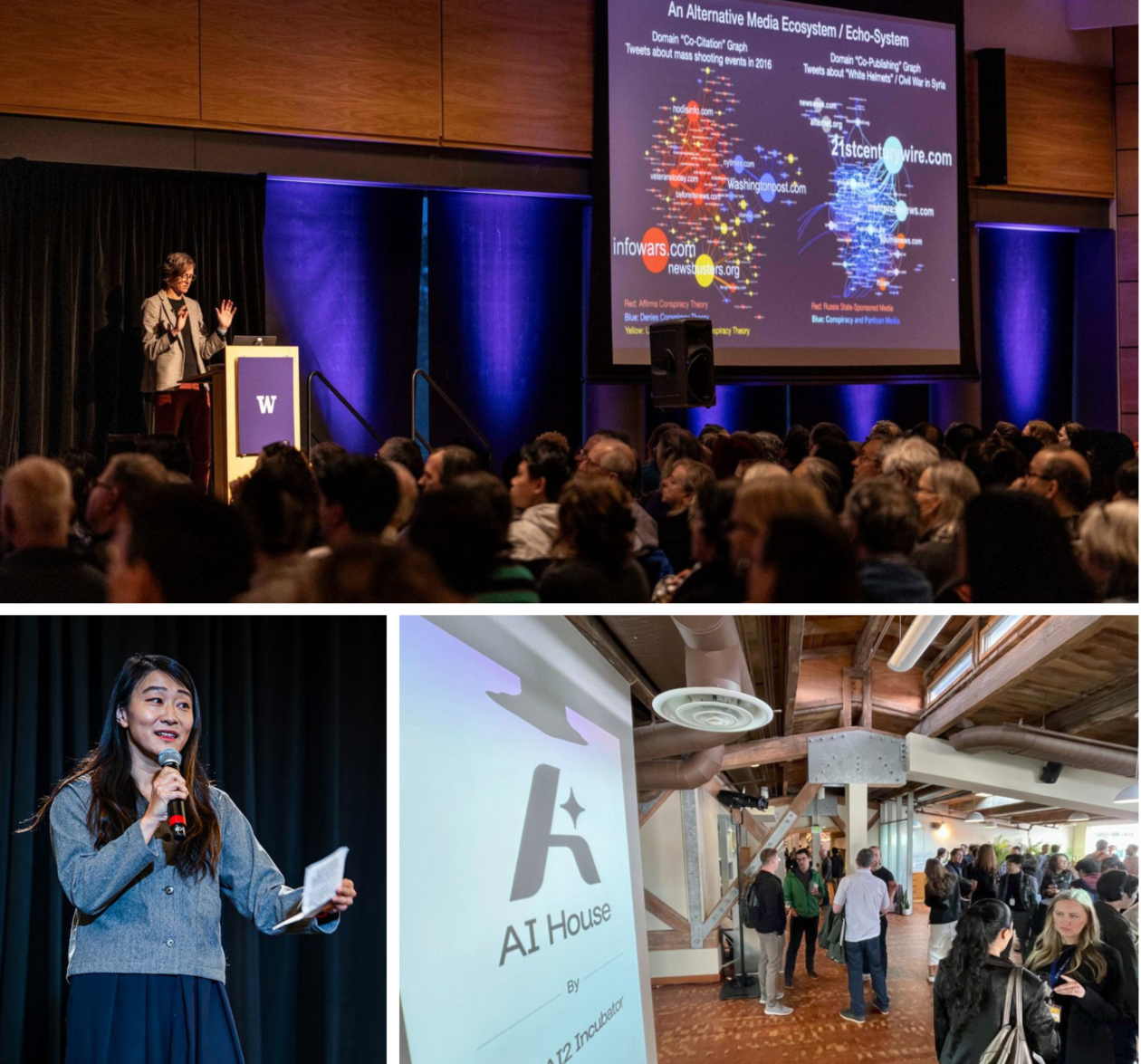
Top: Center for an Informed Public co-founder Kate Starbird speaking at a University of Washington lecture. Bottom: AI House managing director Jifan Zhang and an AI House event. (CIP and GeekWire Photos)

Each year, the GeekWire Awards celebrate the geeky endeavors making a meaningful impact across the Pacific Northwest. This year’s Geeks Give Back honorees are building community and sharing knowledge — one focused on advancing AI innovation, the other on education and research in our rapidly evolving media landscape.

The honorees are AI House, a first-in-the-nation hub fostering collaboration in the burgeoning AI sector, and the University of Washington’s Center for an Informed Public (CIP), a program that teaches everyone from students to seniors how to identify rumors and misinformation.

The GeekWire Awards will recognize nearly 50 finalists and honorees across a dozen categories, from Startup of the Year to Next Tech Titan. Geeks Give Back honorees are selected through community nominations and input from awards judges.

Geeks Give Back is presented again this year by BECU.

Winners will receive their coveted robot trophies live onstage on May 7 at Showbox SoDo in Seattle. Individual tickets are on sale now — grab a seat here — and keep reading to learn more about this year’s Geeks Give Back honorees.

AI House

In addition to events, AI House has 1,000 desks for tech workers. (GeekWire Photo / Kurt Schlosser)

Since launching a little more than a year ago, AI House has hosted more than 150 events at its collaborative space at Seattle’s Pier 70. The 108,000-square-foot waterfront facility brings together entrepreneurs, investors, students and community leaders to foster big ideas and forge connections in the pursuit of AI innovation.

The initiative launched out of AI2 Incubator, a startup organization and venture firm, and offers co-working space for companies, including those affiliated with the incubator.

Advertisement

The AI House calendar features events ranging from monthly Pitch Please gatherings, which have led to AI2 Incubator investments, to conversations with prominent leaders. The organization has also created affinity groups for female founders, founder mental health and B2C founders.

Yifan Zhang, managing director of AI House, says she regularly meets people who are new to the Seattle startup scene — whether they recently moved or graduated, have been building independently, or left Big Tech and are curious about the startup world.

“They’re often astonished and thrilled to land at a place like AI House while starting their explorations,” Zhang said. “This matters because in order for Seattle’s startup scene to succeed, we need it to be much much bigger than it is today. Our thesis is that AI House can be that ‘big tent.’”

Her goal is that everyone who visits leaves having met someone new and gained a perspective they hadn’t considered before — one that opens new possibilities in their entrepreneurial pursuits.

Advertisement

Center for an Informed Public (CIP)

CIP manager Liz Crouse, left, speaks with Ballard High School teacher Shawn Lee, at CIP’s MisinfoDay 2026. (UW Information School / Doug Parry)

When the UW’s Center for an Informed Public launched in 2019 with a $5 million grant, the central concerns were misinformation threatening upcoming elections and social media’s role in igniting rumors. CIP set out to better understand the sources of false information and map how it spreads, and to educate the public on how to recognize and guard against it.

More than six years later, information untethered from facts permeates social media, influencer posts, and many news outlets. Generative AI tools that fabricate images and videos — and help users craft deceptive, persuasive messages — continue to proliferate.

In response, CIP is expanding its efforts: connecting professors across disciplines, hosting high school students, librarians and teachers, and equipping people with the tools they need to make sense of modern life.

“The CIP is an organization that’s fundamentally about research and knowledge production, but really in service of the communities locally around the campus, and across the state, across the nation, across the world,” said Emma Spiro, CIPs’ faculty director and UW Information School associate professor.

Recent highlights include the launch of a free online humanities course titled “Modern-Day Oracles or Bullshit Machines?” examining AI use; co-hosting an intergenerational AI event with high school students and seniors; and webinars such as “Understanding and Navigating Political Divides” and “Preparing Informed Citizens in an AI-Powered World.”

Advertisement

Spiro credits the people involved with CIP for its impact. “We’ve been really successful at finding those mission-aligned, values-driven people who are invested in the mission and willing to take on what can be sometimes controversial work,” she said.

Astound Business Solutions is the presenting sponsor of the 2026 GeekWire Awards. Thanks also to gold sponsors Amazon Sustainability, BairdBECU, JLLFirst Tech and Wilson Sonsini, and silver sponsors Prime Team Partners.

Source link

Advertisement
Continue Reading

Tech

Best Side-Sleeper Mattresses 2026: Picked by a Sleep Science Coach

Published

on

Mattress Mattress type Materials Firmness Height Certifications Trial Period Shipping Warranty Nolah Evolution Hybrid Organic cotton or GlacioTex cover, AirFoam Luxe memory foams, gel memory foam, AirBreath border gusset, pocketed coils Plush, luxury firm, firm 15 inches CertiPur-US, GreenGuard Gold 120 nights; 30-day break-in period required before initiating return ($99 shipping fee) Arrives in a box as part of standard shipping; white-glove delivery available (mattress setup and old bed removal) for $225 Limited lifetime Helix Midnight Luxe Hybrid Tencel cover, memory foams, pocketed coils One option is 6.5/10 13.5 inches CertiPur-US, GreenGuard Gold 120 nights; 30-day break-in period required before initiating return Free for customers in the contiguous US Limited lifetime Bear Elite Hybrid Hybrid Phase change material (PCM) cooling cover, copper-infused memory foam, dynamic memory foam, pocketed coils Soft, medium, firm 14 inches CertiPur-US, GreenGuard Gold 120 nights; 30-day break-in period required before initiating return Free for customers in the contiguous US Limited lifetime Leesa Sapira Chill Hybrid Phase change cooling cover, cooling memory foams, pocketed coils Plush, medium firm, firm 14 inches CertiPur-US, GreenGuard Gold 120 nights; 30-day break-in period required before initiating return Free for customers in the contiguous US Limited lifetime Naturepedic EOS Classic Hybrid Organic cotton cover, plant-based PLA layer, organic wool batting, organic latex, organic cotton batting, organic cotton fill and fabric, pocketed coils Plush, medium, cushion firm, firm, extra firm (each side can have different firmnesses) 12 inches Global Organic Latex Standard (GOLS), Global Organic Textile Standard (GOTS), Made Safe, EWG verified, GreenGuard Gold, Formaldehyde-Free Claim Verified by UL Environment, Organic Content Standard certified, Organic Trade Association certified, Responsible Wool Standard Certified, Forest Stewardship Council certified 100 nights; 30-day break-in period required before initiating return Arrives in a box as part of standard shipping. For contiguous US shoppers, mattress setup is $299; setup and old bed removal is $349 25-year limited Saatva Contour5 Memory foam Cotton cover, memory foam Medium, firm 12.5 inches CertiPur-US, GreenGuard Gold Year-long sleep trial; $99 return fee White glove delivery included with purchase Lifetime Casper Dream Hybrid Memory foam hybrid Knit cover, memory foam, zoned memory foam, pocketed coils, foam rail edge support Medium firm 12 inches CertiPur-US 100 nights Arrives in box as part of standard shipping; separate shipping fee for Alaska and Hawaii 10-year limited Birch Luxe Natural Hybrid Organic cotton cover, wool, organic latex, pocketed coils Medium 11.5 inches Global Organic Latex Standard (GOLS), GreenGuard Gold 120 nights; 30-day break-in period required before initiating return ($99 shipping fee) Arrives in a box as part of standard shipping; white-glove delivery available for $199 Limited lifetime The WinkBed Hybrid Tencel cover, gel memory foam, pocketed coils Softer, luxury firm, firm, Plus 13.5 inches CertiPur-US 120 nights; 30-day break-in period required before initiating return Free shipping via UPS ground for contiguous US Limited lifetime Wolf Memory Foam Hybrid Premium Firm Mattress Hybrid Cooling cover, gel memory foam, support foam, pocketed coils Medium firm 13 inches CertiPur-US 101 nights; 30-day break-in period required before initiating return Arrives in a box as part of standard shipping Limited lifetime Sonu Sleep System Hybrid Cooling cover, “Comfort Channel” internal structure, and support foams that contain “Support Pillows”; cooling foam, support foam, pocketed coils Firm, 8/10 14 inches CertiPur-US 100, return fee is $99, and can go up to $250 Free delivery within the contiguous US 10 years Sleep Number ComfortNext Lux Smart bed Phase change cooling cover, copper gel memory foam, support foam, Ultra-Flex air chambers, rail system, comfort foam, bottom cover, air control unit 45 firmness levels 13 inches CertiPur-US 120 nights Arrives in a box as part of standard shipping 5 years full coverage, 20 years prorated coverage

Source link

Continue Reading

Tech

Uber taps Hertz to clean, charge, and fix its Lucid Motors robotaxis

Published

on

Uber’s forthcoming luxury robotaxi service with Lucid Motors and Nuro is getting a fourth partner: Hertz.

The companies announced Thursday that Hertz will provide “day-to-day vehicle asset management, including charging, maintenance, repairs, cleaning, and depot staffing.” The service, announced last year, is supposed to launch by the end of 2026 in the San Francisco Bay Area, using Lucid’s Gravity SUVs and Nuro’s self-driving tech.

Hertz is handling this work through a newly-established affiliate it’s calling Oro Mobility, which the rental company says will “provide integrated fleet management solutions across a range of mobility segments.”

“As the industry transitions from personally owned vehicles to commercially operated driver-led and autonomous fleets, Oro aims to fill a critical orchestration and operations gap,” the Hertz press release reads.

Advertisement

This is not the first time Hertz, which went through a bankruptcy restructuring process in 2020, has followed new mobility trends.

The company made a big splash in 2021 when it announced it was buying 100,000 EVs from Tesla, news that helped Elon Musk’s car company reach a $1 trillion valuation for the first time (and helped Hertz’s image as it emerged from bankruptcy). Hertz also announced plans in 2022 to buy up to 175,000 EVs from General Motors, and another 65,000 from Polestar.

None of those deals were ever fully realized, and Hertz started a fire sale of the EVs it had bought in early 2024. It did that in part because of higher-than-expected maintenance costs due to Uber drivers renting the EVs, and because Tesla slashed prices to stave off competition and boost sales.

Techcrunch event

Advertisement

San Francisco, CA
|
October 13-15, 2026

Starting up a fleet management and operations arm, though, should be closer to Hertz’s core competencies as a rental car giant. Competitors like Avis are already doing this kind of work for Waymo. And with robotaxi companies seemingly keen to use third parties to manage this piece of the puzzle, Hertz could build a decent business with Oro.

Advertisement

To wit, Hertz and Uber said Thursday that they will “explore expansion opportunities in 2027.” Uber has deals with dozens of autonomous vehicle companies around the world, and has plans to order at least 35,000 robotaxi-ready vehicles from Lucid Motors alone in the coming years. It’s starting with 10,000 Gravity SUVs, and recently announced plans to order another 25,000 EVs from Lucid Motors that will be based on its upcoming mid-sized platform. (Uber also now owns more than 11% of Lucid Motors as part of investments it has made alongside the vehicle orders.)

When you purchase through links in our articles, we may earn a small commission. This doesn’t affect our editorial independence.

Source link

Advertisement
Continue Reading

Tech

Google Photos feature uses AI to scan your pictures and help pick your clothes

Published

on


Google says Wardrobe will be perfect for streamlining those “nothing to wear” mornings, evenings, and vacations. Essentially, the feature catalogs the clothes you’re wearing in Google Photos to create a so-called digital closet.
Read Entire Article
Source link

Continue Reading

Tech

The iPhone 18 Pro could boast some of the best camera hardware yet

Published

on

Apple’s next Pro iPhones might be shaping up to be a much bigger camera leap than usual.

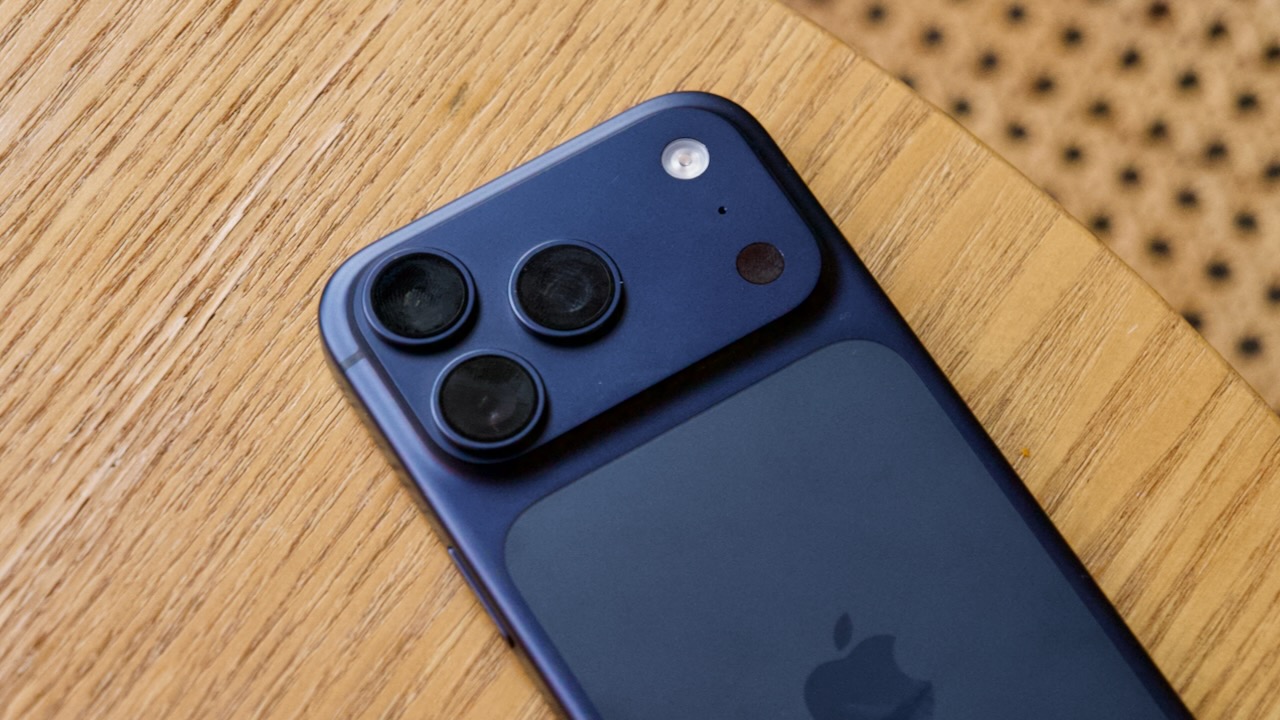
According to a new Bloomberg report, the iPhone 18 Pro and Pro Max, expected this autumn, will include what are being described as “some of the biggest camera hardware upgrades in the lineup’s history.”

That’s a strong claim, especially given how incremental iPhone camera updates have been in recent years. However, the report itself is light on specifics. Instead, it mostly frames the upgrades as part of a broader shift happening across Apple’s imaging ecosystem.

The timing lines up with other recent leaks about Apple’s camera direction. Bloomberg previously reported that iOS 27 will introduce a new “Siri mode” in the Camera app. This mode brings visual intelligence features directly into shooting and scene recognition.

Advertisement

Moreover, separate reports also point to new AI-powered editing tools arriving in Photos. This suggests Apple is tightening the link between hardware capture and on-device image processing.

Advertisement

As for the hardware itself, earlier rumours give a slightly clearer (but still incomplete) picture. The iPhone 18 Pro’s main camera is said to feature a variable aperture system that’ll allow users to adjust depth of field and exposure more manually than before. Meanwhile, the telephoto camera may gain a wider aperture, which should help in low-light zoom shots.

But beyond that, details are thin. And that’s part of why Bloomberg’s “biggest upgrades ever” framing stands out. It’s more of a hint than a breakdown, and doesn’t yet line up with known changes.

Advertisement

On paper, variable aperture and improved optics are meaningful steps, but not necessarily the kind of generational leap Gurman’s wording suggests. This leaves some uncertainty around what else might be coming. It’s unclear whether it’s sensor improvements, computational upgrades, or something that hasn’t leaked yet.

For now, the iPhone 18 Pro camera story feels like it’s still forming. The direction is deeper integration between AI tools and camera hardware. However, the full picture likely won’t land until Apple gets closer to launch.

Source link

Advertisement
Continue Reading

Tech

How can organisations ‘stay safe’ amid intense geopolitical pressures?

Published

on

Matthew Lloyd Davies discusses the steps companies must take to stay ahead of malicious behaviours and advanced threats.

“Periods of geopolitical instability have historically been accompanied by increased cyber activity and today’s situation is no different,” Matthew Lloyd Davies, a principal security author at Pluralsight, told SiliconRepublic.com. 

He explained, state-aligned threat groups, criminal networks and politically motivated hacktivists often exploit periods of heightened tension, in order to launch harmful campaigns targeting world governments, infrastructure providers and organisations in the private sector. 

In April alone there were multiple breaches and security incidents reported by organisations dealing with sensitive information. For example, Dublin recruitment platform Healthdaq recently suffered a cyberattack from hacker group XP95, which claims to have accessed hundreds of thousands of files.

Advertisement

Also in April, OpenAI said that the organisation would be working on safeguarding and updating the certification process for its apps running on MacOS following reports of a security issue around a third-party development tool. It was also reported that a private Discord group possibly gained unauthorised access to Anthropic’s new AI model Mythos

“Operations vary widely in sophistication,” noted Lloyd Davies, who added, “Some involve advanced espionage or long-term infiltration carried out by highly capable threat actors, while others are less complex but still disruptive, such as distributed denial-of-service attacks, defacement campaigns, or the release of stolen data.”

He said, “Crucially, organisations do not need to be directly involved in a geopolitical dispute to feel the impact. Shared infrastructure, third-party suppliers and cloud platforms create indirect pathways through which cyber activity can spread globally. This means cybersecurity teams must prepare not just for highly sophisticated attacks, but also for waves of opportunistic disruption that often accompany geopolitical events.”

The skills safety net

The security industry is evolving quickly to a point where threat actors and genuine professionals alike are increasingly using AI and other advancements to create new opportunities. On top of that employers are finding it difficult to create a consistent talent pool in a space where cyber resilience is now dependent on the defensive skills evident across the wider workforce, not just within specific teams.  

Advertisement

“Developers, cloud engineers, IT administrators and security teams must all understand how to build, deploy, and maintain secure systems. Without continuous upskilling across these roles, as global tensions rise and attacks become more complex, even well-funded security programmes can struggle to keep pace with evolving threats,” he said. 

The organisations that invest in developing their cloud and cybersecurity skills, across the workforce, will find themselves better positioned to detect security threats earlier, respond faster and adapt.

“This means moving beyond reactive security measures and embedding cybersecurity capability into the broader technology workforce. Upskilling developers in secure coding, strengthening cloud security expertise and ensuring security teams can effectively use emerging technologies like AI all contribute to a stronger defensive posture.”

He suggested that organisations could benefit from letting go of traditional ideas of training such as the one-size-fits-all model and instead of assuming proficiency based on roles or certifications, should consider merit-based hiring, wherein companies quickly identify gaps, creating teams that can adapt, learn new skills and keep pace with threats as they occur. 

Advertisement

Lloyd Davies said, “Training programmes need to be aligned to real-world operational demands, directly drawing on the evolving attack vectors that security teams encounter daily and the conflict scenarios behind them. Infrastructure can’t be secured by theory alone. Scenario-based learning is crucial.”

To be truly effective he said, “Cyber teams must be given opportunities to practice and hone their skills in safe sandbox environments and as cyber threats evolve continuously, upskilling must too. Organisations need to invest in simulation platforms and scenario-based exercises that mirror modern attack vectors including ransomware and identity compromise. 

“Continuous learning without the risk of real-world consequences can allow teams to build confidence while being updated on emerging threats. Equally important is embedding this learning into regular workflows, avoiding skill development being seen as a ‘one-off,’ so that professionals remain agile and prepared to respond effectively to cyber attacks.”

Don’t miss out on the knowledge you need to succeed. Sign up for the Daily Brief, Silicon Republic’s digest of need-to-know sci-tech news.
Advertisement

Source link

Continue Reading

Tech

Netflix gets its own “Clips” vertical video feed to lure you away from TikToks and Reels

Published

on

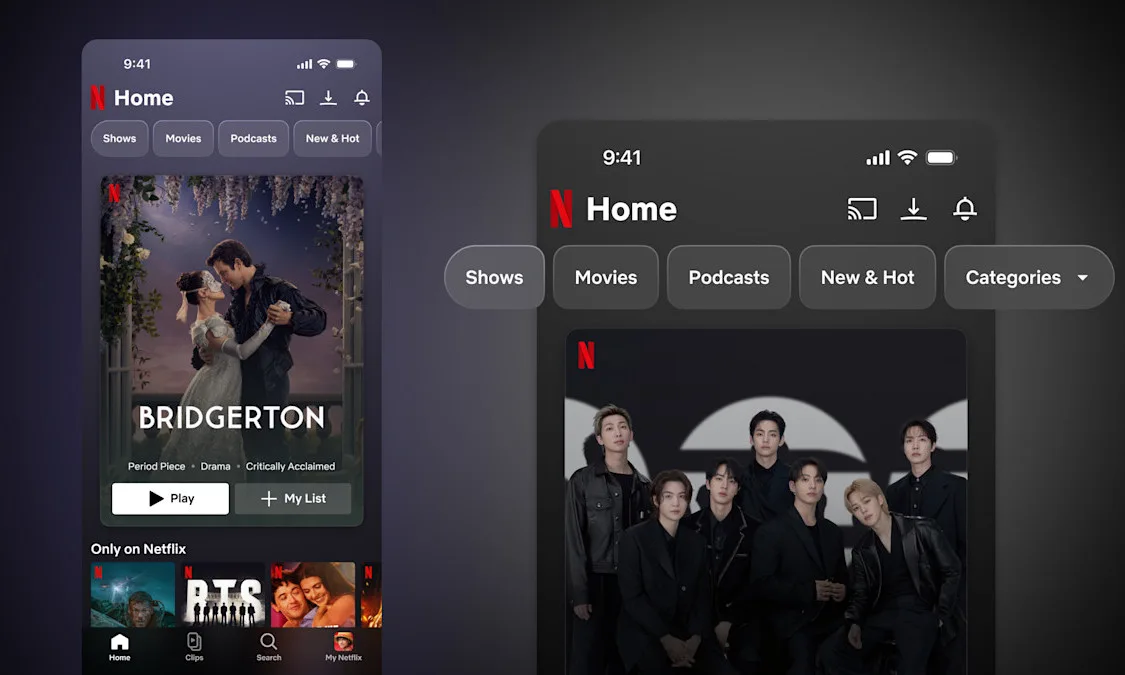
Netflix is adding a new way for you to watch content on its app. The company’s latest rework is bringing the vertical TikTok and Instagram Reels-style system with “Clips”, which is designed to make the process of finding something to watch more interactive.

The new vertical video feed shares short snippets of movies and shows, blending the addictive interactive experience of social media with the streaming platform.

How this isn’t a TikTok rip-off

While such a format was popularized by apps like TikTok, Netflix Clips has a bigger angle than just showing short-form video content. The company has been testing this for a while, and the main goal is to make discovery faster and more intuitive. You’ve probably been through that tedious process of deciding what to watch on Netflix, which is where Clips comes in.

It lets users get a quick taste of the movies and shows on Netflix. Clips also focuses entirely on Netflix’s own content. The broader plan is also expected to include other forms of media, like podcasts and live events, over time.

Why Netflix made this for smartphone users

Netflix wants to keep users engaged throughout the day, and not just during long viewing sessions at home. Executives have said the platform is aiming to become more of a “daily companion,” using features like Clips to fill shorter attention windows that are already dominated by social media apps like TikTok, Instagram Reels, and YouTube Shorts.

The redesign also introduces a more streamlined navigation system that can curate collections based on genres or moods, turning the app into a more personalized experience.

Advertisement

The Clips section lets users add movies or shows straight to the list from their feed and share the snippets with friends. Even if Netflix isn’t outright saying it, this does make it closer to a social app.

Source link

Advertisement
Continue Reading

Tech

Goal Zero Yeti 1500 Power Station Review (2026): More Power, Better Chemistry

Published

on

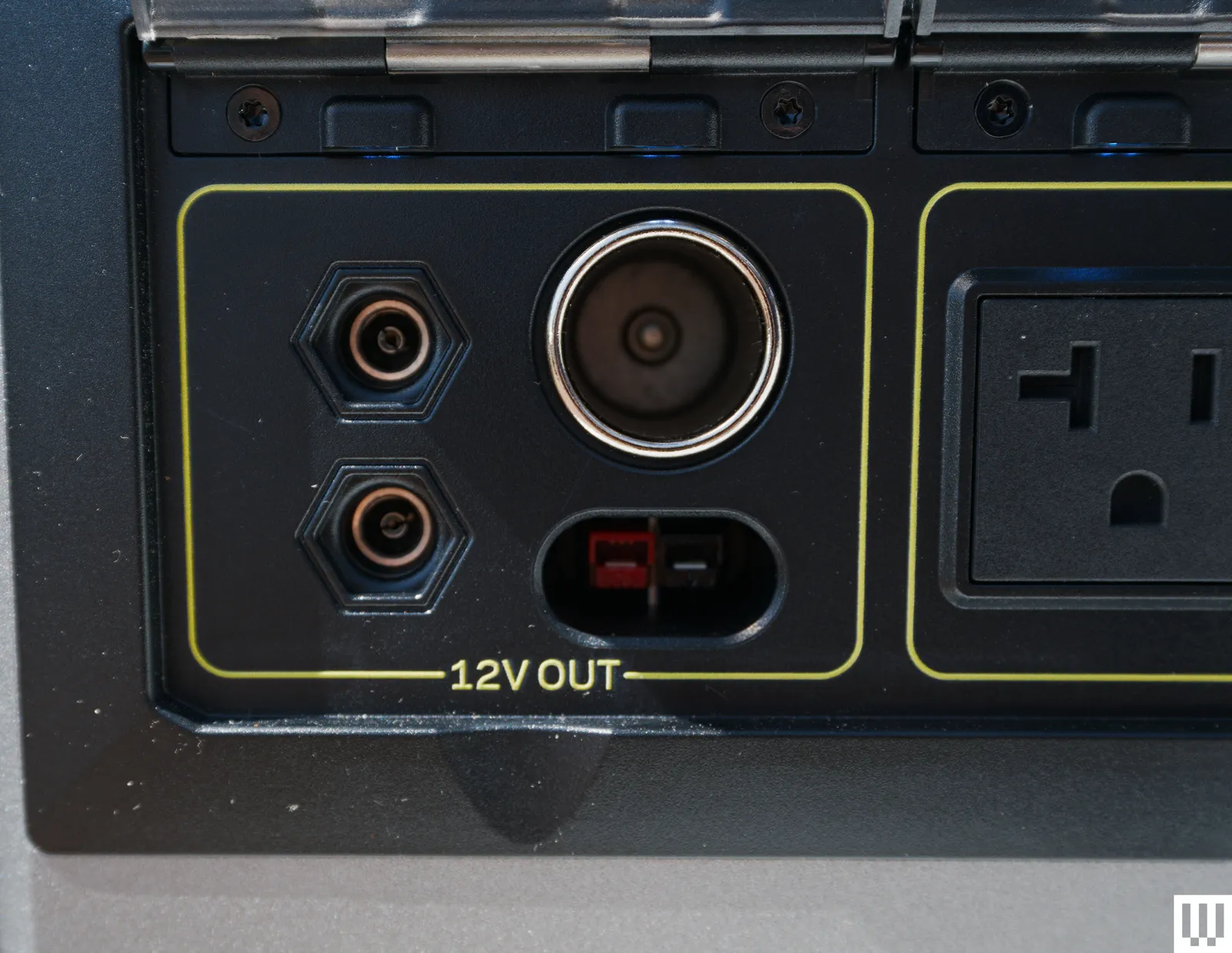
All those ports are fairly standard for a power station in this class, and similar to what was on the previous model—although the 140-W USB port is new and very nice to have. Where the new Yeti 1500 shines is the 12-V charging options, which include a high-power 12-V port capable of 30 amp output. That’s enough for most van and overlanding vehicle power systems, meaning you can tie the Yeti 1500 directly to your house power 12-V distribution panel. There’s also standard Anderson connector outputs and a cigarette-lighter-style outlet available.

There are three ways to charge the Yeti 1500. There’s AC wall power, which can charge at up to 1,800 watts, getting you from 0 to 100 percent in just over an hour. (There’s a switch to slow this down to 1,500 W if you’re plugged into a campground pole, which typically can’t handle the full draw.) You can also hook the Yeti up to a max of 900 watts of solar panels. There are both 8-mm inputs and HPP inputs for Goal Zero solar panels. You don’t need Goal Zero panels, though; you can use just about anything so long as you get the right adapters and stick within the charging limits (I use an adapter like this to plug just about any solar panel into just about any power station/charger). The rear charging panel is also where you’ll find the ground lug for semi-permanent installs in a vehicle or off-grid tiny home.

Goal Zero’s Yeti app allows you to control the system from your phone, potentially from the other side of the world if you have the battery connected to your Wi-Fi. I opted for direct connection via Bluetooth, bypassing the network, since I don’t always have my Starlink network up and running in my camper. This still allows me to toggle all the output types on and off, get basic battery status like charge state, current power draw (by type), change the charge profile (there are four), and some charge and discharge history information. The latter is not as full-featured with direct connection as it would be with a network connection, and I found it often had trouble loading, but overall I found the app handled everything I needed it to do. I particularly like the ability to turn off the 12-V output from bed at night, shutting off all power to eliminate any phantom drains on the battery.

The Only One

Image may contain Camera Electronics Tape Player Speaker and Stereo

Photograph: Scott Gilbertson

I’ve relied on a fourth-gen Yeti 1500 as supplemental power for many years now. I’ve run everything from power tools to space heaters to full-size refrigerators, and as a backup for my RV when I needed to do something to the built-in system. In all that time it’s never let me down, and in my experience strikes the best balance between portability and power. It’s heavy, but the dual handles make it pretty easy to carry. I’ve also tested the 1000X and the 500X models, which while lighter and smaller, lack some of the things that make the 1500 great.

Advertisement

Source link

Continue Reading

Tech

How TTY Opened Up The Phones For The Hard Of Hearing

Published

on

The telephone was an invention that revolutionized human communication. No more did you have to physically courier a letter from one place to another, or send a telegram, or have a runner carry the message for you. Instead, you could have a direct conversation with another person a great distance away. All well and good if you can speak and hear, of course, but rather useless if you happen to be deaf.

Those hard of hearing were not left entirely out of the communication revolution, however. Well before IP switched networks and the Internet became a thing, there was already a way for the deaf to communicate over the plain old telephone network—thanks to the teletypewriter!

Over The Wires

The teletypewriter (TTY) has been around for a long time. The first device came into being in 1964, developed by James C. Marsters and Robert Weitbrecht, both deaf. Their idea was to create a method for deaf individuals to communicate over the phone network in a textual manner. To this end, the group sourced teleprinters formerly used by the US Department of Defense, and hooked them up with acoustic couplers that would allow them to mate with the then-ubiquitous AT&T Model 500 telephone. Thus, the TTY was born. A user could dial another TTY machine, and key in a message, which would print out at the other end. The receiving user could then respond in turn in the same manner.

A Miniprint 425 TDD device. Note the acoustic coupler on top,  the VFD for displaying messages, the printer, and the SK and GA keys which automatically key in these regularly-used abbreviations. Credit: public domain

The early machine used simple frequency-shift keying to encode the characters of the alphabet and some basic control codes, allowing text messages to be sent back and forth via a regular analog telephone call. In the US, where the devices eventually became known as telecommunications device for the deaf (TDDs), the devices used an improved development of Baudot code (the USA-TTY variant of ITA-2) to send signals over the phone lines.

This involved representing characters with five bits, which was enough to cover the 26 characters of the English alphabet, plus 0-9 and a few control codes. Transmission rates were slow—typically just 45.5 to 50 baud. With a 5-bit code, this limited transmission to approximately 10 characters per second.

Advertisement
The sign on the left indicates a payphone with a TTY device attached. These were rare installs back in the landline era, and vanishingly few remain today. Credit: CC BY-SA 4.0

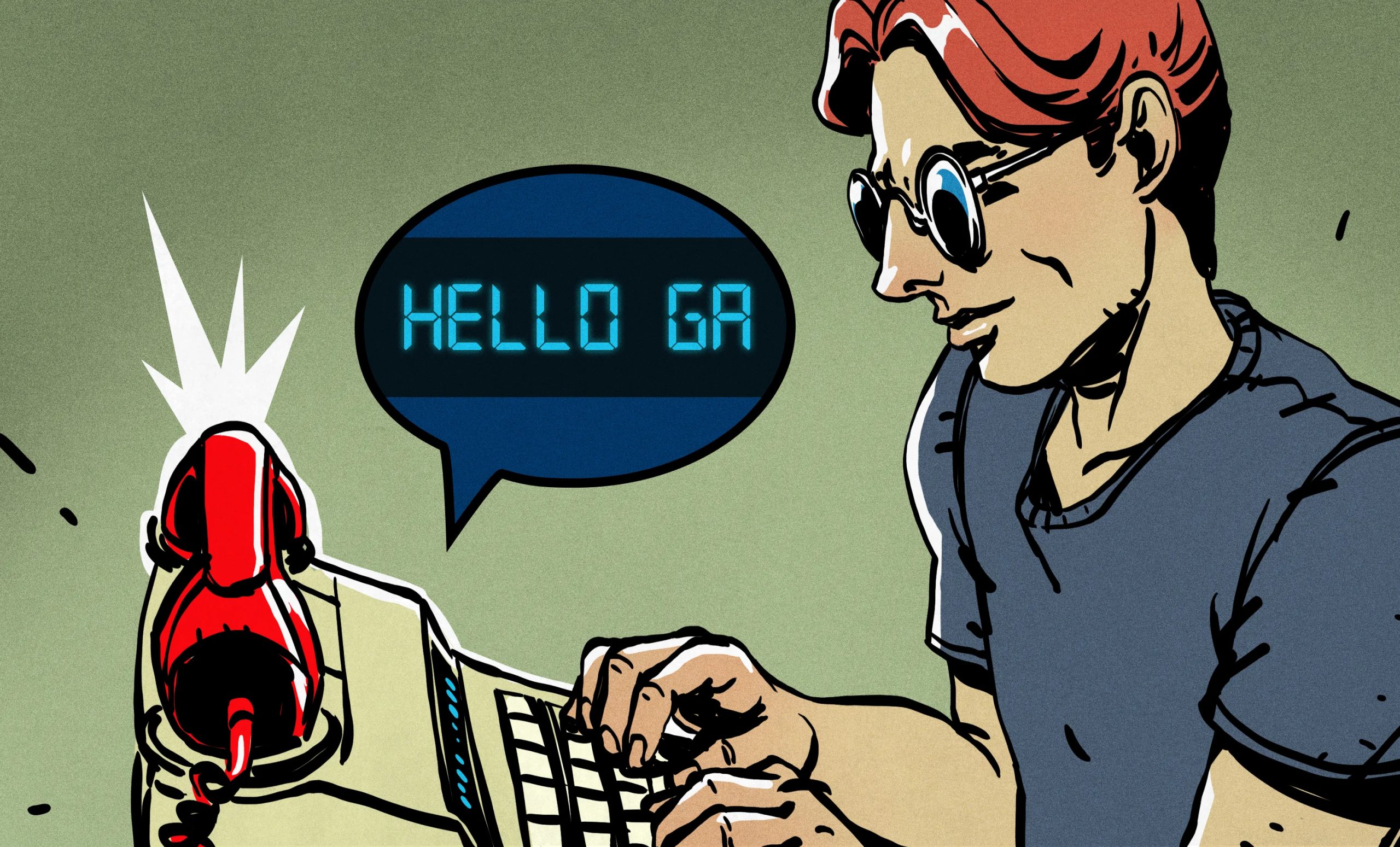
TTYs quickly caught on as a useful device for the deaf and hard of hearing, and developed its own norms similar to other textual telecommunications methods that came before. Users would key “GA” for “go ahead,” to indicate the other party could “speak” on the half-duplex link, as two users typing at the same time would lead to garbled messages. “SK” stood for “stop keying” to indicate the ending of a call. Abbreviations were common to save effort, such as “CU” (see you) and “TMW” (tomorrow).

Relay Service

At its heart, the TTY was a very useful device for allowing its users to communicate via textual means to others with compatible hardware. However, alone, a TTY could not allow a deaf user to communicate effectively with regular telephone users. To enable greater accessibility, many organizations developed telecommunications relay services.

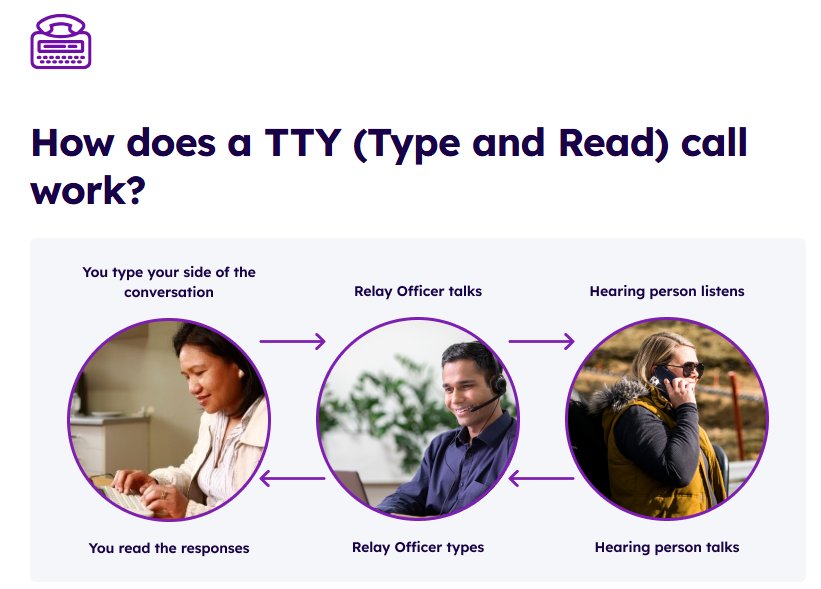
TTY machines led to the establishment of relay services that allowed deaf users to make regular phone calls with assistance from an operator. Credit: screenshot, Australian National Relay Service

These first existed as a number that deaf TTY users could call in order to connect to a human operator with their own TTY machine. This operator would place calls on behalf of the deaf individual, speaking on their behalf to other parties based on the deaf user’s inputs to their TTY device. In turn, the operator would key out the responses from the called party so the deaf individual could read back the conversation.

The first relay service was established by Converse Communications in Connecticut in 1974. The concept was quickly picked up by many other telecommunications operators around the world to provide an accessibility aid to those who needed it. These days, relay services still exist, though a great many relay services now operate over IP-based systems rather than via phone lines and TTY devices.

Hanging On

TTY still exists to some degree out in the world today. There are still subscribers with analog phone lines, and the basic TTY technology still fundamentally works over these links. However, the rise of SMS text messaging and widespread Internet connectivity have somewhat negated a lot of use cases for TTY technology these days. There have also been cases where digital upgrades to the phone network have made TTY operation more difficult, though some efforts have been made to ensure compatibility in some networks, particularly for emergency uses.

Ultimately, TTY was a technology that brought telecommunications access to a greater number of people than ever before. Like the landline phone and the fax machine, it’s no longer such a feature of modern life. However, it was an important link to the world for many in the deaf and hard of hearing community, and was greatly valued for the connection and accessibility it provided.

Advertisement

Source link

Continue Reading

Trending

Copyright © 2025