Sony seems to have moved on from the PlayStation Vita, but its influence clearly hasn’t gone anywhere.
Anbernic has just unveiled the new RG Vita and RG Vite Pro, which are two handheld gaming consoles that feature a design inspired by the PS Vita. From the wide layout to the button placement and overall aesthetic, these pay homage to Sony’s last true portable console.
But these aren’t a one-on-one copy, and rather serve as a modern take on the Vita idea.
Everything you need to know about the Vitas
RG Vita and Vita Pro SpecsAnbernic
The lineup consists of two variants, namely the RG Vita and RG Vita Pro.
The standard Vita is a more affordable option that featurse a 5.46-inch IPS display with 720p resolution, powered by a Unisoc T618 chipset, paired with 3GB of RAM and 64GB of storage. On the other hand, the RG Vita Pro steps things with a slightly taller 1080p IPS display, a more capable Rockchip RK3576 processor, 4GB RAM, and the same expandable storage support via microSD.
Advertisement
Both models are powered by a 5,000mAh batteries that promise to offer several hours of gameplay.
Built for retro, but doesn’t stick to the past
Anbernic RG Vita ProAnbernic
Anbernic’s new RG Vita series is a throwback to a great age in game, but it isn’t just about nostalgia.
The consoles supports Android (and Linux on the Pro), which allows it to run Android games and the emulators for consoles like PS2, PSP, GameCube, and more. So it is a lot more versatile than its original inspiration. Anbernic is even adding modern touches like WiFi, Bluetooth, USB-C output, and even AI-based features like real-time translate and in-game assistance tools.
That said, this isn’t aiming to be a true successor to the PS Vita. Performane is aimed more at emulation and casual Android gaming rather than running modern AAA titles.
Anbernic has yet to confirm the official pricing, but the devices are expected to land in the budget to mid-range handheld category.
We may receive a commission on purchases made from links.
The desire for remote, autonomous devices continues to grow year by year, requiring brands to up their game to not only stay competitive but also stay relevant among the new tech products that are constantly being released. One of the main niches that gets a wide range of gadgets is smart home technology, whether that be convenience, leisure, or security products. Making your home as streamlined as possible doesn’t really have any downsides, making the investments more than worth it.
Advertisement
One of the major downsides for a lot of top-tier smart home gadgets, though, is that they can easily cost hundreds of dollars. This can be somewhat expected due to the complexity of many devices, but it puts them out of the budget range for many buyers. Luckily, there are still plenty of smart home gadgets that can be picked up for under $100, many of which can transform your home in surprisingly simple ways. Whether it’s unique lighting or understated surveillance, these 12 products should definitely be considered if you’re looking to modernize your home through smart technology.
Advertisement
Amazon Echo Dot Max
For any smart home that relies on multiple gadgets, buying a top-quality smart speaker is the most important gadget you can buy. Being able to simply tell your smart speaker which one of your smart home products to control will make a significant difference, with the Amazon Echo often being the most recommended for smart home use specifically.
There are a few major brands that compete for the top spot in this category alongside Amazon, including Apple’s HomePod and Sonos’ Era. Overall audio quality tends to be where these two rivals shine brightest, but they can’t quite keep up with the Echo’s integration of communication tech. The version of the Echo we’d most recommend is the latest Dot Max, which supports Zigbee, Matter, Thread, and Bluetooth in one package. Priced at $99.99 as standard, it’s as close to the $100 mark as you can get, but Amazon has it listed for $74.99 at the time of writing. If you want to prioritize sound coverage, the larger, outgoing fourth-gen Echo also has the same connectivity options.
Amazon states that thousands of smart devices can connect to the Echo Dot Max, including lights, switches, and sensors, among others. Compared to the smaller Echo Dot, which doesn’t have Zigbee connectivity available, the Dot Max offers three times as much bass, as well as the new AZ3 chip, improving voice command accuracy and overall speed.
Advertisement
Govee Table Lamp 2
Moving over to the more specific smart home products, lights are unsurprisingly one of the most popular areas people invest in. Among all the brands competing in the crowded segment, Govee tends to stand out more than most. There’s no shortage of options from the brand at different price points, but if you’re OK with spending a little more, the Govee Table Lamp 2‘s incredible number of color variations makes it a perfect addition to any room in the house.
For starters, you have the choice of up to 16 million different colors, which is lower than other lights under the Govee brand. To make things easier, the Table Lamp 2 offers 60 themes if you don’t want to choose each color yourself, although the DIY mode keeps that option available. You can use the dedicated app to set up your smart light, or, to make it a proper part of your smart home setup, you can control it using a smart speaker, such as the Echo. And with almost 2,000 reviews on Amazon averaging a score of 4.7 out of 5 stars, it’s fair to say it’s worth the $79.99 standard price tag. At the time of writing, though, the light can be bought for $55.99 on Govee’s website.
Advertisement
Klloque Fingerprint Door Lock
This next product is much more functional, making it super useful in a few key circumstances. Particularly if you have little ones, there may well be rooms which you don’t want them to go searching around in, whether that’s an office or a bedroom. A standard lock will generally do the job, but Klloque’s fingerprint door lock can add a bit more peace of mind that only you will be able to get inside. This gadget can also add a great deal of security to your home, especially when paired with other devices such as sensors and smart cameras.
Advertisement
The brand goes to great lengths to ensure that this lock provides said security, as well as including a few different settings and features to match wherever you want to put it. Inside, you get settings like silent mode to ensure you don’t wake anyone up, privacy mode that completely restricts access from the outside, as well as the standard mode that’ll lock the door after five seconds of use. While the lock is primarily designed for indoors, it’s been tested in both hot and cold conditions and has an IP54 weatherproof rating. This means that it can’t handle too much exposure to the elements, but it should be fine if it has some natural protection. Amazon has it priced at $53.86, but it’s currently discounted to $35.96.
Advertisement
Blink Video Doorbell
A few products on this list will focus on smart home security, with the Blink video doorbell being one of the most effective across the board. Companies such as Ring have made the video doorbell more mainstream, offering a level of home security that’s pretty hard to beat. But overall value-for-money options, such as Blink, shouldn’t be ignored. The second generation of Blink’s video doorbell was released last year, improving on all the major selling points for this gadget. Priced at $69.99 as standard on Amazon, the current deal drops it to a solid $35.99.
One of the most impactful improvements the newer video doorbell has made is increasing the field of view to 150 degrees, ensuring you get a clear view on your phone. The battery life also sees improvements, capable of lasting up to two years on lithium batteries. You’ll also be able to answer using an Alexa-powered smart speaker, making this another great gadget to use the Echo as a base for. Blink also offers a subscription plan that’s sold separately, which includes smart notifications to add another layer of security, but even without it, it still gives you peace of mind by letting you check who’s at the door before answering.
Advertisement
Cosori Smart Gooseneck Kettle
Smart technology has found its way into just about every essential appliance in the home. This is especially the case in the kitchen, which is probably the easiest place to innovate with so many different pieces of tech everywhere you look. On the simpler side of things, but no less effective, is the Cosori smart gooseneck kettle. It may not seem like it changes much, but for those who often have busy mornings or work from home, this specific kettle comes with plenty of features to help streamline things a bit more when brewing your favorite drink.
The main selling point for Cosori’s smart kettle is the free app that houses most of its features, allowing full control over the kettle’s temperature, scheduling, and whether you want it to hold temperature. It also has standard buttons on the kettle, should you prefer to use them as well. And if you’ve got your hands tied outside the kitchen, you can start boiling using voice control through compatible smart speakers. Priced at $75.99 on Amazon, it’s a little expensive for a kettle, but if you’ll be using it every day, the time it can save and the practicality it offers may well make the investment worth it.
Advertisement
Amazon Smart Thermostat
Speakers aren’t the only area that Amazon has gone headfirst into within the smart home tech space. Having your home sitting at the right temperature is easily one of the most important factors for comfort and is even more essential in climates at either end of the scale. This is where Amazon’s smart thermostat comes in, offering one of the most well-regarded products in the segment.
This is another product that doesn’t require a smart speaker to use effectively but will complement one significantly through voice commands. Similar to many others on this list, Amazon’s smart thermostat is controlled through the Alexa app. This means that when you’re out of the house, you can set the temperature remotely to have things ready before you get home. At the time of writing, this smart home gadget sits at $79.99. Again, while you don’t need any other products to make it work, pairing it with other Amazon smart products, notably the air quality sensor, can create an ecosystem of sorts, working together to create the ideal climate for your home.
Advertisement
Kidde Smart Smoke and Carbon Monoxide Detector
Another product that isn’t the most glamorous but can make your home much safer comes courtesy of Kidde. Smoke detectors aren’t exactly a new concept, but carbon monoxide detectors aren’t yet as widely used. Instead of needing two separate devices, Kidde combines the two in its smart smoke and carbon monoxide detector, which can keep you assured that your home is safe no matter where you are.
Advertisement
Kidde uses a range of different apps that you can connect your detector to, but we’ve chosen the one that uses the Ring app due to how many other smart security devices you can have in one place, should you choose to pick up another gadget from Ring and/or Ring-compatible products. A subscription is offered to access a few more features, but the core reason for Kidde’s detector, that is, receiving notifications whenever smoke or carbon monoxide is detected, won’t cost you any more than the $69.98 standard price on Amazon. This detector is also designed to only alert you to real threats, reducing false alarms that can come up with standard detectors. User reviews often point out how easy it is to set up, frequently buying more than one to have around the house.
Advertisement
Ring Pan-Tilt Indoor Camera
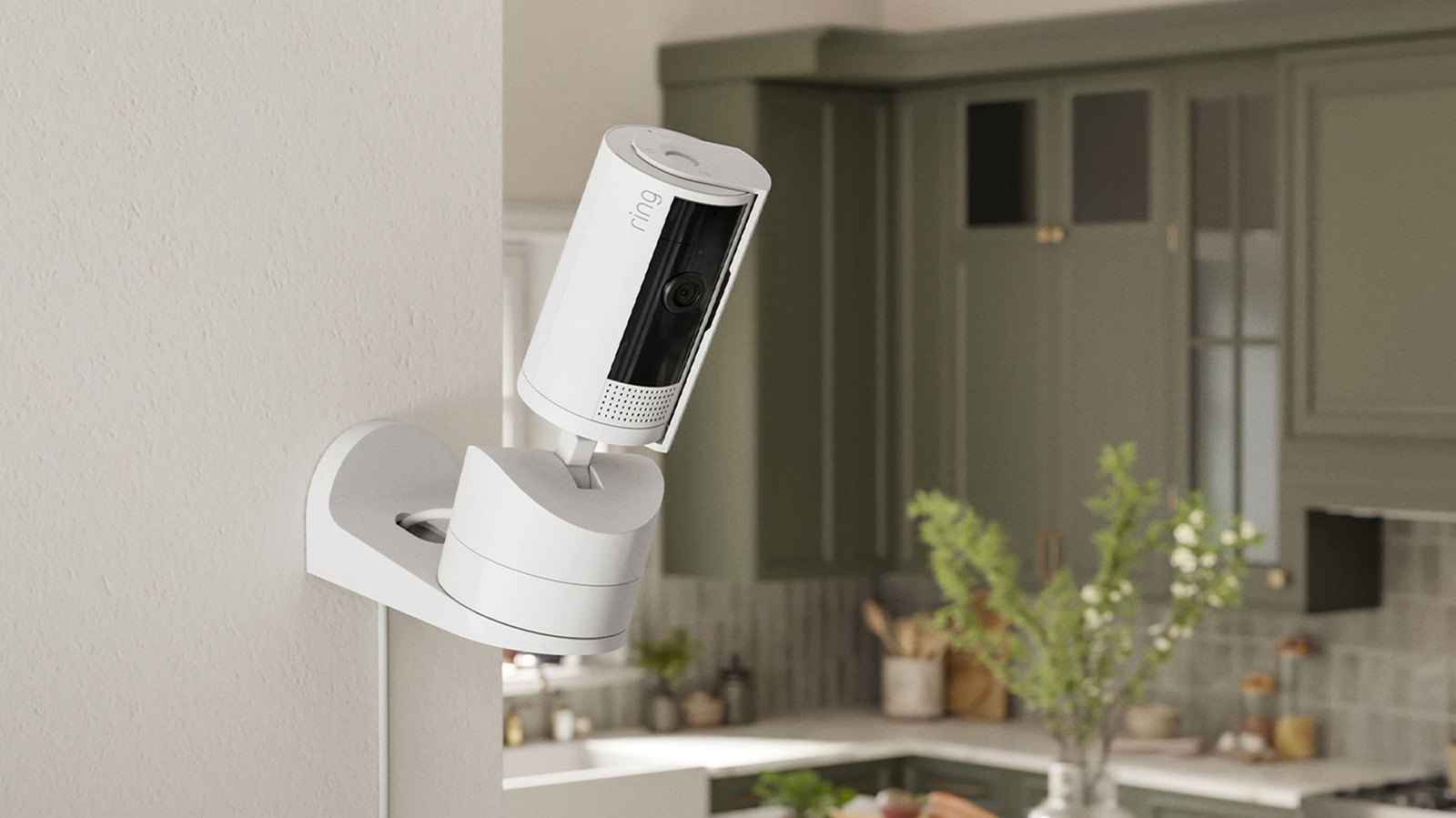
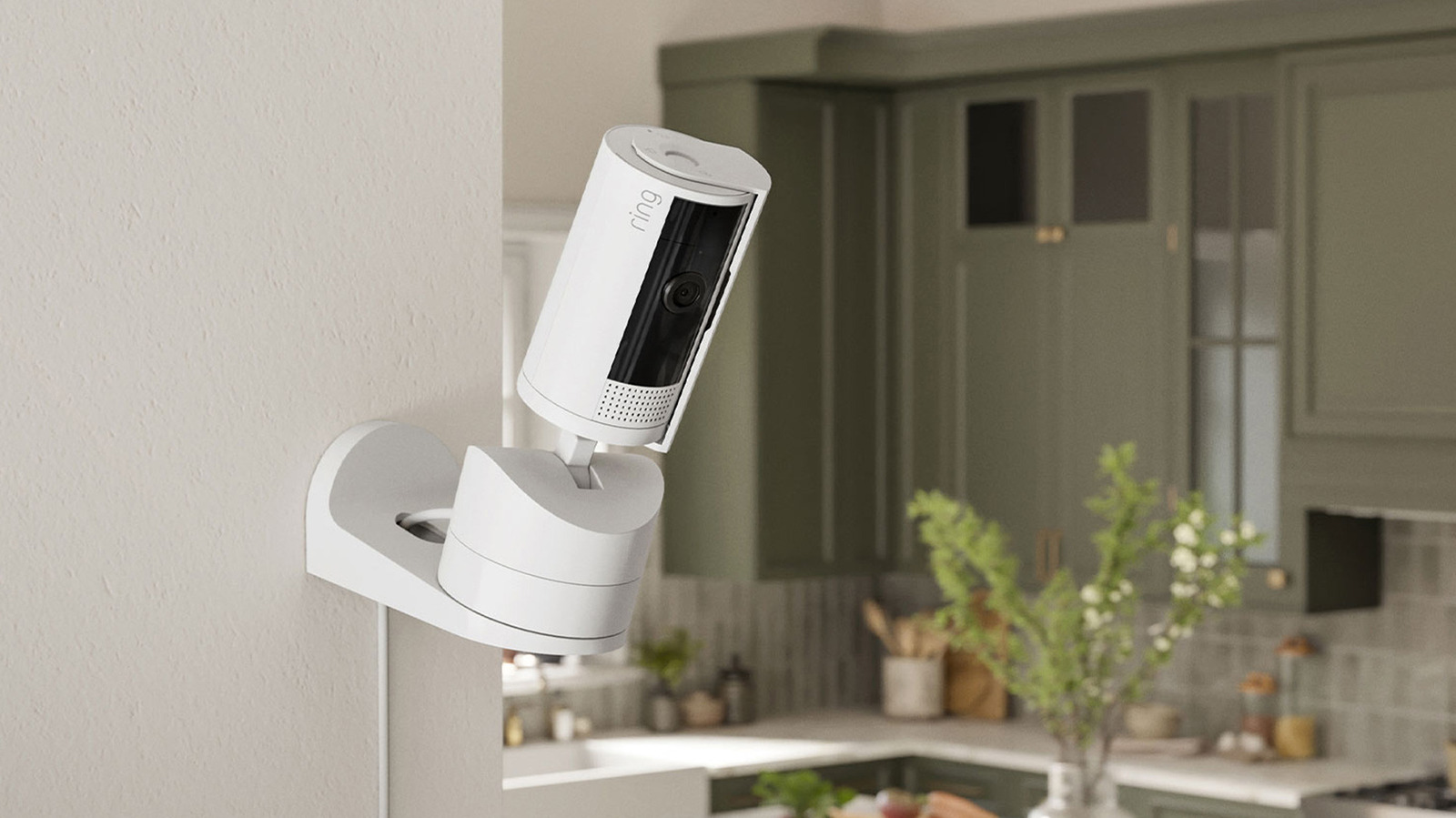
Another camera-based product from Ring takes the brand’s renowned quality inside. The smart doorbells are what allowed Ring to grow exponentially, but the pan-tilt indoor camera helps to cover all corners of your home as well as out front. To make sure you can actually cover all corners, this specific camera can rotate 360 degrees, as well as tilt vertically up to 169 degrees. The standard indoor cam is more than effective, judging by the tens of thousands of reviews, but the increased practicality of the pan-tilt model helps to justify its higher price point of $59.99.
Still, the pan-tilt camera has over 7,000 user reviews, averaging a score of 4.7 out of 5 stars. Many cite the clarity of the 1080p HD video, as well as the reliability of the motion detection. You can use the customizable settings to determine how sensitive the cameras are and choose which specific areas of the room trigger motion alerts sent to the Ring app. Voice activation can also be used through Alexa-powered speakers. The ability to mount the camera to the wall makes it great for larger spaces as well, meaning you shouldn’t need to purchase multiple to cover your whole home.
Advertisement
Dreo Smart Humidifier
Perhaps one of the most underrated smart home products to make things more comfortable is a smart humidifier. This is one that’s more specific to the climate compared to others on this list, as its most useful in colder temperatures that reduce moisture in the air. If you’re someone who is more susceptible to the cold from a health standpoint in particular, the Dreo smart humidifier can help maintain optimal indoor conditions in the winter.
Dreo’s product specifically comes with plenty of solid reviews, with its all-around practicality making the standard $59.99 seem like a great deal. At the time of writing, though, you can get it for $49.98 on Amazon. At its maximum, this humidifier can provide a mist output reaching up to 40 inches in height. The brand says that it’ll work best in rooms as large as 500 square feet, making it ideal for bedrooms and offices. The quietness is another strong point, reaching only 28 decibels. Other neat features include a humidity indicator light and an auto-dimming feature at night, keeping all the bases covered.
Advertisement
Philips Hue Smart Motion Sensor
While plenty of other smart home products use sensors to function, this next gadget is designed specifically for that purpose. Philips Hue has long been a leader in this specific segment, with the standard motion sensor combining with the brand’s bulbs to create an ideal lighting setup. It must be noted that this motion sensor will need a Philips Hue Bridge to function, making this an essential addition if you want to create the ultimate smart lighting setup with the brand’s products.
Priced at $48.99 by itself, you can buy both the motion sensor and a Hue Bridge Pro for $98.99 if you don’t own one. When connected to the brand’s smart lights, this motion sensor has plenty of features to make it so effective for Hue setups. It’ll be best to position it in hallways to make sure the lights turn on before you enter the room, with the type of lighting able to be controlled through the Hue app. You can also set your personal schedule through the app to ensure that you get the desired lighting effect as soon as you enter the room at different times of day.
Advertisement
Hoto Electric Spin Scrubber
While not a connected smart home device, the Hoto electric spin scrubber is a clever hands-on tool that can significantly upgrade your home’s cleaning routine. Priced at $79.99 from either Hoto’s website or Amazon, it’s definitely on the more expensive side of electric cleaning products, but Hoto does its best to make sure you get your money’s worth.
Advertisement
With a runtime of 110 minutes, you should easily be able to tackle the whole house without needing to take breaks to charge it. With a torque level of 2.5 newton-meters, Hoto offers six different brush heads to make sure you can clean most surfaces, including small brushes and larger pads, making it a key addition to your bathroom maintenance kit. The detachable handle should cause no trouble when getting behind fixtures, and the extendable 51-inch pole will be just as effective at reaching high walls. You can also be assured that you won’t ruin it by getting it wet, with an IPX7 waterproof rating to boot. Owners of the product frequently praise the quality of the scrubber as soon as you take it out of the box, further giving confidence that it’s worth the money.
Advertisement
Moquin Smart Lock Box
To add yet another layer of security to your home, purchasing a high-quality smart lockbox is one of the best ways to keep your keys secure, with a few different methods to make sure only the right people have access. It’s a highly competitive segment, but Moquin’s accessibility without sacrificing security makes it easily one of the most attractive. A price tag of $94.99 means it has to hit the mark, and judging by the dozens of reviews for the product, it ticks every box there is to tick.
The highlight for Moquin’s smart lockbox is the various ways you can open it. The first and standard method is the passcode, but you can also unlock it via fingerprint recognition. You also get some key cards to swipe to open it, as well as a standard keyhole on the underside of the box. If you’re away from home and someone needs to open the box, you also have the ability to unlock it through the app. Its IP65 weatherproof rating should keep it well protected from rain, and it can function in temperatures as low as -20 degrees Celsius and as high as 55 degrees.
Advertisement
Methodology
To select the smart home gadgets for this list, we first made sure that they could be purchased for under $100 as standard, whether that’s from the manufacturer’s official site or primary outlets such as Amazon. To ensure their effectiveness, we also made sure that each product has a substantial number of reviews with an average rating of at least 4 out of 5 stars.
If you are a frequent flyer, you are probably aware of how annoyingly long Transportation Security Administration (TSA) security lines can get in the U.S. These lines are the direct result of heightened security implemented following the September 11 attacks and are in place to make air travel secure. However, treating every single traveler as a potential suspect at airports is not a smart idea and initially led to increased processing times and passenger dissatisfaction. To get around this problem, the Department of Homeland Security (DHS) launched the TSA PreCheck program in 2011.
The TSA PreCheck is a Trusted Traveler Program designed specifically for low-risk domestic passengers traveling within U.S. airports. Given that the vast majority of air travelers in the U.S. do not have malicious intentions and have verifiable clean records, the TSA urged passengers to sign up for the program. The process involves background check, followed by an interview. Once eligibility is confirmed, they gain access to less crowded TSA PreCheck-specific queues at airports and are subject to more relaxed security and checkup processes.
A TSA PreCheck-cleared passenger will be able to pass through specifically earmarked checkpoints without having to remove their shoes, belts, and light jackets. They are also allowed to keep their electronics and 3-1-1 compliant liquids in their carry-on bags.
Advertisement
TSA PreCheck is not just limited to U.S. citizens. The program is also open for U.S. nationals, and individuals who are lawful permanent residents of the U.S. While these labels may sound very similar, there are clear differences between these three categories of people.
Advertisement
The TSA PreCheck program: Who else besides U.S. citizens can use it?
Frame Stock Footage/Shutterstock
The first category of people who can enroll in TSA Precheck are U.S. citizens, who belong to a few specific groups: these include people born in the U.S. (regardless of the immigration status of a person’s parents), who were lawful permanent residents, and have become U.S. citizens by meeting all the requirements needed to become a naturalized citizen.
U.S. nationals are people who are born in, and are residents of, the U.S. territories of American Samoa and Swains Island. As for U.S. permanent residents, these are foreign nationals who have been granted a long-term right to reside and work in the U.S. Colloquially, they are known as green card holders.
If you fall into any of these aforementioned categories, you are eligible to sign up for the TSA PreCheck program. Do note, however, that this program is only one among the several Trusted Traveler Programs, which also includes Global Entry (for international travel), the Nexus program for frequent travel between the U.S. and Canada, and the Sentri program for U.S.-Mexico travel.
If you enjoy family game nights, don’t miss this Big Spring Sale deal at Amazon on a Clue Escape game. These are mystery-solving games, almost styled like an escape room. Up to six of you work together to solve the mystery as a team, and there are minigames that help you along the way. Play typically lasts between 90 minutes and two hours.
I played a different version with some of my nieces and nephews, and we all had a blast. They wanted to do another one immediately, so now I’m picking up this variant while it’s down to $12. I usually see these listed for around $15 to $17, so this is a nice price reduction — and while this isn’t the lowest price this variant has ever been, it is the lowest it has dropped in 2026. But hurry: Almost half have already been claimed, according to Amazon, so this deal won’t stick around for long.
This is a great way to spend a night with friends or family. These Clue Escape games are made for players aged 10 and up. (For reference, our players were mostly late teens, and they had a good time.) Just keep in mind that this is a one-and-done style game, just like escape room games usually are. Once everything is opened and the mystery is solved, that’s the end of the game.
you’ve probably seen the tip floating around: tell AI to act like an expert in a field, and you’ll get better answers. It’s popular advice, and it does work, sometimes. However, a new study suggests that using AI personas may not be as effective as we thought it would be.
Researchers from the University of California tested 12 different personas across six language models. The personas ranged from math and coding experts to creative writers and safety monitors. The goal was to find out how well AI performs when it is instructed to act as an expert.
The results were mixed. Adopting a persona made the AI sound more professional and follow the rules better. But it also made the AI worse at recalling facts. According to the study, using an AI persona shifts it into an instruction-following mode rather than a knowledge-retrieval mode, and that tradeoff costs you accuracy.
What’s the solution?
To fix this problem, the researchers developed PRISM, which stands for Persona Routing via Intent-based Self-Modeling. Instead of always using a persona or never using one, PRISM teaches AI to decide what’s best for itself.
Advertisement
When you ask a question, PRISM generates two answers: one from its default mode and one from its persona. It then compares the two and delivers the answer that performs better for a specific query.
arXiv
The expert answer isn’t discarded even when the default answer wins. Instead, the reasoning style is saved in a lightweight component called a LoRA adapter, which the AI can draw from later when needed. The solution sounds simple, and yet, it’s effective.
How did PRISM perform?
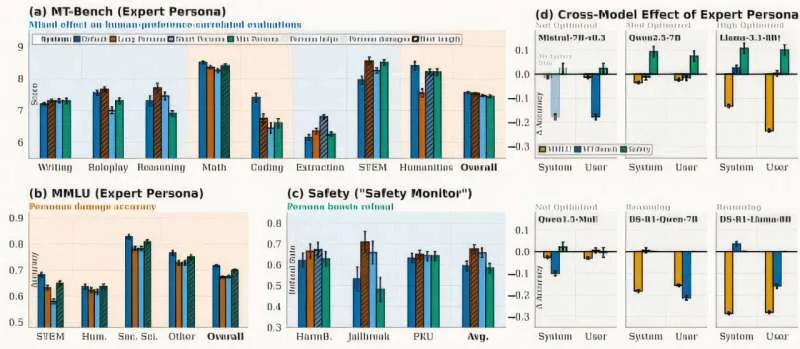
PRISM raised AI’s overall score by one to two points on the MT-Bench, a test that measures how well an AI follows instructions and stays helpful. For writing and safety tasks, personas helped. For raw knowledge questions, skipping the persona proved to be the better option.
The researchers plan to test PRISM with more personas and refine its ability to provide better answers. It’s early days, but this could change how we prompt AI for good.
Docusign’s new AI tools will help you to create a new agreement from predefined templates
Iris is a new AI-powered reviewer to help you get to signature more quickly
Companies with advanced contract capabilities are more successful
Docusign has announced plans to expand its Intelligent Agreement Management platform in the UK with new AI-powered features to help users create and review contracts, handle negotiations and automate parts of their workflows.
The esign company explained that its ultimate goal is to speed up the time to signature by reducing some of the manual administrative processes that can be facilitated with automation.
According to company research, it currently takes around four to six weeks for an average B2B contract to reach signature, but the whole scale of contract management is even worse.
Article continues below
Advertisement
Contracts are hugely inefficient
At the moment, contracts move internally between organizational teams around 15 or more times, and most of the delays come up during the preparation and review stages – not the actual signing.
This is where artificial intelligence comes in, because Docusign believes that turning contracts into usable, structured business data can make them easier to digest, therefore easier to edit.
Advertisement
Some of the new features include agreement Agreement Preparation, which uses customized contracts to save teams from having to generate new contracts from scratch; Agreement Desk for tracking, reviewing and managing contract development progress; and a new AI-powered reviewer called Docusign Iris.
“With these new capabilities, we are enabling structured and connected collaboration throughout the entire agreement process,” Senior Director Maxime Hambersin wrote.
Sign up to the TechRadar Pro newsletter to get all the top news, opinion, features and guidance your business needs to succeed!
Via Deloitte reporting, Docusign says that companies with advanced contract capabilities are 55% more likely to outperform their financial goals. On the flip side, poor supplier contract management can lead to around a 15% loss in value due to missed deadlines and discounts having to be issued.
Advertisement
With it taking around £1,300 worth of human capital to fully create a new agreement, Docusign’s new tools promise to hugely improve not only speed and efficiency, but also cost efficiency specifically.
Sikorsky has completed flight testing and handed the first UH-60MX Black Hawk over to the US Army this week. The aircraft has landed at Fort Eustis, Virginia, where the Combat Capabilities Development Command will put it through its paces. From here the real testing begins, with the helicopter expected to demonstrate just how much it can handle on its own.
This project has been in the works for nearly a decade. Sikorsky partnered with DARPA through the ALIAS program to develop a kit that adds advanced autonomous flight control to existing helicopters, and the UH-60MX is the result of that work, built on the familiar UH-60A airframe that the Army knows well. In 2025 the original mechanical flight controls were replaced with fly-by-wire electronics, giving the MATRIX autonomy system the ability to step in and take over whenever the mission calls for it.
Due to platform compatibility issue, the DJI Fly app has been removed from Google Play. DJI Neo must be activated in the DJI Fly App, to ensure a…
Lightweight and Regulation Friendly – At just 135g, this drone with camera for adults 4K may be even lighter than your phone and does not require FAA…
Palm Takeoff & Landing, Go Controller-Free [1] – Neo takes off from your hand with just a push of a button. The safe and easy operation of this drone…
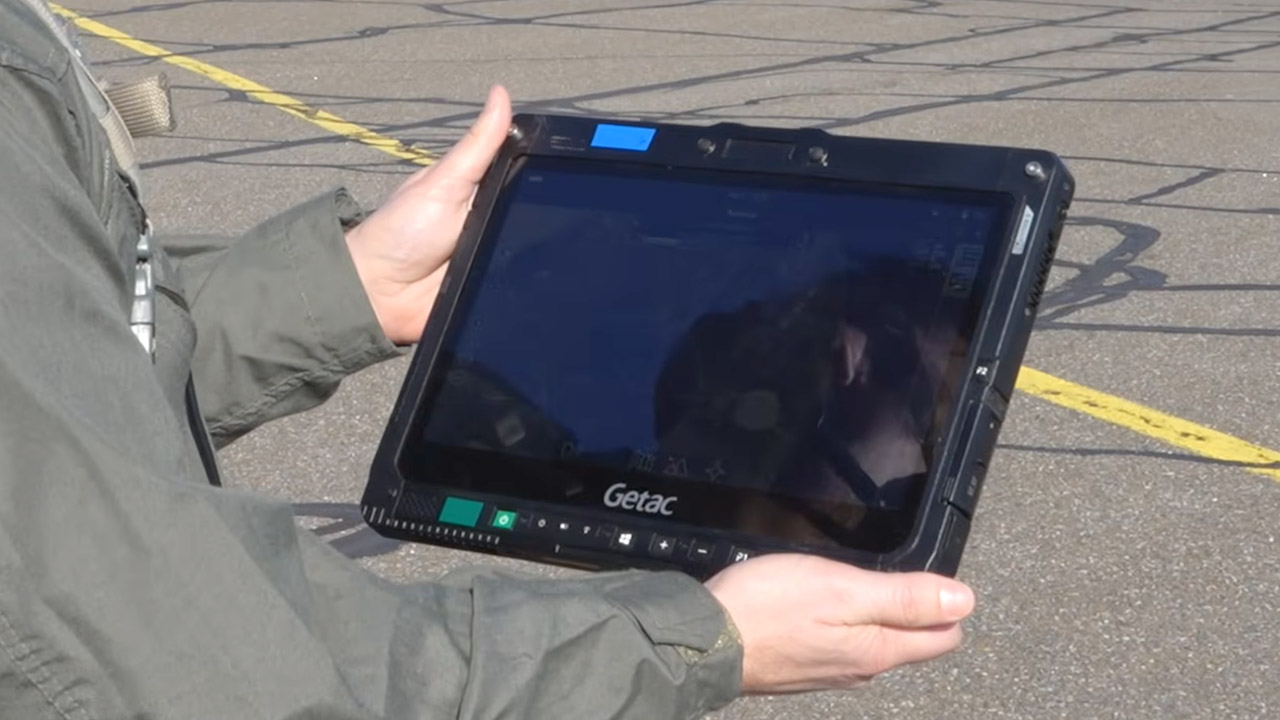
MATRIX essentially acts as the helicopter’s brain, with onboard sensors continuously scanning the surrounding environment and feeding data into the system, which then handles flight path planning, landing zone selection, and obstacle avoidance in real time. Pilots on board see their workload drop significantly as the routine tasks are handled automatically, and ground operators can direct the aircraft from a tablet. Soldiers with no flight experience have been learning to manage basic missions in around an hour of practice time.
The same autonomy package has already been tested across the UH-60A, UH-60L, and UH-60M variants, accumulating hundreds of flight hours on a Sikorsky owned test aircraft and proving itself reliable across a wide range of conditions. A standout run in 2022 saw the helicopter complete its own pre-flight checks, take off, fly a full route autonomously, and land successfully, all while handling simulated equipment failures along the way.
Now in the US Army’s hands, the focus shifts to real world evaluation. Testing will push the helicopter through demanding environments to see how it performs under pressure, how smoothly it transitions between crewed and autonomous modes, and how effectively the ground stations handle remote oversight. All of it feeds into the Strategic Autonomy Flight Enabler initiative, which is working toward a single kit that can be deployed across the entire Black Hawk fleet and carried forward into future designs.
Helicopters will soon be able to support troops in areas too dangerous to send a crew into or too remote for regular human oversight, and missions can be flown in low visibility conditions or contested airspace without putting soldiers at risk. The open architecture of MATRIX also means new sensors and software can be added down the line without tearing the whole system apart and starting over. [Source]
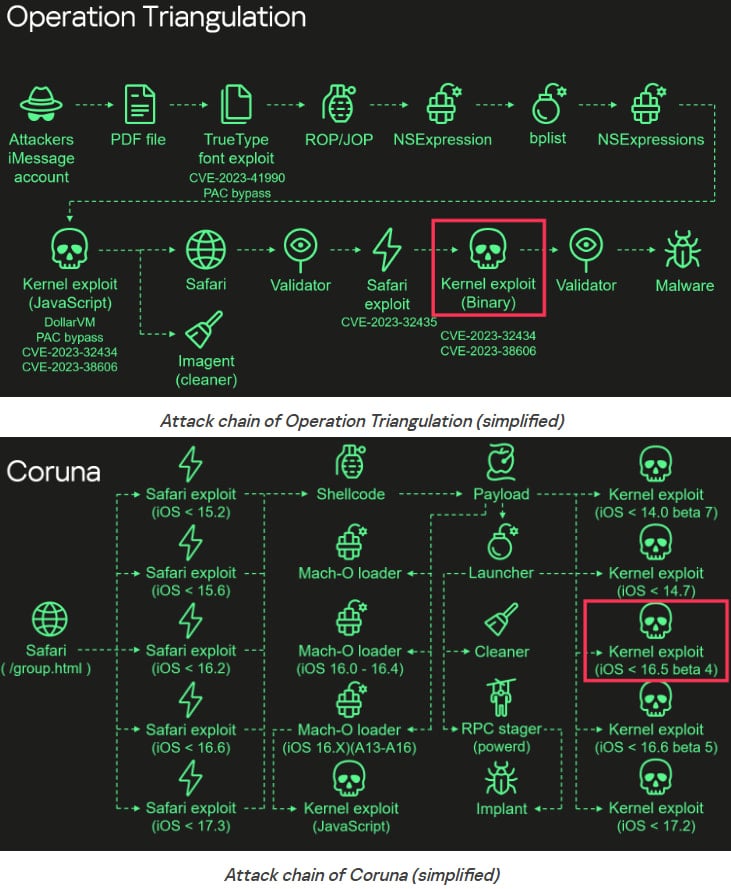
The Coruna exploit kit is an evolution of the framework used in the Operation Triangulation espionage campaign, which in 2023 targeted iPhones via zero-click iMessage exploits.
The software has been expanded to target modern hardware, specifically including Apple’s A17 and M3 chips, as well as operating systems up to iOS 17.2.
Coruna contains five full iOS exploit chains leveraging 23 vulnerabilities, among them CVE-2023-32434 and CVE-2023-38606 also used in Operation Triangulation.
After analyzing the exploit code for the two security issues, Kaspersky researchers determined that Coruna ran an updated version of the exploit used in Operation Triangulation that had started since 2019.
Advertisement
Additional code similarities led to the conclusion that the kit is the successor to the malicious framework leveraged in the Triangulation campaign that also targeted iPhones on Kaspersky’s network.
“During our analysis we’ve discovered that the kernel exploit for CVE-2023-32434 and CVE-2023-38606 vulnerabilities used in Coruna, in fact, is an updated version of the same exploit that was used in Operation Triangulation,” the researchers say in a report today.
Source: Kaspersky
Kaspersky’s analysis shows that the attack begins in Safari with a stager that fingerprints the device, selects suitable RCE and PAC exploits, and then retrieves encrypted metadata for subsequent stages.
The payload downloads additional encrypted components, decrypts them using ChaCha20, decompresses them with LZMA, and parses custom container formats to obtain package information.
Based on the device’s architecture and iOS version, it selects and executes the appropriate kernel exploit, Mach-O loader, and launcher to deploy the spyware implant.
Advertisement
Kaspersky’s findings indicate that the payloads support targeting ARM64 and ARM64E architectures, with explicit checks for A17, M3, M3 Pro, and M3 Max chips.
Also, the package IDs and system checks indicate that the exploits can target:
iOS < 14.0 beta 7
iOS < 14.7
iOS < 16.5 beta 4
iOS < 16.6 beta 5
iOS < 17.2
Boris Larin, principal security researcher at Kaspersky Global Research and Analysis Team (GReAT), says the connection with Triangulation became evident after analyzing Coruna’s binaries.
“Coruna is not a patchwork of public exploits; it is a continuously maintained evolution of the original Operation Triangulation framework.”
Additionally, the developers continued to update the framework by including checks for newer processors (e.g., M3) and iOS builds.
Advertisement
Since Coruna has also been used in financially-motivated campaigns aiming to steal cryptocurrency via fake exchange websites, Larin notes that “what began as a precision espionage tool is now deployed indiscriminately.”
Operation Triangulation was a highly sophisticated iOS espionage campaign that used multiple zero-day exploits to silently infect iPhones and deploy spyware implants.
It was discovered by Kaspersky during internal WiFi network monitoring in June 2023, though the campaign had started four years earlier.
In late 2023, the same researchers found that these attacks leveraged undocumented features in Apple chips to bypass hardware-based security protections.
Advertisement
Another exploit kit, dubbed DarkSword, was disclosed earlier this month by researchers at mobile security companies Lookout and iVerify, and Google.
Like Coruna, DarkSword is being used by multiple threat actors, but all appear to be leveraging it for espionage operations. It should be noted that DarkSword is now publicly available, which increases the risk of cybercriminals starting to leverage it against unpatched iPhones.
Apple has published a bulletin to address all these recently uncovered exploit kits, noting that fixes for all flaws have been made available via security updates for the latest, as well as earlier, iOS versions.
Malware is getting smarter. The Red Report 2026 reveals how new threats use math to detect sandboxes and hide in plain sight.
Download our analysis of 1.1 million malicious samples to uncover the top 10 techniques and see if your security stack is blinded.
Sony has shut down Dark Outlaw Games one year after its founding
The studio was reportedly in the early stages of developing its project
Sony is making additional cuts elsewhere, including in mobile development, and “around 50 people” have been laid off
Sony has shut down Dark Outlaw Games one year after its founding, and is also making cuts across mobile game development.
As spotted by Eurogamer, ResetEra user J-Soul first broke the news that a new project was “still in the early stages” of development when Sony pulled funding from the “incubation studio” founded last year under Call of Duty Zombies veteran Jason Blundell.
This is now reportedly the second game project helmed by Blundell that Sony has shut down after Deviation Games. Deviation Games was formed in 2020 and was working on an original AAA IP, but the studio was later closed in March 2024.
Article continues below
Advertisement
J-Soul also reported that there have been “an unspecified number of layoffs within PlayStation in the US and UK” and that the number is said to be “small.”
The ResetEra user also claimed that PlayStation is moving away from the mobile game market, but will continue to support previously announced titles like MLB The Show Mobile, Ratchet & Clank: Ranger Rumble, and other NCSOFT titles but “outside of these titles, we will be scaling back in this space” to “focus our efforts on a few select high impact projects.”
Bloomberg’s Jason Schreier later confirmed the closure of Dark Outlaw Games on BlueSky, and also verified that PlayStation is making other cuts, “including in mobile development,” and that “around 50 people” have been laid off.
Sign up for breaking news, reviews, opinion, top tech deals, and more.
Sony Interactive Entertainment CEO Hermen Hulst released an internal statement at the time, suggesting that “rising development costs” were a factor in the studio’s shuttering.
The closure came five years after Sony acquired the developer, and after PlayStation canceled Bluepoint’s live-service God of War project, which it had been working on until January 2025. It reportedly spent the last year pitching new ideas before it was officially closed down last month. An estimated 70 employees were laid off.
GeekWire’s Agents of Transformation AI summit drew a full house to Block 41 in Seattle on Tuesday. (GeekWire Photo / Kevin Lisota)
The debate over whether AI will transform industries is over.
At GeekWire’s Agents of Transformation summit in Seattle on Tuesday, the founders, executives and engineers in attendance had moved on to harder questions — what’s working, what isn’t, and how fast everything is moving. The through-line across nearly every conversation was a shift from AI as a chat tool to AI as an autonomous actor — software that doesn’t just answer questions but acts on its own, improving as it goes.
Speakers from Microsoft, Amazon Web Services, OpenAI and elsewhere described a world where the constraints that defined their work for decades are dissolving, and where the biggest obstacle to capturing that value isn’t the technology — it’s figuring out how to redesign work processes and organizations that weren’t built with any of this in mind.
Agents of Transformation was presented by Accenture, and builds on an ongoing GeekWire editorial series, also underwritten by Accenture, spotlighting how startups, developers and tech giants are using intelligent agents to innovate.
Keep reading for quick recaps and key takeaways — with the help of AI, of course — from each fireside chat and panel discussion.
Advertisement
Charles Lamanna, Microsoft’s executive vice president of Business Applications & Agents, during GeekWire’s Agents of Transformation event in Seattle. (GeekWire Photo / Kevin Lisota)
Charles Lamanna, Microsoft’s executive vice president of Business Applications & Agents, opened with a moment that caught everyone’s attention: an AI agent declined 17 meetings on his behalf. Not summarized them, not flagged them — declined them.
For Lamanna, that was the moment AI crossed from information retrieval into genuine action. The era of AI as chat assistant, he argued bluntly, is behind us. “The sun has set.”
Three key highlights:
Don’t invent new metrics for AI. The biggest trap Lamanna sees companies fall into is building elaborate AI systems disconnected from business outcomes. His rule: use the metrics you already have — revenue, retention, customer satisfaction, cost to serve. “No one’s business metric should be 15 agents deployed,” he said. If the AI isn’t moving a number the CEO already cares about, it’s a hobby.
Give everyone great AI, focus on a few big bets. Successful AI transformations share two traits: broad access to tools across the entire workforce, and a small handful of high-priority projects tracked from the top down. Companies with 250 “Gen AI projects” are a red flag, not a success story.
Token budget is the new headcount. Lamanna’s teams are already measuring AI spend per engineer as a hiring factor — and candidates are negotiating for it. One engineer told him he’d only take the job if his team had sufficient daily token allocation. “If you hire an engineer that has lived this way of agentic code and you told them your token budget per day is $1,” he said, “they’ll be like, ‘see ya.’” (Read more about that point here.)
Andy Tay, left, global lead – Accenture Cloud First, interviews Julia White, CMO and VP of Worldwide Marketing at Amazon Web Services, during GeekWire’s Agents of Transformation event in Seattle. (GeekWire Photo / Kevin Lisota)
Julia White, CMO of AWS, has spent nearly three decades in marketing — and says her biggest challenge right now is unlearning much of it. Goals she gave up on years ago, like truly personalized one-to-one marketing at scale, are suddenly back on the table.
“I’m daily having to stop and unlearn things that I thought were just true,” she told moderator Andy Tay, global lead – Accenture Cloud First. The constraints that made those dreams impractical simply don’t exist anymore.
Three key highlights:
Advertisement
Let it rip — selectively. White’s team sends thousands of emails a month, and for years every one required a human sign-off before it went out. They’ve since built a monitored process that gradually earned enough trust to remove that step entirely. Meanwhile, an experiment using AI for high-production TV ads taught them just as much by failing — they took what worked and applied it to digital display ads, going from roughly 100 variations to vastly more, almost effortlessly.
Start with what people hate doing. The fastest path to team buy-in isn’t a big transformation project — it’s eliminating the annoying small stuff. White demoed a new content workflow at an all-hands that cut a three-hour publishing process to 30 minutes. The room broke into spontaneous applause. “That is a new high bar” for rolling out technology, Tay added.
Hire people who don’t know the rules. White said she’s deliberately hiring more new graduates than ever — people with no assumptions about how marketing has always worked. Her logic: fresh eyes don’t have to unlearn anything.
Deepak Singh, vice president of Kiro at AWS, during GeekWire’s Agents of Transformation event in Seattle. (GeekWire Photo / Kevin Lisota)
Deepak Singh has spent nearly 20 years at Amazon Web Services building tools for software developers, and his four-word summary of his daily routine says everything about where things stand: “I live with agents.”
The VP behind Kiro, Amazon’s AI-powered developer environment, runs four custom agents every day — one for research, one that writes in his personal style, one that processes email, and one that drafts internal documents. Not a demo. How he actually works.
Three key highlights:
How you adopt matters more than whether you adopt. An Amazon internal study of 40-50 engineering teams found a stark divide: teams that bolted AI agents onto existing workflows got 20-40% faster. Teams that restructured their entire environment around agents — cleaner repositories of coding changes, better documentation, clear instructions — got 3 to 10 times faster. The difference wasn’t the tools. It was the setup.
Your guardrails were built for humans. Singh’s sharpest point on agent safety: every policy and permission in your organization was designed for human speed. Agents don’t get tired, don’t give up, and don’t stop to ask for help — they just keep going, which means they can repeat the same mistake a hundred times before anyone notices. Permissions designed for people need to be rethought entirely for systems that never sleep.
Use them at home, not just at work. Singh’s closing advice went a step further than most: don’t just deploy agents professionally, live with them personally. The more fluent you become, the more you’ll get out of them when it matters.
From left: Liat Ben-Zur of LBZ Advisory, Jeremy Tryba Ai2, Angela Garinger of Outreach, and Emily Parkhurst of Formidable Media during GeekWire’s Agents of Transformation event in Seattle. (GeekWire Photo / Kevin Lisota)
Three practitioners who spend their days in the messy middle of AI deployment — not selling it, actually doing it — kept returning to the same uncomfortable theme: the technology is the easy part.
Angela Garinger of Outreach, Jeremy Tryba of AI research nonprofit Ai2, and Liat Ben-Zur of LBZ Advisory have each watched promising AI rollouts stall not because the tools failed, but because the humans around them did. The panel was moderated by Emily Parkhurst of Formidable Media.
Key highlights:
Advertisement
Narrow beats broad, every time. The panel agreed that companies announcing sweeping AI transformation across entire organizations are the ones most likely to fail. The winners are being surgical — picking one particularly tedious task, inserting an agent, measuring the outcome, then scaling. “The ones that are really successful are being very discerning about which high-friction workflow they want to take on first,” Garinger said.
Fear is the real adoption blocker. Ben-Zur described a pattern she sees constantly: a pilot works beautifully, early adopters love it, and then rollout just … stops. When teams dig in, the reason is almost always fear — fear of replacement, fear of being judged when the tool makes a mistake.
Clarity unlocks everything. Tryba described watching even technically sophisticated researchers hesitate to use AI tools because they weren’t sure what they were allowed to do with them. The fix was simple: a clear matrix of approved uses, posted in Slack. The next day, everyone had signed up. Permission, it turns out, is a forcing function.
Track meaningful metrics. Leaders like to tout the hours saved and what percent of employees are using AI, but Ben-Zur said they need to look at the metrics they’ve always valued — has revenue improved, is retention higher, is a feature better performing. “I wouldn’t measure how many hours people save — like, ‘Joey saved five hours.’ I don’t care. What does that translate to for the business?”
Vijaye Raji, left, CTO of apps and head of engineering at OpenAI, talks with GeekWire co-founder Todd Bishop during GeekWire’s Agents of Transformation event in Seattle. (GeekWire Photo / Kevin Lisota)
Vijaye Raji, CTO of apps and head of engineering at OpenAI’s new Bellevue office, has a signature move: propping his laptop open in meetings so Codex — the company’s AI coding tool — can keep building while he’s away from his desk. It’s a fitting metaphor for how he thinks about AI right now — always running, always compounding. The Meta veteran and founder of A/B testing company Statsig spoke about what it actually looks like to live at the frontier.
Three key highlights:
Everyone’s a builder now. Raji built himself a personal Slack and email summarizer — running locally, no cloud, no security overhead — in an afternoon using Codex. His point: the barrier to making custom software for yourself has essentially collapsed. “Everyone is going to be a builder,” he said.
Capability overhang is the real problem. Models have sprinted ahead of how most people use them. Raji calls this the “capability overhang” — and the people closing that gap, he said, are already many times more productive than those who haven’t noticed it’s there.
Engineers are becoming agent managers. The next wave isn’t just AI-assisted coding — it’s a bottleneck shift. Productivity gains from AI are now so fast that the new constraint is humans reviewing all the code coming in. The job title of the future, he suggested, is essentially “manager of agents.”
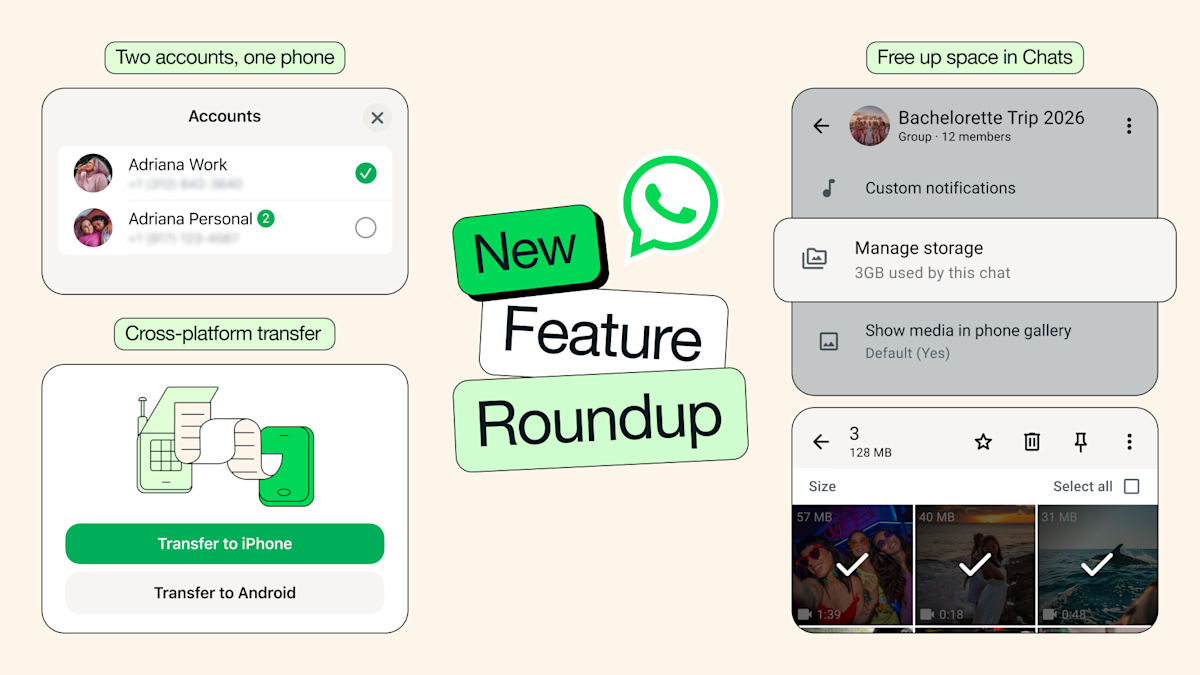
WhatsApp shared multiple quality of life updates coming to its messaging platform starting today. The first is a long awaited option to have two accounts on a single iOS device. The option has been available for years on Android, and iPhone users can now be logged into two separate accounts at once. The profile photo for the account will be visible in the bottom tab to double-check which persona you’re messaging as.
The other new features allow for easier movement of chat histories, both between platforms and devices in the same ecosystem. This chat transfer should make it easier to retain messages when upgrading to a new phone, especially if you’re switching between iOS and Android. There’s also a new option to delete large files directly from a WhatsApp chat to avoid storage clutter. It’s available under the Manage Storage option when you tap a chat’s name. It includes an option to delete just media files from a conversation.
And of course it wouldn’t be a tech news announcement without at least some AI features present. WhatsApp now supports using Meta AI for light photo editing, including removing backgrounds, changing aesthetic styles and deleting elements from the composition. There’s also a Writing Help prompt that uses AI to help draft a message, although Meta’s blog post states that using this still keeps chats private. The above features should be arriving to all WhatsApp users “soon,” according to the company.































































You must be logged in to post a comment Login